Review

Catalytic Processes from Biomass-Derived Hexoses and Pentoses: A Recent Literature Overview


1
Max Planck Institute for Chemical Energy Conversion, Stiftstraße 34-36, 45740 Mülheim an der Ruhr, Germany
2
Chemical Engineering and Materials Department, Chemical Sciences School, Complutense University, Ciudad Universitaria s/n, 28040 Madrid, Spain
*
Author to whom correspondence should be addressed.
Catalysts 2018, 8(12), 637; https://doi.org/10.3390/catal8120637
Submission received: 11 November 2018 / Revised: 29 November 2018 / Accepted: 3 December 2018 / Published: 7 December 2018
(This article belongs to the Section Biomass Catalysis)

Abstract

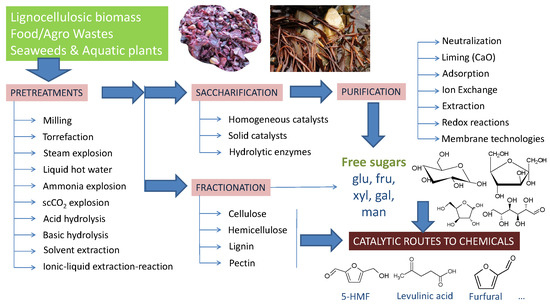
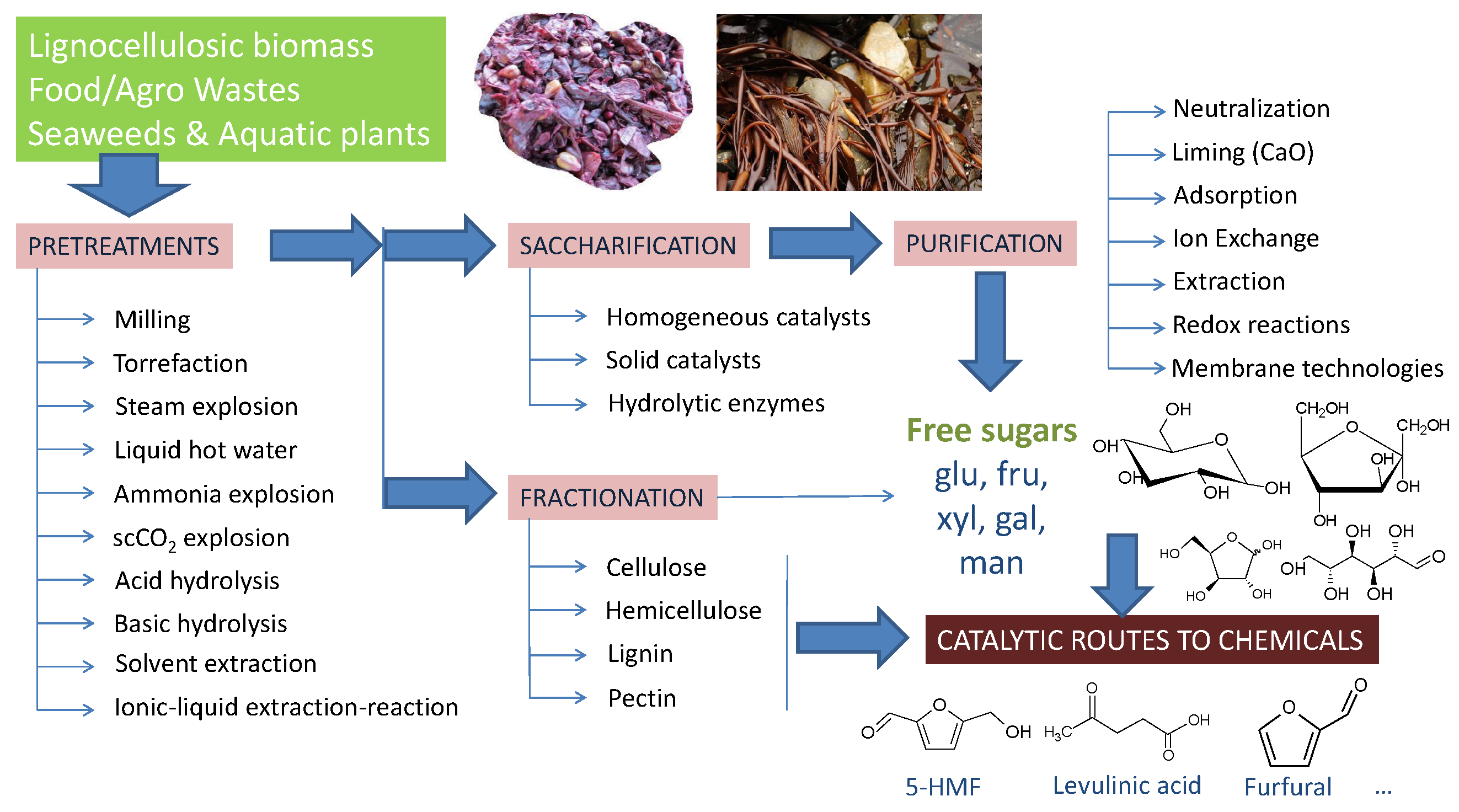
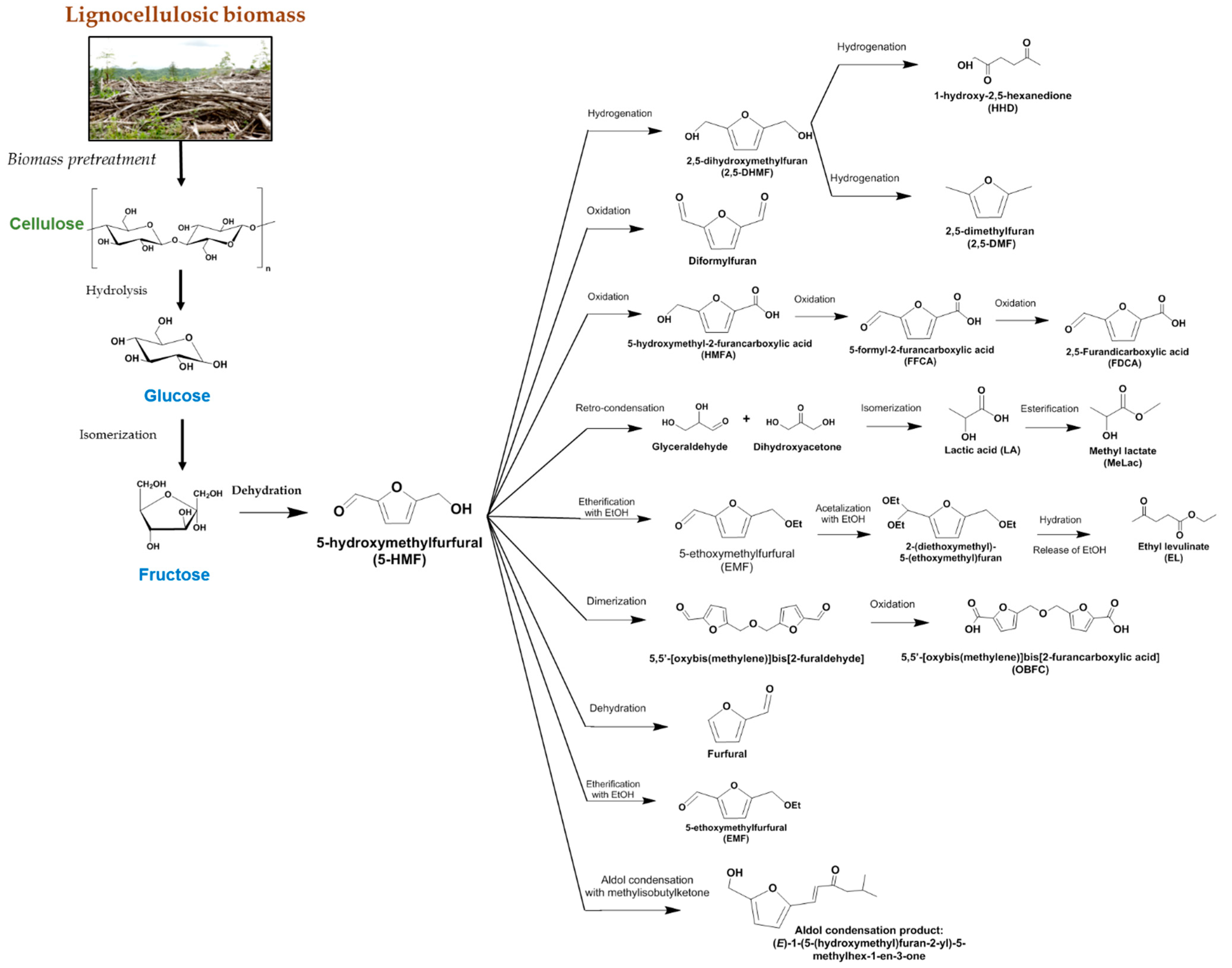
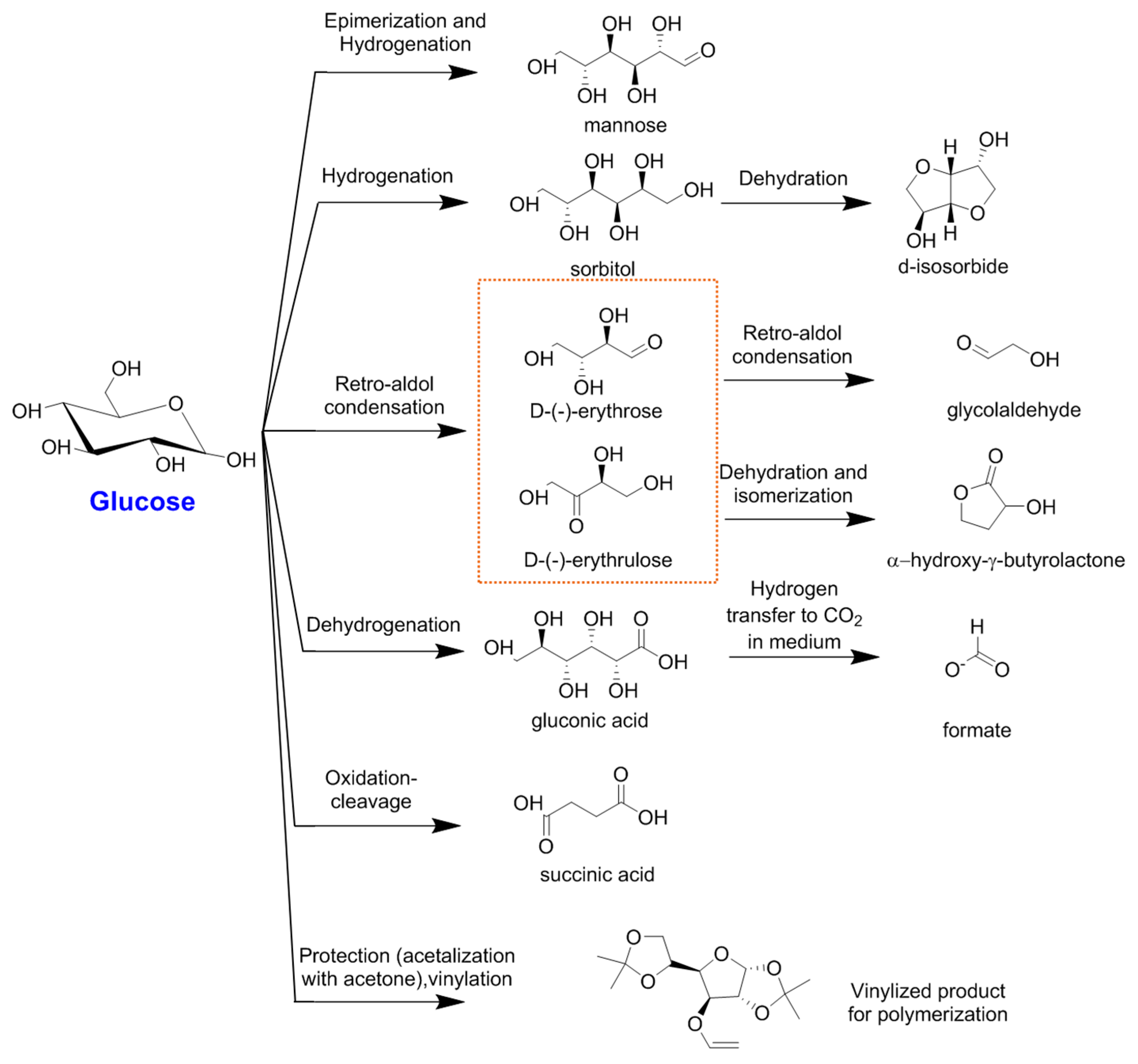
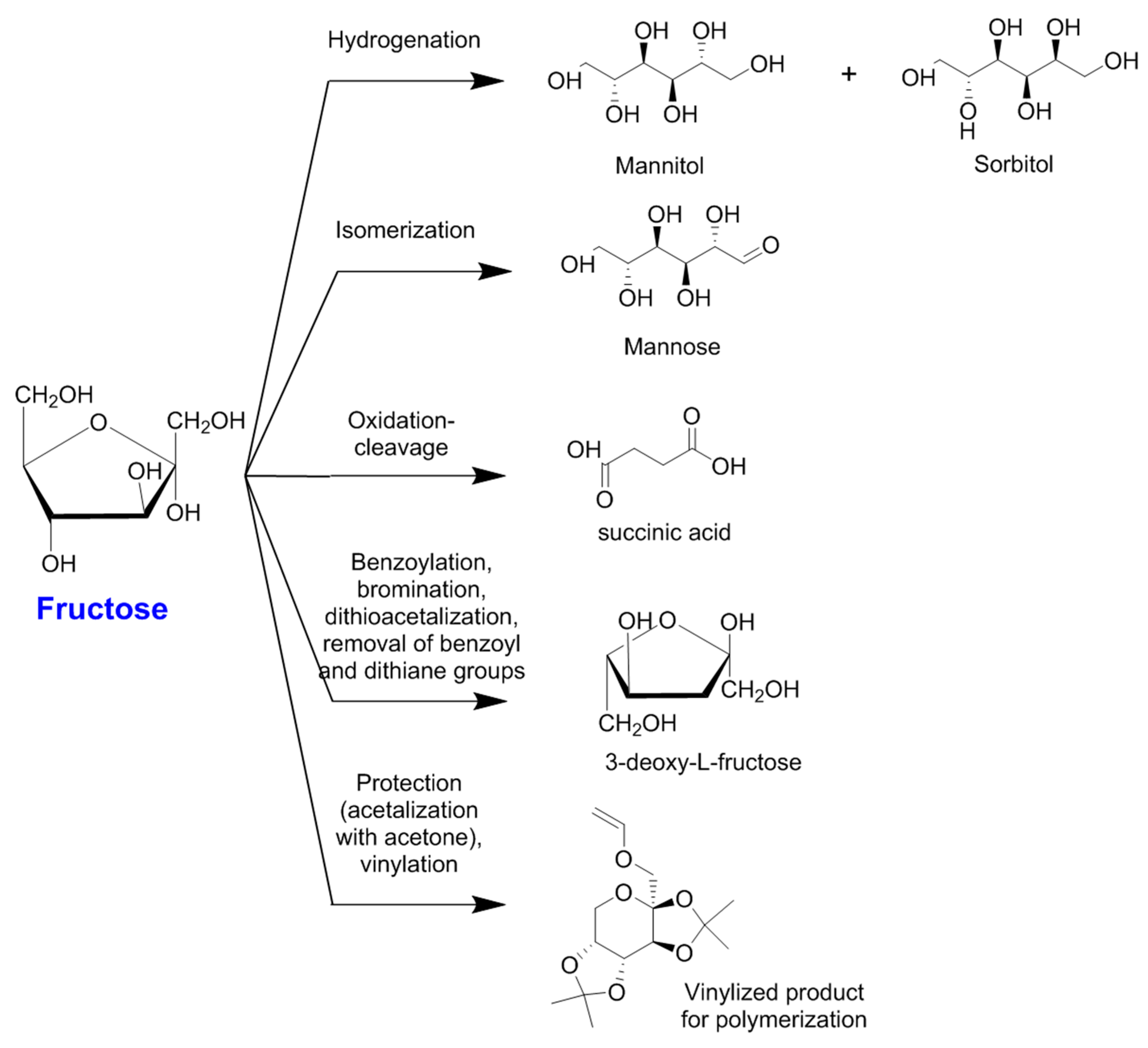
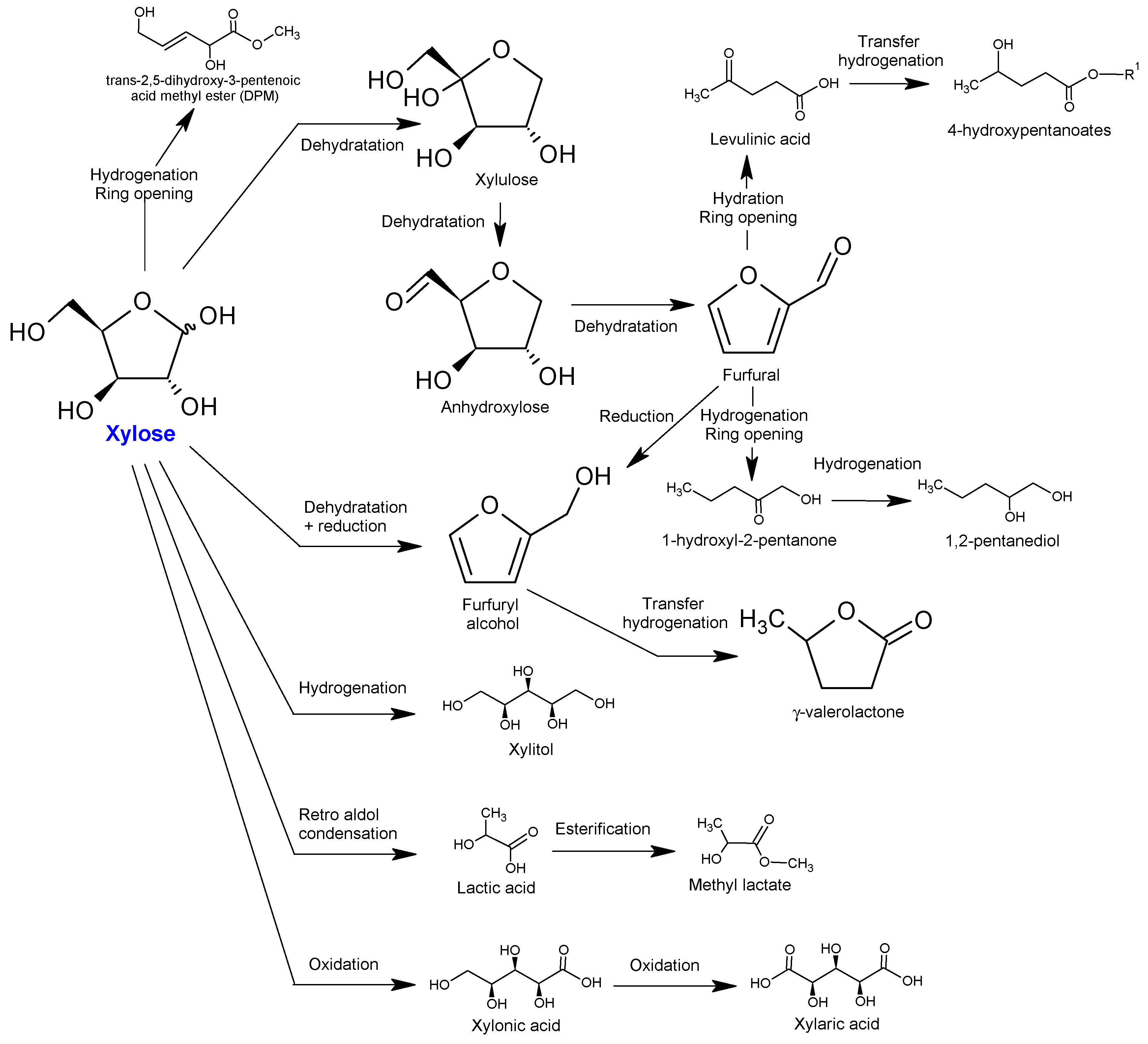
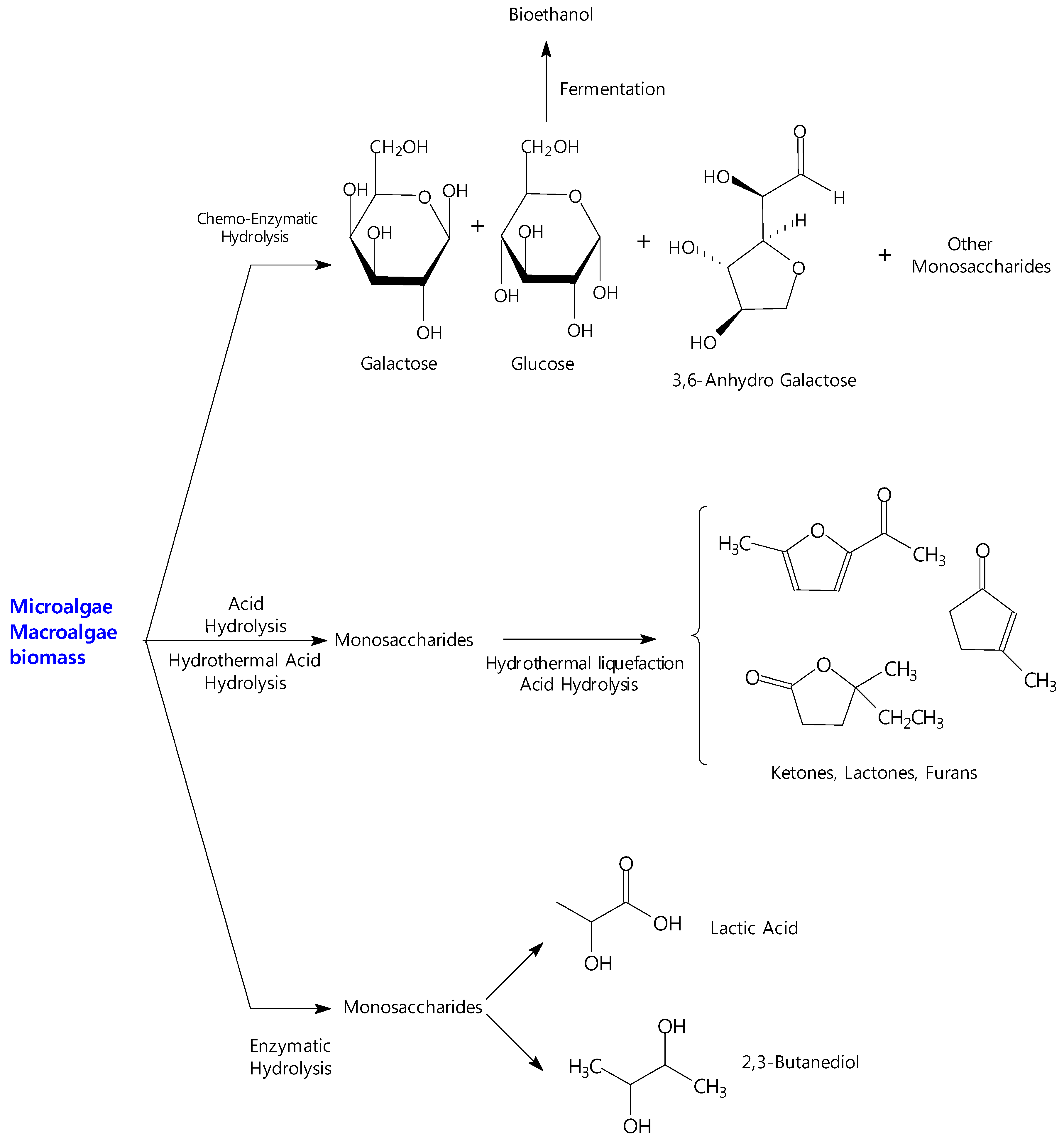
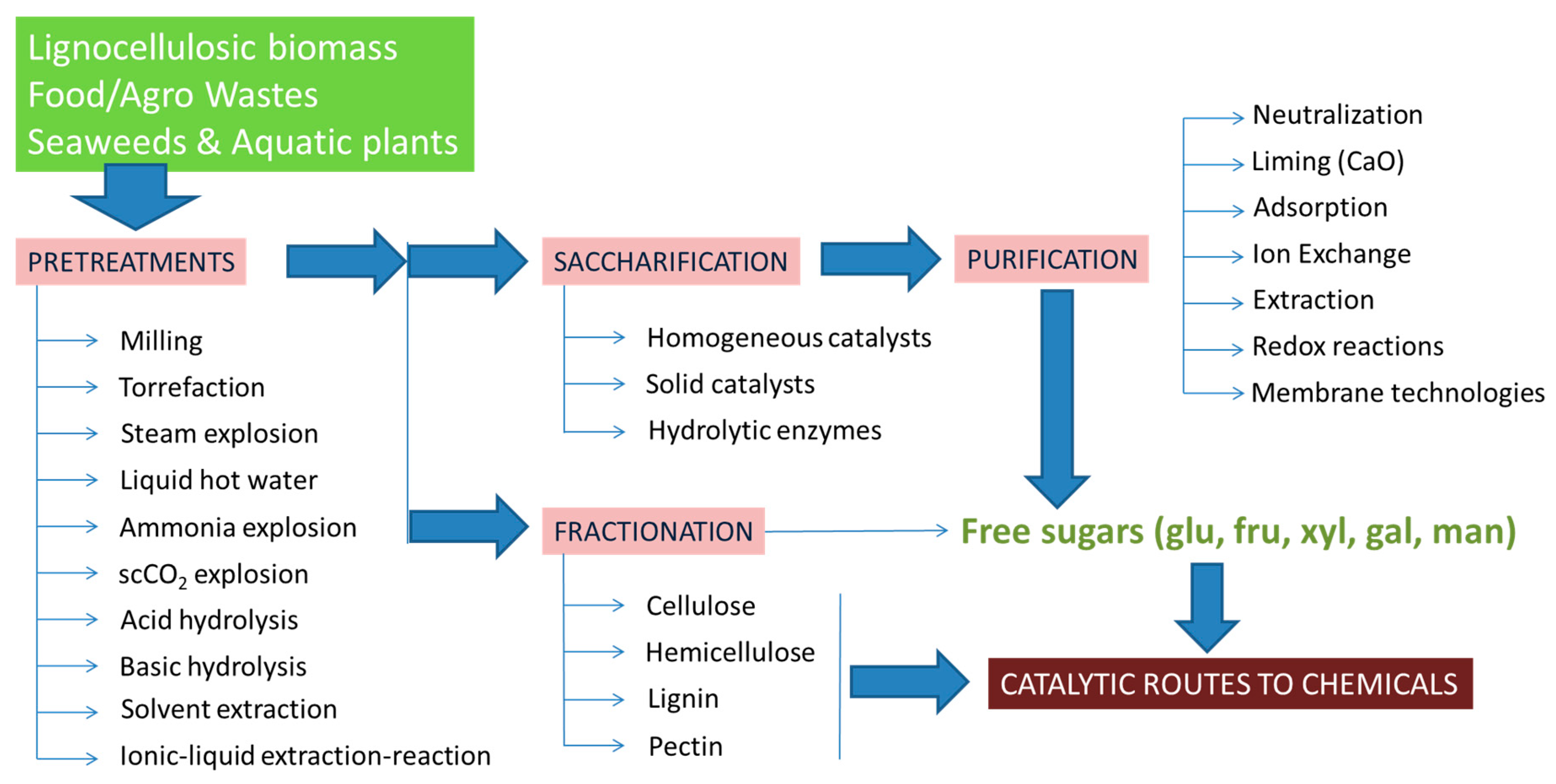
Biomass is a plentiful renewable source of energy, food, feed and chemicals. It fixes about 1–2% of the solar energy received by the Earth through photosynthesis in both terrestrial and aquatic plants like macro- and microalgae. As fossil resources deplete, biomass appears a good complement and eventually a good substitute feedstock, but still needs the development of relatively new catalytic processes. For this purpose, catalytic transformations, whether alone or combined with thermal ones and separation operations, have been under study in recent years. Catalytic biorefineries are based on dehydration-hydrations, hydrogenations, oxidations, epimerizations, isomerizations, aldol condensations and other reactions to obtain a plethora of chemicals, including alcohols, ketones, furans and acids, as well as materials such as polycarbonates. Nevertheless, there is still a need for higher selectivity, stability, and regenerability of catalysts and of process intensification by a wise combination of operations, either in-series or combined (one-pot), to reach economic feasibility. Here we present a literature survey of the latest developments for obtaining value-added products using hexoses and pentoses derived from lignocellulosic material, as well as algae as a source of carbohydrates for subsequent transformations.
Keywords: lignocellulose; algae; biorefinery; monosaccharide; platform chemical; catalysis; selectivity; stability; bio-based monomers; hexoses; pentoses; solvents lignocellulose; algae; biorefinery; monosaccharide; platform chemical; catalysis; selectivity; stability; bio-based monomers; hexoses; pentoses; solvents
Graphical Abstract