Reversed Proteolysis—Proteases as Peptide Ligases


Abstract
1. Introduction
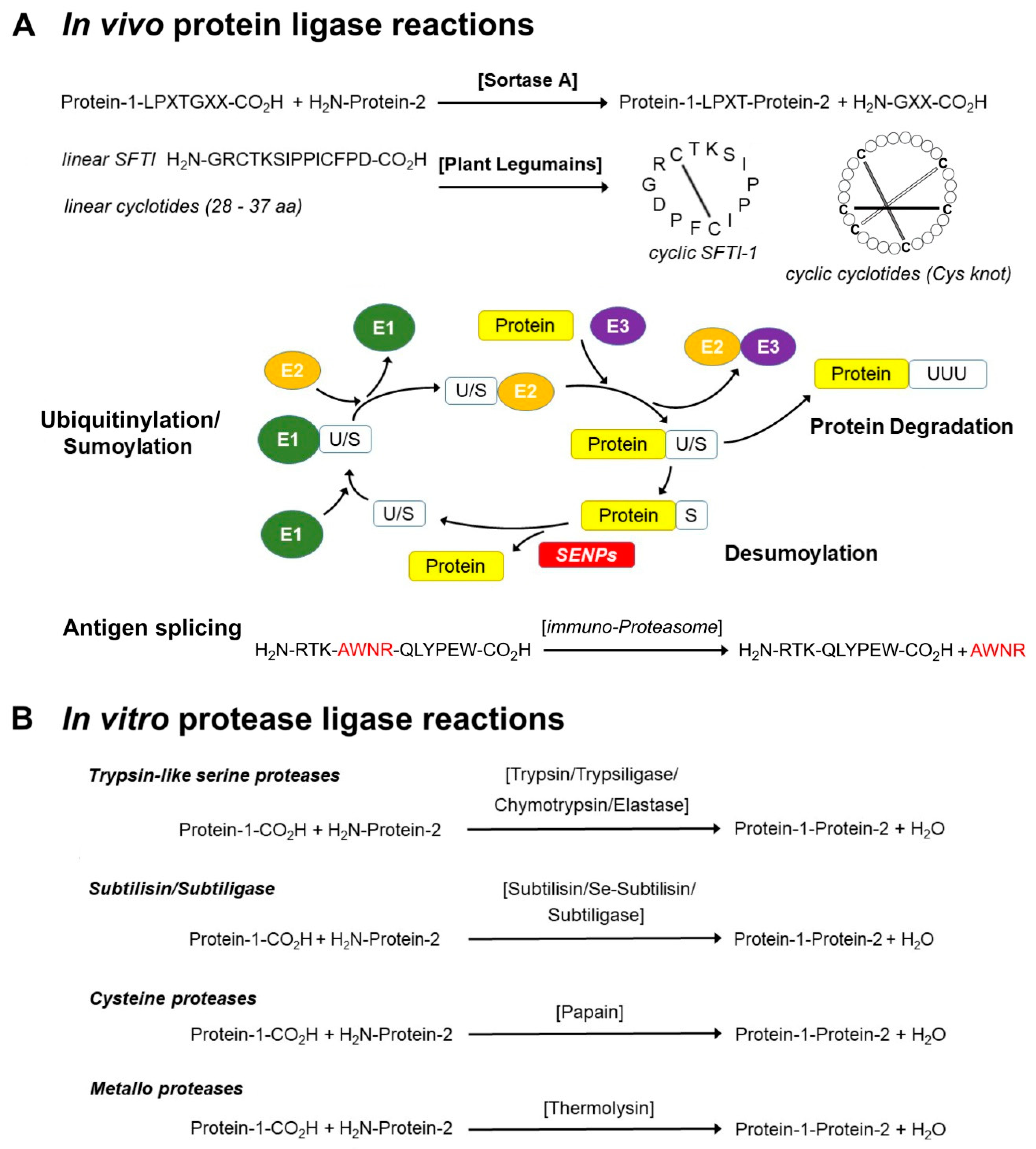
2. Historical Outline of Developments in the Last Century
3. Developments in the 21st Century
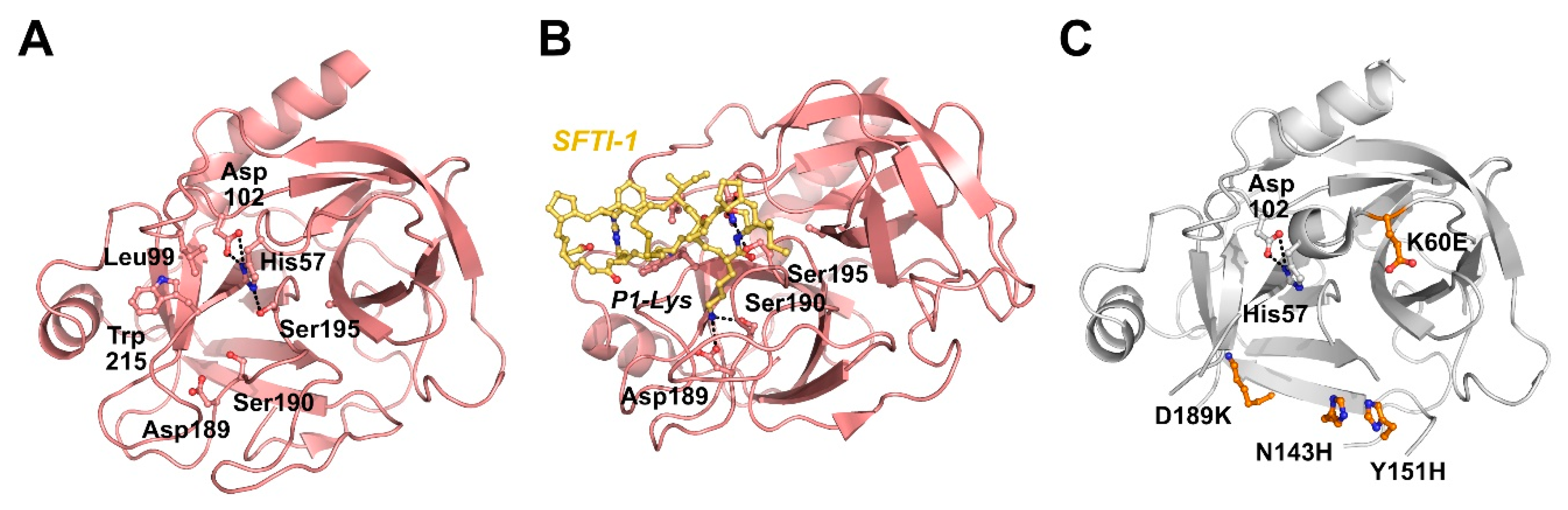
3.1. Subtiligase
3.2. Sortases
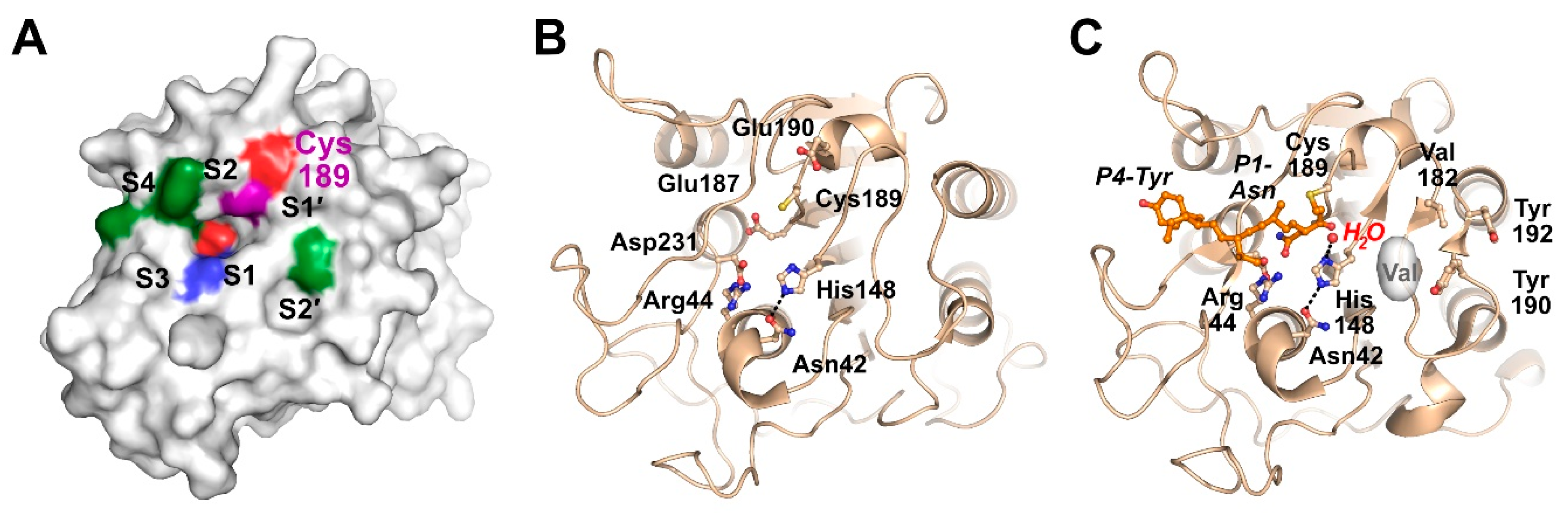
3.3. Legumains
3.4. Trypsin and Trypsiligase
4. Conclusions
Funding
Data Availability Statement
Acknowledgments
Conflicts of Interest
References
- van Hoff, J.H. Über die zunehmende Bedeutung der anorganischen Chemie. Vortrag, gehalten auf der 70. Versammlung der Gesellschaft deutscher Naturforscher und Ärzte zu Düsseldorf. Z. Anorg. Allg. Chem. 1898, 18, 1–13. [Google Scholar] [CrossRef]
- Sawjalow, W.W. Zur Theorie der Eiweissverdauung. Pflügers Arch. Ges. Physiol. Menschen Tiere 1901, 85, 171–225. [Google Scholar] [CrossRef][Green Version]
- Borsook, H. Peptide Bond Formation. In Advances in Protein Chemistry; Anson, M.L., Bailey, K., Edsall, J.T., Eds.; Academic Press: New York, NY, USA, 1953; Volume 8, pp. 127–174. [Google Scholar]
- Marahiel, M.A. Working outside the protein-synthesis rules: Insights into non-ribosomal peptide synthesis. J. Pept. Sci. 2009, 15, 799–807. [Google Scholar] [CrossRef] [PubMed]
- Martin, J.F. α-Aminoadipyl-cysteinyl-valine Synthetases in β-Lactam Producing Organisms. J. Antibiot. 2000, 53, 1008–1021. [Google Scholar] [CrossRef] [PubMed][Green Version]
- Eifler, K.; Vertegaal, A.C.O. SUMOylation-Mediated Regulation of Cell Cycle Progression and Cancer. Trends Biochem. Sci. 2015, 40, 779–793. [Google Scholar] [CrossRef] [PubMed]
- McClellan, A.J.; Laugesen, S.H.; Ellgaard, L. Cellular functions and molecular mechanisms of non-lysine ubiquitination. Open Biol. 2019, 9, 190147. [Google Scholar] [CrossRef] [PubMed]
- Saska, I.; Craik, D.J. Protease-catalysed protein splicing: A new post-translational modification? Trends Biochem. Sci. 2008, 33, 363–368. [Google Scholar] [CrossRef]
- Perler, F.B.; Olsen, G.J.; Adam, E. Compilation and analysis of intein sequences. Nucleic Acids Res. 1997, 25, 1087–1093. [Google Scholar] [CrossRef]
- Novikova, O.; Topilina, N.; Belfort, M. Enigmatic Distribution, Evolution, and Function of Inteins. J. Biol. Chem. 2014, 289, 14490–14497. [Google Scholar] [CrossRef]
- Aranko, A.S.; Wlodawer, A.; Iwaï, H. Nature’s recipe for splitting inteins. Prot. Eng. Des. Sel. 2014, 27, 263–271. [Google Scholar] [CrossRef]
- Ferrington, D.A.; Gregerson, D.S. Chapter 3—Immunoproteasomes: Structure, Function, and Antigen Presentation. In Progress in Molecular Biology and Translational Science; Grune, T., Ed.; Academic Press: San Diego, CA, USA, 2012; Volume 109, pp. 75–112. [Google Scholar]
- Hanada, K.-i.; Yewdell, J.W.; Yang, J.C. Immune recognition of a human renal cancer antigen through post-translational protein splicing. Nature 2004, 427, 252–256. [Google Scholar] [CrossRef] [PubMed]
- Vigneron, N.; Ferrari, V.; Stroobant, V.; Abi Habib, J.; Van den Eynde, B.J. Peptide splicing by the proteasome. J. Biol. Chem. 2017, 292, 21170–21179. [Google Scholar] [CrossRef] [PubMed]
- Liepe, J.; Marino, F.; Sidney, J.; Jeko, A.; Bunting, D.E.; Sette, A.; Kloetzel, P.M.; Stumpf, M.P.H.; Heck, A.J.R.; Mishto, M. A large fraction of HLA class I ligands are proteasome-generated spliced peptides. Science 2016, 354, 354–358. [Google Scholar] [CrossRef] [PubMed]
- Paes, W.; Leonov, G.; Partridge, T.; Nicastri, A.; Ternette, N.; Borrow, P. Elucidation of the Signatures of Proteasome-Catalyzed Peptide Splicing. Front. Immunol. 2020, 11, 11. [Google Scholar] [CrossRef]
- Vigneron, N.; Stroobant, V.; Ferrari, V.; Abi Habib, J.; Van den Eynde, B.J. Production of spliced peptides by the proteasome. Mol. Immunol. 2019, 113, 93–102. [Google Scholar] [CrossRef]
- Sarmiento, C.; Camarero, J.A. Biotechnological Applications of Protein Splicing. Curr. Protein Pept. Sci. 2019, 20, 408–424. [Google Scholar] [CrossRef]
- Nuijens, T.; Toplak, A.; Schmidt, M.; Ricci, A.; Cabri, W. Natural Occurring and Engineered Enzymes for Peptide Ligation and Cyclization. Front. Chem. 2019, 7, 1–8. [Google Scholar] [CrossRef]
- Kent, S. Chemical protein synthesis: Inventing synthetic methods to decipher how proteins work. Bioorganic. Med. Chem. 2017, 25, 4926–4937. [Google Scholar] [CrossRef]
- Agouridas, V.; Diemer, V.; Melnyk, O. Strategies and open questions in solid-phase protein chemical synthesis. Curr. Opin. Chem. Biol. 2020, 58, 1–9. [Google Scholar] [CrossRef]
- Agouridas, V.; El Mahdi, O.; Cargoët, M.; Melnyk, O. A statistical view of protein chemical synthesis using NCL and extended methodologies. Bioorganic Med. Chem. 2017, 25, 4938–4945. [Google Scholar] [CrossRef]
- Schmohl, L.; Schwarzer, D. Chemo-enzymatic three-fragment assembly of semisynthetic proteins. J. Pept. Sci. 2014, 20, 145–151. [Google Scholar] [CrossRef] [PubMed]
- Chang, T.K.; Jackson, D.Y.; Burnier, J.P.; Wells, J.A. Subtiligase: A tool for semisynthesis of proteins. Proc. Natl. Acad. Sci. USA 1994, 91, 12544–12548. [Google Scholar] [CrossRef] [PubMed]
- Dall, E.; Brandstetter, H. Structure and function of legumain in health and disease. Biochimie 2016, 122, 126–150. [Google Scholar] [CrossRef] [PubMed]
- James, A.M.; Haywood, J.; Mylne, J.S. Macrocyclization by asparaginyl endopeptidases. New Phytol. 2018, 218, 923–928. [Google Scholar] [CrossRef] [PubMed]
- Bergmann, M.; Fraenkel-Conrat, H. The Role of Specificity in the Enzymatic Synthesis of Proteins: Syntheses with Intracellular Enzymes. J. Biol. Chem. 1937, 119, 707–720. [Google Scholar]
- Bergmann, M.; Fraenkel-Conrat, H.; Doherty, D.G. The enzymatic synthesis of peptide bonds. J. Biol. Chem. 1938, 124, 1–6. [Google Scholar]
- Fruton, J.S. Proteinase-catalyzed synthesis of peptide bonds. Adv. Enzymol. Relat. Areas Mol. Biol. 1982, 53, 239–306. [Google Scholar] [CrossRef]
- Martin, R.B. Free energies and equilibria of peptide bond hydrolysis and formation. Biopolymers 1998, 45, 351–353. [Google Scholar] [CrossRef]
- Bordusa, F. Proteases in Organic Synthesis. Chem. Rev. 2002, 102, 4817–4868. [Google Scholar] [CrossRef]
- Tschesche, H.; Kupfer, S. Hydrolysis-Resynthesis Equilibrium of the Lysine-15–Alanine-16 Peptide Bond in Bovine Trypsin Inhibitor (Kunitz). Biol. Chem. 1976, 357, 769–776. [Google Scholar] [CrossRef]
- Guzman, F.; Barberis, S.; Illanes, A. Peptide synthesis: Chemical or enzymatic. Electron. J. Biotechnol. 2007, 10, 279–314. [Google Scholar] [CrossRef]
- Morihara, K. Using proteases in peptide synthesis. Trends Biotechnol. 1987, 5, 164–170. [Google Scholar] [CrossRef]
- Morihara, K.; Oka, T.; Tsuzuki, H. Semi-synthesis of human insulin by trypsin-catalysed replacement of Ala-B30 by Thr in porcine insulin. Nature 1979, 280, 412–413. [Google Scholar] [CrossRef] [PubMed]
- Markussen, J. Human Insulin; MTP Press Limited: Lancaster, UK, 1987. [Google Scholar]
- Kullmann, W. Proteases as catalysts for enzymic syntheses of opioid peptides. J. Biol. Chem. 1980, 255, 8234–8238. [Google Scholar] [PubMed]
- Reddy, A.V. Thermolysin: A peptide forming enzyme. Indian J. Biochem. Biophys. 1991, 21, 10–15. [Google Scholar]
- Bongers, J.; Heimer, E.P. Recent applications of enzymatic peptide synthesis. Peptides 1994, 15, 183–193. [Google Scholar] [CrossRef]
- Dobry, A.; Fruton, J.S.; Sturtevant, J.M. Thermodynamics Of Hydrolysis Of Peptide Bonds. J. Biol. Chem. 1952, 195, 149–154. [Google Scholar]
- Homandberg, G.A.; Mattis, J.A.; Laskowski, M. Synthesis of peptide bonds by proteinases. Addition of organic cosolvents shifts peptide bond equilibriums toward synthesis. Biochemistry 1978, 17, 5220–5227. [Google Scholar] [CrossRef]
- Isowa, Y.; Ohmori, M.; Ichikawa, T.; Mori, K.; Nonaka, Y.; Kihara, K.-i.; Oyama, K.; Satoh, H.; Nishimura, S. The thermolysin-catalyzed condensation reactions of n-substituted aspartic and glutamic acids with phenylalanine alkyl esters. Tetrahedron Lett. 1979, 20, 2611–2612. [Google Scholar] [CrossRef]
- Sealock, R.W.; Laskowski, M. Enzymic replacement of the arginyl by a lysyl residue in the reactive site of soybean trypsin inhibitor. Biochemistry 1969, 8, 3703–3710. [Google Scholar] [CrossRef]
- Cassells, J.M.; Halling, P.J. Protease-catalysed peptide synthesis in aqueous-organic two-phase systems: Reactant precipitation and interfacial inactivation. Enzym. Microb. Technol. 1990, 12, 755–759. [Google Scholar] [CrossRef]
- Zerner, B.; Bender, M.L. The Kinetic Consequences of the Acyl-Enzyme Mechanism for the Reactions of Specific Substrates with Chymotrypsin. J. Am. Chem. Soc. 1964, 86, 3669–3674. [Google Scholar] [CrossRef]
- Schellenberger, V.; Jakubke, H.-D. Protease-catalyzed kinetically controlled peptide synthesis. Angew. Chem. Int. Ed. Engl. 1991, 30, 1437–1449. [Google Scholar] [CrossRef]
- Luethi, P.; Luisi, P.L. Enzymic synthesis of hydrocarbon-soluble peptides with reverse micelles. J. Am. Chem. Soc. 1984, 106, 7285–7286. [Google Scholar] [CrossRef]
- Jakubke, H.-D.; Kuhl, P.; Könnecke, A. Basic Principles of Protease-Catalyzed Peptide Bond Formation. Angew. Chem. Int. Ed. Engl. 1985, 24, 85–93. [Google Scholar] [CrossRef]
- Schellenberger, V.; Schellenberger, U.; Mitin, Y.V.; Jakubke, H.-D. Characterization of the S′-subsite specificity of bovine pancreatic α-chymotrypsin via acyl transfer to added nucleophiles. Eur. J. Biochem. 1990, 187, 163–167. [Google Scholar] [CrossRef]
- Imperiali, B.; Abeles, R.H. Extended binding inhibitors of chymotrypsin that interact with leaving group subsites S1′-S3′. Biochemistry 1987, 26, 4474–4477. [Google Scholar] [CrossRef]
- Sakina, K.; Kawazura, K.; Morihara, K. Enzymatic synthesis of delta sleep-inducing peptide. Int. J. Pept. Protein Res. 1988, 31, 245–252. [Google Scholar] [CrossRef]
- Schellenberger, V.; Schellenberger, U.; Jakubke, H.D.; Hänsicke, A.; Bienert, M.; Krause, E. Chymotrypsin-catalyzed fragment coupling synthesis of D-Phe(6)-GnRH. Tetrahedron Lett. 1990, 31, 7305–7306. [Google Scholar] [CrossRef]
- Nishino, N.; Xu, M.; Mihara, H.; Fujimoto, T. Tryptic condensation combined with peptide segment synthesis–condensation strategy for the efficient synthesis of human growth hormone releasing factor (1–29) amide. J. Chem. Soc. Chem. Commun. 1992, 10, 648–650. [Google Scholar] [CrossRef]
- Bongers, J.; Offord, R.E.; Felix, A.M.; Lambros, T.; Liu, W.; Ahmad, M.; Campbell, R.M.; Heimer, E.P. Comparison of Enzymatic Semisyntheses of Peptide Amides: Human Growth Hormone Releasing Factor and Analogs. Biomed. Biochim. Acta 1991, 50, S157–S162. [Google Scholar] [PubMed]
- Morihara, K. Thermolysin Catalyzed Semisynthesis of Peptide Hormones by Introduction of Phe-NH2 or Tyr-NH2 at the Carboxyl Termini. Biomed. Biochim. Acta 1991, 50, S15–S18. [Google Scholar] [PubMed]
- Henriksen, D.B.; Breddam, K.; Moeller, J.; Buchardt, O. Peptide amidation by chemical protein engineering. A combination of enzymic and photochemical synthesis. J. Am. Chem. Soc. 1992, 114, 1876–1877. [Google Scholar] [CrossRef]
- Bongers, J.; Lambros, T.; Liu, W.; Ahmad, M.; Campbell, R.M.; Felix, A.M.; Heimer, E.P. Enzymic semisynthesis of a superpotent analog of human growth hormone-releasing factor. J. Med. Chem. 1992, 35, 3934–3941. [Google Scholar] [CrossRef]
- Bongers, J.; Liu, W.; Lambros, T.; Breddam, K.; Campbell, R.M.; Felix, A.M.; Heimer, E.P. Peptide Synthesis Catalyzed by the Glu/Asp-specific Endopeptidase. Influence of the Ester Leaving Group of the Acyl Donor on Yield and Catalytic Efficiency. Int. J. Pept. Protein Res. 1994, 44, 123–129. [Google Scholar] [CrossRef]
- Sahni, G.; Cho, Y.J.; Iyer, K.S.; Khan, S.A.; Seetharam, R.; Acharya, A.S. Semisynthetic hemoglobin A: Reconstitution of functional tetramer from semisynthetic alpha-globin. Biochemistry 1989, 28, 5456–5461. [Google Scholar] [CrossRef]
- Groeger, C.; Wenzel, H.R.; Tschesche, H. Enzymatic semisynthesis of aprotinin homologues mutated in P’ positions. J. Protein Chem. 1991, 10, 245–251. [Google Scholar] [CrossRef]
- Neet, K.E.; Koshland, D.E. The conversion of serine at the active site of subtilisin to cysteine: A chemical mutation. Proc. Natl. Acad. Sci. USA 1966, 56, 1606–1611. [Google Scholar] [CrossRef]
- Wu, Z.P.; Hilvert, D. Conversion of a protease into an acyl transferase: Selenolsubtilisin. J. Am. Chem. Soc. 1989, 111, 4513–4514. [Google Scholar] [CrossRef]
- Nakatsuka, T.; Sasaki, T.; Kaiser, E.T. Peptide segment synthesis catalyzed by the semisynthetic enzyme thiolsubtilisin. J. Am. Chem. Soc. 1987, 109, 3808–3810. [Google Scholar] [CrossRef]
- Syed, R.; Wu, Z.P.; Hogle, J.M.; Hilvert, D. Crystal structure of selenosubtilisin at 2.0-.ANG. resolution. Biochemistry 1993, 32, 6157–6164. [Google Scholar] [CrossRef] [PubMed]
- Abrahmsen, L.; Tom, J.; Burnier, J.; Butcher, K.A.; Kossiakoff, A.; Wells, J.A. Engineering subtilisin and its substrates for efficient ligation of peptide bonds in aqueous solution. Biochemistry 1991, 30, 4151–4159. [Google Scholar] [CrossRef] [PubMed]
- Wong, C.H.; Chen, S.T.; Hennen, W.J.; Bibbs, J.A.; Wang, Y.F.; Liu, J.L.C.; Pantoliano, M.W.; Whitlow, M.; Bryan, P.N. Enzymes in organic synthesis: Use of subtilisin and a highly stable mutant derived from multiple site-specific mutations. J. Am. Chem. Soc. 1990, 112, 945–953. [Google Scholar] [CrossRef]
- Gerisch, S.; Ullmann, G.; Stubenrauch, K.; Jakubke, H.D. Enzymatic peptide synthesis in frozen aqueous systems: Influence of modified reaction conditions on the peptide yield. Biol. Chem. Hoppe Seyler 1994, 375, 825–828. [Google Scholar]
- Wehofsky, N.; Kirbach, S.W.; Haensler, M.; Wissmann, J.-D.; Bordusa, F. Substrate Mimetics and Freezing Strategy: A Useful Combination That Broadens the Scope of Proteases for Synthesis. Org. Lett. 2000, 2, 2027–2030. [Google Scholar] [CrossRef]
- Haensler, M.; Wehofsky, N.; Gerisch, S.; Wissmann, J.D.; Jakubke, H.-D. Reverse catalysis of elastase from porcine pancreas in frozen aqueous systems. Biol. Chem. 1998, 379, 71–74. [Google Scholar]
- Haensler, M.; Wissmann, H.-D.; Wehofsky, N. Enzymatic formation of Glu-Xaa and Asp-Xaa bonds using Glu/Asp-specific endopeptidase from Bacillus licheniformis in frozen aqueous systems. J. Pept. Sci. 2000, 6, 366–371. [Google Scholar] [CrossRef]
- Jakubke, H.D.; Eichhorn, U.; Haensler, M.; Ullmann, D. Non-conventional enzyme catalysis: Application of proteases and zymogens in biotransformations. Biol. Chem. 1996, 377, 455–464. [Google Scholar]
- Somalinga, B.R.; Roy, R.P. Volume Exclusion Effect as a Driving Force for Reverse Proteolysis: Implications For Polypeptide Assemblage in A Macromolecular Crowded Milieu. J. Biol. Chem. 2002, 277, 43253–43261. [Google Scholar] [CrossRef]
- Tolbert, T.J.; Wong, C.-H. Subtilisin-Catalyzed Glycopeptide Condensation. Methods Mol. Biol. 2004, 283, 267–279. [Google Scholar]
- Alden, R.A.; Birktoft, J.J.; Kraut, J.; Robertus, J.D.; Wright, C.S. Atomic coordinates for subtilisin BPN′ (or Novo). Biochem. Biophys. Res. Commun. 1971, 45, 337–344. [Google Scholar] [CrossRef]
- Radisky, E.S.; Koshland, D.E. A clogged gutter mechanism for protease inhibitors. Proc. Natl. Acad. Sci. USA 2002, 99, 10316–10321. [Google Scholar] [CrossRef] [PubMed]
- Kidd, R.D.; Sears, P.; Huang, D.-H.; Witte, K.; Wong, C.-H.; Farber, G.K. Breaking the low barrier hydrogen bond in a serine protease. Protein Sci. 1999, 8, 410–417. [Google Scholar] [CrossRef] [PubMed]
- von der Osten, C.; Branner, S.; Hastrup, S.; Hedegaard, L.; Rasmussen, M.D.; Bisgård-Frantzen, H.; Carlsen, S.; Mikkelsen, J.M. Protein engineering of subtilisins to improve stability in detergent formulations. J. Biotechnol. 1993, 28, 55–68. [Google Scholar] [CrossRef]
- Jackson, D.Y.; Burnier, J.; Quan, C.; Stanley, M.; Tom, J.; Wells, J.A. A designed peptide ligase for total synthesis of ribonuclease A with unnatural catalytic residues. Science 1994, 266, 243–247. [Google Scholar] [CrossRef] [PubMed]
- Welker, E.; Scheraga, H.A. Use of Benzyl Mercaptan for Direct Preparation of Long Polypeptide Benzylthio Esters as Substrates of Subtiligase. Biochem. Biophys. Res. Commun. 1999, 254, 147–151. [Google Scholar] [CrossRef]
- Atwell, S.; Wells, J.A. Selection for improved subtiligases by phage display. Proc. Natl. Acad. Sci. USA 1999, 96, 9497–9502. [Google Scholar] [CrossRef]
- Tan, X.-H.; Wirjo, A.; Liu, C.-F. An Enzymatic Approach to the Synthesis of Peptide Thioesters: Mechanism and Scope. ChemBioChem 2007, 8, 1512–1515. [Google Scholar] [CrossRef]
- Yoshihara, H.A.I.; Mahrus, S.; Wells, J.A. Tags for labeling protein N-termini with subtiligase for proteomics. Bioorganic. Med. Chem. Lett. 2008, 18, 6000–6003. [Google Scholar] [CrossRef]
- Wildes, D.; Wells, J.A. Sampling the N-terminal proteome of human blood. Proc. Natl. Acad. Sci. USA 2010, 107, 4561–4566. [Google Scholar] [CrossRef]
- Crawford, E.D.; Seaman, J.E.; Agard, N.; Hsu, G.W.; Julien, O.; Mahrus, S.; Nguyen, H.; Shimbo, K.; Yoshihara, H.A.I.; Zhuang, M.; et al. The DegraBase: A Database of Proteolysis in Healthy and Apoptotic Human Cells. Mol. Cell. Proteomics 2013, 12, 813–824. [Google Scholar] [CrossRef] [PubMed]
- Henager, S.H.; Chu, N.; Chen, Z.; Bolduc, D.; Dempsey, D.R.; Hwang, Y.; Wells, J.; Cole, P.A. Enzyme-catalyzed expressed protein ligation. Nat. Methods 2016, 13, 925–927. [Google Scholar] [CrossRef] [PubMed]
- Weeks, A.M.; Wells, J.A. Engineering peptide ligase specificity by proteomic identification of ligation sites. Nat. Chem. Biol. 2018, 14, 50–57. [Google Scholar] [CrossRef] [PubMed]
- Weeks, A.M.; Wells, J.A. Subtiligase-Catalyzed Peptide Ligation. Chem. Rev. 2020, 120, 3127–3160. [Google Scholar] [CrossRef]
- Schmidt, M.; Huang, Y.-H.; Texeira de Oliveira, E.F.; Toplak, A.; Wijma, H.J.; Janssen, D.B.; van Maarseveen, J.H.; Craik, D.J.; Nuijens, T. Efficient Enzymatic Cyclization of Disulfide-Rich Peptides by Using Peptide Ligases. ChemBioChem 2019, 20, 1524–1529. [Google Scholar] [CrossRef]
- Nguyen, T.X.; Cole, A.M.; Lehrer, R.I. Evolution of primate θ-defensins: A serpentine path to a sweet tooth. Peptides 2003, 24, 1647–1654. [Google Scholar] [CrossRef]
- Schmidt, M.; Toplak, A.; Rozeboom, H.J.; Wijma, H.J.; Quaedflieg, P.J.L.M.; van Maarseveen, J.H.; Janssen, D.B.; Nuijens, T. Design of a substrate-tailored peptiligase variant for the efficient synthesis of thymosin-α1. Org. Biomol. Chem. 2018, 16, 609–618. [Google Scholar] [CrossRef]
- Ton-That, H.; Liu, G.; Mazmanian, S.K.; Faull, K.F.; Schneewind, O. Purification and characterization of sortase, the transpeptidase that cleaves surface proteins of Staphylococcus aureus at the LPXTG motif. Proc. Natl. Acad. Sci. USA 1999, 96, 12424–12429. [Google Scholar] [CrossRef]
- Ilangovan, U.; Ton-That, H.; Iwahara, J.; Schneewind, O.; Clubb, R.T. Structure of sortase, the transpeptidase that anchors proteins to the cell wall of Staphylococcus aureus. Proc. Natl. Acad. Sci. USA 2001, 98, 6056–6061. [Google Scholar] [CrossRef]
- Zong, Y.; Bice, T.W.; Ton-That, H.; Schneewind, O.; Narayana, S.V.L. Crystal Structures of Staphylococcus aureus Sortase A and Its Substrate Complex. J. Biol. Chem. 2004, 279, 31383–31389. [Google Scholar] [CrossRef]
- Dramsi, S.; Trieu-Cuot, P.; Bierne, H. Sorting sortases: A nomenclature proposal for the various sortases of Gram-positive bacteria. Res. Microbiol. 2005, 156, 289–297. [Google Scholar] [CrossRef] [PubMed]
- Mao, H.; Hart, S.A.; Schink, A.; Pollok, B.A. Sortase-Mediated Protein Ligation: A New Method for Protein Engineering. J. Am. Chem. Soc. 2004, 126, 2670–2671. [Google Scholar] [CrossRef] [PubMed]
- Parthasarathy, R.; Subramanian, S.; Boder, E.T. Sortase A as a Novel Molecular “Stapler” for Sequence-Specific Protein Conjugation. Bioconjug. Chem. 2007, 18, 469–476. [Google Scholar] [CrossRef] [PubMed]
- Pritz, S.; Wolf, Y.; Kraetke, O.; Klose, J.; Bienert, M.; Beyermann, M. Synthesis of Biologically Active Peptide Nucleic Acid−Peptide Conjugates by Sortase-Mediated Ligation. J. Org. Chem. 2007, 72, 3909–3912. [Google Scholar] [CrossRef]
- Guo, X.; Wang, Q.; Swarts, B.M.; Guo, Z. Sortase-Catalyzed Peptide−Glycosylphosphatidylinositol Analogue Ligation. J. Am. Chem. Soc. 2009, 131, 9878–9879. [Google Scholar] [CrossRef]
- Levary, D.A.; Parthasarathy, R.; Boder, E.T.; Ackerman, M.E. Protein-Protein Fusion Catalyzed by Sortase A. PLoS ONE 2011, 6, e18342. [Google Scholar] [CrossRef]
- Strijbis, K.; Spooner, E.; Ploegh, H.L. Protein Ligation in Living Cells Using Sortase. Traffic 2012, 13, 780–789. [Google Scholar] [CrossRef]
- Witte, M.D.; Theile, C.S.; Wu, T.; Guimaraes, C.P.; Blom, A.E.M.; Ploegh, H.L. Production of unnaturally linked chimeric proteins using a combination of sortase-catalyzed transpeptidation and click chemistry. Nat. Protoc. 2013, 8, 1808–1819. [Google Scholar] [CrossRef]
- Kornberger, P.; Skerra, A. Sortase-catalyzed in vitro functionalization of a HER2-specific recombinant Fab for tumor targeting of the plant cytotoxin gelonin. mAbs 2014, 6, 354–366. [Google Scholar] [CrossRef]
- Jia, X.; Kwon, S.; Wang, C.-I.A.; Huang, Y.-H.; Chan, L.Y.; Tan, C.C.; Rosengren, K.J.; Mulvenna, J.P.; Schroeder, C.I.; Craik, D.J. Semienzymatic Cyclization of Disulfide-rich Peptides Using Sortase A. J. Biol. Chem. 2014, 289, 6627–6638. [Google Scholar] [CrossRef]
- Massa, S.; Vikani, N.; Betti, C.; Ballet, S.; Vanderhaegen, S.; Steyaert, J.; Descamps, B.; Vanhove, C.; Bunschoten, A.; van Leeuwen, F.W.B.; et al. Sortase A-mediated site-specific labeling of camelid single-domain antibody-fragments: A versatile strategy for multiple molecular imaging modalities. Contrast Media Mol. Imaging 2016, 11, 328–339. [Google Scholar] [CrossRef] [PubMed]
- Zeng, M.; Ye, F.; Xu, J.; Zhang, M. PDZ Ligand Binding-Induced Conformational Coupling of the PDZ–SH3–GK Tandems in PSD-95 Family MAGUKs. J. Mol. Biol. 2018, 430, 69–86. [Google Scholar] [CrossRef] [PubMed]
- Fauser, J.; Savitskiy, S.; Fottner, M.; Trauschke, V.; Gulen, B. Sortase-Mediated Quantifiable Enzyme Immobilization on Magnetic Nanoparticles. Bioconjugate Chem. 2020, 31, 1883–1892. [Google Scholar] [CrossRef] [PubMed]
- Li, J.; Zhang, Y.; Soubias, O.; Khago, D.; Chao, F.-A.; Li, Y.; Shaw, K.; Byrd, R.A. Optimization of sortase A ligation for flexible engineering of complex protein systems. J. Biol. Chem. 2020, 295, 2664–2675. [Google Scholar] [CrossRef] [PubMed]
- Hirakawa, H.; Ishikawa, S.; Nagamune, T. Ca2+-independent sortase-A exhibits high selective protein ligation activity in the cytoplasm of Escherichia coli. Biotechnol. J. 2015, 10, 1487–1492. [Google Scholar] [CrossRef]
- Vorster, B.J.; Cullis, C.A.; Kunert, K.J. Plant Vacuolar Processing Enzymes. Front. Plant Sci. 2019, 10, 479. [Google Scholar] [CrossRef]
- Bernath-Levin, K.; Nelson, C.; Elliott, A.G.; Jayasena, A.S.; Millar, A.H.; Craik, D.J.; Mylne, J.S. Peptide Macrocyclization by a Bifunctional Endoprotease. Chem. Biol. 2015, 22, 571–582. [Google Scholar] [CrossRef]
- de Veer, S.J.; Kan, M.-W.; Craik, D.J. Cyclotides: From Structure to Function. Chem. Rev. 2019, 119, 12375–12421. [Google Scholar] [CrossRef]
- Chaudhuri, D.; Aboye, T.; Camarero, J.A. Using backbone-cyclized Cys-rich polypeptides as molecular scaffolds to target protein–protein interactions. Biochem. J. 2019, 476, 67–83. [Google Scholar] [CrossRef]
- Saska, I.; Gillon, A.D.; Hatsugai, N.; Dietzgen, R.G.; Hara-Nishimura, I.; Anderson, M.A.; Craik, D.J. An Asparaginyl Endopeptidase Mediates in Vivo Protein Backbone Cyclization. J. Biol. Chem. 2007, 282, 29721–29728. [Google Scholar] [CrossRef]
- Nguyen, G.K.T.; Wang, S.; Qiu, Y.; Hemu, X.; Lian, Y.; Tam, J.P. Butelase 1 is an Asx-specific ligase enabling peptide macrocyclization and synthesis. Nat. Chem. Biol. 2014, 10, 732–738. [Google Scholar] [CrossRef] [PubMed]
- Haywood, J.; Schmidberger, J.W.; James, A.M.; Nonis, S.G.; Sukhoverkov, K.V.; Elias, M.; Bond, C.S.; Mylne, J.S. Structural basis of ribosomal peptide macrocyclization in plants. Elife 2018, 7, 1–22. [Google Scholar] [CrossRef] [PubMed]
- Dall, E.; Fegg, J.C.; Briza, P.; Brandstetter, H. Structure and Mechanism of an Aspartimide-Dependent Peptide Ligase in Human Legumain. Angew. Chem. Int. Ed. 2015, 54, 2917–2921. [Google Scholar] [CrossRef] [PubMed]
- Zauner, F.B.; Dall, E.; Regl, C.; Grassi, L.; Huber, C.G.; Cabrele, C.; Brandstetter, H. Crystal Structure of Plant Legumain Reveals a Unique Two-Chain State with pH-Dependent Activity Regulation. Plant Cell 2018, 30, 686–699. [Google Scholar] [CrossRef]
- Zauner, F.B.; Elsässer, B.; Dall, E.; Cabrele, C.; Brandstetter, H. Structural analyses of Arabidopsis thaliana legumain γ reveal differential recognition and processing of proteolysis and ligation substrates. J. Biol. Chem. 2018, 293, 8934–8946. [Google Scholar] [CrossRef]
- Jackson, M.A.; Gilding, E.K.; Shafee, T.; Harris, K.S.; Kaas, Q.; Poon, S.; Yap, K.; Jia, H.; Guarino, R.; Chan, L.Y.; et al. Molecular basis for the production of cyclic peptides by plant asparaginyl endopeptidases. Nat. Commun. 2018, 9, 2411. [Google Scholar] [CrossRef]
- Hemu, X.; El Sahili, A.; Hu, S.; Wong, K.; Chen, Y.; Wong, Y.H.; Zhang, X.; Serra, A.; Goh, B.C.; Darwis, D.A.; et al. Structural determinants for peptide-bond formation by asparaginyl ligases. Proc. Natl. Acad. Sci. USA 2019, 116, 11737–11746. [Google Scholar] [CrossRef]
- Harris, K.S.; Poon, S.; Quimbar, P.; Anderson, M.A. In Vitro and In Planta Cyclization of Target Peptides Using an Asparaginyl Endopeptidase from Oldenlandia affinis. In Enzyme-Mediated Ligation Methods; Nuijens, T., Schmidt, M., Eds.; Springer: New York, NY, 2019; pp. 211–235. [Google Scholar] [CrossRef]
- Dall, E.; Zauner, F.B.; Soh, W.T.; Demir, F.; Dahms, S.O.; Cabrele, C.; Huesgen, P.F.; Brandstetter, H. Structural and functional studies of Arabidopsis thaliana legumain beta reveal isoform specific mechanisms of activation and substrate recognition. J. Biol. Chem. 2020, 295, 13047–13064. [Google Scholar] [CrossRef]
- Elsässer, B.; Zauner, F.B.; Messner, J.; Soh, W.T.; Dall, E.; Brandstetter, H. Distinct Roles of Catalytic Cysteine and Histidine in the Protease and Ligase Mechanisms of Human Legumain As Revealed by DFT-Based QM/MM Simulations. ACS Catal. 2017, 7, 5585–5593. [Google Scholar] [CrossRef]
- Korsinczky, M.L.J.; Schirra, H.J.; Rosengren, K.J.; West, J.; Condie, B.A.; Otvos, L.; Anderson, M.A.; Craik, D.J. Solution structures by 1H NMR of the novel cyclic trypsin inhibitor SFTI-1 from sunflower seeds and an acyclic permutant. J. Mol. Biol. 2001, 311, 579–591. [Google Scholar] [CrossRef]
- Marx, U.C.; Korsinczky, M.L.J.; Schirra, H.J.; Jones, A.; Condie, B.; Otvos, L.; Craik, D.J. Enzymatic Cyclization of a Potent Bowman-Birk Protease Inhibitor, Sunflower Trypsin Inhibitor-1, and Solution Structure of an Acyclic Precursor Peptide. J. Biol. Chem. 2003, 278, 21782–21789. [Google Scholar] [CrossRef] [PubMed]
- Thongyoo, P.; Roqué-Rosell, N.; Leatherbarrow, R.J.; Tate, E.W. Chemical and biomimetic total syntheses of natural and engineered MCoTI cyclotides. Org. Biomol. Chem. 2008, 6, 1462–1470. [Google Scholar] [CrossRef] [PubMed]
- Xu, S.; Rall, K.; Bordusa, F. Enzymatic Coupling of Specific Peptides at Nonspecific Ligation Sites: Effect of Asp189Glu Mutation in Trypsin on Substrate Mimetic-Mediated Reactions. J. Org. Chem. 2001, 66, 1627–1632. [Google Scholar] [CrossRef] [PubMed]
- Rall, K.; Bordusa, F. Substrate Mimetics-Specific Peptide Ligases: Studies on the Synthetic Utility of a Zymogen and Zymogen-Like Enzymes. J. Org. Chem. 2002, 67, 9103–9106. [Google Scholar] [CrossRef] [PubMed]
- Franke, L.; Liebscher, S.; Bordusa, F. Engineering the oxyanion hole of trypsin for promoting the reverse of proteolysis. J. Pept. Sci. 2014, 20, 128–136. [Google Scholar] [CrossRef]
- Liebscher, S.; Schöpfel, M.; Aumüller, T.; Sharkhuukhen, A.; Pech, A.; Höss, E.; Parthier, C.; Jahreis, G.; Stubbs, M.T.; Bordusa, F. N-Terminal Protein Modification by Substrate-Activated Reverse Proteolysis. Angew. Chem. Int. Ed. 2014, 53, 3024–3028. [Google Scholar] [CrossRef]
- Liebscher, S.; Kornberger, P.; Fink, G.; Trost-Gross, E.-M.; Höss, E.; Skerra, A.; Bordusa, F. Derivatization of Antibody Fab Fragments: A Designer Enzyme for Native Protein Modification. ChemBioChem 2014, 15, 1096–1100. [Google Scholar] [CrossRef]
- Meyer, C.; Liebscher, S.; Bordusa, F. Selective Coupling of Click Anchors to Proteins via Trypsiligase. Bioconjug. Chem. 2016, 27, 47–53. [Google Scholar] [CrossRef]
- Liebscher, S.; Bordusa, F. Site-Specific Modification of Proteins via Trypsiligase. In Bioconjugation Methods in Molecular Biology; Massa, S., Devoogdt, N., Eds.; Humana: New York, NY, USA, 2019; Volume 2033. [Google Scholar]
- Günther, R.; Thust, S.; Hofmann, H.-J.; Bordusa, F. Trypsin-specific acyl-4-guanidinophenyl esters for α-chymotrypsin-catalysed reactions. Eur. J. Biochem. 2000, 267, 3496–3501. [Google Scholar] [CrossRef]
- Wehofsky, N.; Haensler, M.; Kirbach, S.W.; Wissmann, J.-D.; Bordusa, F. Effect of freezing on the enzymatic coupling of specific amino acid-containing peptide fragments. Tetrahedron Asymmetry 2000, 11, 2421–2428. [Google Scholar] [CrossRef]
- Haensler, M.; Jakubke, H.-D. Nonconventional protease catalysis in frozen aqueous solutions. J. Pept. Sci. 1996, 2, 279–289. [Google Scholar] [CrossRef] [PubMed]
- Morihara, K.; Oka, T. Peptide Bond Synthesis Catalyzed by Subtilisin, Papain, and Pepsin. J. Biochem. 1981, 89, 385–395. [Google Scholar] [CrossRef] [PubMed]
- Wayne, S.I.; Fruton, J.S. Thermolysin-catalyzed peptide bond synthesis. Proc. Natl. Acad. Sci. USA 1983, 80, 3241–3244. [Google Scholar] [CrossRef] [PubMed]
- Barbas, C.F.; Matos, J.R.; West, J.B.; Wong, C.H. A search for peptide ligase: Cosolvent-mediated conversion of proteases to esterases for irreversible synthesis of peptides. J. Am. Chem. Soc. 1988, 110, 5162–5166. [Google Scholar] [CrossRef]
- Nguyen, G.K.T.; Kam, A.; Loo, S.; Jansson, A.E.; Pan, L.X.; Tam, J.P. Butelase 1: A Versatile Ligase for Peptide and Protein Macrocyclization. J. Am. Chem. Soc. 2015, 137, 15398–15401. [Google Scholar] [CrossRef]



| Protease/Ligase | PDB | P1–P1′ Bond | Reaction | Best Solvent | Yield | Citation |
|---|---|---|---|---|---|---|
| α-Chymotrypsin | 2CHA | Pro–Arg | kinetic control | H2O, pH 8.0, 10% MeOH | 99% | [134] |
| α-Chymotrypsin | Tyr–Gly | mixed control | H2O (−15 °C) | 98% | [135] | |
| β-Trypsin | 1TPP | Arg–Lys | kinetic control | DMF/HFIP 1 1:1, 4% H2O | 90% | [53] |
| β-Trypsin | Arg–Ala | mixed control | H2O (−15 °C) | 94% | [135] | |
| Trypsiligase (rat) | 4NIV | Arg–His | thermodynamic | H2O, pH 7.8 | 40% | [131] |
| Elastase-1 (porcine) | 3EST | Leu–Ala | kinetic control | H2O, pH 9.0 (NaOH) | 17% | [69] |
| Papain | 1PPN | Phe–Leu | kinetic control | H2O, 0.2 M K2HPO4, pH 7.8 | 56% | [136] |
| Pepsin | 4PEP | Phe–Leu | thermodynamic | H2O, pH 4.5, 10% DMF | 100% | [137] |
| Carboxypeptidase B | 1Z5R | Tyr–Lys | thermodynamic | H2O, pH 6.7 | 10% 2 | [43] |
| Thermolysin | 1LNF | Phe–Phe | thermodynamic | H2O, pH 7.5, 20% DMSO | 95% | [138] |
| Subtilisin BPN′ | 1S02 | Phe–Leu | kinetic control | DMF/ H2O 1:1 | 30% | [139] |
| Thiolsubtilisin C | Phe–Val | kinetic control | H2O, pH 8.0, 40% DMF | 90% | [63] | |
| Selenosubtilisin C | 1SEL | Cin–Gly 3 | kinetic control | H2O, 0.1 M borate, pH 9.3 | 99% 4 | [62] |
| Subtiligase BPN′ | - | Phe–Ala | thermodynamic | H2O, pH 8.0 | 95% | [65] |
| Thymoligase | 5OX2 | Lys–Asp | kinetic control | H2O, phosphate pH 8.3 | 94% | [90] |
| Sortase A | 1T2P | Thr–Gly | thermodynamic | H2O, phosphate pH 6.0 | 95% | [140] |
| γ-Legumain (plants) | 5OBT | Asn–Gly | thermodynamic | H2O, phosphate pH 6.0 | 95% | [140] |
Publisher’s Note: MDPI stays neutral with regard to jurisdictional claims in published maps and institutional affiliations. |
© 2020 by the author. Licensee MDPI, Basel, Switzerland. This article is an open access article distributed under the terms and conditions of the Creative Commons Attribution (CC BY) license (http://creativecommons.org/licenses/by/4.0/).
Share and Cite
Goettig, P. Reversed Proteolysis—Proteases as Peptide Ligases. Catalysts 2021, 11, 33. https://doi.org/10.3390/catal11010033
Goettig P. Reversed Proteolysis—Proteases as Peptide Ligases. Catalysts. 2021; 11(1):33. https://doi.org/10.3390/catal11010033
Chicago/Turabian StyleGoettig, Peter. 2021. "Reversed Proteolysis—Proteases as Peptide Ligases" Catalysts 11, no. 1: 33. https://doi.org/10.3390/catal11010033
APA StyleGoettig, P. (2021). Reversed Proteolysis—Proteases as Peptide Ligases. Catalysts, 11(1), 33. https://doi.org/10.3390/catal11010033