PD-L1/CD274 and miR-155/MIR155HG Genetic Variants as Prognostic and Risk Biomarkers in Diffuse Large B-Cell Lymphoma
by
 , ,
, ,
Marija Elez
1,2,
Debora Misic
3,
Gordana Velikic
4,
Jelena Karajovic
2,5,
Lavinika Atanaskovic
1,2 and
Gordana Supic
2,3,* 1
Clinic of Hematology, Military Medical Academy, 11000 Belgrade, Serbia
2
Medical Faculty of Military Medical Academy, University of Defense, 11000 Belgrade, Serbia
3
Institute for Medical Research, Military Medical Academy, 11040 Belgrade, Serbia
4
Hajim School of Engineering, University of Rochester, Rochester, NY 14627, USA
5
Clinic of Endocrinology, Military Medical Academy, 11000 Belgrade, Serbia
*
Author to whom correspondence should be addressed.
Cancers 2026, 18(3), 469; https://doi.org/10.3390/cancers18030469
Submission received: 13 December 2025
/
Revised: 24 January 2026
/
Accepted: 28 January 2026
/
Published: 30 January 2026
(This article belongs to the Special Issue Advances in B-Cell Lymphoma: From Diagnostics to Cure)
Simple Summary
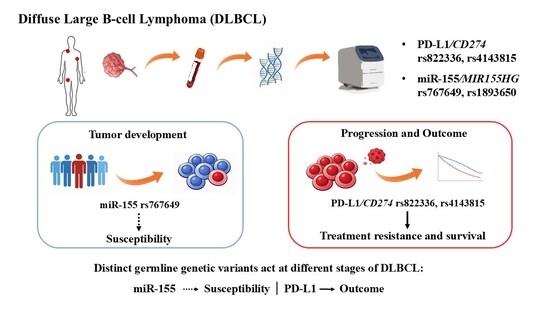
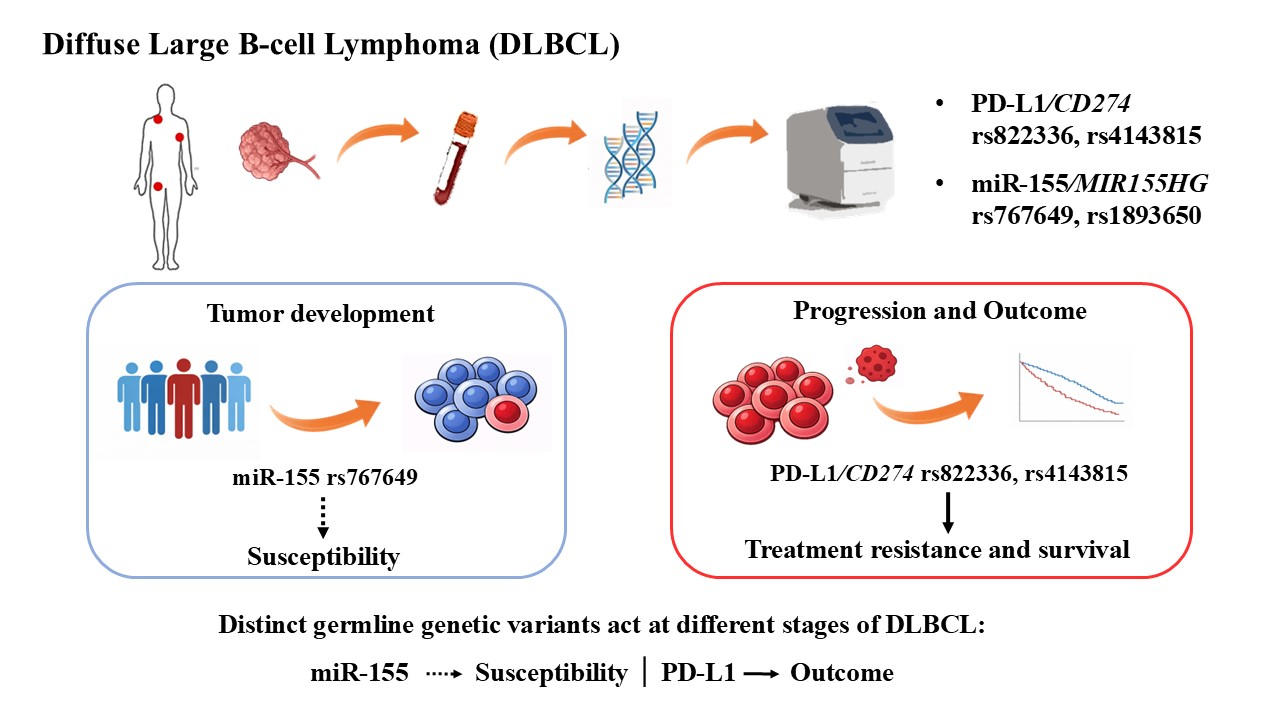
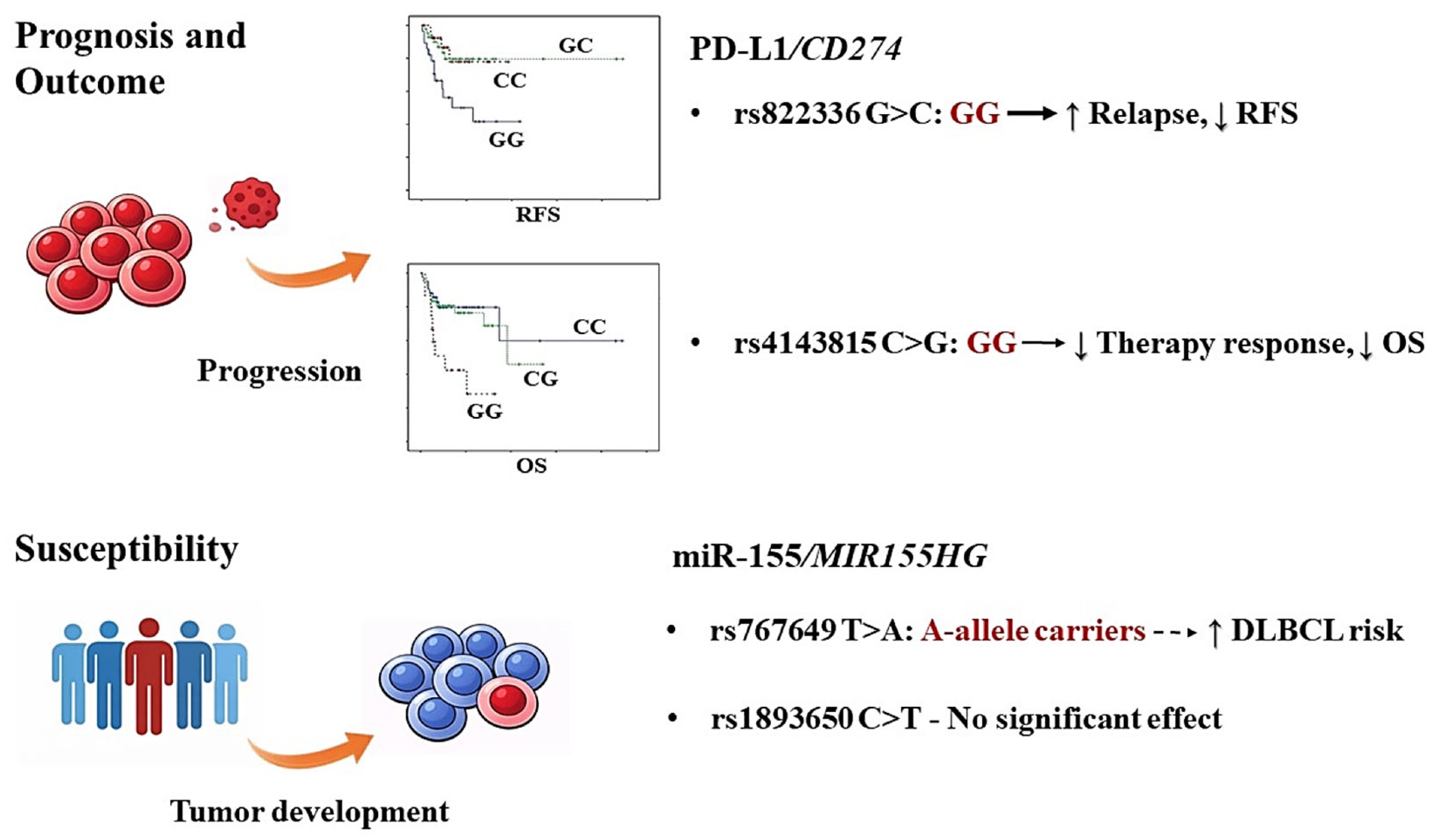
Diffuse large B-cell lymphoma (DLBCL) is an aggressive cancer with highly variable outcomes. In this study, we explored whether DLBCL behavior is influenced by inherited genetic changes in two immune-regulatory genes: the gene coding for the immune-checkpoint molecule PD-L1, which cancer cells use to evade anti-tumor immunity, and miR-155, involved in the regulation of inflammation and immune signaling. A total of 99 DLBCL patients and 113 healthy individuals were included in this study. We observed that specific variants in the PD-L1-encoding gene were associated with treatment response, relapse, and survival, depending on the genetic pattern. A variation in miR-155 was associated with an increased DLBCL risk. These hypothesis-generating results suggest that immune-related germline variants may contribute to inter-individual differences in DLBCL risk and outcome and warrant further investigation in larger, independent cohorts.
Abstract
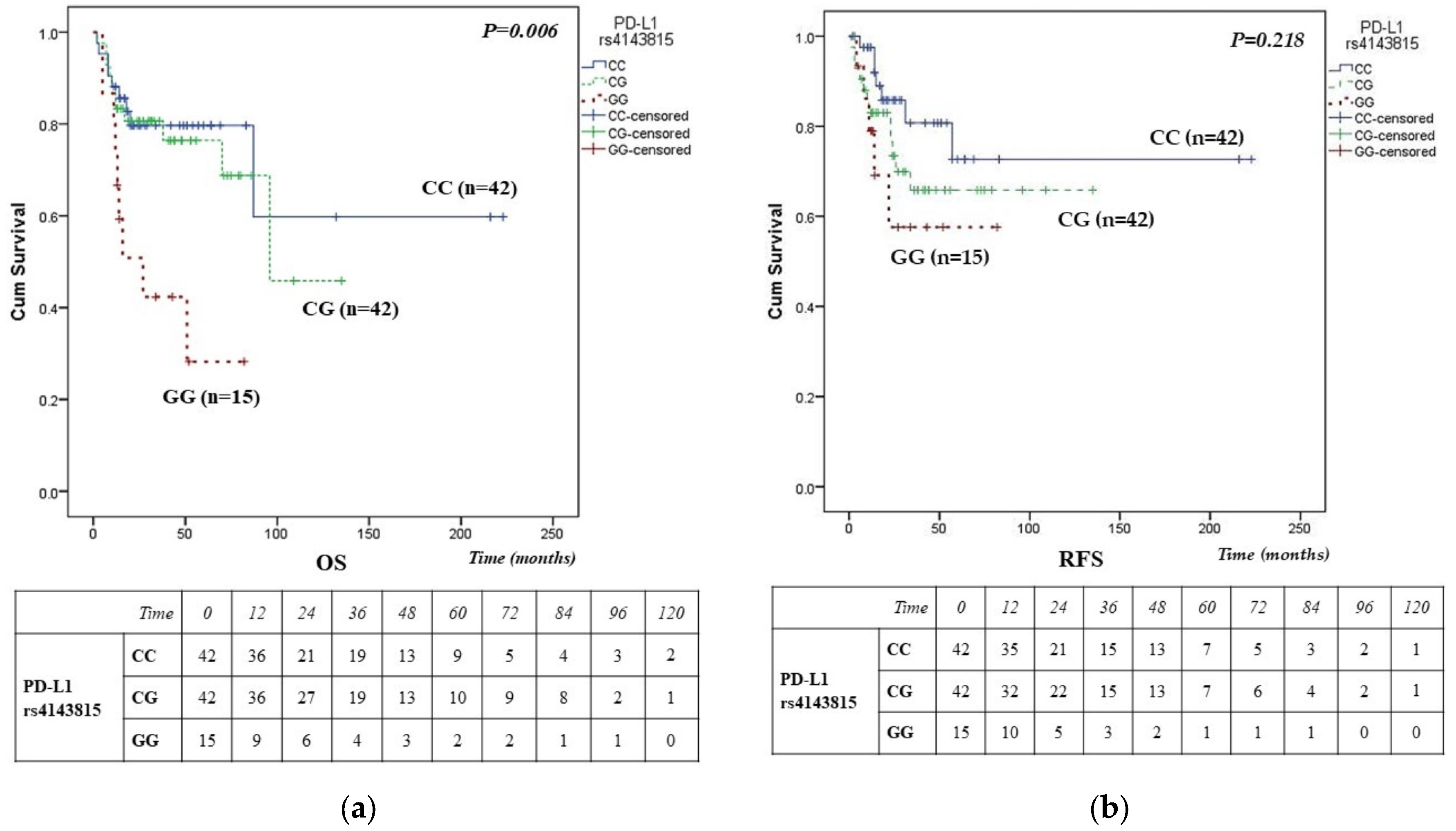
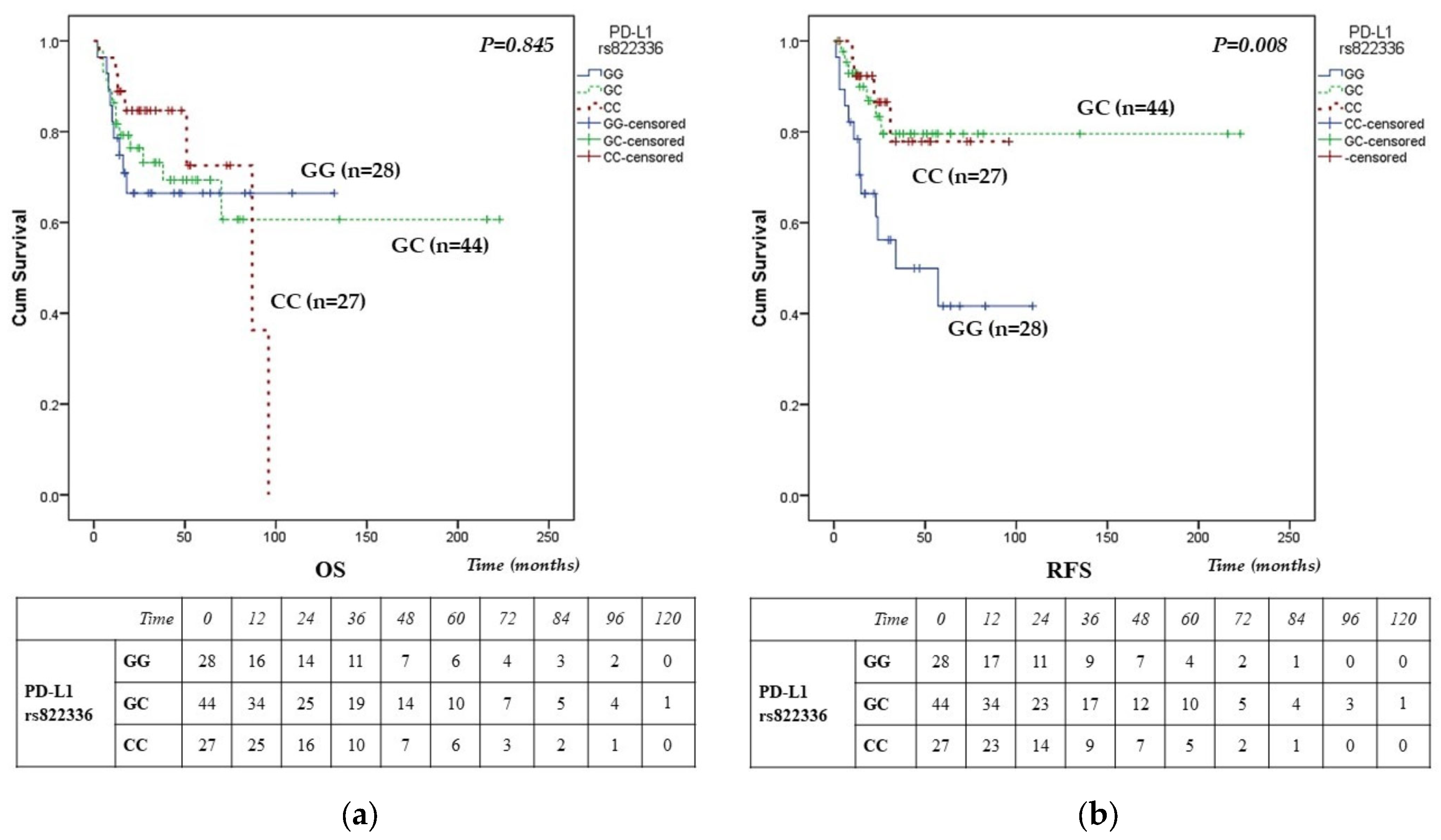
Background/Objectives: Diffuse large B-cell lymphoma (DLBCL) is an aggressive and heterogeneous malignancy, for which predicting clinical outcomes remains challenging. Although immune-checkpoint pathways are known to influence tumor biology, the impact of their germline variants on DLBCL susceptibility and prognosis has not been fully elucidated. Methods: Variants in PD-L1 gene CD274 (rs4143815, rs822336), and miR-155 gene MIR155HG (rs767649, rs1893650), assessed by TaqMan assays in 99 DLBCL patients and 113 age- and sex-matched healthy controls, were associated with clinicopathological features, treatment response, overall survival (OS), relapse-free survival (RFS), and disease susceptibility. Results: The PD-L1 variant rs822336 was significantly associated with relapse status (p = 0.005) and RFS (p = 0.008), with the wild-type GG genotype showing the poorest RFS that remained independent in the multivariate Cox analysis (HR = 2.387, p = 0.003). Conversely, rs4143815 showed a nominal association with treatment resistance (p = 0.026), while patients carrying the GG genotype had worse OS (p = 0.006). In susceptibility analyses, miR-155 variant rs767649 showed a nominal association with DLBCL risk, with the rare AA genotype showing an increased risk of DLBCL (OR = 5.234, p = 0.045), which did not remain significant after Bonferroni correction. Conclusions: In a hypothesis-generating manner, these findings suggest that PD-L1 genetic variants may predominantly influence disease progression and outcomes, while miR-155 variation may contribute to DLBCL susceptibility. These findings highlight germline immunogenetic variants as stable, treatment-independent markers that may inform future studies on risk stratification and prognosis in DLBCL.