Biopsy Ratio of Suspected to Confirmed Sarcoma Diagnosis
by
 , , , and
Nasian Mosku
1,2 ,
,
Philip Heesen
2 ,
,
Gabriela Studer
1,2, 
Beata Bode
2,
Vito Spataro
2,
Natalie D. Klass
2,
Lars Kern
2,
Mario F. Scaglioni
1,2 and
and
Bruno Fuchs
1,2,* 
1
Faculty of Medicine, University of Lucerne, 6000 Lucerne, Switzerland
2
Swiss Sarcoma Network, 6000 Lucerne, Switzerland
*
Author to whom correspondence should be addressed.
Cancers 2022, 14(7), 1632; https://doi.org/10.3390/cancers14071632
Submission received: 23 January 2022
/
Revised: 4 March 2022
/
Accepted: 18 March 2022
/
Published: 23 March 2022
(This article belongs to the Topic Application of Big Medical Data in Precision Medicine)
Simple Summary
Determining the biology of mesenchymal tumor, imaging alone is usually not enough, and the final diagnosis is established through tissue analysis If the indication to perform a biopsy is not established frequently enough, an undesired unplanned resection of a sarcoma may result, and conversely, a patient’s discomfort as well as costs may increase. In here, using a real-world data registry of quality, we included the absolute number of a consecutive series of patients, to determine the prevalence of biopsies and its related diagnosis, to establish a reference, which may allow for the definition of a quality indicator for the work-up within a multidisciplinary team.
Abstract
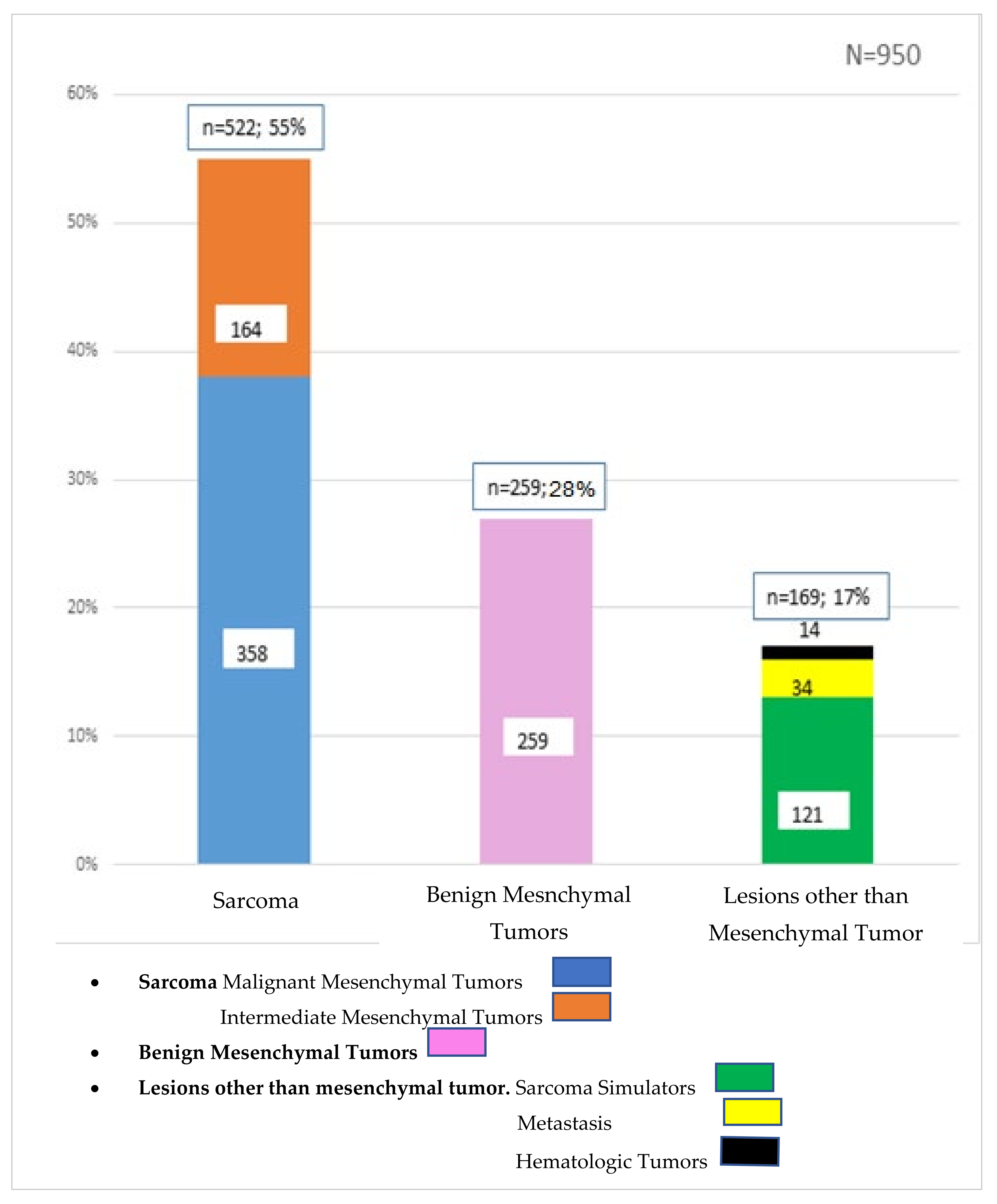
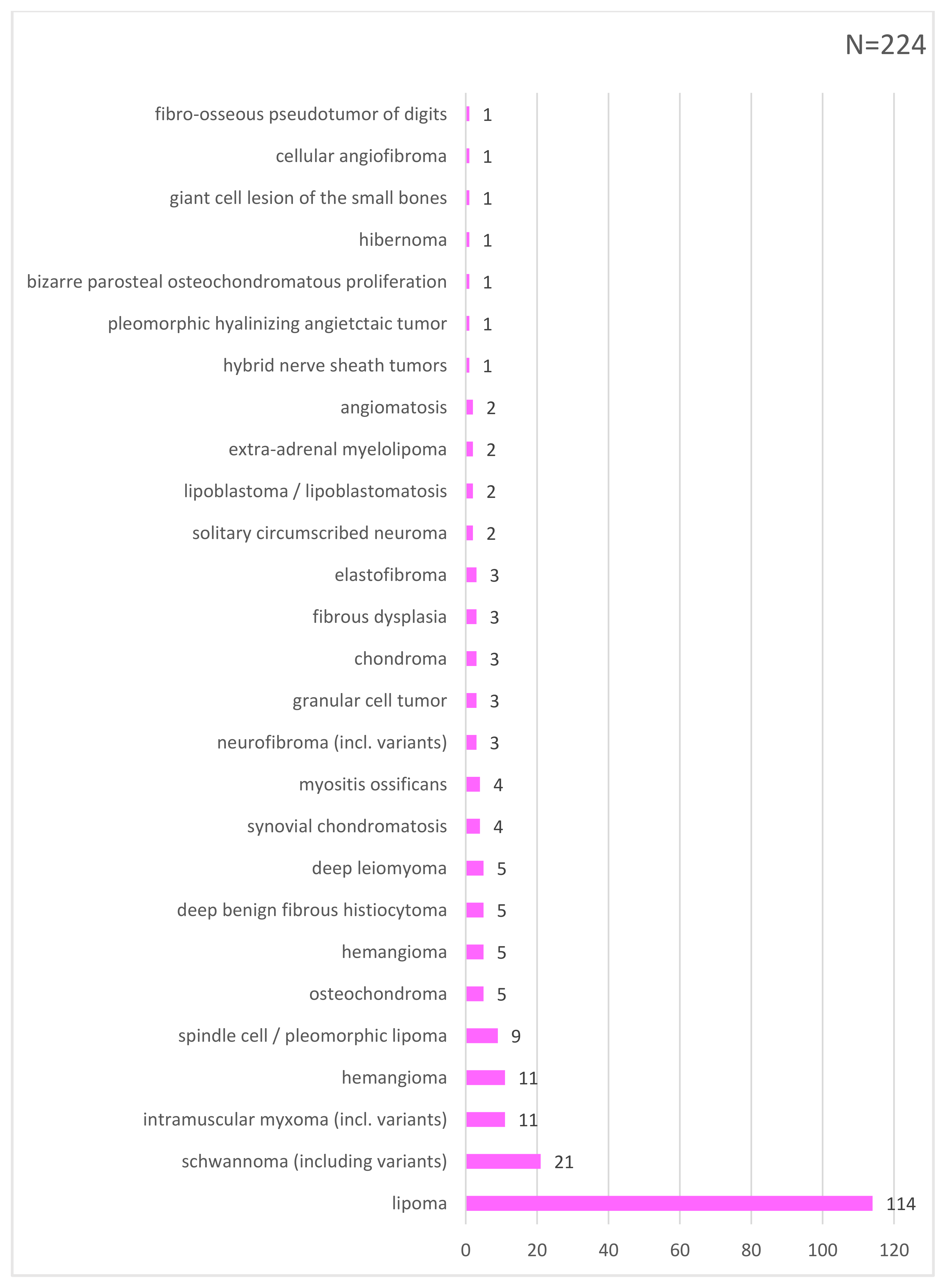
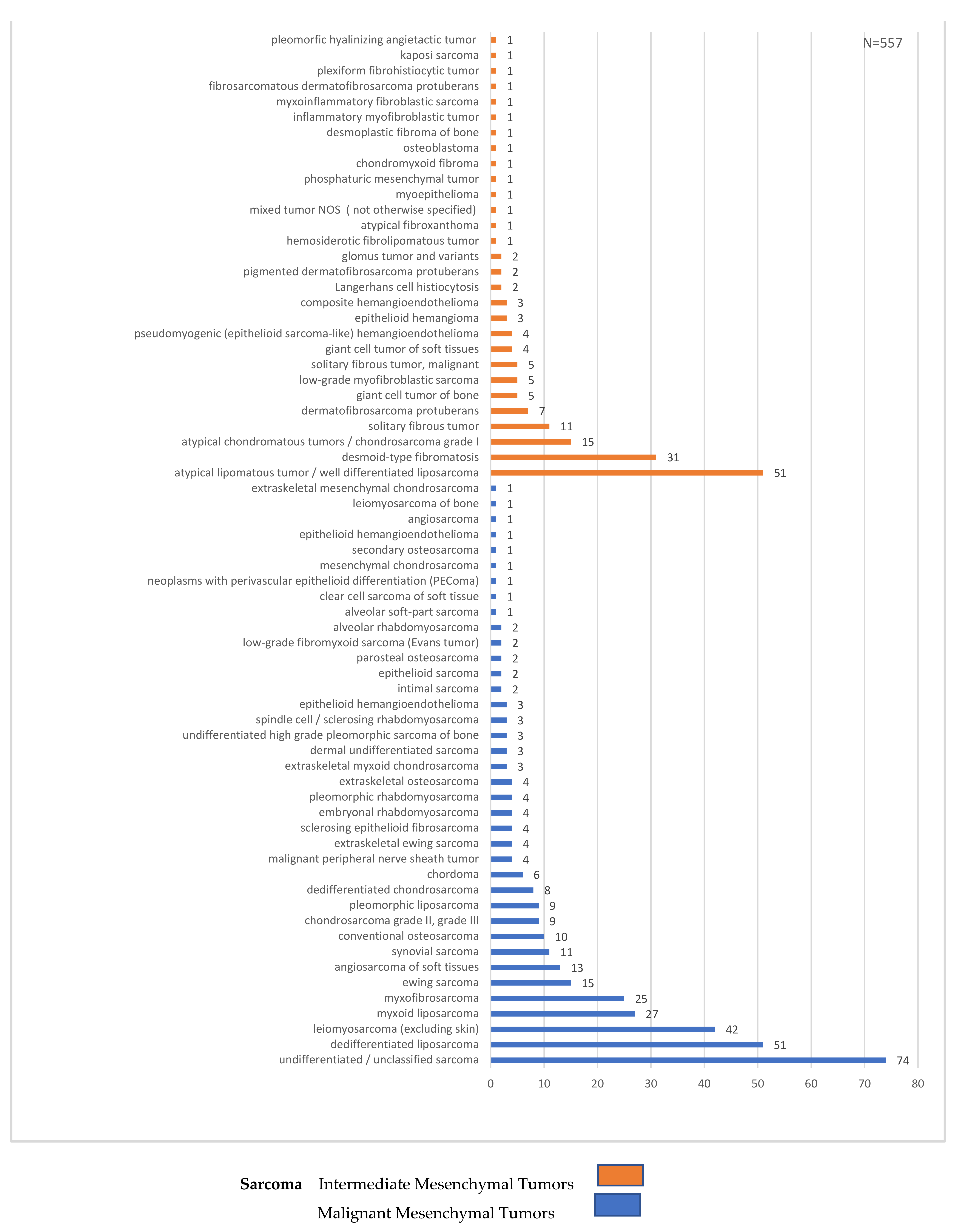
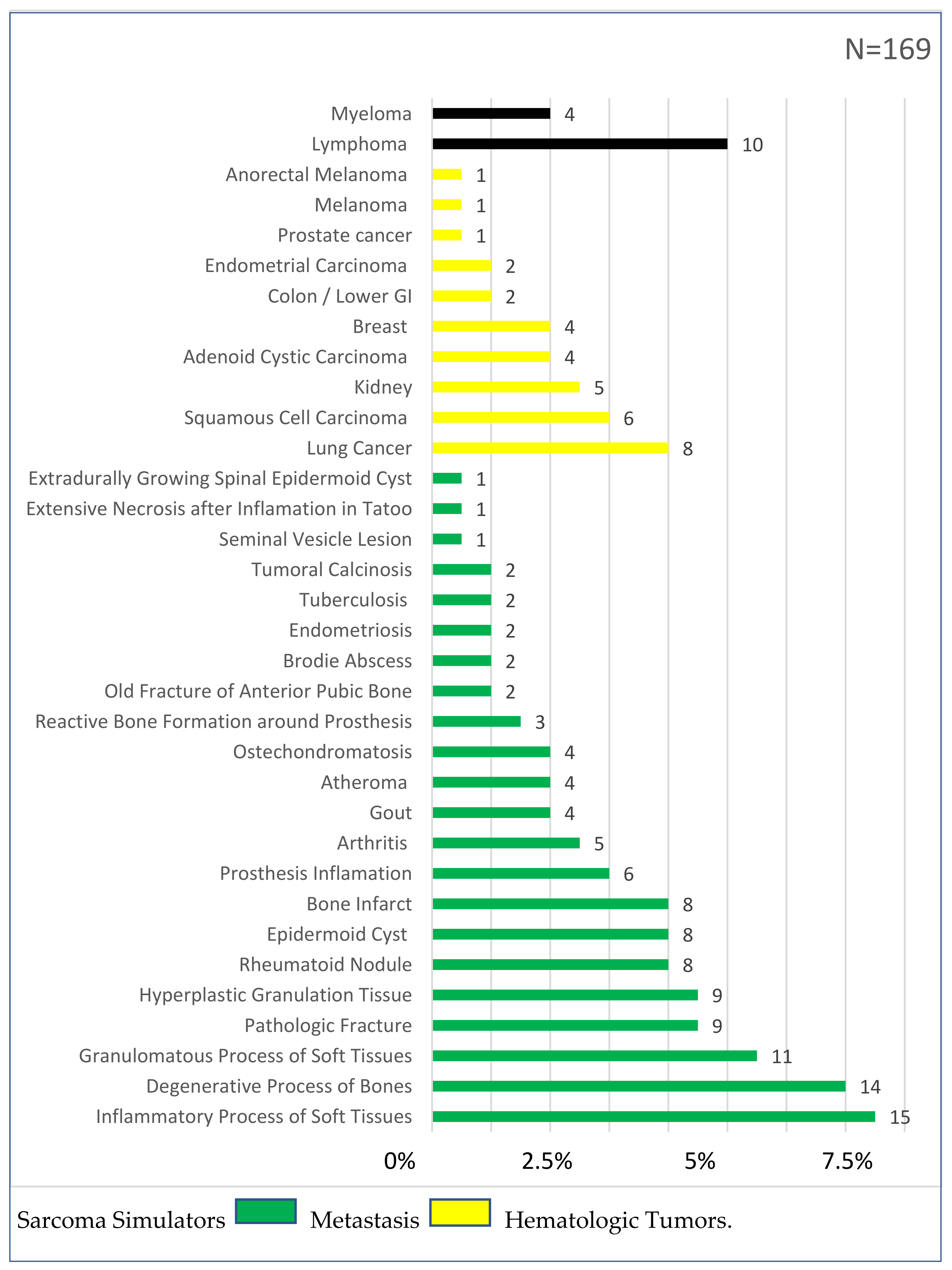
The ratio of malignancy in suspicious soft tissue and bone neoplasms (RMST) has not been often addressed in the literature. However, this value is important to understand whether biopsies are performed too often, or not often enough, and may therefore serve as a quality indicator of work-up for a multidisciplinary team (MDT). A prerequisite for the RMST of an MDT is the assessment of absolute real-world data to avoid bias and to allow comparison among other MDTs. Analyzing 950 consecutive biopsies for sarcoma-suspected lesions over a 3.2-year period, 55% sarcomas were confirmed; 28% turned out to be benign mesenchymal tumors, and 17% non-mesenchymal tumors, respectively. Of these, 3.5% were metastases from other solid malignancies, 1.5% hematologic tumors and 13% sarcoma simulators, which most often were degenerative or inflammatory processes. The RMST for biopsied lipomatous lesions was 39%. The ratio of unplanned resections was 10% in this series. Reorganizing sarcoma work-up into integrating practice units (IPU) allows the assessment of real-world data with absolute values over the geography, thereby enabling the definition of quality indicators and addressing cost efficiency aspects of sarcoma care.
Keywords:
sarcoma; biopsy; suspicion; confirmation; ratio