Peptides against Low Density Lipoprotein (LDL) Aggregation Inhibit Intracellular Cholesteryl Ester Loading and Proliferation of Pancreatic Tumor Cells
by
 , , and
Aleyda Benitez-Amaro
1,2,† ,
,
Neus Martínez-Bosch
3,†,
Noemí Manero-Rupérez
3,
Lene Claudi
1,2,
Maria Teresa La Chica Lhoëst
1,2,
Marta Soler
2,
Lia Ros-Blanco
2,
Pilar Navarro
1,3,4,* and
Vicenta Llorente-Cortés
1,2,5,* 1
Institute of Biomedical Research of Barcelona (IIBB), Spanish National Research Council (CSIC), 08036 Barcelona, Spain
2
Biomedical Research Institute Sant Pau (IIB Sant Pau), 08025 Barcelona, Spain
3
Cancer Research Program, Hospital del Mar Medical Research Institute (IMIM), Unidad Asociada IIBB-CSIC, 08003 Barcelona, Spain
4
August Pi Sunyer Biomedical Research Institute (IDIBAPS), 08036 Barcelona, Spain
5
CIBERCV, Institute of Health Carlos III, 28029 Madrid, Spain
*
Authors to whom correspondence should be addressed.
†
These authors contributed equally to this work.
Cancers 2022, 14(4), 890; https://doi.org/10.3390/cancers14040890
Submission received: 24 January 2022
/
Revised: 7 February 2022
/
Accepted: 8 February 2022
/
Published: 11 February 2022
(This article belongs to the Section Cancer Pathophysiology)
Simple Summary
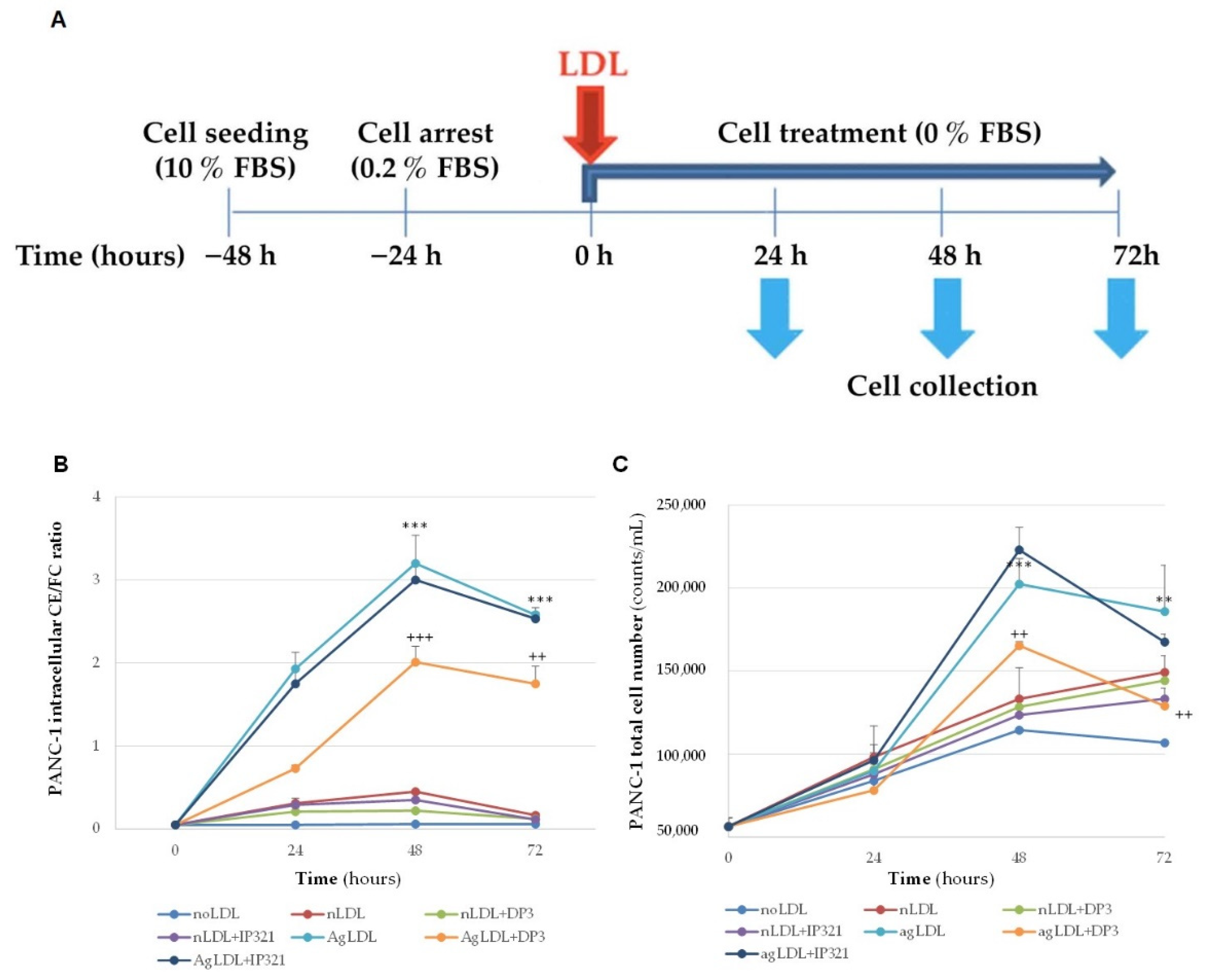
Dyslipidemia is a modifiable risk factor for pancreatic ductal adenocarcinoma (PDAC), one of the most lethal cancers. A key component of dyslipidemia is a high level of small and dense low-density lipoproteins (LDLs). These LDLs have a high probability to be entrapped and modified (aggregated) in the extracellular matrix (ECM), becoming a source of cholesterol for tumor cells. However, the effect of aggregated LDLs on tumor progression has been unexplored. The aim of this work was to determine the effect of modified LDLs on intracellular cholesteryl ester/free cholesterol ratio (CE/FC) and cancer cell growth, and the efficacy of peptides designed to inhibit LDL aggregation on these processes. Our results show that aggregated LDL upregulates the intracellular CE/FC ratio and cell growth in pancreatic cancer and that these upregulatory effects were blocked by peptides against LDL aggregation. We propose that anti-LDL aggregation peptides deserve to be further investigated as anti-tumoral strategies.
Abstract
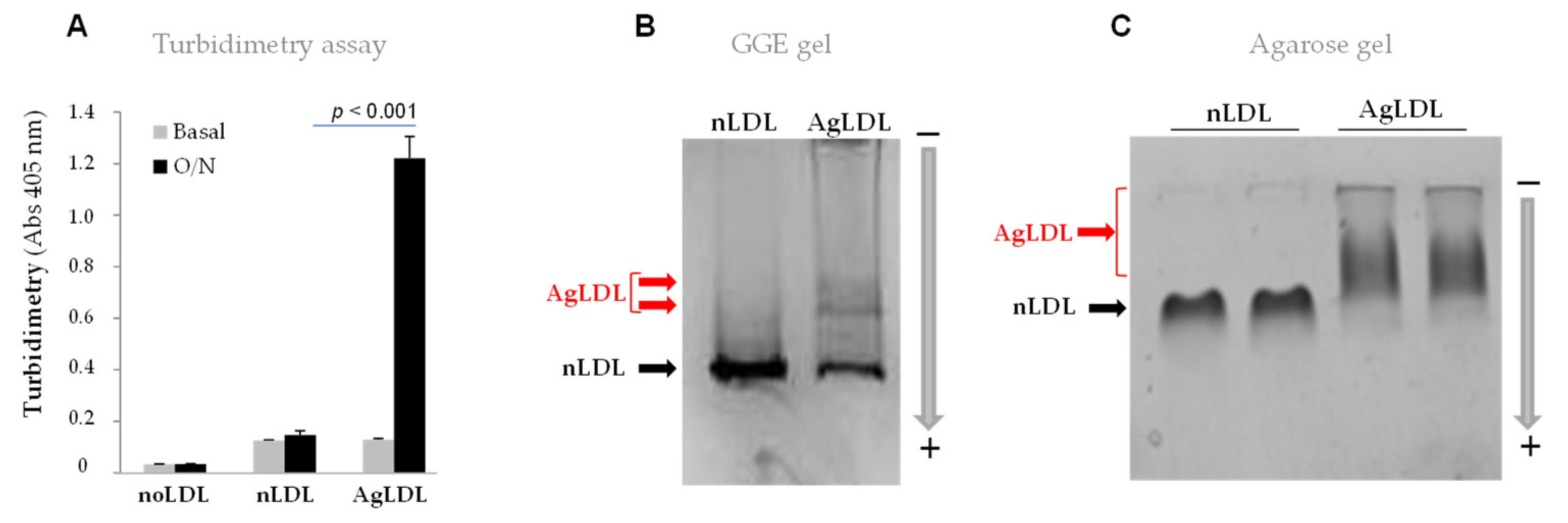
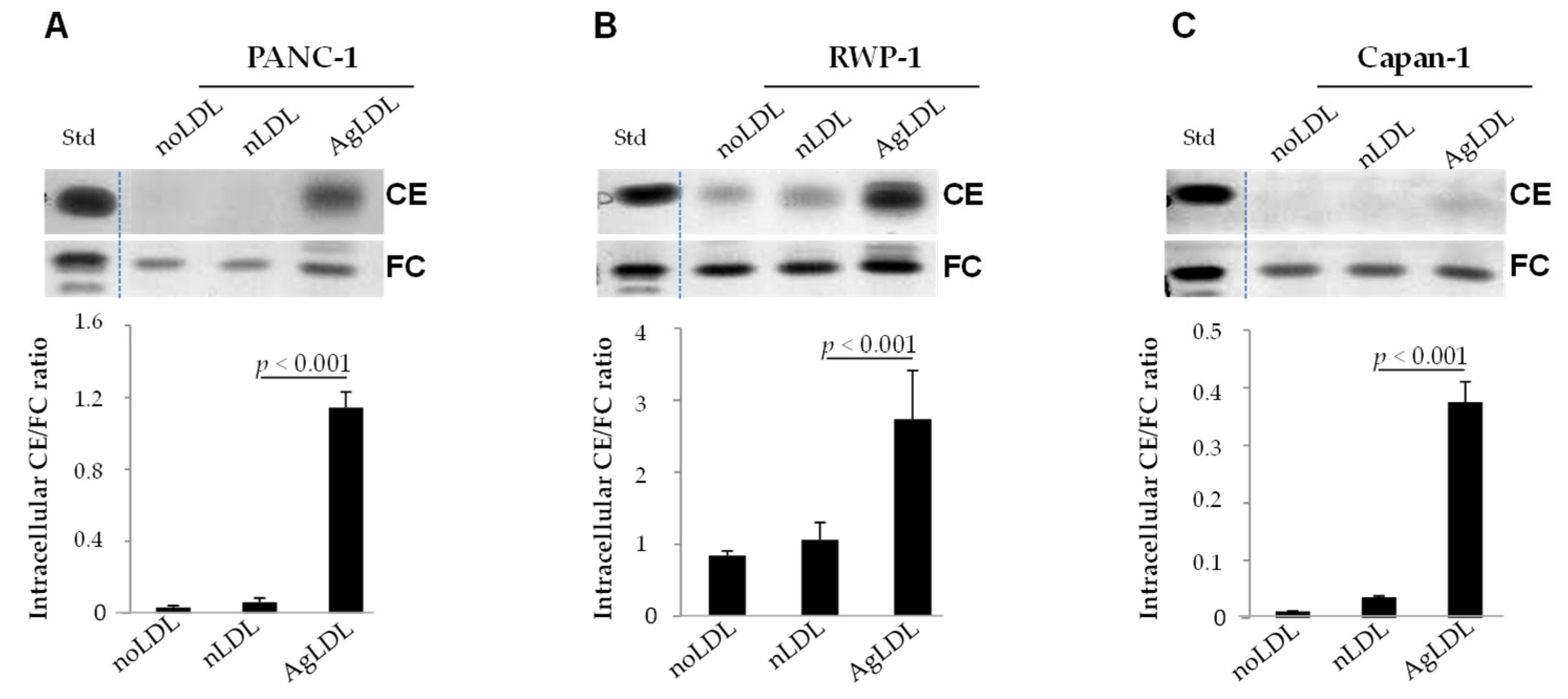
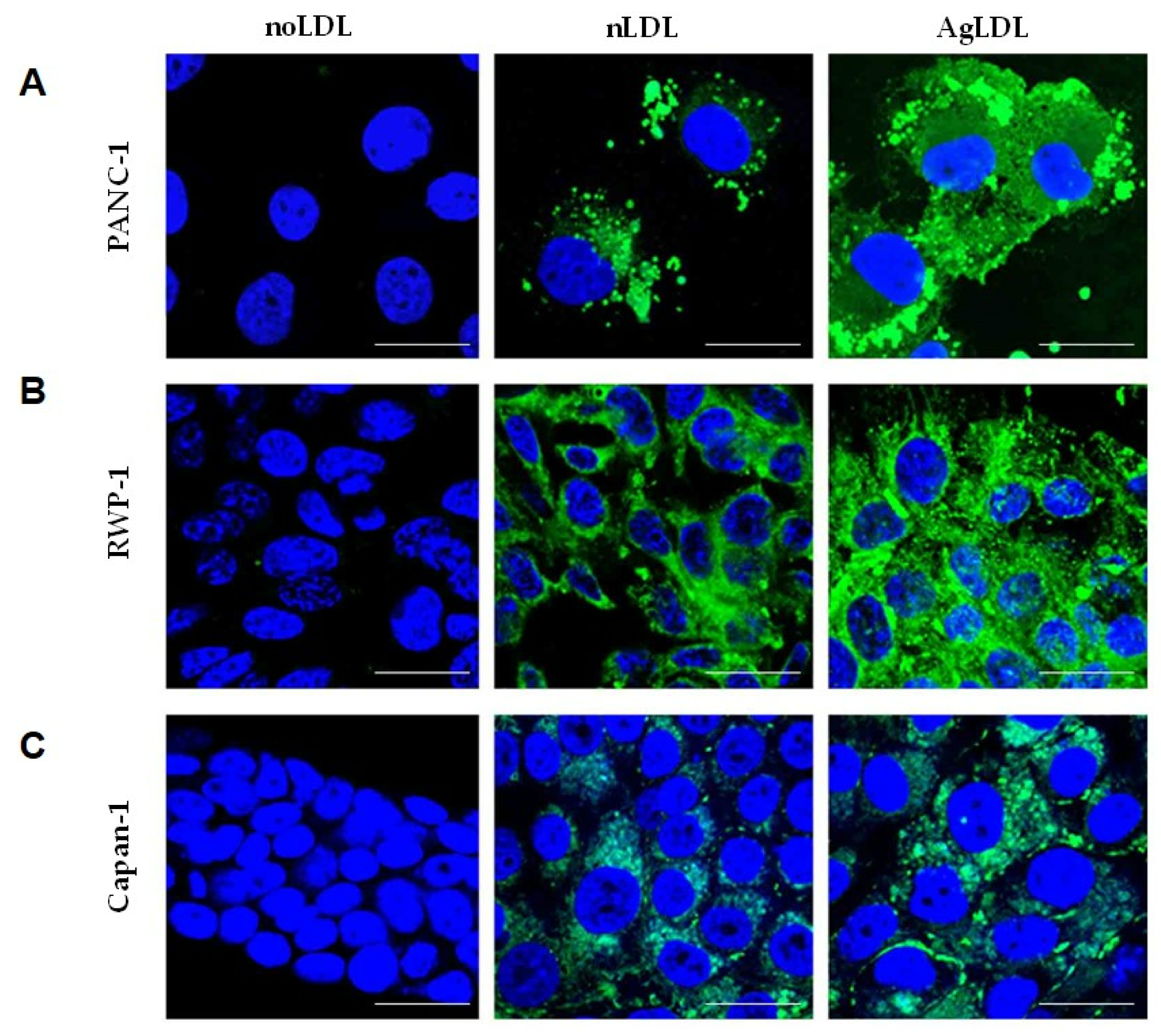
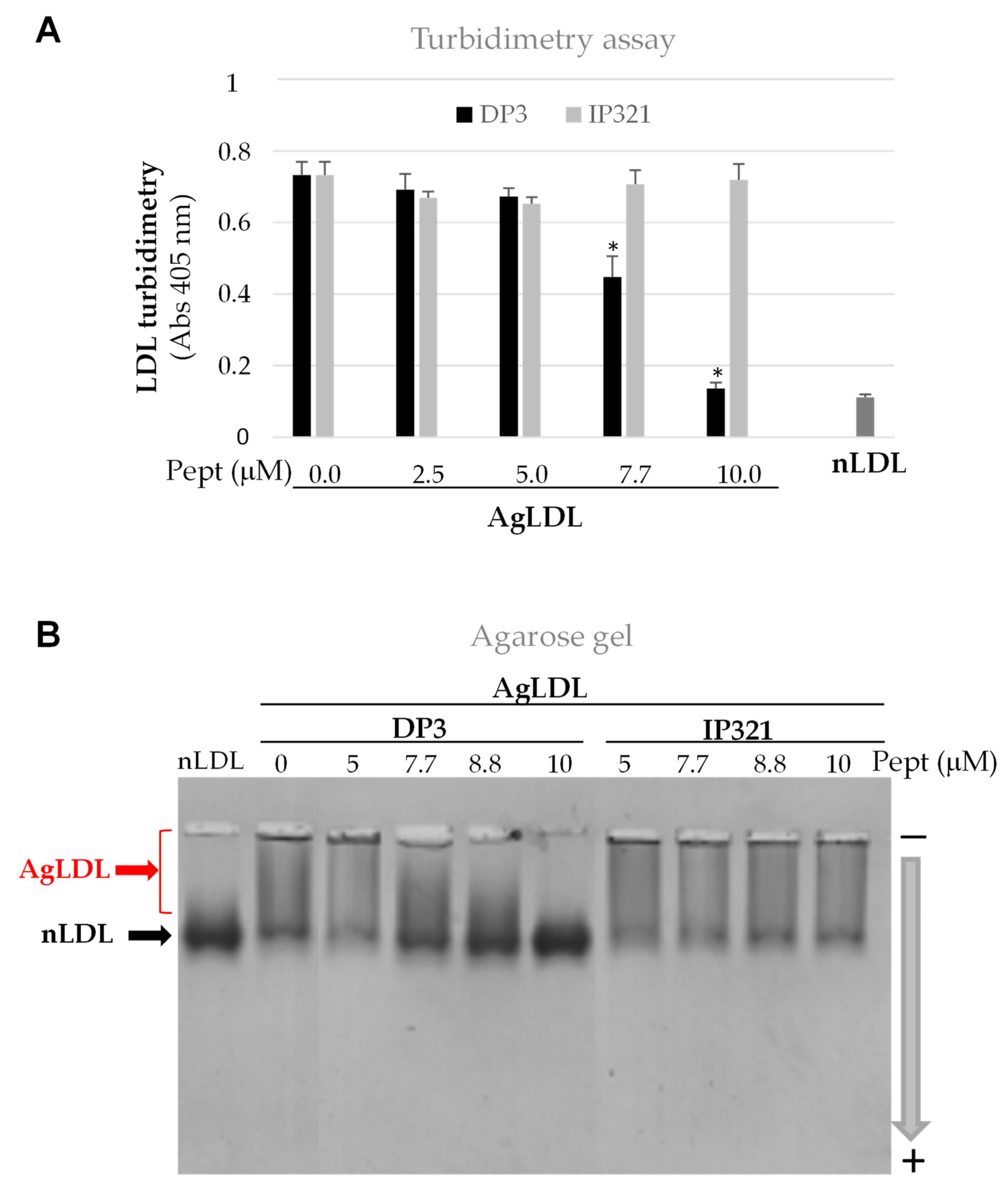
Dyslipidemia, metabolic disorders and/or obesity are postulated as risk factors for pancreatic ductal adenocarcinoma (PDAC). The majority of patients with these metabolic alterations have low density lipoproteins (LDLs) with increased susceptibility to become aggregated in the extracellular matrix (ECM). LDL aggregation can be efficiently inhibited by low-density lipoprotein receptor-related protein 1 (LRP1)-based peptides. The objectives of this work were: (i) to determine if aggregated LDLs affect the intracellular cholesteryl ester (CE)/free cholesterol (FC) ratio and/or the tumor pancreatic cell proliferation, using sphingomyelinase-modified LDL particles (Aggregated LDL, AgLDL); and (ii) to test whether LRP1-based peptides, highly efficient against LDL aggregation, can interfere in these processes. For this, we exposed human pancreatic cancer cell lines (PANC-1, RWP-1 and Capan-1) to native (nLDL) or AgLDLs in the absence or presence of LRP1-based peptides (DP3) or irrelevant peptides (IP321). Results of thin-layer chromatography (TLC) following lipid extraction indicate that AgLDLs induce a higher intracellular CE/FC ratio than nLDL, and that DP3 but not IP321 counteracts this effect. AgLDLs also increase PANC-1 cell proliferation, which is inhibited by the DP3 peptide. Our results indicate that AgLDL-induced intracellular CE accumulation plays a crucial role in the proliferation of pancreatic tumor cell lines. Peptides with anti-LDL aggregation properties may thus exhibit anti-tumor effects.