De Novo Assembly and Characterization of Venom Gland Transcriptome for Rhabdophis lateralis


Abstract
1. Introduction
2. Results and Discussion
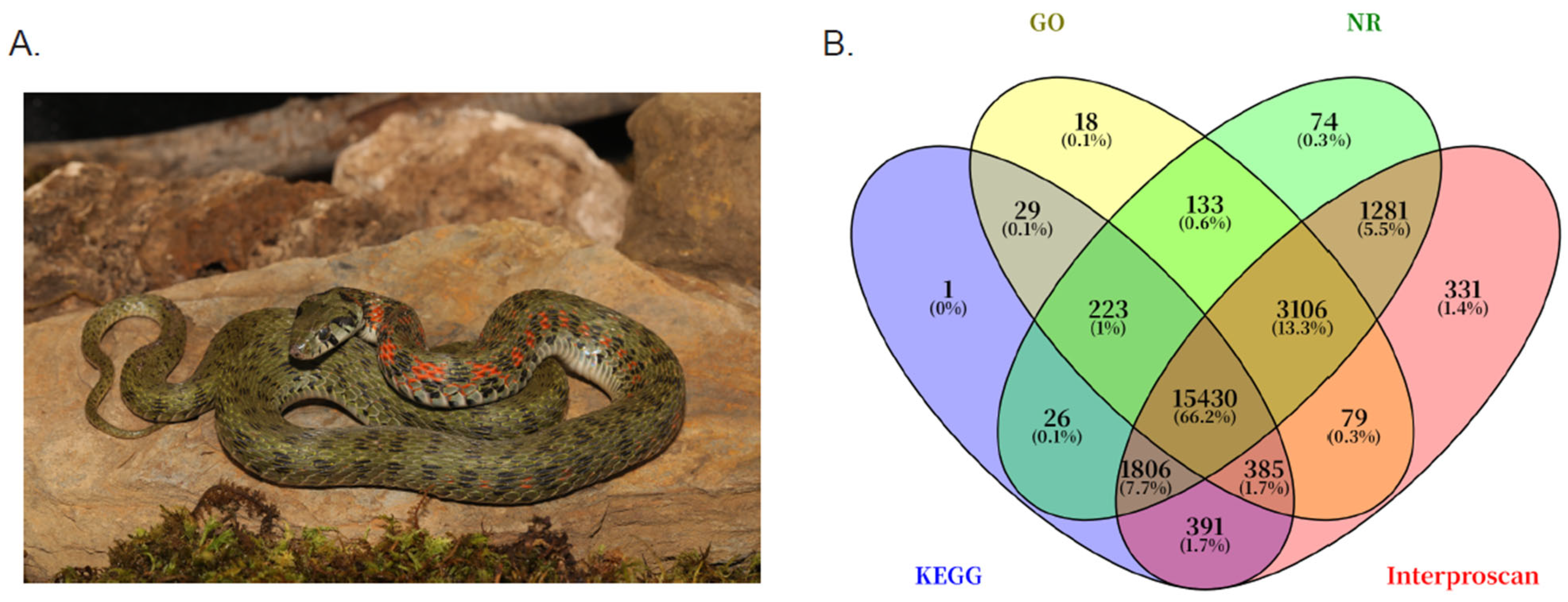
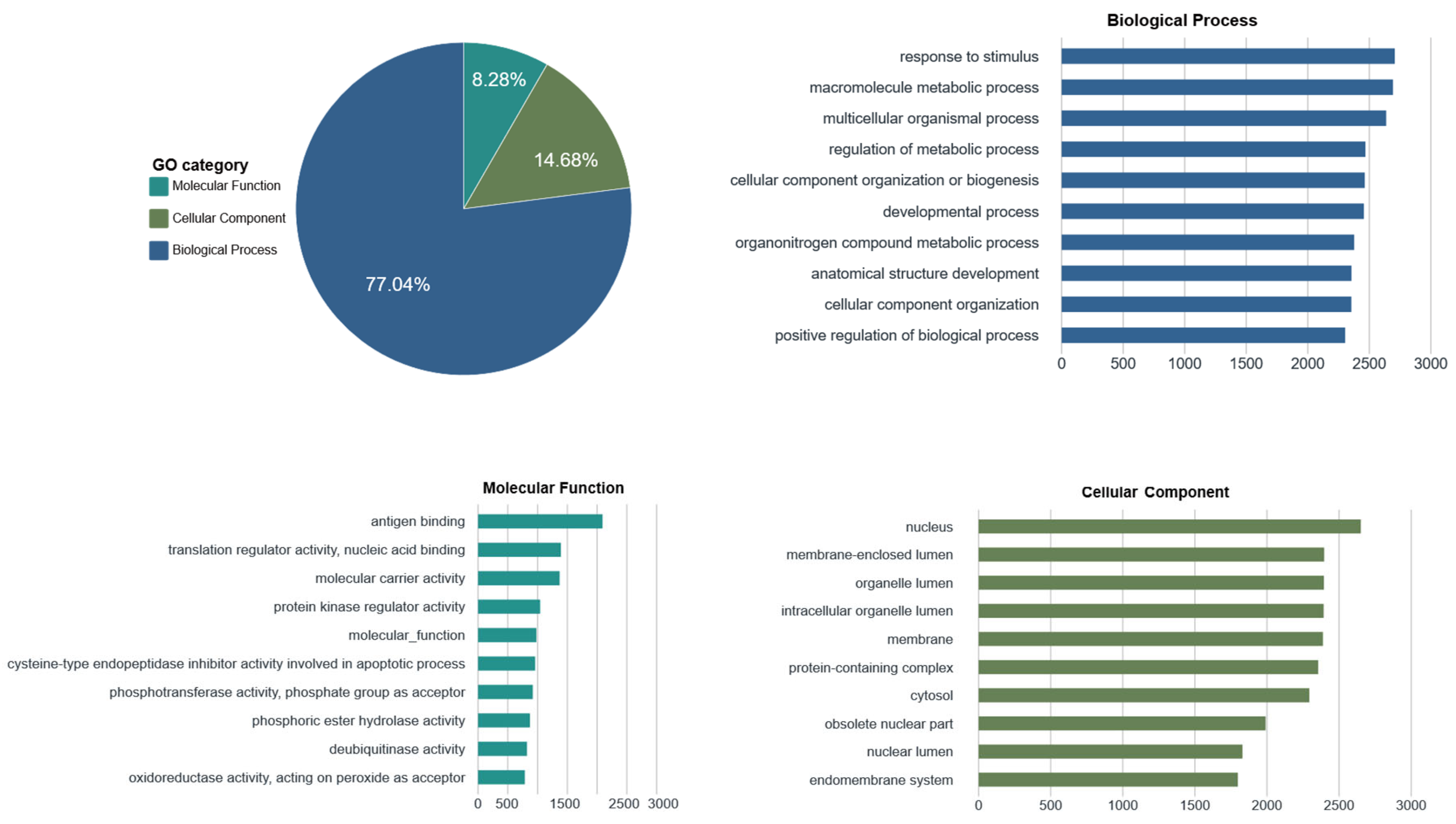
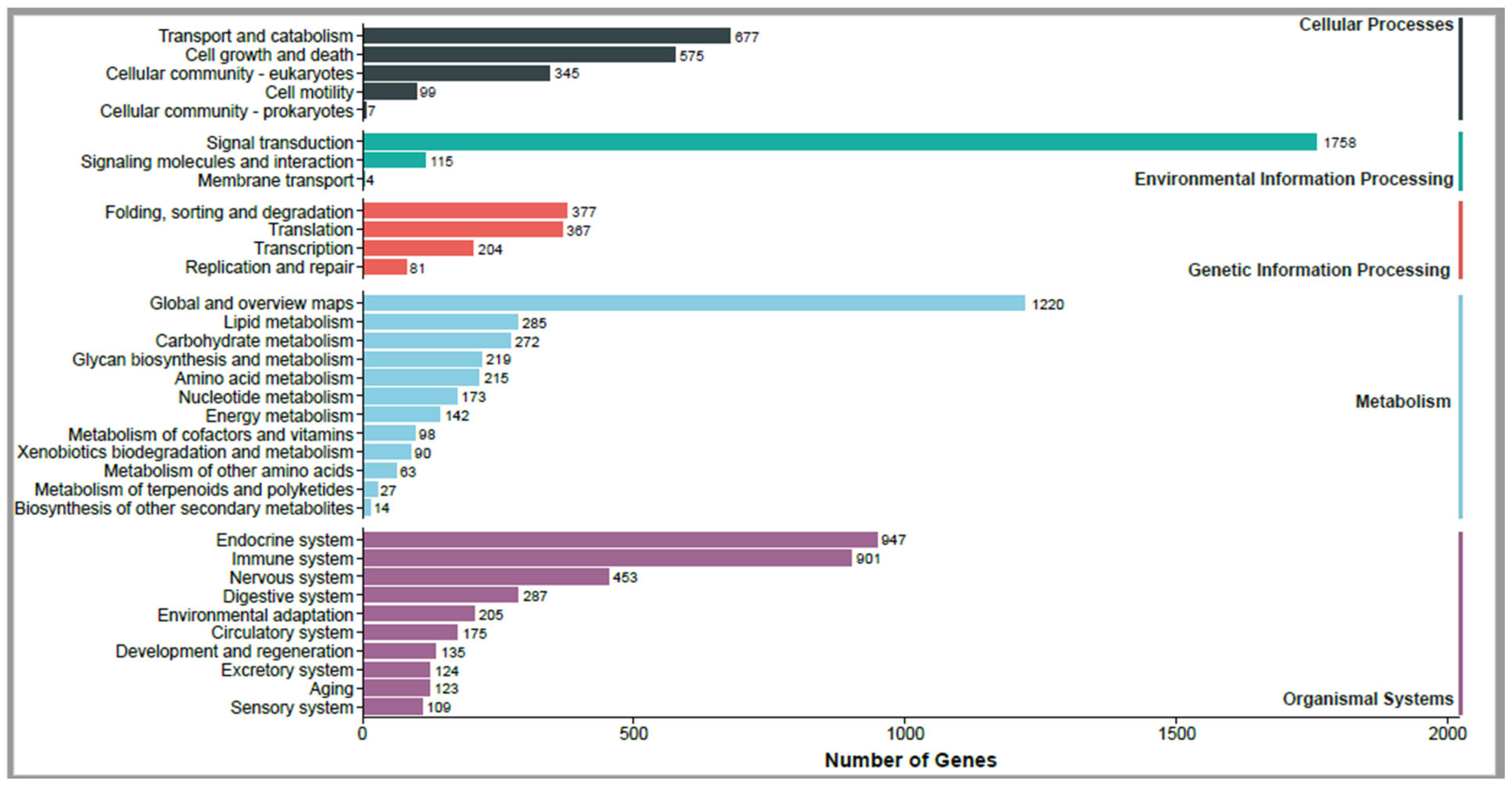
2.1. Transcriptome Assembly and Functional Annotation
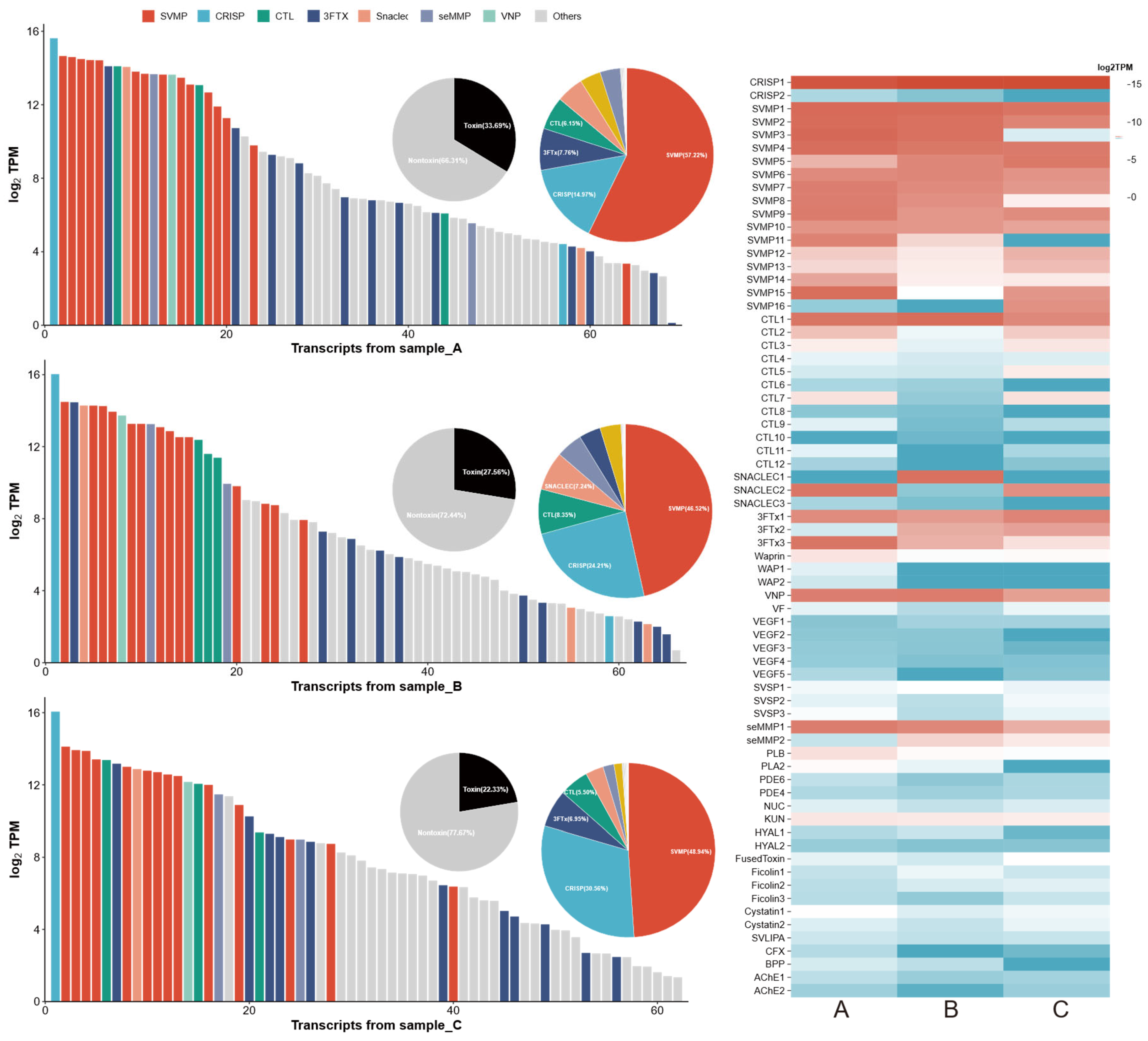
2.2. Identification of Potential Toxin Genes
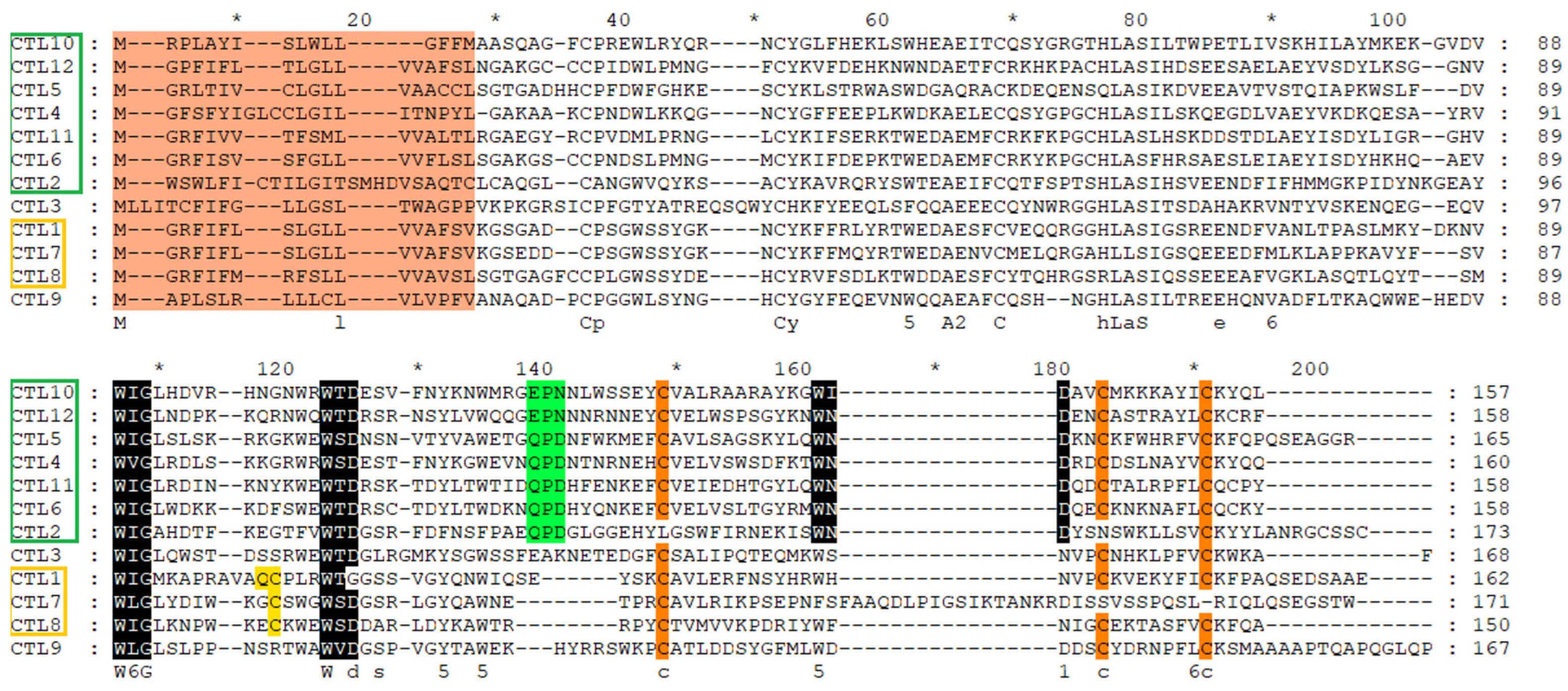
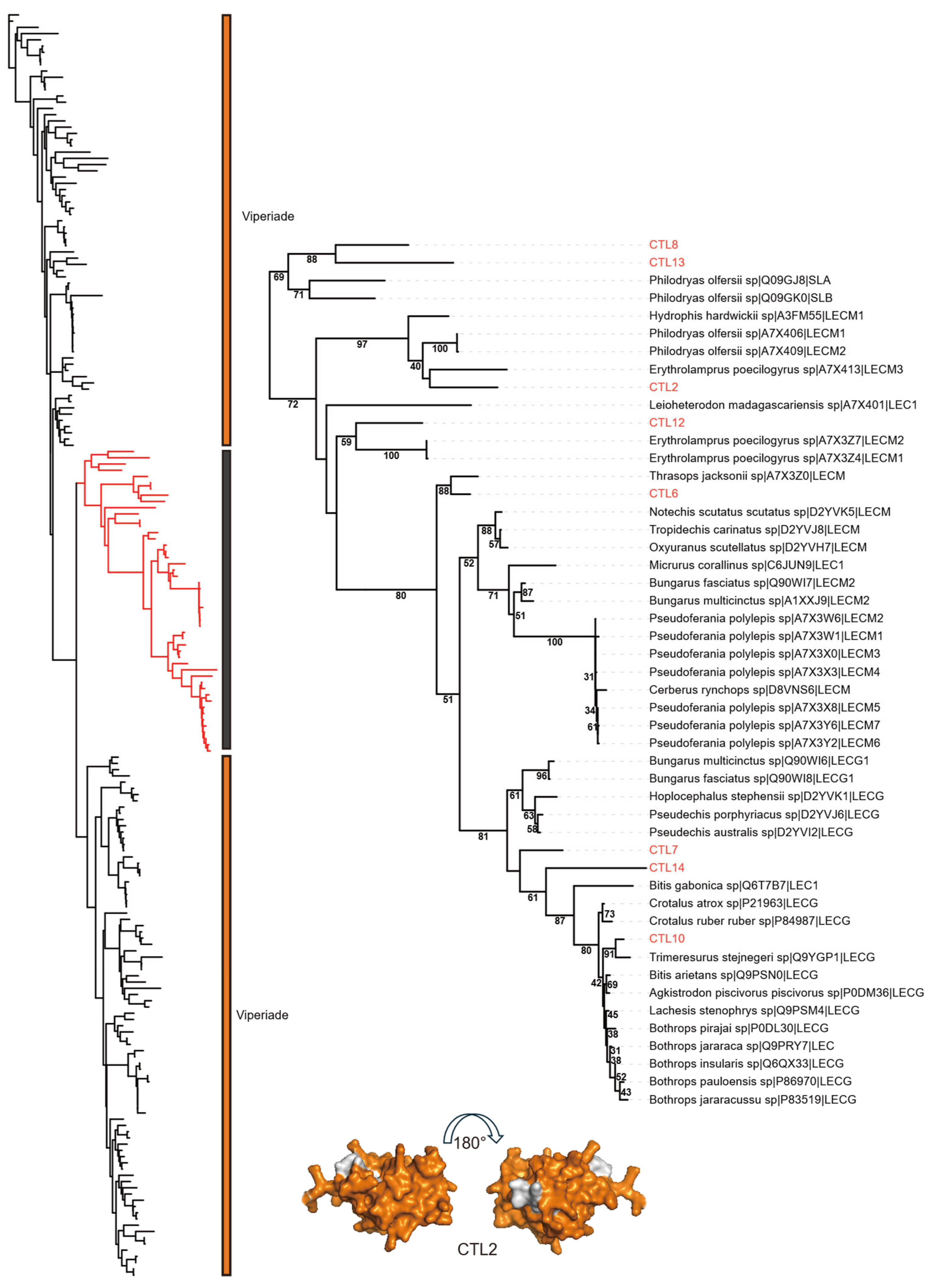
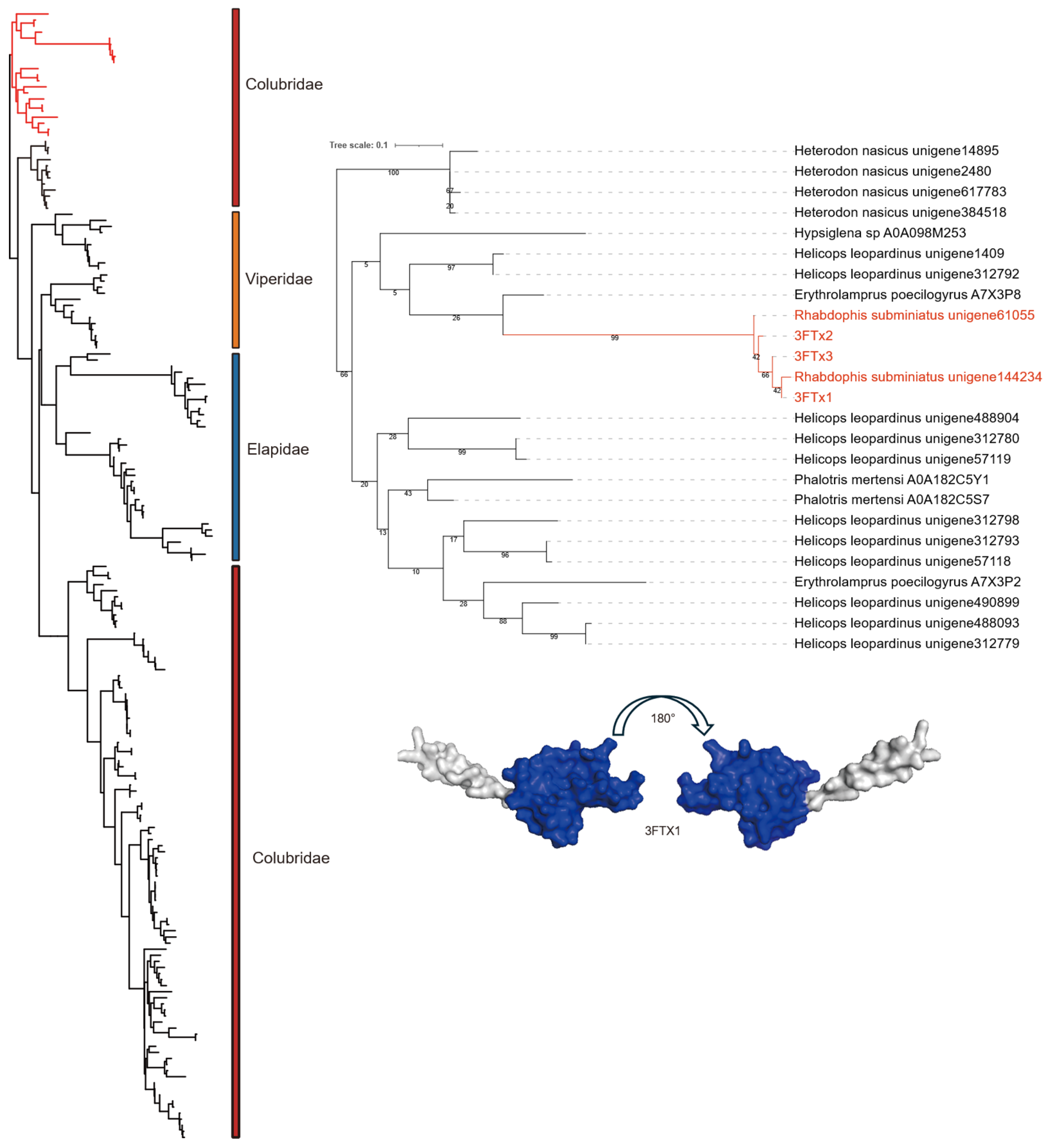
2.3. Sequence and Phylogenetic Analysis of Major Toxins
3. Conclusions
4. Materials and Methods
4.1. Sample Collection and Transcriptome Sequencing
4.2. Transcriptome Assembly and Annotation
4.3. Expression Analyses and Ortholog Identification
Supplementary Materials
Author Contributions
Funding
Institutional Review Board Statement
Informed Consent Statement
Data Availability Statement
Conflicts of Interest
References
- Saviola, A.J.; Peichoto, M.E.; Mackessy, S.P. Rear-fanged snake venoms: An untapped source of novel compounds and potential drug leads. Toxin Rev. 2014, 33, 185–201. [Google Scholar] [CrossRef]
- Jackson, T.N.; Jouanne, H.; Vidal, N. Snake venom in context: Neglected clades and concepts. Front. Ecol. Evol. 2019, 7, 332. [Google Scholar] [CrossRef]
- Junqueira-de-Azevedo, I.L.M.; Campos, P.F.; Ching, A.T.C.; Mackessy, S.P. Colubrid Venom Composition: An-Omics Perspective. Toxins 2016, 8, 230. [Google Scholar] [CrossRef] [PubMed]
- Mackessy, S.P.; Saviola, A.J. Understanding biological roles of venoms among the Caenophidia: The importance of rear-fanged snakes. Integr. Comp. Biol. 2016, 56, 1004–1021. [Google Scholar] [CrossRef]
- Cerda, P. Toxic Forms Most Beautiful: The Evolutionary Dynamics of Rear-Fanged Snake Venoms. Ph.D. Thesis, University of Michigan, Ann Arbor, MI, USA, 2023. [Google Scholar]
- Modahl, C.M.; Frietze, S.; Mackessy, S.P. Transcriptome-facilitated proteomic characterization of rear-fanged snake venoms reveal abundant metalloproteinases with enhanced activity. J. Proteom. 2018, 187, 223–234. [Google Scholar] [CrossRef]
- Fry, B.G.; Casewell, N.R.; Wüster, W.; Vidal, N.; Young, B.; Jackson, T.N. The structural and functional diversification of the Toxicofera reptile venom system. Toxicon 2012, 60, 434–448. [Google Scholar] [CrossRef]
- Mackessy, S.P. Venom production and secretion in reptiles. J. Exp. Biol. 2022, 225, jeb227348. [Google Scholar] [CrossRef]
- Fry, B.G.; Sunagar, K.; Casewell, N.R.; Kochva, E.; Roelants, K.; Scheib, H.; Wüster, W.; Vidal, N.; Young, B.; Burbrink, F. The origin and evolution of the Toxicofera reptile venom system. In Venomous Reptiles and Their Toxins: Evolution, Pathophysiology and Biodiscovery; Fry, B.G., Ed.; Oxford University Press: Oxford, UK, 2015; pp. 1–31. [Google Scholar]
- Kochva, E.; Gans, C. Salivary glands of snakes. Clin. Toxicol. 1970, 3, 363–387. [Google Scholar] [CrossRef]
- Kardong, K.V. Evolutionary patterns in advanced snakes. Am. Zool. 1980, 20, 269–282. [Google Scholar] [CrossRef]
- Weinstein, S.A. Reptile Venom Glands: Form, Function, Future, Concepts and Controversies. In Handbook of Venoms and Toxins of Reptiles; CRC Press: Boca Raton, FL, USA, 2021; pp. 99–122. [Google Scholar]
- Takeuchi, H.; Zhu, G.-X.; Ding, L.; Tang, Y.; Ota, H.; Mori, A.; Oh, H.-S.; Hikida, T. Taxonomic validity and phylogeography of the East Eurasian natricine snake, Rhabdophis lateralis (Berthold, 1859) (Serpentes: Colubridae), as inferred from mitochondrial DNA sequence data. Curr. Herpetol. 2014, 33, 148–153. [Google Scholar] [CrossRef]
- Hifumi, T.; Sakai, A.; Yamamoto, A.; Murakawa, M.; Ato, M.; Shibayama, K.; Ginnaga, A.; Kato, H.; Koido, Y.; Inoue, J. Clinical characteristics of yamakagashi (Rhabdophis tigrinus) bites: A national survey in Japan, 2000–2013. J. Intensive Care 2014, 2, 19. [Google Scholar] [PubMed]
- Okamoto, T. Historical biogeography of the terrestrial reptiles of Japan: A comparative analysis of geographic ranges and molecular phylogenies. In Species Diversity of Animals in Japan; Springer: Tokyo, Japan, 2017; pp. 135–163. [Google Scholar]
- Yoshida, T.; Ujiie, R.; Savitzky, A.H.; Jono, T.; Inoue, T.; Yoshinaga, N.; Aburaya, S.; Aoki, W.; Takeuchi, H.; Ding, L. Dramatic dietary shift maintains sequestered toxins in chemically defended snakes. Proc. Natl. Acad. Sci. USA 2020, 117, 5964–5969. [Google Scholar] [PubMed]
- Morokuma, K.; Kobori, N.; Fukuda, T.; Uchida, T.; Sakai, A.; Toriba, M.; Ohkuma, K.; Nakai, K.; Kurata, T.; Takahashi, M. Experimental manufacture of equine antivenom against yamakagashi (Rhabdophis tigrinus). Jpn. J. Infect. Dis. 2011, 64, 397–402. [Google Scholar] [CrossRef] [PubMed]
- Silva, A.; Hifumi, T.; Sakai, A.; Yamamoto, A.; Murakawa, M.; Ato, M.; Shibayama, K.; Ginnaga, A.; Kato, H.; Koido, Y. Rhabdophis tigrinus is not a pit viper but its bites result in venom-induced consumptive coagulopathy similar to many viper bites. J. Intensive Care 2014, 2, 43. [Google Scholar] [CrossRef]
- Modahl, C.M.; Mackessy, S.P. Venoms of rear-fanged snakes: New proteins and novel activities. Front. Ecol. Evol. 2019, 7, 279. [Google Scholar] [CrossRef]
- Hifumi, T.; Sakai, A.; Yamamoto, A.; Murakawa, M.; Ato, M.; Shibayama, K.; Kato, H.; Koido, Y.; Inoue, J.; Abe, Y.; et al. Effect of antivenom therapy of Rhabdophis tigrinus (Yamakagashi snake) bites. J. Intensive Care 2014, 2, 44. [Google Scholar]
- Komori, K.; Konishi, M.; Maruta, Y.; Toriba, M.; Sakai, A.; Matsuda, A.; Hori, T.; Nakatani, M.; Minamino, N.; Akizawa, T. Characterization of a novel metalloproteinase in Duvernoy’s gland of Rhabdophis tigrinus tigrinus. J. Toxicol. Sci. 2006, 31, 157–168. [Google Scholar]
- Phan, P.; Deshwal, A.; McMahon, T.A.; Slikas, M.; Andrews, E.; Becker, B.; Kumar, T.K.S. A review of rattlesnake venoms. Toxins 2023, 16, 2. [Google Scholar] [CrossRef]
- Gutiérrez, J.M.; Rucavado, A.; Escalante, T. Snake venom metalloproteinases. In Handbook of Venoms and Toxins of Reptiles; CRC Press: Boca Raton, FL, USA, 2016; pp. 115–138. [Google Scholar]
- Casewell, N.; Sunagar, K.; Takacs, Z.; Calvete, J.; Jackson, T.; Fry, B. Snake venom metalloprotease. In Venomous Reptiles and Their Toxins: Evolution, Pathophysiology and Biodiscovery; Oxford University Press: Oxford, UK, 2015; p. 347. [Google Scholar]
- Chowdhury, A.; Zdenek, C.N.; Dobson, J.S.; Bourke, L.A.; Soria, R.; Fry, B.G. Clinical implications of differential procoagulant toxicity of the palearctic viperid genus Macrovipera, and the relative neutralization efficacy of antivenoms and enzyme inhibitors. Toxicol. Lett. 2021, 340, 77–88. [Google Scholar] [CrossRef]
- Casewell, N.R.; Harrison, R.A.; Wüster, W.; Wagstaff, S.C. Comparative venom gland transcriptome surveys of the saw-scaled vipers (Viperidae: Echis) reveal substantial intra-family gene diversity and novel venom transcripts. BMC Genom. 2009, 10, 564. [Google Scholar]
- Bode, W.; Gomis-Rüth, F.-X.; Stöckler, W. Astacins, serralysins, snake venom and matrix metalloproteinases exhibit identical zinc-binding environments (HEXXHXXGXXH and Met-turn) and topologies and should be grouped into a common family, the ‘metzincins’. FEBS Lett. 1993, 331, 134–140. [Google Scholar]
- Xie, B.; Dashevsky, D.; Rokyta, D.; Ghezellou, P.; Fathinia, B.; Shi, Q.; Richardson, M.K.; Fry, B.G. Dynamic genetic differentiation drives the widespread structural and functional convergent evolution of snake venom proteinaceous toxins. BMC Biol. 2022, 20, 4. [Google Scholar] [CrossRef] [PubMed]
- Pla, D.; Sanz, L.; Whiteley, G.; Wagstaff, S.C.; Harrison, R.A.; Casewell, N.R.; Calvete, J.J. What killed Karl Patterson Schmidt? Combined venom gland transcriptomic, venomic and antivenomic analysis of the South African green tree snake (the boomslang), Dispholidus typus. Biochim. Biophys. Acta (BBA)-Gen. Subj. 2017, 1861, 814–823. [Google Scholar]
- Fry, B.G.; Scheib, H.; van der Weerd, L.; Young, B.; McNaughtan, J.; Ramjan, S.R.; Vidal, N.; Poelmann, R.E.; Norman, J.A. Evolution of an arsenal: Structural and functional diversification of the venom system in the advanced snakes (Caenophidia). Mol. Cell. Proteom. 2008, 7, 215–246. [Google Scholar]
- Estrella, A.; Sánchez, E.E.; Galán, J.A.; Tao, W.A.; Guerrero, B.; Navarrete, L.F.; Rodríguez-Acosta, A. Characterization of toxins from the broad-banded water snake Helicops angulatus (Linnaeus, 1758): Isolation of a cysteine-rich secretory protein, Helicopsin. Arch. Toxicol. 2011, 85, 305–313. [Google Scholar]
- Wang, F.; Li, H.; Liu, M.-N.; Song, H.; Han, H.-M.; Wang, Q.-l.; Yin, C.-C.; Zhou, Y.-C.; Qi, Z.; Shu, Y.-Y. Structural and functional analysis of natrin, a venom protein that targets various ion channels. Biochem. Biophys. Res. Commun. 2006, 351, 443–448. [Google Scholar] [CrossRef]
- Morrissette, J.; Krätzschmar, J.; Haendler, B.; El-Hayek, R.; Mochca-Morales, J.; Martin, B.M.; Patel, J.R.; Moss, R.L.; Schleuning, W.-D.; Coronado, R. Primary structure and properties of helothermine, a peptide toxin that blocks ryanodine receptors. Biophys. J. 1995, 68, 2280–2288. [Google Scholar] [CrossRef]
- Mochca-Morales, J.; Martin, B.M.; Possani, L.D. Isolation and characterization of helothermine, a novel toxin from Heloderma horridum horridum (Mexican beaded lizard) venom. Toxicon 1990, 28, 299–309. [Google Scholar] [CrossRef]
- Tadokoro, T.; Modahl, C.M.; Maenaka, K.; Aoki-Shioi, N. Cysteine-rich secretory proteins (CRISPs) from venomous snakes: An overview of the functional diversity in a large and underappreciated superfamily. Toxins 2020, 12, 175. [Google Scholar] [CrossRef]
- Arlinghaus, F.; Fry, B.; Sunagar, K.; Jackson, T.; Eble, J.; Reeks, T.; Clemetson, K. Lectin Proteins, Venomous Reptiles and their Toxins: Evolution: Pathophysiology & Biodiscovery; Oxford University Press: Oxford, UK, 2015. [Google Scholar]
- Walker, J.R.; Nagar, B.; Young, N.M.; Hirama, T.; Rini, J.M. X-ray crystal structure of a galactose-specific C-type lectin possessing a novel decameric quaternary structure. Biochemistry 2004, 43, 3783–3792. [Google Scholar]
- Clemetson, K.J. Snaclecs (snake C-type lectins) that inhibit or activate platelets by binding to receptors. Toxicon 2010, 56, 1236–1246. [Google Scholar] [CrossRef]
- Dashevsky, D.; Fry, B.G. Ancient diversification of three-finger toxins in Micrurus coral snakes. J. Mol. Evol. 2018, 86, 58–67. [Google Scholar] [CrossRef] [PubMed]
- Fry, B.G.; Wüster, W.; Ryan Ramjan, S.F.; Jackson, T.; Martelli, P.; Kini, R.M. Analysis of Colubroidea snake venoms by liquid chromatography with mass spectrometry: Evolutionary and toxinological implications. Rapid Commun. Mass Spectrom. 2003, 17, 2047–2062. [Google Scholar] [CrossRef] [PubMed]
- Fry, B.G.; Lumsden, N.G.; Wüster, W.; Wickramaratna, J.C.; Hodgson, W.C.; Manjunatha Kini, R. Isolation of a neurotoxin (α-colubritoxin) from a nonvenomous colubrid: Evidence for early origin of venom in snakes. J. Mol. Evol. 2003, 57, 446–452. [Google Scholar] [CrossRef] [PubMed]
- Nirthanan, S.; Gwee, M.C. Three-finger α-neurotoxins and the nicotinic acetylcholine receptor, forty years on. J. Pharmacol. Sci. 2004, 94, 1–17. [Google Scholar] [CrossRef]
- Rochelle, M.J.; Kardong, K.V. Constriction versus envenomation in prey capture by the brown tree snake, Boiga irregularis (Squamata: Colubridae). Herpetologica 1993, 49, 301–304. [Google Scholar]
- Koludarov, I.; Senoner, T.; Jackson, T.N.; Dashevsky, D.; Heinzinger, M.; Aird, S.D.; Rost, B. Domain loss enabled evolution of novel functions in the snake three-finger toxin gene superfamily. Nat. Commun. 2023, 14, 4861. [Google Scholar] [CrossRef]
- Hifumi, T.; Sakai, A.; Yamamoto, A.; Morokuma, K.; Otani, N.; Takahashi, M.; Ato, M. Rhabdophis tigrinus (Yamakagashi) bites in Japan over the last 50 years: A retrospective survey. Front. Public Health 2022, 9, 775458. [Google Scholar] [CrossRef]
- Chen, S.; Zhou, Y.; Chen, Y.; Gu, J. fastp: An ultra-fast all-in-one FASTQ preprocessor. Bioinformatics 2018, 34, i884–i890. [Google Scholar] [CrossRef]
- Zhang, J.; Kobert, K.; Flouri, T.; Stamatakis, A. PEAR: A fast and accurate Illumina Paired-End reAd mergeR. Bioinformatics 2014, 30, 614–620. [Google Scholar]
- Grabherr, M.G.; Haas, B.J.; Yassour, M.; Levin, J.Z.; Thompson, D.A.; Amit, I.; Adiconis, X.; Fan, L.; Raychowdhury, R.; Zeng, Q. Trinity: Reconstructing a full-length transcriptome without a genome from RNA-Seq data. Nat. Biotechnol. 2011, 29, 644. [Google Scholar] [PubMed]
- Rokyta, D.R.; Lemmon, A.R.; Margres, M.J.; Aronow, K. The venom-gland transcriptome of the eastern diamondback rattlesnake (Crotalus adamanteus). BMC Genom. 2012, 13, 312. [Google Scholar] [CrossRef] [PubMed]
- Bankevich, A.; Nurk, S.; Antipov, D.; Gurevich, A.A.; Dvorkin, M.; Kulikov, A.S.; Lesin, V.M.; Nikolenko, S.I.; Pham, S.; Prjibelski, A.D. SPAdes: A new genome assembly algorithm and its applications to single-cell sequencing. J. Comput. Biol. 2012, 19, 455–477. [Google Scholar] [PubMed]
- Xie, Y.; Wu, G.; Tang, J.; Luo, R.; Patterson, J.; Liu, S.; Huang, W.; He, G.; Gu, S.; Li, S. SOAPdenovo-Trans: De novo transcriptome assembly with short RNA-Seq reads. Bioinformatics 2014, 30, 1660–1666. [Google Scholar]
- Fu, L.; Niu, B.; Zhu, Z.; Wu, S.; Li, W. CD-HIT: Accelerated for clustering the next-generation sequencing data. Bioinformatics 2012, 28, 3150–3152. [Google Scholar]
- Nachtigall, P.G.; Rautsaw, R.M.; Ellsworth, S.A.; Mason, A.J.; Rokyta, D.R.; Parkinson, C.L.; Junqueira-de-Azevedo, I.L. ToxCodAn: A new toxin annotator and guide to venom gland transcriptomics. Brief. Bioinform. 2021, 22, bbab095. [Google Scholar]
- Nachtigall, P.G.; Kashiwabara, A.Y.; Durham, A.M. CodAn: Predictive models for precise identification of coding regions in eukaryotic transcripts. Brief. Bioinform. 2020, 22, bbaa045. [Google Scholar] [CrossRef]
- Camacho, C.; Boratyn, G.M.; Joukov, V.; Vera Alvarez, R.; Madden, T.L. ElasticBLAST: Accelerating sequence search via cloud computing. BMC Bioinform. 2023, 24, 117. [Google Scholar] [CrossRef]
- Waterhouse, R.M.; Seppey, M.; Simão, F.A.; Manni, M.; Ioannidis, P.; Klioutchnikov, G.; Kriventseva, E.V.; Zdobnov, E.M. BUSCO applications from quality assessments to gene prediction and phylogenomics. Mol. Biol. Evol. 2018, 35, 543–548. [Google Scholar] [CrossRef]
- Finn, R.D.; Clements, J.; Eddy, S.R. HMMER web server: Interactive sequence similarity searching. Nucleic Acids Res. 2011, 39, W29–W37. [Google Scholar] [CrossRef]
- Langmead, B.; Salzberg, S.L. Fast gapped-read alignment with Bowtie 2. Nat. Methods 2012, 9, 357–359. [Google Scholar] [CrossRef]
- Li, B.; Dewey, C.N. RSEM: Accurate transcript quantification from RNA-Seq data with or without a reference genome. BMC Bioinform. 2011, 12, 323. [Google Scholar] [CrossRef]
- Rice, P.; Longden, I.; Bleasby, A. EMBOSS: The European molecular biology open software suite. Trends Genet. 2000, 16, 276–277. [Google Scholar] [CrossRef]
- Edgar, R.C. MUSCLE v5 enables improved estimates of phylogenetic tree confidence by ensemble bootstrapping. BioRxiv 2021. [Google Scholar] [CrossRef]
- Stamatakis, A. RAxML version 8: A tool for phylogenetic analysis and post-analysis of large phylogenies. Bioinformatics 2014, 30, 1312–1313. [Google Scholar]
- Nicholas, K.B. GeneDoc: Analysis and visualization of genetic variation. EMBnet News 1997, 4, 1–4. [Google Scholar]
- Abramson, J.; Adler, J.; Dunger, J.; Evans, R.; Green, T.; Pritzel, A.; Ronneberger, O.; Willmore, L.; Ballard, A.J.; Bambrick, J.J.N. Accurate structure prediction of biomolecular interactions with AlphaFold 3. Nature 2024, 630, 493–500. [Google Scholar] [CrossRef]



| Sample | Raw_Bases | Clean_Bases | Clean_Reads | Q20 Rate (%) | Q30 Rate (%) | GC_Count (%) |
|---|---|---|---|---|---|---|
| R. lateralis_A | 7,245,753,600 | 7,182,157,778 | 48,304,610 | 99.38 | 97.64 | 45.62 |
| R. lateralis_B | 7,554,168,300 | 7,514,922,486 | 50,360,694 | 99.37 | 97.65 | 44.77 |
| R. lateralis_C | 11,377,664,400 | 11,332,613,482 | 75,841,036 | 99.20 | 97.07 | 45.18 |
| Sample | Contigs | CDS Count | Final Sequences (Post-Chimera) |
|---|---|---|---|
| A | 226,498 | 17,000 | 4552 |
| B | 250,150 | 14,970 | 3040 |
| C | 532,251 | 19,291 | 4420 |
Disclaimer/Publisher’s Note: The statements, opinions and data contained in all publications are solely those of the individual author(s) and contributor(s) and not of MDPI and/or the editor(s). MDPI and/or the editor(s) disclaim responsibility for any injury to people or property resulting from any ideas, methods, instructions or products referred to in the content. |
© 2026 by the authors. Licensee MDPI, Basel, Switzerland. This article is an open access article distributed under the terms and conditions of the Creative Commons Attribution (CC BY) license.
Share and Cite
Chen, J.; Liu, Q.; Tan, S.; Guo, P.; Du, L. De Novo Assembly and Characterization of Venom Gland Transcriptome for Rhabdophis lateralis. Toxins 2026, 18, 167. https://doi.org/10.3390/toxins18040167
Chen J, Liu Q, Tan S, Guo P, Du L. De Novo Assembly and Characterization of Venom Gland Transcriptome for Rhabdophis lateralis. Toxins. 2026; 18(4):167. https://doi.org/10.3390/toxins18040167
Chicago/Turabian StyleChen, Jiahao, Qin Liu, Songwen Tan, Peng Guo, and Lianming Du. 2026. "De Novo Assembly and Characterization of Venom Gland Transcriptome for Rhabdophis lateralis" Toxins 18, no. 4: 167. https://doi.org/10.3390/toxins18040167
APA StyleChen, J., Liu, Q., Tan, S., Guo, P., & Du, L. (2026). De Novo Assembly and Characterization of Venom Gland Transcriptome for Rhabdophis lateralis. Toxins, 18(4), 167. https://doi.org/10.3390/toxins18040167