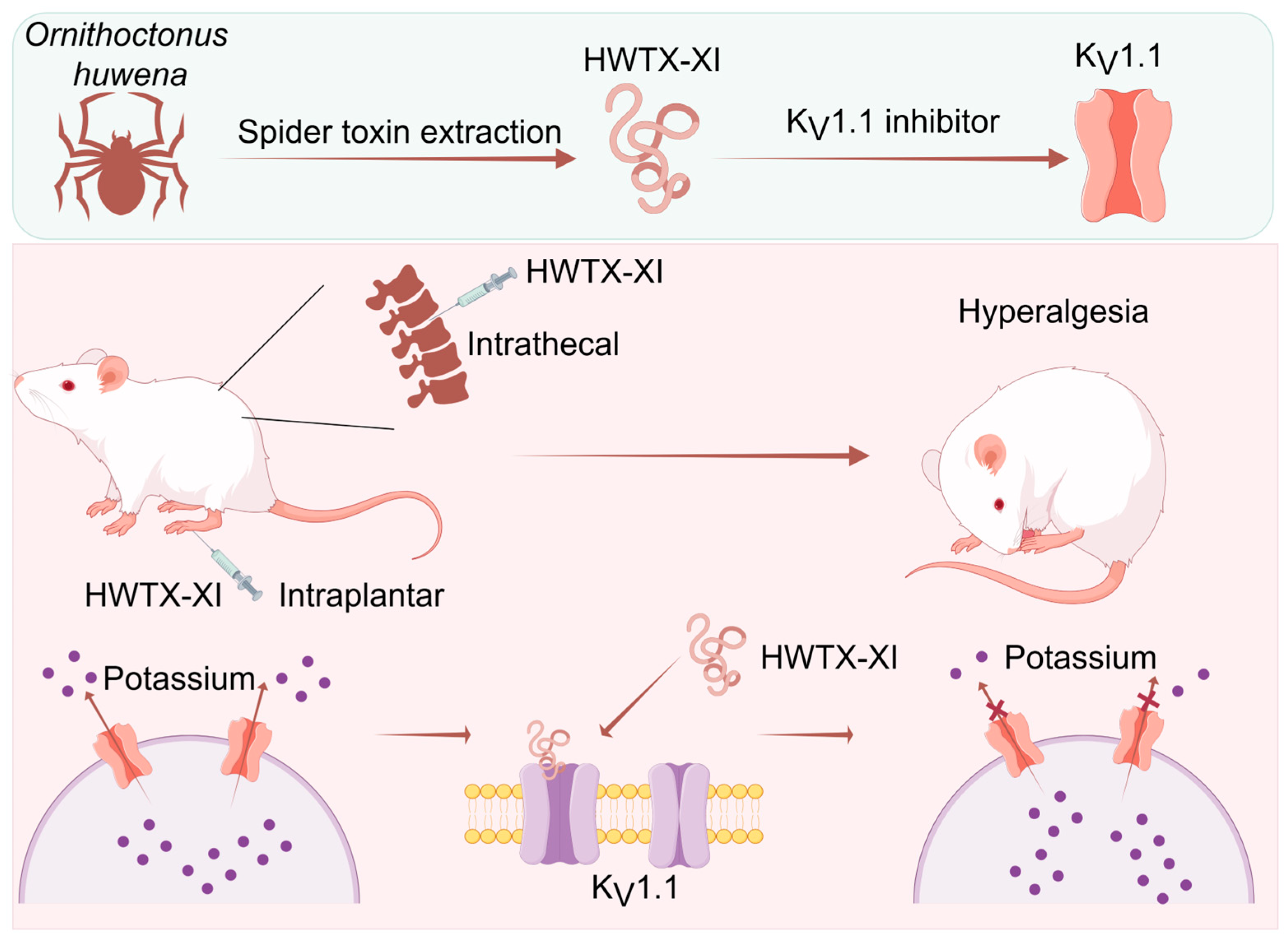
Molecular Basis of the Inhibition of Voltage-Gated Potassium Channel Kv1.1 by Chinese Tarantula Peptide Huwentoxin-XI

Abstract
1. Introduction
2. Results
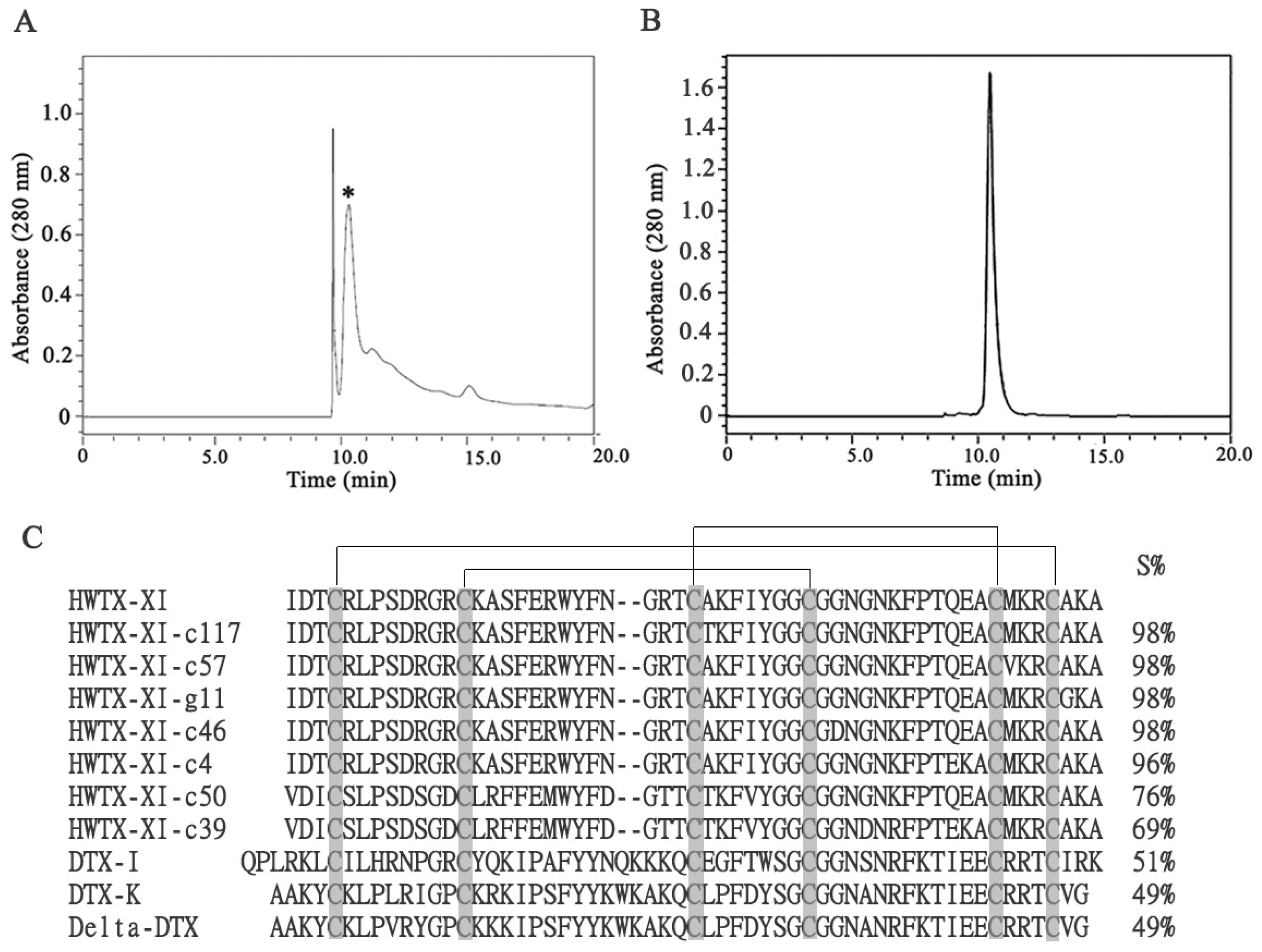
2.1. Gene Expression, Purification and Identification of HWTX-XI
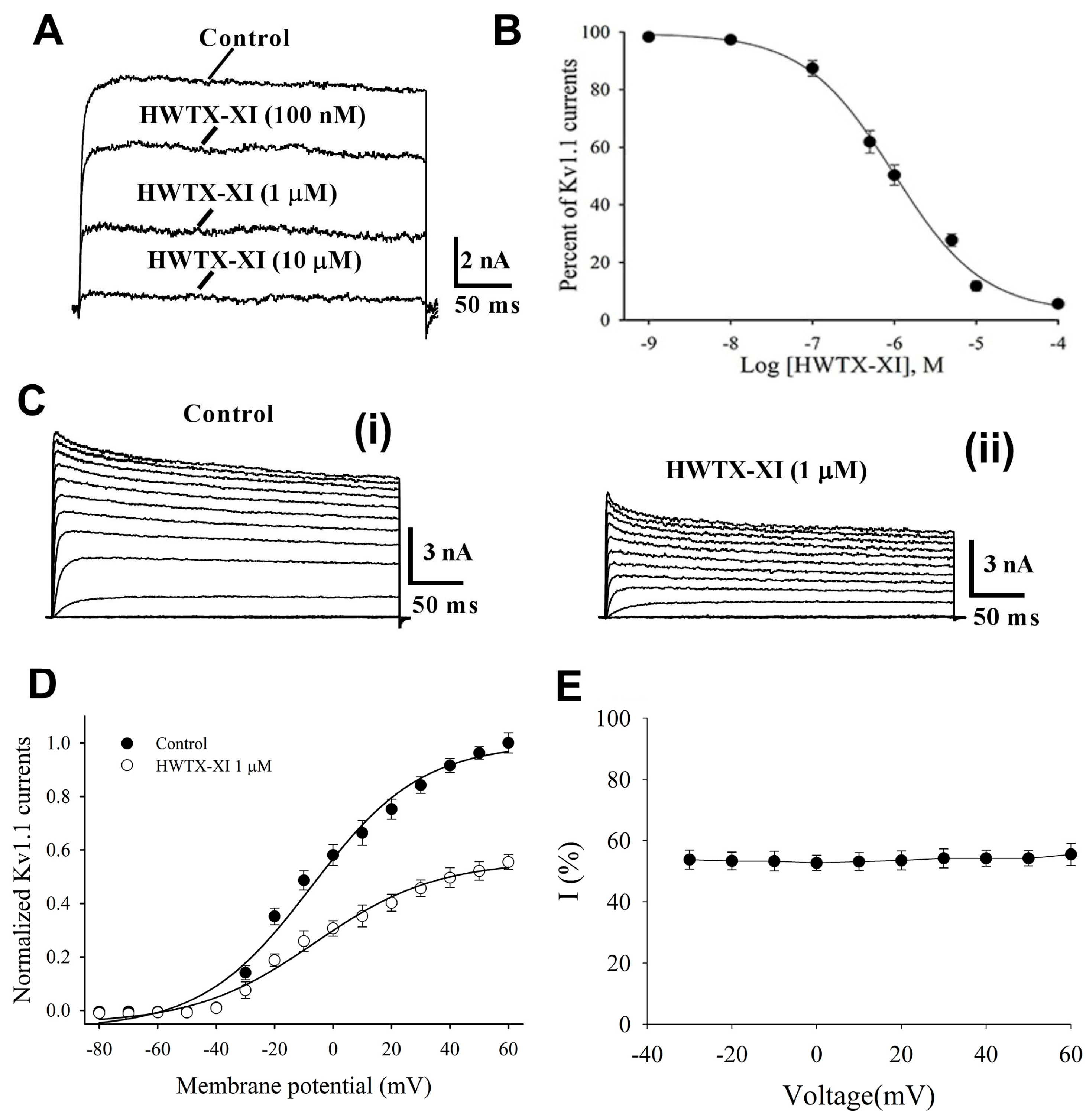
2.2. Biological Activities of the Recombinant HWTX-XI
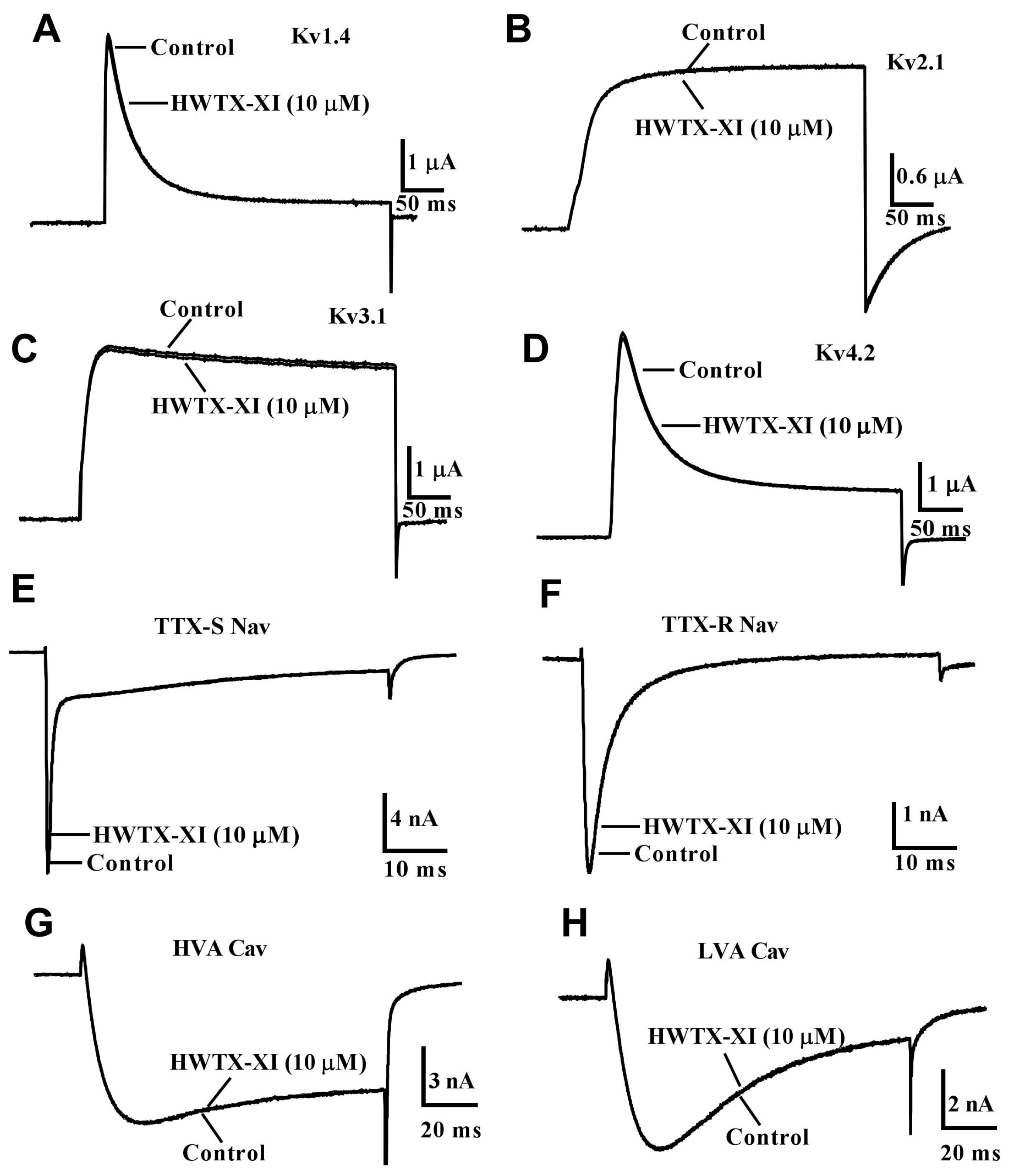
2.3. Effects of HWTX-XI on Voltage-Gated Potassium Channels, Sodium Channels, and Calcium Channels
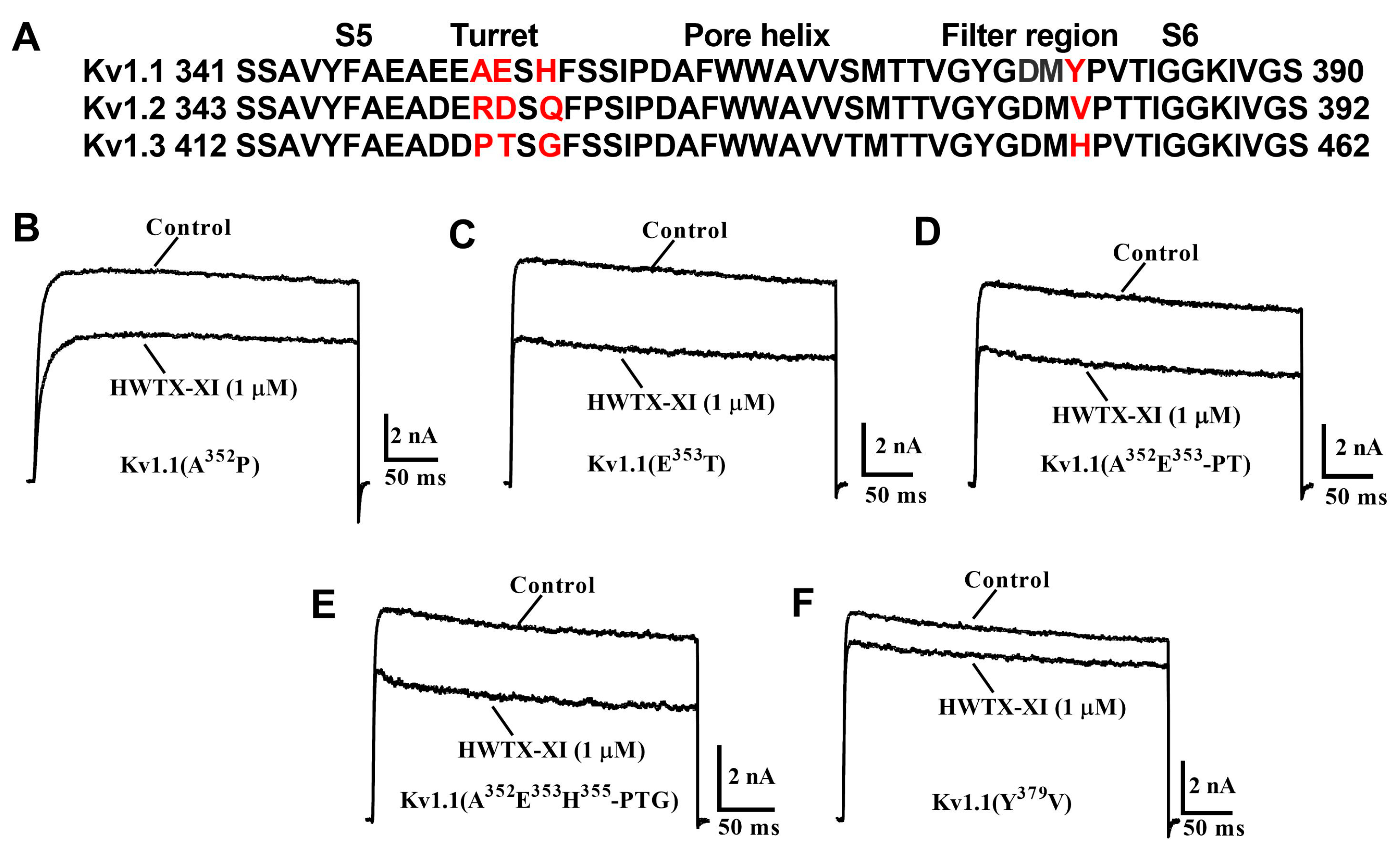
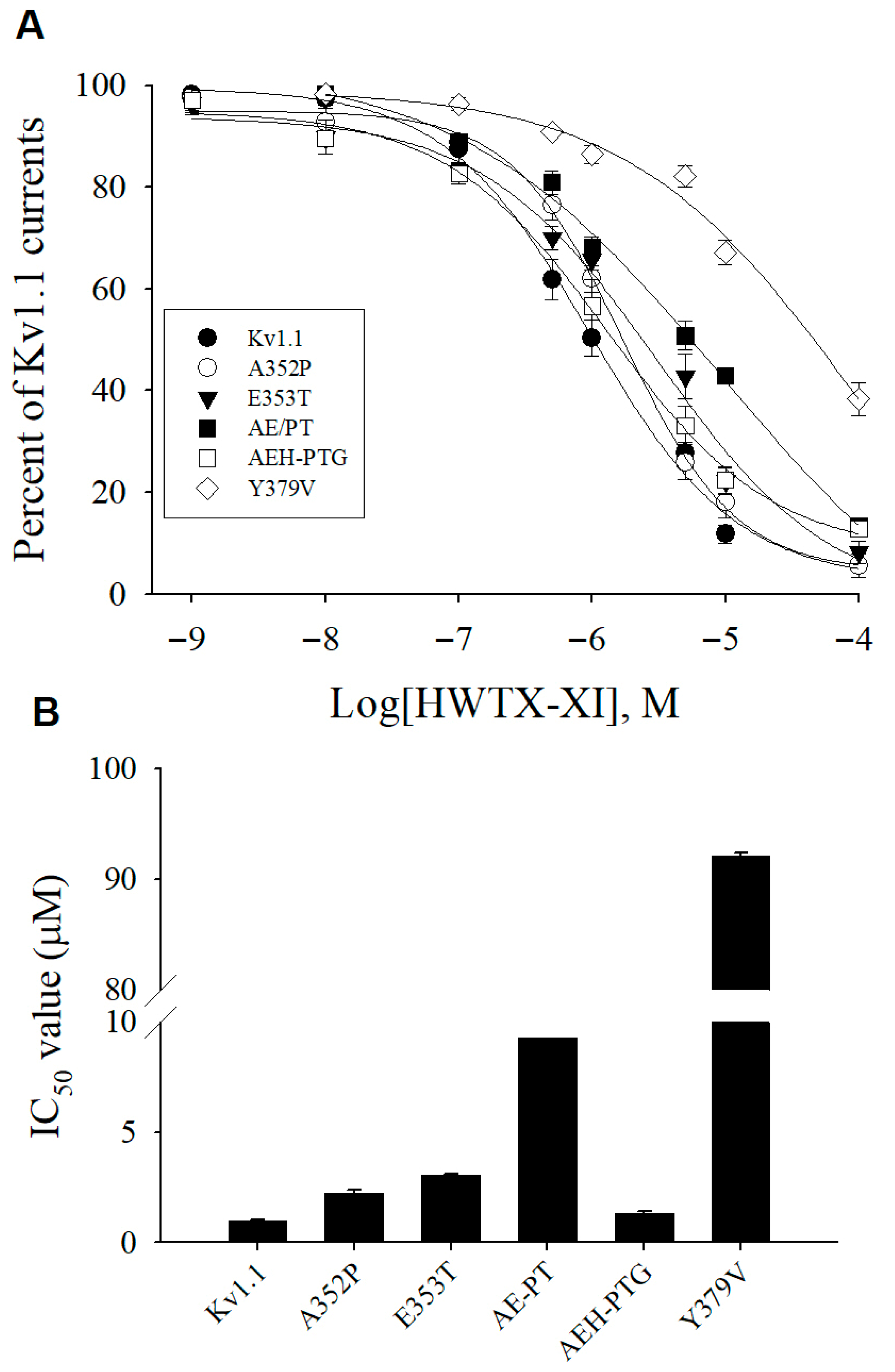
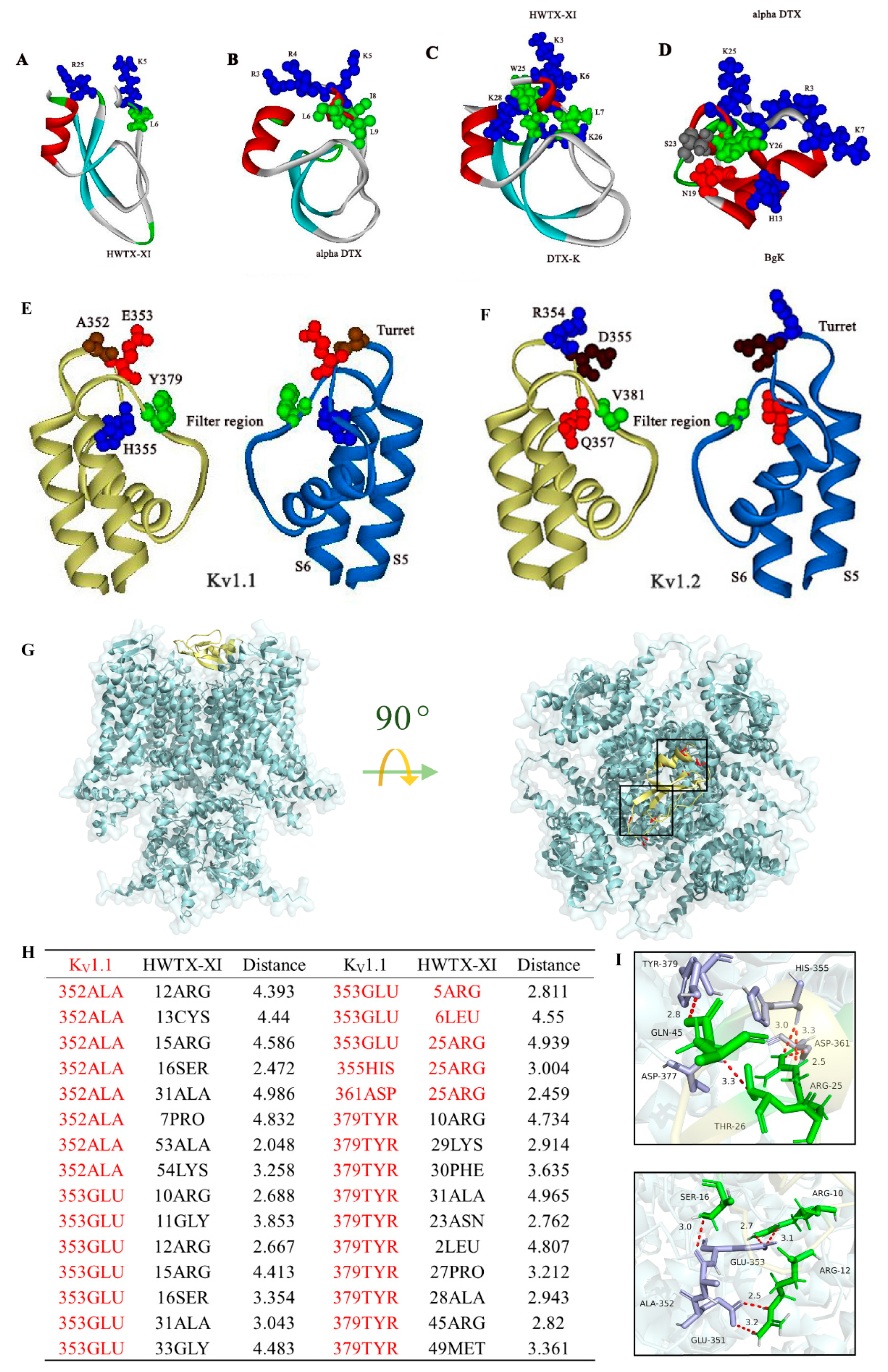
2.4. The Filter Region but Not the Channel Turret of Kv1.1 Channels Determines HWTX-XI Sensitivity
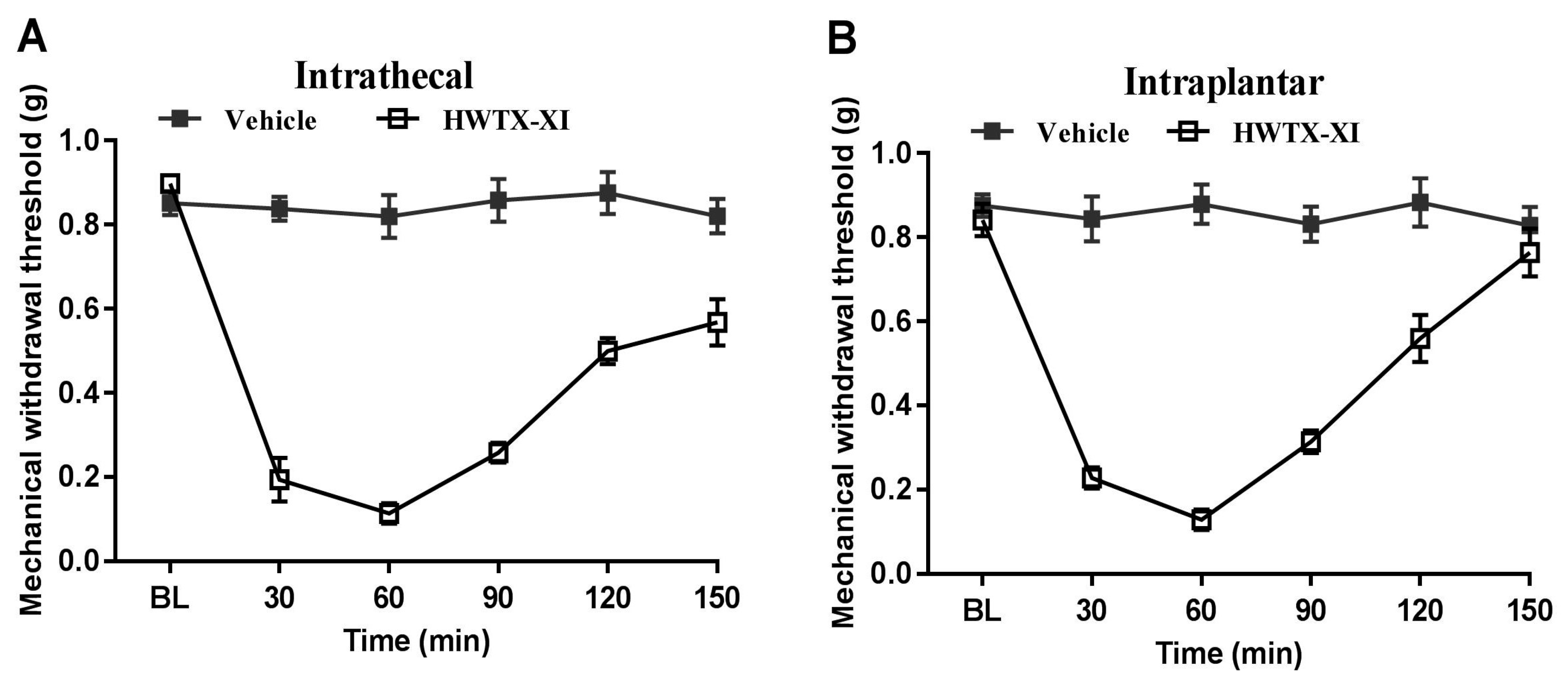
2.5. Effects of HWTX-XI on Mechanical and Thermal Hypersensitivity
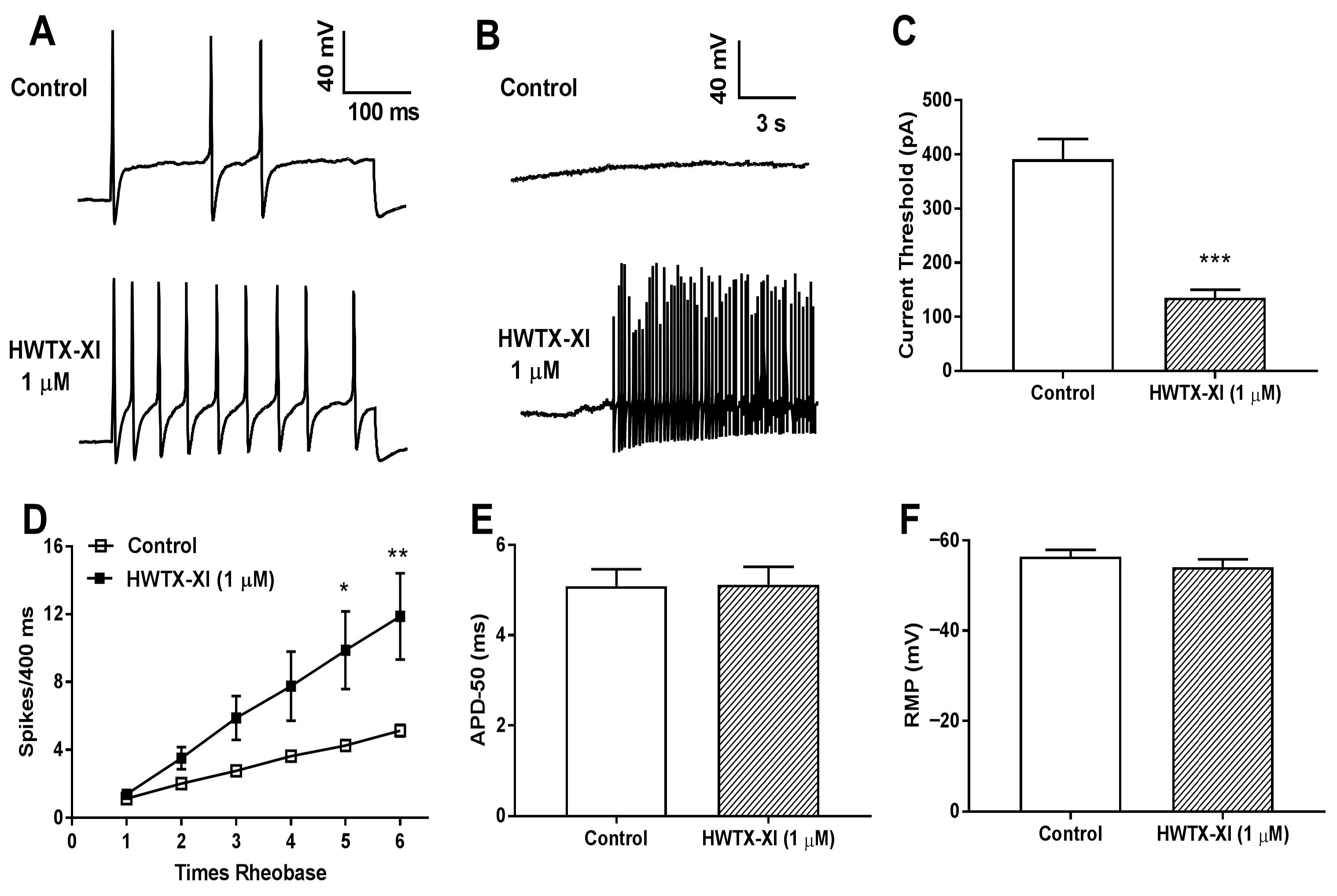
2.6. Effects of HWTX-XI on Action Potentials in Mouse DRG Neurons
3. Discussion

4. Conclusions
5. Materials and Methods
5.1. Construction and Expression of HWTX-XI
5.2. Plasmids and Construction of Kv1.1 Mutants
5.3. Transient Transfection
5.4. Dissociation of Mouse Dorsal Root Ganglion (DRG) Neurons
5.5. Whole-Cell Patch Clamp Experiments
5.6. Two-Microelectrode Voltage Clamp Experiments
5.7. Nociceptive Behavior Tests
5.8. Data Analysis
Author Contributions
Funding
Institutional Review Board Statement
Informed Consent Statement
Data Availability Statement
Acknowledgments
Conflicts of Interest
Abbreviations
| DMEM | Dulbecco’s modified Eagle’s medium |
| DRG | dorsal root ganglion |
| DTX | dendrotoxin |
| HPLC | high-pressure liquid chromatography |
| HWTX | huwentoxin |
| IC50 | median inhibitory concentration |
| KTTs | Kuntiz-type toxins |
| Kv channel | voltage-gated potassium channel |
| MALDI-TOF | matrix-assisted laser desorption/ionization time-of-flight |
| rHWTX-XI | recombinant HWTX-XI |
| TTX | tetrodotoxin |
| TTX-R | TTX-resistant |
| TTX-S | TTX-sensitive |
References
- AlShammari, A.K.; Abd El-Aziz, T.M.; Al-Sabi, A. Snake venom: A promising source of neurotoxins targeting voltage-gated potassium channels. Toxins 2023, 16, 12. [Google Scholar] [CrossRef]
- D’Adamo, M.C.; Liantonio, A.; Rolland, J.F.; Pessia, M.; Imbrici, P. Kv1.1 channelopathies: Pathophysiological mechanisms and therapeutic approaches. Int. J. Mol. Sci. 2020, 21, 2935. [Google Scholar] [CrossRef]
- Servettini, I.; Talani, G.; Megaro, A.; Setzu, M.D.; Biggio, F.; Briffa, M.; Guglielmi, L.; Savalli, N.; Binda, F.; Delicata, F.; et al. An activator of voltage-gated k(+) channels kv1.1 as a therapeutic candidate for episodic ataxia type 1. Proc. Natl. Acad. Sci. USA 2023, 120, e2207978120. [Google Scholar] [CrossRef]
- Hao, J.Z.; Padilla, F.; Dandonneau, M.; Lavebratt, C.; Lesage, F.; Noel, J.; Delmas, P. Kv1.1 channels act as mechanical brake in the senses of touch and pain. Neuron 2013, 77, 899–914. [Google Scholar] [CrossRef] [PubMed]
- Xie, C.; Kessi, M.; Yin, F.; Peng, J. Roles of kcna2 in neurological diseases: From physiology to pathology. Mol. Neurobiol. 2024, 61, 8491–8517. [Google Scholar] [CrossRef]
- Chiang, E.Y.; Li, T.; Jeet, S.; Peng, I.; Zhang, J.; Lee, W.P.; DeVoss, J.; Caplazi, P.; Chen, J.; Warming, S.; et al. Potassium channels kv1.3 and kca3.1 cooperatively and compensatorily regulate antigen-specific memory t cell functions. Nat. Commun. 2017, 8, 14644. [Google Scholar] [CrossRef]
- Cheng, S.; Jiang, D.; Lan, X.; Liu, K.; Fan, C. Voltage-gated potassium channel 1.3: A promising molecular target in multiple disease therapy. Biomed. Pharmacother. 2024, 175, 116651. [Google Scholar] [CrossRef]
- Gajewski, C.; Dagcan, A.; Roux, B.; Deutsch, C. Biogenesis of the pore architecture of a voltage-gated potassium channel. Proc. Natl. Acad. Sci. USA 2011, 108, 3240–3245. [Google Scholar] [CrossRef] [PubMed]
- Xu, Z.; Khan, S.; Schnicker, N.J.; Baker, S. Pentameric assembly of the kv2.1 tetramerization domain. Acta Crystallogr D Struct Biol. 2022, 78, 792–802. [Google Scholar] [CrossRef] [PubMed]
- Vergara-Jaque, A.; Palma-Cerda, F.; Lowet, A.S.; de la Cruz Landrau, A.; Poblete, H.; Sukharev, A.; Comer, J.; Holmgren, M. A structural model of the inactivation gate of voltage-activated potassium channels. Biophys. J. 2019, 117, 377–387. [Google Scholar] [CrossRef]
- Sastre, D.; Colomer-Molera, M.; de Benito-Bueno, A.; Valenzuela, C.; Fernández-Ballester, G.; Felipe, A. Kcne4-dependent modulation of kv1.3 pharmacology. Biochem. Pharmacol. 2024, 226, 116368. [Google Scholar] [CrossRef]
- Shariati, S.; Mafakher, L.; Shirani, M.; Baradaran, M. Unveiling new kv1.3 channel blockers from scorpion venom: Characterization of meuk7-3 and in silico design of its analogs for enhanced affinity and therapeutic potential. Int. J. Biol. Macromol. 2025, 319, 145327. [Google Scholar] [CrossRef]
- Gao, J.; Liu, G.; Liu, Y.; Zhang, D.; He, Q.; Liao, Q.; Du, C. Sea anemone-derived toxin avd3i inhibited sodium channel nav1.4. Toxins 2025, 17, 461. [Google Scholar] [CrossRef] [PubMed]
- Finol-Urdaneta, R.K.; Belovanovic, A.; Micic-Vicovac, M.; Kinsella, G.K.; McArthur, J.R.; Al-Sabi, A. Marine toxins targeting kv1 channels: Pharmacological tools and therapeutic scaffolds. Mar. Drugs 2020, 18, 173. [Google Scholar] [CrossRef]
- Kowalczyk, T.; Muskała, M.; Piekarski, J.; Kowalski, M.; Staszewski, M.; Konuklugil, B.; Rijo, P.; Sitarek, P. Therapeutic promise and biotechnological prospects of dendroaspis polylepis venom proteins: Mambalgins, fasciculins, and dendrotoxins. Int. J. Mol. Sci. 2025, 26, 9895. [Google Scholar] [CrossRef]
- Luna-Ramirez, K.; Csoti, A.; McArthur, J.R.; Chin, Y.K.Y.; Anangi, R.; Najera, R.D.C.; Possani, L.D.; King, G.F.; Panyi, G.; Yu, H.; et al. Structural basis of the potency and selectivity of urotoxin, a potent kv1 blocker from scorpion venom. Biochem. Pharmacol. 2020, 174, 113782. [Google Scholar] [CrossRef]
- Chandy, K.G.; Sanches, K.; Norton, R.S. Structure of the voltage-gated potassium channel k(v)1.3: Insights into the inactivated conformation and binding to therapeutic leads. Channels 2023, 17, 2253104. [Google Scholar] [CrossRef] [PubMed]
- Orlov, N.A.; Kryukova, E.V.; Efremenko, A.V.; Yakimov, S.A.; Toporova, V.A.; Kirpichnikov, M.P.; Nekrasova, O.V.; Feofanov, A.V. Interactions of the kv1.1 channel with peptide pore blockers: A fluorescent analysis on mammalian cells. Membranes 2023, 13, 645. [Google Scholar] [CrossRef] [PubMed]
- Iwakawa, N.; Baxter, N.J.; Wai, D.C.C.; Fowler, N.J.; Morales, R.A.V.; Sugase, K.; Norton, R.S.; Williamson, M.P. Conformational exchange in the potassium channel blocker shk. Sci. Rep. 2019, 9, 19307. [Google Scholar] [CrossRef]
- Chen, R.; Chung, S.H. Binding modes of two scorpion toxins to the voltage-gated potassium channel kv1.3 revealed from molecular dynamics. Toxins 2014, 6, 2149–2161. [Google Scholar] [CrossRef]
- ElFessi, R.; Khamessi, O.; De Waard, M.; Srairi-Abid, N.; Ghedira, K.; Marrouchi, R.; Kharrat, R. Structure-function relationship of a novel mtx-like peptide (mtx1) isolated and characterized from the venom of the scorpion maurus palmatus. Int. J. Mol. Sci. 2024, 25, 10472. [Google Scholar] [CrossRef]
- Alessandri-Haber, N.; Lecoq, A.; Gasparini, S.; Grangier-Macmath, G.; Jacquet, G.; Harvey, A.L.; de Medeiros, C.; Rowan, E.G.; Gola, M.; Ménez, A.; et al. Mapping the functional anatomy of bgk on kv1.1, kv1.2, and kv1.3. Clues to design analogs with enhanced selectivity. J. Biol. Chem. 1999, 274, 35653–35661. [Google Scholar] [CrossRef]
- Chen, M.; Yang, L.; Zeng, G.; Xiao, X.; Liu, Z.; Zhang, G.; Zhou, X. Isolation and identification of toxins inhibiting shal potassium channels from the venom of Ornithoctonus hainana spider. Toxicol. Appl. Pharmacol. 2025, 500, 117374. [Google Scholar] [CrossRef] [PubMed]
- Deng, M.; Kuang, F.; Sun, Z.; Tao, H.; Cai, T.; Zhong, L.; Chen, Z.; Xiao, Y.; Liang, S. Jingzhaotoxin-ix, a novel gating modifier of both sodium and potassium channels from chinese tarantula chilobrachys jingzhao. Neuropharmacology 2009, 57, 77–87. [Google Scholar] [CrossRef] [PubMed]
- Yuan, C.; Liao, Z.; Zeng, X.; Dai, L.; Kuang, F.; Liang, S. Jingzhaotoxin-xii, a gating modifier specific for kv4.1 channels. Toxicon 2007, 50, 646–652. [Google Scholar] [CrossRef]
- Tilley, D.C.; Angueyra, J.M.; Eum, K.S.; Kim, H.; Chao, L.H.; Peng, A.W.; Sack, J.T. The tarantula toxin gxtx detains k(+) channel gating charges in their resting conformation. J. Gen. Physiol. 2019, 151, 292–315. [Google Scholar] [CrossRef] [PubMed]
- Jiang, L.; Deng, M.; Duan, Z.; Tang, X.; Liang, S. Molecular cloning, bioinformatics analysis and functional characterization of hwtx-xi toxin superfamily from the spider ornithoctonus huwena. Peptides 2014, 54, 9–18. [Google Scholar] [CrossRef]
- Yuan, C.H.; He, Q.Y.; Peng, K.; Diao, J.B.; Jiang, L.P.; Tang, X.; Liang, S.P. Discovery of a distinct superfamily of kunitz-type toxin (ktt) from tarantulas. PLoS ONE 2008, 3, e3414. [Google Scholar] [CrossRef]
- Gilquin, B.; Racapé, J.; Wrisch, A.; Visan, V.; Lecoq, A.; Grissmer, S.; Ménez, A.; Gasparini, S. Structure of the bgk-kv1.1 complex based on distance restraints identified by double mutant cycles. Molecular basis for convergent evolution of kv1 channel blockers. J. Biol. Chem. 2002, 277, 37406–37413. [Google Scholar] [CrossRef]
- Cheng, T.C.; Long, R.W.; Wu, Y.Q.; Guo, Y.B.; Liu, D.L.; Peng, L.; Li, D.Q.; Yang, D.W.; Xu, X.; Liu, F.X.; et al. Identification and characterization of toxins in the venom gland of the chinese bird spider, haplopelma hainanum, by transcriptomic analysis. Insect Sci. 2016, 23, 487–499. [Google Scholar] [CrossRef]
- Feng, J.; Hu, Y.; Yi, H.; Yin, S.; Han, S.; Hu, J.; Chen, Z.; Yang, W.; Cao, Z.; De Waard, M.; et al. Two conserved arginine residues from the sk3 potassium channel outer vestibule control selectivity of recognition by scorpion toxins. J. Biol. Chem. 2013, 288, 12544–12553. [Google Scholar] [CrossRef]
- Hu, Y.T.; Hu, J.; Li, T.; Wei, J.J.; Feng, J.; Du, Y.M.; Cao, Z.J.; Li, W.X.; Wu, Y.L. Open conformation of herg channel turrets revealed by a specific scorpion toxin bmkkx2. Cell Biosci. 2014, 4, 18. [Google Scholar] [CrossRef]
- MacKinnon, R.; Yellen, G. Mutations affecting tea blockade and ion permeation in voltage-activated k+ channels. Science 1990, 250, 276–279. [Google Scholar] [CrossRef]
- Jin, L.; Wu, Y. Molecular mechanism of δ-dendrotoxin-potassium channel recognition explored by docking and molecular dynamic simulations. J. Mol. Recognit. 2011, 24, 101–107. [Google Scholar] [CrossRef]
- Sanches, K.; Prypoten, V.; Chandy, K.G.; Chalmers, D.K.; Norton, R.S. Interaction of the inhibitory peptides shk and hmk with the voltage-gated potassium channel k(v)1.3: Role of conformational dynamics. J. Chem. Inf. Model. 2023, 63, 3043–3053. [Google Scholar] [CrossRef] [PubMed]
- Sumino, A.; Sumikama, T.; Uchihashi, T.; Oiki, S. High-speed afm reveals accelerated binding of agitoxin-2 to a k(+) channel by induced fit. Sci. Adv. 2019, 5, eaax0495. [Google Scholar] [CrossRef]
- Naseem, M.U.; Gurrola-Briones, G.; Romero-Imbachi, M.R.; Borrego, J.; Carcamo-Noriega, E.; Beltrán-Vidal, J.; Zamudio, F.Z.; Shakeel, K.; Possani, L.D.; Panyi, G. Characterization and chemical synthesis of cm39 (α-ktx 4.8): A scorpion toxin that inhibits voltage-gated k(+) channel k(v)1.2 and small- and intermediate-conductance ca(2+)-activated k(+) channels k(ca)2.2 and k(ca)3.1. Toxins 2023, 15, 41. [Google Scholar] [CrossRef] [PubMed]
- Wu, Y.; Yan, Y.; Yang, Y.; Bian, S.; Rivetta, A.; Allen, K.; Sigworth, F.J. Cryoem structures of kv1.2 potassium channels, conducting and non-conducting. eLife 2025, 12, RP89459. [Google Scholar] [CrossRef] [PubMed]
- Vacher, H.; Mohapatra, D.P.; Misonou, H.; Trimmer, J.S. Regulation of kv1 channel trafficking by the mamba snake neurotoxin dendrotoxin k. FASEB J. 2007, 21, 906–914. [Google Scholar] [CrossRef]
- Gasparini, S.; Danse, J.M.; Lecoq, A.; Pinkasfeld, S.; Zinn-Justin, S.; Young, L.C.; de Medeiros, C.C.; Rowan, E.G.; Harvey, A.L.; Ménez, A. Delineation of the functional site of alpha-dendrotoxin. The functional topographies of dendrotoxins are different but share a conserved core with those of other kv1 potassium channel-blocking toxins. J. Biol. Chem. 1998, 273, 25393–25403. [Google Scholar] [CrossRef]
- Smith, L.A.; Reid, P.F.; Wang, F.C.; Parcej, D.N.; Schmidt, J.J.; Olson, M.A.; Dolly, J.O. Site-directed mutagenesis of dendrotoxin k reveals amino acids critical for its interaction with neuronal k+ channels. Biochemistry 1997, 36, 7690–7696. [Google Scholar] [CrossRef]
- Wang, F.C.; Bell, N.; Reid, P.; Smith, L.A.; McIntosh, P.; Robertson, B.; Dolly, J.O. Identification of residues in dendrotoxin k responsible for its discrimination between neuronal k+ channels containing kv1.1 and 1.2 alpha subunits. Eur. J. Biochem. 1999, 263, 222–229. [Google Scholar] [CrossRef] [PubMed]
- Zhang, L.; Peng, Z.; Bian, W.; Zhu, P.; Tang, B.; Liao, W.P.; Su, T. Functional differences between two kv1.1 rna editing isoforms: A comparative study on neuronal overexpression in mouse prefrontal cortex. Mol. Neurobiol. 2021, 58, 2046–2060. [Google Scholar] [CrossRef]
- Nagaraja, S.; Tewari, S.G.; Reifman, J. Predictive analytics identifies key factors driving hyperalgesic priming of muscle sensory neurons. Front. Neurosci. 2023, 17, 1254154. [Google Scholar] [CrossRef]
- Bloomquist, J.R.; Coquerel, Q.R.R.; Hulbert, D.; Norris, E.R. Neurophysiological action of centrally-acting spider toxin polypeptides derived from hadronyche versuta and tegenaria agrestis venoms. Pestic. Biochem. Physiol. 2023, 192, 105416. [Google Scholar] [CrossRef] [PubMed]
- Yan, S.; Huang, P.; Wang, Y.; Zeng, X.; Zhang, Y. The venom of Ornithoctonus huwena affect the electrophysiological stability of neonatal rat ventricular myocytes by inhibiting sodium, potassium and calcium current. Channels 2018, 12, 109–118. [Google Scholar] [CrossRef]
- Waterhouse, A.; Bertoni, M.; Bienert, S.; Studer, G.; Tauriello, G.; Gumienny, R.; Heer, F.T.; de Beer, T.A.P.; Rempfer, C.; Bordoli, L.; et al. Swiss-model: Homology modelling of protein structures and complexes. Nucleic Acids Res. 2018, 46, W296–W303. [Google Scholar] [CrossRef]
- Deng, M.; Luo, X.; Xiao, Y.; Sun, Z.; Jiang, L.; Liu, Z.; Zeng, X.; Chen, H.; Tang, J.; Zeng, W.; et al. Huwentoxin-xvi, an analgesic, highly reversible mammalian n-type calcium channel antagonist from chinese tarantula ornithoctonus huwena. Neuropharmacology 2014, 79, 657–667. [Google Scholar] [CrossRef]
- Albrecht, B.; Lorra, C.; Stocker, M.; Pongs, O. Cloning and characterization of a human delayed rectifier potassium channel gene. Recept. Channels 1993, 1, 99–110. [Google Scholar]
- Serodio, P.; Kentros, C.; Rudy, B. Identification of molecular components of a-type channels activating at subthreshold potentials. J. Neurophysiol. 1994, 72, 1516–1529. [Google Scholar] [CrossRef] [PubMed]
- Rasmusson, R.L.; Morales, M.J.; Castellino, R.C.; Zhang, Y.; Campbell, D.L.; Strauss, H.C. C-type inactivation controls recovery in a fast inactivating cardiac k+ channel (kv1.4) expressed in xenopus oocytes. J. Physiol. 1995, 489, 709–721. [Google Scholar] [CrossRef] [PubMed]
- Yue, L.; Wang, Z.; Rindt, H.; Nattel, S. Molecular evidence for a role of shaw (kv3) potassium channel subunits in potassium currents of dog atrium. J. Physiol. 2000, 527, 467–478. [Google Scholar] [CrossRef] [PubMed]


Disclaimer/Publisher’s Note: The statements, opinions and data contained in all publications are solely those of the individual author(s) and contributor(s) and not of MDPI and/or the editor(s). MDPI and/or the editor(s) disclaim responsibility for any injury to people or property resulting from any ideas, methods, instructions or products referred to in the content. |
© 2026 by the authors. Licensee MDPI, Basel, Switzerland. This article is an open access article distributed under the terms and conditions of the Creative Commons Attribution (CC BY) license.
Share and Cite
Luo, X.; Yin, Y.; Wang, F.; Li, X.; Wang, S.; Yang, Y.; Zheng, C.; Liu, J.; Deng, M. Molecular Basis of the Inhibition of Voltage-Gated Potassium Channel Kv1.1 by Chinese Tarantula Peptide Huwentoxin-XI. Toxins 2026, 18, 124. https://doi.org/10.3390/toxins18030124
Luo X, Yin Y, Wang F, Li X, Wang S, Yang Y, Zheng C, Liu J, Deng M. Molecular Basis of the Inhibition of Voltage-Gated Potassium Channel Kv1.1 by Chinese Tarantula Peptide Huwentoxin-XI. Toxins. 2026; 18(3):124. https://doi.org/10.3390/toxins18030124
Chicago/Turabian StyleLuo, Xuan, Yuan Yin, Fenghua Wang, Xinyu Li, Shujun Wang, Yumei Yang, Chunbing Zheng, Jing Liu, and Meichun Deng. 2026. "Molecular Basis of the Inhibition of Voltage-Gated Potassium Channel Kv1.1 by Chinese Tarantula Peptide Huwentoxin-XI" Toxins 18, no. 3: 124. https://doi.org/10.3390/toxins18030124
APA StyleLuo, X., Yin, Y., Wang, F., Li, X., Wang, S., Yang, Y., Zheng, C., Liu, J., & Deng, M. (2026). Molecular Basis of the Inhibition of Voltage-Gated Potassium Channel Kv1.1 by Chinese Tarantula Peptide Huwentoxin-XI. Toxins, 18(3), 124. https://doi.org/10.3390/toxins18030124