Role of the osaA Transcription Factor Gene in Development, Secondary Metabolism and Virulence in the Mycotoxigenic Fungus Aspergillus flavus

 , ,
, ,  and
and
Abstract
1. Introduction
2. Results
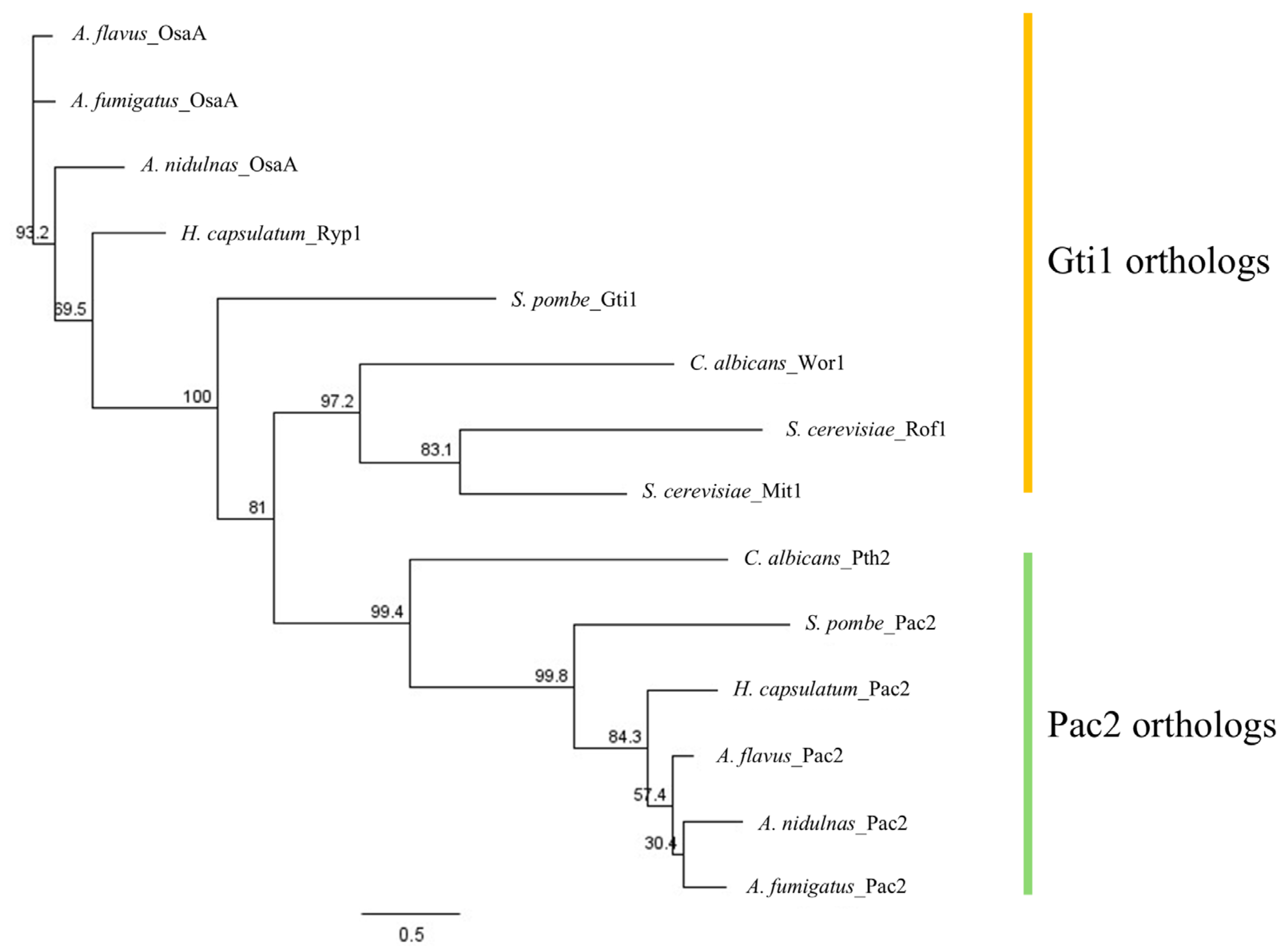
2.1. OsaA in A. flavus Contains a Gti/Pac2 (WOPR) Domain Which Is Conserved with Orthologs in Other Aspergillus Species and Other Species in the Ascomycota phylum
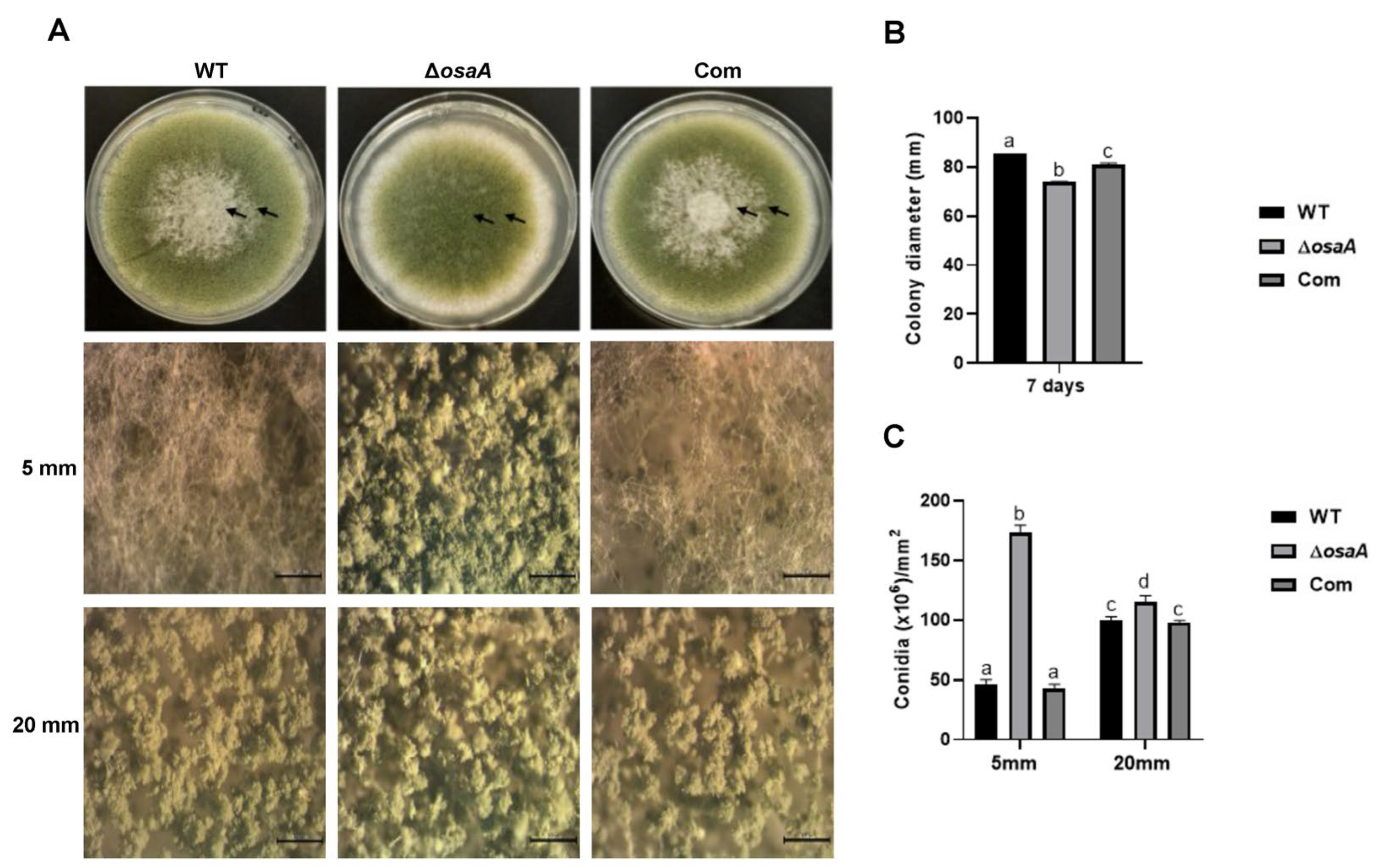
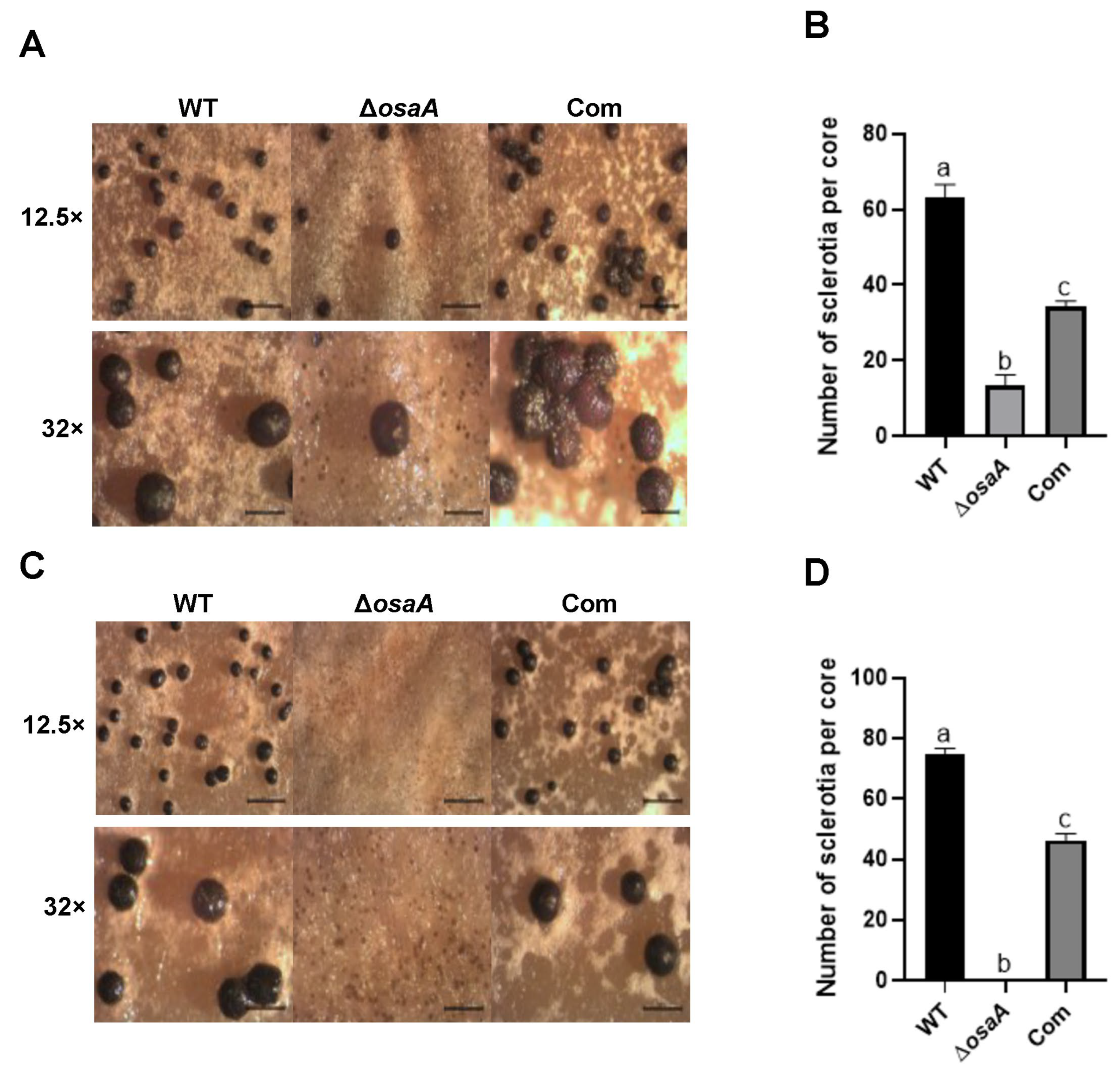
2.2. osaA Regulates Development in A. flavus
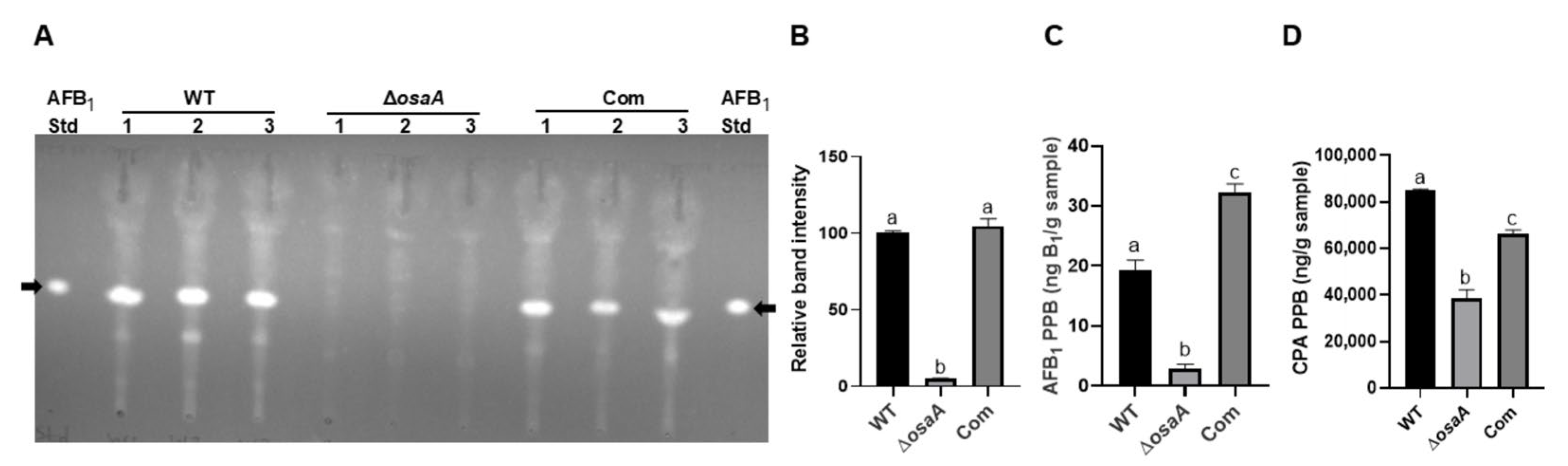
2.3. Secondary Metabolism Is Influenced by osaA
2.4. osaA Affects Sensitivity to Environmental Stresses in A. flavus
2.5. osaA Is Necessary for Normal Cell-Wall Composition in A. flavus
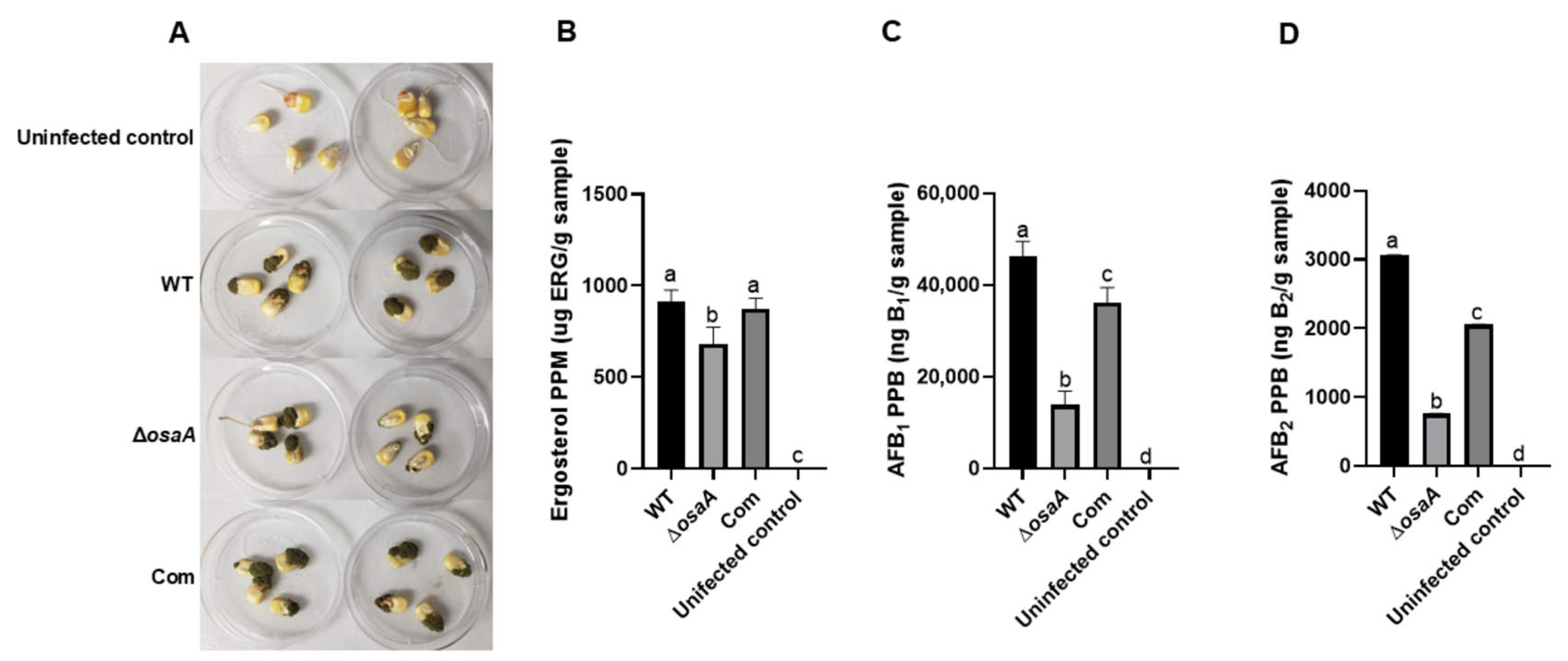
2.6. osaA Is Indispensable for A. flavus Seed Infection
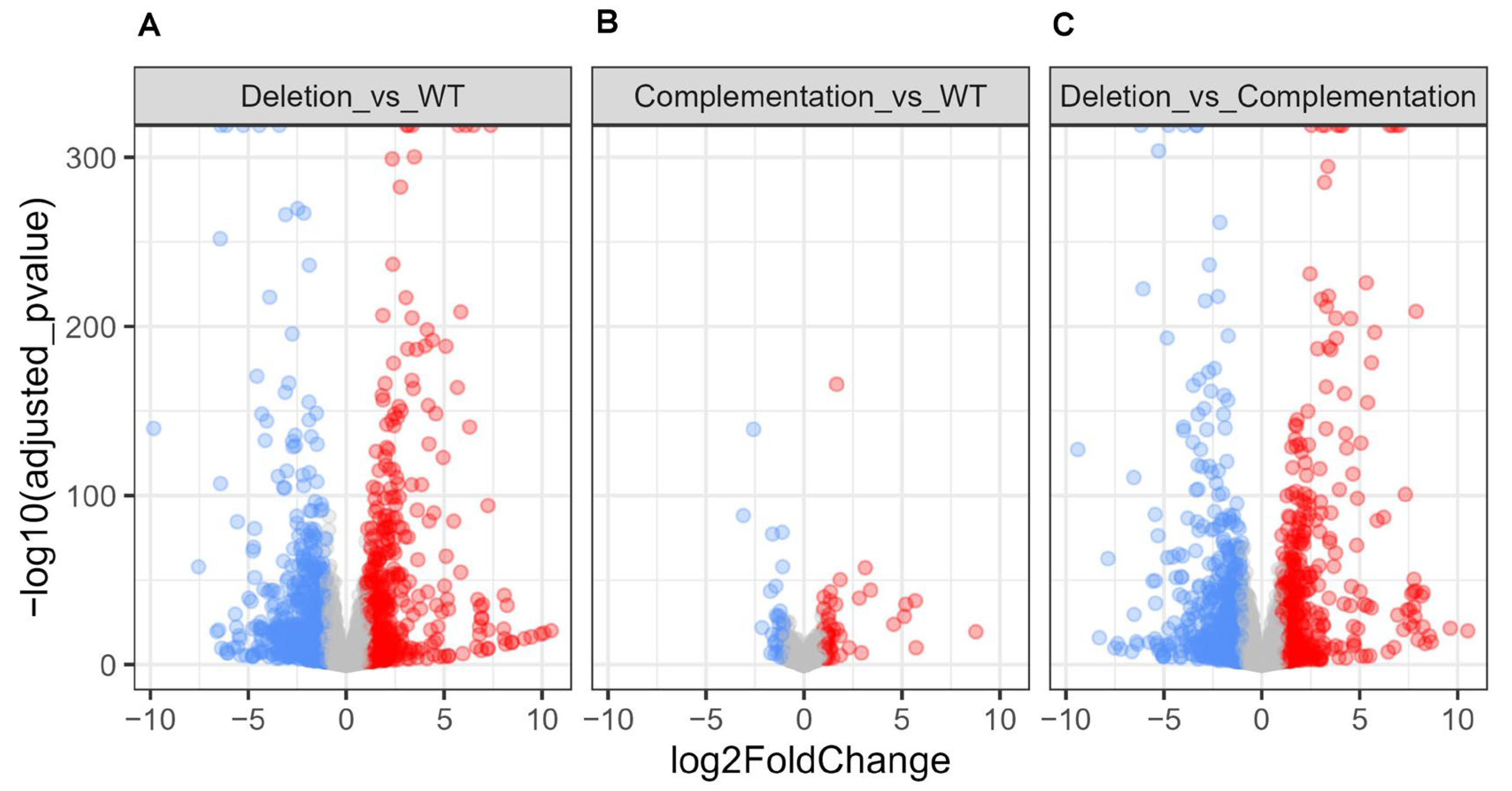
2.7. Global Transcriptional Changes Induced by osaA Deletion
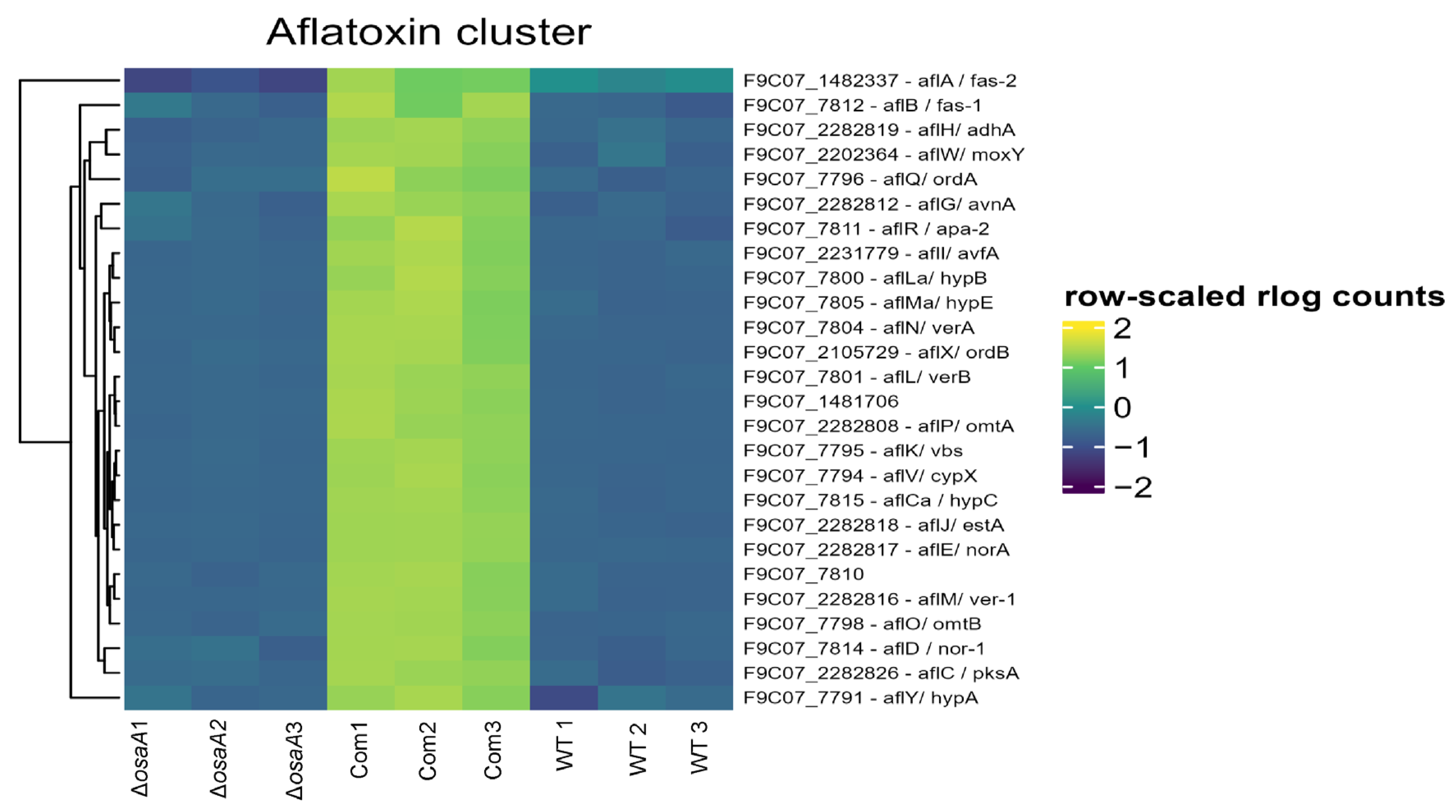
2.8. Gene Ontology and Heatmap Analyses Results
2.8.1. Downregulated Genes
2.8.2. Upregulated Genes
2.9. Other osaA-Dependent DEGs
2.9.1. Genes Involved in Transmembrane Transporter Activity
2.9.2. Genes Involved in Oxidoreductase Activity
2.9.3. Developmental Genes
2.9.4. Superoxide Dismutase and Catalase Genes
2.9.5. Chitin Synthase Gene
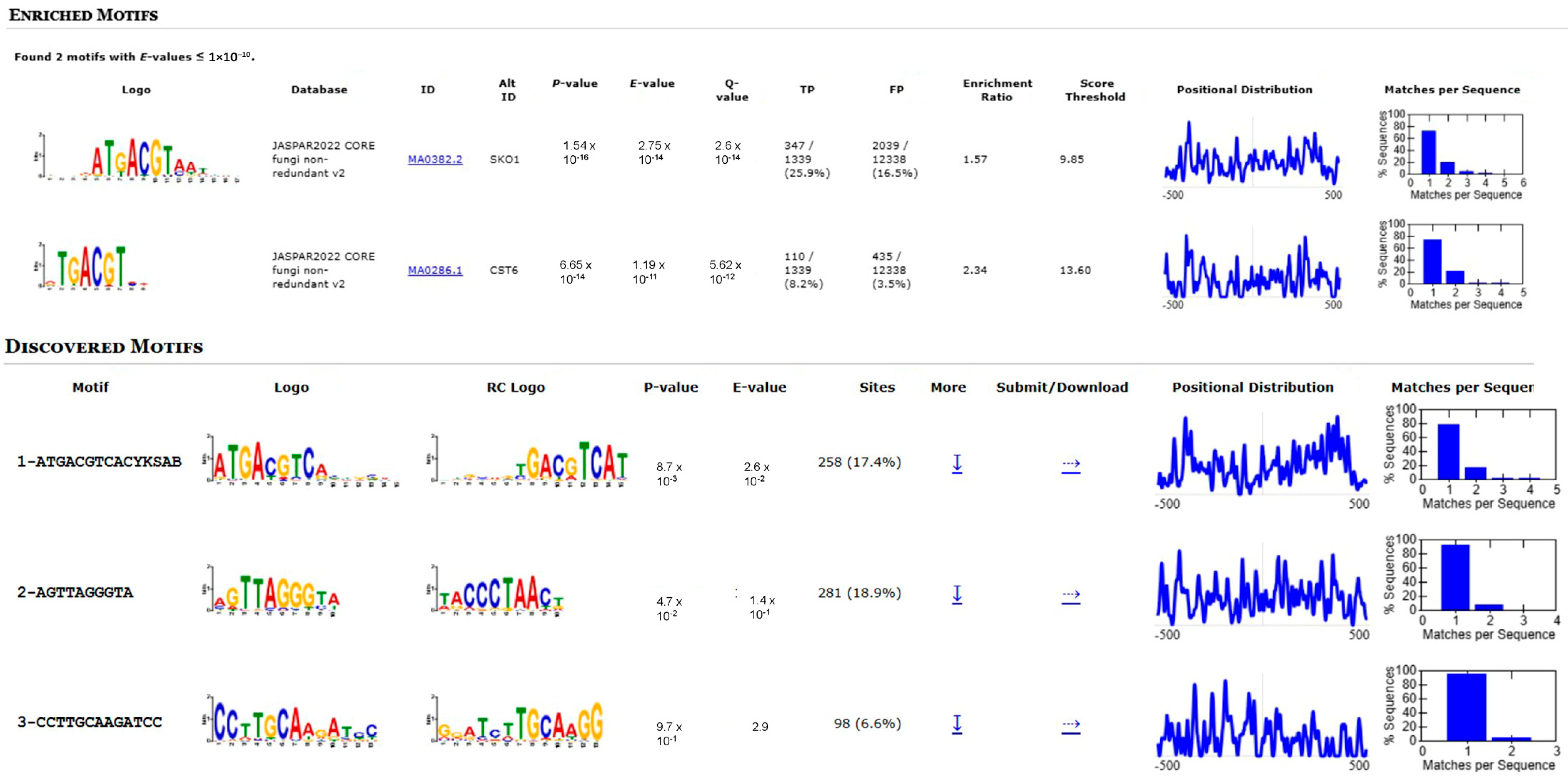
2.10. Motif Enrichment Analysis in Promoters of Differentially Expressed Genes
3. Discussion
4. Materials and Methods
4.1. Sequence Analysis
4.2. Strains and Culture Conditions
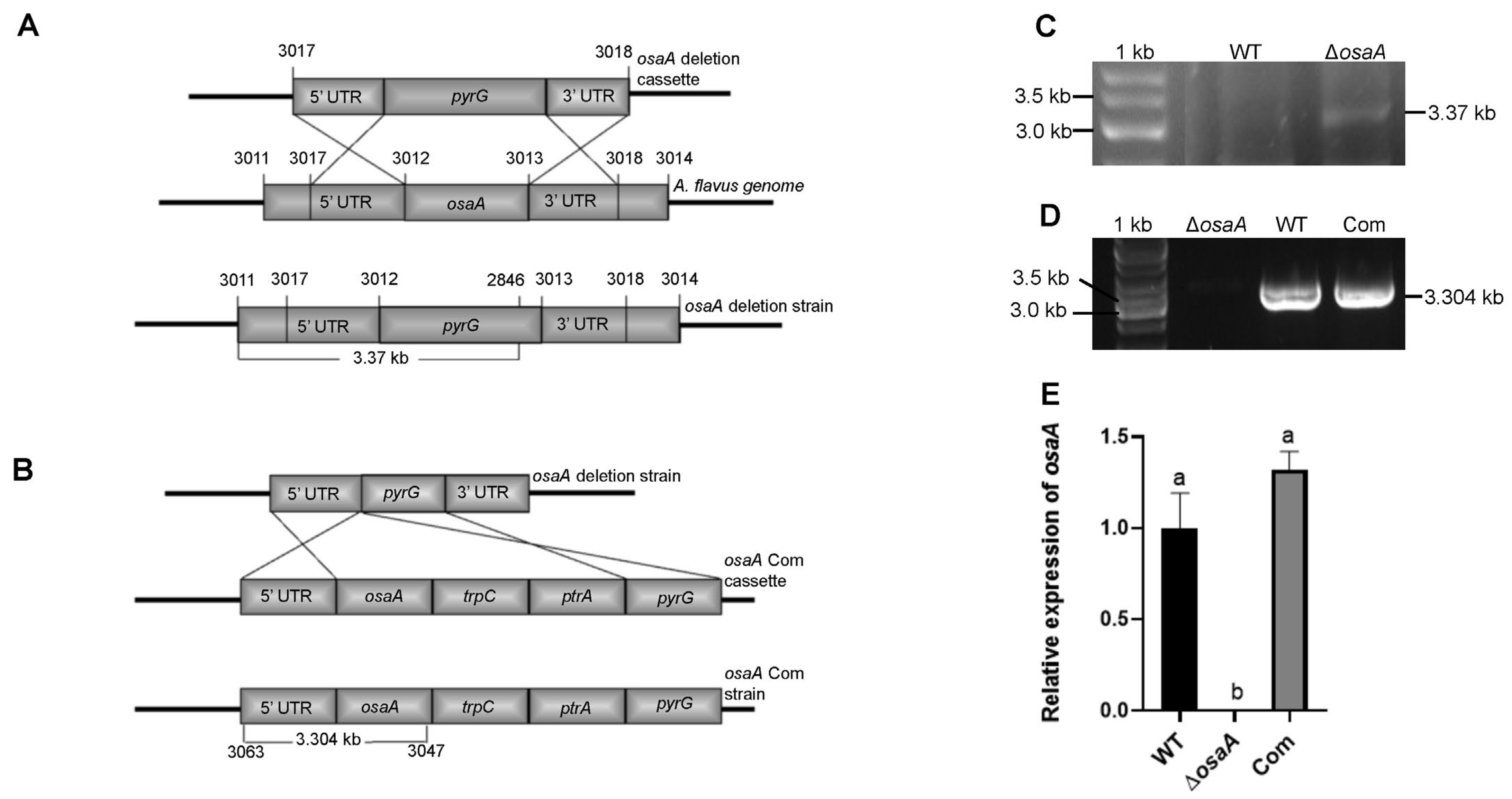
4.3. Generation of the osaA Deletion Strain
4.4. Generation of the osaA Complementation Strain
4.5. Morphological Analysis
4.5.1. Colony Growth
4.5.2. Conidial Production
4.5.3. Sclerotial Development
4.6. Aflatoxin B1 Production Analysis
4.7. Secondary Metabolite Analysis by LC–MS
4.8. Environmental Stress Tests
4.8.1. Temperature Sensitivity
4.8.2. Oxidative Stress Sensitivity
4.8.3. Cell Wall Stress Test
4.9. Cell Wall Chemical Analysis
4.10. Virulence Studies by Seed Infection Assay
4.10.1. Kernel Screening Assay
4.10.2. Extraction and Aflatoxin Analysis from Seeds
4.10.3. Ergosterol Extraction and Analysis
4.11. osaA Expression Analysis
4.12. Transcriptome Analysis
4.12.1. RNA Extraction
4.12.2. RNA Sequencing
4.13. Statistical Analysis
Supplementary Materials
Author Contributions
Funding
Institutional Review Board Statement
Informed Consent Statement
Data Availability Statement
Conflicts of Interest
References
- Amaike, S.; Keller, N.P. Aspergillus flavus. Annu. Rev. Phytopathol. 2011, 49, 107–133. [Google Scholar] [CrossRef] [PubMed]
- Hedayati, M.; Pasqualotto, A.; Warn, P.; Bowyer, P.; Denning, D. Aspergillus flavus: Human pathogen, allergen and mycotoxin producer. Microbiology 2007, 153, 1677–1692. [Google Scholar] [CrossRef] [PubMed]
- Foley, K.; Fazio, G.; Jensen, A.B.; Hughes, W.O. The distribution of Aspergillus spp. opportunistic parasites in hives and their pathogenicity to honey bees. Vet. Microbiol. 2014, 169, 203–210. [Google Scholar] [CrossRef] [PubMed]
- Horn, B.W.; Sorensen, R.B.; Lamb, M.C.; Sobolev, V.S.; Olarte, R.A.; Worthington, C.J.; Carbone, I. Sexual reproduction in Aspergillus flavus sclerotia naturally produced in corn. Phytopathology 2014, 104, 75–85. [Google Scholar] [CrossRef]
- Calvo, A.M.; Cary, J.W. Association of fungal secondary metabolism and sclerotial biology. Front. Microbiol. 2015, 6, 121758. [Google Scholar] [CrossRef]
- Robens, J.; Cardwell, K. The costs of mycotoxin management to the USA: Management of aflatoxins in the United States. J. Toxicol. Toxin Rev. 2003, 22, 139–152. [Google Scholar] [CrossRef]
- Klich, M.A. Aspergillus flavus: The major producer of aflatoxin. Mol. Plant Pathol. 2007, 8, 713–722. [Google Scholar] [CrossRef]
- Latgé, J.-P.; Chamilos, G. Aspergillus fumigatus and Aspergillosis in 2019. Clin. Microbiol. Rev. 2019, 33, 10–1128. [Google Scholar] [CrossRef]
- Li, C.; Liu, X.; Wu, J.; Ji, X.; Xu, Q. Research progress in toxicological effects and mechanism of aflatoxin B1 toxin. PeerJ 2022, 10, e13850. [Google Scholar] [CrossRef]
- Cary, J.W.; Gilbert, M.K.; Lebar, M.D.; Majumdar, R.; Calvo, A.M. Aspergillus flavus secondary metabolites: More than just aflatoxins. Food Saf. 2018, 6, 7–32. [Google Scholar] [CrossRef]
- Uka, V.; Cary, J.W.; Lebar, M.D.; Puel, O.; De Saeger, S.; Diana Di Mavungu, J. Chemical repertoire and biosynthetic machinery of the Aspergillus flavus secondary metabolome: A review. Compr. Rev. Food Sci. Food Saf. 2020, 19, 2797–2842. [Google Scholar] [CrossRef] [PubMed]
- Lewis, L.; Onsongo, M.; Njapau, H.; Schurz-Rogers, H.; Luber, G.; Kieszak, S.; Nyamongo, J.; Backer, L.; Dahiye, A.M.; Misore, A. Aflatoxin contamination of commercial maize products during an outbreak of acute aflatoxicosis in eastern and central Kenya. Environ. Health Perspect. 2005, 113, 1763–1767. [Google Scholar] [CrossRef] [PubMed]
- Awuor, A.O.; Yard, E.; Daniel, J.H.; Martin, C.; Bii, C.; Romoser, A.; Oyugi, E.; Elmore, S.; Amwayi, S.; Vulule, J. Evaluation of the efficacy, acceptability and palatability of calcium montmorillonite clay used to reduce aflatoxin B1 dietary exposure in a crossover study in Kenya. Food Addit. Contam. Part A 2017, 34, 93–102. [Google Scholar] [CrossRef] [PubMed]
- Marchese, S.; Polo, A.; Ariano, A.; Velotto, S.; Costantini, S.; Severino, L. Aflatoxin B1 and M1: Biological properties and their involvement in cancer development. Toxins 2018, 10, 214. [Google Scholar] [CrossRef]
- Hyde, K.D.; Al-Hatmi, A.M.; Andersen, B.; Boekhout, T.; Buzina, W.; Dawson, T.L., Jr.; Eastwood, D.C.; Jones, E.G.; de Hoog, S.; Kang, Y. The world’s ten most feared fungi. Fungal Divers. 2018, 93, 161–194. [Google Scholar] [CrossRef]
- Wild, C.P.; Gong, Y.Y. Mycotoxins and human disease: A largely ignored global health issue. Carcinogenesis 2010, 31, 71–82. [Google Scholar] [CrossRef]
- Mitchell, N.J.; Bowers, E.; Hurburgh, C.; Wu, F. Potential economic losses to the US corn industry from aflatoxin contamination. Food Addit. Contam. Part A 2016, 33, 540–550. [Google Scholar] [CrossRef]
- Lamb, M.C.; Sorensen, R.B.; Butts, C.L. Cost of Aflatoxin to the United States Industry. In Proceedings of the 53rd Annual Meeting of the American Peanut Research and Education Society, Virtual, 12–16 July 2021. [Google Scholar]
- Lamb, M. Team Approach to Aflatoxin In Proceedings of the Farm Progress; Farm Progress Companies: St. Charles, IL, USA, 2022; Available online: https://www.farmprogress.com/commentary/team-approach-to-aflatoxin (accessed on 10 September 2025).
- WHO. New Food Safety Series Launched in February 2018. 2018. Available online: https://web.archive.org/web/20180918200124/https://www.who.int/foodsafety/foodsafetydigest/en/ (accessed on 10 September 2025).
- Udomkun, P.; Wiredu, A.N.; Nagle, M.; Bandyopadhyay, R.; Müller, J.; Vanlauwe, B. Mycotoxins in Sub-Saharan Africa: Present situation, socio-economic impact, awareness, and outlook. Food Control 2017, 72, 110–122. [Google Scholar] [CrossRef]
- Drott, M.T.; Rush, T.A.; Satterlee, T.R.; Giannone, R.J.; Abraham, P.E.; Greco, C.; Venkatesh, N.; Skerker, J.M.; Glass, N.L.; Labbé, J.L. Microevolution in the pansecondary metabolome of Aspergillus flavus and its potential macroevolutionary implications for filamentous fungi. Proc. Natl. Acad. Sci. USA 2021, 118, e2021683118. [Google Scholar] [CrossRef]
- Gasperini, A.M.; Rodriguez-Sixtos, A.; Verheecke-Vaessen, C.; Garcia-Cela, E.; Medina, A.; Magan, N. Resilience of biocontrol for aflatoxin minimization strategies: Climate change abiotic factors may affect control in non-GM and GM-maize cultivars. Front. Microbiol. 2019, 10, 2525. [Google Scholar] [CrossRef]
- Kleinkauf, N.; Verweij, P.E.; Arendrup, M.C.; Donnelly, P.J.; Cuenca-Estrella, M.; Fraaije, B.; Melchers, W.J.; Adriaenssens, N.; Kema, G.H.; Ullmann, A. Risk Assessment on the Impact of Environmental Usage of Triazoles on the Development and Spread of Resistance to Medical Triazoles in Aspergillus Species (ECDC Technical Report); European Centre for Disease Prevention and Control (ECDC): Stockholm, Sweden, 2013. [Google Scholar]
- Lohse, M.B.; Rosenberg, O.S.; Cox, J.S.; Stroud, R.M.; Finer-Moore, J.S.; Johnson, A.D. Structure of a new DNA-binding domain which regulates pathogenesis in a wide variety of fungi. Proc. Natl. Acad. Sci. USA 2014, 111, 10404–10410. [Google Scholar] [CrossRef]
- Lohse, M.B.; Zordan, R.E.; Cain, C.W.; Johnson, A.D. Distinct class of DNA-binding domains is exemplified by a master regulator of phenotypic switching in Candida albicans. Proc. Natl. Acad. Sci. USA 2010, 107, 14105–14110. [Google Scholar] [CrossRef]
- Luo, Z.; Xiong, D.; Tian, C. The roles of Gti1/Pac2 family proteins in fungal growth, morphogenesis, stress response, and pathogenicity. Mol. Plant-Microbe Interact. 2024, 37, 488–497. [Google Scholar] [CrossRef] [PubMed]
- Zhang, S.; Zhang, T.; Yan, M.; Ding, J.; Chen, J. Crystal structure of the WOPR-DNA complex and implications for Wor1 function in white-opaque switching of Candida albicans. Cell Res. 2014, 24, 1108–1120. [Google Scholar] [CrossRef] [PubMed]
- Zordan, R.E.; Galgoczy, D.J.; Johnson, A.D. Epigenetic properties of white–opaque switching in Candida albicans are based on a self-sustaining transcriptional feedback loop. Proc. Natl. Acad. Sci. USA 2006, 103, 12807–12812. [Google Scholar] [CrossRef] [PubMed]
- Kunitomo, H.; Sugimoto, A.; Yamamoto, M.; Wilkinson, C.R. Schizosaccharomyces pombe pac2+ controls the onset of sexual development via a pathway independent of the cAMP cascade. Curr. Genet. 1995, 28, 32–38. [Google Scholar] [CrossRef]
- Caspari, T. Onset of gluconate-H+ symport in Schizosaccharomyces pombe is regulated by the kinases Wis1 and Pka1, and requires the gti1+ gene product. J. Cell Sci. 1997, 110, 2599–2608. [Google Scholar] [CrossRef]
- Nguyen, V.Q.; Sil, A. Temperature-induced switch to the pathogenic yeast form of Histoplasma capsulatum requires Ryp1, a conserved transcriptional regulator. Proc. Natl. Acad. Sci. USA 2008, 105, 4880–4885. [Google Scholar] [CrossRef]
- Cain, C.W.; Lohse, M.B.; Homann, O.R.; Sil, A.; Johnson, A.D. A conserved transcriptional regulator governs fungal morphology in widely diverged species. Genetics 2012, 190, 511–521. [Google Scholar] [CrossRef]
- Alkahyyat, F.; Ni, M.; Kim, S.C.; Yu, J.-H. The WOPR domain protein OsaA orchestrates development in Aspergillus nidulans. PLoS ONE 2015, 10, e0137554. [Google Scholar] [CrossRef]
- Dabholkar, A.; Pandit, S.; Devkota, R.; Dhingra, S.; Lorber, S.; Puel, O.; Calvo, A.M. Role of the osaA Gene in Aspergillus fumigatus Development, Secondary Metabolism and Virulence. J. Fungi 2024, 10, 103. [Google Scholar] [CrossRef] [PubMed]
- Szewczyk, E.; Nayak, T.; Oakley, C.E.; Edgerton, H.; Xiong, Y.; Taheri-Talesh, N.; Osmani, S.A.; Oakley, B.R. Fusion PCR and gene targeting in Aspergillus nidulans. Nat. Protoc. 2006, 1, 3111–3120. [Google Scholar] [CrossRef]
- Pandit, S.S.; Zheng, J.; Yin, Y.; Lorber, S.; Puel, O.; Dhingra, S.; Espeso, E.A.; Calvo, A.M. Homeobox transcription factor HbxA influences expression of over one thousand genes in the model fungus Aspergillus nidulans. PLoS ONE 2023, 18, e0286271. [Google Scholar] [CrossRef] [PubMed]
- Livak, K.J.; Schmittgen, T.D. Analysis of relative gene expression data using real-time quantitative PCR and the 2−ΔΔCT method. Methods 2001, 25, 402–408. [Google Scholar] [CrossRef] [PubMed]
- Zhao, Q.; Pei, H.; Zhou, X.; Zhao, K.; Yu, M.; Han, G.; Fan, J.; Tao, F. Systematic characterization of bZIP transcription factors required for development and aflatoxin generation by high-throughput gene knockout in Aspergillus flavus. J. Fungi 2022, 8, 356. [Google Scholar] [CrossRef]
- Yuan, X.-Y.; Li, J.-Y.; Zhi, Q.-Q.; Chi, S.-D.; Qu, S.; Luo, Y.-F.; He, Z.-M. SfgA renders Aspergillus flavus more stable to the external environment. J. Fungi 2022, 8, 638. [Google Scholar] [CrossRef]
- Tumukunde, E.; Li, D.; Qin, L.; Li, Y.; Shen, J.; Wang, S.; Yuan, J. Osmotic-adaptation response of sakA/hogA gene to aflatoxin biosynthesis, morphology development and pathogenicity in Aspergillus flavus. Toxins 2019, 11, 41. [Google Scholar] [CrossRef]
- Yu, J.H.; Mah, J.H.; Seo, J.A. Growth and developmental control in the model and pathogenic aspergilli. Eukaryot. Cell 2006, 5, 1577. [Google Scholar] [CrossRef]
- Cho, H.-J.; Son, S.-H.; Chen, W.; Son, Y.-E.; Lee, I.; Yu, J.-H.; Park, H.-S. Regulation of conidiogenesis in Aspergillus flavus. Cells 2022, 11, 2796. [Google Scholar] [CrossRef]
- Wang, X.; Zha, W.; Yao, B.; Yang, L.; Wang, S. Genetic Interaction of Global Regulators AflatfA and AflatfB Mediating Development, Stress Response and Aflatoxins B1 Production in Aspergillus flavus. Toxins 2022, 14, 857. [Google Scholar] [CrossRef]
- Linz, J.E.; Wee, J.M.; Roze, L.V. Aflatoxin biosynthesis: Regulation and subcellular localization. In Biosynthesis and Molecular Genetics of Fungal Secondary Metabolites; Springer: New York, NY, USA, 2014; pp. 89–110. [Google Scholar]
- Chanda, A.; Roze, L.V.; Kang, S.; Artymovich, K.A.; Hicks, G.R.; Raikhel, N.V.; Calvo, A.M.; Linz, J.E. A key role for vesicles in fungal secondary metabolism. Proc. Natl. Acad. Sci. USA 2009, 106, 19533–19538. [Google Scholar] [CrossRef] [PubMed]
- Hanano, A.; Alkara, M.; Almousally, I.; Shaban, M.; Rahman, F.; Hassan, M.; Murphy, D.J. The peroxygenase activity of the Aspergillus flavus caleosin, AfPXG, modulates the biosynthesis of aflatoxins and their trafficking and extracellular secretion via lipid droplets. Front. Microbiol. 2018, 9, 158. [Google Scholar] [CrossRef] [PubMed]
- Xu, J.; Luo, X. Molecular biology of aflatoxin biosynthesis. Wei Sheng Yan Jiu = J. Hyg. Res. 2003, 32, 628–631. [Google Scholar]
- Caceres, I.; El Khoury, R.; Bailly, S.; Oswald, I.P.; Puel, O.; Bailly, J.-D. Piperine inhibits aflatoxin B1 production in Aspergillus flavus by modulating fungal oxidative stress response. Fungal Genet. Biol. 2017, 107, 77–85. [Google Scholar] [CrossRef]
- Hong, S.Y.; Roze, L.V.; Wee, J.; Linz, J.E. Evidence that a transcription factor regulatory network coordinates oxidative stress response and secondary metabolism in aspergilli. Microbiologyopen 2013, 2, 144–160. [Google Scholar] [CrossRef]
- Khalid, S.; Baccile, J.A.; Spraker, J.E.; Tannous, J.; Imran, M.; Schroeder, F.C.; Keller, N.P. NRPS-derived isoquinolines and lipopetides mediate antagonism between plant pathogenic fungi and bacteria. ACS Chem. Biol. 2018, 13, 171–179. [Google Scholar] [CrossRef]
- Wu, S.; Zhang, Q.; Zhang, W.; Huang, W.; Kong, Q.; Liu, Q.; Li, W.; Zou, X.; Liu, C.-M.; Yan, S. Linolenic acid-derived oxylipins inhibit aflatoxin biosynthesis in Aspergillus flavus through activation of imizoquin biosynthesis. J. Agric. Food Chem. 2022, 70, 15928–15944. [Google Scholar] [CrossRef]
- Sakata, K.; Maruyama, M.; Uzawa, J.; Sakurai, A.; Lu, H.S.; Clardy, J. Structural revision of aspirochlorine (=antibiotic A30641), a novel epidithiopiperazine-2, 5-dione produced byaspergillus SPP. Tetrahedron Lett. 1987, 28, 5607–5610. [Google Scholar] [CrossRef]
- Tai, B.; Chang, J.; Liu, Y.; Xing, F. Recent progress of the effect of environmental factors on Aspergillus flavus growth and aflatoxins production on foods. Food Qual. Saf. 2020, 4, 21–28. [Google Scholar] [CrossRef]
- Grintzalis, K.; Vernardis, S.I.; Klapa, M.I.; Georgiou, C.D. Role of oxidative stress in sclerotial differentiation and aflatoxin B1 biosynthesis in Aspergillus flavus. Appl. Environ. Microbiol. 2014, 80, 5561–5571. [Google Scholar] [CrossRef]
- Jamieson, D.J. Saccharomyces cerevisiae has distinct adaptive responses to both hydrogen peroxide and menadione. J. Bacteriol. 1992, 174, 6678–6681. [Google Scholar] [CrossRef] [PubMed]
- Storz, G.; Imlayt, J.A. Oxidative stress. Curr. Opin. Microbiol. 1999, 2, 188–194. [Google Scholar] [CrossRef] [PubMed]
- Anwar, S.; Alrumaihi, F.; Sarwar, T.; Babiker, A.Y.; Khan, A.A.; Prabhu, S.V.; Rahmani, A.H. Exploring therapeutic potential of catalase: Strategies in disease prevention and management. Biomolecules 2024, 14, 697. [Google Scholar] [CrossRef] [PubMed]
- Wang, Y.; Branicky, R.; Noë, A.; Hekimi, S. Superoxide dismutases: Dual roles in controlling ROS damage and regulating ROS signaling. J. Cell Biol. 2018, 217, 1915–1928. [Google Scholar] [CrossRef]
- Imlay, J.A. Cellular defenses against superoxide and hydrogen peroxide. Annu. Rev. Biochem. 2008, 77, 755–776. [Google Scholar] [CrossRef]
- Sun, Q.; Shang, B.; Wang, L.; Lu, Z.; Liu, Y. Cinnamaldehyde inhibits fungal growth and aflatoxin B1 biosynthesis by modulating the oxidative stress response of Aspergillus flavus. Appl. Microbiol. Biotechnol. 2016, 100, 1355–1364. [Google Scholar] [CrossRef]
- Krüger, A.; Grüning, N.-M.; Wamelink, M.M.; Kerick, M.; Kirpy, A.; Parkhomchuk, D.; Bluemlein, K.; Schweiger, M.-R.; Soldatov, A.; Lehrach, H. The pentose phosphate pathway is a metabolic redox sensor and regulates transcription during the antioxidant response. Antioxid. Redox Signal. 2011, 15, 311–324. [Google Scholar] [CrossRef]
- Hernández-Benítez, J.A.; Santos-Ocampo, B.N.; Rosas-Ramírez, D.G.; Bautista-Hernández, L.A.; Bautista-de Lucio, V.M.; Pérez, N.O.; Rodríguez-Tovar, A.V. The Effect of Temperature over the Growth and Biofilm Formation of the Thermotolerant Aspergillus flavus. J. Fungi 2025, 11, 53. [Google Scholar] [CrossRef]
- Damveld, R.A.; Franken, A.; Arentshorst, M.; Punt, P.J.; Klis, F.M.; van den Hondel, C.A.; Ram, A.F. A novel screening method for cell wall mutants in Aspergillus niger identifies UDP-galactopyranose mutase as an important protein in fungal cell wall biosynthesis. Genetics 2008, 178, 873–881. [Google Scholar] [CrossRef]
- Latgé, J.P. The cell wall: A carbohydrate armour for the fungal cell. Mol. Microbiol. 2007, 66, 279–290. [Google Scholar] [CrossRef]
- Dolezal, A.L.; Obrian, G.R.; Nielsen, D.M.; Woloshuk, C.P.; Boston, R.S.; Payne, G.A. Localization, morphology and transcriptional profile of A spergillus flavus during seed colonization. Mol. Plant Pathol. 2013, 14, 898–909. [Google Scholar] [CrossRef] [PubMed]
- Gilbert, M.K.; Mack, B.M.; Lebar, M.D.; Chang, P.-K.; Gross, S.R.; Sweany, R.R.; Cary, J.W.; Rajasekaran, K. Putative core transcription factors affecting virulence in Aspergillus flavus during infection of maize. J. Fungi 2023, 9, 118. [Google Scholar] [CrossRef] [PubMed]
- Proft, M.; Serrano, R. Repressors and upstream repressing sequences of the stress-regulated ENA1 gene in Saccharomyces cerevisiae: bZIP protein Sko1p confers HOG-dependent osmotic regulation. Mol. Cell. Biol. 1999, 19, 537–546. [Google Scholar] [CrossRef] [PubMed][Green Version]
- Ollinger, T.L.; Zarnowski, R.; Parker, J.E.; Kelly, S.L.; Andes, D.R.; Stamnes, M.A.; Krysan, D.J. Genetic interaction analysis of Candida glabrata transcription factors CST6 and UPC2A in the regulation of respiration and fluconazole susceptibility. Antimicrob. Agents Chemother. 2025, 69, e0129424. [Google Scholar] [CrossRef]
- Katoh, K.; Misawa, K.; Kuma, K.i.; Miyata, T. MAFFT: A novel method for rapid multiple sequence alignment based on fast Fourier transform. Nucleic Acids Res. 2002, 30, 3059–3066. [Google Scholar] [CrossRef]
- Guindon, S.; Dufayard, J.-F.; Lefort, V.; Anisimova, M.; Hordijk, W.; Gascuel, O. New algorithms and methods to estimate maximum-likelihood phylogenies: Assessing the performance of PhyML 3.0. Syst. Biol. 2010, 59, 307–321. [Google Scholar] [CrossRef]
- Steinbach, W.J.; Cramer, R.A., Jr.; Perfect, B.Z.; Henn, C.; Nielsen, K.; Heitman, J.; Perfect, J.R. Calcineurin inhibition or mutation enhances cell wall inhibitors against Aspergillus fumigatus. Antimicrob. Agents Chemother. 2007, 51, 2979–2981. [Google Scholar] [CrossRef]
- Yang, K.; Liang, L.; Ran, F.; Liu, Y.; Li, Z.; Lan, H.; Gao, P.; Zhuang, Z.; Zhang, F.; Nie, X. The DmtA methyltransferase contributes to Aspergillus flavus conidiation, sclerotial production, aflatoxin biosynthesis and virulence. Sci. Rep. 2016, 6, 23259. [Google Scholar] [CrossRef]
- Feng, X.; Ramamoorthy, V.; Pandit, S.S.; Prieto, A.; Espeso, E.A.; Calvo, A.M. cpsA regulates mycotoxin production, morphogenesis and cell wall biosynthesis in the fungus Aspergillus nidulans. Mol. Microbiol. 2017, 105, 1–24. [Google Scholar] [CrossRef]
- Lee, J.I.; Yu, Y.M.; Rho, Y.M.; Park, B.C.; Choi, J.H.; Park, H.-M.; Maeng, P.J. Differential expression of the chsE gene encoding a chitin synthase of Aspergillus nidulans in response to developmental status and growth conditions. FEMS Microbiol. Lett. 2005, 249, 121–129. [Google Scholar] [CrossRef]
- de Groot, P.W.; Kraneveld, E.A.; Yin, Q.Y.; Dekker, H.L.; Groß, U.; Crielaard, W.; de Koster, C.G.; Bader, O.; Klis, F.M.; Weig, M. The cell wall of the human pathogen Candida glabrata: Differential incorporation of novel adhesin-like wall proteins. Eukaryot. Cell 2008, 7, 1951–1964. [Google Scholar] [CrossRef] [PubMed]
- DuBois, M.; Gilles, K.A.; Hamilton, J.K.; Rebers, P.t.; Smith, F. Colorimetric method for determination of sugars and related substances. Anal. Chem. 1956, 28, 350–356. [Google Scholar] [CrossRef]
- Majumdar, R.; Lebar, M.; Mack, B.; Minocha, R.; Minocha, S.; Carter-Wientjes, C.; Sickler, C.; Rajasekaran, K.; Cary, J.W. The Aspergillus flavus Spermidine synthase (spds) gene, is required for normal development, aflatoxin production, and pathogenesis during infection of maize kernels. Front. Plant Sci. 2018, 9, 317. [Google Scholar] [CrossRef] [PubMed]
- Chen, S.; Zhou, Y.; Chen, Y.; Gu, J. fastp: An ultra-fast all-in-one FASTQ preprocessor. Bioinformatics 2018, 34, i884–i890. [Google Scholar] [CrossRef]
- Love, M.I.; Huber, W.; Anders, S. Moderated estimation of fold change and dispersion for RNA-seq data with DESeq2. Genome Biol. 2014, 15, 550. [Google Scholar] [CrossRef]
- Stephens, M. False discovery rates: A new deal. Biostatistics 2017, 18, 275–294. [Google Scholar] [CrossRef]
- Emmert-Streib, F.; Dehmer, M.; Haibe-Kains, B. Gene regulatory networks and their applications: Understanding biological and medical problems in terms of networks. Front. Cell Dev. Biol. 2014, 2, 38. [Google Scholar] [CrossRef]
- Benjamini, Y.; Hochberg, Y. Controlling the false discovery rate: A practical and powerful approach to multiple testing. J. R. Stat. Soc. Ser. B (Methodol.) 1995, 57, 289–300. [Google Scholar] [CrossRef]
- Mangiola, S.; Papenfuss, A.T. tidyHeatmap: An R package for modular heatmap production based on tidy principles. J. Open Source Softw. 2020, 5, 2472. [Google Scholar] [CrossRef]
- Bailey, T.L.; Johnson, J.; Grant, C.E.; Noble, W.S. The MEME suite. Nucleic Acids Res. 2015, 43, W39–W49. [Google Scholar] [CrossRef]



| Fungal Species | Gene Accession | Protein Accession | Common Name |
|---|---|---|---|
| S. pombe | SPAC1751.01c | NP_592911.1 | Gti1 |
| S. cerevisiae | YEL007W | NP_010909.1 | Mit1 |
| C. albicans | C1_10150W_A | XP_723567.2 | Wor1 |
| H. capsulatum | I7I48_09938 | KAG5287924.1 | Ryp1 |
| A. nidulans | AN6578 | XP_664182.1 | OsaA |
| A. flavus | F9C07_2071416 | XP_041147711.1 | OasA |
| A. fumigatus | Afu6g04490 | XP_747629.1 | OsaA |
| S. pombe | SPAC31G5.11 | NP_594011.1 | Pac2 |
| S. cerevisiae | YHR177W | NP_012047.1 | Rof1 |
| C. albicans | C5_02240W_A | XP_720541.1 | Pth2 |
| H. capsulatum | I7I48_06432 | KAG5297346.1 | Putative Pac2 |
| A. nidulans | AN3074 | XP_660678.1 | Putative Pac2 |
| A. flavus | F9C07_1299 | XP_041140684.2 | Putative Pac2 |
| A. fumigatus | Afu3g09640 | XP_754655.1 | Putative Pac2 |
| Strain Name | Genotype | Source |
|---|---|---|
| CA14_pSL82 | ΔpyrG, niaD+, ptrAS, Δku70 | Gift from Dr. Jeffrey Cary |
| CA14 pyrG-1 (WT) | pyrG+, niaD+, ptrAR, Δku70 | Gift from Dr. Jeffrey Cary |
| TMR1.1 | ΔpyrG, ΔosaA::pyrG A. fumigatus, niaD+, ptrAS, Δku70 | This study |
| TFEH8.1 | ΔosaA::pyrG, osaA::trpC::ptrAR::pyrG A. fumigatus, niaD+, Δku70 | This study |
Disclaimer/Publisher’s Note: The statements, opinions and data contained in all publications are solely those of the individual author(s) and contributor(s) and not of MDPI and/or the editor(s). MDPI and/or the editor(s) disclaim responsibility for any injury to people or property resulting from any ideas, methods, instructions or products referred to in the content. |
© 2025 by the authors. Licensee MDPI, Basel, Switzerland. This article is an open access article distributed under the terms and conditions of the Creative Commons Attribution (CC BY) license.
Share and Cite
Hossain, F.E.; Dabholkar, A.; Lohmar, J.M.; Lebar, M.D.; Mack, B.M.; Calvo, A.M. Role of the osaA Transcription Factor Gene in Development, Secondary Metabolism and Virulence in the Mycotoxigenic Fungus Aspergillus flavus. Toxins 2026, 18, 23. https://doi.org/10.3390/toxins18010023
Hossain FE, Dabholkar A, Lohmar JM, Lebar MD, Mack BM, Calvo AM. Role of the osaA Transcription Factor Gene in Development, Secondary Metabolism and Virulence in the Mycotoxigenic Fungus Aspergillus flavus. Toxins. 2026; 18(1):23. https://doi.org/10.3390/toxins18010023
Chicago/Turabian StyleHossain, Farzana Ehetasum, Apoorva Dabholkar, Jessica M. Lohmar, Matthew D. Lebar, Brian M. Mack, and Ana M. Calvo. 2026. "Role of the osaA Transcription Factor Gene in Development, Secondary Metabolism and Virulence in the Mycotoxigenic Fungus Aspergillus flavus" Toxins 18, no. 1: 23. https://doi.org/10.3390/toxins18010023
APA StyleHossain, F. E., Dabholkar, A., Lohmar, J. M., Lebar, M. D., Mack, B. M., & Calvo, A. M. (2026). Role of the osaA Transcription Factor Gene in Development, Secondary Metabolism and Virulence in the Mycotoxigenic Fungus Aspergillus flavus. Toxins, 18(1), 23. https://doi.org/10.3390/toxins18010023