Review

Microorganism-Based Strategies for the Control of Cyanobacterial Blooms: A Review of Recent Progress


1
Hubei Water Resources Research Institute, Hubei Water Resources and Hydropower Science and Technology Promotion Center, Wuhan 430070, China
2
School of Chemistry, Chemical Engineering and Life Sciences, Wuhan University of Technology, Wuhan 430070, China
3
Center for Eco-Environmental Science and Technology of Wuhan, Wuhan 430022, China
4
Institute of Hydrobiology, Chinese Academy of Sciences, Wuhan 430072, China
5
Wuhan Second Ship Design and Research Institute, Wuhan 430205, China
6
University of Chinese Academy of Sciences, Beijing 100049, China
7
School of Ecology and Environment, Tibet University, Lhasa 850012, China
8
School of Ecology and Environment, Anhui Normal University, Wuhu 241000, China
9
State Key Laboratory of Plateau Ecology and Agriculture, Qinghai University, Xining 810016, China
*
Authors to whom correspondence should be addressed.
These two authors contribute equally to this work.
Toxins 2025, 17(12), 604; https://doi.org/10.3390/toxins17120604
Submission received: 15 October 2025 / Revised: 2 December 2025 / Accepted: 6 December 2025 / Published: 17 December 2025

Abstract

Cyanobacterial blooms, which are increasingly exacerbated by eutrophication and climate change, pose threats to ecosystems and public health. This paper systematically reviews recent advances in microbial intervention strategies for controlling cyanobacterial blooms. Current approaches primarily comprise direct lysis methods, indirect suppression methods, and integrated strategies. Direct algicide methods rapidly lyse cyanobacterial cells and degrade toxins, although their application is constrained by environmental sensitivity and host specificity. Indirect approaches offer sustainable preventive strategies by inhibiting cyanobacterial growth, yet require careful environmental management. Integrated methods combine microbial strategies with other technologies, enhancing both the efficiency and ecological safety of managing cyanobacterial blooms. While microbial strategies demonstrate significant potential, practical implementation faces challenges, including environmental adaptability, ecological safety, and regulatory frameworks. Future research should focus on integrating synthetic biology, intelligent delivery systems, and multi-omics technologies to achieve more effective and environmentally friendly management of cyanobacterial blooms.
Key Contribution: This review provides a comprehensive overview of advances in microbial control of cyanobacterial blooms, categorising microbial intervention strategies into three types: direct dissolution, indirect inhibition, and integrated approaches. The article elucidates the mechanisms of action, efficacy, and limitations of each approach, highlighting the potential of microbial communities and synergistic strategies. It also identifies existing challenges and outlines future directions, advocating for integrated interdisciplinary approaches to enhance the sustainability of microbial control, aiming to achieve more efficient and environmentally sound management of cyanobacterial blooms.

1. Introduction

Cyanobacteria, commonly referred to as blue-green algae [1], are prokaryotic microorganisms that are widely distributed across aquatic environments, including freshwater, marine, and wetland ecosystems [2]. As an important component of these ecosystems, cyanobacteria contribute significantly to primary production and nutrient cycling [3]. However, under certain environmental conditions, cyanobacteria can undergo rapid proliferation and aggregation, resulting in cyanobacterial blooms [4]. These blooms typically form conspicuous blue-green or blue-brown scums at the water surface [5]. The impacts of cyanobacterial blooms are extensive and severe. Some cyanobacterial species produce cyanotoxins, such as microcystins, which pose significant health risks to humans by contaminating drinking water and aquatic food products [5,6]. Exposure to these toxins can cause liver and nervous system damage and has been linked to an increased risk of cancer [5]. Ecologically, cyanobacterial blooms lead to oxygen depletion in water bodies through the decomposition of accumulated biomass, often resulting in hypoxic or anoxic conditions that cause mortality among fish and shellfish [7]. Additionally, dense blooms reduce light penetration [8], inhibiting the growth and photosynthesis of submerged plants and thereby disrupting material cycling and energy flow throughout the aquatic ecosystem [9]. As a result, cyanobacterial blooms pose a serious threat to both global aquatic ecosystems and public health, highlighting the urgent need for effective management and control strategies.
Currently, three main approaches have been employed for controlling cyanobacterial blooms: physical, chemical, and biological methods. Physical methods, such as mechanical harvesting and artificial mixing, can temporarily reduce cyanobacterial biomass and are often used in smaller water bodies or for emergency intervention. However, these methods are costly, labour-intensive, and largely ineffective for large-scale or sustained bloom management [10]. Chemical controls, including the application of algicides like copper sulfate, can rapidly suppress cyanobacterial populations [11]. Nonetheless, these agents may also harm non-target aquatic organisms, disrupt ecological balance, and leave harmful residues that can result in secondary pollution [9]. By contrast, microbial remediation is attracting increasing attention due to its high efficiency, specificity and environmental compatibility [12]. This approach uses microorganisms such as algicidal bacteria, actinomycetes, and bacteriophages that have the capacity to inhibit or lyse cyanobacteria through the secretion of bioactive compounds, competition for resources, or direct parasitism [13]. Microbial remediation technology has the additional benefit of not only enabling water bodies to self-purify but also avoiding other damage to native aquatic communities. However, it is important to note that while microbial and natural compound-based methods are generally considered more environmentally friendly, they are not entirely without risk. Some natural compounds produced by microorganisms, such as cyanotoxins and mycotoxins, can pose ecological or health hazards. Therefore, a comprehensive evaluation of potential environmental impacts is essential when developing and deploying these biological control strategies. Nevertheless, the microbial intervention strategies examined in this review, including direct lysis, indirect inhibition, and integrated approaches, all constitute in situ direct control methods. These aim to suppress cyanobacterial blooms through the direct action of microorganisms or by modulating the microenvironment. Control of cyanobacterial blooms also encompasses indirect control pathways, centred on limiting bloom-driving factors such as nutrient inputs and releases like nitrogen and phosphorus. While not the primary focus of this review, such strategies constitute an essential component of integrated bloom management.
Despite promising progress, microbial remediation technologies continue to face challenges in both development and practical application. Firstly, the precise mechanisms by which microorganisms control cyanobacteria remain incompletely elucidated, and the regulatory pathways governing these interactions require further investigation. Furthermore, the environmental adaptability, stability, and persistence of microbial formulations across diverse natural water bodies represent critical issues for ensuring sustained algal bloom control, as certain microorganisms exhibit limited survival rates and efficacy under field conditions. Concurrently, the diversity of aquatic characteristics further impacts the effectiveness of microbial interventions, hindering their widespread adoption. Finally, other research continues to explore solutions addressing these challenges, with a particular focus on enhancing the applicability and robustness of microbial remediation techniques across diverse aquatic environments.
In this review, a comprehensive assessment of microbial approaches to cyanobacterial bloom control is provided. First, microbial interventions are categorised based on their direct and indirect mechanisms of action, as well as their use in integrated management strategies in combination with other technologies. Subsequently, recent research progress is summarised, practical case studies are highlighted, and the effectiveness and limitations of current methods are evaluated. Finally, existing knowledge gaps are discussed, and directions for future research are proposed to boost the development and implementation of microbial methods for effective cyanobacterial bloom mitigation.

2. Microorganisms Directly Lysing Cyanobacteria

2.1. Algicidal Bacteria

Algicidal bacteria refer to bacteria that can inhibit the growth of algae or kill algae, thereby lysing algal cells through direct or indirect means [14]. The reported algicidal bacteria and their primary target cyanobacteria are listed in Table 1.
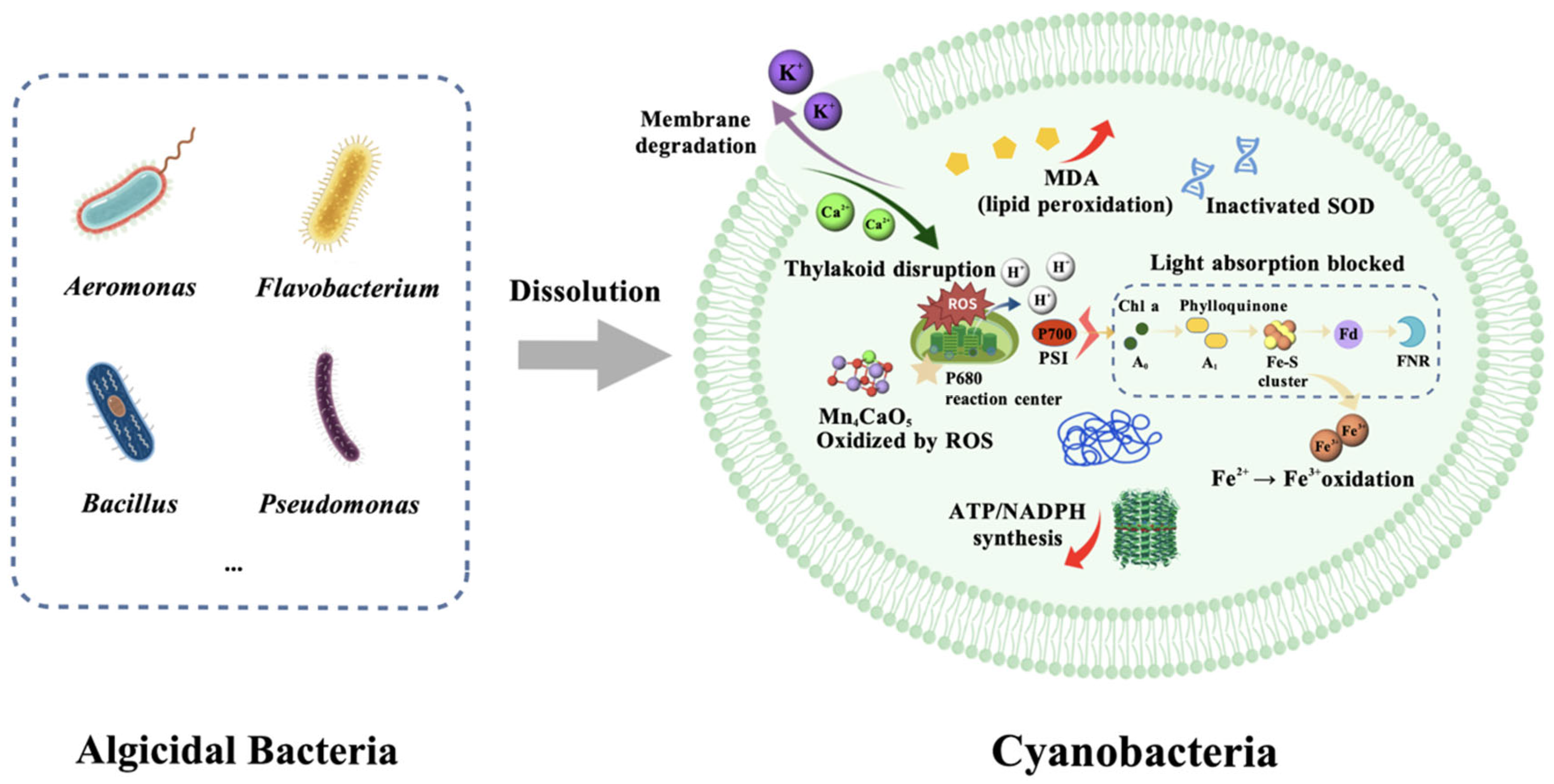
Figure 1 shows the key processes by which algicidal bacteria inhibit or lyse cyanobacterial cells through various pathways, including membrane damage, photosynthesis interference, and oxidative stress induction [46,47].
Aeromonas species primarily control cyanobacterial blooms through direct contact. Park et al. [15] reported that when A. bestiarum strain HYD0802-MK36 comes into direct contact with Microcystis aeruginosa, it induces cyanobacterial cell death; conversely, its cell-free culture filtrate exhibits no algicidal activity against cyanobacteria. The algicidal substance is primarily located within the cytoplasm. Cell fractionation experiments revealed that the cytoplasmic fraction exhibited the highest specific activity (60 units/mg), whereas periplasmic and membrane fractions showed lower specific activities (−6.3 to 4.4 units/mg), suggesting the algicidal agent may be an intracellular enzyme. The algicidal substance likely resembles protease enzymes, requiring direct contact to disrupt cyanobacterial cell structures. Inactivation upon heating or treatment with proteinase K further supports its proteinaceous nature.
Furthermore, A. bestiarum strain HYD0802-MK36 exhibits significant algicidal activity solely against the target cyanobacterium M. aeruginosa (91%), displaying extremely low activity (−143% to 20%) against 14 non-target algae (including green algae, diatoms, and dinoflagellates), confirming its status as a highly specific algicidal bacterium. This high specificity avoids harm to non-target algae, minimises ecological side effects, and renders it more suitable for targeted control of cyanobacterial blooms.
As for Bacillus, in the treatment involving Bacillus sp. strain AK3 immobilised on biochar and the denitrifying bacterium Alcaligenes sp. strain M3, cyanobacterial density decreased from 600,000 cells/mL to 80,000 cells/mL, while chlorophyll-a (Chla) concentration fell from 85.7 μg/L to 42.8 μg/L [18]. Bacillus sp. strain AK3 may secrete specific enzymes or metabolites that disrupt cyanobacterial cell walls or membranes, directly causing cell lysis and death. When the cell density of Bacillus licheniformis strain Sp34 reaches at least 1.35 × 10⁵ CFU/mL, it can eliminate the DCM4 strain of M. aeruginosa and other harmful algae in Dianchi Lake, such as M. wesenbergii and Phormidium sp. This strain exerts its effect by releasing algicidal substances exhibiting excellent thermal stability (−20 °C to 121 °C) and pH tolerance (pH 3–11) [21]. Its algicidal activity shows a significant positive correlation (p < 0.001) with algal growth conditions, demonstrating higher efficacy when algal growth is more vigorous.
Li et al. [48] focused on the algicidal mechanism of Raoultella sp. strain S1 against M. aeruginosa, conducting an in-depth investigation through Tandem Mass Tag (TMT) quantitative proteomics and other methodologies. The cell-free supernatant exhibited pronounced flocculation and inactivation effects on algal cells at low (1 × 10⁶ cell/mL) and medium (2.7 × 10⁶ cell/mL) concentrations, achieving 72-h kill rates of 96.23% and 92.46%, respectively, whilst efficacy markedly diminished at high concentrations (5.4 × 10⁶ cell/mL), yielding a killing rate of merely 37.21%. At low and medium concentrations, algal cells exhibited more pronounced antioxidant defence responses, characterised by elevated malondialdehyde (MDA) levels and significantly enhanced activity of antioxidant enzymes, including superoxide dismutase (SOD), catalase (CAT), and peroxidase (POD). In contrast, oxidative stress responses were relatively weaker in high-concentration algal cells. Photosynthetic efficiency and relative electron transport rate (rETR) declined substantially within 24 h. Transmission electron microscopy revealed disruption of thylakoid membranes and cellular structures. TMT proteomics analysis revealed differential protein changes during flocculation and lysis phases. The core mechanism of lysis in the supernatant was damage to the photosynthetic system, with impaired conversion of light energy into chemical energy, downregulation of carbohydrate metabolism proteins, and suppression of DNA replication and repair, leading to cyanobacterial cell apoptosis. This mechanism rapidly aggregates and precipitates algal cells, reducing their capture and utilisation of light energy. However, when algal cell concentrations are high, both kill rates and flocculation rates decline considerably, potentially limiting their effectiveness in managing large-scale cyanobacterial blooms.
Pseudomonas fluorescens strain SK09 can directly act upon algal cells by secreting metabolites with algicidal activity, such as certain enzymes or secondary metabolites. These substances disrupt the cell wall or cell membrane structure, leading to lysis and death of the algal cells. In mesocosm experiments conducted at water temperatures ranging from 5 to 15 °C, the maximum algal lysis effect (MAE) observed after inoculation with SK09 reached −17.4% to 83.2%, validating its algicidal potential under mesophilic and cold conditions [49]. Furthermore, when SK09 effectively lyses algae, it releases inorganic nutrients (e.g., DIN, DIP, DSi). For instance, in closed microcosms, DIP concentrations significantly increased after SK09 inoculation. Carrier immobilisation partially mitigates nutrient release through adsorption, balancing ecological impacts.
However, in this study, in outdoor mesocosm experiments, when water temperatures dropped to 0.1–3.0 °C (corresponding to river surface freezing), SK09 exhibited MAE values of −5.92% and −1.67% against algal cells, showing no significant difference from the control group (p > 0.05). This indicates that SK09 is unable to exert algicidal effects near freezing temperatures. In direct application experiments on the Nakdong River, reduced interaction time between bacteria and algae due to river flow resulted in no significant difference in algal cell abundance at three sampling points compared to the control group. Algicidal efficacy is inferior under low-temperature conditions near freezing and in flowing water environments, like rivers.
Bauer and Forchhammer [22] have documented the algal lysis processes of Bdellovibrio and Myxococcus across multiple dimensions. Bdellovibrio are obligate endosymbiotic predators that exclusively lyse Gram-negative bacteria, with prey ranges varying between strains. Their two-stage predation strategy involves a predatory phase where chemotaxis guides prey acquisition, followed by secretion of enzymes to form invasion channels. During the periplasmic growth phase, cellular components are degraded within the periplasmic space for reproduction. Prolonged growth culminates in host cell wall destruction by lytic enzymes, releasing progeny. Its genome encodes over 250 hydrolases, with metabolism relying on prey to compensate for nutritional deficiencies. Host-independent variants exist due to reduced Type IV pili formation. B. bacteriovorus lyses Phormidium luridum, while B. exovorus, an ectosymbiont predator, attaches to prey surfaces to consume cytoplasm. Bdellovibrio and Like Organisms (BALOs) strains can invade M. aeruginosa for internal lysis.
Myxococcus xanthus, a soil-dwelling Gram-negative bacillus, exhibits specific amino acid nutritional deficiencies requiring acquisition from prey, though it may also be saprophytic. It necessitates direct physical contact with prey, employing multiple synergistic lysis mechanisms against a broad range of hosts. The PCO2 strain of M. xanthus can capture and lyse Phormidium luridum via aqueous colonies.
In predatory modes, Bdellovibrio exhibits endosymbiosis while M. xanthus practises extracellular symbiosis; locomotion depends on chemotaxis and flagellar movement versus type IV pili and gliding, respectively; prey ranges encompass Gram-negative bacteria for the former and broader species for the latter; Metabolic characteristics comprise obligate predation or host-independent metabolism in the former, alongside facultative predation and saprophagy in the latter. Lysis mechanisms involve periplasmic enzymatic digestion and cell wall modification in the former, and collective secretion of hydrolytic enzymes in the latter. Both contribute to cyanobacterial population regulation, influencing aquatic ecological equilibrium. Nevertheless, high nitrate environments may suppress their activity, potentially promoting cyanobacterial blooms.
Liu et al. [42] reported the algicidal activity of Serratia marcescens strain BWL1001 against M. aeruginosa. This strain efficiently synthesises serratiamycin, exhibiting potent algicidal activity against harmful algae. M. aeruginosa was first cultured to a logarithmic phase at approximately 4 × 10⁶ cells/mL. Subsequently, serratiamycin at concentrations of 0.1, 0.5, 1.0, and 3.0 μg/L purified phycoerythrin, with untreated samples as controls. Cultivation proceeded for 48 h in TAP medium under a 12-h light/12-h dark cycle at 23 °C. Algal cell density was determined by measuring absorbance at 540 nm. Results demonstrated a dose-dependent relationship between phycoerythrin and its algicidal activity against M. aeruginosa, achieving a 91.1% algicidal rate at 3.0 μg/L, indicating potent algicidal efficacy. As a microbial metabolite, leuco-cinnabarite is naturally degradable, reducing the risk of aquatic pollution associated with chemical agents and aligning with green biocontrol requirements. However, concerns remain regarding whether its inhibition of algal cells may induce resistance evolution in algal species, or whether it could exert secondary effects on aquatic food chains. Furthermore, the precise mechanism of its algicidal action on algal cells—including specific targets and signal pathways affected—remains unclear.
For Alcaligenes aquatilis, its algicidal efficacy depends on the initial cell density of M. aeruginosa. When the initial Microcystis density was 5 × 10⁶ cells/mL, A. aquatilis strain F8 achieved an algicide rate of 88.45% within 72 h. At a density of 5 × 10⁷ cells/mL, the algicide rate decreased to 74.41%, outperforming most previously reported strains [17]. Transmission electron microscopy (TEM) revealed that the cell-free culture filtrate (CCF) of strain F8 disrupted Microcystis cell membranes, leading to the disappearance of photosynthetic lamellae and disruption of phycobiliproteins. Furthermore, sodium alginate encapsulation was employed to immobilise strain F8. However, the immobilised strain exhibited a lower algicidal rate (85.46% at 72 h) than the free-living strain (87.06%), attributed to the immobilisation matrix restricting bacterial activity. Adding wheat bran to the immobilisation matrix significantly enhanced the algicidal rate to 95.49%, representing an 8.83% improvement over the free-living strain. Acid-treated wheat bran, which degrades starch, cellulose, and vitamins, restored algicidal activity to the level of the immobilised control group. Conversely, alkaline-treated wheat bran, which primarily degrades proteins and lipids, had a lesser impact, suggesting vitamins may be the key component. Subsequently, adding a multivitamin complex to acid-treated wheat bran restored algicidal activity, while supplementing with individual vitamins such as E and B2 promoted bacterial growth, thereby enhancing algicidal activity. Starch and cellulose proved ineffective as carbon sources for strain F8, whereas vitamins within wheat bran were central to promoting its growth and algicidal activity. As an inexpensive agricultural by-product, wheat bran simultaneously supplies carbon, nitrogen, and vitamins to the bacteria. Its auxiliary immobilisation technique offers a low-cost, highly efficient solution for in situ management of cyanobacterial blooms, combining environmental benefits with economic viability.
Jeong et al. [33] reported that they isolated thirty bacterial strains from co-cultures of Myriophyllum spicatum and M. aeruginosa. Following screening, strain MS16 was identified as exhibiting significant algicidal activity against M. aeruginosa. 16S rRNA gene sequence analysis confirmed its identification as Nocardioides convexus.
The algicidal activity of strain MS16 against M. aeruginosa primarily occurs through direct physical attack. When treated with bacterial washings, algicidal rates reached 84% within one day and 98% within two days. Scanning electron microscopy revealed MS16 adhering to M. aeruginosa cell surfaces, causing structural disruption. Comparing algicidal effects between bacterial culture medium, bacterial wash solution, and cell-free filtrate demonstrated significantly higher activity in the wash solution and culture medium than in the filtrate, indicating MS16 primarily acts through direct contact rather than phytohormone secretion. Furthermore, MS16 exhibits selective inhibitory effects on M. aeruginosa, with no significant impact on other cyanobacteria or green algae, and even promotes the growth of certain green algae. Following MS16 treatment, gene expression related to photosynthesis (rbcL), oxidative stress defence (SOD, GSH), toxin synthesis (mcyA), and cellular repair (ftsH, recA) was significantly downregulated in M. aeruginosa, resulting in the loss of its growth and survival capacity.
MS16 exhibits high algicidal efficacy against M. aeruginosa, achieving 98% inhibition within a short timeframe and remaining effective even at high algal cell densities. Furthermore, it specifically targets certain cyanobacteria such as M. aeruginosa, exerting minimal impact on other algae and aquatic organisms, thereby contributing to the maintenance of ecosystem diversity. Although algal cell lysis during initial treatment releases microcystins, toxin concentrations decline rapidly thereafter, potentially indicating toxin degradation capacity that mitigates environmental hazards.
However, against natural populations of M. aeruginosa in water bodies, the algicidal efficacy of MS16 may be diminished by the protective mucilage layer surrounding the algal cells, necessitating longer exposure times or higher bacterial concentrations to achieve optimal results. When deploying MS16 on a large scale for M. aeruginosa bloom treatment, cultivation costs and application dosages must be carefully considered to ensure economic viability.
Li et al. [29] revealed that strain h10 exhibits highly effective algicidal activity against M. aeruginosa 7820. Identification confirmed its affiliation with the genus Exiguobacterium, and it was designated as Exiguobacterium sp. strain h10. Experiments demonstrated that the algicidal activity primarily emanated from the culture supernatant rather than the bacterial cells themselves, indicating indirect attack via secreted algicidal substances rather than direct contact. The algicidal molecule, with a molecular weight below 1000 Da, exhibited poor thermal and pH stability, suggesting a possible glycolipid mixture. It caused significant reduction in pigment content, such as Chla, disrupted algal cell structure and morphology, thereby inhibiting algal growth. Structurally, algal cells suffer severe damage to their structure and morphology, including cell wall and cell membrane injury, resulting in loss of cell integrity. Physiologically, Chla synthesis is inhibited, leading to decreased intracellular pigment content and impaired photosynthesis. This strain and its algicidal substance hold promise as a potential biocontrol agent for managing M. aeruginosa blooms, offering novel approaches and materials for the biological control of cyanobacterial blooms.
Chryseobacterium sp. exhibited significant algicidal activity against M. aeruginosa FACHB 905 under initial optimised conditions (30 °C, pH 7, bacterial concentration 1 × 10⁸ CFU/mL, M. aeruginosa concentration 6 × 10⁵ cells/mL), achieving an algicidal rate of 80% at 72 h [27]. This lysis exhibited marked time dependency: slight yellowing of the algal suspension commenced after 12 h of co-culture, with the lysis rate rising to 35% at 24 h and accelerating rapidly to 62% at 48 h. The lysis rate levelled off thereafter at 72 h. The 0.22 μm membrane-filtered culture group also demonstrated effective algal lysis, further confirming that this strain primarily exerts indirect lysis through secreted extracellular active substances rather than direct contact.
The group subjected to high-temperature sterilisation (121–123 °C for 20 min) retained high algal lysis activity, indicating that the secreted extracellular algolytic substances possess strong thermal stability and are not proteinaceous in nature. Algicidal activity was observed across the 4–37 °C range, with the highest lysis rate (80%) at 30 °C. Rates decreased significantly at 10 °C (32%) and 4 °C (18%). Effective algicidal activity persisted within the pH range of 5–9, peaking at pH 7 (80%). Increasing bacterial concentration from 1 × 10⁶ CFU/mL to 1 × 10⁸ CFU/mL elevated the algicidal rate from 28% to 80%; further increasing to 1 × 10⁹ CFU/mL only raised the rate to 82%, with the increase levelling off. When M. aeruginosa concentration rose from 6 × 10⁵ cells/mL to 6 × 10⁷ cells/mL, the algal lysis rate decreased from 80% to 44.4%, indicating significant inhibition of lysis efficacy by high algal density.
Physiologically, following the addition of the bacterial strain supernatant, Chla content exhibited a marked decline from day 1, falling to 330 mg/m3 by day 5. By day 7, the removal rate reached 59.37%, demonstrating a highly significant difference compared to the control group (p < 0.01). On day 1 of co-culture, malondialdehyde (MDA) accumulation in algal cells of the treatment group increased by 39.95% compared to the control group (p < 0.01), continuing to rise with prolonged culture duration, indicating severe disruption of algal cell membrane structures. Phosphatidylcholine (PC) fluorescence values exhibited a consistent downward trend parallel to Chla changes, confirming comprehensive destruction of the algal photosynthetic system during algal lysis.
Structurally, after 2 days of co-culture, algal cells exhibited deformation and aggregation; by day 4, partial cell rupture and leakage of contents occurred; by day 7, extensive cell disintegration resulted in debris-like precipitates in the culture medium. Processed algal cells exhibited significantly reduced absorption peak intensities at 1647 cm−1 (C-O bond), 2927 cm−1 (C-H bond), and 3437–3475 cm−1 (O-H bond). Characteristic minor absorption peaks emerged in the 2500–1700 cm−1 range, indicating destruction of polysaccharide and protein structures and cellular disintegration.
Wang et al. [34] investigated the algicidal mechanism of the algicidal bacterium Paenibacillus sp. strain SJ-73. Cultures of SJ-73, cell-free filtrates, and washed bacterial cells were co-cultured with M. aeruginosa PCC 7806. Algal efficiency was determined by measuring Chla content. The algicidal efficiencies of the culture and cell-free filtrate were 90.48% and 89.51%, respectively, whilst the washed bacterial cells exhibited no inhibitory effect. This indicates that SJ-73 exerts its algicidal action by secreting extracellular active substances rather than through direct contact with the algal cells. The secreted active substances cause cell lysis by disrupting the cell membrane system and cell wall of Microcystis. Subsequently, various algae (including cyanobacteria and green algae) were treated with 5% SJ-73 filtrate, with Chla content measured after 7 days. The algicidal efficiencies against M. aeruginosa PCC 7806, Dolichospermum circinale PCC 7120, and Aphanizomenon flos-aquae FACHB 1168 were found to be 83.97%, 71.35%, and 71.04%, respectively. Whereas the inhibition rates for Chlorella vulgaris FACHB 26 and Anabaena oblique FACHB 416 were merely 3.67% and 8.03%. Thus, SJ-73 exhibits potent algicidal activity against cyanobacteria (particularly Microcystis), with minimal impact on green algae, demonstrating marked host specificity. SJ-73 exhibits highly efficient algicidal activity against both unicellular and colonial Microcystis, though the process induces substantial release of microcystins (MCs), with higher concentrations of filtrate (10%) yielding more pronounced MCs release. Its algicidal efficacy exceeded 90% against both single-celled and colonised Microcystis, while also exhibiting significant inhibition against other cyanobacteria (e.g., Anabaena, Synechococcus), making it applicable for controlling large-scale multi-species blooms. However, MCs released during algicide action can exceed initial concentrations by over 20-fold, potentially posing threats to aquatic organisms and human health. SJ-73 alone can only remove Microcystis biomass without simultaneously degrading released MCs, necessitating additional toxin degradation methods like MlrA enzyme treatment, thereby increasing management steps and costs. Furthermore, while the 10% filtrate concentration demonstrated slightly higher algicidal efficacy (94.38%), MCs release increased by 24.5% compared to the 5% treatment group, indicating that high-dose application may exacerbate toxin contamination.
To sum up, to enhance the academic application of algicidal bacteria, future research should integrate proteomics and bioinformatics to identify differential surface proteins between Microcystis and non-target organisms, enabling the selection of ideal target molecules. By leveraging computer-aided design (CAD) and artificial intelligence (AI), binding protein domains may be engineered to target these molecules precisely. And with the designed genes synthesised through synthetic biology, integrating into naturally occurring Microcystis-infecting bacteriophages, creating precision-guided phages. Among the studied strains, Nocardioides convexus strain MS16 emerges as a particularly promising candidate due to its high specificity, rapid lysis, minimal ecological disruption, and potential toxin degradation capacity, which deserves further exploration for cyanobacteria bloom management.

2.2. Algicidal Fungi

Algicidal fungi are eukaryotic microorganisms that inhibit or lyse algal cells through the secretion of extracellular enzymes, oxidative metabolites, or secondary compounds that disrupt membrane integrity, photosynthetic electron transport, or cellular redox balance [50]. The fungi currently reported to possess highly potent algicidal activity are primarily concentrated within the genera Phanerochaete, Trichoderma, Aspergillus, and those producing photosensitive metabolites, such as Cercospora (which produces cercosporin). Their target algal species encompass typical harmful algal bloom species in both freshwater and marine environments, including cyanobacteria, green algae, cryptophytes, and dinoflagellates. Significant variations in algal species selectivity exist among different fungi. For instance, T. citrinoviride exhibits potent inhibition solely against M. aeruginosa, while showing no inhibitory effect and even mildly promoting growth in green algae and diatoms [51]. Conversely, Phanerochaete chrysosporium achieves highly efficient algicidal activity against three algal species: Cryptomonas obovata, Oscillatoria sp., and Scenedesmus quadricauda. Specifically, the mechanisms of action for algicidal fungi can be categorised into three types: direct physical effects, metabolite-mediated indirect effects, and dual effects driven by photosensitization.

2.2.1. Direct Physical Contact and Lysis Mechanisms

Represented by P. chrysosporium [50] and T. citrinoviride [51], these fungi achieve algicidal effects through physical adsorption, enveloping algal cells, and directly disrupting their structure.
For P. chrysosporium, scanning electron microscopy (SEM) revealed that its hyphae initially adhere to the algal cell surface. Subsequently, the cell membrane integrity of C. obovata, Oscillatoria sp., and S. quadricauda significantly deteriorates. Flow cytometry (FCM) analysis indicates that the proportion of dead/severely damaged cells reaches 82.4–86.5% (compared to only 1.5–2.4% in the control group). Transmission electron microscopy (TEM) revealed cell wall rupture, protoplasmic leakage, and complete disintegration of thylakoid structures. Concurrently, fungal biomass exhibited marked augmentation. Following 48-h co-culture with S. quadricauda, fungal mycelial dry weight increased from an initial 0.056 ± 0.005 g to 0.527 ± 0.067 g (p < 0.001), suggesting fungal nutrient acquisition through algal cell degradation [50]. Following 1 day of co-culture between T. citrinoviride and M. aeruginosa, mycelial enveloping traces appeared on algal cell surfaces, with complete cell rupture observed after 2 days [51]. The dry weight of lysed M. aeruginosa increased from 65.3 mg to 231 mg, whereas biomass showed no significant change during co-culture with green algae, further confirming its selective utilisation of algal cell components. Despite established evidence that hyphal attachment of P. chrysosporium and T. citrinoviride disrupts cyanobacterial membrane integrity, with T. citrinoviride displaying potent and specific inhibition against M. aeruginosa, the precise pathways of action on the cyanobacterial membrane and the ensuing cellular response have yet to be elucidated.

2.2.2. Metabolite-Mediated Molecular Damage

P. chrysosporium [52] and Aspergillus species (A. wentii, A. ustus, A. versicolor) [53] disrupt algal physiological functions by secreting secondary metabolites (e.g., anthraquinones, terpenoids, steroids). RT-qPCR analysis revealed that P. chrysosporium or its metabolites significantly regulated key gene expression in M. aeruginosa. Relative expression levels of prx, recA, grpE, and fabZ increased 5–10-fold compared to controls, indicating oxidative stress and DNA damage in algal cells. Conversely, psbD1, rbcL decreased by over 95%, while mcyB expression dropped from 5.25 ± 0.62% to 0.46 ± 0.07%, resulting in an 88.6% reduction in Chla content and impaired microcystin synthesis [52].
Among 32 pure compounds isolated from A. wentii, A. ustus, and A. versicolor, 11 (including 5 anthraquinones, 2 terpenoids, and 4 steroids) exhibited potent algicidal activity [53]. For Chattonella marina, anthraquinones exhibited a 24-h EC50 as low as 0.01 μg/mL, with complete cell death at 5 μg/mL. Against Heterosigma akashiwo, 1,5-dihydroxy-3-methoxy-7-methylanthraquinone achieved 100% inhibition at 2.5 μg/mL, reducing Chla content, increasing malondialdehyde (MDA) levels, and disrupting cell membranes and antioxidant systems.

2.2.3. Dual Mechanism Driven by Photosensitization

Cercosporin (CP), a phytotoxin produced by fungi of the genus Cercospora, functions as a prototypical photosensitised algicide through a dual mechanism involving both reactive oxygen species (ROS) generation and direct cellular adsorption. Under visible light irradiation, 20 μM CP achieved 95% inactivation of M. aeruginosa within 36 h. ROS quenching experiments revealed that the superoxide anion (O2) scavenger PBQ completely inhibited algicidal activity, whereas hydroxyl radical (•OH) and singlet oxygen (1O2) scavengers showed no significant effect, confirming O2- as the primary active species. Lipidomic analysis revealed that CP preferentially degraded unsaturated fatty acids (e.g., C16:1, C18:1) and photosynthetic membrane lipids (e.g., sulfoquinovosyl diglyceride SQDG, phosphatidylglycerol PG), leading to increased cell membrane permeability and a 3–5-fold rise in intracellular organic matter (IOM) leakage compared to the control group. Furthermore, confocal microscopy revealed CP adsorbs onto algal cell membranes via hydrophobic interactions. Even under dark conditions, 20 μM CP reduced M. aeruginosa viability to 60.73%, with FCM analysis indicating 53.3% membrane damage. FTIR analysis revealed that CP’s phenolic hydroxyl groups (1204 cm−1, 1148 cm−1) embedded into algal cell wall peptidoglycan, disrupting β-(1,4)-glycosidic bonds (3350 cm−1) and further amplifying membrane damage effects [54].
In summary, while existing research confirms that several algicidal fungi exert significant inhibitory effects on cyanobacteria, several critical aspects require further investigation. First, the lack of specificity in some strains—which exhibit broad-spectrum inhibition against various algal species rather than targeting bloom-forming cyanobacteria exclusively—raises potential ecological concerns. Second, the precise mechanisms of action employed by algicidal fungi that specifically inhibit bloom-forming cyanobacteria remain largely ambiguous. Furthermore, challenges persist regarding the efficient isolation, cultivation, and practical large-scale deployment of these agents in environmental remediation, as evidenced by a scarcity of successful industrial application case studies.

2.3. Cyanophages

Cyanophages are a class of viruses that specifically infect cyanobacteria. These double-stranded DNA viruses exhibit a broad host range across numerous cyanobacterial species, thus inhibiting harmful blooms in both freshwater and marine environments, including key taxa such as Microcystis, Synechococcus, Prochlorococcus, and Planktothrix [55]. To date, approximately 250 cyanophage genomes have been deposited in the global GenBank database. However, the overwhelming majority, around 210 strains, infect marine cyanobacteria (Prochlorococcus and Synechococcus), with research on freshwater cyanophages lagging considerably. Only about 40 freshwater cyanobacterial phages have been reported, sequenced, and annotated to date. Among these, just 13 phages target Microcystis, including ΦMHI42, MaMV-DC, Ma-LMM01, Mic1, Ma-LBP, PhiMa05, vB_MweS-yong2, Me-ZS1, MinS1, Mae-Yong924-1, Mae-Yong1326-1, YongM, and Mwe-Yong1112-1. Among these, ΦMHI42 and Ma-LBP remain unsequenced. Only eight strains (ΦMHI42, MaMV-DC, Me-ZS1, MinS1, Mae-Yong924-1, Mae-Yong1326-1, YongM, Mwe-Yong1112-1) have been confirmed to exhibit broad-spectrum infectivity, capable of lysing hosts across cyanobacterial genera and even orders [56].
Regarding its algicidal mechanism, adsorption constitutes the initial step of phage infection, relying on the precise binding of the phage tail structure to specific receptors on the host cell surface. This process is regulated by light exposure or the host’s metabolic state in certain phages. The freshwater cyanophage AS-1 (infecting S. elongatus PCC6301 and PCC7942) achieved an adsorption rate of 80% within 20 min under light exposure, whereas in darkness, the adsorption rate after 20 min was only 40% [57]. Similarly, the adsorption of marine Synechococcus phage S-PM2 onto host WH7803 exhibits light dependency, independent of the host cell cycle. Even under synchronised host culture conditions, adsorption rates at different time points show no significant variation, confirming that light directly modulates the conformation of either the phage or host receptors, rather than indirectly influencing them via host rhythms. Furthermore, research on the broad-spectrum phage YongM revealed that its tail fibrin ORF83 is a key determinant of host range: following UV-induced mutagenesis to generate ORF83 mutant strains, this phage exhibited approximately 20% increased lysis efficiency against Microcystis, Nostoc, and other cyanobacteria by approximately 20%. It also gained the ability to infect Oscillatoriales cyanobacterial strains that the original wild-type strain could not lyse, further confirming the core role of tail structural proteins in host targeting.
Following adsorption, the phage injects its genomic DNA into the host cell, subsequently employing two strategies to achieve metabolic hijacking. Firstly, it utilises the host’s own metabolic system to synthesise viral components. Secondly, it reprograms host metabolic pathways via carried auxiliary metabolic genes (AMGs) to enhance its own replication efficiency. Cyanophage genomes commonly harbour AMGs linked to host photosynthesis, carbon metabolism, and nucleotide synthesis. For instance, the nblA gene carried by Ma-LMM01 recruits proteases to degrade host phycobiliproteins (PBS), releasing nutrients like nitrogen and sulphur for phage replication. The psbA and psbD genes carried by the Prochlorococcus phage P-HM2 are efficiently expressed during infection, maintaining host photosynthetic activity to provide sustained ATP and NADPH for phage replication [56]. Furthermore, studies on Prochlorococcus phages reveal that phage infection significantly alters host carbon metabolism: Under light conditions, the phage inhibits the host’s Calvin cycle by encoding the CP12 protein while simultaneously activating the pentose phosphate pathway. This redirects host metabolic resources to prioritise nucleotide synthesis for the phage. Conversely, in darkness, cessation of host photosynthesis causes complete halting of phage genome replication, confirming the dependency of metabolic hijacking on the host’s photosynthetic state.
Following completion of genomic replication and protein assembly within the host, the phage disrupts the host cell membrane and cell wall by encoding lysis-associated genes, releasing progeny phages and inducing host cell death. Studies on the Planktothrix agardhii phage PaV-LD confirm that co-expression of the endopeptidase encoded by its ORF123 gene and the membrane-associated holin protein encoded by ORF124 can achieve over 90% lysis of the host Synechocystis PCC6803 cells within 24 h. This lysis effect exhibits host specificity, having no impact on non-cyanobacterial microorganisms. Furthermore, significant variations in lysis efficiency were observed among different phages: the freshwater phage Lbo240-yong1 (non-Microcystis phage, host: L. boryana FACHB-240) rendered the host culture medium entirely yellow within one day, achieving rapid host clearance; Mwe-Yong1112-1 can completely lyse 7 out of 23 host strains within 3 days; whereas PhiMa05 requires 4 days for complete lysis, with an outbreak period lasting 3 days. These variations are closely related to the phage’s incubation period, burst size, and host metabolic state. Phages with short incubation periods and high burst sizes demonstrate significantly higher algicidal efficacy than strains with prolonged incubation periods and low burst sizes.
In terms of application advantages, cyanophages are naturally distributed widely, making resource acquisition readily available. Furthermore, they specifically target cyanobacteria, exerting minimal impact on non-target organisms and ecosystems, thus demonstrating excellent specificity and low ecological disturbance. Moreover, they exhibit remarkable lytic efficiency and strong environmental adaptability. Most phages maintain activity within a temperature range of 0–45 °C and a pH range of 3–10, enabling adaptation to diverse aquatic environments such as lakes and oceans. They are sensitive only to ultraviolet radiation and organic solvents, with stability further enhanced through encapsulation techniques. Additionally, synthetic biology technologies offer avenues for functional optimisation of cyanobacterial phages. However, cyanobacteria may develop resistance through genetic mutation or the CRISPR-Cas immune system, potentially necessitating frequent replenishment of new phage strains to counter resistance issues, thereby increasing application costs and complexity. Phage lysis of cyanobacteria may trigger the release of intracellular algal toxins. Should release volumes exceed the water body’s self-purification capacity, this could threaten drinking water safety and aquatic organism health. Cyanobacterial phages are also sensitive to ultraviolet radiation and organic solvents. UV light can damage their genomic DNA, while organic solvents can disrupt their protein coats, leading to rapid attenuation of phage activity in natural water bodies. Furthermore, bottlenecks persist in the synthesis and functional optimisation of engineered phages [55,56,57,58]. Future research could expand habitat screening efforts, deepen investigations into infection mechanisms, and pursue optimisation of genomic structures.
To provide a comprehensive understanding of direct algicidal microorganisms, Table 2 systematically compares the mechanisms and characteristics of different types, including algicidal bacteria, algicidal fungi and cyanophages.

3. Microbial Regulation of Aquatic Environments to Inhibit Cyanobacteria

3.1. Nitrogen-Cycling Microorganisms

Cyanobacterial proliferation is strongly coupled to the bioavailability of dissolved inorganic nitrogen (DIN). Consequently, microbial guilds involved in nitrification, denitrification, anammox and diazotrophy represent critical regulators of bloom initiation and persistence. This synthesis assesses the biochemical pathways by which nitrogen-cycling microorganisms suppress cyanobacteria, quantifies their reported field performance, and outlines their associated advantages and limitations.

3.1.1. Anammox Bacteria

Research indicates that anammox primarily contributes to the control of cyanobacterial blooms indirectly by regulating the biological availability of nitrogen in aquatic systems. Its mechanism of action is closely linked to nitrogen cycling processes and responsive to environmental conditions. Firstly, anammox influences nitrogen balance as a nitrogen removal pathway. Research indicates that anammox utilises NH4+ and NO2 to produce N2, converting biologically available inorganic nitrogen in the water body into gaseous nitrogen unavailable to phytoplankton. This process reduces the nitrogen sources required for cyanobacterial growth. At two sampling sites in Mississippi Bay (Parker’s River Mouth, PRM; Central Basin, MB), anammox contributed an average of 6% (PRM) and 10% (MB) to total N2 production, peaking at 27% (PRM, September 2009) [63]. Though subordinate to the dominant role of denitrification, this activity provides supplementary nitrogen removal services to the ecosystem, reducing nitrogen availability for cyanobacterial growth. Secondly, anammox is regulated by environmental conditions, thereby indirectly influencing dominant cyanobacterial species composition. Observations indicate that bottom-water hypoxia significantly alters anammox function: while inhibiting aerobic nitrification, it creates more favourable redox conditions for anaerobic anammox, increasing its relative contribution, which concurrently increases sediment NH4+ release. This elevates concentrations of bioavailable nitrogen species like NH4+ in the water column, while phosphorus flux remains unaffected, ultimately promoting non-nitrogen-fixing cyanobacterial blooms. Such cyanobacteria exhibit stronger competitive uptake of NH4+, enabling rapid cyanobacterial blooms under conditions of increased nitrogen supply and sufficient phosphorus. Conversely, during non-anoxic periods, anammox synergises with denitrification to continuously remove inorganic nitrogen from the water body, partially alleviating nitrogen accumulation and inhibiting excessive cyanobacterial proliferation.

3.1.2. Disruption of Cyanobacterial Nitrogen Fixation

Gao et al. [64] investigated photosynthesis and nitrogen fixation during cyanobacterial blooms in the upper Susquehanna River, a tidal freshwater tributary of the Chesapeake Bay in the United States. They found that cyanobacterial mixed communities could fix carbon and nitrogen under conditions where most phytoplankton were constrained, by utilising temporal variations in dissolved inorganic carbon (DIC) and dissolved oxygen (DO). During the early cyanobacterial blooms, nitrogen limitation favoured nitrogen-fixing cyanobacteria as dominant species. Their biomass-normalised nitrogen-fixation rates and Chla-based photosynthetic rates increased with enhanced light exposure. At peak bloom, photosynthetic carbon uptake and oxygen production depleted DIC and caused oxygen supersaturation. Oxygen inhibition of nitrogenase and carbon limitation constrained photosynthesis, suppressing nitrogen fixation under light conditions, whereas dark-period fixation accounted for 40% of the daily total. Under these high pH and high dissolved oxygen conditions, cyanobacterial species known for dark-phase nitrogen fixation dominate. Research further indicates that cyanobacterial blooms constitute a vital component of nitrogen cycling in oligohaline and tidal freshwater estuaries. Their species composition and physiological adaptation strategies enable blooms to persist under adverse conditions, whilst the environmental changes driven by the bloom exert negative feedback on cyanobacterial growth.

3.1.3. Integrated Management Prospects

Zhang et al. [65] isolated three mixed aerobic denitrifying bacterial communities (Mix-CADBCs: NM7, NM18, and NM39) from lake water bodies. These communities achieved removal rates exceeding 94% for both total nitrogen and dissolved organic carbon, with over 70% of initial nitrogen converted into gaseous nitrogen and less than 11% converted into microbial biomass. Batch experiments demonstrated their denitrification capability under diverse conditions, with dominant genera including Hydrophagenia, Prosthecomicrobium, and Pseudomonas. Network analysis revealed that Pseudomonas I.Bh25.14 and Vogsella LIG4 were associated with the removal of total nitrogen and dissolved organic carbon. When inoculated into slightly polluted lake water, they achieved a total nitrogen removal rate exceeding 78.72%, promoted microbial growth, and enhanced organic degradation capacity, offering a potential strategy for biological treatment of lake water bodies.

3.2. Phosphorus-Cycling Microorganisms

Phosphorus (P) exerts a primary regulatory influence on primary producers in most freshwater systems, rendering microbial-mediated phosphorus transformation pivotal in controlling cyanobacterial blooms [66]. Relevant microbial communities, including polyphosphate-accumulating bacteria (PABs), polyphosphate-degrading bacteria, and photosynthetic or chemotrophic biofilm communities, can regulate material fluxes between dissolved reactive phosphorus (DRP), particulate organic phosphorus, and mineral-bound phosphorus.

3.2.1. Polyphosphate-Accumulating Bacteria

Research has revealed that PABs isolated from activated sludge can suppress cyanobacterial blooms by up to 95.56% through trapping phosphorus in the form of pyrophosphate [67]. This demonstrates that employing these microorganisms offers promising efficacy in controlling cyanobacterial blooms and, consequently, the eutrophication process.

3.2.2. Periphytic Biofilms

Lu et al. [68] evaluated the impact of epibenthic biofilms on phosphorus (P) content along with its speciation at the water-sediment interface through simulated experiments. In the presence of attached biofilm, concentrations of all phosphorus species (TP, TDP, DIP, PP, and DOP) in the overlying water were significantly reduced to lower levels (<0.05 mg/L), whereas TP concentrations in the control group (without attached biofilm) increased (>1.8 mg/L). The epibenthic biofilm elevated water pH (peaking at approximately 10), promoting co-precipitation of phosphorus with metal salts and slowing the loss of phosphorus components such as Fe/Al-P and Ca-P from sediments. Furthermore, phosphorus content within the biofilm (primarily in Fe/Al-P and Ca-P forms) increased by 100% after 60 days. This indicates that epibiont biofilms can capture and store phosphorus from water, forming a buffer against release and precipitation.

3.2.3. External P Control

A study investigated the influence of phosphorus concentration on cyanobacterial blooms by the development of a dynamical modelling framework [69]. This model incorporated key factors on cell growth, notably light availability and phosphorus levels, and accounted for seasonal variations in temperature and illumination. The resulting system comprised a set of periodically forced nonlinear ordinary differential equations. Findings from the study suggest that phosphorus concentration modulates the occurrence of cyanobacterial blooms by impacting algal growth rates and invasive potential. Numerical simulations further demonstrated that reducing parameters associated with internal phosphorus release decreases phosphorus concentrations and limits the invasion growth rate of algae. Furthermore, the results indicate that simultaneous reduction in external phosphorus inputs and sediment phosphorus release most effectively lowers Chla concentrations and accelerates lake ecological recovery, while controlling a single phosphorus variable produces limited effects. Beyond chemical management, manipulating photosynthetic microbial communities—such as by introducing or stimulating phototrophic organisms—can interfere with cyanobacteria’s access to light and nutrients, thus serving as a potential strategy for controlling cyanobacterial blooms.

3.3. Photosynthetic Bacteria

Research by Kim et al. [70] highlighted the potential of harmless phototrophic bacteria in controlling harmful cyanobacterial blooms. Their study demonstrated that Cyanobium gracile A950 inhibits the growth of M. aeruginosa by disrupting the latter’s photosynthetic efficiency and nutrient uptake. Cyanobium gracile A950 is characterized by its small cell size and high proliferation rates, enabling it to effectively compete for essential resources such as light, carbon, and nitrogen. This competition indirectly suppresses cyanobacterial blooms while contributing to the maintenance of ecological equilibrium.
These studies above indicate that these microorganisms do not exert a direct effect on cyanobacteria, but utilise them to control key nutrients, such as nitrogen and phosphorus, or compete for resources, like light, with cyanobacteria through beneficial microorganisms. Although they are effective environmental strategies for controlling cyanobacterial blooms, these studies are mostly in the process of laboratory research. Some of these technologies have already been applied on a small scale or in specific venues, yet the vast majority of them have not been popularised or become major control methods, lacking a grand scale and engineering application. Moreover, the effects of these bacteria are not only limited to cyanobacteria, but also have inhibitory effects on other algae. So their functions are broad-spectrum, and thus their ecological risks also need to be further evaluated.

4. Combined Applications of Microorganisms with Other Technologies

4.1. Microbial + Biofilm Technology

The integration of microbial treatment with biofilm systems constitutes an effective strategy for controlling cyanobacterial blooms. Biofilms provide a stable microhabitat for beneficial microorganisms, sustaining their activity while removing nutrients to inhibit algal growth.
Lu et al. [68] demonstrated that epiphytic biofilms formed on submerged surfaces, such as stones, plant roots, or artificial substrates, can adsorb and immobilise phosphorus at the sediment-water interface. This buffering effect reduces internal phosphorus loading and prevents eutrophication.
Based on this, Liang et al. [71] reviewed the design, construction, and optimisation of mixed-species microalgal biofilms in wastewater treatment, particularly their capacity to remove nutrients and suppress harmful algae. They emphasised selecting compatible photosynthetic and heterotrophic species and optimising surface attachment characteristics. Such biofilms may comprise algae, cyanobacteria, bacteria, and fungi coexisting within communities to perform multiple ecological functions.
In practice, integrating algicidal microorganisms with biofilm scaffolds creates localised microenvironments that simultaneously capture nutrients and effectively suppress cyanobacteria. For instance, algicidal bacteria attached to biofilms can produce extracellular enzymes, reactive oxygen species, or allelochemicals. These substances diffuse into the surrounding water body, acting upon species responsible for algal blooms. Simultaneously, the biofilm matrix enhances microbial retention, shielding them from environmental stresses and thereby improving treatment efficacy.
Moreover, biofilm-associated systems enable multifunctional interventions, including nutrient uptake, algal dissolution, and pollutant degradation. Such systems are particularly suited for large-scale applications in constructed wetlands, retention ponds, or floating island ecosystems, facilitating sustainable ecosystem restoration.

4.2. Microbial + Phytoremediation

The integration of microbial agents with aquatic plants, known as microbial phytoremediation technology, offers an ecologically sound strategy for mitigating harmful cyanobacterial blooms. This method utilises both the nutrient uptake capacity and allelopathic properties of large aquatic plants, whilst leveraging the metabolic diversity advantages of associated microbial communities.
Multiple aquatic plants have been demonstrated to exert direct inhibitory effects on cyanobacteria. For instance, Zhang et al. [72] observed that Cyperus rotundus root extract significantly reduced Microcystis biomass within experimental ponds over 30 days, indicating potent allelopathic activity.
Beyond direct allelopathic effects, aquatic plants play a pivotal role in removing excess nutrients such as nitrogen and phosphorus, thereby limiting the substrate required for algal bloom growth. They are ideal carriers for nutrient recovery in eutrophic water bodies.
Plant-microbe consortia are particularly suited for engineered ecological infrastructure like man-made wetlands, floating treatment ponds, or floating gardens. Such systems can be tailored to specific microbial-plant combinations to maximise nutrient cycling and algicidal activity. For instance, Li and Pan [73] developed a system for Lake Tai that integrated chitosan with Pseudomonas strains within a soil-covered substrate, achieving simultaneous cyanobacterial removal and microcystin degradation, thereby demonstrating the feasibility of microbial phytoremediation techniques. Furthermore, this biohybrid system exhibits long-term ecological stability, low energy consumption, and holds promising development prospects.

4.3. Microbial + Physical/Chemical Methods

Integrating microbial strategies with physical and chemical methods represents a cutting-edge approach to controlling cyanobacterial blooms. This methodology leverages the complementary advantages of diverse mechanisms, including oxidation, adsorption, and biodegradation, to achieve highly efficient treatment.
A notable example is the enhanced constructed wetland system utilising beneficial microorganisms. The microcosm wetland system developed by Wang et al. [74] significantly improved the removal efficiency of M. aeruginosa and its associated toxin microcystin-LR by establishing engineered microbial communities. This approach not only degrades toxins but also removes nutrients.
In another innovative study, Nam et al. [75] employed chitosan-coated oxygen nanobubbles to control cyanobacteria. The oxidative stress induced by these nanobubbles selectively inactivated approximately 73% of Microcystis cells without triggering explosive cell lysis, which could release substantial amounts of intracellular toxins. The chitosan coating not only enhanced the stability of the nanobubbles but also enabled the controlled, sustained release of reactive oxygen species.
These examples demonstrate that multimodal interventions combining biological specificity with physical or chemical efficacy can overcome the limitations of single approaches. For instance, while photocatalysis enables rapid inactivation, microbial biofilms ensure long-term nutrient cycling and ecological equilibrium. Similarly, chemical agents like nano-bubbles initiate algal cell disruption, subsequently releasing organic compounds through microbial degradation.
Moreover, such integrated systems permit customised modular solutions applicable across diverse aquatic environments, including lakes, aquaculture ponds, and treatment wetlands. The flexible combination of microbial preparations with catalysts, adsorbents, or oxidative nanomaterials opens new avenues for tailored, environmentally responsive harmful algal bloom control technologies.
To better illustrate the advantages and disadvantages of the various microorganism-based strategies for controlling cyanobacterial blooms mentioned above, Table 3 provides a comparative overview of their strengths, limitations, typical application cases, and applicable water bodies.

5. Conclusions and Future Prospects

In summary, significant progress has been achieved in multiple microbial strategies for controlling cyanobacterial blooms. Directly algicidal microorganisms, including bacteria, fungi, and bacteriophages, exert a lytic effect on harmful cyanobacteria, effectively reducing bloom biomass. Concurrently, other microbial communities indirectly suppress bloom development by influencing key environmental factors such as nutrient cycling, light conditions, and ecosystem interactions. The integration of microbial preparations with biofilms, aquatic plants, and physicochemical techniques has demonstrated synergistic enhancement in control efficacy. Although these approaches possess distinct advantages and limitations, their combined application, such as coupling bioaugmentation with nutrient removal and habitat modification, holds promise for achieving comprehensive and sustainable algal bloom management. Table 4 outlines the research focuses, core concepts, advantages, challenges, and development trends in this field for gaining a deeper insight into the future development landscape of microbial control for cyanobacterial blooms.
Looking ahead, research should focus on advancing cross-disciplinary collaboration and technological innovation to optimise microbial control strategies. Advances in genomics, synthetic biology, materials science, and ecological modelling present promising opportunities for refining these approaches. For instance: enhancing control efficacy and stability through engineered cyanophage specificity, developing potent algicidal enzymes, and designing functionally complementary microbial communities. Furthermore, intelligent delivery systems such as microencapsulation and nanocarriers enable targeted precision application in aquatic environments. Deep understanding of algal bloom formation mechanisms under varying environmental conditions is crucial for implementing precise interventions. Continuous monitoring of ecological impacts and public health safety is key to ensuring microbial control methods are both effective and environmentally sound. Through sustained cross-disciplinary collaboration, microbial-based strategies hold promise as an integral component of global cyanobacterial blooms management, contributing to the restoration and conservation of freshwater ecosystems.

Author Contributions

X.D. and C.Z. conceived and designed the study. S.M. and W.Z. collected and analysed the data. X.W., H.S., T.Q., W.L., J.C., L.L., B.L. and M.Z. assisted with the literature review. S.M. and W.Z. drafted the manuscript. X.D. provided revisions. D.W. and T.Q. provided the study venue. X.D. and C.Z. secured funding. All authors have read and agreed to the published version of the manuscript.

Funding

This study was supported by the Specialized Research on Comprehensive Lake Management: Key Technologies for Three-Dimensional Intelligent Tracking of Lake Morphology and Habitat Development (HBSLKY202402), the National Key Research and Development Program of China (2022YFC3204103), the National Natural Science Foundation of China (32271643), Wuhan Municipal Construction Group Co., Ltd. Science and Technology Plan Funding Project (wszky202113), the Kunlun Talent High-End Innovation and Entrepreneurship Talent Plan Project in Qinghai Province and the 2025 Undergraduate Innovation and Entrepreneurship Training Program Project (S202510497251).

Institutional Review Board Statement

Not applicable.

Informed Consent Statement

Not applicable.

Data Availability Statement

The original contributions presented in this study are included in the article. Further inquiries can be directed to the corresponding authors.

Conflicts of Interest

All authors of this manuscript have no conflicts of interest with the funding sources. The funding played no role in the study design, data collection, analysis, interpretation, manuscript preparation, or the decision to publish the results, and there are no conflicts of interest.

References

  1. Vu, H.P.; Nguyen, L.N.; Zdarta, J.; Nga, T.T.V.; Nghiem, L.D. Blue-Green Algae in Surface Water: Problems and Opportunities. Curr. Pollut. Rep. 2020, 6, 105–122. [Google Scholar] [CrossRef]
  2. Chen, Y.; Yue, Y.; Wang, J.; Li, H.; Wang, Z.; Zheng, Z. Microbial Community Dynamics and Assembly Mechanisms across Different Stages of Cyanobacterial Bloom in a Large Freshwater Lake. Sci. Total Environ. 2024, 907, 168207. [Google Scholar] [CrossRef]
  3. Zer, H.; Matan, R.; Rasin, D.; Soroka, Y.; Carmi, N.; Schoffman, H.; Keren, N.; Nickelsen, J.; Ostersetzer-Biran, O. The Toxic Effects of Meta-tyrosine Are Related to Its Misincorporation into the Proteome and to Altered Metabolism in Cyanobacteria. FEBS J. 2025, 292, 5439–5456. [Google Scholar] [CrossRef] [PubMed]
  4. Saleem, F.; Jiang, J.L.; Li, E.; Tran, K.; Boere, A.; Rahman, M.; Paschos, A.; Westrick, J.A.; Zastepa, A.; Edge, T.A.; et al. Regional and Longitudinal Dynamics of Cyanobacterial Blooms/Cyanobiome and Cyanotoxin Production in the Great Lakes Area. Toxins 2024, 16, 471. [Google Scholar] [CrossRef]
  5. Zhang, W.; Liu, J.; Xiao, Y.; Zhang, Y.; Yu, Y.; Zheng, Z.; Liu, Y.; Li, Q. The Impact of Cyanobacteria Blooms on the Aquatic Environment and Human Health. Toxins 2022, 14, 658. [Google Scholar] [CrossRef] [PubMed]
  6. Campos, A.; Redouane, E.M.; Freitas, M.; Amaral, S.; Azevedo, T.; Loss, L.; Máthé, C.; Mohamed, Z.A.; Oudra, B.; Vasconcelos, V. Impacts of Microcystins on Morphological and Physiological Parameters of Agricultural Plants: A Review. Plants 2021, 10, 639. [Google Scholar] [CrossRef]
  7. Lakshmikandan, M.; Li, M.; Pan, B. Cyanobacterial Blooms in Environmental Water: Causes and Solutions. Curr. Pollut. Rep. 2024, 10, 606–627. [Google Scholar] [CrossRef]
  8. Long, C.; Worthy, G.; Paperno, R.; Ceriani, S.; Mansfield, K. Harmful Algal Bloom Impacts on Juvenile Green Turtle Foraging Ecology: Insights from Stable Isotope Analysis. Mar. Ecol. Prog. Ser. 2024, 728, 59–73. [Google Scholar] [CrossRef]
  9. Anabtawi, H.M.; Lee, W.H.; Al-Anazi, A.; Mohamed, M.M.; Aly Hassan, A. Advancements in Biological Strategies for Controlling Harmful Algal Blooms (HABs). Water 2024, 16, 224. [Google Scholar] [CrossRef]
  10. Visser, P.M.; Ibelings, B.W.; Bormans, M.; Huisman, J. Artificial Mixing to Control Cyanobacterial Blooms: A Review. Aquat. Ecol. 2016, 50, 423–441. [Google Scholar] [CrossRef]
  11. Anantapantula, S.; Wittenzeller, S.; Gladfelter, M.F.; Tenison, S.E.; Zinnert, H.; Belfiore, A.P.; Wilson, A.E. Copper Sulfate Treatment Harms Zooplankton and Ultimately Promotes Algal Blooms: A Field Mesocosm Experiment. Harmful Algae 2025, 142, 102800. [Google Scholar] [CrossRef]
  12. Taylor, F.J.R. Parasitism of the Toxin-Producing Dinoflagellate Gonyaulax catenella by the Endoparasitic Dinoflagellate Amoebophrya ceratii. J. Fish. Res. Board Can. 1968, 25, 2241–2245. [Google Scholar] [CrossRef]
  13. Sigee, D.C.; Glenn, R.; Andrews, M.J.; Bellinger, E.G.; Butler, R.D.; Epton, H.A.S.; Hendry, R.D. Biological Control of Cyanobacteria: Principles and Possibilities. Hydrobiologia 1999, 395–396, 161–172. [Google Scholar] [CrossRef]
  14. Ren, S.; Jin, Y.; Ma, J.; Zheng, N.; Zhang, J.; Peng, X.; Xie, B. Isolation and Characterization of Algicidal Bacteria from Freshwater Aquatic Environments in China. Front. Microbiol. 2023, 14, 1156291. [Google Scholar] [CrossRef]
  15. Park, B.S.; Park, C.-S.; Shin, Y.; Yoon, S.; Han, M.-S.; Kang, Y.-H. Different Algicidal Modes of the Two Bacteria Aeromonas Bestiarum HYD0802-MK36 and Pseudomonas Syringae KACC10292T against Harmful Cyanobacteria Microcystis aeruginosa. Toxins 2022, 14, 128. [Google Scholar] [CrossRef]
  16. Liu, Y.-M.; Wang, M.-H.; Jia, R.-B.; Li, L. Removal of Cyanobacteria by an Aeromonas sp. Desalin. Water Treat. 2012, 47, 205–210. [Google Scholar] [CrossRef]
  17. Sun, P.; Lin, H.; Wang, G.; Zhang, X.; Zhang, Q.; Zhao, Y. Wheat Bran Enhances the Cytotoxicity of Immobilized Alcaligenes aquatilis F8 against Microcystis aeruginosa. PLoS ONE 2015, 10, e0136429. [Google Scholar] [CrossRef]
  18. Ruangrit, K.; Phinyo, K.; Chailungka, S.; Duangjan, K.; Naree, A.; Thasana, J.; Kamopas, W.; Seanpong, S.; Pekkoh, J.; Noirungsee, N. Enhanced Nitrate Removal in Aquatic Systems Using Biochar Immobilized with Algicidal Bacillus sp. AK3 and Denitrifying Alcaligenes sp. M3: A Synergistic Approach. PLoS ONE 2025, 20, e0318416. [Google Scholar] [CrossRef]
  19. Benegas, G.R.S.; Bernal, S.P.F.; De Oliveira, V.M.; Passarini, M.R.Z. Antimicrobial Activity against Microcystis aeruginosa and Degradation of Microcystin-LR by Bacteria Isolated from Antarctica. Environ. Sci. Pollut. Res. 2021, 28, 52381–52391. [Google Scholar] [CrossRef]
  20. Font-Nájera, A.; Morón-López, J.; Glińska, S.; Balcerzak, Ł.; Grzyb, T.; Mankiewicz-Boczek, J. Algicidal Bacteria Induce a Molecular Stress Response in Microcystis aeruginosa and Aphanizomenon gracile Leading to Physiological Alterations and Cell Death. Int. Biodeterior. Biodegrad. 2024, 189, 105763. [Google Scholar] [CrossRef]
  21. Liu, J.; Yang, C.; Chi, Y.; Wu, D.; Dai, X.; Zhang, X.; Igarashi, Y.; Luo, F. Algicidal Characterization and Mechanism of Bacillus licheniformis Sp34 against Microcystis aeruginosa in Dianchi Lake. J. Basic Microbiol. 2019, 59, 1112–1124. [Google Scholar] [CrossRef] [PubMed]
  22. Bauer, A.; Forchhammer, K. Bacterial Predation on Cyanobacteria. Microb. Physiol. 2021, 31, 99–108. [Google Scholar] [CrossRef]
  23. Caiola, M.G.; Pellegrini, S. Lysis of Microcystis aeruginosa (Kütz.) by Bdellovibrio-like bacteria. J. Phycol. 1984, 20, 471–475. [Google Scholar] [CrossRef]
  24. Waso, M.; Reyneke, B.; Havenga, B.; Khan, S.; Khan, W. Insights into Bdellovibrio spp. Mechanisms of Action and Potential Applications. World J. Microbiol. Biotechnol. 2021, 37, 85. [Google Scholar] [CrossRef]
  25. Liu, F.; Qin, L.; Zhu, S.; Chen, H.; Al-Haimi, A.A.N.M.; Xu, J.; Zhou, W.; Wang, Z. Applications-Oriented Algicidal Efficacy Research and in-Depth Mechanism of a Novel Strain Brevibacillus sp. on Microcystis aeruginosa. Environ. Pollut. 2023, 330, 121812. [Google Scholar] [CrossRef]
  26. Lemes, G.A.F.; Kersanach, R.; Pinto, L.D.S.; Dellagostin, O.A.; Yunes, J.S.; Matthiensen, A. Biodegradation of Microcystins by Aquatic Burkholderia sp. from a South Brazilian Coastal Lagoon. Ecotoxicol. Environ. Saf. 2008, 69, 358–365. [Google Scholar] [CrossRef]
  27. Zhang, C.; Massey, I.Y.; Liu, Y.; Huang, F.; Gao, R.; Ding, M.; Xiang, L.; He, C.; Wei, J.; Li, Y.; et al. Identification and Characterization of a Novel Indigenous Algicidal Bacterium Chryseobacterium Species against Microcystis aeruginosa. J. Toxicol. Environ. Health A 2019, 82, 845–853. [Google Scholar] [CrossRef]
  28. Stewart, J.R.; Brown, R.M. Cytophaga That Kills or Lyses Algae. Science 1969, 164, 1523–1524. [Google Scholar] [CrossRef]
  29. Li, Y.; Liu, L.; Xu, Y.; Li, P.; Zhang, K.; Jiang, X.; Zheng, T.; Wang, H. Stress of Algicidal Substances from a Bacterium Exiguobacterium sp. H10 on Microcystis aeruginosa. Lett. Appl. Microbiol. 2017, 64, 57–65. [Google Scholar] [CrossRef]
  30. Berg, K.A.; Lyra, C.; Sivonen, K.; Paulin, L.; Suomalainen, S.; Tuomi, P.; Rapala, J. High Diversity of Cultivable Heterotrophic Bacteria in Association with Cyanobacterial Water Blooms. ISME J. 2009, 3, 314–325. [Google Scholar] [CrossRef]
  31. Li, Y.; Luo, H.; Zheng, S.; Hao, Z.; Wang, H.; Liu, C. Screening and Application of Microorganisms That Inhibit Cyanobacteria Blooms. ACS Agric. Sci. Technol. 2024, 4, 203–213. [Google Scholar] [CrossRef]
  32. Chen, H.; Fu, L.; Luo, L.; Lu, J.; White, W.L.; Hu, Z. Induction and Resuscitation of the Viable but Nonculturable State in a Cyanobacteria-Lysing Bacterium Isolated from Cyanobacterial Bloom. Microb. Ecol. 2012, 63, 64–73. [Google Scholar] [CrossRef]
  33. Jeong, S.; Le, V.V.; Ko, S.-R.; Kang, M.; Kim, M.-S.; Li, Z.; Ahn, C.-Y. Selective Cyanobactericidal Activity of Nocardioides convexus MS16 against Microcystis aeruginosa, Mediated by Direct Attack. Algal Res. 2025, 90, 104165. [Google Scholar] [CrossRef]
  34. Wang, S.; Yang, S.; Zuo, J.; Hu, C.; Song, L.; Gan, N.; Chen, P. Simultaneous Removal of the Freshwater Bloom-Forming Cyanobacterium Microcystis and Cyanotoxin Microcystins via Combined Use of Algicidal Bacterial Filtrate and the Microcystin-Degrading Enzymatic Agent, MlrA. Microorganisms 2021, 9, 1594. [Google Scholar] [CrossRef]
  35. Zhou, S.; Yin, H.; Tang, S.; Peng, H.; Yin, D.; Yang, Y.; Liu, Z.; Dang, Z. Physiological Responses of Microcystis aeruginosa against the Algicidal Bacterium Pseudomonas aeruginosa. Ecotoxicol. Environ. Saf. 2016, 127, 214–221. [Google Scholar] [CrossRef]
  36. Zhang, H.; Yu, Z.; Huang, Q.; Xiao, X.; Wang, X.; Zhang, F.; Wang, X.; Liu, Y.; Hu, C. Isolation, Identification and Characterization of Phytoplankton-Lytic Bacterium CH-22 against Microcystis aeruginosa. Limnologica 2011, 41, 70–77. [Google Scholar] [CrossRef]
  37. Su, J.F.; Shao, S.C.; Ma, F.; Lu, J.S.; Zhang, K. Bacteriological Control by Raoultella sp. R11 on Growth and Toxins Production of Microcystis aeruginosa. Chem. Eng. J. 2016, 293, 139–150. [Google Scholar] [CrossRef]
  38. Li, D.; Kang, X.; Chu, L.; Wang, Y.; Song, X.; Zhao, X.; Cao, X. Algicidal Mechanism of Raoultella Ornithinolytica against Microcystis aeruginosa: Antioxidant Response, Photosynthetic System Damage and Microcystin Degradation. Environ. Pollut. 2021, 287, 117644. [Google Scholar] [CrossRef]
  39. Zhu, X.; Shen, Y.; Chen, X.; Hu, Y.O.O.; Xiang, H.; Tao, J.; Ling, Y. Biodegradation Mechanism of Microcystin-LR by a Novel Isolate of Rhizobium sp. TH and the Evolutionary Origin of the mlrA Gene. Int. Biodeterior. Biodegrad. 2016, 115, 17–25. [Google Scholar] [CrossRef]
  40. Shi, M. A Novel Bacterium Saprospira sp. Strain PdY3 Forms Bundles and Lyses Cyanobacteria. Front. Biosci. 2006, 11, 1916. [Google Scholar] [CrossRef]
  41. Fei, Y.; Wei, H.Y.; Li, X.Q.; Li, Y.H.; Li, X.B.; Yin, L.H.; Pu, P.Y. Isolation and Characterization of an Algicidal Bacterium Indigenous to Lake Taihu with a Red Pigment Able to Lyse Microcystis aeruginosa. Biomed. Environ. Sci. 2013, 26, 148–154. [Google Scholar] [CrossRef]
  42. Liu, W.; Yang, J.; Tian, Y.; Zhou, X.; Wang, S.; Zhu, J.; Sun, D.; Liu, C. An In Situ Extractive Fermentation Strategy for Enhancing Prodigiosin Production from Serratia Marcescens BWL1001 and Its Application to Inhibiting the Growth of Microcystis aeruginosa. Biochem. Eng. J. 2021, 166, 107836. [Google Scholar] [CrossRef]
  43. Li, Z.; Song, F.; Chen, M. Complete Genome Sequence of Shewanella sp. Strain Lzh-2, an Algicidal Bacterial Strain Isolated from Lake Taihu, People’s Republic of China. Microbiol. Resour. Announc. 2021, 10, e00339-21. [Google Scholar] [CrossRef]
  44. Zhang, H.; Xie, Y.; Zhang, R.; Zhang, Z.; Hu, X.; Cheng, Y.; Geng, R.; Ma, Z.; Li, R. Discovery of a High-Efficient Algicidal Bacterium against Microcystis aeruginosa Based on Examinations toward Culture Strains and Natural Bloom Samples. Toxins 2023, 15, 220. [Google Scholar] [CrossRef]
  45. Yoshikawa, K.; Adachi, K.; Nishijima, M.; Takadera, T.; Tamaki, S.; Harada, K.; Mochida, K.; Sano, H. β-Cyanoalanine Production by Marine Bacteria on Cyanide-Free Medium and Its Specific Inhibitory Activity toward Cyanobacteria. Appl. Environ. Microbiol. 2000, 66, 718–722. [Google Scholar] [CrossRef] [PubMed]
  46. Jiang, S.; Li, H.; Zhang, L.; Mu, W.; Zhang, Y.; Chen, T.; Wu, J.; Tang, H.; Zheng, S.; Liu, Y.; et al. Generic Diagramming Platform (GDP): A Comprehensive Database of High-Quality Biomedical Graphics. Nucleic Acids Res. 2025, 53, D1670–D1676. [Google Scholar] [CrossRef]
  47. Safferman, R.S.; Morris, M.-E. Algal Virus: Isolation. Science 1963, 140, 679–680. [Google Scholar] [CrossRef]
  48. Li, D.; Chen, X.; Wang, Y.; Huang, W.; Wang, Y.; Zhao, X.; Song, X.; Cao, X. Panoptic Elucidation of Algicidal Mechanism of Raoultella sp. S1 against the Microcystis aeruginosa by TMT Quantitative Proteomics. Chemosphere 2024, 352, 141287. [Google Scholar] [CrossRef] [PubMed]
  49. Noh, S.Y.; Jung, S.W.; Kim, B.H.; Katano, T.; Han, M.-S. Algicidal Activity of the Bacterium, Pseudomonas fluorescens SK09, to Mitigate Stephanodiscus hantzschii (Bacillariophyceae) Blooms Using Field Mesocosms. J. Freshw. Ecol. 2017, 32, 477–488. [Google Scholar] [CrossRef]
  50. Zeng, G.; Wang, P.; Wang, Y. Algicidal Efficiency and Mechanism of Phanerochaete Chrysosporium against Harmful Algal Bloom Species. Algal Res. 2015, 12, 182–190. [Google Scholar] [CrossRef]
  51. Mohamed, Z.A.; Hashem, M.; Alamri, S.A. Growth Inhibition of the Cyanobacterium Microcystis aeruginosa and Degradation of Its Microcystin Toxins by the Fungus Trichoderma Citrinoviride. Toxicon 2014, 86, 51–58. [Google Scholar] [CrossRef] [PubMed]
  52. Zeng, G.; Gao, P.; Wang, J.; Zhang, J.; Zhang, M.; Sun, D. Algicidal Molecular Mechanism and Toxicological Degradation of Microcystis aeruginosa by White-Rot Fungi. Toxins 2020, 12, 406. [Google Scholar] [CrossRef]
  53. Miao, F.; Zuo, J.; Liu, X.; Ji, N. Algicidal Activities of Secondary Metabolites of Marine Macroalgal-Derived Endophytic Fungi. J. Oceanol. Limnol. 2019, 37, 112–121. [Google Scholar] [CrossRef]
  54. Liu, M.; Zhang, Y.; Yuan, Z.; Lu, L.; Liu, X.; Zhu, X.; Wang, L.; Liu, C.; Rao, Y. Cercosporin-Bioinspired Photoinactivation of Harmful Cyanobacteria under Natural Sunlight via Bifunctional Mechanisms. Water Res. 2022, 215, 118242. [Google Scholar] [CrossRef]
  55. Li, Q.; Yang, F.; Zhou, C.-Z. Cyanophages: Billions of Years of Coevolution with Cyanobacteria. Annu. Rev. Microbiol. 2025, 79, 639–661. [Google Scholar] [CrossRef]
  56. Guo, Y.; Dong, X.; Li, H.; Tong, Y.; Liu, Z.; Jin, J. Cyanophage Engineering for Algal Blooms Control. Viruses 2024, 16, 1745. [Google Scholar] [CrossRef] [PubMed]
  57. Ni, T.; Zeng, Q. Diel Infection of Cyanobacteria by Cyanophages. Front. Mar. Sci. 2016, 2, 123. [Google Scholar] [CrossRef]
  58. Cordero, O.X. Endemic Cyanophages and the Puzzle of Phage-bacteria Coevolution. Environ. Microbiol. 2017, 19, 420–422. [Google Scholar] [CrossRef]
  59. Xu, W.; Xu, Y.; Huang, X.; Hu, X.; Su, H.; Li, Z.; Yang, K.; Wen, G.; Cao, Y. Addition of Algicidal Bacterium CZBC1 and Molasses to Inhibit Cyanobacteria and Improve Microbial Communities, Water Quality and Shrimp Performance in Culture Systems. Aquaculture 2019, 502, 303–311. [Google Scholar] [CrossRef]
  60. Hao, A.; Haraguchi, T.; Kuba, T.; Kai, H.; Lin, Y.; Iseri, Y. Effect of the Microorganism-Adherent Carrier for Nitzschia Palea to Control the Cyanobacterial Blooms. Ecol. Eng. 2021, 159, 106127. [Google Scholar] [CrossRef]
  61. Yang, C.; Hou, X.; Wu, D.; Chang, W.; Zhang, X.; Dai, X.; Du, H.; Zhang, X.; Igarashi, Y.; Luo, F. The Characteristics and Algicidal Mechanisms of Cyanobactericidal Bacteria, a Review. World J. Microbiol. Biotechnol. 2020, 36, 188. [Google Scholar] [CrossRef] [PubMed]
  62. Morón-López, J.; Serwecińska, L.; Balcerzak, Ł.; Glińska, S.; Mankiewicz-Boczek, J. Algicidal Bacteria against Cyanobacteria: Practical Knowledge from Laboratory to Application. Crit. Rev. Environ. Sci. Technol. 2024, 54, 239–266. [Google Scholar] [CrossRef]
  63. McCarthy, M.J.; Gardner, W.S.; Lehmann, M.F.; Guindon, A.; Bird, D.F. Benthic Nitrogen Regeneration, Fixation, and Denitrification in a Temperate, Eutrophic Lake: Effects on the Nitrogen Budget and Cyanobacteria Blooms. Limnol. Oceanogr. 2016, 61, 1406–1423. [Google Scholar] [CrossRef]
  64. Gao, Y.; O’Neil, J.; Stoecker, D.; Cornwell, J. Photosynthesis and Nitrogen Fixation during Cyanobacteria Blooms in an Oligohaline and Tidal Freshwater Estuary. Aquat. Microb. Ecol. 2014, 72, 127–142. [Google Scholar] [CrossRef]
  65. Zhang, H.; Niu, L.; Ma, B.; Huang, T.; Liu, T.; Liu, X.; Liu, X.; Shi, Y.; Liu, H.; Li, H.; et al. Novel Insights into Aerobic Denitrifying Bacterial Communities Augmented Denitrification Capacity and Mechanisms in Lake Waters. Sci. Total Environ. 2023, 864, 161011. [Google Scholar] [CrossRef] [PubMed]
  66. Wang, C.; He, R.; Wu, Y.; Lürling, M.; Cai, H.; Jiang, H.-L.; Liu, X. Bioavailable Phosphorus (P) Reduction Is Less than Mobile P Immobilization in Lake Sediment for Eutrophication Control by Inactivating Agents. Water Res. 2017, 109, 196–206. [Google Scholar] [CrossRef] [PubMed]
  67. Dudhane, A.; Mhaindarkar, V. Biological Control of Cyanobacteria Using Polyphosphate Accumulating Bacteria Isolated from Activated Sludge. J. Pure Appl. Microbiol. 2011, 5, 469–471. [Google Scholar]
  68. Lu, H.; Wan, J.; Li, J.; Shao, H.; Wu, Y. Periphytic Biofilm: A Buffer for Phosphorus Precipitation and Release between Sediments and Water. Chemosphere 2016, 144, 2058–2064. [Google Scholar] [CrossRef]
  69. Breton, F.; Martínez, C. Persistence of Harmful Algal Blooms under Conditions of Internal Phosphorus Loading. Nonlinear Anal. Real World Appl. 2026, 88, 104479. [Google Scholar] [CrossRef]
  70. Kim, M.-S.; Ko, S.-R.; Kang, M.; Jeong, S.; Lee, H.; Shin, Y.; Kim, K.; Ahn, C.-Y. Growth Inhibition of Harmful Cyanobacterium Microcystis by Picocyanobacterium Cyanobium: Transcriptome-Based Interaction Analysis. Harmful Algae 2025, 148, 102923. [Google Scholar] [CrossRef]
  71. Liang, Z.; Zhong, H.; Zhao, Q. Enhancing Mixed-Species Microalgal Biofilms for Wastewater Treatment: Design, Construction, Evaluation and Optimisation. Bioresour. Technol. 2025, 430, 132600. [Google Scholar] [CrossRef]
  72. Zhang, S.; Zhang, S.; Li, G. Acorus Calamus Root Extracts to Control Harmful Cyanobacteria Blooms. Ecol. Eng. 2016, 94, 95–101. [Google Scholar] [CrossRef]
  73. Li, H.; Pan, G. Simultaneous Removal of Harmful Algal Blooms and Microcystins Using Microorganism- and Chitosan-Modified Local Soil. Environ. Sci. Technol. 2015, 49, 6249–6256. [Google Scholar] [CrossRef] [PubMed]
  74. Wang, R.; Tai, Y.; Wan, X.; Ruan, W.; Man, Y.; Wang, J.; Yang, Y.; Yang, Y. Enhanced Removal of Microcystis Bloom and Microcystin-LR Using Microcosm Constructed Wetlands with Bioaugmentation of Degrading Bacteria. Chemosphere 2018, 210, 29–37. [Google Scholar] [CrossRef] [PubMed]
  75. Nam, G.; Mohamed, M.M.; Jung, J. Novel Treatment of Microcystis aeruginosa Using Chitosan-Modified Nanobubbles. Environ. Pollut. 2022, 292, 118458. [Google Scholar] [CrossRef]
Figure 1. Schematic diagram of the mechanism of action of algicidal bacteria on cyanobacteria.
Toxins 17 00604 g001
Table 1. Summary of Algicidal Bacteria and Their Targeted Cyanobacterial Species.
Algicidal BacteriaTarget Algal SpeciesMechanism (Certainty Level)Algicidal Efficacy/ExtentReference
AeromonasMicrocystis aeruginosa, Microcystis flos-aquae, Anabaena cylindrica, Dolichospermum flos-aquae, Nodularia spumigenaDirect contact-dependent lysis via intracellular protease-like substances; disrupts cell structure (High)91% lysis of M. aeruginosa; extremely low activity against non-target algae[15,16]
AlcaligenesMicrocystis aeruginosaDisrupts cell membranes, photosynthetic lamellae, and phycobiliproteins (Medium)Algicidal rate: 74.41% (high algal density) to 88.45% (low algal density); wheat bran-supplemented immobilization enhances efficacy to 95.49%[17,18]
ArthrobacterMicrocystis aeruginosaPresumed secretion of algicidal metabolites (Low; mechanism not elaborated)Inhibits growth of M. aeruginosa; no quantitative efficacy provided[19]
BacillusMicrocystis aeruginosa, Aphanizomenon gracile, Aphanizomenon flos-aquae, Microcystis viridis, Microcystis wesenbergi, Oscillatoria tenuis, Nostoc punctiforme, Dolichospermum flos-aquae, Limnospira maximaSecretes enzymes/metabolites that disrupt cell walls/membranes; direct lysis (High)Reduces cyanobacterial density from 600,000 to 80,000 cells/mL; eliminates harmful algae in Dianchi Lake; high efficacy against diverse cyanobacteria[18,20,21,22]
BdellovibrioMicrocystis aeruginosaObligate endosymbiotic predation; enzyme-mediated degradation of host cellular components (High)Lyses M. aeruginosa and Phormidium luridum; invades host cells for internal lysis[22,23,24]
BrevibacillusMicrocystis aeruginosaPresumed secretion of algicidal active substances (Low; mechanism not elaborated)Inhibits growth of M. aeruginosa[25]
BurkholderiaMicrocystis aeruginosaBiodegradation of microcystins; indirect growth inhibition (Medium)Suppresses M. aeruginosa proliferation; degrades cyanotoxins[26]
ChryseobacteriumMicrocystis aeruginosaSecretes heat-stable extracellular substances; disrupts cell membranes and photosynthetic systems (High)72-h algicidal rate: 80%; time-dependent lysis (35% at 24 h, 62% at 48 h)[27]
CytophagaNostoc muscorum, Leptolyngbya boryanaDirect cell lysis (Medium)Lyses target cyanobacterial cells[28]
ExiguobacteriumMicrocystis aeruginosaSecretes glycolipid-like substances; damages cell walls/membranes and inhibits chlorophyll synthesis (Medium)Highly effective against M. aeruginosa 7820; reduces intracellular pigment content[29]
FlavobacteriumMicrocystis sp., Anabaena sp.Presumed secretion of algicidal metabolites (Low; mechanism not elaborated)Inhibits the growth of target cyanobacteria[30]
FlexibacterOscillatoria williamsiiDirect cell lysis (Medium)Lyses O. williamsii[13]
LysinibacillusMicrocystis aeruginosaPresumed secretion of algicidal substances (Low; mechanism not elaborated)Inhibits growth of M. aeruginosa[31]
MicrobacteriumMicrocystis aeruginosaPresumed algicidal activity (Low; mechanism not elaborated)Inhibits growth of M. aeruginosa[32]
MorganellaMicrocystis aeruginosa, Aphanizomenon gracileInduces molecular stress response leading to cell death (Medium)Suppresses growth of target cyanobacteria[20]
MyxococcusAnabaena, Microcystis, Oscillatoria, PhormidiumExtracellular predation; collective secretion of hydrolytic enzymes (High)Captures and lyses diverse cyanobacteria via aqueous colonies[13,22]
NocardioidesMicrocystis aeruginosaDirect physical attack; adheres to cell surfaces, disrupts structure, and downregulates photosynthetic/toxin-related genes (High)1-day algicidal rate: 84%; 2-day rate: 98%; specific to M. aeruginosa (no impact on most non-target algae)[33]
PaenibacillusMicrocystis aeruginosaSecretes extracellular active substances; disrupts cell membranes and cell walls (High)Algicidal rate: 89.51–90.48% against M. aeruginosa; potent against cyanobacteria, minimal impact on green algae[34]
PseudoalteromonasMicrocystis aeruginosaPresumed algicidal activity (Low; mechanism not elaborated)Inhibits growth of M. aeruginosa[15,35]
PseudomonasMicrocystis aeruginosaSecretes enzymes/secondary metabolites; disrupts cell walls/membranes (High)Maximum algicidal effect (MAE) from −17.4% to 83.2% (mesophilic/cold conditions); no efficacy in flowing water[36]
RaoultellaMicrocystis aeruginosaDamages photosynthetic systems; inhibits carbohydrate metabolism and DNA replication/repair (High)72-h kill rate from 37.21% (high algal density) to 96.23% (low algal density); induces flocculation[37,38]
RhizobiumMicrocystis aeruginosaBiodegradation of microcystin-LR via mlrA gene (Medium)Inhibits M. aeruginosa growth; degrades cyanotoxins[39]
SaprospiraAnabaena sp.Forms bundles to lyse cyanobacterial cells (Medium)Lyses Anabaena sp.[40]
SerratiaMicrocystis aeruginosaSynthesizes serratiamycin; dose-dependent algicidal activity (High)3.0 μg/L serratiamycin achieves 91.1% algicidal rate[41,42]
ShewanellaMicrocystis aeruginosaPresumed algicidal activity (Low; mechanism not elaborated)Inhibits growth of M. aeruginosa[43]
SphingomonasMicrocystis, AnabaenaPresumed secretion of algicidal metabolites (Low; mechanism not elaborated)Inhibits growth of target cyanobacteria[30]
StaphylococcusMicrocystis aeruginosaPresumed algicidal activity (Low; mechanism not elaborated)Inhibits growth of M. aeruginosa[32]
StappiaMicrocystis aeruginosaPresumed algicidal activity (Low; mechanism not elaborated)Inhibits growth of M. aeruginosa[32]
StreptomycesMicrocystis aeruginosa, Dolichospermum sp., Pseudanabaena sp., Anabaena sp., Synechocystis sp. Secretes algicidal active substances (Medium)Inhibits growth of diverse cyanobacteria[13,44]
VibrioOscillatoria amphibiaProduces β-cyanoalanine; specific inhibition (Medium)Inhibits growth of O. amphibia[45]
Table 2. Comparative Mechanisms and Characteristics of Different Direct Algicidal Microorganisms.
Microorganism TypeRepresentative Genera/SpeciesAlgicidal MechanismAdvantagesLimitationsReference
Algicidal BacteriaBacillus, Pseudomonas, Aeromonas, RaoultellaSecrete hydrolytic enzymes, reactive oxygen species (ROS), organic acids, or lipopeptides to lyse cyanobacterial cellsFast-acting; some strains are non-toxic; environmentally friendly; can degrade cyanotoxinsSusceptible to environmental conditions; competition with indigenous microbes; short survival in open waters[59,60,61,62]
Algicidal FungiPhanerochaete chrysosporium, Trichoderma citrinovirideInduce oxidative stress; disrupt photosynthetic gene expression; produce secondary metabolites (e.g., cercosporin)Can simultaneously inhibit growth and degrade toxins; effective even in low concentrationsGrowth rate slower than bacteria; less studied; ecological safety needs assessment[52,53,54]
Cyanophages (Cyanobacterial Viruses)Cyanophages infecting Microcystis, Synechococcus, etc.Adsorption, penetration, replication, lysis of host cells (via phage-induced cell rupture)High specificity; can be engineered for targeted control; low ecological footprintHost-specificity limits spectrum; ecological interactions complex; still under development for field use[56,58]
Table 3. Comparative Advantages and Limitations of Various Microbial-Based Cyanobacterial Bloom Control Strategies.
Strategy TypeSpecific StrategyAdvantagesLimitationsTypical Application CasesSuitable Water BodiesReference
Direct Algicidal MicroorganismsAlgicidal bacteria (Bacillus, Pseudomonas)Rapid cell lysis; eco-friendly; toxin degradationSensitive to environmental changes; short persistenceBacillus cereus lysed MicrocystisFreshwater lakes, reservoirs[14,15,21,37]
Algicidal fungi (Phanerochaete, Trichoderma)Oxidative stress induction; toxin degradation; metabolite secretionSlower action; limited field dataPhanerochaete chrysosporium suppressed MicrocystisShallow lakes, ponds[50,51,52]
CyanophagesHigh specificity; self-replicating; low ecological footprintHost specificity; possible resistanceMa-LMM01 infects MicrocystisMesocosms; potential field use[55,56,57,58]
Indirect Microbial RegulationNitrogen cycle manipulation (denitrifiers)Nitrogen depletion limits bloom resurgencePossible N2O release; microbial competitionP. stutzeri improved denitrification Eutrophic lakes, rivers[63,65]
Phosphorus
cycling microbes
Reduce soluble P via adsorption/precipitationRe-release under anoxia; variable effectivenessBacillus strains mineralized and absorbed P Wetlands, shallow lakes[66,67,73]
Microbial-Plant SynergyMicrobial-macrophyte consortiaSynergistic nutrient uptake; microbial
shelter
Seasonality; ecological complexityChlorella-bacteria removed N, P, and inhibited blooms Constructed wetlands, buffer zones[71,74]
Microbial + PhysicochemicalMicrobes + flocculants/clays/UVFast-acting; synergistic effects; multi-target
removal
Additive cost and safety; microbial viability riskBacteria + Phoslock
removed P
Emergency bloom control in lakes[66,73,75]
Biofilm Reactor SystemsFloating/fixed microbial biofilmsLong-term action; stable; reusable systemsBiofilm detachment; engineering complexityBiofilms
reduced
Microcystis
Canals, low-flow eutrophic waters[68,71]
Table 4. Research Focus and Development Trend in Microbial Control of Cyanobacterial Blooms.
Research FocusCore ConceptAdvantages and InnovationsChallenges and Open QuestionsDevelopment TrendReference
Synthetic/Engineered MicrobesUse of synthetic biology to design custom microbes with enhanced algicidal or nutrient-transforming abilitiesTarget specificity; multi-functionality; toxin degradation; controllable traitsEnvironmental release risk; gene stability; biosafety regulationRapid development; field trials increasing[55,56,62]
Smart
Delivery Systems
Microcapsules, hydrogels, nanocarriers to deliver microbial agents or enzymesImproved stability and survivability; targeted release; reduced environmental impactMaterial compatibility; scale-up cost; release kinetics controlApplied in precision treatment strategies[18,73,75]
Multi-omics ToolsIntegration of metagenomics, transcriptomics, proteomics, metabolomicsMechanistic insights; identification of novel functional strains and pathwaysData integration complexity; expensive infrastructure; interpretation challengesBecoming standard in microbial ecology[2,34,48,70]
Ecological Safety
Assessment
Long-term monitoring of microbial intervention effects on biodiversity and ecosystem functionsEnsures environmental sustainability and public acceptanceTime-consuming; standard evaluation metrics still evolvingPolicy-driven demand increasing[62,63,64]
Microbial Consortia DesignConstructing synergistic microbial communities for stable and resilient bloom suppressionIncreased ecological stability; better resistance to environmental variabilityCommunity dynamics hard to predict; interspecies competitionMoving from mono- to multi-strain applications[18,31,34,71,74]
Hybrid
Integrated Approaches
Coupling microbial methods with physical, chemical, or ecological toolsSynergistic effect; emergency responsiveness; multiple inhibition pathsSystem integration; risk of overcomplicationWidely adopted in practical water management[66,73,74,75]
AI and Modeling SupportUsing machine learning and ecological modeling to predict outcomes and optimize strategiesPredictive deployment; data-driven optimization; reduced field testing burdenModel generalization; requires large datasetsEarly-stage, with growing interest[2,46,69,71]
Disclaimer/Publisher’s Note: The statements, opinions and data contained in all publications are solely those of the individual author(s) and contributor(s) and not of MDPI and/or the editor(s). MDPI and/or the editor(s) disclaim responsibility for any injury to people or property resulting from any ideas, methods, instructions or products referred to in the content.