Next Article in Journal
The Effects of Mixed Fusarium Mycotoxins at EU-Permitted Feed Levels on Weaned Piglets’ Tissue Lipids
Next Article in Special Issue
Bacterial Toxins Active against Mosquitoes: Mode of Action and Resistance
Previous Article in Journal
Phytobiotics with Adsorbent to Mitigate Toxicity of Multiple Mycotoxins on Health and Growth of Pigs
Previous Article in Special Issue
Can (We Make) Bacillus thuringiensis Crystallize More Than Its Toxins?
 
 
Review published on 26 June 2021, see Toxins 2021, 13(7), 441.
Erratum published on 27 August 2021, see Toxins 2021, 13(9), 598.
Review

How Does Bacillus thuringiensis Crystallize Such a Large Diversity of Toxins?


by
Guillaume Tetreau
,
Elena A. Andreeva
,
Anne-Sophie Banneville
,
Elke De Zitter
and
Jacques-Philippe Colletier
*
Univ. Grenoble Alpes, CNRS, CEA, Institut de Biologie Structurale, F-38000 Grenoble, France
*
Author to whom correspondence should be addressed.
Toxins 2021, 13(7), 443; https://doi.org/10.3390/toxins13070443

Submission received: 22 May 2021 / Revised: 22 June 2021 / Accepted: 24 June 2021 / Published: 26 June 2021
(This article belongs to the Special Issue The Pivotal Role of Toxins in Insects-Bacteria Interactions)

Abstract

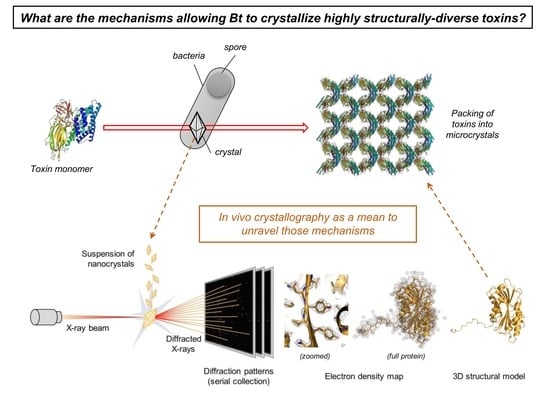
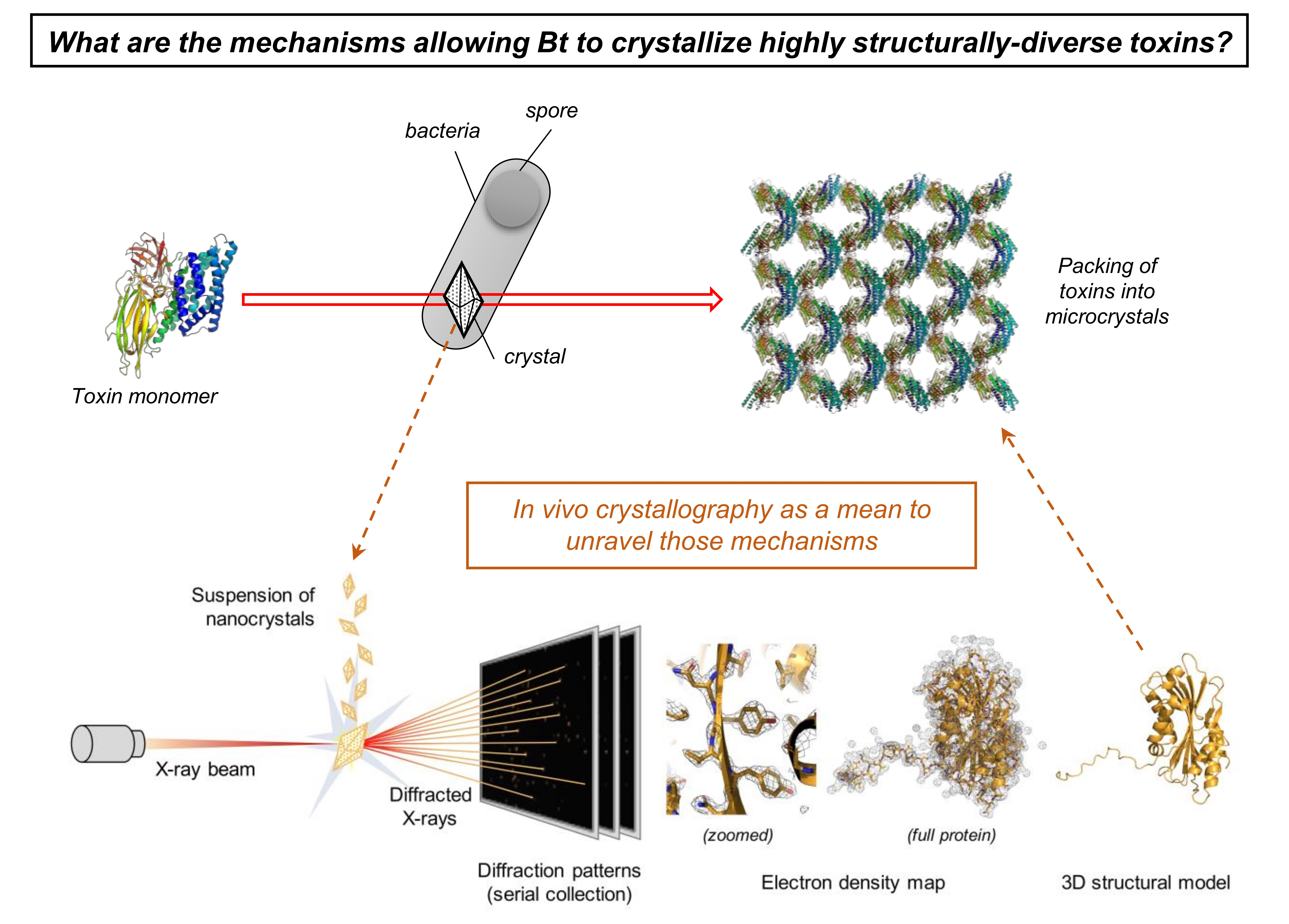
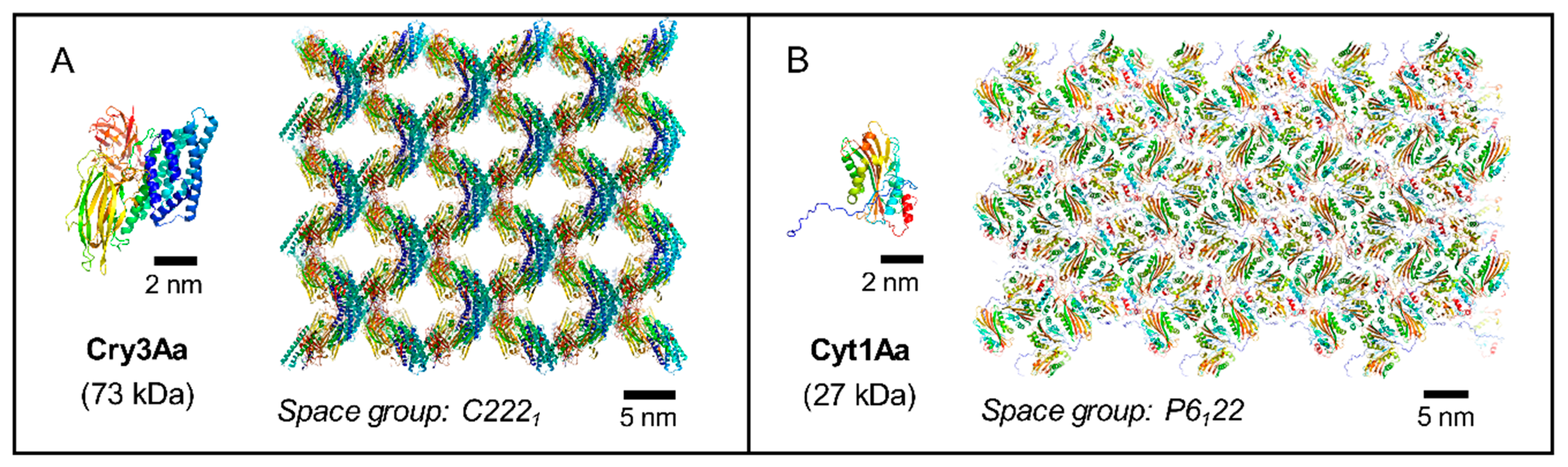
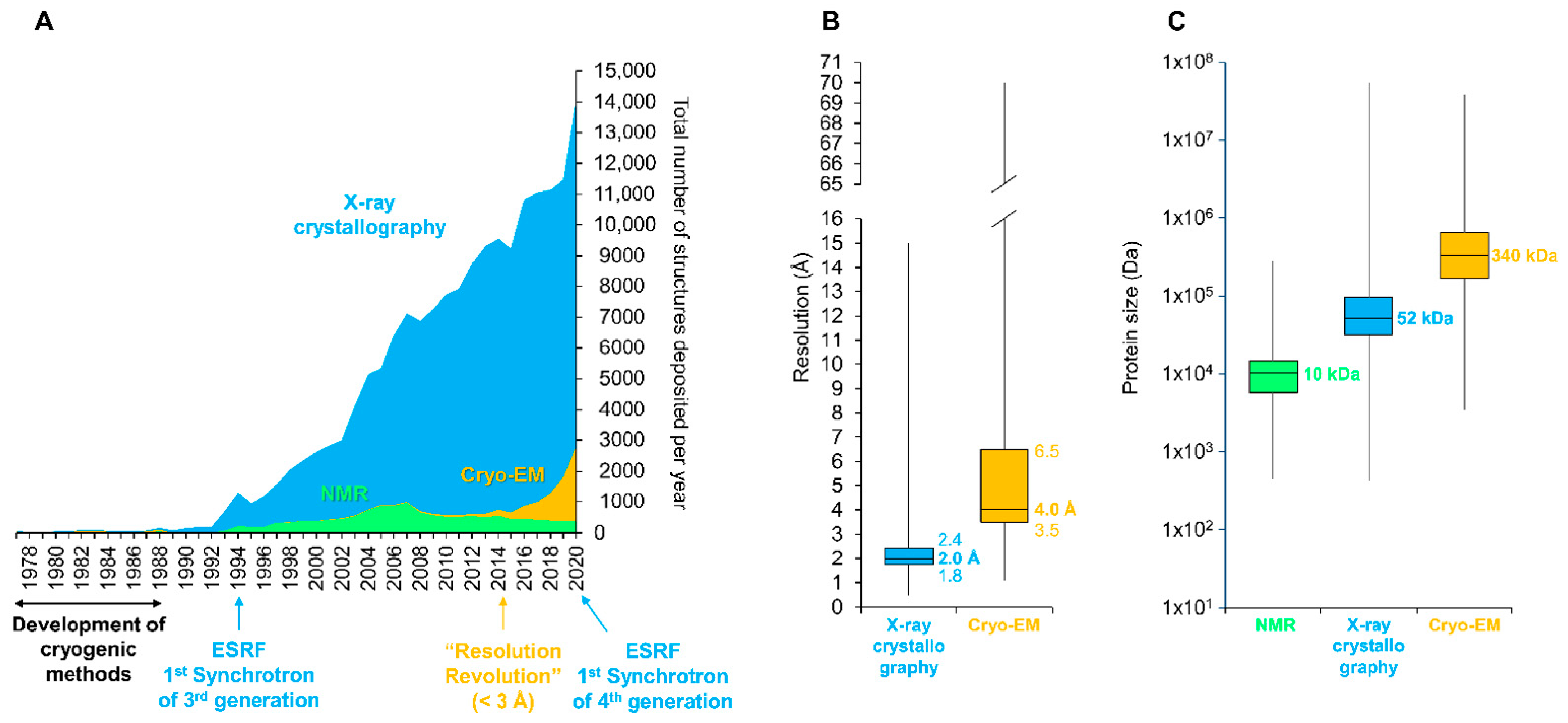
Bacillus thuringiensis (Bt) is a natural crystal-making bacterium. Bt diversified into many subspecies that have evolved to produce crystals of hundreds of pesticidal proteins with radically different structures. Their crystalline form ensures stability and controlled release of these major virulence factors. They are responsible for the toxicity and host specificity of Bt, explaining its worldwide use as a biological insecticide. Most research has been devoted to understanding the mechanisms of toxicity of these toxins while the features driving their crystallization have long remained elusive, essentially due to technical limitations. The evolution of methods in structural biology, pushing back the limits in size of amenable protein crystals now allows access to be gained to structural information hidden within natural crystals of such toxins. In this review, we present the main parameters that have been identified as key drivers of toxin crystallization in Bt, notably in the light of recent discoveries driven by structural biology studies. Then, we develop how the future evolution of structural biology will hopefully unveil new mechanisms of Bt toxin crystallization, opening the door to their hijacking with the aim of developing a versatile in vivo crystallization platform of high academic and industrial interest.
Keywords: pore-forming toxin (PFT); pesticidal protein; bacteria; crystals; crystalline formulation; bioinsecticide; biotechnology; structural biology pore-forming toxin (PFT); pesticidal protein; bacteria; crystals; crystalline formulation; bioinsecticide; biotechnology; structural biology
Graphical Abstract