


Highlights
What are the main findings?
- We established an integrated technical framework for rapid identification of potential black and odorous water bodies by combining satellite remote sensing, Unmanned Aerial Vehicle (UAV) remote sensing, and ground-based monitoring.
- Quantitative assessment of potential black and odorous water bodies risk levels was conducted based on water quality parameter inversion using UAV multispectral remote sensing.
What are the implications of the main finding?
- By synergizing satellite, aerial, and ground observations, this framework addresses the coarse resolution of traditional satellite monitoring. It facilitates both rapid screening and quantitative risk evaluation, thereby filling a critical gap in black and odorous water body monitoring.
- Leveraging the advantages of high spatial and spectral resolution from UAV remote sensing, this study employed machine learning models to quantitatively invert water quality parameters of black and odorous water bodies. We established a risk assessment framework for potential black and odorous water bodies, thereby providing technical support for quantitative evaluation and early risk warning.
Abstract
Satellite remote sensing offers a cost-effective solution for the continuous monitoring of black and odorous water bodies (BOWs). However, limitations in spatial and spectral resolution hinder the quantitative inversion of water quality parameters and the precise assessment of risk levels using satellite data alone. To address this challenge, this study proposes a synergistic approach combining satellite and Unmanned Aerial Vehicle (UAV) remote sensing to rapidly identify potentially polluted water bodies and quantitatively assess their risk levels. First, a Black and Odorous Water Index (MBOWI) was constructed based on reflectance characteristics in the visible to near-infrared bands to screen for potential black and odorous water bodies using satellite imagery. Subsequently, high-resolution multispectral UAV imagery, integrated with in situ sampling data, was employed to develop machine learning models for inverting key water quality parameters, including Chemical Oxygen Demand (COD), Dissolved Oxygen (DO), Total Phosphorus (TP) and Ammonia Nitrogen (NH3-N). Comparative analysis of Polynomial Regression (PR), Random Forest (RF), and Simulated Annealing-optimized Support Vector Regression (SA-SVR) revealed that RF and SA-SVR exhibited superior performance in inverting four non-optically active water quality parameters due to their robust nonlinear fitting capabilities, with the mean Adjusted Coefficient of Determination () ranging from 0.57 to 0.69. Water quality classification based on the single-factor worst-case method achieved an overall accuracy of 0.70 across validation samples. Notably, for Class V (heavily polluted) water bodies, both classification accuracy and recall rate reached 0.89, demonstrating the model’s high precision in identifying high-risk waters. Finally, the proposed framework was applied to northern Zhejiang Province to assess seven potential black and odorous water bodies, successfully identifying four as high-risk and one as low-risk. This study validates satellite and UAV synergistic remote sensing for the hierarchical risk management of black and odorous water bodies.
1. Introduction
Urban black and odorous water bodies are those that appear black or brown in color, and emit a fishy or rotten odor [1]. The pollution of black and odorous water bodies constitutes a notable environmental challenge, adversely affecting both the urban landscape and residents’ daily lives. It not only severely degrades the urban ecological environment but also poses substantial risks to human health. The formation of black and odorous water bodies is typically associated with organic pollution leading to hypoxia in the water, where anaerobic decomposition produces harmful substances [2]. The discoloration of water to black is primarily attributed to the presence of substantial concentrations of soluble colored organic compounds, or to suspended particles that have adsorbed Ferrous Sulfide (FeS) and Manganese Sulfide (MnS). The main reason of the water emitting odors is the production of odor-causing substances such as ammonia (NH3), Hydrogen Sulfide (H2S), and thiols during the decomposition of numerous organic pollutants in the water body [3]. Water blackening is caused by the presence of pollutants in the water, which increases light absorption. The absorption coefficient is an Inherent Optical Property (IOP) related to the composition and optical characteristics of the water body. Researchers used a near-surface hyperspectral imager to study various water components, including chlorophyll-a (Chl-a), algae, Colored Dissolved Organic Matter (CDOM), and Suspended solids (SS), all of which exhibited distinct absorption and reflection characteristics within the 430 nm to 850 nm wavelength range [4]. The blackness of water can be evaluated using the absorption coefficients of CDOM and SS at 254 nm band [5].
Conventional monitoring of black and odorous water bodies typically involve on-site sampling and chemical analysis, through which grading evaluation indices are constructed based on water quality indicators such as DO an NH3-N [6]. However, section sampling often fails to capture spatial variations in water quality, thereby limiting the assessment of entire river systems. Remote sensing technology offers a cost-effective method of acquiring spatial information on water bodies [7]. In recent years, satellite remote sensing has become increasingly important in identifying and assessing black and odorous water bodies [8]. Researchers developed numerous remote sensing index models based on satellite imagery through the analysis of spectral characteristics and water quality parameters, thereby enabling efficient identification of black and odorous water bodies [9,10]. Based on the spectral features of water bodies in Hangzhou, China, a normalized black and odorous water body index (NDBWI) model was developed by integrating parameters such as transparency, DO, redox potential, and NH3-N, significantly improving remote sensing identification accuracy [11]. Similarly, for black and odorous water bodies in Taiyuan, China, a water body cleanliness spectral index (WCI) model was constructed based on spectral data and auxiliary features such as water color and surrounding environmental characteristics [12]. However, research on black and odorous water bodies using remote sensing indices has primarily focused on qualitative classification, with limited capacity for quantitative assessment [13]. To address this limitation, researchers have integrated key water quality parameters to develop a universal continuous black and odorous water index (CBOWI), enabling both classification of black and odorous water bodies and quantitative evaluation of their pollution levels and temporal trends [14]. with the development of deep learning technology, models such as CNN, U-Net and DeepLab have been utilized for recognizing black and odorous water bodies through high-resolution remote sensing imagery. These methods have significantly improved the efficiency and accuracy of black and odorous water bodies identification [15,16].
Satellite remote sensing inherently faces limitations in monitoring water quality parameters. A primary limitation arises from the sensitivity to atmospheric conditions, without rigorous atmospheric correction, remote sensing indices computed from raw satellite radiance can be significantly biased, leading to inaccurate assessments of surface properties [17]. Sensor calibration and resolution also pose significant limitations, Differences in sensor spectral response functions, even after atmospheric correction, can lead to measurements that are not directly comparable across different satellite systems [18,19]. Empirical dependencies and limited generalizability are also critical concerns. Remote sensing indices rely on empirical relationships that may not be robust or transferable across different regions, seasons, or ecological conditions [20,21]. With advancements in sensor technology, various airborne imaging spectrometers have become more portable and can meet the demands of water quality inversion for higher temporal, spatial, and spectral resolutions [22,23]. Currently, multispectral and hyperspectral mounted on UAV have been widely utilized for the inversion of water quality parameters, such as DO, TN, TP, COD, and chlorophyll a (Chl-a) [24,25,26]. Meanwhile, deep learning techniques, including random forest (RF), extreme gradient boosting (XGBoost), support vector regression (SVR), and convolutional neural network (CNN) have become the important methods for multispectral remote sensing water quality inversion [27,28,29]. Moreover, the incorporation of feature selection algorithms and ensemble learning strategies, such as dynamic weighted ensemble (DWE), has significantly improved the transferability and generalization performance of inversion models [30,31]. The inversion of water quality parameters for black and odorous water bodies using multispectral remote sensing from UAV not only signifies a transition from qualitative identification to quantitative assessment, but also provides a feasible path for large-scale and accurate identification of black and odorous water bodies.
The Chinese government has long placed a high priority on the governance of black and odorous water bodies. In 2022, the Ministry of Ecology and Environment issued the Environmental Protection Action Plan for the Governance of Urban Black and Odorous Water Bodies during the 14th Five-Year Plan, which explicitly outlined the objective of dynamically eliminating black and odorous water bodies in the built-up areas at or above the prefectural level [32]. As of January 2025, black and odorous water bodies in the built-up areas of cities at or above the county level in Zhejiang Province have been largely eliminated. However, due to continuous environmental changes, some regions remain vulnerable to recurrence, and it is necessary to establish a long-term monitoring and governance mechanism to maintain the achieved achievement. Thus, the effective identification of potential black and odorous water bodies, characterized by high efficiency, accuracy, and low cost, has become a critical challenge. Therefore, this study aims to develop and validate an integrated risk assessment framework that couples satellite-based rapid screening with UAV-based quantitative water quality inversion for the proactive identification and prioritization of susceptible black and odorous water bodies.
2. Study Area and Materials
2.1. Overview of Study Area
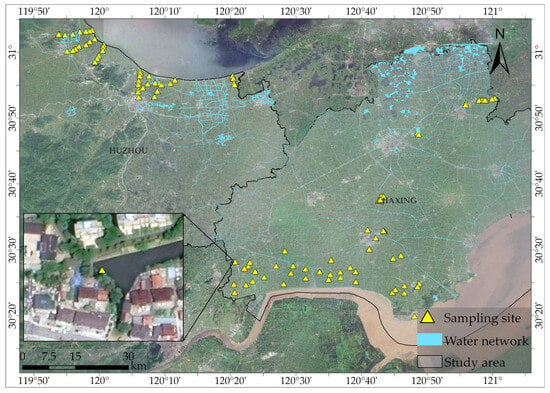
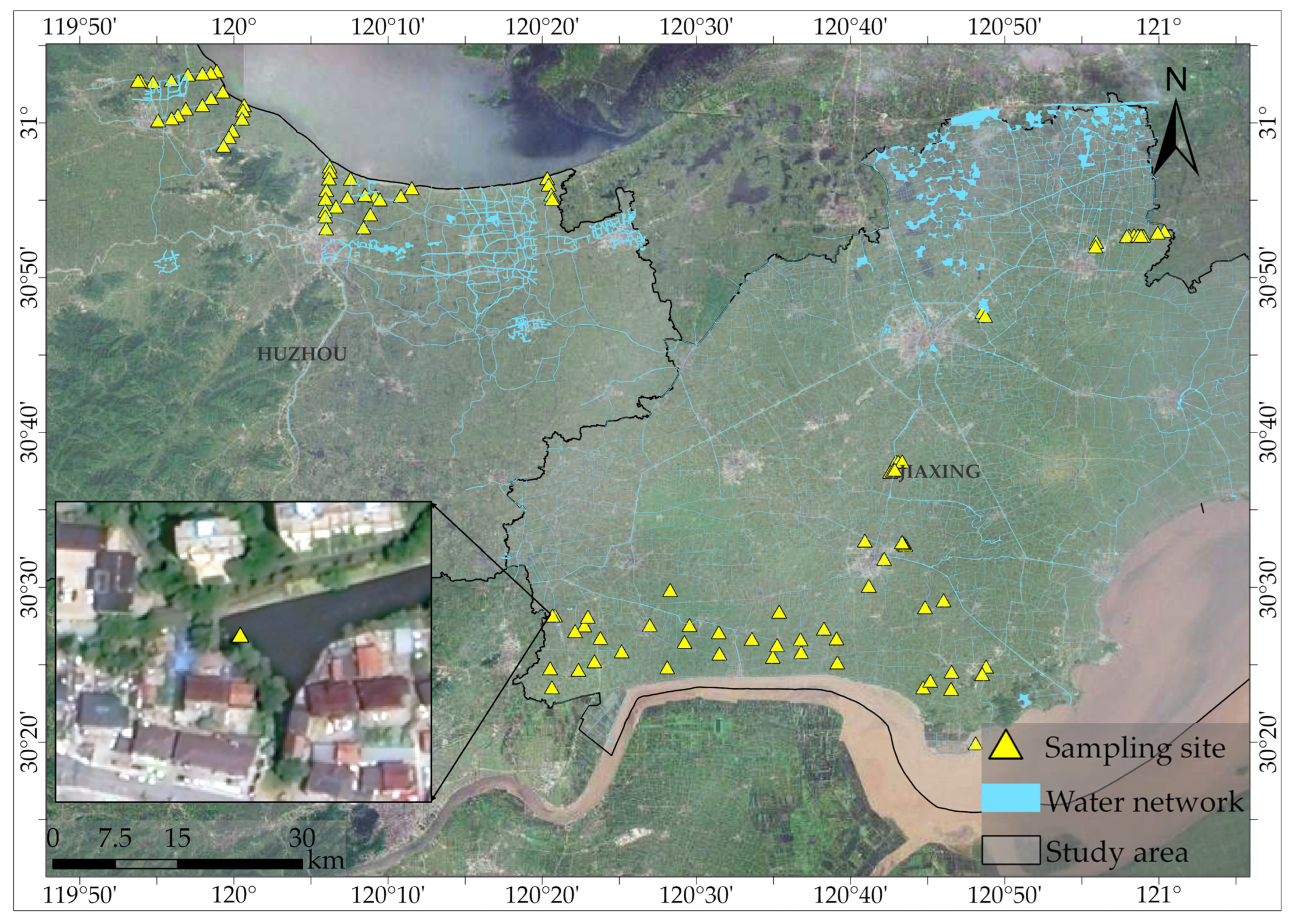
Jiaxing and Huzhou are situated in northern Zhejiang Province of China, as shown in Figure 1. Here, the river network is dense with canals crisscrossing, rendering it a typical plain river network region. The total area of water bodies accounts for approximately 8% of the regional total area, with an average river network density of 12 to 15 km/km2. This region is characterized by a subtropical monsoon climate, with an average annual precipitation of 1200 to 1400 mm. In recent years, the annual average concentrations of COD, NH3-N, and TP have exhibited a steady downward trend, reflecting sustained improvements in water quality. However, due to rapid economic development, surface water is subject to pollution pressures, including industrial emissions, agricultural non-point source pollution and domestic sewage discharging, etc. In suburban areas, eutrophication caused by agricultural non-point source pollution has become a prominent environmental problem, often triggering cyanobacterial blooms. In urban areas, small streams are susceptible to clogging, which can readily lead to the blackening and stinking of water bodies. These are the primary drivers of the risk of black and odorous water bodies in these regions.
Figure 1.
Study Area and Sampling Site distribution.
2.2. Remote Sensing Data Processing
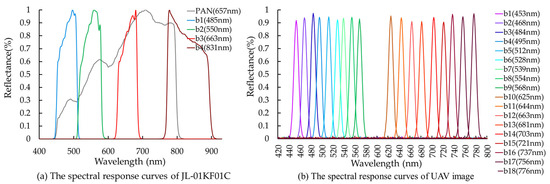
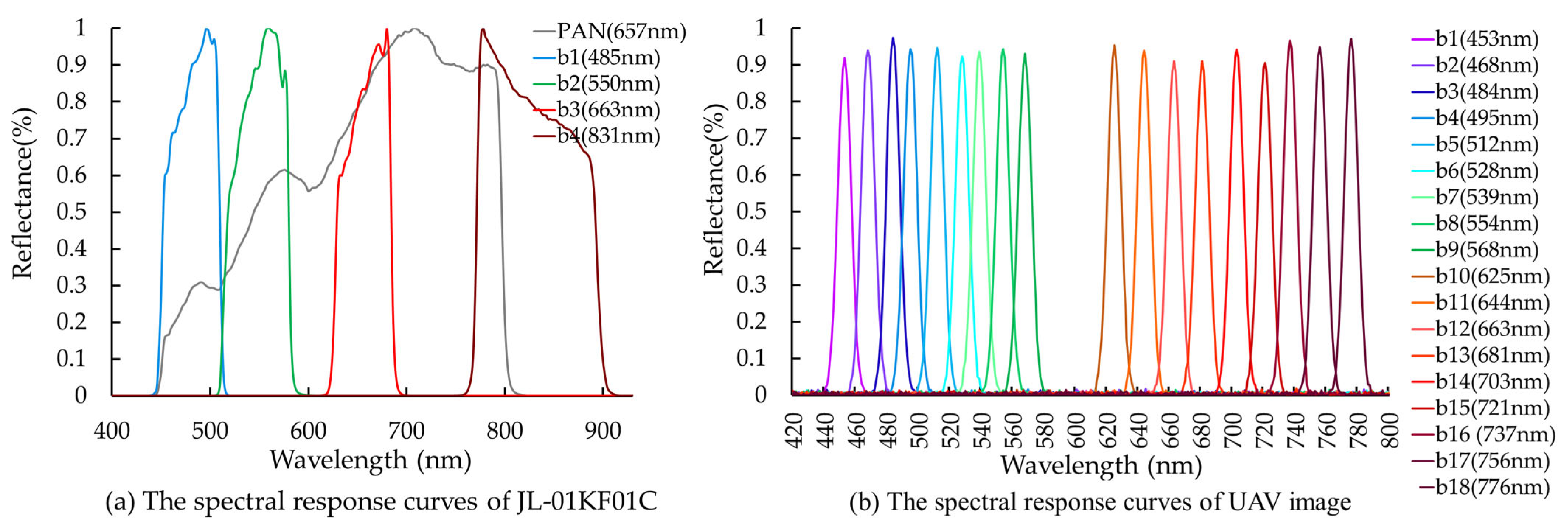
The satellite imagery in this study was acquired by the JL-01KF satellite, operated by Jilin Changguang Satellite Technology Co., Ltd., Changchun, China. The JL-01KF satellite is equipped with a panchromatic imager (spatial resolution: 0.5 m) and a four-channel multispectral imager (spatial resolution: 2 m). The spectral response curves of the JL-01KF satellite are presented in Figure 2a. The preprocessing workflow consisted of the following steps: (1) radiometric calibration and FLAASH atmospheric correction using ENVI (v5.6) to convert digital number (DN) values into surface reflectance; (2) image fusion to produce 0.5 m spatial resolution surface reflectance data; and (3) orthorectification to guarantee geometric precision.
Figure 2.
The spectral response curves of remote sensing imagery: (a) illustrates the spectral response curves of the four multispectral bands and one panchromatic band of the JL-1KF satellite; (b) illustrates the spectral response curves of the 18 bands of the multispectral imager mounted on the UAV.
The UAV imagery in this study was acquired by the Specvision-W multispectral imager, produced by Jiangsu Dualix Spectral Imaging Technology Co., Ltd. (Wuxi, China). This imager was mounted on a DJI M350 RTK platform. The imaging system is equipped with two multi-channel sensors, each integrating 9 spectral channels. It adopts multispectral filter technology, with spectral bands centered at 460–570 nm and 640–785 nm, respectively. The spectral response curves are presented in Figure 2b. The system achieves a spectral resolution of <12 nm, an image resolution of 1020 × 1020 pixels, and a field of view (FOV) of 36°. Prior to flight operations, dark current calibration of the sensors was conducted to eliminate background noise interference. Subsequently, a standard gray cloth with 40% reflectance was imaged at the same location, which served for radiometric calibration. To ensure flight safety, the flight altitude was set to 120 m, with forward and lateral overlap rates of 80% and a constant flight speed of 10 m/s. The acquired imagery was processed using Pix4D mapper (v4.9) to achieve automated photogrammetric reconstruction without the use of ground control points (GCPs), and orthophotos were generated. Finally, the DN values of the orthophotos were converted to surface reflectance using Equation (1) [31].
is the sensor-acquired digital number value of the ground surface, is the digital number value of the standard reflectance cloth, is the known standard reflectance, and is the surface reflectance.
2.3. Relevant Technical Standards
2.3.1. Standards for Black and Odorous Water Body
Ground-based field surveys of black and odorous water bodies were conducted in this study to develop a satellite remote sensing model. The technical reference was the Guidelines for the Remediation of Urban Black and Odorous Water Bodies [33]. The assessment criteria comprised both subjective and objective indicators. Subjective indicators included: (1) the presence of distinctly abnormal colors in the water body (e.g., black, grayish-black, or brownness) that are not caused by natural sedimentation or lighting conditions; and (2) detectable putrid or fishy odors in the water body or its surrounding area. Objective indicators consisted of: (1) a transparency (SD) of less than 25 cm; (2) a dissolved DO concentration of less than 2.0 mg/L; (3) an oxidation–reduction potential (ORP) of less than 50 mV; and (4) an NH3-N concentration greater than 8.0 mg/L.
2.3.2. Standards of Water Quality Parameters
The measurement of water quality parameters is a foundational task for establishing remote sensing models of black and odorous water bodies. Water sample collection and water quality monitoring were conducted in accordance with Technical Specifications for Surface Water Environmental Quality Monitoring (HJ 91.2-2022) [34] and the Environmental Quality Standards for Surface Water (GB 3838-2002) [35]. The measured water quality parameters included transparency (SD), oxidation–reduction potential (ORP), permanganate index COD, DO, NH3-N, and TP. A total of 104 water samples were collected, with the distribution of sampling points illustrated in Figure 1. 40 samples were collected in July 2023 for developing the satellite remote sensing model. 64 samples were collected in August 2024 for developing the UAV multispectral water quality inversion model.
2.3.3. Standards for Risk Assessment of Potential Black and Odorous Water Bodies
This study conducts a risk assessment of potential black and odorous water bodies based on the water quality classification criteria specified in the GB 3838-2002. Water bodies with water quality worse than the limit values of Class V standards are classified as high-risk water bodies; those meeting Class V standards are classified as low-risk water bodies; and those with water quality better than Class V standards are classified as water bodies without black and odorous risks. For specific assessment methods, please refer to Table 1.
Table 1.
Risk level of potential black and odorous water bodies.
2.4. Accuracy Assessment
To evaluate the performance of the water quality inversion model, this study employed two primary evaluation metrics: the Adjusted Coefficient of Determination () and the Mean Squared Error (MSE). Specifically, serves as a robust metric for evaluating regression model goodness-of-fit. Unlike the standard , it incorporates a penalty term based on the number of predictors () and the sample size (). This adjustment penalizes the inclusion of irrelevant variables; consequently, the increases only when a new variable significantly enhances the model’s explanatory power, thereby mitigating the risk of overfitting due to excessive parameters. MSE was applied to quantify the model’s predictive accuracy, where lower values reflect smaller discrepancies between predicted and observed values, thus demonstrating higher predictive precision [36].
Here, and represent the observed and predicted values of the validation samples, respectively, represents the mean of the observed sample values, represents the total number of validation samples, and represents the number of predictors.
3. Methodology
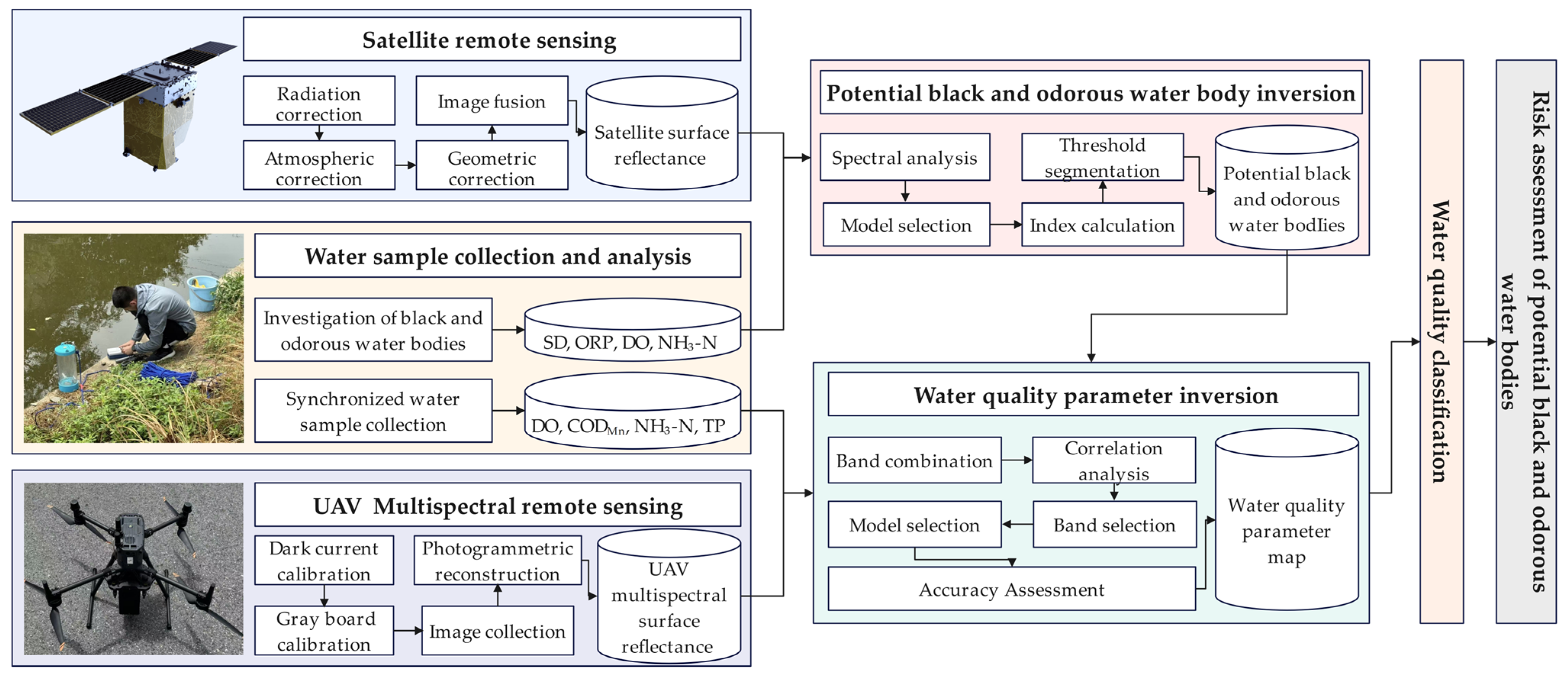
The technical framework of this study comprises the following key stages: First, a potential black and odorous water body inversion model was developed based on satellite remote sensing imagery, followed by preliminary qualitative screening. Second, for the potential black and odorous water bodies identified via satellite remote sensing, UAV multispectral remote sensing was employed to invert water quality parameters. Next, water quality classification was implemented based on the inverted water quality parameters map. Finally, a comprehensive risk assessment of the potential black and odorous water bodies was performed through the integration of relevant environmental factors. The detailed technical framework is illustrated in Figure 3.
Figure 3.
The technical framework diagram of this study.
3.1. Reflectance Characterization of Black and Odorous Water Bodies
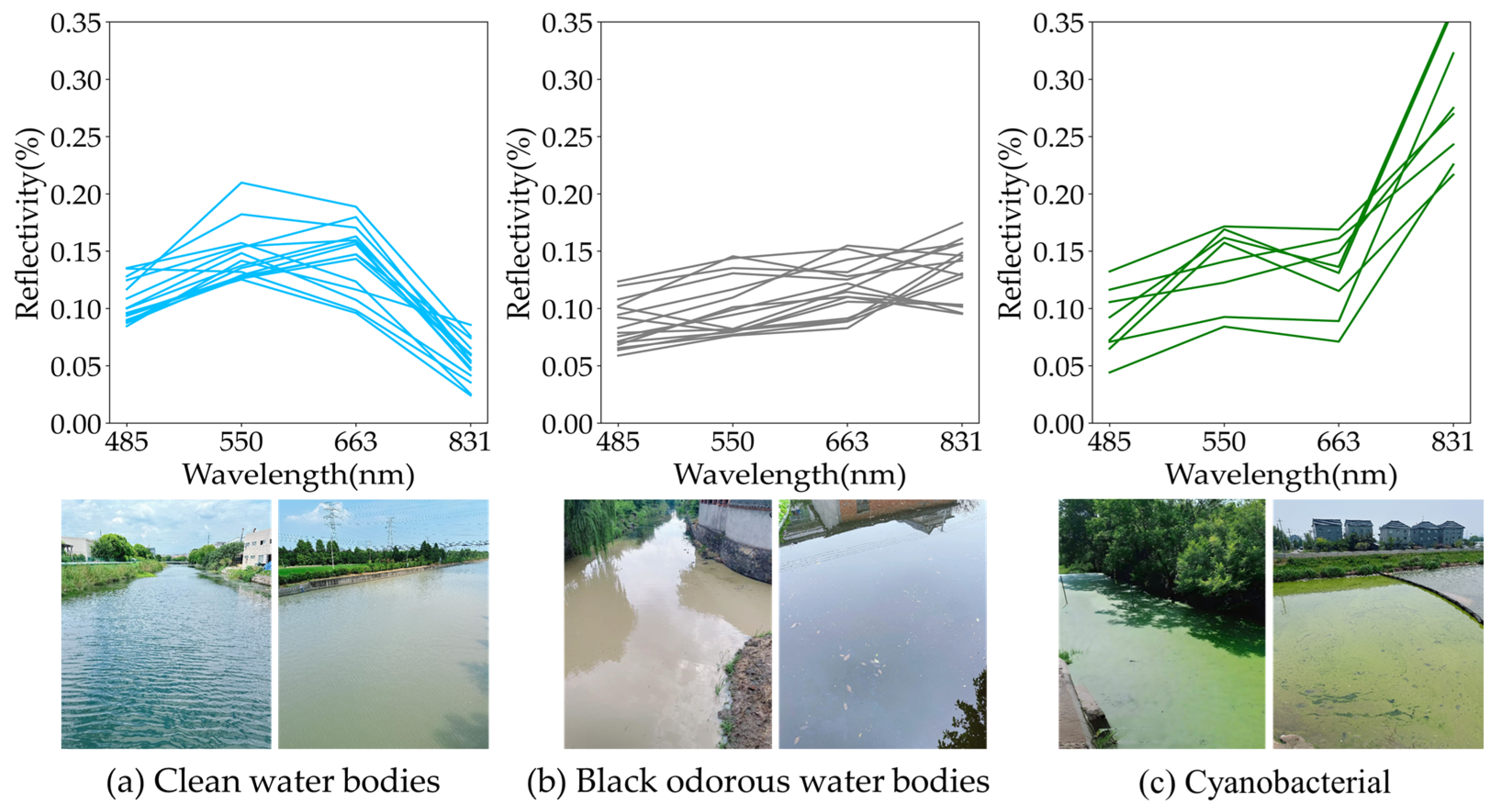
Black and odorous water bodies exhibit significant differences from clean water bodies in terms of chemical composition and color, leading to notable differences in their optical reflectance characteristics. According to the spectral response function, the measured remote sensing reflectance can be converted into equivalent reflectance consistent with that of the JL-1KF01C satellite imagery. As illustrated in Figure 4, within the wavelength range of 480–830 nm, the reflectance of black and odorous water bodies ranges from 0.06 to 0.16, whereas that of clean water bodies ranges from 0.025 to 0.23. Overall, the reflectance of black and odorous water bodies is lower than that of clean water bodies. In the 480–550 nm wavelength range, the reflectance of clean water bodies increases rapidly, peaks near 550 nm, and then gradually decreases. Beyond 660 nm, the reflectance drops sharply. In the near-infrared (NIR) band (750–850 nm), the reflectance of clean water bodies approaches zero due to the stronger absorption capacity of water molecules, typically lower than that in the blue band. Observations based on equivalent remote sensing reflectance () reveal that black-odor water bodies exhibit low overall reflectance in the blue band (485 nm), similar to clean water. In the green and red bands (550–663 nm), the reflectance remains low and changes slowly. In contrast, clean water demonstrates high reflectance in the red and green bands with a rapid rate of change. Affected by constituents such as chlorophyll and suspended matter, black-odor water shows strong reflective characteristics in the near-infrared band (831 nm), displaying an upward trend; specifically, water bodies with high chlorophyll content show a significant increase in this band. Overall, the reflectance of black-odor water shows a rising trend from the blue band to the near-infrared band. It changes slowly within the green and red bands, resulting in small inter-band differences. The spectral characteristics of black-odor water in four-band remote sensing imagery can thus serve as a basis for its remote sensing identification.
Figure 4.
The satellite remote sensing reflectivity and photos of three types of water bodies. (a) illustrates the reflectance and photos of clean water bodies, (b) illustrates the reflectance and photos of black and odorous water bodies, and (c) illustrates the reflectance and photos of water with cyanobacterial.
Furthermore, cyanobacterial blooms result in a substantial increase in chlorophyll concentration, thereby causing the reflectance characteristics of the water to resemble those of vegetation. Chlorophyll exhibits strong absorption in the blue and red bands, while showing relatively high reflectance in the green band and a prominent reflectance peak in the NIR band [37,38].
3.2. Multispectral Black and Odorous Water Index
An analysis of the remote sensing equivalent reflectance characteristics of water bodies in the Jiaxing and Huzhou regions revealed that the absolute of reflectance difference between the green and red bands of black and odorous water bodies is generally lower than that of clean water bodies. Furthermore, the reflectance of clean water bodies in the near-infrared (NIR) band is nearly zero, lower than that in the blue band. Conversely, the reflectance of black and odorous water bodies, as well as cyanobacterial water bodies, in the NIR band is generally high and, in most cases, higher than that in the blue band. Consequently, for clean water bodies, the reflectance difference between the NIR and blue bands is generally negative, whereas that for black and odorous water bodies and cyanobacterial water bodies is generally positive. Based on the distinct spectral characteristics of these two types of water bodies, the Multi-spectral Black and Odorous Water Index (MBOWI) model was employed to preliminarily identify potential black-odor water bodies [39]. Given that black-odor water bodies in northern Zhejiang are typically smaller in area, the higher spatial resolution JL-1 satellite was utilized to establish the model. The threshold was subsequently recalculated based on field sampling results.
Here, , , , and represent the remote sensing surface or equivalent reflectance in the green, red, blue, and near-infrared (NIR) bands, respectively.
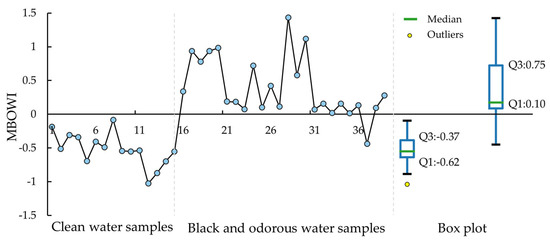
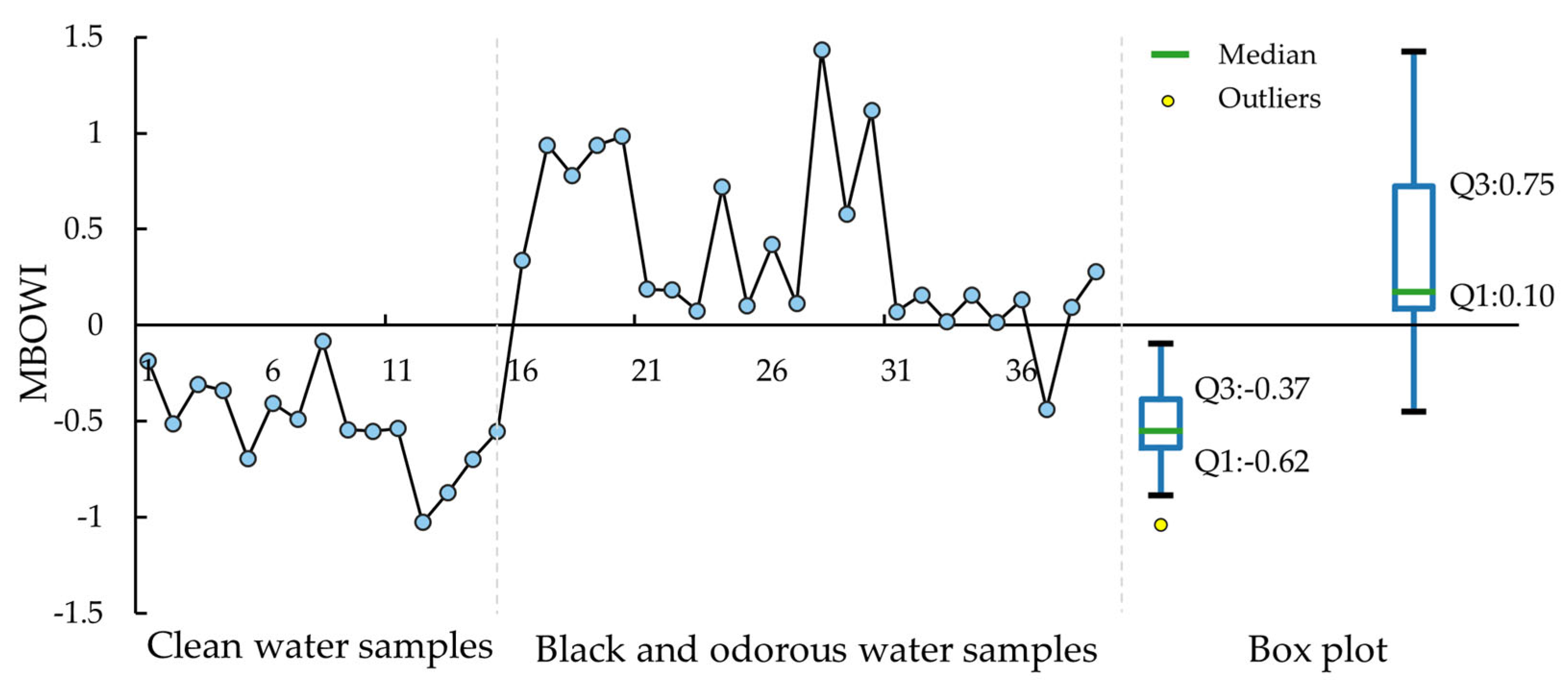
The MBOWI values of 23 actual black and odorous water samples and 17 actual clean water samples—collected during ground field surveys in Haining and Jiaxing cities in 2023—were calculated and analyzed. As illustrated in Figure 5, the MBOWI values of black and odorous water bodies and cyanobacterial water bodies were mostly above 0, whereas those of clean water bodies were mostly below 0. Boxplot analysis revealed outliers in the dataset of black and odorous water samples. To mitigate the impact of these outliers on threshold determination, this study adopted the first and third quartiles as thresholds. Statistical analyses showed that the first quartile (Q1) of the MBOWI values for black and odorous water bodies was 0.10, and the third quartile (Q3) was 0.75. Accordingly, the identification thresholds for potential black and odorous water bodies were established as T1 = 0.10 and T2 = 0.75.
Figure 5.
The statistical graph and box plot of the MBOWI values at the sampling points.
3.3. Inversion of Water Quality Based on UAV Multispectral Remote Sensing
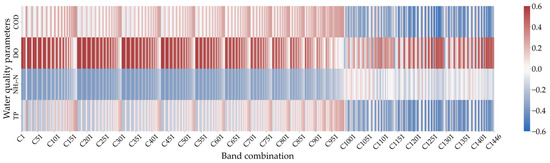
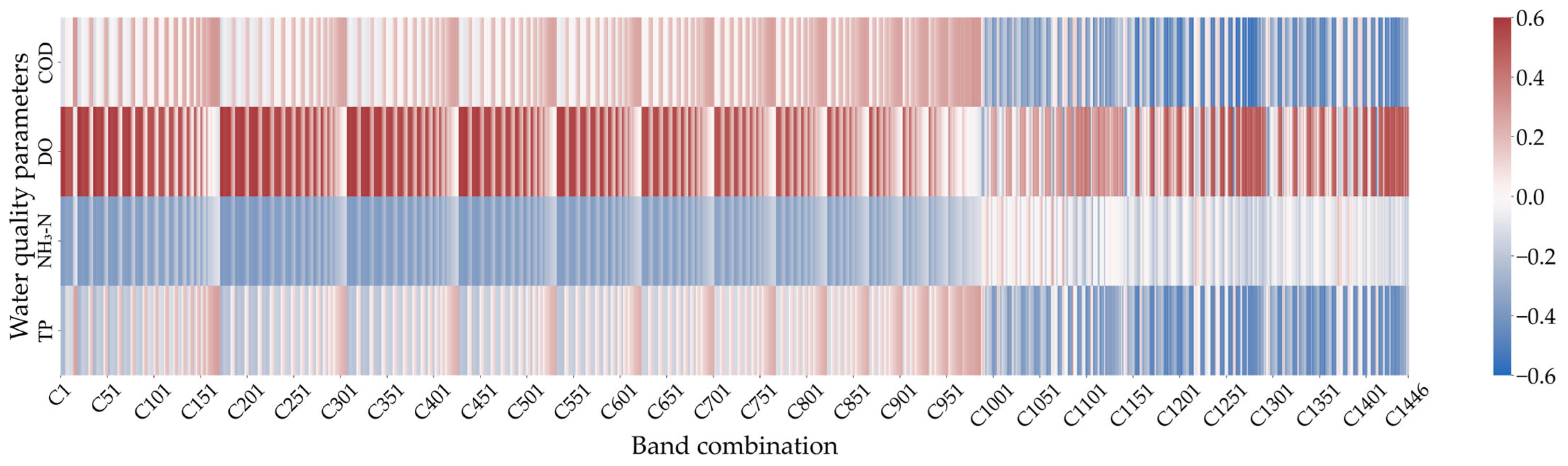
To achieve a more accurate classification of the risk levels of potential black and odorous water bodies, this study conducted water quality parameter inversion. Specifically, it focused on inverting four non-optically active water quality parameters: COD, NH3-N, TP, and DO. Non-optically active components have weak correlations with the spectral reflectance of water bodies, and their absorption and scattering characteristics are generally indistinct [40]. Consequently, traditional inversion models typically rely on statistical relationships between these parameters and optically active constituents [41]. This study employed exploratory data analysis to construct diverse band combination strategies, and screened out bands or band combinations with high correlations to non-optically active water quality parameters to effectively reduce background information interference and improve the accuracy of water quality parameter inversion [42]. Based on the 18 bands of multispectral imagery, six combination methods were adopted: single-band values, sums of two bands, sums of three bands, differences of two bands, ratios of two bands, and relative differences of two bands. These methods yielded a total of 1446 band combination strategies, as detailed in Table 2. Subsequently, correlation analyses were conducted between each band combination and the measured water quality parameters, generating Pearson correlation coefficients (r values) and statistical significance p-values. A correlation heatmap was then generated to visually illustrate the relationships between band combinations and water quality parameters (Figure 6). The results showed that the Pearson correlation coefficients ranged from −0.6 to 0.6 in magnitude. Specifically, COD was primarily positively correlated with band combinations in the range of C1–C987, but negatively correlated with those in C988–C1446; NH3-N generally exhibited weak negative correlations with band combinations; TP was mainly positively correlated with combinations in C1–C987 and negatively correlated with those in C988–C1446; and DO was positively correlated with most band combinations. Ultimately, the band combination that exhibited statistical significance (p < 0.05) and the highest absolute correlation coefficient was selected as the optimal input variable for the inversion model of the corresponding water quality parameter.
Table 2.
Band combination strategies of multispectral imagery.
Figure 6.
Correlation heatmap between band combinations and water quality parameters.
As shown in Table 3, the combination of b10/b14 exhibits the strongest negative correlation with COD, with a correlation coefficient of −0.59; the combination of b1 + b3 + b10 shows the strongest negative correlation with NH3-N, with a correlation coefficient of −0.39; the combination of (b5 − b6)/(b5 + b6) displays the strongest negative correlation with TP, with a correlation coefficient of −0.54; and the combination of b2 + b3 + b4 demonstrates the strongest positive correlation with DO, with a correlation coefficient of 0.60. These band combinations were employed to develop inversion models based on the measured water quality parameters.
Table 3.
The optimal combination of input spectral bands for the inversion of four water quality parameters.
The relationship between non-optically active water quality parameters and reflectance is highly complex and inherently nonlinear, making it difficult for simple linear models to achieve accurate fits. Therefore, this study attempted to develop a range of machine learning models to evaluate their inversion capabilities for different water quality parameters, ultimately selecting the model with the highest accuracy for water quality inversion. Using the selected optimal band combinations as input variables, polynomial regression (PR), random forest (RF), and the support vector regression model optimized by the simulated annealing algorithm (SA-SVR) were constructed, respectively, using 64 sets of simultaneously collected measured water quality data. Due to the small sample size in this study, 5-fold cross-validation was employed to optimize sample utilization and reduce the volatility of model evaluation. The mean Adjusted Coefficient of Determination () and Mean Squared Error (MSE) were adopted as the primary metrics for evaluating model performance. The hyperparameters for the three models are listed in Table 4.
Table 4.
Hyperparameters of the machine learning models.
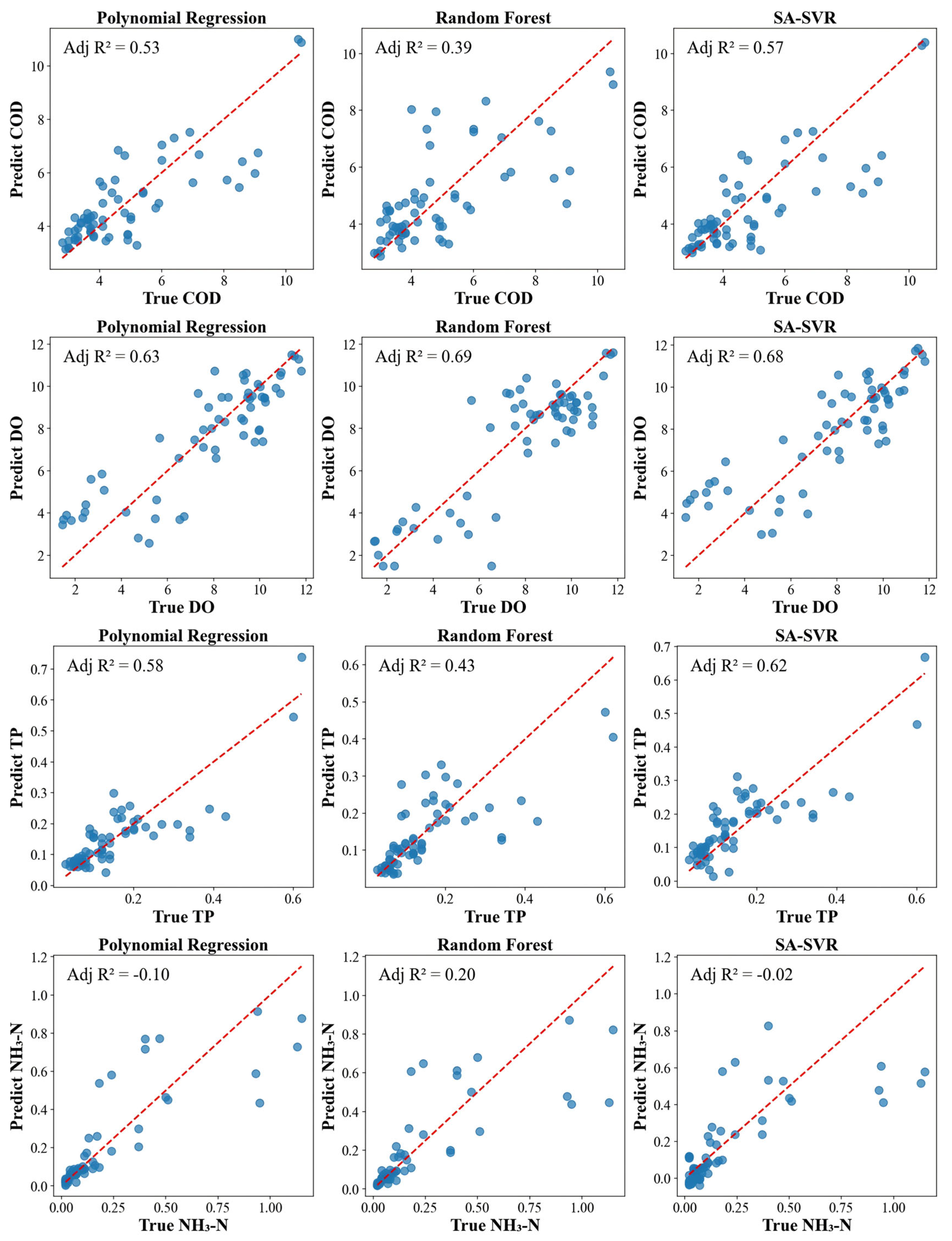
Figure 7 displays the scatter plots of predicted versus measured values from the 5-fold cross-validation. Model performances varied across different water quality parameters: the SA-SVR model achieved the best performance in predicting COD and TP, with R2 values of 0.57 and 0.62, respectively, while the RF model performed best in DO prediction, reaching an R2 of 0.69. In contrast, all three models showed poor performance in NH3-N inference. Although the RF model was relatively the best among them, its R2 was only 0.20. Overall, both the SA-SVR and RF exhibited strong fitting capabilities for non-optically active water quality parameters, whereas the PR showed relatively inferior performance. The specific results are presented in Table 5.
Figure 7.
Prediction results of three machine learning models for water quality parameters.
Table 5.
Parameters of the machine learning model fitting results.
Based on the water quality parameters predicted by the model, the predicted values were classified according to the Quality Standards for Surface Water. A confusion matrix was constructed to compare the predicted classifications with the actual classifications. Classification precision, recall, and overall accuracy for each water quality category were calculated based on this matrix. It should be noted that since no samples of Class V water were present in either the measured or predicted values, the evaluation metrics for Class V water could not be computed. The confusion matrix and accuracy evaluation for water quality classification are detailed in Table 6 and Table 7.
Table 6.
Water Quality Classification Confusion Matrix.
Table 7.
Water Quality Classification Precision and Recall.
4. Results and Discussion
4.1. Results
4.1.1. Remote Sensing Mapping of Potential Risk Waters
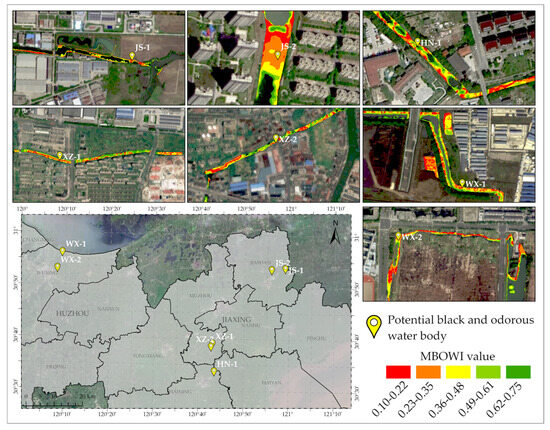
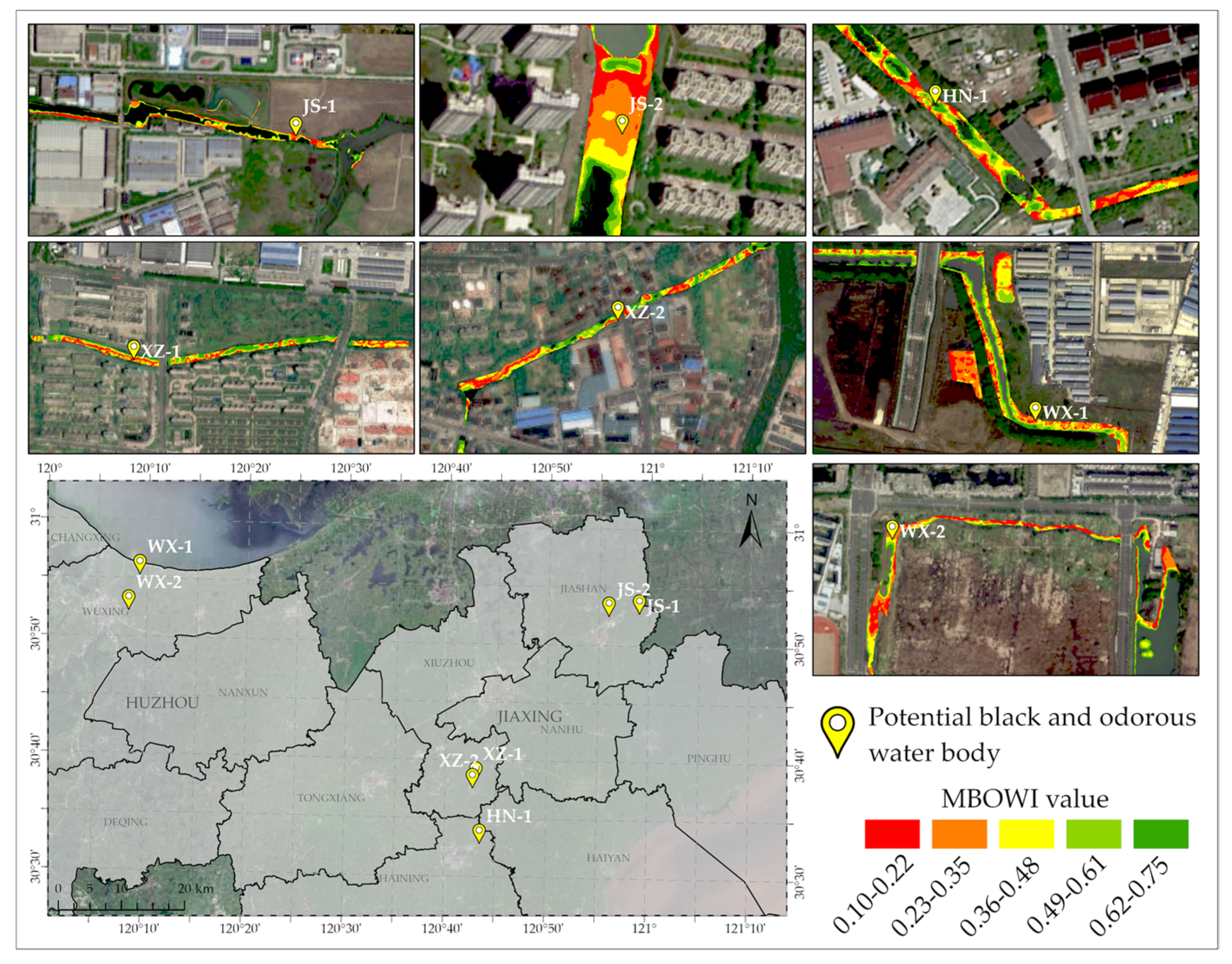
Satellite data from the JL1KF, acquired in August 2024, were utilized to cover the main urban and suburban areas of Jiaxing City and Huzhou City, with a total imaging area of approximately 1216 km2. By calculating the Multispectral Black and Odorous Water Index (MBOWI) and adopting the threshold segmentation method, seven potential black and odorous water bodies were identified. Specifically, two were detected in Wuxing District, Huzhou City (IDs: WX-1, WX-2); two in Jiashan County, Jiaxing City (IDs: JS-1, JS-2); two in Xiuzhou District, Jiaxing City (IDs: XZ-1, XZ-2); and one in Haining City, Jiaxing City (ID: HN-1). Figure 8 presents the spatial distribution of these seven potential black and odorous water bodies and their corresponding MBOWI values. The water body types include urban rivers, industrial-area rivers, suburban ponds. Among them, HN-1 has the smallest area (7600 m2), while JS-1 has the largest (68,447 m2). The water bodies range in width from 5 to 40 m and in length from 300 to 1800 m. These water bodies were affected by problems such as river silting, intermittent flow, and cyanobacterial accumulation.
Figure 8.
MBOWI values of potential black and odorous water bodies.
4.1.2. Results of Water Quality Parameter Inversion
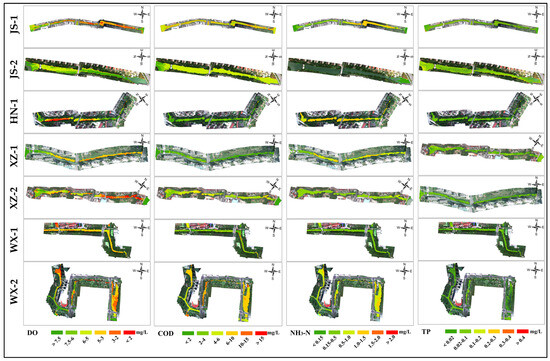
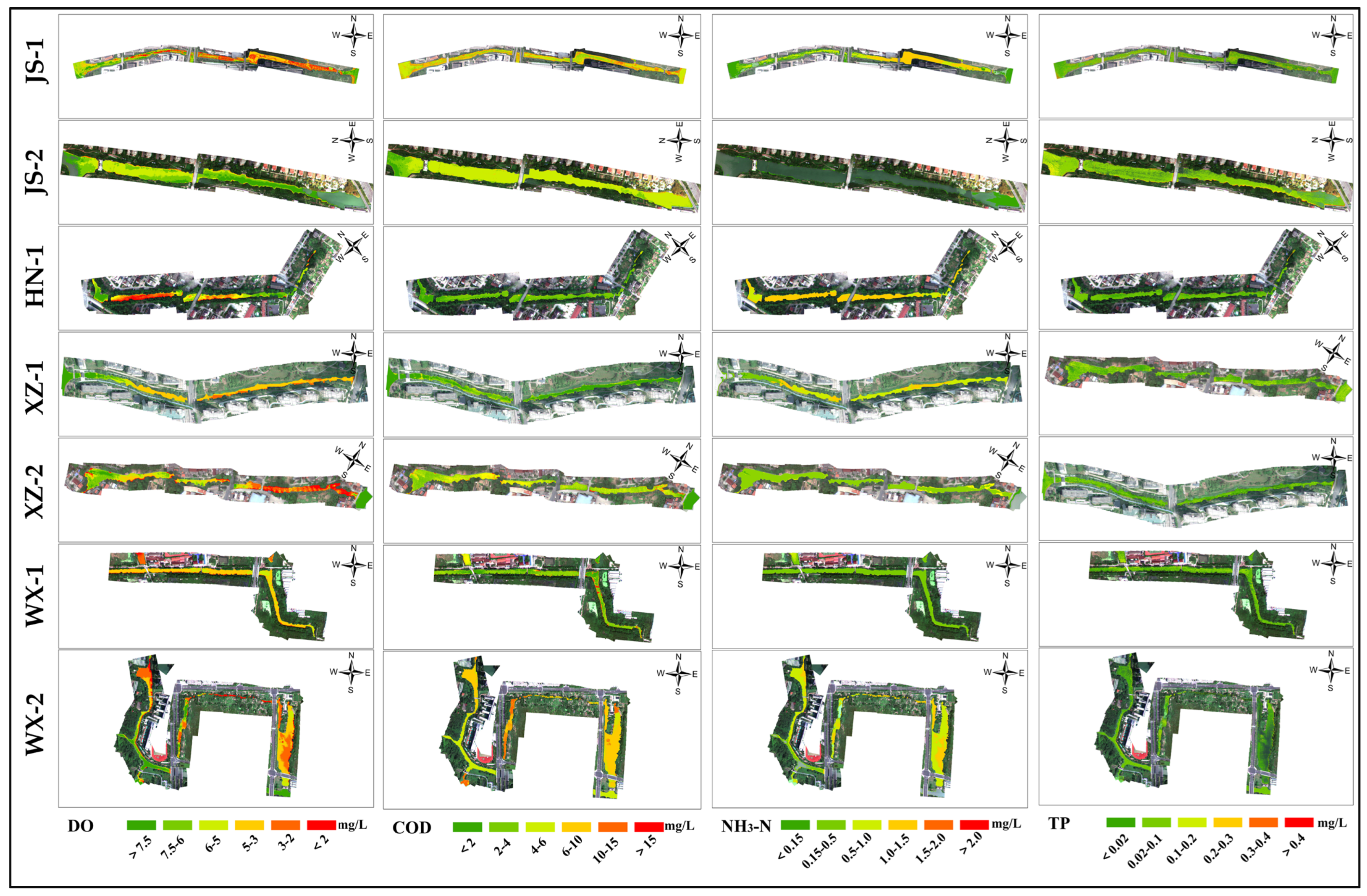
This study utilized the optimal spectral bands and the most effective machine learning model to invert four key water quality parameters of potential black and odorous water bodies. Figure 9 presents the spatial distribution maps of UAV RGB imagery, DO values, COD values, NH3-N values, and TP values for the seven potential black and odorous water bodies.
Figure 9.
Inversion results of water quality parameters based on UAV Multispectral Remote Sensing.
4.2. Discussion
4.2.1. Analysis of Band Combinations and Water Quality Parameters
In the inversion of DO, the summation of reflectance from the 468 nm, 484 nm, and 495 nm bands yielded the optimal inversion performance. This band combination not only enhances the comprehensive representation of spectral information but also effectively mitigates the limitations of single bands, which are susceptible to interference from atmospheric effects and water surface reflection. Furthermore, this spectral region lies within the transition zone between blue and green light, making it sensitive to various optically active constituents such as Chl-a, CDOM, and suspended solids. Although DO itself is not an optically active parameter, it exhibits significant statistical correlations with these optically active substances through intrinsic ecological linkages, such as oxygen production via algal photosynthesis and oxygen consumption during organic matter decomposition.
The ratio of reflectance between band b10 (625 nm) and band b14 (703 nm) yields the optimal performance for inverting COD. This ratio formulation effectively mitigates the influence of water vapor, thereby enhancing the statistical correlation between spectral features and COD. Furthermore, the 703 nm band lies within the transition zone from the red edge to the near-infrared region, where it is sensitive to the absorption by CDOM. Since CDOM exhibits a significant positive correlation with COD, this ecological relationship underpins the effectiveness of the selected band ratio.
4.2.2. Analysis of Water Quality Parameter Inversion Results
Analysis of the inversion results reveals that the DO exhibits significant spatial heterogeneity, with notable variations in concentration observed even within the same water body. This phenomenon is primarily attributed to the close coupling between DO and various environmental factors, including water temperature, atmospheric pressure, aquatic biological activity, water flow dynamics, and aeration conditions. The spatial distribution of DO derived from the Random Forest model inversion ( = 0.69) effectively captures the dynamic response of DO to environmental changes, further validating its applicability and reliability as the core indicator for water quality classification in this study. The COD varies significantly among different types of water bodies, whereas variations across different reaches within the same water body are relatively minor. This pattern suggests that organic pollutants and reducing inorganic substances—key contributors to COD—are distributed fairly uniformly along a single river. However, across different rivers, particularly those with poorer water quality, COD concentrations generally exhibit an increasing trend. NH3-N and TP are primarily influenced by external pollutant inputs and the decomposition of organic matter within water bodies. In recent years, stringent controls on nitrogen and phosphorus emissions implemented in Zhejiang Province have led to a significant reduction in nitrogen and phosphorus loads in inland waters. The inversion results indicate that NH3-N and TP concentrations generally fall within the range of Class II to Class IV water quality standards. However, elevated NH3-N levels are observed in areas affected by external pollution sources—particularly near discharge outlets on the northern side of JS-1 and the northwestern side of WX-2. Furthermore, NH3-N concentrations also tend to increase in zones with low DO, as limited oxygen availability suppresses nitrification, leading to ammonia accumulation under anoxic conditions. Although the inversion model for NH3-N exhibits relatively limited accuracy in this study, its spatial trend patterns still provide a meaningful indication of the distribution characteristics of nitrogen and phosphorus pollution and overall water quality status.
4.2.3. Risk Assessment of the Black and Odorous Water Bodies
To assess the risk levels of these potential black and odorous water bodies, this study determined the risk levels based on water quality classification. The water quality classification adopted a single-factor evaluation method: among the four indicators, the most severely polluted parameter was identified as the primary pollution factor, and the water quality category was determined based on this primary pollution factor. The risk levels of the potential black and odorous water bodies were determined in accordance with the method outlined in Table 1.
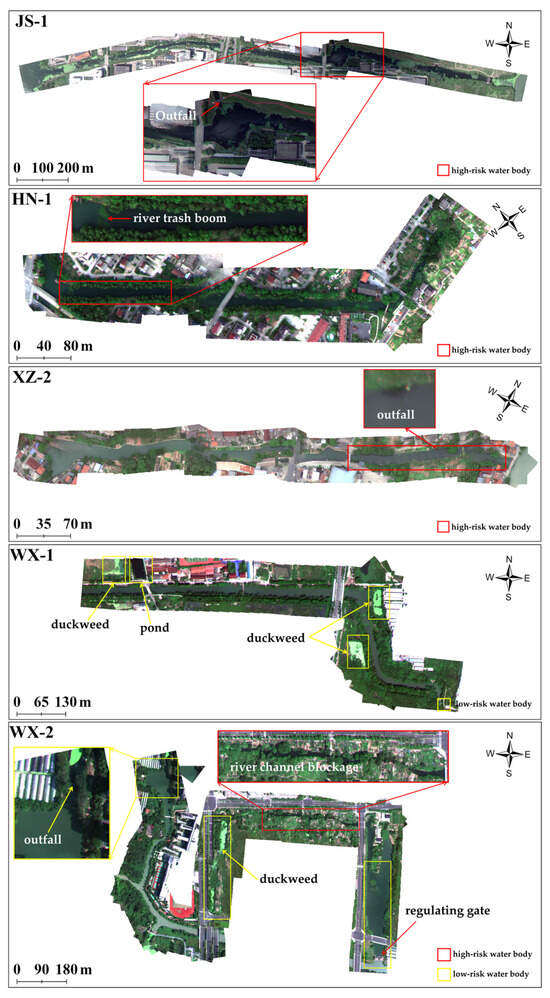
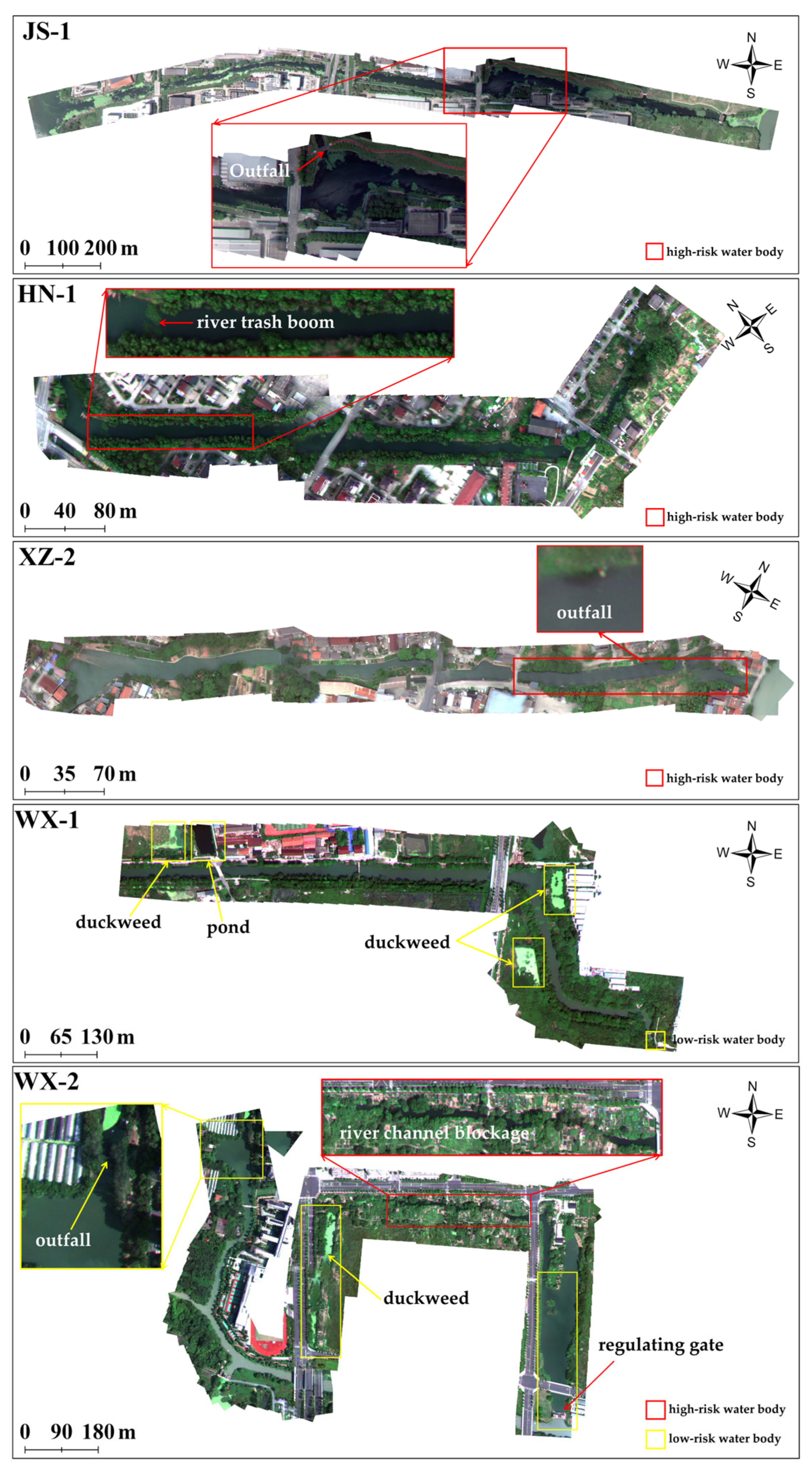
Based on the water quality inversion results shown in Figure 9, four out of the seven potential black-odor water bodies exhibited high-risk zones, with localized water quality substandard to Class V, and DO was identified as the primary pollutant. Integrated analysis with UAV RGB imagery (Figure 10) revealed the following conditions: In JS-1, a distinct black water mass was observed in the east-central section, alongside a sewage outlet located on the northern bank. Regarding HN-1, the presence of a blocking net in the waterway caused massive accumulation of benthic plants in the northwest sector, which impeded water flow and consumed substantial DO, resulting in water discoloration. A black water mass was also detected in the northwest of XZ-2, and UAV RGB imagery revealed a clandestine pipe discharging wastewater into the river from the northern bank. The east–west canal north of WX-2 suffered from poor water quality due to its narrow channel and blockage at the northwest side, leading to stagnant flow. Furthermore, two water bodies displayed low-risk characteristics, with localized water quality meeting Class V standards. Specifically, the pond north of the canal in WX-1 is suspected to be used for agricultural aquaculture, exhibiting poor water conditions. The northwest sector of WX-2 showed abnormal chromatic variations, and UAV imagery indicated a potential agricultural outlet discharging pollutants into the river. Notably, the water surfaces in the vicinity of WX-1 and the north–south canal in central WX-2 were extensively covered by floating macrophytes. This coverage not only hindered the accurate measurement of true water surface reflectance but also increased the risk of black-odor phenomena due to the significant consumption of DO by these plants. Based on visual interpretation, this study categorized such water bodies as low-risk zones. Detailed information is presented in Table 5.
Figure 10.
UAV RGB imagery of potential black-odor water bodies (red boxes: high-risk zones; yellow boxes: low-risk zones).
5. Conclusions
With the advancement of water pollution control in Zhejiang Province, urban black and odorous water bodies have been largely eliminated. However, due to the dynamic nature of their formation, the recurrence of such water bodies remains a potential risk. Early identification of water bodies susceptible to becoming black and odorous is crucial for implementing preemptive remediation. To address this challenge, this study proposes a collaborative monitoring method that integrates satellite remote sensing, UAV remote sensing, and ground-based monitoring, enabling the rapid screening and risk assessment of potential black and odorous water bodies. Satellite remote sensing imagery with a 0.5 m spatial resolution exhibit excellent performance in the monitoring of small-scale water bodies, making it suitable for the preliminary screening of black and odorous water bodies in small urban rivers. Multi-spectral technology was leveraged to develop optimal inversion models for key water quality parameters through systematic band selection and model optimization. The DO and NH3-N water quality inversion models exhibit relatively high inversion accuracy.
The method proposed in this study provides an efficient, rapid, and precise technical approach for the governance of black and odorous water bodies in Zhejiang Province and has been widely applied in other regions of the province. Nevertheless, several limitations remain: (1) In this study, only atmospheric correction was performed on the L1 product data. We have not yet established an off-water radiometric correction model for the JL-1 satellite, failing to effectively remove the signals of sun glint and bottom reflection, which has somewhat compromised the model’s accuracy;
(2) This study did not involve the analysis of spectral response characteristics of non-optically active water quality parameters. Water quality inversion models based on empirical statistical relationships have limited accuracy and poor generalization ability. To improve inversion accuracy, it is necessary to accumulate a large amount of measured sample data or develop physics-driven models;
(3) This study employed a band combination correlation analysis. By exhaustively evaluating linear combinations of two to three bands—generating a total of 1446 permutations—the method identifies the band combination with the highest correlation to water quality parameters. It is particularly suitable for small-sample datasets, offering the advantages of computational simplicity, high efficiency, and strong physical interpretability. However, this approach has several limitations. By focusing solely on linear relationships, it poorly captures the nonlinear responses of water quality. Furthermore, it fails to address multicollinearity among bands, resulting in average generalization performance and a propensity for overfitting. To overcome these limitations, subsequent research will focus on optimizing the feature selection process using methods such as Analysis of Variance (ANOVA) or LASSO regression.
(4) The method of assessing the risk levels of potential black and odorous water bodies through water quality classification is relatively simplistic, and its differentiation of the severity of black and odorous water bodies is insufficient. In the future, it is necessary to establish more scientific water quality remote sensing evaluation methods and a comprehensive risk assessment system for black and odorous water bodies.
Author Contributions
Conceptualization, Y.J. and Z.Z.; Methodology, Y.J. and Z.Z.; Software, Y.Y. (Yulan Yuan); Validation, Y.J. and Y.Y. (Yin Yang); Formal analysis, Y.Y. (Yin Yang) and Y.X.; Investigation, Y.J.; Resources, Y.J. and Z.Z.; Data curation, Y.J. and W.D.; Writing—original draft, Y.J. and Z.Z.; Writing—review & editing, Z.Z.; Visualization, Y.J. and Y.Y. (Yulan Yuan); Supervision, Y.J., Y.Y. (Yulan Yuan), Y.X. and W.D.; Project administration, W.D.; Funding acquisition, Y.J. and Z.Z. All authors have read and agreed to the published version of the manuscript.
Funding
This research was funded by Zhejiang Province “Pioneering Soldier” and “Leading Goose” R&D Project (Grant number: 2023C03011) and Zhejiang Province Ecological Environment Research and Achievements Promotion Project (Grant number: 2023HT0008).
Data Availability Statement
Data will be made available upon request.
Conflicts of Interest
The authors declare no conflicts of interest.
Abbreviations
The following abbreviations are used in this manuscript:
| BOWs | Black and Odorous Water Bodies |
| UAV | Unmanned Aerial Vehicle |
| MBOWI | Multispectral Black and Odorous Water Index |
| COD | Chemical Oxygen Demand |
| DO | Dissolved Oxygen |
| NH3-N | Ammonia Nitrogen |
| TP | Total Phosphorus |
| ORP | Oxidation Reduction Potential |
| SD | Transparency |
| GCPs | ground control points |
| DN | Digital Number |
| FOV | Field of Vie |
| NIR | Near-Infrared |
| PR | Polynomial Regression |
| RF | Random Forest |
| SA-SVR | the Support vector regression model optimized by the simulated annealing |
References
- Hamoud, F.; Bedouh, Y.; Saili, L.; Mellouk, F.Z.; Rachedi, S.A.; Bekhouche, I. A Comprehensive Review on the Impact of Black-Odorous Water Bodies on the Physiological Ecology of Vallisneria natans and Its Associated Microbial Community. Curr. Pollut. Rep. 2025, 11, 27. [Google Scholar] [CrossRef] [Scilit]
- Shen, Q.; Zhu, L.; Cao, H.Y. Remote sensing monitoring and screening for urban black and odorous water body: A review. J. Appl. Ecol. 2017, 28, 3433–3439. [Google Scholar]
- Chen, S.; Zhao, W.Y.; Liao, Z.P. Remote sensing identification of black-odor water bodies: A review. Remote Sens. Land Resour. 2021, 33, 20–29. [Google Scholar] [CrossRef]
- Zhao, Y.; Yu, T.; Hu, B.; Zhang, Z.; Liu, Y.; Liu, X.; Liu, H.; Liu, J.; Wang, X.; Song, S. Retrieval of Water Quality Parameters Based on Near-Surface Remote Sensing and Machine Learning Algorithm. Remote Sens. 2022, 14, 5305. [Google Scholar] [CrossRef] [Scilit]
- Li, P.; Ye, J.; Zhang, J.; Zhang, W.; Hu, F.; Xu, Z. Evaluation of levels of black in black-odor waters through absorption coefficient method. Sci. Total Environ. 2022, 820, 153241. [Google Scholar] [CrossRef] [Scilit]
- Gao, H.; Li, X.; Yuan, P.; Li, S.; Liu, Q. Research on water quality improvement effects of China’s Battle against Black-Odor water bodies. Ecol. Indic. 2024, 158, 111374. [Google Scholar] [CrossRef] [Scilit]
- Wu, Z.; Pang, J.; Li, J.; Wang, Y.; Ruan, J.; Zhang, X.; Yang, L.; Pang, Y.; Gao, Y. A review of remote sensing-based water quality monitoring in turbid coastal waters. Intell. Mar. Technol. Syst. 2025, 3, 24. [Google Scholar] [CrossRef] [Scilit]
- Pahlevan, N.; Smith, B.; Schalles, J.; Binding, C.; Cao, Z.; Ma, R.; Alikas, K.; Kangro, K.; Gurlin, D.; Hà, N.; et al. Seamless retrievals of chlorophyll-a from Sentinel-2 (MSI) and Sentinel-3 (OLCI) in inland and coastal waters: A machine-learning approach. Remote Sens. Environ. 2020, 240, 111604. [Google Scholar] [CrossRef] [Scilit]
- Wang, R.; Shen, Q.; Peng, H.C.; Yao, Y.; Li, J.S.; Wang, M.X.; Shi, J.R. Study on the applicability of multi-source high-resolution satellite images for monitoring black and odorous water body. Natl. Remote Sens. Bull. 2022, 26, 179–192. [Google Scholar] [CrossRef] [Scilit]
- Yao, Y.; Shen, Q.; Zhu, L.; Gao, H.J.; Cao, H.Y.; Han, H.; Sun, J.G.; Li, J.S. Remote sensing identification of urban black-odor water bodies in Shenyang city based on GF-2 image. J. Remote Sens. 2019, 23, 230–242. [Google Scholar] [CrossRef] [Scilit]
- Yu, Z.; Huang, Q.; Peng, X.; Liu, H.; Ai, Q.; Zhou, B.; Yuan, X.; Fang, M.; Wang, B. Comparative Study on Recognition Models of Black-Odorous Water in Hangzhou Based on GF-2 Satellite Data. Sensors 2022, 22, 4593. [Google Scholar] [CrossRef] [Scilit]
- Li, J.Q.; Li, J.G.; Zhu, L.; Shen, Q.; Dai, H.Y.; Zhu, Y.F. Remote sensing identification and validation of urban black and odorous water in Taiyuan city. J. Remote Sens. 2019, 23, 773–784. [Google Scholar] [CrossRef] [Scilit]
- Huang, J.; Xu, J.; Chong, Q.; Li, Z. Black and Odorous Water Detection of Gaofen-2 Remote Sensing Images Based on Deep Learning. In IGARSS 2023—2023 IEEE International Geoscience and Remote Sensing Symposium; IEEE: New York, NY, USA, 2023; pp. 3720–3723. [Google Scholar]
- Zhou, X.; Huang, Z.; Wan, Y.; Ni, B.; Zhang, Y.; Li, S.; Wang, M.; Wu, T. A New Method for Continuous Monitoring of Black and Odorous Water Body Using Evaluation Parameters: A Case Study in Baoding. Remote Sens. 2022, 14, 374. [Google Scholar] [CrossRef] [Scilit]
- Huang, J.; Xu, J.; Yan, W.; Wu, P.; Xing, H. Detection of Black and Odorous Water in Gaofen-2 Remote Sensing Images Using the Modified DeepLabv3+ Model. Sustainability 2023, 16, 92. [Google Scholar] [CrossRef] [Scilit]
- Sarigai; Yang, J.; Zhou, A.; Han, L.; Li, Y.; Xie, Y. Monitoring urban black-odorous water by using hyperspectral data and machine learning. Environ. Pollut. 2021, 269, 116166. [Google Scholar] [CrossRef] [Scilit]
- Yang, H.; Kong, J.; Hu, H.; Du, Y.; Gao, M.; Chen, F. A Review of Remote Sensing for Water Quality Retrieval: Progress and Challenges. Remote Sens. 2022, 14, 1770. [Google Scholar] [CrossRef] [Scilit]
- Li, L.; Jiang, Y.; Shen, X.; Li, D. Long-term assessment and analysis of the radiometric quality of standard data products for Chinese Gaofen-1/2/6/7 optical remote sensing satellites. Remote Sens. Environ. 2024, 308, 114169. [Google Scholar] [CrossRef] [Scilit]
- Pham, T.D.; Ha, N.T.; Saintilan, N.; Skidmore, A.; Phan, D.C.; Le, N.N.; Viet, H.L.; Takeuchi, W.; Friess, D.A. Advances in Earth observation and machine learning for quantifying blue carbon. Earth-Sci. Rev. 2023, 243, 104501. [Google Scholar] [CrossRef] [Scilit]
- Wang, Z.; Chen, T.; Zhu, D.; Jia, K.; Plaza, A. RSEIFE: A new remote sensing ecological index for simulating the land surface eco-environment. J. Environ. Manag. 2023, 326, 116851. [Google Scholar] [CrossRef] [Scilit] [PubMed]
- Zhang, Q.; Wang, B.W.; Wang, S.F.; Guo, T. Urban black-odor water body dynamic analysis with high-resolution remote sensing image. Iop Conference Series. Earth Environ. Sci. 2019, 344, 12149. [Google Scholar] [CrossRef] [Scilit]
- Wasehun, E.T.; Hashemi Beni, L.; Di Vittorio, C.A. UAV and satellite remote sensing for inland water quality assessments: A literature review. Environ. Monit. Assess. 2024, 196, 277. [Google Scholar] [CrossRef] [Scilit]
- Li, H.; Wang, N.; Du, Z.; Huang, D.; Shi, M.; Zhong, Z.; Yuan, D. Multi-Parameter Water Quality Inversion in Heterogeneous Inland Waters Using UAV-Based Hyperspectral Data and Deep Learning Methods. Remote Sens. 2025, 17, 2191. [Google Scholar] [CrossRef] [Scilit]
- Bai, X.; Wang, J.; Chen, R.; Kang, Y.; Ding, Y.; Lv, Z.; Ding, D.; Feng, H. Research progress of inland river water quality monitoring technology based on unmanned aerial vehicle hyperspectral imaging technology. Environ. Res. 2024, 257, 119254. [Google Scholar] [CrossRef] [Scilit]
- Cui, M.; Sun, Y.; Huang, C.; Li, M. Water Turbidity Retrieval Based on UAV Hyperspectral Remote Sensing. Water 2022, 14, 128. [Google Scholar] [CrossRef] [Scilit]
- Yan, Y.; Wang, Y.; Yu, C.; Zhang, Z. Multispectral Remote Sensing for Estimating Water Quality Parameters: A Comparative Study of Inversion Methods Using Unmanned Aerial Vehicles (UAVs). Sustainability 2023, 15, 10298. [Google Scholar] [CrossRef] [Scilit]
- Zheng, Z.; Jiang, Y.; Zhang, Q.; Zhong, Y.; Wang, L. A Feature Selection Method Based on Relief Feature Ranking with Recursive Feature Elimination for the Inversion of Urban River Water Quality Parameters Using Multispectral Imagery from an Unmanned Aerial Vehicle. Water 2024, 16, 1029. [Google Scholar] [CrossRef] [Scilit]
- Ma, Q.; Li, S.; Qi, H.; Yang, X.; Liu, M. Rapid Prediction and Inversion of Pond Aquaculture Water Quality Based on Hyperspectral Imaging by Unmanned Aerial Vehicles. Water 2025, 17, 517. [Google Scholar] [CrossRef] [Scilit]
- Liu, B.; Li, T. A Machine-Learning-Based Framework for Retrieving Water Quality Parameters in Urban Rivers Using UAV Hyperspectral Images. Remote. Sens. 2024, 16, 905. [Google Scholar] [CrossRef] [Scilit]
- Li, H.; Xie, Z.; Jin, X.; Peng, C.; Ren, C.; Mao, Y.; Zhou, K.; Li, Y. DWE: Research on Water Quality Inversion and Scalability in Small Watersheds Using UAV Remote Sensing Data. IEEE Access 2025, 13, 58680–58698. [Google Scholar] [CrossRef] [Scilit]
- Cai, J.; Meng, L.; Liu, H.; Xing, Q. Estimating Chemical Oxygen Demand in estuarine urban rivers using unmanned aerial vehicle hyperspectral images. Ecol. Indic. 2022, 139, 108936. [Google Scholar] [CrossRef] [Scilit]
- The Environmental Protection Action Plan for the Governance of Urban Black and Odorous Water Bodies During the 14th Five-Year Plan, Ministry of Ecology and Environment of the People’s Republic of China. Available online: https://www.mee.gov.cn/zcwj/zcjd/202204/t20220418_974967.shtml (accessed on 15 August 2025).
- Guidelines for the Remediation of Urban Black and Odorous Water Bodies; Ministry of Housing and Urban-Rural Development of the People’s Republic of China: Beijing, China, 2015.
- HJ 91.2-2002; Technical Specifications for Surface Water Environmental Quality Monitoring. Ministry of Ecology and Environment of the People’s Republic of China: Beijing, China, 2002.
- GB 3838-2002; Environmental Quality Standards for Surface Water. Ministry of Ecology and Environment of the People’s Republic of China: Beijing, China, 2002.
- Emmert-Streib, F.; Dehmer, M. Evaluation of Regression Models: Model Assessment, Model Selection and Generalization Error. Mach. Learn. Knowl. Extr. 2019, 1, 521–551. [Google Scholar] [CrossRef] [Scilit]
- Kallio, K.; Kutser, T.; Hannonen, T.; Koponen, S.; Pyhlahti, T. Retrieval of water quality from airborne imaging spectrometry of various lake types in different seasons. Sci. Total Environ. 2001, 268, 59–77. [Google Scholar] [CrossRef] [Scilit] [PubMed]
- Duan, H.; Ma, R.; Hu, C. Evaluation of remote sensing algorithms for cyanobacterial pigment retrievals during spring bloom formation in several lakes of East China. Remote Sens. Environ. 2012, 126, 126–135. [Google Scholar] [CrossRef] [Scilit]
- Fu, L.; Liu, G.; Song, K.; Chen, Y. Research on optical characterization and remote sensing identification of typical black and odorous water in rural areas. Remote Sens. Technol. Appl. 2024, 39, 1064–1074. [Google Scholar]
- Jaywant, S.A.; Arif, K.M. Remote Sensing Techniques for Water Quality Monitoring: A Review. Sensors 2024, 24, 8041. [Google Scholar] [CrossRef] [Scilit]
- Li, L.; Gu, M.; Gong, C.; Hu, Y.; Wang, X.; Yang, Z.; He, Z. An advanced remote sensing retrieval method for urban non-optically active water quality parameters: An example from Shanghai. Sci. Total Environ. 2023, 880, 163389. [Google Scholar] [CrossRef] [Scilit] [PubMed]
- Wang, Z. Construction of Urban Black and Odorous Water Remote Sensing Recognition Model Based on Feature Band. Acad. J. Sci. Technol. 2024, 11, 185–191. [Google Scholar] [CrossRef] [Scilit]

Disclaimer/Publisher’s Note: The statements, opinions and data contained in all publications are solely those of the individual author(s) and contributor(s) and not of MDPI and/or the editor(s). MDPI and/or the editor(s) disclaim responsibility for any injury to people or property resulting from any ideas, methods, instructions or products referred to in the content. |
© 2026 by the authors. Licensee MDPI, Basel, Switzerland. This article is an open access article distributed under the terms and conditions of the Creative Commons Attribution (CC BY) license.