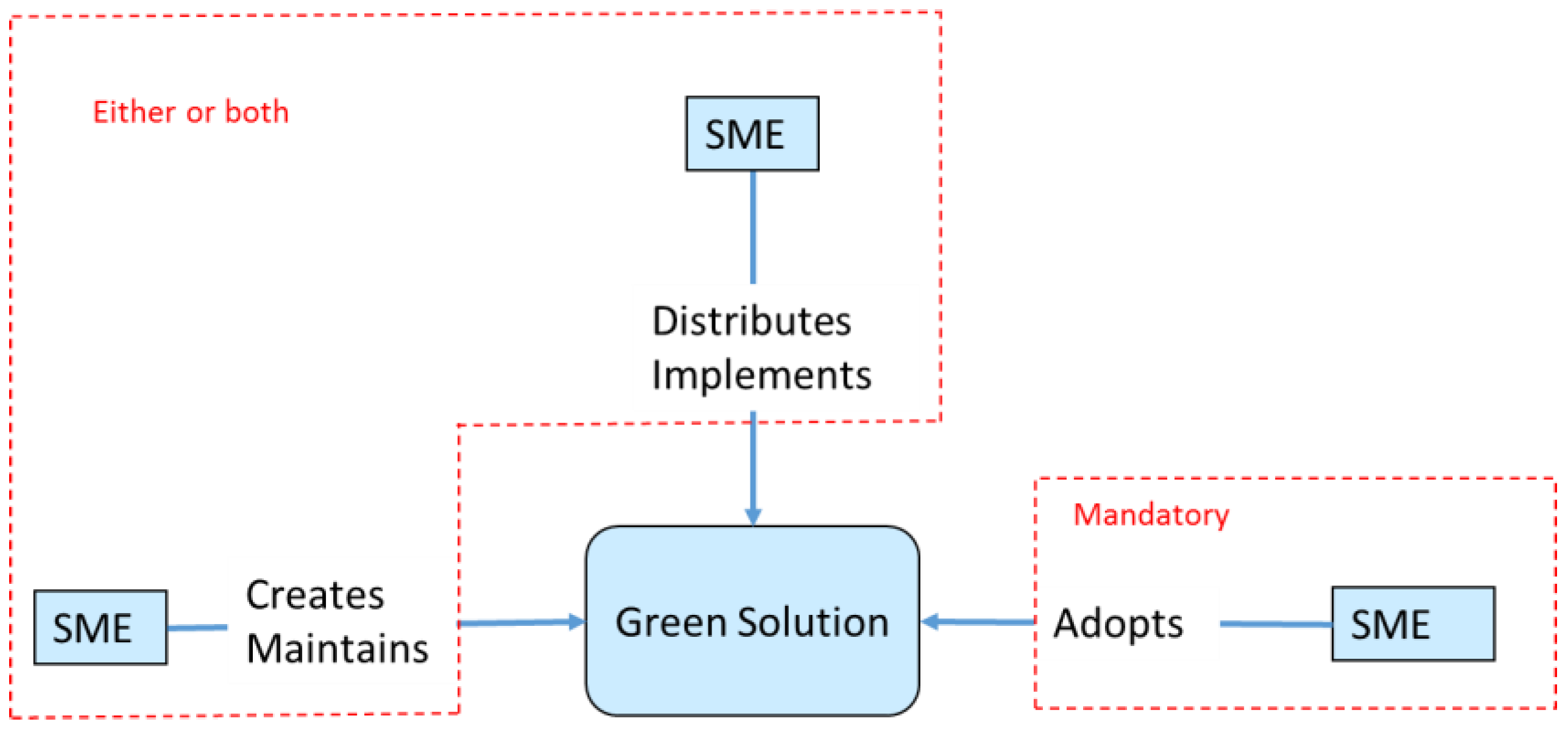
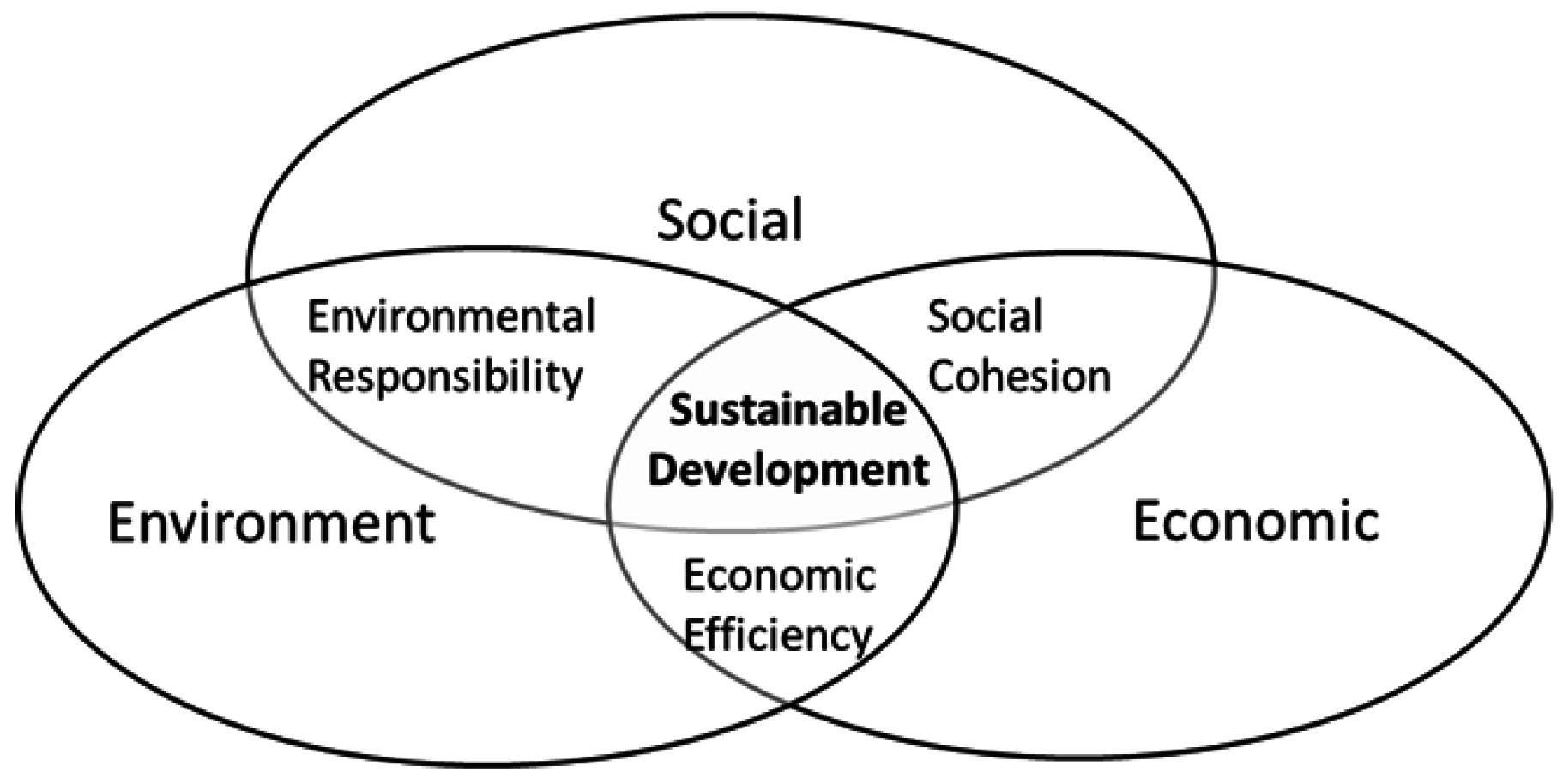
1. Introduction
The circular economy is a concept rooted in several different schools of thought and theories that question the prevailing linear economic systems, which assume that resources are infinite [
1,
2,
3]. Among the first authors considered to have influenced the development of the circular economy concept is Kenneth Boulding [
4], who in 1966 envisaged a “spaceman economy” that would operate by reproducing the initially limited stock of inputs and recycling waste outputs. This concept has since evolved such that today policy-makers, academics, and the business community increasingly recognise the need to move towards a new economic model whereby materials and energy from discarded products or byproducts are reintroduced into the economic system [
5,
6]. In terms of environmental benefits, becoming more circular would help avoid emissions, reduce the loss of resources, and ease the burden on global ecosystems [
7]. For example, it has been estimated that the transition to a circular economy in the mobility, food, and built environment sectors could lead to emissions reductions of 48% by 2030 and 83% by 2050, compared with 2012 levels [
8].
Looking beyond environmental sustainability, the economic benefits and business relevance of the circular economy are also increasingly recognised among academics and policy-makers. The Ellen MacArthur Foundation [
6] estimates that the potential net material cost savings in a more circular economy in medium-lived complex products industries (in particular for motor vehicles, machinery, and equipment, as well as electrical machinery) at EU-level could be as high as $630 billion annually, while in the fast-moving consumer goods sector (mainly packaged food, apparel, and beverages) net materials savings at global level could exceed $700 billion annually. Furthermore, technological and organisational innovations underpinning a circular economy would allow Europe’s resource productivity to grow by 3% by 2030, equating to €1.8 trillion total benefits in three areas: mobility, food, and the built environment, including savings in primary resource costs and in costs linked to externalities, such as health impacts from air pollution [
8].
Beyond cost savings, closing production-to-waste loops and increasing the re-use and recycling of materials would reduce demand for virgin materials and help to mitigate both demand-driven price volatility on raw material markets (e.g., for iron ore) and supply risks [
9]. In addition, the uptake of circular business models was found to be associated with great employment potential: estimates for the United Kingdom show that a circular economy at current development rates could lead to net job creation of approximately 54,000 jobs by 2030, particularly in recycling and remanufacturing [
10]. For the Netherlands, Bastein et al. [
11] estimate that improving circular business models in the base metals and metal product industries, in the electronics and electrical appliances industry, and in the management of biotic waste, could create more than 50,000 jobs.
While these findings imply clear benefits for businesses that adopt circular business models, in actual practice there can be several barriers in the form of, for example, difficulties in valuing future benefits against current costs, knowledge needs, and market pull-and-push factors, such as availability of technologies and consumer demand for green products [
12]. Both larger and smaller enterprises face such barriers, albeit to differing extents. For example, while a multinational company can support circular technology development through its research and development activities, small and medium-sized enterprises (SMEs) often depend on the availability of technology in the market. Moreover, while multinationals may be able to determine how circular economy concepts are adopted, an SME is, due to its size, often restricted to observing the trends in the market value chain in which it operates. Although both larger enterprises and SMEs are crucial for the circular economy, this article focuses on the role of the latter. SMEs are a substantial part of the business environment, with over 99% of European enterprises belonging to the SME category and around two-thirds of European employment being generated by SMEs [
13].
Research on SMEs has shown that they are becoming increasingly aware of the benefits of improving resource efficiency even though, as illustrated in the literature review of this paper, they do not often link them well to the concept of a circular economy. Saving material costs, creating competitive advantages, and new markets are among the main reasons for European SMEs to take action [
14]. For instance, by implementing a certified Environmental Management System (EMS), two-thirds of SMEs surveyed in a U.K. Defra study found their sales increased by £14,961 on average per € million turnover per year [
15]. However, as explained, it is not always easy for SMEs to reap the benefits of more circular approaches. Based on an EU-funded online dataset of European SMEs, this paper identifies a number of barriers to adopting a more sustainable, circular-type of business model and also identifies possible enabling factors to overcome these barriers.
In the literature review presented in
Section 2 below, the identification of barriers to implementing circular economy business models in SMEs has been based on a wide range of surveys and sources. These sources have based their analyses on firms in general, or specifically on SMEs, or on a subset thereof, e.g., SMEs in a geographic area (see, for example, [
16,
17]) and/or sector (see [
18,
19]). These enterprises may not yet have taken steps towards circular business models, however; consequently, their answers may be based more on perceptions than on actual experience. This paper adds to the analysis by focusing on EU SMEs that have already implemented circular economy business models and thus managed to overcome possible barriers. Another novel element can be found in the consideration of representative SME sectors across different European countries that have successfully introduced circularity into their business models, facilitating the cross-sectoral knowledge development. This can prove to be especially important, since the switch to a circular economy is applicable for several sectors and can follow similar paths and patterns.
The remainder of this paper is organised as follows.
Section 2 reviews the literature and categorizes the main barriers to the implementation of circular economy solutions by SMEs.
Section 3 presents the methodology for the analysis of case studies featured in the online SME platform, as well as the main barriers and enablers encountered by the sampled SMEs.
Section 4 discusses the research results and their management and scientific implications. Finally,
Section 5 presents the conclusions and policy recommendations.
2. Literature Review
In order to identify potential barriers preventing SMEs from adopting circular economy business models, a literature review has been conducted. Based on the review, barriers have been categorised as follows: company environmental culture, lack of capital, lack of government support/effective legislation, lack of information, administrative burden, lack of technical and technological know-how, and lack of support from the supply and demand network. The categories are explained further below.
Barriers under
company environmental culture refer to the philosophy, habits, and attitudes of the company (manager and employees) towards implementing circular economy business practices [
16]. For instance, in many SMEs, the manager is also the company owner with a significant say over the strategic decisions of the company. In this respect, some SME managers may have a positive attitude towards the circular economy, while others may not [
17,
20]. Furthermore, SME owners or managers may have different risk perceptions. A strong risk aversion on the part of managers can hinder the enactment of the circular economy, even following the evaluation of the benefits associated with its implementation [
16,
21]. An additional complexity is that decision-makers need to estimate the concrete value propositions before proceeding to circular economy practices; to assess the costs of circular measures, taking into account the risks of change in the current business environment; and acknowledge that a more long-term perspective needs to be adopted. Resistance to change keeps business models locked in their conventional configuration and may constitute a major bottleneck in micro-small companies [
22,
23]. The attitudes and behaviour of employees also fall under the same category; while working for an environmentally conscious company may motivate some employees, others are more reluctant or are unaware of how to change business-as-usual operations, or may even perceive green practices as additional workload [
19,
24].
Lack of capital has been cited extensively in the literature as one of the most salient barriers to the adoption of circular economy by SMEs [
25]. Shifting from a linear to a circular production/business model requires activities such as distribution planning, inventory management, production planning, and management of a reverse logistics network [
22], requiring a substantial amount of time and investment on the part of the company [
26]. The level of upfront costs, the indirect (time and human resources) costs and the anticipated payback period are particularly important for SMEs, as they are generally more sensitive than large enterprises to any additional costs resulting from green business [
27,
28]. For example, in some cases product service business models (e.g., leasing services) demand higher upfront costs than sale transaction business models [
22], while some producers regard product services as a threat to their production business models [
23,
29,
30]. Implementing a circular economy business model also demands continuous monitoring and improvement of the product’s lifecycle; hence, a significant amount of resources would need to be allocated by the company to keep all parties (i.e., employees and customers) committed [
26]. Additionally, external financing through, for example, EU and government grants, is often difficult to access, since SME staff and management restrictions do not usually allow for careful assessment of such opportunities [
31,
32]. Regarding commercial bank financing, SMEs often face difficulties in obtaining the collateral or guarantees required by banks [
26,
33], while economic recession rendered access to financing capital even more difficult for circular economy propositions. Finally, there are no new methods of financing available to promote innovative business models [
22].
The
lack of government support/effective legislation (through the provision of funding opportunities, training, effective taxation policy, laws and regulations, etc.) is widely recognised as a significant barrier to the uptake of environmental investments [
34,
35]. The lack of a concrete, coherent, and strict legislative framework often impedes SMEs’ consideration of integrating green solutions in their operations. For example, in EU waste legislation there is no coherent definition or classification of waste materials (e.g., to distinguish waste from byproduct materials used for recycling), thus inducing limitations on cross-border transportation of waste [
36], while there are significant differences in the ambition of targets along the waste hierarchy [
37]. This is reinforced by the lack of appropriate market signals (low prices of raw materials), which does not encourage the efficient use of resources or the transition to a circular economy [
38]. As such, externalities (environmental costs), namely negative impacts on public health and environment, are not factored into the price of the products [
22,
39]. Additionally, circular business models can be excessively influenced by the fact that resource taxes are quite low, hence companies prefer to purchase cheaper raw materials rather than use recycled ones, which often entails supplementary processing costs [
40,
41].
Innovation policies rarely integrate new circular business model opportunities, as their main focus is on incremental innovation and efficiency [
22]. Moreover, competition legislation hinders collaboration between companies and discourages understanding of the circular design and development of products and reverse infrastructure. On the one hand, sharing knowledge about business processes may harm a firm’s competitiveness, while, on the other hand, close collaboration among firms within product value chains can be viewed as cartel formation [
22]. Finally, it has been reported that in some countries the enforcement of environmental regulations is not yet wholly effective, which does not encourage companies to seek prospective buyers for their byproducts. Similar discrepancies are also encountered in other fiscal policy instruments, such as “consumption taxes” of polluting products to control consumption habits, inhibiting the adoption of green consumption attitudes by consumers [
39].
Studies have also highlighted the
lack of information about the benefits of the circular economy [
42] and environmental legislation [
43]. In this context, a survey of 300 European firms conducted by the FUSION EU co-funded project [
44] showed that most firms had either never heard of the term ‘circular economy’, or could not understand its meaning. On the positive side, when participants were given a simpler definition of circular economy, involving aspects such as the re-use and recovery of waste materials, the majority responded that they were actually already making efforts to recycle and repair. Companies also identified waste management as a sector that could unlock new business opportunities. A similar study conducted with the participation of 157 firms in China concluded that there is a relatively good understanding of the circular economy, but there is still a remarkable ‘gap’ between a firm’s awareness and actual behaviour due to a number of contextual and cultural factors [
16]. The successful transition to a circular economy can only be achieved through collective effort, requiring exchange and dissemination of knowledge and innovation among different stakeholders in the value chain. Yet it is often the case that information is guarded confidentially by companies [
36,
45] or that people find it difficult to communicate their expertise, thereby preventing the broader dissemination and development of circular economy business models [
21]. Due to the limited application of new circular business models, the track record of successful paradigms that would enhance practical knowledge is not yet extensive enough, which induces uncertainty in introducing circular practices [
22]. The lack of an information exchange system constitutes an additional barrier to the effective adoption of circular business models. Confidentiality, lack of trust, and competition issues (along with competition legislation, as discussed earlier) inhibits the sharing of knowledge and product information among companies and forms a barrier to co-production, innovation, and the effective end-of-life management of products [
46,
47].
The
administrative burden related to green business practices, such as monitoring and reporting environmental performance data, can be considered complex and barely affordable for SMEs. For instance, in many cases SMEs are required to submit the same data to various authorities and in different formats, but the expertise for that often needs to be sought among external consultants [
35,
48]. Moreover, adopting a circular business model can entail more complex and costly management and planning processes [
22].
Lack of technical and technological know-how can hinder SMEs from transforming their linear business model into a circular one [
16,
28,
45]. Linear technologies are widely established in the current business practices, keeping the economy locked into its current form [
22]. Transforming business-as-usual operations would require new sustainable production and consumption technologies (in the fields of eco-design, clean production, and life cycle assessment) to be integrated into current linear business models, and competent professionals to be able to manage them. Nevertheless, the demand for environmentally friendly technologies is often quite low, and the technical capacities are inadequate [
39]. Lack of technical know-how may result in SMEs adopting linear technologies and business models they are familiar with, and depending on their suppliers’ suggestions for innovative technical solutions [
35]. Furthermore, the insufficient investment in technologies focusing on circular product designs (eco-design) and operations [
45], the lack of advanced resource efficiency technologies [
49], along with the low pricing signal of raw materials [
36] are factors that are likely to impede the adoption of circular economy approaches by SMEs. A different bottleneck that has been reported is that of the increasing complexity in the mixes of materials in new products, rendering their management by current recycling infrastructure quite challenging [
50].
Finally, the barrier of
lack of support from the supply and demand network refers mainly to the dependency of SMEs on their suppliers’ and customers’ engagement in sustainable activities. The successful implementation of a circular economy necessitates the collaboration of all parties across the supply chain [
26,
36]. Nevertheless, suppliers and service partners may be reluctant to get involved in innovative circular economy processes owing to perceived risks to their competitive advantage or due to a mindset that does not prioritise circular economy practices [
18]. Adopting a circular business model is likely to increase complexity throughout the supply chain (with regard to logistical, financial, and legal aspects), impacting the value chain of a product, process or service. In this context, issues related to governance (ownership, share of costs, and benefits along the value chain) need to be settled so that effective circular business models can be employed. Managing the transition in circular supply chains can be time-consuming, expensive, and may require collaboration with new market players [
22,
51]. Especially for micro-small companies, one of the major barriers is the lock-in of distribution channels [
52], as well as the unpredictable return flow of materials (hampering the efficient retrieval of products) in circular practices involving the remanufacturing and reuse of products [
30]. For example, in the case of remanufacturing photocopiers, the main challenge is to have the required labour to deal with the rate of photocopier returns [
41].
On the other hand, insufficient customer awareness of the benefits of green products does not encourage a change in consumption patterns, and often there is no substantial pressure from the demand side on smaller organisations to meet sustainability criteria or develop a circular economy business model [
53,
54,
55,
56]. The transition to a circular economy necessitates a shift in consumers’ lifestyle and behaviour. Yet some may perceive circular economy practices as more costly and hard-to-implement alternatives with no tangible benefits, or may be unwilling to change their concepts of consumption and ownership (goods being perceived as symbols of social status) [
57]. The public’s response is generally hard to predict since it is largely dependent on social norms and external conditions [
36,
58]. Furthermore, powerful stakeholders across the value chains may resist change due to their status quo interests, impacting the progress of small players towards innovative business models. Because of their low bargaining power, frontrunner SMEs seeking to establish a closed-loop business model are more likely to face additional costs due to the uneven allocation of power among stakeholders in the supply chain [
45,
56]. Policy initiatives to charge externalities or increase taxes on raw materials may also be resisted by powerful stakeholders with conflicting interests [
2].
4. Discussion
The case study analysis has enabled us to learn whether and to what extent the barriers identified from the literature review in
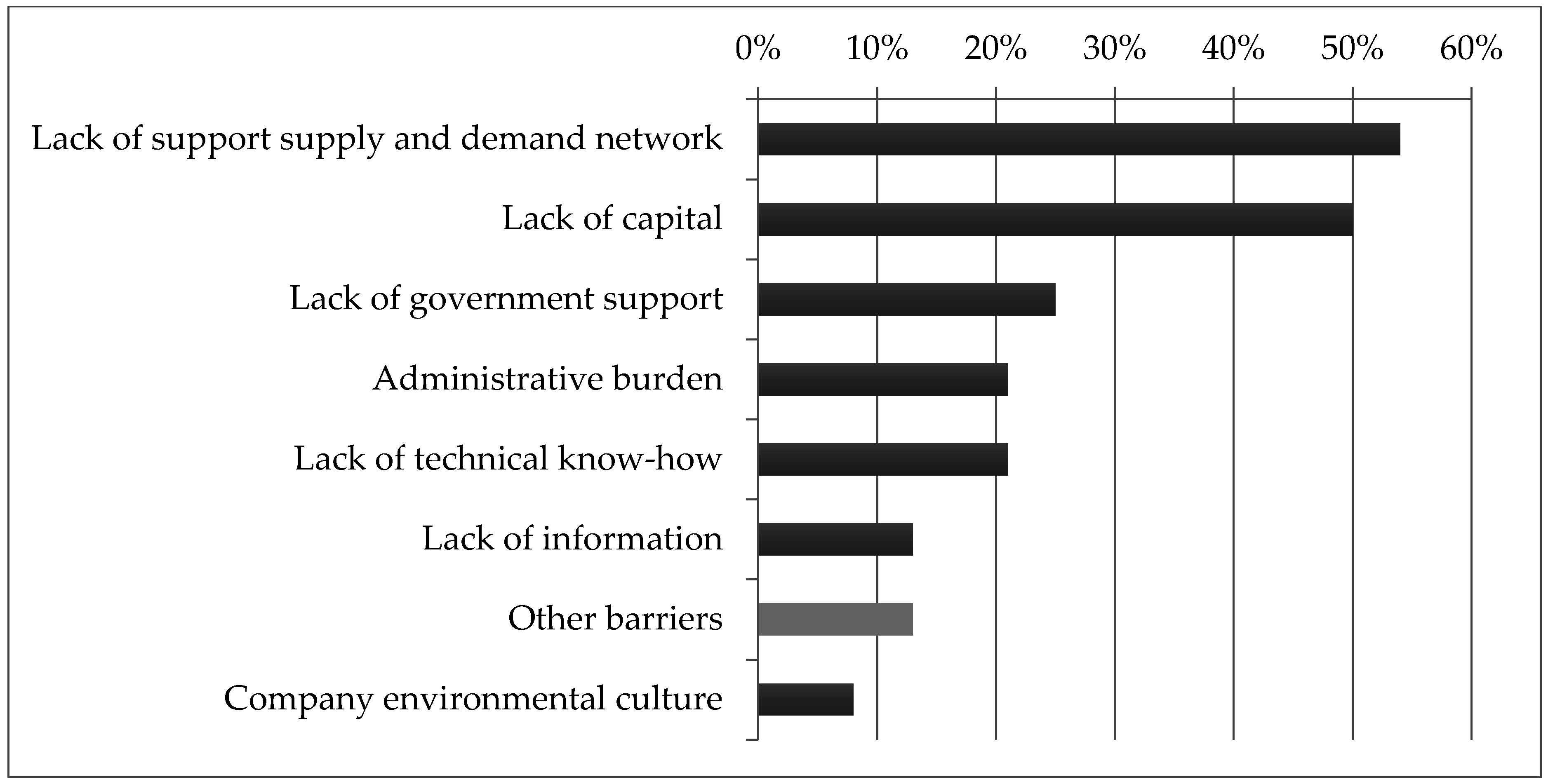
Section 2 have been experienced by the SMEs included in the sample. While in the literature review barriers were identified and discussed individually, our analysis has provided insights into how frequently barriers have been identified in our case studies compared to other barriers. Obviously, as explained elsewhere in this paper, frequency does not necessarily imply significance and since our case study analysis has not weighted the barriers, we cannot claim that one barrier has been more significant than others. As a consequence, we cannot claim that the most frequently mentioned barrier is by definition the most important. Nevertheless, an analysis of the frequency of barriers mentioned is an indication of how often SMEs feel themselves to be confronted by a barrier, which could be considered, with the above caveat in mind, a token of the significance of a barrier from the perspective of the SMEs in our sample.
In general, it could be concluded that the barriers mentioned in the literature also apply to a number of the SMEs in the sample. For example, a
lack of capital, especially, is seen as a key barrier for smaller companies [
27,
28]. About 50% of the SMEs in the sample mentioned this barrier, with one of them stating: “Because of our low turnovers, banks have always been hesitant in releasing funding to the business. It has been very challenging to secure a sufficient amount of funds to run our core business, let alone for greening the business.”
The administrative burden when attempting to switch to a circular economy business model, mentioned in the literature as a barrier to SMEs, has also been experienced by a few of the SMEs in our sample, with one of them mentioning the “slow and bureaucratic industry standards approvals process.” The complexity of administrative aspects throughout the supply chain has not been the specific focus of the analysis, but, as one of the SMEs explained: “Traceability (of inputs) across the whole supply chain is often difficult. Also, the different legal frameworks across countries add an additional layer of complexity to identifying the origin of inputs.”
Another barrier mentioned in the case study analysis is the lack of support from SMEs’ supply and demand networks (value chain). This confirms the finding in the literature review that SMEs have low bargaining power in their supply chain; in our sample SMEs appear to feel “locked in” at the bottom of their supply chain and do not have the capacity or “power” to fully implement a circular solution by themselves.
The literature review also identified the lack of technical and technological know-how within SMEs as a common barrier. As a consequence, the adoption of new technologies (e.g., those relevant to circular economy business models) by SMEs is either not considered or rather limited, which hampers the overall diffusion of these technologies on the market. Our case study analysis confirms that in some situations SMEs want to improve the environmental performance of their business operations but they are hampered by this barrier. In our sample, the lack of technical know-how is not considered as a stand-alone barrier in most cases as it is closely connected to SMEs’ lack of resources and time to acquire skills training. Neither do they have the financial means to hire external experts. As a result, a new technology needs to be operated with existing staff and knowledge and, if that is insufficient, then the technology will not be adopted.
One difference between the findings in the literature review and the conclusions from the SME case study analysis is the barrier of company environmental culture (management and staff), which in the literature review is identified as one of the main barriers. In our case study sample this barrier was among the least-often mentioned. A plausible explanation for this observation could be that the SMEs analysed in our sample had already adopted a circular-economy type of business so it is more likely that their company culture was more receptive to a sustainable business model. Interestingly, the reluctance among SME business leaders to change to new business models, as mentioned in the literature, was not specifically mentioned by SMEs in the sample. However, in several cases a lack of time to investigate the possibilities was noted. Although this ‘lack of time’ on the one hand refers to a lack of resources, it may also be due to a reluctance to change, and therefore an unwillingness to invest time in looking for green solutions.
Similarly, while a
lack of information about the benefits of the circular economy is seen as a barrier to the implementation of circular economy business models in the literature, either due to the unfamiliarity of the term “circular economy” [
44] or due to the non-existent exchange of information among companies [
36,
45], only a few of the SMEs in the sample experienced this barrier. The reason for this is probably that the sample includes only SMEs that have already implemented a circular economy business model and would therefore not have been hampered by a lack of information. The SME experience described by the publications in our literature review is wider as it also contains examples of SMEs that have not decided to adopt circular business models, and for whom a lack of information about benefits could well have been a barrier.
The
lack of government support and effective legislation is a commonly cited barrier in the literature. On the one hand, SMEs find it more difficult to comply with environmental legislation than do large businesses, and there is a lack of knowledge about the specific environmental legislation that affects them [
35]. On the other hand, legislation may also cause uncertainty about what a company needs to do to comply with it [
36,
37,
38]. A quarter (25%) of the SMEs in the sample mentioned this barrier. It is notable that the sampled SMEs that experience a lack of government support seem to be more uncertain about unexpected changes and the consistency of policies. One SME mentioned a sudden change in a subsidy scheme, for example; another SME cited uncertainty about policies that have an imminent fixed end-date, while there was no certainty about follow-up policies. Like the barriers discussed above, a company that has created or that enjoys favourable conditions for aligning its business operation with a circular business model may need to rely less on government assistance to develop a suitable framework.
The above discussion shows how barriers are recorded from a general sample of SMEs (both those that have already switched to a circular business model and those that have not) can differ from those identified in a sample of circular-business SMEs. Our discussion has shown that the latter SMEs perceive barriers differently from a group of SMEs that have not adopted a circular business model. For example, a progressive SME owner, with knowledge of circular technologies, is likely to pursue a circular business model and see this transition as an opportunity rather than as a barrier. Such an SME may not be hampered by a lack of government support that might affect other SMEs. Several papers in the current literature have attempted to investigate the issue of barriers to circular economy transition but have mostly done so by focusing on specific sectors (see, for example, [
18,
19,
70]) and/or in specific geographic areas (see [
16,
17,
70]). Yet, while these studies seem to corroborate and complement our findings, our study offers a cross-sectoral study of barriers for a large macro geographic, multi-state region. In other words, our paper attempts to break new ground for academic research in terms of the identification of barrier commonalities, i.e., identification and ranking of those barriers that are common across sectors and regions and hence are specifically related to circular economy transition. As such, our analysis of barriers seems to constitute a framework for investigating ways of addressing such barriers.
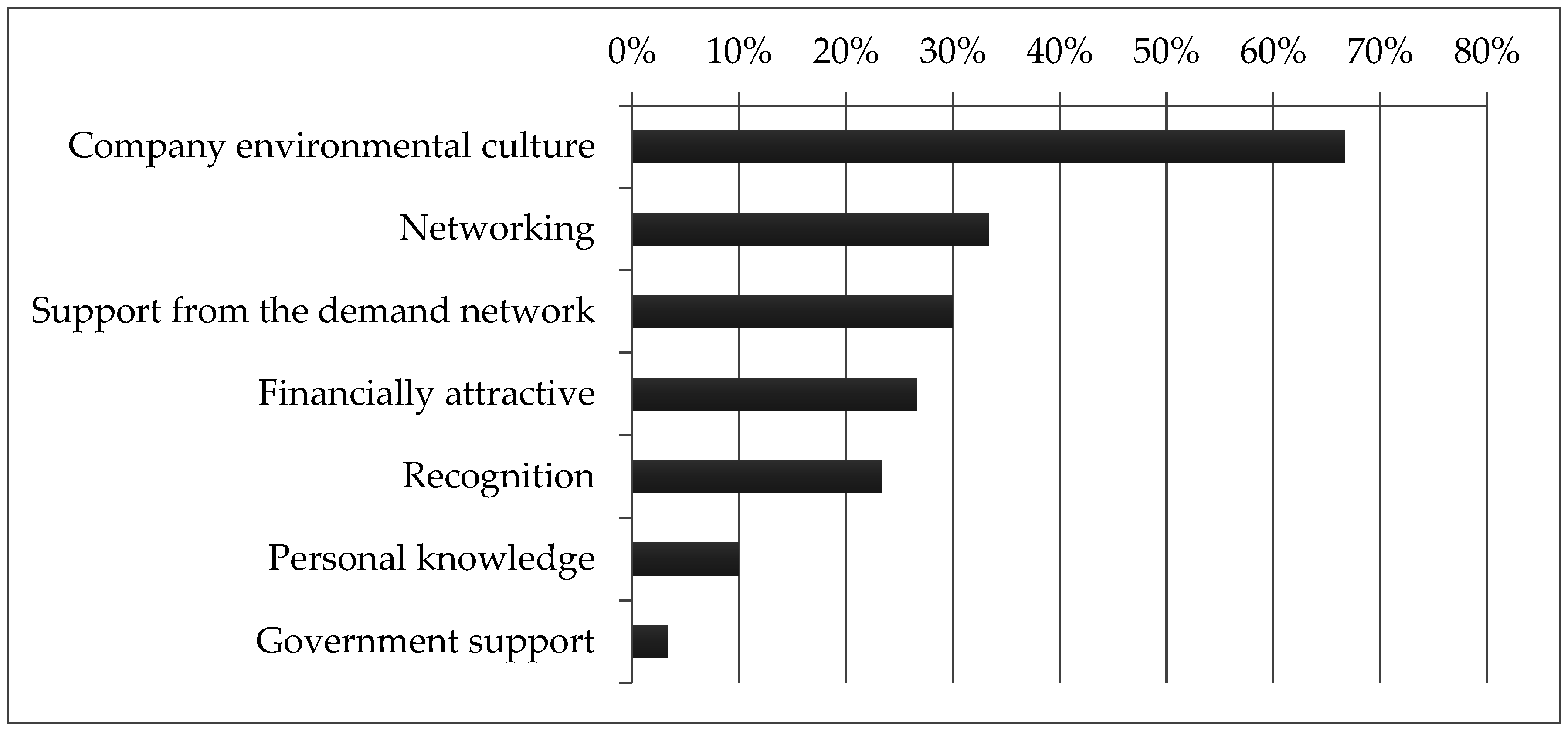
Alongside barriers, it is thus important to focus on enablers for adopting a circular business model. The sample findings in this paper on enablers make it clear that despite the existence of barriers, there are effective ways around them. The case studies analysed for this paper show that a range of enablers can be applied to clear barriers and/or create a favourable business environment towards a circular business model. Our sample findings have shown, for example, that from a management point of view an important enabler is company leadership that goes beyond pure everyday management and that considers a circular business model to be more effective and efficient in the longer run. This can be enhanced by capacity development, skills building, and leadership training focused on SME management and leadership. Moreover, our case studies have made it clear that participation in communities of practice can support the successful implementation of circular business solutions.
While research into barriers is evolving rapidly, there seems to be a gap in the investigation of the design of SME specific enablers. Based on a few extant examples from the GreenEcoNet platform, this paper has identified a number of enablers to support SMEs in adopting circular business models, including the frequency of citation as a token of significance. Importantly, there seems to be a gap in the robust design of SME-centred communities of practice based on social learning theory, and in the development of capacity-building schemes, with a strong focus on SME needs and requirements. The few extant examples in this paper need to be corroborated and validated by additional research and testing.
5. Conclusions
This paper has analysed the barriers and enabling factors identified by SMEs during the implementation of their circular economy business model. For this analysis, the SMEs were selected from the GreenEcoNet platform, using a restrictive set of criteria in order to make the conclusions relevant for “circular economy” initiatives. The insights gained are particularly relevant for policy-makers at the EU and national level when devising circular economy policy frameworks for SMEs. Similarly, and as highlighted in the discussion, the insights gained during the research for this paper appear to break new ground and open up interesting research opportunities around the identification of barrier commonalities, i.e., of the identification and ranking of those barriers that are common across sectors and regions, and their specificities, i.e., those that are either sectorially or geographically specific. As such, it may open the way to a better academic understanding of the mechanisms underlying barriers and the resistance to the uptake and propagation of the circular economy, and of better ways to address and lower these barriers.
This research indicates that despite the various policy instruments available to facilitate the “green” SME transition, several barriers to such a transition exist. Most SMEs in the case studies mention “lack of support from their supply and demand network” and “lack of capital” as barriers to “going green”. The first barrier illustrates that SMEs usually operate as small actors in wider value (market) chains and therefore depend on how other “green” actors in the chain are or want to be. The second barrier highlights the fact that SMEs do not often have the financial capacity to manage the disruptive transition to a circular business model.
The paper also indicates several enabling factors that could provide additional information to policy-makers on how to support SMEs. Specifically, the results of this research demonstrate that the success of SMEs in transitioning to a circular business model depends on how well this process is supported by: a company culture with a “green” mindset on the part of the staff and manager; a local or regional network with other SMEs and supporting multipliers to enhance information sharing and awareness raising; and the benefits of having a “green” image and being recognised as a “green” supplier by customers.
While acknowledging that EU and member states support green SME initiatives through funding, training, and other incentives, this paper suggests that a wider range of enablers are required to enhance the attractiveness of green SME business. It is therefore recommended that European and national policies strengthen their focus on greening consumer preferences, market value chains, and company cultures, and support the recognition of SMEs’ circular business models. The implementation of a wider policy focus can be supported by the creation of dedicated marketplaces and communities of practice, such as GreenEcoNet.




 ,
,