Article

Urban Freight Truck Routing under Stochastic Congestion and Emission Considerations
1
Asia Pacific School of Logistics and Graduate School of Logistics, Inha University, Incheon 402-751, Korea
2
Department of Civil and Environmental Engineering, University of Illinois at Urbana-Champaign, Urbana, IL 61801, USA
*
Author to whom correspondence should be addressed.
Sustainability 2015, 7(6), 6610-6625; https://doi.org/10.3390/su7066610
Submission received: 10 April 2015 / Revised: 18 May 2015 / Accepted: 20 May 2015 / Published: 26 May 2015
(This article belongs to the Special Issue Carbon reduction strategies and methods in transportation)

Abstract

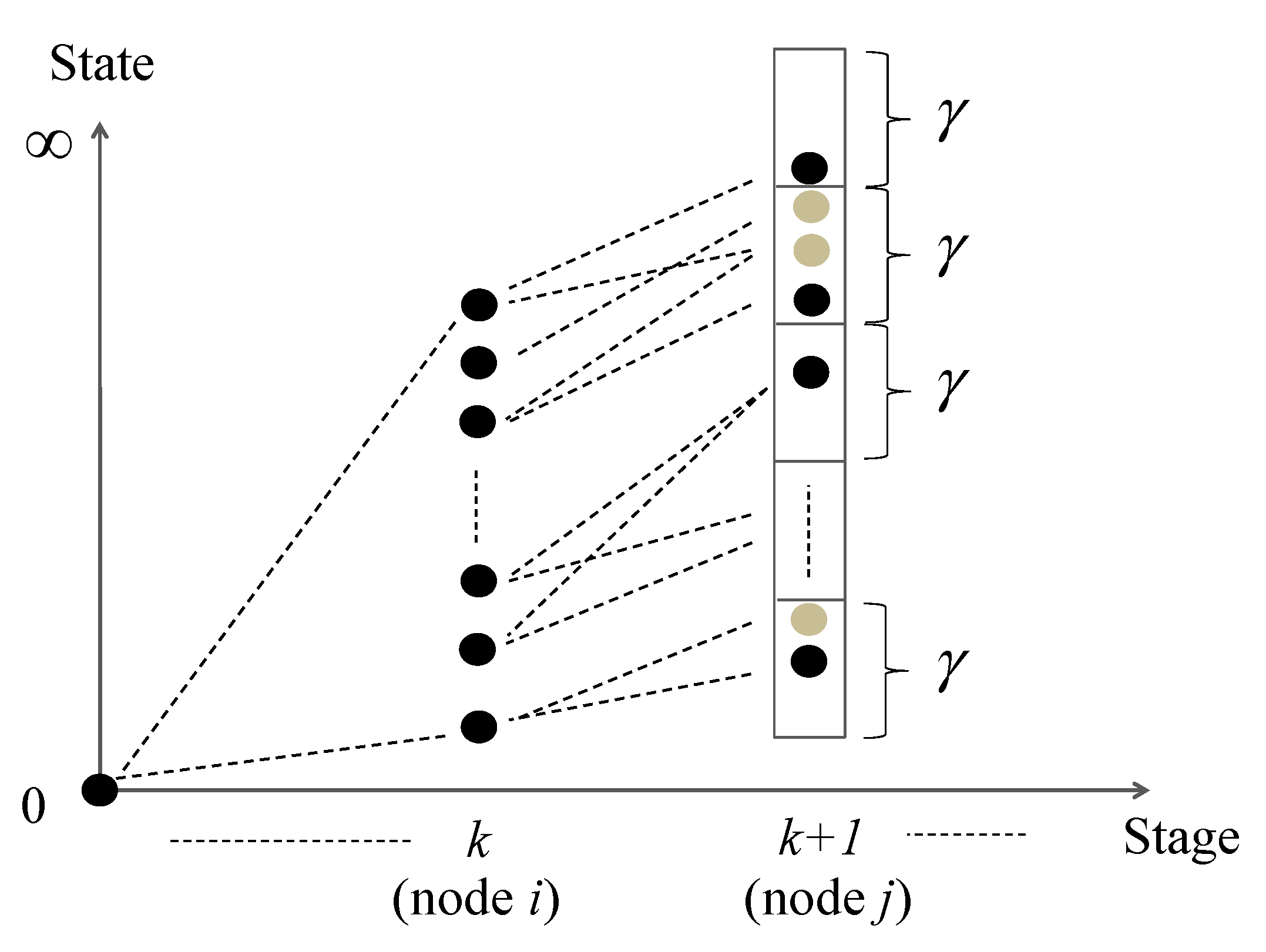
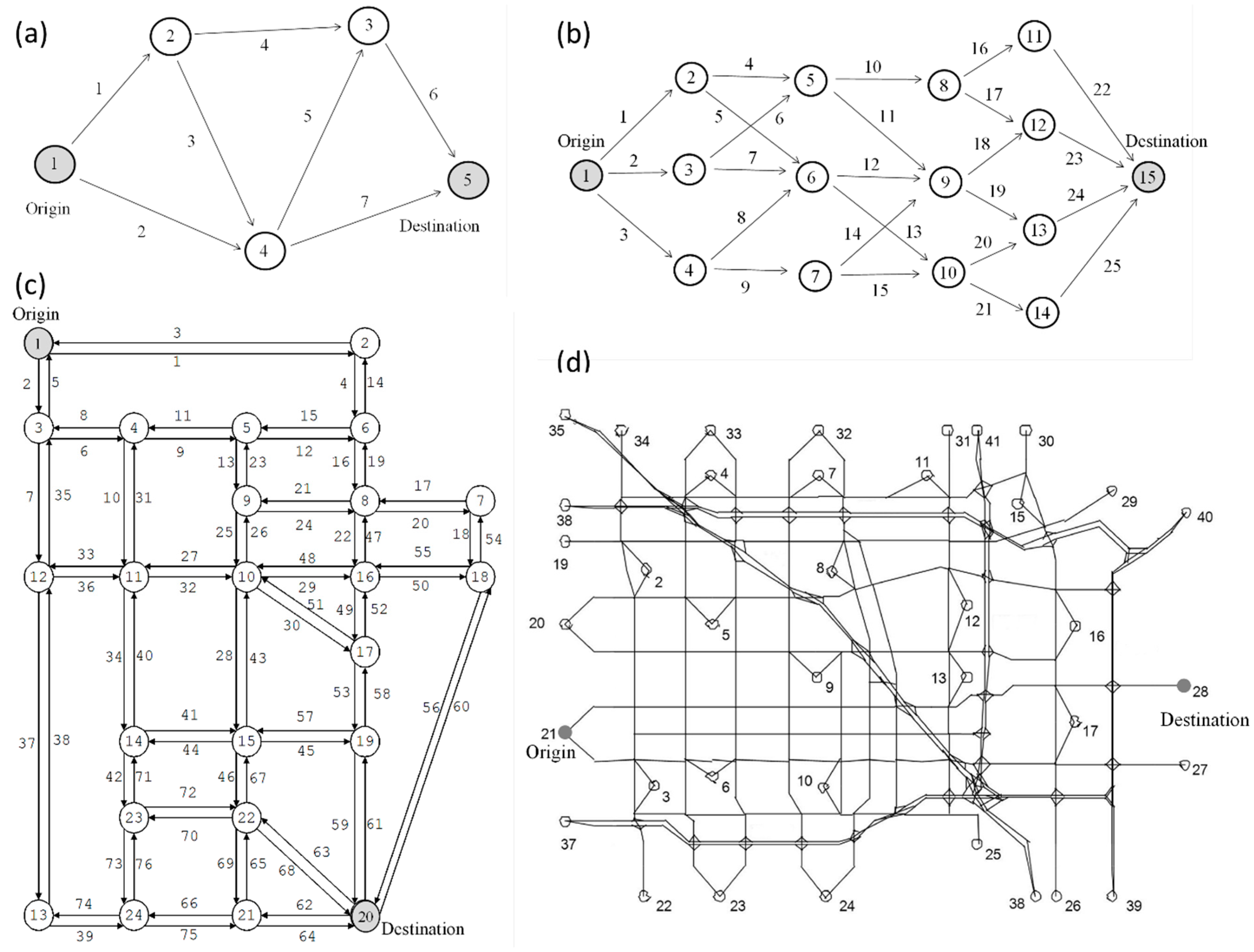
Freight trucks are known to be a major source of air pollutants as well as greenhouse gas emissions in U.S. metropolitan areas, and they have significant effects on air quality and global climate change. Emissions from freight trucks during their deliveries should be considered by the trucking service sector when they make routing decisions. This study proposes a model that incorporates total delivery time, various emissions including CO2, VOC, NOX, and PM from freight truck activities, and a penalty for late or early arrival into the total cost objective of a stochastic shortest path problem. We focus on urban transportation networks in which random congestion states on each link follows an independent probability distribution. Our model finds the best truck routing on a given network so as to minimize the expected total cost. This problem is formulated into a mathematical model, and two solution algorithms including a dynamic programming approach and a deterministic shortest path heuristic are proposed. Numerical examples show that the proposed approach performs very well even for the large-size U.S. urban networks.
Keywords: truck emission; urban freight delivery; stochastic shortest path problem; dynamic programming algorithm truck emission; urban freight delivery; stochastic shortest path problem; dynamic programming algorithm