Next Article in Journal
Pollutant Biomagnification in Marine Food Webs of the Romanian Black Sea: A Sustainability Perspective
Previous Article in Journal
Understanding Digital Sense of Place in Living Heritage Streets Through Multimodal Social Media Analysis: A Case Study of Songyang’s Ming–Qing Old Street
 
 
Due to scheduled maintenance work on our servers, there may be short service disruptions on this website between 11:00 and 12:00 CEST on March 28th.
Article

Operationalizing the “Social” in Mountain Social–Ecological Systems: A Proposed Framework and Indicator Set


by
José M. R. C. A. Santos
CIMO, LA SusTEC, Instituto Politécnico de Bragança, Campus de Santa Apolónia, 5300-253 Bragança, Portugal
Sustainability 2026, 18(7), 3248; https://doi.org/10.3390/su18073248
Submission received: 23 February 2026 / Revised: 12 March 2026 / Accepted: 24 March 2026 / Published: 26 March 2026
(This article belongs to the Section Development Goals towards Sustainability)

Abstract

Mountain Social–Ecological Systems (MtSES) are global assets, providing essential ecosystem services to nearly half of humanity, yet they are disproportionately vulnerable to global change, experiencing “polytraps” of depopulation, poverty, and environmental degradation. Despite the inherent human dimension in sustainability, the social pillar remains conceptually chaotic, forming a highly fragmented “publication labyrinth”, and is often neglected in favor of more easily quantifiable environmental and economic metrics. These oversights leave mountain communities in a precarious state, underscoring an urgent need for robust, context-specific assessment tools. This paper addresses this critical gap by employing a two-step methodology: first, a literature review identifies prevailing social sustainability issues in mountain contexts; second, a comparative analysis evaluates prominent frameworks and indicator-based tools against these themes, using Ostrom’s multi-tier Social–Ecological Systems (SES) framework as the theoretical lens. Our findings reveal a persistent environmental bias in MtSES research and highlight the necessity for frameworks that integrate local knowledge, address power imbalances, and support bottom-up governance. A tool is proposed with indicators specifically for mountainous contexts. This study contributes to theory by offering a structured approach to unpack the elusive “social” in SES and to practice by providing a model and tool for developing actionable, context-sensitive social sustainability assessments, thereby fostering resilience and equitable development in vulnerable mountain regions. Ultimately, by operationalizing these social dimensions, this research provides a direct roadmap for achieving key United Nations Sustainable Development Goals in marginalized high-altitude contexts, particularly focusing on No Poverty (SDG 1), Good Health and Well-being (SDG 3), Reduced Inequalities (SDG 10), Sustainable Communities (SDG 11), and Peace, Justice, and Strong Institutions (SDG 16).

1. Introduction

Mountain Social–Ecological Systems (MtSES) represent some of the most complex and interdependent environments on Earth. In these regions, human livelihoods and biophysical processes are tightly coupled through dynamic feedbacks that shape ecological patterns and societal structures over time [1]. Covering approximately 25–39% of the global land surface [2], mountain areas sustain nearly one quarter of the world’s population and provide essential ecosystem services, including freshwater provision, biodiversity conservation, and climate regulation, to as much as half of humanity [3,4]. Their global significance is therefore both ecological and socio-economic.
Despite their importance, MtSES are among the most vulnerable landscapes worldwide. They face a pronounced “double exposure” to rapid climate change and the homogenizing forces of globalization [5]. High-altitude regions are warming at an accelerated pace, destabilizing the cryosphere, altering hydrological regimes, and intensifying natural hazards such as landslides, floods, and avalanches. Simultaneously, globalization drives market volatility, resource commodification, demographic shifts, and the erosion of traditional knowledge systems [5]. Currently, nearly 40% of the 835 million people living in mountain regions of developing countries are at risk of food insecurity [4]. These converging pressures reinforce “polytraps” of rural depopulation, poverty, and heightened climate vulnerability. A polytrap is defined as a complex condition where multiple, interlinked social, ecological, and economic traps coexist and interact, creating a compounded, self-reinforcing state of entrapment [6]. In mountain regions, this phenomenon typically manifests as a combination of rigidity traps (inflexible institutions), poverty traps (lack of livelihood opportunities), lock-in traps (dependence on failing traditional industries), and regional development traps [6]. Together, these concurrent traps fuel vicious cycles of demographic depopulation, rural shrinkage, and profound socio-economic marginalization, making it exceptionally difficult for these communities to achieve sustainable resilience [7].
Addressing these challenges requires moving beyond siloed biophysical or socio-economic analyses. In fact, mountain regions are increasingly conceptualized as integrated social–ecological systems (SES) characterized by reciprocal interactions between human and natural subsystems [5,8]. These systems are shaped not only by steep environmental gradients but also by millennia of human–environment interactions that have produced unique forms of biocultural diversity [7]. Biophysical constraints such as isolation and climate variability have historically necessitated specialized land-use practices and social institutions. For example, communal transhumance has long been essential for sustaining high-altitude pastures; when out-migration or economic restructuring undermines these institutions, ecological degradation, such as scrub encroachment and biodiversity loss, often follows [5]. In this context, transdisciplinary approaches that integrate ecological, social, and governance perspectives are essential for identifying drivers of vulnerability and pathways to resilience [9,10].
Various frameworks have been developed to analyze the complexity of SES, particularly in mountain contexts. These can be generally categorized as “core systems frameworks”, “cause-effect and contribution models”, and “socially-oriented frameworks”. Ostrom’s Social–Ecological Systems Framework (SESF) and the Robustness and Resilience Logic Frameworks (RRLF) are salient as core systems frameworks. SESF, formalized by Ostrom [11], is the most comprehensive tool for dissecting core subsystems: Resource Systems, Resource Units, Governance Systems, and Actors [12]. RRLF focuses on a system’s capacity to absorb shocks and undergo transformative adaptation [13]. The Resilient Livelihood Framework specifically addresses the self-organization and learning capacity of remote mountain communities [14,15]. Relevant cause–effect and contribution models include the Driving forces, Pressures, State, Impact, Responses (DPSIR) Framework, and the Intergovernmental Science-Policy Platform on Biodiversity and Ecosystem Services (IPBES) framework. DPSIR structures cause–effect relationships between socio-economic drivers and environmental states [16]. Hybrid DPSIR-ES models reveal how local interactions often outweigh global warming in tree line dynamics [16]. IPBES captures non-material, spiritual, and identity-forming roles of mountain landscapes, moving beyond utilitarian ecosystem services models [17]. In the case of socially oriented frameworks, the following standout: the Sustainable Livelihoods Approach (SLA) [18], the Social–Ecological Justice (SEJ) framework [19], and the Well-being and Capability framework [20]. SLA uses an asset-based view (human, social, natural capital) to address vulnerability, though it often lacks explicit ecological feedback. SEJ prioritizes equity, rights, and cultural identity, which is critical for Indigenous mountain groups, though it remains more normative than operational. The Well-being and Capability framework focuses on human “functionings” rather than just income, providing a multidimensional view of social health.
Yet sustainability assessments in mountain regions have traditionally emphasized environmental integrity and economic productivity while largely neglecting the social dimension [9,10,21,22]. This imbalance stems in part from the relative ease of measuring biophysical and economic variables compared with the subjective, relational, and context-dependent nature of social factors [22,23]. However, overlooking the social domain produces incomplete and potentially maladaptive sustainability strategies. Because human well-being, institutions, and cultural practices fundamentally shape how mountain ecosystems function and how they respond to change, sustainability must be understood not only as an ecological challenge but also as a social imperative requiring theoretically grounded and actionable social solutions [24,25].
The persistent neglect of the social pillar has produced a major research gap: the absence of integrated, context-specific frameworks, tools, and indicators capable of capturing the complexity of social realities in mountain environments. Existing assessments often fail to account for local worldviews, socio-economic conditions, and traditional ecological knowledge, all of which are crucial for management and resilience-building [25,26]. Without conceptual clarity on what social sustainability entails in mountain contexts, and without rigorous methods for evaluating it, policy responses risk relying on political negotiation or power dynamics rather than evidence-based assessment [27].
Part of this challenge lies in the conceptual ambiguity of the social dimension. The scientific literature surrounding this topic is highly fragmented, complementing this conceptual chaos with a true “publication labyrinth”. While environmental and economic sustainability benefit from established metrics such as carbon emissions or gross domestic product, social sustainability remains the least developed and most contested pillar [25,28]. It is often reduced to broad notions of acceptability, well-being, or human capital [5]. Its normative character, centered on values such as equity, justice, and intergenerational responsibility, complicates operationalization, with thresholds varying across cultures and contexts. As a result, many tools rely on indicators selected for data availability rather than theoretical rigor [12]. To address this conceptual “chaos”, Vallance et al. [25] distinguish three dimensions of social sustainability: (i) development sustainability, focused on basic needs, equity, justice, and social capital; (ii) bridge sustainability, aimed at changing behaviors to achieve environmental goals; and (iii) maintenance sustainability, concerned with preserving cultural traditions, practices, and places.
Despite increasing recognition of the socio-cultural specificity of mountain communities, there remains no systematic evaluation of which social concepts, frameworks, and indicators are most relevant for MtSES. Nor is it clear which aspects of social sustainability are consistently addressed, marginalized, or missing from existing research. This gap constrains the development of robust, place-based strategies capable of supporting resilience and equitable development.
To overcome the limitations of extant work, which frequently treats social sustainability as a conceptually chaotic, residual category or relies on metrics that are disconnected from local realities [23,25], this study adopts a highly pragmatic view of sustainability. A pragmatic approach recognizes that theoretical frameworks are only effective if they can be operationalized into forward-looking, actionable solutions that empower local populations. Central to this operationalization is the concept of sustainable communities, that represent a social model that transcends individualism, prioritizing a collaborative, altruistic philosophy and a “we”-oriented approach to life [29]. However, existing sustainability assessments in mountain regions often fail to capture this collective mission, struggling to provide tools that help communities balance local socio-cultural commitments with global environmental perspectives [30]. Therefore, by defining its research topic around this gap, this study proposes a pragmatic diagnostic model that actively translates the abstract “social” pillar into context-sensitive, collaborative indicators. This approach ultimately aims to equip mountain communities with the necessary tools to overcome systemic inertia, manage their unique vulnerabilities, and actively participate in the green transition [29].
Specifically, this study addresses the identified gaps by analysing existing frameworks, tools, and indicators relevant to assessing social sustainability in mountainous regions. Grounded in Ostrom’s multi-tier SESF [8,11,12], we adopt an inductive approach to develop a nuanced, context-sensitive understanding of the social dimension of MtSES. In particular, the study is guided by three research questions:
  • What social sustainability themes, issues, and challenges are most commonly addressed, or overlooked, in research on mountain regions?
  • Which frameworks and indicator-based tools are most suitable for assessing social sustainability in mountainous areas, and how do they reflect the complexities of MtSES?
  • Which categories and specific social indicators best capture the unique characteristics and dynamics of social sustainability in mountain contexts?
This work makes two primary contributions. Theoretically, it refines the conceptualization of social sustainability within the SES framework for high-altitude environments by proposing a structured analytical model tailored to MtSES. Practically, it offers a systematic roadmap for researchers, practitioners, and policymakers to identify, select, and adapt appropriate tools and indicators, supporting more equitable, resilient, and context-responsive sustainability strategies in mountain regions worldwide.

2. Materials and Methods

To address the research questions, this study adopts a two-step methodological approach: a systematic literature review (SLR) followed by a comparative analysis of selected sustainability assessment tools. This approach aligns with an interpretive research paradigm [31], focusing on understanding and sense-making within the complex social reality of mountain environments. The research methodology is primarily inductive, moving from specific observations (identified themes and indicators from the literature) to broader theoretical generalizations (a conceptual model on framework, tool, and indicator suitability). This successive process allows concepts and patterns to emerge directly from the data, which is particularly suitable for exploring under-researched and conceptually chaotic domains [31], such as social sustainability in mountains.

2.1. Literature Review

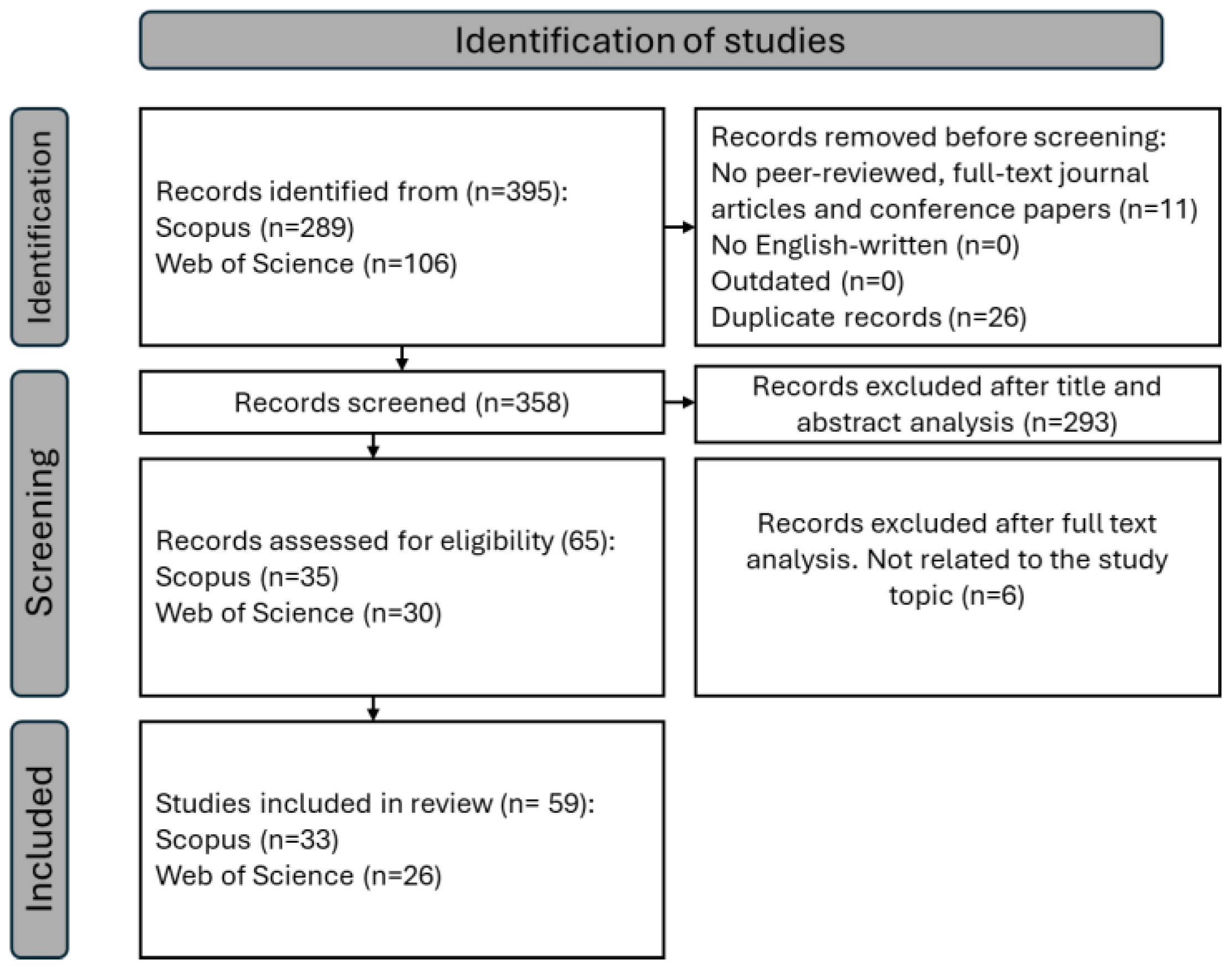
The first research phase employed an SLR following the PRISMA protocol (Figure 1) to map the current state of social sustainability in mountain SES. A comprehensive search was executed in Scopus and Web of Science covering the period 2005–2025. The search syntax combined keywords for social dimensions (“social sustainability”, “social impact”), geography (“mountain”, “highland”, “alpine”), assessment (“framework”, “indicator”, “evaluation”), and systems (“social-ecological systems”, “SES”). Duplicates were removed. To ensure methodological transparency in accordance with the PRISMA protocol [32], the article selection process was executed in distinct, systematic phases: identification, screening, and eligibility assessment. During the initial screening phase, titles and abstracts were reviewed to exclude non-English publications, purely theoretical papers lacking practical application, and studies falling outside the scope of social sustainability. In the subsequent full-text eligibility phase, articles were rigorously filtered based on specific inclusion criteria: (1) application at local- to meso-spatial scales (e.g., mountain communities, valleys, or districts); (2) explicit operationalization of social sustainability indicators or frameworks; and (3) relevance to the unique vulnerabilities of mountain social–ecological systems [33]. Furthermore, to evaluate the quality of the studies, a critical appraisal was performed focusing on scientific and methodological rigor [34]. This appraisal assessed the robustness of the research design, the clarity of the methodologies used to select indicators, and the validity of the data collection processes. Only peer-reviewed articles and recognized institutional reports that demonstrated clear methodological validity, transparent data reporting, and robust theoretical grounding were retained for the final qualitative content analysis [35].
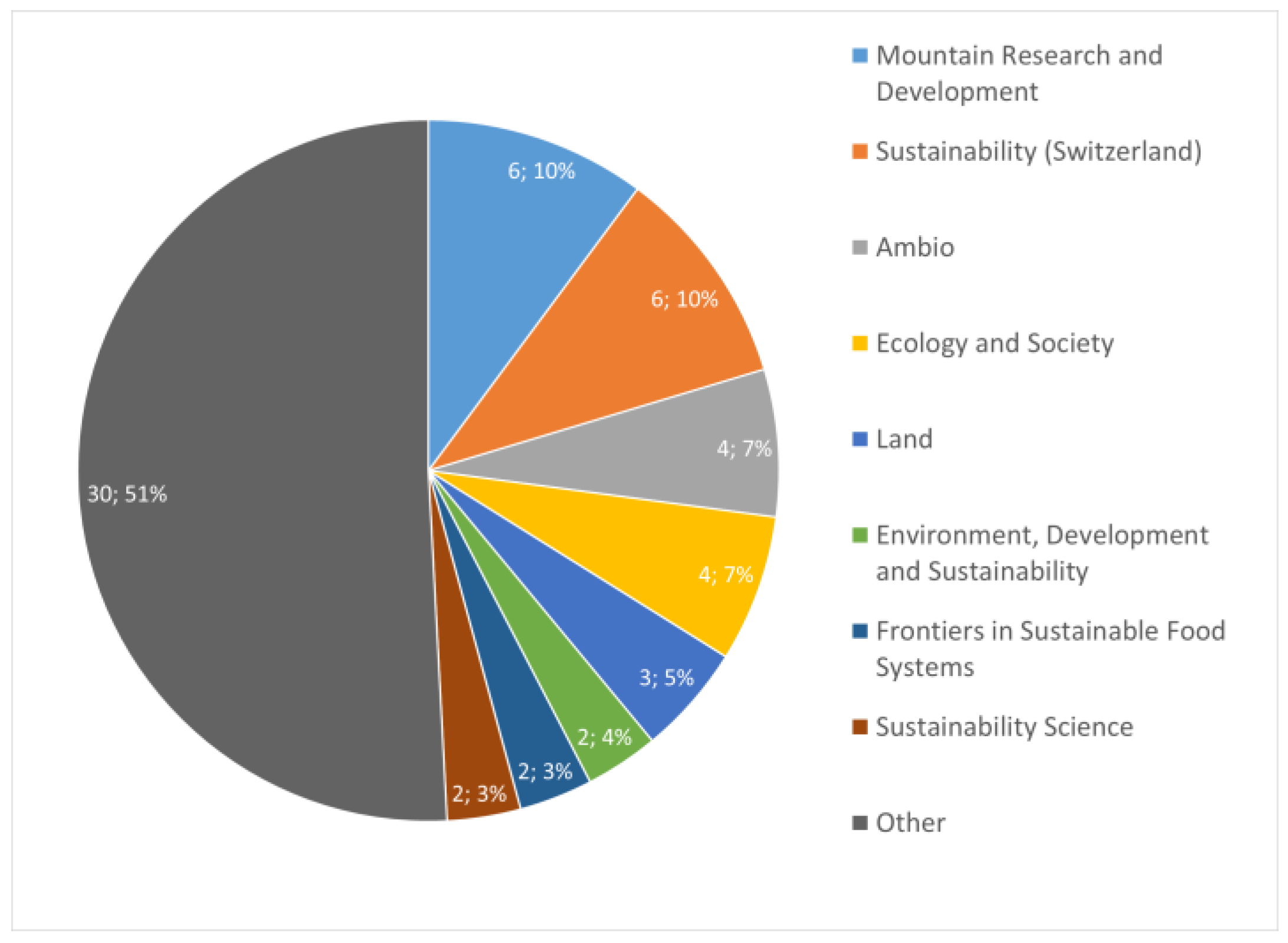
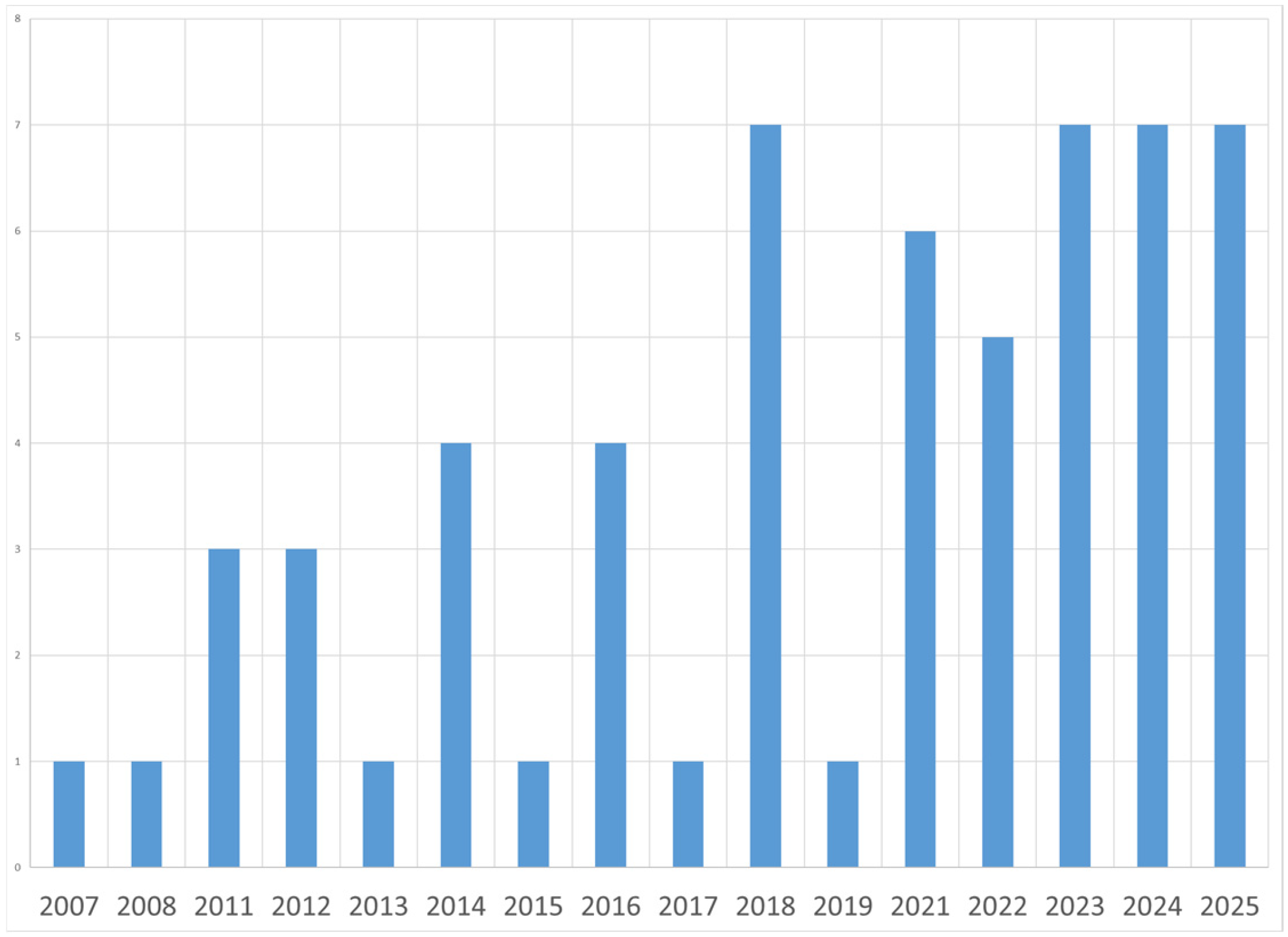
Figure 2 highlights that prominent journals in the field demonstrate awareness of the topic being studied. Figure 3 illustrates the yearly distribution of relevant papers published over the study period (2005–2025). To rigorously assess this temporal dimension and validate the observed changes in research focus over time, statistical trend analyses were applied to the publication data. A Mann-Kendall trend test revealed a statistically significant (Z = 2.87, p = 0.040), monotonic upward trend in the volume of literature addressing social sustainability in MtSES. Thus, there is strong statistical evidence of a consistent increase in publication counts over the period from 2005 to 2025. Furthermore, to move beyond a simple visual interpretation of this growth, a Pettitt’s test for change-point detection was applied to the time-series data. The test identified a statistically significant (at a 90% confidence level, K = 63.0, p = 0.0739) structural break occurring in the year 2021, formally confirming that research interest and output in this topic accelerated sharply after this pivotal year. This temporal evolution indicates that the integration of social variables into mountain sustainability research is not a static phenomenon, but rather a rapidly consolidating academic consensus, likely spurred by the broader operationalization of global agendas such as the UN Sustainable Development Goals.
Data was systematically collected on social themes, theoretical frameworks, practical tools, and indicators. The extracted data underwent qualitative content analysis using an iterative coding process [31]: (a) open coding (identifying discrete concepts such as ‘out-migration’), and (b) axial coding (grouping concepts into higher-order social themes such as ‘demographic dynamics’). These themes were validated against the UN Sustainable Development Goals (SDGs) to ensure global relevance [30]. The finalized themes established the coding scheme for the subsequent comparative analysis.

2.2. Comparative Analysis of Assessment Tools

The second research phase involved a comparative analysis of established social sustainability tools to determine their suitability for mountain contexts and to address the research questions.
SESF is selected as the primary benchmark framework because it effectively maps the communal institutions and governance mismatches inherent in mountain societies. It provides a diagnostic “common language” to organize variables into subsystems [11,12]. To ensure the selected tools were not merely generic sustainability frameworks, but structurally applicable to the unique socio-economic and biophysical complexities of mountain systems [7], five strict inclusion criteria were applied. First, the tool must allow for ex-post assessment to diagnose past and current performance, which is essential for establishing baselines in rapidly changing high-altitude environments [30]. Second, it must possess broad indicator coverage with a significant focus on the social pillar, avoiding tools that are purely environmental or economic [23]. Third, the tool must demonstrate scalability, allowing the analysis to expand from the local farm or household level to the broader landscape or regional system, acknowledging the cross-scale nature of mountain ecosystem services [34]. Fourth, it must adopt a multi-stakeholder approach capable of integrating the diverse perspectives typical of mountain regions, including indigenous groups, local farmers, tourists, and external administrators [36]. Finally, the tool must exhibit scientific rigor through peer-reviewed methodology or verified institutional backing [35]. Based on these, seven tools were selected for detailed comparison: Sustainability Monitoring and Assessment RouTine (SMART) [30,34,37] Sustainability Assessment of Food and Agriculture systems (SAFA) [37,38], Social Life Cycle Assessment (S-LCA) [39,40], Response-Inducing Sustainability Evaluation (RISE) [5,34], Rural Built Environment Sustainability Assessment System (RBESAS) [41,42], Indicateurs de Durabilité des Exploitations Agricoles (IDEA) [34,43], and Public Goods Tool (PG Tool) [44]. Each tool is discussed with relation to its sensitivity to mountain dynamics, alignment with SES components, and alignment with the social themes identified in the systematic review. The goal was not to select a single “best” tool but to identify pathways for adapting these tools to effectively capture mountain-specific social sustainability nuances. To generate the comparative matrix and evaluate the performance of each framework, a structured qualitative coding process was employed [45]. A comparative coding matrix was developed with the predefined criteria to assess the extent to which each tool covered the identified social dimension and specific social themes. The depth of coverage was evaluated on a qualitative scale: ‘low’ (the theme is rarely or superficially mentioned without dedicated indicators), ‘moderate’ (the theme is addressed with some indicators, but lacks comprehensive or systemic integration), ‘high’ (the theme is a core component with robust, dedicated indicators), and ‘highest’ (the tool provides exceptionally comprehensive, multi-stakeholder coverage of the theme across various scales) [35]. Nevertheless, the inherent interpretive subjectivity of qualitative content analysis remains a boundary condition of this study.

2.3. Validity and Reliability

Credibility and internal validity were ensured by the rigorous PRISMA protocol, prolonged engagement with literature, and data triangulation across multiple studies. Transferability and external validity were achieved through “thick descriptions” of mountain SES contexts and themes, allowing findings to be applied to diverse global highlands. Dependability was established via systematic methodology and transparent selection criteria, creating an “audit trail” for independent review. Confirmability (construct validity) was maintained by aligning social themes with Ostrom’s SES and the UN SDGs, minimizing researcher bias.

3. Results and Discussion

3.1. Identified Social Issues for Mountainous Areas

To properly contextualize the identified social themes, it is necessary to outline the geospatial distribution of the analyzed MtSES. The selected literature spans multiple continents, reflecting diverse biophysical and socio-cultural realities. Key mountain regions frequently discussed in the reviewed studies include the European Alps and Pyrenees, which are heavily characterized by tourism, amenity migration, and the abandonment of traditional agriculture [46]; the Andes in South America and the Hindu-Kush Himalayas in Asia, where studies predominantly focus on rural poverty, food security, and high dependence on agropastoral livelihoods [47,48]; and the Rocky Mountains in North America, which are often analyzed through the lens of community resilience to natural hazards and ex-urbanization [7]. This wide spatial coverage ensures that the social themes identified are representative of global mountain challenges rather than isolated local phenomena.
Aligning mountain research with the UN’s SDGs reveals five core themes that define social sustainability in these regions (Table 1). These themes move beyond basic welfare to capture the complex “social world” of MtSES.

3.1.1. Territorial and Economic Governance

The prominence of governance corresponds with a significant body of literature focusing on SES and the management of common-pool resources. The identified “participatory governance” concept is deeply rooted in the literature regarding Ostrom’s SES framework, which emphasizes the role of institutions, property rights, and collective action in mountain regions [12]. The literature extends these findings by illustrating that governance is not just about participation but about “polycentricity” and the “fit” between institutions and ecological systems [13]. In mountain contexts, effective governance is frequently linked to the ability to manage conflicts and address power asymmetries in resource management and economic progress [51].
Moreover, in MtSES, governance challenges are acutely characterized by the “policies by outsiders” paradox [52]. Because mountains are frequently marginalized from urban political centers, decisions regarding their resources (e.g., hydropower dams, national conservation parks) are often made by distant authorities. This creates a “participatory misfit” that frequently ignores local traditional ecological knowledge and disrupts long-standing communal property regimes (commons) that have historically been essential for managing high-altitude pastures, forests, and collective resources [53,54].

3.1.2. Demographic Dynamics

Mountain areas face polytraps of depopulation and aging. While out-migration leads to a loss of social memory and labor, remittances (often exceeding 20% of GDP) provide a vital lifeline [41,55]. Conversely, in-migration can trigger gentrification and cultural friction [7]. The literature extensively documents “amenity migration” (wealthy newcomers moving for lifestyle) alongside “out-migration” of local youth due to lack of economic opportunity [56]. This dual dynamic creates a specific “mountain paradox” of depopulation in some areas and gentrification in others [57]. The literature highlights a specific gap regarding the “invisible” populations in mountains, noting that global gridded population datasets often fail to capture the specificities of mountain demographic changes, such as seasonal pastoralists or conflict-displaced persons [57].
In mountain regions, demographic change is not merely a shift in numbers; it is a fundamental driver of landscape transformation. The rugged topography and limited economic opportunities frequently trigger a “rural exodus” of working-age youth. This out-migration directly leads to the “feminization of agriculture”, where women are left to manage labor-intensive steep-slope farming, and widespread land abandonment. In mountain ecosystems, this abandonment paradoxically increases environmental risks, as unmanaged biomass and scrub encroachment on former alpine pastures lead to higher wildfire and erosion risks. Furthermore, many mountain economies become highly dependent on remittances, which can sustain livelihoods but simultaneously drain local labor capacities [58]. Conversely, accessible mountain valleys often experience “amenity migration” or “ex-urbanization”, where an influx of wealthy newcomers seeking lifestyle changes triggers gentrification and cultural friction with traditional residents.

3.1.3. Human Well-Being and Safety

The physical isolation and steep biophysical gradients of mountain areas create highly specific well-being vulnerabilities. This theme mirrors the heavy emphasis in the literature on “basic needs” and quantitative economic metrics within sustainability assessments. Residents are often “resource-rich but income-poor” [59]. Despite providing downstream “water towers”, one in two rural mountain dwellers faces food insecurity [4]. Energy poverty is also a distinct challenge due to high thermal needs in cold climates [60], paired with a lack of affordable infrastructure, and disproportionate physical exposure to climate-exacerbated natural hazards such as landslides, flash floods, and avalanches [61]. The extant literature critiques the common use of “easily” measurable metrics related to employment, health, and safety for often missing subjective “well-being” and “happiness”, which are argued to be crucial endpoint indicators for a meaningful social assessment [62].

3.1.4. Social Capital

Social capital serves as the “glue” for collective action and disaster preparedness, but to fully understand its role in mountain communities, it must be analyzed across its three distinct dimensions: bonding, bridging, and linking, each uniquely contributing to social–ecological resilience [63]. First, bonding capital (strong ties within homogeneous groups, such as families or kinship networks) is crucial for the intergenerational transfer of traditional ecological knowledge and for maintaining local safety nets during immediate crises like natural hazards [64]. Second, bridging capital (connections across diverse horizontal groups) enables mountain communities to exchange knowledge, innovate, and collectively manage common-pool resources, which prevents the overexploitation of fragile ecosystems [50]. Third, linking capital (vertical connections with formal institutions and authorities) provides these geographically marginalized communities with vital access to external resources, subsidies, and infrastructural support [63]. However, the literature also warns of the “dark side” of social capital: an imbalance, such as excessively strong bonding capital coupled with weak bridging capital, can lead to isolated, antagonistic groups that resist cooperative, sustainable land management, ultimately undermining long-term territorial resilience [50]. Therefore, fostering a balanced network of all three forms of social capital is indispensable for building adaptive capacity, empowering women left behind by male out-migration, and navigating the unique vulnerabilities of mountain regions [14].

3.1.5. Cultural Capital

Mountains are repositories of intangible heritage. Intergenerational transfer of traditional ecological knowledge is critical for managing fragile ecosystems and supporting sustainable cultural tourism [63]. The relatively low frequency of this theme contrasts with a specific subset of literature that views Traditional Ecological Knowledge (TEK) as fundamental to mountain sustainability. While industrial- or supply chain-focused S-LCA literature often marginalizes culture due to quantification difficulties [39], the ethno-ecological literature places TEK at the center of mountain resilience [65]. The low frequency in general assessments may be due to the difficulty of integrating “intangible values” into standardized frameworks.
Table 2 summarizes the alignment between the emergent social themes and Ostrom’s SES framework. It can be observed that each theme can be effectively mapped to each SES component, demonstrating their coherence with the theoretical framework of this study, with the apparent exception of the Related Ecosystems component. In fact, the social themes map to the internal social subsystems and not external biophysical drivers and ecological connections (Related Ecosystems) that exist outside the boundaries of the focal SES but influence it. However, the literature highlights critical interactions between the social themes and the variables within the Related Ecosystems component, particularly regarding Flows (influencing Human Well-being and Safety) [66] and Climate Patterns (influencing Demographic Dynamics) [52].

3.2. Comparative Analysis of Sustainability Assessment Tools

To enhance readability and assist the reader in navigating the subsequent comparative analysis, Table 3 summarizes the acronyms, full names, and primary foundational literature for the selected sustainability assessment tools and frameworks evaluated in this study.

3.2.1. Actor-Centered Tools

RISE and IDEA are primarily farm-centric, focusing heavily on the Actor subsystem (the farmer/farm household) and their immediate social capital within the local ecosystem (Resource Systems) [34,43]. RISE is strong in Working Conditions and subjective Quality of Life, capturing the stress of isolation and workload. Farmers often find it relevant due to its recognizable reflection of farm strengths and weaknesses [5,34]. IDEA’s Socio-territorial scale focuses on farm integration into the territory, with transmissibility addressing generational renewal [43]. IDEA4 further assesses emergent system properties such as autonomy and robustness [72]. The PG Tool is relevant for the multifunctional nature of mountain agriculture, assessing Social Capital and Landscape and Heritage as public goods [44]. It articulates non-market values but is less detailed on internal farm social dynamics.

3.2.2. Value-Chain Focused Tools

S-LCA (and Life Cycle Sustainability Assessment (LCSA)) provides a broader value-chain perspective, assessing social impacts across the life cycle of products, involving stakeholders such as workers, local communities, consumers, and society [40]. It is valuable for export-oriented mountain commodities but can be data-intensive and less suited for holistic territorial SES dynamics.

3.2.3. Holistic Tools

SMART (and SAFA) emerged as the most comprehensive, with its structure mapping effectively to all four SES subsystems. Its Good Governance pillar explicitly integrates institutional aspects alongside social well-being, making it highly suitable for analyzing the complex collective action problems and common-pool resource management typical of mountains [30,34,37]. It is well-suited for regional branding initiatives such as bio-districts.

3.2.4. Integrative Analysis

Table 4 evaluates the considered sustainability assessment tools based on their alignment with Ostrom’s SES framework and core social themes critical to mountain regions.
SAFA and SMART offer the most holistic alignment with all four SES subsystems (GS, RS, RU, A). SAFA covers the farm to the supply chain with the highest depth in social dimensions, including labor rights and cultural diversity. SMART provides a balanced integration of sociocultural and economic dimensions by operationalizing SAFA guidelines for the food sector. S-LCA aligns with Actors (A) and Governance (GS) subsystems, focusing on social impacts across the product lifecycle and community engagement from the supply chain to the system level. RBESAS prioritizes the Actor (A) and Resource System (RS) subsystems, applying Maslow’s hierarchy of needs to village-level assessments of high-altitude residents. RISE, IDEA, and PG Tool primarily farm-level tools focusing on Actors (A) and Resource Systems (RS). RISE has moderate social depth, emphasizing production management. IDEA focuses on ethics and human development, and the PG Tool evaluates social capital and landscape heritage through a public goods lens.
With regard to core social themes, Table 4 highlights their specific strengths in addressing human well-being, governance, and capital. SMART is the most holistic and comprehensive tool, providing deep coverage of Territorial and Economic Governance through labor rights and equity, while also addressing Cultural Capital by measuring cultural diversity. RISE and IDEA are European-centric tools focus on Economic Governance and Human Well-being. RISE is strong on production management but has less developed indicators for wages and workload, while IDEA emphasizes Social Capital and Well-being through themes of ethics, social integration, and human development. Originating from SW China, RBESAS is highly focused on Human Well-being and Safety within the built environment. It uniquely applies Maslow’s hierarchy of needs to assess the physiological and safety requirements of mountain residents. The PG Tool focuses on Social and Cultural Capital by evaluating landscape heritage and social capital through a public goods lens, while also assessing the resilience of local businesses.
The comparative analysis must also account for the spatial component of the tools themselves, as their geographic origins heavily influence their design and embedded values [73]. Holistic frameworks such as SAFA were designed by the FAO for global applicability and have been widely tested across diverse geographic contexts, from highland maize monocultures in Northern Thailand to organic livestock systems in the Italian mountains [38,74]. In contrast, actor-centered tools often reflect specific regional origins: RISE and IDEA were developed specifically for Swiss and French agricultural contexts, respectively, emphasizing European priorities such as landscape maintenance and territorial embeddedness [72,75]. While these tools have since seen international application, other frameworks are highly localized; for example, the RBESAS framework is explicitly tailored to evaluate the built environment of mountainous rural villages in Southwest China [42]. Acknowledging these geographic contexts is crucial for practitioners, as applying a tool outside of its intended spatial context often requires significant recalibration of its social indicators.
In summary, the comparative analysis presented in Table 4 yields three primary takeaways for assessing MtSES. First, no single assessment tool is universally sufficient to capture the full social complexity of mountain environments [5,30]. Second, the evaluated tools broadly divide into two complementary categories: holistic frameworks (such as SAFA and SMART) that successfully align with all four SES subsystems and excel in evaluating territorial governance and supply chain equity [74]; and actor-centered tools (such as RISE, IDEA, and the PG Tool) that provide deep, actionable insights into farm-level vulnerabilities, social capital, and workload, but often lack broader institutional depth [34,44]. Finally, because of these distinct strengths and blind spots, practitioners must adopt a hybrid approach. Effectively evaluating MtSES requires integrating a governance-focused framework with a localized, actor-centric tool to ensure that both systemic policy coherence and individual human well-being are adequately captured.
Table 4. Alignment of tools with Ostrom’s SES framework and with identified social themes.
ToolOstrom’s SES FrameworkSocial Themes
Primary SES AlignmentScope of AnalysisDepth in Social DimensionHuman Well-Being & SafetyDemographic DynamicsTerritorial & Economic GovernanceSocial CapitalCultural Capital
SAFAGS, RS, RU, A (Holistic Alignment)Farm to Supply Chain [30]Highest Depth: Covers labor rights, health/safety, equity, and cultural diversity within a multi-stakeholder logic [34,38,41,76]High: Covers health, safety, and equity.Moderate: Broad supply chain scope.High: Robust labor rights and governance standards.High: Multi-stakeholder logic.High: Explicitly assesses cultural diversity.
SMARTGS, RS, RU, A (Balanced)Farm to Food SectorHigh Depth: Operationalizes SAFA with balanced sociocultural/economic integration [30,34,37].HighModerateHigh (Balanced integration)HighHigh (SAFA-based)
S-LCAA, GS (Social Impact)Supply Chain to System [30]High Depth: Specifically designed for social impacts, including human rights and community engagement across the product lifecycle [30]High (Health/Safety)ModerateModerate (Value chains)ModerateHigh (Community engagement)
RISERS, A (Management Focus)Farm Level [34]Moderate Depth: Strong on production management; social indicators (workload, wages) are present but less developed than environmental ones [34,76]Moderate: Includes workload and wages.Low: Primarily farm-centric.High: Focuses on production and financial management.Moderate: Farm-level social metrics.Low: Environmentally heavy focus.
IDEAA, RS (Socio-territorial)Farm Level [34]Moderate Depth: Focuses on ethics, social integration, and human development [34,42,76]High: Strong focus on human development.Moderate: Evaluates “transmissibility” and generational renewal.Moderate: Focuses on socio-territorial ethics.High: Emphasizes social integration.Moderate: Addresses territorial ethics.
RBESASA, RS (Human-Centric)Village/Built Environment [41,42]High Depth (Actors): Uses Maslow’s hierarchy of needs to assess physiological, safety, and psychological needs of high-altitude villagers [30,41]Highest: Uses Maslow’s hierarchy for physiological/safety needs.Low: Village-level built environment focus.Low: Limited to local built environment.Moderate: Focuses on high-altitude community needs.Low: Technical/structural focus.
PG ToolRS, A (Ecosystem Services)Farm Level [34]Moderate Depth: Evaluates social capital, landscape heritage, and farm business resilience through a “public goods” lens [30].Moderate: Focuses on business resilience.Low: Focused on public good provision.Moderate: Evaluates non-market values and resilience.High: Specifically evaluates social capital.High: Strong focus on landscape heritage.
Despite the value of these frameworks, general significant methodological gaps remain, including the “variable-indicator gap” and inconsistencies in how qualitative social data are transformed into quantitative scores [12]. In this study we propose a set of indicators (detailed next) to tackle this criticism.

3.3. Proposed Social Indicators for Mountainous Areas

Existing indicators for social sustainability are fragmented, lack standardization, and often fail to capture key dimensions such as gender equity, participation, and social capital [77]. Some progress has been made in developing composite indicators that integrate education, quality of life, social relationships, and participation, but these are not widely adopted or tailored to mountain contexts [77]. Many assessment methods are designed for broader scales and are ineffective at capturing the complexity and diversity of mountain SES at local or regional levels [78,79]. Based on the literature review, the social themes analysis and on the tool comparative analysis, a detailed, robust set of social indicators tailored to the unique biophysical and socioeconomic constraints of MtSES are identified, designed to track the transition of mountain communities from vulnerability to well-being and from degradation to stewardship (Table 5). In addition to the relevant social themes identified in the literature, two other categories informed by the analysis of existing tools were added to the indicator set: Labor Conditions, and Infrastructure and Accessibility.
Overall, these categories of social indicators are designed to transform abstract concepts such as “well-being” and “justice” into measurable variables that assess the health and sustainability of human communities within mountain SES. They account for the unique challenges of verticality, isolation, and marginalization, moving beyond generic metrics to capture the specific dynamics of mountain life [26,52,71].
To effectively operationalize this proposed set of indicators, practitioners must approach the list not as a rigid, exhaustive prescription, but rather as a foundational catalog that requires contextual tailoring [23,34]. The systematic roadmap for indicator selection relies on a tandem approach: aligning the overarching assessment tool with a bottom-up participatory filtering process [91]. First, the initial choice of the assessment tool naturally guides and constrains the selection of indicators from the list [30]. For example, if a practitioner selects a holistic, systems-level framework such as SAFA, the indicator selection will heavily prioritize governance and supply chain metrics, pulling from categories such as “Transparency and Accountability” and “Gender Equity and Empowerment” [74]. Conversely, if an actor-centered, farm-level tool such as RISE or IDEA is chosen, the practitioner will naturally guide the selection toward farm viability metrics, heavily weighting the “Sustainability Indicator for Workload (SIW)” or “Nutritional Anthropometry” to capture the immediate realities of the farm household [75]. Second, the tool-guided subset of indicators must be subjected to a participatory contextualization process [90]. Practitioners should use the provided list in conjunction with community engagement methods, such as multi-stakeholder workshops, focus groups, or Q-sort exercises, to allow local actors (e.g., farmers, local authorities, and civic leaders) to evaluate and prioritize the metrics [92]. During these sessions, the community filters the long list down to a manageable set using SMART criteria (Specific, Measurable, Available, Relevant, and Timely), discarding indicators that lack local data availability or relevance [30]. Through this collaborative Multi-Criteria Decision-Making (MCDM) process, stakeholders not only select the most pertinent indicators but also define what the acceptable “thresholds” or reference values should be for their specific mountain territory [30]. Ultimately, using the proposed indicator list and participatory processes together ensures that the final assessment framework is both theoretically robust and highly legitimate to the lived realities of the local mountain community [10].

3.4. Integrative Discussion and a Model for Assessing Social Sustainability in Mountains

Traditional top-down modernization has often failed MtSES systems by imposing industrial models that ignore local biophysical constraints, leading to a “drain” of human capital. To escape these traps, endogenous development via bottom-up governance is essential. For example, models such as “eco-regions” integrate farmers, tourism, and authorities into unified strategic plans [69]. This approach relies on strong social capital (bonding, bridging, and linking ties) to facilitate collective action and knowledge transfer [63].
A critical finding is the “agricultural transformation paradox”: while society demands a shift toward sustainability, institutional frameworks (advisory services and evaluation tools) remain anchored in conventional, chemical-heavy paradigms [84]. This creates social stress for pioneering farmers who feel isolated by irrelevant assessment metrics. Tools such as RISE succeed only when they recognizably reflect a farm’s specific strengths, emphasizing the need for decentralized knowledge sharing and farmer autonomy [34].
Remittances are vital for survival, often exceeding 20% of mountain GDP, yet they paradoxically trigger land abandonment and labor drain [58]. This creates a tension between development sustainability (individual wealth) and maintenance sustainability (landscape preservation). Similarly, while digital tools may offer resilience, a persistent digital divide risks further marginalizing women and the elderly [6].
Importantly, mountain environments, defined by inaccessibility, fragility, and marginality, require recalibrated indicators. Metrics must move from spatial proximity to effective access (accounting for snow, terrain, and risk). Risk perception and disaster preparedness are core social indicators in mountain regions prone to natural hazards [5]. Tools such as SMART are vital for uncovering power imbalances between mountain peripheries and lowland decision-makers. Using the tripartite schema (development, bridge, maintenance), we find that maintenance sustainability is often the weakest link in standard tools. Preserving cultural landscapes requires tools such as the PG Tool and IDEA, which explicitly value territorial embeddedness and cultural retention [72].
To bridge the “variable-indicator gap”, methodologies must evolve toward the co-production of knowledge. Defining the “social” must occur locally, a mandatory step in the SMART tool, allowing stakeholders to define “well-being” on their own terms. Assessments should function as “boundary objects”: tools that catalyze reflection and learning rather than serving as final, top-down judgments [34]. Prominently, by integrating MCDM methods and SMART indicators, mountain assessments can transition from generic lists to legitimate, salient frameworks that empower local communities as stewards of their landscapes.
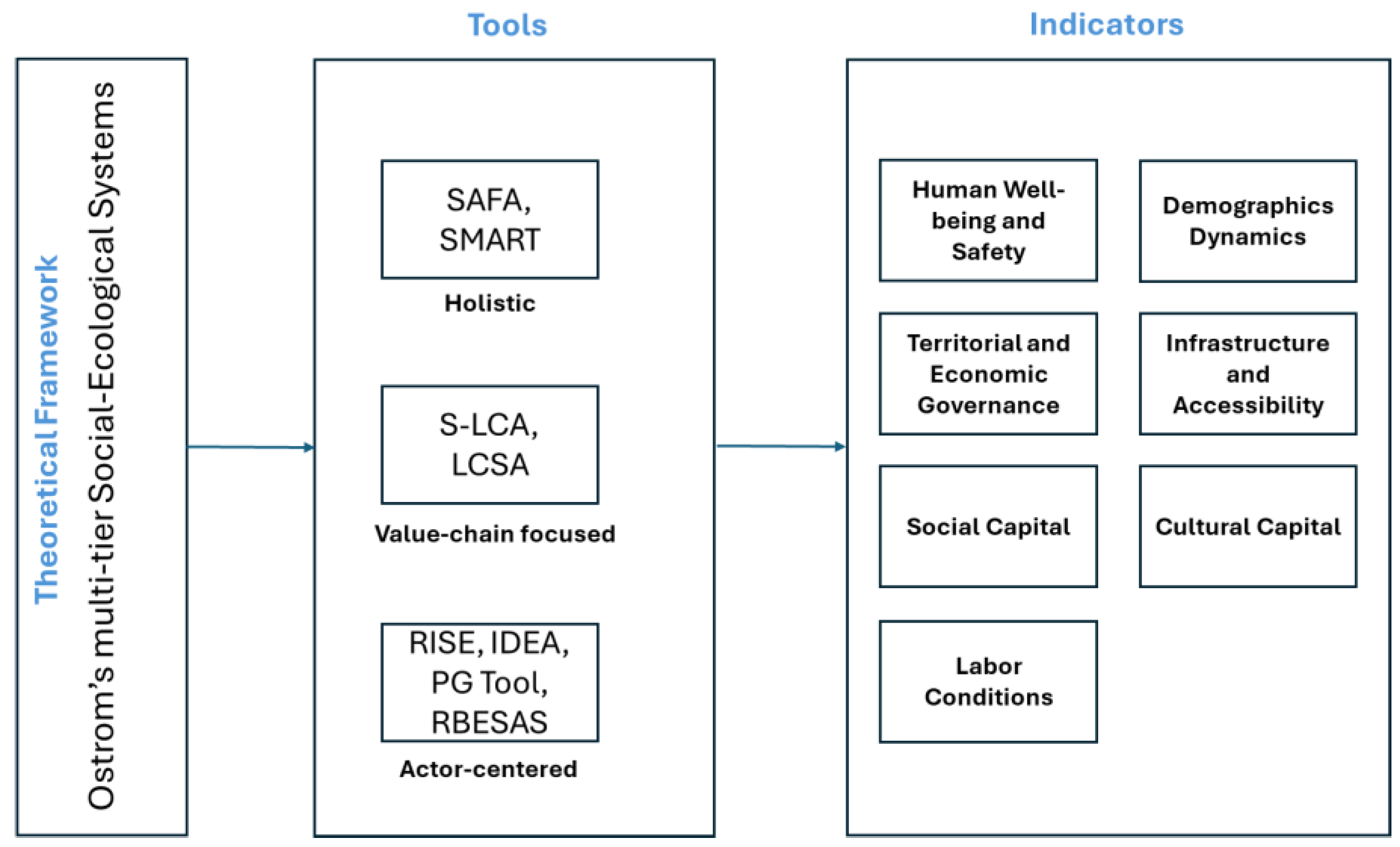
Drawing on the findings of this study, Figure 4 presents a conceptual model specifically tailored for assessing the social sustainability of mountain communities. Our analysis identifies Ostrom’s multi-tier Social–Ecological Systems Framework as a particularly robust diagnostic architecture. By treating the ‘Action Situation’ as the primary unit of analysis, this framework supports the selection of assessment tools appropriate to the scale of intervention, from the farm to the territory. Furthermore, it facilitates the definition of indicators through bottom-up, participatory processes, ensuring that local knowledge and social values are integrated into governance strategies.
To guide practitioners in operationalizing this research, Figure 4 presents a sequential, three-step flowchart for assessing social sustainability in mountain communities. This redesigned conceptual model clarifies the hierarchical flow from theory to practice: Framework Application -> Tool Selection -> Indicator Selection. In Step 1 (Framework Application), practitioners first apply Ostrom’s multi-tier SES framework as a diagnostic lens. This step is crucial for mapping the specific social and ecological boundaries, identifying key actors, and uncovering the underlying “action situations” within the mountain territory [11]. Step 2 (Tool Selection) directly follows the SES diagnosis. Depending on the scale and vulnerabilities identified in Step 1, such as whether the focus is on farm-level viability or broader regional value-chains, the practitioner selects the most appropriate overarching assessment tool (e.g., RISE, IDEA, or SAFA). Finally, in Step 3 (Indicator Selection), the specific indicators are chosen. While the selected tool provides the broad thematic structure, the precise indicators are drawn from our proposed catalog and filtered through a bottom-up participatory process. By engaging local stakeholders through MCDM and evaluating metrics against SMART criteria, practitioners ensure that the final indicators are perfectly tailored to the local mountain context [30]. Consequently, the final indicator set is a product of both the chosen tool’s architecture and the participatory refinement process.
To move beyond conceptual theorization and spatially validate the proposed tandem framework, its practical applicability can be demonstrated through concrete case studies, such as the remote mountain communities of Vent and Obergurgl in the Austrian Alps [14] or the Pejo Valley in the Italian Alps [22]. Applying Step 1 (Framework Application) to these regions, the SES diagnostic lens reveals the primary “action situations” as the tension between declining traditional agropastoralism and the rapid expansion of winter tourism within a fragile, high-altitude Resource System [14]. In Step 2 (Tool Selection), because the vulnerability lies at the intersection of farm survival, cultural preservation, and territorial integration, actor-centered tools such as IDEA or RLF are selected to evaluate the system [14,23]. Finally, in Step 3 (Indicator Selection), the broad catalog of social indicators is contextually filtered. For these specific Alpine villages, the selected indicators heavily prioritize “generational transmissibility”, “social capital and participation rates”, and “workload” to accurately measure the community’s capacity to maintain collective pastures and avoid the polytraps of out-migration and land abandonment [30,49]. This spatial validation demonstrates that the proposed framework is not merely a theoretical construct, but a functional, actionable roadmap that successfully adapts to the specific biophysical and socio-economic realities of concrete mountain territories.

3.5. Actionable Insights and Future Directions

To advance beyond simply identifying MtSES vulnerabilities, it is essential to develop practical, implementable strategies for both policymakers and researchers. For policymakers and local administrators, addressing the polytraps of depopulation and poverty requires abandoning generic, top-down modernization strategies in favor of place-based, bottom-up governance [6,52]. Policymakers should actively support polycentric models, such as bio-districts and eco-regions, which integrate local farmers, tourism operators, and civic leaders into unified strategic plans [30,69]. Furthermore, to counteract the “policies by outsiders” paradox, legislative frameworks must mandate the inclusion of traditional and local knowledge and provide direct financial incentives for mountain communities that act as stewards of public goods and ecosystem services [71,82].
For the research community, future efforts must bridge the persistent “variable-indicator gap” by standardizing composite indicators that accurately reflect complex social dimensions, such as gender equity, social capital, and local participation [5,93]. Researchers should prioritize spatially explicit, interdisciplinary studies that combine biophysical data (e.g., climate and hydrological models) with qualitative social data at comparable local scales [5,12]. Finally, scholars should increasingly employ participatory foresight and scenario planning tools, transforming sustainability assessments from static measurements into dynamic, collaborative processes that build anticipatory capacity and resilience within mountain communities [22,94].

4. Conclusions

This study navigates the “conceptual chaos” and the corresponding “publication labyrinth” of the social pillar in mountain social–ecological systems (MtSES), establishing that social sustainability is a multidimensional construct spanning demographic vitality, cultural capital, and [30,69] social cohesion. Using Ostrom’s SES framework as a diagnostic lens, the research confirms that mountain regions are uniquely threatened by polytraps: vicious cycles of depopulation and marginalization that require urgent, tailored assessment.
Answering the study’s research questions, we find that: (a) critical challenges include, for example, environmental bias, territorial governance gaps, and the erosion of traditional knowledge, (b) no single tool is sufficient, a hybrid approach is recommended (e.g., SMART/SAFA for governance, and PG Tool for cultural values); (c) a set of indicators tailored to mountainous contexts is proposed, categorized under eight key categories: Human Well-being and Safety, Demographics Dynamics, Territorial and Economic Governance, Social Capital, Cultural Capital, Labor Conditions, and Infrastructure and Accessibility.
The study confirms that a systematic identification of social issues reveals a multi-dimensional construct (beyond basic welfare) including demographic vitality, cultural capital, and social cohesion. The comparative analysis confirms that existing tools exhibit varying degrees of alignment with mountain social themes. The results show that no single tool is universally sufficient and that tools such as RISE or IDEA require integration with governance-focused tools such as SMART to fully capture MtSES complexities. The study identified a robust set of context-specific indicators designed to track the transition from vulnerability to well-being. These indicators align with Ostrom’s SES framework to provide a more effective assessment than generic metrics.
Theoretically, the study refines the ontology of MtSES by systematically categorizing mountain-specific social variables. Practically, it provides a roadmap for policymakers to transition from top-down modernization to bottom-up governance models.
The study is not without weaknesses and limitations. The interpretive nature of qualitative content analysis, while ensuring depth, inherently involves researcher interpretation, which, though systematically managed, could introduce subjective elements. Besides empirical validation in diverse mountain contexts, future research could focus on spatially explicit integration of social and biophysical data, maintenance sustainability metrics to capture “sense of place” and cultural heritage, and bridging the digital divide to ensure inclusive adaptation. Furthermore, the scientific literature addressing social sustainability in mountain regions is highly fragmented. Consequently, relying exclusively on standard keyword queries across traditional databases (e.g., Scopus and Web of Science) constitutes a methodological limitation, as the search may omit relevant documents, leading to somewhat sample-dependent findings regarding specific details. While the overarching results and identified themes remain robust and consistent, navigating this “publication labyrinth” requires evolving search strategies. To effectively capture this scattered knowledge base, future research should update standard systematic review methodologies by integrating AI-supported literature search tools and machine learning algorithms to complement traditional database queries.
This study directly supports the United Nations 2030 Agenda. Our proposed model targets specific Sustainable Development Goals (SDGs) in vulnerable mountain regions. First, it addresses SDG 1 (No Poverty) by systematically mapping livelihood vulnerabilities. Second, it promotes SDG 3 (Good Health and Well-being) through targeted indicators for safety and quality of life. Third, it tackles SDG 10 (Reduced Inequalities) by highlighting marginalized high-altitude populations. Fourth, it supports SDG 11 (Sustainable Cities and Communities) by fostering resilient and sustainable rural settlements. Finally, it advances SDG 16 (Peace, Justice, and Strong Institutions) by advocating for inclusive, bottom-up governance.
Ultimately, mountain landscapes are co-produced by human activity; without a vibrant social fabric, the ecological system inevitably degrades. This study provides the “compass and logbook” to ensure mountain communities can adapt to global change without losing the distinct relationships that define their existence.

Funding

This work was supported by national funds through FCT/MCTES (PIDDAC): CIMO, UIDB/00690/2020 (DOI: 10.54499/UIDB/00690/2020) and UIDP/00690/2020 (DOI: 10.54499/UIDP/00690/2020); and SusTEC, LA/P/0007/2020 (DOI: 10.54499/LA/P/0007/2020).

Data Availability Statement

Data is contained within this article.

Conflicts of Interest

The author declares no conflicts of interest.

References

  1. Alessa, L.; Kliskey, A.; Gosz, J.; Griffith, D.; Ziegler, A. MtnSEON and social–ecological systems science in complex mountain landscapes. Front. Ecol. Environ. 2018, 16, S4–S10. [Google Scholar] [CrossRef]
  2. Viviroli, D.; Dürr, H.H.; Messerli, B.; Meybeck, M.; Weingartner, R. Mountains of the world, water towers for humanity: Typology, mapping, and global significance. Water Resour. Res. 2007, 43, W07447. [Google Scholar] [CrossRef]
  3. Immerzeel, W.W.; Lutz, A.F.; Andrade, M.; Bahl, A.; Biemans, H.; Bolch, T.; Hyde, S.; Brumby, S.; Davies, B.J.; Elmore, A.C.; et al. Importance and vulnerability of the world ’s water towers. Nature 2020, 577, 364–369. [Google Scholar] [CrossRef] [PubMed]
  4. FAO. Mapping the Vulnerability of Mountain Peoples to Food Insecurity; FAO: Rome, Italy, 2015. [Google Scholar]
  5. Palau, A.Z.; Claramunt-López, B. Mountain research for sustainability: Where are we and where to go? Sustain. Sci. 2024, 19, 1693–1707. [Google Scholar] [CrossRef]
  6. Ficko, A.; Sarkki, S.; Gultekin, Y.S.; Egli, A.; Hiedanpää, J. Reflective thinking meets artificial intelligence: Synthesizing sustainability transition knowledge in left-behind mountain regions. Geogr. Sustain. 2025, 6, 100257. [Google Scholar] [CrossRef]
  7. Hunt, T.L.; Kliskey, A.; Alessa, L. Applying social–ecological systems science to complex mountain landscapes. Front. Ecol. Environ. 2018, 16, S3. [Google Scholar] [CrossRef]
  8. Vogt, J.M.; Epstein, G.B.; Mincey, S.K.; Fischer, B.C.; McCord, P. Putting the “E” in SES: Unpacking the ecology in the ostrom socialecological system framework. Ecol. Soc. 2015, 20, 55. [Google Scholar] [CrossRef]
  9. Ehrlich, D.; Melchiorri, M. Population Trends and Urbanisation in Mountain Ranges of the World. Land 2021, 10, 255. [Google Scholar] [CrossRef]
  10. Flint, C.G. Framing the Human Dimensions of Mountain Systems: Integrating Social Science Paradigms for a Global Network of Mountain Observatories. Mt. Res. Dev. 2016, 36, 528–536. [Google Scholar] [CrossRef]
  11. Ostrom, E. A General Framework for Analyzing Sustainability of Social-Ecological Systems. Science 2009, 325, 419–422. [Google Scholar] [CrossRef]
  12. Partelow, S. A review of the social-ecological systems framework: Applications, methods, modifications, and challenges. Ecol. Soc. 2018, 23, 36. [Google Scholar] [CrossRef]
  13. Folke, C. Resilience: The emergence of a perspective for social–ecological systems analyses. Glob. Environ. Change 2006, 16, 253–267. [Google Scholar] [CrossRef]
  14. Stotten, R.; Ambrosi, L.; Tasser, E.; Leitinger, G. Social-ecological resilience in remote mountain communities: Toward a novel framework for an interdisciplinary investigation. Ecol. Soc. 2021, 26, 29. [Google Scholar] [CrossRef]
  15. Patricia, N.; Danny, M. Adapting to climate change: Women’s livelihood strategies in uMkhanyakude District Municipality. Environ. Dev. 2025, 55, 101185. [Google Scholar] [CrossRef]
  16. Res, C.; Kyriazopoulos, A.P.; Skre, O.; Sarkki, S.; Wielgolaski, F.E.; Abraham, E.M.; Ficko, A. Human–environment dynamics in European treeline ecosystems: A synthesis based on the DPSIR framework. Clim. Res. 2017, 73, 17–29. [Google Scholar]
  17. Ma, R.; Liu, L.; Xu, J.; Xu, G.; Huo, X.; Ding, W.; Yang, H.; Ma, Y. What drives the coordination of mountain socio-economic-ecological systems? Evidence from the three parallel rivers region of China. Environ. Sustain. Indic. 2025, 27, 100826. [Google Scholar] [CrossRef]
  18. Ramachandran, S.; Rani, L.; Venkat, P. Exploring environmental inequality definitions and themes through literature review. Discov. Sustain. 2026, 7, 11. [Google Scholar] [CrossRef]
  19. Laruffa, F. Developing the global North: Social–ecological justice, post-capitalist aspirations, and the politics of capabilities. Rev. Soc. Econ. 2026, 1–30. [Google Scholar] [CrossRef]
  20. Llopis, J.C.; Diebold, C.L.; Schneider, F.; Harimalala, P.C. Capabilities Under Telecoupling: Human Well-Being Between Cash Crops and Protected Areas in north-eastern Madagascar. Front. Sustain. Food Syst. 2020, 3, 126. [Google Scholar] [CrossRef]
  21. Banat, M. Assessment of the Impact of Population Reduction on Grasslands with a New “Tool”: A Case Study on the “Mountainous Banat” Area of Romania. Land 2024, 13, 134. [Google Scholar] [CrossRef]
  22. Scolozzi, R.; Villa, M.; Giagnorio, M. Integrating Social–Ecological Systems and Megatrends: A Participatory Foresight Framework for Sustainability Governance in European Cold Lands. Sustainability 2025, 17, 9644. [Google Scholar] [CrossRef]
  23. Janker, J.; Mann, S. Understanding the social dimension of sustainability in agriculture: A critical review of sustainability assessment tools. Environ. Dev. Sustain. 2020, 22, 1671–1691. [Google Scholar] [CrossRef]
  24. González-Moreno, P.; Schmitt, E.; Moreno-Ortiz, J.; Pinto-Correia, T.; Guiomar, N.; Delgado-Serrano, M.d.M. Assessing the vulnerability of mountain value chains to environmental and social drivers in Europe: A land-use and stakeholder-based approach. Ambio 2025, 54, 1386–1403. [Google Scholar] [CrossRef] [PubMed]
  25. Vallance, S.; Perkins, H.C.; Dixon, J.E. What is social sustainability? A clarification of concepts. Geoforum 2011, 42, 342–348. [Google Scholar] [CrossRef]
  26. Pilane, P.M.; Jordaan, H.; Bahta, Y.T. A Systematic Review of Social Sustainability Indicators for Water Use along the Agricultural Value Chain. Hydrology 2024, 11, 72. [Google Scholar] [CrossRef]
  27. Grumbine, R.E.; Xu, J. Mountain futures: Pursuing innovative adaptations in coupled social–ecological systems. Front. Ecol. Environ. 2021, 19, 342–348. [Google Scholar] [CrossRef]
  28. Boström, M. A missing pillar? Challenges in theorizing and practicing social sustainability: Introduction to the special issue. Sustain. Sci. Pract. Policy 2012, 8, 3–14. [Google Scholar] [CrossRef]
  29. D’Adamo, I. Sustainable communities: We are the world. Sci. Rep. 2025, 15, 8068. [Google Scholar] [CrossRef]
  30. Packer, G.; Zanasi, C. Comparing social sustainability assessment indicators and tools for bio-districts: Building an analytical framework. Front. Sustain. Food Syst. 2023, 7, 1229505. [Google Scholar] [CrossRef]
  31. Bhattacherjee, A. Social Science Research: Principles, Methods, and Practices; University of South Florida: Tampa, FL, USA, 2012. [Google Scholar]
  32. Moher, D.; Liberati, A.; Tetzlaff, J.; Altman, D.G.; Antes, G.; Atkins, D.; Barbour, V.; Barrowman, N.; Berlin, J.A.; Clark, J.; et al. Preferred reporting items for systematic reviews and meta-analyses: The PRISMA statement. PLoS Med. 2009, 6, e1000097. [Google Scholar] [CrossRef]
  33. Herrero-Jáuregui, C.; Arnaiz-Schmitz, C.; Reyes, M.F.; Telesnicki, M.; Agramonte, I.; Easdale, M.H.; Schmitz, M.F.; Aguiar, M.; Gómez-Sal, A.; Montes, C. What do we talk about when we talk about social-ecological systems? A literature review. Sustainability 2018, 10, 2950. [Google Scholar] [CrossRef]
  34. De Olde, E.M.; Oudshoorn, F.W.; Sørensen, C.A.G.; Bokkers, E.A.M.; De Boer, I.J.M. Assessing sustainability at farm-level: Lessons learned from a comparison of tools in practice. Ecol. Indic. 2016, 66, 391–404. [Google Scholar] [CrossRef]
  35. Marchand, F.; Debruyne, L.; Triste, L.; Gerrard, C.; Padel, S.; Lauwers, L. Key characteristics for tool choice in indicator-based sustainability assessment at farm level. Ecol. Soc. 2014, 19, 46. [Google Scholar] [CrossRef]
  36. Thorn, J.P.R.; Klein, J.A.; Steger, C.; Hopping, K.A.; Capitani, C.; Tucker, C.M.; Nolin, A.W.; Reid, R.S.; Seidl, R.; Chitale, V.S.; et al. A systematic review of participatory scenario planning to envision mountain social-ecological systems futures. Ecol. Soc. 2020, 25, 6. [Google Scholar] [CrossRef]
  37. FAO. Sustainability Assessment of Food and Agricultural System: Guidelines; FAO: Rome, Italy, 2014. [Google Scholar]
  38. Leknoi, U.; Rosset, P.; Likitlersuang, S. Multi-criteria social sustainability assessment of highland maize monoculture in Northern Thailand using the SAFA tool. Resour. Environ. Sustain. 2023, 13, 100115. [Google Scholar] [CrossRef]
  39. Tonini, M.; Araújo, D.; Cesar, N.; Gravina, C. Geotech social impacts: Development, application, and comparative analysis. Environ. Impact Assess. Rev. 2024, 108, 107577. [Google Scholar] [CrossRef]
  40. Sacco, P.; Don, D.; Mandler, A.; Mazzetto, F. Integrating LCA and Multi-Criteria Tools for Eco-Design Approaches: A Case Study of Mountain Farming Systems. Sustainability 2025, 17, 6240. [Google Scholar] [CrossRef]
  41. Acharya, C.N.; Chaiyakot, P.; Yuangyai, N. A Systematic literature review using PRISMA framework: An assessment on the community based tourism businesses and sustainable livelihood. J. Tour. Anal. 2025, 32, 98–137. [Google Scholar] [CrossRef]
  42. Wan, L.; Ng, E. Assessing the sustainability of the built environment in mountainous rural villages in Southwest China. Mt. Res. Dev. 2016, 36, 4–14. [Google Scholar] [CrossRef]
  43. Zahm, F.; Viaux, P.; Vilain, L.; Girardin, P.; Mouchet, C. Assessing Farm Sustainability with the IDEA Method–from the Concept of Agriculture Sustainability to Case Studies on Farms. Sustain. Dev. 2008, 281, 271–281. [Google Scholar] [CrossRef]
  44. Baur, I.; Nax, H.H. Adapting Governance Incentives to Avoid Common Pool Resource Underuse: The Case of Swiss Summer Pastures. Sustainability 2018, 10, 3988. [Google Scholar] [CrossRef]
  45. Mayring, P. Qualitative Content Analysis: Theoretical Foundation, Basic Procedures and Software Solution; SSOAR: Mannheim, Germany, 2014; pp. 1–143. Available online: https://www.ssoar.info/ssoar/bitstream/handle/document/39517/ssoar-2014-mayring-Qualitative_content_analysis_theoretical_foundation.pdf (accessed on 24 January 2025).
  46. Schirpke, U.; Scolozzi, R.; Kiessling, A.; Tappeiner, U. Recreational ecosystem services of mountain lakes in the European Alps: Preferences, visitor groups and management implications. J. Outdoor Recreat. Tour. 2021, 35, 100421. [Google Scholar] [CrossRef]
  47. Payne, D.; Snethlage, M.; Geschke, J.; Spehn, E.M.; Fischer, M. Nature and People in the Andes, East African Mountains, European Alps, and Hindu Kush Himalaya: Current Research and Future Directions. Mt. Res. Dev. 2020, 40, R1–R14. [Google Scholar] [CrossRef]
  48. Postigo, J.C. Perception and Resilience of Andean Populations Facing Climate Change. J. Ethnobiol. 2014, 34, 383–400. [Google Scholar] [CrossRef]
  49. Sarkki, S.; Lynn, T.; Hiedanpää, J.; Vizzarri, M.; Christoforidi, I.; Brnkalakova, S.; Crisan, V.; Egli, A.; Gültekin, P.; Selman Gültekin, Y.; et al. Polytraps in European rural mountainous regions: An expert view. Eur. Plan. Stud. 2025, 33, 757–777. [Google Scholar] [CrossRef]
  50. Kizos, T.; Detsis, V.; Iosifides, T.; Metaxakis, M. Social capital and social-ecological resilience in the Asteroussia Mountains, Southern Crete, Greece. Ecol. Soc. 2014, 19, 40. [Google Scholar] [CrossRef]
  51. Prieto, M.; Ruiz-mallén, I.; Corbera, E. A systematic review of co-managed small-scale fi sheries: Social diversity and adaptive management improve outcomes. Glob. Environ. Change 2018, 52, 212–225. [Google Scholar] [CrossRef]
  52. Klein, J.A.; Tucker, C.M.; Nolin, A.W.; Hopping, K.A.; Reid, R.S.; Steger, C.; Grêt-Regamey, A.; Lavorel, S.; Müller, B.; Yeh, E.T.; et al. Catalyzing Transformations to Sustainability in the World’s Mountains. Earth’s Future 2019, 7, 547–557. [Google Scholar] [CrossRef]
  53. Torre, C.D.; Stemberger, S.; Bottura, J.; Corrent, M.; Zanoni, S.; Fusari, D.; Gatto, P. Revitalizing Collective Resources in Mountain Areas Through Community Engagement and Knowledge Cocreation. Mt. Res. Dev. 2022, 42, D1–D13. [Google Scholar] [CrossRef]
  54. Schirpke, U.; Scolozzi, R.; Dean, G.; Haller, A.; Hieronymus, J.; Sarmiento, F.O.; Sattler, B.; Schleyer, C.; Kister, J.; Kov, B. Cultural ecosystem services in mountain regions: Conceptualising conflicts among users and limitations of use. Ecosyst. Serv. 2020, 46, 101210. [Google Scholar] [CrossRef]
  55. Haile, B.T.; Dougill, A.J.; Ramoelo, A.; Kidane, T.T. Assessing farm-level sustainability: A comparative analysis of horticultural production systems in Eritrea. Front. Sustain. Food Syst. 2025, 9, 1532356. [Google Scholar] [CrossRef]
  56. Steinicke, E.; Čede, P.; Löffler, R. In-migration as a new process in demographic problem areas of the Alps. Ghost towns vs. Amenity settlements in the Alpine border area between Italy and Slovenia. Erdkunde 2012, 66, 329–344. [Google Scholar] [CrossRef]
  57. Thornton, J.M.; Snethlage, M.A.; Sayre, R.; Urbach, D.R.; Viviroli, D.; Ehrlich, D.; Muccione, V.; Wester, P.; Insarov, G.; Adler, C. Human populations in the world’s mountains: Spatio-temporal patterns and potential controls. PLoS ONE 2022, 17, e0271466. [Google Scholar] [CrossRef] [PubMed]
  58. Sunge, R.; Mudzingiri, C. A Systematic Literature Review on Migration and Remittances in Mountainous Regions: Key Takeaways for Phuthaditjhaba, Free State, South Africa. Sustainability 2023, 15, 14621. [Google Scholar] [CrossRef]
  59. Bolívar-santamaría, S.; Cort, A.; Rodríguez, T. Land Use Policy A framework for participatory scenario planning to guide transitions towards sustainability in mountain social-ecological systems: A case study from the Colombian Andes. Land Use Policy 2023, 132, 106817. [Google Scholar] [CrossRef]
  60. Katsoulakos, A. Combating Energy Poverty in Mountainous Areas Through Energy-saving Interventions. Mt. Res. Dev. 2011, 31, 284–292. [Google Scholar] [CrossRef]
  61. Tian, N.; Lan, H. The indispensable role of resilience in rational landslide risk management for social sustainability. Geogr. Sustain. 2023, 4, 70–83. [Google Scholar] [CrossRef]
  62. Mann, S.; Richter, S.; Ehlers, M.H.; Roesch, A.; Douziech, M. Towards a non-speciesist social life cycle assessment. Int. J. Life Cycle Assess. 2025, 30, 2248–2257. [Google Scholar] [CrossRef]
  63. Ambayoen, M.A.; Hidayat, K.; Yuliati, Y.; Cahyono, E.D. The Roots of Resilience: Strengthening Agricultural Sustainability in Tengger, Indonesia Through Social Capital. Sustainability 2025, 17, 192. [Google Scholar] [CrossRef]
  64. Orchard, S.; Glover, D.; Thapa Karki, S.; Ayele, S.; Sen, D.; Rathod, R.; Rowhani, P. Exploring synergies and trade-offs among the sustainable development goals: Collective action and adaptive capacity in marginal mountainous areas of India. Sustain. Sci. 2020, 15, 1665–1681. [Google Scholar] [CrossRef]
  65. Rani, B.; Jyoti, M.; Deka, N.; Bhattacharya, P. Forest Policy and Economics Assessing homestead agroforestry-based livelihoods in Sivasagar District of Assam, India, using livelihood significance index (LSI). For. Policy Econ. 2025, 170, 103388. [Google Scholar] [CrossRef]
  66. Moretti, M.; Belliggiano, A.; Grando, S.; Felici, F.; Scotti, I.; Ievoli, C.; Blackstock, K.; Delgado-Serrano, M.M.; Brunori, G. Characterizing value chains’ contribution to resilient and sustainable development in European mountain areas. J. Rural Stud. 2023, 100, 103022. [Google Scholar] [CrossRef]
  67. Liu, W.; Zhang, J.; Qian, L. Measuring Community Resilience and Its Determinants: Relocated Vulnerable Community in Western China. Int. J. Environ. Res. Public Health 2023, 20, 694. [Google Scholar] [CrossRef] [PubMed]
  68. Kadigi, R.M.J. Income Inequality in Mountain Areas: The Case of Agroforestry Farming Systems in Uluguru Mountains, Tanzania. Open J. For. 2021, 11, 254–291. [Google Scholar] [CrossRef]
  69. Mazzocchi, C.; Orsi, L.; Bergamelli, C.; Sturla, A. Bio-districts and the territory: Evidence from a regression approach. Aestimum 2021, 79, 5–23. [Google Scholar] [CrossRef]
  70. Menikpura, S.N.M.; Gheewala, S.H.; Bonnet, S. Framework for life cycle sustainability assessment of municipal solid waste management systems with an application to a case study in Thailand. Waste Manag. Res. 2012, 300, 708–719. [Google Scholar] [CrossRef]
  71. Gupta, H.; Nishi, M.; Gasparatos, A. Community-based responses for tackling environmental and socio-economic change and impacts in mountain social–ecological systems. Ambio 2022, 51, 1123–1142. [Google Scholar] [CrossRef]
  72. Zahm, F.; Ugaglia, A.A.; Barbier, J.; Carayon, D.; Del, B.; Gafsi, M.; Gasselin, P.; Gestin, C.; Girard, S.; Guichard, L.; et al. Assessing farm sustainability: The IDEA4 method, a conceptual framework combining dimensions and properties of sustainability. Cah. Agric. 2024, 33, 10. [Google Scholar] [CrossRef]
  73. Gasparatos, A. Embedded value systems in sustainability assessment tools and their implications. J. Environ. Manag. 2010, 91, 1613–1622. [Google Scholar] [CrossRef]
  74. Alaoui, A.; Ferreira, C.S.S.; Hessel, R. An Overview of Sustainability Assessment Frameworks in Agriculture. Land 2022, 11, 537. [Google Scholar] [CrossRef]
  75. Häni, F.; Braga, F.; Stämpfli, A.; Keller, T.; Fischer, M.; Porsche, H. RISE, a tool for holistic sustainability assessment at the farm level. Int. Food Agribus. Manag. Rev. 2003, 6, 78–90. [Google Scholar]
  76. Cayambe, J.; Heredia-R, M.; Torres, E.; Puhl, L.; Torres, B.; Barreto, D.; Heredia, B.N.; Vaca-Lucero, A.; Diaz-Ambrona, C.G.H. Evaluation of sustainability in strawberry crops production under greenhouse and open-field systems in the Andes. Int. J. Agric. Sustain. 2023, 21, 2255449. [Google Scholar] [CrossRef]
  77. Zaccaria, G.; Di, C. Social sustainability in Italy: A model-based hierarchical composite indicator. Ann. Oper. Res. 2025, 1–26. [Google Scholar] [CrossRef]
  78. Graymore, M.L.M.; Sipe, N.G.; Rickson, R.E. Regional sustainability: How useful are current tools of sustainability assessment at the regional scale? Ecol. Econ. 2008, 67, 362–372. [Google Scholar] [CrossRef]
  79. Graymore, M.L.M.; Sipe, N.G.; Rickson, R.E. Sustaining Human Carrying Capacity: A tool for regional sustainability assessment. Ecol. Econ. 2010, 69, 459–468. [Google Scholar] [CrossRef]
  80. Liu, Z.; Ding, R. Dynamic Evaluation of Project Governance in Collaborative Innovation Projects: A Case of Industry Technology Research Institute. Sustainability 2023, 15, 12493. [Google Scholar] [CrossRef]
  81. Altaweel, M.; Virapongse, A.; Griffith, D.; Alessa, L.; Kliskey, A. A typology for complex social-ecological systems in mountain communities. Sustain. Sci. Pract. Policy 2015, 11, 1–13. [Google Scholar] [CrossRef]
  82. Tucker, C.M.; Alcántara-Ayala, I.; Gunya, A.; Jimenez, E.; Klein, J.A.; Xu, J.; Bigler, S.L. Challenges for Governing Mountains Sustainably: Insights from a Global Survey. Mt. Res. Dev. 2021, 41, R10–R20. [Google Scholar] [CrossRef]
  83. Eizenberg, E.; Jabareen, Y. Social sustainability: A new conceptual framework. Sustainability 2017, 9, 68. [Google Scholar] [CrossRef]
  84. Axelsson, R.; Angelstam, P.; Degerman, E.; Teitelbaum, S.; Andersson, K.; Elbakidze, M.; Drotz, M.K. Social and Cultural Sustainability: Criteria, Indicators, Verifier Variables for Measurement and Maps for Visualization to Support Planning. Ambio 2013, 42, 215–228. [Google Scholar] [CrossRef]
  85. Weingaertner, C.; Moberg, Å. Exploring social sustainability: Learning from perspectives on urban development and companies and products. Sustain. Dev. 2014, 22, 122–133. [Google Scholar] [CrossRef]
  86. Sherrouse, B.C.; Semmens, D.J. Validating a method for transferring social values of ecosystem services between public lands in the Rocky Mountain region. Ecosyst. Serv. 2014, 8, 166–177. [Google Scholar] [CrossRef]
  87. Umstätter, C.; Mann, S.; Werner, J. A simple measure for workload as a social sustainability indicator for family farms. Environ. Sustain. Indic. 2022, 14, 100180. [Google Scholar] [CrossRef]
  88. Yáñez, D.M.; Tomnyuk, V.; Varavallo, G.; Membretti, A. Big Data Insights into Mobility and Demographic Change in Alpine Municipalities: The Case of the Metropolitan City of Turin. In Proceedings of the 2nd Workshop “New frontiers in Big Data and Artificial Intelligence” (BDAI 2025), Aosta, Italy, 29–30 May 2025; Volume 4031, pp. 73–90. [Google Scholar]
  89. Graus, S.; Ferreira, T.M.; Vasconcelos, G.; Ortega, J.; Sarmento, J. A novel methodology for assessing social vulnerability in depopulating rural communities: Application to Montesinho Natural Park, Portugal. Int. J. Disaster Risk Reduct. 2025, 130, 105815. [Google Scholar] [CrossRef]
  90. Ssebunya, B.R.; Schmid, E.; van Asten, P.; Schader, C.; Altenbuchner, C.; Stolze, M. Stakeholder engagement in prioritizing sustainability assessment themes for smallholder coffee production in Uganda. Renew. Agric. Food Syst. 2017, 32, 428–445. [Google Scholar] [CrossRef]
  91. Nikinmaa, L.; Lindner, M.; Cantarello, E.; Gardiner, B.; Bredahl, J.; Jump, A.S.; Parra, C.; Plieninger, T.; Schuck, A.; Seidl, R.; et al. A balancing act: Principles, criteria and indicator framework to operationalize social-ecological resilience of forests. J. Environ. Manag. 2023, 331, 117039. [Google Scholar] [CrossRef]
  92. Demirović, D.; Radovanović, M.; Petrović, M.D.; Cimbaljević, M.; Vuksanović, N.; Vuković, D.B. Environmental and community stability of a mountain destination: An analysis of residents’ perception. Sustainability 2018, 10, 70. [Google Scholar] [CrossRef]
  93. Orou, R.; Kirschke, S.; Günther, E. Integrating the social perspective into the sustainability assessment of agri-food systems: A review of indicators. Sustain. Prod. Consum. 2023, 39, 175–190. [Google Scholar] [CrossRef]
  94. Achieng, C.; Mulwa, R.; Kibugi, R.; Thorn, J.P.R.; Oguge, N. Current Research in Environmental Sustainability Prospects of scenario planning for Kenya’s protected ecosystems: An example of Mount Marsabit. Curr. Res. Environ. Sustain. 2020, 1, 7–15. [Google Scholar] [CrossRef]
Figure 1. Flow diagram for the selection of documents based on PRISMA.
Sustainability 18 03248 g001
Figure 2. Papers’ distribution by source.
Sustainability 18 03248 g002
Figure 3. Yearly distribution of relevant papers.
Sustainability 18 03248 g003
Figure 4. Proposed model for assessing social sustainability in mountains.
Sustainability 18 03248 g004
Table 1. Emergent social themes.
Social ThemeFrequency (%)Example QuotationPrimary SDG Alignment
Territorial and Economic Governance26“Actors in mountainous areas are often perceived as having a relatively weak voice in decision-making and limited opportunities to participate in decisions affecting their lives.” [49]SDG 16 (Peace, Justice, and Strong Institutions)
Demographic Dynamics21“The key issue is demographic decline, primarily depopulation… This is driven by a lack of services, employment, and education opportunities… Disconnected regions were perceived to be politically marginalized, often regarded as non-priority areas.” [49]SDG 10 (Reduced Inequalities), SDG 11 (Sustainable Communities)
Human Well-being and Safety19“Meeting people’s basic needs everywhere, is a crucial part of wider developmental goals… Development sustainability includes a concern for a broad spectrum of issues ranging from quite tangible, very basic requirements—like potable water and healthy food, medication, housing—to less tangible needs concerning education, employment.” [25]SDG 1 (No Poverty), SDG 2 (Zero Hunger), SDG 3 (Good Health & Well-being)
Social Capital18“Social capital concerns the characteristics, properties, and quality of social networks… Its main features are social trust, social norms, cultural perceptions and values… [and] the character of social networks.” [50]SDG 5 (Gender Equality), SDG 17 (Partnerships)
Cultural Capital16“Maintenance sustainability [refers] to the preservation—or what can be sustained—of socio-cultural characteristics in the face of change… The traditions, practices, preferences and places people would like to see maintained.” [25]SDG 4 (Quality Education), SDG 11 (Sustainable Communities).
Table 2. Alignment of social themes with SES components.
SES ComponentAssociated Social ThemesExample Specific Indicators/VariablesStrategic Relevance in Mountainous Areas
Actors (A)Human Well-being and SafetyNutritional anthropometry [58]; ‘New highlander’ integration [22].Tracks individual conditions from vulnerability to well-being [1].
Demographic DynamicsNet migration rates [58]; Population density/growth [58].Identifies polytraps of depopulation and rural shrinkage [49,58].
Governance Systems (GS)Territorial and Economic GovernanceLevel of social security implementation [67]; Community organization [63].Evaluates transition from top-down management to bottom-up, participatory governance [49]; Manages conflict over common-pool assets such as alpine pastures [10].
Resource Systems (RS)Territorial and Economic GovernanceLandscape maintenance/heritage [63]; Collective private property regimes [22].Evaluates the co-evolution of human actions (stewardship vs. degradation) with the environment [1].
Human Well-being and SafetyAccess to clean water [67]; Biomass energy systems [41].Addresses ‘commodities’ poverty and the unique constraints of high-altitude settlements [41,42].
Resource Units (RU)Territorial and Economic GovernanceRemittance share of GDP [58]; Crop diversification [68].Measures dependency on external income streams and the preservation of biocultural diversity [30,55,58].
Interactions (I)/Action Situations (AS)Social CapitalInvolvement in local voluntary groups, producer associations, or collaborative projects; Involvement in non-governmental organizations [69].Represents the ‘social spaces’ where individuals interact [30].
Cultural CapitalFrequency of cultural knowledge exchange; Sense of community belonging [30].Represents the knowledge and cultural interactions context [30].
Outcomes (O)Human Well-being and SafetyJob satisfaction; Perceived safety [10,70] Social performance measures, which explicitly includes efficiency, equity, accountability, and sustainability [12,22].
Social, Economic, and Political Settings (S)Demographic DynamicsHouseholds involved in out-migration; Physical absence of working-age individuals per household [58].In mountain SES specifically, demographic changes such as out-migration and amenity migration are identified as key ‘paradoxes’ or drivers of change that alter the system’s vulnerability [52,71]
Table 3. Sustainability Assessment Tools.
ToolFull NameKey References
SAFASustainability Assessment of Food and Agriculture systems[37,38]
SMARTSustainability Monitoring and Assessment RouTine[30,34,37]
S-LCASocial Life Cycle Assessment[39,40]
RISEResponse-Inducing Sustainability Evaluation[5,34]
IDEAIndicateurs de Durabilité des Exploitations Agricoles[34,43]
RBESASRural Built Environment Sustainability Assessment System[41,42]
PG ToolPublic Goods Tool[44]
Table 5. Proposed social indicators for mountainous areas.
IndicatorDefinition/Metric
Human Well-being and Safety
Nutritional AnthropometryAverage weight-for-height ratio [58].
Access to Basic Services (clean water, sanitation)Percentage of population with access to clean water, sanitation [26,41].
Access to Basic Services (thermal energy)Percentage of population with access to adequate thermal energy [26,41].
Energy Poverty(High) thermal needs vs. (low) income [26,41].
Educational LevelAverage years of education [67].
Job SatisfactionJob satisfaction (Likert scale) [10,70].
Perceived SafetyPerceived safety (Likert scale)
Life SatisfactionOverall life satisfaction/happiness (Likert scale) [10,70].
Life Expectancy at BirthLife expectancy at birth (years) [10,26].
Access to a Family DoctorAccess to a family doctor (yes/no) [10,26].
Prevalence of Waterborne or Occupational DiseasesPercentage of population with waterborne or occupational diseases [10,26].
Livelihood OptionsDiversity of livelihood options (Likert scale) [64,80].
Emergency Preparedness ProgramsAvailability of emergency preparedness programs (Likert scale) [64,80,81].
Resource InsecurityPotential for displacement due to over-tourism or natural disasters (Likert scale) [60].
Demographics Dynamics
Net Migration RatePercentage of households involved in out-migration [58].
Absent Household Members SharePercentage of physical absence of working-age individuals per household [58].
Demographic AgeingPercentage of elderly persons (>65 years old per 100 inhabitants) [21,80].
Population RenewalPercentage of population renewal (<5 years old per 100 inhabitants) [21,80].
Population Density and GrowthPopulation density (nr./km2) and evolution in the last 20 years [9,80].
Territorial and Economic Governance
Social Security Implementation LevelPercentage of population with access to social security [80].
Stakeholder Engagement LevelsPercentage of local actors’ participation in community decisions [26].
Transparency and AccountabilityNumber of products labelled/traceable as of ‘mountain’ origin [74].
Gender Equity and EmpowermentProportion of women in leadership positions [26,41,55].
Rights to ResourcesPerception of security of land and water tenure (Likert scale) [38,67].
RedistributionIncome gap between the wealthy and the poor [25,82,83]
InclusionInclusion of marginalized groups (e.g., ethnic minorities or the disabled) in decision-making [25,82,83]
Remittance Share of GDPPercentage of household income from external sources [34,58].
Social Capital
Participation RatesPercentage of residents involved in local voluntary groups, producer associations, or collaborative projects [41,58,67].
DemocracyPercentage of participation in local elections [83,84].
EngagementPercentage of involvement in non-governmental organizations [83,84].
Volunteering DynamicsNumber of voluntary groups per 1000 Inhabitants [80,84].
Social Help and RelationshipsNumber of households/friends a family can turn to during crises [80].
Cultural Capital
Intergenerational Transmission of Traditional and Local KnowledgeIntergenerational transfer of cultural and ecological knowledge (Likert scale) [71].
Community Preservation and Transmission of Traditional and Local KnowledgePercentage of local events focused on traditional culture [71].
HeritageProtection of historical and cultural heritage (Likert scale) [20,85].
IdentitySense of community belonging (Likert scale) [63].
Cultural amenitiesAvailability of cultural amenities (Likert scale) [20,85].
Visitor PerceptionVisitor perception of the impact of tourism on local cultural heritage and identity (Likert scale) [53,84,86].
Resident SatisfactionResident satisfaction with impact of tourism on local cultural heritage and identity (Likert scale) [53,84,86].
Landscape and Aesthetic ValueAppreciation for natural beauty (Likert scale) [53,84,86].
Landscape and Aesthetic IdentityAppreciation for “sense of place” (Likert scale) [53,84,86].
Historical ValueAppreciation for the preservation of historical remains (Likert scale) [53,84,86].
Labor Conditions
Gender Pay GapRatio of male to female wages [68].
Occupational Health and Safety StandardsPrevalence of injuries/illnesses related to steep-terrain farming and forest operations [26,74].
Workload/Working Hours“Overwork” hours per day [87].
Employment diversityNumber of different professional activities in the last 20 years [23,55]
Child/Forced LabourNon-existence of child labour or forced labour [23,55].
Minimum WagePresence of a minimum legal wage [23,55].
Infrastructure and Accessibility
Road DensityRoad density (km/km2) [88,89].
Travel TimeAdequacy of travel time to urban centres (Likert scale) [88,89].
Public TransportationAvailability of public transport (Likert scale) [88,89].
Healthcare CentresAccess to healthcare centres (Likert scale) [88].
Secondary EducationAccess to secondary education (Likert scale) [88].
BankingAccess to banking (Likert scale) [88].
Pharmaceutical servicesAccess to pharmaceutical services (Likert scale) [88].
Broadband InternetAccess to broadband internet (Likert scale) [6,81,89]
Computer OwnershipPercentage of population with computer ownership [6,81,89].
Mobile phone ownershipPercentage of population with mobile phones [6,81,89].
Built environments resilienceResilience of built environments to natural hazards (Likert scale) [42,90].
Disclaimer/Publisher’s Note: The statements, opinions and data contained in all publications are solely those of the individual author(s) and contributor(s) and not of MDPI and/or the editor(s). MDPI and/or the editor(s) disclaim responsibility for any injury to people or property resulting from any ideas, methods, instructions or products referred to in the content.