
Vegetation Thresholds and Spatial Variation in Sustainable Urban Noise Mitigation: A Case Study from Charlotte, NC


Abstract
1. Introduction
2. Materials and Methods
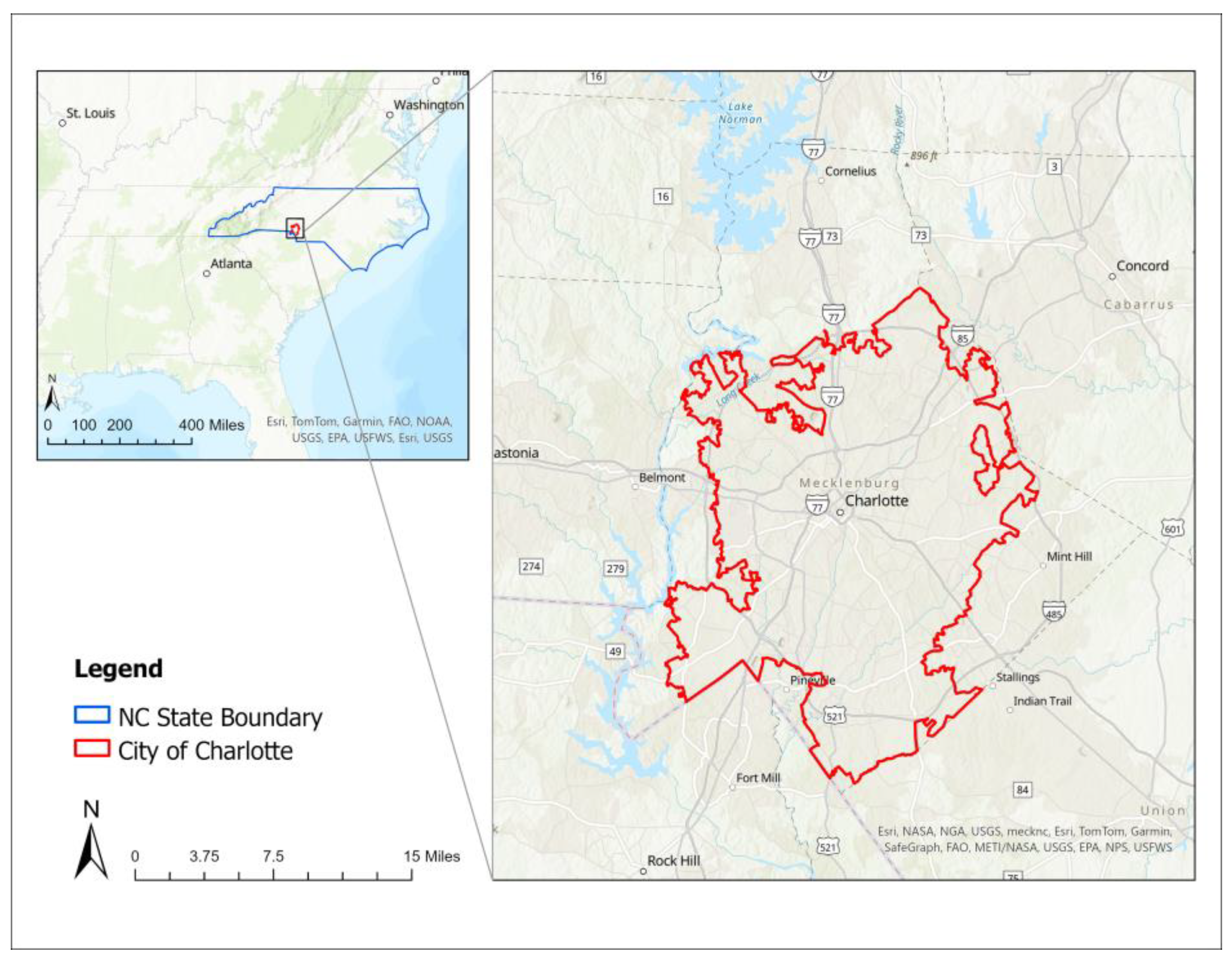
2.1. Study Area
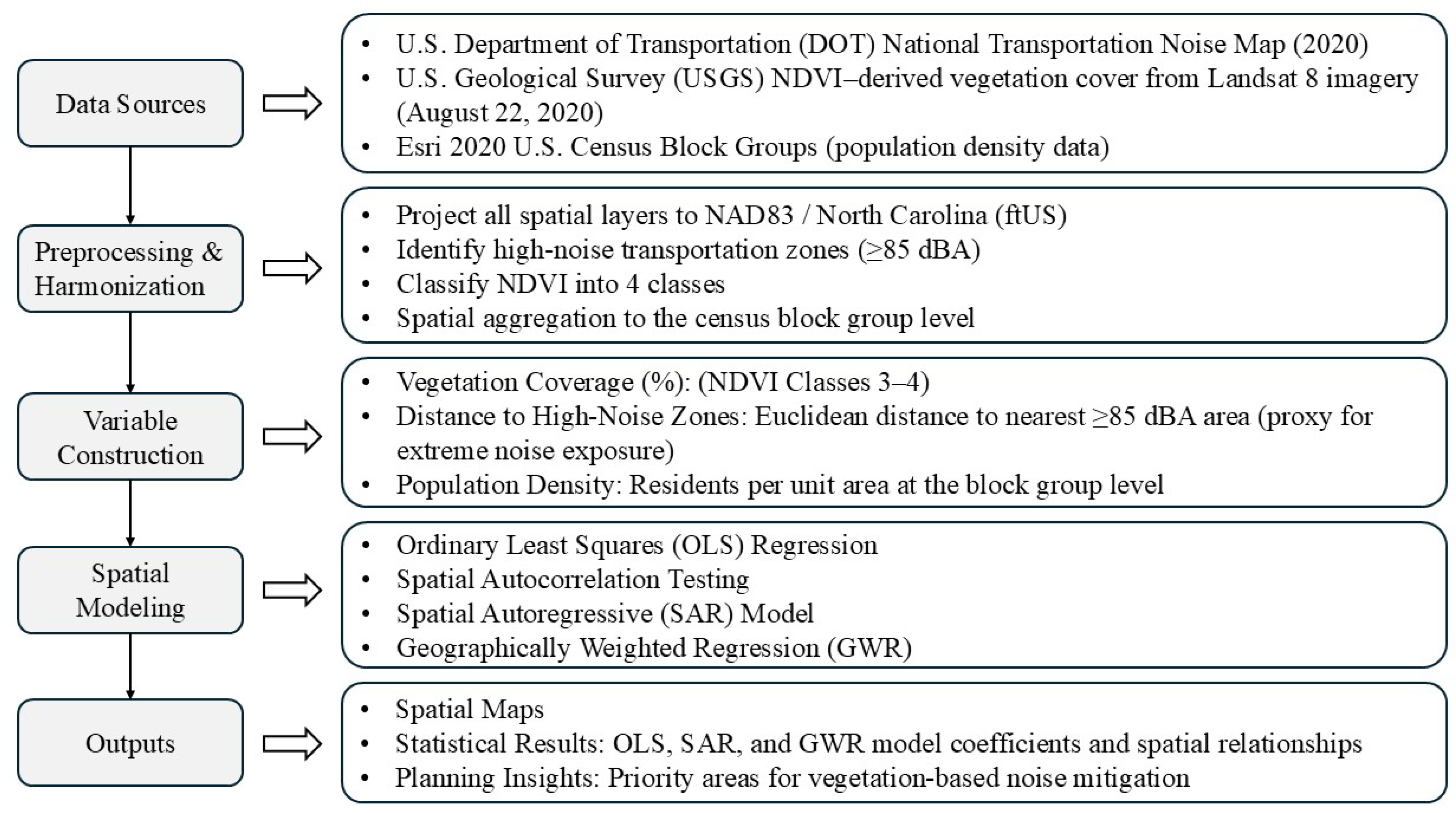
2.2. Data Sources
2.2.1. Transportation Noise
2.2.2. Vegetation
2.2.3. Variable Construction
2.3. Statistical Analysis
2.3.1. Ordinary Least Squares (OLS) Regression and Spatial Autocorrelation Testing
2.3.2. Spatial Autoregressive (SAR) Model
2.3.3. Geographically Weighted Regression (GWR)
3. Results
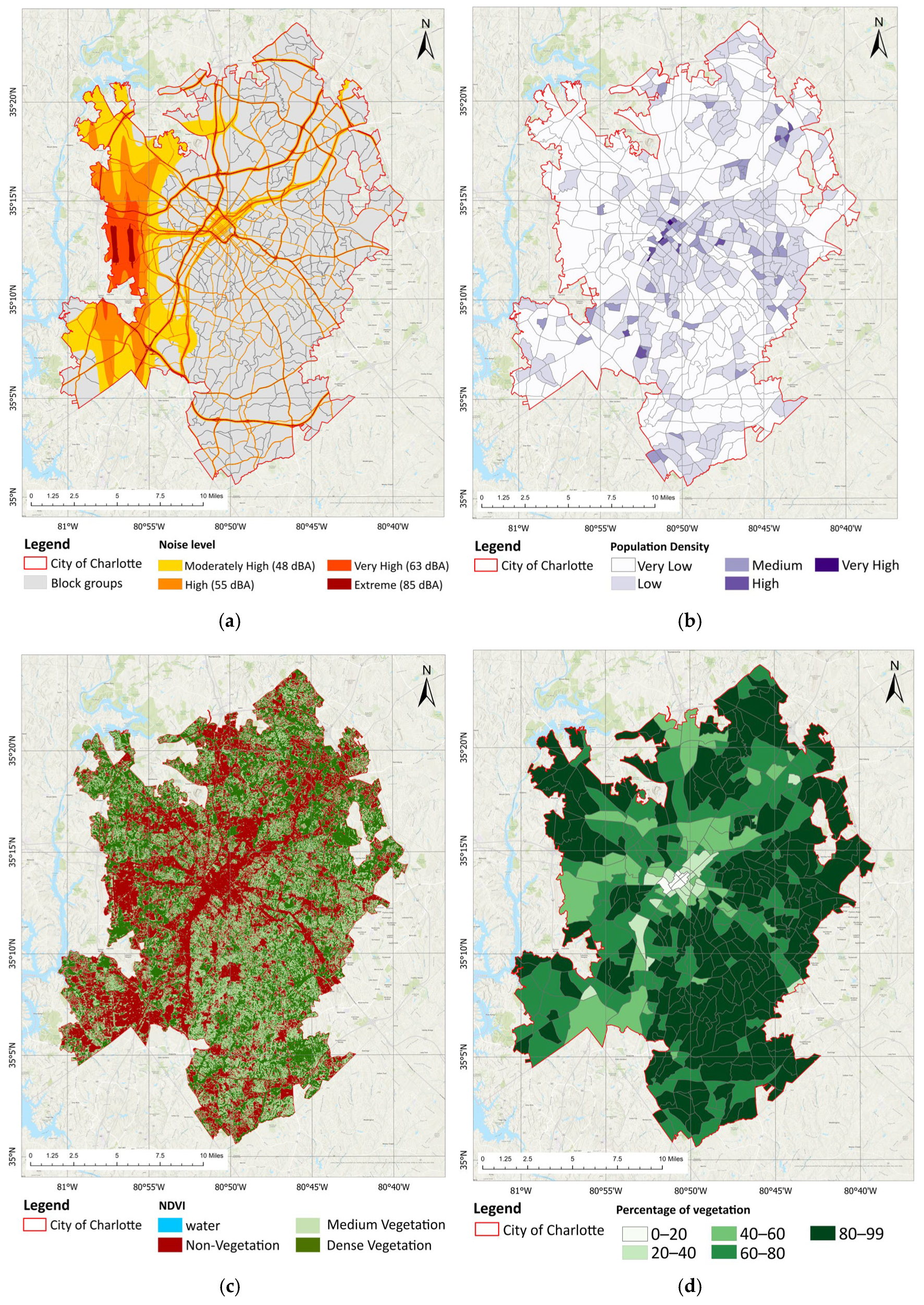
3.1. Spatial Patterns of Noise Exposure, Population and Vegetation Density
3.2. Global Relationship Between Population Density, Vegetation, and Noise Exposure
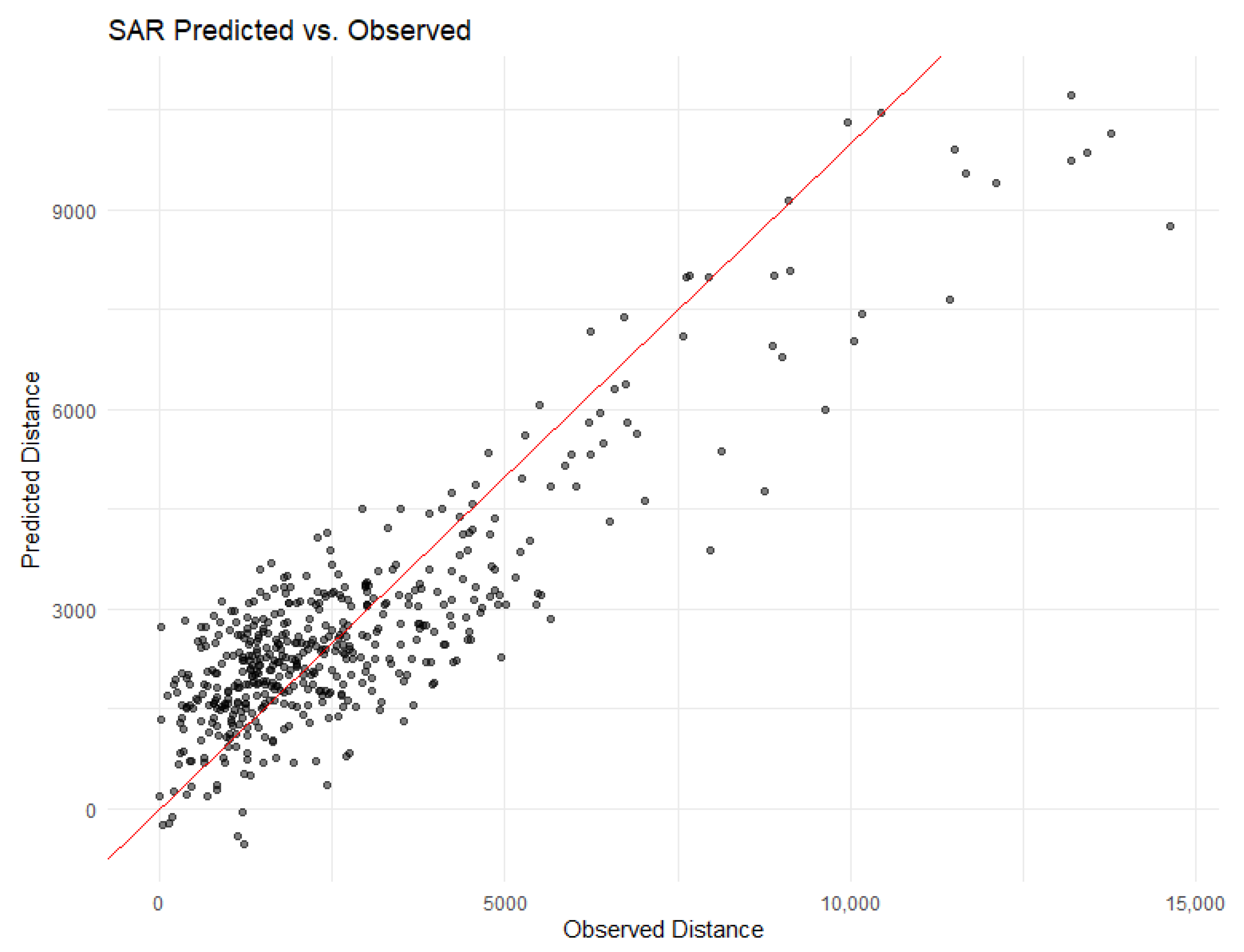
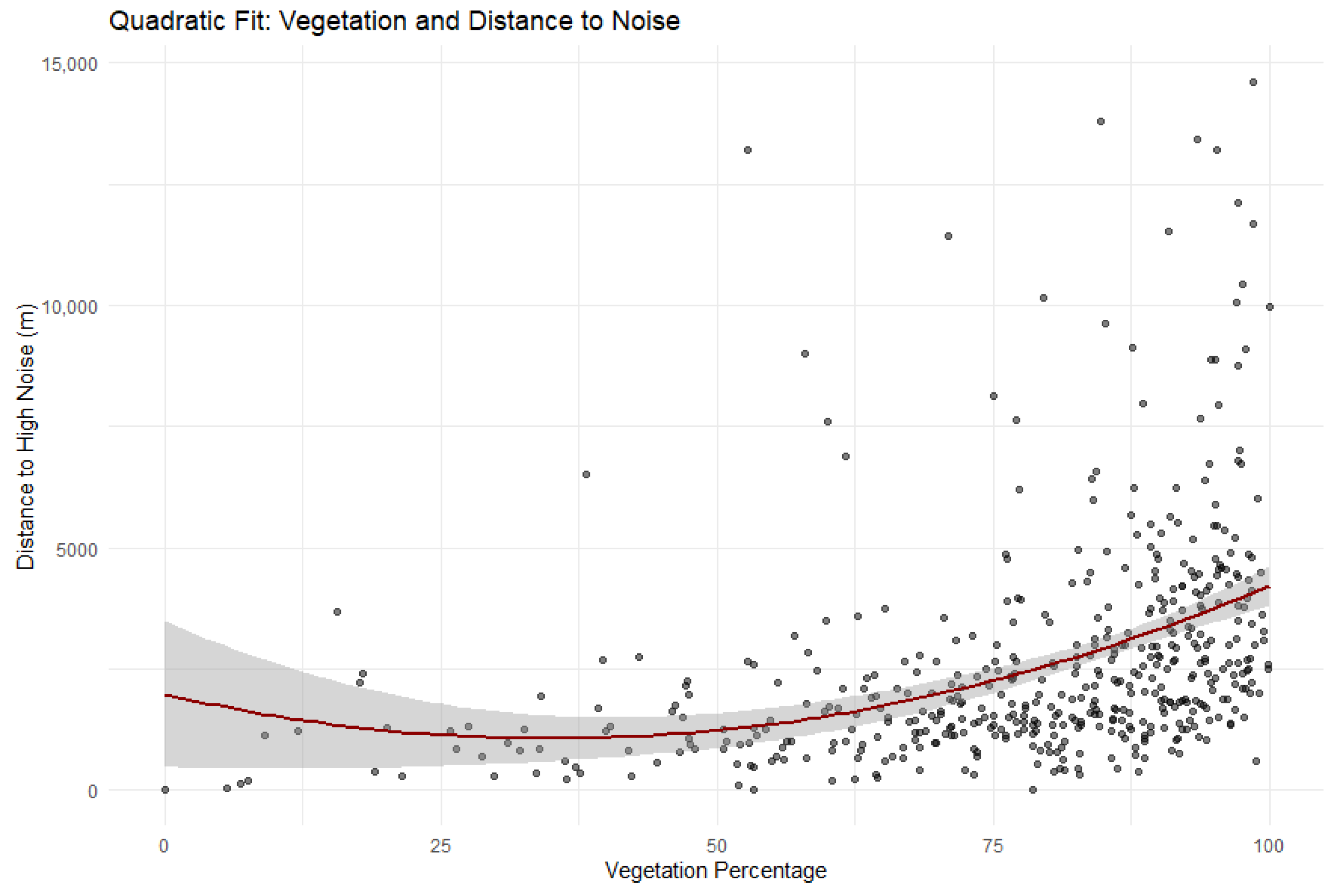
3.3. Spatial Autocorrelation, Nonlinear Vegetation Effects, and Model Improvement: Spatial Autoregressive (SAR) Model
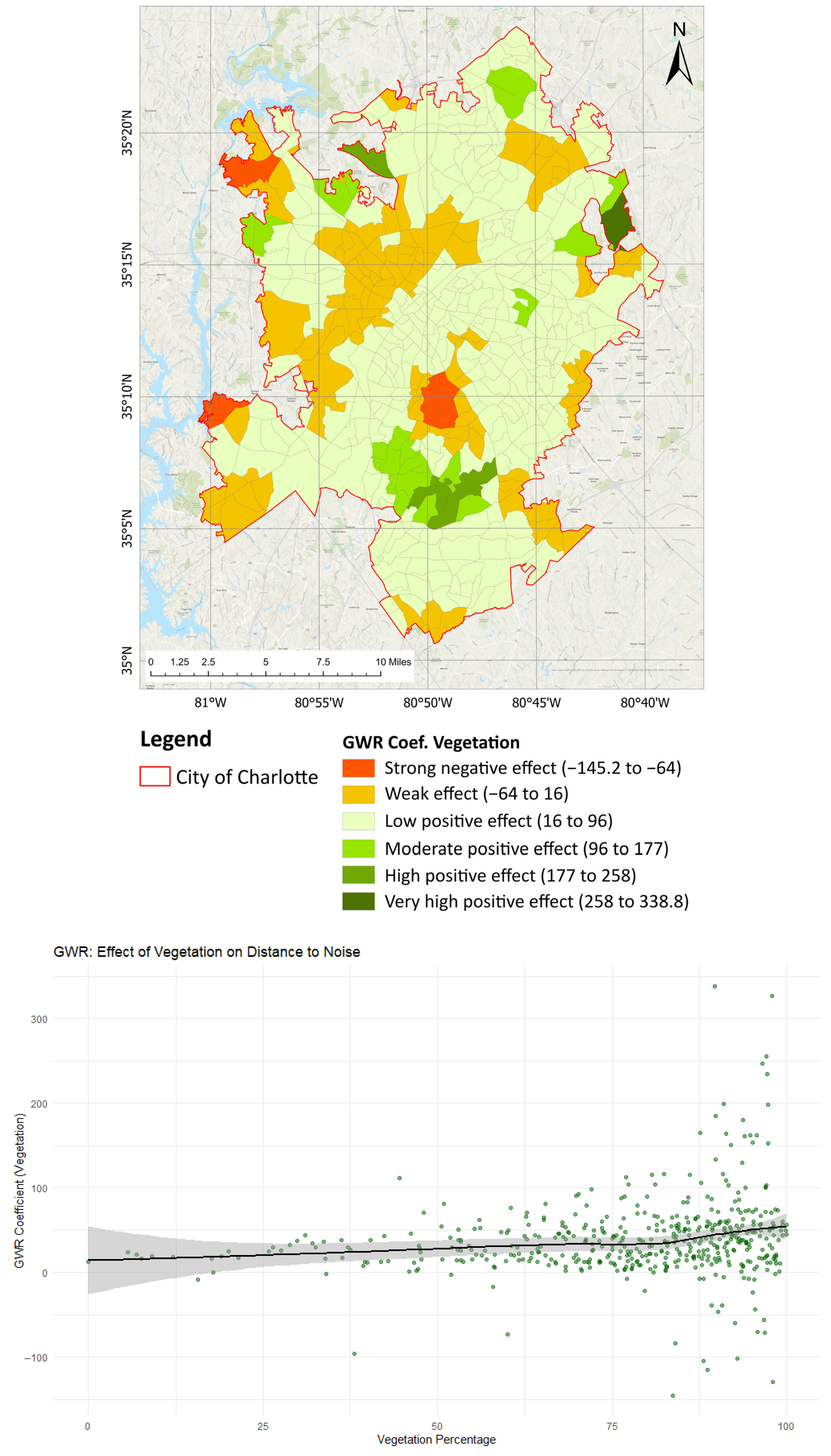
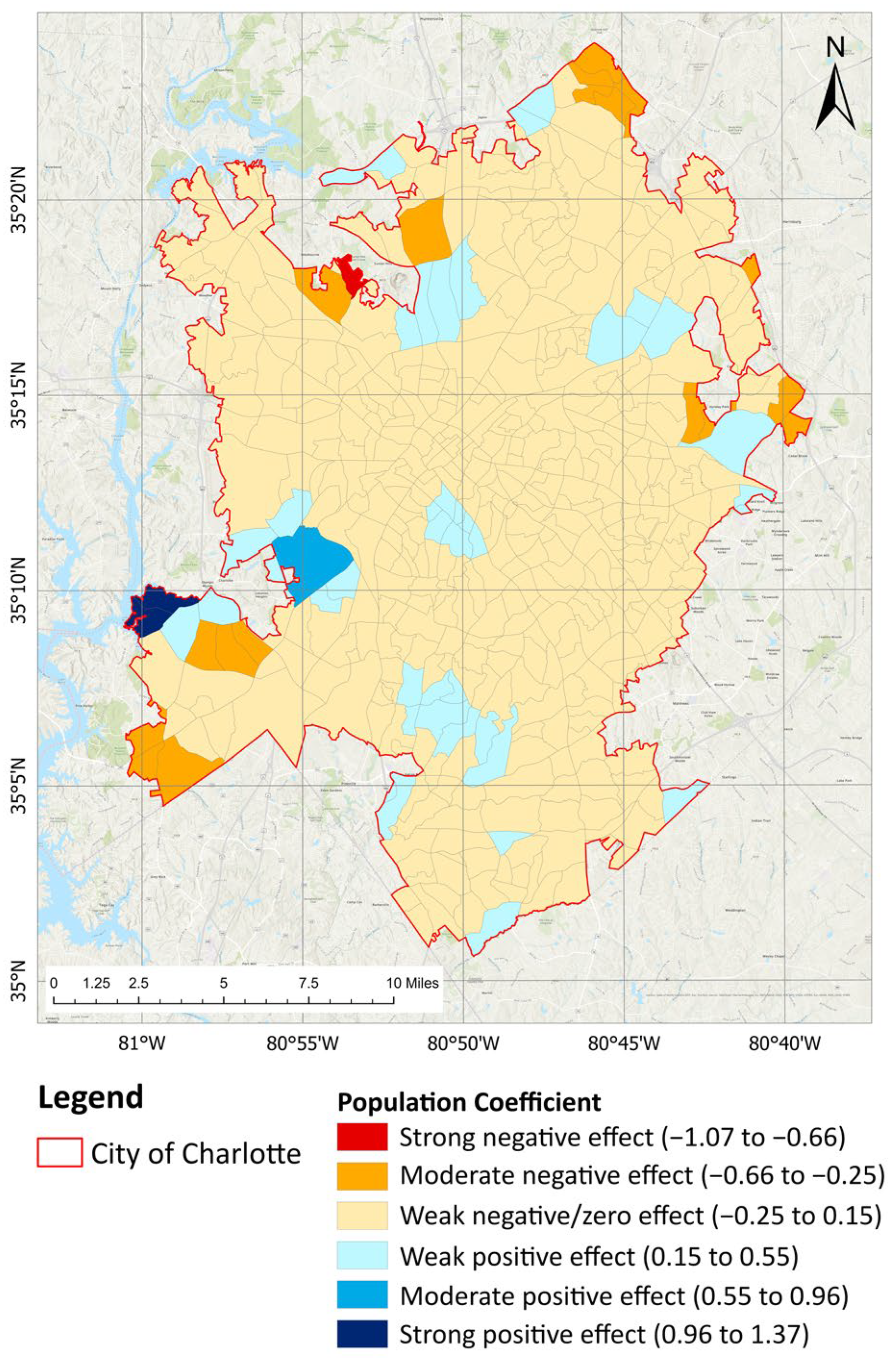
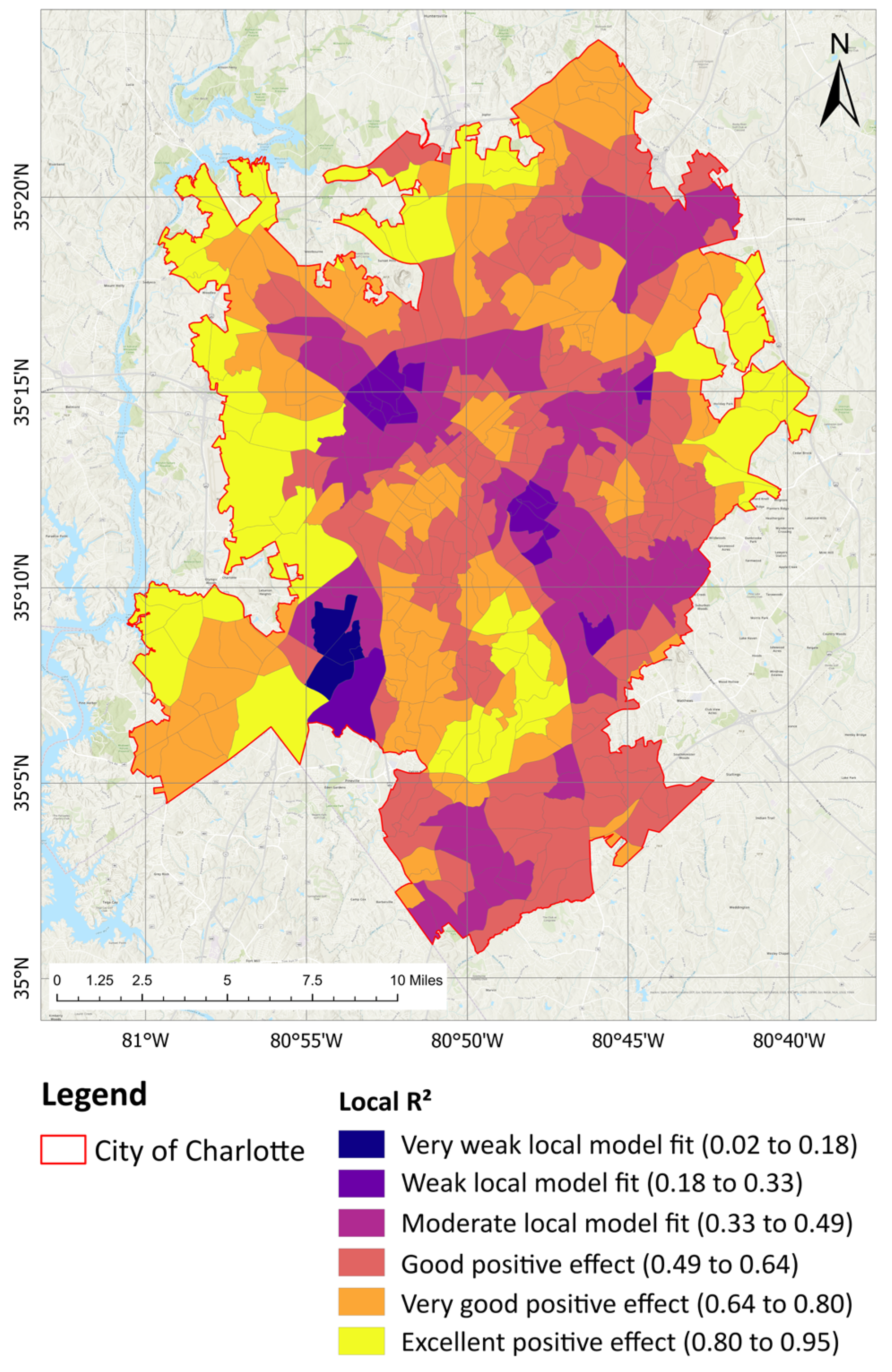
3.4. Spatial Heterogeneity and Localized Effects: Geographically Weighted Regression (GWR)
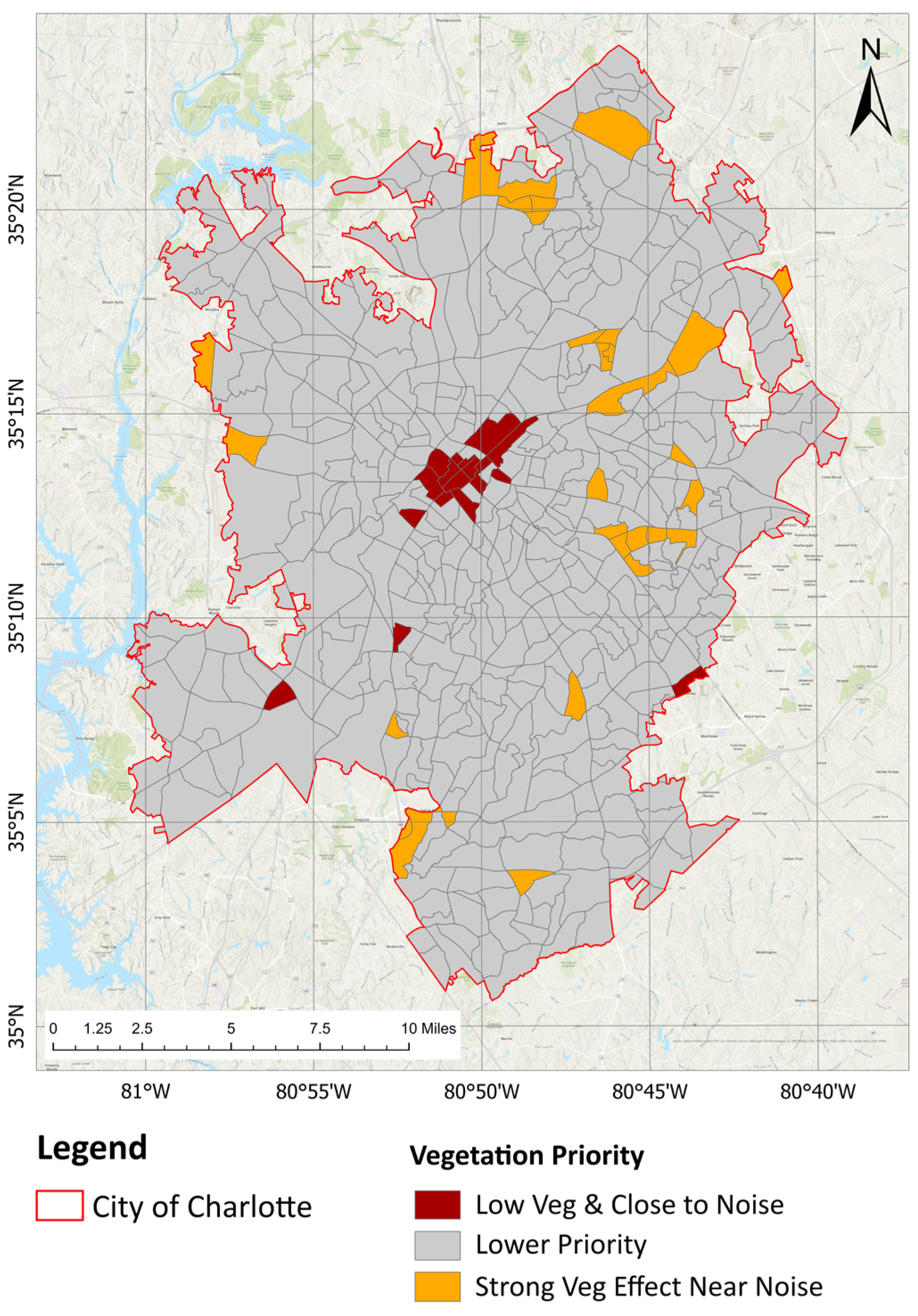
3.5. Identification of Priority Areas for Green Infrastructure Intervention
- 1.
- Low Veg and Close to Noise (Dark Red):
- 2.
- Strong Veg Effect Near Noise (Orange):
- 3.
- Lower Priority Areas (Gray):
3.6. Statistical Summary of Model Performance
4. Discussion
5. Conclusions
Supplementary Materials
Author Contributions
Funding
Institutional Review Board Statement
Informed Consent Statement
Data Availability Statement
Conflicts of Interest
Abbreviations
| NDVI | Normalized Difference Vegetation Index |
| OLS | Ordinary Least Squares |
| SAR | Spatial Autoregressive |
| GWR | Geographically Weighted Regression |
| UDO | Unified Development Ordinance |
| AIC | Akaike Information Criterion |
| RMSE | Root Mean Squared Error |
References
- United Nations Department of Economic and Social Affairs. World Urbanization Prospects: The 2018 Revision; United Nations: New York City, NY, USA, 2018. [Google Scholar]
- Elmqvist, T.; Goodness, J.; Marcotullio, P.J.; Parnell, S.; Sendstad, M.; Wilkinson, C.; Fragkias, M.; Güneralp, B.; McDonald, R.I.; Schewenius, M.; et al. Urbanization, Biodiversity and Ecosystem Services: Challenges and Opportunities: A Global Assessment; Springer: Berlin/Heidelberg, Germany, 2013; 755p. [Google Scholar] [CrossRef]
- Puplampu, D.A.; Boafo, Y.A. Exploring the impacts of urban expansion on green spaces availability and delivery of ecosystem services in the Accra metropolis. Environ. Chall. 2021, 5, 100283. [Google Scholar] [CrossRef]
- Pandey, B.; Ghosh, A. Urban ecosystem services and climate change: A dynamic interplay. Front. Sustain. Cities 2023, 5, 1281430. [Google Scholar] [CrossRef]
- Paudyal, K.; Baral, H.; Bhandari, S.P.; Bhandari, A.; Keenan, R.J. Spatial assessment of the impact of land use and land cover change on supply of ecosystem services in Phewa watershed, Nepal. Ecosyst. Serv. 2019, 36, 100895. [Google Scholar] [CrossRef]
- Madadi, P.; Sadeghi, A. Integrating Urban Expansion and Flood Risk: A Spatial Assessment of Impervious Surface Growth and Floodplain Exposure in Mecklenburg County (2011–2021). World Water Policy 2025, 12, e70052. [Google Scholar] [CrossRef]
- Nguyen, M.H.; Nguyen, M.H.T.; Jin, R.; Nguyen, Q.L.; La, V.P.; Le, T.T.; Vuong, Q.H. Preventing the Separation of Urban Humans from Nature: The Impact of Pet and Plant Diversity on Biodiversity Loss Belief. Urban Sci. 2023, 7, 46. [Google Scholar] [CrossRef]
- Zhang, P.; Dong, Y.; Ren, Z.; Wang, G.; Guo, Y.; Wang, C.; Ma, Z. Rapid urbanization and meteorological changes are reshaping the urban vegetation pattern in urban core area: A national 315-city study in China. Sci. Total Environ. 2023, 904, 167269. [Google Scholar] [CrossRef]
- Hartig, T.; Mitchell, R.; De Vries, S.; Frumkin, H. Nature and health. Annu. Rev. Public Health 2014, 35, 207–228. [Google Scholar] [CrossRef]
- Wood, E.; Harsant, A.; Dallimer, M.; de Chavez, A.C.; McEachan, R.R.C.; Hassall, C. Not all green space is created equal: Biodiversity predicts psychological restorative benefits from urban green space. Front. Psychol. 2018, 9, 391823. [Google Scholar] [CrossRef]
- Xu, J.; Liu, N.; Polemiti, E.; Garcia-Mondragon, L.; Tang, J.; Liu, X.; Lett, T.; Yu, L.; Nöthen, M.M.; Feng, J.; et al. Effects of urban living environments on mental health in adults. Nat. Med. 2023, 29, 1456–1467. [Google Scholar] [CrossRef]
- Lackey, N.Q.; Tysor, D.A.; McNay, G.D.; Joyner, L.; Baker, K.H.; Hodge, C. Mental health benefits of nature-based recreation: A systematic review. Ann. Leis. Res. 2021, 24, 379–393. [Google Scholar] [CrossRef]
- Li, S.; Chen, T.; Chen, F.; Mi, F. How Does the Urban Forest Environment Affect the Psychological Restoration of Residents? A Natural Experiment in Environmental Perception from Beijing. Forests 2023, 14, 1986. [Google Scholar] [CrossRef]
- Hoover, F.-A.; Meerow, S.; Coleman, E.; Grabowski, Z.; McPhearson, T. Why go green? Comparing rationales and planning criteria for green infrastructure in U.S. city plans. Landsc. Urban Plan. 2023, 237, 104781. [Google Scholar] [CrossRef]
- McPhearson, T.; Kremer, P.; Hamstead, Z.A. Mapping ecosystem services in New York City: Applying a social–ecological approach in urban vacant land. Ecosyst. Serv. 2013, 5, 11–26. [Google Scholar] [CrossRef]
- Semeraro, T.; Scarano, A.; Buccolieri, R.; Santino, A.; Aarrevaara, E. Planning of Urban Green Spaces: An Ecological Perspective on Human Benefits. Land 2021, 10, 105. [Google Scholar] [CrossRef]
- Tzoulas, K.; Korpela, K.; Venn, S.; Yli-Pelkonen, V.; Kaźmierczak, A.; Niemela, J.; James, P. Promoting ecosystem and human health in urban areas using Green Infrastructure: A literature review. Landsc. Urban Plan. 2007, 81, 167–178. [Google Scholar] [CrossRef]
- Madadi, P.; Masnavi, M.R. Environmental planning of urban green infrastructure networks in the eco-city framework, the case of Ghare-Kahriz Arak, Iran. Discov. Cities 2025, 2, 92. [Google Scholar] [CrossRef]
- Feng, L.; Wang, J.; Liu, B.; Hu, F.; Hong, X.; Wang, W. Does Urban Green Space Pattern Affect Green Space Noise Reduction? Forests 2024, 15, 1719. [Google Scholar] [CrossRef]
- Munzel, T.; Gori, T.; Babisch, W.; Basner, M. Cardiovascular effects of environmental noise exposure. Eur. Heart J. 2014, 35, 829–836. [Google Scholar] [CrossRef]
- Zaman, M.; Muslim, M.; Jehangir, A. Environmental noise-induced cardiovascular, metabolic and mental health disorders: A brief review. Environ. Sci. Pollut. Res. 2022, 29, 76485–76500. [Google Scholar] [CrossRef]
- Stuhlmacher, M.; Woods, J.; Yang, L.; Sarigai, S. How Does the Composition and Configuration of Green Space Influence Urban Noise?: A Systematic Literature Review. Curr. Landsc. Ecol. Rep. 2024, 9, 73–87. [Google Scholar] [CrossRef]
- Margaritis, E.; Kang, J. Relationship between urban green spaces and other features of urban morphology with traffic noise distribution. Urban For. Urban Green. 2016, 15, 174–185. [Google Scholar] [CrossRef]
- Margaritis, E.; Kang, J. Relationship between green space-related morphology and noise pollution. Ecol. Indic. 2017, 72, 921–933. [Google Scholar] [CrossRef]
- Singh, K.K.; Vogler, J.B.; Shoemaker, D.A.; Meentemeyer, R.K. LiDAR-Landsat data fusion for large-area assessment of urban land cover: Balancing spatial resolution, data volume and mapping accuracy. ISPRS J. Photogramm. Remote Sens. 2012, 74, 110–121. [Google Scholar] [CrossRef]
- TreesCharlotte; PlanIT Geo. Charlotte, NC Urban Tree Canopy Assessment. 2023. Available online: https://treescharlotte.org/wp-content/uploads/2023/05/charlotte-nc-tree-canopy-assessment-report-final.pdf?utm_source=chatgpt.com (accessed on 24 May 2025).
- City of Charlotte. Urban Forestry. City of Charlotte. 2025. Available online: https://www.charlottenc.gov/Growth-and-Development/Getting-Started-on-Your-Project/Urban-Forestry?utm_source=chatgpt.com (accessed on 1 June 2025).
- City of Charlotte. Charlotte Tree Ordinance; City of Charlotte: Charlotte, NC, USA, 2023; Volume 1.
- Esri. U.S. Census Block Groups (2020). 2020. Available online: https://www.arcgis.com/home/search.html?restrict=false&sortField=relevance&sortOrder=desc&searchTerm=tags%3A%22+block+groups%22#content (accessed on 10 January 2025).
- U.S. Department of Transportation, B. of T.S. U.S. Department of Transportation, Bureau of Transportation Statistics. 2020. Available online: https://maps.dot.gov/BTS/NationalTransportationNoiseMap (accessed on 10 January 2025).
- Welch, D.; Shepherd, D.; Dirks, K.N.; Reddy, R. Health effects of transport noise. Transp. Rev. 2023, 43, 1190–1210. [Google Scholar] [CrossRef]
- Volpe National Transportation Systems Center: Environmental Measurement and Modeling Division, Environmental Science and Engineering Division. National Transportation Noise Map Documentation; United States Department of Transportation Office of the Assistance Secretary for Research and Technology Volpe National Transportation Systems Center Environmental Measurement and Modeling Division, Environmental Science and Engineering Division: Cambridge, MA, USA, 2020. [CrossRef]
- U.S. Geological Survey (USGS). USGS EarthExplorer. 2020. Available online: https://earthexplorer.usgs.gov/ (accessed on 15 January 2025).
- Barnes, J.C.; Forde, D.R. (Eds.) OLS (Linear) Regression. In The Encyclopedia of Research Methods in Criminology and Criminal Justice: Volume II: Parts 5–8; John Wiley & Sons, Inc.: Hoboken, NJ, USA, 2021; Volume 2, pp. 509–514. [Google Scholar] [CrossRef]
- Deilami, K.; Hayes, J.F.; Bechtel, B.; Keramitsoglou, I.; Kotthaus, S.; Voogt, J.A.; Zakšek, K.; Li, Z.; Thenkabail, P.S. Correlation or Causality between Land Cover Patterns and the Urban Heat Island Effect? Evidence from Brisbane, Australia. Remote Sens. 2016, 8, 716. [Google Scholar] [CrossRef]
- Jin, Y.; Zhang, H.; Yan, Y.; Cong, P. A Semi-Parametric Geographically Weighted Regression Approach to Exploring Driving Factors of Fractional Vegetation Cover: A Case Study of Guangdong. Sustainability 2020, 12, 7512. [Google Scholar] [CrossRef]
- Gedamu, W.T.; Plank-Wiedenbeck, U.; Wodajo, B.T. A spatial autocorrelation analysis of road traffic crash by severity using Moran’s I spatial statistics: A comparative study of Addis Ababa and Berlin cities. Accid. Anal. Prev. 2024, 200, 107535. [Google Scholar] [CrossRef]
- Zhang, C.; Lv, W.; Zhang, P.; Song, J. Multidimensional spatial autocorrelation analysis and it’s application based on improved Moran’s I. Earth Sci. Inform. 2023, 16, 3355–3368. [Google Scholar] [CrossRef]
- Dell’Anna, F.; Bravi, M.; Bottero, M. Urban Green infrastructures: How much did they affect property prices in Singapore? Urban For. Urban Green. 2022, 68, 127475. [Google Scholar] [CrossRef]
- Gao, C.; Feng, Y.; Tong, X.; Lei, Z.; Chen, S.; Zhai, S. Modeling urban growth using spatially heterogeneous cellular automata models: Comparison of spatial lag, spatial error and GWR. Comput. Environ. Urban Syst. 2020, 81, 101459. [Google Scholar] [CrossRef]
- Furková, A. Implementation of MGWR-SAR models for investigating a local particularity of European regional innovation processes. Cent. Eur. J. Oper. Res. 2022, 30, 733–755. [Google Scholar] [CrossRef]
- Brunsdon, C.; Fotheringham, A.S.; Charlton, M.E. Geographically Weighted Regression: A Method for Exploring Spatial Nonstationarity. Geogr. Anal. 1996, 28, 281–298. [Google Scholar] [CrossRef]
- Hu, M.; Li, Z.; Wang, J.; Jia, L.; Liao, Y.; Lai, S.; Guo, Y.; Zhao, D.; Yang, W. Determinants of the incidence of hand, foot and mouth disease in China using geographically weighted regression models. PLoS ONE 2012, 7, e38978. [Google Scholar] [CrossRef]
- Kupfer, J.A.; Farris, C.A. Incorporating spatial non-stationarity of regression coefficients into predictive vegetation models. Landsc. Ecol. 2007, 22, 837–852. [Google Scholar] [CrossRef]
- Wang, Q.; Ni, J.; Tenhunen, J. Application of a geographically-weighted regression analysis to estimate net primary production of Chinese forest ecosystems. Glob. Ecol. Biogeogr. 2005, 14, 379–393. [Google Scholar] [CrossRef]


| Variable | Estimate | Std. Error | z-Value | p-Value | Interpretation |
|---|---|---|---|---|---|
| (Intercept) | 275.23 | 417.10 | 0.660 | 0.509 | Not significant |
| veg_percent | −32.01 | 13.11 | −2.44 | 0.0146 | Base effect negative |
| I (veg_percent2) | 0.387 | 0.101 | 3.83 | <0.0001 | Significant: supports nonlinear effect (benefit increases after ~35.2% coverage) |
| PopDen | 0.0136 | 0.0141 | 0.97 | 0.333 | Not significant |
| (Spatial lag) | 0.019 | 46.41 | <0.001 | High spatial dependence; validates SAR approach |
Disclaimer/Publisher’s Note: The statements, opinions and data contained in all publications are solely those of the individual author(s) and contributor(s) and not of MDPI and/or the editor(s). MDPI and/or the editor(s) disclaim responsibility for any injury to people or property resulting from any ideas, methods, instructions or products referred to in the content. |
© 2026 by the authors. Licensee MDPI, Basel, Switzerland. This article is an open access article distributed under the terms and conditions of the Creative Commons Attribution (CC BY) license.
Share and Cite
Madadi, P.; Hoover, F.-A. Vegetation Thresholds and Spatial Variation in Sustainable Urban Noise Mitigation: A Case Study from Charlotte, NC. Sustainability 2026, 18, 1476. https://doi.org/10.3390/su18031476
Madadi P, Hoover F-A. Vegetation Thresholds and Spatial Variation in Sustainable Urban Noise Mitigation: A Case Study from Charlotte, NC. Sustainability. 2026; 18(3):1476. https://doi.org/10.3390/su18031476
Chicago/Turabian StyleMadadi, Pegah, and Fushcia-Ann Hoover. 2026. "Vegetation Thresholds and Spatial Variation in Sustainable Urban Noise Mitigation: A Case Study from Charlotte, NC" Sustainability 18, no. 3: 1476. https://doi.org/10.3390/su18031476
APA StyleMadadi, P., & Hoover, F.-A. (2026). Vegetation Thresholds and Spatial Variation in Sustainable Urban Noise Mitigation: A Case Study from Charlotte, NC. Sustainability, 18(3), 1476. https://doi.org/10.3390/su18031476