1. Introduction
Food fraud has emerged as one of the major global issues with profound impact on public health, market integrity, and consumer trust in the food system [
1]. Recent studies on the economic impact of food fraud within the global food supply chain estimate annual costs ranging from
$10 billion to
$49 billion [
2] and potentially between
$10 billion and
$65 billion [
3]. These figures correspond to approximately 5–7% of global food trade [
4].
Food fraud incidents, such as food adulteration and mislabeling, undermine the authenticity and safety of agri-food products throughout the supply chain [
5]. These incidents have highlighted the significant gaps in traditional food control mechanisms, prompting CAs worldwide to enhance preventive strategies and surveillance systems [
6,
7].
Beyond regulatory and enforcement concerns, food fraud is increasingly recognized as a systemic threat to the sustainability of food supply chains as it disrupts fair market practices, weakens consumer confidence, and may enable environmentally harmful production practices [
8].
In this context, food fraud is increasingly conceptualized not only as a compliance or enforcement issue, but also as a governance challenge with direct implications for the economic, social, and environmental dimensions of sustainability [
9,
10]. The increasing complexity and globalization of food supply chains have rendered conventional inspection methods insufficient for the timely and effective detection of fraudulent practices [
11,
12].
In response to these challenges, digital technologies, particularly artificial intelligence (AI), are increasingly employed to enhance food fraud detection and prevention. Beyond established applications of AI in food fraud detection, such as machine learning or big data analytics, AI can be utilized through a range of complementary approaches including predictive analytics, anomaly detection, the use of blockchain technology to ensure transparent records of product origin and movement, and automated analysis of large amounts of datasets derived from laboratory tests, commercial transactions, and customer complaints [
1,
13]. Moreover, AI-enabled controls contribute to sustainable food safety and authenticity by enhancing the transparency and efficiency of inspections, reducing information asymmetries and by strengthening the capacity of the food supply chains to recover from fraud-related disruptions [
9,
14,
15].
In practice, the integration of AI into public control infrastructures remains limited, particularly within national authorities across the European Union. In Greece, the food control system operates through a multi-tiered governance structure involving central CAs, regional food safety units, and official laboratories. While the legislative and institutional framework is formally aligned with EU mandates, persistent resource availability, inspector training, and intergraded data platforms crucially affect the system’s capacity to detect and respond to food fraud consistently [
16,
17,
18]. These systemic limitations not only reduce the effectiveness of fraud prevention but also weaken the sustainability performance of the food supply chain by undermining governance coherence, limiting traceability, and eroding institutional trust [
10,
15].
These characteristics render the Greek case particularly suitable for examining how institutional design and inspectors’ perceptions interact within sustainability-oriented food fraud control systems.
Despite the extended literature on food fraud and digitalization, limited attention has been paid to inspectors’ perceptions as a critical governance layer capable of bridging the gap between regulatory framework, operational control practices, and sustainability outcomes. Understanding inspectors’ perceptions will assist in identifying institutional weaknesses and provide a basis for developing a more cohesive and sustainable control strategy.
Accordingly, this study addresses the following research questions:
RQ1: How do official food inspectors perceive the prevalence and dominant forms of food fraud within the Greek food supply chain?
RQ2: Which product categories and fraud typologies are perceived as most vulnerable?
RQ3: Which existing control tools are perceived as most effective for the detection of food fraud?
RQ4: How do inspectors perceive the potential role and institutional readiness for AI-enabled tools in supporting sustainable food supply chain governance?
The study adopts an exploratory, perception-based approach and does not seek to estimate objective fraud prevalence or establish causal relationships. Instead, it aims to provide governance-relevant empirical insights that can inform more coherent and sustainable food fraud control strategies.
2. Literature Review
2.1. Food Fraud as a Governance and Sustainability Challenge
The literature on food fraud has gradually moved from a narrow focus on food safety incidents, economic deception, and consumer protection to a much broader sustainability-oriented perspective [
19,
20]. Recent research on food fraud has focused on issues related to the governance of food supply chains, emphasizing their implications for environmental sustainability, social equity, market integrity, and consumer trust [
1,
8,
21]. Thus, food fraud is increasingly viewed as the outcome of interactions between the structural characteristics of supply chains and regulatory systems, thereby affecting long-term sustainability outcomes rather than opposed to being viewed as discrete acts of non-compliance [
17,
22].
A comprehensive strategy to combat food fraud is essential not only to detect fraudulent activities by identifying and prosecuting fraudsters, but also to focus on preventive measures. The theory of situational crime prevention seeks to minimize opportunities and increase risks to deter potential offenders [
12]. Traditionally, food policy has focused primarily on protecting public health. However, there is now a growing concern that the current risk analysis framework for food safety should be revised to provide evidence and guidance for the development of policies that effectively minimize incidents of food fraud [
23]. Within this evolving policy landscape, the ability of food control systems to safeguard authenticity, promote transparency, and ensure accountability across all nodes of the supply chain is now closely linked to economic, social, and environmental sustainability objectives [
14,
20].
Studies have shown that products with Protected Designation of Origin (PDO) and Protected Geographical Indication (PGI) are particularly vulnerable to fraud due to their premium market value and their intrinsic association with specific regional characteristics [
16,
20,
24], and fraud incidents significantly reduce consumer trust in these premium and certified products [
22,
25,
26,
27]. The integrity of these products is also central to rural economic sustainability, cultural heritage preservation, and environmentally differentiated production systems, making their protection a sustainability priority [
20]. This erosion of trust destabilizes markets for sustainable products, weakens incentives for compliance, and threatens rural development models that rely on quality differentiation and territorial identity [
28,
29]. Consequently, food fraud is increasingly viewed as a structural sustainability risk, rather than a series of isolated illegal acts [
1,
30,
31].
Taken together, food fraud is increasingly considered a structural threat to the sustainability of food supply chains, extending beyond immediate safety or economic concerns. By undermining consumer trust, distorting fair competition, and weakening incentives for certified and transparent production systems, food fraud challenges the environmental, social, and governance dimensions of sustainability [
32,
33,
34,
35]. However, while existing studies clearly establish these systemic effects, they primarily address food fraud at the level of markets, products, or consumers, offering limited insight into how sustainability risks are perceived and managed within official food control systems. This highlights the need for empirical research that links sustainability-oriented food fraud risks with the perspectives, capacities, and practices of regulatory authorities.
2.2. Official Food Controls and Inspectors’ Role in Fraud Detection
Official food control systems are essential government mechanisms through which regulatory requirements related to food safety, integrity, and sustainability are translated into practice [
33,
34,
35]. Official food controls function not only as compliance checks, but also as multi-level regulatory systems that rely on legal frameworks, information-sharing infrastructures, and inter-institutional cooperation [
36,
37]. Within this governance perspective, the effectiveness of food fraud prevention depends not only on formal regulations and technological tools, but also on the way control systems are designed, coordinated, and implemented across complex agri-food supply chains [
37,
38].
Regulation (EU) 2017/625 on Official Controls and Regulation (EU) 2019/1715 (IMSOC), together with their information systems and cooperation networks, such as the EU Food Fraud Network, provide the legal backbone for enforcing EU agri-food law, including the prevention and detection of food fraud [
34,
35]. This regulatory framework requires authorities to detect intentional deception for economic gain, extends official controls across the entire food chain, and strengthens cooperation among EU Member States through systems such as the EU Food Fraud Network (FFN), enabling information exchange and coordinated action against fraudulent practices [
9,
34,
39].
The system of official controls is crucial for the sustainability of food systems, as it ensures compliance, transparency, and consumer protection across all stages of the supply chain [
34]. In the context of Regulation (EU) No 2017/625, official controls enhance the ability of CAs to monitor the compliance of food businesses, collect reliable data, and support fair market practices [
34,
39]. The effective implementation of the Regulation provides a framework for a multi-level governance system that strengthens consumer confidence, combats fraudulent activities, and contributes to the development of a transparent food supply chain. Thus, official controls serve not only as a means of enforcement, but also as a cornerstone of sustainable agri-food chain governance, particularly in light of the significant sustainability challenges currently observed at the global level [
33,
34,
35,
39,
40].
The effectiveness of official controls therefore depends not only on regulatory design, but also on institutional capacity, coordination mechanisms, and the operational practices of frontline inspectors. A critical challenge within the EU is the absence of a unified legal definition of food fraud, which creates inconsistencies in enforcement across member states [
32]. The EU Food Fraud Network relies on operational criteria to distinguish fraud cases rather than a statutory definition, empowering but not obliging Member States to collaborate. The Rapid Alert System for Food and Feed (RASFF) serves as a key mechanism for reporting and analyzing food fraud incidents across the EU. However, its effectiveness is limited by its primary design focus on food safety rather than fraud detection [
34].
Therefore, official food controls constitute a central governance mechanism for mitigating food fraud risks and supporting the sustainability of food supply chain [
37,
40]. Risk-based inspections, laboratory analyses, traceability requirements, and information-sharing systems are designed to reduce information asymmetries and enhance accountability across the food supply chain actors [
31,
32,
36,
39,
40,
41,
42].
Nevertheless, empirical studies highlight significant variations in the effectiveness of official controls across authorities, often linked to differences in institutional capacity, inspector training, resource availability, and coordination mechanisms [
9,
34,
35,
36,
38]. Fragmented governance structures and uneven enforcement practices tend to create regulatory blind spots that increase vulnerability to fraud, particularly in complex, multi-tiered food supply chains [
13,
40,
43].
Current research into governance-oriented practices emphasizes the role of inspectors’ perceptions and their use of professional judgment in determining how enforcement outcomes are achieved. Inspectors act as “street-level bureaucrats” who assess risks and prioritize violations based upon their own interpretations of regulations and therefore play a significant role in shaping the practical effectiveness of official control systems [
44,
45,
46].
Taken together, the literature positions official food controls as a central component of food fraud governance, highlighting their role in mitigating information asymmetries, coordinating enforcement actions, and supporting the sustainability of food supply chains. At the same time, empirical evidence reveals substantial variation in control effectiveness across authorities, shaped by institutional capacity, resource availability, coordination mechanisms, and inspector training [
1,
10,
34,
40].
Importantly, the above-mentioned governance-oriented research underscores that inspectors’ perceptions and professional judgment play a decisive role in translating regulatory frameworks into enforcement outcomes. Despite this recognition, inspectors’ perspectives remain comparatively underexplored in food fraud research, which has largely focused on legal instruments, technological solutions, or firm-level behavior. This research gap highlights the need for empirical investigation into how frontline enforcement actors perceive and enact official controls within sustainability-oriented governance systems.
2.3. Digitalization and Artificial Intelligence in Food Fraud Prevention
The literature on food fraud prevention increasingly highlights digitalization and artificial intelligence as key enablers of risk-based, data-driven governance in food supply chains. Rather than being viewed as stand-alone technical solutions, digital tools and AI-based applications are discussed within broader debates on transparency, traceability, and institutional capacity to manage fraud risks [
35,
36,
47]. Accordingly, the potential contribution of digitalization to food fraud prevention depends not only on technological performance, but also on governance arrangements, organizational readiness, and the effective integration of digital tools into existing official control systems [
10,
19,
27,
39,
48].
Digitalization has been widely promoted as a means to enhance transparency, traceability, and resilience in food supply chains. Technologies such as blockchain, integrated databases, and advanced data analytics have demonstrated significant potential to support food fraud detection, early warning systems, and targeted inspections [
14,
29,
39,
48].
AI-based applications, including machine learning techniques and anomaly detection methods, have shown promising results in experimental and pilot-level studies, particularly when combined with large-scale datasets derived from trade flows, laboratory results, and alert systems [
49,
50,
51]. However, the majority of empirical evidence remains concentrated on technical feasibility rather than on institutional adoption within public authorities.
Previous studies indicate that technological solutions alone are insufficient to address food fraud risks without accompanying institutional reforms, capacity building, and ethical governance frameworks [
41,
50,
52,
53]. In official controls conducted by public authorities, the effectiveness of AI depends on inspector training, data quality, system interoperability, and trust in algorithmic decision-support systems [
51,
54,
55,
56]. Consequently, understanding the inspectors’ perceptions of AI is critical for assessing its realistic contribution to sustainable food supply chain governance.
Overall, the reviewed literature indicates that digitalization and artificial intelligence are increasingly discussed as potential tools for supporting food fraud prevention through enhanced data integration, early warning systems, and more targeted inspection approaches. At the same time, existing studies emphasize important limitations on routine institutional adoption within public authorities. In the context of official food controls, research highlights that the use and perceived usefulness of AI-based tools depend on factors such as inspector training, data quality, system interoperability, and trust in algorithmic decision-support systems. Despite growing attention to these governance-related conditions, empirical insights into inspectors’ perceptions of digitalization and AI remain limited, underscoring the need for further empirical investigation in this area.
2.4. Positioning and Contribution of the Present Study
Based on the above-mentioned literature, the present study is positioned as an exploratory, governance-oriented investigation focusing on inspectors’ perceptions within official food control systems. The study adopts an institutional governance perspective that emphasizes institutional capacity, coordination mechanisms, and information asymmetries as key determinants of sustainability outcomes, rather than advancing a specific causal model or testing hypotheses derived from a single theoretical framework.
By empirically capturing inspectors’ views on food fraud and its current detection tools, this research contributes novel insights to national and international debates on food fraud control. It complements existing firm- and technology-focused studies by highlighting the human and institutional dimensions that condition the effectiveness of regulatory interventions in complex food supply chains.
3. Materials and Methods
3.1. Research Design
The present study adopts a cross-sectional survey design to explore food inspectors’ perceptions regarding food fraud, current detection methods, and digital tools for food fraud detection within the Greek official food control system. Data were collected through a structured questionnaire that was distributed to food inspectors employed by the CAs throughout the country.
The study is explicitly positioned as exploratory and descriptive, rather than confirmatory or explanatory. Its primary objective is not to test cause-and-effect relationships or to measure the objective incidence of food fraud, but to identify patterns in perception, institutional variations, and governance-relevant insights derived from frontline inspectors. Such an approach is considered appropriate in contexts where empirical evidence remains limited and where professional judgment plays a central role in regulatory effectiveness [
57,
58].
Given the limited availability of public datasets on food fraud detection practices within public authorities, and the absence of harmonized indicators across institutions, an exploratory survey approach was considered the most appropriate means to address the research objectives and research questions of the study. This methodological choice aligns with previous studies examining inspectors’ perceptions, governance efficiency, and control system performance in relation to food safety and food fraud issues, which have likewise employed survey-based methodology [
40,
59,
60,
61,
62].
3.2. Sampling Strategy
The target population consisted of official food inspectors employed by the CAs responsible for official food controls in Greece, in accordance with Regulation (EU) No 2017/625. These authorities include: (i) the Ministry of Rural Development and Food (MRDF), (ii) the Regional Agricultural Directorates (DAOK), (iii) the Hellenic Food Authority (EFET), and (iv) ELGO–DIMITRA, the designated authority for PDO/PGI controls.
A non-probability purposive sampling strategy, complemented by institutional snowball dissemination, was employed. This approach was selected due to the absence of a publicly accessible sampling frame of inspectors and the institutional sensitivity of the target population. Similar sampling strategies are commonly applied in expert-based research, where access constraints and professional specialization limit the feasibility of random sampling [
63,
64].
Participation criteria included: (a) active involvement in official food controls, (b) employment within a CA during the survey period, and (c) professional experience related to inspection, auditing, or managerial oversight of food controls. No exclusion criteria were applied, beyond non-involvement in official control activities.
3.3. Questionnaire Development
The questionnaire was based on more than 15 years of expertise in the implementation of EU and national legislation on official food controls. It was developed based on a comprehensive review of the relevant literature [
49,
54,
59,
65,
66].
Structured into four sections, the questionnaire covered: (1) socio-demographic characteristics and occupational roles of respondents; (2) current food fraud detection practices and the effectiveness of official control systems; (3) a general evaluation of AI-based tools to strengthen official food controls; and (4) perceptions and attitudes towards the adoption of AI technologies in official food control activities.
The selection of food fraud categories and vulnerable product groups was theory-driven, drawing on established food fraud taxonomies and EU fraud reports [
66,
67]. The list of food fraud incidents included in the questionnaire was predefined by the authors based on an extensive review of the literature on food fraud typologies. The selected categories are representative of common fraudulent practices within official food control systems, including mislabeling, substitution, fraudulent claims, documentation irregularities, and other economically motivated practices, as identified in previous studies. The majority of attitudinal questions were measured using Likert-type scales, while selected items employed ranking formats to capture the perceived relative importance of each category.
Attitudinal and perceptual items were measured using a five-point Likert scale, ranging from 1 (strongly disagree/never) to 5 (strongly agree/always), consistent with established methodological practices. The choice of a five-point scale was guided by empirical evidence indicating that scales with five response categories provide an optimal balance between cognitive load, response reliability, and measurement validity in professional and expert surveys [
68,
69,
70].
The initial version of the questionnaire was reviewed by 10 experts specializing in official food control from the Competent Food Control Authorities. Experts were selected through purposive sampling, and subsequently, other experts were recruited using snowball sampling techniques [
58,
63,
71]. For the purposes of this study, experts were defined as professionals actively managing official controls at national, regional, or local levels, according to Regulation (EU) No 2017/625.
Experts were invited to provide feedback on the content, structure, and clarity of the questionnaire. They were also asked to provide suggestions for revisions and additions where appropriate. Based on their input, the questionnaire was revised and subsequently pilot-tested with the same group of experts, who voluntarily completed the survey using the SurveyMonkey® platform, an online tool designed for administering and collecting self-reported survey data.
3.4. Data Collection
Data were collected using the computer-assisted web interviewing (CAWI) method via the SurveyMonkey
® platform. The CAWI approach was selected due to its suitability for the geographically dispersed nature of the target population, its efficiency, and its demonstrated suitability for use in food governance and sustainability research [
72,
73,
74,
75].
The final version of the questionnaire was hosted on the SurveyMonkey® platform, and the survey link was emailed to Competent Food Control Authorities nationwide. These authorities were instructed to further disseminate the survey to their respective food control auditors.
Data were collected from November 2024 to January 2025. Although online data collection may introduce sampling bias, this approach aligns with contemporary practices reported in the literature, where convenience sampling is frequently employed [
61,
74].
Participation was entirely voluntary. Prior to completing the survey, participants were informed about the study’s objectives and assured that their responses would remain anonymous and confidential, to be used exclusively for research purposes.
3.5. Sample Characteristics
Among the 122 participants, women accounted for 61.5% of the responses, while men accounted for 38.5%. The higher representation of women respondents could be attributable to either the gender distribution of the types of CAs who participated in the study, or a greater willingness of women to participate in food-related surveys [
42] (
Table 1).
The distribution of respondents’ allocation across Competent Authorities (MRDF—Ministry of Rural Development and Food; DAOK—Regional Agricultural Directorates; EFET—Hellenic Food Authority; ELGO-DIMITRA—PDO/PGI inspection authority) was aligned with the organizational structure of the official food control system in Greece, thereby supporting the representativeness of the sample.
In terms of educational level, 53.3% of participants held a master’s degree and 23.8% held a doctorate, thus high educational attainment was also present in the sample. This is particularly relevant to the context of official food controls, where specialized scientific knowledge is critical.
Regarding occupational status, 73.0% of respondents were employed as inspectors, while 27.0% occupied managerial roles at the department or directorate level. This distribution of respondents between non-managerial and managerial positions potentially reflects the administrative hierarchy of the CAs.
The distribution of professional experience indicates that 58.2% of participants reported more than 10 years of experience, 23.0% reported between 5 and 10 years, and 18.8% reported less than 5 years. This profile provides evidence of a sample predominantly composed of inspectors with moderate to extensive professional experience, thereby enhancing the validity and reliability of the data collected for this study.
3.6. Calculations and Data Analysis
The first section of the questionnaire collected socio-demographic information. Respondents’ attitudes towards various statements regarding food fraud were assessed using a five-point Likert scale, where 1 indicated “strongly disagree” and 5 indicated “strongly agree” [
68,
69]. Statistical analyses were performed using IBM SPSS Statistics for Windows (version 23.0; IBM Corp., Armonk, NY, USA). Likert scale responses were treated as ordinal data. The internal consistency of the questionnaire was evaluated using Cronbach’s alpha, which demonstrated good reliability, with coefficients ranging from 0.70 to 0.86.
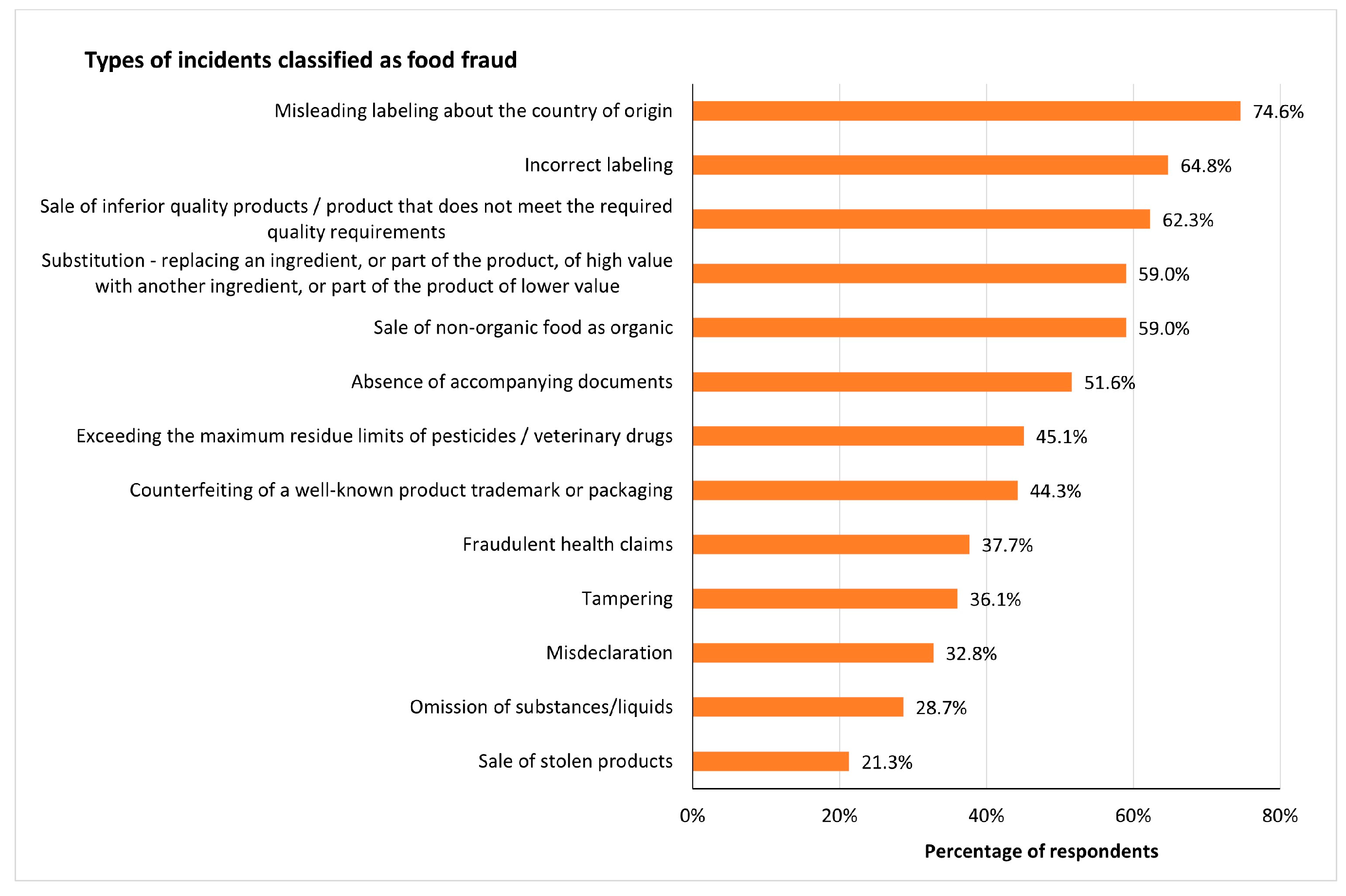
Facts identified as food fraud by the respondents (
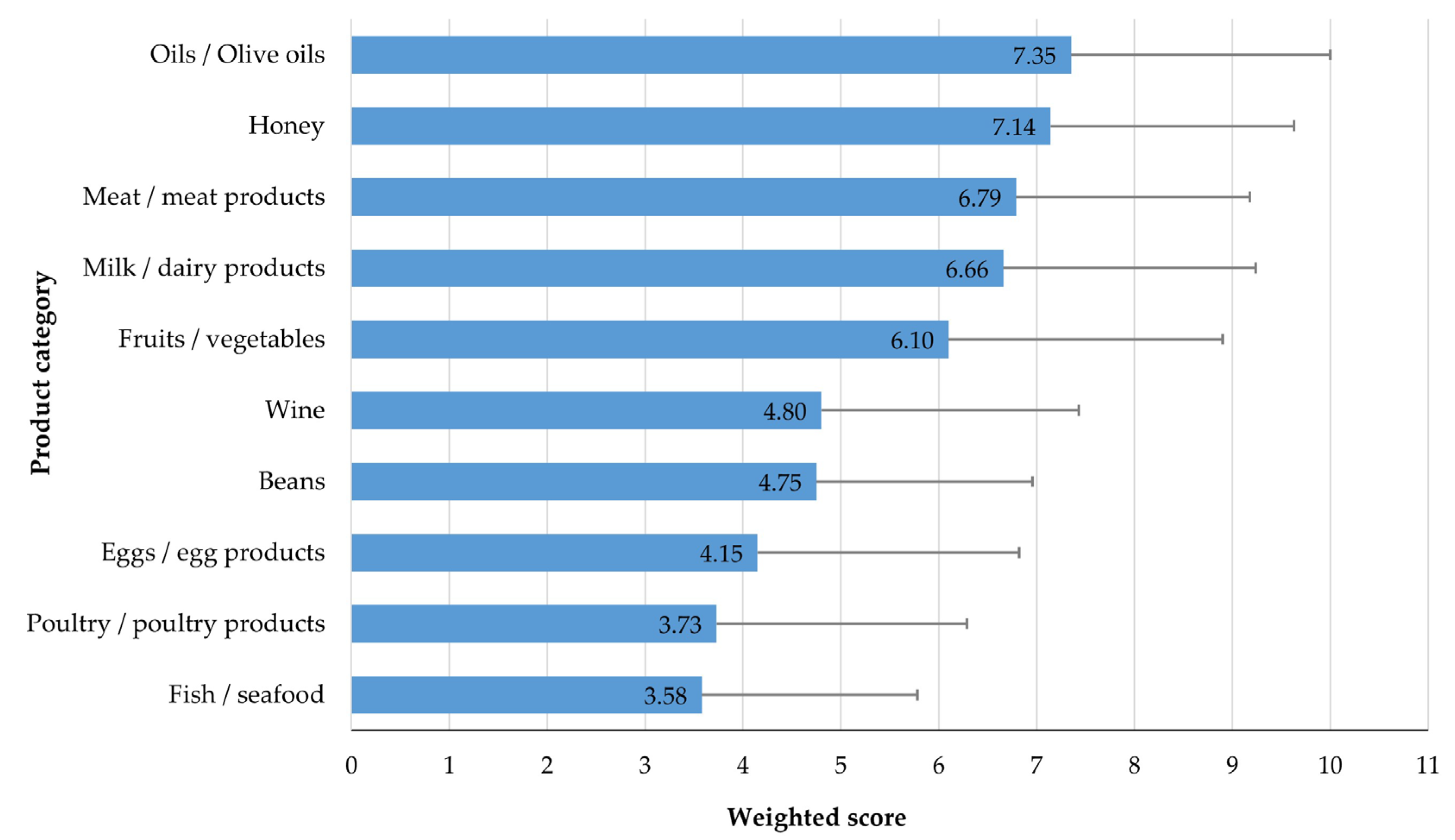
Figure 1) were ranked according to the percentage of participants who selected each category as a case of fraud. A weighted ranking score was used to calculate the score of the most vulnerable product to food fraud (
Figure 2) by assigning 10 points to the product ranked first, 9 points to the second, and progressively decreasing by one point per rank, with one point assigned to the lowest rank.
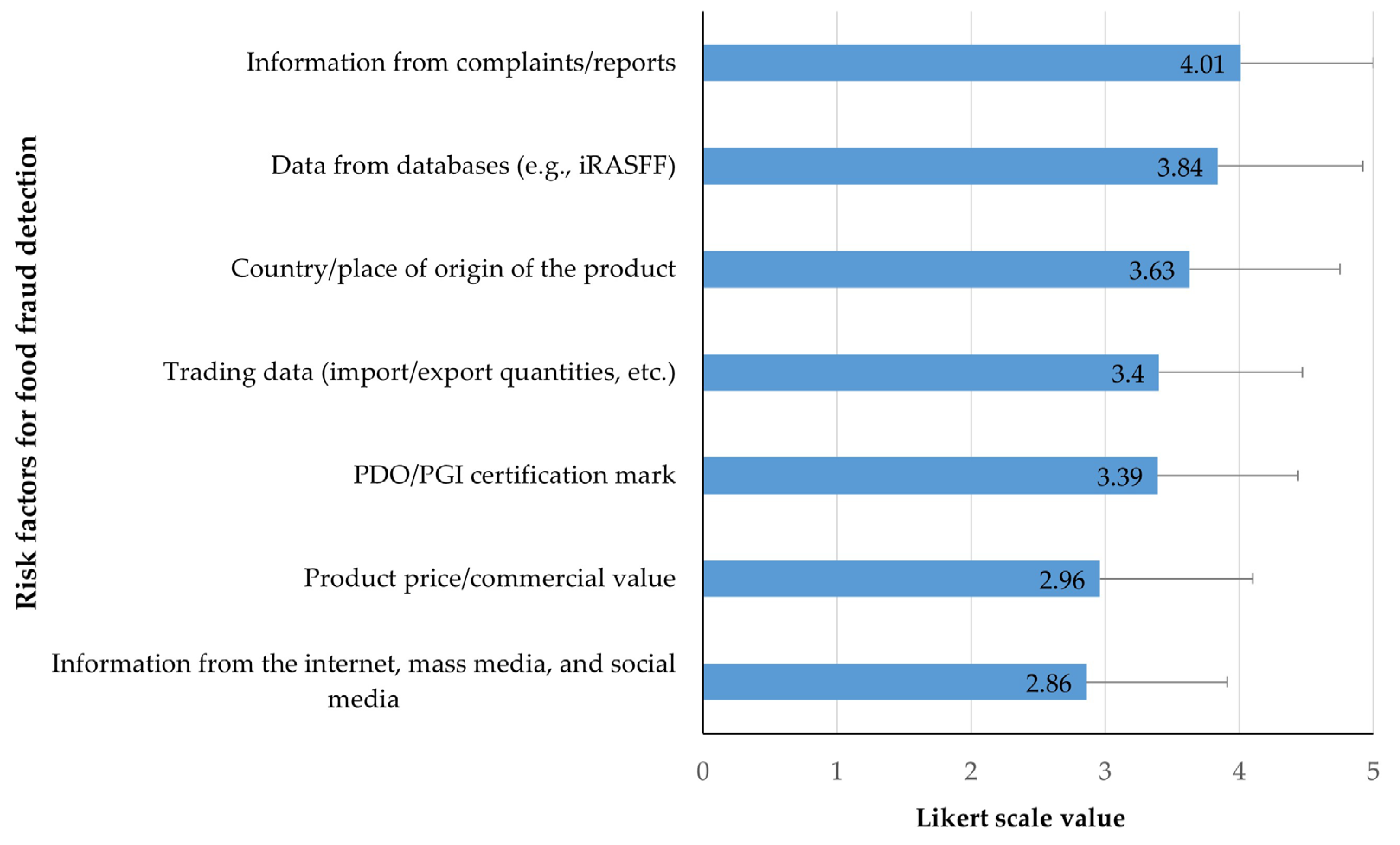
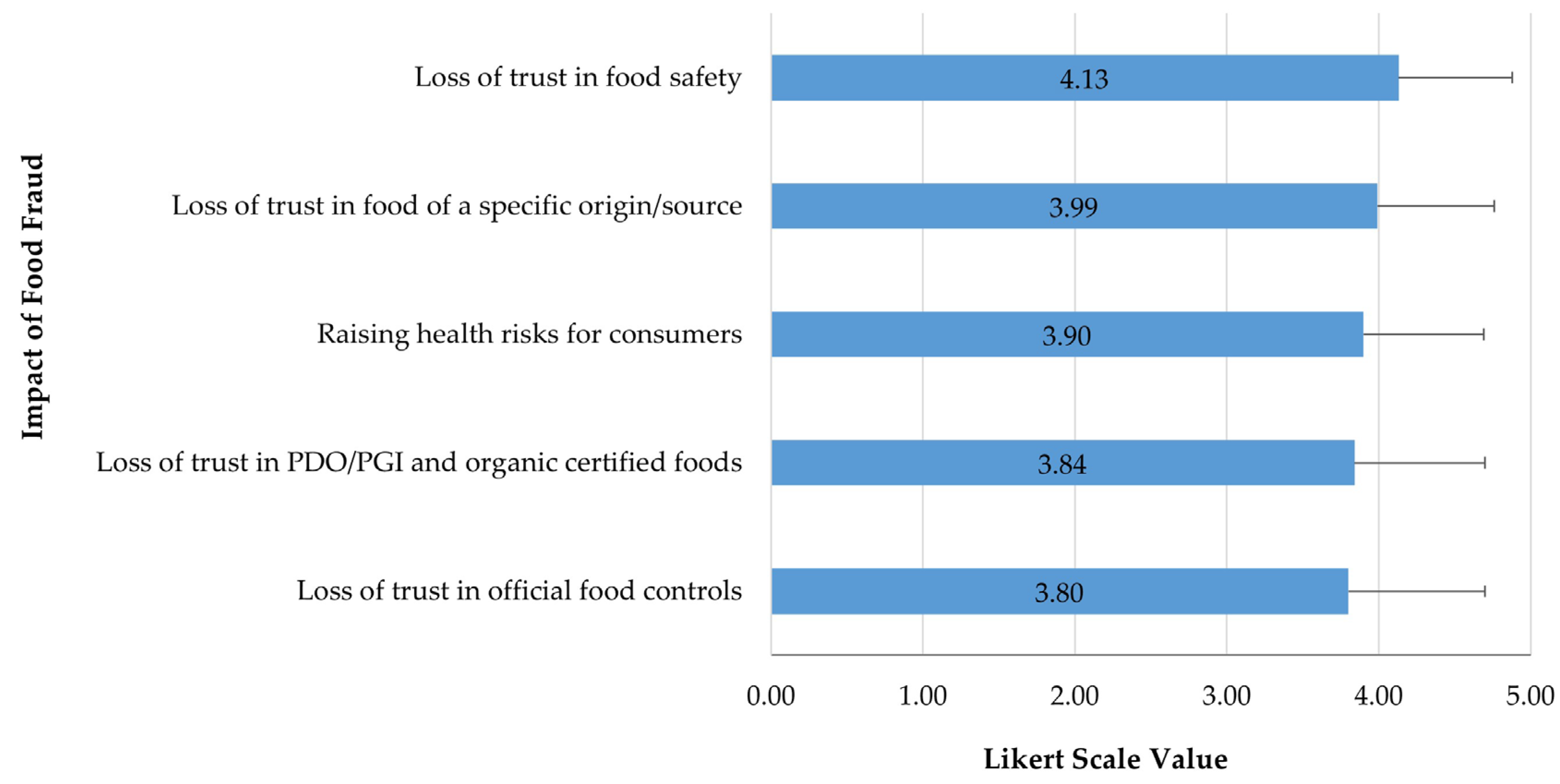
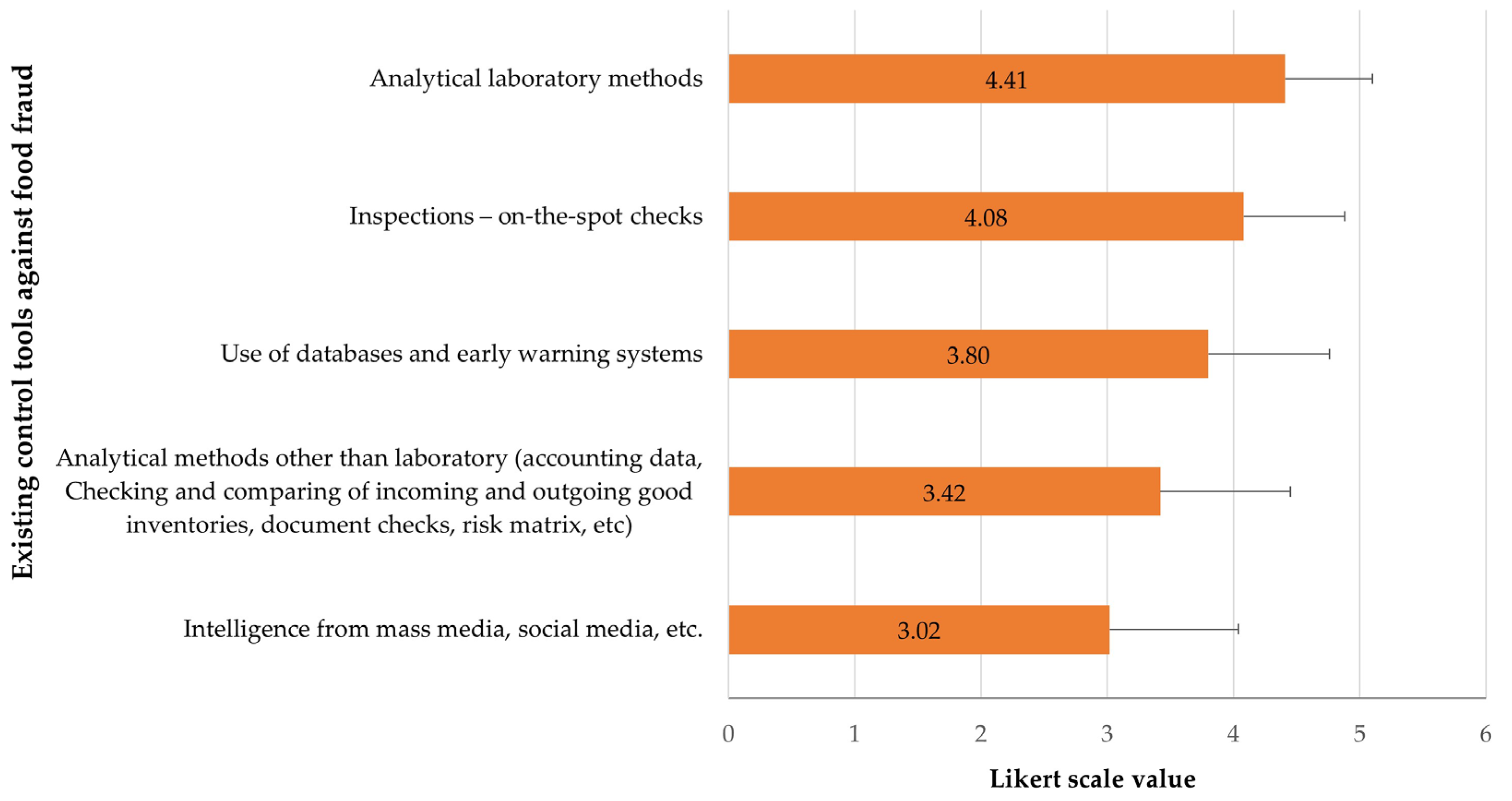
The ranking of the main risk factors for food fraud detection by CAs, the perceived impacts of food fraud, and the effectiveness of existing control tools against food fraud (
Figure 3,
Figure 4 and
Figure 5) was based on the respondents’ Likert-scale answers. For each item, mean values and standard deviations were calculated.
Non-parametric tests were employed to explore statistically significant differences between qualitative variables. The Chi-square test of independence was applied to examine associations between categorical variables. Where statistically significant relationships were identified, Cramér’s V coefficient was calculated to assess the strength of association, with the following interpretations: V ≈ 0.1 (weak association), V ≈ 0.3 (moderate association), and V ≥ 0.5 (strong association). Sociodemographic variables were considered potential predictors influencing responses to survey items. All statistical tests were conducted using a significance threshold of p < 0.05.
4. Results
4.1. Perceived Degree of Food Fraud
The analysis revealed (see
Table A1 in the
Appendix A) a statistically significant association between the respondents’ perceptions of food fraud degree and their CA affiliation (χ
2 = 23.426,
p = 0.024), while individual characteristics such as gender, age, and educational level did not have a statistically significant impact. These results indicate differences in perceived food fraud across institutional contexts rather than objective differences in fraud prevalence.
Respondents from the MRDF predominantly perceived food fraud as a moderate issue, with 57.1% of participants ranking it accordingly, while 21.6% reported higher perceived levels of food fraud (
Table 2). In the case of DAOK, 40.0% of participants perceived “some” fraud and 42.9% reported higher perceived levels. Among the EFET participants, concerns were more pronounced, with 40.9% rating food fraud as “high” and 18.2% as “very high”. In contrast, participants from ELGO-DIMITRA mostly considered the problem to be moderate (50.0%), while only 8.3% perceived it as “very high”.
The moderate association (Cramér’s V = 0.438) suggests that the institutional framework exerts a meaningful influence on the inspectors’ perception of food fraud within their authority operational areas. These findings should be considered as reflecting differences in perceived risk and exposure to food fraud, rather than as evidence of differential regulatory performance across CAs, which appear to differ in their perceived engagement with food fraud issues, potentially reflecting variations in mandates, operational focus, and inspection experience.
These findings are consistent with previous research suggesting that auditors’ perceptions of food fraud within their work environment are pivotal to the capacity of CAs to combat fraud. Knowledge, training, and field experience influence auditors’ ability to recognize and detect fraud and to implement effective controls [
15,
16,
76].
Generally, more experienced auditors tend to adopt a more comprehensive approach to identify fraudulent practices, thereby enhancing audit effectiveness [
76]. Enforcement style is also conditioned by auditors’ sense of responsibility and accountability, which can influence their willingness to act against food fraud [
43,
77]. When inspectors perceive a higher risk of personal liability, they may adopt a more cautious enforcement, potentially allowing some level of fraud to persist.
In addition, clear and standardized definitions and terminology for food fraud are essential, as ambiguity can impede inspectors’ ability to accurately identify and report fraudulent practices [
66].
From a sustainability and governance perspective, the observed institutional variability reflects perceived differences in enforcement contexts rather than verified systemic failures. Variations in perceived fraud risk may undermine the cohesion and predictability required for effective and transparent control systems. Such perceptions can influence resource prioritization and the identification of emerging risks, highlighting the importance of coordination and a shared understanding across CAs within the broader framework of EU food system governance, including the Farm-to-Fork Strategy.
4.2. Types of Incidents Classified as Fraud
Among incidents classified as food fraud according to the respondents’ perceptions (
Figure 1), mislabeling of country of origin accounted for the largest share (71.1%), indicating the prominence of origin-related claims in inspectors’ fraud risk assessments, rather than verified incident frequency.
Fraudulent practices are generally concentrated at points in a supply chain where there is an intersection of information asymmetry, traceability issues, and high value product claims [
39].
For PDO and PGI products, the stakes are even higher, as these products command price premiums due to certified quality and geographic links [
76]. Inspectors’ classification of misleading origin-related claims reflects concerns that such practices may erode consumer trust, particularly in certified schemes [
78].
The second most frequently cited issue was mislabeling, specifically marketing non-organic food as organic (64.7%). Misleading labeling is widely reported as the most prevalent type of food fraud [
24], and many cases involve false organic claims [
78]. In this study, the high frequency of this response reflects the inspectors’ perceived exposure to such practices during official controls.
Ranked third among the respondents’ choices was the sale of inferior-quality products or products that do not meet current standards (62.3%), as perceived by inspectors, reflecting concerns about passing off low-quality goods as premium. Strong economic incentives make this practice attractive, particularly for high-value categories such as PDO/PGI products [
1], which may shape inspectors’ heightened awareness of this fraud type.
The absence of accompanying product documentation was cited by 51.6% of respondents, suggesting, from inspectors’ perspectives, possible intentional concealment of traceability information for financial gain [
77]. Missing or falsified accompanying documentation substantially hinders the efforts of the CAs to combat fraud [
79]. Notably, the EU network’s 2020 report attributes 25% of cases to this category, encompassing forged documents and traceability failures [
80,
81,
82].
Exceeding the maximum permitted residue limits for pesticides or veterinary drugs was identified as fraud by 45.1% of participants. Such violations are often indicative of fraudulent practices [
1,
81] and simultaneously raise serious public-health concerns [
83].
Substitution, defined as the mixing or replacing of a high-value or high-quality ingredient with a lower-value or lower-quality alternative, was selected by 59.0% of respondents, consistent with the inspectors’ perceptions of practice that directly degrade the product quality [
83,
84]. Such fraud is frequently reported for olive oil, honey, dairy, and meat [
85].
Counterfeiting of well-known trademarks or packaging was identified less often (44.3%). The omission of substances or liquids—despite its prevalence in international markets [
86]—was cited by only 28.7% of respondents, suggesting lower perceived exposure to this practice within the surveyed control contexts.
Other incidents, such as fraudulent health claims and the sale of stolen products, were selected by 37.7% and 21.3% of respondents, respectively. Although reported less frequently, these practices are perceived by inspectors as interconnected with misleading labeling and documentation issues, which can erode consumer confidence [
6,
30,
87].
4.3. Vulnerable Products to Fraud
Figure 2 summarizes inspectors’ perceptions of the food categories most vulnerable to fraud. According to the participants, olive oil and olives were the most vulnerable of the ten listed product categories. This may likely reflect both intrinsic vulnerabilities, such as the misuse of geographical indications, inferior physico-chemical characteristics, and unauthorized pesticide use, and the respondent pool, which was largely composed of staff from CAs responsible for this sector.
The relatively high mean value (7.35 ± 2.66) confirms that olive oil remains a major food category for food fraud detection efforts. Honey ranked second (7.14 ± 2.49), followed by meat and meat products (6.79 ± 2.39) and milk and dairy products (6.66 ± 2.58), indicating that products of animal origin are consistently perceived as high-risk. Fruits and vegetables (6.10 ± 2.80) were also considered moderately vulnerable. Legumes, poultry, fish/seafood, and eggs were reported as less frequently affected, with mean values below 4.8, which may indicate lower perceived exposure to fraud or fewer detected cases, rather than an absence of risk.
These results align with previous studies that highlight olive oil as a globally adulterated product due to its high value and authentication challenges [
25]. Similarly, meat and dairy are considered as high-risk sectors due to frequent mislabeling, substance substitution, and illegal production practices [
67,
88]. Fraud in the dairy sector is particularly concerning, as it may undermine consumer confidence and pose significant health risks, including allergen exposure and reduced traceability [
2,
79]. Moreover, the relatively higher variability (standard deviations above 2.5) indicates that perceptions of vulnerability may vary across product categories depending on the inspectors’ experience of fraud cases.
A recent review highlights that vulnerability to fraud can be influenced by structural aspects of the food supply chain [
13]. The authors note that products that are embedded in large and complex supplier networks with multiple tiers, especially where there are no standardized traceability systems, are at greater risk of being opaque, mislabeled, or subject to economically motivated adulteration. Fruits and vegetables are commonly reported as vulnerable to fraudulent claims regarding organic status, country of origin, and pesticide residue levels [
89,
90]. Honey is also a frequent target of adulteration, often through the addition of undeclared substances that degrade quality and may expose consumers to health risks by misleading them into believing they are purchasing pure honey [
91].
4.4. Risk Factors for Food Fraud Detection
To evaluate the frequency with which particular criteria are reportedly used by CAs for food fraud detection, participants rated the use of five criteria on a Likert scale (
Table 3). “Information from complaints/reports” had the highest frequency score (
Table 3 and
Figure 3). This finding indicates that complaints are perceived by inspectors as a key trigger for fraud investigations, rather than constituting direct evidence of fraud occurrence. Complaints, particularly those submitted by individuals with market knowledge, provide relevant, case-specific information, reducing reliance on secondary sources, and accelerating the potential for the identification and investigation of fraudulent activities [
21]. “Data from databases (e.g., iRASFF)” ranked second (
Table 3). This ranking reflects inspectors’ perceptions of the growing importance of inter-authority information exchange and digital infrastructure, rather than a direct assessment of system effectiveness. Platforms such as iRASFF provide valuable data and enable CAs to analyze trends, assess vulnerabilities, and plan targeted interventions [
15].
Furthermore, the ranking results (
Figure 3) confirm that the two highest rated criteria—information from complaints/reports and data from databases—are perceived by respondents as the sources currently supporting proactive fraud detection. Their higher mean values indicate that CAs are perceived to rely on both reactive inputs and institutional data flows, such as RASFF notifications, when prioritizing fraud related inspections. Ranking third and fourth were the criteria “country/place of origin of the product” and “country/place of production or source”, respectively. The prominence of these criteria reflects inspectors’ perceptions of origin-related information as relevant indicators of food fraud risk. Prior studies similarly reported that many EU fraud incidents are associated with specific countries or regions, often linked to differences in regulatory oversight and enforcement capacity [
92,
93].
Country of origin has repeatedly been identified in the literature as salient for flagging potential food fraud [
94,
95]. Numerous cases reported in the EU Rapid Alert System for Food and Feed (RASFF) have been linked to specific countries [
84], a pattern that inspectors may draw upon when assessing perceived fraud risks, including cases involving products originating from certain Asian countries [
96].
The “presence of a PDO/PGI certification mark” ranked fifth, despite the fact that geographical indication labeling is widely discussed as a criterion for assessing fraud risk, and supporting product authenticity and consumer confidence [
97]. In this study, the lower ranking suggests that PDO/PGI status is perceived as a secondary indicator, relative to more immediate information sources, such as complaints or database alerts. The criteria “information from the Internet, mass media, and social media” and “product price/commercial value” were reported as the least frequently used for fraud detection. This lower ranking (mean values of 2.86 and 2.96, respectively) suggests that more traditional and verifiable sources of information are preferred from CAs.
The low ranking of media-derived information likely reflects the complexity of fraud schemes, which typically requires a more comprehensive approach. In contrast, the limited use of price as a criterion appears at odds with studies showing that price strongly shapes consumer purchasing behavior, with higher prices often associated with signals of quality or authenticity and supporting consumers’ willingness to pay [
98].
4.5. The Impact of Food Fraud
Food fraud poses significant public-health risks, especially for vulnerable populations, such as children and older adults. Examples include milk being adulterated with sodium hydroxide [
99] or the melamine adulteration incident in China [
7], both of which led to significant food-safety issues. Global estimates indicate that approximately 10% of the food supply may be adulterated [
100], reflecting a significant level of food fraud risk.
Incidents of fraud—including mislabeling and the use of harmful additives—erode consumer trust in food control systems. Empirical evidence shows that perceived fraud may reduce consumer confidence in regulatory institutions and fosters a broader environment of distrust [
93,
101]. This erosion of consumer trust is particularly salient for PDO and PGI products, as these high-value products are perceived as vulnerable to fraud due to supply chain complexity [
63].
According to inspectors’ perceptions (
Table 4,
Figure 4), the main consequence of food fraud was the loss of trust in food safety, which ranked first among all evaluated impacts (4.13 ± 0.75). This was followed by loss of trust in food of specific origin or source (3.99 ± 0.77) and raising health risks for consumers (3.90 ± 0.79). The relatively high mean values across these issues indicate that respondents primarily associate food fraud with reduced confidence in food safety, rather than solely with direct health risks. Moreover, the loss of trust in official food controls received the lowest rank (3.80 ± 0.90), suggesting that inspectors perceive consumer concerns to be more strongly linked to the reliability and integrity of food products themselves, rather than to control authorities per se.
Limited consumer awareness of EU quality schemes can increase skepticism toward certified products, while counterfeit products further undermine perceived authenticity and safety [
31]. These issues not only weaken consumer confidence but also threaten the economic viability of producers that rely on certification for market differentiation [
102].
Fraudulent practices also reinforce the perception that CAs are incapable of preventing or reacting to incidents [
103]. The increased complexity of food supply chains, coupled with perceived inconsistent enforcement and regulatory inertia, have expanded opportunities for fraud to occur [
3]. As a result, consumers are increasingly convinced that official controls are insufficient, and this perception is heavily influenced by the perceived ineffectiveness of enforcement mechanisms [
18].
In relation to this, Niu et al. [
104] identified that current regulations on food safety often do not adequately address fraud, leading people to perceive greater exposure, even when strict food safety regulations are in place. This aligns with the survey findings, which indicate that the perceived inefficiency of official controls remains a critical factor in shaping public distrust, although the respondents’ dominant concerns related to food-safety integrity rather than regulatory failure alone.
Furthermore, the associations presented in
Table A1 (
Appendix A) reveal significant relationships between respondents’ characteristics and their perceptions of food fraud impacts. Specifically, respondents affiliated with CAs exhibited stronger concern regarding the development of health risks (χ
2 = 29.408,
p = 0.001, V = 0.491) and the loss of trust in food safety (χ
2 = 24.903,
p = 0.003, V = 0.452), suggesting heightened perceived sensitivity among those directly engaged in enforcement activities. Educational level also influenced perceptions, with higher-educated respondents showing greater awareness of the loss of trust in PDO/PGI and organic certified foods (χ
2 = 22.905,
p = 0.003, V = 0.433). Gender differences were evident for several factors, particularly health risk perception (χ
2 = 9.820,
p = 0.020, V = 0.284) and trust in official controls (χ
2 = 12.414,
p = 0.015, V = 0.319). These findings suggest that professional experience, educational background, and demographic factors shape the perceived consequences of food fraud, reinforcing the importance of targeted communication and training within food control authorities.
4.6. Perceived Overall Effectiveness of Competent Authorities Tools Against Food Fraud
Control authorities face substantial challenges in achieving effectiveness. Only 29.5% of respondents rated the current control procedures as “very” or “very highly” effective in combating food fraud (
Table 5), indicating relatively limited perceived effectiveness among inspectors, rather than objective assessments of control performance. Perceived effectiveness also varies across authorities (
Table 5). In DAOK, 37.7% of respondents judged the procedures to be only “low” or “not at all” effective, compared with 11.9% at MRDF and 4.3% at EFET.
Auditor competence and experience are important factors associated with effective fraud detection. More competent and experienced auditors implement fraud-oriented audit procedures more successfully [
105]. Consistent with this, auditor competence is a strong driver of audit quality, which in turn facilitates the detection of fraudulent activities [
106]. Taken together, these findings provide a relevant framework for understanding inspectors’ perceptions and underscore that strengthening auditors’ skills is critical for the successful implementation of procedures established by the CAs.
According to the associations presented in
Table 5, the perceived overall effectiveness of food control shows a statistically significant relationship with respondents’ CA affiliation (χ
2 = 38.353,
p = 0.000, V = 0.561), suggesting that institutional factors influence perceptions of effectiveness. Notably, participants from DAOK expressed significantly lower confidence in the adequacy of existing procedures. These differences reflect the uneven distribution of resources and specialized training across authorities, which may lead to inconsistencies in the capacity to combat fraud, rather than to confirmed differences in actual control outcomes.
Beyond technical competence, the ethical environment in which auditors operate is a key determinant of effectiveness. Ethical leadership strengthens auditors’ intentions to report detected fraud, indicating that a supportive ethical framework is necessary for the successful implementation of detection procedures [
107]. Consistent with this view, Ode et al. [
108] found that auditors’ ethical principles and professionalism indirectly enhanced their ability to detect fraud. Based on the inspectors’ perceptions of effectiveness, cultivating an ethics-oriented culture within inspection teams may therefore improve the effectiveness of existing procedures.
Resources and training are likewise pivotal to the performance of official control systems against fraud. Uneven resourcing and training across CAs can produce inconsistent implementation of food-safety regulations, undermine the consistency and effectiveness of controls, and create opportunities for fraud [
109]. From the perspective of respondents, such disparities may influence how the effectiveness of control tools is perceived, potentially shaping confidence in existing procedures.
Some control authorities may underestimate the prevalence of food fraud, when existing controls are perceived as sufficient [
110]. Such perceptions can foster complacency and ultimately weaken efforts to combat fraud. The resources and training available to auditors are likewise critical to the effectiveness of control systems. Variation in resourcing and training across CAs can lead to inconsistent implementation of food-safety regulations, undermining the consistency and effectiveness of controls and creating opportunities for fraud [
109].
4.7. Perceived Effectiveness of Existing Control Tools Against Food Fraud
Participants’ responses showed differences in the perceived effectiveness of existing control tools against food fraud among CAs (
Table 6 and
Figure 5). Analytical laboratory methods received the highest rating, indicating that inspectors perceive these tools as particularly effective, consistent with evidence that techniques such as mass spectrometry and hyperspectral imaging spectroscopy offer high sensitivity and specificity across commodities. These methods are the most reliable for confirming suspicions raised through other monitoring methods [
41].
Databases and early warning systems (e.g., RASFF) also rated highly, reflecting respondents’ perceptions of their usefulness, supported by studies suggesting that such systems enable horizon scanning, predictive analytics, and prioritization for targeted checking [
90,
111]. Their impact is enhanced when accompanied by confirmatory laboratory analysis.
Analytical methods other than laboratory-based techniques were rated moderately high, suggesting that inspectors perceive them as functional, scalable, and cost-effective tools for identifying anomalies prior to laboratory confirmation. The literature indicates their effectiveness in vulnerability-based programs, especially when enhanced with digital traceability tools [
17,
112].
Inspections scored slightly lower, indicating that respondents perceived untargeted checks as having limited capacity for fraud detection. In contrast, risk-based inspections, on the other hand, can enhance fraud detection by relying on vulnerability assessments and historical data [
113]. In the present study, these distinctions reflect perceived differences in inspection approaches rather than measured detection outcomes.
Media and social media intelligence received the lowest ratings, suggesting lower perceived reliability among inspectors, consistent with studies finding that their value as supplementary tools require a follow-up verification [
114].
Overall, the results support a layered, intelligence-informed method approach in which high-specificity laboratory tests are deployed based on information provided by early warning systems, administrative verification, and on-the-spot checks, with media monitoring serving a complementary role [
17].
Statistical associations revealed that perceived effectiveness varies significantly across professional and sociodemographic groups. Specifically, respondents affiliated with CAs reported a significantly higher perception of the effectiveness of non-laboratory analytical methods (χ2 = 25.317, p = 0.013, V = 0.456) and on-the-spot inspections (χ2 = 28.561, p = 0.005, V = 0.484) compared to other respondent groups. These associations suggest that practical enforcement experience and direct involvement in control operations may shape the perceived usefulness of specific control tools.
Moreover, occupational role was significantly associated with the perceived usefulness of databases and early warning systems (χ2 = 10.245, p = 0.036, V = 0.290), suggesting that data-driven tools are more highly valued by respondents with analytical or policy-related responsibilities. A moderate gender-related difference was also observed in the evaluation of information derived from media and social networks (χ2 = 9.449, p = 0.049, V = 0.278), indicating varying levels of trust in informal intelligence sources. Overall, these associations underscore that professional background influences how different control tools are perceived in terms of their effectiveness against food fraud.
5. Further Discussion: Sustainability of Food Supply Chain Implications
The findings of this study suggest that food fraud is perceived by inspectors not merely as a regulatory challenge, but as a structural risk to the sustainability of the Greek food supply chain. Inspectors highlighted widespread mislabeling, ingredient substitution, and fraudulent organic claims, particularly in high-value sectors such as olive oil, honey, meat, and dairy. From the perspective of respondents, these practices undermine environmental sustainability by weakening incentives for producers to adhere to resource-efficient, authentic, and certified production models.
As suggested in the literature, fraudulent substitution distorts the competitive landscape, enabling unsustainable producers to externalize environmental and social costs while undermining those who comply with certification and traceability norms [
8,
18]. The inspectors’ strong perception that fraud erodes trust in PDO/PGI and organic products further illustrates how fraud disrupts sustainability-oriented value chains built on quality differentiation and regional identity, and may be perceived as vulnerable to fraud-related disruptions.
It should be noted that these findings reflect inspectors’ perceptions rather than objective measurements of fraud incidence or sustainability performance. Nevertheless, inspectors’ assessments provide governance-relevant insights into where sustainability risks are perceived to be most acute within official control systems.
Within this context, the typology of food fraud incidents reported in this study (see
Figure 1) shows that food fraud encountered by official control authorities is predominantly associated with labeling and documentation practices, indicating that fraud is largely driven by information manipulation, rather than by technologically complex adulteration. This pattern reflects underlying governance weaknesses related to information asymmetry, fragmented documentation, and limited traceability, particularly in high-value and certified food markets. Accordingly, the findings suggest that critical vulnerabilities in food fraud control are rooted more in administrative and informational gaps than in analytical capacity alone. By reflecting inspectors’ experiential knowledge as street-level regulators, the results point to institutional coordination and data integration as priority areas for strengthening sustainability-oriented enforcement.
The results of the ranking of the most vulnerable products to food fraud (
Figure 2) further indicate that inspectors perceive fraud vulnerability to be focused on specific high-value product categories, notably olive oil, honey, meat, and dairy products. These sectors combine price premiums and certification complexity, increasing exposure to mislabeling and fraudulent claims, and indicating that fraud risks are structurally embedded in specific segments of the supply chain. At the same time, significant institutional disparities in perceived fraud prevalence and control effectiveness point to a fragmented governance landscape. According to inspectors, reliance on reactive mechanisms and the absence of integrated digital infrastructure limit coordination, transparency, and traceability, thereby constraining the capacity of food supply chains to address the sustainability impacts of fraud.
Moreover, the study’s evidence of significant institutional disparities—both in inspectors’ perceptions of fraud prevalence and in the effectiveness of existing controls—points to a fragmented governance landscape as experienced by respondents. Such fragmentation reduces the ability to coordinate responses, share intelligence, and ensure uniform enforcement, conditions known to heighten system vulnerability to sustainability shocks [
22]. According to inspectors, fraud detection in Greece still relies heavily on reactive mechanisms such as consumer complaints and manual documentation checks, rather than on predictive analytics or integrated early warning systems. This perceived governance gap prevents supply chains from meeting core sustainability principles such as transparency, traceability, and equitable risk distribution—elements accentuated in frameworks like the EU Farm-to-Fork Strategy. The lack of centralized digital infrastructure, as highlighted by inspectors, directly constrains the capacity to mitigate the economic, social, and environmental consequences of fraud.
From a sustainability governance perspective, such perceived fragmentation represents a structural weakness rather than a series of isolated operational shortcomings. Consistent enforcement, shared risk intelligence, and institutional coordination are widely recognized as prerequisites for resilient and sustainable food supply chains.
The survey findings also highlight that trust—both in food safety and in certified food categories—is perceived as the sustainability dimension most affected by food fraud. Loss of trust undermines consumer willingness to purchase premium, sustainable products, thereby destabilizing markets for organic and PDO/PGI goods. Similar dynamics have been documented in international markets, where perceived fraud significantly reduces consumer engagement with sustainable labels and disrupts responsible procurement behaviors [
115,
116]. The loss of confidence for producers threatens long-term investment in sustainable production systems, as incentives to maintain higher quality standards diminish when consumers do not trust product claims. Inspectors’ perceptions that fraud causes greater damage to reputation than to health underscore the systemic nature of food fraud, suggesting that sustainability is closely linked not only to safety and quality, but also to the reliability of information flows that enable markets to function effectively.
These findings suggest that reputational and trust-related impacts may represent a critical pathway through which food fraud is perceived to undermine sustainability, even in the absence of immediately observable health effects.
The introduction of AI-enabled tools into official controls—a field in which inspectors expressed interest but reported low levels of preparedness—has been discussed in the literature as a challenge for strengthening supply chain sustainability. The use of predictive analytics, digital traceability, and anomaly detection can provide an improvement over current levels of information asymmetry and allow for the early identification of high-risk transactions, thereby enhancing the ability to plan risk-based inspections [
64,
117]. In addition, the use of AI systems can contribute to greater environmental sustainability by enhancing transparency within value chains and thereby rewarding authentic producers and limiting the availability of counterfeit goods produced using unsustainable methods. However, it is important to recognize that for technological solutions such as AI to be successful, institutional reforms are required, including capacity development and the creation of ethical governance structures consistent with the EU’s Artificial Intelligence Act. Without such accompanying reforms, respondents expressed concern that digitalization could exacerbate existing inequalities in control capacity and potentially introduce new trust-related challenges.
Accordingly, the contribution of AI to food supply chain sustainability should be interpreted as conditional and complementary, supporting—rather than substituting—human expertise, institutional capacity, and coordinated governance.
6. Policy Recommendations
Several policy options can be derived from the empirical findings and the sustainability-related implications identified in the research. The first is for Greece to develop a centralized digital platform can interoperate inspection data, traceability information, laboratory test results, and AI-based fraud-risk indicators. Platforms of this nature have been demonstrated to be successful in other parts of the EU and can assist in the coordination of efforts between regions, eliminate duplication of work, and provide an early warning system for detecting fraudulent activity. Such a platform would require clear institutional ownership, standardized data protocols, and robust safeguards for data protection and accountability, in order to ensure interoperability across CAs and avoid reinforcing existing governance fragmentation.
Second, there is a need for tailored training programs to be developed to address the diverse professional backgrounds of inspectors involved in the inspection of different product categories. These training programs should include modules on food fraud types, digital traceability, and the ethical use of AI. Such capacity-building programs should place particular emphasis on regional authorities, such as DAOK, which was identified by inspectors as having less effective existing procedures. Training initiatives should be differentiated according to operational role and product specialization and supported by continuous professional development schemes rather than one-off interventions, in order to ensure sustained institutional capacity building
Third, the sustainability of the food supply chain can be enhanced through the reinforcement of certification integrity via systematic verification of PDO/PGI and organic claims, combined with sanctions proportional to the environmental and social harms caused. Such measures may strengthen deterrence, while simultaneously protecting compliant producers who rely on certification schemes as a basis for sustainable value creation and market differentiation.
Fourth, when designing policies related to fraud prevention, it is important to incorporate a sustainability-based risk analysis, acknowledging that fraud poses not only risks to food safety, but also risks to environmental stewardship, fair competition, and consumers’ welfare. Incorporating sustainability criteria into fraud prevention strategies will enable national fraud control measures to be aligned with the EU’s long-term objectives of achieving climate neutrality, developing resilient food systems and creating sustainable rural development. In this context, sustainability-oriented risk analysis should be integrated into existing risk-based inspection frameworks rather than treated as a parallel policy agenda, ensuring coherence between food safety enforcement and broader sustainability objectives.
7. Conclusions
This study shows that food fraud remains a persistent and multifaceted challenge in Greece, affecting the sustainability of agri-food supply chains. This conclusion reflects inspectors’ perceptions derived from the survey data rather than objective measurements of food fraud prevalence or intensity.
The most common perceived fraudulent practices identified by inspectors include the mislabeling of food products, use of lower-cost ingredients or substitutes for higher-cost ingredients, and false labeling of products as “organic”. A significant variation exists among the CAs responsible for enforcing regulations related to official control activities, as they possess different level of resources and operational capacity. These variations are perceived to create challenges for the consistent implementation of official controls, rather than providing definitive evidence of differences in regulatory effectiveness across authorities.
With regard to digitalization, inspectors identified artificial intelligence as a potentially useful tool for supporting food fraud detection and enhancing supply chain transparency, particularly through improved traceability and data integration. These views should be interpreted as expectations and perceived opportunities, rather than as evidence of implemented AI systems or demonstrated impacts within official food controls. At the same time, respondents reported limited preparedness to effectively utilize AI-based tools, highlighting perceived needs related to training, data quality, interoperability, and institutional support.
Overall, the findings underscore the importance of institutional readiness, capacity building, and appropriate governance frameworks as conditions for the responsible integration of digital tools into public control systems. Within the empirical scope of this study, these considerations should be understood as policy-relevant implications informed by inspectors’ perceptions, rather than as directly observed outcomes. Future research combining perception-based data with objective performance indicators and comparative institutional analysis would be valuable for further assessing the role of official food controls and digitalization in supporting sustainable and transparent food supply chains.
8. Limitations and Suggestions for Future Research Directions
This study has several limitations that should be considered when interpreting the findings. First, the analysis was based on the inspectors’ perceptions derived from a survey and does not provide objective measurements of food fraud prevalence or regulatory effectiveness. Consequently, the results reflect perceived patterns and challenges rather than empirically verified impacts.
Second, the use of a non-probability sampling strategy limits the generalizability of the findings beyond the specific national and institutional context examined. In addition, the exploratory nature of the analysis, which relies primarily on descriptive and non-parametric statistics, does not allow for the identification of causal relationships.
With regard to digitalization and artificial intelligence, the study examined perceived potential and preparedness, rather than actual implementation or performance within official control systems. As a result, conclusions related to digital tools should be interpreted cautiously.
Future research could address these limitations by combining perception-based data with objective indicators, adopting comparative cross-country designs, and employing mixed-method or longitudinal approaches. Such research would contribute to a more comprehensive understanding of how official food controls and digitalization support sustainability-oriented food fraud governance.




 ,
,