


Abstract
As urbanisation accelerates, land-use planning has become a challenging factor in cities’ sustainable development. This process is based both on the historical heritage of Central and Eastern European cities and on concepts combining urban planning with ecology. Cemeteries, traditionally viewed as places of remembrance, hold significant potential as ecological assets within urban environments. On the other hand, they are problematic in relation to the location, neighbourhood, and form of past/present human activity. Many of these aspects are regulated in the investigated countries. This paper examines sustainable cemetery planning from legal, ecological, and spatial perspectives, highlighting their role in addressing environmental challenges while preserving cultural and social values. The research draws on comparative case studies from eight Central and Eastern European countries, combining an analysis of international and national legal frameworks with a functional–spatial assessment of cemetery surroundings. In addition, an environmental survey conducted among experts and residents highlights diverse perceptions regarding cemetery functions and their integration into urban landscapes. The findings demonstrate that policy-based management and multifunctional design are essential for enhancing the ecological, cultural, and social value of cemeteries. Reframing cemeteries as multifunctional green spaces offers a practical pathway toward more resilient and environmentally responsible urban development. Some important differences between the following countries have been observed.
1. Introduction
Urbanisation, as the process of establishing and developing cities, has a long history linked to the development of human civilisation over thousands of years. However, it is the present day that has cities as the basic form of settlement for the majority of the human population. Currently, 56% of the world’s population are urban dwellers, and this figure will increase rapidly in the coming decades. The effects of population growth are the expansion of urban areas and agglomeration, with the incorporation of the hinterland into urban structures. The internal structure of cities in Central and Eastern Europe reveals a core that is usually medieval in origin (the old town), surrounded by a city centre that was expanded or rebuilt in the 19th century, industrial zones from the 19th and 20th centuries, and new districts from the mid-20th century to the present day. To this must be added satellite centres of various kinds—suburbs and villages, incorporated into the urban structure at different stages of its development. This means that a single city is home to a mixture of different urban planning ideas—from a compact defensive city to an open agglomeration.
A clear example of European urban planning in the mid-20th century, which was widely used in Central and Eastern Europe, is the presence of large residential and service units known as block-type housing estates [1,2]. At the end of the 20th century, these were supplemented by concepts of multifunctional housing estates built in the suburbs [3], with the increasingly widespread use of cars. The buildings in these estates formed diverse layouts: comb-shaped, block-shaped, nest-shaped, linear, and meandering [4]. In each of the types described, it was possible to arrange the common areas, landscaped greenery, streets, sidewalks, parking lots, and service facilities in different ways. This resulted in varying intensities of development within the housing estate and variability in the local conditions of building use and environmental impacts. In many cases, the main factors influencing the choice of a particular type of housing development were considered to be functionality and optimal use of space. These assumptions formed the basis for the influential trend of functionalism in urban planning. Sometimes, the planners’ idea was to integrate the housing estate into the natural environment, which ensured a certain picturesqueness, translating into individualism and a good social image. This is how the landscape and romantic trends in urban planning were formed. A departure from the generally accepted models of good development was the megalomaniacal layouts typical of the socialist countries of Central and Eastern Europe. Their creation is described as following the urban trends of monumentalism and schematism [2,4]. Block systems began to cause controversy in various parts of the world as early as the fourth quarter of the 20th century, mainly due to their social disadvantages. This led to their gradual removal from the urban landscape from the 1970s onwards, including in the US, France, the UK, and the Netherlands. Much later and on a smaller scale, similar measures were taken in the former socialist bloc countries, mainly in Germany. In most cases, in Central and Eastern Europe, they remained unchanged, with only engineering improvements being made.
In the second half of the 20th century, many theories of urban development were formulated, referring to both earlier models and completely new ones. They were based on various premises, focusing on the functionality of urban areas, their structure, and the optimisation of spaces with historical roots, using various tools of the architect’s trade [5]:
- 1.
- Theories about the subjects within urban design: Theories of composition of mass and space—Collage City [6], Space Syntax [7], Finding Lost Space [8], and City Planning According to Artistic Principles [9]; theories about visual aspects of public spaces—Townscape [10]; theories of the image of the city—the Image of the City [11]; theories of safety—the Death and Life of Great American Cities [12]; theories to evoke social interaction—the Social Life Of Small Urban Spaces [13] and Life Between Buildings [14]; and theories to enhance identity, studying history and the meaning of cities—Urban Space [15], Collage City [6], and the City Shaped [16].
- 2.
- Theories about the object of urban design: A comprehensive view of what the urban design object is about (descriptive emphasis)—a Theory of Good City Form [17] and Public Places Urban Spaces [18]; how to improve the object of urban design (prescriptive emphasis)—Responsive Environments [19].
- 3.
- Theories about the knowledge of urban design: Theorising urban design knowledge from the perspective of other disciplines—Design of Urban Space [20]—and theorising urban design knowledge from within [21].
In the face of rapid urbanisation creating a number of negative issues, like urban sprawl, the need for sustainable land-use planning has become increasingly urgent. Increased demand for new built-up areas, especially in suburban areas, the expansion of road systems, the sealing of urban and suburban areas, the loss of biodiversity, and the impact on climate change have sparked new interest in concepts that combine the needs of urban expansion with environmental issues. The agenda of new urban planning now includes shaping spatial order, limiting negative environmental impact, reducing food and energy footprints, integrating water management on various scales, sustainable transport, climate change mitigation and adaptation, reducing environmental pollution, material recycling, and the design of green spaces and protection of biodiversity in and outside the city [22,23,24]. New urban planning theories have emerged, collectively referred to as new urbanism, postmodernism, or exurbanism. They include concepts such as “Edge City”, “Broadacre City”, “Smart City”, “Sustainable City”, “Eco-City”, “Slow City”, “Green City”, “Ekopolis”, “Solar-City”, “FIRE”, “Compact City”, “Coherent City”, “Urban village”, transect and smart code model, “Resilient City”, and a number of others [25,26,27,28,29,30,31,32,33,34,35,36,37,38,39,40,41,42,43,44,45,46,47,48]. They assume the cohesion of metropolitan regions, protection of the natural environment and architectural heritage, optimisation of communication and transport, creation of public spaces, mutual support for various activities with broad social participation, revitalisation of degraded areas, and social sustainability of the city. The visions of Eco-City, Slow City, Green City, and Ekopolis assume sustainable urban development, respecting the principles of coexistence between technical forms and the natural environment, particularly the quality of the natural environment: air, water, soil, and the biosphere are clearly given priority over the socio-economic development of the city [23,35,46,49,50,51].
Contemporary theories of urban ecology assume the maintenance, protection, and development of greenery in a form that ensures the functioning of ecological urban corridors [2,23]. The aim of such solutions, based on scientific achievements in the natural sciences, is to stabilise the urban landscape ecologically. The distribution of spatial natural units within it, with hub areas and ecological corridors as elements shaping the ecological spatial system of the city, proceeds in accordance with the zone-band-hub model [4]. By linking individual areas of urban greenery into a system that supports the overall city plan, surface stabilisation occurs—based on large forest ecosystems and compact meadow complexes—as well as ecotone stabilisation, based on local natural diversity. The sources of surface stabilisation are processes taking place within ecosystems outside the buffer zone (ecotones). The main elements of ecotone stabilisation are strongly developed boundaries between different natural ecosystems (ecotones), which are centres of particularly intense processes of energy exchange, material flow, and species migration. A dense network of ecotones maintains balance in the landscape [4]. In broadly understood urban planning, linking urban layouts—built-up and open areas, including parks and other areas in the urban greenery system—into a clearly defined whole is an important element in the pursuit of spatial order and optimal functionality of urban areas. The primary task is often to create a network of urban green corridors connecting the city centre with its districts, the districts with each other, and the entire city with its outskirts [52,53].
Among the often-overlooked yet essential components of urban landscapes are cemeteries, which serve not only as places of remembrance but also as potential green spaces contributing to ecological stability. Traditional cemetery planning has primarily focused on cultural, religious, and spatial considerations, often neglecting its environmental implications. However, as cities expand and natural resources become scarcer, integrating ecological principles into cemetery planning emerges as a crucial aspect of sustainable urban development. Ecological cemetery planning offers a multifaceted approach to balancing environmental conservation with urban growth. Cemeteries, when designed and managed with sustainability in mind, can function as vital components of green infrastructure, mitigating the effects of climate change by enhancing biodiversity, regulating microclimates, and supporting water management systems. Furthermore, adopting eco-friendly burial methods, such as natural burials and biodegradable materials, can significantly reduce the ecological footprint of traditional burial practices, which often involve extensive land use, chemical treatments, and high energy consumption. In addition to their environmental benefits, cemeteries contribute to the overall well-being of urban communities. Green spaces within cemeteries provide recreational opportunities, promote mental health, and offer habitat preservation for local flora and fauna. As urban centres strive to increase their resilience to climate change, reimagining cemeteries as multifunctional ecological assets can play a pivotal role in sustainable city planning.
2. Cemeteries as an Element of Green Infrastructure
Green infrastructure (GI) is increasingly recognised as a crucial component of sustainable urban planning. It refers to a network of natural and semi-natural spaces that provide ecosystem services, enhance biodiversity, and improve urban resilience to climate change [54]. Traditional green infrastructure elements include parks, forests, wetlands, and urban gardens, but recent research has expanded this definition to include cemeteries due to their ecological and social functions [55]. Contemporary efforts to green cities focus not only on the organisation of parks and squares but also on a broad agglomeration perspective on access to green areas, especially those with trees [56]. WHO recommendations [57] indicate the need to organise space in such a way that every resident has access to at least 2 hectares of green space within a distance of no more than 300 m. Nieuwenhuijsen et al. [58] considered a well-designed space to be one in which every resident can see at least three trees from their windows at home, 30% of its total area is developed with trees, and access to public green space is possible within 300 m (“3-30-300 rule”).
In 1975, the world population was 4.1 billion, with 2.1 billion people living in cities, while as of the beginning of 2023, it is already 8.05 billion, including 4.4 billion city dwellers. The number of deaths in 2022 was 67.1 million. According to UN projections, the number of deaths in 2023 will decrease to approximately 60.8 million, but will rise steadily in subsequent years, reaching 91.6 million in 2050 and 122.8 million in 2100 [59]. At the same time, the share of the urban population in the total population is growing: 2020—56.2%; 2050—68.4%; 2100—85% [59,60]. This means that most of the projected deaths will be among city dwellers, who must be provided with a dignified resting place. In Germany, more than 32,000 cemeteries currently cover a total area of 38,700 hectares [61,62]; in the Netherlands, 4540 hectares [63]; and in Poland, in 2020, 12,269 cemeteries with a total area of 16,077 hectares [64]. Historically, cemeteries have been valued primarily for their cultural and religious significance, yet they also serve as important urban green spaces [65]. As cities grew, a new problem arose concerning the location of cemeteries within the urban layout. Large cemeteries, once located outside cities, became an integral part of them, directly accompanying spaces of various forms of development. The cemeteries of former suburban villages also found themselves within city limits. The largest cemeteries in Europe in terms of area are Ohlsdorf Cemetery in Hamburg (Germany)—391 ha, 1.4 million burials; Wiener Zentralfriedhof in Vienna (Austria)—250 ha, 3.3 million burials; and Central Cemetery in Szczecin (Poland)—172 ha, 300,000 burials. The location of cemeteries is causing more and more problems due to their large fenced-in areas and the specific nature of their use and land development. Many contemporary ideas about the aesthetics of new cemeteries stem from the desire to reconcile the use of these areas with the undisturbed use of neighbouring areas. At the same time, measures are being taken to reconcile these forms in the case of existing cemeteries [66,67,68].
Analyses of urban green space structures, such as the layout of the entire city, focus on areas typically used for recreation and leisure—parks and squares. Despite many similar functions, especially ecological ones, cemeteries are often overlooked or marginalised in these considerations [69,70,71]. Meanwhile, cemeteries contribute to biodiversity by offering habitats for flora and fauna, particularly in densely built environments, where natural landscapes are scarce [72,73]. Ecosystem services are particularly evident in large cemeteries with a historical background. They are usually rich in diverse vegetation and have stable ecological characteristics [74]. Studies have shown that well-maintained cemeteries with native vegetation can support pollinators, birds, and small mammals, making them key biodiversity refuges [75,76]. In addition to their ecological role, cemeteries provide social and psychological benefits. Research suggests that green spaces, including cemeteries, enhance mental well-being, reduce stress, and offer spaces for recreation and reflection [77,78,79]. In many cities, cemeteries function as informal parks where residents engage in walking, jogging, and nature observation. In many places around the world, a new model of a so-called “green cemetery” is currently being considered and, in some places, implemented. This model consciously abandons many architectural and construction forms in favour of the planned introduction of greenery. In practice, such an area is a landscape park with burial sites marked by small informational elements, often stones or small plaques [80,81,82,83].
Cemeteries also contribute to climate change mitigation by enhancing urban resilience through ecosystem services such as carbon sequestration, stormwater management, and temperature regulation [11,68]. Trees and vegetation within cemeteries help mitigate the urban heat island effect by providing shade and cooling effects, which is particularly important in climate-vulnerable cities [84]. Additionally, cemeteries play a role in flood mitigation by absorbing and regulating stormwater, reducing the burden on urban drainage systems [85,86].
Several case studies, including recent research on urban cemeteries in Poland and Germany, illustrate the potential for cemeteries to be designed and managed as integral components of urban green infrastructure [87]. In Sweden and Germany, cemetery landscapes have been restructured to incorporate ecological principles, such as native vegetation planting and wildlife conservation programmes [88,89]. Green burial practices, which minimise environmental impact by avoiding embalming chemicals and using biodegradable materials, are gaining popularity as a sustainable alternative to conventional burial methods [90]. In 50 of the cemeteries of former West Berlin, 690 species of ferns and flowering plants (including 128 from the 1982 Red List) were found on an area of 297 ha. This accounted for half of all taxa of these plants in the city, covering less than 1% of its area [91]. Similar results were reported in Parisian and London cemeteries [92,93]. At the same time, these areas are richer, in terms of the biosphere, than similar park areas as a result of the formation of numerous ecological niches with different characteristics in cemetery areas. Other characteristics are evident in Scandinavian cemeteries, which are largely grassed over with the introduction of local trees and shrubs. These are therefore communities of meadow and forest glade vegetation [94].
The role of local and national policies in promoting cemeteries as green infrastructure is critical. International legal frameworks and national regulations increasingly emphasise sustainable land use, biodiversity protection, and environmental conservation within cemetery planning [54]. For instance, policies in the European Union and North America encourage eco-friendly burial options and the repurposing of urban cemeteries as multifunctional green spaces. Municipal governments also play a key role in integrating cemetery planning into broader sustainability strategies. Successful examples from the UK and Australia highlight how municipalities have adopted cemetery management policies that align with green infrastructure goals, including maintaining cemetery landscapes as biodiversity hotspots and implementing water-sensitive design features [95]. The literature demonstrates that cemeteries are an underutilised yet valuable component of urban green infrastructure. By integrating ecological planning, adopting sustainable burial practices, and leveraging technological innovations, cemeteries can contribute significantly to urban sustainability, climate resilience, and biodiversity conservation.
The recent literature increasingly highlights the public’s perception of cemeteries not only as places of remembrance but also as valuable green spaces with ecological and social functions. Qualitative studies in Scandinavia, particularly in Sweden, show that visitors perceive cemetery landscapes as carefully maintained, garden-like environments, which increases their appeal as spaces for recreation and reflection unrelated to mourning [96]. In Berlin, research participants favoured the natural elements of cemeteries, trees, meadows, and even neglected graves, which provided psychological comfort and an escape from urban noise [91]. A comparative study by Łódź and Leipzig emphasises that cemeteries can function as “slow places” in the urban climate, quiet enclaves especially valuable to the elderly or those seeking mental restoration, distinguishing them from overcrowded city parks [22]. Moreover, meta-analyses of public space use show that the perception, quality, and availability of greenery contribute to social cohesion and community engagement [97,98]. Finally, recent research points to cemeteries as components of urban green infrastructure that are increasingly appreciated spaces for biodiversity conservation and ecosystem services, including habitat provision, microclimate regulation, and stormwater retention [71].
3. Aim of This Work
The aim of this article is to examine the integration of legal, ecological, and social conditions in the development of cemeteries across nine countries in Central and Eastern Europe. Through the analysis of international legal frameworks, environmental protection requirements, and social factors, this study highlights diverse practices in sustainable cemetery planning. A key aspect of the research was to address the significance of cemeteries not only as sacred sites but also as essential components of the green structure of cities. Additionally, social research was conducted in the form of interviews with groups of respondents. Local, small cemetery areas (up to several hectares) in Central and Eastern Europe are used with an emphasis on traditional functions—burial and cultural, including religious. Their size and current use (high density of burial sites) do not allow for expansion of their functionality. Other possibilities are offered by large areas that, regardless of their location in the urban fabric, already have a rich cultural programme and great natural value. They abound in works of architectural, sculptural, and garden art, and the resting places of important figures in universal history, as well as in the history of countries and regions, attract tourists. Inevitably, old, stable vegetation is also of scientific and educational value, as well as important for the broadly understood ecology of cities. Some of these areas, through their rich history, also illustrate a different approach to the construction of cemetery grounds than today. The introduction of 19th- and early 20th-century ideas of landscape and park design can thus be contrasted with the utilitarian vision of the late 20th and early 21st centuries. Hence, it was interesting to see how important the natural/ecological aspects of these places still are. It was also interesting to see to what extent the contemporary approach to such areas protects them from increasing urban pressure. Unfortunately, only some cemeteries, even those with a long history, have been granted legal protection. Highlighting this approach is an important element of the discourse on the contemporary significance and role of urban cemeteries. Cemeteries are also witnesses to social change. In Central Europe during the socialist era, the main urban cemeteries had sections reserved for distinguished persons—elaborately arranged with interesting plant assemblies. After 1989/1990, they were perceived in a pejorative manner. In many cases, this means the degradation of these places, more so than others requiring systematic gardening care. A separate issue is the consequences of changes in the borders and political affiliations of a number of cities, especially after periods of war. In many cases, this means a reset of the history of these cities, which, unfortunately, is also reflected in the construction of cemeteries. All these elements mean that Central and Eastern Europe is a particularly complex region in terms of the cultural, social, and ecological value of cemeteries.
The novelty of this study lies in its interdisciplinary and transnational approach, which combines spatial, ecological, and legal analysis with local expert perspectives gathered through environmental interviews. While cemetery-related research has traditionally focused on heritage conservation, cultural significance, or burial practices, this study reframes cemeteries as strategic components of green urban infrastructure. By focusing on eight post-socialist countries with shared historical, legal, and spatial challenges, the research highlights underexplored regional practices and planning solutions, offering valuable knowledge for cities seeking to enhance urban resilience, biodiversity, and land-use efficiency through multifunctional cemetery landscapes. Moreover, the inclusion of a comparative framework and expert insights provides a broader basis for the international discourse on sustainable cemetery integration in urban planning.
4. Materials and Methods
4.1. Research Area
The legislative, urban planning, and environmental research covered eight Central and Eastern European countries: Poland, Lithuania, Ukraine, Slovakia, the Czech Republic, Hungary, Romania, and Bulgaria (Figure 1). These countries were selected due to their shared cultural and legal heritage, the similar challenges they have faced as a result of political transformations, and the dynamic urbanisation and demographic processes that have been observed in them in recent decades.
Figure 1.
Research area (PL—Poland, CZ—Czech Republic, SK—Slovakia, H—Hungary, RO—Romania, BG—Bulgaria, UA—Ukraine, LT—Lithuania). Authors’ own elaboration.
For each country analysed, one representative urban cemetery was selected that met the following criteria:
- A significant area of land, allowing for the observation of diverse forms of development and types of greenery—central cemeteries for the chosen cities;
- Over a century of history, enabling long-term planning and cultural and environmental changes to be assessed;
- A significant urban role resulting from its location within the city structure, connection with public spaces, transport links, and the surrounding area’s functions;
- Cultural and identity significance, which gives cemeteries the dimension of places of remembrance of high symbolic value—important elements of the history/identity of the following cities.
Selected cemeteries (Figure 2) were used as reference points in the qualitative research, which included community interviews. The discussions focused on the adaptive potential of historic cemeteries in the face of contemporary environmental challenges, as well as the possibility of transferring selected planning models to new funeral investments. The selected cemeteries are:
Figure 2.
The cemeteries analysed and their location in relation to cities in Central and Eastern Europe. Authors’ own elaboration.
- The Central Cemetery in Szczecin, Poland, established in 1901, is the largest cemetery in Poland and the third largest in Europe by area (approx. 172 ha). Its design intentionally combines the functions of a necropolis with the concept of a landscape park. The significant presence of tall greenery, compositional avenues, water features, and varied terrain makes it an example of a well-designed funeral space of high ecological and urban value. Located in the western part of the city, the cemetery also serves as a green lung and recreational area. Its surroundings consist of residential areas (apartment buildings and single-family houses) and, to the south, a large service and commercial complex, separated from the cemetery by wide avenues, except for the western side, where the single-family houses are directly adjacent to the cemetery.
- The Karmėlavos Cemetery in Kaunas, Lithuania, is located on the outskirts of the city and was established at the turn of the 20th century. Its vast size, spatial structure, and rich greenery (both planned and spontaneous) make it an important part of the city’s green infrastructure. As the cemetery is located in an area that has undergone intensive urbanisation in recent decades, it allows for an analysis of the impact of spatial changes on the functioning and perception of this type of facility. The eastern side of the cemetery adjoins in a short section with a residential area (single-family houses), while the other sides are adjacent to a forest park.
- Lychakiv Cemetery in Lviv, Ukraine, established in 1786, is one of the oldest and most prestigious cemeteries in Eastern Europe. Located in the eastern part of Lviv, it is situated in a hilly area covered with old trees. The necropolis combines the function of a burial site with those of a history museum and a space of great cultural significance. Its urban and natural layout is relevant to research into the durability and adaptability of historical cemeteries. The cemetery is surrounded by green areas (on the east–west line) and recreational and sports areas (east, south). In the western, southwestern, and northeastern parts, it is adjacent to residential areas with apartment buildings and single-family houses.
- The Slávičie Údolie Cemetery, located in the western part of Bratislava, Slovakia, was established in the second half of the 19th century. It covers an area of approximately 45 hectares. This cemetery, the largest in the Slovak capital, is located in a valley surrounded by hills and forests, creating a unique combination of funeral space and natural landscape. Its proximity to major transport routes and residential areas makes it a key reference point in discussions about integrating cemeteries into urban areas. The cemetery is almost surrounded by commercial buildings, including higher education and television facilities. In the southeastern and northwestern parts, it adjoins block-type residential buildings. In the western part, outside the cemetery boundaries, there is an area of allotment gardens.
- Established in 1883, the Central Cemetery in Brno (Czech Republic) is the largest necropolis in Moravia, covering an area of approximately 56 hectares. It is characterised by a classic layout of avenues, monumental architectural structures, and mature trees. It is located in the southern part of the city, close to major transport routes. In Brno’s urban planning, it is considered an important part of the city’s green spaces and cultural heritage. The cemetery is surrounded by commercial and service buildings in most directions. On the west and north sides, it is adjacent to apartment blocks, except that the housing estate on the west side is separated from the cemetery by a large orchard.
- The New Cemetery in Budapest (Hungary), also known as Új Köztemető, was established in 1886 and covers over 200 hectares, making it one of the largest cemeteries in Europe. Located in the eastern part of the capital, it serves as a green enclave in an otherwise densely built-up urban area. The cemetery has a high level of biodiversity and functions as a nature reserve within an urban context. On the west and north sides, the cemetery borders commercial buildings. A small section of residential buildings is located close to the cemetery in the southwestern part. Large residential estates in the south, northeast, and east are separated from the cemetery by large park areas. At the same time, there is a visible expansion of commercial and residential buildings towards the cemetery on the eastern side.
- The Bellu Cemetery in Bucharest (Romania), established in 1858, is located in the southern part of Bucharest. It is an example of a necropolis of great historical and artistic significance—many of the tombstones are the works of famous sculptors. Its location on important city routes and proximity to residential areas allow for an analysis of the cemetery’s relationship with the dynamically developing urban space. The cemetery is in the southeastern part of a vast area of landscaped greenery, with large water bodies and a varied landscape. In the northern, western, and southern parts, it is adjacent to residential areas, mainly apartment blocks.
- The Central Cemetery in Sofia (Bulgaria), established in 1891, is the most important necropolis in the Bulgarian capital. It covers an area of approximately 60 hectares and is characterised by a large amount of greenery and numerous mausoleums, chapels, and monuments of high historical value. Its location in the northern part of the city, in the vicinity of service and residential areas, makes it an important element of the urban landscape. The cemetery is adjacent to large industrial, commercial, and service areas in its eastern, southern, and western parts. In the northern part, it is adjacent to a large residential and service area with mixed development. In the southwestern part, a block-type housing estate is being developed.
The above locations were selected in a deliberate and strategic manner. All of the cemeteries studied have a history of over a century, significant areas of land, diverse greenery, and a significant impact on the urban structure of the city. As well as serving as burial grounds, they also serve as recreational, ecological, and cultural spaces. They therefore constitute important empirical material for reflecting on the future of funeral space planning in the context of climate and urbanisation challenges. Due to their size and function as central facilities for individual cities, the original locations of the cemeteries described were peripheral to their strict centres. The expansion of development led to their incorporation into the urban fabric. Areas were selected that differed in their planning approach to this process—the vicinities of areas with different land-use forms. In the immediate vicinity of cemeteries, there are residential, commercial, and industrial areas. Some are also accompanied by forest parks or landscaped parks, with different functional and spatial programmes and development methods. Communication issues in areas adjacent to cemeteries also vary, ranging from local roads to wide urban thoroughfares. Not all cemeteries have parking lots for cars. This is due to a certain cultural individualism associated with the cult of the dead. This lack of cemetery parking is partially compensated for by parking lots at service and commercial facilities in the neighbourhood.
4.2. Analysis of International Legal Regulations on Cemetery Location, Ecology, and Management
The study involved a comparative analysis of legal acts governing cemeteries in selected Central and Eastern European countries. The analysis focused on parameters such as the minimum required depth of groundwater, the distance between graves and groundwater or buildings, soil requirements, decomposition periods, land use, drainage, buffer zones, exhumation rules, and other specific features. Additional data was collected from official cemetery administration websites and institutional sources. This covered aspects such as the year of establishment, area, number of graves, denominational structure, the presence of military sections, cultural and legal status, and the availability of infrastructure, such as crematoria or ceremonial facilities. These variables were then systematically compared to identify similarities and differences in the cultural, legal, and urban functions of cemeteries across the region.
4.3. Community Interview and Site Visit to Cemeteries
To examine contemporary cemetery planning conditions, qualitative field research was conducted, including community interviews and site visits to selected cemeteries in the analysed countries. The research was carried out between February 2020 and May 2025.
The semi-structured community survey was based on a questionnaire containing nine questions, the content of which is presented in Supplementary Materials. As well as answering closed- and open-ended questions, respondents were asked to justify their answers. These answers were recorded, archived, and analysed qualitatively. Selected representative quotes are included in the annex to illustrate trends and positions (File S2).
The survey involved specialists from various fields related to urban planning and management, as well as the protection of natural and cultural heritage. Respondents included employees responsible for urban greenery, landscape architects, cemetery development and management specialists, people involved in protecting cemeteries and memorial sites, urban planners, nature and monument conservators, and NGO representatives working in environmental and cultural heritage. Twenty people from each country were interviewed, yielding a total of one hundred forty. All responses were collected anonymously to ensure freedom of expression and protect participants’ privacy.
Prior to conducting the interviews, site visits were carried out at selected cemeteries in the countries surveyed. Field observations covered various aspects, including spatial solutions and typology of cemetery layouts, green infrastructure elements and biological diversity, approaches to developing cemetery greenery, accessibility and multifunctionality of spaces, and cemetery surroundings. The data collected was documented in the form of field notes, photographs, and geolocation records. Based on this information, the main thematic issues were identified and used to formulate survey questions and subsequent discussions with experts. To this end, community interviews were conducted. The data from the interviews and field observations were subjected to qualitative analysis using content analysis. The thematic categories identified were grouped according to three main research areas: legal aspects; the role and forms of greenery in cemetery planning; and the importance of cemetery greenery as an element of urban planning. Triangulation of data from various sources enabled in-depth interpretation and enhanced the reliability of the research results.
4.4. Spatial Analysis and Integration with Urban Green Infrastructure
Spatial analysis was conducted on national cemeteries selected to represent diverse urban contexts ranging from large metropolitan areas (Bratislava, Budapest, Bucharest, Sofia) to medium-sized regional centres (Szczecin, Lviv, Brno, Kaunas). High-resolution orthophotos were used to map cemetery locations and assess their position within urban morphology, distinguishing between adjacency to residential areas, agricultural land, semi-natural zones, and urban green corridors. Land-use analysis within 500-m buffers around each cemetery quantified the proportion of formal and informal green areas to evaluate the potential for ecological connectivity. Accessibility was assessed by calculating the percentage of the urban population residing within 15 min walking distance from cemeteries or connected green spaces. Regional patterns of integration were compared across countries to identify variations in cemetery–park linkages, physical enclosure, and separation from the surrounding urban fabric. Ecological connectivity was evaluated by mapping cemetery positions within broader green networks, identifying continuous corridors versus isolated sites, and assessing barriers such as transportation infrastructure and urban sealing. Temporal analysis compared older cemeteries (pre-1950) with newer sites (post-1990) to assess differences in vegetation maturity, spatial organisation, and green integration, while post-closure transformation scenarios in selected countries were examined to evaluate adaptive reuse potential.
5. Results
5.1. Analysis of International Legal Regulations on Cemetery Location, Ecology and Management
The management and spatial planning of cemeteries are critical issues at the intersection of public health, environmental protection, and urban development. Burial practices have direct implications for soil integrity, groundwater safety, and landscape ecology. Across Central and Eastern Europe, national legislations have evolved to address these complex challenges by increasingly incorporating hydrogeological, soil-specific, and ecological criteria into cemetery planning.
Poland’s cemetery management is guided by one of the most detailed legal systems in the region. The Act of 31 January 1959 [99], together with the Regulation of 7 March 2008, outlines stringent technical and environmental requirements [100,101]. Cemeteries in Poland are established on the basis of planning documentation prepared by the City/Municipal Council (Local Spatial Development Plan), as well as approved design documentation in the form of a construction project. Cemeteries must maintain minimum distances from residential areas, food production facilities, and water sources (Table 1). The groundwater table must be no shallower than 2.5 m, and the soil must be permeable, preferably sandy, and free of calcium carbonate. Sites with heavy clay soils are considered unsuitable due to poor drainage and inhibited decomposition. Cemeteries should be located on elevated ground to prevent flooding and to facilitate rainwater drainage, with prevailing wind direction from residential areas toward the cemetery. Polish law explicitly defines the minimum grave reuse period as 20 years, and reuse or conversion of closed cemeteries is allowed only under strict conservation supervision.
Table 1.
Regulations for cemeteries in terms of distance from selected elements.
A common thread across the region is the requirement for hydrogeological assessments prior to the establishment of new cemeteries. In the Czech Republic, Slovakia, Hungary, Romania, and Bulgaria, legislation mandates site-specific surveys to evaluate groundwater levels, soil permeability, and flood risk [102,103,104,105,106,107]. These assessments are essential for preventing contamination of drinking water resources and ensuring the suitability of soils for natural decomposition. Minimum distances of at least 0.5 m between the bottom of graves and the highest groundwater table typically are standard, while the groundwater table itself must usually be no shallower than 2 m below the surface.
Some countries, such as Poland, Ukraine, and Lithuania, emphasise the use of fixed protective zones around cemeteries, with minimum distances ranging from 50 to 500 m depending on cemetery size and local conditions. In Lithuania’s territory, cemetery locations must be approved through urban planning procedures that take into account hydrogeological and sanitary considerations [108]. While no universal fixed buffer zones are enforced by law, common practice and regulations require that new cemeteries be situated at least 150 m from residential areas, wells, or water sources unless special sanitary approvals allow a reduction to 50 m—under the condition that the local area is fully covered by a centralised water supply. In addition, cemeteries must not be located within 500 m of water sources designated for a centralised drinking water supply. The minimum permissible grave depth is 2 m, and cemeteries cannot be located in flood-prone or marshy terrains.
Conversely, the Czech Republic, Slovakia, Hungary, and Romania rely on more flexible, site-specific environmental assessments instead of universal buffer zones [103,104,105]. This tailored approach allows for local adaptation to soil and hydrological variability, often yielding more efficient and ecologically sound cemetery placement.
The integration of greenery into cemetery design is a widely recognised requirement (Table 2). Ukrainian, Romanian, and Bulgarian regulations emphasise the division of cemeteries into functional zones, including green and recreational spaces, burial areas, ceremonial zones, and administrative sectors [105,106,107]. This multifunctional planning aligns cemeteries with modern green infrastructure concepts, enhancing their role as public green spaces and cultural landscapes.
Table 2.
Land-use requirements for cemetery design.
Soil characteristics play a crucial role in the natural decomposition of remains. Permeable, sandy soils are universally preferred, while heavy clay soils, wetlands, and soils with high carbonate content are generally prohibited. Several countries, including the Czech Republic, Slovakia, Hungary, and Romania, determine the required decomposition period (“soil-forming time”) individually for each cemetery based on local soil properties and hydrogeological conditions [102,103,104,105,106]. For example, Bulgaria sets a fixed minimum burial period of 8 years, while in Poland, Lithuania, and Ukraine, the period is typically at least 20 years, though Lithuanian law does not define a universal minimum reuse time and instead defers to municipal regulations and cemetery management plans (Table 3).
Table 3.
Regulations concerning cemeteries in terms of soil requirements and the possibility of reusing the land.
Proper water management is consistently addressed in regional cemetery regulations. Cemeteries must be located on sloped terrain to prevent water accumulation and to ensure effective drainage. Bulgaria and Romania mandate the use of stormwater management systems, such as drainage ditches or storm sewers, to prevent surface runoff and groundwater contamination [103,104,105,106]. Lithuanian regulations similarly require cemetery sites to be elevated and to not interfere with local surface water flow patterns or risk contamination of groundwater resources.
Several countries provide detailed technical standards for grave sizes and burial depths. Bulgarian legislation prescribes minimum grave depths of 1.5 m for adults and 1.2 m for children, with specific minimum distances between graves to ensure spatial order and sanitary conditions [107]. Similar standards are set in Hungary and Romania [104,105,106]. While these technical details vary slightly across countries, the common goal is to maintain sufficient soil coverage over graves to support natural decomposition and prevent surface disturbance.
After cemetery closure and complete exhumation of remains, the land may typically be repurposed as public green space, often subject to distance restrictions from residential areas and other sensitive land uses. In Poland and Lithuania, closed cemeteries may be converted or maintained as heritage or green zones based on historical significance or planning frameworks. Lithuanian law prohibits cemetery conversion without adherence to heritage protection rules and local authority approvals.
The comparative analysis reveals both convergence and divergence in national approaches to cemetery regulation. While most countries have adopted rigorous hydrogeological and environmental standards, the degree of specificity and enforcement varies. There is a clear regional trend toward integrating cemeteries into green infrastructure, with significant portions of cemetery land designated for greenery. Most countries, including Poland, the Czech Republic, Slovakia, Hungary, Romania, Bulgaria, Ukraine, and Lithuania, prioritise groundwater and soil protection, requiring detailed hydrogeological assessments and establishing minimum groundwater depths. However, regulatory approaches differ: while Ukraine, Lithuania, and Poland emphasise fixed protective distances and detailed technical specifications, the Czech Republic, Slovakia, and Hungary favour flexible, site-specific environmental assessments. Serbia remains an exception, with less standardised national controls and a reliance on local governance, which may compromise environmental safety in certain areas.
International legal regulations on cemetery location, ecology, and management increasingly reflect a holistic understanding of the interplay between burial practices, environmental protection, and urban planning. Across the region, a growing emphasis on sustainability, green space integration, and public health protection is reshaping the planning and management of cemeteries in line with modern environmental expectations. This shift highlights a common goal: ensuring that these essential sites are managed not only with dignity and respect for the deceased but also with a keen awareness of their broader environmental and community impacts.
5.2. Results of the Community Survey
The results of the environmental survey (Figure 3) showed that the vast majority of experts in the countries surveyed indicated that landscaped greenery may be the best acceptable form after the end of the use of burial sites (e.g., after the right to bury the deceased has expired). This indicates a strong international consensus on the need to preserve the function of greenery in post-cemetery areas while respecting their former sacred character. Responses regarding recreational areas (e.g., benches and shaded seating areas) received significantly less support. In this case, the number of positive responses ranged from two to five, depending on the country. This suggests that experts are cautious about allowing functional elements that could be perceived as inappropriate for post-cemetery spaces. The most controversial proposal was the introduction of recreational elements and facilities (e.g., playgrounds and outdoor gyms). In many countries, this proposal received no support (e.g., Bulgaria and Ukraine), and where it was permitted (e.g., the Czech Republic and Romania), it was still rare. These data suggest that most experts do not consider active recreation to be an appropriate form of land use in post-exhumation areas.
Figure 3.
Matrix showing the range of experts’ responses (PL—Poland; CZ—Czech Republic; SK—Slovakia; H—Hungary; RO—Romania; BG—Bulgaria; UA—Ukraine; LT—Lithuania). Authors’ own elaboration.
Regarding the question of determining the percentage share of various forms of greenery (e.g., trees, shrubs, and low vegetation) in relation to the total cemetery area, the results show that specialists clearly believe that greenery in cemeteries should be planned consciously and systematically. According to the majority of respondents, determining the percentage share of various forms of vegetation (e.g., trees, shrubs, and low vegetation) from above is important in terms of cemetery landscape aesthetics, biodiversity conservation, space and shade management, and the functionality and maintenance costs of greenery. Some respondents who oppose regulation may favour a more individualistic design approach, or believe that such decisions should be left to designers rather than being subject to standardisation. This may also be due to differences in spatial planning approaches in different countries.
The next question was about who is responsible for planning the general greenery in cemeteries, i.e., in communal areas such as main avenues, spaces between plots, entrances, and communal flower beds. The vast majority of respondents in all countries answered that greenery in these areas should be planned centrally, with 16 to 18 positive responses in each country. Overall, 84% of respondents indicated that the layout of greenery in cemeteries should be planned and managed by the relevant authorities, such as cemetery administrators, municipalities, or public institutions. The results clearly show that experts believe the planning of greenery in cemeteries should form part of a coherent public space management policy. They clearly advocate an integrated design approach that includes the composition of greenery, its aesthetic and symbolic function, and institutional responsibility assigned to managers, municipalities, or other administrative units. They also advocate the professionalisation of activities that ensure sustainability, harmony, and respect for the character of cemetery spaces. Respondents pointed out that unplanned or chaotic greenery can disrupt the character of a place of remembrance and reflection such as a cemetery. The layout of plants, avenues, and flower beds should therefore take into account tradition, functional use, and local natural and cultural conditions. Although there were a few dissenting voices, this response from respondents may indicate that, in some places, tolerance still exists for spontaneous or individual actions in relation to greenery. This may be due to local conditions, a lack of regulations, or the traditional perception of cemeteries as more personal than public spaces.
When asked about the degree to which grave spaces should be individualised and given a unique character through the use of greenery (e.g., personal plantings), the vast majority of respondents in all countries agreed with the principle of individual choice, with between 16 and 20 people responding in this way. The highest level of support for this issue was recorded in the Czech Republic (20 people), Poland (19 people), Romania and Lithuania (18 people each), and a slightly lower level was recorded in Ukraine (16 people), which still represents a dominant majority. A total of 143 people (89%) considered individual composition desirable.
Experts strongly support the possibility of individuals designing their own burial sites, reflecting an appreciation of different forms of remembrance and mourning and the aesthetic diversity of cemeteries. This approach also recognises the symbolic and emotional value of greenery and small architectural features. This approach corresponds to contemporary trends in cemetery design, which are moving away from uniform solutions in favour of personalised memorial spaces. The few negative responses may stem from fears of aesthetic chaos in the absence of regulations or legal and conservation restrictions (e.g., in historic cemeteries), and the belief that order and landscape harmony should prevail over individual expression. Responses such as “I don’t know” may indicate a need to clarify the extent of the freedom of individualisation, e.g., whether only low plants or also permanent elements such as sculptures or benches are permitted.
The next question concerned the regulations relating to the location of cemeteries, particularly with regard to their potential impact on the surrounding area’s sanitation. The minimum distance that should separate a cemetery from residential buildings or other sensitive facilities, such as schools or water intakes, is 150 m. Most experts (15–18 people per country) believe that this distance is sufficient. The highest proportion of “yes” answers was recorded in Bulgaria, Romania, the Czech Republic, Slovakia, Ukraine, and Lithuania. A total of 129 people (80.6%) considered 150 m to be a sufficient distance to ensure sanitary safety. However, a few experts consider this zone to be insufficient, while others have no opinion on the matter. Experts from the analysed countries generally consider the current 150-m buffer zone to be sufficient in terms of health protection and sanitary conditions. This may indicate that modern cemeteries are well designed in terms of hydrology and the environment and that existing engineering solutions (e.g., soil isolation) are sufficient to limit environmental impact. Experts also do not foresee any systemic sanitary or hygiene problems resulting from the current regulations. Negative responses may indicate varying geological or hydrological conditions in some regions that require larger protection zones, or local problems with enforcement, such as illegal reductions in distances from buildings. They may also suggest greater caution in countries where trust in sanitary regulations is lower. The undecided group suggests that the issue requires additional analysis and local data (e.g., soil tests and information on the depth of groundwater) and that, rather than adhering to a rigid 150-m standard, the requirements should vary depending on local conditions to allow for greater flexibility in planning.
The next question concerned the functional development of buffer zones. While they are primarily defined in regulations as protective areas, they can also serve other social, ecological, and educational functions in practice. The most frequently cited function of buffer zones was to insulate greenery, such as trees, hedges, and tall green belts. In each country, this answer was selected by the vast majority of experts (between 12 and 15). Overall, the response “insulating greenery” was selected 121 times, representing over 86% of respondents. Additionally, 22 respondents (15.7%) indicated that recreational zones (e.g., walking paths and benches) and educational zones (e.g., information about the cemetery’s history) could be important, accounting for 13.6% of responses. A small number of experts (5.7%) felt that buffer zones do not need to be developed. The highest number of such responses was found in Ukraine and Bulgaria, which may suggest a more conservative approach to the role of cemeteries and their surroundings. Experts agree that the primary purpose of buffer zones should be to create green isolation barriers that protect the surrounding area from the negative impacts of cemeteries (e.g., odours, noise, and views), enhance the landscape’s aesthetic appeal and the dignity of the memorial space, and provide biological protection (e.g., increasing biodiversity and absorbing dust). This finding aligns with the current role of buffer zones in law and planning practice. The lower level of acceptance for recreational use may stem from the sensitive nature of spaces around cemeteries, which should maintain a sense of dignity, as well as concerns about disturbances caused by noisy activities. Nevertheless, some experts see potential for quiet, reflective recreation, such as walking paths and benches, especially where the buffer zone is larger. Although it is mentioned less frequently, the educational function has potential in terms of informing people about the history of the cemetery and its location. Although less frequently mentioned, the educational function has potential in the context of informing about the history of the cemetery and the local community, promoting knowledge about nature and funeral culture, and creating educational memorial sites (e.g., related to local history, wars, or epidemics). It is the opinion of certain experts that the buffer zone should remain intact and be regarded as a purely protective technical zone, without the necessity for additional functions. This phenomenon may be attributed to a conservative approach or practical constraints, such as a lack of financial resources available for development.
The seventh question addressed the perception of cemeteries as potential elements of urban green infrastructure, capable of supporting biological continuity, the migration of organisms, and integration with parks, green spaces, etc. The majority of experts in the field recognise that cemeteries have the potential to be used as green spaces, act as migration corridors, and provide habitats for a variety of species. They have the capacity to function as a constituent element of urban green spaces, a phenomenon that is especially pronounced when they exhibit seamless spatial connectivity with other green spaces and align with the overarching concept of sustainable urban development. This alignment entails the simultaneous fulfilment of natural, cultural, and social functions. This approach is in alignment with contemporary understandings of cemeteries as components of urban green infrastructure, extending beyond their traditional function as funeral spaces. The limited number of negative responses may be attributed to a paucity of adequate spatial connections between cemeteries and other green spaces, the existence of functional and cultural barriers, the perception of cemeteries as exclusively sacred or enclosed spaces, or conflicting functions, such as a reluctance to treat cemeteries as public spaces in an ecological context. The relatively high percentage of “I don’t know” responses suggests a paucity of shared knowledge or practical urban planning expertise in this area. It is therefore recommended that examples of good practices (case studies) be provided to demonstrate how cemeteries can be designed or transformed to fulfil an ecological and landscape role in the city.
Another issue concerns the practical aspects of managing tall vegetation in cemeteries, particularly in the context of its impact on access to graves, gravestone maintenance, and potential technical issues (roots, falling leaves, shade, etc.). Furthermore, over half of the experts surveyed (47%) expressed no objection to the presence of trees and shrubs in cemeteries, suggesting a high level of acceptance for their presence as a component of the landscape. A mere 13% of respondents regard them as a significant nuisance, which may indicate that with effective management, the adverse impact of these species is mitigable. A significant proportion of the undecided respondents (40%) have indicated a necessity for additional empirical research; the formulation of guidelines concerning species selection, planting distances, and the maintenance of tall vegetation; and training for cemetery managers and landscape designers. The introduction of tall vegetation should be conscious, sustainable, and contextual, rather than being completely limited for utilitarian reasons.
The final question enabled an analysis of the extent to which experts perceive the proximity of cemeteries to intensively used urban areas as controversial or problematic, provided that sanitary, landscape, and social standards are formally met. The majority of experts (70% or more) are in agreement that cemeteries can be located in proximity to developments, provided that certain criteria are met. These criteria include the maintenance of sanitary, landscape, and legal standards, the incorporation of an appropriate buffer zone, the integration of greenery into the layout, and the mitigation of nuisances. Furthermore, the design process must take into account local social and cultural sensitivities, and cemeteries must be well integrated into the urban fabric. This approach is reflective of contemporary urban planning methodologies, which regard cemeteries not as isolated entities but as integral components of the urban fabric. The minority of affirmative responses indicate concerns of a sanitary or psychological nature, particularly in relation to densely populated neighbourhoods, and possible functional conflicts, such as resident discomfort, opposition to funerals in close proximity to the subject’s residence, and potential image or aesthetic concerns if the cemetery is not maintained to a satisfactory standard.
An analysis of the responses received from experts from Central and Eastern European countries revealed a shared awareness of the need to modernise the approach to cemetery space, both functionally and environmentally. The results indicate a growing willingness to treat cemeteries not only as burial places but also as fully fledged elements of the urban structure and green infrastructure of cities.
5.3. Spatial Analysis of Cemeteries and Their Integration with Urban Green Infrastructure
The spatial analysis of cemeteries revealed considerable variation in their integration with urban green systems, land-use patterns, and ecological networks. The selected sample of eight national cemeteries encompasses diverse urban morphologies, including large metropolitan areas (Bratislava, Budapest, Bucharest, Sofia), medium-sized regional centres (Szczecin, Lviv), and regional centres with historical cores (Brno, Kaunas). This diversity enables assessment of how cemetery space interacts with broader ecological and functional structures across different urban contexts.
Most cemeteries occupy transitional zones between a dense urban fabric and peripheral residential or suburban areas. Approximately 62% of the analysed cemeteries are directly adjacent to residential areas, while 28% border agricultural land or semi-natural vegetation zones, and 10% are embedded within urban green corridors such as river valleys or forest edges. Analysis of land use within a 500-m buffer around each cemetery (Figure 4) reveals that green areas—both formal (parks, tree lines) and informal (meadows, wastelands)—constitute between 25% and 45% of the buffer area, indicating significant potential for ecological connectivity. This proximity translates into considerable accessibility: on average, 70% of the urban population resides within a 15 min walking distance from a cemetery or a green area directly connected to it. This underscores the potential of cemeteries to function as everyday green spaces, provided that management frameworks ensure dignity, safety, and respect for cultural sensitivities.
Figure 4.
Land use within a 500-m buffer zone around selected cemetery. Authors’ own elaboration.
The degree of integration between cemeteries and other urban functions varies markedly across the studied region. In Poland, the Czech Republic, and Lithuania, cemeteries are often directly linked with park systems or protected green corridors, reflecting 19th- and early 20th-century planning traditions that emphasised continuity of green space. In contrast, in Romania, Bulgaria, and Ukraine, the majority of cemeteries are enclosed by impermeable walls and separated from the surrounding urban fabric, reflecting more traditional and conservative spatial models that prioritise enclosure and separation.
Where spatial integration exists, cemeteries function as nodes within urban ecological networks. In Szczecin, Kaunas, and Brno, they form continuous green corridors linking parks, river valleys, and suburban forests. However, in cities with fragmented infrastructure (Sofia, Bucharest, Lviv), cemeteries are often isolated by transportation corridors and physical barriers. High levels of urban sealing, particularly in Bulgaria and Romania, further constrain biological continuity. Strengthening connectivity through linear plantings, buffer extensions, or multifunctional pedestrian routes could enhance their ecological contribution.
6. Discussion
Organisation of cemeteries in urban areas in the 20th and early 21st centuries was based on earlier solutions (mainly those proposed in the 19th century), but also on new trends and newly created legal regulations and cemetery development strategies. Formal regulations were introduced in all countries of modern Europe, including the Central and Eastern parts, often in the form of numerous documents regulating the establishment, operation, and other aspects of municipal, religious, military, or emergency cemeteries (e.g., during epidemics, wars, or natural disasters) [109]. The need for regulation in this area was largely a result of the desire to ensure sanitary safety for local populations [110]. The regulations also give families and loved ones of the deceased peace of mind that their graves will not be disturbed during the guaranteed period of permanence. In most countries in Central and Eastern Europe today, establishing a cemetery requires the preparation of appropriate spatial planning documentation in accordance with the procedures established in the country concerned [111]. In planning documents, cemetery areas are treated as green areas with a special character resulting from their use [112].
Cemeteries are among the most complex urban spaces, shaped by the intersection of cultural heritage, legal restrictions, ecological functions, and social expectations. In contradistinction to other forms of green infrastructure, these sites combine sacrality, spatial permanence, and emotional significance with growing environmental potential. The hybrid nature of these cemeteries necessitates a context-sensitive approach that strikes a balance between the objectives of commemoration and the pursuit of sustainability. The recognition of cemeteries as dynamic landscapes, rather than static environments, presents opportunities for biodiversity support, climate adaptation, and community well-being.
Most Central and Eastern European countries have comparable levels of regulation concerning the location and management of cemeteries. In these regulations, hydrogeological and sanitary conditions play a key role. Common requirements include protecting groundwater quality, ensuring appropriate soil properties, and facilitating natural decomposition processes, although individual countries differ in their approach to implementation. For example, Poland, Lithuania, and Ukraine prefer a system of fixed protection zones and detailed technical requirements, whereas the Czech Republic, Slovakia, and Hungary rely on flexible, locally adapted environmental assessments [99,100,101,102,103,104,105,106,107,108]. The process of planning a cemetery layout is usually accompanied by a formal change in the form of land use from the previously applicable to cemetery land. Due to the specific form of development and protection, no other form of development, including forest greenery and park greenery, is used in Polish planning regulations for cemeteries. Nevertheless, both in contemporary urban planning theories and in planning documentation, all these functional forms fall under the common category of “green areas”. Beyond the sphere of spatial planning and landscaping, cemeteries are usually subject to building regulations. These regulations usually focus on structures and construction facilities that cannot strictly be called burial sites, but rather chapels, morgues, funeral homes, roads, columbaria, administrative and utility facilities, toilets, waste disposal and water collection sites, transmission networks, site lighting, parking lots, or fences [111]. The design of cemeteries is often handled by architects in collaboration with civil engineers. Responsibility for cemetery design is entrusted to architects in countries such as Spain, Poland, Slovakia, Slovenia, and Italy. Landscape architects are responsible for this in countries such as Belgium, Denmark, France, the Netherlands, Germany, Norway, and Sweden. The often-overlooked involvement of landscape architects results in designs that are not suited to the natural environment [113]. Despite the growing recognition of the environmental value of urban green infrastructure, cemeteries remain largely underrepresented in planning frameworks. The prevailing traditional conceptions continue to perceive these spaces as being chiefly sacred or commemorative, a perception that curtails their formal incorporation within ecological and spatial development strategies [71]. Consequently, the potential contributions of these areas to biodiversity support, microclimate regulation, and landscape continuity are frequently disregarded in municipal and national planning initiatives [114].
This inadequate utilisation of potential is a direct consequence of cemeteries’ informal and nonstrategic incorporation into urban planning policy. It is evident that numerous cities neglect to incorporate cemeteries within their formal green infrastructure strategies, climate change adaptation plans, or land-use efficiency documents [22,88]. The disconnect between perception and spatial planning is especially apparent in post-socialist urban contexts, where cemeteries are regarded as static land uses rather than as adaptive ecological resources. In many urban areas, green infrastructure policies tend to prioritise the development of parks, forests, and river corridors, while cemeteries are often excluded from strategic planning documents [115]. This omission is indicative of two key issues. Firstly, there has been a lack of ecological assessment of these areas. Secondly, there has been insufficient interdisciplinary cooperation between landscape ecologists, planners, and heritage authorities.
Most respondents of the conducted analyses, regardless of country, indicate that they find the presence of landscaped greenery in cemeteries acceptable. This issue is rated relatively low by Czechs and Romanians. Compared with representatives of other nations, Czechs and Romanians also more often indicate that recreational elements could be located in cemeteries. At the same time, they point to the need to plan the internal structure of cemeteries, indicating the share of individual functional areas. Only the Romanian responses are somewhat weaker in this respect, due to uncertainty about the need for such arrangements. Almost all respondents agreed on the need to draw up a plan for the distribution of greenery, while allowing the introduction of small forms by individual users. This evokes an image of the cemetery as a spatially diverse area of landscaped greenery while maintaining certain general planning and design arrangements. The vast majority of respondents indicate a 150 m buffer zone around cemeteries as sufficient to ensure the mutually neutral presence of different land-use forms. However, respondents are unsure about the preferred form of development for these zones. This is probably due to the existing situation, where the described cemeteries are adjacent to various land-use zones. In this respect, it is logical that there are different expectations for the buffer zone distancing the cemetery from industrial and service zones than for the buffer zone separating it from residential areas. Despite relatively high agreement on the inclusion of cemeteries in the green corridor network, many respondents (especially in Slovakia, Hungary, and Ukraine) are not sure about this approach. They point out that the immediate proximity of cemeteries to built-up areas causes a number of adverse effects, which may result in a negative perception of such a neighbourhood. An element that integrates cemetery areas into the system of urban green spaces may be the deliberate introduction of tall vegetation, mainly trees. However, a large proportion of respondents point to the possibility of such vegetation having a negative impact on graves. A large number of respondents also expressed uncertainty about the presence of trees in cemetery areas.
Based on trends outlined at the beginning of the 21st century, many cemeteries are planned differently—as urban parks, often with unique aesthetic features [112,116,117,118]. This functional form usually applies to old parts of cemeteries, although the idea is not foreign to contemporary designs either. They are usually organised in an open landscape, continuing its basic features, with the aim of minimising the impact on the terrain [113]. The reconciliation of the sacred character of cemeteries with their emerging ecological and recreational functions poses both conceptual and practical challenges. The introduction of additional functions into spaces designed for mourning, remembrance, and religious expression—such as walking routes, habitat zones, or educational programmes—has the potential to provoke debates about the appropriateness and respect for the deceased [66,91,115]. The expansion of recreational functions is hindered by the deeply rooted antagonism between the sacred and the profane. This is reflected both in planning and in the management of cemeteries as landscaped green areas [94]. Conflicts arise not only from cultural sensitivities but also from spatial planning dilemmas. The design of multifunctional cemetery landscapes necessitates meticulous zoning to ensure the delineation of ecologically intensive areas, heritage-protected zones, and sections designated for public recreation. Visitors to cemeteries generally accept the peaceful behaviour of other users—walking along the paths, sitting on benches, and contemplating [119]. Cemeteries laid out in the form of parks and some historic cemeteries are also venues for cultural events. Since 2007, classical music concerts have been held in the cemetery of the Norwegian city of Arendal. The audience listens to music performed by musicians near the cemetery chapel, sitting on benches and portable chairs between the graves [117]. The show entitled “Light and Sound” (Lichtinstallation von James Turrell) has also been taking place since 2015 in the cemetery chapel of Dorotheenstädtischer Friedhof in Berlin [120]. On the other hand, due to the permanence of their specific use, cemeteries often contain exceptionally valuable specimens of plants and inanimate nature that are natural monuments. Their durability and, usually, their impressive form mean that they should be treated as witnesses to history and unique monuments [121]. Thus, they are important places for nature and environmental education, as well as a gene reserve.
Especially in Western European and Scandinavian countries, the changed utilisation of cemeteries for purposes such as walking or nature observation has already attained a considerable degree of prevalence [115,122]. The conscious introduction of recreational and pro-ecological functions into cemetery designs has been seen in Stockholm (Sweden), Oslo (Norway), and Copenhagen (Denmark), among others [117,118]. However, this practice remains unacknowledged by official policy in many countries of Central and Eastern Europe, resulting in inconsistencies in management standards. The implementation of creative planning approaches has the potential to ameliorate these tensions by elucidating which functions can coexist and under what circumstances. Examples of this include cemetery–parks, biodiversity corridors, and memorial forests, which illustrate how sacral identity can be preserved alongside ecological enhancement and limited recreational access [85]. However, local attitudes, religious traditions, and political will have been shown to significantly influence the feasibility of multifunctional transformations [95,122].
Contemporary urban planning theories and those relating to the broadly understood ecology of cities assume the greatest possible presence of green areas in the city structure. At the same time, they point to the need for coexisting large areas (parks, including central parks) and small urban green areas. They should be interconnected, forming a network that allows for the ventilation of the city and the exchange of matter, energy, and information, including genetic information. The whole system should be designed with the accessibility of green spaces for urban dwellers in mind.
As urban areas grapple with the escalating repercussions of heat stress, flooding, and diminishing biodiversity, cemeteries present a hitherto unexploited reservoir of potential for enhancing climate resilience [85]. The relatively low building density, long-term land security, and vegetation cover create favourable conditions for mitigating urban heat island effects and enhancing water retention [86,87]. Tree-dominated burial sites have the potential to provide shading and evaporative cooling that rivals or surpasses that of conventional parks, especially in densely developed districts [71,123,124]. Another salient aspect pertains to the potential for carbon sequestration: cemeteries characterised by extensive tree cover and dense plant structure have the capacity to accumulate substantial amounts of carbon dioxide, thereby contributing to the implementation of urban climate policy objectives [125,126].
Despite their recognised climatic value, cemeteries are seldom incorporated into municipal adaptation plans [113]. A key challenge is the absence of environmental monitoring, ecosystem service assessment, and standardised guidelines for climate-sensitive cemetery design. The integration of these spaces into resilience policies would facilitate the realisation of environmental objectives and ensure the long-term sustainability of urban land use.
The ecological performance of cemeteries varies significantly across countries and municipalities, reflecting different planning traditions, maintenance regimes, and legal constraints. In certain regions, the design of cemeteries continues to adhere to formal, meticulously groomed aesthetic standards, characterised by extensive paving, the utilisation of chemical treatments, and the incorporation of exotic plant species. This approach, however, imposes limitations on biodiversity and exacerbates environmental impact. Conversely, experiments with naturalistic vegetation, meadow areas, and habitat corridors demonstrate the feasibility of more sustainable approaches. The examples of Germany and Sweden demonstrate the viability of integrating the preservation of historical and cultural values with the implementation of advanced sustainable development practices [88,117]. These include the reintroduction of natural habitats and the introduction of native flora, as well as the implementation of comprehensive biodiversity management plans. In Central and Eastern European countries, the conservationist approach remains predominant, despite the existence of sporadic pro-environmental initiatives [22,97,113]. The results of the community survey demonstrated a clear tension between the need to preserve the sacred character of cemeteries and the growing awareness of their importance as elements of green infrastructure. On the one hand, experts advocate for the preservation of the greenery subsequent to the conclusion of the burial function, signifying an acknowledgement of the ecological and landscape potential inherent within these areas.
Unfortunately, most cemetery sites are poorly located in the contemporary spatial structure of the city. We have shown that these areas are directly adjacent to residential and commercial buildings and also serve as areas separating other forms of urban space use. In the latter case, they are most often areas with limited access due to fencing and, often, designated hours of possible entry. The flaws in this approach are confirmed by analyses previously conducted by Grabalov and Nordh [117]. In order to achieve their full potential, cemeteries must be more effectively incorporated into urban sustainability strategies and land-use planning systems. Presently, they are frequently excluded from green infrastructure inventories and spatial development plans and are regarded as isolated or static land parcels. It is vital to acknowledge the multifunctional roles of land, which include ecological, cultural, spatial, and social functions. By recognising these roles, planners can make more comprehensive use of existing land resources. The integration of cemeteries into broader networks of parks, ecological corridors, and blue–green systems has been demonstrated to substantially enhance landscape connectivity and accessibility. The strategic integration of these elements is pivotal in achieving objectives related to climate adaptation, biodiversity conservation, and the efficient utilisation of land resources [113,124,127].
Cemeteries in the analysed locations in Central and Eastern Europe have been intentionally integrated into the urban fabric in various ways. In many cases, service, commercial, and even industrial facilities have been partially moved closer to their areas, which is consistent with the idea of the cultural neutrality of cemeteries in relation to the external use of the land. This also partly fulfils the historically motivated idea of treating cemeteries and human death as taboo subjects. In Central and Eastern Europe, burying the dead involves a ceremony, partly held in chapels and partly at the grave of the deceased. This usually means using a sound system during prayers so that those gathered can hear the priest’s words clearly. Residents of nearby houses are usually unhappy with such activity—regardless of the cause-and-effect chain, which captures the temporal sequence of locations. Therefore, it is planned (if possible) to separate the cemetery from residential buildings with buffer zones consisting mainly of tall vegetation. The problem identified in the study is the lack of a vision for such buffer zones, which unfortunately may mean additional (beyond the fence) isolation of the cemetery area from the city space. While this is only a minor obstacle from an ecological point of view—the green zone continues, with animals finding it difficult to move around—it does generate significant spatial problems. Particularly important are those concerning large cemetery areas, which constitute a communication barrier between housing estates and other parts of the city located on either side of them. This problem is partially alleviated by widened satellite road lanes facing the cemeteries. This raises the question of the intention (or lack thereof) to integrate large, central city cemeteries into urban greenery and urban development systems.
In the cultural, social, and urban context, it is necessary to familiarise people with burial sites. Making them interesting to the community requires the implementation of programmes for the conscious design of new cemeteries and their parts with reference to their park function [52], as well as the revitalisation of parts of old cemeteries as kinds of open-air museums [65,121]. This does not exclude the need to ensure a smooth, designed transition between the cemetery and other forms of urban development, mainly residential. From this point of view, it is possible to incorporate the areas described into the urban greenery system—as slow-use parks/open spaces [71,74], a system of ecological corridors with trees [52,68], and an interesting element of the urban fabric, including historical/cultural meaning [83,128,129].
7. Conclusions
The contemporary approach to cemetery management extends beyond the traditional role of burial, reflecting a broader range of ecological, cultural, and social functions. Experts from Central and Eastern Europe highlight the increasing acceptance of cemeteries as landscaped green spaces, in line with global trends in the redevelopment of urban areas that respect cultural and spiritual heritage. While the incorporation of recreational functions remains culturally dependent and often controversial, the universal need to preserve solemnity and symbolism is strongly emphasised.
A key area of agreement concerns the importance of greenery, in both communal and individual spaces, where paths, plantings, and small architectural elements should be carefully designed to balance aesthetic, spiritual, and ecological considerations. Buffer zones play a particularly important role, not only serving sanitary and protective purposes but also providing opportunities for ecological connectivity, landscape composition, and even educational functions.
Analysis of expert responses from seven Central and Eastern European countries confirms a shared awareness of the need to modernise cemetery spaces in both functional and environmental terms. The findings point to a clear direction of development: cemeteries are increasingly integrated into the urban landscape and recognised as part of green infrastructure. Through well-designed greenery, thoughtful regulations, and cultural sensitivity, cemeteries can evolve into spaces that simultaneously serve as places of remembrance, ecological assets, and sustainable components of the urban fabric.
Future research should focus on developing standardised frameworks for cemetery planning that balance ecological, legal, and cultural considerations to maximise their role in sustainable urban development.
Supplementary Materials
The following supporting information can be downloaded at https://www.mdpi.com/article/10.3390/su18010212/s1. File S1: Survey questions, File S2: Selected survey answers.
Author Contributions
Conceptualisation, A.J. and J.K.; methodology, A.J., E.P.-D. and J.K.; software, E.P.-D.; validation, A.J., J.K. and A.G.; formal analysis, J.K. and E.P.-D.; investigation, A.J. and J.K.; resources, A.J. and A.G.; data curation, E.P.-D.; writing—original draft preparation, A.J., J.K. and A.G.; writing—review and editing, A.G. and A.J.; visualisation, E.P.-D.; supervision, A.G.; project administration, A.J.; funding acquisition, A.G. All authors have read and agreed to the published version of the manuscript.
Funding
This research received no external funding.
Institutional Review Board Statement
This study is waived for ethical review as the investigation was conducted using an anonymous questionnaire. Participants were fully informed that no identifying information would be collected and that the results would remain anonymous. For this type of investigation, according to the regulations of the University of Zielona Góra, ethical approval is not required. Additional information on the scope of the Bioethics Committee’s activities is available at the following link: https://cm.uz.zgora.pl/komisja-bioetyczna/badania-naukowe-niesponsorowane?page_id=235&preview=1, (accessed on 15 November 2025).
Informed Consent Statement
Verbal informed consent was obtained from the participants. Verbal consent was obtained rather than written since the privacy and personal identity information of all participants were protected. The participation in the interview was optional. The participants received information at the beginning of the interview about the purpose of the survey.
Data Availability Statement
Data is contained within the article or Supplementary Material.
Conflicts of Interest
The authors declare no conflicts of interest. The funders had no role in the design of the study; in the collection, analyses, or interpretation of data; in the writing of the manuscript; or in the decision to publish the results.
References
- Bertaud, A. The Spatial Structures of Central and Eastern European Cities: More European than Socialist? In Proceedings of the International Symposium on Post-Communist Cities the Russian and East European Center (REEC) “Winds of Societal Change: Remaking Post-communist Cities”, Urbana, IL, USA, 17–19 June 2006. [Google Scholar]
- Słodczyk, J. Historia Planowania i Budowy Miast; Opole University Press: Opole, Poland, 2012; p. 442. [Google Scholar]
- Kostrzewska, M. Miasto Europejskie na Przestrzeni Dziejów. Miasto—Metropolia—Region; Akapit-DTP, Gdańsk University of Technology: Gdańsk, Poland, 2013; p. 226. [Google Scholar]
- Chmielewski, T.J.; Mirecka, M. Modernizacja Osiedli Mieszkaniowych; Oficyna Wydawnicza Politechniki Warszawskiej: Warsaw, Poland, 2007; p. 275. [Google Scholar]
- Araabi, H.F. A typology of Urban Design theories and its application to the shared body of knowledge. Urban Des. Int. 2016, 21, 11–24. [Google Scholar] [CrossRef] [Scilit]
- Rowe, C.; Koetter, F. Collage City; MIT Press: Cambridge, MA, USA, 1978; p. 192. [Google Scholar]
- Hillier, B.; Hanson, J. The Social Logic of Space; Cambridge University Press: Cambridge, UK, 1984; p. 296. [Google Scholar]
- Trancik, R. Finding Lost Space: Theories of Urban Design; Wiley: Hoboken, NJ, USA, 1991; p. 256. [Google Scholar]
- Sitte, C. The Art of Building Cities: City Building According to Its Artistic Fundamentals; Martino Fine Books: Eastford, CT, USA, 2013; p. 144. [Google Scholar]
- Cullen, G. Consise Townscape; Routledge: New York, NY, USA, 2012; p. 200. [Google Scholar]
- Lynch, K. The Image of City; MIT Press: Cambridge, MA, USA, 1960; p. 194. [Google Scholar]
- Jacobs, J. The Death and Life of Great American Cities; Vintage Books: New York, NY, USA, 1992; p. 480. [Google Scholar]
- Whyte, W. The Social Life of Small Urban Spaces; Project for Public Spaces Inc.: Washington, DC, USA, 1980; p. 125. [Google Scholar]
- Gehl, J. Life Between Buildings: Using Public Space; Island Press: Washington, DC, USA, 2011; p. 216. [Google Scholar]
- Krier, R. Urban Space; Rizzoli: New York, NY, USA, 1993; p. 174. [Google Scholar]
- Kostof, S. The City Shaped Urban Patterns and Meaning Through History; Bulfinch Press: London, UK, 1991; p. 352. [Google Scholar]
- Lynch, K. A Theory of Good City Form; MIT Press: Cambridge, MA, USA, 1981; p. 524. [Google Scholar]
- Carmona, M.; Heath, T.; Oc, T.; Tiesdell, S. Public Places, Urban Spaces: The Dimensions of Urban Design; Routledge: Oxford, UK, 2003; p. 312. [Google Scholar]
- Bentley, I.; Alcock, A.; Murrain, P.; McGlynn, S.; Smith, G. Responsive Environments: A Manual for Designers; Elsevier: Amsterdam, The Netherlands, 2005; p. 151. [Google Scholar]
- Madanipour, A. Design of Urban Space, an Inquiry into a Socio-Spatial Process; Wiley: Chichester, NY, USA, 1996; p. 254. [Google Scholar]
- Carmona, M. The place-shaping continuum: A theory of Urban design process. J. Urban Des. 2014, 19, 2–36. [Google Scholar] [CrossRef] [Scilit]
- Długoński, A.; Dushkova, D.; Haase, D. Urban Cemeteries-Places of Multiple Diversity and Challenges. A Case Study from Lodz (Poland) and Leipzig (Germany). Land 2022, 11, 677. [Google Scholar] [CrossRef] [Scilit]
- Stangel, M. Shaping Contemporary Urban Areas in the Context of Sustainable Development; Wydawnictwo Politechniki Śląskiej: Gliwice, Poland, 2013; p. 269. [Google Scholar]
- UNCCD. Global Land Outlook, 1st ed.; United Nations Convention to Combat Desertification: Bonn, Germany, 2017; p. 340. [Google Scholar]
- Garreau, J. Edge City: Life on the New Frontier, 1st ed.; Doubleday: New York, NY, USA, 1991; p. 546. [Google Scholar]
- Aldous, T. Urban Villages: A Concept for Creating Mixed-Use Urban Developments on a Sustainable Scale; Urban Villages Group: London, UK, 1992; p. 95. [Google Scholar]
- Holling, C.S. Engineering Resilience versus Ecological Resilience. In Engineering Within Ecological Constraints; Schulze, P.E., Ed.; National Academy Press: Washington, DC, USA, 1996; pp. 31–43. [Google Scholar]
- Jenks, M.; Burton, E.; Williams, K. The Compact City: A Sustainable Urban Form; Spon Press: London, UK, 1996; p. 310. [Google Scholar]
- Ellin, N. Postmodern Urbanism; Princeton Architectural Press: New York, NY, USA, 2007; p. 400. [Google Scholar]
- Szulczewska, B. Teoria Ekosystemu w Koncepcjach Rozwoju Miast; SGGW Publishing House: Warsaw, Poland, 2002; p. 195. [Google Scholar]
- Biddulph, M. The limitations of the urban village concept in neighbourhood renewal: A Merseyside case study. Urban Des. Int. 2003, 8, 5–19. [Google Scholar] [CrossRef] [Scilit]
- Hohenberg, P.M. The historical geography of European cities: An interpretative essay. In Handbook of Regional and Urban Economics; Cities and Geography; Henderson, J.V., Thisse, J.F., Eds.; Rensselaer Polytechnic Institute: Troy, NY, USA, 2004; pp. 3021–3052. [Google Scholar]
- Lorens, P. Nowa urbanizacja jako strategia strukturyzacji amorficznych przestrzeni miejskich. In Problem Suburbanizacji; Lorens, P., Ed.; Biblioteka Urbanisty 7; Urbanista: Warsaw, Poland, 2005. [Google Scholar]
- Dempsey, N. Revisiting the Compact City. Built Environ. 2010, 36, 116–121. [Google Scholar] [CrossRef] [Scilit]
- Solarek, K. Współczesne koncepcje rozwoju miasta. Kwart. Archit. I Urban. 2011, 4, 51–71. [Google Scholar]
- Stumpp, E.M. New in town? On resilience and “resilient cities”. Cities 2013, 32, 164–166. [Google Scholar] [CrossRef] [Scilit]
- Grosvenor. Resilient Cities. A Grosvenor Research Report. Available online: https://resilientvirginia.org/wp-content/uploads/2016/08/most-resilient-cities-report.pdf (accessed on 15 November 2025).
- Schubert, D. Urban planning—Transformations of a discipline and future challenges. In Cities and Society in the Focus of Current Urban Research; Flade, A., Ed.; Springer Fachmedien: Wiesbaden, Germany, 2015; pp. 121–176. [Google Scholar]
- Bilska, A. Building resilient city: The case study of Rotterdam. Rozw. Reg. Polityka Reg. 2016, 34, 59–78. [Google Scholar]
- UN-Habitat. Trends in Urban Resilience. 2017. Available online: https://unhabitat.org/trends-in-urban-resilience-2017 (accessed on 3 February 2023).
- Davidson, K.; Nguyen, T.M.P.; Beilin, R.; Briggs, J. The emerging addition of resilience as a component of sustainability in urban policy. Cities 2019, 92, 1–9. [Google Scholar] [CrossRef] [Scilit]
- Falk, B.; Duany, A. Transect Urbanism: Readings in Human Ecology; ORO Editions: Novato, CA, USA, 2020; p. 284. [Google Scholar]
- Fallmann, J.; Emeis, S. How to bring urban and global climate studies together with urban planning and architecture? Dev. Built Environ. 2020, 4, 100023. [Google Scholar] [CrossRef] [Scilit]
- McGill, R. Urban resilience—An urban management perspective. J. Urban Manag. 2020, 9, 372–381. [Google Scholar] [CrossRef] [Scilit]
- Balikçi, S.; Giezen, M.; Arundel, R. The paradox of planning the compact and green city: Analyzing land-use change in Amsterdam and Brussels. J. Environ. Plan. Manag. 2021, 65, 2387–2411. [Google Scholar] [CrossRef] [Scilit]
- Lewandowska, A.; Szymańska, D. Ecologisation of Polish cities in the light of selected parameters of sustainable development. Sustain. Cities Soc. 2021, 64, 102538. [Google Scholar] [CrossRef] [Scilit]
- Shirazi, M.R.; Keivani, R. Social Sustainability of Compact Neighbourhoods Evidence from London and Berlin. Sustainability 2021, 13, 2340. [Google Scholar] [CrossRef] [Scilit]
- CNU. The Charter of the New Urbanism. Congress for the New Urbanism. 2023. Available online: https://www.cnu.org/who-we-are/charter-new-urbanism (accessed on 3 December 2023).
- Beatley, T. Green Urbanism: Learning from European Cities; Island Press: Washington, DC, USA, 2000; p. 491. [Google Scholar]
- Lehmann, S. Green Urbanism: Formulating a Series of Holistic Principles. Surv. Perspect. Integr. Environ. Soc. 2010, 3, 1–10. [Google Scholar]
- Thoidou, E. Spatial Planning and Climate Adaptation: Challenges of Land Protection in a Peri-Urban Area of the Mediterranean City of Thessaloniki. Sustainability 2021, 13, 4456. [Google Scholar] [CrossRef] [Scilit]
- Cranz, G.; Boland, M. Defining the sustainable park: A fifth model for urban parks. Landsc. J. 2004, 23, 102–120. [Google Scholar] [CrossRef] [Scilit]
- Urban Task Force. Towards an Urban Renaissance. Final Report of the Urban Task Force; Taylor & Francis e-Library: London, UK, 2005; p. 252. [Google Scholar]
- Canzonieri, C.; Benedict, M.E.; McMahon, E.T. Green Infrastructure: Linking Landscapes and Communities. Landsc. Ecol. 2007, 22, 797–798. [Google Scholar] [CrossRef] [Scilit]
- Jim, C. Green roof evolution through exemplars: Germinal prototypes to modern variants. Sustain. Cities Soc. 2017, 35, 69–82. [Google Scholar] [CrossRef] [Scilit]
- Starczewski, T.; Rogatka, K.; Kukulska-Kozieł, A.; Noszczyk, T. Urban green resilience: Experience from post-industrial cities in Poland. Geosci. Front. 2023, 14, 101560. [Google Scholar] [CrossRef] [Scilit]
- WHO. Urban Green Spaces and Health; WHO Regional Office for Europe: Copenhagen, Denmark, 2016. [Google Scholar]
- Nieuwenhuijsen, M.J.; Dadvand, P.; Márquez, S.; Bartoll, X.; Barboza, E.P.; Cirach, M.; Zijlema, W.L. The Evaluation of the 3–30–300 green space rule and mental health. Environ. Res. 2022, 215, 114387. [Google Scholar] [CrossRef] [Scilit]
- UN. UN World Population Prospects 2022; UN DESA/POP/2022/DC/NO. 9; United Nations, Department of Economic and Social Affairs, Population Division: New York, NY, USA.
- EC. Developments and Forecasts on Continuing Urbanisation. Urbanisation Worldwide. European Commission. 2020. Available online: https://knowledge4policy.ec.europa.eu/foresight/topic/continuing-urbanisation/developments-and-forecasts-on-continuing-urbanisation_en (accessed on 22 March 2023).
- DStGB. Cemeteries Through the Ages. German Association of Towns and Municipalities. Dokumentation No. 164. 2021. Available online: https://www.dstgb.de/publikationen/dokumentationen/nr-164-zukunft-kommunaler-friedhoefe/nr.-164-zukunft-kommunaler-friedhoefe.pdf?cid=l3s (accessed on 10 October 2023).
- SBD. Land Use. Total Land Area by Type of Use in Germany. Federal Statistical Office (Destatis). 2023. Available online: https://www.destatis.de/DE/Themen/Branchen-Unternehmen/Landwirtschaft-Forstwirtschaft-Fischerei/Flaechennutzung/Tabellen/bodenflaeche-insgesamt.html (accessed on 10 October 2023).
- CBS. Land Use; All Categories, Municipalities. Statistics Netherlands. 2017. Available online: https://www.cbs.nl/en-gb/figures/detail/70262ENG# (accessed on 10 October 2023).
- Service of the Republic of Poland (SRP). Digitization of Cemeteries. Results of a Survey Conducted in Municipalities XI-XII 2020. 2023. Available online: https://www.gov.pl/web/cyfryzacjamiejscpamieci/sytuacja-polskich-cmentarzy--wyniki-ankiety (accessed on 10 October 2023).
- Rugg, J. Defining the place of burial: What makes a cemetery a cemetery? Mortality 2000, 5, 259–275. [Google Scholar] [CrossRef] [Scilit]
- Długozima, A.; Kosiacka-Beck, E.; Krzykawska, K. Cemetery as multifaceted space with leisure uses in the urban American and Western European context. Leis. Stud. 2024, 1–18. [Google Scholar] [CrossRef] [Scilit]
- Lauwers, M. The Birth of the Cemetery: Sacred Places and Land of the Dead in the Medieval West, 1st ed.; Editions Aubier: Paris, France, 2015; Volume 1, p. 394. [Google Scholar]
- Li, J.; Zhang, L.; Yi, Y.; Hong, J. Advancing Research on Urban Ecological Corridors in the Context of Carbon Neutrality: Insights from Bibliometric and Systematic Reviews. Atmosphere 2025, 16, 1174. [Google Scholar] [CrossRef] [Scilit]
- Bennett, G.; Davies, P.J. Urban cemetery planning and the conflicting role of local and regional interests. Land Use Pol. 2015, 42, 450–459. [Google Scholar] [CrossRef] [Scilit]
- Sallay, Á.; Mikházi, Z.; Tar, I.G.; Takács, K. Cemeteries as a part of green infrastructure and tourism. Sustainability 2022, 14, 2918. [Google Scholar] [CrossRef] [Scilit]
- Sallay, A.; Tar, I.G.; Mikházi, Z.; Takács, K.; Furlan, C.; Krippner, U. The Role of Urban Cemeteries in Ecosystem Services and Habitat Protection. Plants 2023, 12, 1269. [Google Scholar] [CrossRef] [Scilit] [PubMed]
- Swanwick, C.; Dunnett, N.; Woolley, H. Nature, Role and Value of Green Space in Towns and Cities: An Overview. Built Environ. 2003, 29, 94–106. [Google Scholar] [CrossRef] [Scilit]
- Greinert, A.; Kostecki, J. The Problem of Identifying and Classifying Post-Cemetery Soils in Urban Areas. Geoderma 2024, 442, 116774. [Google Scholar] [CrossRef] [Scilit]
- Rae, R.A. Cemeteries as public urban green space: Management, funding and form. Urban For. Urban Green. 2021, 61, 127078. [Google Scholar] [CrossRef] [Scilit]
- Smith, A.; Minor, E. Chicago’s Urban Cemeteries as Habitat for Cavity-Nesting Birds. Sustainability 2019, 11, 3258. [Google Scholar] [CrossRef] [Scilit]
- Villaseñor, N.; Escobar, M. Cemeteries and biodiversity conservation in cities: How do landscape and patch-level attributes influence bird diversity in urban park cemeteries? Urban Ecosyst. 2019, 22, 1037–1046. [Google Scholar] [CrossRef] [Scilit]
- Johnson, P. The modern cemetery: A design for life. Soc. Cult. Geogr. 2008, 9, 777–790. [Google Scholar] [CrossRef] [Scilit]
- Swensen, G.; Nordh, H.; Brendalsmo, J. A green space between life and death—A case study of activities in Gamlebyen Cemetery in Oslo, Norway. Nor. Geogr. Tidsskr. Nor. J. Geogr. 2016, 70, 41–53. [Google Scholar] [CrossRef] [Scilit]
- Nordh, H.; Evensen, K.; Skår, M. A peaceful place in the city-A qualitative study of restorative components of the cemetery. Landscape And Urban Planning 2017, 167, 108–117. [Google Scholar] [CrossRef] [Scilit]
- Rugg, J. Lawn cemeteries. The emergence of a new landscape of death. Urban Hist. 2006, 33, 213–233. [Google Scholar] [CrossRef] [Scilit]
- Clayden, K.; Dixon, K. Woodland burial: Memorial arboretum versus natural native woodland. Mortality 2007, 12, 240–260. [Google Scholar] [CrossRef] [Scilit]
- Kim, K.H.; Hall, M.L.; Hart, A.; Pollard, S.J.T. A survey of green burial sites in England and Wales and an assessment of the feasibility of a groundwater vulnerability tool. Environ. Technol. 2008, 29, 1–12. [Google Scholar] [CrossRef] [Scilit]
- Scalenghe, R.; Pantani, O.-L. Connecting Existing Cemeteries Saving Good Soils (for Livings). Sustainability 2019, 12, 93. [Google Scholar] [CrossRef] [Scilit]
- Gill, S.E.; Handley, J.F.; Ennos, A.R.; Pauleit, S. Adapting Cities for Climate Change: The Role of the Green Infrastructure. Built Environ. 2007, 33, 115–133. [Google Scholar] [CrossRef] [Scilit]
- Bowler, D.; Buyung-Ali, L.; Knight, T.M.; Pullin, A.S. Urban greening to cool towns and cities: A systematic review of the empirical evidence. Landsc. Urban Plan. 2010, 97, 147–155. [Google Scholar] [CrossRef] [Scilit]
- Chan, F.; Griffiths, J.A.; Higgitt, D.; Xu, S.; Zhu, F.; Tang, Y.-T.; Xu, Y.; Thorne, C.R. “Sponge City” in China-A breakthrough of planning and flood risk management in the urban context. Land Use Policy 2018, 76, 772–778. [Google Scholar] [CrossRef] [Scilit]
- Frantzeskaki, N.; McPhearson, T. Mainstream Nature-Based Solutions for Urban Climate Resilience. Bioscience 2022, 72, 113–115. [Google Scholar] [CrossRef] [Scilit]
- Greinert, A.; Kostecki, J. Historical and Contemporary Cemeteries in the Urban Area: The Modern Development of the City vs. Human Remnants in the Soil. J. Soils Sediments 2025, 25, 396–413. [Google Scholar] [CrossRef] [Scilit]
- Nordh, H.; House, D.; Westendorp, M.; Maddrell, A.; Wingren, C.; Kmec, S.; McClymont, K.; Jedan, C.; Uteng, T.P.; Beebeejaun, Y.; et al. Rules, Norms and Practices—A Comparative Study Exploring Disposal Practices and Facilities in Northern Europe. Omega J. Death Dying 2023, 88, 171–199. [Google Scholar] [CrossRef] [Scilit]
- Davies, D.J.; Rumble, H. Natural Burial: Traditional—Secular Spiritualities and Funeral Innovation, 1st ed.; Bloomsbury Publishing: London, UK, 2012. [Google Scholar]
- Straka, T.M.; Mischo, M.; Petrick, K.J.S.; Kowarik, I. Urban Cemeteries as Shared Habitats for People and Nature: Reasons for Visit, Comforting Experiences of Nature, and Preferences for Cultural and Natural Features. Land 2022, 11, 1237. [Google Scholar] [CrossRef] [Scilit]
- APUR, Situation et Perspectives de la Place de la Nature à Paris. 9e Atelier: Les Cimetières APAPU241_09, 2011. Available online: https://www.apur.org/sites/default/files/documents/APAPU241_09_0.pdf?token=Xa8PXzpE (accessed on 11 March 2023).
- Gandy, M. The fly that tried to save the world: Saproxylic geographies and other-than-human ecologies. Trans. Inst. Br. Geogr. 2019, 44, 392–406. [Google Scholar] [CrossRef] [Scilit] [PubMed]
- Nordh, H.; Evensen, K.H. Qualities and functions ascribed to urban cemeteries across the capital cities of Scandinavia. Urban For. Urban Green. 2018, 33, 80–91. [Google Scholar] [CrossRef] [Scilit]
- House, D.; Beebeejaun, Y.; Maddrell, A.; McClymont, K. Temporalities of cemeteries: The tensions and flows of perpetuity and change in ‘slow’ places. Mortality 2023, 29, 431–446. [Google Scholar] [CrossRef] [Scilit]
- Puzdrakiewicz, K. Cemeteries as (un)wanted heritage of previous communities. An example of changes in the management of cemeteries and their social perception in Gdańsk, Poland. Landsc. Online 2020, 86, 202086. [Google Scholar] [CrossRef] [Scilit]
- Haq, S.; Islam, M.N.; Siddhanta, A.; Ahmed, K.J.; Chowdhury, M.T.A. Public Perceptions of Urban Green Spaces: Convergences and Divergences. Front. Sustain. Cities 2021, 3, 755313. [Google Scholar] [CrossRef] [Scilit]
- Veckalne, R.; Saidkhodjaev, A.; Tambovceva, T. Public Perceptions of Urban Green Spaces: Effects on Physical and Mental Health. Urban Sci. 2025, 9, 128. [Google Scholar] [CrossRef] [Scilit]
- Act of 31 January 1959 on Cemeteries and Burial of the Deceased [Ustawa z Dnia 31 Stycznia 1959 r. o Cmentarzach i Chowaniu Zmarłych]. 2024. Available online: https://isap.sejm.gov.pl/isap.nsf/download.xsp/WDU19590110062/U/D19590062Lj.pdf (accessed on 23 September 2025).
- Regulation of the Minister of Municipal Affairs of 25 August 1959 on Determining Which Areas Are Suitable for Cemeteries from a Sanitary Point of View [Rozporządzenie Ministra Gospodarki Komunalnej z dnia 25 Sierpnia 1959 r. w Sprawie Określenia, Jakie Tereny pod Względem Sanitarnym są Odpowiednie na Cmentarze]. Available online: https://isap.sejm.gov.pl/isap.nsf/download.xsp/WDU19590520315/O/D19590315.pdf (accessed on 23 September 2025).
- Ministerstwo Infrastruktury. Regulation of the Minister of Infrastructure of 7 March 2008 on the Technical Conditions to be Met by Cemeteries [Rozporządzenie Ministra Infrastruktury z Dnia 7 Marca 2008 r. w Sprawie Wymagań, JAKIE Muszą spełniać Cmentarze, Groby i Inne Miejsca Pochówku Zwłok i Szczątków]; Ministerstwo Infrastruktury: Warsaw, Poland, 2008.
- Act on Cemeteries and the Burial of the Dead and on the Amendment of Certain Acts, as in Force from 1.7.2025 [Zákon o Pohřebnictví a o Změně Některých Zákonů, ve Znění Účinném k 1.7. 2025. Available online: https://www.pohrebnictvi-zakon.cz/a5a9c (accessed on 23 September 2025).
- Act No. 470/2005 Coll., on Funeral Services and on Amendment and Supplementation of Act No. 455/1991 Coll. on Trade Licensing (Trade Licensing Act) as Amended [Zákon č. 470/2005 Z.z., o Pohrebníctve a o Zmene a Doplnení Zákona č. 455/1991 Zb. o Živnostenskom Podnikaní (Živnostenský zákon) v Znení Neskorších Predpisov]. Available online: https://www.slov-lex.sk/ezbierky/pravne-predpisy/SK/ZZ/2005/470/vyhlasene_znenie.html (accessed on 23 September 2025).
- Government Decree No. 145/1999. (X. 1.) on the Implementation of Act XLIII of 1999 on Cemeteries and Burial [145/1999. (X. 1.) Korm. Rendelet a Temetőkről és a Temetkezésről Szóló 1999. évi XLIII. Törvény Végrehajtásáról]. Available online: https://net.jogtar.hu/jogszabaly?docid=99900145.kor (accessed on 23 September 2025).
- Law No. 102/2014 on Cemeteries, Crematoria and Funeral Services [Legea nr. 102/2014 Privind Cimitirele, Crematoriile Umane şi Serviciile Funerare]. Available online: https://lege5.ro/Gratuit/gqydanjvgm/legea-nr-102-2014-privind-cimitirele-crematoriile-umane-si-serviciile-funerare (accessed on 23 September 2025).
- Resolution No. 741 of October 12, 2016 Regarding the Approval of Technical and Sanitary Standards for Funeral Services, Burial, Cremation, Transport, Exhumation and Reburial of Human Remains, Cemeteries, Crematoria, as well as Professional Criteria That Funeral Service Providers Must Meet and the Level of the Guarantee Fund [HOTĂRÂRE nr. 741 din 12 Octombrie 2016 Pentru Aprobarea Normelor Tehnice și Sanitare Privind Serviciile Funerare, Înhumarea, Incinerarea, Transportul, Deshumarea și Reînhumarea Cadavrelor Umane, Cimitirele, Crematoriile Umane, Precum și Criteriile Profesionale pe care Trebuie să le Îndeplinească Prestatorii de Servicii Funerare și Nivelul Fondului de Garantare]. Available online: https://lege5.ro/Gratuit/gi4dinrwg4ya/unele-obligatii-ale-proprietarului-cimitirului-si-ale-administratorului-prevazute-de-legea-nr-102-2014-si-hg-nr-741-2016 (accessed on 23 September 2025).
- Ordinance No. 2 of April 21, 2011, on Health Requirements for Cemetery Parks (Cemeteries) and the Burial and Transfer of Deceased Persons [Naredba № 2 ot 21 april 2011 g. za Zdravnite Iziskvania kăm Grobishtni Parkove (Grobishta) i Pogrebvaneto i Prenasianeto na Pokoinitsi]. Available online: https://lex.bg/laws/ldoc/2135729848/ (accessed on 23 September 2025).
- Resolution on Amending Resolution of the Government of the Republic of Lithuania of 19 November 2008 no. 1207 “On Approval of the Implementing Legal Acts of the Law of the Republic of Lithuania on the Burial of Human Remains” [Nutarimas dėl Lietuvos Respublikos Vyriausybės 2008 m. Lapkričio 19 d. Nutarimo nr. 1207 „dėl Lietuvos Respublikos Žmonių Palaikų Laidojimo Įstatymo Įgyvendinamųjų Teisės aktų Patvirtinimo” Pakeitimo]. Available online: https://e-seimasx.lrs.lt/portal/legalAct/lt/TAD/TAIS.407616 (accessed on 23 September 2025).
- Morgan, O. Infectious disease risks from dead bodies following natural disasters. Rev. Panam. Salud. Publica 2004, 15, 307–312. [Google Scholar] [CrossRef] [Scilit] [PubMed]
- Cauduro, F.; Müller, C.R.; da Silva, R.G. Problem of Brazilian cemeteries and environment—Review of studies. Holos Environ. 2019, 19, 515–527. [Google Scholar] [CrossRef] [Scilit]
- Wieczorek, A. Cemetery in the local spatial development plan. Maz. Reg. Stud. 2019, 31, 55–74. [Google Scholar] [CrossRef] [Scilit]
- Skår, M.; Nordh, H.; Swensen, G. Green urban cemeteries: More than just parks. Journal of Urbanism: Int. Res. Placemaking Urban Sustain. 2018, 11, 362–382. [Google Scholar] [CrossRef] [Scilit]
- Długozima, A.; Kosiacka-Beck, E. How to Enhance the Environmental Values of Contemporary Cemeteries in an Urban Context. Sustainability 2020, 12, 2374. [Google Scholar] [CrossRef] [Scilit]
- Pozdnyakova, Y.; Murzatayeva, A. Urban Cemeteries as Biodiversity Refuges: A Comparative Study of Plant Ecobiomorphs in Central Kazakhstan. Diversity 2024, 16, 668. [Google Scholar] [CrossRef] [Scilit]
- Artmann, M.; Bastian, O.; Grunewald, K. Using the Concepts of Green Infrastructure and Ecosystem Services to Specify Leitbilder for Compact and Green Cities—The Example of the Landscape Plan of Dresden (Germany). Sustainability 2017, 9, 198. [Google Scholar] [CrossRef] [Scilit]
- Kjøller, C.P. Managing green spaces of the deceased: Characteristics and dynamics of Danish cemetery administrations. Urban For. Urban Green. 2012, 11, 339–348. [Google Scholar] [CrossRef] [Scilit]
- Grabalov, P.; Nordh, H. The Future of Urban Cemeteries as Public Spaces: Insights from Oslo and Copenhagen. Plan. Theory Pract. 2022, 23, 81–98. [Google Scholar] [CrossRef] [Scilit]
- Nordh, H.; Wingren, C.; Uteng, T.P.; Knapskog, M. Disrespectful or socially acceptable?—A nordic case study of cemeteries as recreational landscapes. Landsc. Urban Plan. 2023, 231, 104645. [Google Scholar] [CrossRef] [Scilit]
- Swensen, G.; Skår, M. Urban cemeteries’ potential as sites for cultural encounters. Mortality 2019, 24, 333–356. [Google Scholar] [CrossRef] [Scilit]
- Dorotheenstädtischer Friedhof I. Available online: https://evfbs.de/index.php?id=602 (accessed on 9 March 2023).
- McDougall & Vines. Historic South Australian Graves and Cemeteries. Conservation Guidelines; Government of South Australia, Department for Environment and Heritage, Heritage Branch: Adelaide, SA, Australia, 2004; p. 47.
- Klingemann, H. Cemeteries in Transformation—A Swiss Community Conflict Study. Urban For. Urban Green. 2022, 76, 127729. [Google Scholar] [CrossRef] [Scilit]
- Kumar, P.; Debele, S.E.; Khalili, S.; Halios, C.H.; Sahani, J.; Aghamohammadi, N.; Andrade, M.F.; Athanassiadou, M.; Bhui, K.; Calvillo, N.; et al. Urban Heat Mitigation by Green and Blue Infrastructure: Drivers, Effectiveness, and Future Needs. Innovation 2024, 5, 100588. [Google Scholar] [CrossRef] [Scilit]
- Stumpe, B.; Stuhrmann, N.; Jostmeier, A.; Marschner, B. Urban Cemeteries: The Forgotten but Powerful Cooling Islands. Sci. Total Environ. 2024, 934, 173167. [Google Scholar] [CrossRef] [Scilit]
- Pawlett, M.; Girkin, N.T.; Deeks, L.; Evans, D.L.; Sakrabani, R.; Masters, P.; Garnett, K.; Márquez-Grant, N. The Contribution of Natural Burials to Soil Ecosystem Services: Review and Emergent Research Questions. Appl. Soil Ecol. 2024, 194, 105200. [Google Scholar] [CrossRef] [Scilit]
- Koç, N.; Şahin, Ş. Assessing Ecosystem Services Provided by Cemeteries in Urban Landscapes. Ziraat Fakültesi Derg. 2024, 19, 233–242. [Google Scholar]
- McClymont, K.; Sinnett, D. Planning Cemeteries: Their Potential Contribution to Green Infrastructure and Ecosystem Services. Front. Sustain. Cities 2021, 3, 789925. [Google Scholar] [CrossRef] [Scilit]
- Harvey, T. Sacred spaces, common places: The cemetery in the contemporary American city. Geogr. Rev. 2006, 96, 295–312. [Google Scholar] [CrossRef] [Scilit]
- McClymont, K. That eccentric use of land at the top of the hill’: Cemeteries and stories of the city. Mortality 2016, 21, 378–396. [Google Scholar] [CrossRef] [Scilit]
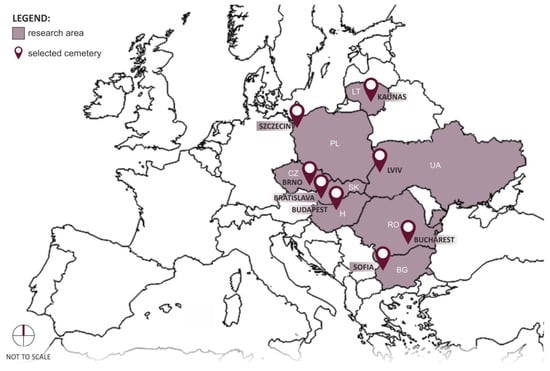
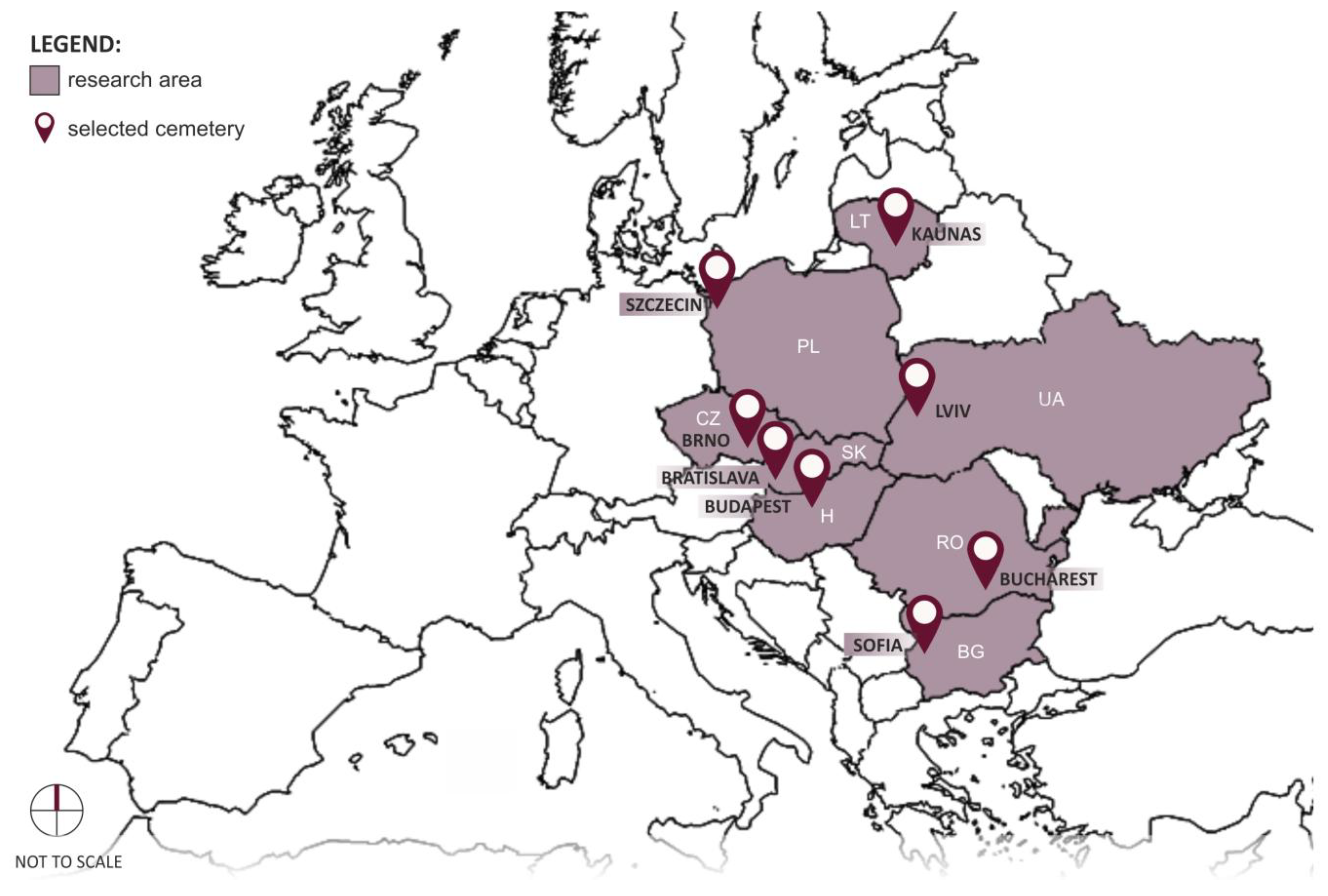
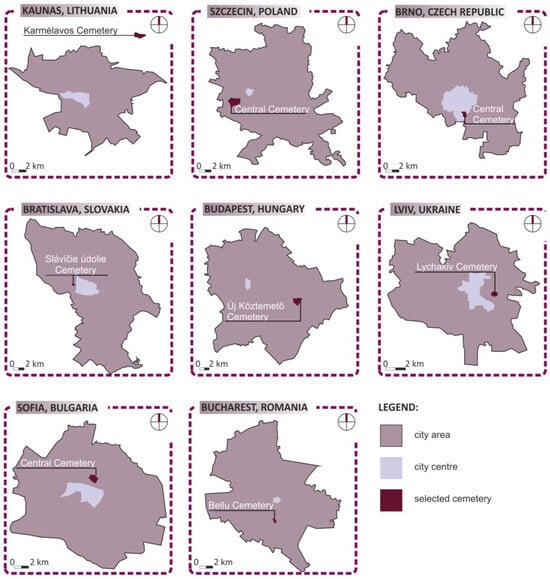
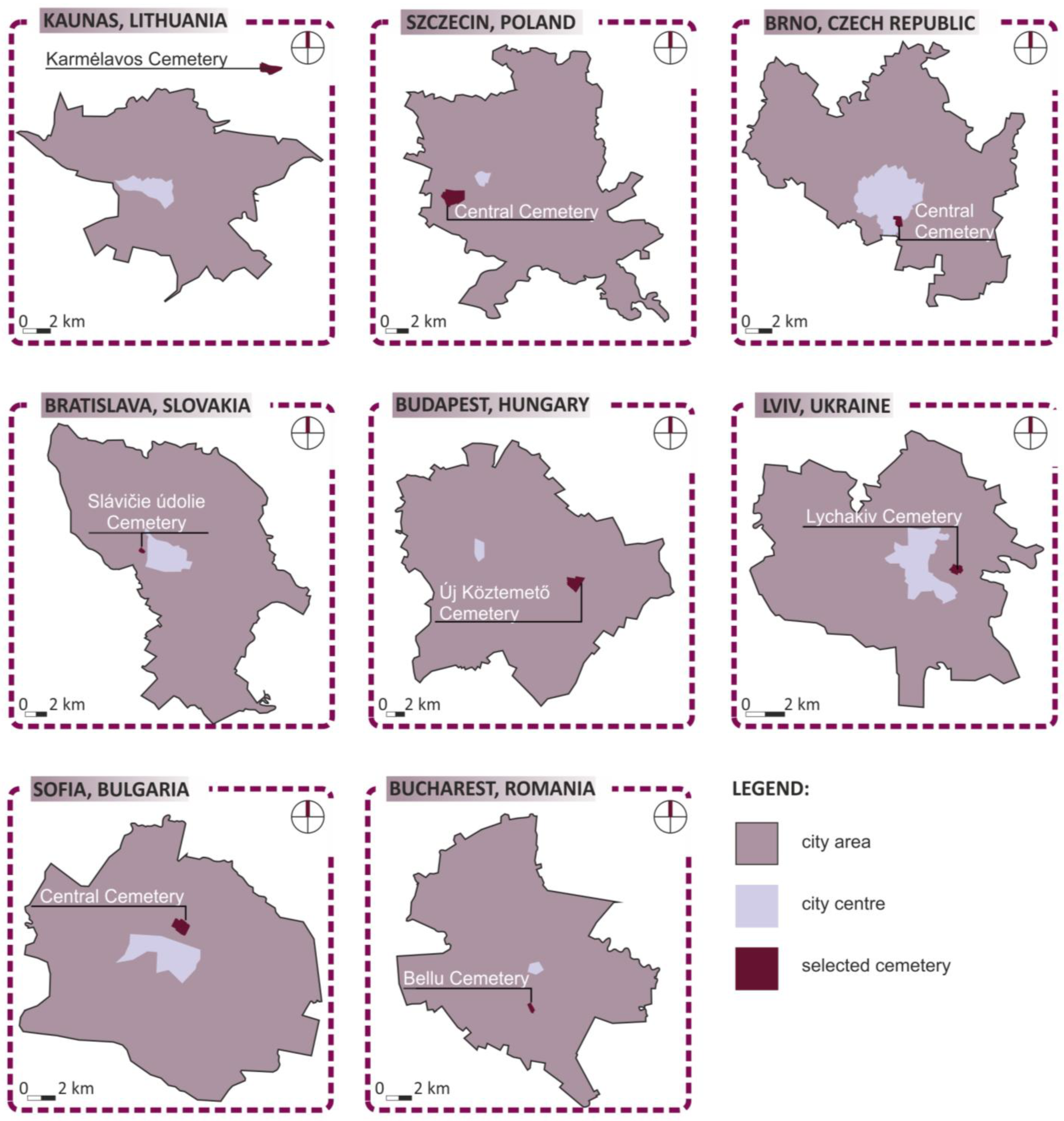
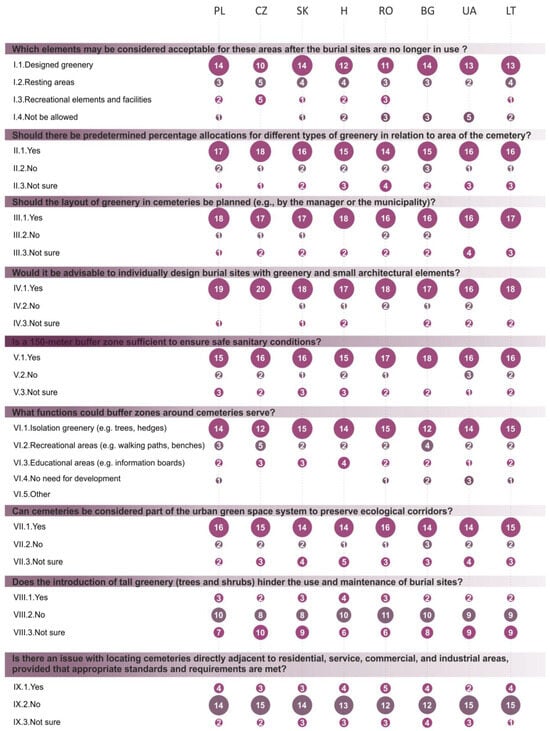
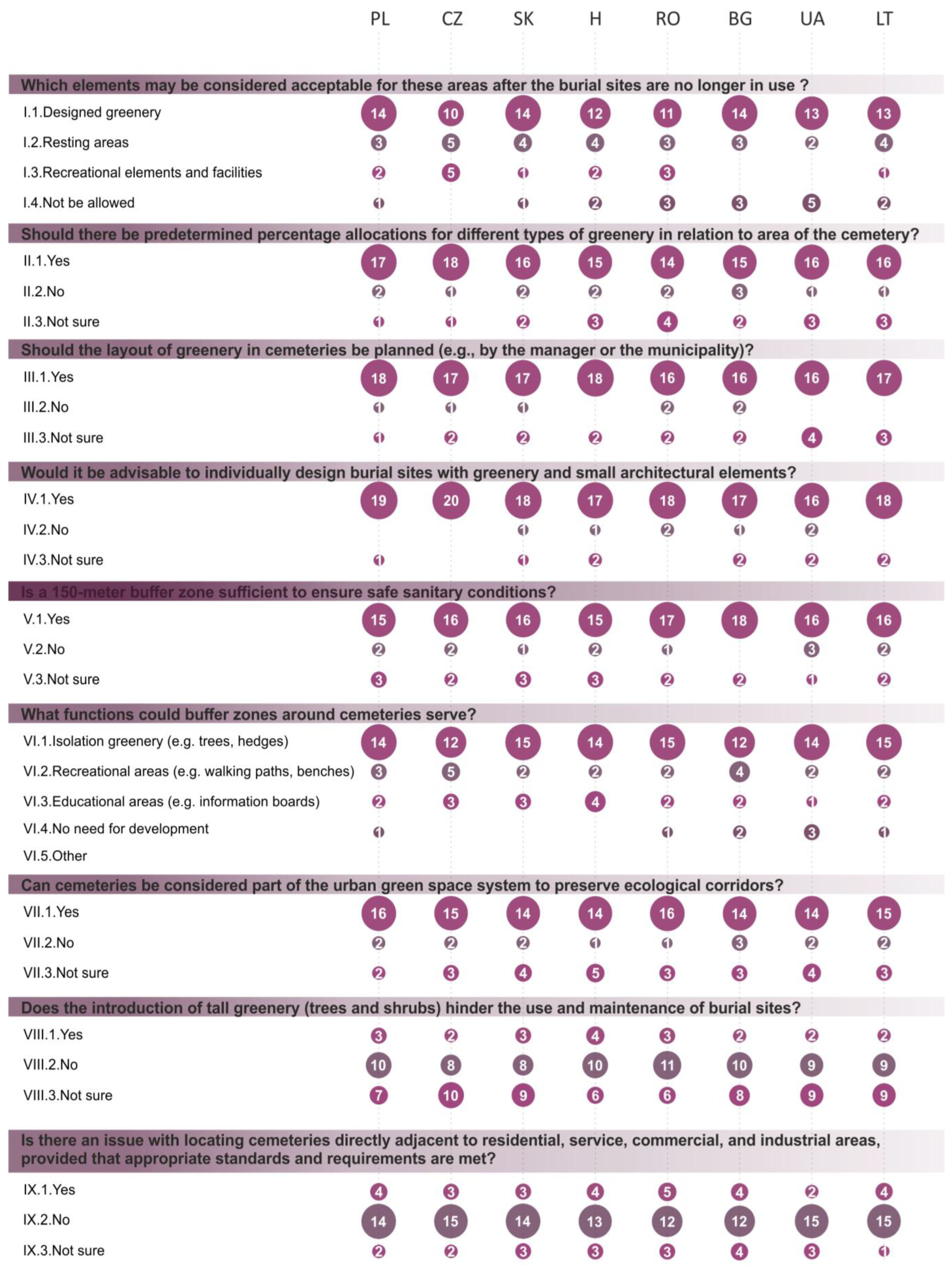
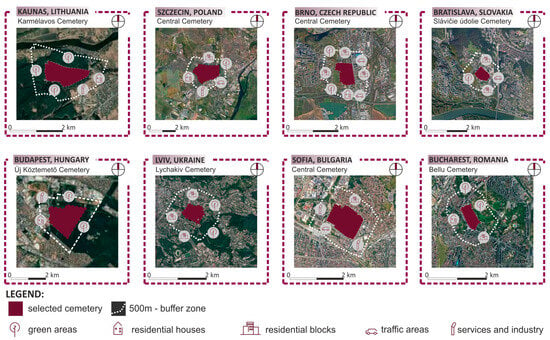
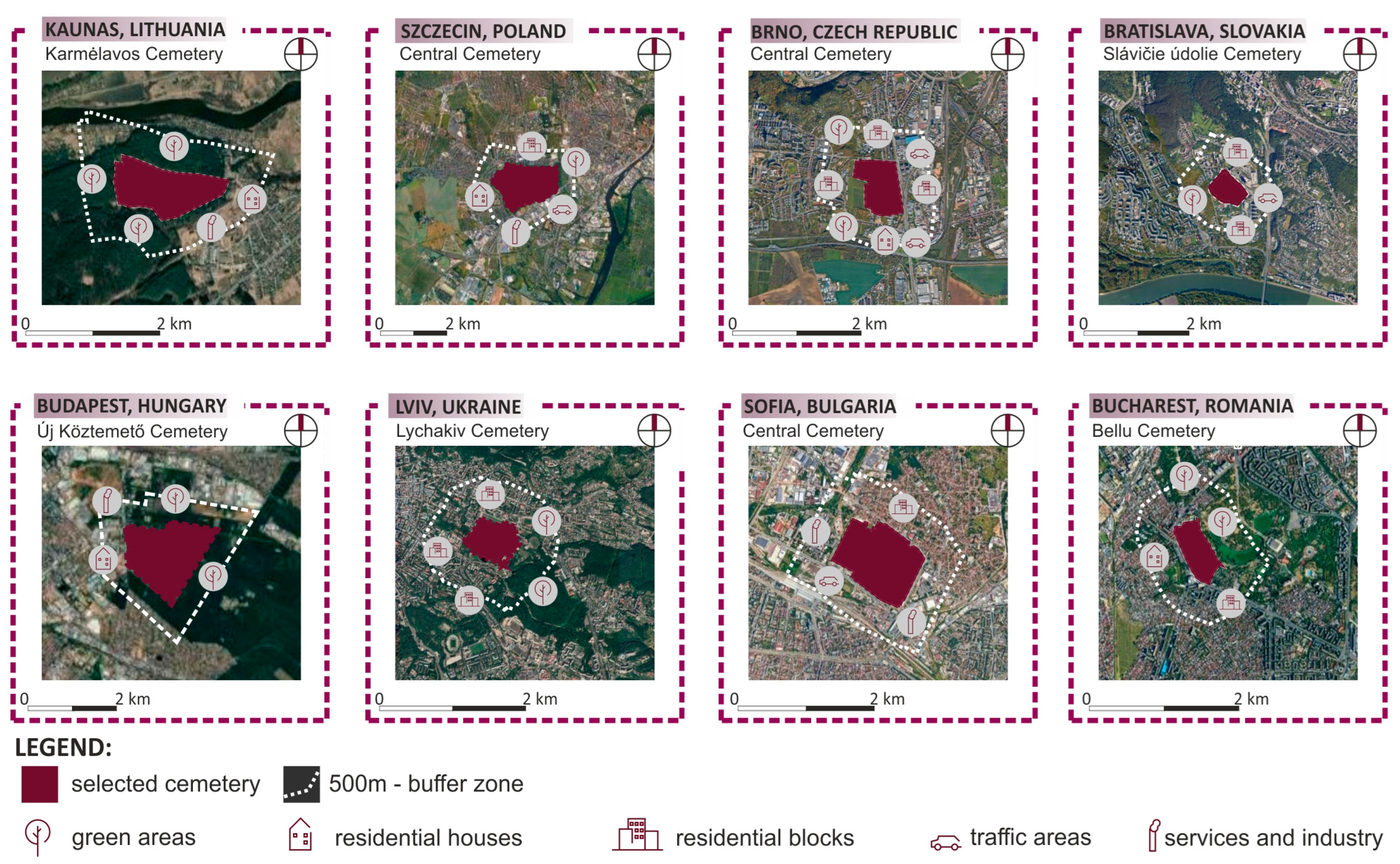

Disclaimer/Publisher’s Note: The statements, opinions and data contained in all publications are solely those of the individual author(s) and contributor(s) and not of MDPI and/or the editor(s). MDPI and/or the editor(s) disclaim responsibility for any injury to people or property resulting from any ideas, methods, instructions or products referred to in the content. |
© 2025 by the authors. Licensee MDPI, Basel, Switzerland. This article is an open access article distributed under the terms and conditions of the Creative Commons Attribution (CC BY) license.