Article

Current Trends in Urban Heritage Conservation: Medieval Historic Arab City Centers
by
Ahmed Mohamed Shehata
Department of Islamic Architecture, Umm Al-Qura University, Makkah al-Mukarramah 24382, Saudi Arabia
Sustainability 2022, 14(2), 607; https://doi.org/10.3390/su14020607
Submission received: 30 November 2021 / Revised: 16 December 2021 / Accepted: 17 December 2021 / Published: 6 January 2022

Abstract

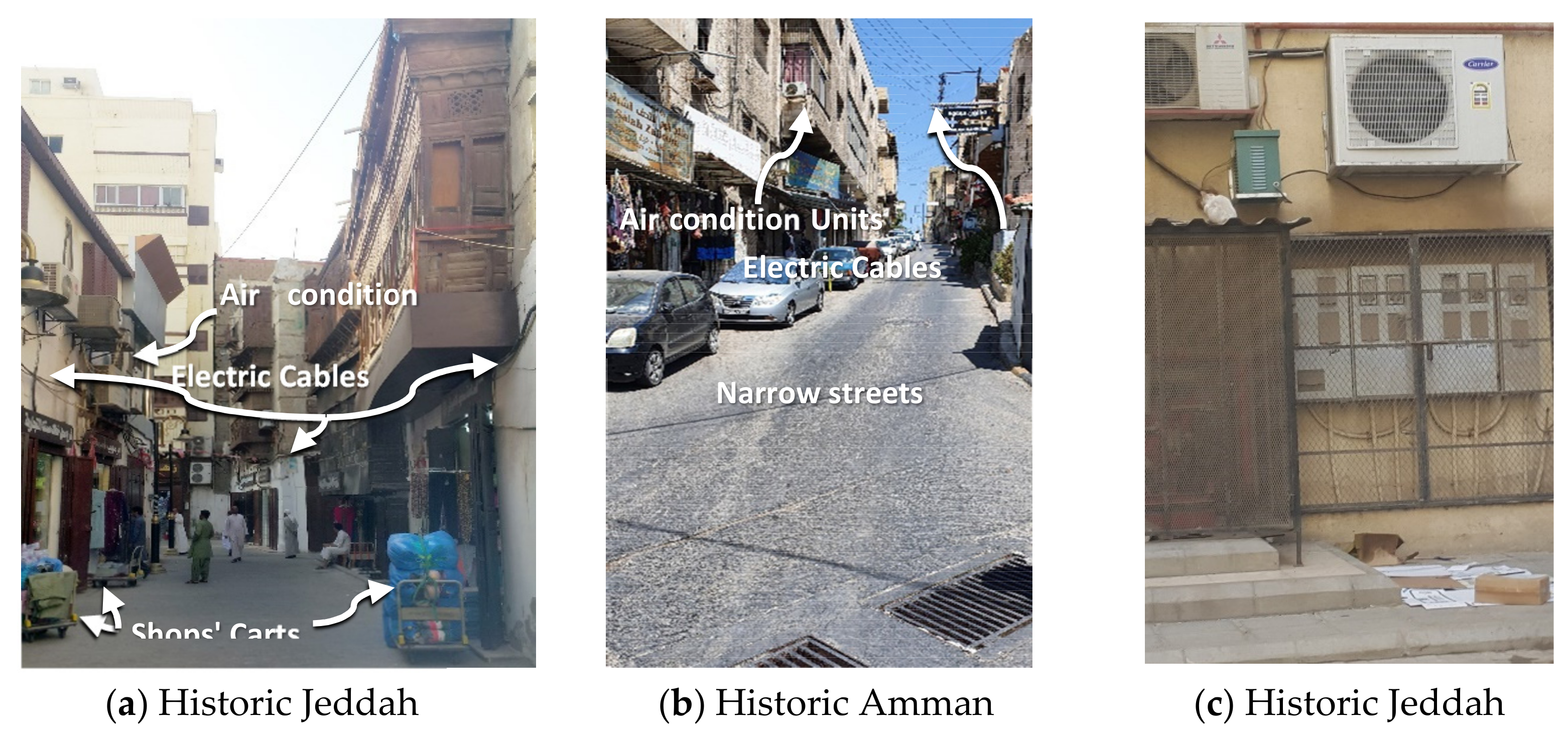
Traditional conservation efforts did not improve the conditions in most historic urban centers of Arab cities. The internationally adopted shift in historic urban conservation grants better urban vitality and sustainability for these areas. This study investigates the existing trends and forthcoming changes in urban conservation and their implication on historical centers. Urban Heritage Conservation UHC trends were reviewed, conservation parameters were defined, and quality aspects of successful historic urban conservation were identified, and an assessment framework was developed to evaluate the resulting conserved urban heritage. Two case studies of Arab cities, Jeddah and Aman, were analyzed. The findings highlight the most common urban issues such as reusing historic buildings, traffic congestion, and lack of funds. The impact of urban management on historic areas’ quality was revealed. Moreover, the paper ends with recommendations for conservation authorities. These include engaging residents in the conservation efforts, adopting more innovative traffic solutions to ease congestions, turning the historic area into a pedestrian-friendly space, attracting visitors through arranging cultural events, creating new job opportunities through heritage, and improving the image of the areas through urban regulations. The paper’s findings would contribute to the knowledge related to Urban Heritage Conservation (UHC), and its recommendations would help practitioners and decision-makers.
Keywords: MENA Islamic cities; urban management; sustainable built environment MENA Islamic cities; urban management; sustainable built environment
Graphical Abstract