Article

Recycled Plastic and Cork Waste for Structural Lightweight Concrete Production

1
Department of Architecture and Building Technology, Technical University of Cartagena, Paseo Alfonso XIII, 30203 Cartagena, Spain
2
Department of Innovation and Environment, Cementos La Cruz, S.L., Paraje Tres Santos s/n, 30640 Abanilla, Spain
*
Author to whom correspondence should be addressed.
Sustainability 2019, 11(7), 1876; https://doi.org/10.3390/su11071876
Submission received: 19 February 2019 / Revised: 6 March 2019 / Accepted: 25 March 2019 / Published: 28 March 2019

Abstract

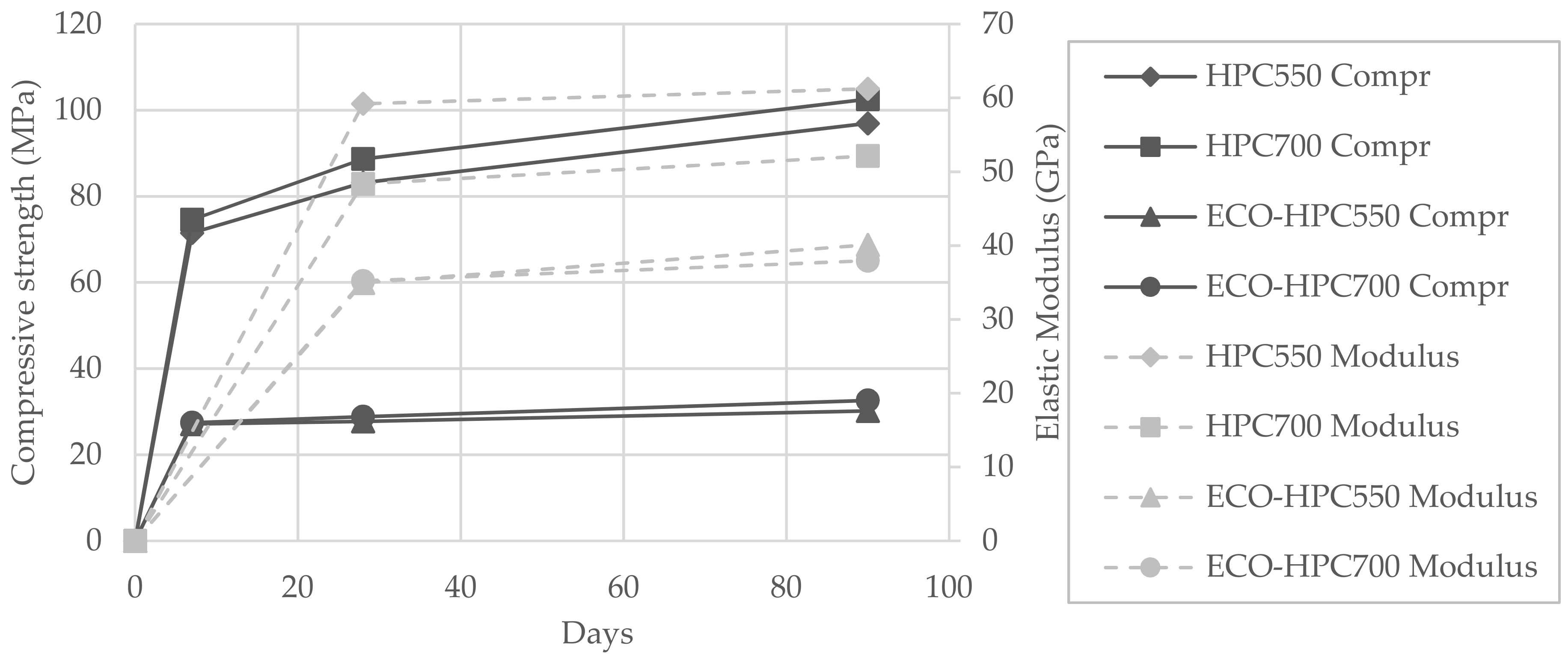
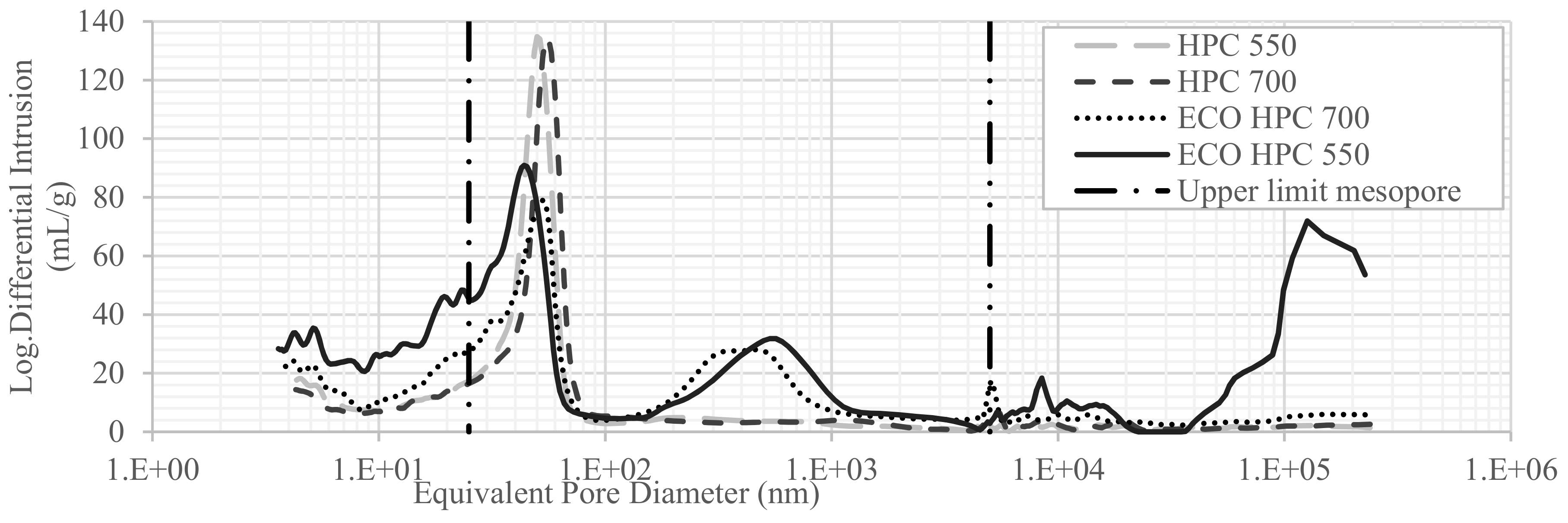
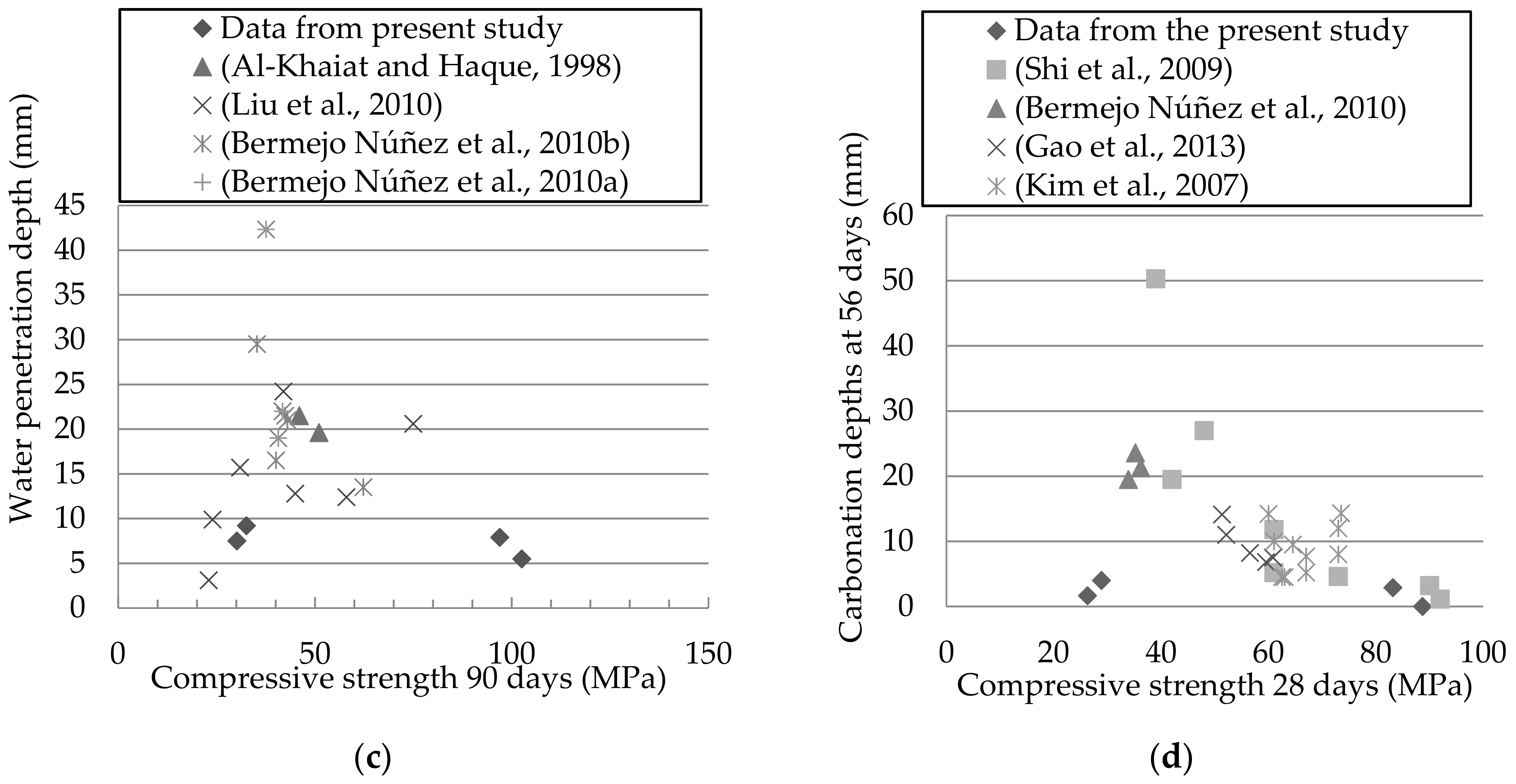
The use of waste materials as lightweight aggregates in concrete is highly recommended in seismic risk areas and environmentally recommended. However, reaching the strength needed for the concrete to be used structurally may be challenging. In this study four dosages were assayed: the first two-specimen had high cement content (550 and 700 kg/m3 respectively), Nanosilica, fly ash and superplasticizer. These samples were high performance, reaching a strength of 100 MPa at 90 days. The other two mixtures were identical but replaced 48% of the aggregates with recycled lightweight aggregates (30% polypropylene, 18.5% cork). To estimate its strength and durability the mixtures were subjected to several tests. Compression strength, elasticity modulus, mercury intrusion porosimetry, carbonation, attack by chlorides, and penetration of water under pressure were analyzed. The compression strength and density of the lightweight mixtures were reduced 68% and 19% respectively; nonetheless, both retained valid levels for structural use (over 30 MPa at 90 days). Results, such as the total porosity between 9.83% and 17.75% or the chloride ion penetration between 8.6 and 5.9 mm, suggest that the durability of these concretes, including the lightweight ones, is bound to be very high thanks to a very low porosity and high resistance to chemical attacks.
Keywords: recycled plastic aggregate; recycled cork aggregate; nanosilica recycled plastic aggregate; recycled cork aggregate; nanosilica