1. Introduction
The sustainability of South Korea’s hitherto prodigious economic growth is in question. South Korea’s technology transfer and commercialization (TTC) process is mired and threatens to fetter, if not entirely stall growth. As may come to pass for some developing nations, South Korea stands at a critical juncture between its catch-up phase that has relied on technology adaptation and one that springs from its own capacity for creativity and knowledge generation. In as much as Japan’s “economic miracle”—and now “lost decades”—is studied, others following similar paths to economic growth as South Korea closely observe how it will navigate this strait. If a lesson is to be learned, it is that the sustainability of technology driven growth derives from the adaptability of the shared mental models (SMMs) of a country’s national system of innovation (NSI).
Despite successful technological learning and catch-up, the South Korean NSI lags behind most developed countries in technology transfer and commercialization (TTC) performance. South Korean research and development (R&D) investments in 2014 (approximately 4.3% of the GERD—Governmental Expenses on R&D as a proportion of the GDP) ranked highest among all other nations and had already achieved a significant increase in publications and patents by 2014 [
1]. However, TTC performance of South Korean universities and public research institutions (PRIs) remains dismal at best. In terms of publications and patents, Korean universities earned only approximately 5% of major American universities in 2012 [
2]. Moreover, the estimated R&D productivity of Korean PRIs in 2012 was approximately 2.89% whereas that of U.S. PRIs was approximately 10.73% in 2010. Also, most of Korea’s technology patent and TTC success are concentrated in a few PRIs indicating a significant gap between leading and lagging organizations. For instance, in 2012, the Electronics and Telecommunications Research Institute of Korea held almost 40% of the 30,586 patents of Korean PRIs, and only six PRIs accounted for 76% of the TTC licensing income [
2]. This is despite the introduction of measures such as the establishment of technology licensing offices (TLOs) in PRIs and universities, in addition to the existing monetary incentive of awarding 10% of successfully commercialized technology income to team members. Reasons for this poor performance demand close re-examination and solutions to improve S&T policy for the Korean national innovation system in order to compete at the level of countries at the technology frontier.
The drivers and the impact of TTC have been discussed at length in the innovation studies literature from various perspectives [
3,
4,
5,
6,
7]. There are, though, two major gaps in this literature on TTC. First, social theories have not been applied to the interaction of inter-organizational teams on TTC projects. Second, the unit of analysis has generally been the organization, the region or the nation, neglecting that of the individual. There is thus a recognized need to understand the social side of individual decision-making in larger TTC contexts [
8]. While the management and organization studies literatures have increasingly attended to the role of individual and team cognition in assessing group intention, behavior and performance, in the main, innovation studies has not embraced such perspectives. Martin [
9] reviewed research on S&T policy and innovation studies for the past five decades and pointed out a dearth of research incorporating individual psychology.
Socio-cognition literature [
10,
11,
12] sheds light on how mental models mediate between the external environment and human behavior. The few management scholars who have applied this approach to technological innovation in firms have found significant differences in innovation planning, implementation and monitoring activities among individuals or teams working on technology projects [
13,
14,
15]. Teams with less conflict have better aligned mental models and, learn and perform more effectively [
16,
17,
18,
19]. Since national science and technology (S&T) policy plays a large role in funding and guiding TTC at the national level, it is conceivable that the cognitive differences of these policies between inter-organizational teams affect policy implementation and its performance. Such differences and their resolution are an essential aspect of learning and breaking free of path dependency. However, there is little research on such cognitive differences and policy. Given this dearth, we adopt a socio-cognitive approach in addressing the issue of sustainable growth for South Korea. Specifically, we focus on the role of team cognition in the implementation of technology commercialization policy, how policy-orientation relates to the cognition of inter-organizational TTC teams and, whether the differences in TTC performance of latecomer and frontier NSIs can be explained by the relationship between team cognition and policy-orientation. In sum, this paper aims to build a socio-cognitive view on the sustainability of a NSI’s economic growth.
In this research, we extracted SMMs from the interviews of four different types of TTC actors (inter-organizational teams) in the South Korean NSI. The results demonstrate that lower TTC performance of the South Korean NSI is partly due to the entrapment of inter-organizational teams in what we call the linear TTC shared mental model. We found high congruence in the “technology selection” and the “technology development and commercialization process” elements of the SMM among Korean teams that tends to reinforce the existing mental model. But, there are signs of low congruence (high conflict) in the “appropriation and rewards” and the “application and use of commercialized technologies” elements that indicate the tendency of a maturing NSI to experiment and break away from the existing SMM.
The findings of this study have led us to propose a theoretical evolutionary view of TTC by linking the policy-orientation of a NSI with the SMMs of its inter-organizational teams and its overall TTC performance. A top-down policy-orientation of a NSI can trap its inter-organizational teams in their current SMMs (i.e., little or no learning). Alternatively, a participatory policy-orientation is more open towards the experimentation with and the adoption of new ideas, which can support learning and the implementation of newer innovation and commercialization processes by allowing positive conflict in the SMMs of their teams. Such policy dynamism would ultimately lead to improved TTC performance.
The subsequent parts of the paper are organized as follows.
Section 2 introduces the literature on the TTC process, socio-cognition and policy that support NSI development. Research methods and data collection are discussed in
Section 3, followed by
Section 4 that presents the findings and their analysis. An evolutionary perspective on TTC is proposed in
Section 5 and
Section 6 concludes the paper with a discussion on the implications of the findings and thoughts for future work.
2. Literature and Theoretical Background
Since this study is a forerunner in incorporating socio-cognition in the context of technology commercialization, we have adopted a qualitative approach, which is more suitable for research seeking analysis of underlying explanatory phenomena. With this in mind, three major theoretical areas were chosen for the broad framing of the empirical context. Since the study primarily explores how inter-organizational teams perceive, plan and pursue TTC tasks, the first perspective is the technology innovation and commercialization process. The second is that SMMs, i.e., belief-systems and the group perspective that guide a team’s actions and behavior, were selected from the socio-cognition field. Finally, latecomer catch-up theory in the context of NSI was also used, since it was deemed helpful in explaining the differences in TTC performance between latecomer NSIs (in this case South Korea) and developed country NSIs. Each of the above-mentioned theoretical perspectives is discussed in depth.
2.1. Technology Transfer and Commercialization
In neo-classical economics, technology is seen as codified information in capital resources or private “knowledge bases”. This renders it equally available to all production actors and fully transferable between them without any differential costs. Ref. [
20] have discussed in length the shortcomings of such a view and how the economics of knowledge figures in growth theory. Innovation studies builds mainly on evolutionary and institutional economics that treat technology not only as explicit or tangible artifacts but also as tacit knowledge about the development and use of such artifacts and systems. An individual’s tacit knowledge, including his or her awareness and related performance, is tightly linked with organizational knowledge or organizational routines [
21]. Existing technical knowledge and capabilities should be recombined to create new knowledge. Moreover, knowledge creation often involves knowledge located across firm and national boundaries making interaction and partnership inevitable. Therefore, organizations have to develop, learn and manage routines for knowledge creation and retention, as well as re-combination across firm and national borders, in order to make progress.
Given its nature, ref. [
22,
23] demonstrated that tacit knowledge may not be simply transferable by traditional methods (such as codification or combination) suitable for explicit knowledge transfer. Rather, tacit knowledge transfer involves socialization or unique interactions between people, teams, and organizations. Stickiness of tacit knowledge makes transfer hard. Management and governance of knowledge transfer in and across organizations face common barriers arising from such factors as causal ambiguity, untested knowledge, lack of motivation or the unreliability of knowledge at the source. Alternative explanations may be found in the lack of motivation of actors or the recipient’s absorptive or retention capacity [
24]. It is thus that technical knowledge is unevenly spread among individuals, organizations, regions, and nations.
From the above-noted perspective, TTC is a management and policy problem involving the transfer of technological knowledge and its application. Technological knowledge should be acquired, accumulated, recombined, improved and transferred across organizations to build better capabilities essential for technological development [
20,
21]. Such complex processes require support for the interaction between production and innovation actors in the development of new products and processes within the constraints of past learning and institutions [
25]. The following is a definition of TTC in this context:
Wherever systematic rational knowledge developed by one group or institution is embodied in a way of doing things by other institutions or groups, we have technology transfer. This can be either transfer from more basic scientific knowledge into technology or adaptation of an existing technology to a new use.
Business literature considers TTC as an important source of firm competitiveness based on diverse sources and flows of technology. It could either come from the successful internal transfer of R&D outputs of the firm to its New Product Development (NPD), acquisition and assimilation of technical know-how from outside organizations [
27], or outward transfer of technical know-how for NPD in external organizations [
28]. Although the first of these (intra-organizational TTC) is most relevant to business, innovation studies is commonly interested in the TTC of research and development (R&D) outputs of universities and PRIs to enterprises or other R&D organizations. Such inter-organizational TTC encounters much more complex issues than intra-organizational TTC [
29,
30].
Regardless of the disciplinary focus, there is a clear distinction between technology transfer and technology commercialization. Whereas the former is about the simple transfer of technical know-how, the latter necessitates the deeper involvement of technology developers in translational R&D, product testing, adoption and successful introduction to the market. Since this paper focuses on inter-organizational TTC, the following definition has been used:
The process of transferring scientific and technical knowledge from one individual or organization to another for economic advantage—generally for the purpose of commercializing that knowledge.
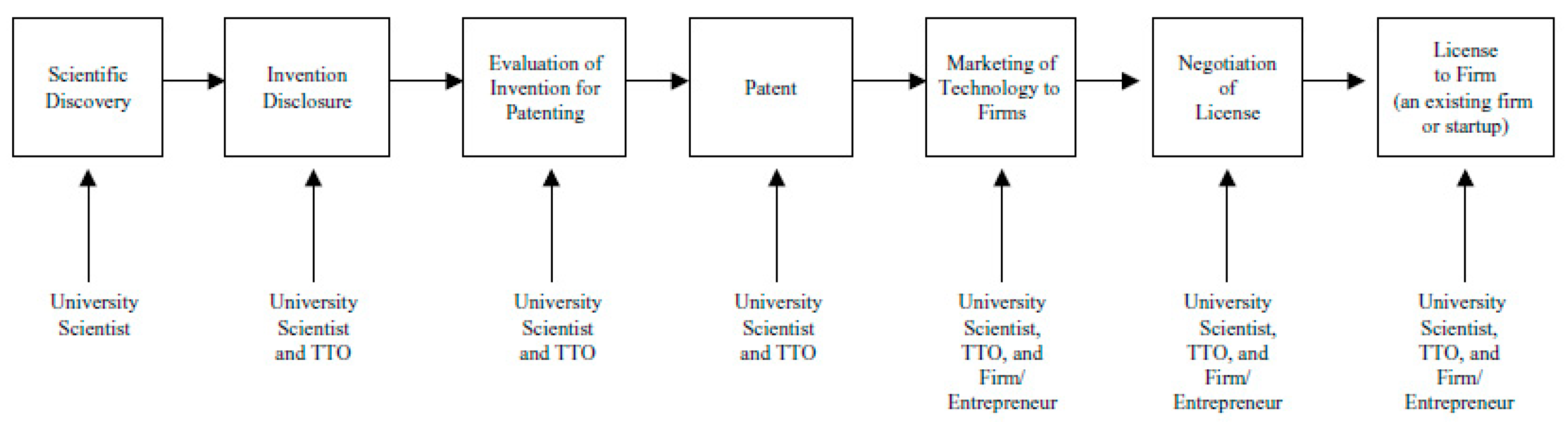
Traditionally, the TTC process has been implemented in stages as part of a linear innovation process [
32]. It begins with the disclosure of R&D outputs by scientists and engineers to the technology licensing office (TLO) along with their desired terms and conditions for the protection and the appropriation of technology. In the next stage, a TLO receives an in-house or external technology evaluation based on established benchmarks and expert reviews. Patenting and commercialization decisions are then made on the basis of technology evaluation scores. After filing patent(s) for highly evaluated technologies, the TLO initiates a search for potential users and applications of the technology mainly through advertising, roadshows, personal networks, and collaborative platforms. Once a potential partner shows requisite interest in a technology, a suitable mode for TTC is negotiated, e.g., licensing, spin-off, joint venture or a R&D alliance [
33,
34]. See
Figure 1 for a representation of the linear TTC process.
However, since the early 1980s, the technology innovation literature has successfully demonstrated the explanatory limits of viewing innovation and commercialization as a linear activity. Since different types of actors or teams interact at several levels within a given institutional context, innovation and commercialization involves feedback and feed forward interactions between teams [
35]. Despite this understanding, interactive TTC models have only recently gained acceptance. Most notable examples are open innovation and business models [
36], co-creation [
37], crowd-sourcing innovation platforms [
38] and collaborative serendipity platforms [
39]. Markman, Siegel and Wright [
33] presented a taxonomy of traditional and emerging modes of TTC in such contexts, for instance incubators, university research parks, regional clusters, academic spin-offs, start-ups, licensing, contract research and consultancy, corporate venture capital, and open science.
It has been noted that inter-organizational TTC faces bigger problems than intra-organizational TTC [
29,
30]. Common goals, arm’s length transactions and geographical or organizational cultural proximity make it easier for a firm’s R&D teams to interact with its own NPD, production and marketing teams than engaging with scientists and engineers from PRIs. Moreover, PRI scientists and engineers are fully engaged in R&D projects and they are often not willing to engage in activities beyond publication and patenting. Translational R&D activities (such as NPD and customer testing) are key parts of TTC, but either because of the above-noted lack of PRI interest or due to the lower capabilities of a firm’s employees, TTC has not been managed well by either of them. A wide gap, commonly known as the “valley of death”, exists between technology and its users wasting potential TTC due to a lack of translational support [
40,
41]. An ever-growing body of literature points to the economic, institutional and organizational factors behind TTC failures, for example, the nature of the technology, resource allocation, appropriate modes and channels for TTC, licensing strategies, failures in intellectual property protection, lack of incentives and appropriation for the inventors, proximity of researchers and industry, and the lack of motivation of the researchers to collaborate [
42,
43,
44].
2.2. Science and Technology Policy Orientation and Institutional Support for the Development and Transfer of Technological Knowledge by National Systems of Innovation
A National System of Innovation is a framework to study interactive learning and technological capability accumulation processes in a nation underpinning its technology-based economic growth [
45,
46,
47]. Industrial innovation, stimulated by academic and PRI research, is one of the major driving forces behind the development of a regional or a national innovation system [
48,
49]. Although entrepreneurs and firms create most of the value in the form of new products and services, they commonly source the underlying technologies from universities and PRIs with support from governmental agencies, professional organizations, non-government organizations and sometimes political organizations. It is, therefore, a nexus of university, PRIs, firms and government that interacts continuously within a country-specific institutional environment to generate and accumulate scientific, technological, and industrial knowledge in an innovation system [
4,
47,
50]. By extension, one of the biggest policy challenges in the development of competitive innovation systems is to bolster technology and knowledge flows from sources to applications, that is to say, from universities and PRIs to firms and users [
3]. It implies the provision of a favorable infrastructure and institutional environment for effective interactions between innovation actors—an essential role of Science, Technology, and Innovation (STI) policy.
Policies driven by the neo-classical economics’ view of knowledge treat economic intervention and the presence of institutions as sufficient for all organizations to produce technological artifacts in the same ways and to transfer them at equal costs. But, policies based on evolutionary economics and new growth theory emphasize interventions based on contextual factors surrounding firms and organizations rather than only market failure [
20,
21].
TTC policy should be viewed as part of the broader category of STI policy. To a large degree, it pertains to intellectual property regimes, infrastructure and incentives for collaborative interactions focused on translational R&D, and business development, etc. At the national level, ref. [
3] summarized three competing paradigms of technology policy that have evolved over the last century, some of which still figure in the literature. The first of these is the “market failure” technology policy paradigm. This rests on the neo-classical economics market-efficiency argument, to wit, little government intervention in technology markets—government R&D support for strategic technologies being key examples. In this context, the US’s Post-World War II technology transfer model emerged supported by defense-corporate R&D links. The second is the “mission” oriented technology policy that gained saliency in the mid-20th century. These approaches recognized federal labs and university research as important factors in national innovation systems. These led to vertical sectoral policies such as energy, agriculture and R&D centers at universities with associated supporting projects. The third paradigm is called “cooperative technology” which has been gaining ground since the 1990s. It promotes an expanded role of federal labs, universities and private R&D actors in civil technology development [
4]. Some examples of targeted TTC policy from the second and third paradigms are the US Bayh-Dole Act (1980) providing university researchers and inventors more rights over technology development and ventures [
51,
52] and the Japanese model of global corporate technology transfer.
From an implementation standpoint, STI policy could be top-down, bottom-up or a combination of them. In their exploratory study comparing university TTC in US and Swedish NSIs, Goldfarb and Henrekson [
53] suggested that Sweden lagged the US in TTC efficiency because of its top-down commercialization policy and an academic environment that discouraged academics from participating in commercialization activities in comparison to publishing and patenting. According to their study, academic freedom in US universities to connect with industry or firms and to manage research funds or personnel is a key reason behind the success of their TTC.
Large gaps in S&T development have existed between developed and latecomer NSIs. They necessitate a continuous struggle on the latter’s part to catch-up. Catch-up theory demonstrates that latecomer NSIs accumulate technological capabilities through three stages namely, the exact imitation of foreign technologies, improvements in the form of imitative innovations and finally their own creative innovations (original technologies and product-systems) [
54,
55,
56]. Considering their changing needs through these transitions, corresponding policy shifts are also inevitable according to the development level and the capability of the NSI. For instance, STI policies in the early stages of NSI development are focused heavily on learning and the provision of hard and soft infrastructure support, but once the catching-up NSIs develop the capability to imitate and improve technologies from advanced countries, the policy focus shifts to market-stimulation and competition [
57,
58]. Vertical policies aimed at “picking-up winners” are gradually replaced by horizontal policies supporting cross-sectoral innovations and inter-organizational interactions. A large body of literature confirms the above STI policy shifts in successful NICs like South Korea, Taiwan, Hong Kong, and Singapore [
54,
59,
60].
Largely depending on the stage of industrial and technological development, the sectors of a NSI could vary in strength. For instance, universities and PRIs are typically weaker while governments and firms are stronger in the early stages of catch-up, as exemplified by some of the Asian tigers (e.g., South Korea, Taiwan) [
61,
62]. With strict government control in technology selection, resource allocation and monitoring, universities and PRIs gradually become strong players and sources of scientific and technological knowledge for targeted industries supporting regional and national economies [
7,
58,
63]. Consequently, as an innovation system develops, the government role shifts from one of controlling to supporting actors because corporate and firm R&D and innovation become stronger than governmental R&D [
64]. Nevertheless, in some NSIs, government continues to fund big national R&D programs and strategic technology projects at PRIs in the name of the national economy since firms often do not have the requisite resources and incentives.
The top-down policy approach appears to have worked better for several Newly Industrialized Countries (NICs) in the early stages of catch-up [
62,
65], but it has not served them well in transitioning to the frontier [
66]. Bottom-up policy approaches are more conducive for NSIs near the technology frontier since they allow their actors the flexibility to follow a variety of approaches to innovate and commercialize.
In sum, the role of STI policies in supporting the development of institutions, structures and resources at national and organizational levels is key to their progress [
3,
4,
5,
67]. However, most TTC policy research remains focused on developed countries’ NSIs. Recent research on TTC and UI-Links has also analyzed NIC cases at the institutional and organizational levels [
6,
7,
63,
68]. Despite the call for studies at the level of the individual and the recognition of the role of human agency in policy implementation, there is little understanding of the individual’s role in TTC. Some studies highlight factors at this level affecting TTC [
69,
70], but research considering cognition, development and the behavior of NSI actors in the context of TTC policy implementation has received scant attention.
The transfer of technology is a particularly difficult type of communication, in that it often requires collaborative activity between two or more individuals or functional units that are often separated by a range of structural and cultural barriers. Appreciation for the human component in technology transfer directs us away from thinking of simply handing off a technology from “point A” to “point B.” Instead, we can think of technology transfer as an interactive process with a great deal of back-and-forth exchange among individuals over an extended period of time.
Socio-cognition theories imply that policy plan or actions cannot be directly attributed to outputs, but the executioners’ minds and behavior mediate the relationship between policy and its execution (and performance). The next section sheds light on related topics.
2.3. Shared Mental Models, Congruence and Organizational Performance
Sometimes referred to as schemata or schema, mental models are simplified representations of the world in an individual’s mind [
71,
72]. These representations are commonly of two forms: (1) conceptual and (2) the inter-relationships between them. While the first typically represents agents (person, group, organization, stakeholder), artifacts (material or knowledge) or an event (tasks, activities, reactions, triggers), the second pertains to the interaction or dynamic exchange occurring between two or more of the above-noted types of concepts [
73].
Mental models (and resulting behavior) mediate between external stimulus (like policy measures) and outputs (for the purpose of this paper read implementation of technology commercialization policy). Mental models affect one’s behavior in the real world in several ways, for instance they act as information filters (only selected information gets one’s attention), attribution of causes and outcomes of situations, affective inclinations, and attitude formation all of which affect decision-making [
71,
74]. As people interact with other beings and in different contexts, they confront variations between their expected outcomes and the actual outcomes (realities), which lead them to add possibilities of more outcomes in their mental models, known as learning [
11,
75,
76].
Congruence in Shared Mental Models and Team Performance
Shared (or overlapping) parts of the mental models of the individual members of a team are commonly referred to as shared mental models (SMMs) or team mental models [
77]. We use the term “shared mental models” to represent “team mental models” in order to distinguish this inter-organizational context from general management literature. SMMs are a result of alignment and compromises between the team members’ understanding of a specific issue, jointly planned responses, and their results (in line or deviant from the plans). When new teams or organizations are formed, team members bring their knowledge, expertise, habits and motivations to each team. As they interact during planning, execution and monitoring activities, many parts of their knowledge and habits start to align with each other or vice versa. In this way, while dealing with specific tasks, teams retain part of their existing knowledge, habits and motivators but discard others. They also may add new knowledge to their shared mental model.
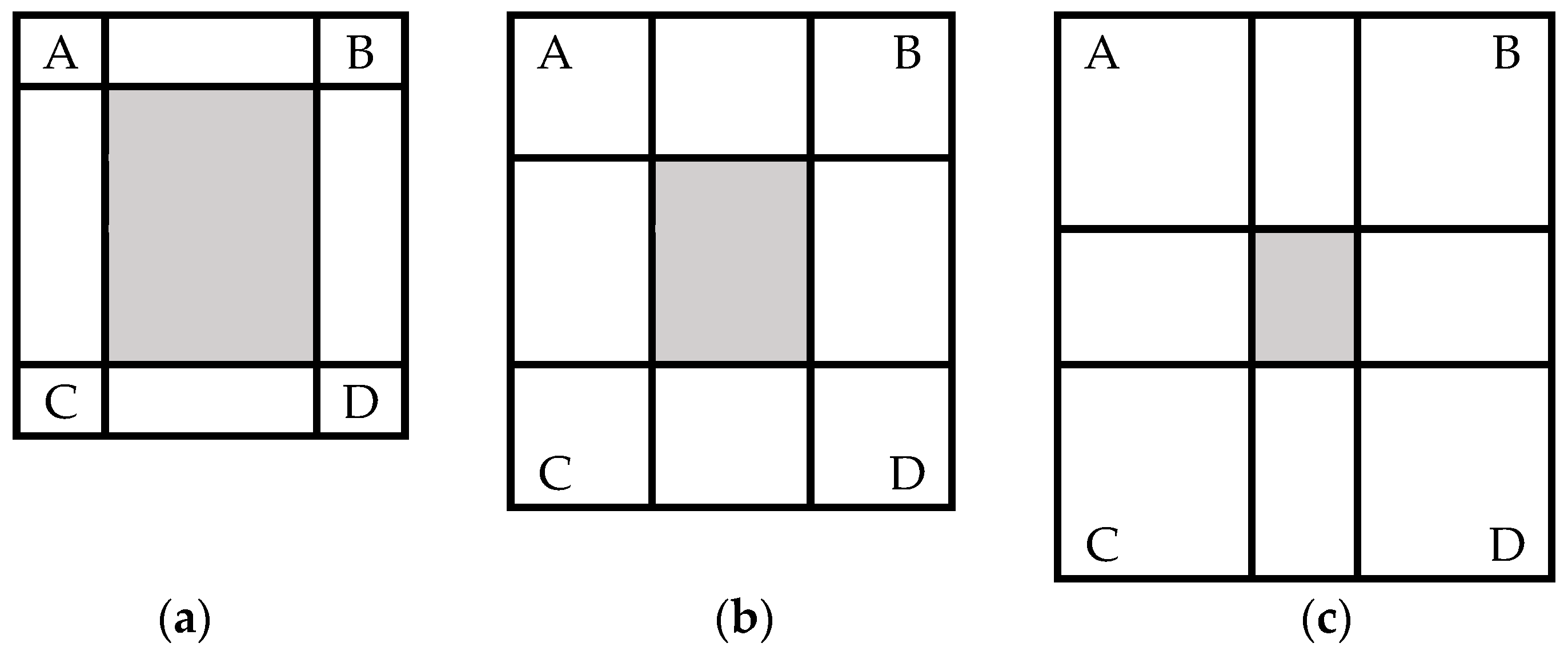
The level of sharing of individual mental models among team members determines how much agreement exists in a team’s shared mental model. However, in large projects (multiple teams with varying levels of authority, roles, and competencies), the level of similarity between the elements of all inter-organizational teams’ SMMs determines the level of congruence (
Figure 2). SMMs with few differences are considered to be highly congruent while models with less similarity are lower in congruence. A number of terms are used in the literature to describe differences in cognition or SMMs [
78,
79,
80]. For the purposes of this paper, we use the term “congruence” as it has been validated in other technology contexts [
13].
In organization studies, congruence in team mental models has been demonstrated to be a key determinant of team performance [
81,
82]. Therefore, policy actions and organizational strategies could be viewed as supporting interventions and motivators for individuals and teams towards the achievement of assigned missions. In other words, policy makers and organization leaders attempt to align SMMs assuming that high congruence between teams would be helpful in achieving the mission. This process is known as institutionalization [
83,
84].
Socio-cognitive theory has led to considerable scholarly development that has been tested in a range of situations to render greater clarity to the differences in the behavior of individuals and teams. It confirms that congruence (or consistency) in SMMs of various teams in an organization is a critical factor in attaining higher team performance, and the achievement of their team and organizational objectives. For instance, Ferlie, et al. [
85] discuss the important mediatory role of sharedness between the healthcare professional’s understanding of health technology innovations and the adoption of the associated innovations. Ref. [
13] posited that technological frames reflect the shared understanding of a technology by members of a social group and demonstrated that difficulties in effective development, use and adoption of information technology in organizations stemmed from incongruence in the technological frames of different teams, i.e., mangers, developers, and users.
The findings of Orlikowski and Gash imply that a higher degree of congruence between team members’ mental models would typically produce less conflict resulting in better performance [
13]. Other scholars have confirmed the same [
16,
17,
18,
19]. Ref. [
86] demonstrated that the existence of multiple and conflicting interpretations of the same task by team members led to task inefficiencies. Sharp contrasts in the key constructs of the SMMs between organizations (or teams) tend to produce conflicts that ultimately lead to the poor implementation and outcome of technology innovation projects [
14,
15,
87].
Since TTC projects and process involves several teams, often from different organizations with common goals to successfully commercialize technologies, conflicts over issues of strategy and execution are not uncommon. In a NSI, institutions, routines and norms reflect part of the system-wide mental models. The degree of conflict about these norms, routines, and institutions between inter-organizational teams could indicate dissatisfaction with the status quo, which can adversely affect learning and their adaptation. However, as noted above, conflict among and between teams may not be good for project or task performance. As a point for further research, there is little understanding whether conflict over a specific type of concept or relationship leads to poor performance in the TTC context.
3. Research Methods and Data Collection
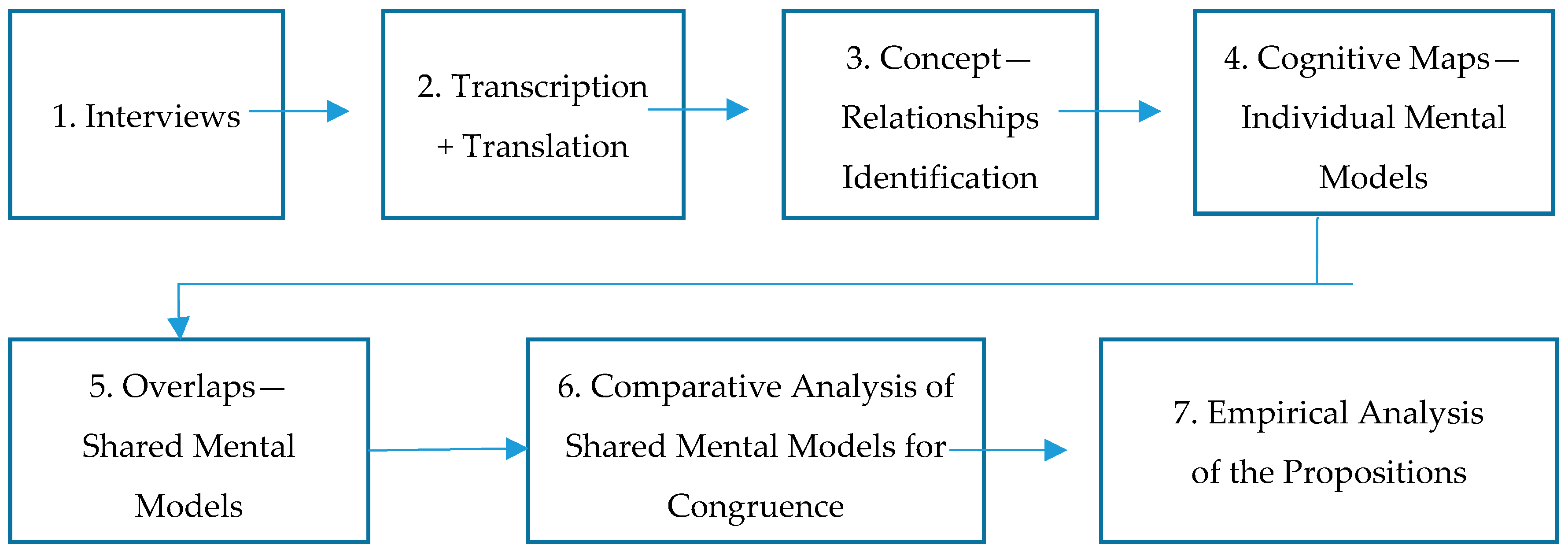
Given the exploratory nature of this paper, we have mainly used a qualitative research approach. In line with socio-cognitive research approaches previously discussed, our research methods focused on extracting and interpreting individual and SMMs based on interviews, transcripts, cognitive mapping and comparative analysis. The SMMs were compared to identify the level of congruence (or conflict) between the mental models of inter-organizational teams.
Figure 3 shows the step-by-step process of our methodology and the associated flow of selected research methods. We discuss them below.
3.1. Cognitive Mapping of Shared Mental Models
Visual representations or cognitive mapping provides great support in identifying mental structures captured in text or speech [
73,
88,
89]. We chose cognitive mapping, which is a well-recognized visual technique in psychology and management literature for extracting individual mental models as well as team mental models from texts [
73,
90].
A cognitive map consists of unique concepts or ideas in the mind of a person and the relationships between them. These semantic relationships help build pictorially represented mental models and form the basis of logical inference processes in people. They could be of several types, for example transitive, symmetric and reflexive relationships [
71]. The intensity of these relationships signifies the level of one’s perception about that relationship. A strong relationship would mean a person believes that the issue holds true in most or all cases while a weak relationship in the interviewee’s mental model implies it happens many times but not always. Repetitive talk about the same concepts and relationships represents a relatively robust relationship. This also applies to the choice of words. Stronger and superlative words represent relationships that the actors find hard to change in their mental models since they are deeply embedded.
3.2. Data and Analysis
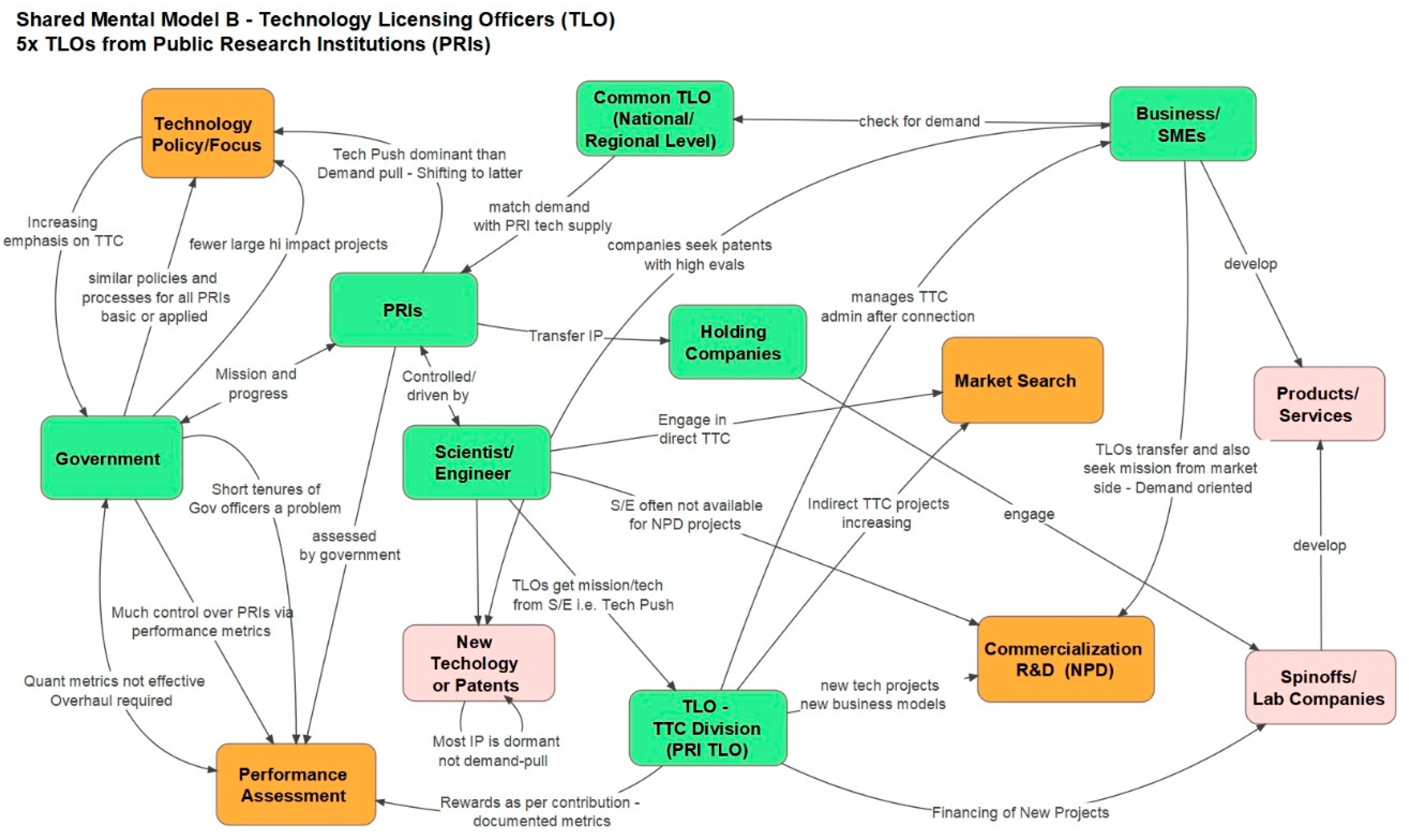
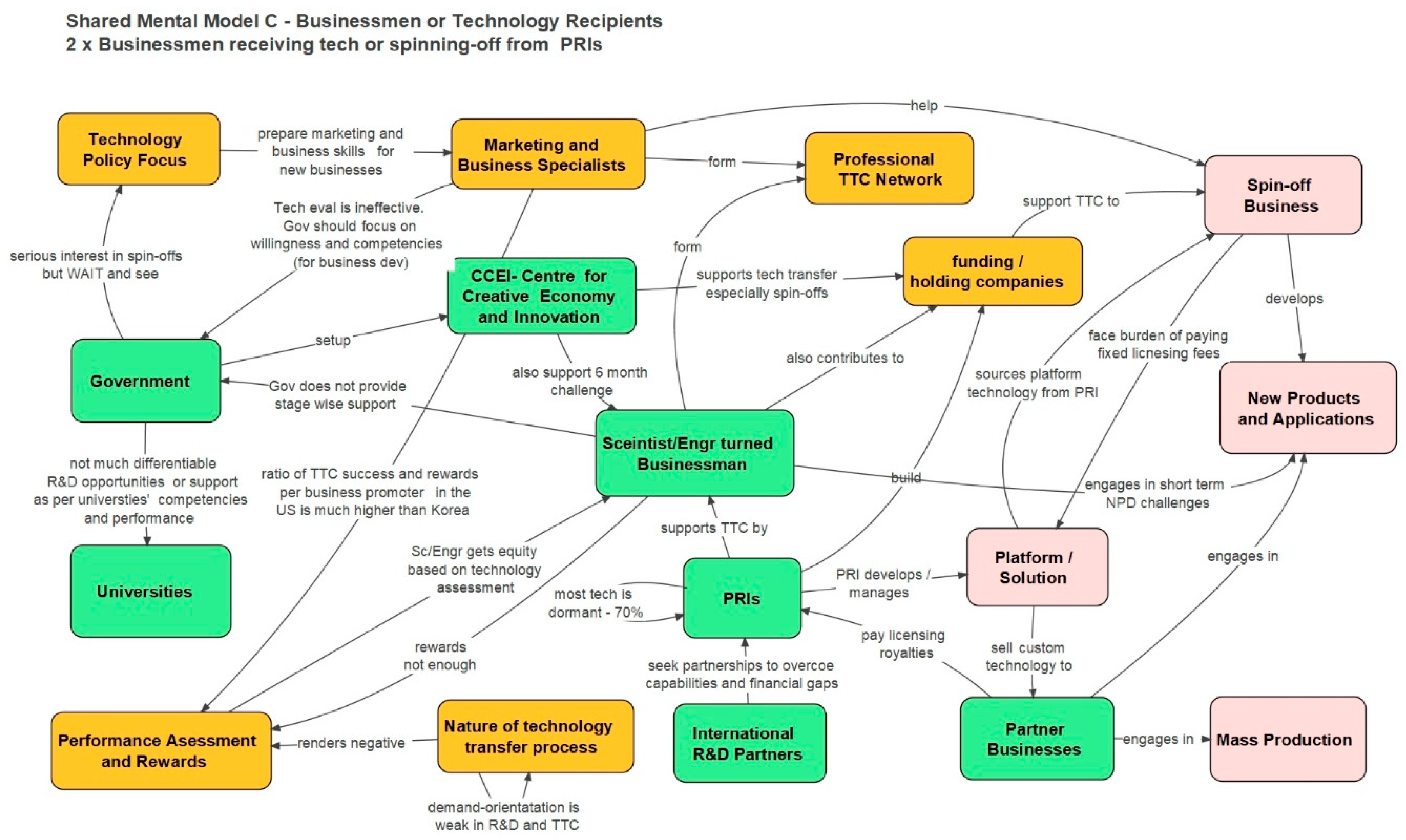
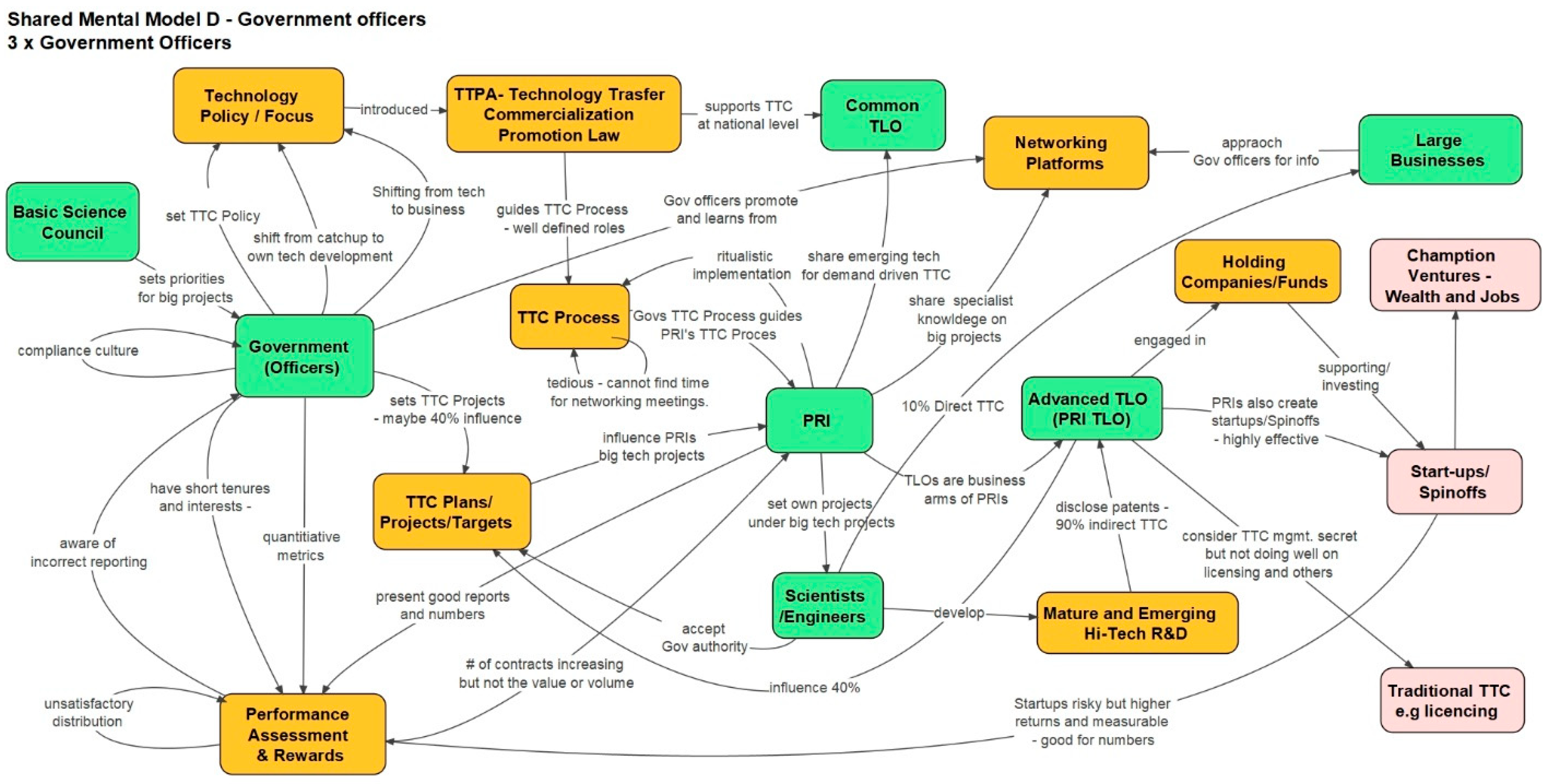
Our dataset is based on in-depth free-format interviews of either single or multiple interviewees in seven Korean organizations. As the central aim of the interviews was to capture the participant’s experience and views of TTC, each interview lasted approximately an hour and was conducted in a single session. Participants were one of the previously mentioned four types of actors: (1) scientist or engineer (research and development); (2) TLO (tech evaluation or transfer and marketing) at PRIs; (3) government officers (policy, planning and monitoring); or (4) businessman (product, service and business development including spin-offs from PRIs). All the interviews were conducted at South Korean basic and applied science PRIs and Ministry of Science, ICT and Future Planning during 2016 and 2017. All participants are experts in their respective fields with relevant qualifications and several years of experience. They were identified through the authors’ personal networks.
The interviews were conducted in either Korean or English and all were recorded. Those in Korean were first transcribed and then translated into English. Each transcript was read thoroughly by two researchers to filter “noise” e.g., casual remarks, irrelevant talk, or repeated circulatory narration to make the transcripts succinct.
Each line of text in the transcripts was numbered. Concepts and relationships were then identified by carefully reading each transcript several times. A text-to-relationship matrix was developed which listed all concepts-relationships along with their line numbers in the text (for later referencing during analysis). A sample text-to-relationship matrix is shown in
Table 1 with two concepts-relationships from a TLO’s mental model. For example, the following relationship “TLO takes charge of administrative things once the connection has been established” signifies an inter-relationship “taking charge” between the concepts “TLO” and “TTC connection”. In the matrix it is identified as relationship number 4, for which the related text could be found at line number 34 of transcript 4. The completed text-to-relationship matrices for each transcript enabled traceability when going back and forth between the transcripts and mental models or cognitive maps.
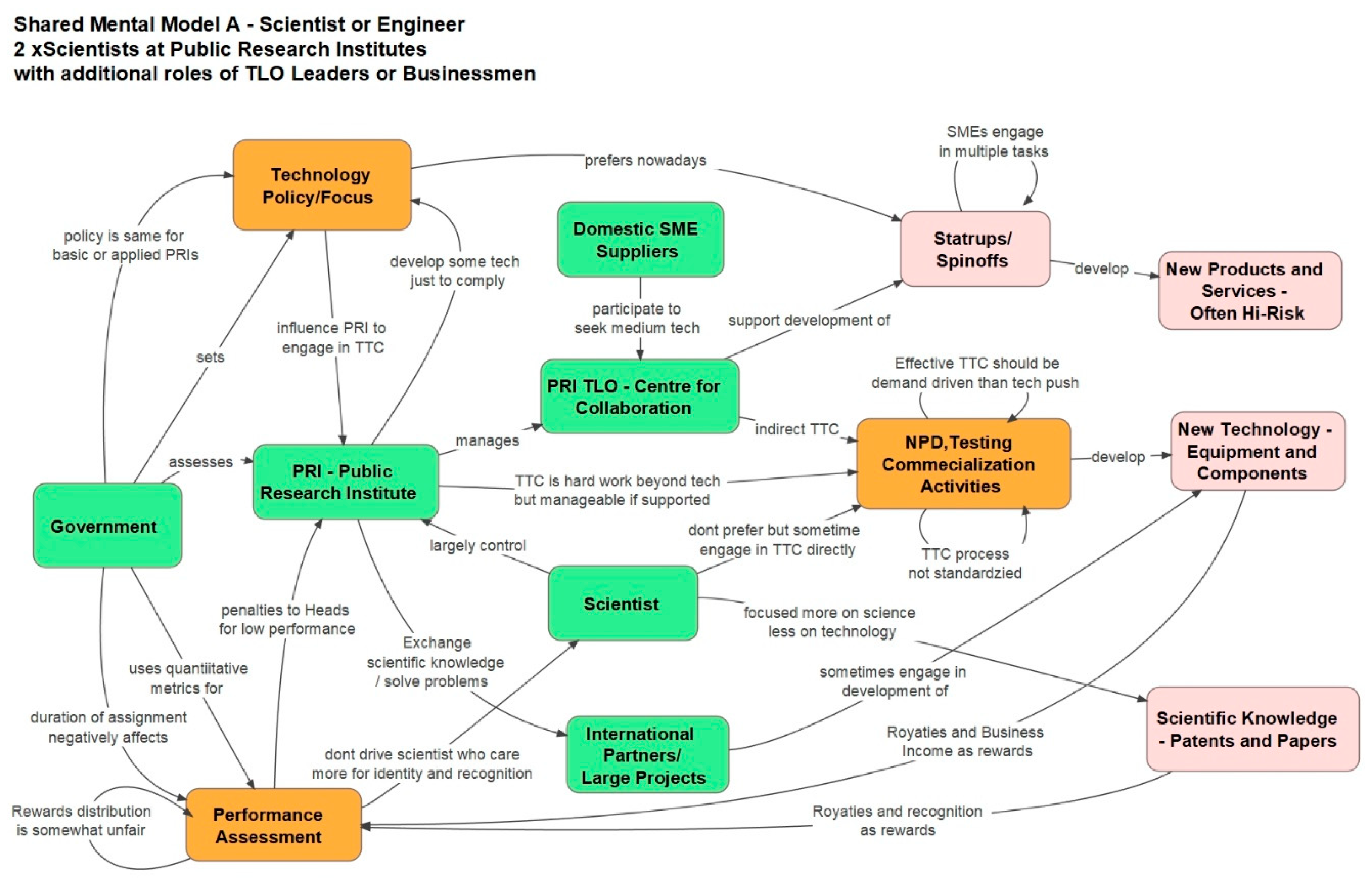
Mental models were then drawn as cognitive maps providing visualization of the concepts-relationships captured in each transcript. Visual Understanding Environment (VUE) software was used to draw the cognitive maps. It provides a flexible visual environment for structuring, presenting, and sharing digital information. The process was iterative since it involved refinement in the choice of words (coding). Some overlapping concepts or relationships had to be merged or removed. At least two maps from each represented group (scientist or engineer, TLO, government officer, and businessman) were then compared to extract SMMs of the four different types of actors.
Table 2 lists the cognitive maps used to create each shared mental model.
A comparative analysis of these four extracted SMMs was conducted to identify the main themes and any similarities and conflicts in these themes. The level of congruence between the SMMs of inter-organizational teams was categorized as very high, high, medium, low or negligible. This evaluation was mainly based on the frequency of the occurrence of certain phrases or sentences in the same concepts-relationships along with the perceived strength of these phrases and sentences. The findings are discussed in the next section.
4. Findings and Analysis
Our data collection and analysis have led to several findings. In this section we will first present the SMMs of each type of Korean inter-organizational TTC team and then discuss the key findings from the analysis of the congruence in their TTC SMMs (summarized in a table later in this section) and finally present an integrated theoretical perspective on TTC based on this study.
4.1. Shifts in Korean S&T Policy-Orientation and Its Role in Managing TTC
Korean technology policy has evolved through several phases. Initially, it supported the rapid industrialization of the nation during the 1970s by focusing on imitation and improvements of imported technologies. Some large technology projects in the 1980s carried out by PRIs in collaboration with Chaebols (South Korean large corporations) targeted specific industries such as semiconductors and telecommunications. By the 1990s, the government began to realize the limitation of relying on R&D budget increase to achieve better performance. To address this, PRIs were directed towards indigenous core technology development and new venture development. Ref. [
91] have explicated how PRIs such as the Korea Institute of Science and Technology (KIST) started shifting their institutional position towards a future-oriented PRI, collaborative research with industries, and role duplications among PRIs and private R&D labs. Electronics and Telecommunications Institute (ETRI) was another forerunner PRI which learnt from developing imported TDX telecom exchanges but leveraged those capabilities for commercializing the world’s first CDMA (Code Division Multiple Access) mobile systems [
65]. Korean universities’ research and TTC also evolved with these policy shifts for industrial innovation [
7]. Another dynamic that strengthened TTC in the 1990s was witnessed on the university side. Academic researchers realized that their accumulated research and knowledge capabilities could be exploited for the creation of technology–based products and economic returns [
92,
93].
Korean technology policy has focused on commercialization since the nation’s earliest stages of economic development but targeted measures were taken only after the passing of the Technology Transfer Promotion Act (TTPA) in 2000 along with the establishment of the Korea Technology Transfer Center (KTTC). This legislation is considered to be the Bayh-Dole Act of Korea that established clear guidelines and support structures for the commercialization of university and PRI research. The ownership and transfer guidelines, technology evaluation process and the mobilization of technology funds following TTPA impacted on Korean TTC performance positively. Prior to the Act, only large companies benefitted in significant ways from PRI collaborations. However, after its promulgation, smaller companies were afforded easier access to the PRIs’ largely dormant technology. Scientists were incentivized to transfer such technological knowledge to smaller companies or to spin-off their own ventures. Nevertheless, only 256 technology transfer cases were reported by KTTC in 2005. More than 60% of the licensing royalties were collected by only seven major organizations despite that most PRIs and universities had already established Technology Transfer Offices (TTOs).
Some major revisions of the TTPA continued through the 2000s. By the middle of this decade, many leading PRIs’ TTOs and some other intermediaries had successfully positioned themselves as Research and Business Development (R&BD) organizations with more marketing, management and administrative activities than technical activities. Intermediaries played a critical role in facilitating joint development projects and promoting technology transfer among the companies in cooperation with government support organizations and public R&D institutions [
94]. An analysis of Korea Innovation Survey (KIS) data demonstrated that in the cases of industry–university and industry–PRI cooperation, participation in national R&D projects was a key determinant of firm performance in comparison to firm size or R&D intensity [
95]. Their findings were in stark contrast to that of the EU cases suggesting implications for active government policy in catch-up NSIs. They also concluded that industry-university-government cooperation by itself cannot guarantee firm success but could importantly influence the selection or direction of its research projects. Firms advanced in appropriability, innovative capabilities and investment could benefit more from government support for TTC [
96]. Other success factors behind successful Korean PRI technology transfers in the IT sector were “Communication Channels”, “Management Support”, “Concreteness of Technology”, “Sense of Common Purpose” and, “Awareness of Technology Transfer” [
97].
Ref. [
98] studied TTC by 254 IT SMEs in Korea and found that learning and external networking significantly influenced innovation. They also found that R&D does not directly generate innovation benefits but mediates through TTC capabilities. Therefore, firms should avoid focusing narrowly on R&D and should also engage in commercialization. Another finding was that indirect beneficiaries of public R&D funding had better innovation performance than direct beneficiaries.
By the 2010s, another policy shift was occurring in Korean NSI that strongly emphasized the interactive models of innovation and market-oriented exploitation of research. As a result, firms and PRIs increasingly engaged in translational R&D, collaborations, cross-licensing and new ventures through technology holding companies. These shifts led to several problems. Sung, et al. [
99] found that “low-cost space offer’’ and ‘‘financial support from venture capital’’ were more effective for firms following linear models of innovation and commercialization while entrepreneurial atmosphere, strong leadership, location, marketing capability and technical expertise turned out to be the key explanatory factors behind the success of ventures following non-linear innovation models. Lee, et al. [
100] concluded that Korean PRIs with higher R&D productivity appear to adhere to a cohesive networking strategy (retaining strong relations with their existing partners), which may result in “lock-in” relations, hindering the exploitation of new opportunities for innovation. It implied that cohesive inter-organizational networks could be highly productive in terms of meeting performance metrics but would actually lag in achieving major innovations.
Kim, et al. [
101] analyzed National Science & Technology Information Service (NTIS) data of 1903 cases of technology transfer funded by Korean Ministry of Science, ICT and Future Planning between 2002 and 2012. They found major differences between the quantity and quality of TTC by PRIs and universities. They also noted that both PRIs and universities considered TTC as the transfer of public property. Therefore, the role of generating economic value was less important and, consequently, less attractive to partners interested in commercialization.
Importantly, [
102] noted that environmental dynamism moderated the relationship between TTC and business outcomes. This implies SME managers should emphasize strengthening organizational capabilities to deal with turbulent business environments. Ref. [
103] also verified that in Korean firms, the capability of “openness”, that is, the ability and willingness to collaborate with external partners, moderated the relationship between a firm’s resources and its financial performance in the context of technology transfer. In open innovation models, firms tend to seek ways to collaborate beyond their own technological assets and knowledge.
Ref. [
104] discussed the relationship between the high commercialization performance of government-sponsored firms and the underlying determinants such as their internal and external capabilities. The empirical results show that the capability for innovation, the investment on external R&D as the open innovation activities internal capabilities, and government funding for R&D and commercialization have significant positive impacts on commercialization.
Summing up the above research on Korean policy orientation and TTC performance, several points can be noted. First, the overall TTC performance of Korean actors had been poor in comparison to their EU and US counterparts in terms of licensing royalties, the level of active engagement of actors in TTC, the concentration of TTC activities in fewer players, and a lower number of start-ups or ventures. However, in recent years Korean indicators have improved, especially since the implementation of the TTPA. Secondly, the drivers and success factors behind successful TTC projects or organizations are somewhat different from developed countries. For instance, rather than the factors of size, R&D investment or social capital accumulation, participation in large governmental projects played a larger role in Korean TTC. The differences may stem from the stage of catch-up, the level of technological capability or the dynamism of the NSI. Thirdly, throughout the noted transitions, the evolving role of the government and policy has been instrumental in realizing improvements in NSI. One can also see early but clear signs of improvement and learning from the past in supporting collaborative models of innovation, commercialization and entrepreneurship.
4.2. Congruence in TTC Shared Mental Models of Korean Inter-organizational Teams
Four major themes representing highly recurring concept-relationships in these SMMs of all inter-organizational teams were identified. The four thematic elements are:
- 1
Technology Selection;
- 2
Technology Development and Technology Transfer;
- 3
Technology Protection and Appropriation; and
- 4
Utilization and Adoption.
Each theme comprises several concept-relationships listed in
Table 3, based on their recurrence, high level of semantic similarity and emphasis indicated by the choice of words.
A comparative analysis of each concept-relationship in each theme captured the level of congruence among Korean TTC teams at one of the five previously mentioned levels. The analysis is based on both elements, i.e., quantitative indicators (frequency of occurrence of phrases or concepts-relationships) and semantic assessment of the language used in the interviews about those concepts-relationships. A sample of frequency and strength assessment is presented in the methodology section (
Table 1).
The first theme, “Technology Selection”, concerns the process of identifying the technological projects for R&D and allocating resources for them at the national level. Our interviewees talked about several points around this theme and the most common were (1) the changing commercialization policy focus of the Korean government; (2) the influence of some actors in the project definition process; and (3) the characteristics of the selected projects. Addressing them in seriatim, there was very high congruence among all teams about the shifting commercialization policy focus towards start-ups and ventures from licensing and traditional technology transfer. All the teams agreed that government officers and scientists or engineers wielded more influence in the technology project finalization and definition stages, which can be viewed as a top-down approach to project definition. Team members suggest projects but their details and final selection could be affected by factors beyond the calculation of only technical merit. Finally, there is also a common view that project resources and allocation are not well balanced between basic science and R&D projects of applied technologies. Despite these possible differences between development and commercialization approaches to the two types of projects, organizations charged with implementation are required to adhere to the same procedures and reporting mechanisms. Overall, we find SMMs of all teams to be highly congruent around the “Technology Selection” theme.
The second theme, “Technology Transfer and Development”, that emerged in the SMMs of Korean TTC teams focuses on (1) the uniformity in types of commercialization; (2) the types of TLOs; (3) the definition of roles; (4) the personal level motivators; and (5) the implementation of the innovation process. All teams tend to agree that direct and indirect commercialization are effective approaches. Specifically, they believe that whereas the former refers to the direct connection and commercialization efforts of scientists and engineers, the latter is about offering technology to intermediaries like TLOs and depending on them to find interested parties and the right TTC mode. There was less agreement on the types of TLOs. While some clearly differentiated between TLOs located within PRIs and regional or national TLOs outside of PRIs and their different roles, others did not stress this distinction. Most teams strongly identified with their profession and institutional roles, for instance some held to the idea that scientists or engineers should do research and TLOs should manage commercialization because it requires more administrative and management skills. There is some conflict over monetary incentives (noted in the next theme). However, when talking about professional identities, all the teams strongly emphasized that they did not work for money but, rather, for reasons of professional or personal satisfaction. Lastly, whereas the TLOs and businessmen teams perceived that they had little choice but to follow the top-down push for TTC projects directed by government officers and scientists or engineers, they also agreed that it would be hard for TLOs and businessmen not to follow their ideas and instructions. Overall, we find slightly less congruence than in the first theme, but nevertheless strong congruence among all team members.
The third theme, “Technology Appropriation and Rewards Management”, mainly covers the perceptions of the TTC teams about suitability of (1) technology evaluation; (2) the right TTC modes; (3) the commercialization efforts assessment; and (4) the corresponding reward management. It was found that there was less common understanding about the pervasiveness of the technology evaluation processes or their effectiveness. While some teams looked at the processes of technology evaluation internal to an institution as a good incentive to initiate TTC or IP protection, others did not clearly see them aligned or effective at the international level. There were also notable differences about what they believed to be the right mode of TTC. For instance, some expressed pride in the fact that high licensing royalties now existed but there was also discontent with the ability to do translational R&D with simpler licensing. Joint ventures with PRI holding companies clearly emerged as a better option among such conflicts in the SMMs of all teams. Although scientist or engineers were satisfied with the high level of incentives set up to promote commercialization, TLOs and other intermediaries did not appear to agree on either the assessment methods or the awarded proportions. Almost all teams were critical of the inadequacy of quantitative metrics, which were more suitable for completing performance reports than the subjective assessment of TTC projects. This is the only major area of congruence in this theme. Consequently, a medium level of congruence was exhibited among SMMs of TTC teams in the case of the “Technology Appropriation and Rewards Management” theme.
The fourth and final theme, “Technology Adoption and Utilization”, is mainly focused on the effectiveness of TTC. In comparison to earlier themes, all teams discussed it less. A few notable concept-relationships were (1) the diversity of applications and users; (2) the adoption and impact of the TTC; and (3) the perceptions about commercialization performance in general. There were markedly diverse opinions about the types of users and applications. While teams on strategic projects cannot be expected to commercialize to all types of users, they could still consider commercializing some auxiliary or spin-off technologies in the short run, which were not originally targeted for commercialization. Nonetheless, it is difficult for them to find users. In contrast, projects of applied nature attract industry players and businessmen looking for technologies with high evaluations. Businessmen connect with intermediaries, government offices or PRIs directly in search of usable technologies. However, there tends to be broad agreement on the current low efficiency of TTC and the impact of commercialization of most of the technologies in terms of end-users’ sales, adoption or changes in industrial innovation. Most teams perceive TTC could be done better. Consequently, this theme is judged as having substantial conflict and consequently bearing low congruence.
In sum, the four themes depict very high, very high, medium and low congruence respectively.
5. Discussion: Integrating a Socio-Cognitive Perspective of Technology Commercialization by Linking Shared Mental Models, Policy-Orientation and NSI Catch-Up
Based on the above findings, discussions and theoretical background covered in the literature sections, our exploratory study draws tentative conclusions about the socio-cognition of TTC teams, the policy-orientation (institutional support) of a NSI in holding on to the existing belief-systems of its actors about TTC, and the performance of a NSI in terms of reaching the standard of developed countries’ innovation or commercialization outputs. In this respect, we describe linear and interactive TTC processes as two distinct shared mental models, which are dependent on institutions supported by the policy-orientation of a NSI which, in turn, depends on the technological needs and innovation capabilities of the NSI under discussion. A NSI trapped in the linear mental model of innovation should perform more poorly because of fewer innovation and commercialization options and the limited learning of its actors.
5.1. Innovation and Commercialization Processes as Shared Mental Models
We suggest that linear and interactive models of technology (including innovation) and commercialization represent two dominant but unique TTC shared mental models. We call them the Linear standardized TTC shared mental model (LSTTC-SMM) and the Interactive TTC shared mental model (ITTC-SMM). Each TTC shared mental model is based on the same four elements, namely (1) Technology Selection; (2) Technology Development and Transfer; (3) Technology Protection and Appropriation; and (4) Utilization and Adoption.
It is well known that key TTC management decisions behind successful industrial innovation for regional economic development involve identification and selection of appropriate technologies, fast technology development, strong protection and appropriation of newly developed technology, and finally the application of newly developed technologies to products and services high in demand. Ref. [
105] recorded details about the role of the Industrial Technology Research Institute (ITRI), Taiwan’s largest research organization, in setting up new industries and their improvement through the selection of suitable technology development targets and methods of technology R&D and commercialization between 1973 and 2003. Similarly, others documented shifting roles of South Korean PRIs moving from imitative to future-oriented technology selection and development for supporting local and regional economic development [
91].
Research supports this selection of thematic elements of the shared mental models of Korean inter-organizational TTC teams. For instance, Gibson and Harlan [
29] analyzed the tasks and performance of twenty-five Science and Technology (S&T) centers setup by the National Science Foundation (NSF) in the US and the recipients of their knowledge. They identified four similar levels of TTC activities that the managers frequently discussed, for example, research and development, technology acceptance, technology implementation, and technology utilization. Moreover, these four elements are also found in studies on the cognition of individuals pertaining to technology innovation in other domains. For example, the three elements of Orlikowski and Gash’s [
13] technology frames in the requirements engineering domain, namely the nature of technology, technology strategy, and technology in use, are similar to the present findings.
5.2. Effect of Congruence and Policy-Orientation on Shared Mental Models and Learning
We suggest that the LSTTC-SMM mediates between “policies oriented towards linear technology commercialization process” and their “standardized linear TTC process implementations”. Standardized implementations require control and monitoring. Typically, this would require a top-down and controlling policy-orientation. Such policies are normally followed by NSIs in catch-up mode. High congruence in the core elements of LSTTC-SMM among their inter-organizational teams inhibits flexibility and learning. This, in turn, restricts high TTC attainment of developing and maturing NSIs in comparison with developed country NSIs. Therefore, congruence in SMMs of inter-organizational teams plays a key role in determining the current and future TTC performance of a NSI.
Additionally, we propose that the ITTC-SMM mediates between “policies supporting a variety of technology commercialization processes” and “interactive TTC process implementations”. This would typically be supported by policy-orientations that are open and flexible to variation rather than standardization. Such policies are commonly followed by developed countries whose NSIs are in transition (maturing) NSIs where teams have the freedom to choose their own TTC targets and modes. Such inter-organizational teams become adept at using a variety of TTC processes resulting in better performance.
Since inter-organizational teams within the same NSI face common goals, policy and institutions, there is a higher likelihood of congruence between their SMMs. Highly congruent SMMs imply less conflict between the teams over the suitability of the tasks and their expected outcomes. If combined with top-down and controlling policy orientations, it leaves no room for team experimentation with newer ways of planning and executing assigned tasks, setting new assumptions, defining roles, and team interaction. Consequently, there should be little variance in their TTC outputs. This is a scenario in which policy is aimed at sustaining high congruence (standardization) between the SMMs of its teams. Therefore, we posit that top-down policy approaches, typically reminiscent of catch-up innovation systems, are oriented towards LSTTC-SMM.
In contrast to this, we argue that institutional approaches that are open to allowing variations in the tasks, interactions, roles and expected outcomes among their TTC teams are likely to allow higher conflict in SMMs of their inter-organizational teams. This, we argue, would allow them to learn and adapt faster to the requirements of a specific TTC project. Such policy approaches would typically be participation-oriented. They would be flexible enough to allow for the adoption of interactive innovation and commercialization models mostly followed by frontier innovation system teams or even to develop their own models of innovation and commercialization.
Figure 8 covers the proposed co-evolving relations.
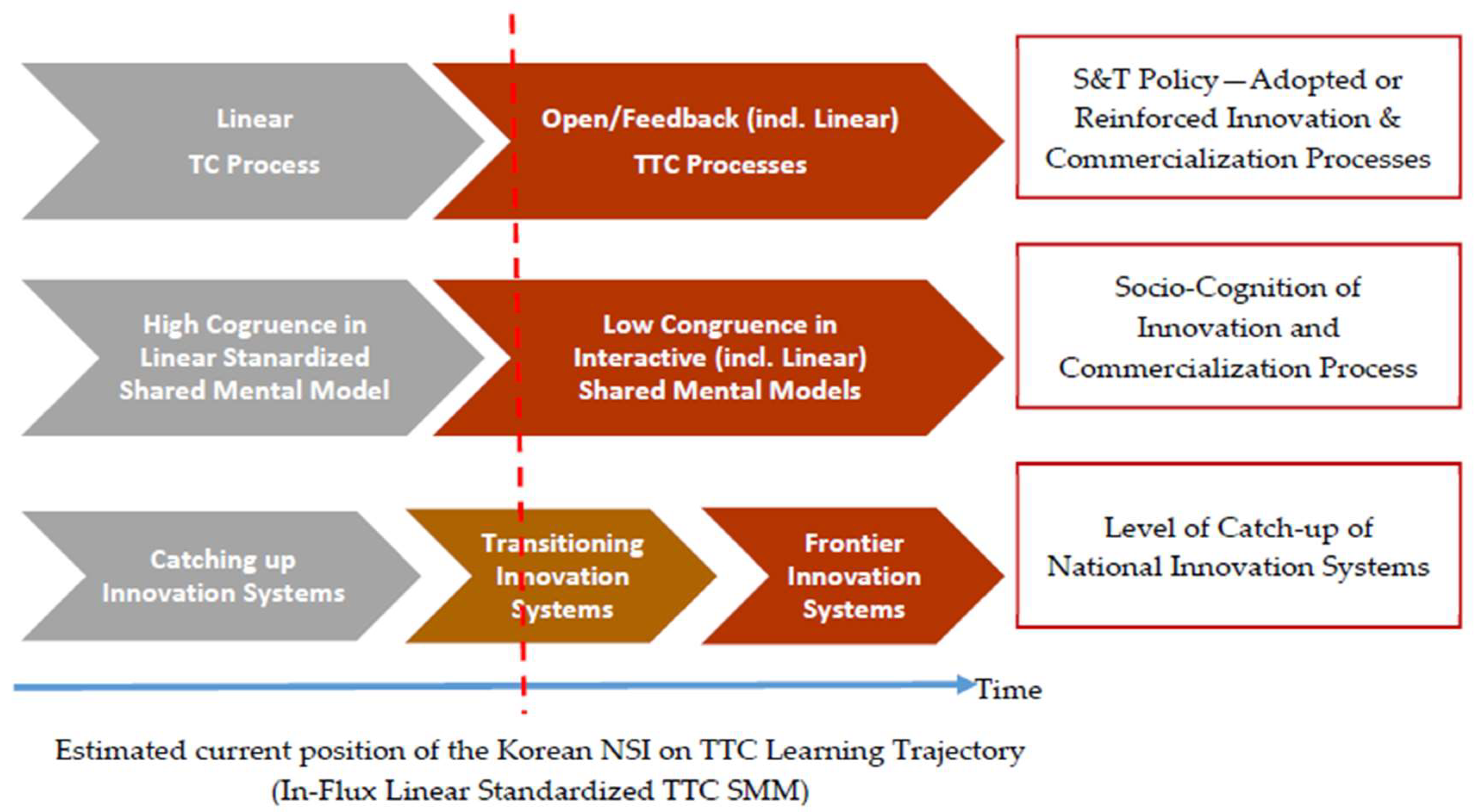
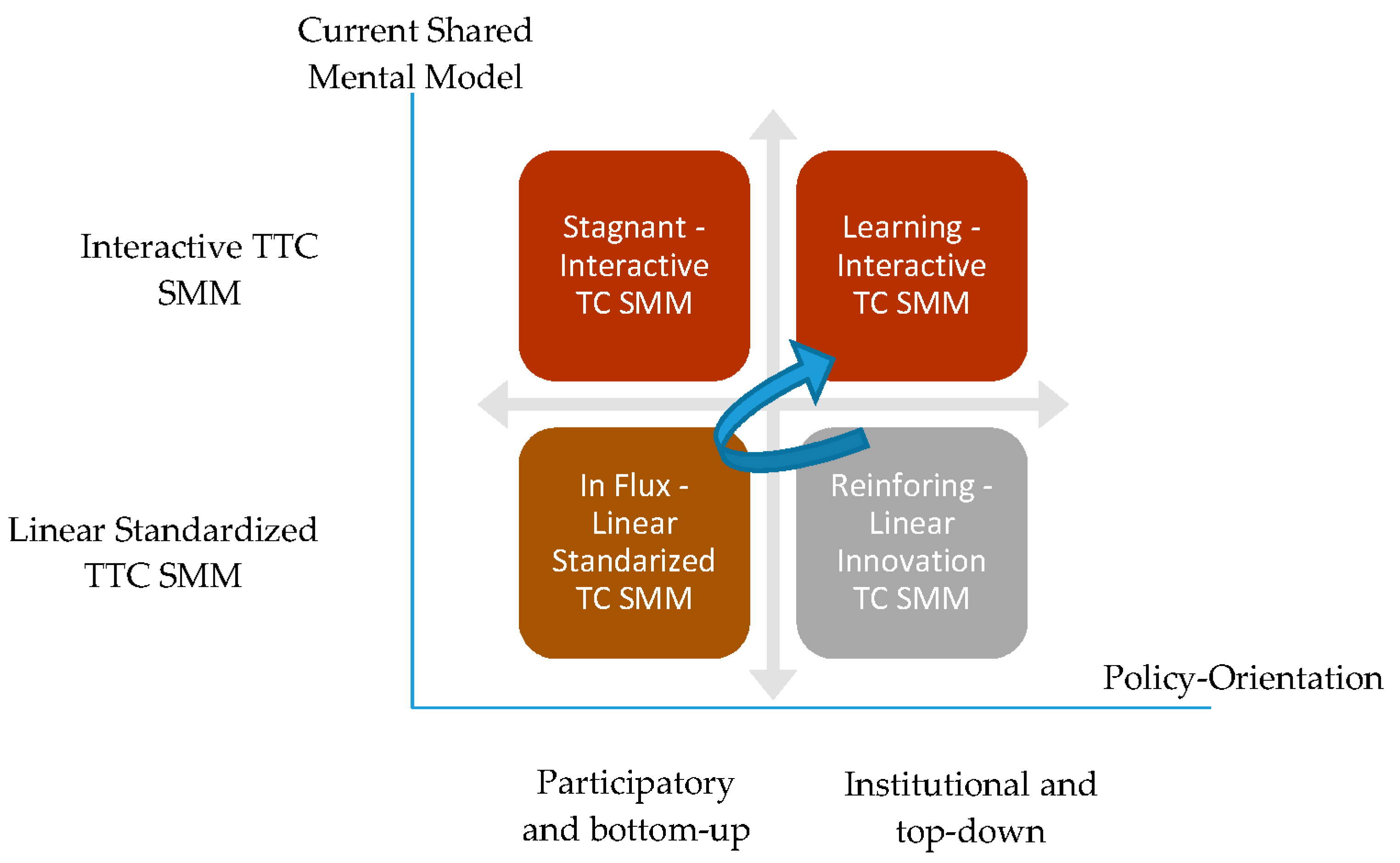
In sum, we propose a two-pronged framework for the gradual improvement in technology commercialization performance of a NSI through learning and embracing emergent TTC paradigms at the frontier. Depending on the currently adopted shared mental model (linear or interactive) and the policy-orientation (institutional or participatory) a NSI may remain trapped or move into a learning state. A desirable evolutionary path for a catching-up NSI is also provided (
Figure 9).
It is discernable that SMMs of inter-organizational teams in the catch-up systems of innovation are heavily focused on conforming to linear TTC approaches. This could explain why catching-up is more accepting of top-down STI policies and other teams’ influence in terms of technology selection (mission and project identification and assignment) and technology development and implementation (definition of tasks, stage-gates and gate-keepers, division of labor, modes of TTC). However, this also shows that actors are generally not accepting of top-down reward assessment and distribution since they expect to be rewarded equally or better by simple compliance. LSTTC-SMM models commonly tend to lead to lower technology commercialization performance mainly due to a mismatch between the demand and supply of technology. This may also be due to the routinization of the TTC process rather than managing it according to the specific requirements of the commercialization project since this requires breaking away from set procedures.
In contrast, SMMs of inter-organizational teams in frontier innovation systems largely focus on a variety of interactive innovation and commercialization models. While they are less accepting of (i.e., exhibit higher cognitive conflicts) top-down STI policies and other teams’ influence, they are more open to flexible roles, reward structures and performance rewards. Intuitively, ITTC-SMMs are positively associated with technology commercialization performance (lead to higher performance). A frontier NSI may also stagnate if it introduces policy measures for holding on to recently successful interactive TTC models.
Shared team mental models in maturing NSIs appear to have more conflict than in a catch-up system but less than those of developed NSIs and not enough to fully break away from LSTTC-SMM. However, their technology commercialization performance tends to improve as shifts in policy orientation allow for more conflict in their SMMs ultimately improving the cognition and capabilities of their teams to deal with ITTC-SMM.
6. Conclusions and Implications
As stated at the outset, South Korea stands at a critical juncture. Its technology-reliant approach to catch-up underpinned its sustained economic growth. This mode, though, is seen to have run its course. While the rationale for transitioning to a frontier NSI may be readily apparent, the process by which South Korea must follow is less so. In particular, without sound understanding for why its TTC is mired, policy-makers run the risk of perpetuating the reasons that give rise to the problem. As our findings suggest, the impediment to this transition—and achieving sustained growth more generally—is not one of resources but, rather, socio-cognitive. TTC is a team activity and the rules that structure behavior and, in turn, influence how actors think is critical. Expressed differently, in as much as other nations that have successfully navigated this transition and now enjoy new sources of growth, it is within South Korea’s grasp. But change is needed.
To this end, we note that despite outstanding R&D performance in line with other frontier NSIs, Korean inter-organizational teams do not consider their PRIs’ TTC performance as outstanding or even comparable to developed country NSIs. Lower TTC performance has also been confirmed by previous research.
This study also confirms strong congruence in some elements of the TTC SMMs of Korean inter-organizational teams while conflict (or less congruence) in others. It is evident that Korean inter-organizational teams act in unison to accept top-down decisions regarding technology selection, technology development and TTC processes. However, they do not agree on how technology should be protected or appropriated or how technology commercialization efforts should be assessed and awarded. This implies that while these key players of Korean national innovation systems appear to be committed to hold on to an existing view of a linear standardized shared mental model of commercialization, there is some conflict suggesting openness to newer modes of commercialization and demand-oriented TTC than supply-push. The apparent commitment to reinforce the existing view is supported by current science and technology policy and institutional structures still reminiscent of the catch-up period. This is largely top-down, supports quantitative over qualitative assessment, attempts to retain influence over technology development, and is indifferent to problems like incentives and rewards in the minds of teams working together. In order to embrace all possible interactive models of innovation and commercialization, the inter-organizational teams would need some freedom to experiment, differ in their opinions and be able to learn from each other without fear from adverse job performance evaluation, loss of or allocation of uneven rewards, and horizontal interactions. Korea, being a transitioning NSI, has attempted to address these issues but with little result. Bottom-up policy making processes involving technology users and technology commercialization teams in the field would be essential to transition from linear-standardized SMM to interactive open-shared mental models.
Another strong policy implication of socio-cognition’s (and hence individual agency’s) role in policy implementation is that while developing and adopting new policy measures, policy-makers should also consider an actor’s personal and shared mental model(s). According to the neo-classical economics’ view of technological knowledge, there are no significant differences in the characteristics of technological knowledge and its transfer costs. However, in reality, not only are there differences in terms of tacit knowledge but also in the perceptions of knowledge creators, knowledge recipients and managers of the transfer process. This observation warrants further investigation of actors’ socio-cognition in the STI policy-making process.
Finally, the paper has introduced a two-dimensional framework (
Figure 9) based on two types of SMMs of TTC and two different types of supporting policy and institutional structures suggesting congruence among their inter-organizational TTC teams. While a catch-up system may remain trapped in LSTTC-SMM if it holds to a confirmatory agenda ensuring congruence among its teams, a frontier innovation system may also stagnate (and ultimately fall-behind) if it does so. In contrast, a more participatory approach to ensure congruence among teams would help transitioning NSIs embrace ITTC-SMM and help frontier innovation systems to retain the lead at the moving technology frontier. This paper has tested this framework only on one transitioning NSI, and more research on other frontier innovation systems including those of the EU, Japan and the US is required to confirm its validity. An evolutionary perspective on improving TTC performance of NSI has also been drawn based on the relationships between currently adopted mental models by NSI players, policy-orientation about holding on to institutions, and the current stage of technological development. This also needs more testing and discussion.
The above findings in the Korean case and the proposed framework are in line with socio-cognition research that demonstrates that strongly held mental models may lead to overlooking environmental changes hence the importance of the flexibility to learn and improve existing mental models and consequent behavior and actions [
106,
107]. Moreover, it is well known that “the persistence of inappropriate mental models does explain organizational decline as a protracted process or a downward spiral irrespective of the abundance of managerial talent and hints of lurking trouble [
108].
More research is needed on individual cognition and motivations of team members involved in technology innovation and commercialization, both in intra-team and inter-team settings, to unearth the much neglected social and human side of these otherwise presumed rational processes. From an organizational point of view, such theoretical perspectives as role-playing, role taking, social judgment, and social interdependence could also be implemented in the TTC context.
Like any research, ours also has limitations. First, more empirical cases and interview data from other countries are needed to make generalizations. Second, more interviews from different actors from a wide variety of organizations could both reduce some variance but also add to a better understanding of the inner mechanisms of team cognition and behavior. While this study’s approach has the advantage of potentially capturing the whole spectrum of concepts-relationships in SMM of one type of team, text mining and semantic network extraction software tools could be used to explore SMMs hidden in large datasets across diverse teams. Future research should consider the use of such software tools. Further detail of the actual TTC policy initiatives in Korea could have added value to the discussion on the role of which policy interventions and institutions played a specific role in affecting congruence levels across certain elements of the SMMs. A dedicated study could also be useful in this respect.