
Inflammatory Biomarkers and Neurotrophic Factors in Preterm Newborns as Predictors of Motor Development: A Systematic Review


Abstract
1. Introduction
2. Materials and Methods
2.1. Electronic Search and Study Selection
2.2. Data Extraction and Assessment of Methodological Quality
2.3. Quality Assessment of the Review
2.4. Data Analysis
3. Results
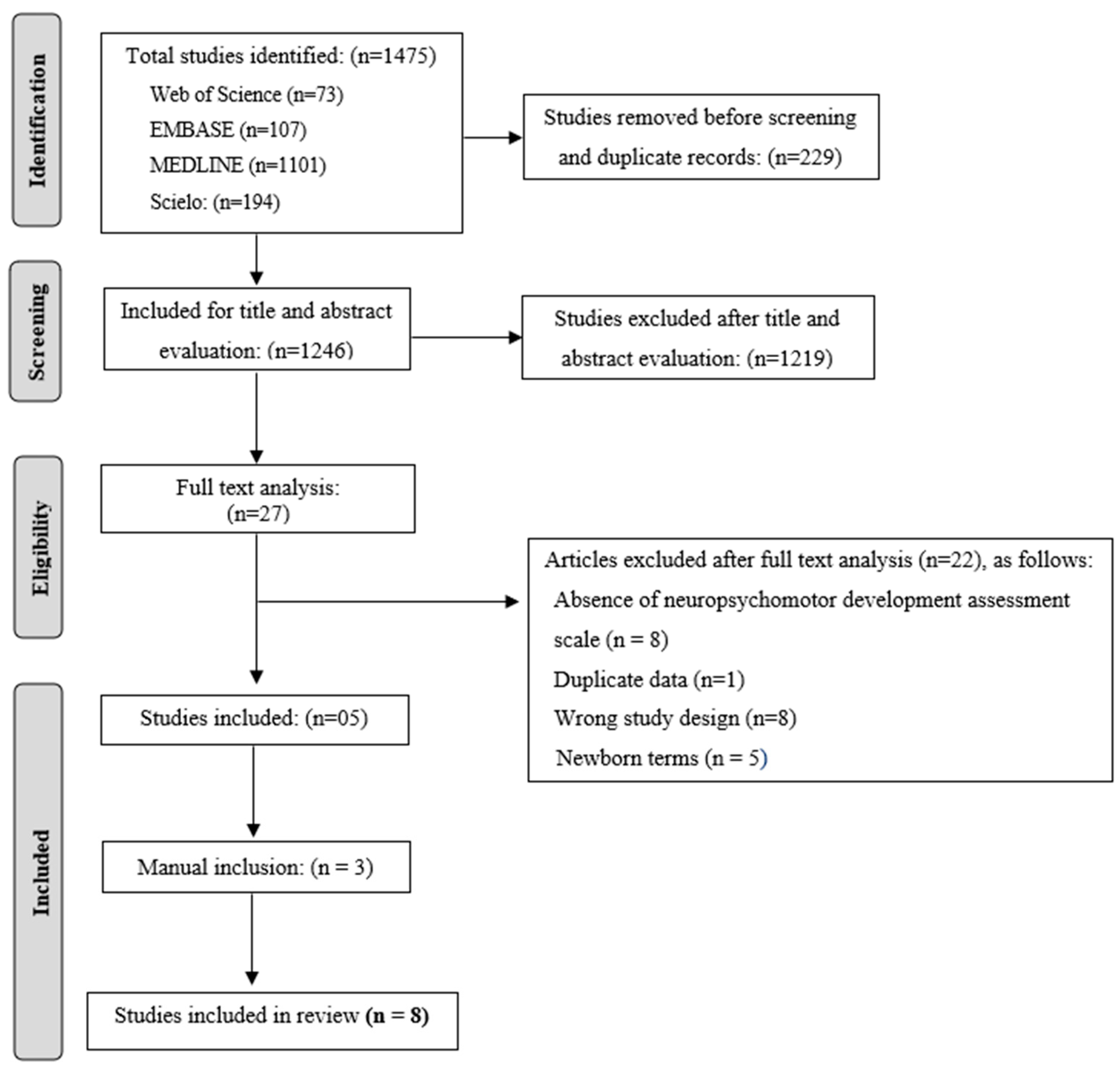
3.1. Study Selection
3.2. Methodological Quality of the Included Studies (NOS)
3.3. Quality Assessment of the Review (AMSTAR-2)
3.4. Characteristics of the Included Cohorts
3.5. Biomarker Sampling Windows, Biospecimens and Laboratory Techniques
3.6. Motor Outcomes and Assessment Tools
3.7. Associations Between Inflammatory and Neurotrophic Biomarkers and Motor Development
4. Discussion
5. Conclusions
Supplementary Materials
Author Contributions
Funding
Data Availability Statement
Conflicts of Interest
Abbreviations
| NBs | newborns |
| NOS | Newcastle-Ottawa Scale |
| WHO | World Health Organization |
| PRISMA | Preferred Reporting Items for Systematic Reviews and Meta-Analyses |
| IL-1β | interleukin-1 beta |
| IL-6 | interleukin-6 |
| IL-8 | interleukin-8 |
| IL-10 | interleukin-10 |
| CRP | C-reactive protein |
| TNF-α | tumour necrosis factor alpha |
| GFAP | glial fibrillary acidic protein |
| GDNF | glial cell-derived neurotrophic factor |
| BSID II | Bayley Scales of Infant Development, Second Edition |
| BSID III | Bayley Scales of Infant Development, Third Edition |
| TIMP | Test of Infant Motor Performance |
| NAPI | Neurobehavioral Assessment of the Preterm Infant |
| PDI | Psychomotor Development Index |
| MDV | Motor Development and Vigour |
| NDI | Neurodevelopmental impairment |
| MD | Motor development |
References
- March of Dimes; PMNCH; Save the Children; WHO. Born Too Soon: The Global Action Report on Preterm Birth; Howson, C.P., Kinney, M.V., Lawn, J.E., Eds.; World Health Organization: Geneva, Switzerland, 2012; p. 13. [Google Scholar]
- World Health Organization. Born Too Soon: Decade of Action on Preterm Birth; World Health Organization: Geneva, Switzerland, 2023; p. 13. [Google Scholar]
- Martinelli, K.G.; Dias, B.A.S.; Leal, M.L.; Belotti, L.; Garcia, É.M.; Santos Neto, E.T.d. Prematuridade no Brasil entre 2012 e 2019: Dados do Sistema de Informações sobre Nascidos Vivos. Rev. Bras. Estud. Popul. 2021, 38, e0173. [Google Scholar] [CrossRef]
- Chawanpaiboon, S.; Vogel, J.P.; Moller, A.B.; Lumbiganon, P.; Petzold, M.; Hogan, D.; Landoulsi, S.; Jampathong, N.; Kongwattanakul, K.; Laopaiboon, M.; et al. Global, regional, and national estimates of levels of preterm birth in 2014: A systematic review and modelling analysis. Lancet Glob. Health 2019, 7, e37–e46. [Google Scholar] [CrossRef] [PubMed]
- Barfield, W.D. Public health implications of very preterm birth. Clin. Perinatol. 2018, 45, 565–577. [Google Scholar] [CrossRef] [PubMed]
- Nist, M.D.; Pickler, R.H. An integrative review of cytokine/chemokine predictors of neurodevelopment in preterm infants. Biol. Res. Nurs. 2019, 21, 366–376. [Google Scholar] [CrossRef]
- Edwards, J.; Berube, M.; Erlandson, K.; Haug, S.; Johnstone, H.; Meagher, M.; Sarkodee-Adoo, S.; Zwicker, J.G. Developmental coordination disorder in school-aged children born very preterm and/or at very low birth weight: A systematic review. J. Dev. Behav. Pediatr. 2011, 32, 678–687. [Google Scholar] [CrossRef]
- Rajkumar, R.; Bhaya, B.; Mamilla, D.; Czech, T.; Kisseih, E.; Saini, A.; Chouthai, N. A preliminary evaluation of glial cell line-derived neurotrophic factor (GDNF) levels in cerebrospinal fluid across various gestational ages and clinical conditions of the neonate. Int. J. Dev. Neurosci. 2018, 65, 61–65. [Google Scholar] [CrossRef]
- Cristina, T.; Ruas, B.; Gagliardo, H.R.; Simões Martinez, C.; Ravanini, S.G. A comparação de funções apendiculares desencadeadas pela visão em lactentes nascidos pré-termo e a termo no primeiro trimestre de vida. Rev. Bras. Crescimento Desenvolv. Hum. 2010, 20, 680–687. [Google Scholar][Green Version]
- Zemel, B.S. Influence of complex childhood diseases on variation in growth and skeletal development. Am. J. Hum. Biol. 2017, 29, e22985. [Google Scholar] [CrossRef]
- Hadders-Algra, M. Early human motor development: From variation to the ability to vary and adapt. Neurosci. Biobehav. Rev. 2018, 90, 411–427. [Google Scholar] [CrossRef]
- Kuban, K.C.; Kuban, T.M.; Allred, E.N.; Fichorova, R.N.; Heeren, T.; Paneth, N.; Hirtz, D.; Dammann, O.; Leviton, A.; ELGAN Study Investigators. ELGAN Study Investigators. The breadth and type of systemic inflammation and the risk of adverse neurological outcomes in extremely low gestation newborns. Pediatr. Neurol. 2015, 52, 42–48. [Google Scholar] [CrossRef]
- Rose, J.; Vassar, R.; Cahill-Rowley, K.; Hintz, S.R.; Stevenson, D.K. Neonatal biomarkers of inflammation: Correlates of early neurodevelopment and gait in very-low-birth-weight preterm children. Am. J. Perinatol. 2016, 33, 71–78. [Google Scholar] [PubMed]
- O’Shea, T.M.; Allred, E.N.; Kuban, K.C.; Dammann, O.; Paneth, N.; Fichorova, R.; Hirtz, D.; Leviton, A.; Extremely Low Gestational Age Newborn (ELGAN) Study Investigators. Extremely Low Gestational Age Newborn (ELGAN) Study Investigators. Elevated concentrations of inflammation-related proteins in postnatal blood predict severe developmental delay at 2 years of age in extremely preterm infants. J. Pediatr. 2012, 160, 395–401.e4. [Google Scholar] [PubMed]
- Silveira, R.C.; Procianoy, R.S. High plasma cytokine levels, white matter injury and neurodevelopment of high-risk preterm infants: Assessment at two years. Early Hum. Dev. 2011, 87, 433–437. [Google Scholar] [CrossRef] [PubMed]
- Magalhães, R.C.; Moreira, J.M.; Vieira, É.L.M.; Rocha, N.P.; Miranda, D.M.; Simões e Silva, A.C. Urinary levels of IL-1β and GDNF in preterm neonates as potential biomarkers of motor development: A prospective study. Mediat. Inflamm. 2017, 2017, 8201423. [Google Scholar] [CrossRef]
- Lee, E.S.; Kim, E.K.; Shin, S.H.; Choi, Y.H.; Jung, Y.H.; Kim, S.Y.; Koh, J.W.; Choi, E.K.; Cheon, J.E.; Kim, H.S. Factors associated with neurodevelopment in preterm infants with systemic inflammation. BMC Pediatr. 2021, 21, 114. [Google Scholar] [CrossRef]
- Hodyl, N.A.; Aboustate, N.; Bianco-Miotto, T.; Roberts, C.T.; Clifton, V.L.; Stark, M.J. Child neurodevelopmental outcomes following preterm and term birth: What can the placenta tell us? Placenta 2017, 57, 79–86. [Google Scholar] [CrossRef]
- Ragsdale, H.B.; Kuzawa, C.W.; Borja, J.B.; Avila, J.L.; McDade, T.W. Regulation of inflammation during gestation and birth outcomes: Inflammatory cytokine balance predicts birth weight and length. Am. J. Hum. Biol. 2019, 31, e23245. [Google Scholar] [CrossRef]
- Magalhães, R.C.; Pimenta, L.P.; Barbosa, I.G.; Moreira, J.M.; de Barros, J.L.V.M.; Teixeira, A.L.; e Silva, A.C. Inflammatory molecules and neurotrophic factors as biomarkers of neuropsychomotor development in preterm neonates: A systematic review. Int. J. Dev. Neurosci. 2018, 65, 29–37. [Google Scholar] [CrossRef]
- Cappelletti, M.; Della Bella, S.; Ferrazzi, E.; Mavilio, D.; Divanovic, S. Inflammation and preterm birth. J. Leukoc. Biol. 2016, 99, 67–78. [Google Scholar] [CrossRef]
- Ghassabian, A.; Sundaram, R.; Chahal, N.; McLain, A.C.; Bell, E.; Lawrence, D.A.; Yeung, E.H. Determinants of neonatal brain-derived neurotrophic factor and association with child development. Dev. Psychopathol. 2017, 29, 1499–1511. [Google Scholar] [CrossRef]
- Fu, M.; Song, W.; Yu, G.; Yu, Y.; Yang, Q. Risk factors for length of NICU stay of newborns: A systematic review. Front. Pediatr. 2023, 11, 1121406. [Google Scholar] [CrossRef] [PubMed]
- Dammann, O.; Leviton, A. Intermittent or sustained systemic inflammation and the preterm brain. Pediatr. Res. 2014, 75, 376–380. [Google Scholar] [CrossRef] [PubMed]
- Reiss, J.D.; Peterson, L.S.; Nesamoney, S.N.; Chang, A.L.; Pasca, A.M.; Marić, I.; Shaw, G.M.; Gaudilliere, B.; Wong, R.J.; Sylvester, K.G.; et al. Perinatal infection, inflammation, preterm birth, and brain injury: A review with proposals for future investigations. Exp. Neurol. 2022, 351, 113988. [Google Scholar] [CrossRef] [PubMed]
- Higgins, J.P.; Green, S. (Eds.) Cochrane Handbook for Systematic Reviews of Interventions; Book Series C; The Cochrane Collaboration: London, UK, 2024. [Google Scholar]
- Page, M.J.; McKenzie, J.E.; Bossuyt, P.M.; Boutron, I.; Hoffmann, T.C.; Mulrow, C.D.; Shamseer, L.; Tetzlaff, J.M.; Akl, E.A.; Brennan, S.E.; et al. The PRISMA 2020 statement: An updated guideline for reporting systematic reviews. BMJ 2021, 372, n71. [Google Scholar] [CrossRef]
- Wells, G.A.; Shea, B.; O’Connell, D.; Peterson, J.; Welch, V.; Losos, M.; Tugwell, P. The Newcastle–Ottawa Scale (NOS) for Assessing the Quality of Nonrandomized Studies in Meta-Analyses; Ottawa Hospital Research Institute: Ottawa, ON, Canada, 2013; Available online: http://www.ohri.ca/programs/clinical_epidemiology/oxford.asp (accessed on 10 September 2024).
- Fragelli, T.B.O.; Honório, H.M.; Santiago, J.F. Fundamentos das Revisões Sistemáticas em Odontologia; Quintessence Editora: São Paulo, Brazil, 2018. [Google Scholar]
- Kurul, Ş.; Beckers, F.L.M.; Vermeulen, M.J.; Suurland, J.; Hasbek, J.E.; Ramakers, C.R.B.; Simons, S.H.; Reiss, I.K.; Taal, H.R. Inflammation, sepsis severity and neurodevelopmental outcomes of late-onset sepsis in preterm neonates. Pediatr. Res. 2023, 94, 2026–2032. [Google Scholar] [CrossRef]
- Nist, M.D.; Shoben, A.B.; Pickler, R.H. Early inflammatory measures and neurodevelopmental outcomes in preterm infants. Nurs. Res. 2020, 69, S11–S20. [Google Scholar] [CrossRef]
- Bartha, A.I.; Foster-Barber, A.; Miller, S.P.; Vigneron, D.B.; Glidden, D.V.; Barkovich, A.J.; Ferriero, D.M. Neonatal encephalopathy: Association of cytokines with MR spectroscopy and outcome. Pediatr. Res. 2004, 56, 960–966. [Google Scholar] [CrossRef]
- Bayman, M.G.; Inal, Z.O.; Hayiroglu, F.; Ozturk, E.N.Y.; Gezginc, K. Foetal umbilical cord brain-derived neurotrophic factor (BDNF) levels in pregnancy with gestational diabetes mellitus. J. Obstet. Gynaecol. 2022, 42, 1097–1102. [Google Scholar] [CrossRef]
- Caesar, R.; Boyd, R.N.; Colditz, P.; Cioni, G.; Ware, R.S.; Salthouse, K.; Doherty, J.; Jackson, M.; Matthews, L.; Hurley, T.; et al. Early prediction of typical outcome and mild developmental delay for prioritisation of service delivery for very preterm and very low birthweight infants: A study protocol. BMJ Open 2016, 6, e010726. [Google Scholar] [CrossRef]
- Clark, E.A.; Mele, L.; Wapner, R.J.; Spong, C.Y.; Sorokin, Y.; Peaceman, A.; Iams, J.D.; Leveno, K.J.; Harper, M.; Caritis, S.N.; et al. Repeated course antenatal steroids, inflammation gene polymorphisms, and neurodevelopmental outcomes at age 2. Am. J. Obstet. Gynecol. 2011, 205, 79.e1–79.e5. [Google Scholar] [CrossRef]
- Cooper, D.M.; Girolami, G.L.; Kepes, B.; Stehli, A.; Lucas, C.T.; Haddad, F.; Zalidvar, F.; Dror, N.; Ahmad, I.; Soliman, A.; et al. Body composition and neuromotor development in the year after NICU discharge in premature infants. Pediatr. Res. 2020, 88, 459–465. [Google Scholar] [CrossRef] [PubMed]
- Dewi, M.; Carlson, S.E.; Gustafson, K.M.; Sullivan, D.K.; Wick, J.A.; Hull, H.R. Programming of infant neurodevelopment by maternal obesity: Potential role of maternal inflammation and insulin resistance. Asia Pac. J. Clin. Nutr. 2017, 26, S36–S39. [Google Scholar] [PubMed]
- Dietrick, B.; Molloy, E.; Massaro, A.N.; Strickland, T.; Zhu, J.; Slevin, M.; Donoghue, V.; Sweetman, D.; Kelly, L.; O’Dea, M.; et al. Plasma and Cerebrospinal Fluid Candidate Biomarkers of Neonatal Encephalopathy Severity and Neurodevelopmental Outcomes. J. Pediatr. 2020, 226, 71–79.e5. [Google Scholar] [CrossRef] [PubMed]
- Harding, D.; Brull, D.; Humphries, S.E.; Whitelaw, A.; Montgomery, H.; Marlow, N. Variation in the interleukin-6 gene is associated with impaired cognitive development in children born prematurely: A preliminary study. Pediatr. Res. 2005, 58, 117–120. [Google Scholar] [CrossRef]
- Harding, D.R.; Dhamrait, S.; Whitelaw, A.; Humphries, S.E.; Marlow, N.; Montgomery, H.E. Does interleukin-6 genotype influence cerebral injury or developmental progress after preterm birth? Pediatrics 2004, 114, 941–947. [Google Scholar] [CrossRef]
- Kapitanović Vidak, H.; Catela Ivković, T.; Jokić, M.; Spaventi, R.; Kapitanović, S. The association between proinflammatory cytokine polymorphisms and cerebral palsy in very preterm infants. Cytokine 2012, 58, 57–64. [Google Scholar] [CrossRef]
- Kohman, R.A.; Tarr, A.J.; Sparkman, N.L.; Bogale, T.M.; Boehm, G.W. Neonatal endotoxin exposure impairs avoidance learning and attenuates endotoxin-induced sickness behavior and central IL-1beta gene transcription in adulthood. Behav. Brain Res. 2008, 194, 25–31. [Google Scholar] [CrossRef]
- Pascual-Mancho, J.; Pintado-Recarte, P.; Morales-Camino, J.C.; Romero-Román, C.; Hernández-Martin, C.; Bravo, C.; Bujan, J.; Alvarez-Mon, M.; Ortega, M.A.; De León-Luis, J. Brain-Derived Neurotrophic Factor Levels in Cord Blood from Growth Restricted Fetuses with Doppler Alteration Compared to Adequate for Gestational Age Fetuses. Medicina 2022, 58, 178. [Google Scholar] [CrossRef]
- Ren, L.H.; Mu, X.Y.; Chen, H.Y.; Yang, H.L.; Qi, W. Prenatal lead exposure related to cord blood brain derived neurotrophic factor (BDNF) levels and impaired neonatal neurobehavioral development. Zhonghua Yu Fang Yi Xue Za Zhi 2016, 50, 514–518. [Google Scholar]
- Uguz, F.; Sonmez, E.O.; Sahingoz, M.; Gokmen, Z.; Basaran, M.; Gezginc, K.; Sonmez, G.; Kaya, N.; Erdem, S.S.; Cicekler, H.; et al. Maternal generalized anxiety disorder during pregnancy and fetal brain development: A comparative study on cord blood brain-derived neurotrophic factor levels. J. Psychosom. Res. 2013, 75, 346–350. [Google Scholar] [CrossRef]
- Voltas, N.; Arija, V.; Hernández-Martínez, C.; Jiménez-Feijoo, R.; Ferré, N.; Canals, J. Are there early inflammatory biomarkers that affect neurodevelopment in infancy? J. Neuroimmunol. 2017, 305, 42–50. [Google Scholar] [CrossRef]
- Aisa, M.C.; Barbati, A.; Cappuccini, B.; De Rosa, F.; Gerli, S.; Clerici, G.; Kaptilnyy, V.A.; Ishenko, A.I.; Di Renzo, G.C. Urinary Nerve Growth Factor in full-term, preterm and intra uterine growth restriction neonates: Association with brain growth at 30–40 days of postnatal period and with neuro-development outcome at two years. A pilot study. Neurosci Lett. 2021, 741, 135459. [Google Scholar] [CrossRef] [PubMed]
- Nist, M.D.; Pickler, R.H.; Harrison, T.M.; Steward, D.K.; Shoben, A.B. Inflammatory predictors of neurobehavior in very preterm infants. Early Hum. Dev. 2020, 147, 105078. [Google Scholar] [CrossRef] [PubMed]
- O’Shea, T.M.; Shah, B.; Allred, E.N.; Fichorova, R.N.; Kuban, K.C.K.; Dammann, O.; Leviton, A.; ELGAN Study Investigators. Inflammation-initiating illnesses, inflammation-related proteins, and cognitive impairment in extremely preterm infants. Brain Behav. Immun. 2013, 29, 104–112. [Google Scholar] [CrossRef] [PubMed]
- Rao, R.; Mashburn, C.B.; Mao, J.; Wadhwa, N.; Smith, G.M.; Desai, N.S. Brain-derived neurotrophic factor in infants <32 weeks gestational age: Correlation with antenatal factors and postnatal outcomes. Pediatr. Res. 2009, 65, 548–552. [Google Scholar] [CrossRef]
- Wood, T.R.; Parikh, P.; Comstock, B.A.; Law, J.B.; Bammler, T.K.; Kuban, K.C.; Mayock, D.E.; Heagerty, P.J.; Juul, S.; PENUT Trial Consortium. Early Biomarkers of Hypoxia and Inflammation and Two-Year Neurodevelopmental Outcomes in the Preterm Erythropoietin Neuroprotection (PENUT) Trial. eBioMedicine 2021, 72, 103605. [Google Scholar] [CrossRef]
- Leviton, A.; Fichorova, R.N.; O’Shea, T.M.; Kuban, K.; Paneth, N.; Dammann, O.; Allred, E.N.; ELGAN Study Investigators. Two-hit model of brain damage in the very preterm newborn: Small for gestational age and postnatal systemic inflammation. Pediatr. Res. 2013, 73, 362–370. [Google Scholar] [CrossRef]
- Kuban, K.C.K.; O’Shea, T.M.; Allred, E.N.; Paneth, N.; Hirtz, D.; Fichorova, R.N.; Leviton, A. Systemic inflammation and cerebral palsy risk in extremely preterm infants. J. Child Neurol. 2014, 29, 1692–1698. [Google Scholar] [CrossRef]
- Douglas-Escobar, M.; Heaton, S.C.; Bennett, J.; Young, L.J.; Glushakova, O.; Xu, X.; Barbeau, D.Y.; Rossignol, C.; Miller, C.; Old Crow, A.M.; et al. UCH-L1 and GFAP Serum Levels in Neonates with Hypoxic-Ischemic Encephalopathy: A Single Center Pilot Study. Front. Neurol. 2014, 5, 273. [Google Scholar] [CrossRef]
- Douglas-Escobar, M.; Weiss, M.D. Biomarkers of Brain Injury in the Premature Infant. Front. Neurol. 2012, 3, 185. [Google Scholar] [CrossRef]
- Serpero, L.D.; Pluchinotta, F.; Gazzolo, D. The clinical and diagnostic utility of S100B in preterm newborns. Clin. Chim. Acta 2015, 444, 193–198. [Google Scholar] [CrossRef] [PubMed]
- Gaulee, D.; Yang, Z.; Sura, L.; Xu, H.; Rossignol, C.; Weiss, M.D.; Bliznyuk, N. Concentration of Serum Biomarkers of Brain Injury in Neonates With a Low Cord pH With or Without Mild Hypoxic-Ischemic Encephalopathy. Front. Neurol. 2022, 13, 934755. [Google Scholar] [CrossRef] [PubMed]
- Krey, N.; Stocchero, B.A.; Creutzberg, K.C.; Heberle, B.A.; Tractenberg, S.G.; Xiang, L.; Wei, W.; Kluwe-Schiavon, B.; Viola, T.W. Neurotrophic Factor Levels in Preterm Infants: A Systematic Review and Meta-Analysis. Front. Neurol. 2021, 12, 643576. [Google Scholar] [CrossRef] [PubMed]
- Hellström, W.; Hortensius, L.M.; Löfqvist, C.; Hellgren, G.; Tataranno, M.L.; Ley, D.; Benders, M.J.; Hellström, A.; Björkman–Burtscher, I.M.; Heckemann, R.A.; et al. Postnatal serum IGF-1 levels associate with brain volumes at term in extremely preterm infants. Pediatr. Res. 2023, 93, 666–674. [Google Scholar] [CrossRef]
- Kim, J.Y.; Yenari, M.A. The immune modulating properties of the heat shock proteins after brain injury. Anat. Cell Biol. 2013, 46, 1–7. [Google Scholar] [CrossRef]
- Kim, J.Y.; Barua, S.; Huang, M.Y.; Park, J.; Yenari, M.A.; Lee, J.E. Heat Shock Protein 70 (HSP70) Induction: Chaperonotherapy for Neuroprotection after Brain Injury. Cells 2020, 9, 2020. [Google Scholar] [CrossRef]
- Matsumori, Y.; Hong, S.M.; Aoyama, K.; Fan, Y.; Kayama, T.; Sheldon, R.A.; Vexler, Z.S.; Ferriero, D.M.; Weinstein, P.R.; Liu, J. Hsp70 overexpression sequesters AIF and reduces neonatal hypoxic/ischemic brain injury. J. Cereb. Blood Flow Metab. 2005, 25, 899–910. [Google Scholar] [CrossRef]
- Seo, K.; Hwang-Bo, S.; Im, S.A.; Kim, M.; Youn, Y.A. Predictive Value of Heat-Shock Protein Gene Expression on Severe Neonatal Hypoxic-Ischemic Encephalopathy. Diagnostics 2022, 12, 981. [Google Scholar] [CrossRef]
- Lembo, C.; Buonocore, G.; Perrone, S. Oxidative Stress in Preterm Newborns. Antioxidants 2021, 10, 1672. [Google Scholar] [CrossRef]
- Perrone, S.; Laschi, E.; Buonocore, G. Biomarkers of oxidative stress in the fetus and in the newborn. Free Radic. Biol. Med. 2019, 142, 23–31. [Google Scholar] [CrossRef]
- Ten, V.S.; Stepanova, A.A.; Ratner, V.; Neginskaya, M.; Niatsetskaya, Z.; Sosunov, S.; Starkov, A. Mitochondrial Dysfunction and Permeability Transition in Neonatal Brain and Lung Injuries. Cells 2021, 10, 569. [Google Scholar] [CrossRef]
- Shayota, B.J. Biomarkers of mitochondrial disorders. Neurotherapeutics 2024, 21, e00325. [Google Scholar] [CrossRef]
- Lee, I.C.; Wong, S.H.; Wang, X.A.; Yu, C.S. Identifying Early Diagnostic Biomarkers Associated with Neonatal Hypoxic-Ischemic Encephalopathy. Diagnostics 2021, 11, 897. [Google Scholar] [CrossRef]
- Amelio, G.S.; Provitera, L.; Raffaeli, G.; Tripodi, M.; Amodeo, I.; Gulden, S.; Cortesi, V.; Manzoni, F.; Cervellini, G.; Tomaselli, A.; et al. Endothelial dysfunction in preterm infants: The hidden legacy of uteroplacental pathologies. Front. Pediatr. 2022, 10, 1041919. [Google Scholar] [CrossRef]


| Author/Year | Representativeness of Exposed Cohort | Selection of Non-Exposed Cohort | Ascertainment of Exposure | Outcome Not Present at Start | Comparability of Cohorts (Design/Analysis) | Assessment of Outcome | Follow-Up Long Enough for Outcomes | Adequacy of Follow-Up | Total Score (0–9) | Overall Quality |
|---|---|---|---|---|---|---|---|---|---|---|
| Silveira et al. [15] | – | + | – | + | ++ | – | + | – | 5/9 | Moderate |
| O’Shea et al. [14] | + | + | + | + | +– | – | + | – | 6/9 | Moderate |
| Rose et al. [13] | – | + | – | + | ++ | + | + | + | 7/9 | High |
| Kuban et al. [12] | + | + | – | + | ++ | – | + | + | 7/9 | High |
| Magalhães et al. [16] | – | – | – | + | ++ | + | + | + | 6/9 | Moderate |
| Nist et al. [31] | – | – | + | + | ++ | – | – | – | 4/9 | Moderate |
| Lee et al. [17] | – | + | – | + | ++ | – | + | + | 6/9 | Moderate |
| Kurul et al. [30] | – | + | + | + | +– | + | + | + | 7/9 | High |
| Author/Year | Patients (n) | Gestational Age at Birth (Weeks) | Birth Weight (g) | Key Neonatal Morbidities * | NICU Length of Stay (Days) | Analysed Material | Laboratory Technique | Inflammatory and Neurodevelopmental Markers | Neuropsychomotor Development Assessment Scale |
|---|---|---|---|---|---|---|---|---|---|
| Silveira et al. [15] | 62 | 29.5 ± 2 | 1100 ± 220 | Respiratory distress syndrome, n = 33; Positive blood culture 72 h, n = 5; Periventricular leukomalacia, n = 16; Intraventricular haemorrhage (grades III/IV), n = 10; Bronchopulmonary dysplasia, n = 6. | Not reported | Blood | Human cytokine elenco plex kit | IL-6, IL-1β, IL-8, IL-10 and TNF-α | BSID-II |
| O’Shea et al. [14] | 939 | ≤28 | - | Chronic lung disease, n = 52; Late onset sepsis, n = 26; Necrotizing enterocolitis, n = 12; Moderate/severe IVH, n = 21; Ventricular enlargement, n = 10. | Not reported | Blood | MSD Multiplex | IL-1β, IL-6, TNF-α, IL-8, CRP | BSID-II e GMFCS |
| Rose et al. [13] | 102 | 28.7 ± 2.4 | 1087 ± 279 | Necrotizing enterocolitis, n = 12; Retinopathy of prematurity, n = 28. Bronchopulmonary dysplasia, n = 27; Sepsis, n = 10. | Not reported | Blood | - | CRP | BSID-III |
| Kuban et al. [12] | 881 | ≤28 | - | Not reported | Not reported | Blood | MSD Multiplex | IL-1 β, IL-6, and TNF-α | BSID-II |
| Magalhães et al. [16] | 40 | 30 ± 1 | 1477 ± 428 | Neonatal morbidities not reported | Not reported | Blood and Urine | MSD Multiplex | IL-1β, IL-6, IL-10, TNF-α, BDNF, GDNF | TIMP |
| Nist et al. [31] | 68 | 30 ± 1.1 | 770 ± 233 | Associated inflammatory conditions explicitly excluded (see Methods); other neonatal morbidities not reported | Not reported | Blood | MSD Multiplex | IL-6, IL-8, IL-1β, TNF-α and IL-10 | NAPI |
| Lee et al. [17] | 45 | 24–33 | 420–1400 | Respiratory distress syndrome, n = 35; Bronchopulmonary dysplasia, n = 30; Retinopathy of prematurity, n = 15; Intraventricular haemorrhage (grades III), n = 2; Necrotizing enterocolitis (stage II), n = 2; Sepsis, n = 11 | Not reported | Blood | ELISA | IL-1β, IL-6, IL-8 and TNF-α | BSID-III |
| Kurul et al. [30] | 326 | ≤30 | 410–2000 | Sepsis, 1 episode, n = 86; Sepsis, with more than 1 episode, n = 50 | Not reported | Blood | Cobas® 8000 System, Roche Diagnostics | IL-6 and CRP | Bayley-III-NL |
| Author/Year | Biological Material Collection Time(s) | Development Assessment Time | Conditions That Can Generate Inflammatory Processes * | Inflammatory and/or Neurodevelopmental Biomarker | Motor Delay (Scales Used) | Main Results |
|---|---|---|---|---|---|---|
| Silveira et al. [15] | - | 22–24 months CA | Present | IL-6, IL-8, IL-10, IL-1β and TNF-α | BSID-II, an PDI > 84 is defined as normal | Regarding PDI, high levels of IL-6, IL-8 and TNF-α, present an increased risk of PDI < 85 |
| O’Shea et al. [14] | Drops of blood were collected on filter paper, 1 postnatal day (break, day 1–3), on the seventh day (break, day 5–8) and day 14 (break, day 12–15) | 24 months CA | Present | IL-1β, IL-6, TNF-α, IL-8 and CRP | Developmental assessments included the BSID-II (score < 55) and an assessment of gross motor function using the GMFCS | Regarding motor development, delayed babies (score < 55) showed increased levels of the inflammatory biomarker CRP in the 7th day sample and of the inflammatory biomarkers IL-1b, IL-6, TNF-a, IL-8 and CRP on the 14th day |
| Rose et al. [13] | First two weeks of life | 18–22 months CA | Present | CRP | BSDI III with motor score < 85 | The inflammation biomarker CRP was significantly higher in children with motor scores < 85. Furthermore, the higher mean CRP correlates with lower motor and fine motor scores (<85) |
| Kuban et al. [12] | Blood samples collected on the first, seventh and fourteenth postnatal days | 24 months CA | - | IL-1, IL-6, IL-6R, TNF-α | Developmental assessments included the BSID-II (PDI < 55) | There was no significant association between the values obtained in the PDI and the concentrations of inflammatory biomarkers at two years of age |
| Magalhães et al. [16] | Umbilical cord blood (T0), at 48 (T1) and 72 h (T2) of life and finally at 3 weeks after birth (T3). Urine samples were obtained at the same time points as peripheral blood collection after birth | 34 weeks GA | Present | L-1β, IL-6, IL-10, TNF-α, BDNF and GDNF | The TIMP was applied to assess motor development, with babies classified into two groups: “typical motor development” (values equal to or greater than the 5th percentile) and “below expected” (values below the 5th percentile) | Higher IL-1β values were found in the group with typical motor development using TIMP. With urine, a significant increase in BDNF and GDNF was found in the group with motor development below expected at T2 and T3, respectively |
| Nist et al. [31] | A blood sample was collected from the first week to 35 weeks of postnatal life, weekly | 35 weeks GA | Absent | IL-6, IL-8, IL-1β, and TNF-α | NAPI scores in the MDV cluster are based on performance on 7 unique items | Babies with higher levels of TNF-α had lower NAPI scores in the MDV cluster. By including IL-6, TNF-α and IL-8 observed that higher composite inflammation scores were associated with decreased NAPI and MDV scores |
| Lee et al. [17] | Blood samples were collected on the first day of symptoms of systemic inflammation, two and six days later | 18 months CA | Present | IL-1β, IL-6, and TNF-α | The BSDI III scale was used but they did not mention the score used | Among the biomarkers studied, TNF-α showed a negative and significant correlation in the motor domain of BSDI III |
| Kurul et al. [30] | Blood collection was carried out when the baby showed two or more symptoms of sepsis within 72 h of birth | 24 months CA | Present | IL-6, and CRP | Bayley-III-NL, NDI serious < 70 e NDI light > 70 | Regarding motor development, the increase in CRP concentration associated with sepesis was significantly associated with a motor score < 70. And a higher risk of severe NDI. Not observed for IL-6 |
Disclaimer/Publisher’s Note: The statements, opinions and data contained in all publications are solely those of the individual author(s) and contributor(s) and not of MDPI and/or the editor(s). MDPI and/or the editor(s) disclaim responsibility for any injury to people or property resulting from any ideas, methods, instructions or products referred to in the content. |
© 2026 by the authors. Licensee MDPI, Basel, Switzerland. This article is an open access article distributed under the terms and conditions of the Creative Commons Attribution (CC BY) license.
Share and Cite
Gabriel, L.S.; Ferreira Júnior, V.D.; Pereira, M.O.A.; Marques, D.G.d.M.; Vallejos, V.M.R.; Barros-Pinheiro, M. Inflammatory Biomarkers and Neurotrophic Factors in Preterm Newborns as Predictors of Motor Development: A Systematic Review. Pediatr. Rep. 2026, 18, 7. https://doi.org/10.3390/pediatric18010007
Gabriel LS, Ferreira Júnior VD, Pereira MOA, Marques DGdM, Vallejos VMR, Barros-Pinheiro M. Inflammatory Biomarkers and Neurotrophic Factors in Preterm Newborns as Predictors of Motor Development: A Systematic Review. Pediatric Reports. 2026; 18(1):7. https://doi.org/10.3390/pediatric18010007
Chicago/Turabian StyleGabriel, Letícia Silva, Vicente Donisete Ferreira Júnior, Marina Ornelas Anastácia Pereira, Dayanne Gabriela de Melo Marques, Virgínia Mendes Russo Vallejos, and Melina Barros-Pinheiro. 2026. "Inflammatory Biomarkers and Neurotrophic Factors in Preterm Newborns as Predictors of Motor Development: A Systematic Review" Pediatric Reports 18, no. 1: 7. https://doi.org/10.3390/pediatric18010007
APA StyleGabriel, L. S., Ferreira Júnior, V. D., Pereira, M. O. A., Marques, D. G. d. M., Vallejos, V. M. R., & Barros-Pinheiro, M. (2026). Inflammatory Biomarkers and Neurotrophic Factors in Preterm Newborns as Predictors of Motor Development: A Systematic Review. Pediatric Reports, 18(1), 7. https://doi.org/10.3390/pediatric18010007