Article

Seasonal Dynamics of Eukaryotic Microbial Communities in the Mussel (Mytilus coruscus) Raft-Culture Area of Gouqi Island


1
School of Fisheries, Zhejiang Ocean University, Zhoushan 316022, China
2
School of Marine Sciences, Ningbo University, Ningbo 315211, China
3
School of Ecology, Environment and Resources, Qinghai Minzu University, Xining 810007, China
*
Author to whom correspondence should be addressed.
Microbiol. Res. 2026, 17(4), 66; https://doi.org/10.3390/microbiolres17040066
Submission received: 23 February 2026 / Revised: 19 March 2026 / Accepted: 23 March 2026 / Published: 25 March 2026

Abstract

Eukaryotic microorganisms, including microalgae, protists, fungi, and micro-metazoans, act as drivers of energy flow and nutrient cycling, collectively forming the microbial food loop, and also serve as important indicators of environmental health. To investigate the seasonal variation in eukaryotic microorganisms in a mussel farming area, a total of 96 seawater samples were collected from surface and bottom layers of water across different seasons. High-throughput sequencing of the 18S rRNA gene was employed to characterize shifts in microbial community structure and identify key influencing factors. Our results indicated significant seasonal differences in eukaryotic microbial communities between surface and bottom waters. Redundancy Analysis (RDA) revealed that seasonal variations in community structure were primarily driven by environmental factors such as temperature, dissolved oxygen (DO), and salinity. Co-occurrence network analysis indicated that surface water networks exhibited higher numbers of nodes and edges, as well as greater modularity, suggesting more distinct niche differentiation and higher natural connectivity within the community. These findings provide fundamental data for understanding the response mechanisms of eukaryotic microbial communities to seasonal changes in the mussel cultivation area of Gouqi Island.

1. Introduction

Marine microbial communities are fundamental to marine ecosystems, playing vital roles in global biogeochemical cycles by mediating the transformation of key elements such as carbon, nitrogen, phosphorus, iron, and sulfur [1,2,3]. Microbes serve as fundamental links in the food chain, providing high-quality bait for zooplankton and larvae of cultured organisms and transferring primary productivity to higher trophic levels. Eukaryotic microorganisms are crucial components of ecosystems, contributing significantly to nutrient production and transport, thereby maintaining ecosystem health and stability [4]. In aquaculture ecosystems, eukaryotic microbes decompose organic wastes such as uneaten feed and excreta of cultured organisms, converting organic nitrogen and phosphorus into inorganic nutrients to realize the recycling of substances [5]. Some groups can inhibit the reproduction of pathogens and reduce the occurrence of diseases [6].
Aquaculture alters the diversity and structure of microbial communities in water and sediments [7], and mussel cultivation has been shown to promote microbial diversity and the accumulation of aerobic anoxygenic phototrophs (AAPs) [8]. The filter-feeding and metabolic activities of shellfish can significantly regulate the abundance and expression patterns of microbial carbon and nitrogen cycling functional genes in the aquaculture environment [9,10,11].
Many studies focus on prokaryotes (Bacteria and Archaea), particularly on the impact of aquaculture activities on microbial community structure and function [12,13]. Previous studies have demonstrated that microbial community composition is driven by a combination of spatial and environmental factors [14], with temperature being a primary driver in marine systems [15], and salinity, pH, and silicate concentration also playing important roles in shaping eukaryotic communities [16].
However, research on eukaryotic microbes, particularly their interactions with other components and their overall functional impact on a seasonal scale, is still developing. Eukaryotic microorganisms, such as protists, fungi, and microalgae, are indispensable components of the microbial food web in aquaculture ecosystems. Therefore, a deeper understanding of the interactions between eukaryotic microorganisms and aquaculture activities is essential for revealing the complex dynamics and environmental response mechanisms of coastal marine ranching ecosystems. We need to explore how eukaryotic microbial communities vary with seasons, as well as how environmental factors and aquaculture activities jointly drive their dynamics. Our study enriches the understanding of the ecological functions of eukaryotic microorganisms in aquaculture ecology and supplements the theory of interactions between microorganisms, aquaculture environments, and farmed shellfish.
Mussel farming activities, including seeding, growth, reproduction, harvesting, and so forth, exhibit obvious seasonality. Unlike traditional bottom-seeding culture, raft culture suspends mussels in the upper and middle layers of the water column. Based on the above, this investigation proposes the following hypotheses: (1) Seasonal variations during mussel farming alter the community composition and diversity of eukaryotic microbes. (2) The raft-culture system modulates eukaryotic microbial community structure via modifying the aquatic microenvironment. This study aims to systematically analyze the seasonal dynamics of eukaryotic microbial communities in the waters of Marine Ranch of Gouqi Island, elucidating the specific impact mechanisms of mussel farming on community structure. High-throughput sequencing targeting the 18S rRNA gene was applied to investigate variations in the microbial community structure and their underlying driving factors. Our findings revealed that eukaryotic microbial communities exhibited significant seasonal disparities between surface and bottom water layers. Redundancy Analysis (RDA) suggested that seasonal shifts in community composition were mainly regulated by environmental parameters including temperature, dissolved oxygen (DO), and salinity. Additionally, co-occurrence network analysis demonstrated that networks in surface water contained more nodes and edges, together with higher modularity, indicating more distinct niche differentiation and stronger functional partitioning within the microbial community. We focus particularly on the response patterns of eukaryotic microbes to seasonal changes and identify key environmental drivers. By revealing the interactions between mussel cultivation and eukaryotic microbial communities, this study aims to provide a scientific basis for ecological monitoring, disease prevention and control, and aquaculture mode optimization in Gouqi Island and similar farming areas, so as to support the sustainable development of marine pastures and the “blue carbon” sequestration enhancement strategy.

2. Materials and Methods

2.1. Study Site and Sample Collection

The study was conducted in the Mussel (Mytilus coruscus) Raft Aquaculture Area of the Gouqi Island Marine Ranch, Zhoushan, Zhejiang Province, China, characterized by a subtropical monsoon climate with distinct seasons. The Gouqi Island Marine Ranch, located in the eastern waters of Ma’an Archipelago, is the largest industrialized mussel cultivation base in the province. Seawater sampling was conducted from April 2023 to January 2024. Twelve sampling sites (S1–S12) were established (Figure 1). Samples were collected in spring (April 2023), summer (August 2023), autumn (November 2023), and winter (January 2024). At each site, surface water samples (0.5–1 m depth) and bottom water samples (1 m above seabed) were collected using sterile sampling bags (Haibo Bio, Qingdao, China). Each sample consisted of 5 L of seawater, stored at low temperature, and transported to the laboratory for analysis. For DNA analysis, 3 L of water was filtered through 0.22 μm mixed cellulose ester membranes (Merck Millipore, Darmstadt, Germany). The filters were placed into 15 mL sterile centrifuge tubes and immediately flash-frozen in liquid nitrogen for subsequent DNA extraction and sequencing.

2.2. Analysis of Environmental Parameters

In situ measurements of water temperature (Temp), pH, salinity, and dissolved oxygen (DO) were performed using a CTD profiler (SBE-25p, Sea-Bird Scientific, Bellevue, DC, USA). Chlorophyll a (Chl-a), total phosphorus (TP), and nutrients including silicate (SiO32−), phosphate (PO43−), nitrate (NO3), nitrite (NO2), and ammonium (NH4+) were measured according to Chinese National Standards (GB 12763.4-2007) [17]. Dissolved organic carbon (DOC) and dissolved inorganic carbon (DIC) were analyzed using a Total Organic Carbon Analyzer (Multi N/C 3100, Analytik, Jena, Germany).

2.3. DNA Extraction, PCR Amplification, and High-Throughput Sequencing

Total genomic DNA was extracted from all filters using the DNeasy PowerMax Soil Kit (Qiagen, Hilden, Germany) following the manufacturer’s instructions. DNA quality was checked via 1% agarose gel electrophoresis. The V5–V7 region of the 18S rRNA gene was amplified using TransStart Fastpfu DNA Polymerase (TransGen Biotech, Beijing, China) with the specific primers (SSU0817F: 5′-TTAGCATGGAATAATRRAATAGGA-3′, and 1196R: 5′-TCTGGACCTGGTGAGTTTCC-3′) [18]. Each polymerase chain reaction (PCR) was performed in a 25 μL reaction system, containing 12.5 μL of 2× Taq Plus Master Mix (Vazyme, Nanjing, China), 1 μL of each forward and reverse primer (10 μM), 2 μL of genomic DNA template (50 ng/μL), and 7.5 μL of sterile double-distilled water. The PCR amplification program was set as follows: initial denaturation at 95 °C for 3 min; 35 cycles of denaturation at 95 °C for 30 s, annealing at 55 °C for 30 s, and extension at 72 °C for 45 s; final extension at 72 °C for 10 min; and subsequent preservation at 4 °C. Three technical replicates were performed for each DNA sample to ensure amplification reliability. The PCR products were verified by 1.5% agarose gel electrophoresis, and the target bands were excised and purified using a Gel Extraction Kit (Axygen, Union City, CA, USA). Purification of PCR products was performed using the AMPure XP beads (Beckman Coulter, Brea, CA, USA), and quantification was done using a Quantus™ Fluorometer (Promega, Madison, WI, USA). DNA integrity was further confirmed by agarose gel electrophoresis (Wuhan Wanmo Technology Co., Ltd., Wuhan, China). Equimolar amounts of purified amplicons from each sample were pooled for library construction. Sequencing libraries were prepared using the NEXTFLEX Rapid DNA-Seq Kit (Bioo Scientific, Austin, TX, USA) and sequenced on an Illumina NovaSeq PE250 platform (Wuhan Onemore-Tech Co., Ltd., Wuhan, China). The sequencing depth of 18S rRNA may be insufficient to fully recover rare eukaryotic taxa, especially those with low biomass or low rRNA copy numbers. In addition, uneven sequencing depth among samples can lead to underrepresentation or overrepresentation of certain groups, potentially affecting the accuracy of community diversity and relative abundance analyses. Raw sequencing reads were processed using QIIME 2 (v2022.11). Paired-end reads were merged using the VSEARCH plugin, and low-quality reads (length < 150 bp, average quality score < 20, or containing ambiguous bases) were removed. Chimeric sequences were identified and discarded using the UCHIME algorithm in reference-based or de novo mode as appropriate. The resulting high-quality sequences were used for downstream analyses. Notably, uneven sequencing depth or insufficient coverage may lead to underrepresentation of rare taxa, potentially affecting diversity and relative abundance estimates.

2.4. Statistical Analysis

OTU clustering at a 97% sequence similarity threshold and chimera removal were performed using UPARSE software (http://drive5.com/uparse/, accessed on 7 April 2024, version 7.1). Taxonomic annotation of each sequence was conducted with the RDP classifier (https://sourceforge.net/projects/rdp-classifier/, accessed on 7 April 2024, version 2.2) by aligning against the NCBI eukaryotic database with a similarity threshold set at 70%. Additionally, taxonomic annotation of representative OTU sequences was performed by comparing them against the SILVA 138 database (release 138) using the q2-feature-classifier plugin with a confidence threshold of 0.7. OTUs annotated as non-eukaryotic (e.g., bacteria, archaea, viruses) were excluded from subsequent analysis to focus on eukaryotic microbial communities. Alpha diversity indices (Chao1, Simpson) were calculated and compared across seasons using Fisher’s LSD test in Origin 2024. Beta diversity was analyzed based on Bray–Curtis distances using Principal Coordinates Analysis (PCoA) and Permutational Multivariate Analysis of Variance (PERMANOVA) with the vegan package in R (v4.5.0). Redundancy Analysis (RDA) was performed to explore the relationships between environmental factors and microbial community composition. To avoid multicollinearity among environmental variables affecting the redundancy analysis (RDA) results, variance inflation factor (VIF) values were calculated for all variables. Variables with VIF > 10 were considered highly collinear and were sequentially removed until all remaining variables had VIF values below 10. The selected variables were then used to construct the RDA model to evaluate the influence of environmental factors on eukaryotic microbial community structure in surface and bottom waters. Mantel tests were used to assess the correlations between environmental parameters and community structure for surface and bottom layers separately. Co-occurrence networks were constructed based on Spearman correlation matrices of OTU relative abundances using the psych package in R. Statistically significant correlations (|r| > 0.6, p < 0.05) were included in the network analysis [19]. Network visualization, module detection, and topological parameter calculation (e.g., average degree, network density, modularity) were performed using Gephi (v0.9.2) [20].

3. Results

3.1. Environmental Factors

Environmental parameters during the study period are summarized (Supplementary Materials Figure S1; data partly from [21]). Overall, salinity and pH in surface water remained relatively stable, ranging from 28.66 ± 0.61 to 31.2 ± 0.13 and 8.02 ± 0.06 to 8.15 ± 0.10, respectively. Temperature showed distinct seasonal variation, reaching its maximum in summer (26.31 ± 0.6 °C). Chlorophyll a (3.84 ± 0.31 mg/L) and DOC (9.01 ± 0.57 mg C/L) also peaked in summer. Nutrient concentrations showed relatively mild seasonal fluctuations. Bottom water exhibited trends similar to surface water. Notably, hypoxia (2.72 ± 0.5 mg/L DO) occurred in bottom water during summer, and Chl-a concentration was lower compared to the surface layer, potentially related to phytoplankton dynamics and nutrient conditions.

3.2. Community Diversity

Alpha Diversity

Venn diagram analysis (Supplementary Materials Figure S2) revealed considerable seasonal variation in OTUs. There were 83, 314, 266, and 165 OTUs in spring, summer, autumn, and winter in surface water, respectively, with 19 shared OTUs. There were 84, 350, 454, and 134 OTUs across seasons in bottom water, with 27 shared OTUs. Bottom water exhibited greater species richness and compositional complexity than surface water. A total of 599 OTUs were shared between the two layers.
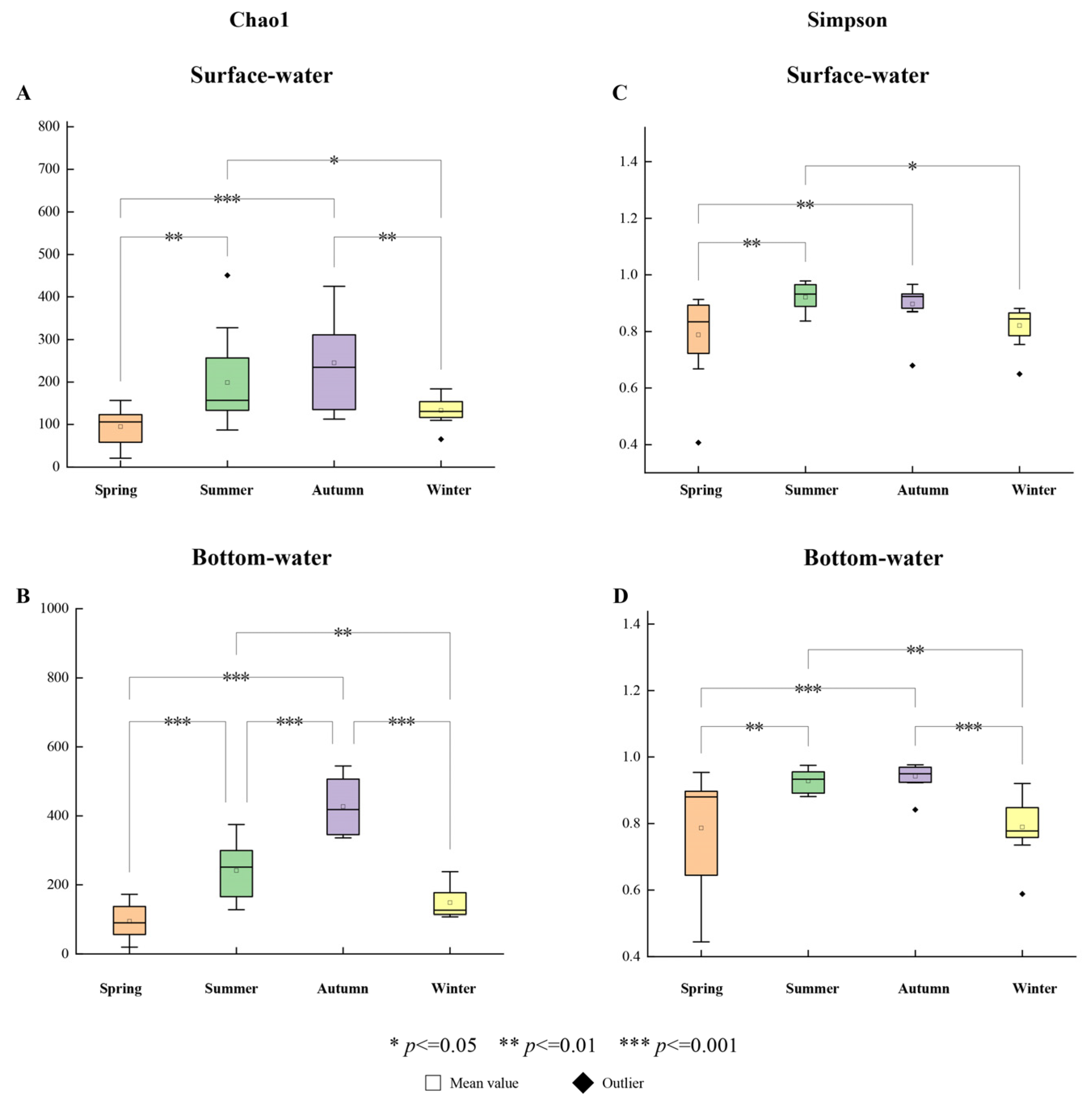
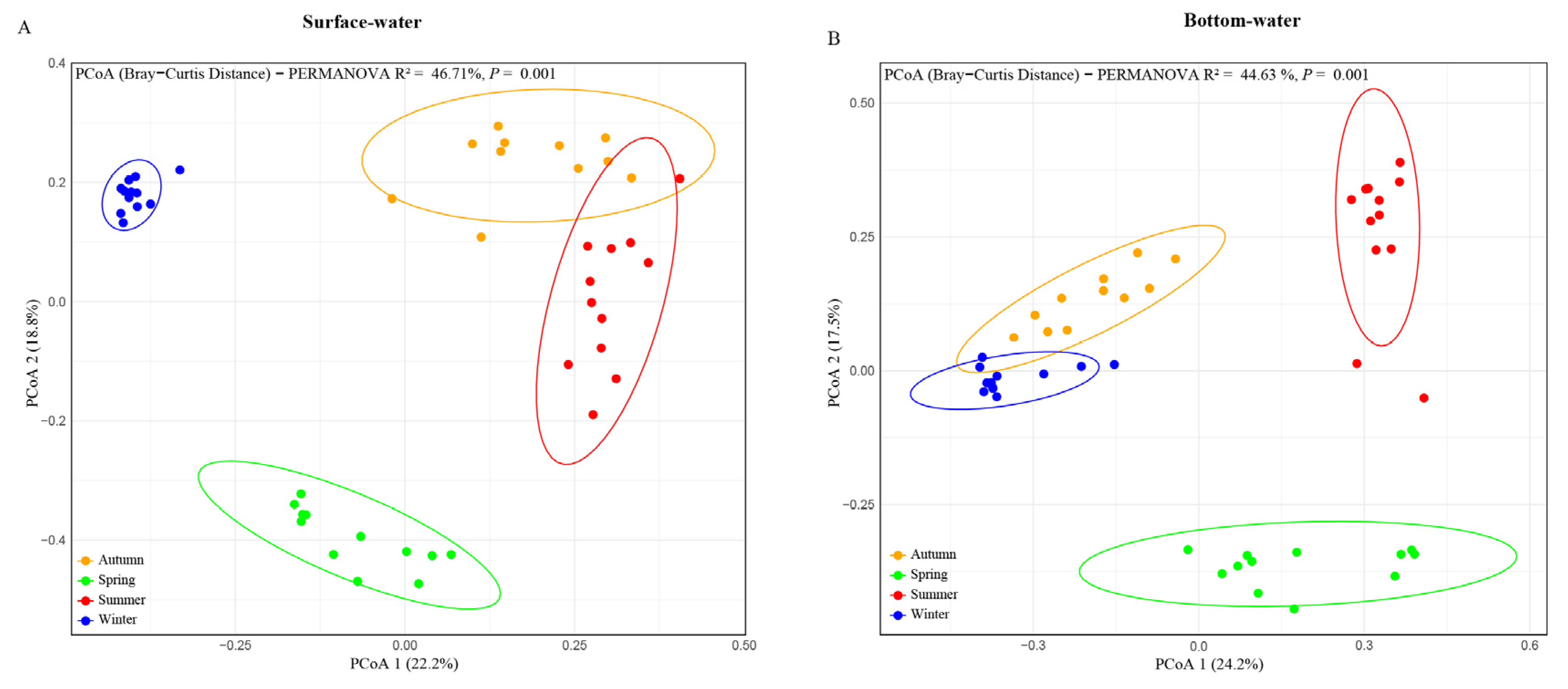
Community richness (Chao1 index) and diversity (Simpson index) (p ≤ 0.05) were significantly influenced by the season (Figure 2). Chao1 index indicated that species richness in both layers was significantly higher in summer and autumn. Simpson indices revealed higher diversity in summer and autumn, with the lowest diversity in spring. These results suggest summer and autumn are peak periods of diversity and richness, which were likely influenced by temperature. PCoA based on Bray–Curtis distances indicated that season explained a significant portion of the variance in microbial community structure (Surface 46.71%, p = 0.001; Bottom 44.63%, p = 0.001), confirming season as a major driver of beta diversity. Surface water samples clustered more tightly in winter, indicating relatively stable community composition during this season (Figure 3).

3.3. Eukaryotic Microbial Community Composition

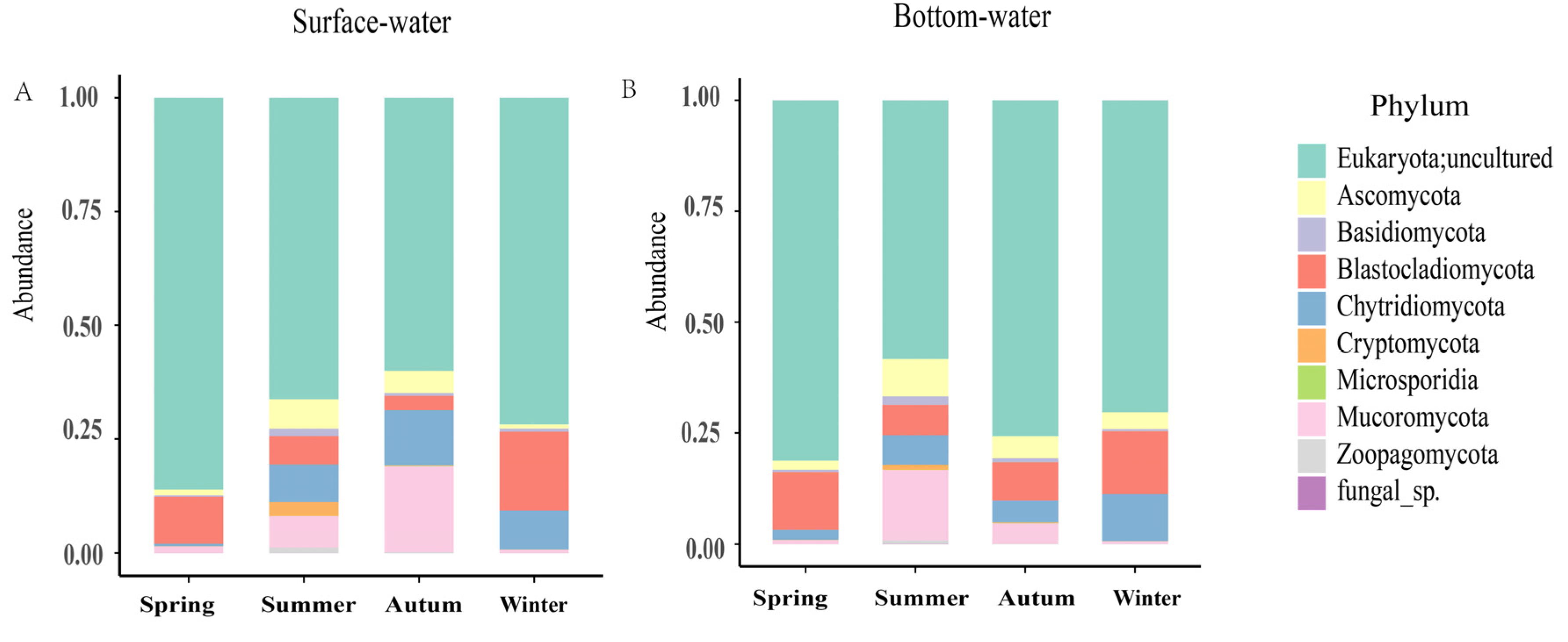
The temporal variation in eukaryotic microbial community composition was analyzed at the phylum (top 10) and genus (top 20) levels. At the phylum level (Figure 4), communities in surface and bottom water were similar, dominated by unclassified fungal phyla, indicating a high proportion of yet-to-be-cultured and classified taxa holding ecological dominance in the mussel farming environment. Other abundant phyla included Mucoromycota, Blastocladiomycota, Chytridiomycota, and Ascomycota, constituting significant components of the fungal community and playing important roles in organic matter degradation. Mucoromycota showed higher relative abundance in surface water during summer and autumn, peaking in autumn. In bottom water, Mucoromycota was also more abundant in summer and autumn but peaked in summer, showing an opposite trend to the surface. Chytridiomycota, typical aquatic fungi that are often parasitic or saprophytic on algae which participate in carbon cycling and energy flow in water bodies, were present year-round but had significantly higher relative abundance in surface water during summer and autumn [22], correlating with abundant phytoplankton host resources during these seasons. Lower light availability and primary productivity in bottom water likely limited their abundance there. At the genus level (Supplementary Materials Figure S3), unclassified fungal genera dominated both layers, followed by unclassified genera within Blastocladiomycota. Notably, the relative abundance of unclassified genera within Chytridiaceae was much lower in bottom water compared to surface water during autumn. Various physicochemical factors like temperature, salinity, DO, and pH are known to influence chytrid community composition [23,24,25].

3.4. Influence of Environmental Factors on Eukaryotic Microbial Community

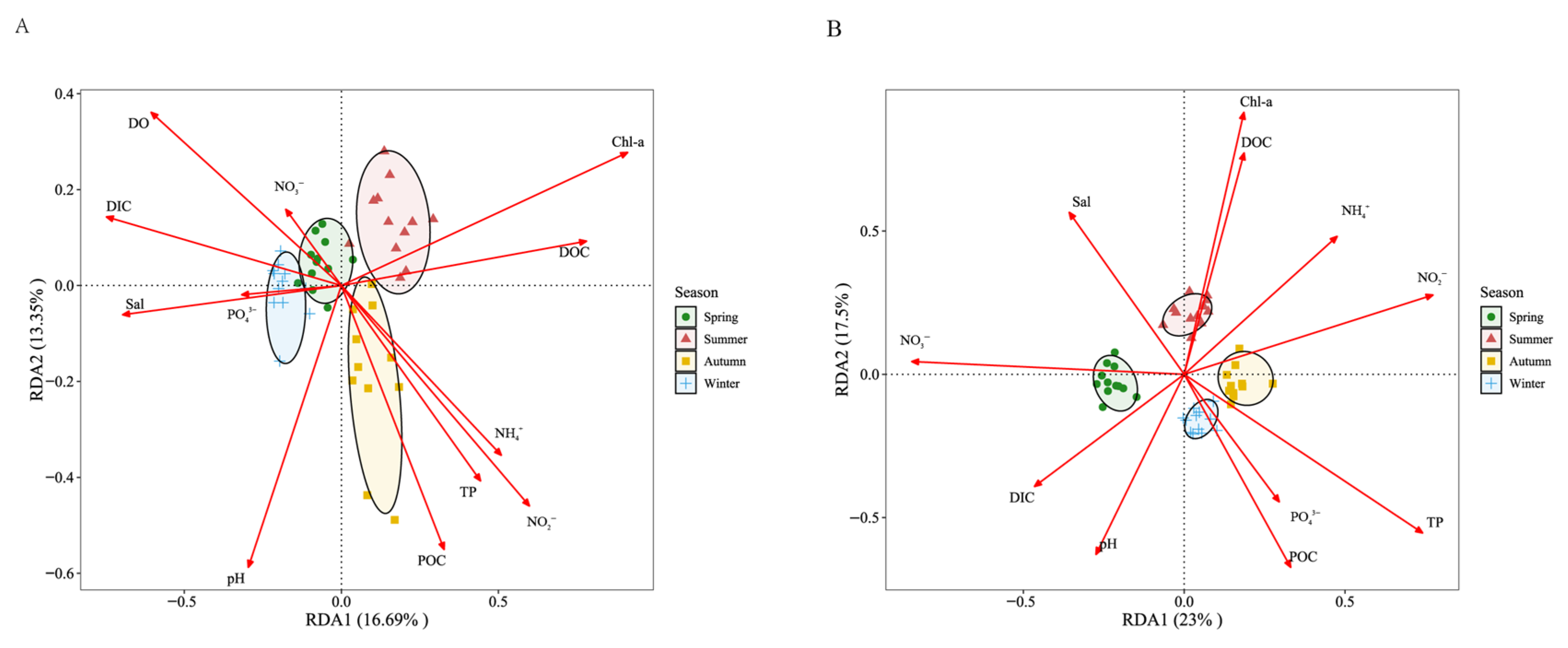
RDA based on OTU level was performed to investigate the relationship between environmental factors and microbial communities. The first two RDA axes explained 30.04% and 40.5% of the variance for surface and bottom water communities, respectively (Figure 5). Surface water samples showed relatively clear seasonal distribution patterns, with spring and winter samples forming tight clusters, indicating consistent environmental conditions during these seasons. Environmental factors such as Salinity (Sal), nitrate (NO3), and DO showed strong directional correlations with sample distribution, suggesting their role as key drivers of surface water community structure. The eukaryotic microbial community in the bottom water layer exhibited distinct seasonal variations across four seasons. Nitrogen and phosphorus nutrients, as well as algal biomass (Chlorophyll a) and dissolved organic carbon (DOC), were the main environmental factors driving the seasonal shifts in community structure in the surface water. Overall, the structure of eukaryotic microbial communities in the water column was strongly shaped by seasonal environmental gradients, mainly including nitrogen (ammonium, nitrite), phosphorus (total phosphorus, phosphate), DOC, and algal biomass. Notably, surface water and bottom water differed in the relative contributions of these factors and community responses, indicating that microbial communities in aquaculture areas are co-regulated by these key environmental conditions across spatial and temporal scales.
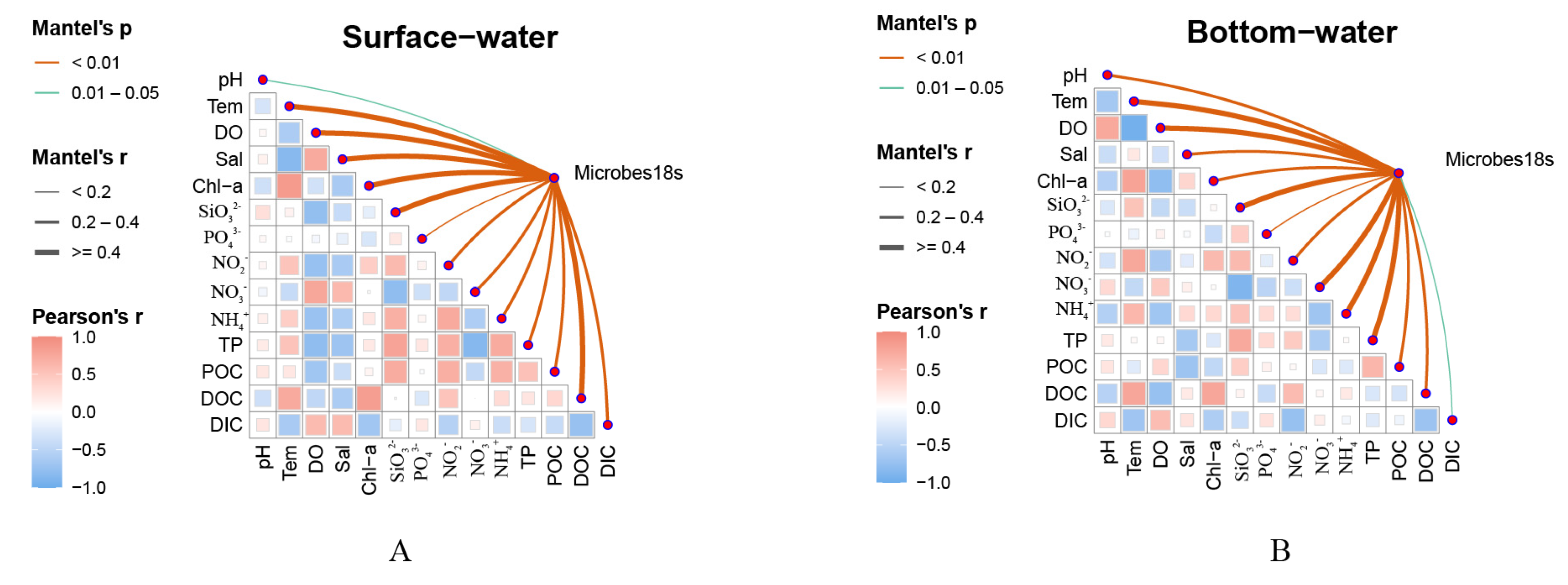
Mantel tests further confirmed that the eukaryotic microbial community composition in both water layers was significantly correlated with DOC, salinity, chlorophyll a, nitrate, and other environmental variables (r ≥ 0.4, p < 0.01) (Figure 6). Nevertheless, the key influencing factors varied distinctly between the two water layers: dissolved oxygen (DO), chlorophyll a, silicate, and DOC posed stronger effects on the surface water, while nitrate, ammonium, total phosphorus (TP), and other nutrients exhibited more pronounced impacts on the bottom water. The filter-feeding behavior of mussels can modify nutrient concentrations and organic matter composition in the water column [26]. Furthermore, mussel excretion releases abundant inorganic nutrients, and their biodeposits can be microbially transformed into inorganic carbon and nutrients involved in biogeochemical cycling, thereby indirectly altering the structure and function of the microbial communities [27].

3.5. Co-Occurrence Network Analysis

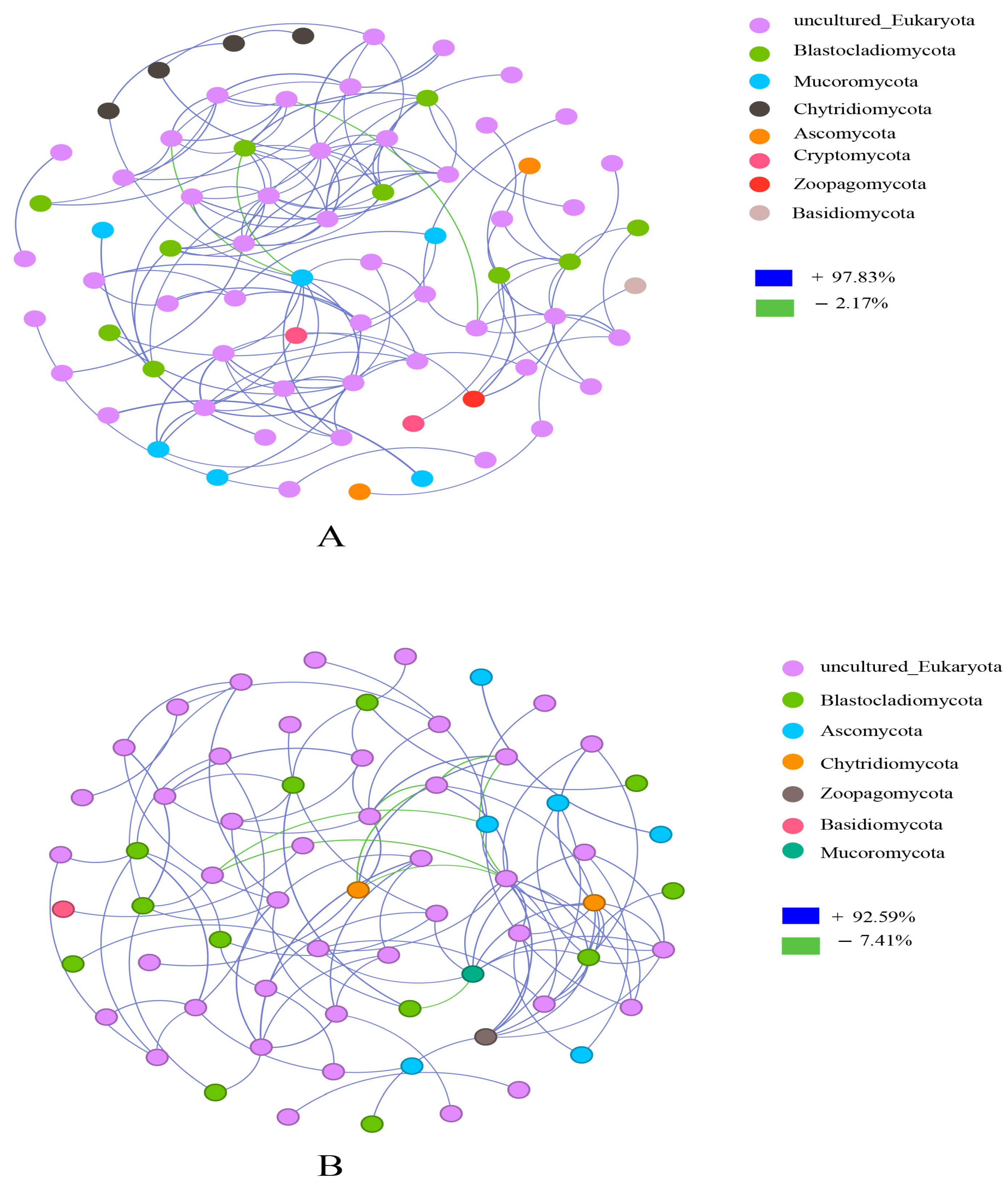
Co-occurrence networks at the phylum level were constructed for surface and bottom water eukaryotic microbial communities using Spearman correlation. The surface water network comprised 72 nodes and 138 edges, while the bottom water network had 65 nodes and 108 edges, indicating a more complex network structure in surface water. Positive correlations dominated both networks (97.83% and 92.59%, respectively), suggesting prevalent synergistic interactions among microbial taxa. Key nodes in the surface water network included unclassified eukaryotes, Blastocladiomycota, and Mucoromycota, whereas key nodes in the bottom water network were unclassified eukaryotes, Blastocladiomycota, and Ascomycota (Figure 7). These groups are crucial for organic matter degradation and maintaining ecosystem balance, consistent with the community composition analysis, further validating their importance in the aquaculture ecosystem. Network topology parameters revealed distinct features. The surface water network had a higher average degree (3.833 vs. 3.323), weighted degree (2.631 vs. 2.232), and modularity (0.724 vs. 0.661), while network density was similar (0.054 vs. 0.052) (Table 1). The “low density-high modularity” structure of the surface water network suggests the presence of distinct functional modules with tight internal interactions [28], indicating potentially higher ecological stability and resistance to environmental disturbance compared to the relatively looser structure of the bottom water network.

4. Discussion

4.1. Eukaryotic Microbial Community Diversity and Structure

Microbes are key drivers of material cycling and energy flow in marine ecosystems, with their community structure regulated by various factors including water physicochemical properties, nutrient dynamics, and human activities. As an important aquaculture practice, mussel farming (seeding, harvesting) can directly or indirectly alter water properties, thereby influencing microbial composition. This study identified significant temporal differences in richness, diversity, and structure of eukaryotic microbial communities between surface and bottom waters in the mussel farming area.
The Chao1 index significantly increased during the mussel harvest period (autumn), reaching the annual peak in species richness. Harvesting activities likely cause sediment resuspension and water mixing, accelerating the release and redistribution of particulate organic carbon (POC) and nutrients, thereby promoting rapid microbial proliferation. Filter-feeding bivalves consume POC [29], shaping organic carbon dynamics in farming areas through top-down control of phytoplankton [30,31]. The Chao1 index of prokaryotic microorganisms in the aquaculture area increases in spring and remains relatively low in other seasons. Eukaryotic microorganisms have a stronger adaptability to eutrophic environments than prokaryotic microorganisms, and they reproduce rapidly after assimilating the large amounts of organic matter generated during mussel harvesting. This further confers a competitive advantage and restricts the proliferation of prokaryotic microorganisms.
Environmental factors are fundamental drivers of seasonal microbial succession. Marine microbes adapt to environmental changes, which typically lead to adjustments in community structure [32], particularly due to variations in key factors like temperature and DO. Studies have demonstrated that the seasonal succession of microbial communities constitutes a crucial aspect of their ecological dynamics, with water temperature identified as the primary driver of these seasonal variations. Meanwhile, dissolved oxygen, essential for sustaining microbial survival and metabolism, also stands out as one of the pivotal environmental factors influencing microbial community structure [33,34]. Our results corroborate the significant effects of temperature, salinity, and DO on community structure, which were further confirmed by Mantel tests. Additionally, TP, DOC, silicate, nitrate, etc., also play roles in shaping microbial communities [35,36]. The peak silicate concentration in autumn likely enriched relevant microbes, contributing to the high species richness (Chao1 index) in bottom water [37].

4.2. Dominant Taxa and Their Implications

This study revealed the composition of eukaryotic microbial communities in surface and bottom waters, highlighting the significant impact of seasonal variation. Unclassified fungal phyla dominated both layers, with a relatively simple community structure, suggesting strong environmental selection on fungal taxa. Chytridiomycota, unique fungi reproducing via motile spores, and Blastocladiomycota are important components of aquatic ecosystems involved in organic matter decomposition [38,39]. Mucoromycota, key decomposers capable of degrading various simple carbon sources, as well as pectin, hemicellulose, lipids, and proteins [40], showed higher abundance in surface water during summer and autumn, but in bottom water, its peak abundance occurred in summer. In summer, as water temperature rises, water stratification is relatively weak, and nutrient exchange between the surface and bottom layers is frequent, enabling both layers to maintain a high microbial carrying capacity. In autumn, mussel growth slows down; their feeding and excretion rates decrease, leading to reduced nutrient input into the water body and a lower organic load in the bottom sediments. pH also influences Mucoromycota composition and abundance with acidic pH favoring growth [41,42]. The presence of Mucoromycota has been noted in other Chinese aquaculture areas like Dongshan Bay and artificial reef areas in the North Yellow Sea [43,44]. Notably, mucoralean fungi are primarily terrestrial and rarely isolated from marine environments [45,46]. The sample site, Gouqi Island, is influenced by the mixing of freshwater from the Yangtze River Diluted Water, the Yellow Sea Cold Water Mass, and the Taiwan Warm Current [47], which might affect microbial community structure and composition, warranting consideration of more factors in future studies. Ascomycota, Chytridiomycota, Basidiomycota and Mucoromycta showed high abundance in both aquaculture and non-aquaculture sites of Zhoushan, while Chlorophyta, Apusomonadidae, Dinoflagellata, Ciliophora… etc. occupied key ecological niches in non-aquaculture area [48,49], which indicates that mussel aquaculture has altered the eukaryotic community in nearby sea areas, particularly the abundance of microalgae. Mussel aquaculture affects eukaryotic microbial communities through feeding and excretion, altering water flow and light, among other pathways. The proportion and mechanism of each specific pathway still require further in-depth investigation.
Co-occurrence network analysis helps to reveal direct and indirect interactions among microorganisms and between microorganisms and their environment, clarify complex relationships, and identify keystone species. Previous studies have shown that aquaculture can enhance microbial network connectivity in sediments while reducing connectivity in the water column [50], which improves our understanding of community assembly and ecosystem functioning. Keystone species play critical roles, such as regulating biogeochemical cycles and maintaining ecosystem stability [51,52]. Co-occurrence network analysis indicated that surface water exhibited more edges, higher average degree, and greater network density than bottom water, suggesting stronger internal connectivity and higher local clustering in the surface layer. This pattern may be related to the intensive filter-feeding activity of mussels. Filter feeding can significantly alter the resource supply patterns of suspended particles, organic detritus, and microeukaryotes in the water column, thereby destabilizing some original stable associations among taxa. Meanwhile, although mussel excretion and biodeposition increase organic matter input, such inputs are highly selective and may favor the proliferation of certain tolerant or saprotrophic taxa, leading to an overall simplified network in the bottom water. Overall, the observed differences in network topology may primarily arise from shared responses to environmental gradients rather than genuine interspecific interactions.

5. Conclusions

In summary, this study elucidates the seasonal dynamics of eukaryotic microbial communities in surface and bottom waters of the mussel cultivation area within the Gouqi Island Marine Ranch. The results demonstrate significant seasonal variations in community diversity and structure between the two water layers. The abundance of microbial communities in surface water is significantly higher than that in bottom water during summer and autumn, which is closely related to the abundant phytoplankton in these seasons that provide organic carbon. In contrast, the insufficient light and low primary productivity in bottom water limit the increase in its abundance. Environmental variables, particularly temperature, salinity, and dissolved oxygen, were identified as key drivers of these microbial community changes. Blastocladiomycota and Ascomycota were distributed in both water layers across all four seasons, with higher abundances in the bottom water during summer and autumn. However, a large proportion of sequences derived from 18S rRNA sequencing remained assigned to unidentified fungi, which markedly compromises the taxonomic resolution of the community. This limitation constrains in-depth interpretation of the ecological roles and functional characteristics of eukaryotic microbial assemblages. Accordingly, it reduces the accuracy and interpretability of downstream analyses concerning community dynamics and environmental responses. Co-occurrence network analysis revealed differences in interaction patterns between the layers, with the surface water community exhibiting greater complexity and modularity. These findings enhance our understanding of the seasonally driven changes in eukaryotic microbial community structure within mussel aquaculture areas and provide a basis for assessing the ecological impacts of such activities.

Supplementary Materials

The following supporting information can be downloaded at: https://www.mdpi.com/article/10.3390/microbiolres17040066/s1, Figure S1: The heat map reflects the environmental factors of surface water and bottom water during the study period; Figure S2: Venn diagrams showing shared and unique OTUs across seasons in surface and bottom waters. (a): Two-layer shared otus; (b): Surface; (c): Bottom; Figure S3: (A) The relative abundance of the top 20 eukaryotic microbial genera in surface water and (B) bottom water at different seasons; Figure S4: Length distribution of sequencing reads obtained by high-throughput sequencing; Figure S5: Group rarefaction curves of surface-water and bottom-water samples across different seasons.

Author Contributions

Y.H.: designed the study, writing—review and editing. Z.P.: Writing—original draft, Visualization, Investigation, Data curation, Conceptualization. F.W.: Writing—review and editing, Investigation. P.L. and S.M.: collected the samples, Y.W.: collected the samples, X.Z.: Writing—review and editing, Supervision, Funding acquisition. All authors have read and agreed to the published version of the manuscript.

Funding

This work was supported by National Key R&D Program of China (Grant No. 2024YFD2401301) and Research Program of Application Foundation of Qinghai Province (2024-ZJ-749).

Institutional Review Board Statement

Not applicable.

Informed Consent Statement

Not applicable.

Data Availability Statement

The original contributions presented in this study are included in the article/Supplementary Materials. Further inquiries can be directed to the corresponding author.

Conflicts of Interest

The authors declare no conflicts of interest.

References

  1. Falkowski, P.G.; Barber, R.T.; Smetacek, V. Biogeochemical controls and feedbacks on ocean primary production. Science 1998, 281, 200–206. [Google Scholar] [CrossRef] [PubMed]
  2. Falkowski, P.G.; Fenchel, T.; Delong, E.F. The microbial engines that drive Earth’s biogeochemical cycles. Science 2008, 320, 1034–1039. [Google Scholar] [CrossRef] [PubMed]
  3. Madsen, E.L. Microorganisms and their roles in fundamental biogeochemical cycles. Curr. Opin. Biotechnol. 2011, 22, 456–464. [Google Scholar] [CrossRef] [PubMed]
  4. Peay, K.G.; Kennedy, P.G.; Talbot, J.M. Dimensions of biodiversity in the Earth mycobiome. Nat. Rev. Microbiol. 2016, 14, 434–447. [Google Scholar] [CrossRef]
  5. Zhou, R.; Wang, H.; Wei, D.; Zeng, S.; Hou, D.; Weng, S.; He, J.; Huang, Z. Bacterial and eukaryotic community interactions might contribute to shrimp culture pond soil ecosystem at different culture stages. Soil Ecol. Lett. 2022, 4, 119–130. [Google Scholar] [CrossRef]
  6. Lu, L.; Ni, L.; Ai, C.; Zhang, D.; Zheng, P.; Li, X.; Liu, X.; Dang, H. Seasonal dynamics of microbial communities link to summer-autumn aquaculture disease outbreaks in Sanggou Bay. Front. Mar. Sci. 2025, 12, 1581190. [Google Scholar] [CrossRef]
  7. Fang, G.; Yu, H.; Sheng, H.; Tang, Y.; Liang, Z. Comparative analysis of microbial communities between water and sediment in Laoshan Bay marine ranching with varied aquaculture activities. Mar. Pollut. Bull. 2021, 173, 112990. [Google Scholar] [CrossRef]
  8. He, J.; Jia, M.; Wang, J.; Wu, Z.; Shao, S.; He, Y.; Zhang, X.; Buttino, I.; Liao, Z.; Yan, X. Mytilus farming drives higher local bacterial diversity and facilitates the accumulation of aerobic anoxygenic photoheterotrophic related genera. Sci. Total Environ. 2023, 856, 158861. [Google Scholar] [CrossRef]
  9. Laverock, B.; Tait, K.; Gilbert, J.; Osborn, A.; Widdicombe, S. Impacts of bioturbation on temporal variation in bacterial and archaeal nitrogen-cycling gene abundance in coastal sediments. Environ. Microbiol. Rep. 2014, 6, 113–121. [Google Scholar] [CrossRef]
  10. Liu, H.; Chai, X.; Zhang, D.; Xu, W.; He, J. Effect of Sinonovacula constricta on sediment microbial numbers and easily degradable organics in shrimp-crab polyculture systems. Front. Mar. Sci. 2022, 9, 1012893. [Google Scholar] [CrossRef]
  11. Li, Q.-A.; Wei, T.; Zhang, G.-M.; Xian, G. Effects of Hyriopsis cumingii on nitrogen and phosphorus releases from sediment and on wetland microorganisms in Baiyangdian wetland. CABI Databases 2020, 33, 2318–2325. [Google Scholar]
  12. Dowle, E.; Pochon, X.; Keeley, N.; Wood, S.A. Assessing the effects of salmon farming seabed enrichment using bacterial community diversity and high-throughput sequencing. FEMS Microbiol. Ecol. 2015, 91, fiv089. [Google Scholar] [CrossRef]
  13. Kawahara, N.; Shigematsu, K.; Miyadai, T.; Kondo, R. Comparison of bacterial communities in fish farm sediments along an organic enrichment gradient. Aquaculture 2009, 287, 107–113. [Google Scholar] [CrossRef]
  14. Zhang, H.; Huang, X.; Huang, L.; Bao, F.; Xiong, S.; Wang, K.; Zhang, D. Microeukaryotic biogeography in the typical subtropical coastal waters with multiple environmental gradients. Sci. Total Environ. 2018, 635, 618–628. [Google Scholar] [CrossRef] [PubMed]
  15. Sunagawa, S.; Coelho, L.P.; Chaffron, S.; Kultima, J.R.; Labadie, K.; Salazar, G.; Djahanschiri, B.; Zeller, G.; Mende, D.R.; Alberti, A.; et al. Structure and function of the global ocean microbiome. Science 2015, 348, 1261359. [Google Scholar] [CrossRef] [PubMed]
  16. Zhang, W.; Pan, Y.; Yang, J.; Chen, H.; Holohan, B.; Vaudrey, J.; Lin, S.; McManus, G.B. The diversity and biogeography of abundant and rare intertidal marine microeukaryotes explained by environment and dispersal limitation. Environ. Microbiol. 2018, 20, 462–476. [Google Scholar] [CrossRef] [PubMed]
  17. GB/T 12763.4–2007; Specifications for Oceanographic Survey—Part 4: Seawater Chemical Elements. National Center of Ocean Standards and Metrology: Tianjin, China, 2007.
  18. Borneman, J.; Hartin, R.J. PCR primers that amplify fungal rRNA genes from environmental samples. Appl. Environ. Microbiol. 2000, 66, 4356–4360. [Google Scholar] [CrossRef]
  19. Faust, K.; Raes, J. Microbial interactions: From networks to models. Nat. Rev. Microbiol. 2012, 10, 538–550. [Google Scholar] [CrossRef]
  20. Dalcin, E.; Jackson, P.W. A network-wide visualization of the implementation of the global strategy for plant conservation in Brazil. Rodriguésia 2018, 69, 1613–1639. [Google Scholar] [CrossRef]
  21. Zhang, W.; Pan, Y.; Yang, J.; Chen, H.; Holohan, B.; Vaudrey, J.; Lin, S.; McManus, G.B. Alterations in bacterial structure and function in seawater due to Mytilus coruscus farming: Implications for sustainable aquaculture management. Front. Microbiol. 2025, 16, 1567340. [Google Scholar] [CrossRef]
  22. Fernández-Valero, A.D.; Reñé, A.; Timoneda, N.; Sampedro, N.; Garcés, E. Dinoflagellate hosts determine the community structure of marine Chytridiomycota: Demonstration of their prominent interactions. Environ. Microbiol. 2022, 24, 5951–5965. [Google Scholar] [CrossRef] [PubMed]
  23. Dubey, T.; Stephenson, S.L.; Edwards, P.J. Effect of pH on the Distribution and Occurrence of Aquatic Fungi in Six West Virginia Mountain Streams. J. Environ. Qual. 1994, 23, 1271–1279. [Google Scholar] [CrossRef]
  24. Gleason, F.H.; Letcher, P.M.; McGee, P.A. Some aerobic Blastocladiomycota and Chytridiomycota can survive but cannot grow under anaerobic conditions. Australas. Mycol. 2007, 26, 57–64. [Google Scholar]
  25. Paterson, R. Infestation of chytridiaceous fungi on phytoplankton in relation to certain environmental factors. Ecology 1960, 41, 416–424. [Google Scholar] [CrossRef]
  26. Souchu, P.; Vaquer, A.; Collos, Y.; Landrein, S.; Deslous-Paoli, J.-M.; Bibent, B. Influence of shellfish farming activities on the biogeochemical composition of the water column in Thau lagoon. Mar. Ecol. Prog. Ser. 2001, 218, 141–152. [Google Scholar] [CrossRef]
  27. Mirto, S.; Danovaro, R.; Mazzola, A. Microbial and meiofaunal response to intensive mussel-farm biodeposition in coastal sediments of the western Mediterranean. Mar. Pollut. Bull. 2000, 40, 244–252. [Google Scholar] [CrossRef]
  28. Song, Y.; Zhang, S.; Lu, J.; Duan, R.; Chen, H.; Ma, Y.; Si, T.; Luo, M. Reed restoration decreased nutrients in wetlands with dredged sediments: Microbial community assembly and function in rhizosphere. J. Environ. Manag. 2023, 344, 118700. [Google Scholar] [CrossRef]
  29. Sakamaki, T.; Zheng, Y.; Hatakeyama, Y.; Fujibayashi, M.; Nishimura, O. Effects of spatial scale on assessments of suspension bivalve aquaculture for productivity and environmental impacts. Aquaculture 2022, 553, 738082. [Google Scholar] [CrossRef]
  30. Froján, M.; Figueiras, F.; Zúñiga, D.; Alonso-Pérez, F.; Arbones, B.; Castro, C.G. Influence of mussel culture on the vertical export of phytoplankton carbon in a coastal upwelling embayment (Ría de Vigo, NW Iberia). Estuaries Coasts 2016, 39, 1449–1462. [Google Scholar] [CrossRef]
  31. Newell, R.I. Ecosystem influences of natural and cultivated populations of suspension-feeding bivalve molluscs: A review. J. Shellfish Res. 2004, 23, 51–62. [Google Scholar]
  32. Shang, Y.; Wu, X.; Wang, X.; Wei, Q.; Ma, S.; Sun, G.; Zhang, H.; Wang, L.; Dou, H.; Zhang, H. Factors affecting seasonal variation of microbial community structure in Hulun Lake, China. Sci. Total Environ. 2022, 805, 150294. [Google Scholar] [CrossRef] [PubMed]
  33. Zhao, D.; Gao, P.; Xu, L.; Qu, L.; Han, Y.; Zheng, L.; Gong, X. Disproportionate responses between free-living and particle-attached bacteria during the transition to oxygen-deficient zones in the Bohai Seawater. Sci. Total Environ. 2021, 791, 148097. [Google Scholar] [CrossRef] [PubMed]
  34. Liu, J.; Fu, B.; Yang, H.; Zhao, M.; He, B.; Zhang, X.-H. Phylogenetic shifts of bacterioplankton community composition along the Pearl Estuary: The potential impact of hypoxia and nutrients. Front. Microbiol. 2015, 6, 64. [Google Scholar] [CrossRef] [PubMed]
  35. Dai, L.; Liu, C.; Peng, L.; Song, C.; Li, X.; Tao, L.; Li, G. Different distribution patterns of microorganisms between aquaculture pond sediment and water. J. Microbiol. 2021, 59, 376–388. [Google Scholar] [CrossRef]
  36. Xu, Z.; Li, Y.; Lu, Y.; Li, Y.; Yuan, Z.; Dai, M.; Liu, H. Impacts of the Zhe-Min Coastal Current on the biogeographic pattern of microbial eukaryotic communities. Prog. Oceanogr. 2020, 183, 102309. [Google Scholar] [CrossRef]
  37. Neissi, A.; Rafiee, G.; Rahimi, S.; Farahmand, H.; Pandit, S.; Mijakovic, I. Enriched microbial communities for ammonium and nitrite removal from recirculating aquaculture systems. Chemosphere 2022, 295, 133811. [Google Scholar] [CrossRef]
  38. James, T.Y.; Letcher, P.M.; Longcore, J.E.; Mozley-Standridge, S.E.; Porter, D.; Powell, M.J.; Griffith, G.W.; Vilgalys, R. A molecular phylogeny of the flagellated fungi (Chytridiomycota) and description of a new phylum (Blastocladiomycota). Mycologia 2006, 98, 860–871. [Google Scholar] [CrossRef]
  39. Gorczak, M.; Trigos-Peral, G. Solving a long-standing enigma: Myrmicinosporidium durum belongs to Blastocladiomycota, a phylum of primarily aquatic fungi. J. Invertebr. Pathol. 2021, 184, 107640. [Google Scholar] [CrossRef]
  40. Ferreira, J.A.; Lennartsson, P.R.; Edebo, L.; Taherzadeh, M.J. Zygomycetes-based biorefinery: Present status and future prospects. Bioresour. Technol. 2013, 135, 523–532. [Google Scholar] [CrossRef]
  41. Lima, D.X.; Souza-Motta, C.M.; Lima, C.L.F.D.; Souza, C.A.F.D.; Ribeiro, J.R.; Santiago, A.L.C.M.D.A. Communities of Mucorales (phylum Mucoromycota) in different ecosystems of the Atlantic Forest. Acta Bot. Bras. 2020, 34, 796–806. [Google Scholar] [CrossRef]
  42. Richardson, M.D.; Rautemaa-Richardson, R. Biotic environments supporting the persistence of clinically relevant mucormycetes. J. Fungi 2019, 6, 4. [Google Scholar] [CrossRef] [PubMed]
  43. Xu, W.; Yang, C.; Luo, Y.; Zhang, K.; Chen, M.; Jiang, S.; Grossart, H.; Luo, Z. Distinct response of total and active fungal communities and functions to seasonal changes in a semi-enclosed bay with mariculture (Dongshan Bay, Southern China). Limnol. Oceanogr. 2023, 68, 1048–1063. [Google Scholar] [CrossRef]
  44. Yan, J.; Yue, Y.; Lin, S.; Gu, H.; Han, Z.; Li, Q.; Tian, T.; Wei, X.; Wu, Z. Preliminary Study on the Structure of Fungal Communities in Artificial Reef Areas in the Northern Yellow Sea. Oceans 2025, 6, 11. [Google Scholar] [CrossRef]
  45. Jennings, D. Some aspects of the physiology and biochemistry of marine fungi. Biol. Rev. 1983, 58, 423–459. [Google Scholar] [CrossRef]
  46. Ribes, J.A.; Vanover-Sams, C.L.; Baker, D.J. Zygomycetes in human disease. Clin. Microbiol. Rev. 2000, 13, 236–301. [Google Scholar] [CrossRef]
  47. Han, L.; Zhang, J.; Lang, C.; Li, W.; Wu, Z.; He, X.; Wang, X.; Yu, J.; Li, Q.; Li, Y.; et al. Mussel culture activities facilitate the export and burial of particulate organic carbon. J. Mar. Sci. Eng. 2024, 12, 910. [Google Scholar] [CrossRef]
  48. Chen, Z.; Gu, T.; Sun, J. Dispersal limitation and homogeneous selection drive the eukaryotic microbial community assembly and network stability in the coastal China Sea. Front. Mar. Sci. 2024, 11, 1444870. [Google Scholar] [CrossRef]
  49. Dai, A. Dynamics and Diversity of Eukaryotic Microbial Community Structure in Different Habitats of the Ma’an Archipelago. Master’s Thesis, Shanghai Ocean University, Shanghai, China, 2024. [Google Scholar] [CrossRef]
  50. Qin, M.; Xu, H.; Zhao, D.; Zeng, J.; Wu, Q.L. Aquaculture drives distinct patterns of planktonic and sedimentary bacterial communities: Insights into co-occurrence pattern and assembly processes. Environ. Microbiol. 2025, 24, 4079–4093. [Google Scholar] [CrossRef]
  51. Berry, D.; Widder, S. Deciphering microbial interactions and detecting keystone species with co-occurrence networks. Front. Microbiol. 2014, 5, 219. [Google Scholar] [CrossRef]
  52. Chen, C.; Li, P.; Yin, M.; Wang, J.; Sun, Y.; Ju, W.; Liu, L.; Li, Z.-H. Deciphering characterization of seasonal variations in microbial communities of marine ranching: Diversity, co-occurrence network patterns, and assembly processes. Mar. Pollut. Bull. 2023, 197, 115739. [Google Scholar] [CrossRef]
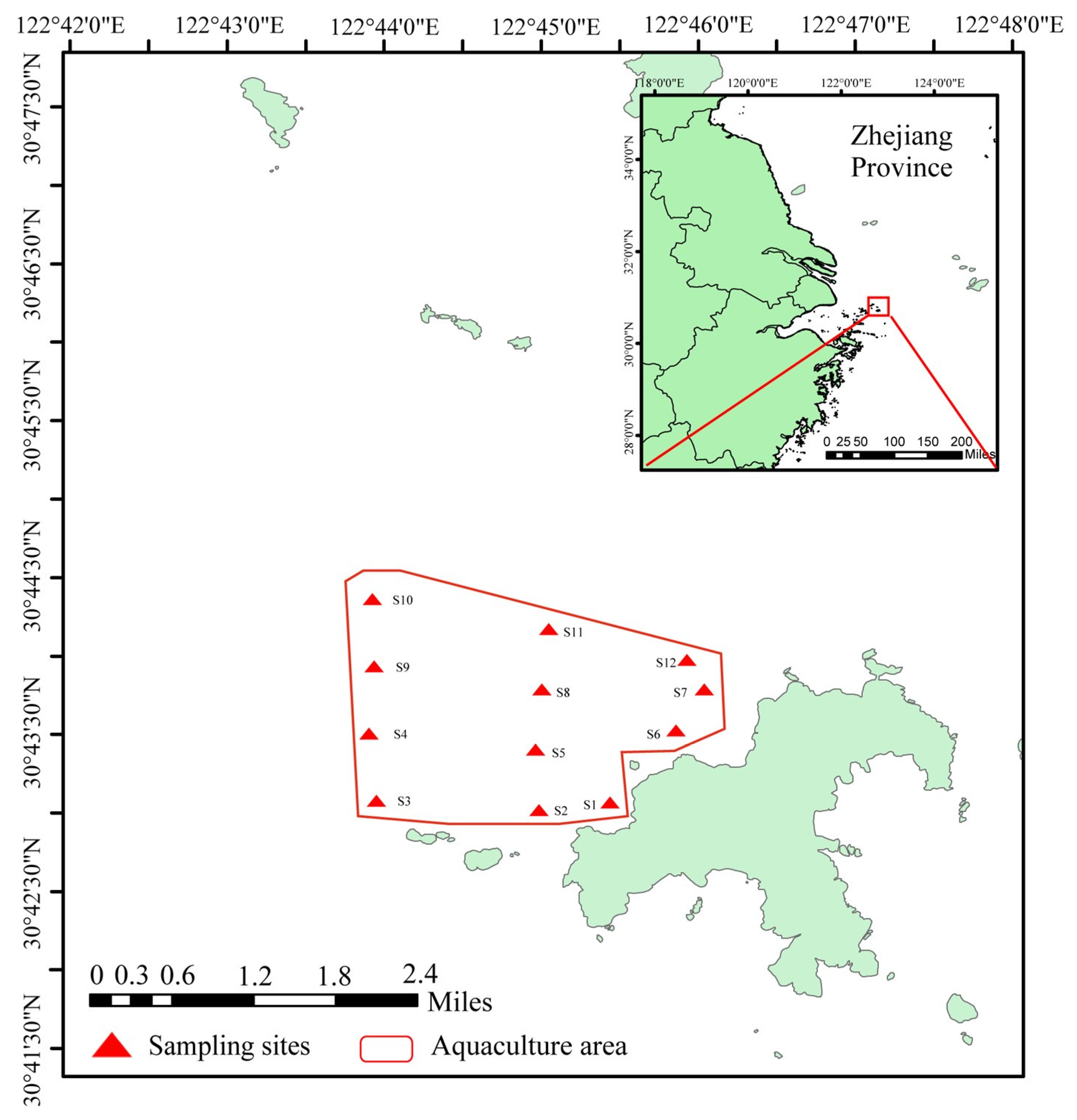
Figure 1. Map of the study area showing sampling sites (S1–S12) in the Gouqi Island mussel cultivation area.
Microbiolres 17 00066 g001
Figure 2. Alpha diversity indices of eukaryotic microbial communities in surface and bottom waters across seasons. (A) the Chao1 index of surface water, (B) the Chao1 index of bottom water, (C) the Simpson index of surface water layer, and (D) the Simpson index of bottom water. Squares and rhombuses represent the mean value and outliers, respectively (p < 0.05, Fisher’s LSD test).
Microbiolres 17 00066 g002
Figure 3. Principal Coordinates Analysis (PCoA) based on Bray–Curtis distances showing seasonal variation in eukaryotic microbial community structure for (A) surface water and (B) bottom water.
Microbiolres 17 00066 g003
Figure 4. Relative abundance of the top 10 eukaryotic microbial phyla in (A) surface water and (B) bottom water across seasons.
Microbiolres 17 00066 g004
Figure 5. Redundancy analysis (RDA) ordination plots illustrating the relationships between environmental factors and eukaryotic microbial community composition in different water layers. (A) Surface water. (B) Bottom water.
Microbiolres 17 00066 g005
Figure 6. Mantel test results showing the relationships between microbial communities and measured environmental variables in different water layers. (A) Surface water. (B) Bottom water. Color intensity of squares indicates Pearson’s correlation coefficients among environmental variables. Lines represent Mantel correlations between microbial communities and environmental factors, with line color indicating Mantel’s p value and line thickness indicating Mantel’s r value.
Microbiolres 17 00066 g006
Figure 7. Co-occurrence networks of eukaryotic microbial communities (phylum level) in (A) surface water and (B) bottom water. Node size represents relative abundance; edge thickness represents correlation strength (|r| > 0.6, p < 0.05). Colors represent different modules.
Microbiolres 17 00066 g007
Table 1. Topological properties of co-occurrence networks for eukaryotic microbial communities in surface and bottom waters.
ParameterSurfaceBottom
Nodes7265
Edges138108
Average degree3.8333.323
Weighted degree2.6312.232
Density0.0540.052
Modularization0.7240.661
Average path length3.8534.585
Disclaimer/Publisher’s Note: The statements, opinions and data contained in all publications are solely those of the individual author(s) and contributor(s) and not of MDPI and/or the editor(s). MDPI and/or the editor(s) disclaim responsibility for any injury to people or property resulting from any ideas, methods, instructions or products referred to in the content.