Article

Computational Insights into the Linker-Dependent Binding of Trehalose–Porphyrin Conjugates to Antigen 85B of Mycobacterium tuberculosis

by
Christopher T. Piatnichouk
1,
Joshua V. Ruppel
2 and
Nicole L. Snyder
1,*
1
Department of Chemistry, Davidson College, Davidson, NC 28035, USA
2
Department of Natural Sciences and Engineering, University of South Carolina Upstate, Spartanburg, SC 29303, USA
*
Author to whom correspondence should be addressed.
Microbiol. Res. 2026, 17(3), 58; https://doi.org/10.3390/microbiolres17030058
Submission received: 1 January 2026 / Revised: 23 February 2026 / Accepted: 3 March 2026 / Published: 9 March 2026

Abstract

Tuberculosis, caused by Mycobacterium tuberculosis, remains a global health challenge, particularly due to multidrug-resistant strains. Photodynamic therapy using porphyrin-based photosensitizers offers a promising alternative by targeting the trehalose-rich cell wall of the bacillus. Motivated by prior experimental observations that shorter linkers improve efficacy, this study probes the molecular basis of linker-length-dependent activity in trehalose–porphyrin glycoconjugates. Here, we show that shorter linker lengths are consistent with improved activity in vitro and, in an Ag85B docking model, constrain conformational flexibility, reduce solvent exposure, and promote tighter packing consistent with stronger predicted interactions. Using computational docking, we analyzed binding scores, RMSD variability, steric clashes, and protein–ligand interactions for conjugates docked into Ag85B, a key enzyme in cell wall synthesis. Shorter linkers (0–2 carbons) were found to exhibit superior binding scores, lower RMSD variability, and stronger interactions with residues such as ARG 43, including unique π–cation interactions. In contrast, longer linkers displayed increased flexibility, reduced binding specificity, and greater solvent exposure. These findings, which support our experimental observations, suggest a molecular basis for linker-dependent efficacy and provide a framework for designing next-generation porphyrin-based therapeutics for tuberculosis treatment.

1. Introduction

Tuberculosis, caused by the bacillus Mycobacterium tuberculosis, remains one of the leading causes of death worldwide [1]. Despite the availability of anti-tuberculosis drugs, current treatments require a prolonged duration of 6–8 months and are often ineffective against multidrug-resistant and rifampicin-resistant tuberculosis [2]. Compounding this challenge is the growing diversity of drug-resistant M. tuberculosis strains—ranging from MDR/RR to pre-XDR and XDR TB—which progressively erodes first- and second-line treatment options and can necessitate longer, more complex regimens with greater toxicity and adherence barriers [3]. To address these limitations, photodynamic therapy (PDT) emerges as a promising alternative. This approach utilizes photosensitizers, compounds capable of producing localized oxygen radicals upon light activation, to destroy the trehalose-rich cell wall of M. tuberculosis.
Porphyrins, a class of macrocycles with unique photochemical properties, have gained traction for their therapeutic potential, particularly in PDT applications. Studies have shown significant success in using porphyrin analogs to inactivate Mycobacterium smegmatis, a widely accepted non-pathogenic model for M. tuberculosis [4]. One critical target in these efforts is Antigen 85B (Ag85B), an enzyme essential for mycobacterial cell wall synthesis and a key factor in bacterial pathogenicity. Ag85B, along with Ag85A and Ag85C, catalyzes the transfer of mycolic acids to trehalose, forming a crucial component of the mycobacterial cell wall [5]. Consistent with this pathway-level role, multiple trehalose–cargo conjugates (including trehalose–photosensitizer constructs) have been shown to undergo Ag85-dependent processing/incorporation into the mycomembrane, with pharmacological inhibition of the Ag85 complex reducing this incorporation/labeling [6]. Ag85 enzyme processing of trehalose porphyrin conjugates thus offers one strategy to disrupt bacterial survival, embedding porphyrin molecules into the cell wall for selective activation and bacterial inactivation. Notably, Feese and Ghiladi reported nearly 99.999% inactivation of M. smegmatis using cationic porphyrin analogs at therapeutically relevant concentrations (~100 nM) [7].
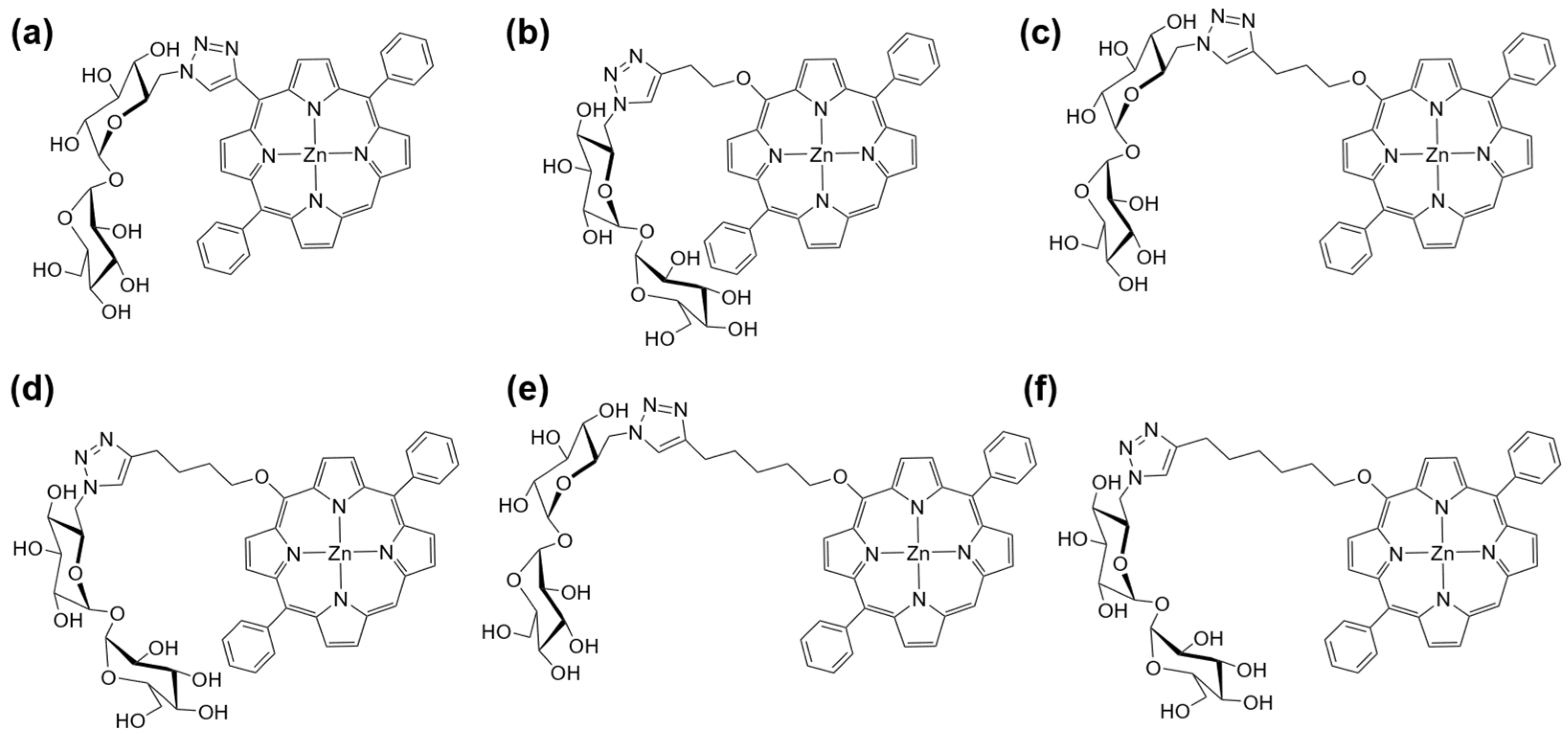
While porphyrins hold promise for tuberculosis treatment, challenges such as solubility and specificity hinder their full implementation. Strategies to address these limitations include the incorporation of sugars to improve water solubility and target specificity [8,9]. A critical design parameter in these modifications is the length of the linker connecting the porphyrin to the sugar moiety. Linker length serves as a tunable feature to optimize binding interactions, selectivity, and metabolic incorporation. Dixon and colleagues synthesized a series of six trehalose–porphyrin conjugates with varying linker lengths (Figure 1), observing that shorter linkers resulted in significantly greater in vitro cell-killing efficacy against M. smegmatis [10]. However, the precise molecular interactions underlying this trend remain unclear.
Computational modeling provides a valuable tool for uncovering such molecular interactions, offering insights that complement experimental studies. By simulating protein–ligand interactions, computational approaches can reveal subtle binding dynamics that correlate with linker length and provide predictive guidance for optimizing porphyrin-based therapeutics. This study presents a computational analysis of protein–ligand interactions for trehalose–porphyrin conjugates with varying linker lengths, addressing the in vitro findings reported by Dixon and colleagues. Using molecular docking simulations, we explore binding scores, steric clashes, hydrogen bonding, and overall binding poses to uncover the mechanistic basis of linker-dependent efficacy. The goal of these experiments is to inform the rational design of next-generation porphyrin-based therapeutics with enhanced selectivity and efficacy for combating M. tuberculosis and related pathogens.

2. Materials and Methods

2.1. Ligand and Protein Preparation

An existing X-ray cocrystal structure of Ag85B complexed with trehalose (PDB ID: 1F0P) was obtained from the RCSB Protein Data Bank [11]. An experimentally determined trehalose-bound structure is available for Ag85B (PDB 1F0P), whereas available Ag85A and Ag85C crystal structures are reported as apo or bound to non-trehalose ligands/inhibitors. Therefore, Ag85B was selected to anchor the trehalose core to an experimentally observed binding geometry for structure-based modeling. The structure was imported into UCSF Chimera version 1.18 for preprocessing, and all molecular graphics and analyses were performed using UCSF Chimera, developed by the Resource for Biocomputing, Visualization, and Informatics at the University of California, San Francisco, with support from NIH P41-GM103311 [12,13]. Non-essential molecules, including water (HOH), 2-(N-morpholino)-ethanesulfonic acid (MES), (4S)-2-methyl-2,4-pentanediol (MPD), and trehalose moieties (GLC), were manually removed. The structure was prepared using Chimera’s Dock Prep such that incomplete side chains were replaced using the Dunbrack 2010 rotamer library [14]. Hydrogens and protonation states were assigned assuming pH 7.0 using Chimera’s AddH procedure (default settings). The protein was then assigned partial charges using the AMBER ff14SB force field for standard residues, while AM1-BCC charges were applied to non-standard residues and ligands using ANTECHAMBER [15].
Ligands were constructed in Avogadro and energy-minimized using the UFF force field to maintain consistency and realistic starting conformations. Ligand protonation states were assigned assuming pH 7.0. The metallated porphyrin was modeled as a neutral complex by assigning a +2 formal charge to Zn and a −2 formal charge to the ligand scaffold (net charge 0) during AM1-BCC charge assignment.

2.2. Molecular Docking

A grid box encompassing the entire Ag85B protein was defined to ensure comprehensive sampling of potential binding sites. The grid box was centered at coordinates (x = 48.0 Å, y = 0 Å, z = 7.0 Å) with dimensions of 52.0 Å × 52.0 Å × 52.0 Å, providing ample space for ligand flexibility and movement during docking. This configuration enabled global (blind) docking, allowing exploration of both peripheral and buried binding sites, including potential sites beyond the canonical active site. Consistent binding within the same region, despite the freedom to bind elsewhere on the protein, reinforces the idea that these ligands exhibit recurrent pocket engagement in this docking model. Docking was performed using AutoDock Vina version 1.1.2 as a plugin through the UCSF Chimera version 1.18 interface, utilizing an exhaustiveness of 8 and a maximum of 10 output binding modes [16,17]. The receptor was treated as rigid (no flexible side chains), while ligands were docked flexibly. All other Vina parameters were left at their Chimera/Vina default values. For each docking simulation, 10 binding poses were generated and ranked based on binding affinity scores. This was repeated 10 times for a total of 100 poses across 10 independent random-seed docking runs.

2.3. Binding Maps

Binding maps were generated for the best-scoring pose of each linker variant. The specific ligand poses and the dock-prepped Ag85B protein were exported from UCSF Chimera into Schrödinger Maestro (Schrödinger Release 2024-4) [18]. In Maestro, all residues within 4.0 Å of the ligand were identified and displayed. Interactions were determined using Schrödinger’s default criteria: hydrogen bonds (≤2.8 Å, donor angle ≥ 120°, acceptor angle ≥ 90°), salt bridges (oppositely charged atoms ≤ 5.0 Å, not hydrogen-bonded), pi–pi stacking (face-to-face: angle < 30°, centroid distance ≤ 4.4 Å; edge-to-face: angle > 60°, centroid distance ≤ 5.5 Å), pi–cation interactions (cation-ring centroid distance ≤ 6.6 Å, angle > 60°), and metal coordination (metal–ligand distance ≤ 2.5 Å).

3. Results and Discussion

3.1. Binding Scores and RMSD Values

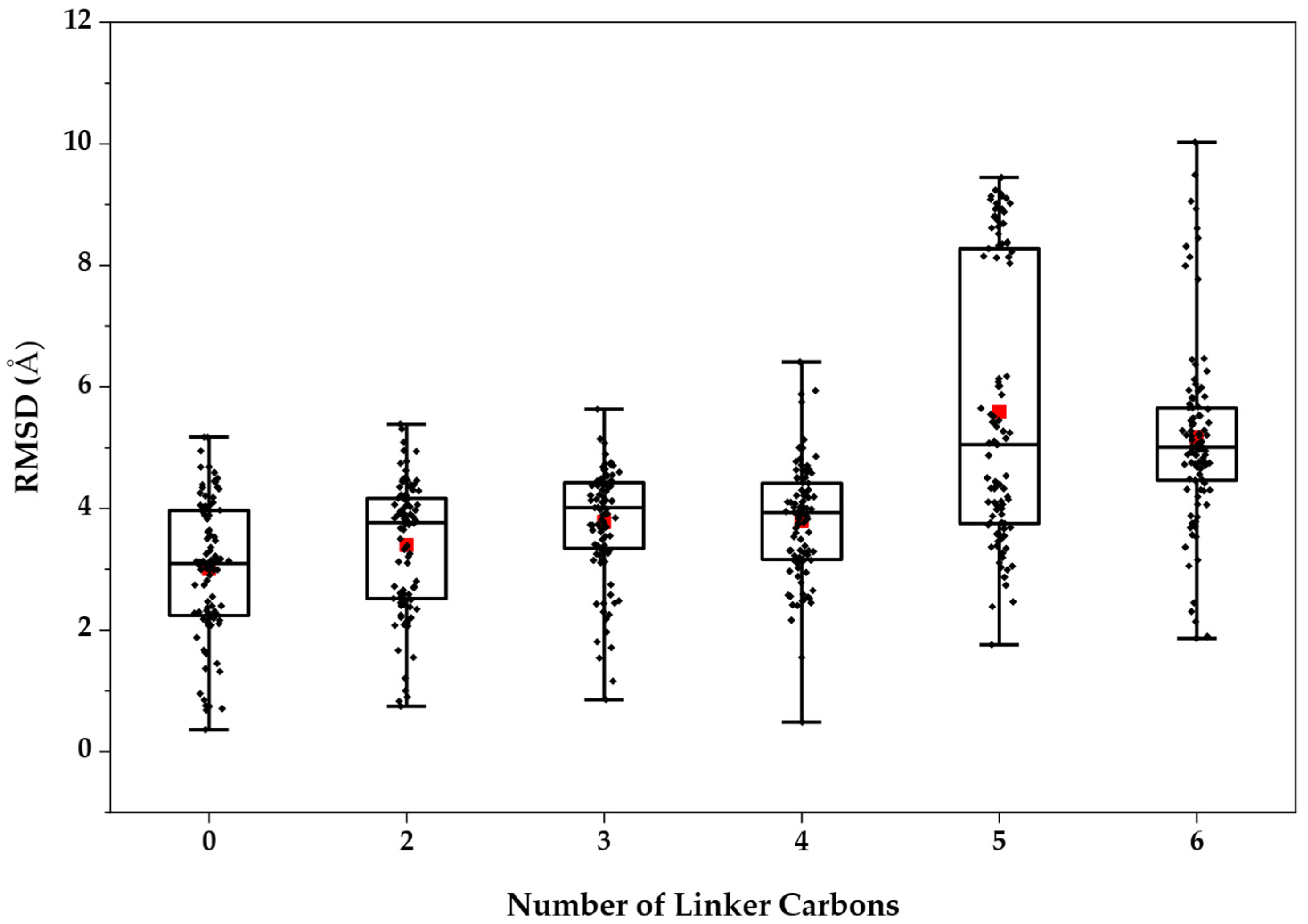
The linker variants from Figure 1, with lengths ranging from 0 to 6 carbons, were docked into Ag85B using AutoDock Vina, generating 10 binding poses per docking run (with 10 independent random-seed runs per ligand; 100 poses total per linker variant). Figure 2 presents the distribution of Vina binding scores across the 100 poses for each linker variant (10 poses per run × 10 runs), along with the binding scores of each individual pose for each ligand. Binding scores are reported in the native Vina convention (kcal/mol), where more negative values indicate more favorable predicted binding. It should be noted that AutoDock Vina scores are estimates of binding free energy and are most appropriate for relative comparisons among closely related ligands under the same docking protocol, rather than as exact measurements of binding strength. In particular, for large and flexible ligands, Vina does not explicitly capture important entropic and solvent-related contributions. Therefore, differences on the order of ~1–2 kcal/mol should be interpreted as suggestive trends rather than conclusive quantitative differences.
For all linker variants docked, shorter linkers were consistently associated with lower binding scores, indicating greater relative binding affinity for Ag85B. The zero-carbon linker exhibited one of the strongest predicted binding affinities, with a mean binding score of −10.5 ± 0.7 kcal/mol, while the six-carbon linker demonstrated the weakest predicted affinity, with a mean binding score of −9.4 ± 0.7 kcal/mol. This represents an approximately 1 kcal/mol difference in estimated binding affinity between the shortest and longest linkers. Given the approximate nature of Vina scoring—especially for large, flexible ligands—this magnitude should be interpreted as a qualitative ranking trend rather than as a precise quantitative free-energy difference. The trend is consistent with the hypothesis that shorter linkers may more readily adopt pocket-compatible conformations in these docking models, potentially enabling more recurrent packing and contact patterns with pocket residues.
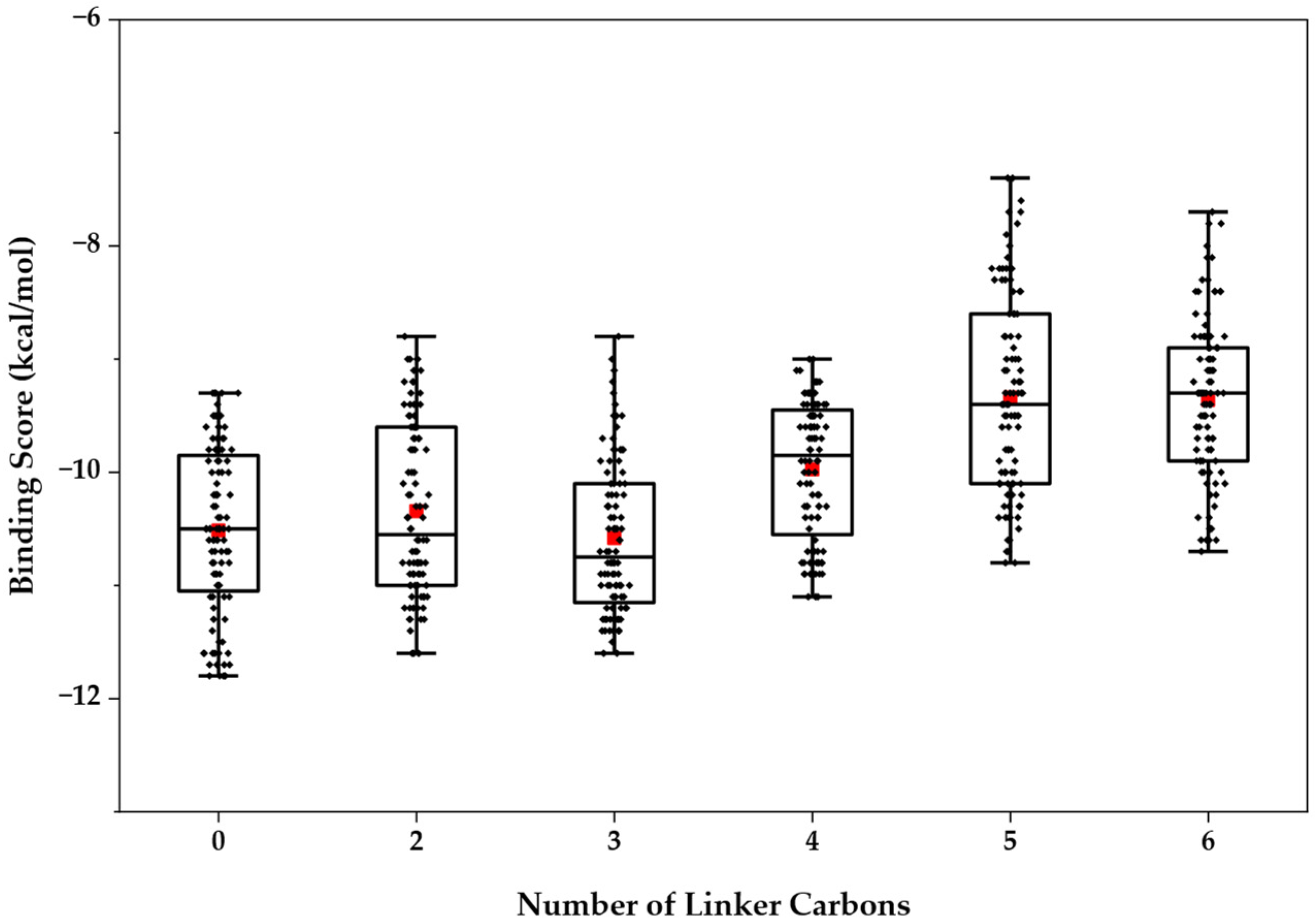
While binding affinity scores are an important factor for evaluating linker selectivity, it is equally critical to consider the consistency with which different linker variants bind to the same region. In the docking simulations, blind docking was performed with a search space spanning the entire enzyme to avoid biasing the results toward the canonical trehalose site. This provides a more stringent test for nonspecific binding because ligands are permitted to sample alternative surface sites, revealing whether binding is dispersed across multiple regions. In addition to the binding scores presented in Figure 2, Root Mean Square Deviation (RMSD) values were calculated for each pose of each ligand relative to the best-scoring (most favorable) pose of the same ligand. These RMSD values measure how consistently the ligand poses align with the most favorable binding conformation, which serves as the reference pose. Linker variants that bind opportunistically at multiple regions can produce a more heterogeneous set of poses (and therefore higher RMSD relative to the reference pose), whereas linkers that repeatedly return to the same region can yield tightly clustered poses (lower RMSD) even when alternative sites are available. The results, summarized in Figure 3, show the distribution of RMSD values for 99 poses relative to the best-scoring reference pose for each linker variant.
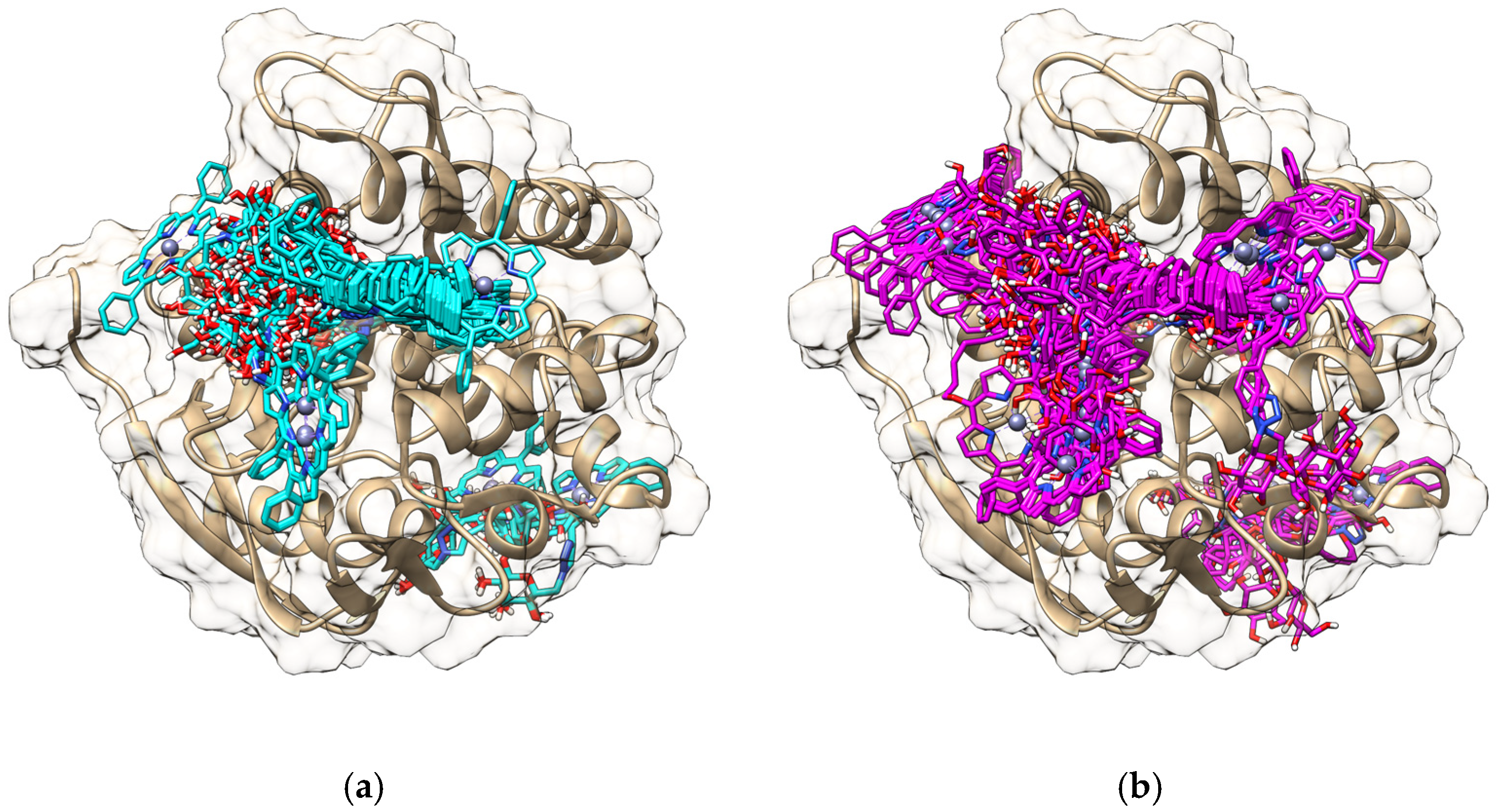
Notably, increasing linker length was associated with a modest increase in mean RMSD, suggesting greater variability in predicted ligand binding poses. The zero-carbon linker showed a mean RMSD of 3.0 ± 0.1 Å (SEM), consistent with relatively clustered poses. In comparison, the six-carbon linker showed an RMSD of 5.2 ± 0.2 Å (SEM), indicating a broader spread of predicted poses. Although these differences are modest, the overall pattern is consistent with greater pose heterogeneity for longer linker variants. This may reflect reduced geometric constraint and/or increased conformational flexibility, which could contribute to the less favorable binding affinity scores observed for longer linkers. This trend is illustrated in Figure 4, which compares all binding poses of the zero-carbon linker (Figure 4a) and six-carbon linker (Figure 4b), highlighting tighter clustering in the former and greater dispersion in the latter.
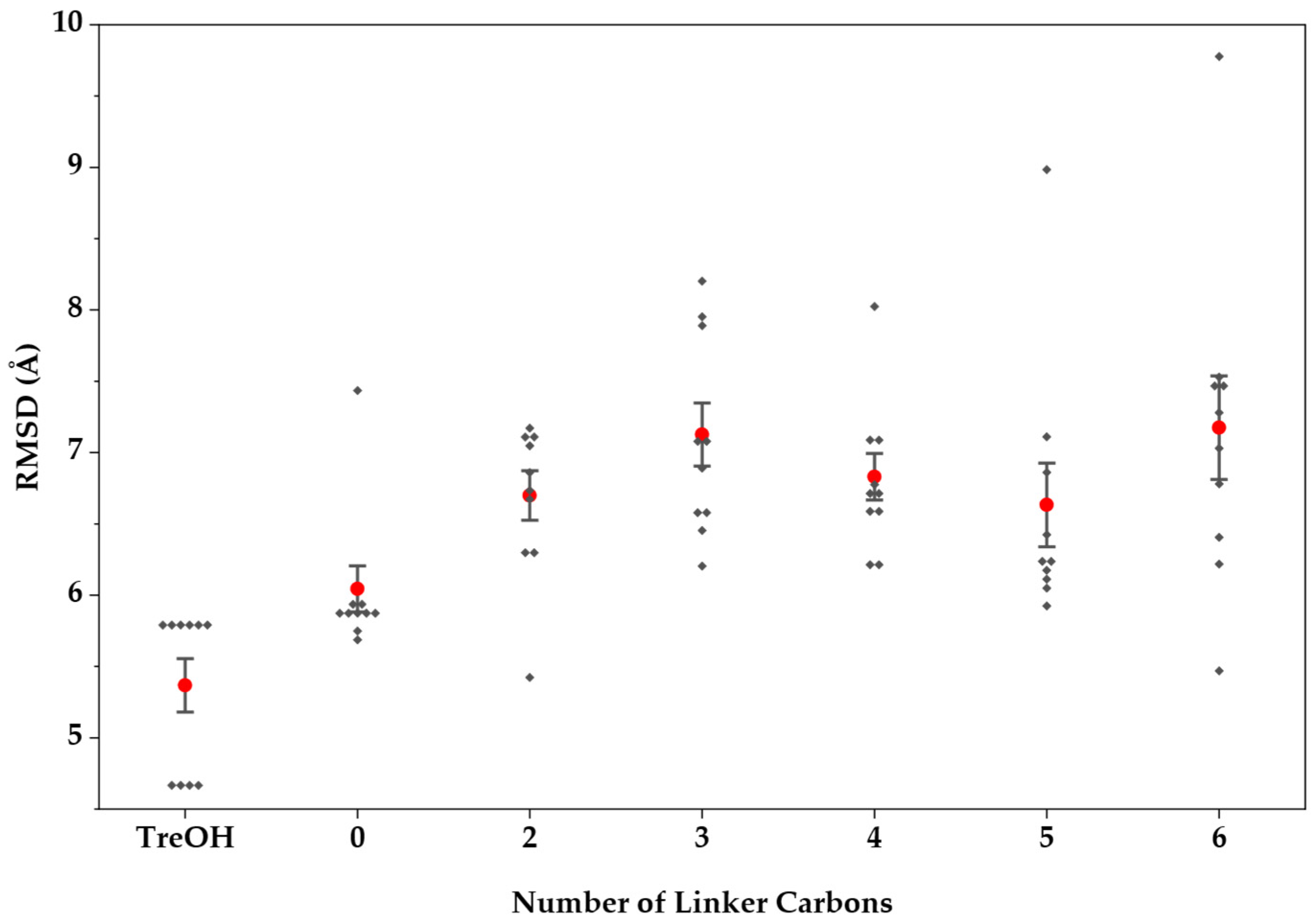
To compare how linker length affects trehalose-core anchoring, RMSD was computed using the conserved trehalose-ring heavy atoms from the top-ranked pose of each independent docking run (10 runs per linker variant), while preserving the atoms in their intact docked poses. Specifically, RMSD comparisons were performed using only the heavy atoms shared between trehalose and the porphyrin analogs (i.e., atoms present in both structures), while ignoring all non-shared heavy atoms. The C6 oxygen was excluded from the shared atom set. This procedure was applied identically across all variants to enable a consistent, internal comparison. The shared-heavy-atom subset of each top-ranked docked pose was then compared to the experimentally observed trehalose conformation from the PDB structure used in this study (PDB ID: 1F0P). To quantify the structural alignment, the RMSD between the top-ranked docked pose (most negative Vina score within a run) and the crystallographic trehalose pose was calculated. The RMSD comparison results are summarized in Figure 5. Figure S1 (Supplemental Materials) displays the highest-affinity binding pose for each linker variant, while Figure S2 (Supplemental Materials) shows these poses relative to the trehalose cocrystal structure. Trehalose was also re-docked using the same receptor preparation and global docking parameters employed for the conjugates. Under these conditions, top-ranked trehalose poses from 10 independent docking runs aligned, on average, to the crystallographic trehalose with an RMSD of 5.4 ± 0.2 Å (SEM) (Figure 5). Accordingly, RMSD values for the conjugates are interpreted primarily as a relative measure of similarity to the crystallographic reference within a single, consistent protocol.
The shared-atom subset of the top-ranked pose for the zero-carbon linker exhibits an RMSD of 6.0 ± 0.2 Å (SEM) relative to the experimentally determined cocrystal pose, whereas the six-carbon linker shows a higher RMSD of 7.2 ± 0.4 Å (SEM). A clear trend emerges—as linker length increases, so does the RMSD between the shared structures and the known trehalose pose. Importantly, RMSD is a geometric measure of pose similarity and does not itself establish biological truth, since multiple conformations can be compatible with productive binding. The crystallographic trehalose pose provides an experimentally observed reference conformation under crystallographic conditions. Within this consistent workflow, the lower RMSD for the 0C variant indicates that shorter linkers constrain the shared-atom alignment into orientations closer to the crystallographic reference than those sampled by longer linkers. This is consistent with the hypothesis that shorter linkers restrict the conjugates to more recurrent trehalose-core placements relative to the crystallographic reference within these docking models.
Taken together, shorter linkers (0–2 carbons) showed more favorable docking scores and lower RMSD values (both pose-clustering RMSD and trehalose-core RMSD relative to the crystallographic reference) than longer linkers (3–6 carbons) within this protocol, consistent with more recurrent placement in the same pocket region in these docking models. Conversely, longer linkers showed broader RMSD distributions and less favorable docking scores; in representative poses, portions of the linker/porphyrin extend farther from the pocket region, consistent with increased conformational freedom.
The stronger docking behavior of shorter linkers may reflect their ability to maximize favorable non-covalent interactions while improving packing. For instance, the zero-carbon linker, in the top-ranked pose, formed hydrogen bonds and aromatic interactions (π–π with HIS 262 and π–cation with ARG 43). In contrast, the six-carbon linker, despite showing reduced tight packing in the clash/contact analysis, exhibited poor binding scores and high RMSD values, suggesting that its excessive flexibility limits its ability to adopt a recurrent trehalose-core placement relative to the crystallographic reference under this docking protocol. This suggests that an optimal linker length must balance flexibility with spatial fit.

3.2. Clashes and Contacts

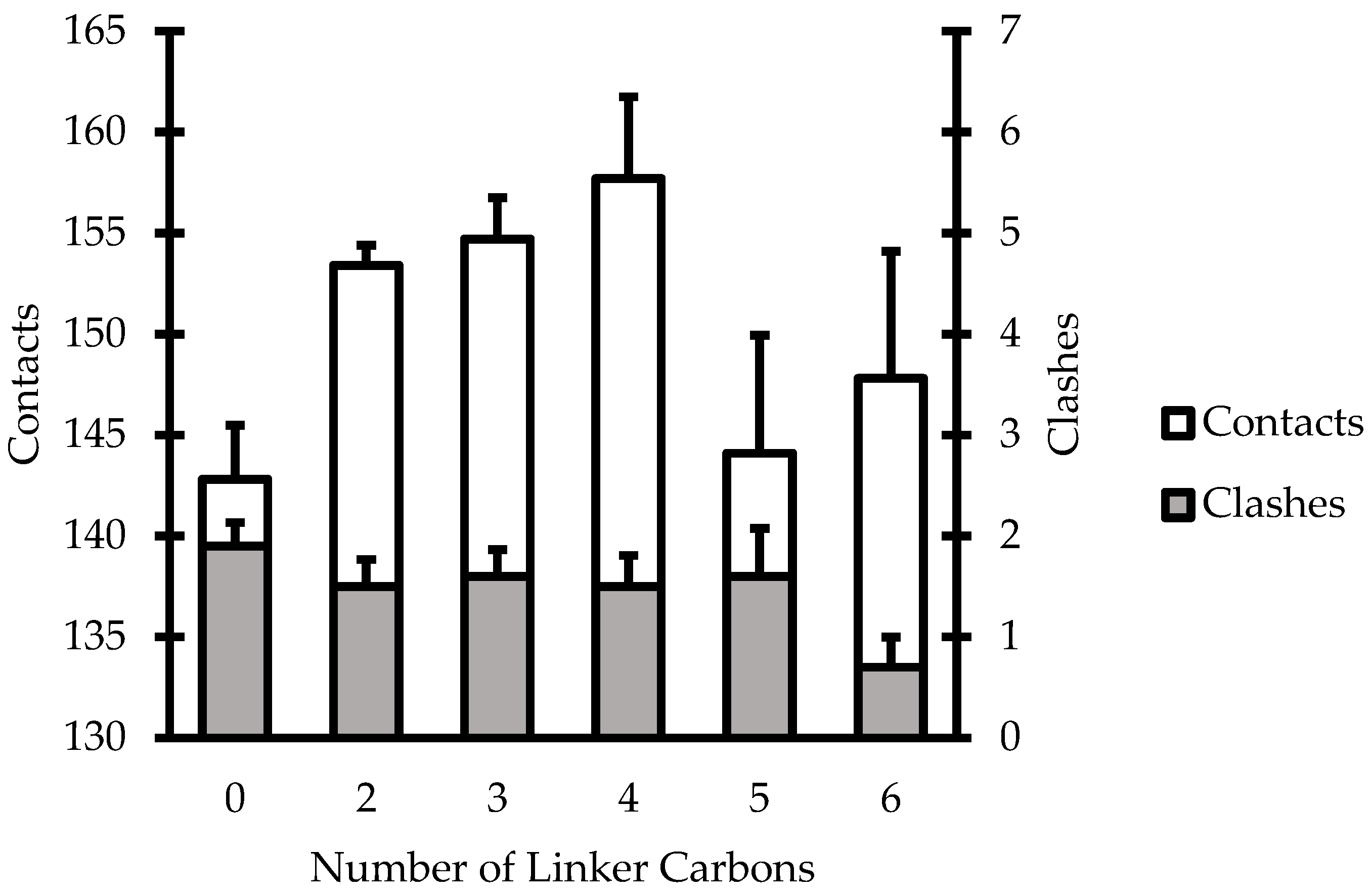
Clashes and contacts of the linker variants within the binding pocket were evaluated by analyzing Van der Waals (VDW) overlaps between atoms. Contacts were defined as interactions in which the VDW surfaces of two atoms were within 0.4 Å of each other (overlap ≥ −0.4 Å), indicating potential non-covalent interactions. Clashes, on the other hand, were identified as instances where VDW overlaps exceeded 0.6 Å, representing tight packing due to close atomic proximity. Importantly, in the present docking analysis, these overlaps are not necessarily severe, physically impossible collisions; rather, they represent tight packing events that are allowed by the docking program and can occur in otherwise well-scoring poses. Thus, a residue can contribute many contacts without tight overlaps, and conversely a small number of tight overlaps can reflect a snug fit rather than failure to bind. To ensure that only poses within the binding pocket were analyzed, clashes and contacts were evaluated for the top-ranked pose from each independent docking run for each linker variant (10 poses total per linker variant). Figure 6 summarizes the average number of contacts and clashes for each linker variant.
As linker length increases, the number of clashes varies modestly, peaking for the zero-carbon linker and then decreasing for longer linkers. The zero-carbon linker exhibits an average of 1.9 ± 0.2 (SEM) clashes, while the six-carbon linker shows the least clashes (0.7 ± 0.3), indicating reduced packing with longer linkers.
The number of contacts increases with linker length up to the four-carbon linker, after which it begins to decline. Notably, the six-carbon linker forms nearly the same number of contacts as the zero-carbon linker, suggesting reduced packing efficiency (despite comparable contact counts) for longer linkers. The zero-carbon linker has an average of 143 ± 3 (SEM) contacts, the four-carbon linker achieves the highest contact count with 158 ± 4 (SEM) contacts, and the six-carbon linker decreases to an average of 148 ± 6 (SEM) contacts. These trends highlight the balance between steric clashes and non-covalent interactions, with shorter linkers forming tighter but potentially strained binding, while longer linkers reduce strain but sacrifice packing efficiency.
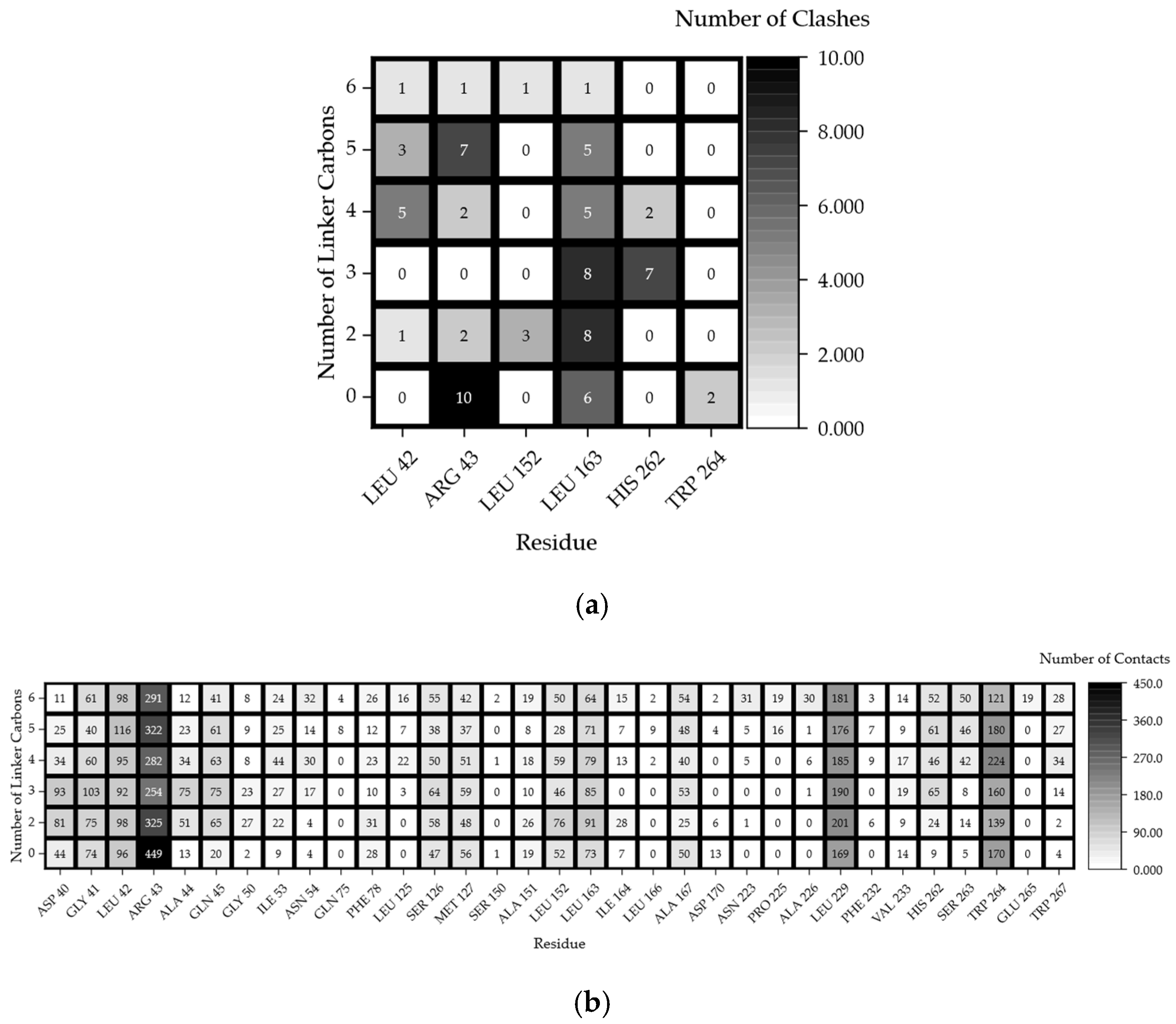
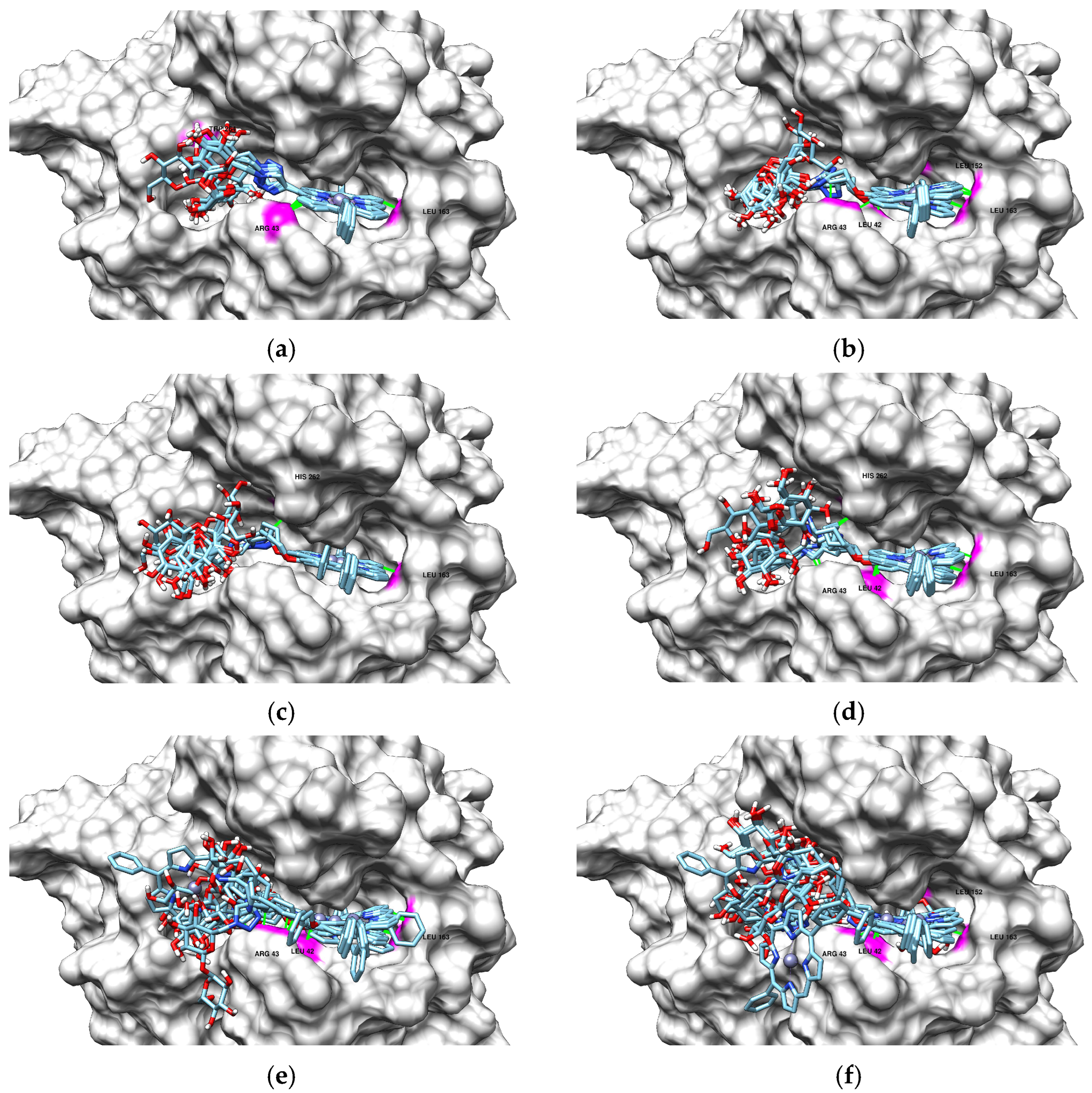
To identify which specific residues are responsible for the clashes summarized in Figure 6, we analyzed all clashing residues for the top-ranked pose from each independent docking run for each linker variant (10 poses total per linker variant). The results, shown in Figure 7a, summarize the frequency of clashes per residue for each linker variant. To complement the clash analysis and capture close packing that does not rise to steric interference, Figure 7b summarizes the frequency of contacts per residue for each linker variant. To provide spatial context for these interactions, Figure 8 presents structural visualizations highlighting the locations of these clashes. In this figure, magenta regions highlight areas of steric clashes between ligand poses within the binding pocket and surrounding residues, illustrating how linker length and ligand conformation may influence interactions and contribute to clashes with specific residues throughout the pocket.
Notably, the zero-carbon linker shows substantial clashes with ARG 43 in Figure 7a (10 clash occurrences), indicating that ARG 43 contributes through both tight packing and favorable contacts. By comparison, HIS 262 shows no clashes and relatively few contact occurrences for the zero-carbon linker, indicating limited interaction for this variant. Consistent with this, Figure 7b shows that ARG 43 is among the most frequently contacted residues for the shortest linker (449 total atom-pair contact occurrences across the 10 best poses for the zero-carbon variant), supporting strong engagement that includes steric overlap. In contrast, HIS 262 shows relatively few contact occurrences for the zero and two-carbon variants (9 and 24 respectively), but its contact frequency increases for intermediate/longer linkers (65 for the three-carbon and 61 for the five-carbon variant), suggesting that linker length modulates how often the ligand samples conformations that approach HIS 262 closely. Concurrently, several hydrophobic pocket residues show broadly similar contact frequencies across linker lengths—for example, LEU 229 (176–201 across variants), TRP 264 (121–224), LEU 42 (92–116), and LEU 163 (71–91)—which is consistent with a conserved hydrophobic anchoring of the porphyrin scaffold, while linker length primarily tunes polar/charged contacts and overall pose compactness.
Shorter linkers, such as the zero-carbon and two-carbon variants, exhibited localized clashes that coincided with compact binding and favorable binding scores (Figure 8). The zero-carbon linker clashed exclusively with ARG 43, LEU 163, and TRP 264, residues positioned in/near the trehalose-binding pocket region, suggesting that deep-pocket insertion can produce close packing without necessarily introducing steric interference at HIS 262 (Figure 8a). The two-carbon linker, while clashing with LEU 163, also clashed with LEU 152 in the deep pocket, indicating its ability to effectively engage with multiple regions of the pocket (Figure 8b). This balance between surface strain and deep-pocket interaction may have allowed shorter linkers to achieve superior binding scores.
As linker length increased, additional residues became involved in clashes, potentially disrupting the ligand’s ability to adopt a stable pose. The three-carbon and four-carbon linkers (Figure 8c and Figure 8d, respectively) frequently clashed with residues such as LEU 42, LEU 163, and HIS 262 in the deeper pocket. For example, the four-carbon linker showed significant clashes in regions where the linker bridges the porphyrin and trehalose moieties, as visualized in Figure 8d, highlighting the steric strain introduced by the increased length. Despite avoiding most clashes, the six-carbon linker showed the least favorable docking performance, as its flexibility may have prevented recurrent engagement with residues like ARG 43 and LEU 163, resulting in reduced packing specificity and less recurrent pocket placement in Figure 8f.
In summary, clashes, particularly for shorter linkers, played a dual role by enabling tight packing within the binding pocket without necessarily causing prohibitive steric interference. Residues such as TRP 264 and LEU 152 interact closely with the shorter linkers, consistent with deep-pocket engagement that helps stabilize compact poses. For key residues such as ARG 43 (and, depending on linker length, HIS 262), the dominant contribution is often through frequent contacts rather than clashes, although ARG 43 also shows recurring clashes (notably for the zero-carbon linker), whereas HIS 262 shows limited interaction for the zero-carbon linker and more frequent contacts for intermediate/longer linkers. Conversely, longer linkers often alter the balance of clashes and contacts, with increased conformational flexibility and/or redistributed steric interactions that can reduce packing efficiency and binding specificity. These results suggest that controlling steric strain can enhance predicted binding specificity and pose stability, provided that it does not disrupt stronger interactions or prevent productive contacts within the binding pocket.

3.3. Protein–Ligand Interactions

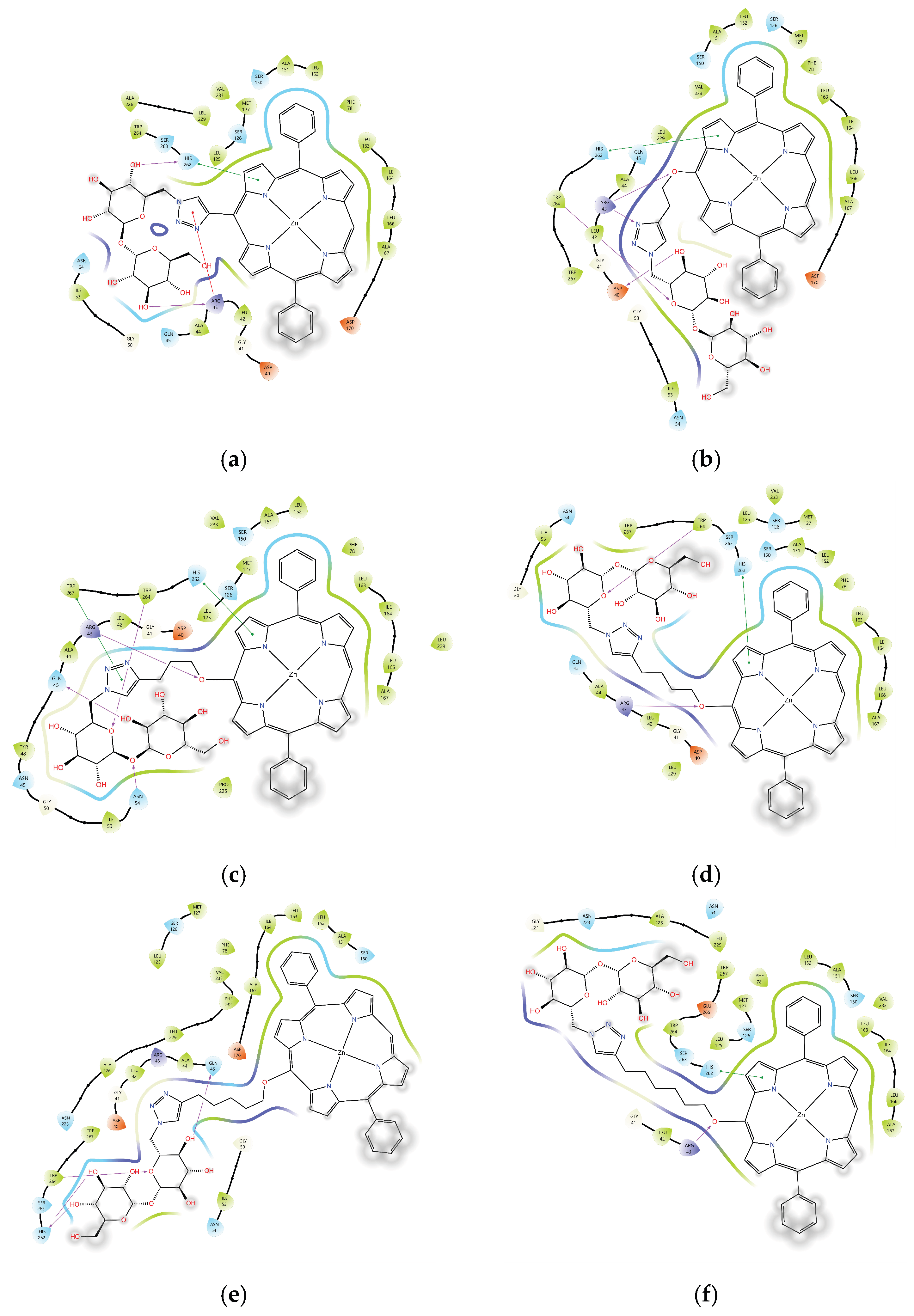
While the previous analysis of steric clashes and contacts provided insights into spatial fit and packing efficiency across all poses, hydrogen bonding and other interactions offer a complementary perspective by highlighting specific stabilizing forces within the binding pocket. To focus on the interactions observed in representative low-energy poses, this section examines all interactions in the best-scoring pose for each linker variant, as determined by the lowest (most favorable) Vina score. Hydrogen bonds within 2.8 Å, π–π stacking within 4.4 Å, π–cation interactions within 6.6 Å, and sites of solvent exposure are illustrated in Figure 9.
Grey regions represent areas of the ligand exposed to the solvent environment, indicating regions less involved in direct interactions with the binding pocket. Boundary regions are color-coded: green boundaries indicate hydrophobic residues, light blue boundaries represent polar residues, and dark blue boundaries denote positively charged residues.
The zero-carbon linker (Figure 9a) demonstrates multiple interactions within the binding pocket, forming hydrogen bonds with HIS 262 and ARG 43, as well as engaging in π–π stacking interactions with HIS 262 and π–cation interactions with ARG 43. The two-carbon (Figure 9b) linker exhibits a broader range of interactions, forming hydrogen bonds at ARG 43 (twice), TRP 264, and ASP 40, alongside π–π stacking interactions at HIS 262. The three-carbon linker (Figure 9c) maintains robust binding through hydrogen bonds at TRP 264, ARG 43, GLN 45, and ASN 54, and establishes π–π stacking interactions at TRP 264 and HIS 262. The four-carbon (Figure 9d) linker forms hydrogen bonds with TRP 264 and ARG 43, while also displaying π–π stacking interactions at HIS 262. The five-carbon linker (Figure 9e) interacts through hydrogen bonds at TRP 264, HIS 262 (twice), and GLN 45. Finally, the six-carbon linker (Figure 9f) forms a single hydrogen bond with ARG 43 and engages in π–π stacking interactions at HIS 262.
Shorter linkers, such as the zero- and two-carbon variants, exhibited minimal solvent exposure, allowing their trehalose and porphyrin moieties to deeply embed within the binding pocket and form strong interactions. In contrast, longer linkers, like the five- and six-carbon variants, showed greater solvent exposure, particularly around the trehalose moiety, suggesting suboptimal alignment and reduced engagement with deep pocket residues. This increased exposure likely contributes to the diminished predicted docking scores (i.e., less favorable Vina scores) observed for longer linkers.
In summary, hydrogen bonding and π interactions in the best-scoring poses provide a complementary view of linker-dependent binding geometry. Short linkers, such as the zero- and two-carbon variants, showed multiple interactions with residues such as ARG 43, HIS 262, and TRP 264 in their best-scoring poses. These residues are strategically located to stabilize ligands within the binding pocket, and their engagement by shorter linkers underscores the importance of deep-pocket interactions. Longer linkers, in contrast, generally showed greater solvent exposure around the trehalose moiety and less compact pocket engagement in the best-scoring poses, despite still forming hydrogen-bonding and/or π interactions. This diminished engagement is consistent with the less favorable docking scores and broader pose distributions.
The zero-carbon linker uniquely forms a π–cation interaction between its triazole ring and ARG 43, a key residue also involved in hydrogen bonding. This dual interaction likely anchors the ligand within the pocket, enhancing stability and contributing to its more favorable predicted docking score. π–Cation interactions, driven by electrostatic attraction between an aromatic ring (here, the triazole ring) and ARG 43’s positively charged guanidinium group, provide a strong stabilizing force. Longer linkers did not show this interaction in the best-scoring poses analyzed here, likely due to increased flexibility and solvent exposure, which prevent optimal positioning of the triazole/linked aromatic moiety.
The solvent-exposure patterns reinforce the conclusion that shorter linkers embed more effectively within the binding pocket, allowing both the porphyrin and trehalose moieties to engage in meaningful interactions. The increased solvent exposure observed for longer linkers, particularly around the trehalose moiety, suggests that these ligands often fail to achieve comparably deep and compact binding poses, leading to reduced engagement with critical residues and weaker binding scores.

3.4. Limitations and Future Directions

While this study provides valuable insights into linker design, it is based solely on computational docking, which inherently has limitations. Docking algorithms like AutoDock Vina predict binding poses and affinities without accounting for dynamic effects such as protein flexibility or solvent interactions. In addition, binding to Ag85B is only one step that can influence the final photodynamic therapy (PDT) effect. Linker length, while designed to modulate trehalose–porphyrin spacing, could also impact other steps such as cellular uptake/transport to the mycobacterial envelope, enzymatic processing or metabolic incorporation of the trehalose motif, and porphyrin behavior under light (i.e., self-quenching and oxygen accessibility). Future studies should incorporate molecular dynamics simulations to assess the stability of binding poses over time and experimental validation techniques, such as X-ray crystallography, to confirm the predicted binding modes.

4. Conclusions

This study provides valuable molecular insights into the role of linker length in determining the relative binding affinity, specificity, and stability of trehalose–porphyrin glycoconjugates in an Ag85B-based docking model. Computational docking simulations revealed that shorter linkers consistently exhibit superior binding scores, lower RMSD variability, and deeper engagement within the binding pocket. Short linkers formed stronger interactions with critical residues such as ARG 43 and HIS 262, including unique π–cation interactions that are likely to enhance their stability and specificity. In contrast, longer linkers displayed greater flexibility, increased solvent exposure, and reduced interactions with key residues, contributing to their diminished binding efficacy.
These findings underscore the importance of optimizing linker length to balance flexibility and spatial fit, enabling effective engagement with the active site. By revealing the structural and interactional dynamics underlying linker-dependent efficacy, this work provides a framework for the rational design of next-generation porphyrin-based therapeutics. Future efforts should focus on validating these computational predictions through experimental methods, such as X-ray crystallography and binding assays, and exploring linker modifications to enhance drug delivery and therapeutic potential against M. tuberculosis.

Supplementary Materials

The following supporting information can be downloaded at: https://www.mdpi.com/article/10.3390/microbiolres17030058/s1, Figure S1: Highest-affinity binding poses for each docked linker variant. The zero-carbon linker is shown in (a), the two-carbon linker in (b), the three-carbon linker in (c), the four-carbon linker in (d), the five-carbon linker in (e), and the six-carbon linker in (f); Figure S2: Highest-affinity binding poses for each docked linker variant (blue) relative to trehalose cocrystal structure (magenta). The zero-carbon linker is shown in (a), the two-carbon linker in (b), the three-carbon linker in (c), the four-carbon linker in (d), the five-carbon linker in (e), and the six-carbon linker in (f).

Author Contributions

Conceptualization, N.L.S. and J.V.R.; methodology, N.L.S., J.V.R. and C.T.P.; formal analysis, N.L.S. and C.T.P.; investigation, N.L.S. and C.T.P.; resources, N.L.S. and J.V.R.; data curation, C.T.P.; writing—original draft preparation, C.T.P.; writing—review and editing, N.L.S. and J.V.R.; supervision, N.L.S. and J.V.R.; project administration, N.L.S.; funding acquisition, N.L.S. and J.V.R. All authors have read and agreed to the published version of the manuscript.

Funding

This research was funded by the National Science Foundation International Research Experience for Scientists (#1854028) and the National Institutes of Health (#1R15GM148916-01).

Institutional Review Board Statement

Not applicable.

Informed Consent Statement

Not applicable.

Data Availability Statement

The original contributions presented in this study are included in the article/Supplementary Materials. Further inquiries can be directed to the corresponding author.

Acknowledgments

N.L.S. and C.T.P. would like to thank Department of Chemistry at Davidson College for their support. N.L.S. would also like to thank Davidson College for a Faculty Study and Research grant to support this work.

Conflicts of Interest

The authors declare no conflict of interest.

Abbreviations

The following abbreviations are used in this manuscript:
PDTPhotodynamic Therapy
RMSDRoot Mean Square Deviation
VDWVan der Waals

References

  1. World Health Organization. Global Tuberculosis Report 2023. Available online: https://www.who.int/publications/i/item/9789240083851 (accessed on 11 July 2024).
  2. Thanna, S.; Sucheck, S. Targeting the trehalose utilization pathways of Mycobacterium tuberculosis. Med. Chem. Commun. 2016, 7, 69–85. [Google Scholar] [CrossRef] [PubMed]
  3. Schami, A.; Islam, M.N.; Belisle, J.T.; Torrelles, J.B. Drug-resistant strains of Mycobacterium tuberculosis: Cell envelope profiles and interactions with the host. Front. Cell. Infect. Microbiol. 2023, 13, 2235–2988. [Google Scholar] [CrossRef] [PubMed]
  4. Shakiba, M.; Chen, J.; Zheng, G. Porphyrin Nanoparticles in Photomedicine. In Applications of Nanoscience in Photomedicine; Hamblin, M.R., Avci, P., Eds.; Chandos Publishing: Oxford, UK, 2015; pp. 511–526. [Google Scholar]
  5. Dai, T.; Huang, Y.-Y.; Hamblin, M.R. Photodynamic therapy for localized infections—State of the art. Photodiagn. Photodyn. Ther. 2009, 6, 170–188. [Google Scholar] [CrossRef] [PubMed]
  6. Dutta, A.K.; Choudhary, E.; Wang, X.; Záhorszka, M.; Forbak, M.; Lohner, P.; Jessen, H.J.; Agarwal, N.; Korduláková, J.; Jessen-Trefzer, C. Trehalose Conjugation Enhances Toxicity of Photosensitizers against Mycobacteria. ACS Cent. Sci. 2019, 5, 644–650. [Google Scholar] [CrossRef] [PubMed]
  7. Feese, E.; Ghiladi, R.A. Highly efficient in vitro photodynamic inactivation of Mycobacterium smegmatis. J. Antimicrob. Chemother. 2009, 64, 782–785. [Google Scholar] [CrossRef] [PubMed]
  8. Pavani, C.; Uchoa, A.F.; Oliveira, C.S.; Baptista, M.S.; Iamamoto, Y.; Costa, E.B. Effect of zinc insertion and hydrophobicity on the membrane interactions and PDT activity of porphyrin photosensitizers. Photochem. Photobiol. Sci. 2009, 8, 233–240. [Google Scholar] [CrossRef] [PubMed]
  9. Cooper, S.A.L.; Graepel, K.W.; Steffens, R.C.; Dennis, D.G.; Cambroneo, G.A.; Wiggins, R.Q.; Ruppel, J.V.; Snyder, N.L. Modular synthesis of silicon (IV) phthalocyanine conjugates bearing glycosylated axial ligands. J. Porphyr. Phthalocyanines 2019, 23, 850–855. [Google Scholar] [CrossRef]
  10. Dixon, C.F.; Nottingham, A.N.; Lozano, A.F.; Sizemore, J.A.; Russell, L.A.; Valiton, C.; Newell, K.L.; Babin, D.; Bridges, W.T.; Parris, M.R.; et al. Synthesis and evaluation of porphyrin glycoconjugates varying in linker length: Preliminary effects on the photodynamic inactivation of Mycobacterium smegmatis. RSC Adv. 2021, 11, 7037–7042. [Google Scholar] [CrossRef] [PubMed]
  11. Anderson, D.H.; Harth, G.; Horwitz, M.A.; Eisenberg, D. An interfacial mechanism and a class of inhibitors inferred from two crystal structures of the Mycobacterium tuberculosis 30 kDa major secretory protein (antigen 85B), a mycolyl transferase. J. Mol. Biol. 2001, 307, 671–681. [Google Scholar] [CrossRef] [PubMed]
  12. Pettersen, E.F.; Goddard, T.D.; Huang, C.C.; Couch, G.S.; Greenblatt, D.M.; Meng, E.C.; Ferrin, T.E. UCSF Chimera—A visualization system for exploratory research and analysis. J. Comput. Chem. 2004, 25, 1605–1612. [Google Scholar] [CrossRef] [PubMed]
  13. Sanner, M.F.; Olson, A.J.; Spehner, J.-C. Reduced surface: An efficient way to compute molecular surfaces. Biopolymers 1996, 38, 305–320. [Google Scholar] [CrossRef]
  14. Shapovalov, M.V.; Dunbrack, R.L., Jr. A Smoothed Backbone-Dependent Rotamer Library for Proteins Derived from Adaptive Kernel Density Estimates and Regressions. Structure 2011, 19, 844–858. [Google Scholar] [CrossRef] [PubMed]
  15. Wang, J.; Wang, W.; Kollman, P.A.; Case, D.A. Automatic Atom Type and Bond Type Perception in Molecular Mechanical Calculations. J. Mol. Graph. Model. 2006, 25, 247–260. [Google Scholar] [CrossRef] [PubMed]
  16. Trott, O.; Olson, A.J. AutoDock Vina: Improving the Speed and Accuracy of Docking with a New Scoring Function, Efficient Optimization, and Multithreading. J. Comput. Chem. 2010, 31, 455–461. [Google Scholar] [CrossRef] [PubMed]
  17. Eberhardt, J.; Santos-Martins, D.; Tillack, A.F.; Forli, S. AutoDock Vina 1.2.0: New Docking Methods, Expanded Force Field, and Python Bindings. J. Chem. Inf. Model. 2021, 61, 3891–3898. [Google Scholar] [CrossRef] [PubMed]
  18. Schrödinger Release 2024-4: Maestro; Version 14.2.118, MMshare Version 6.8.118; Schrödinger LLC.: New York, NY, USA, 2024.
Figure 1. Structures of trehalose diphenylporphyrin glycoconjugates with varying carbon linker lengths between the trehalose and porphyrin moieties. Structure (a) has zero linker carbons, (b) has two linker carbons, (c) has three linker carbons, (d) has four linker carbons, (e) has five linker carbons, and (f) has six linker carbons.
Microbiolres 17 00058 g001
Figure 2. Box-and-whisker plots of AutoDock Vina binding affinity scores (kcal/mol) for the 100 poses generated for each linker variant. The center line indicates the median; the lower and upper box bounds indicate the 25th and 75th percentiles (interquartile range, IQR), respectively; and the whiskers indicate the full range of observed values. Individual pose binding affinity scores are shown as black points, and the red point indicates the mean binding affinity score for each linker variant. Scores are shown in the native Vina sign convention (more negative = more favorable).
Microbiolres 17 00058 g002
Figure 3. Box-and-whisker plots of pose RMSD (Å) for each linker variant, calculated relative to the best-scoring pose for that linker variant (reference pose). For each linker variant, RMSD values are shown for 99 non-reference poses (excluding the reference pose at 0 Å). Center line indicates the median; lower and upper box bounds indicate the 25th and 75th percentiles (interquartile range, IQR), respectively; whiskers indicate the full observed range. Individual pose RMSD values are shown as black points, and the red point indicates the mean RMSD for each linker variant.
Microbiolres 17 00058 g003
Figure 4. Comparison of all 100 binding pose conformations for the cyan zero-carbon linker (a) and the magenta six-carbon linker (b) within Ag85B. The zero-carbon linker analog (cyan) shows tightly clustered poses within the binding pocket, while the six-carbon linker (magenta) exhibits dispersed poses.
Microbiolres 17 00058 g004
Figure 5. RMSD values (Å) of the best pose per random-seed run (10 runs per linker variant) relative to crystallographic trehalose, calculated over the heavy atoms shared between trehalose and the porphyrin analogs (excluding the C6 oxygen). Points represent individual runs; red symbols indicate the mean RMSD for each linker variant, and error bars represent the standard error of the mean (SEM). A trehalose re-docking control, generated using the same global docking parameters, is included for comparison.
Microbiolres 17 00058 g005
Figure 6. Mean number of contacts (left y-axis) and clashes (right y-axis) for the top-ranked (best-scoring) pose from each of 10 random-seed docking runs per linker. Contacts represent non-covalent interactions with Van der Waals (VDW) overlap ≥ −0.4 Å, while clashes represent tight overlaps with VDW overlap > 0.6 Å. Error bars indicate the standard error of the mean (SEM) across runs (n = 10 best poses per linker).
Microbiolres 17 00058 g006
Figure 7. Residue-wise interaction frequencies within the binding pocket for each linker variant, totaled from all best poses per random-seed run (10 runs total per linker variant). (a) Frequency of clashes per residue, defined as atom pairs with van der Waals (VDW) overlap > 0.6 Å. (b) Frequency of contacts per residue, defined as atom pairs with VDW overlap ≥ −0.4 Å.
Microbiolres 17 00058 g007
Figure 8. Structural visualization of tight-packing clashes for all best poses (blue) from each random-seed run (n = 10) within the binding pocket and surrounding residues for each linker variant. The zero-carbon linker is shown in (a), the two-carbon linker in (b), the three-carbon linker in (c), the four-carbon linker in (d), the five-carbon linker in (e), and the six-carbon linker in (f). Magenta regions highlight residues where Van der Waals overlaps between the ligand (blue) and residue exceed 0.6 Å, indicating regions of tight overlap. Green lines denote the specific atomic interactions contributing to these clashes.
Microbiolres 17 00058 g008
Figure 9. 2D binding interaction maps for the best-scoring poses of each linker variant: (a) zero-carbon linker, (b) two-carbon linker, (c) three-carbon linker, (d) four-carbon linker, (e) five-carbon linker, and (f) six-carbon linker. Purple arrows indicate hydrogen bonds, with the arrow pointing toward the hydrogen bond acceptor. Red lines represent π–cation interactions, showing the electrostatic interaction between aromatic rings and positively charged residues. Green lines depict π–π stacking interactions, highlighting aromatic ring stacking between the ligand and residues in the binding pocket.
Microbiolres 17 00058 g009
Disclaimer/Publisher’s Note: The statements, opinions and data contained in all publications are solely those of the individual author(s) and contributor(s) and not of MDPI and/or the editor(s). MDPI and/or the editor(s) disclaim responsibility for any injury to people or property resulting from any ideas, methods, instructions or products referred to in the content.