

Phenotypic Characterization of Phosphofructokinase Variants in Escherichia coli


Abstract
1. Introduction
2. Materials and Methods
2.1. Strains and Genetic Modifications
2.2. Plasmid Construction
2.3. Media and Growth Conditions
2.4. Shake Flask Cultures
2.5. Steady-State Process
2.6. RT-qPCR
2.7. Quenching and Extraction
2.8. Intracellular Metabolite Analyses
2.9. Analytical Methods
3. Results
3.1. Construction of PfkA Variants
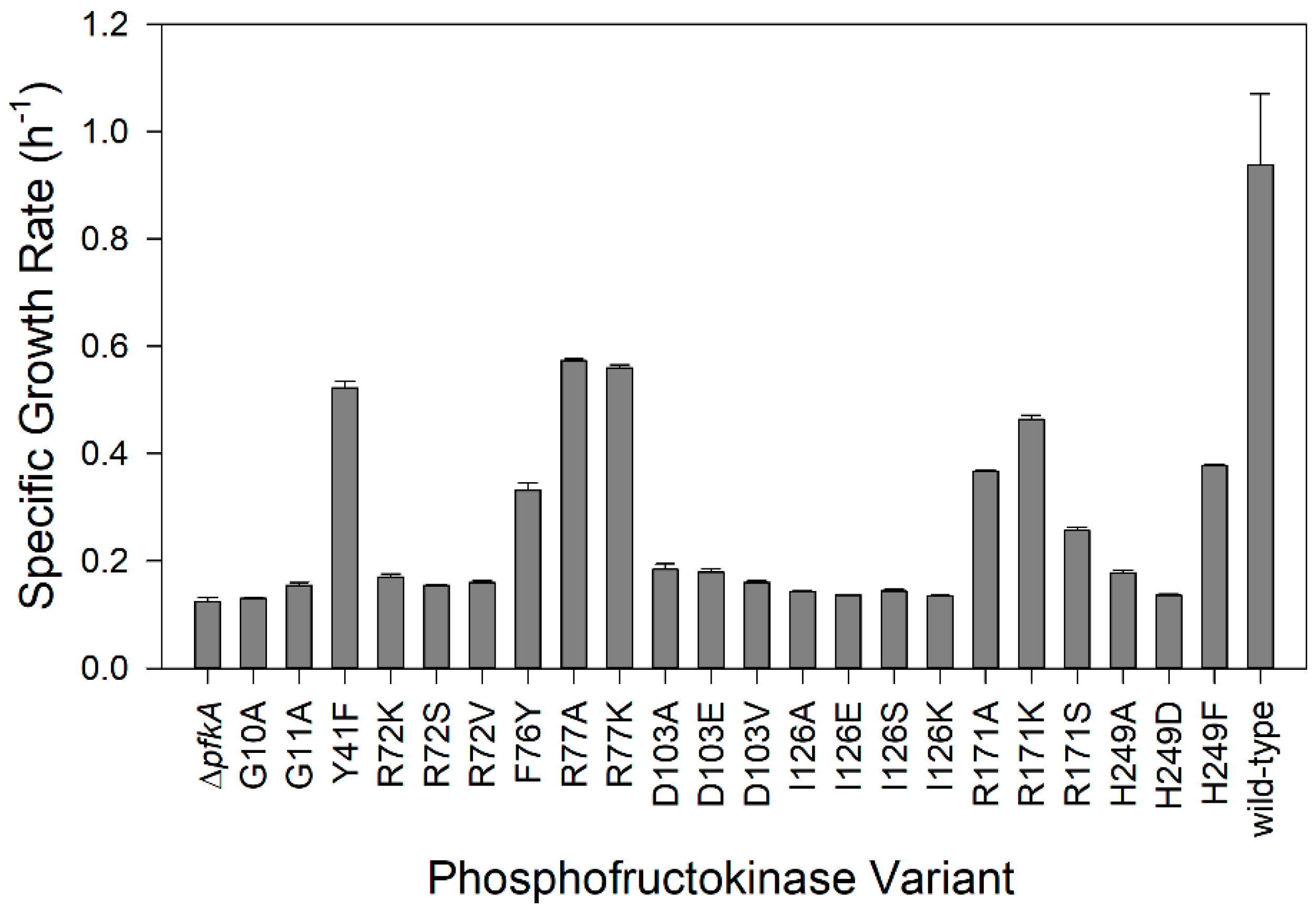
3.2. Substitutions in PfkA Affect Cell Growth Rate
3.3. Steady-State Process
3.4. Physiology and Respiration
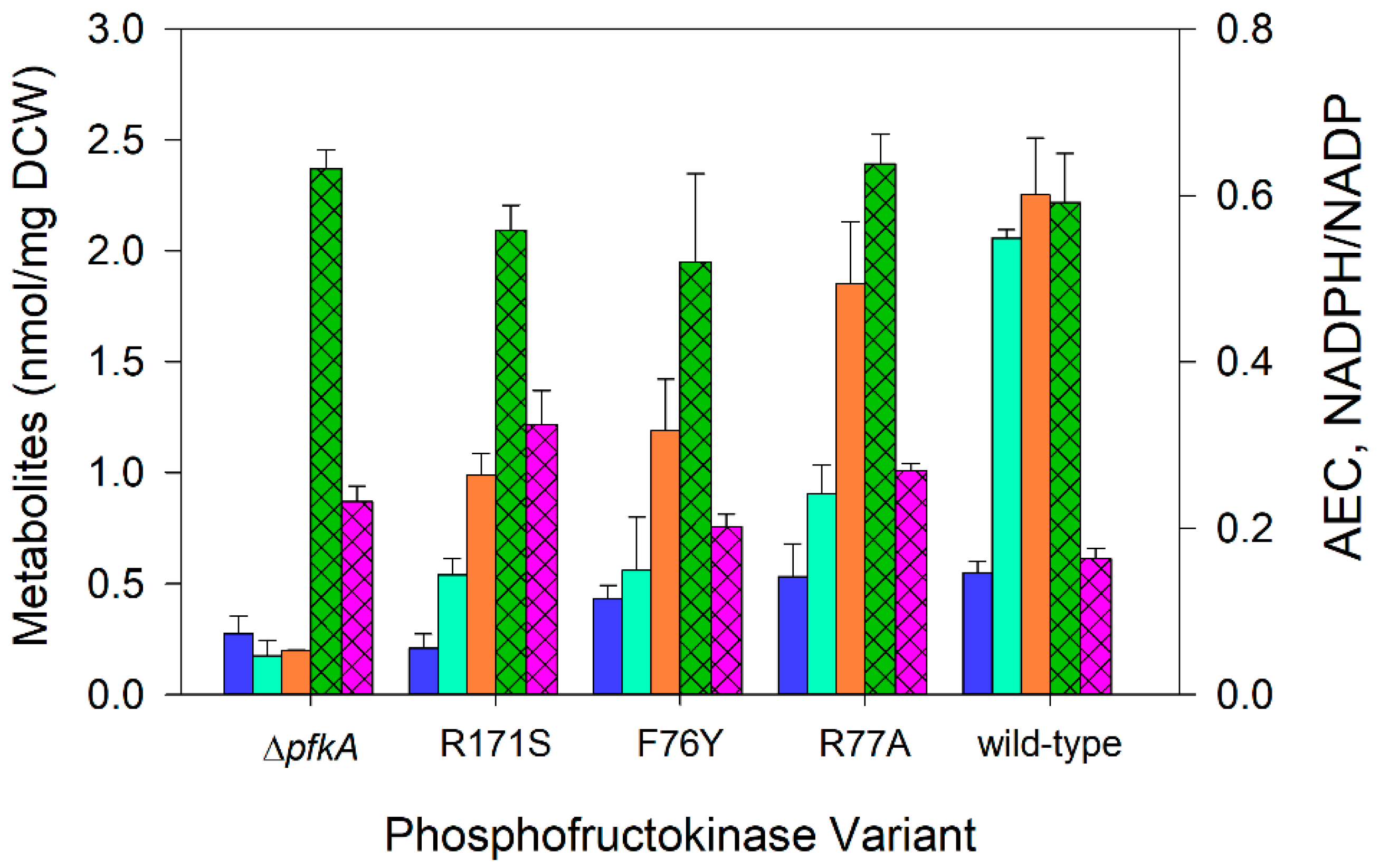
3.5. Intracellular Metabolites
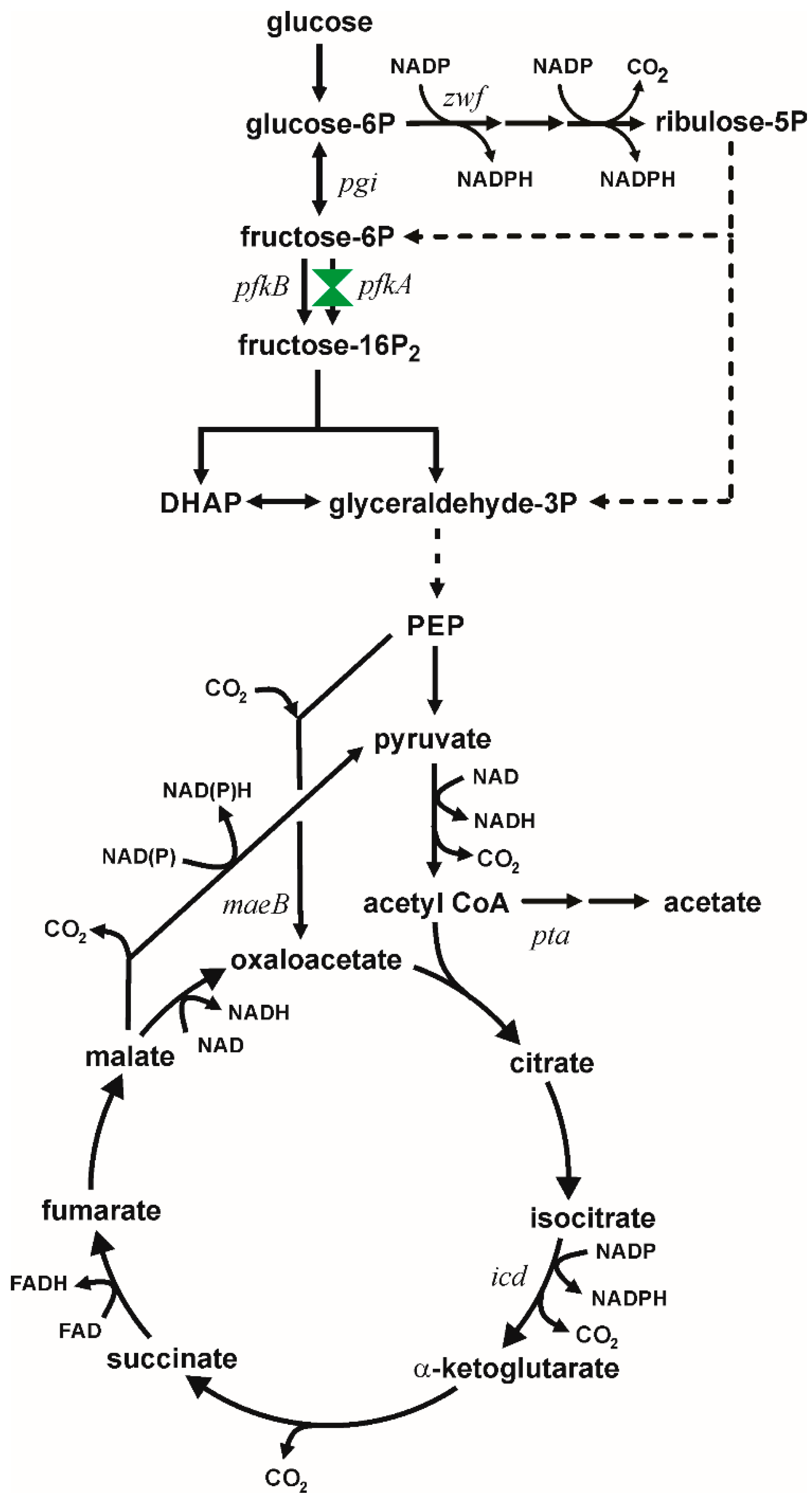
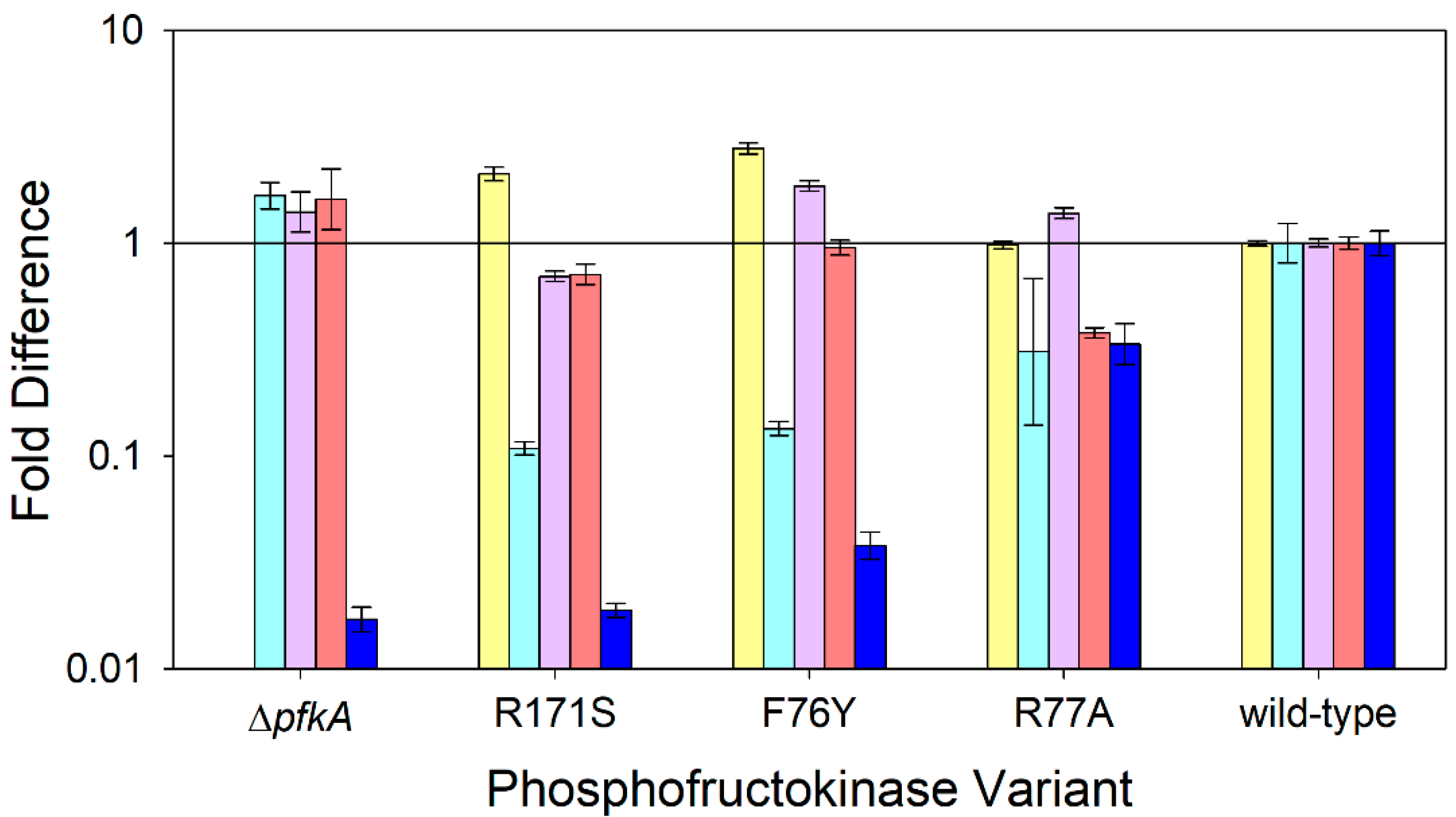
3.6. qRT-PCR
4. Discussion
4.1. PfkA Plays a Key Role in Glycolysis
4.2. PfkA Variants Display a Range of Growth Rate Phenotypes
4.3. Substitutions in PfkA Affect Glycolytic Intermediates and Glycolytic Flux
4.4. Substitutions in PfkA Affect Acetate Formation
4.5. Adenylate Charge Indicates Metabolic State
Author Contributions
Funding
Institutional Review Board Statement
Informed Consent Statement
Data Availability Statement
Acknowledgments
Conflicts of Interest
References
- Holms, W.H. The central metabolic pathways of Escherichia coli: Relationship between flux and control at a branch point, efficiency of conversion to biomass and excretion of acetate. Curr. Top. Cell. Regul. 1986, 28, 69–105. [Google Scholar] [CrossRef]
- Siedler, S.; Bringer, S.; Bott, M. Increased NADPH availability in Escherichia coli: Improvement of the product per glucose ratio in reductive whole-cell biotransformation. Appl. Microbiol. Biotechnol. 2011, 92, 929–937. [Google Scholar] [CrossRef] [PubMed]
- Reynolds, T.S.; Courtney, C.M.; Erickson, K.E.; Wolfe, L.M.; Chatterjee, A.; Nagpal, P.; Gill, R.T. ROS mediated selection for increased NADPH availability in Escherichia coli. Biotechnol. Bioeng. 2017, 114, 2685–2689. [Google Scholar] [CrossRef] [PubMed]
- Alper, H.; Miyakou, K.; Stephanopolous, G. Construction of lycopene-overproducing E. coli strains by combining systematic and combinatorial gene knockout targets. Nat. Biotechnol. 2005, 23, 612–616. [Google Scholar] [CrossRef]
- Zhu, S.; Cai, D.; Liu, Z.; Zhang, B.; Li, J.; Chen, S.; Ma, X. Enhancement of bacitracin production by NADPH generation via overexpressing glucose-6-phosphate dehydrogenase Zwf in Bacillus licheniformis. Appl. Biochem. Biotechnol. 2019, 187, 1502–1514. [Google Scholar] [CrossRef]
- Shi, A.; Zhu, X.; Lu, J.; Zhang, X.; Ma, Y. Activating transhydrogenase and NAD kinase in combination for improving isobutanol production. Metabol. Eng. 2013, 16, 1–10. [Google Scholar] [CrossRef]
- Sauer, U.; Canonaco, F.; Heri, S.; Perrenoud, A.; Fischer, E. The soluble and membrane-bound transhydrogenases UdhA and PntAB have divergent functions in NADPH metabolism of Escherichia coli. J. Biol. Chem. 2004, 279, 6613–6619. [Google Scholar] [CrossRef]
- Matsuoka, Y.; Kurata, H. Computer-aided rational design of efficient NADPH production system by Escherichia coli pgi mutant using a mixture of glucose and xylose. Front. Bioeng. Biotechnol. 2020, 8, 227. [Google Scholar] [CrossRef]
- Lim, S.-J.; Jung, Y.-M.; Shin, H.-D.; Lee, Y.-H. Amplification of the NADPH-related genes zwf and gnd for the oddball biosynthesis of PHD in an E. coli transformant harboring a cloned phbCAB operon. J. Biosci. Bioeng. 2002, 93, 543–549. [Google Scholar] [CrossRef]
- Lin, Z.; Xu, Z.; Li, Y.; Wang, Z.; Chen, T.; Zhao, X. Metabolic engineering of Escherichia coli for the production of riboflavin. Microb. Cell Fact. 2014, 13, 104. [Google Scholar] [CrossRef] [PubMed]
- Perez-Zabaleta, M.; Sjöberg, G.; Guevara-Martínez, M.; Jarmander, J.; Gustavsson, M.; Quillaguamán, J.; Larsson, G. Increasing the production of (R)-3-hydroxybutyrate in recombinant Escherichia coli by improved cofactor supply. Microb. Cell Fact. 2016, 15, 91. [Google Scholar] [CrossRef] [PubMed]
- Nicolas, C.; Kiefer, P.; Letisse, F.; Krömer, J.; Massou, S.; Soucaille, P.; Wittmann, C.; Lindley, N.D.; Portais, J.C. Response of the central metabolism of Escherichia coli to modified expression of the gene encoding the glucose-6-phosphate dehydrogenase. FEBS Lett. 2007, 581, 3771–3777. [Google Scholar] [CrossRef]
- Hua, Q.; Yang, C.; Baba, T.; Mori, H.; Shimizu, K. Responses of the central metabolism in Escherichia coli to phosphoglucose isomerase and glucose-6-phosphate dehydrogenase knockouts. J. Bacteriol. 2003, 185, 7053–7067. [Google Scholar] [CrossRef]
- Siedler, S.; Bringer, S.; Blank, L.M.; Bott, M. Engineering yield and rate of reductive biotransformation in Escherichia coli by partial cyclization of the pentose phosphate pathway and PTS-independent glucose transport. Appl. Microbiol. Biotechnol. 2012, 93, 1459–1467. [Google Scholar] [CrossRef] [PubMed]
- Hollinshead, W.D.; Rodriguez, S.; Martin, H.G.; Wang, G.; Baidoo, E.E.K.; Sale, K.L.; Keasling, J.D.; Mukhopadhyay, A.; Tang, Y.J. Examining Escherichia coli glycolytic pathways, catabolite repression, and metabolite channeling using Δpfk mutants. Biotechnol. Biofuels 2016, 9, 212. [Google Scholar] [CrossRef]
- Brockman, I.M.; Prather, K.L.J. Dynamic knockdown of E. coli central metabolism for redirecting fluxes of primary metabolites. Metabol. Eng. 2015, 28, 104–113. [Google Scholar] [CrossRef]
- Tovilla-Coutiño, D.B.; Momany, C.; Eiteman, M.A. Engineered citrate synthase alters acetate accumulation in Escherichia coli. Metabol. Eng. 2020, 61, 171–180. [Google Scholar] [CrossRef]
- Moxley, W.C.; Eiteman, M.A. Pyruvate production by Escherichia coli by use of pyruvate dehydrogenase variants. Appl. Environ. Microbiol. 2021, 87, e00487-21. [Google Scholar] [CrossRef] [PubMed]
- Shirakihara, Y.; Evans, P.R. Crystal structure of the complex of phosphofructokinase from Escherichia coli with its reaction products. J. Mol. Biol. 1988, 204, 973–994. [Google Scholar] [CrossRef]
- Berger, S.A.; Evans, P.R. Site-directed mutagenesis identifies catalytic residue in the active site of Escherichia coli phosphofructokinase. Biochemistry 1992, 31, 9237–9242. [Google Scholar] [CrossRef]
- Kochanowski, K.; Volkmer, B.; Gerosa, L.; Haverkorn van Rijsewijk, B.R.; Schmidt, A.; Heinemann, M. Functioning of a metabolic flux sensor in Escherichia coli. Proc. Natl. Acad. Sci. USA 2013, 110, 1130–1135. [Google Scholar] [CrossRef] [PubMed]
- Lehning, C.E.; Siedler, S.; Ellabaan, M.M.H.; Sommer, M.O.A. Assessing glycolytic flux alterations resulting from genetic perturbations in E. coli using a biosensor. Metabol. Eng. 2017, 42, 194–202. [Google Scholar] [CrossRef]
- Koberstein, J.N.; Stewart, M.L.; Smith, C.B.; Tarasov, A.I.; Ashcroft, F.M.; Stork, P.J.S.; Goodman, R.H. Monitoring glycolytic dynamics in single cells using a fluorescent biosensor for fructose 1,6-bisphosphate. Proc. Natl. Acad. Sci. USA 2022, 119, e2204407119. [Google Scholar] [CrossRef]
- Datsenko, K.A.; Wanner, B.L. One-step inactivation of chromosomal genes in Escherichia coli K-12 using PCR products. Proc. Natl. Acad. Sci. USA 2000, 97, 6640–6645. [Google Scholar] [CrossRef]
- Cherepanov, P.P.; Wackernagel, W. Gene disruption in Escherichia coli: TcR and KmR cassettes with the option of Flp-catalyzed excision of the antibiotic-resistance determinant. Gene 1995, 158, 9–14. [Google Scholar] [CrossRef]
- Yang, J.; Sun, B.; Huang, H.; Jiang, Y.; Diao, L.; Chen, B.; Xu, C.; Wang, X.; Liu, J.; Jiang, W. High-efficiency scarless genetic modification in Escherichia coli by using lambda red recombination and I-SceI cleavage. Appl. Environ. Microbiol. 2014, 80, 3826–3834. [Google Scholar] [CrossRef] [PubMed]
- Kostylev, M.; Otwell, A.E.; Richardson, R.E.; Suzuki, Y. Cloning should be simple: Escherichia coli DH5a- mediated assembly of multiple DNA fragments with short end homologies. PLoS ONE 2015, 10, e0137466. [Google Scholar] [CrossRef]
- Livak, K.J.; Schmittgen, T.D. Analysis of relative gene expression data using real-time quantitative PCR and the 2−ΔΔCT method. Methods 2001, 25, 402–408. [Google Scholar] [CrossRef]
- Hoque, M.A.; Ushiyama, H.; Tomita, M.; Shimizu, K. Dynamic responses of the intracellular metabolite concentrations of the wild type and pykA mutant Escherichia coli against pulse addition of glucose or NH3 under those limiting continuous cultures. Biochem. Eng. J. 2005, 26, 38–49. [Google Scholar] [CrossRef]
- Faijes, M.; Mars, A.E.; Smid, E.J. Comparison of quenching and extraction methodologies for metabolome analysis of Lactobacillus plantarum. Microb. Cell. Fact. 2007, 6, 27. [Google Scholar] [CrossRef] [PubMed]
- Schaefer, U.; Boos, W.; Takors, R.; Weuster-Botz, D. Automated sampling device for monitoring intracellular metabolite dynamics. Anal. Biochem. 1999, 270, 88–96. [Google Scholar] [CrossRef]
- de Koning, W.; van Dam, K. A method for the determination of changes of glycolytic metabolites in yeast on a subsecond time scale using extraction at neutral pH. Anal. Biochem. 1992, 204, 118–123. [Google Scholar] [CrossRef] [PubMed]
- Lilius, E.-M.; Multanen, V.-M.; Toivenen, V. Quantitative extraction and estimation of intracellular nicotinamide nucleotide of Escherichia coli. Anal. Biochem. 1979, 99, 22–27. [Google Scholar] [CrossRef]
- Lowry, O.H.; Passonneau, J.V.; Rock, M.K. The stability of pyridine nucleotides. J. Biol. Chem. 1961, 236, 2756–2759. [Google Scholar] [CrossRef] [PubMed]
- Beri, D.; Olson, D.G.; Holwerda, E.K.; Lynd, L.R. Nicotinamide cofactor ratios in engineered strains of Clostridium thermocellum and Thermoanaerobacterium saccharolyticum. FEMS Microbiol. Lett. 2016, 363, fnw091. [Google Scholar] [CrossRef] [PubMed]
- Lang, G.; Michal, G. Methods for determination of metabolites (Carbohydrate metabolites: D-glucose-6-phosphate and D-fructose-6-phosphate). In Methods of Enzymatic Analysis, 2nd ed.; Bergmeyer, H.-U., Ed.; Verlag Chemie Academic Press: Weinheim, Germany, 1974; Volume 3, pp. 1238–1242. [Google Scholar]
- Trautschold, I.; Lamprecht, W.; Schweitzer, G. UV-method with hexokinase and glucose-6P dehydrogenase. In Methods of Enzymatic Analysis, 3rd ed.; Bergmeyer, H.-U., Ed.; Verlag Chemie Academic Press: Weinheim, Germany, 1985; Volume 7, pp. 342–350. [Google Scholar]
- Michal, G.; Beutler, H.-O. D-fructose-1,6-diphosphate, dihydroxyacetone phosphate and D-glyceraldehyde-3-6-phosphate. In Methods of Enzymatic Analysis; Bergmeyer, H.-U., Ed.; Verlag Chemie Academic Press: Weinheim, Germany, 1974; Volume 3, pp. 1315–1319. [Google Scholar]
- Jaworek, D.; Welsch, J. Adenosine 5′-diphosphate and adenosine 5′-monophosphate: UV-method. In Methods of Enzymatic Analysis, 3rd ed.; Bergmeyer, H.-U., Ed.; Verlag Chemie Academic Press: Weinheim, Germany, 1985; Volume 7, pp. 365–370. [Google Scholar]
- Decker, K. Acetyl Coenzyme A: UV-method. In Methods of Enzymatic Analysis, 2nd ed.; Bergmeyer, H.-U., Ed.; Verlag Chemie Academic Press: Weinheim, Germany, 1974; Volume 4, pp. 1988–1993. [Google Scholar]
- Eiteman, M.A.; Chastain, M.J. Optimization of the ion-exchange analysis of organic acids from fermentation. Anal. Chim. Acta 1997, 338, 69–75. [Google Scholar] [CrossRef]
- Hellinga, H.W.; Evans, P.R. Mutations in the active site of Escherichia coli phosphofructokinase. Nature 1987, 327, 437–439. [Google Scholar] [CrossRef]
- Zheng, R.-L.; Kemp, R.G. Identification of interactions that stabilize the transition state in Escherichia coli phosphofructo-1-kinase. J. Biol. Chem. 1994, 269, 18475–18479. [Google Scholar] [CrossRef]
- Zheng, R.-L.; Kemp, R.G. The mechanism of ATP inhibition of wild type and mutant phosphofructo-1-kinase from Escherichia coli. J. Biol. Chem. 1992, 267, 23640–23645. [Google Scholar] [CrossRef]
- Wang, X.; Kemp, R.G. Identification of residues of Escherichia coli phosphofructokinase that contribute to nucleotide binding and specificity. Biochemistry 1999, 38, 4313–4318. [Google Scholar] [CrossRef]
- Berger, S.A.; Evans, P.R. Active-site mutants altering the cooperativity of E. coli phosphofructokinase. Nature 1990, 343, 575–576. [Google Scholar] [CrossRef]
- Paalme, T.; Elken, R.; Kahru, A.; Vanatulu, K.; Vilu, R. The growth rate control in Escherichia coli at near to maximum growth rates: The A-stat approach. Ant. Van Leeuwen. 1997, 71, 217–230. [Google Scholar] [CrossRef]
- Hua, Q.; Yang, C.; Oshima, T.; Mori, H.; Shimizu, K. Analysis of gene expression in Escherichia coli in response to changes of growth-limiting nutrient in chemostat cultures. Appl. Environ. Microbiol. 2004, 70, 2354–2366. [Google Scholar] [CrossRef]
- Chapman, A.G.; Fall, L.; Atkinson, D.E. Adenylate energy charge in Escherichia coli during growth and starvation. J. Bacteriol. 1971, 108, 1072–1086. [Google Scholar] [CrossRef]
- Passonneau, J.V.; Lowry, O.H. The role of phosphofructokinase in metabolic regulation. Adv. Enzym. Regul. 1964, 2, 265–274. [Google Scholar] [CrossRef]
- Zhao, J.; Baba, T.; Mori, H.; Shimizu, K. Effect of zwf knockout on the metabolism of Escherichia coli grown on glucose or acetate. Metabol. Eng. 2004, 6, 164–174. [Google Scholar] [CrossRef] [PubMed]
- Swedes, J.S.; Sedo, R.J.; Atkinson, D.E. Relation of growth and protein synthesis to the adenylate energy charge in an adenine-requiring mutant of Escherichia coli. J. Biol. Chem. 1975, 250, 6930–6938. [Google Scholar] [CrossRef] [PubMed]
- Blangy, D.; Buc, H.; Monod, J. Kinetics of the allosteric interactions of phosphofructokinase from Escherichia coli. J. Mol. Biol. 1968, 31, 13–35. [Google Scholar] [CrossRef]
- Atkinson, D.E.; Walton, G.M. Kinetics of regulatory enzymes: Escherichia coli phosphofructokinase. J. Biol. Chem. 1965, 240, 757–763. [Google Scholar] [CrossRef]
- Robinson, J.P.; Fraenkel, D.G. Allosteric and non-allosteric E. coli phosphofructokinases: Effects on growth. Biochem. Biophys. Res. Comm. 1978, 81, 858–863. [Google Scholar] [CrossRef]
- Kotlarz, D.; Buc, H. Two Escherichia coli fructose-6-phosphate kinases. Preparative purification, oligomeric structure and immunological studies. Biochim. Biophys. Acta 1977, 484, 35–48. [Google Scholar] [CrossRef]
- Babul, J. Phosphofructokinases from Escherichia coli. Purification and characterization of the nonallosteric isozyme. J. Biol. Chem. 1978, 253, 4350–4355. [Google Scholar] [CrossRef]
- Emmerling, M.; Bailey, J.E.; Sauer, U. Glucose catabolism of Escherichia coli strains with increased activity and altered regulation of key glycolytic enzymes. Metabol. Eng. 1999, 1, 117–127. [Google Scholar] [CrossRef]
- Mlakar, T.; Legiša, M. Citrate inhibition-resistant form of 6-phosphofructo-1-kinase from Aspergillus niger. Appl. Environ. Microbiol. 2006, 72, 4515–4521. [Google Scholar] [CrossRef]
- Capuder, M.; Šolar, T.; Benčina, M.; Legiša, M. Highly active, citrate inhibition resistant form of Aspergillus niger 6-phosphofructo-1-kinase encoded by a modified pfkA gene. J. Biotechnol. 2009, 144, 51–57. [Google Scholar] [CrossRef]
- Wu, L.-F.; Reizer, A.; Reizer, J.; Cai, B.; Tomich, J.M.; Saier, M.H., Jr. Nucleotide sequence of the Rhodobacter capsulatus fruK gene, which encodes fructose-1-phosphate kinase: Evidence for a kinase superfamily including both phosphofructokinases of Escherichia coli. J. Bacteriol. 1991, 173, 3117–3127. [Google Scholar] [CrossRef]
- Ronimus, R.S.; Morgan, H.W. The biochemical properties and phylogenies of phosphofructokinases from extremophiles. Extremophiles 2001, 5, 357–373. [Google Scholar] [CrossRef]
- Kemp, R.G.; Gunasekera, D. Evolution of the allosteric ligand sites of mammalian phosphofructo-1-kinase. Biochemistry 2002, 41, 9426–9430. [Google Scholar] [CrossRef]
- Ferreras, C.; Hernández, E.D.; Martínez-Costa, O.H.; Aragón, J.J. Subunit interactions and composition of the fructose 6-phosphate catalytic site and the fructose 2,6-bisphosphate allosteric site of mammalian phosphofructokinase. J. Biol. Chem. 2009, 284, 9124–9131. [Google Scholar] [CrossRef]
- Hackett, S.R.; Zanotelli, V.R.T.; Xu, W.; Goya, J.; Park, J.O.; Perlman, D.H.; Gibney, P.A.; Botstein, D.; Stoery, J.D.; Rabinowitz, J.D. Systems-level analysis of mechanisms regulating yeast metabolic flux. Science 2016, 354, 432. [Google Scholar] [CrossRef]
- Litsios, A.; Ortega, Á.D.; Wit, E.C.; Heinemann, M. Metabolic-flux dependent regulation of microbial physiology. Curr. Opin. Microbiol. 2018, 42, 71–78. [Google Scholar] [CrossRef] [PubMed]
- Chubukov, V.; Uhr, M.; Le Chat, L.; Kleijen, R.J.; Jules, M.; Link, H.; Aymerich, S.; Stelling, J.; Sauer, U. Transcriptional regulation is insufficient to explain substrate-induced flux changes in Bacillus subtilis. Mol. Syst. Biol. 2013, 9, 709. [Google Scholar] [CrossRef]
- Przybylski, F.; Otto, A.; Nissler, K.; Schellenberger, W.; Hofmann, E. Effects of fructose 1,6-bisphosphate on the activation of yeast phosphofructokinase by fructose 2,6-bisphosphate and AMP. Biochim. Biophys. Acta 1985, 831, 350–352. [Google Scholar] [CrossRef]
- Ramseier, T.M.; Nègre, D.; Cortay, J.-C.; Scarabel, M.; Cozzone, A.J.; Saier, M.H., Jr. In vitro binding of the pleiotrophic transcriptional regulatory protein, FruR, to the fru, pps, ace, pts and icd operons of Escherichia coli and Salmonella typhimurium. J. Mol. Biol. 1993, 234, 28–44. [Google Scholar] [CrossRef]
- Ramseier, T.M. Cra and the control of carbon flux via metabolic pathways. Res. Microbiol. 1996, 147, 489–493. [Google Scholar] [CrossRef]
- Shimada, T.; Yamamoto, K.; Ishihama, A. Novel members of the Cra regulon involved in carbon metabolism in Escherichia coli. J. Bacteriol. 2011, 193, 649–659. [Google Scholar] [CrossRef]
- Shimada, T.; Fujita, N.; Maeda, M.; Ishihama, A. Systematic search for the Cra-binding promoters using genomic SELEX system. Genes Cells 2005, 10, 907–918. [Google Scholar] [CrossRef]
- Folly, B.B.; Ortega, A.D.; Hubmann, G.; Bonsing-Vedelaar, S.; Wijma, H.J.; van der Meulen, P.; Milias-Argeitis, A.; Heinemann, M. Assessment of the interaction between the flux-signaling metabolite fructose-1,6-bisphosphate and the bacterial transcription factors CggR and Cra. Mol. Microbiol. 2018, 109, 278–290. [Google Scholar] [CrossRef]
- Ferenci, T.; Kornberg, H.L. Pathway of fructose utilization by Escherichia coli. FEBS Lett. 1971, 13, 127–130. [Google Scholar] [CrossRef]
- Weeranmange, C.; Menjivar, C.; O’Neil, P.T.; El Qaidi, S.; Harrison, K.S.; Meinhardt, S.; Bird, C.L.; Sreenivasan, S.; Hardwidge, P.R.; Fenton, A.W.; et al. Fructose-1-kinase has pleiotropic roles in Escherichia coli. Biol. Chem. 2024, 200, 107352. [Google Scholar] [CrossRef]
- Nanchen, A.; Schicker, A.; Sauer, U. Nonlinear dependency of intracellular fluxes on growth rate in miniaturized continuous cultures of Escherichia coli. Appl. Environ. Microbiol. 2006, 72, 1164–1172. [Google Scholar] [CrossRef]
- Vemuri, G.N.; Altman, E.; Sangurdekar, D.P.; Khodursky, A.B.; Eiteman, M.A. Overflow metabolism in Escherichia coli during steady-state growth: Transcriptional regulation and effect of the redox ratio. Appl. Environ. Microbiol. 2006, 72, 3653–3661. [Google Scholar] [CrossRef]
- de Vries, W.; Kapteijn, W.M.C.; van der Beek, E.G.; Stouthamer, A.H. Molar growth yields and fermentation balances of Lactobacillus casei L3 in batch cultures and in continuous cultures. J. Gen. Microbiol. 1970, 63, 333–345. [Google Scholar] [CrossRef]
- Harder, W.; Dijkhuizen, L. Physiological responses to nutrient limitation. Ann. Rev. Microbiol. 1983, 37, 1–23. [Google Scholar] [CrossRef]
- Schaub, J.; Reuss, M. In vivo dynamics of glycolysis in Escherichia coli shows need for growth-rate dependent metabolome analysis. Biotechnol. Prog. 2008, 24, 1402–1407. [Google Scholar] [CrossRef]
- Folsom, J.P.; Carlson, R.P. Physiological, biomass elemental composition and proteomic analyses of Escherichia coli ammonium-limited chemostat growth, and comparison with iron- and glucose-limited chemostat growth. Microbiology 2015, 161, 1659–1670. [Google Scholar] [CrossRef]
- Baez, A.; Sharma, A.K.; Bryukhanov, A.; Anderson, E.D.; Rudack, L.; Olivares-Hernández, R.; Quan, D.; Shiloach, J. Iron availability enhances the cellular energetics of aerobic Escherichia coli cultures while upregulating anaerobic respiratory chains. New Biotechnol. 2022, 71, 11–20. [Google Scholar] [CrossRef]
- Valgepea, K.; Adamberg, K.; Vilu, R. Decrease of energy spilling in Escherichia coli continuous cultures with rising specific growth rate and carbon wasting. BMC Syst. Biol. 2011, 5, 106. [Google Scholar] [CrossRef]
- Kayser, A.; Weber, J.; Hecht, V.; Rinas, U. Metabolic flux analysis of Escherichia coli in glucose-limited continuous cultures. I. Growth-rate-dependent metabolic efficiency at steady state. Microbiology 2005, 151, 693–706. [Google Scholar] [CrossRef]
- Graf, M.; Haas, T.; Teleki, A.; Feith, A.; Cerff, M.; Wiechert, W.; Nöh, K.; Busche, T.; Kalinowski, J.; Takors, R. Revisiting the growth modulon of Corynebacterium glutamicum under glucose limited chemostat conditions. Front. Bioeng. Biotechnol. 2020, 8, 584614. [Google Scholar] [CrossRef] [PubMed]
- Valgepea, K.; Adamberg, K.; Nahku, R.; Lahtvee, P.-J.; Arike, L.; Vilu, R. Systems biology approach reveals that overflow metabolism of acetate in Escherichia coli is triggered by carbon catabolite repression of acetyl-CoA synthetase. BMC Syst. Biol. 2010, 4, 166. [Google Scholar] [CrossRef] [PubMed]
- Hoque, M.A.; Fard, A.T.; Rahman, M.; Alattas, O.; Akazawa, K.; Merican, A.M. Comparison of dynamic responses of cellular metabolites in Escherichia coli to pulse addition of substrates. Biologia 2011, 66, 954–966. [Google Scholar] [CrossRef]
- Satowa, D.; Fujiwara, R.; Uchio, S.; Nakano, M.; Otomo, C.; Hirata, Y.; Matsumoto, T.; Noda, S.; Tanaka, T.; Kondo, A. Metabolic engineering of E. coli for improving mevalonate production to promote NADPH regeneration and enhance acetyl-CoA supply. Biotechnol. Bioeng. 2020, 117, 2153–2164. [Google Scholar] [CrossRef] [PubMed]
- Wang, Y.; Zhou, S.; Li, R.; Liu, Q.; Shao, X.; Zhu, L.; Kang, M.-K.; Wei, G.; Kim, S.-W.; Wang, C. Reassessing acetyl-CoA supply and NADPH availability for mevalonate biosynthesis from glycerol in Escherichia coli. Biotechnol. Bioeng. 2022, 119, 2868–2877. [Google Scholar] [CrossRef]
- Dodelin, J.K.; Rose, A.E.; Rajpurohit, H.; Eiteman, M.A. Increased mevalonate production using engineering citrate synthase and phosphofructokinase variants of Escherichia coli. Biotechnol. Bioeng. 2025, 122, 548–560. [Google Scholar] [CrossRef]
- Presecan-Siedel, E.; Galinier, A.; Longin, R.; Deutscher, J.; Danchin, A.; Glaser, P.; Martin-Verstraete, I. Catabolite regulation of the pta as a part of carbon flow pathways in Bacillus subtilis. J. Bacteriol. 1999, 181, 6889–6897. [Google Scholar] [CrossRef]
- Kahru, A.; Paalme, T.; Vilu, R. Effect of temperature on the ATP pool and adenylate energy charge in Escherichia coli. FEMS Microbiol. Lett. 1987, 41, 305–308. [Google Scholar] [CrossRef]
- Zhang, W.; Chen, X.; Sun, W.; Nie, Y.; Quanquin, N.; Sun, Y. Escherichia coli increases its ATP concentration in weakly acidic environments principally through the glycolytic pathway. Genes 2020, 11, 991. [Google Scholar] [CrossRef]
- Marriott, I.D.; Dawes, E.A.; Rowley, B.I. Effect of growth rate and nutrient limitation on the adenine nucleotide content, energy charge and enzymes of adenylate metabolism in Azotobacter beijerinckii. J. Gen. Microbiol. 1981, 125, 375–382. [Google Scholar] [CrossRef][Green Version]
- Dietzler, D.N.; Lais, C.J.; Leckie, M.P. Simultaneous increases of the adenylate energy charge and the rate of glycogen synthesis in nitrogen-starved Escherichia coli W4597(K). Arch. Biochem. Biophys. 1974, 160, 14–25. [Google Scholar] [CrossRef] [PubMed]
- Schuhmacher, T.; Löffler, M.; Hurler, T.; Takors, R. Phosphate limited fed-batch processes: Impact on carbon usage and energy metabolism in Escherichia coli. J. Biotechnol. 2014, 190, 96–104. [Google Scholar] [CrossRef] [PubMed]
- Rajpurohit, H.; Eiteman, M.A. Nutrient-limited operational strategies for the microbial production of biochemicals. Microorganisms 2022, 10, 2226. [Google Scholar] [CrossRef] [PubMed]




| Strain | Relevant Characteristics | Reference |
|---|---|---|
| ATCC 8739 | Escherichia coli C | Wild-type |
| MEC1012 | ATCC 8739 pfkA::Kan | This study |
| MEC1013 | ATCC 8739 pfkA::(FRT) | This study |
| MEC1356 | MEC1013 pfkA::pfkA-Kan | This study |
| PfkA[G10A] | MEC1013 pfkA::pfkA[G10A]-Kan | This study |
| PfkA[G11A] | MEC1013 pfkA::pfkA[G11A]-Kan | This study |
| PfkA[Y41F] | MEC1013 pfkA::pfkA[Y41F]-Kan | This study |
| PfkA[R72K] | MEC1013 pfkA::pfkA[R72K]-Kan | This study |
| PfkA[R72S] | MEC1013 pfkA::pfkA[R72S]-Kan | This study |
| PfkA[R72V] | MEC1013 pfkA::pfkA[R72V]-Kan | This study |
| PfkA[R77A] | MEC1013 pfkA::pfkA[R77A]-Kan | This study |
| PfkA[R77K] | MEC1013 pfkA::pfkA[R77K]-Kan | This study |
| PfkA[D103A] | MEC1013 pfkA::pfkA[D103A]-Kan | This study |
| PfkA[D103E] | MEC1013 pfkA::pfkA[D103E]-Kan | This study |
| PfkA[D103V] | MEC1013 pfkA::pfkA[D103V]-Kan | This study |
| PfkA[I126A] | MEC1013 pfkA::pfkA[I126A]-Kan | This study |
| PfkA[I126E] | MEC1013 pfkA::pfkA[I126E]-Kan | This study |
| PfkA[I126K] | MEC1013 pfkA::pfkA[I126K]-Kan | This study |
| PfkA[I126S] | MEC1013 pfkA::pfkA[I126S]-Kan | This study |
| PfkA[R171A] | MEC1013 pfkA::pfkA[R171A]-Kan | This study |
| PfkA[R171K] | MEC1013 pfkA::pfkA[R171K]-Kan | This study |
| PfkA[R171S] | MEC1013 pfkA::pfkA[R171S]-Kan | This study |
| PfkA[H249A] | MEC1013 pfkA::pfkA[H249A]-Kan | This study |
| PfkA[H249D] | MEC1013 pfkA::pfkA[H249D]-Kan | This study |
| PfkA[H249F] | MEC1013 pfkA::pfkA[H249F]-Kan | This study |
| Name | Description | Sequence 5′-3′ |
| MEP144 | pfkA_F | TACGCATGGGATATGAGGCGGTACAG |
| MEP145 | pfkA_R | GTGACTGACGAATCACCACGTTATCACC |
| MEP520 | pfkA-plasmid_F | GCCTGGTAGGGATAACAGGGTAATTGCG |
| MEP521 | pfkA-plasmid_R | CGCAATTACCCTGTTATCCCTACCAGGC |
| MEP522 | Kan confirmation_R | CTGCCATCACGAGATTTCGATTCC |
| MEP645 | KD4-pfkA_F | CTTCCGGCAACAGATTTTATTTTGCATTCCAAAGTTCAGAGGTAGTCATGGTGTAGGCTGGAGCTGCTTC |
| MEP646 | KD4-pfkA_R | CTAAAGGAATCTGCCTTTTTCCGAAATCATTAATACAGTTTTTTCGCGCACATATGAATATCCTCCTTAG |
| MEP895 | 5′_DS_pfkA | TAGAACTAGTGGATCCCCCGGGCAATTGCGTCCACGTCAT |
| MEP897 | 5′_UPS_pfkA | CTTGATATCGAATTCCTGCATACGCATGGGATATGAGGCG |
| MEP898 | 3′_UPS_pfkA | TGGACCATGGCTAATTCCCATGATAAGCGAAGCGCATCAG |
| MEP900 | 3′_Kan | CTGATGCGCTTCGCTTATCATGGGAATTAGCCATGGTCCA |
| MEP901 | 5′_Kan | TTGCAGAATTCATGTAGGCCGTGTAGGCTGGAGCTGCTTC |
| MEP902 | 5′_KSI | ATGACGTGGACGCAATTGCCCGGGGGATCCACTAGTTCTA |
| MEP903 | 3′_KSI | CGCCTCATATCCCATGCGTATGCAGGAATTCGATATCAAG |
| MEP905 | 3′_DS_pfkA | GAAGCAGCTCCAGCCTACACGGCCTACATGAATTCTGCAA |
| MEP906 | 5′-pfkA1.1 | GGTTATCGGCGGTGAAGGTTCCTACATG |
| MEP907 | 3′-pfkA1.1 | CCATGTAGGAACCTTCACCGCCGATAACCAC |
| MEP908 | 5′-pfkA1.2 | GGTTATCGGCGGTGTGGGTTCCTACATG |
| MEP909 | 3′-pfkA1.2 | CCATGTAGGAACCCACACCGCCGATAAC |
| MEP910 | 5′-pfkA1.3 | GGTTATCGGCGGTGCGGGTTCCTACATG |
| MEP911 | 3′-pfkA1.3 | CATGTAGGAACCCGCACCGCCGATAACCAC |
| MEP912 | 5′-pfkA2.1 | GGAAGTGATGGGCAGCTATTGTGGCGATC |
| MEP913 | 3′-pfkA2.1 | CAGATCGCCACAATAGCTGCCCATCACTTCC |
| MEP914 | 5′-pfkA2.2 | GGAAGTGATGGGCGCGTATTGTGGCGATC |
| MEP915 | 3′-pfkA2.2 | CAGATCGCCACAATACGCGCCCATCACTTCC |
| MEP917 | 3′-pfkA2.3 | CAGATCGCCACAATATTTGCCCATCACTTCCA |
| MEP918 | 5′-pfkA_integration | GATGAGGAACGGCAAGAAATTATTGATATCGTGACTTCCT |
| MEP919 | 3′-pfkA_integration | CTGAATGCCTTGTTGTACTGTTCGTACAATTCGCGCGTTG |
| MEP930 | 5′-pfkA3.1 | CGCAACTGTGCTGGGCGCGATCCAGCGCGGTGGTTC |
| MEP931 | 3′-pfkA3.1 | GAACCACCGCGCTGGATCGCGCCCAGCACAGTTGCG |
| MEP932 | 5′-pfkA3.2 | CGCAACTGTGCTGGGCTTCATCCAGCGCGGTGGTTC |
| MEP933 | 3′-pfkA3.2 | GAACCACCGCGCTGGATGAAGCCCAGCACAGTTGCG |
| MEP934 | 5′-pfkA3.3 | CGCAACTGTGCTGGGCGATATCCAGCGCGGTGGTTC |
| MEP935 | 3′-pfkA3.3 | GAACCACCGCGCTGGATATCGCCCAGCACAGTTGCG |
| MEP936 | 5′-pfkA4.1 | CGGTCTGCCGGGCACTAGCGACAACGACATCAAAGG |
| MEP937 | 3′-pfkA4.1 | CCTTTGATGTCGTTGTCGCTAGTGCCCGGCAGACCG |
| MEP938 | 5′-pfkA4.2 | CGGTCTGCCGGGCACTGCGGACAACGACATCAAAGG |
| MEP939 | 3′-pfkA4.2 | CCTTTGATGTCGTTGTCCGCAGTGCCCGGCAGACCG |
| MEP940 | 5′-pfkA4.3 | CGGTCTGCCGGGCACTGAAGACAACGACATCAAAGG |
| MEP941 | 3′-pfkA4.3 | CCTTTGATGTCGTTGTCTTCAGTGCCCGGCAGACCG |
| MEP942 | 5′-pfkA4.4 | CGGTCTGCCGGGCACTAAAGACAACGACATCAAAGG |
| MEP943 | 3′-pfkA4.4 | CCTTTGATGTCGTTGTCTTTAGTGCCCGGCAGACCG |
| MEP944 | 5′-pfkA5.1 | GGTGTGTTGACAAGCGCGGGTGATGCGCCAGGCATG |
| MEP945 | 3′-pfkA5.1 | CATGCCTGGCGCATCACCCGCGCTTGTCAACACACC |
| MEP946 | 5′-pfkA6.1 | GTGTTGACAAGCGGTGCGGATGCGCCAGGCATGAACG |
| MEP947 | 3′-pfkA6.1 | CGTTCATGCCTGGCGCATCCGCACCGCTTGTCAACAC |
| MEP948 | 5′-pfkA7.1 | GTTCCTCGGTTCTGCGAGCTTCCCGGAATTCCGCGAC |
| MEP949 | 3′-pfkA7.1 | GTCGCGGAATTCCGGGAAGCTCGCAGAACCGAGGAAC |
| MEP950 | 5′-pfkA7.2 | GTTCCTCGGTTCTGCGGTGTTCCCGGAATTCCGCGAC |
| MEP951 | 3′-pfkA7.2 | GTCGCGGAATTCCGGGAACACCGCAGAACCGAGGAAC |
| MEP952 | 5′-pfkA7.3 | GTTCCTCGGTTCTGCGAAATTCCCGGAATTCCGCGAC |
| MEP953 | 3′-pfkA7.3 | GTCGCGGAATTCCGGGAATTTCGCAGAACCGAGGAAC |
| MEP970 | 5′-sequencing pKSI-Kan | GGCCTGACCTGAATCAATTC |
| MEP995 | 5′-pfkA2.3 | CGTGGTGGAAGTGATGGGCAAATATTGTGGCGATCT |
| MEP996 | 5′-sequencing pKSI-pfkA | CTTCCCGTGCATCGGTCTGCCG |
| MEP998 | 5′-pfkA8.1 | GTAATGGGCATTTATGACGGCTTCCTGGGTCTGTATGA |
| MEP999 | 3′-pfkA8.1 | GGTCTTCATACAGACCCAGGAAGCCGTCATAAATGCC |
| MEP1000 | 5′-pfkA9.1 | CTGCGCGTTTCCCGGAATACCGCGACGAGAAC |
| MEP1001 | 3′-pfkA9.1 | GGATGTTCTCGTCGCGGTATTCCGGGAAACGC |
| MEP1002 | 5′-pfkA10.1 | GCGCGTTTCCCGGAATTAAAGGACGAGAACATCCG |
| MEP1003 | 3′-pfkA10.1 | GGCGCGGATGTTCTCGTCTTTGAATTCCGGGAAAC |
| MEP1004 | 5′-pfkA10.2 | GCGCGTTTCCCGGAATTCGCGGACGAGAACATC |
| MEP1005 | 3′-pfkA10.2 | CGCGGATGTTCTCGTCCGCGAATTCCGGGAAAC |
| MEP855 | C_rpoD-RT-Fwd | TGATGCTGGCTGAAAACACC |
| MEP856 | C_rpoD-RT-Rev | AGTTCAACGGTGCCCATTTC |
| MEP1035 | C_pfkA-RT-Fwd | GAAAGAAACCGGTCGTGAAA |
| MEP1036 | C_pfkA-RT-Rev | TGTCGTGGTGAACCAACTGT |
| MEP1037 | C_zwf-RT-Fwd | TGGCCTTGACCACAAACATA |
| MEP1038 | C_zwf-RT-Rev | CAGGCTTCTTCCACTTCGTC |
| MEP1039 | C_sthA-RT-Fwd | CCATCGGGAAACAAAAGAGA |
| MEP1040 | C_sthA-RT-Rev | GCCATCGTCGGGTAGTTAAA |
| MEP1047 | C_icd-RT-Fwd | ATATGCCGGTCAGGACAAAG |
| MEP1048 | C_icd-RT-Rev | CTTAGCGCCTTCCATCAGAC |
| MEP1049 | C_maeB-RT-Fwd | CGCGCAGTTTCTGTTCAATA |
| MEP1050 | C_maeB-RT-Rev | GCAAGGGCGTTCTGTTTAAG |
| MEP1056 | C_pta-RT-Fwd | TAATCCGGCAGAGATCAACC |
| MEP1057 | C_pta-RT-Rev | TTTGCGGTAGTGTGAACAGC |
| Name | Relevant Characteristics | Description | Source |
|---|---|---|---|
| pKD4 | AmpR, KanR; R6K ori | Source of KanR cassette | [24] |
| pKD46 | AmpR; pSC101 ori (ts); araBAD promoter for λ Red genes | λ Red helper plasmid | [24] |
| pCP20 | AmpR, CamR; pSC101 ori (ts) | Expression of FLP recombinase | [25] |
| pKSI-I | AmpR; pUC ori | pBluescript II KS(-) backbone with I-SceI site–MCS–I-SceI site cassette | [26] |
| pHR1 | AmpR; pUC ori | pKSI-I + pfkA + KanR | This study |
| pHR01.1 | AmpR; pUC ori | pKSI-1 + pfkA[D103E] | This study |
| pHR01.2 | AmpR; pUC ori | pKSI-I + pfkA[D103V] | This study |
| pHR01.3 | AmpR; pUC ori | pKSI-I + pfkA[D103A] | This study |
| pHR02.1 | AmpR; pUC ori | pKSI-I + pfkA[R171S] | This study |
| pHR02.2 | AmpR; pUC ori | pKSI-I + pfkA[R171A] | This study |
| pHR02.3 | AmpR; pUC ori | pKSI-I + pfkA[R171K] | This study |
| pHR03.1 | AmpR; pUC ori | pKSI-I + pfkA[H249A] | This study |
| pHR03.2 | AmpR; pUC ori | pKSI-I + pfkA[H249F] | This study |
| pHR03.3 | AmpR; pUC ori | pKSI-I + pfkA[H249D] | This study |
| pHR04.1 | AmpR; pUC ori | pKSI-I + pfkA[I126S] | This study |
| pHR04.2 | AmpR; pUC ori | pKSI-I + pfkA[I126A] | This study |
| pHR04.3 | AmpR; pUC ori | pKSI-I + pfkA[I126A] | This study |
| pHR04.4 | AmpR; pUC ori | pKSI-I + pfkA[I126K] | This study |
| pHR05.1 | AmpR; pUC ori | pKSI-I + pfkA[G10A] | This study |
| pHR06.1 | AmpR; pUC ori | pKSI-I + pfkA[G11A] | This study |
| pHR07.1 | AmpR; pUC ori | pKSI-I + pfkA[R72S] | This study |
| pHR07.2 | AmpR; pUC ori | pKSI-I + pfkA[R72V] | This study |
| pHR07.3 | AmpR; pUC ori | pKSI-I + pfkA[R72K] | This study |
| pHR08.1 | AmpR; pUC ori | pKSI-I + pfkA[Y41F] | This study |
| pHR09.1 | AmpR; pUC ori | pKSI-I + pfkA[F76Y] | This study |
| pHR10.1 | AmpR; pUC ori | pKSI-I + pfkA[R77K] | This study |
| pHR10.2 | AmpR; pUC ori | pKSI-I + pfkA[R77A] | This study |
| Residue | Role of Residue for Enzyme | Substitutions Studied | Effect of Residue Change on Kinetic Parameters | Reference |
|---|---|---|---|---|
| G10 | Mobile loop | G10A | not determined | N/A |
| G11 | Mobile loop; stabilizes transfer of Pi from ATP to fructose-6P | G11A | not determined | [19] |
| Y41 | Interacts with adenosine ring on ATP | Y41F | KM(ATP) decreased 19%; kCAT(ATP) increased 23% | [45] |
| R72 | Interacts with fructose-6P phosphate | R72K | not determined | [44] |
| R72S | kCAT (F6P) decreased 95%; KM(F6P) increased 300%; | [46] | ||
| R72V | not determined | |||
| F76 | Interacts with adenosine ring on ATP | F76Y | KM(ATP) increased 443%; kCAT (ATP) decreased 36% | [45] |
| R77 | Interacts with adenosine ring on ATP | R77A | KM(ATP) increased 148%; kCAT (ATP) decreased 24% | [45] |
| R77K | not determined | |||
| D103 | Positions Mg2+ and stabilizes transition state | D103A | kCAT (GDP) decreased 95% | [19,20] |
| D103E | not determined | |||
| D103V | not determined | |||
| I126 | Adjacent to active site | I126A | KM(ATP) decreased by 50%; kCAT (F6P) decreased by 48% | [43,44] |
| I126E | not determined | |||
| I126S | not determined | |||
| I126K | not determined | |||
| R171 | Adjacent to active site | R171A | not determined | [19,42,43] |
| R171K | not determined | |||
| R171S | KM(F6P) decreased by 11%; kCAT (F6P) decreased by 71%; | |||
| KM(ATP) decreased by 20% | ||||
| H249 | Interacts with fructose-6P phosphate | H249A | not determined | [19] |
| H249D | not determined | |||
| H249F | not determined |
| Strain | YX/Glu (g/g) | qGlu (mmol/gh) | qO2 (mmol/gh) | qCO2 (mmol/gh) | qAce (mmol/gh) | C Balance (%) | RQ |
|---|---|---|---|---|---|---|---|
| MEC1012 (∆pfkA) | 0.261 ± 0.044 | 2.0 ± 0.3 | 6.0 ± 0.1 | 5.9 ± 0.6 | 0 ± 0 | 82% | 0.98 ± 0.18 |
| PfkA[R171S] | 0.270 ± 0.019 | 2.1 ± 0.2 | 7.1 ± 0.2 | 7.0 ± 0.8 | 0.06 ± 0.00 | 90% | 0.99 ± 0.01 |
| PfkA[F76Y] | 0.311 ± 0.010 | 1.7 ± 0.1 | 6.3 ± 0.3 | 5.2 ± 0.1 | 0.00 ± 0.01 | 89% | 0.82 ± 0.05 |
| PfkA[R77A] | 0.186 ± 0.003 | 3.0 ± 0.0 | 7.2 ± 0.2 | 7.5 ± 0.5 | 0.80 ± 0.01 | 77% | 1.04 ± 0.01 |
| MEC1356 | 0.192 ± 0.026 | 2.9 ± 0.4 | 9.0 ± 0.1 | 7.4 ± 0.9 | 0.47 ± 0.05 | 73% | 0.82 ± 0.20 |
Disclaimer/Publisher’s Note: The statements, opinions and data contained in all publications are solely those of the individual author(s) and contributor(s) and not of MDPI and/or the editor(s). MDPI and/or the editor(s) disclaim responsibility for any injury to people or property resulting from any ideas, methods, instructions or products referred to in the content. |
© 2026 by the authors. Licensee MDPI, Basel, Switzerland. This article is an open access article distributed under the terms and conditions of the Creative Commons Attribution (CC BY) license.
Share and Cite
Rajpurohit, H.; Eiteman, M.A. Phenotypic Characterization of Phosphofructokinase Variants in Escherichia coli. Microbiol. Res. 2026, 17, 49. https://doi.org/10.3390/microbiolres17030049
Rajpurohit H, Eiteman MA. Phenotypic Characterization of Phosphofructokinase Variants in Escherichia coli. Microbiology Research. 2026; 17(3):49. https://doi.org/10.3390/microbiolres17030049
Chicago/Turabian StyleRajpurohit, Hemshikha, and Mark A. Eiteman. 2026. "Phenotypic Characterization of Phosphofructokinase Variants in Escherichia coli" Microbiology Research 17, no. 3: 49. https://doi.org/10.3390/microbiolres17030049
APA StyleRajpurohit, H., & Eiteman, M. A. (2026). Phenotypic Characterization of Phosphofructokinase Variants in Escherichia coli. Microbiology Research, 17(3), 49. https://doi.org/10.3390/microbiolres17030049