Article

Clinical and Endoscopic Features of Upper Gastrointestinal Bleeding Associated with Helicobacter pylori Infection: A Retrospective Cohort Study in the Colombian Caribbean (2021–2023)


by
Lizeth Garzón-Guerron
1,
Carlos Jiménez-Lacouture
1,
Andrés Cadena Bonfanti
1,2,
Alex Dominguez Vargas
3 and
Henry J. González-Torres
1,3,*
1
Centro de Investigaciones en Ciencias de la Vida, Facultad de Ciencias de la Salud, Universidad Simón Bolívar, Barranquilla 080001, Colombia
2
Departamento de Medicina Interna, Clínica de la Costa, Barranquilla 080001, Colombia
3
Data Analysis and Mining Department, D&P Consulting Service SAS, Barranquilla 080001, Colombia
*
Author to whom correspondence should be addressed.
Gastroenterol. Insights 2025, 16(4), 48; https://doi.org/10.3390/gastroent16040048
Submission received: 22 October 2025 / Revised: 19 November 2025 / Accepted: 2 December 2025 / Published: 4 December 2025
(This article belongs to the Section Gastrointestinal Disease)

Abstract

Background/Objectives: Helicobacter pylori infection is a key etiological factor in upper gastrointestinal bleeding (UGIB) due to its role in mucosal injury and ulcer formation. Despite its clinical relevance, data from the Colombian Caribbean are limited. This study aimed to describe the incidence and clinical–endoscopic features of H. pylori-associated UGIB in a high-complexity hospital in Barranquilla, Colombia. Methods: A retrospective cohort study was conducted including adults (≥18 years) admitted for UGIB between 2021 and 2023. Demographic, clinical, and endoscopic variables were obtained from institutional records. Non-parametric tests (Fisher’s exact, Wilcoxon rank-sum) were applied to compare sex and admission diagnosis. Multiple-correspondence analysis explored associations among clinical and pathological parameters. Significance was set at p < 0.05. Results: Among 329 patients with UGIB, 44 (13%) tested positive for H. pylori. The median age was 60 years, and 57% were male. Melena (48%) and hematemesis (45%) were the main presenting symptoms. Hypertension was significantly more frequent in men (45% vs. 15%, p = 0.04), while chronic gastritis was the most common histopathological finding (75%), followed by gastrointestinal ulcer (23%) and intestinal adenocarcinoma (16%). The majority of ulcers were Forrest IIA (50%), followed by III (40%) and IB (10%), with no sex differences (p > 0.92). Multiple correspondence analysis revealed that male patients tended to present melena and chronic gastritis, whereas females and older adults were more likely to exhibit hematemesis. Conclusions: H. pylori-associated UGIB in this cohort primarily affected older adults with chronic gastritis and hypertension. Recognition of these clinical–pathological profiles may guide early detection, targeted therapy, and prevention strategies in similar regional contexts.

1. Introduction

Upper gastrointestinal bleeding (UGIB) remains one of the most frequent and potentially life-threatening emergencies encountered in gastroenterology, accounting for significant hospital admissions, blood transfusions, and mortality worldwide despite advances in endoscopic hemostasis and pharmacotherapy [1,2]. The epidemiology of UGIB exhibits considerable geographic variability: while peptic ulcer bleeding continues to predominate in developing countries, erosive gastritis, variceal hemorrhage, and malignancy are gaining relative importance in higher-income settings [1,3]. This variability reflects differences in Helicobacter pylori prevalence, medication exposure, and access to early endoscopic management.
H. pylori infection has long been recognized as a major etiologic factor for peptic ulcer disease, gastric mucosal inflammation, and upper gastrointestinal hemorrhage [4,5]. The bacterium induces chronic gastritis, disrupts epithelial integrity, and promotes acid hypersecretion, predisposing to ulceration and bleeding [4]. Although eradication therapy markedly reduces the incidence of ulcer recurrence, evidence indicates that a residual risk of bleeding persists, particularly in older adults and patients with comorbidities or persistent mucosal damage [5]. However, antibiotic resistance and reinfection remain public health challenges in many low- and middle-income regions.
In Latin America and the Caribbean, H. pylori infection rates remain among the highest globally, with meta-analyses estimating infection rates above 55% in several countries [6]. The combination of social vulnerability, high nonsteroidal anti-inflammatory drug (NSAID) use, and delayed access to endoscopy likely influences the clinical profile and outcomes of UGIB in this region. Despite its epidemiological relevance, few studies have examined the specific clinical and endoscopic features of H. pylori-associated bleeding in Colombian populations, and even fewer have evaluated post-endoscopic outcomes.
Endoscopy remains the cornerstone of diagnosis and treatment in UGIB, allowing localization of the bleeding source, application of hemostatic techniques, and risk stratification. The Forrest classification, originally introduced in the 1970s, continues to be a valuable predictor of rebleeding and mortality, with recent validations confirming its prognostic utility when combined with modern scoring systems such as Rockall or Glasgow-Blatchford [7,8]. Similarly, updated international guidelines by the American College of Gastroenterology (ACG) and the European Society of Gastrointestinal Endoscopy (ESGE) recommend early (≤24 h) endoscopy and structured post-treatment surveillance to prevent recurrence [2,8].
Within this context, the Colombian Caribbean represents a unique epidemiological setting where high rates of cardiovascular and metabolic comorbidities, coupled with delayed access to specialized care, may influence the clinical expression and outcomes of H. pylori-associated upper gastrointestinal bleeding [9]. Furthermore, the multiethnic composition and heterogeneous socioeconomic structure of this region contrast those of previously studied Andean and Central American populations [10]. By characterizing this cohort, the present study contributes novel region-specific data that may inform tailored prevention and management strategies for UGIB within Latin America [11].
Building on these considerations, given the ongoing burden of H. pylori infection and the high incidence of peptic ulcer bleeding in the Colombian Caribbean region, it is crucial to understand how demographic, clinical, and endoscopic factors interact in this population. The present retrospective cohort study therefore aimed to evaluate the incidence and clinical and endoscopic characteristics of upper gastrointestinal bleeding associated with Helicobacter pylori infection in a fourth-level referral hospital in Barranquilla, Colombia, between 2021 and 2023.

2. Materials and Methods

This research corresponds to a retrospective analytical study conducted in a level IV complexity clinic in Barranquilla, Atlántico, Colombia, between January 2021 and December 2023. The study was designed to evaluate the incidence and clinical–endoscopic features of upper gastrointestinal bleeding (UGIB) associated with H. pylori infection, according to data obtained from institutional medical records and endoscopic databases. The design followed observational cohort principles, analyzing all eligible patients diagnosed during the study period. All endoscopic procedures were performed by a stable team of three board-certified gastroenterologists, following a standardized institutional protocol for recording findings and applying the Forrest classification. Inter-observer consistency was ensured through periodic calibration meetings and joint case reviews among the endoscopy team; however, minor variability inherent to individual interpretation could not be completely ruled out.

2.1. Study Population and Design

The study population included all patients over 18 years of age admitted to the emergency department with UGIB confirmed by endoscopy. Patients were included if H. pylori infection was verified by histological biopsy or rapid urease testing performed during the procedure. Sampling was consecutive, and all patients meeting inclusion criteria were incorporated into the final cohort.
Clinical records were reviewed using an institutional data-capture instrument designed specifically for this study. The database contained information on demographic characteristics, comorbidities, endoscopic findings, and clinical outcomes. Patients with incomplete records, variceal bleeding, or malignancies were excluded. All data were anonymized and securely stored on institutional servers to ensure confidentiality and compliance with data protection regulations.

2.2. Study Outcomes

The primary outcome was the incidence of H. pylori–positive UGIB among all non-variceal UGIB cases identified during the 2021–2023 period. Secondary outcomes included sociodemographic variables (age, sex, educational level, marital status, and ethnicity), clinical and etiological characteristics (comorbidities, medication use, and type of bleeding presentation), and endoscopic features (lesion location, etiology, Forrest classification, and Rockall risk score). Additionally, the study assessed the evolution of gastroduodenal ulcers during follow-up endoscopy, emphasizing healing and recurrence patterns.

2.3. Definitions of Variables

UGIB was defined as any episode of hematemesis, coffee-ground vomiting, or melena with endoscopic evidence of bleeding proximal to the ligament of Treitz. H. pylori infection was confirmed histologically or through a rapid urease test. Forrest classification was used to categorize endoscopic lesions into six stages: Ia (spurting hemorrhage), Ib (oozing hemorrhage), IIa (visible vessel), IIb (adherent clot), IIc (flat spot), and III (clean base). The Rockall Score (RS) was used to predict mortality and rebleeding risk, stratified as low (≤2), intermediate (3–5), or high (>6). Lesion location was classified as esophageal, gastric (cardia, fundus, body, antrum, or pylorus), or duodenal (bulb, second or third portion). Ulcer healing was defined as epithelialization or scar formation on follow-up endoscopy, while new lesions were considered those not present at the initial examination.

2.4. Statistical Analysis

The Kolmogorov–Smirnov test was applied to assess the distribution of quantitative variables, confirming a nonparametric pattern. Quantitative data were expressed as medians and interquartile ranges, while categorical variables were summarized as absolute and relative frequencies. Comparisons of categorical variables were performed using Fisher’s exact test to analyze differences in Forrest classification and clinical characteristics between sexes and diagnostic categories.
For all proportions and effect estimates, 95% confidence intervals (CIs) were calculated using the Wilson method for categorical variables and logistic regression for adjusted odds ratios. Additionally, a multiple correspondence analysis was conducted to explore associations between demographic, clinical, and pathological parameters in patients with UGIB and H. pylori infection. A significance level of p < 0.05 was established for all statistical tests.
Given the primarily descriptive nature of this study, inferential analyses were considered exploratory, and p-values for secondary comparisons were adjusted using the Holm–Bonferroni method to control the type I error rate associated with multiple testing. Analyses were performed using R–CRAN software, version 4.3.0. Missing data were evaluated for each variable; the overall proportion of missing values was less than 5%. Cases with incomplete data were excluded from the analysis, given their minimal impact on the overall sample, and no imputation techniques were applied.

2.5. Ethics Approval

The study protocol was reviewed and approved by two independent institutional bodies. Approval was first granted by the Scientific-Board of the Faculty of Health Sciences, Universidad Simón Bolívar on 12 April 2024, and subsequently by the Research Ethics Committee of Clínica de la Costa (Record No. 476, 2 May 2024). Both boards classified the project as minimal risk, in accordance with Resolution 8430/1993 of the Colombian Ministry of Health and the Declaration of Helsinki (2013 revision). Given the retrospective design and full anonymization of records, the requirement for individual informed consent was waived.

3. Results

3.1. General Characteristics

A total of 329 patients with upper gastrointestinal bleeding (UGIB) were identified, with a median age of 60 years (range 18–98 years). The majority were male (57%) and were admitted primarily to inpatient services (88%), followed by those evaluated in the emergency department (6.4%). The median length of hospital stay was six days (range 0–280 days). Melena was the most frequent admission diagnosis (48%), followed by hematemesis (45%). In this cohort, Helicobacter pylori infection was confirmed in 44 patients (13%) (Table 1).

3.2. UGIB and H. pylori Infection

Of the total patient population (n = 329), 44 individuals (13%) presented with upper gastrointestinal bleeding (UGIB) associated with H. pylori infection and were included in the subsequent analyses. Table 2 compares the baseline characteristics between female and male patients. The overall median age was 62 years (range: 49–71), with a slightly lower age observed in women (56 years) compared to men (62 years); however, this difference was not statistically significant (p > 0.92).
No significant differences were observed between genders (p = 0.33) in terms of admission diagnosis, with a similar distribution of hematemesis (34% in females vs. 29% in males) and melena (66% in females vs. 71% in males). Regarding hospital length of stay, females exhibited a higher median duration of 31 days compared to 5 days in males; however, this difference did not reach statistical significance (p = 0.22) (Figure 1).
Mortality was low in both groups and did not show a significant difference between females and males (p > 0.93), with an overall mortality rate of 2.3%, 0% in females, and 3.2% in males.

3.3. Comorbidities, Pathological Findings, and Complications

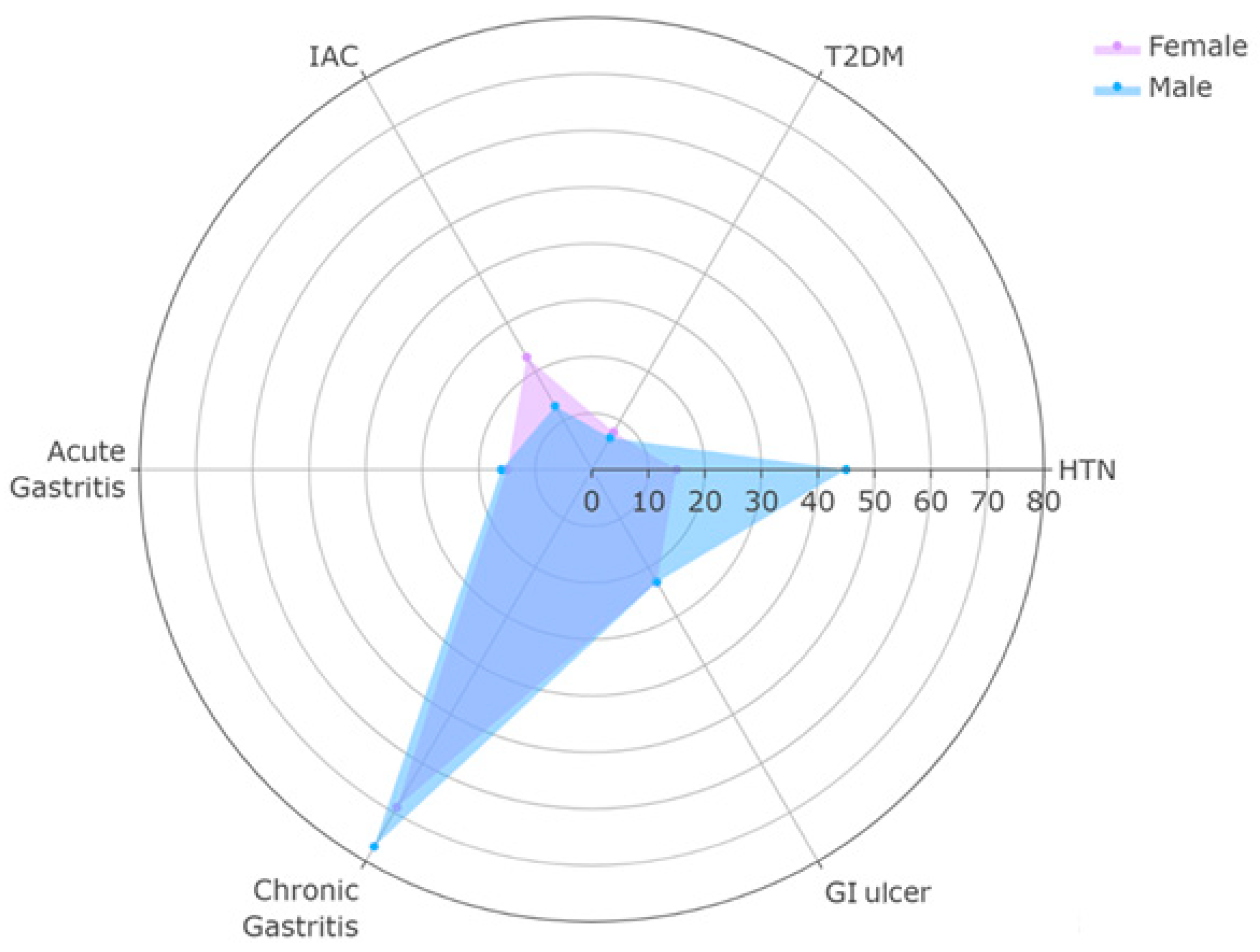
The analysis of comorbidities and pathological findings in patients with upper gastrointestinal bleeding (UGIB) and H. pylori infection, stratified by sex, is presented in Table 3. A significantly higher prevalence of arterial hypertension (HTN) was observed among males (45%) compared with females (15%) (p = 0.04). However, no significant differences were found in the prevalence of type 2 diabetes mellitus (T2DM) between genders (p > 0.92).
Regarding pathological findings, 33 patients (75%) presented with chronic gastritis, of which 18% were classified as follicular type. Acute gastritis was identified in seven patients (16%), and gastroduodenal ulcer (GI ulcer) in ten patients (23%). Intestinal adenocarcinoma (IA) was observed in seven patients (16%). No significant differences were found in the prevalence of IA, acute gastritis, chronic gastritis, follicular gastritis, or GI Ulcer between female and male patients (all p > 0.92) (Figure 2). The most frequent medical complication was pneumonia, observed in five patients (11%), with no significant differences in the occurrence of medical complications between genders (p > 0.92).

3.4. Characteristics According to Admission Diagnosis

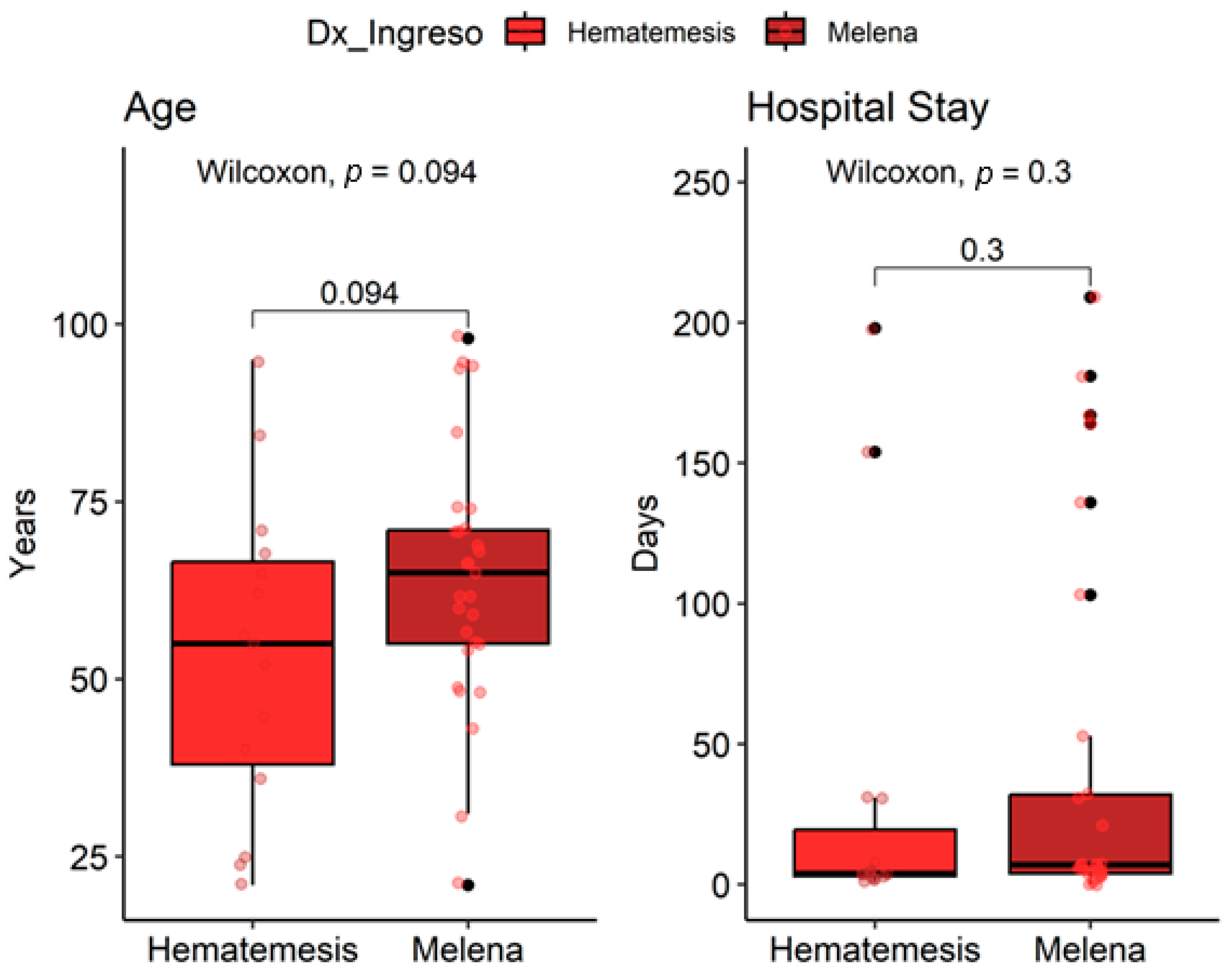
Table 4 compares the clinical characteristics according to the admission diagnosis (hematemesis vs. melena). Patients admitted with hematemesis had a median age of 55 years, whereas those with melena had a median age of 65 years (p = 0.09). A higher prevalence of hematemesis was observed among females compared with males (40% vs. 24%), while melena was more frequent in males (76% vs. 60%); however, these differences were not statistically significant (p = 0.3).
Hospital length of stay was similar between groups, with a median of four days for patients with hematemesis and seven days for those with melena (p = 0.32) (Figure 3). In terms of comorbidities and pathological findings, the prevalence of arterial hypertension (HTN) (45% vs. 20%), intestinal adenocarcinoma (IA) (17% vs. 13%), acute gastritis (17% vs. 13%), chronic gastritis (79% vs. 67%), and gastroduodenal ulcer (24% vs. 20%) was higher among patients presenting with melena; however, these differences were not statistically significant (p = 0.53).

3.5. Forrest Classification

The analysis of the Forrest classification of gastroduodenal ulcers in patients with upper gastrointestinal bleeding (UGIB) and H. pylori infection, stratified by sex, is presented in Table 5. Overall, most gastrointestinal ulcers were classified as IIA (50%), followed by class III (40%) and class IB (10%). No significant differences in the distribution of Forrest stages were observed between females and males (p > 0.92).

3.6. Relationship Between Clinical and Pathological Parameters

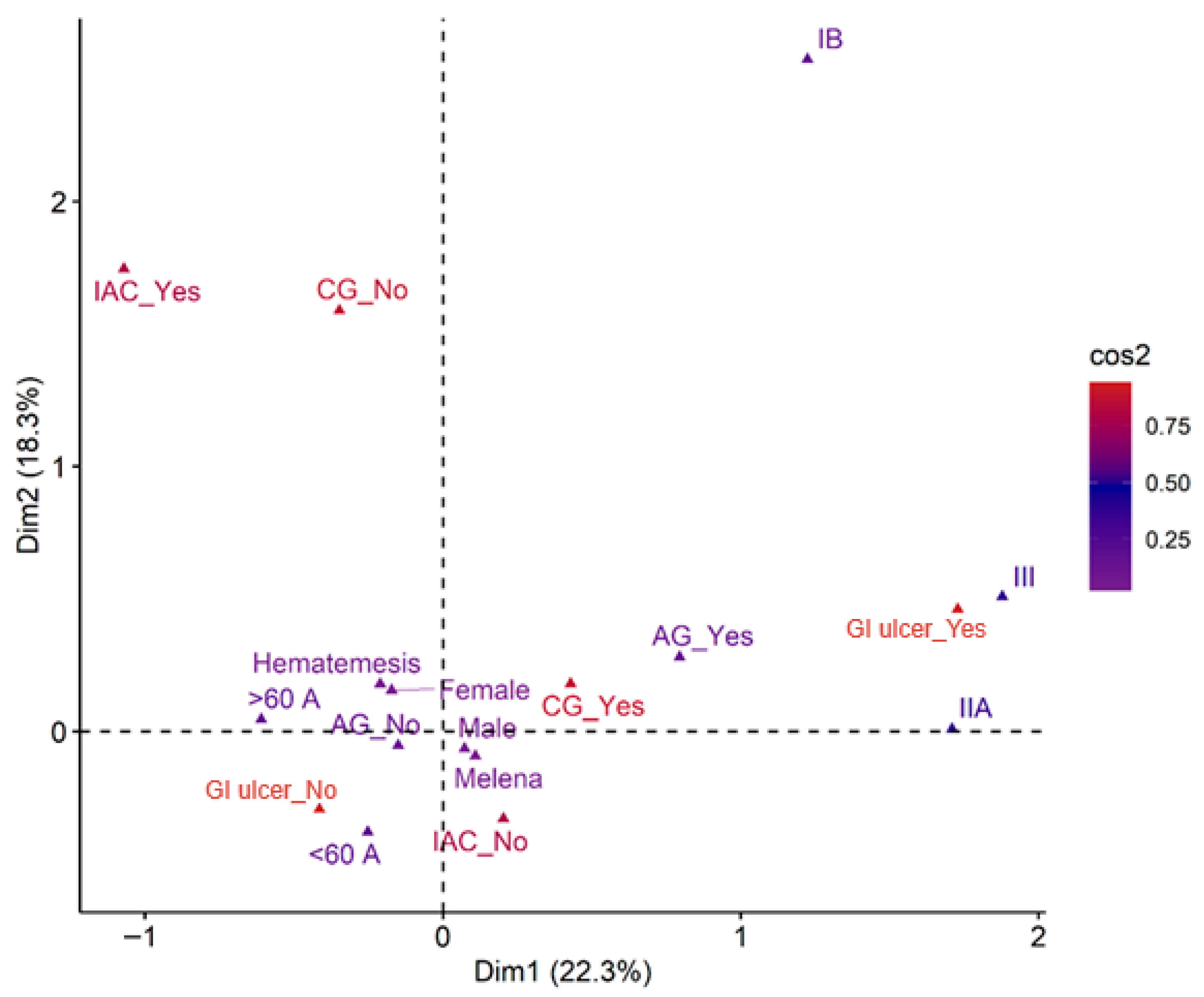
In this study, a multiple correspondence analysis (MCA) was conducted to explore the relationships among demographic, clinical, and pathological variables in patients with upper gastrointestinal bleeding (UGIB) and H. pylori infection. The variables best represented by Cos2 values were gastroduodenal ulcer and chronic gastritis. The analysis revealed that female patients over 60 years of age tended to present with hematemesis, whereas male patients were more likely to present with melena and chronic gastritis (Figure 4).

4. Discussion

This retrospective cohort study provides an integrative overview of the clinical, pathological, and endoscopic features of upper gastrointestinal bleeding (UGIB) associated with Helicobacter pylori infection in a tertiary referral center in the Colombian Caribbean. Despite advances in eradication therapy and endoscopic management, the findings confirm that H. pylori remains a clinically relevant etiological factor for gastroduodenal bleeding in this regional population.
The proportion of H. pylori-positive cases (13%) among patients with UGIB in this study reflects the progressive decline of the infection’s prevalence in Latin America, as previously described by Curado et al. [6], but still underscores its clinical relevance. Epidemiological transitions, improved sanitation, and increased antibiotic exposure have collectively modified the infection landscape, although the bacterium remains an independent predictor of ulcer recurrence and mucosal injury [12]. Mechanistically, H. pylori promotes epithelial damage through chronic inflammation, increased gastric acid secretion, and cytokine-driven mucosal fragility [13].
The relatively low prevalence of Helicobacter pylori infection (13%) in this cohort contrasts with the higher rates reported across Latin America (57–70%) [6,10,14]. This finding may be explained by prior eradication therapy in a growing proportion of patients, reduced diagnostic sensitivity of the rapid urease test or histology under proton pump inhibitor or antibiotic use, and a potential selection bias inherent to a tertiary referral center where non-ulcer etiologies of upper gastrointestinal bleeding (UGIB) are more frequent. These factors reflect a regional epidemiological transition in which H. pylori remains relevant but has a diminished etiological role in acute bleeding scenarios.
Additionally, the clinical context of UGIB involves cardiovascular comorbidities, antiplatelet use, and socioeconomic conditions that influence bleeding risk and may attenuate the direct association with H. pylori. Recent Latin American studies indicate that the infection rate among patients with UGIB is often lower than the general population prevalence [10,15], reinforcing the need to interpret these findings within the specific clinical and endoscopic profile of the cohort.
Demographically, the predominance of older male patients with UGIB parallels global trends reported in large-scale cohorts [16,17]. Such patterns may be influenced by higher consumption of nonsteroidal anti-inflammatory drugs (NSAIDs), alcohol, and tobacco among men, as well as by comorbid cardiovascular conditions, all of which potentiate mucosal vulnerability [18]. In this study, hypertension was the most frequent comorbidity, observed significantly more often in males, consistent with previous reports associating vascular comorbidity with delayed recovery and longer hospitalization times [17].
Beyond demographic and behavioral factors, hypertension—the most frequent comorbidity in this cohort—may exert a direct physiological influence on bleeding outcomes. Chronic elevation of arterial pressure contributes to endothelial dysfunction and microvascular fragility, weakening mucosal integrity and impairing local hemostasis [19,20]. These vascular alterations, when combined with the use of antiplatelet agents or anticoagulants, can increase the likelihood of more severe or recurrent upper gastrointestinal bleeding episodes [21,22,23]. Such interplay underscores the importance of integrating vascular risk assessment into the clinical management of patients with UGIB, particularly in elderly males with cardiometabolic disease [24].
Endoscopic analysis revealed that Forrest class IIA ulcers predominated, followed by class III and IB lesions, indicating that most patients presented with non-active bleeding or stigmata of recent hemorrhage. This distribution aligns with recent data by Yen et al. [7], who found a similar predominance of IIA and III lesions in H. pylori-positive UGIB, suggesting that these stages represent a stabilized yet clinically significant phase of ulcer bleeding. The absence of sex-related differences in Forrest classification or rebleeding rates also supports the notion that ulcer severity is more closely related to physiological response and lesion morphology than to gender.
Histopathological examination demonstrated a predominance of chronic gastritis, a known consequence of long-standing H. pylori colonization, and a smaller proportion of follicular gastritis and intestinal adenocarcinoma. These findings mirror those of Wang et al. [25], who emphasized the transition from chronic gastritis to atrophic and metaplastic changes as precancerous stages. Although the frequency of neoplastic lesions in this cohort was modest (16%), their detection reinforces the need for post-eradication endoscopic surveillance, particularly in older adults with recurrent ulcers or persistent inflammatory changes [13,26].
The overall mortality rate of 2.3% observed in this cohort is notably lower than historical data, suggesting substantial improvements in early diagnosis, hemostatic endoscopy, and supportive care. Recent meta-analyses by Obeidat et al. [27] and Siebenhüner et al. [17] report mortality rates ranging between 2% and 5% for non-variceal UGIB, indicating that the outcomes in this population are consistent with contemporary benchmarks for tertiary-level institutions.
Among the limitations of this study, its retrospective and single-center design may limit the generalizability of findings. Additionally, the diagnostic approach for H. pylori relied on histology and urease testing, which may underestimate prevalence in patients receiving proton pump inhibitors or antibiotics. Finally, residual confounding cannot be excluded despite the analytical adjustments performed.

5. Conclusions

H. pylori remains a clinically significant determinant of upper gastrointestinal bleeding (UGIB) in the Colombian Caribbean, despite its declining prevalence. In this cohort, it was associated with chronic gastritis, gastroduodenal ulceration, and Forrest IIA–III bleeding patterns, particularly in older men with cardiovascular comorbidities. The low mortality rate (2.3%) reflects effective diagnostic and therapeutic management in tertiary care and supports the continued implementation of screening, eradication, and endoscopic surveillance strategies for high-risk populations.

Author Contributions

Conceptualization, L.G.-G. and C.J.-L.; Methodology, A.C.B., H.J.G.-T. and A.D.V.; Software, H.J.G.-T.; Validation, A.C.B. and H.J.G.-T.; Formal Analysis, H.J.G.-T. and A.D.V.; Investigation, L.G.-G. and C.J.-L.; Resources, A.C.B. and H.J.G.-T.; Data Curation, A.C.B. and H.J.G.-T.; Writing—Original Draft Preparation, L.G.-G. and C.J.-L.; Writing—Review and Editing, A.C.B., H.J.G.-T. and A.D.V.; Visualization, H.J.G.-T. and A.D.V.; Supervision, A.C.B. and H.J.G.-T. All authors have read and agreed to the published version of the manuscript.

Funding

This research received no external funding.

Institutional Review Board Statement

The study was conducted in accordance with the Declaration of Helsinki and approved by two independent ethics committees: the Scientific-Board of the Faculty of Health Sciences at Universidad Simón Bolívar (approval date: 12 April 2024) and the Research Ethics Committee of Clínica de la Costa S.A.S. (protocol code 476, approval date: 2 May 2024). Both committees classified the project as minimal risk according to Resolution 8430 of 1993 of the Colombian Ministry of Health. The requirement for individual informed consent was waived due to the retrospective and anonymized nature of the data.

Informed Consent Statement

Patient consent was waived due to the retrospective design of the study and the use of fully anonymized clinical data obtained from institutional medical records. No direct patient contact or intervention was performed, and no identifiable information was collected or reported, in accordance with national ethical regulations (Resolution 8430 of 1993, Ministry of Health, Colombia).

Data Availability Statement

The data supporting the findings of this study are not publicly available due to institutional confidentiality policies but can be made available from the corresponding author upon reasonable request. Access will be granted exclusively for academic or research purposes and in accordance with ethical and legal requirements established by the participating institutions.

Conflicts of Interest

The authors declare no conflicts of interest.

References

  1. Saydam, Ş.S.; Molnar, M.; Vora, P. The Global Epidemiology of Upper and Lower Gastrointestinal Bleeding in General Population: A Systematic Review. World J. Gastrointest. Surg. 2023, 15, 723–739. [Google Scholar] [CrossRef]
  2. Laine, L.; Barkun, A.N.; Saltzman, J.R.; Martel, M.; Leontiadis, G.I. ACG Clinical Guideline: Upper Gastrointestinal and Ulcer Bleeding. Am. J. Gastroenterol. 2021, 116, 899–917. [Google Scholar] [CrossRef]
  3. Oakland, K. Changing Epidemiology and Etiology of Upper and Lower Gastrointestinal Bleeding. Best Pract. Res. Clin. Gastroenterol. 2019, 42–43, 101610. [Google Scholar] [CrossRef] [PubMed]
  4. Weng, C.-Y.; Xu, J.-L.; Sun, S.-P.; Wang, K.-J.; Lv, B. Helicobacter Pylori Eradication: Exploring Its Impacts on the Gastric Mucosa. World J. Gastroenterol. 2021, 27, 5152–5170. [Google Scholar] [CrossRef] [PubMed]
  5. Jiang, F.; Guo, C.-G.; Cheung, K.S.; Leung, W.K. Long-Term Risk of Upper Gastrointestinal Bleeding after Helicobacter Pylori Eradication: A Population-Based Cohort Study. Aliment. Pharmacol. Ther. 2021, 54, 1162–1169. [Google Scholar] [CrossRef] [PubMed]
  6. Curado, M.P.; de Oliveira, M.M.; de Araújo Fagundes, M. Prevalence of Helicobacter Pylori Infection in Latin America and the Caribbean Populations: A Systematic Review and Meta-Analysis. Cancer Epidemiol. 2019, 60, 141–148. [Google Scholar] [CrossRef]
  7. Yen, H.-H.; Wu, P.-Y.; Wu, T.-L.; Huang, S.-P.; Chen, Y.-Y.; Chen, M.-F.; Lin, W.-C.; Tsai, C.-L.; Lin, K.-P. Forrest Classification for Bleeding Peptic Ulcer: A New Look at the Old Endoscopic Classification. Diagnostics 2022, 12, 1066. [Google Scholar] [CrossRef]
  8. Gralnek, I.M.; Stanley, A.J.; Morris, A.J.; Camus, M.; Lau, J.; Lanas, A.; Laursen, S.B.; Radaelli, F.; Papanikolaou, I.S.; Cúrdia Gonçalves, T.; et al. Endoscopic Diagnosis and Management of Nonvariceal Upper Gastrointestinal Hemorrhage (NVUGIH): European Society of Gastrointestinal Endoscopy (ESGE) Guideline—Update 2021. Endoscopy 2021, 53, 300–332. [Google Scholar] [CrossRef]
  9. Salazar Giraldo, B.E.; Gómez Villegas, S.I.; Vélez Gómez, D.E.; Ramírez Lopera, V.; Pérez Cala, T.L.; Martínez, A. Frequency of Helicobacter Pylori Infection in Patients Requiring GI Endoscopy in Seven Units in Three Antioquia Subregions. Rev. Colomb. Gastroenterol. 2023, 38, 290–303. [Google Scholar] [CrossRef]
  10. Porras, C.; Nodora, J.; Sexton, R.; Ferreccio, C.; Jimenez, S.; Dominguez, R.L.; Cook, P.; Anderson, G.; Morgan, D.R.; Baker, L.H.; et al. Epidemiology of Helicobacter Pylori Infection in Six Latin American Countries (SWOG Trial S0701). Cancer Causes Control 2013, 24, 209–215. [Google Scholar] [CrossRef]
  11. International Agency for Research on Cancer Gastric Cancer. Prevention in Latin America and the Caribbean. In Population-Based Helicobacter pylori Screen-and-Treat Strategies for Gastric Cancer Prevention: Guidance on Implementation; Park, J.Y., Ed.; International Agency for Research on Cancer: Lyon, France, 2025. [Google Scholar]
  12. Popa, D.G.; Obleagă, C.V.; Socea, B.; Serban, D.; Ciurea, M.E.; Diaconescu, M.; Vîlcea, I.D.; Meșină, C.; Mirea, C.; Florescu, D.N.; et al. Role of Helicobacter Pylori in the Triggering and Evolution of Hemorrhagic Gastro-Duodenal Lesions. Exp. Ther. Med. 2021, 22, 1147. [Google Scholar] [CrossRef]
  13. Torres Jiménez, F.; Torres Bayona, C. Molecular Pathophysiology in Infection by Helicobacter Pylori. Salud Uninorte 2021, 32, 500–512. [Google Scholar] [CrossRef]
  14. Sepulveda Copete, M.; Maldonado Gutiérrez, C.; Bravo Ocaña, J.C.; Satizabal, N.; Gempeler Rojas, A.; Castro Llanos, A.M.; Escobar Stein, J.; Herrera Mayor, J.; Rosso Suárez, F.; Rojas Rojas, N.E.; et al. Prevalencia de Helicobacter Pylori En Pacientes Llevados a Endoscopia de Vías Digestivas Altas En Un Hospital de Referencia En Cali, Colombia, En 2020. Rev. Colomb. Gastroenterol. 2022, 37, 355–361. [Google Scholar] [CrossRef]
  15. Tsang, S.H.; Avilés-Santa, M.L.; Abnet, C.C.; Brito, M.O.; Daviglus, M.L.; Wassertheil-Smoller, S.; Castañeda, S.F.; Minnerath, S.; Talavera, G.A.; Graubard, B.I.; et al. Seroprevalence and Determinants of Helicobacter Pylori Infection in the Hispanic Community Health Study/Study of Latinos. Clin. Gastroenterol. Hepatol. 2022, 20, e438–e451. [Google Scholar] [CrossRef] [PubMed]
  16. Strate, L.L.; Singh, P.; Boylan, M.R.; Piawah, S.; Cao, Y.; Chan, A.T. A Prospective Study of Alcohol Consumption and Smoking and the Risk of Major Gastrointestinal Bleeding in Men. PLoS ONE 2016, 11, e0165278. [Google Scholar] [CrossRef]
  17. Siebenhüner, K.; Blaser, J.; Nowak, A.; Cheetham, M.; Mueller, B.U.; Battegay, E.; Beeler, P.E. Comorbidities Associated with Worse Outcomes Among Inpatients Admitted for Acute Gastrointestinal Bleeding. Dig. Dis. Sci. 2022, 67, 3938–3947. [Google Scholar] [CrossRef]
  18. Zuluaga Arbelaez, N.; Sierra-Vargas, E.C.; Guevara-Casallas, L.G.; Pérez-Viana, S. Estrategias Terapéuticas Para Helicobacter Pylori En Colombia. CES Med. 2021, 35, 244–256. [Google Scholar] [CrossRef]
  19. Virdis, A.; Dell’Agnello, U.; Taddei, S. Impact of Inflammation on Vascular Disease in Hypertension. Maturitas 2014, 78, 179–183. [Google Scholar] [CrossRef] [PubMed]
  20. Félétou, M.; Vanhoutte, P.M. Endothelial Dysfunction: A Multifaceted Disorder (The Wiggers Award Lecture). Am. J. Physiol. Circ. Physiol. 2006, 291, H985–H1002. [Google Scholar] [CrossRef] [PubMed]
  21. Lanas, Á.; Carrera-Lasfuentes, P.; Arguedas, Y.; García, S.; Bujanda, L.; Calvet, X.; Ponce, J.; Perez-Aísa, Á.; Castro, M.; Muñoz, M.; et al. Risk of Upper and Lower Gastrointestinal Bleeding in Patients Taking Nonsteroidal Anti-Inflammatory Drugs, Antiplatelet Agents, or Anticoagulants. Clin. Gastroenterol. Hepatol. 2015, 13, 906–912.e2. [Google Scholar] [CrossRef]
  22. Hao, W.; Liu, A.; Zhu, H.; Yu, X.; Chen, G.; Xu, J. Risk Factors and Management of Gastrointestinal Bleeding in Patients with or without Antiplatelet and Anticoagulation Therapy: A Multicenter Real-World Prospective Study. BMC Gastroenterol. 2024, 24, 155. [Google Scholar] [CrossRef]
  23. García Rodríguez, L.A.; Lin, K.J.; Hernández-Díaz, S.; Johansson, S. Risk of Upper Gastrointestinal Bleeding with Low-Dose Acetylsalicylic Acid Alone and in Combination with Clopidogrel and Other Medications. Circulation 2011, 123, 1108–1115. [Google Scholar] [CrossRef]
  24. Suissa, S.; Bourgault, C.; Barkun, A.; Sheehy, O.; Ernst, P. Antihypertensive Drugs and the Risk of Gastrointestinal Bleeding. Am. J. Med. 1998, 105, 230–235. [Google Scholar] [CrossRef]
  25. Wang, Y.-K.; Li, C.; Zhou, Y.-M.; Zeng, L.; Li, Y.-Y.; Huang, S.-L.; Zhu, C.-Y.; Wang, Y.; Wang, S.-N.; Chen, X.-D. Histopathological Features of Helicobacter Pylori Infection in Gastric Mucosa. J. Inflamm. Res. 2022, 15, 6231–6243. [Google Scholar] [CrossRef] [PubMed]
  26. Corral, J.E.; Mera, R.; Dye, C.W.; Morgan, D.R. Helicobacter Pylori Recurrence after Eradication in Latin America: Implications for Gastric Cancer Prevention. World J. Gastrointest. Oncol. 2017, 9, 184–193. [Google Scholar] [CrossRef] [PubMed]
  27. Obeidat, M.; Teutsch, B.; Rancz, A.; Tari, E.; Márta, K.; Veres, D.S.; Hosszúfalusi, N.; Mihály, E.; Hegyi, P.; Erőss, B. One in Four Patients with Gastrointestinal Bleeding Develops Shock or Hemodynamic Instability: A Systematic Review and Meta-Analysis. World J. Gastroenterol. 2023, 29, 4466–4480. [Google Scholar] [CrossRef] [PubMed]
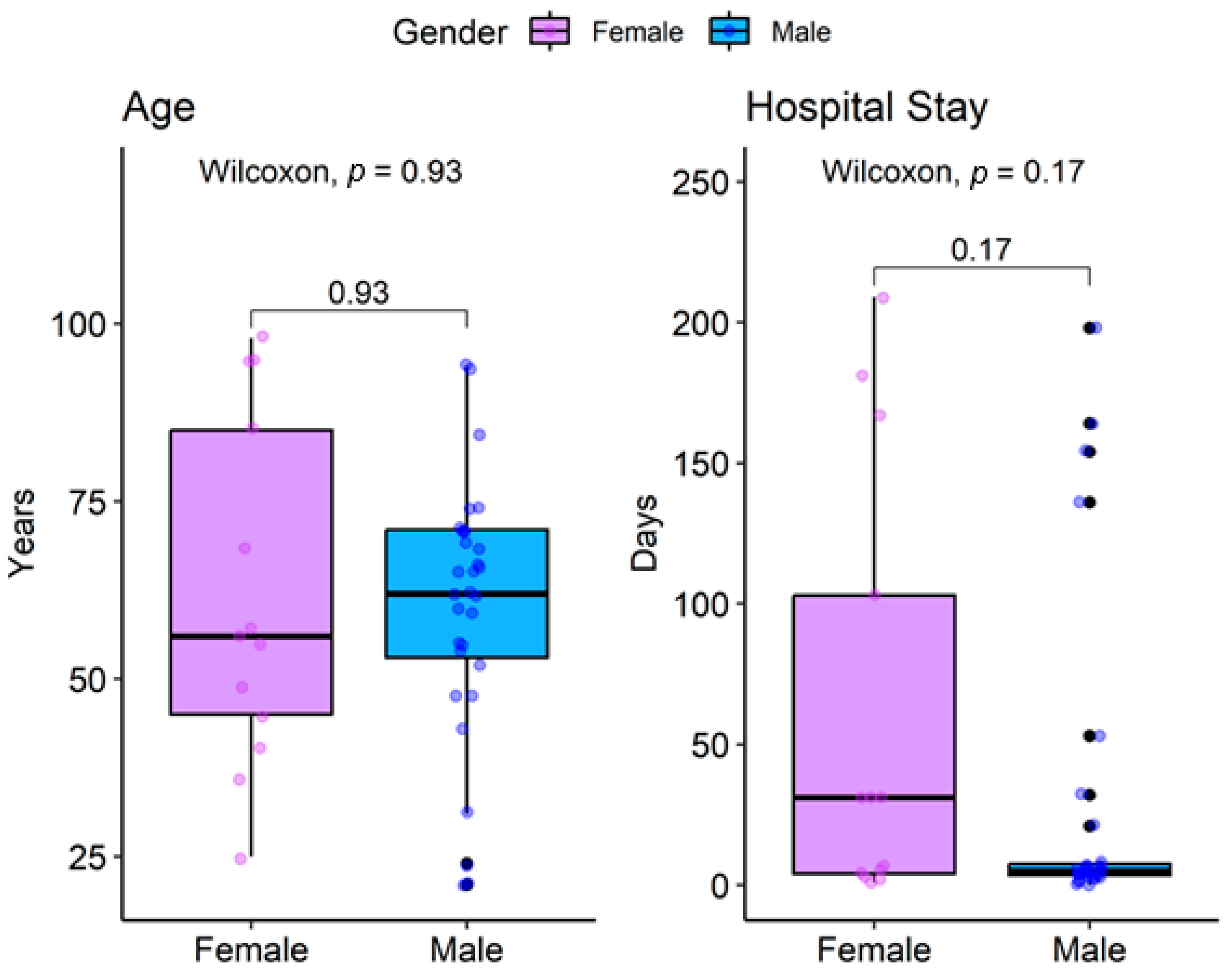
Figure 1. Age and hospital length of stay in patients with upper gastrointestinal bleeding (UGIB) and H. pylori infection, stratified by sex. Abbreviations: UGIB = upper gastrointestinal bleeding.
Gastroent 16 00048 g001
Figure 2. Comorbidities, pathological findings, and complications in patients with upper gastrointestinal bleeding (UGIB) and H. pylori infection, stratified by sex. Abbreviations: HTN: hypertension; T2DM: type 2 diabetes mellitus; GI ulcer: gastroduodenal ulcer; AKI: acute kidney injury.
Gastroent 16 00048 g002
Figure 3. Age and hospital length of stay according to admission diagnosis (hematemesis vs. melena) in patients with upper gastrointestinal bleeding and H. pylori infection. Abbreviations: UGIB = upper gastrointestinal bleeding.
Gastroent 16 00048 g003
Figure 4. Multiple correspondence analysis showing relationships among demographic, clinical, and pathological parameters in patients with upper gastrointestinal bleeding and H. pylori infection. Abbreviations: AG: acute gastritis; CG: chronic gastritis; IA: intestinal adenocarcinoma; GI ulcer: gastroduodenal ulcer.
Gastroent 16 00048 g004
Table 1. Baseline characteristics of patients with upper gastrointestinal bleeding (UGIB).
Parametern = 3291
Age60 (18, 98)
Sex
    Female143 (43%)
    Male186 (57%)
Hospital Service
    Outpatient12 (3.6%)
    Hospitalization288 (88%)
    UCI8 (2.4%)
    Emergency21 (6.4%)
Admission Diagnosis
    Melena157 (48%)
    Hematemesis148 (45%)
    GIB (unspecified)24 (7.3%)
Length of Stay (Days)6 (0, 280)
H. pylori Positive44 (13%)
UGIB: Upper gastrointestinal bleeding; GIB: Gastrointestinal bleeding; n (%).
Table 2. Clinical Characteristics of Patients with Upper Gastrointestinal Bleeding by Sex.
ParameterOverall
n= 441 1
Female
n = 131 1
Male
n = 311 1
p-Value
Age62 (49, 71)56 (45, 85)62 (53, 71)>0.9 2
Admission Diagnosis0.3 3
    Hematemesis15 (34%)6 (46%)9 (29%)
    Melena29 (66%)7 (54%)22 (71%)
Length of Stay (days)6 (4, 31)31 (4, 103)5 (4, 8)0.2 2
Outcome>0.9 3
    Deceased1 (2.3%)0 (0%)1 (3.2%)
    Survived43 (98%)13 (100%)30 (97%)
1 n (%); 2 Wilcoxon rank-sum test; 3 Fisher’s exact test.
Table 3. Comorbidities, Pathology, and Complications findings in patients with upper gastrointestinal bleeding (UGIB) and H. pylori infection according to sex.
CharacteristicsOverall
n = 44 1
Female
n = 13 1
Male
n = 31 1
p-Value
Comorbidities
    HTN16 (36%)2 (15%)14 (45%)0.04 2
    DM3 (6.8%)1 (7.7%)2 (6.5%)>0.9 2
Pathological Findings
    Intestinal Adenocarcinoma (ACI)7 (16%)3 (23%)4 (13%)0.4 2
    Acute Gastritis7 (16%)2 (15%)5 (16%)>0.9 2
    Congestive Gastritis5 (11%)1 (7.7%)4 (13%)>0.9 2
    Chronic Gastritis33 (75%)9 (69%)24 (77%)0.7 2
    Follicular Gastritis8 (18%)3 (23%)5 (16%)0.7 2
    Gastroduodenal Ulcer10 (23%)3 (23%)7 (23%)>0.9 2
Complications
    Pneumonia5 (11%)2 (15%)3 (9.7%)0.6 2
    AKI2 (4.5%)0 (0%)2 (6.5%)>0.9 2
UGIB: Upper gastrointestinal bleeding; HTN: Hypertension; AKI: Acute Kidney Injury. 1 n (%); 2 Fisher’s exact test.
Table 4. Clinical characteristics of patients with upper gastrointestinal bleeding (UGIB) and H. pylori infection according to admission diagnosis.
CharacteristicsHematemesis
n = 15 1
Melena
n = 29 1
p-Value
Age55 (38, 67)65 (55, 71)0.094 2
    Sex0.3 3
    Female6 (40%)7 (24%)
Male9 (60%)22 (76%)
    Length of stay (days)4 (3, 20)7 (4, 32)0.3 2
    Service0.8 3
    Emergency1 (6.7%)2 (6.9%)
    Hospitalization14 (93%)25 (86%)
    ICU0 (0%)2 (6.9%)
    Hypertension (HTA)3 (20%)13 (45%)0.10 4
Intestinal Adenocarcinoma (ACI)2 (13%)5 (17%)>0.9 3
    Acute gastritis2 (13%)5 (17%)>0.9 3
    Chronic gastritis10 (67%)23 (79%)0.5 3
    Gastroduodenal ulcer3 (20%)7 (24%)
UGIB: Upper gastrointestinal bleeding; 1 n (%); 2 Wilcoxon rank sum test; 3 Fisher’s exact test; 4 Pearson’s Chi-squared test.
Table 5. Forrest classification of gastroduodenal ulcers in patients with upper gastrointestinal bleeding (UGIB) and H. pylori infection according to sex.
ForrestOverall
n = 441
Female
n = 131
Male
n = 311
p-Value
IB1 (10%)0 (0%)1 (14%)>0.92
IIA5 (50%)2 (67%)3 (43%)
III4 (40%)1 (33%)3 (43%)
Disclaimer/Publisher’s Note: The statements, opinions and data contained in all publications are solely those of the individual author(s) and contributor(s) and not of MDPI and/or the editor(s). MDPI and/or the editor(s) disclaim responsibility for any injury to people or property resulting from any ideas, methods, instructions or products referred to in the content.