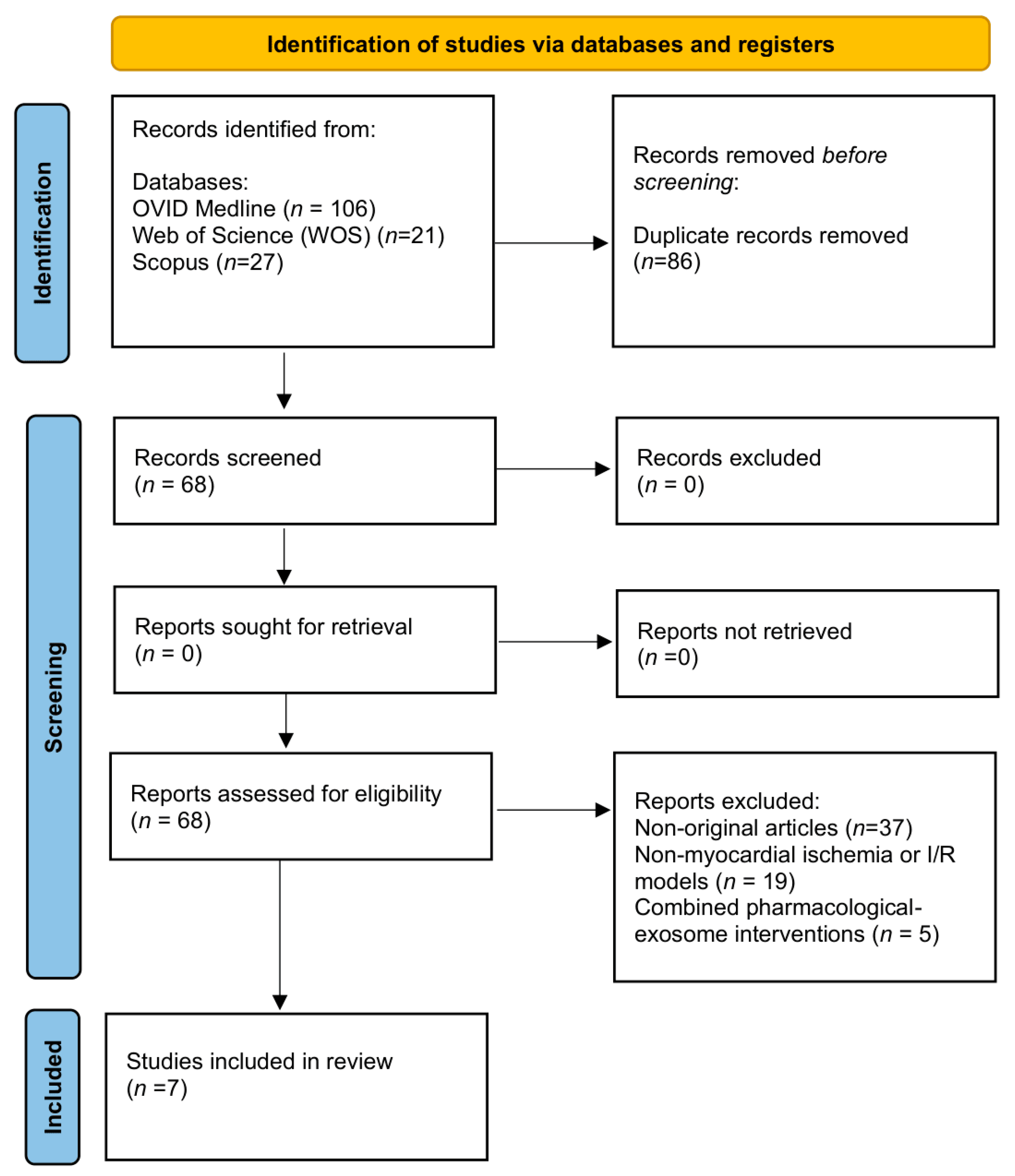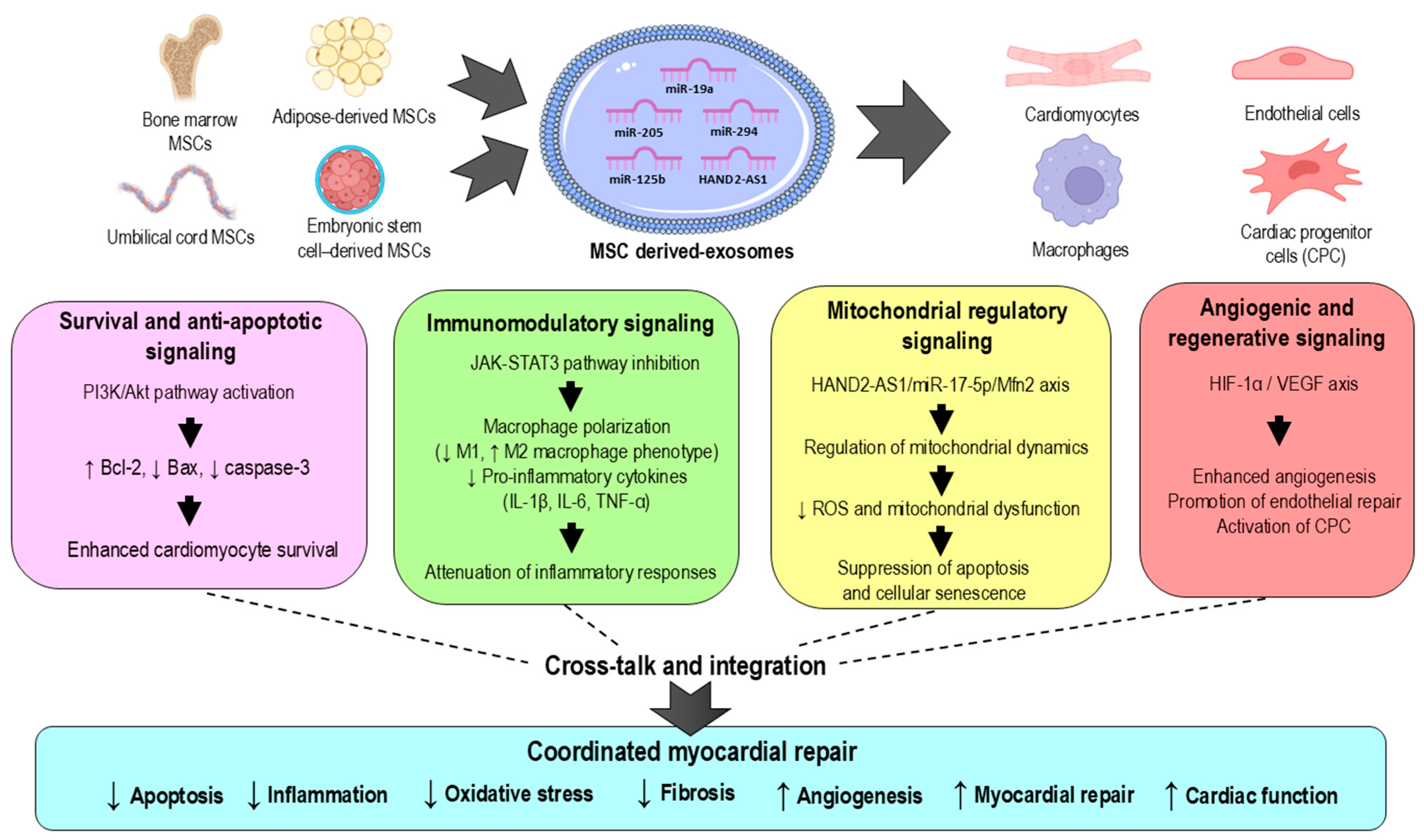


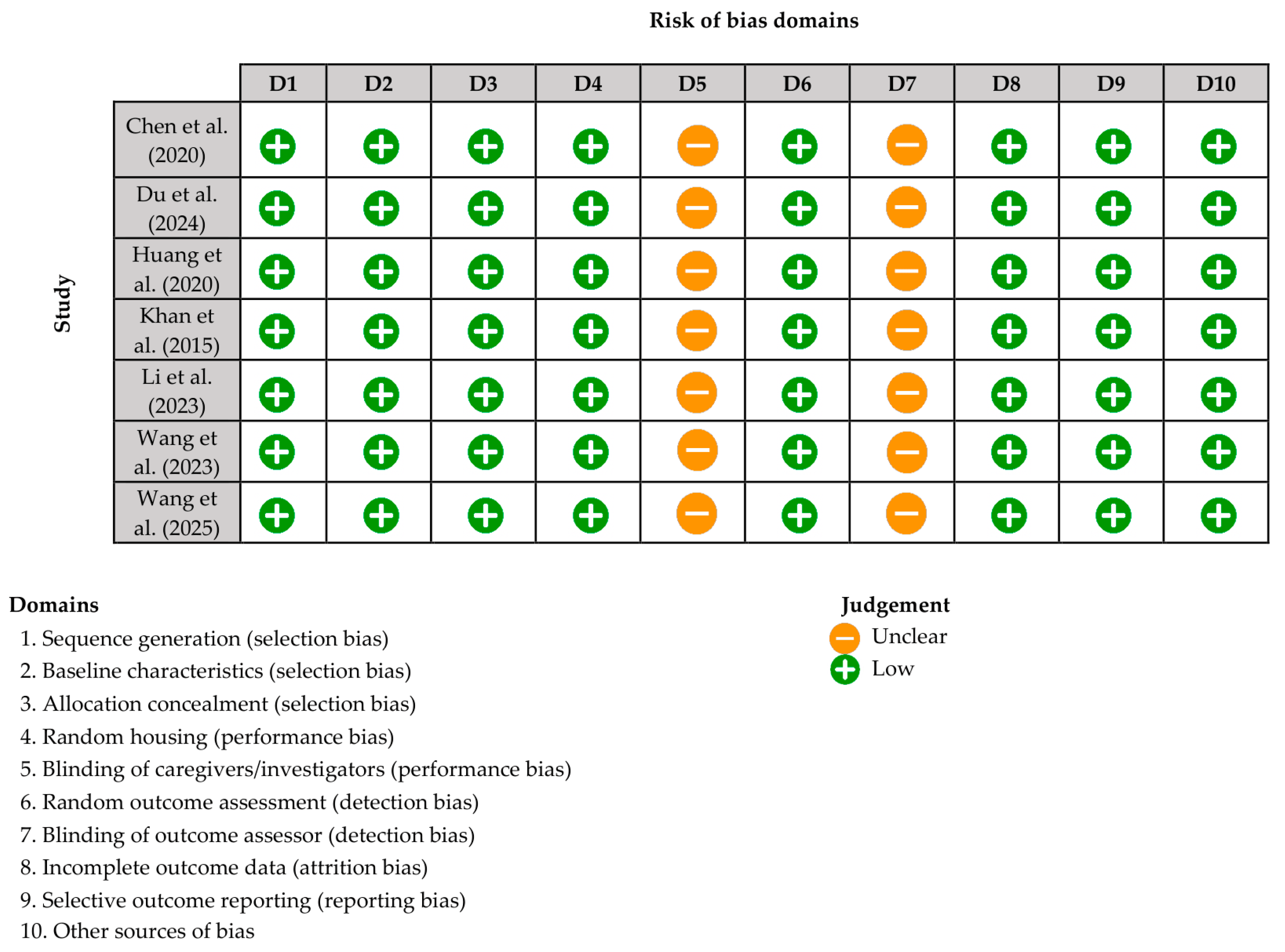
Mechanistic Insights into the Cardioprotective Effects of Mesenchymal Stem Cell-Derived Exosomes in Myocardial Ischemic Injury: A Systematic Review

 , , , ,
Abstract
1. Introduction
2. Methods
2.1. Search Strategy
2.2. Inclusion and Exclusion Criteria
2.3. Study Selection
2.4. Data Extraction
2.5. Risk of Bias Assessment
3. Results
3.1. Study Selected
3.2. Risk of Bias
3.3. Study Characteristics
3.4. Effects of MSC-Derived Exosomes on Myocardial Ischemic Injury
3.5. Anti-Apoptotic Mechanisms of MSC-Derived Exosomes
3.6. Anti-Inflammatory Mechanisms of MSC-Derived Exosomes
3.7. Antioxidant and Mitochondrial-Protective Mechanisms of MSC-Derived Exosomes
3.8. Angiogenesis and Myocardial Repair Mechanisms of MSC-Derived Exosomes
4. Discussion
5. Limitations and Future Directions
6. Conclusions
Supplementary Materials
Author Contributions
Funding
Institutional Review Board Statement
Informed Consent Statement
Data Availability Statement
Conflicts of Interest
Abbreviations
| ADSC | Adipose-derived mesenchymal stem cell |
| Akt | Protein kinase B |
| AMI | Acute myocardial infarction |
| Arg-1 | Arginase-1 |
| Bax | Bcl-2-associated X protein |
| Bcl-2 | B-cell lymphoma-2 |
| BMSC | Bone marrow mesenchymal stem cell |
| BMSC-Exo | BMSC-derived exosomes |
| BrdU | Bromodeoxyuridine |
| CD31 | Platelet endothelial cell adhesion molecule-1 |
| CD163 | Cluster of differentiation 163 |
| c-kit | Tyrosine-protein kinase Kit (CD117) |
| CK | Creatine kinase |
| CK-MB | Creatine kinase-MB |
| CPC | Cardiac progenitor cell |
| cTnT | Cardiac troponin T |
| dp/dtmax (+/−) | Maximum rate of left ventricular pressure rise/fall |
| Exo | Exosome(s) |
| FasL | Fas ligand |
| GFP | Green fluorescent protein |
| GJA1 | Gap junction alpha-1 (connexin-43) |
| H2O2 | Hydrogen peroxide |
| HAND2-AS1 | Heart- and neural crest derivatives expressed 2 antisense RNA 1 |
| hESC | Human embryonic stem cell |
| HIF-1α | Hypoxia-inducible factor-1 alpha |
| HMEC-1 | Human microvascular endothelial cell line-1 |
| HMGB1 | High-mobility group box-1 |
| H/R | Hypoxia/reoxygenation |
| hucMSC | Human umbilical cord mesenchymal stem cells |
| HUVEC | Human umbilical vein endothelial cells |
| I/R | Ischemia/reperfusion |
| IL-1β | Interleukin-1 beta |
| IL-6 | Interleukin-6 |
| IL-10 | Interleukin-10 |
| IMTP | Ischemic myocardial targeting peptide |
| iNOS | Inducible nitric oxide synthase |
| JAK2 | Janus kinase-2 |
| JNK3 | c-Jun N-terminal kinase-3 |
| LAD | Left anterior descending coronary artery |
| LDH | Lactate dehydrogenase |
| lncRNA | Long non-coding RNA |
| LVEDD | Left ventricular end-diastolic diameter |
| LVEDP | Left ventricular end-diastolic pressure |
| LVEF | Left ventricular ejection fraction |
| LVESD | Left ventricular end-systolic diameter |
| LVFS | Left ventricular fractional shortening |
| LVSP | Left ventricular systolic pressure |
| LVWM | Left ventricular wall motion |
| MCP-1 | Monocyte chemoattractant protein-1 |
| MDA | Malondialdehyde |
| Mfn2 | Mitofusin-2 |
| miR | MicroRNA |
| NRCM | Neonatal rat cardiomyocyte |
| PI3K | Phosphoinositide 3-kinase |
| PTEN | Phosphatase and tensin homolog |
| RAW 264.7 | Mouse macrophage cell line RAW 264.7 |
| ROS | Reactive oxygen species |
| SD | Sprague–Dawley |
| SIRT7 | Sirtuin-7 |
| SOD | Superoxide dismutase |
| SOX6 | SRY-box transcription factor-6 |
| STAT3 | Signal transducer and activator of transcription-3 |
| TNF-α | Tumor necrosis factor-alpha |
| VEGF | Vascular endothelial growth factor |
References
- Algoet, M.; Janssens, S.; Himmelreich, U.; Gsell, W.; Pusovnik, M.; Van den Eynde, J.; Oosterlinck, W. Myocardial Ischemia-Reperfusion Injury and the Influence of Inflammation. Trends Cardiovasc. Med. 2023, 33, 357–366. [Google Scholar] [CrossRef]
- Hausenloy, D.J.; Yellon, D.M. Myocardial Ischemia-Reperfusion Injury: A Neglected Therapeutic Target. J. Clin. Investig. 2013, 123, 92–100. [Google Scholar] [CrossRef] [PubMed]
- Li, Q.; Bu, Y.; Shao, H.; Li, W.; Zhao, D.; Wang, J. Protective Effect of Bone Marrow Mesenchymal Stem Cell-Derived Exosomes on Cardiomyoblast Hypoxia-Reperfusion Injury through the HAND2-AS1/MiR-17-5p/Mfn2 Axis. BMC Cardiovasc. Disord. 2023, 23, 114. [Google Scholar] [CrossRef] [PubMed]
- Du, J.; Dong, Y.; Song, J.; Shui, H.; Xiao, C.; Hu, Y.; Zhou, S.; Wang, S. BMSC-derived Exosome-mediated MiR-25-3p Delivery Protects against Myocardial Ischemia/Reperfusion Injury by Constraining M1-like Macrophage Polarization. Mol. Med. Rep. 2024, 30, 142. [Google Scholar] [CrossRef] [PubMed]
- Venditti, P.; Di Meo, S. The Role of Reactive Oxygen Species in the Life Cycle of the Mitochondrion. Int. J. Mol. Sci. 2020, 21, 2173. [Google Scholar] [CrossRef] [PubMed]
- Francisco, J.; Del Re, D. Inflammation in Myocardial Ischemia/Reperfusion Injury: Underlying Mechanisms and Therapeutic Potential. Antioxidants 2023, 12, 1944. [Google Scholar] [CrossRef]
- Daiber, A.; Chłopicki, S. Revisiting Pharmacology of Oxidative Stress and Endothelial Dysfunction in Cardiovascular Disease: Evidence for Redox-Based Therapies. Free Radic. Biol. Med. 2020, 157, 15–37. [Google Scholar] [CrossRef]
- Chang, W.; Li, P. Bone Marrow Mesenchymal Stromal Cell-Derived Small Extracellular Vesicles: A Novel Therapeutic Agent in Ischemic Heart Diseases. Front. Pharmacol. 2023, 13, 1098634. [Google Scholar] [CrossRef] [PubMed]
- Zhang, L.; Wei, Q.; Liu, X.; Zhang, T.; Wang, S.; Zhou, L.; Zou, L.; Fan, F.; Chi, H.; Sun, J.; et al. Exosomal MicroRNA-98-5p from Hypoxic Bone Marrow Mesenchymal Stem Cells Inhibits Myocardial Ischemia–Reperfusion Injury by Reducing TLR4 and Activating the PI3K/Akt Signaling Pathway. Int. Immunopharmacol. 2021, 101, 107592. [Google Scholar] [CrossRef]
- Barrère-lemaire, S.; Vincent, A.; Jorgensen, C.; Piot, C.; Nargeot, J.; Djouad, F. Mesenchymal Stromal Cells for Improvement of Cardiac Function Following Acute Myocardial Infarction: A Matter of Timing. Physiol. Rev. 2023, 104, 659–725. [Google Scholar] [CrossRef]
- Mabotuwana, N.; Rech, L.; Lim, J.; Hardy, S.; Murtha, L.; Rainer, P.; Boyle, A. Paracrine Factors Released by Stem Cells of Mesenchymal Origin and Their Effects in Cardiovascular Disease: A Systematic Review of Pre-Clinical Studies. Stem Cell Rev. Rep. 2022, 18, 2606–2628. [Google Scholar] [CrossRef] [PubMed]
- Chen, Q.; Liu, Y.; Ding, X.; Li, Q.; Qiu, F.; Wang, M.; Shen, Z.; Zheng, H.; Fu, G. Bone Marrow Mesenchymal Stem Cell-Secreted Exosomes Carrying MicroRNA-125b Protect against Myocardial Ischemia Reperfusion Injury via Targeting SIRT7. Mol. Cell. Biochem. 2020, 465, 103–114. [Google Scholar] [CrossRef] [PubMed]
- Chen, L.; Wang, L.; Zhu, L.; Xu, Z.; Liu, Y.; Li, Z.; Zhou, J.; Luo, F. Exosomes as Drug Carriers in Anti-Cancer Therapy. Front. Cell Dev. Biol. 2022, 10, 728616. [Google Scholar] [CrossRef] [PubMed]
- Roszkowski, S. Therapeutic Potential of Mesenchymal Stem Cell-Derived Exosomes for Regenerative Medicine Applications. Clin. Exp. Med. 2024, 24, 46. [Google Scholar] [CrossRef] [PubMed]
- Wu, H.; Hui, Y.-P.; Qian, X.; Wang, X.; Xu, J.; Wang, F.; Pan, S.; Chen, K.; Liu, Z.; Gao, W.; et al. Exosomes Derived from Mesenchymal Stem Cells Ameliorate Impaired Glucose Metabolism in Myocardial Ischemia/Reperfusion Injury through MiR-132-3p/PTEN/AKT Pathway. Cell Cycle 2025, 23, 893–912. [Google Scholar] [CrossRef] [PubMed]
- Zhao, J.; Li, X.; Hu, J.; Chen, F.; Qiao, S.; Sun, X.; Gao, L.; Xie, J.; Xu, B. Mesenchymal Stromal Cell-Derived Exosomes Attenuate Myocardial Ischaemia-Reperfusion Injury through MiR-182-Regulated Macrophage Polarization. Cardiovasc. Res. 2019, 115, 1205–1216. [Google Scholar] [CrossRef] [PubMed]
- Yue, H.; Zhang, Q.; Chang, S.; Zhao, X.; Wang, M.; Li, W. Adiponectin Protects against Myocardial Ischemia–Reperfusion Injury: A Systematic Review and Meta-Analysis of Preclinical Animal Studies. Lipids Health Dis. 2024, 23, 51. [Google Scholar] [CrossRef] [PubMed]
- Wei, Z.; Qiao, S.; Zhao, J.; Liu, Y.; Li, Q.; Wei, Z.; Dai, Q.; Kang, L.; Xu, B. MiRNA-181a over-Expression in Mesenchymal Stem Cell-Derived Exosomes Influenced Inflammatory Response after Myocardial Ischemia-Reperfusion Injury. Life Sci. 2019, 232, 116632. [Google Scholar] [CrossRef] [PubMed]
- Gao, L.; Qiu, F.; Cao, H.; Li, H.; Dai, G.; Ma, T.; Gong, Y.; Luo, W.; Zhu, D.; Qiu, Z.; et al. Therapeutic Delivery of MicroRNA-125a-5p Oligonucleotides Improves Recovery from Myocardial Ischemia/Reperfusion Injury in Mice and Swine. Theranostics 2023, 13, 685–703. [Google Scholar] [CrossRef] [PubMed]
- Li, J.; Salvador, A.; Li, G.; Valkov, N.; Ziegler, O.; Yeri, A.; Xiao, C.Y.; Meechoovet, B.; Alsop, E.; Rodosthenous, R.; et al. Mir-30d Regulates Cardiac Remodeling by Intracellular And Paracrine Signaling. Circ. Res. 2020, 128, E1–E23. [Google Scholar] [CrossRef] [PubMed]
- Deng, R.; Zhou, J. The Role of PI3K/AKT Signaling Pathway in Myocardial Ischemia-Reperfusion Injury. Int. Immunopharmacol. 2023, 123, 110714. [Google Scholar] [CrossRef] [PubMed]
- Liu, W.; Feng, Y.; Wang, X.; Ding, J.; Li, H.; Guan, H.; Chen, Z. Human Umbilical Vein Endothelial Cells-Derived Exosomes Enhance Cardiac Function after Acute Myocardial Infarction by Activating the PI3K/AKT Signaling Pathway. Bioengineered 2022, 13, 8850–8865. [Google Scholar] [CrossRef] [PubMed]
- Zheng, D.; Huo, M.; Li, B.; Wang, W.; Piao, H.; Wang, Y.; Zhu, Z.; Li, D.; Wang, T.; Liu, K. The Role of Exosomes and Exosomal MicroRNA in Cardiovascular Disease. Front. Cell Dev. Biol. 2021, 8, 616161. [Google Scholar] [CrossRef] [PubMed]
- Wu, J.; Luo, J.; Cai, H.; Li, C.; Lei, Z.; Lu, Y.; Ni, L.; Cao, J.; Cheng, B.; Hu, X. Expression Pattern and Molecular Mechanism of Oxidative Stress-Related Genes in Myocardial Ischemia–Reperfusion Injury. J. Cardiovasc. Dev. Dis. 2023, 10, 79. [Google Scholar] [CrossRef] [PubMed]
- Arabpour, M.; Saghazadeh, A.; Rezaei, N. Anti-Inflammatory and M2 Macrophage Polarization-Promoting Effect of Mesenchymal Stem Cell-Derived Exosomes. Int. Immunopharmacol. 2021, 97, 107823. [Google Scholar] [CrossRef]
- Dilsiz, N. A Comprehensive Review on Recent Advances in Exosome Isolation and Characterization: Toward Clinical Applications. Transl. Oncol. 2024, 50, 102121. [Google Scholar] [CrossRef] [PubMed]
- Chen, J.; Li, P.; Zhang, T.; Xu, Z.-L.; Huang, X.; Wang, R.; Du, L. Review on Strategies and Technologies for Exosome Isolation and Purification. Front. Bioeng. Biotechnol. 2022, 9, 811971. [Google Scholar] [CrossRef] [PubMed]
- He, J.; Liu, D.; Zhao, L.; Zhou, D.; Rong, J.; Zhang, L.; Xia, Z. Myocardial Ischemia/Reperfusion Injury: Mechanisms of Injury and Implications for Management (Review). Exp. Ther. Med. 2022, 23, 430. [Google Scholar] [CrossRef]
- Gao, Y.; Song, L.; Xu, J.; Li, H. The Role of Exosomes in Myocardial Ischemia-Reperfusion Injury. Cardiology 2025, 150, 489–499. [Google Scholar] [CrossRef]
- Xiang, M.; Lu, Y.; Xin, L.; Gao, J.; Shang, C.; Jiang, Z.; Lin, H.; Fang, X.; Qu, Y.; Wang, Y.; et al. Role of Oxidative Stress in Reperfusion Following Myocardial Ischemia and Its Treatments. Oxid. Med. Cell. Longev. 2021, 2021, 6614009. [Google Scholar] [CrossRef] [PubMed]
- Moher, D.; Shamseer, L.; Clarke, M.; Ghersi, D.; Liberati, A.; Petticrew, M.; Shekelle, P.; Stewart, L.A. Preferred Reporting Items for Systematic Review and Meta-Analysis Protocols (PRISMA-P) 2015 Statement. Syst. Rev. 2015, 4, 1. [Google Scholar] [CrossRef] [PubMed]
- Othman Basri, N.A.; Ugusman, A.; Aminuddin, A.; Hamid, A.A.; Hui, C.K.; Che Roos, N.A.; Mahadi, M.K. The Role of Mesenchymal Stem Cell-Derived Exosomes in Treating Myocardial Ischemia/Reperfusion Injury: A Systematic Review Protocol. Adv. Hum. Biol. 2024, 15, 323–327. [Google Scholar] [CrossRef]
- Hooijmans, C.R.; Rovers, M.M.; de Vries, R.B.; Leenaars, M.; Ritskes-Hoitinga, M.; Langendam, M.W. SYRCLE’s Risk of Bias Tool for Animal Studies. BMC Med. Res. Methodol. 2014, 14, 43. [Google Scholar] [CrossRef] [PubMed]
- Huang, L.; Yang, L.; Ding, Y.; Jiang, X.; Xia, Z.; You, Z. Human Umbilical Cord Mesenchymal Stem Cells-Derived Exosomes Transfers MicroRNA-19a to Protect Cardiomyocytes from Acute Myocardial Infarction by Targeting SOX6. Cell Cycle 2020, 19, 339–353. [Google Scholar] [CrossRef] [PubMed]
- Wang, R.; Liu, L.; Han, F.; Ma, Q.; He, H. Exosomes Derived from Human Umbilical Cord Mesenchymal Stem Cells Can Reverse Ventricular Remodeling and Improve Long-Term Cardiac Function after Acute Myocardial Infarction. Biochem. Biophys. Res. Commun. 2025, 768, 151920. [Google Scholar] [CrossRef] [PubMed]
- Khan, M.; Nickoloff, E.; Abramova, T.; Johnson, J.; Verma, S.K.; Krishnamurthy, P.; Mackie, A.R.; Vaughan, E.; Garikipati, V.N.S.; Benedict, C.; et al. Embryonic Stem Cell–Derived Exosomes Promote Endogenous Repair Mechanisms and Enhance Cardiac Function Following Myocardial Infarction. Circ. Res. 2015, 117, 52–64. [Google Scholar] [CrossRef] [PubMed]
- Wang, T.; Li, T.; Niu, X.; Hu, L.; Cheng, J.; Guo, D.; Ren, H.; Zhao, R.; Ji, Z.; Liu, P.; et al. ADSC-Derived Exosomes Attenuate Myocardial Infarction Injury by Promoting MiR-205-Mediated Cardiac Angiogenesis. Biol. Direct 2023, 18, 6. [Google Scholar] [CrossRef] [PubMed]
- Zhang, Y.; Wang, Y.; Yan, B.; Zhang, Y.; Xie, W.; Liu, F.; Li, Y. Human Umbilical Cord Mesenchymal Stem Cell-Derived Exosomes Enhance Cardiac Repair through CircHIPK3 Signaling Pathway. J. Fudan Univ. (Nat. Sci.) 2020, 59, 40–47. [Google Scholar]
- Chen, Q.; Huang, M.; Wu, J.; Jiang, Q.; Zheng, X. Exosomes Isolated from the Plasma of Remote Ischemic Conditioning Rats Improved Cardiac Function and Angiogenesis after Myocardial Infarction through Targeting HSP70. Aging 2020, 12, 3682–3693. [Google Scholar] [CrossRef]
- Li, Q.; Zhang, L.; Chen, X.; Shi, R.; Wang, X. Mesenchymal Stem Cells-Derived Extracellular Vesicles in the Treatment and Repair of Acute and Chronic Renal Injuries. Chin. J. Tissue Eng. Res. 2022, 26, 5069–5075. [Google Scholar] [CrossRef]
- Juhaszova, M.; Zorov, D.B.; Kim, S.-H.; Pepe, S.; Fu, Q.; Fishbein, K.W.; Ziman, B.D.; Wang, S.; Ytrehus, K.; Antos, C.L.; et al. Glycogen Synthase Kinase-3β Mediates Convergence of Protection Signaling to Inhibit the Mitochondrial Permeability Transition Pore. J. Clin. Investig. 2004, 113, 1535–1549. [Google Scholar] [CrossRef] [PubMed]
- Tang, B.; Tang, F.; Wang, Z.; Qi, G.; Liang, X.; Li, B.; Yuan, S.; Liu, J.; Yu, S.; He, S. Upregulation of Akt/NF-κB-Regulated Inflammation and Akt/Bad-Related Apoptosis Signaling Pathway Involved in Hepatic Carcinoma Process: Suppression by Carnosic Acid Nanoparticle. Int. J. Nanomed. 2016, 11, 6401–6420. [Google Scholar] [CrossRef]
- Ianni, A.; Kumari, P.; Tarighi, S.; Simonet, N.G.; Popescu, D.; Guenther, S.; Hölper, S.; Schmidt, A.; Smolka, C.; Yue, S.; et al. SIRT7-Dependent Deacetylation of NPM Promotes P53 Stabilization Following UV-Induced Genotoxic Stress. Proc. Natl. Acad. Sci. USA 2021, 118, e2015339118. [Google Scholar] [CrossRef] [PubMed]
- Vince, J.E.; De Nardo, D.; Gao, W.; Vince, A.J.; Hall, C.; McArthur, K.; Simpson, D.; Vijayaraj, S.; Lindqvist, L.M.; Bouillet, P.; et al. The Mitochondrial Apoptotic Effectors BAX/BAK Activate Caspase-3 and -7 to Trigger NLRP3 Inflammasome and Caspase-8 Driven IL-1β Activation. Cell Rep. 2018, 25, 2339–2353.e4. [Google Scholar] [CrossRef] [PubMed]
- Li, Y.-J.; Cao, Y.-L.; Feng, J.-X.; Qi, Y.; Meng, S.; Yang, J.-F.; Zhong, Y.-T.; Kang, S.; Chen, X.; Lan, L.; et al. Structural Insights of Human Mitofusin-2 into Mitochondrial Fusion and CMT2A Onset. Nat. Commun. 2019, 10, 4914. [Google Scholar] [CrossRef] [PubMed]
- McLelland, G.-L.; Goiran, T.; Yi, W.; Dorval, G.; Chen, C.X.; Lauinger, N.D.; Krahn, A.I.; Valimehr, S.; Rakovic, A.; Rouiller, I.; et al. Mfn2 Ubiquitination by PINK1/Parkin Gates the P97-Dependent Release of ER from Mitochondria to Drive Mitophagy. Elife 2018, 7, e32866. [Google Scholar] [CrossRef] [PubMed]
- Arslan, F.; Lai, R.C.; Smeets, M.B.; Akeroyd, L.; Choo, A.; Aguor, E.N.E.; Timmers, L.; van Rijen, H.V.; Doevendans, P.A.; Pasterkamp, G.; et al. Mesenchymal Stem Cell-Derived Exosomes Increase ATP Levels, Decrease Oxidative Stress and Activate PI3K/Akt Pathway to Enhance Myocardial Viability and Prevent Adverse Remodeling after Myocardial Ischemia/Reperfusion Injury. Stem Cell Res. 2013, 10, 301–312. [Google Scholar] [CrossRef] [PubMed]
- Shi, M.; Lin, Z.; Ye, L.; Chen, X.; Zhang, W.; Zhang, Z.; Luo, F.; Liu, Y.; Shi, M. Estrogen Receptor-Regulated SOCS3 Modulation via JAK2/STAT3 Pathway Is Involved in BPF-Induced M1 Polarization of Macrophages. Toxicology 2020, 433–434, 152404. [Google Scholar] [CrossRef]
- Chen, R.; McVey, D.G.; Shen, D.; Huang, X.; Ye, S. Phenotypic Switching of Vascular Smooth Muscle Cells in Atherosclerosis. J. Am. Heart Assoc. 2023, 12, e031121. [Google Scholar] [CrossRef] [PubMed]
- Zhu, H.; Jian, Z.; Zhong, Y.; Ye, Y.; Zhang, Y.; Hu, X.; Pu, B.; Gu, L.; Xiong, X. Janus Kinase Inhibition Ameliorates Ischemic Stroke Injury and Neuroinflammation Through Reducing NLRP3 Inflammasome Activation via JAK2/STAT3 Pathway Inhibition. Front. Immunol. 2021, 12, 714943. [Google Scholar] [CrossRef] [PubMed]
- Mendes, K.L.; de Farias Lelis, D.; Santos, S.H.S. Nuclear Sirtuins and Inflammatory Signaling Pathways. Cytokine Growth Factor Rev. 2017, 38, 98–105. [Google Scholar] [CrossRef] [PubMed]
- Zheng, Y.; Huang, Q.; Ding, Z. Stem Cell-Derived Exosomes in the Treatment of Acute Myocardial Infarction: A Systematic Review and Meta-Analysis. Stem Cell Res. Ther. 2022, 13, 151. [Google Scholar] [CrossRef] [PubMed]
- Hu, H.; Hu, X.; Li, L.; Fang, Y.; Yang, Y.; Gu, J.; Xu, J.; Chu, L. Exosomes Derived from Bone Marrow Mesenchymal Stem Cells Promote Angiogenesis in Ischemic Stroke Mice via Upregulation of MiR-21-5p. Biomolecules 2022, 12, 883. [Google Scholar] [CrossRef] [PubMed]



| Exosome Source | Experimental Model and Exosome Treatment | Timing of Exosome Administration | Key Findings | Proposed Mechanism | Author (Year) |
|---|---|---|---|---|---|
| Bone marrow MSCs (BMSCs) isolated from the femur and tibia of Sprague–Dawley (SD) rats | In vivo: SD rat I/R model (left anterior descending (LAD) coronary artery ligation, 30 min ischemia + 2 h reperfusion); intramyocardial injection of 50 µg of BSMC-Exo carrying miR-125b (BMSC-Exo-125b) In vitro: cardiomyocytes isolated from I/R rats; 50 µg BMSC-Exo-125b for 48 h | In vivo: At reperfusion onset In vitro: Post-injury ex vivo treatment | ↓ Infarct size ↓ Inflammation (↓ IL-1β, IL-6 and TNF-α) ↓ Inflammatory cell infiltration ↑ Cardiomyocyte viability ↓ Cardiomyocyte apoptosis (↓ apoptotic ratio, Bax, and caspase-3; ↑ Bcl-2) Improved cardiac function (↑ LVEF, LVFS, LVSP and ± dp/dtmax; ↓ LVESD, LVEDD and LVEDP) ↓ SIRT7 mRNA and protein expression in the myocardium | BMSC-Exo-125b protects against MIRI by downregulating SIRT7, thereby inhibiting inflammation and apoptosis. | Chen et al. (2020) [12] |
| BMSCs isolated from SD rats | In vivo: SD rat I/R model (LAD coronary artery ligation for 30 min + 2 h reperfusion); tail vein injection of 100 µg/kg BSMC-Exo carrying miR-25-3p (BMSC-Exo-25-3p) In vitro: hypoxia/reoxygenation (H/R)-induced H9c2 cardiomyocytes; lipopolysaccharide (LPS)-stimulated RAW 264.7 macrophages; co-culture model (100 µg BMSC-Exo-25-3p for 48 h) | In vivo: Pre-ischemic (2 h before LAD ligation) In vitro: At reoxygenation onset | ↓ Myocardial infarct size ↓ Malignant arrhythmias ↓ Serum CK and LDH ↓ CK and LDH enzymatic activity ↓ M1 macrophage markers (iNOS, IL-1β, IL-6) ↑ M2 macrophage markers (CD163, IL-10, Arg-1) ↓ JAK2/STAT3 signaling | BMSC-Exo-25-3p attenuates MIRI by inhibiting JAK2/STAT3 signaling, thereby suppressing M1 macrophage polarization and pro-inflammatory cytokine release. | Du et al. (2024) [4] |
| Human umbilical cord MSCs (hucMSCs) | In vivo: SD rat acute myocardial infarction (AMI) model (LAD coronary artery ligation); tail-vein injection of 400 µg/g hucMSC-Exo In vitro: hypoxic H9c2 cardiomyocytes; 24 h treatment (dose not specified) | In vivo: During ischemia (immediately after LAD ligation) In vitro: During hypoxia | ↓ Inflammation (↓ IL-1β, IL-18) ↓ Myocardial injury (↓ cTnT, CK-MB and LDH) ↓ Infarct size Improved cardiac morphology ↓ Apoptosis (↓ apoptotic ratio, Bax, and cleaved caspase-3; ↑ Bcl-2) Improved cardiac function (↑ LVEF and LVFS; ↓ LVESD and LVEDD) ↑ Cardiomyocyte proliferation and migration | hucMSC-exo protects cardio myocytes from AMI-induced injury by delivering miR 19a which inhibits SOX6, activates Akt signaling, and suppresses the JNK3/caspase-3 apoptotic axis. | Huang et al. (2020) [34] |
| Murine embryonic stem cells (mESCs) isolated from C57Bl/6 mice | In vivo: Mouse AMI model (LAD coronary artery ligation); intramyocardial injection of mESC-Exo or mESC-Exo-pretreated CPCs (dose not specified) In vitro: Hydrogen peroxide (H2O2)-induced cardiac progenitor cells (CPCs) and H9c2 cardiomyocytes; 16 h exposure to mESC-Exo (dose not specified) | In vivo: During ischemia (immediately after LAD ligation) In vitro: Co-treatment during H2O2-induced oxidative stress | Improved cardiac function (↑ LVEF, LVFS and LVWM; ↓ LVESD) ↓ Myocardial infarct size, apoptosis and fibrosis ↑ Myocardial capillary density and neovascularization ↑ Cardiomyocyte cycling ↑ CPC survival, proliferation, tube formation ability and cardiac differentiation mESC-Exo are highly enriched with miR-290 family including miR-291, miR-294 and miR-295. miR-294 promoted proliferation and survival of CPCs. | mESC-Exo deliver miR-294 to the heart, promoting CPC survival, proliferation, and cardiomyogenic differentiation that enhances myocardial regeneration. | Khan et al. (2015) [36] |
| BMSCs (source not specified) | H/R-induced H9c2 cardiomyocytes; 5 µg BMSC-Exo for 48 h | At reoxygenation onset | ↑ Cell viability ↓ Apoptotic cells ↓ Inflammation (↓ IL-1β, IL-6, TNF-α) ↓ Oxidative stress (↓ MDA and LDH levels, ↑ SOD activity) ↑ Expression of lncRNA HAND2-AS1 | BMSC-Exo activates the HAND2-AS1/miR-17-5p/Mfn2 axis, reducing apoptosis, oxidative stress, and inflammation. | Li et al. (2023) [3] |
| Adipose tissue-derived MSCs (ADSCs) isolated from C57Bl/6 mice inguinal subcutaneous fat | In vivo: C57Bl/6 mouse AMI model (LAD coronary artery ligation); intramyocardial injection of 100 µg ADSC-Exo In vitro: H/R-injured neonatal rat cardiomyocytes (NRCMs) and human microvascular endothelial cells (HMEC-1); 24 h exposure to ADSC-Exo (dose not specified) | In vivo: During ischemia (25 min after LAD ligation) In vitro: At reoxygenation onset | Improved cardiac function (↑ LVEF and LVFS) ↓ Myocardial fibrosis and infarct area ↑ Neovessel formation (↑ CD31, HIF-1α and VEGF) ↓ Cardiomyocyte apoptosis ↓ Cardiomyocyte ROS production ↑ Endothelial cell viability and proliferation ↓ Endothelial Apoptosis (↓ cleaved caspase-3) ↑ Angiogenic signaling (↑ HIF-1α and VEGF) ↑ miR-205 expression | ADSC-Exo deliver miR-205, promoting angiogenesis and inhibiting apoptosis. | Wang et al. (2023) [37] |
| hucMSC-derived exosomes | In vivo: SD rat I/R model (LAD ligation for 30 min followed by reperfusion); tail-vein injection of 400 µg ischemic myocardial targeting peptide (IMTP)-hucMSC-Exo In vitro: H/R-induced human embryonic stem cell (hESC)-derived cardiomyocytes and HUVECs; 100 µg IMTP-hucMSC-Exo for 6 h | In vivo: At reperfusion onset In vitro: At reoxygenation onset | ↓ inflammation (↓ TNF-α, MCP-1, IL-1β, IL-6 and M1 macrophage, ↑ M2 macrophage) ↓ Oxidative stress (↓ ROS and MDA, ↑ SOD) ↓ Apoptosis (↓ apoptotic rate, Bax, caspase-3 and FasL) ↓ Infarct size Improved cardiac histopathology (↓ myocardial necrosis, fibrosis, disordered arrangement, and inflammatory cell infiltration) ↑ Angiogenesis and myocardial repair Improved cardiac function (↑ LVEF and LVFS, ↓ LVESD and LVEDD) | IMTP-hucMSC-Exo promotes myocardial repair by attenuating oxidative stress, inflammation, apoptosis and fibrosis. The key genes involved include GJA1, HMGB1 and PTEN, which primarily modulate the PI3K-Akt signaling and apoptosis pathways. | Wang et al. (2025) [35] |
Disclaimer/Publisher’s Note: The statements, opinions and data contained in all publications are solely those of the individual author(s) and contributor(s) and not of MDPI and/or the editor(s). MDPI and/or the editor(s) disclaim responsibility for any injury to people or property resulting from any ideas, methods, instructions or products referred to in the content. |
© 2026 by the authors. Licensee MDPI, Basel, Switzerland. This article is an open access article distributed under the terms and conditions of the Creative Commons Attribution (CC BY) license.
Share and Cite
Othman Basri, N.A.; Che Roos, N.A.; Aminuddin, A.; A. Hamid, A.; Hui, C.K.; Mahadi, M.K.; Kumar, J.; Ugusman, A. Mechanistic Insights into the Cardioprotective Effects of Mesenchymal Stem Cell-Derived Exosomes in Myocardial Ischemic Injury: A Systematic Review. Pharmaceutics 2026, 18, 346. https://doi.org/10.3390/pharmaceutics18030346
Othman Basri NA, Che Roos NA, Aminuddin A, A. Hamid A, Hui CK, Mahadi MK, Kumar J, Ugusman A. Mechanistic Insights into the Cardioprotective Effects of Mesenchymal Stem Cell-Derived Exosomes in Myocardial Ischemic Injury: A Systematic Review. Pharmaceutics. 2026; 18(3):346. https://doi.org/10.3390/pharmaceutics18030346
Chicago/Turabian StyleOthman Basri, Nur Athirah, Nur Aishah Che Roos, Amilia Aminuddin, Adila A. Hamid, Chua Kien Hui, Mohd Kaisan Mahadi, Jaya Kumar, and Azizah Ugusman. 2026. "Mechanistic Insights into the Cardioprotective Effects of Mesenchymal Stem Cell-Derived Exosomes in Myocardial Ischemic Injury: A Systematic Review" Pharmaceutics 18, no. 3: 346. https://doi.org/10.3390/pharmaceutics18030346
APA StyleOthman Basri, N. A., Che Roos, N. A., Aminuddin, A., A. Hamid, A., Hui, C. K., Mahadi, M. K., Kumar, J., & Ugusman, A. (2026). Mechanistic Insights into the Cardioprotective Effects of Mesenchymal Stem Cell-Derived Exosomes in Myocardial Ischemic Injury: A Systematic Review. Pharmaceutics, 18(3), 346. https://doi.org/10.3390/pharmaceutics18030346