Artificial Intelligence in Lung Cancer: A Narrative Review of Recent Advances in Diagnosis, Biomarker Discovery, and Drug Development


Abstract
1. Introduction
1.1. Lung Cancer: Statistics
1.2. Lung Cancer: Challenge and the Promise of Artificial Intelligence
2. A Primer on Artificial Intelligence Methodologies in Medicine
3. Data Landscapes for Artificial Intelligence in Lung Cancer
4. Artificial Intelligence in Diagnosis and Early Detection
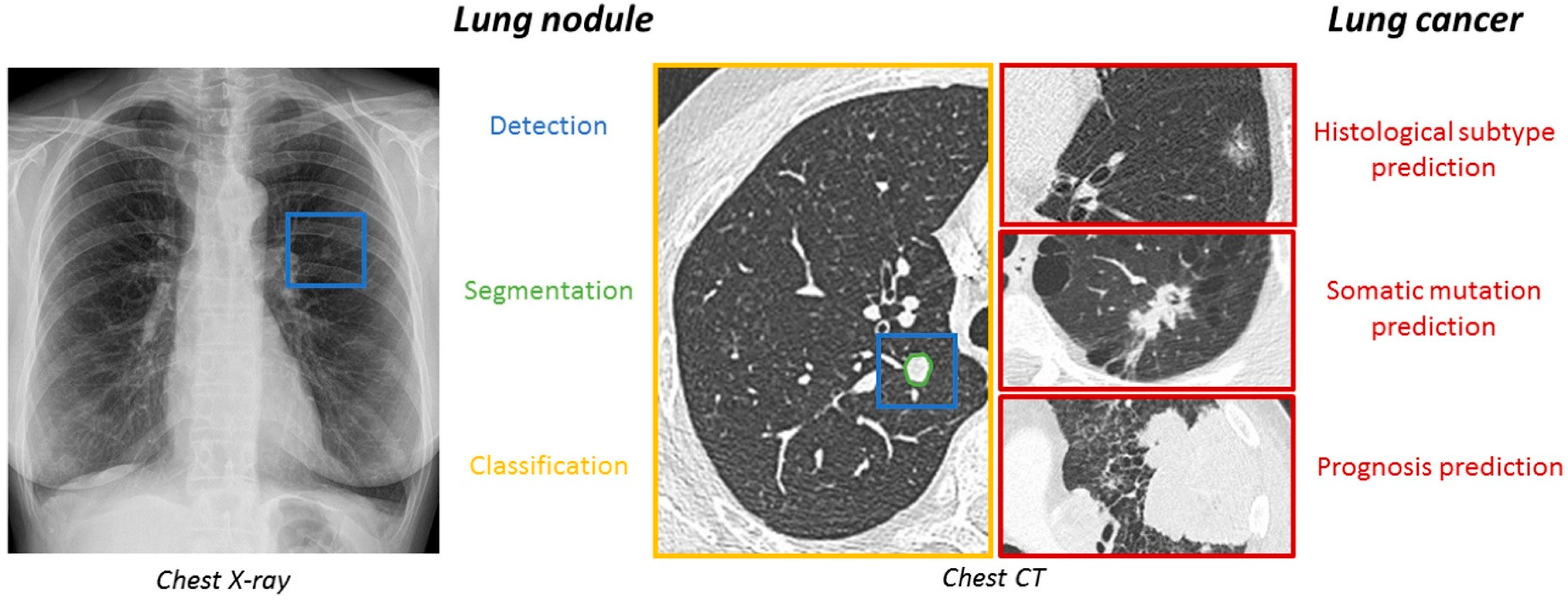
4.1. Artificial Intelligence for Pulmonary Nodule Detection and Characterization on Computed Tomography
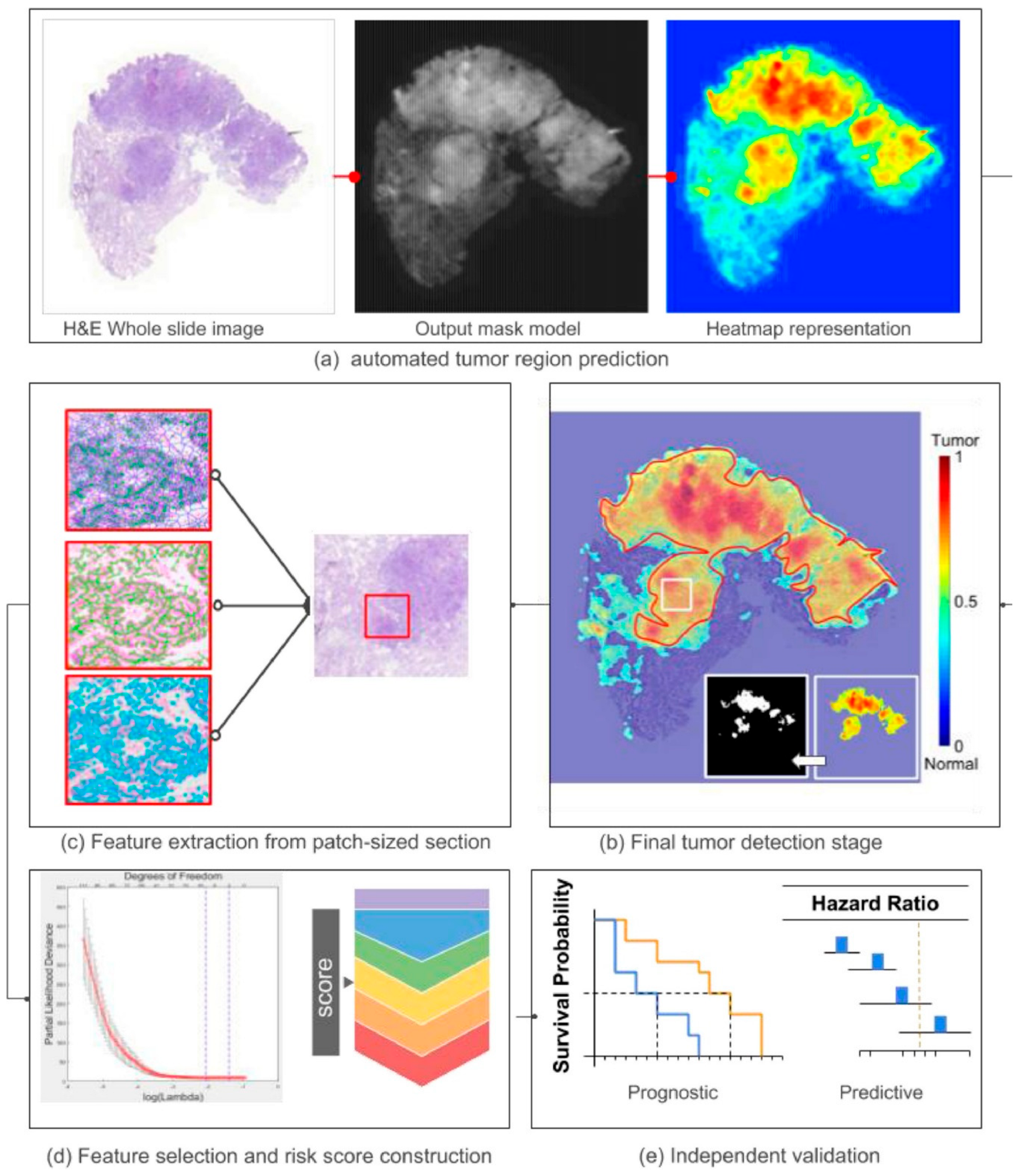
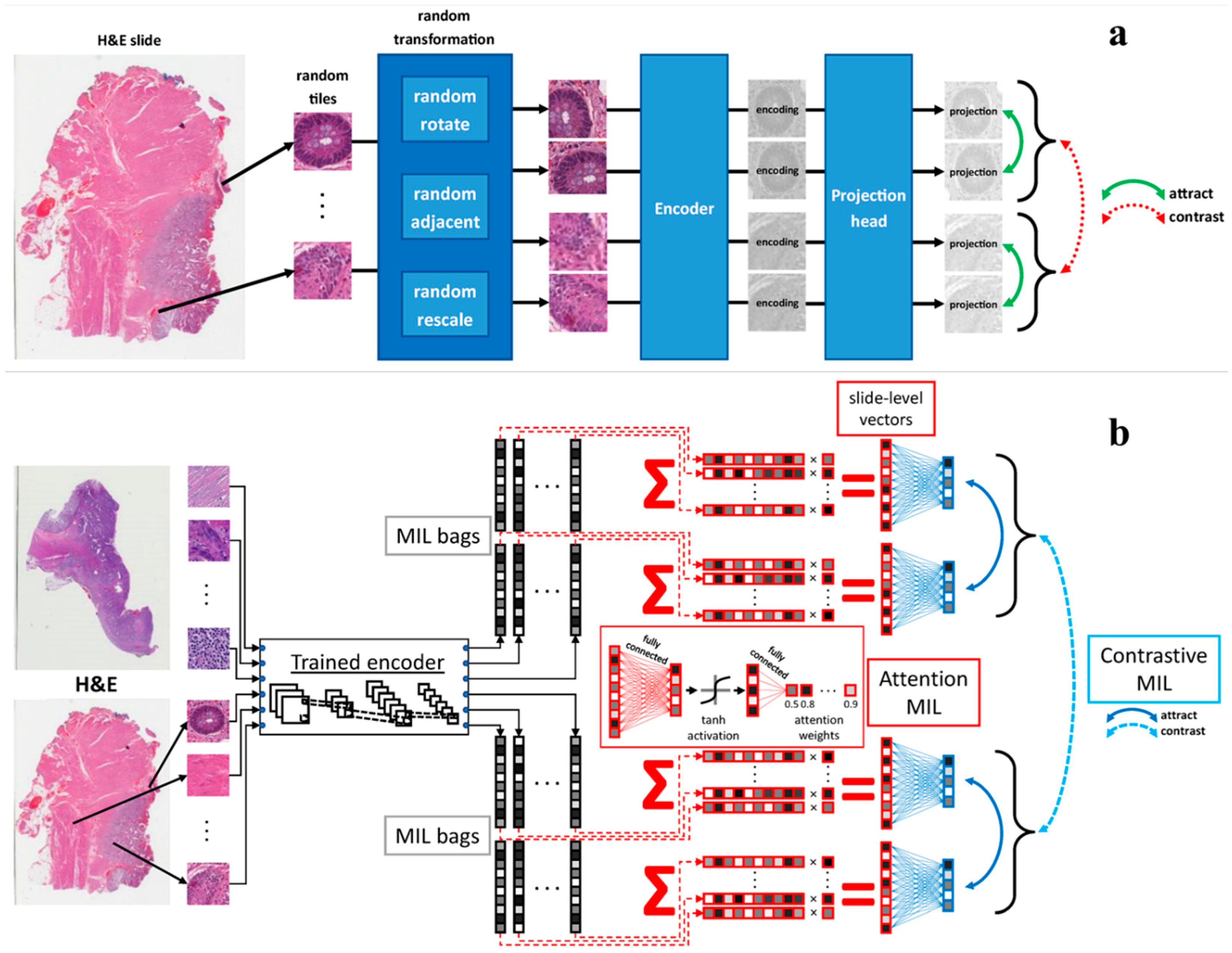
4.2. Lung Cancer Subtyping and Grading via Computational Pathology
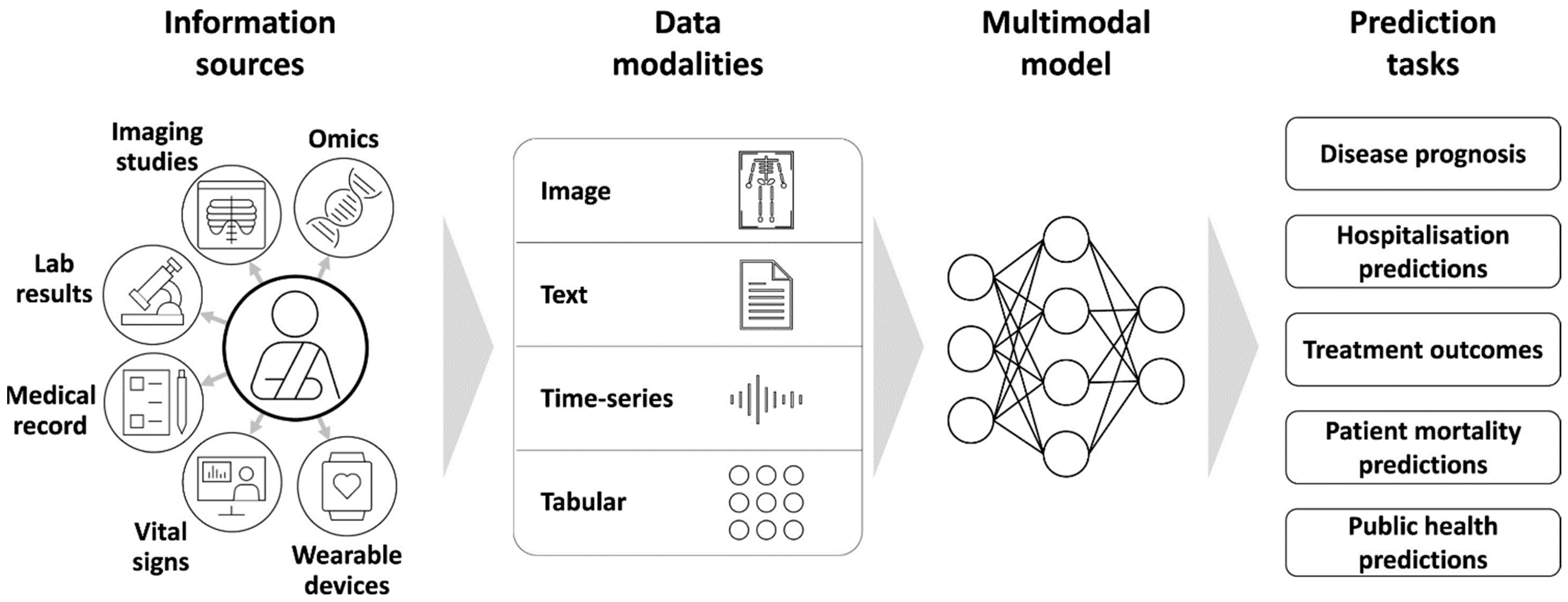
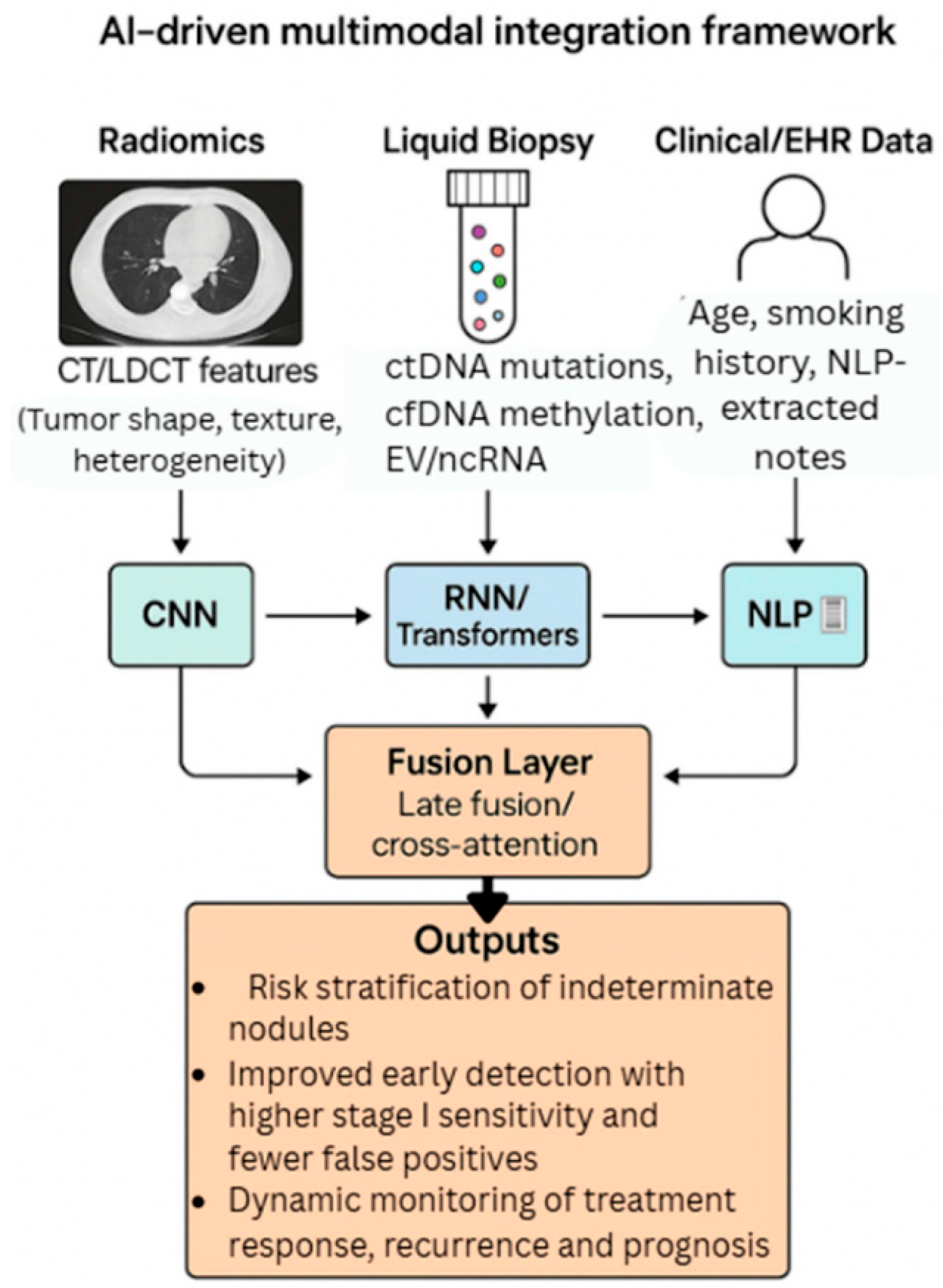
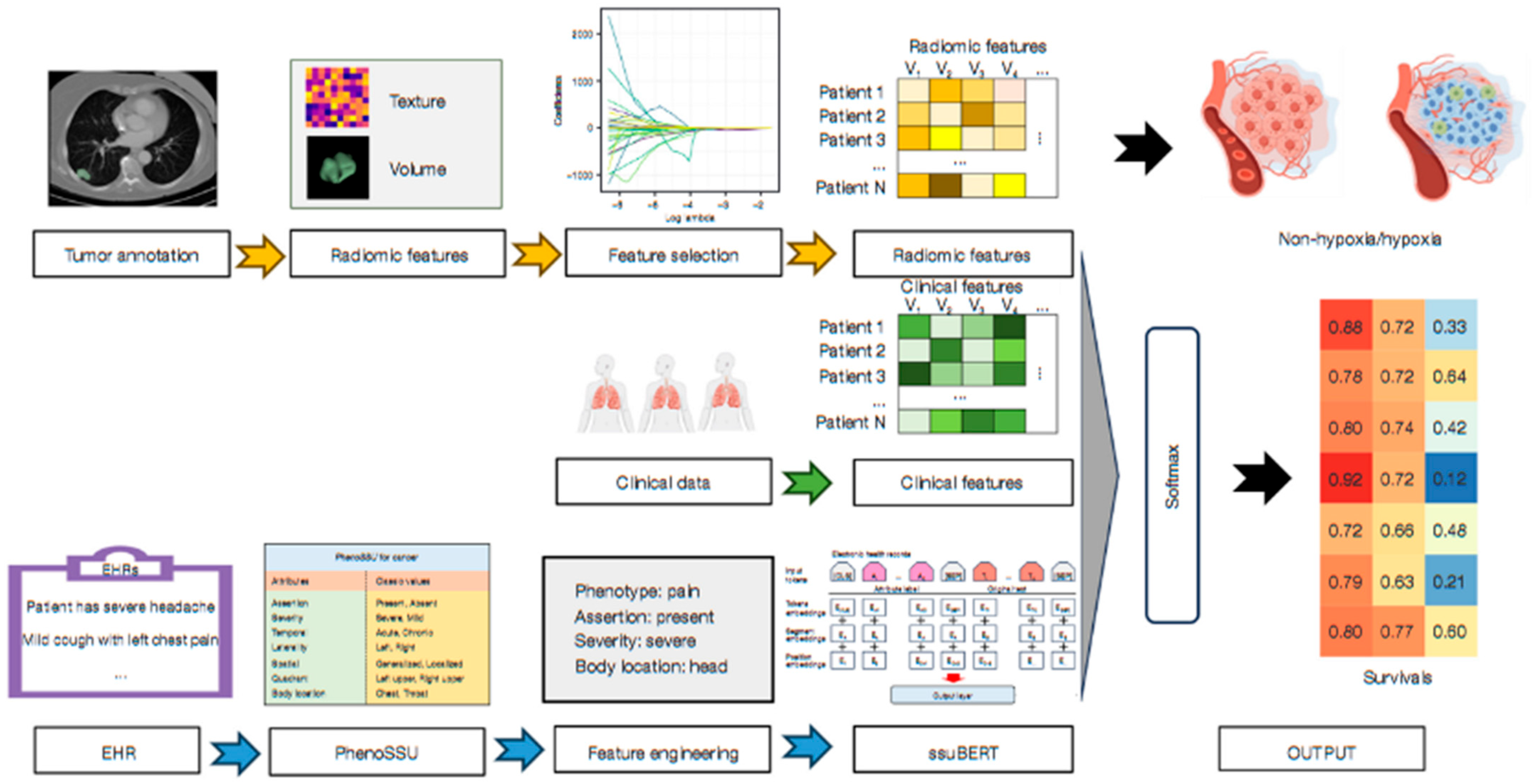
4.3. Integration of Multi-Modal Data for Diagnostic Refinement
5. Artificial Intelligence in Biomarker Discovery and Prognostication
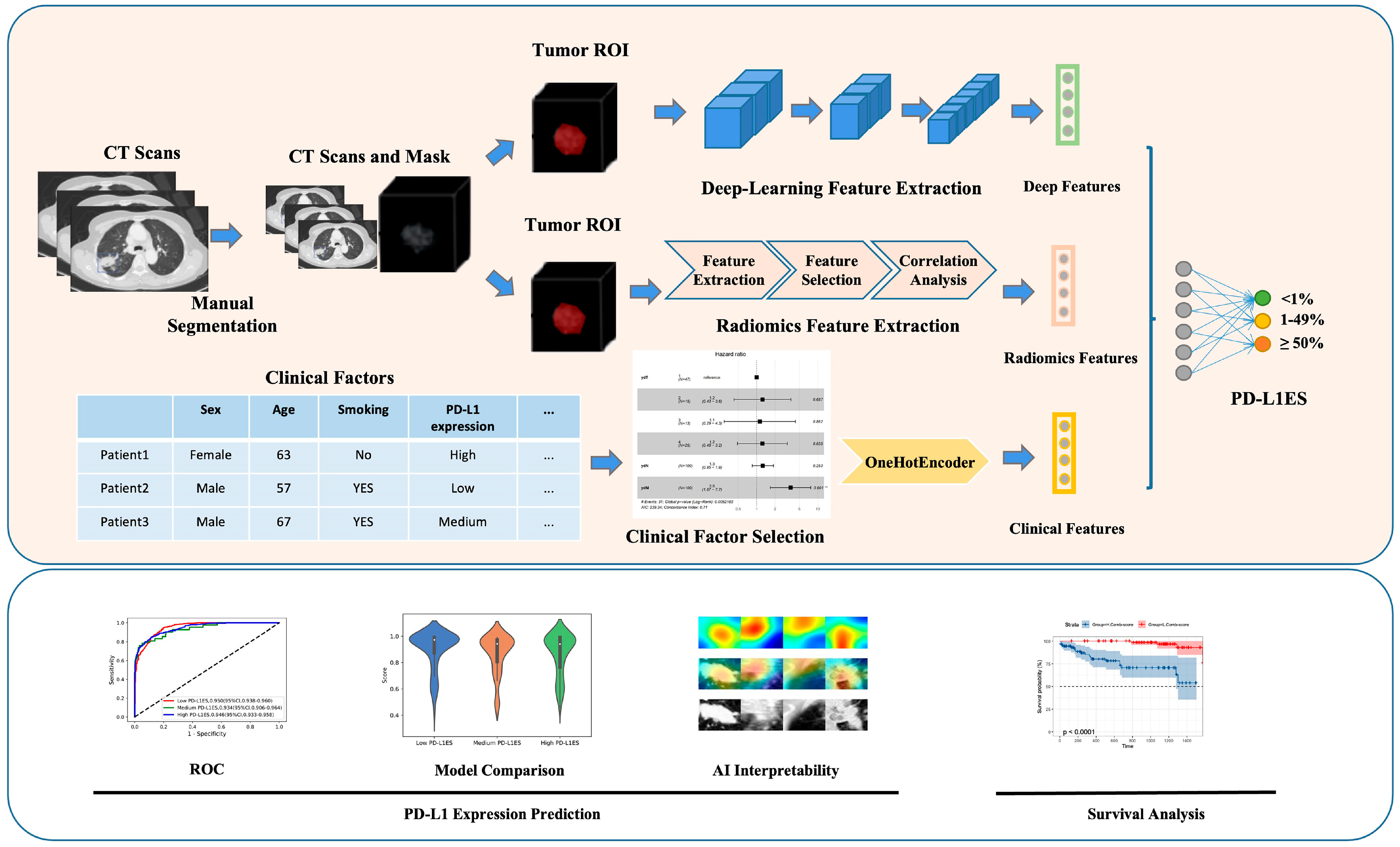
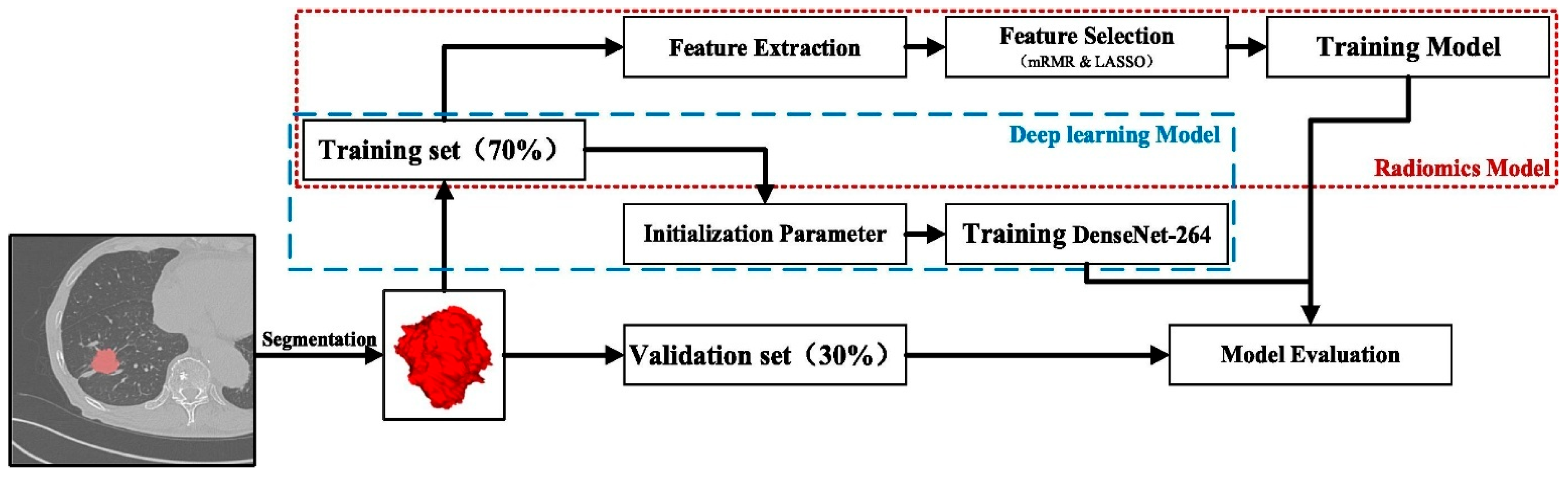
5.1. Radiomics and Deep Learning for Non-Invasive Biomarkers
5.2. Artificial Intelligence in Genomic and Molecular Profiling
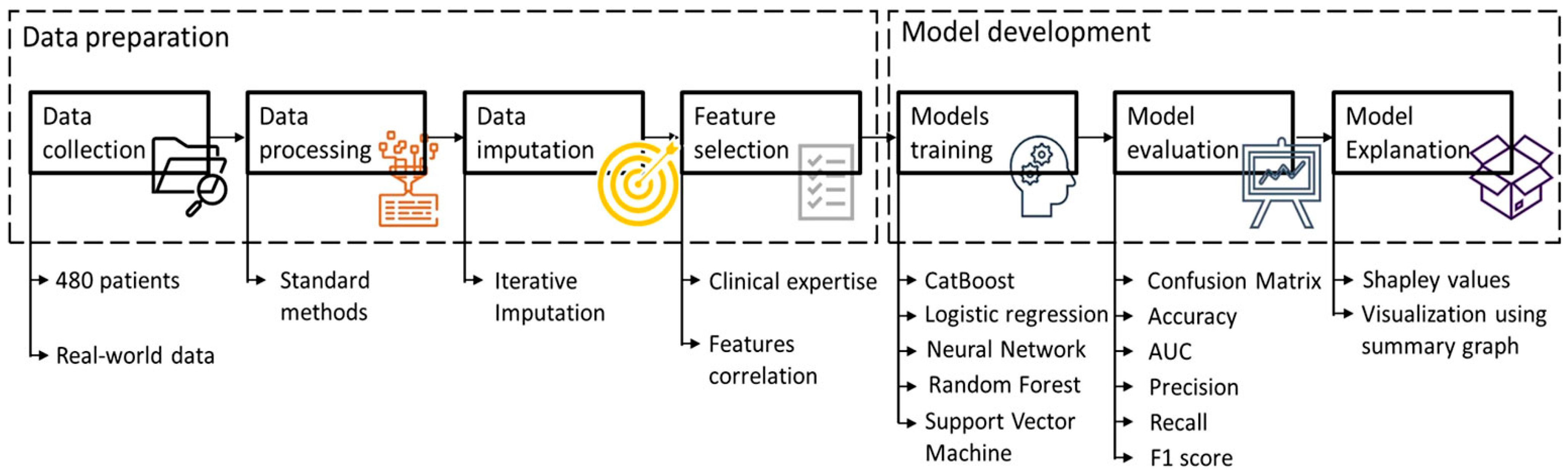
5.3. Predicting Treatment Response and Recurrence Risk
5.4. Artificial Intelligence in Guiding Surgical Intervention and Treatment Selection
5.5. Digital Biomarkers from Real-World Data and Wearables
6. Artificial Intelligence in Drug Development and Treatment Personalization
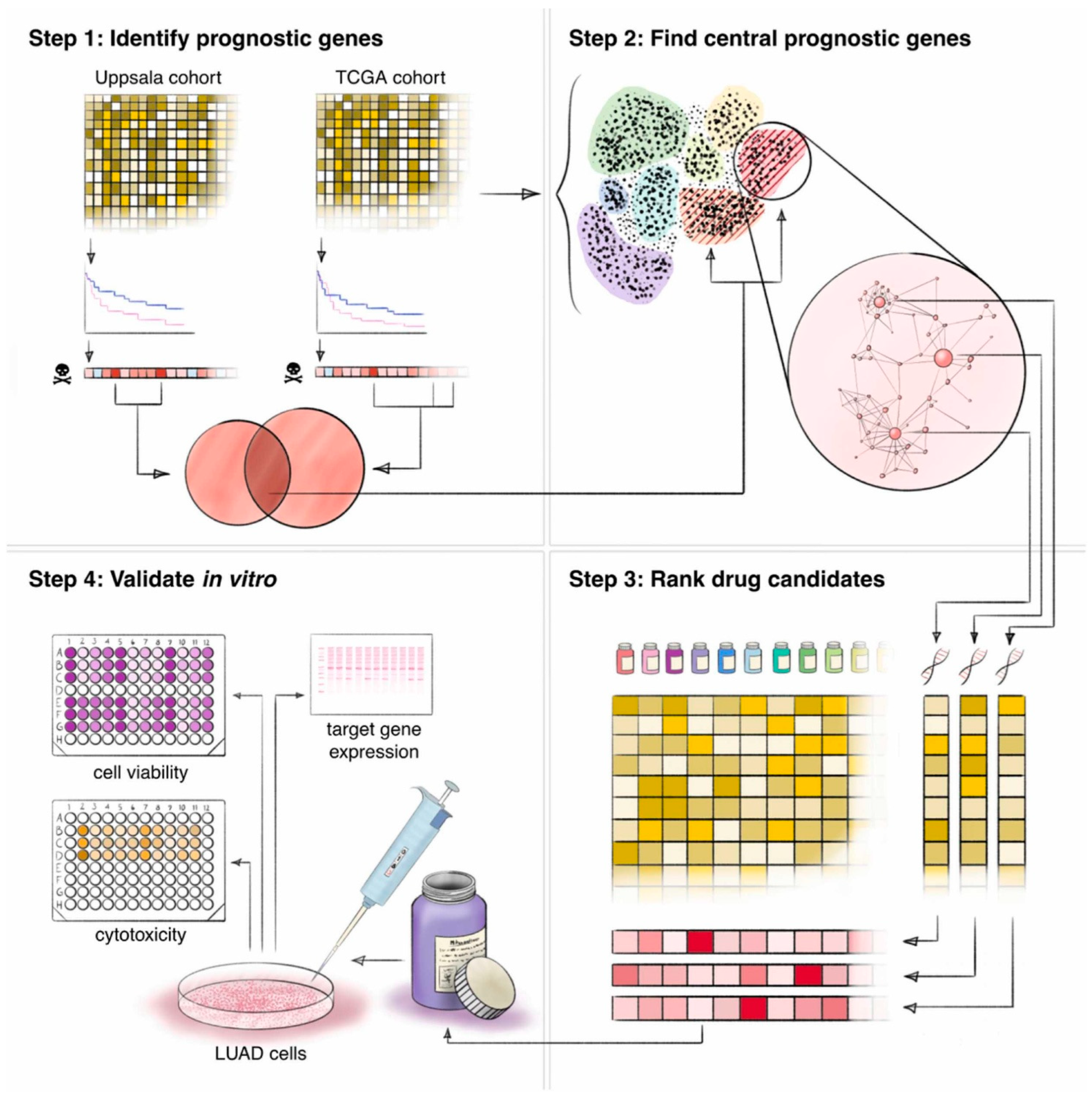
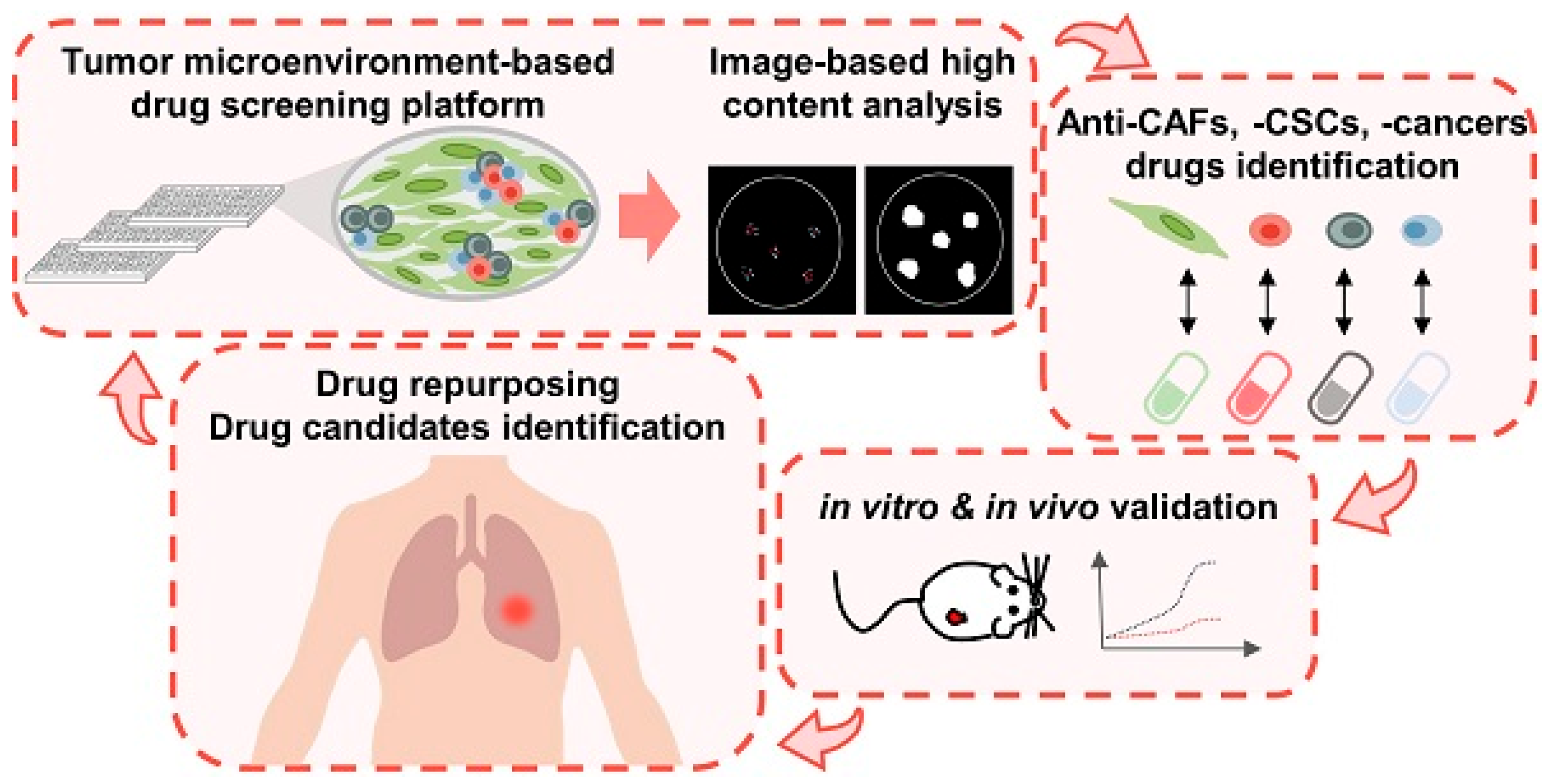
6.1. Artificial Intelligence Accelerated Drug Discovery and Repurposing
6.2. Predictive Models for Immunotherapy Outcomes
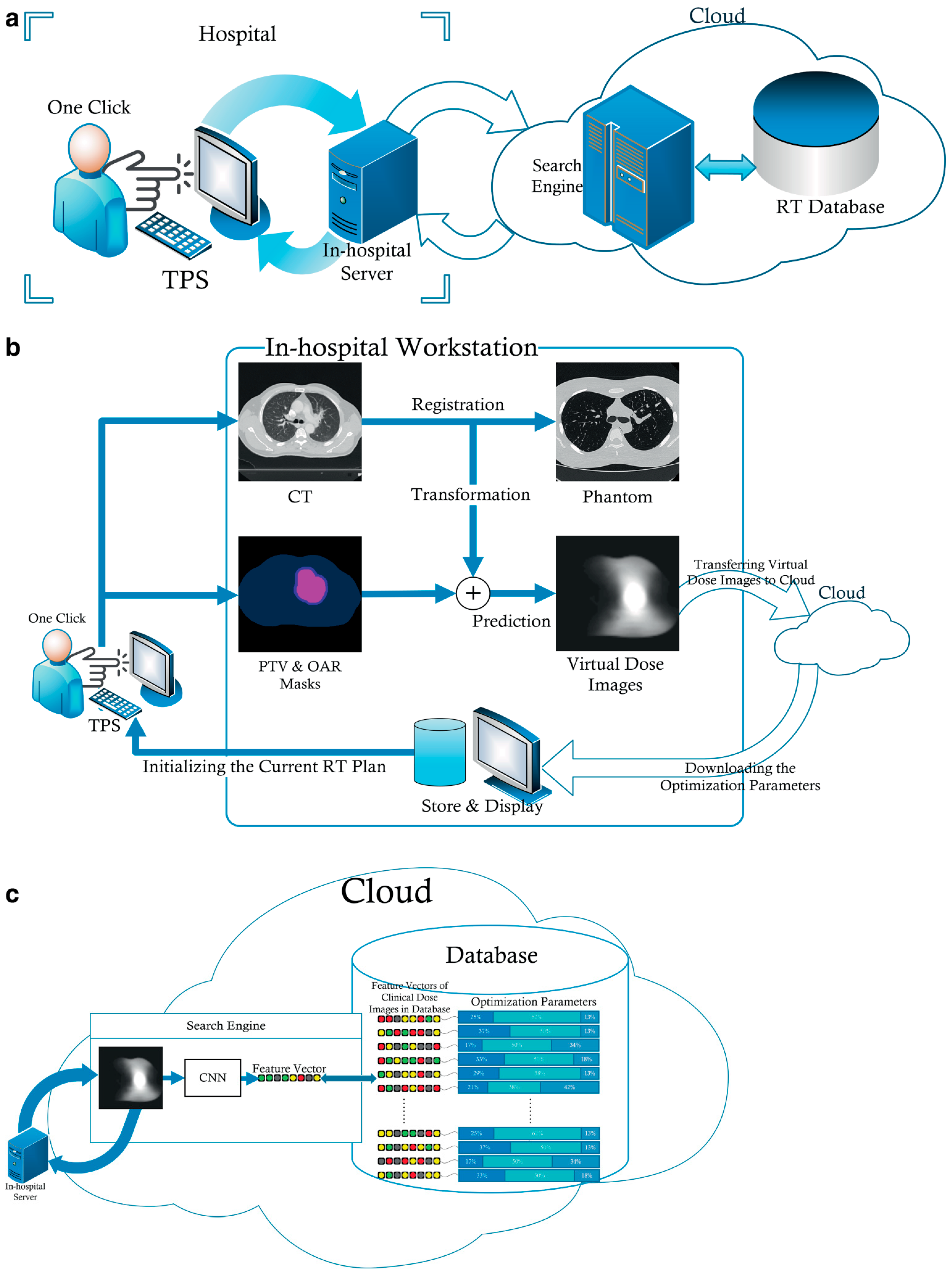
6.3. Radiotherapy Planning and Optimization with Artificial Intelligence
6.4. Artificial Intelligence Powered Clinical Trial Matching and Optimization
6.5. The Concept of Digital Twins and In-Silico Clinical Trials
7. From Algorithm to Clinic: Challenges in Translation and Validation
8. Critical Appraisal of Reported AI Performance
8.1. Dataset Characteristics and Generalizability
8.2. Validation Rigor and Overfitting
8.3. Reporting Gaps and Reproducibility
9. Interpretability and Explainability of Artificial Intelligence Models
10. Ethical, Legal, and Social Implications
11. Economic Impact and Cost-Effectiveness of Artificial Intelligence Integration
12. Global Initiatives, Collaborations, and Benchmarking Challenges
13. Limitations and Future Prospects
- External validation and generalizability of AI models: Many AI models for lung cancer diagnosis and biomarker discovery lack extensive external validation across diverse populations and clinical settings. Conduct large-scale, multicenter prospective studies to validate AI models on heterogeneous datasets, including different ethnicities and imaging protocols. Develop standardized benchmarking datasets for reproducibility. Limited external validation restricts clinical adoption due to concerns about model robustness and applicability beyond initial training cohorts [152,215,258].
- Interpretability and explainability of multi-omics AI models: Multi-omics integration models often function as ‘black boxes,’ limiting clinical trust and interpretability. Develop interpretable AI frameworks that incorporate biological pathway knowledge and provide transparent decision-making processes, such as attention mechanisms and explainable AI tools. Enhancing interpretability bridges the gap between computational predictions and clinical decision-making, fostering trust and adoption [259,260,261].
- Data heterogeneity and integration challenges in multi-modal AI: Integration of heterogeneous data types (imaging, genomics, pathology, clinical) remains complex, with issues in data quality, missing values, and standardization. Design robust data harmonization pipelines and imputation methods; establish standardized protocols for multi-modal data collection and preprocessing; develop AI models resilient to missing or noisy data. Data heterogeneity and integration complexity hinder effective multi-modal AI model training and limit reproducibility [101,261].
- Limited sample sizes for multi-omics and multi-modal datasets: Small sample sizes in multi-omics and integrated datasets reduce statistical power and model robustness. Promote large-scale data sharing initiatives and consortia to aggregate multi-omics and imaging data; employ data augmentation and transfer learning techniques to mitigate sample size limitations. Small datasets increase overfitting risk and reduce generalizability of AI models, especially in complex multi-omics contexts [79,262,263].
- Ethical, privacy, and regulatory frameworks for AI in lung cancer: Ethical concerns, data privacy, and lack of clear regulatory guidelines impede clinical implementation of AI tools. Develop comprehensive ethical guidelines and privacy-preserving AI methods; engage regulatory bodies to establish standards for AI validation, transparency, and accountability in lung cancer care. Addressing ethical and regulatory challenges is essential for safe, equitable, and trustworthy AI deployment in clinical practice [152,263,264].
- Prospective clinical trials for AI-guided treatment personalization: Most AI applications in treatment personalization lack prospective clinical trial validation demonstrating improved patient outcomes. Design and conduct randomized controlled trials evaluating AI-guided treatment decisions, especially in immunotherapy and targeted therapy contexts, to assess clinical benefit and cost-effectiveness. Prospective evidence is critical to confirm AI’s impact on treatment efficacy and to support integration into clinical workflows [265,266].
- Standardization of biomarker discovery and validation: Variability in biomarker identification methods and lack of consensus on clinical utility limit translation of AI-discovered biomarkers. Establish standardized pipelines for biomarker discovery, validation, and reporting; integrate AI-derived biomarkers with clinical decision support systems for real-world testing. Standardization improves reproducibility and facilitates clinical adoption of AI-identified biomarkers [101,267,268].
- Addressing dataset bias and population diversity: AI models often trained on biased or homogeneous datasets, limiting performance across diverse patient populations. Curate diverse, representative datasets; implement bias detection and mitigation strategies in AI model development; evaluate model fairness across demographic subgroups. Mitigating bias is necessary to ensure equitable AI performance and avoid exacerbating health disparities [215,258,269].
- Computational and resource limitations of advanced AI techniques: Emerging AI methods like quantum ML face computational constraints and early-stage development challenges. Invest in scalable quantum computing infrastructure and hybrid quantum-classical algorithms; benchmark quantum AI against classical methods in lung cancer applications. Overcoming computational barriers is required to realize the potential advantages of novel AI paradigms [270].
- Integration of AI into clinical workflows and decision support: Lack of seamless integration of AI tools into existing clinical workflows limits usability and clinician acceptance. Develop user-friendly AI interfaces and decision support systems; conduct usability studies; train clinicians on AI interpretation and application; ensure interoperability with electronic health records. Effective integration enhances clinical utility and adoption of AI technologies in lung cancer care [258,271].
14. Conclusive Remarks
Author Contributions
Funding
Institutional Review Board Statement
Informed Consent Statement
Data Availability Statement
Acknowledgments
Conflicts of Interest
Abbreviations
| AI | Artificial intelligence |
| CNNs | Convolutional neural networks |
| CT | Computed tomography |
| DeePaN | Deep patient graph convolutional networks |
| DL | Deep learning |
| EGFR | Epidermal growth factor receptor |
| EHRs | Electronic health records |
| ELSI | Ethical, legal, and social implications |
| HDI | Human development index |
| LIME | Local interpretable model-agnostic explanations |
| ML | Machine learning |
| NLP | Natural language processing |
| NSCLC | Non-small cell lung cancer |
| PD-L1 | Programmed death ligand 1 |
| PET | Positron emission tomography |
| RL | Reinforcement learning |
| RWD | Real-world data |
| SHAP | SHapley Additive exPlanations |
| WSIs | Whole-slide images |
References
- Wang, Y.; Yu, Y. Global, Regional, and National Burden of Ovarian Cancer Attributable to High Body Mass Index, 1990–2021: Insights from the Global Burden of Disease Study 2021. Front. Oncol. 2025, 15, 1568716. [Google Scholar] [CrossRef] [PubMed]
- Guo, L.; Zhu, C.; Cai, L.; Zhang, X.; Fang, Y.; Chen, H.; Yang, H. Global Burden of Lung Cancer in 2022 and Projected Burden in 2050. Chin. Med. J. 2024, 137, 2577–2582. [Google Scholar] [CrossRef] [PubMed]
- Li, C.; Lei, S.; Ding, L.; Xu, Y.; Wu, X.; Wang, H.; Zhang, Z.; Gao, T.; Zhang, Y.; Li, L. Global Burden and Trends of Lung Cancer Incidence and Mortality. Chin. Med. J. 2023, 136, 1583–1590. [Google Scholar] [CrossRef]
- Sharma, R. Mapping of Global, Regional and National Incidence, Mortality and Mortality-to-Incidence Ratio of Lung Cancer in 2020 and 2050. Int. J. Clin. Oncol. 2022, 27, 665–675. [Google Scholar] [CrossRef]
- Sharma, R.; Khubchandani, J. Global, Regional, and National Burden of Tracheal, Bronchus, and Lung Cancer in 2022: Evidence from the GLOBOCAN Study. Epidemiologia 2024, 5, 785–795. [Google Scholar] [CrossRef] [PubMed]
- Zhang, S. Adenocarcinoma. In Diagnostic Imaging of Lung Cancers; Springer Nature: Singapore, 2023; pp. 3–49. ISBN 978-981-99-6815-2. [Google Scholar]
- Goodarzi, E.; Sohrabivafa, M.; Adineh, E.A.; Moayed, L.; Khazaei, Z. Geographical Distribution Global Incidence and Mortality of Lung Cancer and Its Relationship with the Human Development Index (HDI); an Ecology Study in 2018. World Cancer Res. J. 2019, 6, 11. [Google Scholar] [CrossRef]
- Ji, X.; Chen, J.; Ye, J.; Xu, S.; Lin, B.; Hou, K. Epidemiological Analysis of Global and Regional Lung Cancer Mortality: Based on 30-Year Data Analysis of Global Burden Disease Database. Healthcare 2023, 11, 2920. [Google Scholar] [CrossRef]
- Chen, X.; Mo, S.; Yi, B. The Spatiotemporal Dynamics of Lung Cancer: 30-Year Trends of Epidemiology across 204 Countries and Territories. BMC Public Health 2022, 22, 987. [Google Scholar] [CrossRef]
- Luo, G.; Zhang, Y.; Etxeberria, J.; Arnold, M.; Cai, X.; Hao, Y.; Zou, H. Projections of Lung Cancer Incidence by 2035 in 40 Countries Worldwide: Population-Based Study. JMIR Public Health Surveill. 2023, 9, e43651. [Google Scholar] [CrossRef]
- Bhargav, A.L.; Ashokkumar, C. AI-Driven Insights: A Survey on Innovative Approach for Lung Cancer Prediction Utilizing Machine Learning and Deep Learning Methods: Lung Cancer Prediction Utilizing Machine Learning and Deep Learning Methods. In Proceedings of the 2024 3rd International Conference on Automation, Computing and Renewable Systems (ICACRS), Pudukkottai, India, 4 December 2024; IEEE: New York, NY, USA, 2024; pp. 1152–1158. [Google Scholar]
- Xiang, Y.; Liu, X.; Wang, Y.; Zheng, D.; Meng, Q.; Jiang, L.; Yang, S.; Zhang, S.; Zhang, X.; Liu, Y.; et al. Mechanisms of Resistance to Targeted Therapy and Immunotherapy in Non-Small Cell Lung Cancer: Promising Strategies to Overcoming Challenges. Front. Immunol. 2024, 15, 1366260. [Google Scholar] [CrossRef]
- Lu, D.; Zhang, B.; Shangguan, Z.; Lu, Y.; Chen, J.; Huang, Z. Machine Learning-Based Exosome Profiling of Multi-Receptor SERS Sensors for Differentiating Adenocarcinoma in Situ from Early-Stage Invasive Adenocarcinoma. Colloids Surf. B Biointerfaces 2024, 236, 113824. [Google Scholar] [CrossRef]
- Kiio, L.K.; Onyatta, J.O.; Ndangili, P.M.; Oloo, F.; Santamaria, C.; Montuenga, L.M.; Mbui, D.N. Ultrasensitive Immunosensor for Multiplex Detection of Cancer Biomarkers Carcinoembryonic Antigen (CEA) and Yamaguchi Sarcoma Viral Oncogene Homolog 1 (YES1) Based on Eco-Friendly Synthesized Gold Nanoparticles. Talanta 2024, 266, 124934. [Google Scholar] [CrossRef] [PubMed]
- Kuperberg, S.J.; Christiani, D.C. Artificial Intelligence-Based Methods: The Path Forward in Achieving Equity in Lung Cancer Screening and Evaluation. Cancer Innov. 2025, 4, e70019. [Google Scholar] [CrossRef]
- Mathew, C.J.; David, A.M.; Mathew, C.M.J. Artificial Intelligence and Its Future Potential in Lung Cancer Screening. EXCLI J. 2020, 19, 1552–1562. [Google Scholar]
- Zhang, B.; Shi, H.; Wang, H. Machine Learning and AI in Cancer Prognosis, Prediction, and Treatment Selection: A Critical Approach. J. Multidiscip. Healthc. 2023, 16, 1779–1791. [Google Scholar] [CrossRef]
- Gandhi, Z.; Gurram, P.; Amgai, B.; Lekkala, S.P.; Lokhandwala, A.; Manne, S.; Mohammed, A.; Koshiya, H.; Dewaswala, N.; Desai, R.; et al. Artificial Intelligence and Lung Cancer: Impact on Improving Patient Outcomes. Cancers 2023, 15, 5236. [Google Scholar] [CrossRef]
- Lebovitz, S.; Lifshitz-Assaf, H.; Levina, N. To Engage or Not to Engage with AI for Critical Judgments: How Professionals Deal with Opacity When Using AI for Medical Diagnosis. Organ. Sci. 2022, 33, 126–148. [Google Scholar] [CrossRef]
- Binczyk, F.; Prazuch, W.; Bozek, P.; Polanska, J. Radiomics and Artificial Intelligence in Lung Cancer Screening. Transl. Lung Cancer Res. 2021, 10, 1186–1199. [Google Scholar] [CrossRef]
- Tam, M.D.B.S.; Dyer, T.; Dissez, G.; Morgan, T.N.; Hughes, M.; Illes, J.; Rasalingham, R.; Rasalingham, S. Augmenting Lung Cancer Diagnosis on Chest Radiographs: Positioning Artificial Intelligence to Improve Radiologist Performance. Clin. Radiol. 2021, 76, 607–614. [Google Scholar] [CrossRef] [PubMed]
- Anusheebha, B.P.P.K. AI And Deep Learning Models for Early Lung Cancer Detection Using Radiological Data. J. Inform. Educ. Res. 2025, 5, 1318. [Google Scholar] [CrossRef]
- Bouamrane, A.; Derdour, M.; Bennour, A.; Elfadil Eisa, T.A.; Emara, A.-H.M.; Al-Sarem, M.; Kurdi, N.A. Toward Robust Lung Cancer Diagnosis: Integrating Multiple CT Datasets, Curriculum Learning, and Explainable AI. Diagnostics 2024, 15, 1. [Google Scholar] [CrossRef] [PubMed]
- Nguyen, H.S.; Ho, D.K.N.; Nguyen, N.N.; Tran, H.M.; Tam, K.-W.; Le, N.Q.K. Predicting EGFR Mutation Status in Non–Small Cell Lung Cancer Using Artificial Intelligence: A Systematic Review and Meta-Analysis. Acad. Radiol. 2024, 31, 660–683. [Google Scholar] [CrossRef]
- Wasilewski, T.; Kamysz, W.; Gębicki, J. AI-assisted detection of biomarkers by sensors and biosensors for early diagnosis and monitoring. Biosensors 2024, 14, 356. [Google Scholar] [CrossRef]
- Ye, B.; Hongting, G.; Zhuang, W.; Chen, C.; Yi, S.; Tang, X.; Jiang, A.; Zhong, Y. Deciphering Lung Adenocarcinoma Prognosis and Immunotherapy Response through an AI-driven Stemness-related Gene Signature. J. Cell. Mol. Med. 2024, 28, e18564. [Google Scholar] [CrossRef] [PubMed]
- Tun, H.M.; Rahman, H.A.; Naing, L.; Malik, O.A. Artificial Intelligence Utilization in Cancer Screening Program across ASEAN: A Scoping Review. BMC Cancer 2025, 25, 703. [Google Scholar] [CrossRef]
- Smith, M.E.; Zalesky, C.C.; Lee, S.; Gottlieb, M.; Adhikari, S.; Goebel, M.; Wegman, M.; Garg, N.; Lam, S.H.F. Artificial Intelligence in Emergency Medicine: A Primer for the Nonexpert. JACEP Open 2025, 6, 100051. [Google Scholar] [CrossRef] [PubMed]
- Miller, M.I.; Shih, L.C.; Kolachalama, V.B. Machine Learning in Clinical Trials: A Primer with Applications to Neurology. Neurotherapeutics 2023, 20, 1066–1080. [Google Scholar] [CrossRef]
- Ahmed, T.M.; Kawamoto, S.; Hruban, R.H.; Fishman, E.K.; Soyer, P.; Chu, L.C. A Primer on Artificial Intelligence in Pancreatic Imaging. Diagn. Interv. Imaging 2023, 104, 435–447. [Google Scholar] [CrossRef]
- Tong, M.W.; Zhou, J.; Akkaya, Z.; Majumdar, S.; Bhattacharjee, R. Artificial Intelligence in Musculoskeletal Applications: A Primer for Radiologists. Diagn. Interv. Radiol. 2024, 31, 89–101. [Google Scholar] [CrossRef]
- Najjar, R. Redefining Radiology: A Review of Artificial Intelligence Integration in Medical Imaging. Diagnostics 2023, 13, 2760. [Google Scholar] [CrossRef]
- Maleki Varnosfaderani, S.; Forouzanfar, M. The Role of AI in Hospitals and Clinics: Transforming Healthcare in the 21st Century. Bioengineering 2024, 11, 337. [Google Scholar] [CrossRef]
- Melnyk, O.; Ismail, A.; Ghorashi, N.S.; Heekin, M.; Javan, R. Generative Artificial Intelligence Terminology: A Primer for Clinicians and Medical Researchers. Cureus 2023, 15, e49890. [Google Scholar] [CrossRef] [PubMed]
- Ye, J.; Yao, L.; Shen, J.; Janarthanam, R.; Luo, Y. Predicting Mortality in Critically Ill Patients with Diabetes Using Machine Learning and Clinical Notes. BMC Med. Inform. Decis. Mak. 2020, 20, 295. [Google Scholar] [CrossRef]
- Krones, F.; Marikkar, U.; Parsons, G.; Szmul, A.; Mahdi, A. Review of Multimodal Machine Learning Approaches in Healthcare. Inf. Fusion 2025, 114, 102690. [Google Scholar] [CrossRef]
- Vrettos, K.; Triantafyllou, M.; Marias, K.; Karantanas, A.H.; Klontzas, M.E. Artificial Intelligence-Driven Radiomics: Developing Valuable Radiomics Signatures with the Use of Artificial Intelligence. BJR|Artif. Intell. 2024, 1, ubae011. [Google Scholar] [CrossRef]
- Fountzilas, E.; Pearce, T.; Baysal, M.A.; Chakraborty, A.; Tsimberidou, A.M. Convergence of Evolving Artificial Intelligence and Machine Learning Techniques in Precision Oncology. NPJ Digit. Med. 2025, 8, 75. [Google Scholar] [CrossRef]
- Jayaraman, P.; Desman, J.; Sabounchi, M.; Nadkarni, G.N.; Sakhuja, A. A Primer on Reinforcement Learning in Medicine for Clinicians. NPJ Digit. Med. 2024, 7, 337. [Google Scholar] [CrossRef]
- Waldman, C.E.; Hermel, M.; Hermel, J.A.; Allinson, F.; Pintea, M.N.; Bransky, N.; Udoh, E.; Nicholson, L.; Robinson, A.; Gonzalez, J.; et al. Artificial Intelligence in Healthcare: A Primer for Medical Education in Radiomics. Per. Med. 2022, 19, 445–456. [Google Scholar] [CrossRef] [PubMed]
- Approaches to Regulating Artificial Intelligence: A Primer. Available online: https://www.ncsl.org/technology-and-communication/approaches-to-regulating-artificial-intelligence-a-primer (accessed on 29 November 2025).
- Badrulhisham, F.; Pogatzki-Zahn, E.; Segelcke, D.; Spisak, T.; Vollert, J. Machine Learning and Artificial Intelligence in Neuroscience: A Primer for Researchers. Brain Behav. Immun. 2024, 115, 470–479. [Google Scholar] [CrossRef] [PubMed]
- Zebachi, S.; Tanniou, J.; Bakker, E.; de Vries, S.T.; Di Bidino, R.; Xoxi, E.; Glaser, A.; Savarese, G.; Hillert, J.; Mol, P.G.M.; et al. Navigating the Real World: A Scoping Review of Structured Frameworks to Effectively Identify, Evaluate, and Select Real-World Data Sources for Fit-for-Purpose Studies. Clin. Pharmacol. Ther. 2025, 118, 894–905. [Google Scholar] [CrossRef]
- Jee, J.; Fong, C.; Pichotta, K.; Tran, T.N.; Luthra, A.; Waters, M.; Fu, C.; Altoe, M.; Liu, S.-Y.; Maron, S.B.; et al. Automated Real-World Data Integration Improves Cancer Outcome Prediction. Nature 2024, 636, 728–736. [Google Scholar] [CrossRef]
- Liu, R.; Rizzo, S.; Wang, L.; Chaudhary, N.; Maund, S.; Garmhausen, M.R.; McGough, S.; Copping, R.; Zou, J. Characterizing Mutation-Treatment Effects Using Clinico-Genomics Data of 78,287 Patients with 20 Types of Cancers. Nat. Commun. 2024, 15, 10884. [Google Scholar] [CrossRef] [PubMed]
- Chhabra, R. Molecular and Modular Intricacies of Precision Oncology. Front. Immunol. 2024, 15, 1476494. [Google Scholar] [CrossRef]
- Bandaru, V.K.R.; Gondi, D.S.; Sathish, K.; Kanthi Kumar, K.; Ramakrishnaiah, N.; Bhutani, M. Transforming Patient Records into Actionable Insights with Natural Language Processing in Health Care. In International Conference on Innovative Computing and Communication; Springer Nature: Singapore, 2025; pp. 475–490. [Google Scholar] [CrossRef]
- Dixon, D.; Sattar, H.; Moros, N.; Kesireddy, S.R.; Ahsan, H.; Lakkimsetti, M.; Fatima, M.; Doshi, D.; Sadhu, K.; Junaid Hassan, M. Unveiling the Influence of AI Predictive Analytics on Patient Outcomes: A Comprehensive Narrative Review. Cureus 2024, 16, e59954. [Google Scholar] [CrossRef] [PubMed]
- Simon, B.D.; Ozyoruk, K.B.; Gelikman, D.G.; Harmon, S.A.; Türkbey, B. The Future of Multimodal Artificial Intelligence Models for Integrating Imaging and Clinical Metadata: A Narrative Review. Diagn. Interv. Radiol. 2024, 31, 303. [Google Scholar] [CrossRef]
- Prelaj, A.; Miskovic, V.; Zanitti, M.; Trovo, F.; Genova, C.; Viscardi, G.; Rebuzzi, S.E.; Mazzeo, L.; Provenzano, L.; Kosta, S.; et al. Artificial Intelligence for Predictive Biomarker Discovery in Immuno-Oncology: A Systematic Review. Ann. Oncol. 2024, 35, 29–65. [Google Scholar] [CrossRef] [PubMed]
- Wu, J.; Zhao, Y. Machine Learning Technology in the Application of Genome Analysis: A Systematic Review. Gene 2019, 705, 149–156. [Google Scholar] [CrossRef]
- Tandon, Y.K.; Bartholmai, B.J.; Koo, C.W. Putting Artificial Intelligence (AI) on the Spot: Machine Learning Evaluation of Pulmonary Nodules. J. Thorac. Dis. 2020, 12, 6954–6965. [Google Scholar] [CrossRef]
- de Margerie-Mellon, C.; Chassagnon, G. Artificial Intelligence: A Critical Review of Applications for Lung Nodule and Lung Cancer. Diagn. Interv. Imaging 2023, 104, 11–17. [Google Scholar] [CrossRef]
- Chamberlin, J.; Kocher, M.R.; Waltz, J.; Snoddy, M.; Stringer, N.F.C.; Stephenson, J.; Sahbaee, P.; Sharma, P.; Rapaka, S.; Schoepf, U.J.; et al. Automated Detection of Lung Nodules and Coronary Artery Calcium Using Artificial Intelligence on Low-Dose CT Scans for Lung Cancer Screening: Accuracy and Prognostic Value. BMC Med. 2021, 19, 55. [Google Scholar] [CrossRef]
- Jungblut, L.; Blüthgen, C.; Polacin, M.; Messerli, M.; Schmidt, B.; Euler, A.; Alkadhi, H.; Frauenfelder, T.; Martini, K. First Performance Evaluation of an Artificial Intelligence-Based Computer-Aided Detection System for Pulmonary Nodule Evaluation in Dual-Source Photon-Counting Detector CT at Different Low-Dose Levels. Investig. Radiol. 2022, 57, 108–114. [Google Scholar] [CrossRef]
- Yao, Y.; Guo, B.; Li, J.; Yang, Q.; Li, X.; Deng, L. The Influence of a Deep Learning Image Reconstruction Algorithm on the Image Quality and Auto-Analysis of Pulmonary Nodules at Ultra-Low Dose Chest CT: A Phantom Study. Quant. Imaging Med. Surg. 2022, 12, 2777–2791. [Google Scholar] [CrossRef] [PubMed]
- Du, W.; He, B.; Luo, X.; Chen, M. Diagnostic Value of Artificial Intelligence Based on CT Image in Benign and Malignant Pulmonary Nodules. J. Oncol. 2022, 2022, 5818423. [Google Scholar] [CrossRef] [PubMed]
- Pedrosa, J.; Aresta, G.; Ferreira, C.; Atwal, G.; Phoulady, H.A.; Chen, X.; Chen, R.; Li, J.; Wang, L.; Galdran, A.; et al. LNDb Challenge on Automatic Lung Cancer Patient Management. Med. Image Anal. 2021, 70, 102027. [Google Scholar] [CrossRef]
- Prosper, A.E.; Kammer, M.N.; Maldonado, F.; Aberle, D.R.; Hsu, W. Expanding Role of Advanced Image Analysis in CT-Detected Indeterminate Pulmonary Nodules and Early Lung Cancer Characterization. Radiology 2023, 309, e222904. [Google Scholar] [CrossRef]
- Schreuder, A.; Scholten, E.T.; van Ginneken, B.; Jacobs, C. Artificial Intelligence for Detection and Characterization of Pulmonary Nodules in Lung Cancer CT Screening: Ready for Practice? Transl. Lung Cancer Res. 2021, 10, 2378–2388. [Google Scholar] [CrossRef]
- Chassagnon, G.; De Margerie-Mellon, C.; Vakalopoulou, M.; Marini, R.; Hoang-Thi, T.-N.; Revel, M.-P.; Soyer, P. Artificial Intelligence in Lung Cancer: Current Applications and Perspectives. Jpn. J. Radiol. 2023, 41, 235–244. [Google Scholar] [CrossRef]
- Vasilev, Y.; Vladzymyrskyy, A.; Arzamasov, K.; Omelyanskaya, O.; Shulkin, I.; Kozikhina, D.; Goncharova, I.; Reshetnikov, R.; Chetverikov, S.; Blokhin, I.; et al. Clinical Application of Radiological AI for Pulmonary Nodule Evaluation: Replicability and Susceptibility to the Population Shift Caused by the COVID-19 Pandemic. Int. J. Med. Inform. 2023, 178, 105190. [Google Scholar] [CrossRef] [PubMed]
- Nagase, W.; Harada, K.; Kudo, Y.; Matsubayashi, J.; Takada, I.; Park, J.; Murakami, K.; Ohira, T.; Nagao, T.; Taguri, M.; et al. AI-Driven 3D CT Imaging Prediction Model for Improving Preoperative Detection of Visceral Pleural Invasion in Early-Stage Lung Cancer. PLoS ONE 2025, 20, e0332956. [Google Scholar] [CrossRef]
- Deng, C.; Zheng, Q.; Zhang, Y.; Jin, Y.; Shen, X.; Nie, X.; Fu, F.; Ma, X.; Ma, Z.; Wen, Z.; et al. Validation of the Novel International Association for the Study of Lung Cancer Grading System for Invasive Pulmonary Adenocarcinoma and Association with Common Driver Mutations. J. Thorac. Oncol. 2021, 16, 1684–1693. [Google Scholar] [CrossRef]
- Rokutan-Kurata, M.; Yoshizawa, A.; Ueno, K.; Nakajima, N.; Terada, K.; Hamaji, M.; Sonobe, M.; Menju, T.; Date, H.; Morita, S.; et al. Validation Study of the International Association for the Study of Lung Cancer Histologic Grading System of Invasive Lung Adenocarcinoma. J. Thorac. Oncol. 2021, 16, 1753–1758. [Google Scholar] [CrossRef] [PubMed]
- van der Laak, J.A. Computational Pathology: What Is the Way Forward? In Medical Imaging 2021: Digital Pathology; Tomaszewski, J.E., Ward, A.D., Eds.; SPIE: Bellingham, WA, USA, 2021; Volume 11603, p. 500. [Google Scholar]
- Wang, X.; Bera, K.; Barrera, C.; Zhou, Y.; Lu, C.; Vaidya, P.; Fu, P.; Yang, M.; Schmid, R.A.; Berezowska, S.; et al. A Prognostic and Predictive Computational Pathology Image Signature for Added Benefit of Adjuvant Chemotherapy in Early Stage Non-Small-Cell Lung Cancer. eBioMedicine 2021, 69, 103481. [Google Scholar] [CrossRef]
- Lu, M.Y.; Williamson, D.F.K.; Chen, T.Y.; Chen, R.J.; Barbieri, M.; Mahmood, F. Data-Efficient and Weakly Supervised Computational Pathology on Whole-Slide Images. Nat. Biomed. Eng. 2021, 5, 555–570. [Google Scholar] [CrossRef] [PubMed]
- Chen, R.J.; Chen, C.; Li, Y.; Chen, T.Y.; Trister, A.D.; Krishnan, R.G.; Mahmood, F. Scaling Vision Transformers to Gigapixel Images via Hierarchical Self-Supervised Learning. In Proceedings of the 2022 IEEE/CVF Conference on Computer Vision and Pattern Recognition (CVPR), New Orleans, LA, USA, 18–24 June 2022; IEEE: New York, NY, USA, 2022; Volume 2022, pp. 16123–16134. [Google Scholar]
- Zhao, B.; Zhang, J.; Ye, D.; Cao, J.; Han, X.; Fu, Q.; Yang, W. RLogist: Fast Observation Strategy on Whole-Slide Images with Deep Reinforcement Learning. Proc. AAAI Conf. Artif. Intell. 2023, 37, 3570–3578. [Google Scholar] [CrossRef]
- Tavolara, T.E.; Gurcan, M.N.; Niazi, M.K.K. Contrastive Multiple Instance Learning: An Unsupervised Framework for Learning Slide-Level Representations of Whole Slide Histopathology Images without Labels. Cancers 2022, 14, 5778. [Google Scholar] [CrossRef] [PubMed]
- Vaidya, A.; Chen, R.J.; Williamson, D.F.K.; Song, A.H.; Jaume, G.; Yang, Y.; Hartvigsen, T.; Dyer, E.C.; Lu, M.Y.; Lipkova, J.; et al. Demographic Bias in Misdiagnosis by Computational Pathology Models. Nat. Med. 2024, 30, 1174–1190. [Google Scholar] [CrossRef]
- Xie, W.; Reder, N.P.; Koyuncu, C.; Leo, P.; Hawley, S.; Huang, H.; Mao, C.; Postupna, N.; Kang, S.; Serafin, R.; et al. Prostate Cancer Risk Stratification via Nondestructive 3D Pathology with Deep Learning–Assisted Gland Analysis. Cancer Res. 2022, 82, 334–345. [Google Scholar] [CrossRef]
- Kassab, M.; Jehanzaib, M.; Başak, K.; Demir, D.; Keles, G.E.; Turan, M. FFPE++: Improving the Quality of Formalin-Fixed Paraffin-Embedded Tissue Imaging via Contrastive Unpaired Image-to-Image Translation. Med. Image Anal. 2024, 91, 102992. [Google Scholar] [CrossRef]
- Kludt, C.; Wang, Y.; Ahmad, W.; Bychkov, A.; Fukuoka, J.; Gaisa, N.; Kühnel, M.; Jonigk, D.; Pryalukhin, A.; Mairinger, F.; et al. Next-Generation Lung Cancer Pathology: Development and Validation of Diagnostic and Prognostic Algorithms. Cell Rep. Med. 2024, 5, 101697. [Google Scholar] [CrossRef]
- Li, J.; Hu, J.; Sun, Q.; Yan, R.; Ouyang, M.; Guan, T.; Han, A.; He, C.; He, Y. Can We Simplify Slide-Level Fine-Tuning of Pathology Foundation Models? arXiv 2025, arXiv:2502.20823. [Google Scholar] [CrossRef]
- Shao, D.; Chen, R.J.; Song, A.H.; Runevic, J.; Lu, M.Y.; Ding, T.; Mahmood, F. Do Multiple Instance Learning Models Transfer? In Proceedings of the Forty-Second International Conference on Machine Learning, Vancouver, BC, Canada, 13–19 July 2025. [Google Scholar]
- Wang, H.; Zhu, Z.; Ma, J.; Wang, F.; Shi, Y.; Luo, B.; Wang, J.; Cai, Q.; Zhang, X.; Chen, Y.-W.; et al. Accurate and Scalable Multimodal Pathology Retrieval via Attentive Vision-Language Alignment. arXiv 2025, arXiv:2510.23224. [Google Scholar] [CrossRef]
- Cherukuri, S.P.; Kaur, A.; Goyal, B.; Kukunoor, H.R.; Sahito, A.F.; Sachdeva, P.; Yerrapragada, G.; Elangovan, P.; Shariff, M.N.; Natarajan, T.; et al. Artificial Intelligence-Enhanced Liquid Biopsy and Radiomics in Early-Stage Lung Cancer Detection: A Precision Oncology Paradigm. Cancers 2025, 17, 3165. [Google Scholar] [CrossRef]
- Kim, G.; Moon, S.; Choi, J.-H. Deep Learning with Multimodal Integration for Predicting Recurrence in Patients with Non-Small Cell Lung Cancer. Sensors 2022, 22, 6594. [Google Scholar] [CrossRef] [PubMed]
- Ladbury, C.; Amini, A.; Govindarajan, A.; Mambetsariev, I.; Raz, D.J.; Massarelli, E.; Williams, T.; Rodin, A.; Salgia, R. Integration of Artificial Intelligence in Lung Cancer: Rise of the Machine. Cell Rep. Med. 2023, 4, 100933. [Google Scholar] [CrossRef] [PubMed]
- Zhou, L.; Mao, C.; Fu, T.; Ding, X.; Bertolaccini, L.; Liu, A.; Zhang, J.; Li, S. Development of an AI Model for Predicting Hypoxia Status and Prognosis in Non-Small Cell Lung Cancer Using Multi-Modal Data. Transl. Lung Cancer Res. 2024, 13, 3642–3656. [Google Scholar] [CrossRef]
- Kumar, S.; Singh, J.; Ravi, V.; Singh, P.; Al Mazroa, A.; Diwakar, M.; Gupta, I. Deep Learning and MRI Biomarkers for Precise Lung Cancer Cell Detection and Diagnosis. Open Bioinform. J. 2024, 17, e18750362335415. [Google Scholar] [CrossRef]
- Toochukwu, J.M. Machine Learning Integration for Early-Stage Cancer Detection Using Multi-Modal Imaging Analysis. World J. Adv. Res. Rev. 2025, 25, 385–413. [Google Scholar] [CrossRef]
- Safarian, A.; Mirshahvalad, S.A.; Nasrollahi, H.; Jung, T.; Pirich, C.; Arabi, H.; Beheshti, M. Impact of [18F]FDG PET/CT Radiomics and Artificial Intelligence in Clinical Decision Making in Lung Cancer: Its Current Role. Semin. Nucl. Med. 2025, 55, 156–166. [Google Scholar] [CrossRef]
- Abdullakutty, F.; Akbari, Y.; Al-Maadeed, S.; Bouridane, A.; Talaat, I.M.; Hamoudi, R. Histopathology in Focus: A Review on Explainable Multi-Modal Approaches for Breast Cancer Diagnosis. Front. Med. 2024, 11, 1450103. [Google Scholar] [CrossRef]
- Cusumano, G.; D’Arrigo, S.; Terminella, A.; Lococo, F. Artificial Intelligence Applications for Thoracic Surgeons: “The Phenomenal Cosmic Powers of the Magic Lamp”. J. Clin. Med. 2024, 13, 3750. [Google Scholar] [CrossRef]
- Lotfian, G.; Parekh, K.; Suthar, P.P. Performance Review of Meta LLaMa 3.1 in Thoracic Imaging and Diagnostics. iRADIOLOGY 2025, 3, 279–288. [Google Scholar] [CrossRef]
- Dunn, B.; Pierobon, M.; Wei, Q. Automated Classification of Lung Cancer Subtypes Using Deep Learning and CT-Scan Based Radiomic Analysis. Bioengineering 2023, 10, 690. [Google Scholar] [CrossRef]
- So, A.C.P.; Cheng, D.; Aslani, S.; Azimbagirad, M.; Yamada, D.; Dunn, R.; Josephides, E.; McDowall, E.; Henry, A.-R.; Bille, A.; et al. A Deep Learning Lung Cancer Segmentation Pipeline to Facilitate CT-Based Radiomics. medRxiv 2025. [Google Scholar] [CrossRef]
- Wang, C.; Ma, J.; Shao, J.; Zhang, S.; Li, J.; Yan, J.; Zhao, Z.; Bai, C.; Yu, Y.; Li, W. Non-Invasive Measurement Using Deep Learning Algorithm Based on Multi-Source Features Fusion to Predict PD-L1 Expression and Survival in NSCLC. Front. Immunol. 2022, 13, 828560. [Google Scholar] [CrossRef]
- Mahajan, A.; Kania, V.; Agarwal, U.; Ashtekar, R.; Shukla, S.; Patil, V.M.; Noronha, V.; Joshi, A.; Menon, N.; Kaushal, R.K.; et al. Deep-Learning-Based Predictive Imaging Biomarker Model for EGFR Mutation Status in Non-Small Cell Lung Cancer from CT Imaging. Cancers 2024, 16, 1130. [Google Scholar] [CrossRef] [PubMed]
- Lee, S.; Hiremath, A.; Lee, J.; Kim, H.; Zhang, K.; Lee, S.; Yadav, M.; Chung, L.I.Y.; Kim, H.S.; Djunadi, T.A.; et al. CheckpointPx: A Predictive Radiology AI Model of Immune Checkpoint Inhibitor (ICI) Benefit in Non-Small Cell Lung Cancer (NSCLC). J. Clin. Oncol. 2024, 42, 8632. [Google Scholar] [CrossRef]
- Liu, G.; Zhang, X.; He, Y.; Liang, D.; Xie, S.; Zhang, N.; Geng, N.; Zhang, L.; Huang, Y.; Liu, F.; et al. AI-Based Non-Invasive Profiling of the Tumor Immune Microenvironment Using Longitudinal CT Radiomics Predicts Immunotherapy Response in Lung Cancer. Front. Immunol. 2025, 16, 1664726. [Google Scholar] [CrossRef]
- Bahado-Singh, R.; Vlachos, K.T.; Aydas, B.; Gordevicius, J.; Radhakrishna, U.; Vishweswaraiah, S. Precision Oncology: Artificial Intelligence and DNA Methylation Analysis of Circulating Cell-Free DNA for Lung Cancer Detection. Front. Oncol. 2022, 12, 790645. [Google Scholar] [CrossRef]
- Karimzadeh, M.; Momen-Roknabadi, A.; Cavazos, T.B.; Fang, Y.; Chen, N.-C.; Multhaup, M.; Yen, J.; Ku, J.; Wang, J.; Zhao, X.; et al. Deep Generative AI Models Analyzing Circulating Orphan Non-Coding RNAs Enable Detection of Early-Stage Lung Cancer. Nat. Commun. 2024, 15, 10090. [Google Scholar] [CrossRef]
- Parra-Medina, R.; Guerron-Gomez, G.; Mendivelso-González, D.; Gil-Gómez, J.H.; Alzate, J.P.; Gomez-Suarez, M.; Polo, J.F.; Sprockel, J.J.; Mosquera-Zamudio, A. Deep Learning in Histopathology Images for Prediction of Oncogenic Driver Molecular Alterations in Lung Cancer: A Systematic Review and Meta-Analysis. Transl. Lung Cancer Res. 2025, 14, 1756–1769. [Google Scholar] [CrossRef]
- Tiwari, A.; Mishra, S.; Kuo, T.-R. Current AI Technologies in Cancer Diagnostics and Treatment. Mol. Cancer 2025, 24, 159. [Google Scholar] [CrossRef]
- Wani, N.A.; Kumar, R.; Bedi, J. DeepXplainer: An Interpretable Deep Learning Based Approach for Lung Cancer Detection Using Explainable Artificial Intelligence. Comput. Methods Programs Biomed. 2024, 243, 107879. [Google Scholar] [CrossRef]
- AlOsaimi, H.M.; Alshilash, A.M.; Al-Saif, L.K.; Bosbait, J.M.; Albeladi, R.S.; Almutairi, D.R.; Alhazzaa, A.A.; Alluqmani, T.A.; Al Qahtani, S.M.; Almohammadi, S.A.; et al. AI Models for the Identification of Prognostic and Predictive Biomarkers in Lung Cancer: A Systematic Review and Meta-Analysis. Front. Oncol. 2025, 15, 1424647. [Google Scholar] [CrossRef] [PubMed]
- Gottardo, A.; Russo, T.D.B.; Perez, A.; Bono, M.; Di Giovanni, E.; Di Marco, E.; Siino, R.; Bannera, C.F.; Mujacic, C.; Vitale, M.C.; et al. Exploring the Potential of Multiomics Liquid Biopsy Testing in the Clinical Setting of Lung Cancer. Cytopathology 2024, 35, 664–670. [Google Scholar] [CrossRef]
- Esposito Abate, R.; Frezzetti, D.; Maiello, M.R.; Gallo, M.; Camerlingo, R.; De Luca, A.; De Cecio, R.; Morabito, A.; Normanno, N. Next Generation Sequencing-Based Profiling of Cell Free DNA in Patients with Advanced Non-Small Cell Lung Cancer: Advantages and Pitfalls. Cancers 2020, 12, 3804. [Google Scholar] [CrossRef]
- Qu, H.; Zhou, M.; Yan, Z.; Wang, H.; Rustgi, V.K.; Zhang, S.; Gevaert, O.; Metaxas, D.N. Genetic Mutation and Biological Pathway Prediction Based on Whole Slide Images in Breast Carcinoma Using Deep Learning. NPJ Precis. Oncol. 2021, 5, 87. [Google Scholar] [CrossRef]
- Yang, S.-R.; Chang, J.C.; Leduc, C.; Tan, K.S.; Dogan, S.; Benayed, R.; Borsu, L.; Offin, M.; Drilon, A.; Travis, W.D.; et al. Invasive Mucinous Adenocarcinomas with Spatially Separate Lung Lesions: Analysis of Clonal Relationship by Comparative Molecular Profiling. J. Thorac. Oncol. 2021, 16, 1188–1199. [Google Scholar] [CrossRef]
- Saw, S.P.L.; Zhou, S.; Chen, J.; Lai, G.; Ang, M.-K.; Chua, K.; Kanesvaran, R.; Ng, Q.S.; Jain, A.; Tan, W.L.; et al. Association of Clinicopathologic and Molecular Tumor Features with Recurrence in Resected Early-Stage Epidermal Growth Factor Receptor–Positive Non–Small Cell Lung Cancer. JAMA Netw. Open 2021, 4, e2131892. [Google Scholar] [CrossRef]
- Tang, M.; Abbas, H.A.; Negrao, M.V.; Ramineni, M.; Hu, X.; Hubert, S.M.; Fujimoto, J.; Reuben, A.; Varghese, S.; Zhang, J.; et al. The Histologic Phenotype of Lung Cancers Is Associated with Transcriptomic Features Rather than Genomic Characteristics. Nat. Commun. 2021, 12, 7081. [Google Scholar] [CrossRef]
- Liotta, L.A.; Pappalardo, P.A.; Carpino, A.; Haymond, A.; Howard, M.; Espina, V.; Wulfkuhle, J.; Petricoin, E. Laser Capture Proteomics: Spatial Tissue Molecular Profiling from the Bench to Personalized Medicine. Expert Rev. Proteom. 2021, 18, 845–861. [Google Scholar] [CrossRef]
- García-Pardo, M.; Makarem, M.; Li, J.J.N.; Kelly, D.; Leighl, N.B. Integrating Circulating-Free DNA (CfDNA) Analysis into Clinical Practice: Opportunities and Challenges. Br. J. Cancer 2022, 127, 592–602. [Google Scholar] [CrossRef]
- Ezeife, D.A.; Spackman, E.; Juergens, R.A.; Laskin, J.J.; Agulnik, J.S.; Hao, D.; Laurie, S.A.; Law, J.H.; Le, L.W.; Kiedrowski, L.A.; et al. The Economic Value of Liquid Biopsy for Genomic Profiling in Advanced Non-Small Cell Lung Cancer. Ther. Adv. Med. Oncol. 2022, 14, 17588359221112696. [Google Scholar] [CrossRef] [PubMed]
- Choi, S.; Kim, M.; Kim, S.; Park, T.; Kwak, Y.; Bae, J.M.; Yun, H.; Kim, J.H. ALK Inhibition in a Patient with Inflammatory Myofibroblastic Tumor Harboring CARS1-ALK Fusion. Cancer Res. Treat. 2025, 57, 899–904. [Google Scholar] [CrossRef] [PubMed]
- Isozaki, H.; Sakhtemani, R.; Abbasi, A.; Nikpour, N.; Stanzione, M.; Oh, S.; Langenbucher, A.; Monroe, S.; Su, W.; Cabanos, H.F.; et al. Therapy-Induced APOBEC3A Drives Evolution of Persistent Cancer Cells. Nature 2023, 620, 393–401. [Google Scholar] [CrossRef]
- Gerardin, Y.; Shenker, D.; Hipp, J.; Harguindeguy, N.; Juyal, D.; Shah, C.; Javed, S.A.; Thibault, M.; Nercessian, M.; Sanghavi, D.; et al. Abstract 7402: Foundation AI Models Predict Molecular Measurements of Tumor Purity. Cancer Res. 2024, 84, 7402. [Google Scholar] [CrossRef]
- Italiano, A.; Gautier, O.; Dupont, J.; Assi, T.; Dawi, L.; Lawrance, L.; Bone, A.; Jardali, G.; Choucair, A.; Ammari, S.; et al. The Correlation of Liquid Biopsy Genomic Data to Radiomics in Colon, Pancreatic, Lung and Prostatic Cancer Patients. Eur. J. Cancer 2025, 226, 115609. [Google Scholar] [CrossRef]
- Liu, C.; Wang, S.; Zheng, S.; Wang, X.; Huang, J.; Lei, Y.; Mao, S.; Feng, X.; Sun, N.; He, J. A Novel Recurrence-Associated Metabolic Prognostic Model for Risk Stratification and Therapeutic Response Prediction in Patients with Stage I Lung Adenocarcinoma. Cancer Biol. Med. 2021, 18, 734–749. [Google Scholar] [CrossRef]
- Cellina, M.; Cè, M.; Irmici, G.; Ascenti, V.; Khenkina, N.; Toto-Brocchi, M.; Martinenghi, C.; Papa, S.; Carrafiello, G. Artificial Intelligence in Lung Cancer Imaging: Unfolding the Future. Diagnostics 2022, 12, 2644. [Google Scholar] [CrossRef] [PubMed]
- Dolezal, J.M.; Kochanny, S.; Zhu, A.; Rakshit, S.; Bansal, R.; Bois, M.C.; Bungum, A.O.; Garassino, M.C.; Bestvina, C.M.; Mansfield, A.S.; et al. The Use of Artificial Intelligence with Uncertainty Estimation to Predict Lung Cancer Relapse from Histopathology. J. Clin. Oncol. 2022, 40, 8549. [Google Scholar] [CrossRef]
- Libling, W.A.; Korn, R.; Weiss, G.J. Review of the Use of Radiomics to Assess the Risk of Recurrence in Early-Stage Non-Small Cell Lung Cancer. Transl. Lung Cancer Res. 2023, 12, 1575–1589. [Google Scholar] [CrossRef]
- Vidal, J.; Casadevall, D.; Bellosillo, B.; Pericay, C.; Garcia-Carbonero, R.; Losa, F.; Layos, L.; Alonso, V.; Capdevila, J.; Gallego, J.; et al. Clinical Impact of Presurgery Circulating Tumor DNA after Total Neoadjuvant Treatment in Locally Advanced Rectal Cancer: A Biomarker Study from the GEMCAD 1402 Trial. Clin. Cancer Res. 2021, 27, 2890–2898. [Google Scholar] [CrossRef] [PubMed]
- Mansur, A.; Vrionis, A.; Charles, J.P.; Hancel, K.; Panagides, J.C.; Moloudi, F.; Iqbal, S.; Daye, D. The Role of Artificial Intelligence in the Detection and Implementation of Biomarkers for Hepatocellular Carcinoma: Outlook and Opportunities. Cancers 2023, 15, 2928. [Google Scholar] [CrossRef] [PubMed]
- To, K.K.W.; Fong, W.; Cho, W.C.S. Immunotherapy in Treating EGFR-Mutant Lung Cancer: Current Challenges and New Strategies. Front. Oncol. 2021, 11, 635007. [Google Scholar] [CrossRef]
- Hanani, A.A.; Donmez, T.B.; Kutlu, M.; Mansour, M. Predicting Thyroid Cancer Recurrence Using Supervised CatBoost: A SHAP-Based Explainable AI Approach. Medicine 2025, 104, e42667. [Google Scholar] [CrossRef] [PubMed]
- HaghighiKian, S.M.; Shirinzadeh-Dastgiri, A.; Vakili-Ojarood, M.; Naseri, A.; Barahman, M.; Saberi, A.; Rahmani, A.; Shiri, A.; Masoudi, A.; Aghasipour, M.; et al. A Holistic Approach to Implementing Artificial Intelligence in Lung Cancer. Indian J. Surg. Oncol. 2025, 16, 257–278. [Google Scholar] [CrossRef]
- Xia, C.; Liu, M.; Li, X.; Zhang, H.; Li, X.; Wu, D.; Ren, D.; Hua, Y.; Dong, M.; Liu, H.; et al. Prediction Model for Lung Cancer in High-Risk Nodules Being Considered for Resection: Development and Validation in a Chinese Population. Front. Oncol. 2021, 11, 700179. [Google Scholar] [CrossRef]
- Zeng, T.; Chen, Y.; Zhu, D.; Huang, Y.; Huang, Y.; Chen, Y.; Shi, J.; Ding, B.; Huang, J. AI Diagnostics in Bone Oncology for Predicting Bone Metastasis in Lung Cancer Patients Using DenseNet-264 Deep Learning Model and Radiomics. J. Bone Oncol. 2024, 48, 100640. [Google Scholar] [CrossRef]
- Nibid, L.; Greco, C.; Cordelli, E.; Sabarese, G.; Fiore, M.; Liu, C.Z.; Ippolito, E.; Sicilia, R.; Miele, M.; Tortora, M.; et al. Deep Pathomics: A New Image-Based Tool for Predicting Response to Treatment in Stage III Non-Small Cell Lung Cancer. PLoS ONE 2023, 18, e0294259. [Google Scholar] [CrossRef]
- Lin, J.; Zheng, H.; Dong, Y.; Fu, L.; Ding, Y.; Huang, S.; Wang, S.; Wang, J. Peritumoral Radiomic Features on CT for Differential Diagnosis in Small-Cell Lung Cancer: Potential for Surgical Decision-Making. Cancer Control 2025, 32, 10732748251351754. [Google Scholar] [CrossRef]
- Wang, Y.; Lyu, D.; Fan, L.; Liu, S. Advances in the Prediction of Spread through Air Spaces with Imaging in Lung Cancer: A Narrative Review. Transl. Cancer Res. 2023, 12, 624–630. [Google Scholar] [CrossRef]
- Bade, B.C.; Blasberg, J.D.; Mase, V.J., Jr.; Kumbasar, U.; Li, A.X.; Park, H.S.; Decker, R.H.; Madoff, D.C.; Brandt, W.S.; Woodard, G.A.; et al. A Guide for Managing Patients with Stage I NSCLC: Deciding between Lobectomy, Segmentectomy, Wedge, SBRT and Ablation—Part 3: Systematic Review of Evidence Regarding Surgery in Compromised Patients or Specific Tumors. J. Thorac. Dis. 2022, 14, 2387–2411. [Google Scholar] [CrossRef]
- Wang, Z.; Wu, Y.; Huang, J.; Xie, F.; Gong, L.; Li, S. Surgical Strategies for Patients with Second Primary Non-Small Cell Lung Cancer Lesions 2 Cm or Less in Diameter. Surg. Today 2022, 52, 1358–1372. [Google Scholar] [CrossRef] [PubMed]
- Kaprin, A.; Pikin, O.; Ryabov, A.; Aleksandrov, O.; Larionov, D.; Garifullin, A. Surgical Intervention for Lung Cancer in Patients Aged 75 and above: Potential Associations with Increased Mortality Rates—A Single-Center Observational Study. J. Cardiothorac. Surg. 2024, 19, 471. [Google Scholar] [CrossRef]
- Stokes, W.A.; Xiong, N.; Liu, Y.; Higgins, K.A.; Tian, S.; Bradley, J.D.; Moghanaki, D.; Rusthoven, C.G. Association of Operability with Post-Treatment Mortality in Early-Stage Non-Small Cell Lung Cancer. Clin. Lung Cancer 2022, 23, e231–e237. [Google Scholar] [CrossRef] [PubMed]
- Parikh, R.B.; Basen-Enquist, K.M.; Bradley, C.; Estrin, D.; Levy, M.; Lichtenfeld, J.L.; Malin, B.; McGraw, D.; Meropol, N.J.; Oyer, R.A.; et al. Digital Health Applications in Oncology: An Opportunity to Seize. JNCI J. Natl. Cancer Inst. 2022, 114, 1338–1339. [Google Scholar] [CrossRef] [PubMed]
- Beg, S.; Handa, M.; Shukla, R.; Rahman, M.; Almalki, W.H.; Afzal, O.; Altamimi, A.S.A. Wearable Smart Devices in Cancer Diagnosis and Remote Clinical Trial Monitoring: Transforming the Healthcare Applications. Drug Discov. Today 2022, 27, 103314. [Google Scholar] [CrossRef]
- Scarpa, J.; Hussain, I.; Cheng, A.; Villena-Vargas, J.; Boyer, R. Next Generation Performance Status: Digital Health Technologies across the Lung Cancer Continuum. Front. Digit. Health 2025, 7, 1558180. [Google Scholar] [CrossRef]
- Das, S.; Dey, M.K.; Devireddy, R.; Gartia, M.R. Biomarkers in Cancer Detection, Diagnosis, and Prognosis. Sensors 2023, 24, 37. [Google Scholar] [CrossRef]
- Bendani, H.; Boumajdi, N.; Belyamani, L.; Ibrahimi, A. Revolutionizing Breast Cancer Immunotherapy by Integrating AI and Nanotechnology Approaches: Review of Current Applications and Future Directions. Bioelectron. Med. 2025, 11, 13. [Google Scholar] [CrossRef]
- Weissler, E.H.; Naumann, T.; Andersson, T.; Ranganath, R.; Elemento, O.; Luo, Y.; Freitag, D.F.; Benoit, J.; Hughes, M.C.; Khan, F.; et al. The Role of Machine Learning in Clinical Research: Transforming the Future of Evidence Generation. Trials 2021, 22, 537. [Google Scholar] [CrossRef]
- American Thoracic Society|ATS 2025 International Conference. Available online: https://site.thoracic.org/events/ats-2025-international-conference (accessed on 30 November 2025).
- Obayya, M.; Arasi, M.A.; Alruwais, N.; Alsini, R.; Mohamed, A.; Yaseen, I. Biomedical Image Analysis for Colon and Lung Cancer Detection Using Tuna Swarm Algorithm with Deep Learning Model. IEEE Access 2023, 11, 94705–94712. [Google Scholar] [CrossRef]
- Dwivedi, K.; Rajpal, A.; Rajpal, S.; Agarwal, M.; Kumar, V.; Kumar, N. An Explainable AI-Driven Biomarker Discovery Framework for Non-Small Cell Lung Cancer Classification. Comput. Biol. Med. 2023, 153, 106544. [Google Scholar] [CrossRef] [PubMed]
- Graves, O.K.; Kim, W.; Özcan, M.; Ashraf, S.; Turkez, H.; Yuan, M.; Zhang, C.; Mardinoglu, A.; Li, X. Discovery of Drug Targets and Therapeutic Agents Based on Drug Repositioning to Treat Lung Adenocarcinoma. Biomed. Pharmacother. 2023, 161, 114486. [Google Scholar] [CrossRef]
- Ramesh, P.; Karuppasamy, R.; Veerappapillai, S. Machine Learning Driven Drug Repurposing Strategy for Identification of Potential RET Inhibitors against Non-Small Cell Lung Cancer. Med. Oncol. 2022, 40, 56. [Google Scholar] [CrossRef]
- Joshi, C.P.; Baldi, A.; Kumar, N.; Pradhan, J. Harnessing Network Pharmacology in Drug Discovery: An Integrated Approach. Naunyn-Schmiedeberg’s Arch. Pharmacol. 2025, 398, 4689–4703. [Google Scholar] [CrossRef]
- Hwang, S.-H.; Lee, S.; Park, J.Y.; Jeon, J.S.; Cho, Y.-J.; Kim, S. Potential of Drug Efficacy Evaluation in Lung and Kidney Cancer Models Using Organ-on-a-Chip Technology. Micromachines 2021, 12, 215. [Google Scholar] [CrossRef]
- Lee, P.-J.; Ho, C.-C.; Ho, H.; Chen, W.-J.; Lin, C.-H.; Lai, Y.-H.; Juan, Y.-C.; Chu, W.-C.; Lee, J.-H.; Su, S.-F.; et al. Tumor Microenvironment-Based Screening Repurposes Drugs Targeting Cancer Stem Cells and Cancer-Associated Fibroblasts. Theranostics 2021, 11, 9667–9686. [Google Scholar] [CrossRef] [PubMed]
- Tran, N.L.; Kim, H.; Shin, C.-H.; Ko, E.; Oh, S.J. Artificial Intelligence-Driven New Drug Discovery Targeting Serine/Threonine Kinase 33 for Cancer Treatment. Cancer Cell Int. 2023, 23, 321. [Google Scholar] [CrossRef] [PubMed]
- Sufyan, M.; Shokat, Z.; Ashfaq, U.A. Artificial Intelligence in Cancer Diagnosis and Therapy: Current Status and Future Perspective. Comput. Biol. Med. 2023, 165, 107356. [Google Scholar] [CrossRef]
- Huang, D.; Li, Z.; Jiang, T.; Yang, C.; Li, N. Artificial Intelligence in Lung Cancer: Current Applications, Future Perspectives, and Challenges. Front. Oncol. 2024, 14, 1486310. [Google Scholar] [CrossRef]
- Gonzales Carazas, M.M.; Pinto, J.A.; Casado, F.L. Biological Bases of Cancer Immunotherapy. Expert Rev. Mol. Med. 2021, 23, e3. [Google Scholar] [CrossRef]
- Yin, X.; Liao, H.; Yun, H.; Lin, N.; Li, S.; Xiang, Y.; Ma, X. Artificial Intelligence-Based Prediction of Clinical Outcome in Immunotherapy and Targeted Therapy of Lung Cancer. Semin. Cancer Biol. 2022, 86, 146–159. [Google Scholar] [CrossRef]
- Hozumi, H.; Shimizu, H. Bayesian Network Enables Interpretable and State-of-the-Art Prediction of Immunotherapy Responses in Cancer Patients. PNAS Nexus 2023, 2, pgad133. [Google Scholar] [CrossRef]
- Ayasa, Y.; Alajrami, D.; Idkedek, M.; Tahayneh, K.; Akar, F.A. The Impact of Artificial Intelligence on Lung Cancer Diagnosis and Personalized Treatment. Int. J. Mol. Sci. 2025, 26, 8472. [Google Scholar] [CrossRef] [PubMed]
- Abbaker, N.; Minervini, F.; Guttadauro, A.; Solli, P.; Cioffi, U.; Scarci, M. The Future of Artificial Intelligence in Thoracic Surgery for Non-Small Cell Lung Cancer Treatment a Narrative Review. Front. Oncol. 2024, 14, 1347464. [Google Scholar] [CrossRef]
- Guan, X.; Qin, T.; Qi, T. Precision Medicine in Lung Cancer Theranostics: Paving the Way from Traditional Technology to Advance Era. Cancer Control 2022, 29, 10732748221077351. [Google Scholar] [CrossRef]
- Tanaka, I.; Furukawa, T.; Morise, M. The Current Issues and Future Perspective of Artificial Intelligence for Developing New Treatment Strategy in Non-Small Cell Lung Cancer: Harmonization of Molecular Cancer Biology and Artificial Intelligence. Cancer Cell Int. 2021, 21, 454. [Google Scholar] [CrossRef]
- Tankyevych, O.; Trousset, F.; Latappy, C.; Berraho, M.; Dutilh, J.; Tasu, J.P.; Lamour, C.; Cheze Le Rest, C. Development of Radiomic-Based Model to Predict Clinical Outcomes in Non-Small Cell Lung Cancer Patients Treated with Immunotherapy. Cancers 2022, 14, 5931. [Google Scholar] [CrossRef] [PubMed]
- Choi, S.; Cho, S.I.; Ma, M.; Park, S.; Pereira, S.; Aum, B.J.; Shin, S.; Paeng, K.; Yoo, D.; Jung, W.; et al. Artificial Intelligence–Powered Programmed Death Ligand 1 Analyser Reduces Interobserver Variation in Tumour Proportion Score for Non–Small Cell Lung Cancer with Better Prediction of Immunotherapy Response. Eur. J. Cancer 2022, 170, 17–26. [Google Scholar] [CrossRef] [PubMed]
- Vaidya, P.; Khorrami, M.; Bera, K.; Fu, P.; Delasos, L.; Gupta, A.; Barrera, C.; Pennell, N.A.; Velcheti, V.; Madabhushi, A. Computationally Integrating Radiology and Pathology Image Features for Predicting Treatment Benefit and Outcome in Lung Cancer. NPJ Precis. Oncol. 2025, 9, 161. [Google Scholar] [CrossRef]
- Prelaj, A.; Galli, E.G.; Miskovic, V.; Pesenti, M.; Viscardi, G.; Pedica, B.; Mazzeo, L.; Bottiglieri, A.; Provenzano, L.; Spagnoletti, A.; et al. Real-World Data to Build Explainable Trustworthy Artificial Intelligence Models for Prediction of Immunotherapy Efficacy in NSCLC Patients. Front. Oncol. 2023, 12, 1078822. [Google Scholar] [CrossRef] [PubMed]
- Chen, S.; Huang, M.; Zhang, L.; Huang, Q.; Wang, Y.; Liang, Y. Inflammatory Response Signature Score Model for Predicting Immunotherapy Response and Pan-Cancer Prognosis. Comput. Struct. Biotechnol. J. 2024, 23, 369–383. [Google Scholar] [CrossRef]
- Zhang, S.; Gong, C.; Ruiz-Martinez, A.; Wang, H.; Davis-Marcisak, E.; Deshpande, A.; Popel, A.S.; Fertig, E.J. Integrating Single Cell Sequencing with a Spatial Quantitative Systems Pharmacology Model SpQSP for Personalized Prediction of Triple-Negative Breast Cancer Immunotherapy Response. ImmunoInformatics 2021, 1–2, 100002. [Google Scholar] [CrossRef]
- Liu, Z.; Sun, C.; Wang, H.; Li, Z.; Gao, Y.; Lei, W.; Zhang, S.; Wang, G.; Zhang, S. Automatic Segmentation of Organs-at-risks of Nasopharynx Cancer and Lung Cancer by Cross-layer Attention Fusion Network with TELD-Loss. Med. Phys. 2021, 48, 6987–7002. [Google Scholar] [CrossRef] [PubMed]
- Said, Y.; Ayachi, R.; Afif, M.; Saidani, T.; Alanezi, S.T.; Saidani, O.; Algarni, A.D. AI-Driven Genetic Algorithm-Optimized Lung Segmentation for Precision in Early Lung Cancer Diagnosis. Sci. Rep. 2025, 15, 23058. [Google Scholar] [CrossRef] [PubMed]
- Jiang, S.; Xue, Y.; Li, M.; Yang, C.; Zhang, D.; Wang, Q.; Wang, J.; Chen, J.; You, J.; Yuan, Z.; et al. Artificial Intelligence-Based Automated Treatment Planning of Postmastectomy Volumetric Modulated Arc Radiotherapy. Front. Oncol. 2022, 12, 871871. [Google Scholar] [CrossRef]
- Shao, Y.; Guo, J.; Wang, J.; Huang, Y.; Gan, W.; Zhang, X.; Wu, G.; Sun, D.; Gu, Y.; Gu, Q.; et al. Novel In-House Knowledge-Based Automated Planning System for Lung Cancer Treated with Intensity-Modulated Radiotherapy. Strahlenther. Onkol. 2024, 200, 967–982. [Google Scholar] [CrossRef]
- Tortora, M.; Cordelli, E.; Sicilia, R.; Miele, M.; Matteucci, P.; Iannello, G.; Ramella, S.; Soda, P. Deep Reinforcement Learning for Fractionated Radiotherapy in Non-Small Cell Lung Carcinoma. Artif. Intell. Med. 2021, 119, 102137. [Google Scholar] [CrossRef]
- Duan, Y.; Zhou, L.; Wang, H.; Chen, H.; Gu, H.; Shao, Y.; Feng, A.; Huang, Y.; Fu, X.; Yue, N.J.; et al. A Novel CRT-IMRT-combined (Co-CRIM) Planning Technique for Peripheral Lung Stereotactic Body Radiotherapy in Pinnacle Treatment Planning System. J. Appl. Clin. Med. Phys. 2021, 22, 97–107. [Google Scholar] [CrossRef]
- Fjellanger, K.; Hysing, L.B.; Heijmen, B.J.M.; Pettersen, H.E.S.; Sandvik, I.M.; Sulen, T.H.; Breedveld, S.; Rossi, L. Enhancing Radiotherapy for Locally Advanced Non-Small Cell Lung Cancer Patients with ICE, a Novel System for Automated Multi-Criterial Treatment Planning Including Beam Angle Optimization. Cancers 2021, 13, 5683. [Google Scholar] [CrossRef]
- Tang, F.-H.; Fong, Y.-W.; Yung, S.-H.; Wong, C.-K.; Tu, C.-L.; Chan, M.-T. Radiomics-Clinical AI Model with Probability Weighted Strategy for Prognosis Prediction in Non-Small Cell Lung Cancer. Biomedicines 2023, 11, 2093. [Google Scholar] [CrossRef]
- Li, F. Prediction of Lung Dose-volume Parameters of the Patients with Esophageal Cancer Undergoing Radiotherapy Based on Artificial Neural Network. J. Appl. Clin. Med. Phys. 2025, 26, e70340. [Google Scholar] [CrossRef]
- Ma, C.; Wang, X.; Nie, K.; Xiong, Z.; Xu, K.; Yue, N.; Zhang, Y. Recent Technical Advancements and Clinical Applications of MR-Guided Radiotherapy in Lung Cancer Treatment. Front. Oncol. 2025, 15, 1622060. [Google Scholar] [CrossRef]
- Gao, R.; Diallo, M.; Liu, H.; Magliari, A.; Sackett, J.; Verbakel, W.; Meyers, S.; Mcbeth, R.; Zarepisheh, M.; Arberet, S.; et al. Automating High Quality RT Planning at Scale. arXiv 2025, arXiv:2501.11803. [Google Scholar] [CrossRef]
- Niraula, D.; Cuneo, K.C.; Dinov, I.D.; Gonzalez, B.D.; Jamaluddin, J.B.; Jin, J.J.; Luo, Y.; Matuszak, M.M.; Ten Haken, R.K.; Bryant, A.K.; et al. Intricacies of Human–AI Interaction in Dynamic Decision-Making for Precision Oncology. Nat. Commun. 2025, 16, 1138. [Google Scholar] [CrossRef]
- Wang, Y.; Miao, L.; Zhou, C. Artificial Intelligence in Lung Cancer: From Diagnosis to Therapy. Curr. Opin. Oncol. 2025, 38, 83–88. [Google Scholar] [CrossRef] [PubMed]
- Liu, S.; Pastor-Serrano, O.; Chen, Y.; Gopaulchan, M.; Liang, W.; Buyyounouski, M.; Pollom, E.; Le, Q.-T.; Gensheimer, M.; Dong, P.; et al. Automated Radiotherapy Treatment Planning Guided by GPT-4Vision. Phys. Med. Biol. 2025, 70, 155002. [Google Scholar] [CrossRef] [PubMed]
- Mai, Y.; Lee, K.; Liu, Z.; Ma, M.; Gilman, C.; Li, M.; Zhang, M.; Li, Z.; Fink, M.; Mullaney, T.; et al. Phenotyping of Clinical Trial Eligibility Text from Cancer Studies into Computable Criteria in Electronic Health Records. J. Clin. Oncol. 2021, 39, 6592. [Google Scholar] [CrossRef]
- Lee, K.; Mai, Y.; Liu, Z.; Raja, K.; Jun, T.; Ma, M.; Wang, T.; Ai, L.; Calay, E.; Oh, W.; et al. CriteriaMapper: Establishing the Automatic Identification of Clinical Trial Cohorts from Electronic Health Records by Matching Normalized Eligibility Criteria and Patient Clinical Characteristics. Sci. Rep. 2024, 14, 25387. [Google Scholar] [CrossRef]
- Wang, T.-W.; Hong, J.-S.; Chiu, H.-Y.; Chao, H.-S.; Chen, Y.-M.; Wu, Y.-T. Standalone Deep Learning versus Experts for Diagnosis Lung Cancer on Chest Computed Tomography: A Systematic Review. Eur. Radiol. 2024, 34, 7397–7407. [Google Scholar] [CrossRef]
- Klein, H.; Mazor, T.; Galvin, M.; Hansel, J.; Mallaber, E.; Trukhanov, P.; Yu, J.; Lindsay, J.; Kehl, K.; Hassett, M.; et al. Abstract 1067: MatchMiner: An Open-Source AI Precision Medicine Trial Matching Platform. Cancer Res. 2023, 83, 1067. [Google Scholar] [CrossRef]
- Saez, D.; Ciupek, A.; Acharya, R.; King, J. OA10.03 How LungMATCH, A Personalized Treatment Navigation and Clinical Trial Matching Service, Affects the Treatment Journey. J. Thorac. Oncol. 2021, 16, S864–S865. [Google Scholar] [CrossRef]
- Cesario, A.; Simone, I.; Paris, I.; Boldrini, L.; Orlandi, A.; Franceschini, G.; Lococo, F.; Bria, E.; Magno, S.; Mulè, A.; et al. Development of a Digital Research Assistant for the Management of Patients’ Enrollment in Oncology Clinical Trials within a Research Hospital. J. Pers. Med. 2021, 11, 244. [Google Scholar] [CrossRef]
- Baxi, V.; Lee, G.; Duan, C.; Pandya, D.; Cohen, D.N.; Edwards, R.; Chang, H.; Li, J.; Elliott, H.; Pokkalla, H.; et al. Association of Artificial Intelligence-Powered and Manual Quantification of Programmed Death-Ligand 1 (PD-L1) Expression with Outcomes in Patients Treated with Nivolumab ± Ipilimumab. Mod. Pathol. 2022, 35, 1529–1539. [Google Scholar] [CrossRef]
- Zenke, Y.; Yoh, K.; Furuya, N.; Nishino, K.; Miyamoto, S.; Oizumi, S.; Suzuki, H.; Tanaka, Y.; Sakai, T.; Izumi, H.; et al. A Large Validation Study of AI-Powered PD-L1 Analyzer Compared to Pathologists’ Assessment of PD-L1 Expression in Lung Cancer. J. Clin. Oncol. 2025, 43, 8535. [Google Scholar] [CrossRef]
- Dacic, S.; Travis, W.D.; Giltnane, J.M.; Abel, J.; Kos, F.; Hilz, S.; Hennek, S.; Fujimoto, J.; Sholl, L.M.; Khalil, F.; et al. Artificial Intelligence (AI)–Powered Pathologic Response (PathR) Assessment of Resection Specimens after Neoadjuvant Atezolizumab in Patients with Non-Small Cell Lung Cancer: Results from the LCMC3 Study. J. Clin. Oncol. 2021, 39, 106. [Google Scholar] [CrossRef]
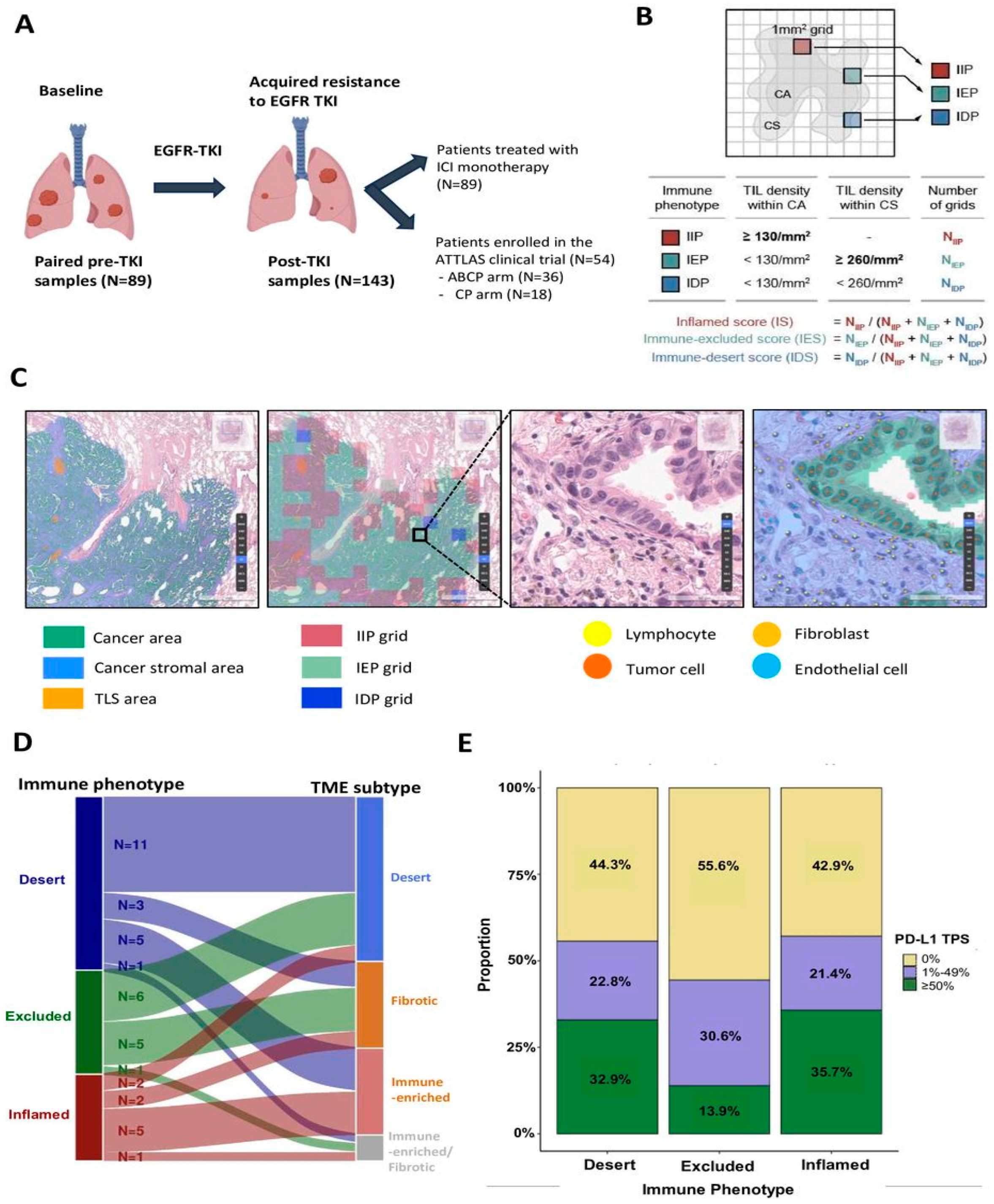
- Bang, Y.H.; Park, G.-H.; Hwang, S.; Jeong, J.-G.; Lee, B.; Joe, C.; Kim, H.; Kim, J.; Jung, H.A.; Park, S.; et al. Artificial Intelligence-Powered Spatial Analysis of Tumor Microenvironment in Non-Small Cell Lung Cancer Patients Who Acquired Resistance after EGFR Tyrosine Kinase Inhibitors. J. Clin. Oncol. 2025, 43, 8536. [Google Scholar] [CrossRef]
- Crimini, E.; Repetto, M.; Fougier, T.; Curigliano, G. Abstract 3653: Comparison between Rule-Based, AI-Powered and Manual Clinical Trial Matching Using OncoSolver, a Newly-Developed Clinical Decision Support Tool. Cancer Res. 2025, 85, 3653. [Google Scholar] [CrossRef]
- Jung, H.A.; Park, B.; Park, S.; Sun, J.-M.; Lee, S.-H.; Seok Ahn, J.; Ahn, M.-J. Survival Benefit in EGFR-Wild and ALK Negative NSCLC Patients Who Participate in Clinical Trials Compared to Standard-of-Care: Propensity-Matched Analysis. Lung Cancer 2024, 190, 107536. [Google Scholar] [CrossRef] [PubMed]
- Le, M.H.N.; Nguyen, P.K.; Nguyen, T.P.T.; Nguyen, H.Q.; Tam, D.N.H.; Huynh, H.H.; Huynh, P.K.; Le, N.Q.K. An In-Depth Review of AI-Powered Advancements in Cancer Drug Discovery. Biochim. Biophys. Acta-Mol. Basis Dis. 2025, 1871, 167680. [Google Scholar] [CrossRef]
- Debellotte, O.; Dookie, R.L.; Rinkoo, F.; Kar, A.; Salazar González, J.F.; Saraf, P.; Aflahe Iqbal, M.; Ghazaryan, L.; Mukunde, A.-C.; Khalid, A.; et al. Artificial Intelligence and Early Detection of Breast, Lung, and Colon Cancer: A Narrative Review. Cureus 2025, 17, e79199. [Google Scholar] [CrossRef]
- Katsoulakis, E.; Wang, Q.; Wu, H.; Shahriyari, L.; Fletcher, R.; Liu, J.; Achenie, L.; Liu, H.; Jackson, P.; Xiao, Y.; et al. Digital Twins for Health: A Scoping Review. NPJ Digit. Med. 2024, 7, 77. [Google Scholar] [CrossRef] [PubMed]
- Bouriga, R.; Bailleux, C.; Gal, J.; Chamorey, E.; Mograbi, B.; Hannoun-Levi, J.-M.; Milano, G. Advances and Critical Aspects in Cancer Treatment Development Using Digital Twins. Brief. Bioinform. 2025, 26, bbaf237. [Google Scholar] [CrossRef]
- Elgammal, Z.; Albrijawi, M.T.; Alhajj, R. Digital Twins in Healthcare: A Review of AI-Powered Practical Applications across Health Domains. J. Big Data 2025, 12, 234. [Google Scholar] [CrossRef]
- Li, T.; Shen, Y.; Li, Y.; Zhang, Y.; Wu, S. The Status Quo and Future Prospects of Digital Twins for Healthcare. EngMedicine 2024, 1, 100042. [Google Scholar] [CrossRef]
- Kabir, M.R.; Shishir, F.S.; Shomaji, S.; Ray, S. Digital Twins in Healthcare IoT: A Systematic Review. High-Confid. Comput. 2025, 5, 100340. [Google Scholar] [CrossRef]
- John, A.; Alhajj, R.; Rokne, J. A Systematic Review of AI as a Digital Twin for Prostate Cancer Care. Comput. Methods Programs Biomed. 2025, 268, 108804. [Google Scholar] [CrossRef] [PubMed]
- Shen, S.; Qi, W.; Liu, X.; Zeng, J.; Li, S.; Zhu, X.; Dong, C.; Wang, B.; Shi, Y.; Yao, J.; et al. From Virtual to Reality: Innovative Practices of Digital Twins in Tumor Therapy. J. Transl. Med. 2025, 23, 348. [Google Scholar] [CrossRef]
- Kumar, Y.; Shrivastav, S.; Garg, K.; Modi, N.; Wiltos, K.; Woźniak, M.; Ijaz, M.F. Automating Cancer Diagnosis Using Advanced Deep Learning Techniques for Multi-Cancer Image Classification. Sci. Rep. 2024, 14, 25006. [Google Scholar] [CrossRef]
- Zhang, J.; Budhdeo, S.; William, W.; Cerrato, P.; Shuaib, H.; Sood, H.; Ashrafian, H.; Halamka, J.; Teo, J.T. Moving towards Vertically Integrated Artificial Intelligence Development. NPJ Digit. Med. 2022, 5, 143. [Google Scholar] [CrossRef]
- Han, C.; Pan, X.; Yan, L.; Lin, H.; Li, B.; Yao, S.; Lv, S.; Shi, Z.; Mai, J.; Lin, J.; et al. WSSS4LUAD: Grand Challenge on Weakly-Supervised Tissue Semantic Segmentation for Lung Adenocarcinoma. arXiv 2022, arXiv:2204.06455. [Google Scholar]
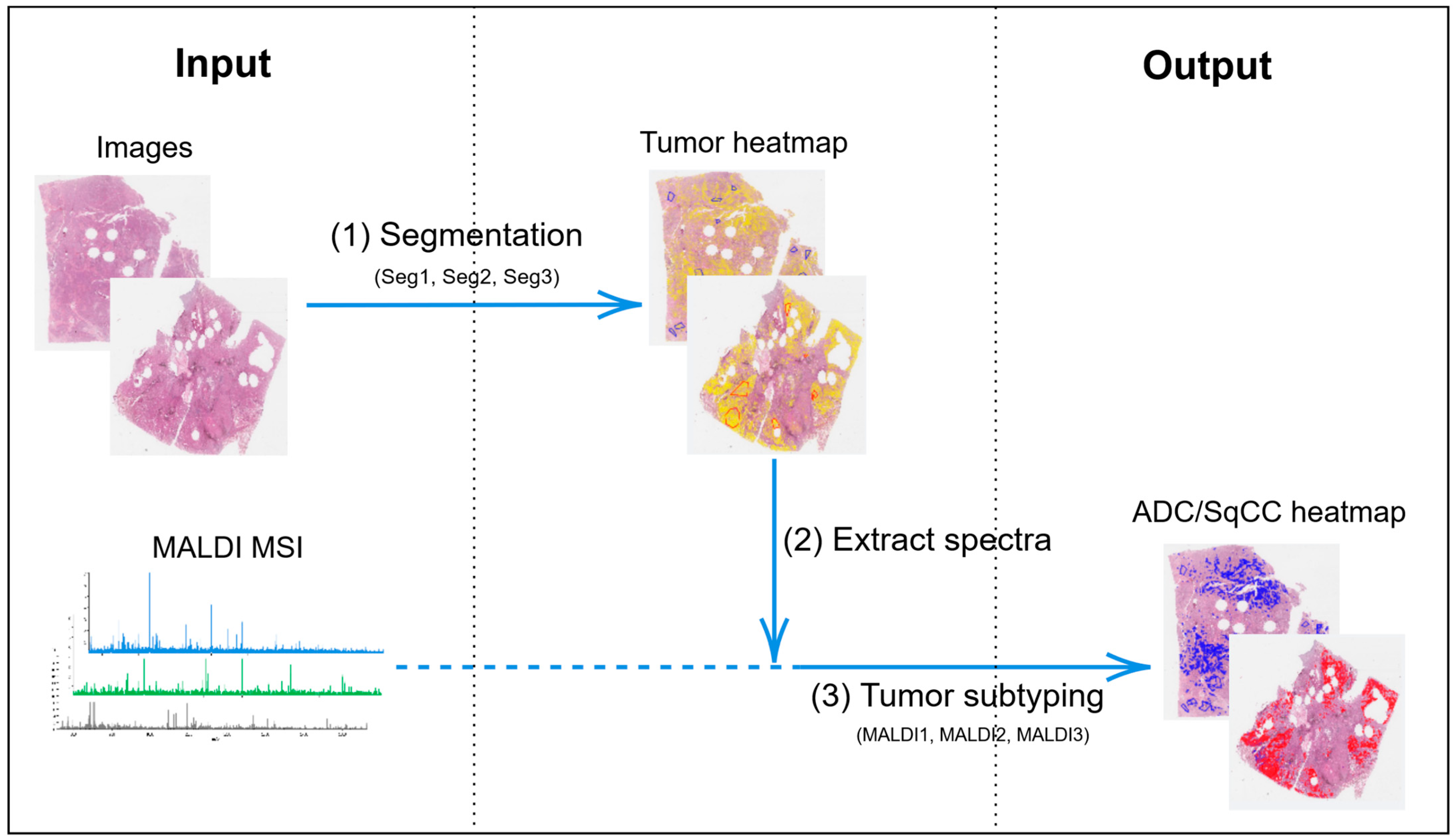
- Janßen, C.; Boskamp, T.; Le’Clerc Arrastia, J.; Otero Baguer, D.; Hauberg-Lotte, L.; Kriegsmann, M.; Kriegsmann, K.; Steinbuß, G.; Casadonte, R.; Kriegsmann, J.; et al. Multimodal Lung Cancer Subtyping Using Deep Learning Neural Networks on Whole Slide Tissue Images and MALDI MSI. Cancers 2022, 14, 6181. [Google Scholar] [CrossRef]
- Tusher, M.I.; Hossain, M.R.; Akter, A.; Mahin, M.R.H.; Akhi, S.S.; Chy, M.S.K.; Haider, M.; Akter, S.; Hasan, M.M.; Shaima, M. Deep Learning Meets Early Diagnosis: A Hybrid CNN-DNN Framework for Lung Cancer Prediction and Clinical Translation. Int. J. Med. Sci. Public Health Res. 2025, 6, 63–72. [Google Scholar] [CrossRef]
- Sakamoto, T.; Furukawa, T.; Lami, K.; Pham, H.H.N.; Uegami, W.; Kuroda, K.; Kawai, M.; Sakanashi, H.; Cooper, L.A.D.; Bychkov, A.; et al. A Narrative Review of Digital Pathology and Artificial Intelligence: Focusing on Lung Cancer. Transl. Lung Cancer Res. 2020, 9, 2255–2276. [Google Scholar] [CrossRef]
- Xing, W.; Sun, H.; Yan, C.; Zhao, C.; Wang, D.; Li, M.; Ma, J. A Prediction Model Based on DNA Methylation Biomarkers and Radiological Characteristics for Identifying Malignant from Benign Pulmonary Nodules. BMC Cancer 2021, 21, 263. [Google Scholar] [CrossRef] [PubMed]
- Ye, M.; Tong, L.; Zheng, X.; Wang, H.; Zhou, H.; Zhu, X.; Zhou, C.; Zhao, P.; Wang, Y.; Wang, Q.; et al. A Classifier for Improving Early Lung Cancer Diagnosis Incorporating Artificial Intelligence and Liquid Biopsy. Front. Oncol. 2022, 12, 853801. [Google Scholar] [CrossRef]
- Chen, X.; Xu, H.; Qi, Q.; Sun, C.; Jin, J.; Zhao, H.; Wang, X.; Weng, W.; Wang, S.; Sui, X.; et al. AI-Based Chest CT Semantic Segmentation Algorithm Enables Semi-Automated Lung Cancer Surgery Planning by Recognizing Anatomical Variants of Pulmonary Vessels. Front. Oncol. 2022, 12, 1021084. [Google Scholar] [CrossRef] [PubMed]
- Ye, S.; Pan, J.; Ye, Z.; Cao, Z.; Cai, X.; Zheng, H.; Ye, H. Construction and Validation of Early Warning Model of Lung Cancer Based on Machine Learning: A Retrospective Study. Technol. Cancer Res. Treat. 2022, 21, 15330338221136724. [Google Scholar] [CrossRef]
- Xie, X.; Yu, W.; Wang, L.; Yang, J.; Tu, X.; Liu, X.; Liu, S.; Zhou, H.; Chi, R.; Huang, Y. SERS-Based AI Diagnosis of Lung and Gastric Cancer via Exhaled Breath. Spectrochim. Acta Part A Mol. Biomol. Spectrosc. 2024, 314, 124181. [Google Scholar] [CrossRef]
- Bushara, A.R.; Vinod Kumar, R.S.; Kumar, S.S. Classification of Benign and Malignancy in Lung Cancer Using Capsule Networks with Dynamic Routing Algorithm on Computed Tomography Images. J. Artif. Intell. Technol. 2023, 4, 40–48. [Google Scholar] [CrossRef]
- Bulten, W.; Kartasalo, K.; Chen, P.-H.C.; Ström, P.; Pinckaers, H.; Nagpal, K.; Cai, Y.; Steiner, D.F.; van Boven, H.; Vink, R.; et al. Artificial Intelligence for Diagnosis and Gleason Grading of Prostate Cancer: The PANDA Challenge. Nat. Med. 2022, 28, 154–163. [Google Scholar] [CrossRef]
- van Eekelen, L.; Spronck, J.; Looijen-Salamon, M.; Vos, S.; Munari, E.; Girolami, I.; Eccher, A.; Acs, B.; Boyaci, C.; de Souza, G.S.; et al. Comparing Deep Learning and Pathologist Quantification of Cell-Level PD-L1 Expression in Non-Small Cell Lung Cancer Whole-Slide Images. Sci. Rep. 2024, 14, 7136. [Google Scholar] [CrossRef]
- Mehralivand, S.; Yang, D.; Harmon, S.A.; Xu, D.; Xu, Z.; Roth, H.; Masoudi, S.; Kesani, D.; Lay, N.; Merino, M.J.; et al. Deep Learning-Based Artificial Intelligence for Prostate Cancer Detection at Biparametric MRI. Abdom. Radiol. 2022, 47, 1425–1434. [Google Scholar] [CrossRef]
- Griem, J.; Eich, M.-L.; Schallenberg, S.; Pryalukhin, A.; Bychkov, A.; Fukuoka, J.; Zayats, V.; Hulla, W.; Munkhdelger, J.; Seper, A.; et al. Artificial Intelligence–Based Tool for Tumor Detection and Quantitative Tissue Analysis in Colorectal Specimens. Mod. Pathol. 2023, 36, 100327. [Google Scholar] [CrossRef]
- Wang, W. Challenges and Promotional Strategies for the Clinical Translation of Fractal Theory in Medical Diagnosis. Sci. Technol. Eng. Chem. Environ. Prot. 2025, 1, 1–6. [Google Scholar] [CrossRef]
- Corti, C.; Cobanaj, M.; Marian, F.; Dee, E.C.; Lloyd, M.R.; Marcu, S.; Dombrovschi, A.; Biondetti, G.P.; Batalini, F.; Celi, L.A.; et al. Artificial Intelligence for Prediction of Treatment Outcomes in Breast Cancer: Systematic Review of Design, Reporting Standards, and Bias. Cancer Treat. Rev. 2022, 108, 102410. [Google Scholar] [CrossRef] [PubMed]
- Zheng, J.; Lin, X.; Li, M. Artificial intelligence-based magnetic resonance imaging for preoperative staging of patients with endometrial cancer: A systematic review and meta-analysis. Front. Oncol. 2026, 15, 1673060. [Google Scholar] [CrossRef] [PubMed]
- Sadeghi, Z.; Alizadehsani, R.; CIFCI, M.A.; Kausar, S.; Rehman, R.; Mahanta, P.; Bora, P.K.; Almasri, A.; Alkhawaldeh, R.S.; Hussain, S.; et al. A Review of Explainable Artificial Intelligence in Healthcare. Comput. Electr. Eng. 2024, 118, 109370. [Google Scholar] [CrossRef]
- Saarela, M.; Podgorelec, V. Recent Applications of Explainable AI (XAI): A Systematic Literature Review. Appl. Sci. 2024, 14, 8884. [Google Scholar] [CrossRef]
- Nazir, S.; Dickson, D.M.; Akram, M.U. Survey of Explainable Artificial Intelligence Techniques for Biomedical Imaging with Deep Neural Networks. Comput. Biol. Med. 2023, 156, 106668. [Google Scholar] [CrossRef]
- Mienye, I.D.; Obaido, G.; Jere, N.; Mienye, E.; Aruleba, K.; Emmanuel, I.D.; Ogbuokiri, B. A Survey of Explainable Artificial Intelligence in Healthcare: Concepts, Applications, and Challenges. Inform. Med. Unlocked 2024, 51, 101587. [Google Scholar] [CrossRef]
- Mahmood, S.; Hasan, R.; Hussain, S.; Adhikari, R. An Interpretable and Generalizable Machine Learning Model for Predicting Asthma Outcomes: Integrating AutoML and Explainable AI Techniques. World 2025, 6, 15. [Google Scholar] [CrossRef]
- Noor, A.A.; Manzoor, A.; Mazhar Qureshi, M.D.; Qureshi, M.A.; Rashwan, W. Unveiling Explainable AI in Healthcare: Current Trends, Challenges, and Future Directions. WIREs Data Min. Knowl. Discov. 2025, 15, e70018. [Google Scholar] [CrossRef]
- Yang, W.; Wei, Y.; Wei, H.; Chen, Y.; Huang, G.; Li, X.; Li, R.; Yao, N.; Wang, X.; Gu, X.; et al. Survey on Explainable AI: From Approaches, Limitations and Applications Aspects. Hum.-Centric Intell. Syst. 2023, 3, 161–188. [Google Scholar] [CrossRef]
- Agrawal, R.; Gupta, T.; Gupta, S.; Chauhan, S.; Patel, P.; Hamdare, S. Fostering Trust and Interpretability: Integrating Explainable AI (XAI) with Machine Learning for Enhanced Disease Prediction and Decision Transparency. Diagn. Pathol. 2025, 20, 105. [Google Scholar] [CrossRef]
- Oyekunle, C.O.; Adebunmi, O.A.; Adams, G.A.; Lucy, A.A.; Chidimma, F.A. Ethical AI: Addressing Bias in Machine Learning Models and Software Applications. Comput. Sci. IT Res. J. 2022, 3, 115–126. [Google Scholar] [CrossRef]
- Chamouni, G.; Lococo, F.; Sassorossi, C.; Atuhaire, N.; Ádány, R.; Varga, O. Ethical and Legal Concerns in Artificial Intelligence Applications for the Diagnosis and Treatment of Lung Cancer: A Scoping Review. Front. Public Heal. 2025, 13, 1663298. [Google Scholar] [CrossRef]
- Roche, C.; Wall, P.J.; Lewis, D. Ethics and Diversity in Artificial Intelligence Policies, Strategies and Initiatives. AI Ethics 2023, 3, 1095–1115. [Google Scholar] [CrossRef] [PubMed]
- Zhang, J.; Zhang, Z. Ethics and Governance of Trustworthy Medical Artificial Intelligence. BMC Med. Inform. Decis. Mak. 2023, 23, 7. [Google Scholar] [CrossRef] [PubMed]
- Mökander, J.; Schuett, J.; Kirk, H.R.; Floridi, L. Auditing Large Language Models: A Three-Layered Approach. AI Ethics 2024, 4, 1085–1115. [Google Scholar] [CrossRef]
- Sun, Q. Intelligent Social Welfare: How AI Optimizes Social Assistance, Elderly Care, and Healthcare Systems. Digit. Soc. Virtual Gov. 2025, 1, 17–32. [Google Scholar] [CrossRef]
- Mayrhofer, M.T.; Lavitrano, M.; Kozlakidis, Z. Insights and Outlook from the First Ethical, Legal, and Social Implication Symposium of the BBMRI-ERIC Academy at International Agency for Research on Cancer/World Health Organization. Biopreserv. Biobank. 2025, 19475535251370637. [Google Scholar] [CrossRef]
- De Gagne, J.C.; Hwang, H.; Jung, D. Cyberethics in Nursing Education: Ethical Implications of Artificial Intelligence. Nurs. Ethics 2024, 31, 1021–1030. [Google Scholar] [CrossRef]
- Bleher, H.; Braun, M. Reflections on Putting AI Ethics into Practice: How Three AI Ethics Approaches Conceptualize Theory and Practice. Sci. Eng. Ethics 2023, 29, 21. [Google Scholar] [CrossRef] [PubMed]
- Dellamonica, D.; Ruau, D.; Griffiths, B.; Rossi, G.; Li, B.T.; Razavi, P.; Di Maio, T.; Gonzalez, T.; Remorino, A.; Reis-Filho, J.S.; et al. The AI Revolution: How Multimodal Intelligence Will Reshape the Oncology Ecosystem. NPJ Artif. Intell. 2025, 1, 40. [Google Scholar] [CrossRef]
- Hasanzad, M.; Nosrati, M.; Khatami, F.; Rahmani, P.; Sarhangi, N.; Nikfar, S.; Abdollahi, M. Drug Discovery in the Context of Precision Medicine and Artificial Intelligence. Expert Rev. Precis. Med. Drug Dev. 2024, 9, 42–53. [Google Scholar] [CrossRef]
- Grenier, P.A.; Brun, A.L.; Mellot, F. The Potential Role of Artificial Intelligence in Lung Cancer Screening Using Low-Dose Computed Tomography. Diagnostics 2022, 12, 2435. [Google Scholar] [CrossRef]
- Behar Harpaz, S.; Weber, M.F.; Wade, S.; Ngo, P.J.; Vaneckova, P.; Sarich, P.E.A.; Cressman, S.; Tammemagi, M.C.; Fong, K.; Marshall, H.; et al. Updated Cost-Effectiveness Analysis of Lung Cancer Screening for Australia, Capturing Differences in the Health Economic Impact of NELSON and NLST Outcomes. Br. J. Cancer 2023, 128, 91–101. [Google Scholar] [CrossRef]
- Wale, A.; Shaw, H.; Ayres, T.; Okolie, C.; Morgan, H.; Everitt, J.; Little, K.; Edwards, R.T.; Davies, J.; Lewis, R.; et al. A Rapid Review Exploring the Effectiveness of Artificial Intelligence for Cancer Diagnosis. medRxiv 2023. [Google Scholar] [CrossRef]
- Bonci, E.-A.; Bandura, A.; Dooley, A.; Erjan, A.; Gebreslase, H.W.; Hategan, M.; Khanduja, D.; Lai, E.; Lescaie, A.; Nitescu, G.V.; et al. Artificial Intelligence in NSCLC Management for Revolutionizing Diagnosis, Prognosis, and Treatment Optimization: A Systematic Review. Crit. Rev. Oncol. Hematol. 2025, 216, 104929. [Google Scholar] [CrossRef]
- Zhu, J.; Tian, L. Cost-Effectiveness of Kang Ai Injection plus Chemotherapy vs. Shenqi Fuzheng Injection plus Chemotherapy in the First-Line Treatment of Advanced Non-Small Cell Lung Cancer. Front. Med. 2024, 11, 1363484. [Google Scholar] [CrossRef]
- Fagery, M.; Khorshidi, H.A.; Wong, S.Q.; Vu, M.; IJzerman, M. Health Economic Evidence and Modeling Challenges for Liquid Biopsy Assays in Cancer Management: A Systematic Literature Review. Pharmacoeconomics 2023, 41, 1229–1248. [Google Scholar] [CrossRef] [PubMed]
- Farah, L.; Borget, I.; Martelli, N.; Vallee, A. Suitability of the Current Health Technology Assessment of Innovative Artificial Intelligence-Based Medical Devices: Scoping Literature Review. J. Med. Internet Res. 2024, 26, e51514. [Google Scholar] [CrossRef]
- Ligero, M.; El Nahhas, O.S.M.; Aldea, M.; Kather, J.N. Artificial Intelligence-Based Biomarkers for Treatment Decisions in Oncology. Trends Cancer 2025, 11, 232–244. [Google Scholar] [CrossRef]
- Zhou, Y.; Tao, L.; Qiu, J.; Xu, J.; Yang, X.; Zhang, Y.; Tian, X.; Guan, X.; Cen, X.; Zhao, Y. Tumor Biomarkers for Diagnosis, Prognosis and Targeted Therapy. Signal Transduct. Target. Ther. 2024, 9, 132. [Google Scholar] [CrossRef] [PubMed]
- Bhushan, A.; Misra, P. Unlocking the Potential: Multimodal AI in Biotechnology and Digital Medicine—Economic Impact and Ethical Challenges. NPJ Digit. Med. 2025, 8, 619. [Google Scholar] [CrossRef]
- Alum, E.U. AI-Driven Biomarker Discovery: Enhancing Precision in Cancer Diagnosis and Prognosis. Discov. Oncol. 2025, 16, 313. [Google Scholar] [CrossRef] [PubMed]
- Ricketts, W.; Gutteridge, C.; Houston, A.; Williams, S.; Tackaberry, C.; Simon, M.; Thomas, H.; Bogdanovskaya, M.; Tout, E.; Conibear, J. AI-Based Approach to Enable Proactive Identification of Early Lung Cancer: A Retrospective Population Health Study and Economic Model. J. Clin. Oncol. 2024, 42, 10536. [Google Scholar] [CrossRef]
- Huang, F.; Lin, X.; Hong, Y.; Li, Y.; Li, Y.; Chen, W.-T.; Chen, W. The Feasibility and Cost-Effectiveness of Implementing Mobile Low-Dose Computed Tomography with an AI-Based Diagnostic System in Underserved Populations. BMC Cancer 2025, 25, 345. [Google Scholar] [CrossRef]
- Bukke, S.P.N.; Komarla Kumarachari, R.; Komarla Rajasekhar, E.S.; Dudekula, J.B.; Kamati, M. Computational Intelligence Techniques for Achieving Sustainable Development Goals in Female Cancer Care. Discov. Sustain. 2024, 5, 390. [Google Scholar] [CrossRef]
- Oxford Insights Government AI Readiness Index—Oxford Insights. Available online: https://oxfordinsights.com/ai-readiness/ai-readiness-index/ (accessed on 30 November 2025).
- AI for Good Global Summit 2024. Available online: https://aiforgood.itu.int/summit24/ (accessed on 30 November 2025).
- Oskolas, H.; Nogueira, F.C.N.; Domont, G.B.; Yu, K.-H.; Semenov, Y.R.; Sorger, P.; Steinfelder, E.; Corps, L.; Schulz, L.; Wieslander, E.; et al. Comprehensive Biobanking Strategy with Clinical Impact at the European Cancer Moonshot Lund Center. J. Proteom. 2025, 316, 105442. [Google Scholar] [CrossRef] [PubMed]
- White House Office of Science. The Biden Cancer Moonshot: Ending Cancer As We Know It. Available online: https://bidenwhitehouse.archives.gov/ostp/news-updates/2025/01/15/the-biden-cancer-moonshot-ending-cancer-as-we-know-it/ (accessed on 30 November 2025).
- Li, M.; Xu, P.; Hu, J.; Tang, Z.; Yang, G. From Challenges and Pitfalls to Recommendations and Opportunities: Implementing Federated Learning in Healthcare. Med. Image Anal. 2025, 101, 103497. [Google Scholar] [CrossRef]
- Zuhair, V.; Babar, A.; Ali, R.; Oduoye, M.O.; Noor, Z.; Chris, K.; Okon, I.I.; Rehman, L.U. Exploring the Impact of Artificial Intelligence on Global Health and Enhancing Healthcare in Developing Nations. J. Prim. Care Community Health 2024, 15, 21501319241245847. [Google Scholar] [CrossRef]
- MICCAI. MICCAI Registered Challenges. Available online: https://miccai.org/index.php/special-interest-groups/challenges/miccai-registered-challenges (accessed on 30 November 2025).
- Zenk, M.; Baid, U.; Pati, S.; Linardos, A.; Edwards, B.; Sheller, M.; Foley, P.; Aristizabal, A.; Zimmerer, D.; Gruzdev, A.; et al. Towards Fair Decentralized Benchmarking of Healthcare AI Algorithms with the Federated Tumor Segmentation (FeTS) Challenge. Nat. Commun. 2025, 16, 6274. [Google Scholar] [CrossRef]
- Open Problems: Cracking Cell Complexity with Collective Intelligence. Available online: https://www.helmholtz-munich.de/en/ehc/ehc-news/news-detail/open-problems-cracking-cell-complexity-with-collective-intelligence (accessed on 30 November 2025).
- Christie, J.R.; Lang, P.; Zelko, L.M.; Palma, D.A.; Abdelrazek, M.; Mattonen, S.A. Artificial Intelligence in Lung Cancer: Bridging the Gap Between Computational Power and Clinical Decision-Making. Can. Assoc. Radiol. J. 2021, 72, 86–97. [Google Scholar] [CrossRef]
- Wang, C.; Li, J.; Chen, J.; Wang, Z.; Zhu, G.; Song, L.; Wu, J.; Li, C.; Qiu, R.; Chen, X.; et al. Multi-omics analyses reveal biological and clinical insights in recurrent stage I non-small cell lung cancer. Nat. Commun. 2025, 16, 1477. [Google Scholar] [CrossRef]
- Shariaty, F.; Pavlov, V.A.; Fedyashina, S.V.; Serebrennikov, N.A. Integrating Deep Learning and Explainable AI for Non-Invasive Prediction of EGFR and KRAS Mutations in NSCLC: A Novel Radiogenomic Approach. In Proceedings of the 2024 V International Conference on Neural Networks and Neurotechnologies (NeuroNT), St. Petersburg, Russia, 20 June 2024; IEEE: New York, NY, USA, 2024; pp. 32–35. [Google Scholar]
- Verma, S.; Magazzù, G.; Eftekhari, N.; Lou, T.; Gilhespy, A.; Occhipinti, A.; Angione, C. Cross-Attention Enables Deep Learning on Limited Omics-Imaging-Clinical Data of 130 Lung Cancer Patients. Cell Rep. Methods 2024, 4, 100817. [Google Scholar] [CrossRef] [PubMed]
- Park, M.-K.; Lim, J.-M.; Jeong, J.; Jang, Y.; Lee, J.-W.; Lee, J.-C.; Kim, H.; Koh, E.; Hwang, S.-J.; Kim, H.-G.; et al. Deep-Learning Algorithm and Concomitant Biomarker Identification for NSCLC Prediction Using Multi-Omics Data Integration. Biomolecules 2022, 12, 1839. [Google Scholar] [CrossRef] [PubMed]
- Lococo, F.; Boldrini, L.; Diepriye, C.-D.; Evangelista, J.; Nero, C.; Flamini, S.; Minucci, A.; De Paolis, E.; Vita, E.; Cesario, A.; et al. Lung Cancer Multi-Omics Digital Human Avatars for Integrating Precision Medicine into Clinical Practice: The LANTERN Study. BMC Cancer 2023, 23, 540. [Google Scholar] [CrossRef]
- Jamil, D.; Rocha, A.; Ferras, C. AI-Driven Computational Models for Lung Cancer Diagnosis: A Systematic Review and Meta-Analysis. Preprints 2025. [Google Scholar] [CrossRef]
- Jacob, E.; Arango-Argoty, G.; Bikiel, D.; Sun, G.; Kipkogei, E.; Smith, K. AI-Based Predictive Biomarker Discovery via Contrastive Learning Retrospectively Improves Clinical Trial Outcome. Preprints 2024. [Google Scholar] [CrossRef]
- Chen, J.; Chen, A.; Yang, S.; Liu, J.; Xie, C.; Jiang, H. Accuracy of machine learning in preoperative identi-fication of genetic mutation status in lung cancer: A systematic review and meta-analysis. Radiother. Oncol. 2024, 196, 110325. [Google Scholar] [CrossRef] [PubMed]
- Liu, R.; Wang, K.; Wang, S.; Zhang, Q. Biomarker Discovery Using Multimodal Data with the Potential Application in Lung Tumor Diagnosis. In Proceedings of the 2023 IEEE International Conference on Bioinformatics and Biomedicine (BIBM), Istanbul, Turkiye, 5 December 2023; IEEE: New York, NY, USA, 2023; pp. 3926–3932. [Google Scholar]
- Çalışkan, M.; Tazaki, K. AI/ML Advances in Non-Small Cell Lung Cancer Biomarker Discovery. Front. Oncol. 2023, 13, 1260374. [Google Scholar] [CrossRef] [PubMed]
- Ogochukwu, P.C.-N.; Victory, O.O.; Joseph, O.O.; Tobi, J.O.; Muhammad, I.A.; Michael, K.O.; Christopher, C.O. Computational Immunogenomics: Leveraging AI to Uncover Novel Biomarkers for Disease Diagnosis and Therapy. Int. J. Life Sci. Res. Arch. 2025, 9, 102–119. [Google Scholar] [CrossRef]
- Messinis, S.; Rallis, I.; Temenos, N.; Kalogeras, D.; Kastis, G.A.; Doulamis, N.; Protonotarios, N.E. Quantum Neural Networks Meet Federated Learning for DNA Mutation Prediction. Comput. Struct. Biotechnol. J. 2025, 30, 122–133. [Google Scholar] [CrossRef]
- Sun, M.; Cui, C. Transforming Lung Cancer Care: Synergizing Artificial Intelligence and Clinical Expertise for Precision Diagnosis and Treatment. AIMS Bioeng. 2023, 10, 331–361. [Google Scholar] [CrossRef]


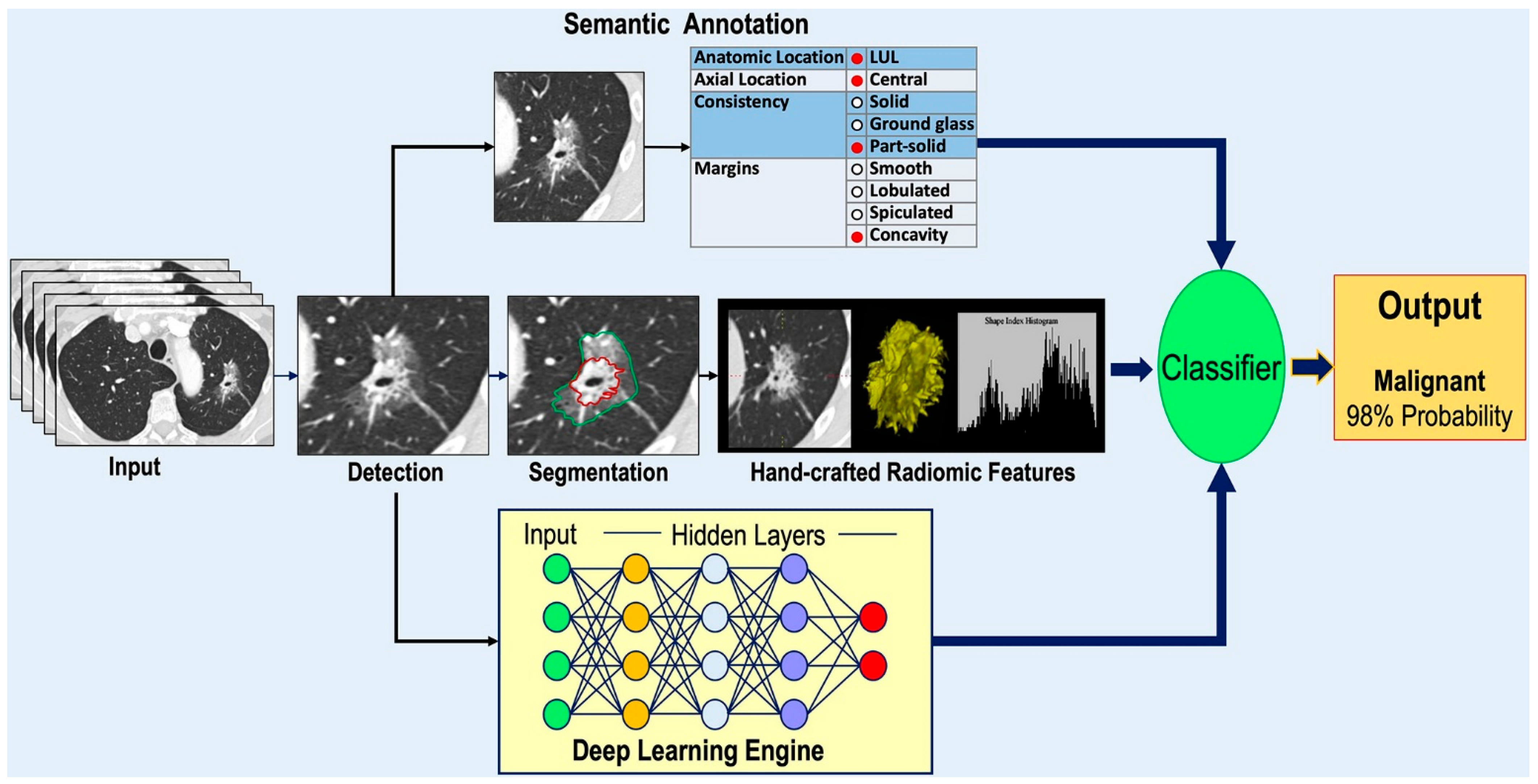


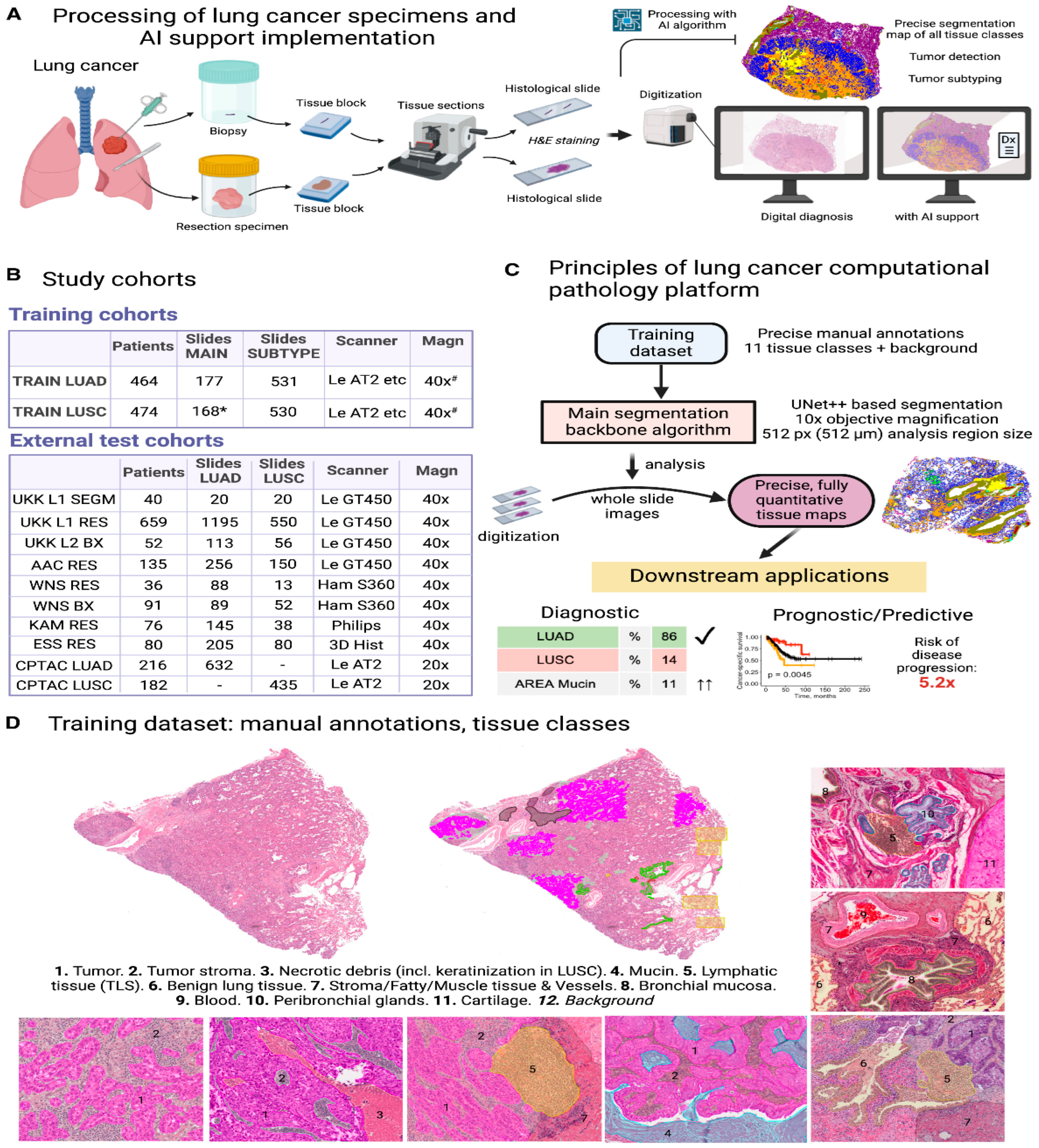


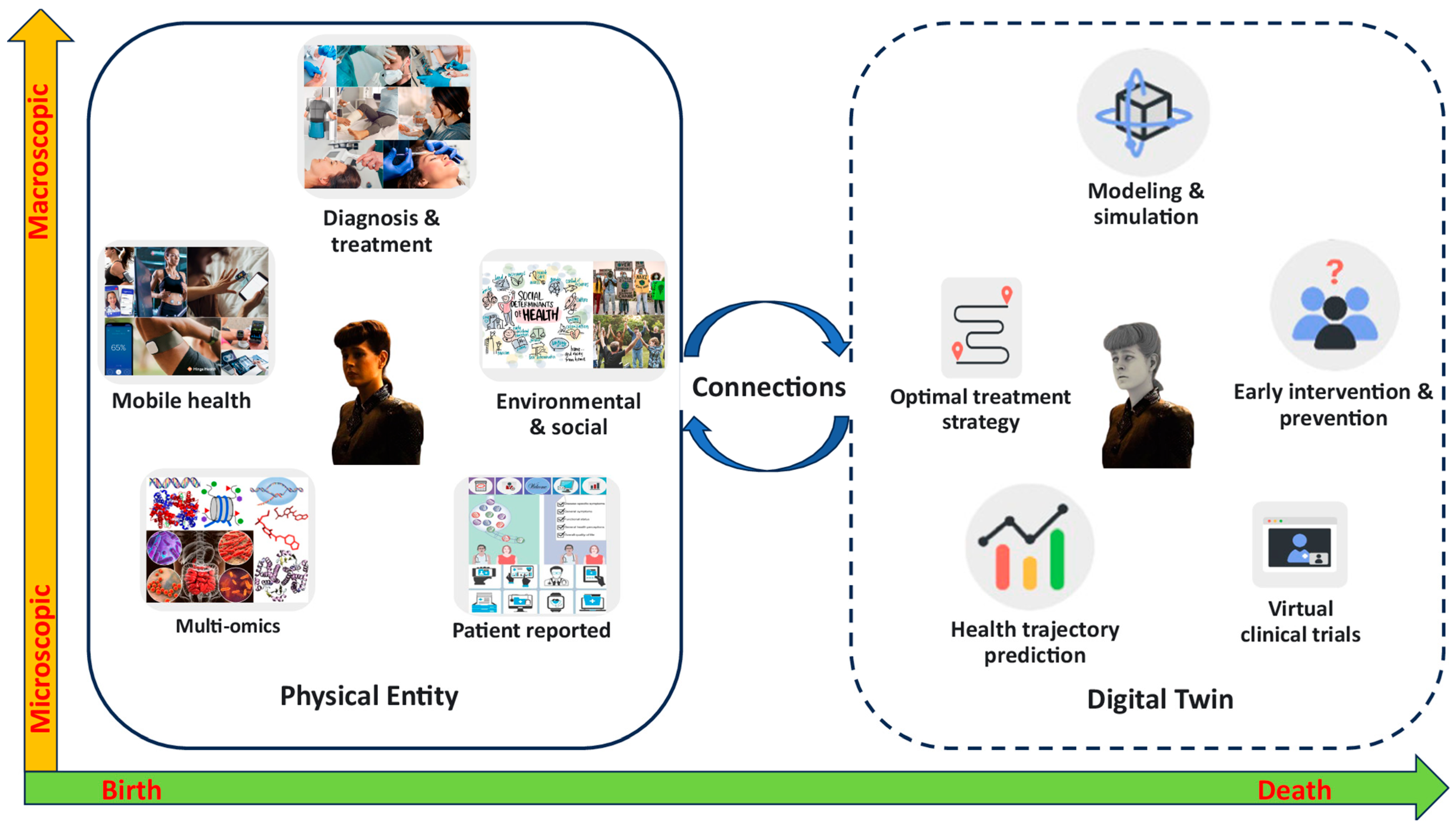



| Metric | Period | Value | Key Context |
|---|---|---|---|
| Global prevalence | 2021 | ~3.25 million cases | Age-standardized rate: 37.3 per 100,000 |
| Global incidence | 2022 | 2.48 million new cases | Highest rates in Europe and Asia; ~8.5× higher in high-HDI vs. low-HDI countries |
| Global mortality | 2022 | ~1.82 million deaths | Leading cause of global cancer mortality; age-standardized rate: 16.8 per 100,000 |
| Mortality-to-incidence ratio | Global aggregate | 0.71 | Proxy for 5-year survival; indicates high fatality relative to diagnosis |
| Gender disparity | 2020 data | Incidence and mortality ~2× higher in men vs. women | Pattern observed globally, though rates among women are rising in some high-income regions |
| Regional burden (mortality) | 2020 | Eastern Asia accounts for ~50% of global deaths | Hungary: highest mortality rate (42.4/100,000); Nigeria: lowest (0.86/100,000) |
| Historical trend (mortality increase) | 1990–2019 | +91.75% | Reaching >2 million deaths in 2019 |
| Projected annual burden (2050) | 2050 (projected) | 3.8 million new cases; 3.2 million deaths | Driven by aging populations and persistent risk factors (e.g., smoking, air pollution) |
| Projected United States burden (2050) | 2050 (projected) | ~330,000 new cases; ~200,000 deaths | Notable gender disparity in incidence and mortality expected to persist |
| Category | Key Challenge | Promise of AI | Relevant AI Applications | Refs. |
|---|---|---|---|---|
| Early detection and diagnosis | Lack of discernible symptoms in early stages; difficulty in early detection. | AI enhances screening efficiency and accuracy, enabling earlier diagnosis. | Nodule classification: AI improves classification of pulmonary nodules on CT scans. Radiomics and DL: Central to detection and diagnosis in lung imaging. Performance: AI can perform equivalently to an average radiologist in identifying tumors on chest radiographs. | [16,20,21] |
| Precise diagnosis and subtyping | Differentiating between subtypes (e.g., adenocarcinoma in situ vs. invasive) is complicated by tissue heterogeneity. | AI enables precise cancer subtyping and grading through computational pathology and advanced imaging analysis. | Computational pathology: DL models analyze whole-slide images for subtyping and grading. Multi-modal AI: Integrates radiological, clinical, and genetic data for more personalized diagnostic tools. | [22] |
| Biomarker and treatment response | Biomarkers like carcinoembryonic antigen are not specific to lung cancer; treatment resistance (e.g., to immunotherapy in NSCLC) is a major obstacle. | AI discovers non-invasive biomarkers and predicts treatment response, personalizing therapy selection. | Predicting EGFR status: AI algorithms using radiomics predict mutation status for targeted therapy. Immunotherapy response: AI-driven gene signatures (e.g., stemness-related) decipher prognosis and immunotherapy response. Precision immuno-oncology: AI exploits high-dimension data for predictive biomarker discovery. | [24,25,26] |
| Health equity and access | Systemic disparities in access to preventive services for ethnically and socioeconomically marginalized groups. | AI has the potential to improve research methods and bolster outcomes, addressing disparities in access. | Equity potential: Integration of robust AI models with diverse datasets holds promise for achieving equity across the diagnostic continuum. | [15] |
| Trust and adoption | ‘Black box’ problem; lack of transparency in AI tools hinders critical medical judgment. | Development of explainable AI provides clarity and trustworthiness in predictions, fostering clinical adoption. | Explainable AI: A growing emphasis on explainable AI to ensure understandable insights into the AI decision-making process. | [19,23] |
| AI Methodology | Description | Key Applications in Medicine | Examples in Lung Cancer Context | Refs. |
|---|---|---|---|---|
| ML | Algorithms that learn patterns from data to make predictions or decisions without being explicitly programmed. | Clinical decision support, risk stratification, optimizing patient selection for clinical trials. | Predicting EGFR mutation status; classifying pulmonary nodules as benign or malignant. | [28,29] |
| DL | A subset of ML using multi-layered (deep) neural networks to model complex, hierarchical patterns from raw data. | Medical image analysis, automated segmentation, and feature extraction from radiology and pathology images. | Automated detection and characterization of lung nodules on CT scans; cancer subtyping from whole-slide images. | [30,31] |
| CNNs | A specialized DL architecture designed for processing grid-like data such as images, using convolutional layers to detect spatial features. | Radiology and pathology image classification, detection, and segmentation. | Identifying malignant nodules on CT; Gleason grading in pathology; reducing radiologist reporting burden. | [31,32] |
| NLP | Techniques for analyzing, interpreting, and generating human language. | Extracting structured information from unstructured clinical notes and EHRs; literature mining; decision support. | Converting unstructured EHR notes into analyzable data for predictive modeling of disease progression. | [34,43] |
| Radiomics | The high-throughput extraction of quantitative features from medical images to characterize tissue heterogeneity and disease phenotypes. | Predicting treatment response, prognosis, and correlating imaging features with genomic data. | Predicting PD-L1 expression, immunotherapy response, and overall survival from CT-based radiomic features. | [37,38] |
| RL | A paradigm where an algorithm learns optimal actions through trial-and-error interactions with an environment to maximize a cumulative reward. | Adaptive treatment planning, personalized dosing strategies, and diagnosis under uncertainty. | Optimizing radiotherapy dose fractions based on sequential CT scans during NSCLC therapy. | [39] |
| Generative AI | Models that learn the underlying distribution of data to generate new, synthetic data samples (e.g., Generative Adversarial Networks). | Data augmentation, synthetic image generation to overcome data scarcity, and predictive modeling. | Creating realistic synthetic medical images to train robust DL models when annotated datasets are limited. | [34] |
| AI Strategy | Key Limitations | Proposed Context-Specific Solutions |
|---|---|---|
| Radiomics |
|
|
| Genomics/molecular AI |
|
|
| Multimodal AI |
|
|
| Deep learning (image-based) |
|
|
| Liquid biopsy + AI |
|
|
| Digital/computational pathology |
|
|
| Data Modality | Description and Role in AI | Key Insights | Integration Examples | Refs. |
|---|---|---|---|---|
| Medical imaging | Radiology data (e.g., CT, PET/CT) forms a cornerstone for diagnostic AI, providing morphological and structural information. | Enables early detection, nodule characterization, and extraction of radiomic features that correlate with tumor biology. | Automated RWD integration: Techniques bridge gaps between disparate data sources (hospital, academic, commercial) to enhance cancer outcome predictions. | [44] |
| Genomic data | Includes DNA sequencing, RNA expression profiles, and mutation data, offering a molecular characterization of the tumor. | Critical for understanding tumor heterogeneity, identifying actionable mutations, and tailoring targeted therapies. | Clinico-genomic databases: Real-world databases (e.g., Flatiron Health-Foundation Medicine) link genomic information with clinical data to characterize mutation-treatment effects. European perspective: Highlights the importance of real-world genomic data for precision oncology. | [45,46] |
| Electronic health records (EHRs) | A rich repository of patient-specific clinical information, including diagnostic reports, procedural notes, and unstructured clinical narratives. | Provides comprehensive clinical histories for predictive modeling of disease progression and uncovering patient trajectories. | NLP transformation: NLP techniques convert unstructured EHR notes into analyzable, structured data for AI models. Predictive modeling: AI-driven analysis of EHRs unveils patient trajectories and identifies potential biomarkers. | [47,48] |
| Real-world data (RWD) | Encompasses data collected outside of controlled clinical trials, including EHRs, claims data, and patient registries. | Reflects actual clinical practice and patient outcomes, providing insights into treatment effectiveness and disease heterogeneity. | Improved prognostics: DL algorithms trained on RWD show improved predictive capabilities for patient prognosis. Underutilization: Challenges in standardization and integration across sources limit full potential. | [43,48] |
| Integrated multi-modal data | The convergence of imaging, genomic, and clinical data to create a holistic view of the patient’s disease state. | Overcomes limitations of single data types, enabling more precise diagnostics, prognostication, and personalized interventions. | Deep patient models: Development of models like DeePaN, which integrates EHRs and genomic data to predict treatment responses. Foundation Models: Large-scale AI models trained on extensive, integrated multi-omics and clinical datasets to uncover complex biological mechanisms. | [50,51] |
| Challenge | Limitations | Proposed Solutions and Strategies | Refs. |
|---|---|---|---|
| Data and standardization | Lack of standardized data acquisition protocols; heterogeneity in data quality and formats limits algorithmic robustness and generalizability. | Develop unified norms for medical data collection; use federated learning (e.g., Federated Tumor Segmentation initiative); create large, diverse, multi-institutional datasets. | [198,213] |
| Algorithmic and technical limitations | Models struggle with subtle early-stage radiological features; difficulty distinguishing cancer types with shared biomarkers; lack of robustness across diverse datasets. | Develop more sophisticated architectures (e.g., multimodal DL); employ techniques like uncertainty quantification; rigorous multi-center validation. | [201,207] |
| Validation and reporting gaps | Insufficient external validation on independent, diverse cohorts; critical reporting standards (e.g., ethnicity, model calibration) are frequently overlooked. | Conduct large-scale, multi-center validation studies (e.g., PANDA challenge); adhere to rigorous reporting guidelines for transparency and reproducibility. | [209,214] |
| Clinical acceptance and workflow integration | Low levels of trust from clinicians; ‘black box’ problem; lack of seamless integration into existing clinical workflows and EHR systems. | Develop explainable AI and user-friendly interfaces; incorporate confidence metrics (e.g., uncertainty quantification); foster interdisciplinary collaboration. | [116,213] |
| Overarching strategy | The absence of a holistic, integrated approach from development to deployment. | Adopt a ‘vertically integrated’ approach that considers data lifecycles, impact evaluation, and production from the outset. Cultivate interdisciplinary talent. | [198,213] |
| Aspect | Description and Function | Role in Clinical Translation | Refs. |
|---|---|---|---|
| Core techniques | SHAP: A game theory-based method that assigns each feature an importance value for a specific prediction. LIME: Approximates a complex model with a simpler, interpretable one locally around a specific prediction. | Provides post hoc explanations for individual AI decisions, making ‘black box’ models more transparent. Identifies key features (e.g., nodule size, texture) that drove a diagnosis. | [216,217] |
| Clinical utility and impact | Generates visual explanations (e.g., heatmaps, feature importance plots) that align with clinical reasoning. This bridges the gap between computational output and medical intuition. | Enhances clinician trust and confidence in AI systems by providing a clear, understandable rationale for recommendations, which is vital for adoption in high-stakes diagnostics. | [219,222] |
| Implementation and examples | Integrated into AI models like DeepXplainer for lung cancer detection. Used alongside AutoML to create systems that are both accurate and interpretable. | Facilitates a ‘second look’ by clinicians, allowing them to verify the AI’s logic and integrate its findings into their own diagnostic workflow more effectively. | [216,220] |
| Limitations and challenges | Explanations can be complex for non-experts; methods like SHAP can be computationally expensive; potential for misinterpretation of the generated explanations remains. | Ongoing research focuses on refining these methods to be more efficient and on creating more intuitive visualization tools tailored for clinical end-users. | [221,223] |
| Domain | Key Challenges | Considerations and Mitigation Strategies | Refs. |
|---|---|---|---|
| Ethical and fairness | Algorithmic bias: AI models trained on non-representative data can perpetuate and amplify health disparities, leading to unfair outcomes for underrepresented groups. | Curate diverse, representative datasets; implement bias detection and mitigation strategies during model development; conduct fairness audits across demographic subgroups. | [224,227,228] |
| Legal and liability | Accountability and liability: Unclear legal responsibility for diagnostic errors or patient harm caused by AI recommendations. Issues of data confidentiality and informed consent for AI use. | Establish clear legal frameworks defining responsibilities of developers, providers, and users; update informed consent processes to include AI; develop standards for safety and accountability. | [225,226,231] |
| Social and equity | Equity of access: Risk that AI tools could worsen existing health disparities if deployed primarily in well-resourced settings. Societal trust: Public and clinician skepticism due to AI’s opacity and potential for error. | Develop policies that promote equitable access to AI-driven care; foster public and clinician engagement through transparency and education; adopt gender-sensitive and culturally aware approaches. | [226,229,230] |
| Governance and trustworthiness | Lack of robust governance: Absence of comprehensive frameworks for ensuring AI systems are transparent, accountable, and aligned with ethical principles like autonomy, beneficence, and justice. | Implement multidisciplinary ethical governance; use auditing as a tool for ongoing evaluation (e.g., 3-layered audits); embed ethical principles into the entire AI lifecycle from design to deployment. | [227,228,232] |
| Application | Economic Impact and Cost-Drivers | Key Findings | Refs. |
|---|---|---|---|
| Screening and diagnosis | Cost savings: Reduces false positives and unnecessary follow-up procedures (e.g., biopsies). Efficiency: Streamlines diagnostic workflows, reducing delays and resource use. | AI as a second reader in low-dose CT screening can improve cost-effectiveness by minimizing false positives. AI models streamline diagnosis, enabling faster, more accurate early detection. | [235,236,237] |
| Treatment personalization | Therapeutic efficiency: Aids in selecting effective therapies, avoiding costs of ineffective treatments and managing adverse events. Optimization: Personalizes therapy, improving outcomes and resource allocation. | AI can personalize therapy for complex cases like NSCLC, potentially avoiding costly, ineffective treatments. AI-enhanced radiomics in PET/CT improves tumor characterization for precise treatment selection. | [85,238,239] |
| Drug development | Accelerated pipelines: Reduces time and cost of drug discovery by identifying targets and candidates more efficiently. Resource optimization: Improves success rates in preclinical and clinical stages. | AI meets the demand for faster, cost-effective drug discovery by predicting drug-target interactions and generating novel chemical entities. | [244,245] |
| Operational efficiency and access | Hospital workflows: Optimizes resource allocation, reduces hospital stays, and streamlines decision-making. Accessibility: AI-enabled mobile units can improve access in underserved populations. | AI improves operational efficiency in hospital settings. Deployment of mobile low-dose CT units with AI can enhance accessibility and cost-effectiveness in rural/underserved areas. | [245,247] |
| Methodological challenges | Assessment complexity: Current health economic models may be inadequate for evaluating AI’s unique features (e.g., continuous learning, algorithm updates). Evidence gaps: Lack of long-term cost–benefit analyses and data on patient-reported outcomes. | Health technology assessment frameworks need adaptation for AI-based devices. Economic evidence for complex AI interventions, like liquid biopsy, remains limited and requires sophisticated modeling. | [238,240,241] |
Disclaimer/Publisher’s Note: The statements, opinions and data contained in all publications are solely those of the individual author(s) and contributor(s) and not of MDPI and/or the editor(s). MDPI and/or the editor(s) disclaim responsibility for any injury to people or property resulting from any ideas, methods, instructions or products referred to in the content. |
© 2026 by the authors. Licensee MDPI, Basel, Switzerland. This article is an open access article distributed under the terms and conditions of the Creative Commons Attribution (CC BY) license.
Share and Cite
Basety, S.; Gudepu, R.; Velidandi, A. Artificial Intelligence in Lung Cancer: A Narrative Review of Recent Advances in Diagnosis, Biomarker Discovery, and Drug Development. Pharmaceutics 2026, 18, 201. https://doi.org/10.3390/pharmaceutics18020201
Basety S, Gudepu R, Velidandi A. Artificial Intelligence in Lung Cancer: A Narrative Review of Recent Advances in Diagnosis, Biomarker Discovery, and Drug Development. Pharmaceutics. 2026; 18(2):201. https://doi.org/10.3390/pharmaceutics18020201
Chicago/Turabian StyleBasety, Srikanth, Renuka Gudepu, and Aditya Velidandi. 2026. "Artificial Intelligence in Lung Cancer: A Narrative Review of Recent Advances in Diagnosis, Biomarker Discovery, and Drug Development" Pharmaceutics 18, no. 2: 201. https://doi.org/10.3390/pharmaceutics18020201
APA StyleBasety, S., Gudepu, R., & Velidandi, A. (2026). Artificial Intelligence in Lung Cancer: A Narrative Review of Recent Advances in Diagnosis, Biomarker Discovery, and Drug Development. Pharmaceutics, 18(2), 201. https://doi.org/10.3390/pharmaceutics18020201