Atlas-Guided Nanocarrier Strategies Targeting Spatial NTRK2/MAPK Signaling in EGFR-TKI-Resistant Niches of Esophageal Squamous Cell Carcinoma
 ,
,
Abstract
1. Introduction
2. Mechanisms of Egfr-Tki Resistance Involving Molecular Mutations and Spatial Heterogeneity
2.1. The Role of Egfr and Its Signaling Pathways in Escc
2.2. Current Status and Limitations of Egfr-Tki Application in Escc
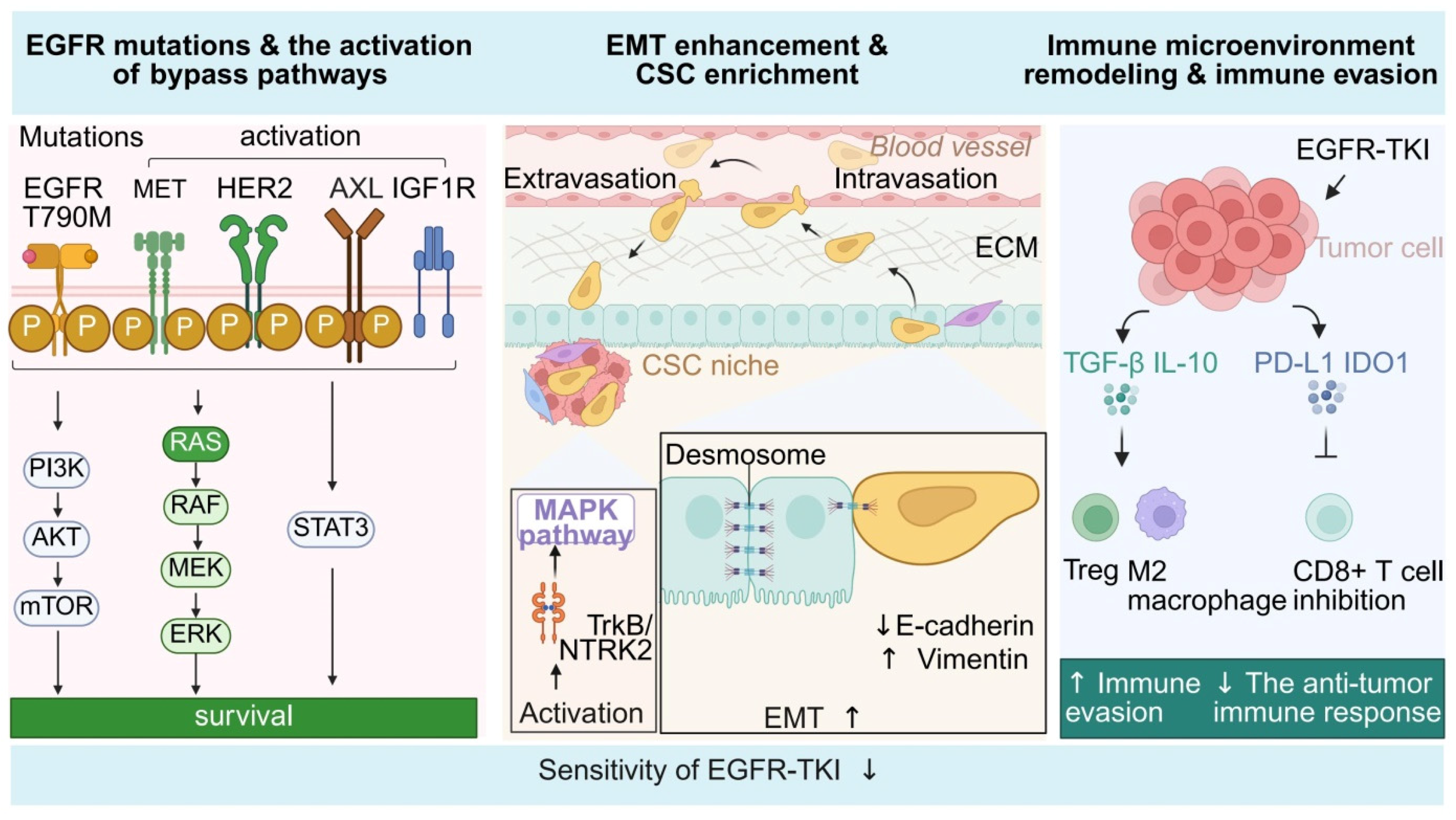
2.3. Genetic Mutations, Immune Remodeling, Cancer Stemness, and Spatial Context in Egfr-Tki Resistance Mechanisms
3. Spatial Omics Foundations and Topological Modeling of Heterogeneity
3.1. Overview of Spatial Omics Technology Platforms (Visium, Cosmx, Stereo-Seq, etc.)
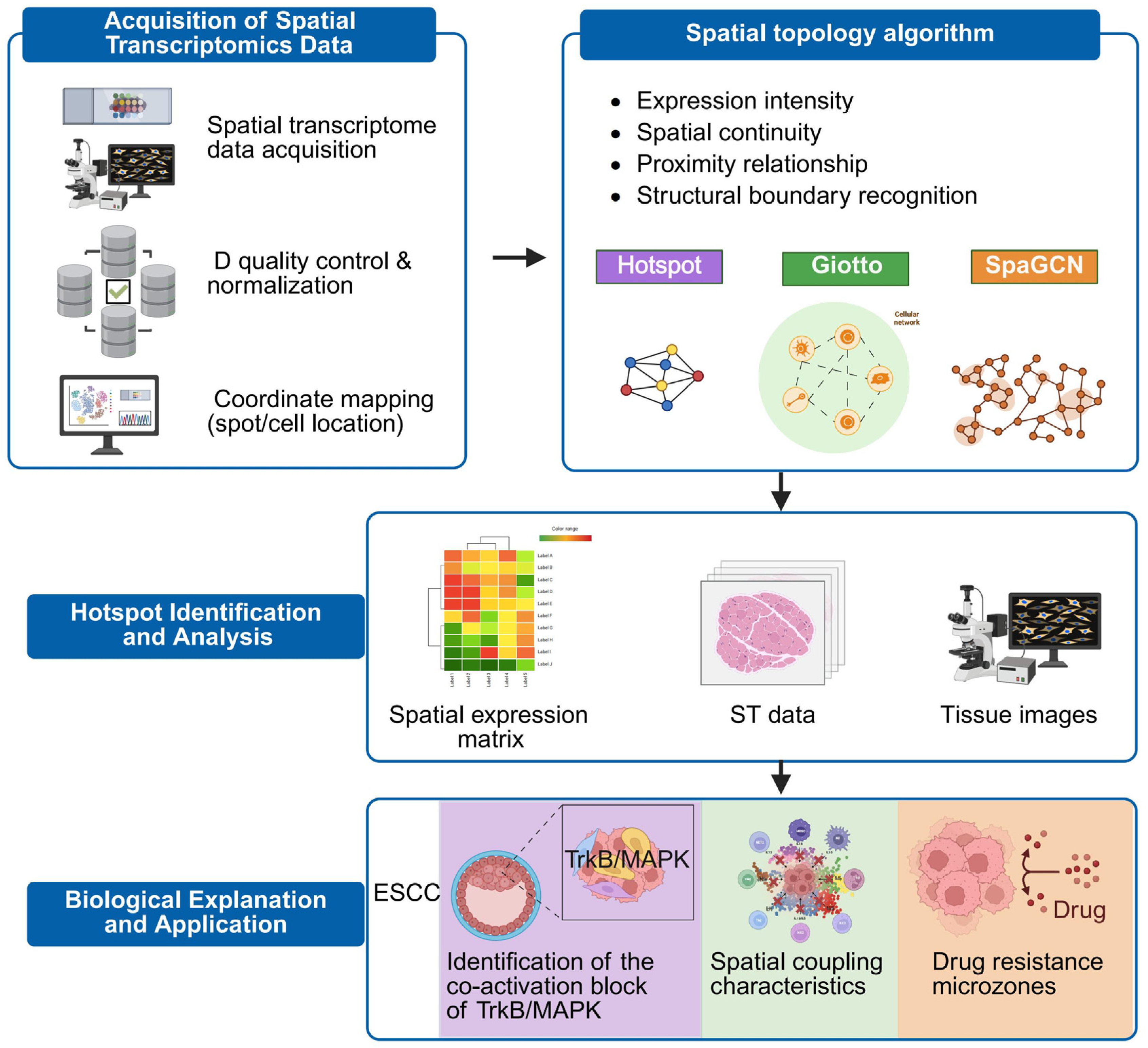
3.2. Topological Modeling Algorithms and Spatial Identification Tools
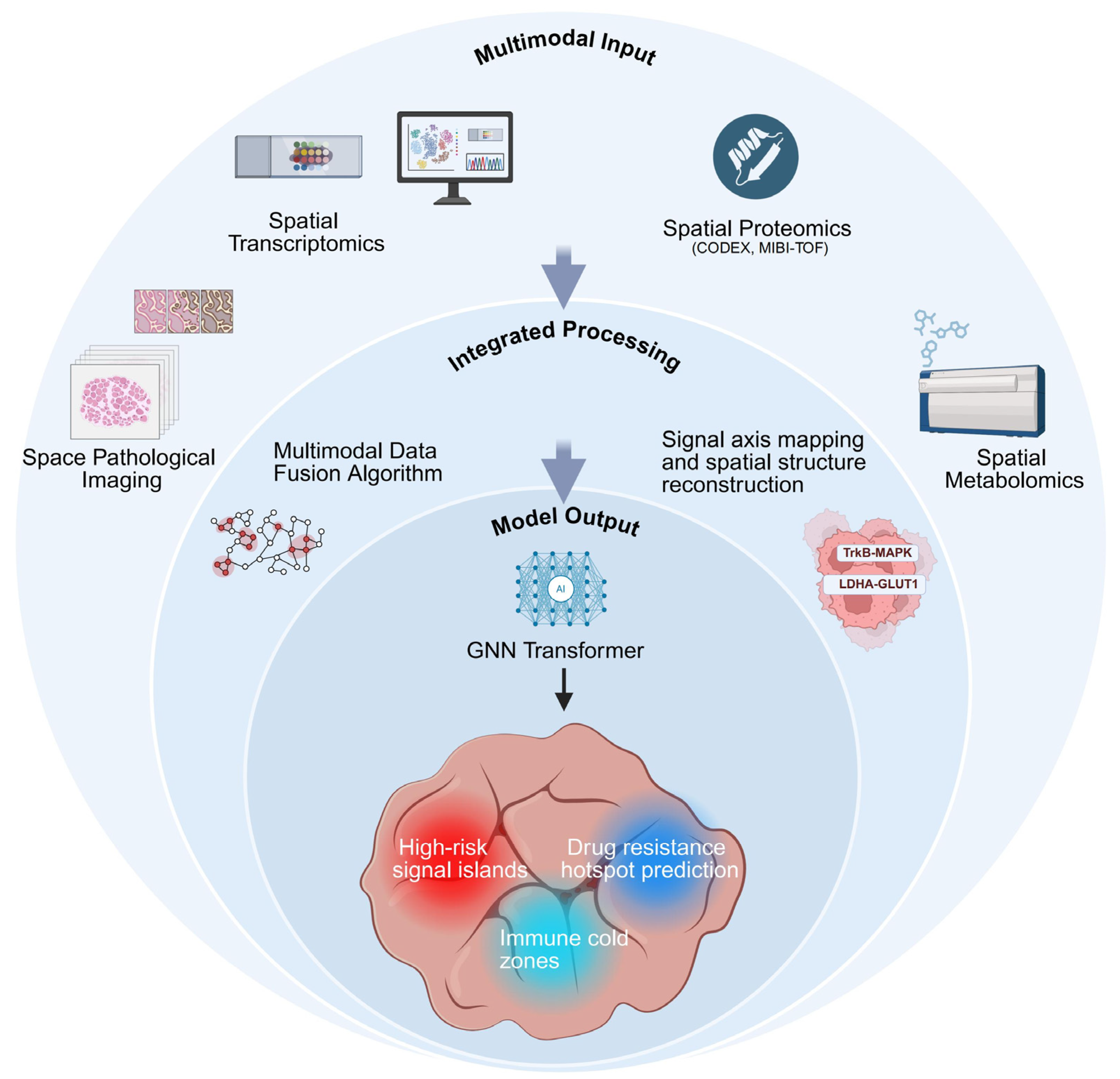
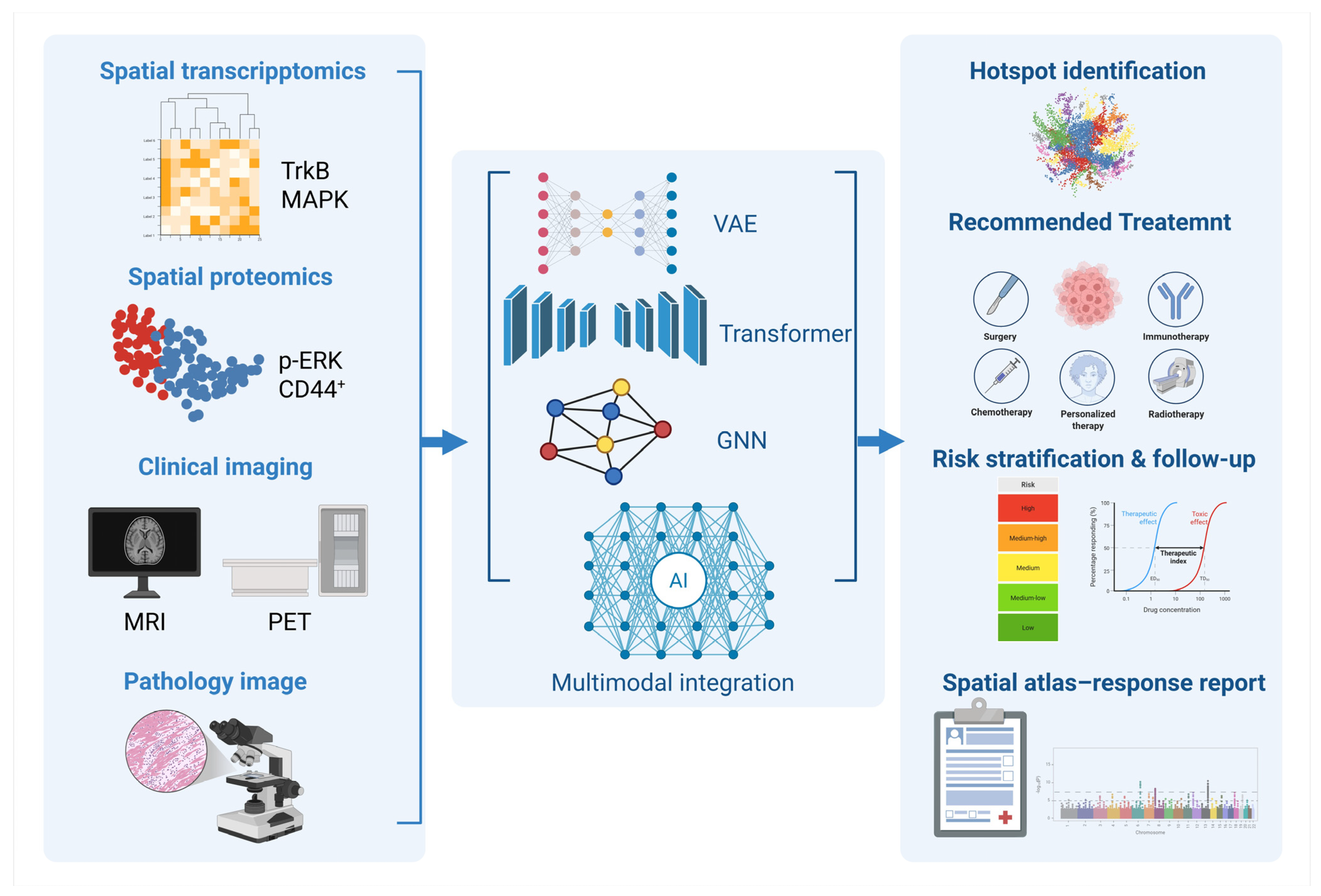
3.3. Multimodal Integration and AI-Assisted Modeling
4. Spatially Resistant Niches and the Ntrk2/mapk Signaling Axis
4.1. Definition and Case Studies of Spatial Heterogeneity
4.2. Csc Clusters, Mapk Hyperactive Islands, and Immune-Cold Regions Constitute Three Distinct Resistant Niches
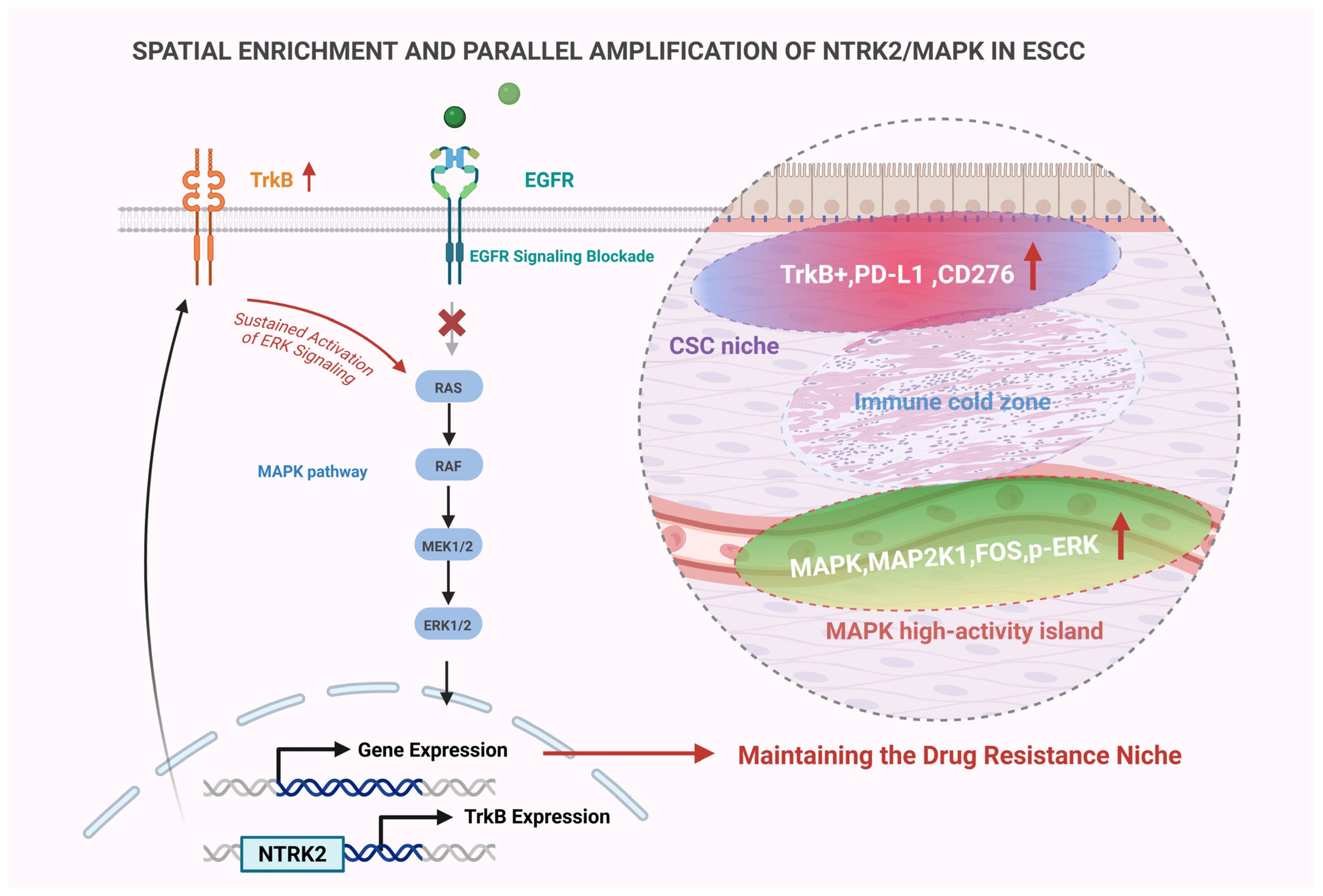
4.3. Spatial Enrichment Mechanisms of the Ntrk2/mapk Axis
4.4. Validation of Ntrk2-Driven Effects Using Public Datasets and Pdx Models
5. Targeted Intervention Pathways Guided by Spatial Atlases for the Development of Nanocarrier Delivery Systems
5.1. Target Identification and Strategy Design Informed by Spatial Atlases
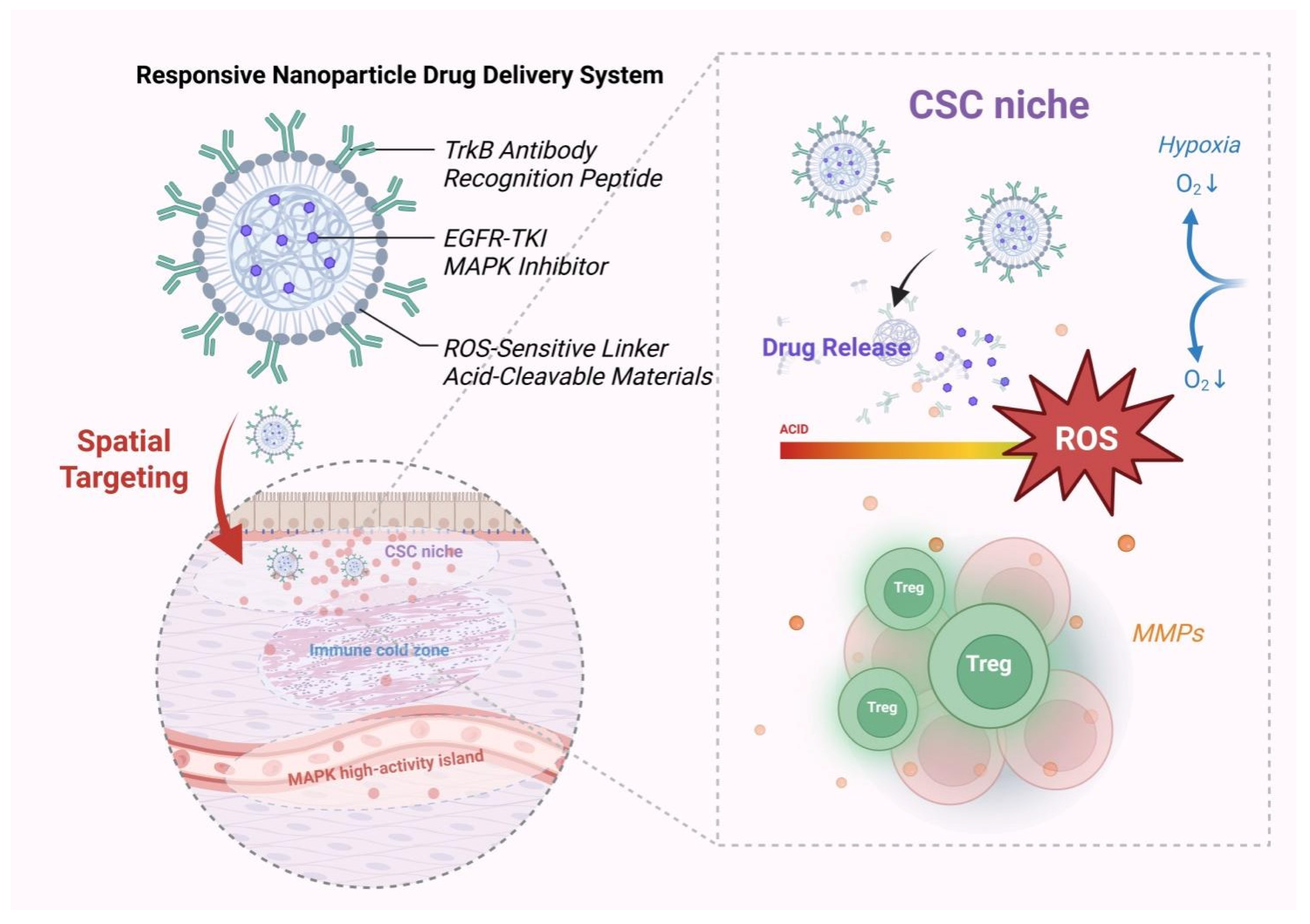
5.2. Design of Stimuli-Responsive Nanocarrier Systems
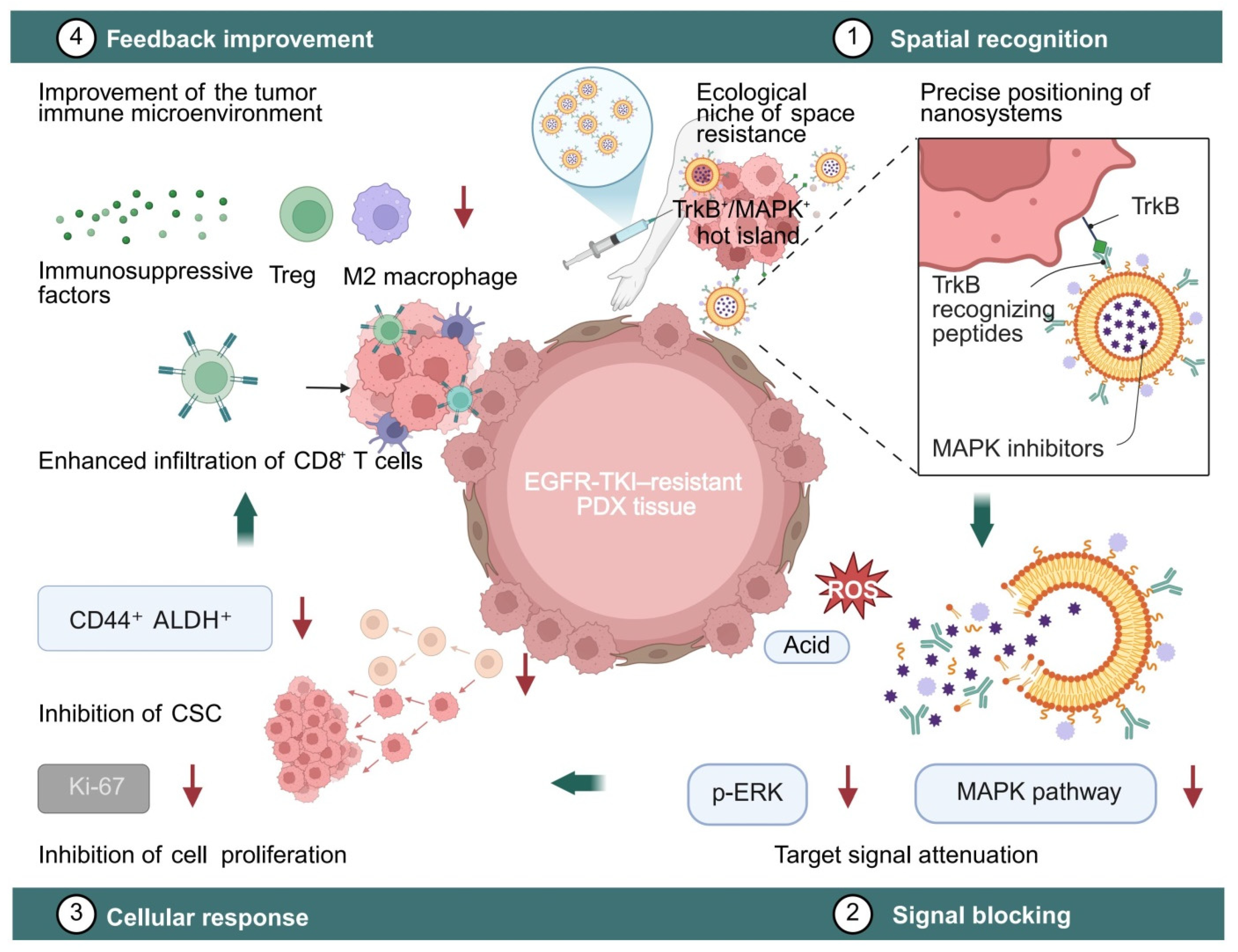
5.3. Spatial Validation Pathways Using Pdx and Organoid Models
6. Future Perspectives and Challenges
6.1. Construction of AI-Integrated Atlas-Based Clinical Prediction Systems
6.2. Intelligent Feedback-Driven Nanocarrier Systems
6.3. Standardization and Sharing Platforms for Spatial Atlas Databases
7. Conclusions
Supplementary Materials
Author Contributions
Funding
Institutional Review Board Statement
Informed Consent Statement
Data Availability Statement
Conflicts of Interest
Abbreviations
| AI | Artificial Intelligence |
| Bulk RNA-seq | Bulk RNA Sequencing |
| CAFs | Cancer-Associated Fibroblasts |
| CSC | Cancer Stem Cell |
| EGFR | Epidermal Growth Factor Receptor |
| EGFR-TKIs | Epidermal Growth Factor Receptor-Tyrosine Kinase Inhibitors |
| EMT | Epithelial–Mesenchymal Transition |
| EPR | Enhanced Permeability and Retention |
| ESCC | Esophageal Squamous Cell Carcinoma |
| GCNs | Graph Convolutional Networks |
| GLUT1 | Glucose Transporter 1 |
| GNNs | Graph Neural Networks |
| LDHA | Lactate Dehydrogenase A |
| NSCLC | Non-Small Cell Lung Cancer |
| ORR | Objective Response Rate |
| PDX | Patient-Derived Xenograft |
| PFS | Progression-Free Survival |
| ROS | Reactive Oxygen Species |
| scRNA-seq | Single-Cell RNA Sequencing |
| ST | Spatial Transcriptomic |
| TKIs | Tyrosine Kinase Inhibitors |
| TME | Tumor Microenvironment |
| Tregs | Regulatory T Cells |
References
- Kato, K.; Doki, Y.; Chau, I.; Xu, J.; Wyrwicz, L.; Motoyama, S.; Ogata, T.; Kawakami, H.; Hsu, C.; Adenis, A.; et al. Nivolumab plus Chemotherapy or Ipilimumab versus Chemotherapy in Patients with Advanced Esophageal Squamous Cell Carcinoma (CheckMate 648): 29-month Follow-up from a Randomized, Open-label, Phase III Trial. Cancer Med. 2024, 13, e7235. [Google Scholar] [CrossRef] [PubMed]
- Shang, X.; Xie, Y.; Yu, J.; Zhang, C.; Zhao, G.; Liang, F.; Liu, L.; Zhang, W.; Li, R.; Yu, W.; et al. A Prospective Study of Neoadjuvant Pembrolizumab plus Chemotherapy for Resectable Esophageal Squamous Cell Carcinoma: The Keystone-001 Trial. Cancer Cell 2024, 42, 1747–1763.e7. [Google Scholar] [CrossRef] [PubMed]
- An, L.; Li, M.; Jia, Q. Mechanisms of Radiotherapy Resistance and Radiosensitization Strategies for Esophageal Squamous Cell Carcinoma. Mol. Cancer 2023, 22, 140. [Google Scholar] [CrossRef] [PubMed]
- Qi, L.; Sun, M.; Liu, W.; Zhang, X.; Yu, Y.; Tian, Z.; Ni, Z.; Zheng, R.; Li, Y. Global Esophageal Cancer Epidemiology in 2022 and Predictions for 2050: A Comprehensive Analysis and Projections Based on GLOBOCAN Data. Chin. Med. J. 2024, 137, 3108–3116. [Google Scholar] [CrossRef]
- Jiang, G.; Wang, Z.; Cheng, Z.; Wang, W.; Lu, S.; Zhang, Z.; Anene, C.A.; Khan, F.; Chen, Y.; Bailey, E.; et al. The Integrated Molecular and Histological Analysis Defines Subtypes of Esophageal Squamous Cell Carcinoma. Nat. Commun. 2024, 15, 8988. [Google Scholar] [CrossRef]
- Liu, Z.; Zhao, Y.; Kong, P.; Liu, Y.; Huang, J.; Xu, E.; Wei, W.; Li, G.; Cheng, X.; Xue, L.; et al. Integrated Multi-Omics Profiling Yields a Clinically Relevant Molecular Classification for Esophageal Squamous Cell Carcinoma. Cancer Cell 2023, 41, 181–195.e9. [Google Scholar] [CrossRef]
- Liu, Z.; Chen, Z.; Wang, J.; Zhang, M.; Li, Z.; Wang, S.; Dong, B.; Zhang, C.; Gao, J.; Shen, L. Mouse Avatar Models of Esophageal Squamous Cell Carcinoma Proved the Potential for EGFR-TKI Afatinib and Uncovered Src Family Kinases Involved in Acquired Resistance. J. Hematol. Oncol. 2018, 11, 109. [Google Scholar] [CrossRef]
- Wang, X.; Niu, H.; Fan, Q.; Lu, P.; Ma, C.; Liu, W.; Liu, Y.; Li, W.; Hu, S.; Ling, Y.; et al. Predictive Value of EGFR Overexpression and Gene Amplification on Icotinib Efficacy in Patients with Advanced Esophageal Squamous Cell Carcinoma. Oncotarget 2016, 7, 24744–24751. [Google Scholar] [CrossRef]
- Liu, R.; Liu, L.; Zhao, C.; Bai, Y.; Zheng, Y.; Zhang, S.; Li, N.; Yang, J.; Fan, Q.; Wang, X.; et al. Larotinib in Patients with Advanced and Previously Treated Esophageal Squamous Cell Carcinoma with Epidermal Growth Factor Receptor Overexpression or Amplification: An Open-Label, Multicenter Phase 1b Study. BMC Gastroenterol. 2021, 21, 398. [Google Scholar] [CrossRef]
- Tai, Y.; Kong, L.; Wang, Y.; Zhao, D.; Chen, X.; Wu, Q.; Hao, J.; Wang, X.; Liu, X.; Chen, D.; et al. Identification and Characterization of Bufalin as a Novel EGFR Degrader. Cancer Lett. 2025, 623, 217715. [Google Scholar] [CrossRef]
- Wang, Y.; Liu, C.; Chen, H.; Jiao, X.; Wang, Y.; Cao, Y.; Li, J.; Zhang, X.; Sun, Y.; Zhuo, N.; et al. Clinical Efficacy and Identification of Factors Confer Resistance to Afatinib (Tyrosine Kinase Inhibitor) in EGFR-Overexpressing Esophageal Squamous Cell Carcinoma. Signal Transduct. Target. Ther. 2024, 9, 153. [Google Scholar] [CrossRef] [PubMed]
- Dai, J.; Lu, X.; Zhang, C.; Qu, T.; Li, W.; Su, J.; Guo, R.; Yin, D.; Wu, P.; Han, L.; et al. NNMT Promotes Acquired EGFR-TKI Resistance by Forming EGR1 and Lactate-Mediated Double Positive Feedback Loops in Non-Small Cell Lung Cancer. Mol. Cancer 2025, 24, 79. [Google Scholar] [CrossRef] [PubMed]
- Zalaquett, Z.; Catherine Rita Hachem, M.; Kassis, Y.; Hachem, S.; Eid, R.; Raphael Kourie, H.; Planchard, D. Acquired Resistance Mechanisms to Osimertinib: The Constant Battle. Cancer Treat. Rev. 2023, 116, 102557. [Google Scholar] [CrossRef] [PubMed]
- Li, H.; Li, Y.; Zheng, X.; Chen, F.; Zhang, S.; Xu, S.; Mu, Y.; Shen, W.; Tong, J.; Chen, H.; et al. RBM15 Facilitates Osimertinib Resistance of Lung Adenocarcinoma through M6A-Dependent Epigenetic Silencing of SPOCK1. Oncogene 2024, 44, 307–321. [Google Scholar] [CrossRef]
- Chu, X.; Tian, W.; Ning, J.; Xiao, G.; Zhou, Y.; Wang, Z.; Zhai, Z.; Tanzhu, G.; Yang, J.; Zhou, R. Cancer Stem Cells: Advances in Knowledge and Implications for Cancer Therapy. Signal Transduct. Target. Ther. 2024, 9, 170. [Google Scholar] [CrossRef]
- Zhang, S.; Liu, Y.; Sun, Y.; Liu, Q.; Gu, Y.; Huang, Y.; Zeng, Z.; Tang, F.; Ouyang, Y. Aberrant R-Loop–Mediated Immune Evasion, Cellular Communication, and Metabolic Reprogramming Affect Cancer Progression: A Single-Cell Analysis. Mol. Cancer 2024, 23, 11. [Google Scholar] [CrossRef]
- Pozniak, J.; Pedri, D.; Landeloos, E.; Van Herck, Y.; Antoranz, A.; Vanwynsberghe, L.; Nowosad, A.; Roda, N.; Makhzami, S.; Bervoets, G.; et al. A TCF4-Dependent Gene Regulatory Network Confers Resistance to Immunotherapy in Melanoma. Cell 2024, 187, 166–183.e25. [Google Scholar] [CrossRef]
- Cattaruzza, F.; Nazeer, A.; To, M.; Hammond, M.; Koski, C.; Liu, L.Y.; Pete Yeung, V.; Rennerfeldt, D.A.; Henkensiefken, A.; Fox, M.; et al. Precision-Activated T-Cell Engagers Targeting HER2 or EGFR and CD3 Mitigate on-Target, off-Tumor Toxicity for Immunotherapy in Solid Tumors. Nat. Cancer 2023, 4, 485–501. [Google Scholar] [CrossRef]
- Fu, M.; Zhao, J.; Zhang, L.; Sheng, Z.; Li, X.; Qiu, F.; Feng, Y.; You, M.; Xu, H.; Zhang, J.; et al. Overcoming Tyrosine Kinase Inhibitor Resistance in Lung Cancer Brain Metastasis with CTLA4 Blockade. Cancer Cell 2024, 42, 1882–1897.e7. [Google Scholar] [CrossRef]
- Pellinen, T.; Paavolainen, L.; Martín-Bernabé, A.; Papatella Araujo, R.; Strell, C.; Mezheyeuski, A.; Backman, M.; La Fleur, L.; Brück, O.; Sjölund, J.; et al. Fibroblast Subsets in Non-Small Cell Lung Cancer: Associations with Survival, Mutations, and Immune Features. JNCI J. Natl. Cancer Inst. 2022, 115, 71–82. [Google Scholar] [CrossRef]
- Kaleem, M.; Azmi, L.; Shahzad, N.; Taha, M.; Kumar, S.; Mujtaba, M.A.; Hazazi, A.A.H.; Kayali, A. Epigenetic Dynamics and Molecular Mechanisms in Oncogenesis, Tumor Progression, and Therapy Resistance. Naunyn-Schmiedeberg’s Arch. Pharmacol. 2025, 398, 13625–13646. [Google Scholar] [CrossRef]
- Lin, Z.; Rao, W.; Xiang, Z.; Zeng, Q.; Liu, S.; Yu, K.; Zhou, J.; Wang, J.; Chen, W.; Chen, Y.; et al. Characteristics and Interplay of Esophageal Microbiota in Esophageal Squamous Cell Carcinoma. BMC Cancer 2022, 22, 696. [Google Scholar] [CrossRef] [PubMed]
- Chai, A.W.Y.; Cheung, A.K.L.; Dai, W.; Ko, J.M.Y.; Ip, J.C.Y.; Chan, K.W.; Kwong, D.L.-W.; Ng, W.T.; Lee, A.W.M.; Ngan, R.K.C.; et al. Metastasis-SuppressingNID2, an Epigenetically-Silenced Gene, in the Pathogenesis of Nasopharyngeal Carcinoma and Esophageal Squamous Cell Carcinoma. Oncotarget 2016, 7, 78859–78871. [Google Scholar] [CrossRef] [PubMed]
- Li, K.; Peng, Z.-Y.; Wang, R.; Li, X.; Du, N.; Liu, D.-P.; Zhang, J.; Zhang, Y.-F.; Ma, L.; Sun, Y.; et al. Enhancement of TKI Sensitivity in Lung Adenocarcinoma through M6A-Dependent Translational Repression of Wnt Signaling by Circ-FBXW7. Mol. Cancer 2023, 22, 103. [Google Scholar] [CrossRef] [PubMed]
- Zhang, C.; Zhou, W.; Xu, H.; Xu, J.; Li, J.; Liu, X.; Lu, X.; Dai, J.; Jiang, Y.; Wang, W.; et al. Cancer-Associated Fibroblasts Promote EGFR-TKI Resistance via the CTHRC1/Glycolysis/H3K18la Positive Feedback Loop. Oncogene 2025, 44, 1400–1414. [Google Scholar] [CrossRef]
- Mao, X.; Xue, X.; Lv, R.; Ji, A.; Shi, T.; Chen, X.; Jiang, X.; Zhang, X. CEBPD Is a Master Transcriptional Factor for Hypoxia Regulated Proteins in Glioblastoma and Augments Hypoxia Induced Invasion through Extracellular Matrix-Integrin Mediated EGFR/PI3K Pathway. Cell Death Dis. 2023, 14, 269. [Google Scholar] [CrossRef]
- Lv, D.; Zhong, C.; Dixit, D.; Yang, K.; Wu, Q.; Godugu, B.; Prager, B.C.; Zhao, G.; Wang, X.; Xie, Q.; et al. EGFR Promotes ALKBH5 Nuclear Retention to Attenuate N6-Methyladenosine and Protect against Ferroptosis in Glioblastoma. Mol. Cell 2023, 83, 4334–4351.e7. [Google Scholar] [CrossRef]
- Oh, S.J.; Lim, J.Y.; Son, M.K.; Ahn, J.H.; Song, K.-H.; Lee, H.-J.; Kim, S.; Cho, E.H.; Chung, J.-Y.; Cho, H.; et al. TRPV1 Inhibition Overcomes Cisplatin Resistance by Blocking Autophagy-Mediated Hyperactivation of EGFR Signaling Pathway. Nat. Commun. 2023, 14, 2691. [Google Scholar] [CrossRef]
- Nilsson, M.B.; Yang, Y.; Heeke, S.; Patel, S.A.; Poteete, A.; Udagawa, H.; Elamin, Y.Y.; Moran, C.A.; Kashima, Y.; Arumugam, T.; et al. CD70 Is a Therapeutic Target Upregulated in EMT-Associated EGFR Tyrosine Kinase Inhibitor Resistance. Cancer Cell 2023, 41, 340–355.e6. [Google Scholar] [CrossRef]
- Mai, S.; Liu, L.; Jiang, J.; Ren, P.; Diao, D.; Wang, H.; Cai, K. Oesophageal Squamous Cell Carcinoma–Associated IL-33 Rewires Macrophage Polarization towards M2 via Activating Ornithine Decarboxylase. Cell Prolif. 2020, 54, e12960. [Google Scholar] [CrossRef]
- Zhou, X.; Huang, F.; Ma, G.; Wei, W.; Wu, N.; Liu, Z. Dysregulated Ceramides Metabolism by Fatty Acid 2-Hydroxylase Exposes a Metabolic Vulnerability to Target Cancer Metastasis. Signal Transduct. Target. Ther. 2022, 7, 370. [Google Scholar] [CrossRef]
- Niu, D.; Wu, Y.; Lian, J. Circular RNA Vaccine in Disease Prevention and Treatment. Signal Transduct. Target. Ther. 2023, 8, 341. [Google Scholar] [CrossRef] [PubMed]
- Nolan, E.; Lindeman, G.J.; Visvader, J.E. Deciphering Breast Cancer: From Biology to the Clinic. Cell 2023, 186, 1708–1728. [Google Scholar] [CrossRef] [PubMed]
- Sun, C.; Wang, A.; Zhou, Y.; Chen, P.; Wang, X.; Huang, J.; Gao, J.; Wang, X.; Shu, L.; Lu, J.; et al. Spatially Resolved Multi-Omics Highlights Cell-Specific Metabolic Remodeling and Interactions in Gastric Cancer. Nat. Commun. 2023, 14, 2692. [Google Scholar] [CrossRef] [PubMed]
- Ma, C.; Yang, C.; Peng, A.; Sun, T.; Ji, X.; Mi, J.; Wei, L.; Shen, S.; Feng, Q. Pan-Cancer Spatially Resolved Single-Cell Analysis Reveals the Crosstalk between Cancer-Associated Fibroblasts and Tumor Microenvironment. Mol. Cancer 2023, 22, 170. [Google Scholar] [CrossRef]
- Cords, L.; Engler, S.; Haberecker, M.; Rüschoff, J.H.; Moch, H.; de Souza, N.; Bodenmiller, B. Cancer-Associated Fibroblast Phenotypes Are Associated with Patient Outcome in Non-Small Cell Lung Cancer. Cancer Cell 2024, 42, 396–412.e5. [Google Scholar] [CrossRef]
- Fan, T.; Zhang, M.; Yang, J.; Zhu, Z.; Cao, W.; Dong, C. Therapeutic Cancer Vaccines: Advancements, Challenges and Prospects. Signal Transduct. Target. Ther. 2023, 8, 450. [Google Scholar] [CrossRef]
- Ashrafizadeh, M.; Zarrabi, A.; Bigham, A.; Taheriazam, A.; Saghari, Y.; Mirzaei, S.; Hashemi, M.; Hushmandi, K.; Karimi-Maleh, H.; Nazarzadeh Zare, E.; et al. (Nano)Platforms in Breast Cancer Therapy: Drug/Gene Delivery, Advanced Nanocarriers and Immunotherapy. Med. Res. Rev. 2023, 43, 2115–2176. [Google Scholar] [CrossRef]
- Cai, J.; Ye, Z.; Hu, Y.; Ye, L.; Gao, L.; Wang, Y.; Sun, Q.; Tong, S.; Zhang, S.; Wu, L.; et al. Fatostatin Induces Ferroptosis through Inhibition of the AKT/MTORC1/GPX4 Signaling Pathway in Glioblastoma. Cell Death Dis. 2023, 14, 211. [Google Scholar] [CrossRef]
- Lim, Z.-F.; Ma, P.C. Emerging Insights of Tumor Heterogeneity and Drug Resistance Mechanisms in Lung Cancer Targeted Therapy. J. Hematol. Oncol. 2019, 12, 134. [Google Scholar] [CrossRef]
- Huang, H.; Li, N.; Liang, Y.; Li, R.; Tong, X.; Xiao, J.; Tang, H.; Jiang, D.; Xie, K.; Fang, C.; et al. Multi-omics Analyses Reveal Spatial Heterogeneity in Primary and Metastatic Oesophageal Squamous Cell Carcinoma. Clin. Transl. Med. 2023, 13, e1493. [Google Scholar] [CrossRef] [PubMed]
- Zhou, Y.; Mo, S.; Cui, H.; Sun, R.; Zhang, W.; Zhuang, X.; Xu, E.; Li, H.; Cheng, Y.; Meng, Y.; et al. Immune-Tumor Interaction Dictates Spatially Directed Evolution of Esophageal Squamous Cell Carcinoma. Natl. Sci. Rev. 2024, 11, nwae150. [Google Scholar] [CrossRef] [PubMed]
- Lu, J.; Li, J.; Lin, Z.; Li, H.; Lou, L.; Ding, W.; Ouyang, S.; Wu, Y.; Wen, Y.; Chen, X.; et al. Reprogramming of TAMs via the STAT3/CD47-SIRPα Axis Promotes Acquired Resistance to EGFR-TKIs in Lung Cancer. Cancer Lett. 2023, 564, 216205. [Google Scholar] [CrossRef] [PubMed]
- Berglund, E.; Saarenpää, S.; Jemt, A.; Gruselius, J.; Larsson, L.; Bergenstråhle, L.; Lundeberg, J.; Giacomello, S. Automation of Spatial Transcriptomics Library Preparation to Enable Rapid and Robust Insights into Spatial Organization of Tissues. BMC Genom. 2020, 21, 298. [Google Scholar] [CrossRef]
- Hu, J.; Li, X.; Coleman, K.; Schroeder, A.; Ma, N.; Irwin, D.J.; Lee, E.B.; Shinohara, R.T.; Li, M. SpaGCN: Integrating Gene Expression, Spatial Location and Histology to Identify Spatial Domains and Spatially Variable Genes by Graph Convolutional Network. Nat. Methods 2021, 18, 1342–1351. [Google Scholar] [CrossRef]
- Ma, X.; Liang, X.; Li, Y.; Feng, Q.; Cheng, K.; Ma, N.; Zhu, F.; Guo, X.; Yue, Y.; Liu, G.; et al. Modular-Designed Engineered Bacteria for Precision Tumor Immunotherapy via Spatiotemporal Manipulation by Magnetic Field. Nat. Commun. 2023, 14, 1606. [Google Scholar] [CrossRef]
- Luo, G.; Li, X.; Lin, J.; Ge, G.; Fang, J.; Song, W.; Xiao, G.G.; Zhang, B.; Peng, X.; Duo, Y.; et al. Multifunctional Calcium–Manganese Nanomodulator Provides Antitumor Treatment and Improved Immunotherapy via Reprogramming of the Tumor Microenvironment. ACS Nano 2023, 17, 15449–15465. [Google Scholar] [CrossRef]
- Cilento, M.A.; Sweeney, C.J.; Butler, L.M. Spatial Transcriptomics in Cancer Research and Potential Clinical Impact: A Narrative Review. J. Cancer Res. Clin. Oncol. 2024, 150, 296. [Google Scholar] [CrossRef]
- Ko, K.-P.; Zhang, S.; Huang, Y.; Kim, B.; Zou, G.; Jun, S.; Zhang, J.; Zhao, Y.; Martin, C.; Dunbar, K.J.; et al. Tumor Niche Network-Defined Subtypes Predict Immunotherapy Response of Esophageal Squamous Cell Cancer. iScience 2024, 27, 109795. [Google Scholar] [CrossRef]
- Hasan, A.; Cavalu, S.; Kira, A.; Hamad, R.; Abdel-Reheim, M.; Elmorsy, E.; El-kott, A.; Morsy, K.; AlSheri, A.; Negm, S.; et al. Localized Drug Delivery in Different Gastrointestinal Cancers: Navigating Challenges and Advancing Nanotechnological Solutions. Int. J. Nanomed. 2025, 20, 741–770. [Google Scholar] [CrossRef]
- Chen, D.; Hong, R.; Cao, Y.; Wu, Q.; Wang, Y.; Chen, J.; Li, J.; Zhang, W.; Zhan, Q. Combined Wee1 and EGFR Inhibition Reveals Synergistic Antitumor Effect in Esophageal Squamous Cell Carcinoma. Carcinogenesis 2023, 44, 451–462. [Google Scholar] [CrossRef]
- Song, Y.; Bi, Z.; Liu, Y.; Qin, F.; Wei, Y.; Wei, X. Targeting RAS–RAF–MEK–ERK Signaling Pathway in Human Cancer: Current Status in Clinical Trials. Genes. Dis. 2023, 10, 76–88. [Google Scholar] [CrossRef] [PubMed]
- Wang, P.; Jia, X.; Lu, B.; Huang, H.; Liu, J.; Liu, X.; Wu, Q.; Hu, Y.; Li, P.; Wei, H.; et al. Erianin Suppresses Constitutive Activation of MAPK Signaling Pathway by Inhibition of CRAF and MEK1/2. Signal Transduct. Target. Ther. 2023, 8, 96. [Google Scholar] [CrossRef] [PubMed]
- Glaviano, A.; Foo, A.S.C.; Lam, H.Y.; Yap, K.C.H.; Jacot, W.; Jones, R.H.; Eng, H.; Nair, M.G.; Makvandi, P.; Geoerger, B.; et al. PI3K/AKT/MTOR Signaling Transduction Pathway and Targeted Therapies in Cancer. Mol. Cancer 2023, 22, 138. [Google Scholar] [CrossRef] [PubMed]
- Chen, Y.; Zhu, S.; Liu, T.; Zhang, S.; Lu, J.; Fan, W.; Lin, L.; Xiang, T.; Yang, J.; Zhao, X.; et al. Epithelial Cells Activate Fibroblasts to Promote Esophageal Cancer Development. Cancer Cell 2023, 41, 903–918.e8. [Google Scholar] [CrossRef]
- Ren, Q.; Zhang, P.; Zhang, X.; Feng, Y.; Li, L.; Lin, H.; Yu, Y. A Fibroblast-Associated Signature Predicts Prognosis and Immunotherapy in Esophageal Squamous Cell Cancer. Front. Immunol. 2023, 14, 1199040. [Google Scholar] [CrossRef]
- Kobayashi, T.; Noma, K.; Nishimura, S.; Kato, T.; Nishiwaki, N.; Ohara, T.; Kunitomo, T.; Kawasaki, K.; Akai, M.; Komoto, S.; et al. Near-Infrared Photoimmunotherapy Targeting Cancer-Associated Fibroblasts in Patient-Derived Xenografts Using a Humanized Anti-Fibroblast Activation Protein Antibody. Mol. Cancer Ther. 2024, 23, 1031–1042. [Google Scholar] [CrossRef]
- Liu, J.; Zhou, W.; Luo, X.; Chen, Y.; Wong, C.; Liu, Z.; Bo Zheng, J.; Yu Mo, H.; Chen, J.; Li, J.; et al. Long Noncoding RNA Regulating ImMune Escape Regulates Mixed Lineage Leukaemia Protein-1-H3K4me3-mediated Immune Escape in Oesophageal Squamous Cell Carcinoma. Clin. Transl. Med. 2023, 13, e1410. [Google Scholar] [CrossRef]
- Chang, J.; Lu, J.; Liu, Q.; Xiang, T.; Zhang, S.; Yi, Y.; Li, D.; Liu, T.; Liu, Z.; Chen, X.; et al. Single-Cell Multi-Stage Spatial Evolutional Map of Esophageal Carcinogenesis. Cancer Cell 2025, 43, 380–397.e7. [Google Scholar] [CrossRef]
- Grant, C.; Nagasaka, M. Neoadjuvant EGFR-TKI Therapy in Non-Small Cell Lung Cancer. Cancer Treat. Rev. 2024, 126, 102724. [Google Scholar] [CrossRef]
- Hou, G.; Niu, T.; Jia, A.; Zhang, Y.; Chen, X.; Wei, H.; Jia, Y.; Xu, Y.; Li, Y.; Wang, P.; et al. NRG1 Promotes Tumorigenesis and Metastasis and Afatinib Treatment Efficiency Is Enhanced by NRG1 Inhibition in Esophageal Squamous Cell Carcinoma. Biochem. Pharmacol. 2023, 218, 115920. [Google Scholar] [CrossRef]
- Ji, G.; Yang, Q.; Wang, S.; Yan, X.; Ou, Q.; Gong, L.; Zhao, J.; Zhou, Y.; Tian, F.; Lei, J.; et al. Single-Cell Profiling of Response to Neoadjuvant Chemo-Immunotherapy in Surgically Resectable Esophageal Squamous Cell Carcinoma. Genome Med. 2024, 16, 49. [Google Scholar] [CrossRef] [PubMed]
- Shigaki, H.; Baba, Y.; Watanabe, M.; Miyake, K.; Murata, A.; Iwagami, S.; Ishimoto, T.; Iwatsuki, M.; Yoshida, N.; Baba, H. KRAS and BRAF Mutations in 203 Esophageal Squamous Cell Carcinomas: Pyrosequencing Technology and Literature Review. Ann. Surg. Oncol. 2012, 20, 485–491. [Google Scholar] [CrossRef] [PubMed]
- Wang, Y.; Shi, Y.; Hu, X.; Wang, C. Targeting Glycolysis in Esophageal Squamous Cell Carcinoma: Single-Cell and Multi-Omics Insights for Risk Stratification and Personalized Therapy. Front. Pharmacol. 2025, 16, 1559546. [Google Scholar] [CrossRef] [PubMed]
- Shi, Y.; Fang, N.; Li, Y.; Guo, Z.; Jiang, W.; He, Y.; Ma, Z.; Chen, Y. Circular RNA LPAR3 Sponges MicroRNA-198 to Facilitate Esophageal Cancer Migration, Invasion, and Metastasis. Cancer Sci. 2020, 111, 2824–2836. [Google Scholar] [CrossRef]
- Lei, J.; Xu, F.; Deng, C.; Nie, X.; Zhong, L.; Wu, Z.; Li, J.; Wu, X.; He, S.; Chen, Y. Fusobacterium Nucleatum Promotes the Early Occurrence of Esophageal Cancer through Upregulation of IL-32/PRTN3 Expression. Cancer Sci. 2023, 114, 2414–2428. [Google Scholar] [CrossRef]
- Zeng, Z.; Fu, M.; Hu, Y.; Wei, Y.; Wei, X.; Luo, M. Regulation and Signaling Pathways in Cancer Stem Cells: Implications for Targeted Therapy for Cancer. Mol. Cancer 2023, 22, 172. [Google Scholar] [CrossRef]
- Lv, M.; Gong, Y.; Liu, X.; Wang, Y.; Wu, Q.; Chen, J.; Min, Q.; Zhao, D.; Li, X.; Chen, D.; et al. CDK7-YAP-LDHD Axis Promotes D-Lactate Elimination and Ferroptosis Defense to Support Cancer Stem Cell-like Properties. Signal Transduct. Target. Ther. 2023, 8, 302. [Google Scholar] [CrossRef]
- Vad-Nielsen, J.; Staunstrup, N.H.; Kjeldsen, M.L.; Dybdal, N.; Flandin, G.; De Stradis, C.; Daugaard, T.F.; Vilsbøll-Larsen, T.; Maansson, C.T.; Doktor, T.K.; et al. Genome-Wide Epigenetic and MRNA-Expression Profiling Followed by CRISPR/Cas9-Mediated Gene-Disruptions Corroborate the MIR141/MIR200C-ZEB1/ZEB2-FGFR1 Axis in Acquired EMT-Associated EGFR TKI-Resistance in NSCLC Cells. Transl. Lung Cancer Res. 2023, 12, 42–65. [Google Scholar] [CrossRef]
- Dai, S.; Wei, S.; Zhang, C.; Li, X.; Liu, Y.; Ma, M.; Lv, H.; Zhang, Z.; Zhao, L.; Shan, B. MTA2 Promotes the Metastasis of Esophageal Squamous Cell Carcinoma via EIF4E-Twist Feedback Loop. Cancer Sci. 2021, 112, 1060–1074. [Google Scholar] [CrossRef]
- Khales, S.A.; Mozaffari-Jovin, S.; Geerts, D.; Abbaszadegan, M.R. TWIST1 Activates Cancer Stem Cell Marker Genes to Promote Epithelial-Mesenchymal Transition and Tumorigenesis in Esophageal Squamous Cell Carcinoma. BMC Cancer 2022, 22, 1272. [Google Scholar] [CrossRef]
- Zhang, C.; Zhou, L.; Zhang, M.; Du, Y.; Li, C.; Ren, H.; Zheng, L. H3K18 Lactylation Potentiates Immune Escape of Non–Small Cell Lung Cancer. Cancer Res. 2024, 84, 3589–3601. [Google Scholar] [CrossRef] [PubMed]
- Li, K.; Quan, L.; Huang, F.; Li, Y.; Shen, Z. ADAM12 Promotes the Resistance of Lung Adenocarcinoma Cells to EGFR-TKI and Regulates the Immune Microenvironment by Activating PI3K/Akt/MTOR and RAS Signaling Pathways. Int. Immunopharmacol. 2023, 122, 110580. [Google Scholar] [CrossRef] [PubMed]
- Salehi-Rad, R.; Lim, R.J.; Du, Y.; Tran, L.M.; Li, R.; Ong, S.L.; Huang, L.Z.; Dumitras, C.; Zhang, T.; Park, S.J.; et al. CCL21-DC in Situ Vaccination in Murine NSCLC Overcomes Resistance to Immunotherapy and Generates Systemic Tumor-Specific Immunity. J. Immunother. Cancer 2023, 11, e006896. [Google Scholar] [CrossRef] [PubMed]
- Magré, L.; Verstegen, M.M.A.; Buschow, S.; van der Laan, L.J.W.; Peppelenbosch, M.; Desai, J. Emerging Organoid-Immune Co-Culture Models for Cancer Research: From Oncoimmunology to Personalized Immunotherapies. J. Immunother. Cancer 2023, 11, e006290. [Google Scholar] [CrossRef]
- Schlechter, B.L.; Stebbing, J. CCR5 and CCL5 in Metastatic Colorectal Cancer. J. Immunother. Cancer 2024, 12, e008722. [Google Scholar] [CrossRef]
- Yan, J.; Chen, D.; Ye, Z.; Zhu, X.; Li, X.; Jiao, H.; Duan, M.; Zhang, C.; Cheng, J.; Xu, L.; et al. Molecular Mechanisms and Therapeutic Significance of Tryptophan Metabolism and Signaling in Cancer. Mol. Cancer 2024, 23, 241. [Google Scholar] [CrossRef]
- Rangachari, D.; To, C.; Shpilsky, J.E.; VanderLaan, P.A.; Kobayashi, S.S.; Mushajiang, M.; Lau, C.J.; Paweletz, C.P.; Oxnard, G.R.; Jänne, P.A.; et al. EGFR-Mutated Lung Cancers Resistant to Osimertinib through EGFR C797S Respond to First-Generation Reversible EGFR Inhibitors but Eventually Acquire EGFR T790M/C797S in Preclinical Models and Clinical Samples. J. Thorac. Oncol. 2019, 14, 1995–2002. [Google Scholar] [CrossRef]
- Sanchis-Borja, M.; Guisier, F.; Swalduz, A.; Curcio, H.; Basse, V.; Maritaz, C.; Chouaid, C.; Auliac, J.-B. Characterization of Patients with EGFR Mutation-Positive NSCLC Following Emergence of the Osimertinib Resistance Mutations, L718Q or G724S: A Multicenter Retrospective Observational Study in France. OncoTargets Ther. 2024, 17, 439–448. [Google Scholar] [CrossRef]
- Zeng, H.; Wang, W.; Zhang, L.; Lin, Z. HER3-Targeted Therapy: The Mechanism of Drug Resistance and the Development of Anticancer Drugs. Cancer Drug Resist. 2024, 7, 14. [Google Scholar] [CrossRef]
- Kobayashi, Y.; Oxnard, G.R.; Cohen, E.F.; Mahadevan, N.R.; Alessi, J.V.; Hung, Y.P.; Bertram, A.A.; Heppner, D.E.; Ribeiro, M.F.; Sacardo, K.P.; et al. Genomic and Biological Study of Fusion Genes as Resistance Mechanisms to EGFR Inhibitors. Nat. Commun. 2022, 13, 5614. [Google Scholar] [CrossRef]
- Rosell, R.; González-Cao, M.; Codony-Servat, J.; Molina-Vila, M.A.; de las Casas, C.M.; Ito, M. Acquired BRAF Gene Fusions in Osimertinib Resistant EGFR-Mutant Non-Small Cell Lung Cancer. Transl. Cancer Res. 2023, 12, 456–460. [Google Scholar] [CrossRef] [PubMed]
- Peng, S.; Wang, R.; Zhang, X.; Ma, Y.; Zhong, L.; Li, K.; Nishiyama, A.; Arai, S.; Yano, S.; Wang, W. EGFR-TKI Resistance Promotes Immune Escape in Lung Cancer via Increased PD-L1 Expression. Mol. Cancer 2019, 18, 165. [Google Scholar] [CrossRef] [PubMed]
- Li, Y.; Xie, T.; Wang, S.; Yang, L.; Hao, X.; Wang, Y.; Hu, X.; Wang, L.; Li, J.; Ying, J.; et al. Mechanism Exploration and Model Construction for Small Cell Transformation in EGFR-Mutant Lung Adenocarcinomas. Signal Transduct. Target. Ther. 2024, 9, 261. [Google Scholar] [CrossRef] [PubMed]
- Kim, S.; Koh, J.; Kim, T.M.; Oh, S.; Kim, S.; Youk, J.; Kim, M.; Keam, B.; Jeon, Y.K.; Kim, D.-W.; et al. Remodeling of Tumor Microenvironments by EGFR Tyrosine Kinase Inhibitors in EGFR-Mutant Non-Small Cell Lung Cancer. iScience 2025, 28, 111736. [Google Scholar] [CrossRef]
- Lin, Z.; Li, J.; Zhang, J.; Feng, W.; Lu, J.; Ma, X.; Ding, W.; Ouyang, S.; Lu, J.; Yue, P.; et al. Metabolic Reprogramming Driven by IGF2BP3 Promotes Acquired Resistance to EGFR Inhibitors in Non–Small Cell Lung Cancer. Cancer Res. 2023, 83, 2187–2207. [Google Scholar] [CrossRef]
- Chen, L.; Zhu, S.; Liu, T.; Zhao, X.; Xiang, T.; Hu, X.; Wu, C.; Lin, D. Aberrant Epithelial Cell Interaction Promotes Esophageal Squamous-Cell Carcinoma Development and Progression. Signal Transduct. Target. Ther. 2023, 8, 453. [Google Scholar] [CrossRef]
- Elhanani, O.; Ben-Uri, R.; Keren, L. Spatial Profiling Technologies Illuminate the Tumor Microenvironment. Cancer Cell 2023, 41, 404–420. [Google Scholar] [CrossRef]
- Du, Y.; Shi, J.; Wang, J.; Xun, Z.; Yu, Z.; Sun, H.; Bao, R.; Zheng, J.; Li, Z.; Ye, Y. Integration of Pan-Cancer Single-Cell and Spatial Transcriptomics Reveals Stromal Cell Features and Therapeutic Targets in Tumor Microenvironment. Cancer Res. 2023, 84, 192–210. [Google Scholar] [CrossRef]
- Li, H.; Pham, M.C.; Teng, J.; O’Connor, K.C.; Noviello, C.M.; Hibbs, R.E. Autoimmune Mechanisms Elucidated through Muscle Acetylcholine Receptor Structures. Cell 2025, 188, 2390–2406.e20. [Google Scholar] [CrossRef]
- Du, M.R.M.; Wang, C.; Law, C.W.; Amann-Zalcenstein, D.; Anttila, C.J.A.; Ling, L.; Hickey, P.F.; Sargeant, C.J.; Chen, Y.; Ioannidis, L.J.; et al. Benchmarking Spatial Transcriptomics Technologies with the Multi-Sample SpatialBenchVisium Dataset. Genome Biol. 2025, 26, 77. [Google Scholar] [CrossRef] [PubMed]
- Chen, T.-Y.; You, L.; Hardillo, J.A.U.; Chien, M.-P. Spatial Transcriptomic Technologies. Cells 2023, 12, 2042. [Google Scholar] [CrossRef] [PubMed]
- Du, J.; Yang, Y.-C.; An, Z.-J.; Zhang, M.-H.; Fu, X.-H.; Huang, Z.-F.; Yuan, Y.; Hou, J. Advances in Spatial Transcriptomics and Related Data Analysis Strategies. J. Transl. Med. 2023, 21, 330. [Google Scholar] [CrossRef] [PubMed]
- Unterauer, E.M.; Shetab Boushehri, S.; Jevdokimenko, K.; Masullo, L.A.; Ganji, M.; Sograte-Idrissi, S.; Kowalewski, R.; Strauss, S.; Reinhardt, S.C.M.; Perovic, A.; et al. Spatial Proteomics in Neurons at Single-Protein Resolution. Cell 2024, 187, 1785–1800.e16. [Google Scholar] [CrossRef]
- Zhang, Y.; Liu, G.; Zeng, Q.; Wu, W.; Lei, K.; Zhang, C.; Tang, M.; Zhang, Y.; Xiang, X.; Tan, L.; et al. CCL19-Producing Fibroblasts Promote Tertiary Lymphoid Structure Formation Enhancing Anti-Tumor IgG Response in Colorectal Cancer Liver Metastasis. Cancer Cell 2024, 42, 1370–1385.e9. [Google Scholar] [CrossRef]
- Wu, L.; Yan, J.; Bai, Y.; Chen, F.; Zou, X.; Xu, J.; Huang, A.; Hou, L.; Zhong, Y.; Jing, Z.; et al. An Invasive Zone in Human Liver Cancer Identified by Stereo-Seq Promotes Hepatocyte–Tumor Cell Crosstalk, Local Immunosuppression and Tumor Progression. Cell Res. 2023, 33, 585–603. [Google Scholar] [CrossRef]
- Abedini, A.; Levinsohn, J.; Klötzer, K.A.; Dumoulin, B.; Ma, Z.; Frederick, J.; Dhillon, P.; Balzer, M.S.; Shrestha, R.; Liu, H.; et al. Single-Cell Multi-Omic and Spatial Profiling of Human Kidneys Implicates the Fibrotic Microenvironment in Kidney Disease Progression. Nat. Genet. 2024, 56, 1712–1724. [Google Scholar] [CrossRef]
- Li, R.; Li, N.; Yang, Q.; Tong, X.; Wang, W.; Li, C.; Zhao, J.; Jiang, D.; Huang, H.; Fang, C.; et al. Spatial Transcriptome Profiling Identifies DTX3L and BST2 as Key Biomarkers in Esophageal Squamous Cell Carcinoma Tumorigenesis. Genome Med. 2024, 16, 148. [Google Scholar] [CrossRef]
- Soares-Lima, S.C.; Gonzaga, I.M.; Camuzi, D.; Nicolau-Neto, P.; Vieira da Silva, R.; Guaraldi, S.; Ferreira, M.A.; Hernandez-Vargas, H.; Herceg, Z.; Ribeiro Pinto, L.F. IL6 and BCL3 Expression Are Potential Biomarkers in Esophageal Squamous Cell Carcinoma. Front. Oncol. 2021, 11, 722417. [Google Scholar] [CrossRef]
- Liu, X.; Zhao, S.; Wang, K.; Zhou, L.; Jiang, M.; Gao, Y.; Yang, R.; Yan, S.; Zhang, W.; Lu, B.; et al. Spatial Transcriptomics Analysis of Esophageal Squamous Precancerous Lesions and Their Progression to Esophageal Cancer. Nat. Commun. 2023, 14, 4779. [Google Scholar] [CrossRef]
- Wang, W.-P.; Shi, D.; Yun, D.; Hu, J.; Wang, J.-F.; Liu, J.; Yang, Y.-P.; Li, M.-R.; Wang, J.-F.; Kong, D.-L. Role of Deubiquitinase JOSD2 in the Pathogenesis of Esophageal Squamous Cell Carcinoma. World J. Gastroenterol. 2024, 30, 565–578. [Google Scholar] [CrossRef] [PubMed]
- Doucet-O’Hare, T.T.; Sharma, R.; Rodić, N.; Anders, R.A.; Burns, K.H.; Kazazian, H.H., Jr. Somatically Acquired LINE-1 Insertions in Normal Esophagus Undergo Clonal Expansion in Esophageal Squamous Cell Carcinoma. Hum. Mutat. 2016, 37, 942–954. [Google Scholar] [CrossRef] [PubMed]
- Wang, Y.; Liu, Z.; Ma, X. MNMST: Topology of Cell Networks Leverages Identification of Spatial Domains from Spatial Transcriptomics Data. Genome Biol. 2024, 25, 133. [Google Scholar] [CrossRef] [PubMed]
- Liu, Y.; Ye, X.; Yu, C.Y.; Shao, W.; Hou, J.; Feng, W.; Zhang, J.; Huang, K. TPSC: A Module Detection Method Based on Topology Potential and Spectral Clustering in Weighted Networks and Its Application in Gene Co-Expression Module Discovery. BMC Bioinform. 2021, 22, 111. [Google Scholar] [CrossRef]
- Ma, Y.; Zhou, X. Accurate and Efficient Integrative Reference-Informed Spatial Domain Detection for Spatial Transcriptomics. Nat. Methods 2024, 21, 1231–1244. [Google Scholar] [CrossRef]
- Robles-Remacho, A.; Sanchez-Martin, R.M.; Diaz-Mochon, J.J. Spatial Transcriptomics: Emerging Technologies in Tissue Gene Expression Profiling. Anal. Chem. 2023, 95, 15450–15460. [Google Scholar] [CrossRef]
- Tommasini, D.; Fogel, B.L. MultiWGCNA: An R Package for Deep Mining Gene Co-Expression Networks in Multi-Trait Expression Data. BMC Bioinform. 2023, 24, 115. [Google Scholar] [CrossRef]
- Gong, H.; Zhang, D.; Zhang, X. TOAST: A Novel Method for Identifying Topologically Associated Domains Based on Graph Auto-Encoders and Clustering. Comput. Struct. Biotechnol. J. 2023, 21, 4759–4768. [Google Scholar] [CrossRef]
- Arora, R.; Cao, C.; Kumar, M.; Sinha, S.; Chanda, A.; McNeil, R.; Samuel, D.; Arora, R.K.; Matthews, T.W.; Chandarana, S.; et al. Spatial Transcriptomics Reveals Distinct and Conserved Tumor Core and Edge Architectures That Predict Survival and Targeted Therapy Response. Nat. Commun. 2023, 14, 5029. [Google Scholar] [CrossRef]
- Zhang, Q.; Jiang, S.; Schroeder, A.; Hu, J.; Li, K.; Zhang, B.; Dai, D.; Lee, E.B.; Xiao, R.; Li, M. Leveraging Spatial Transcriptomics Data to Recover Cell Locations in Single-Cell RNA-Seq with CeLEry. Nat. Commun. 2023, 14, 4050. [Google Scholar] [CrossRef]
- DeTomaso, D.; Yosef, N. Hotspot Identifies Informative Gene Modules across Modalities of Single-Cell Genomics. Cell Syst. 2021, 12, 446–456.e9. [Google Scholar] [CrossRef] [PubMed]
- Dries, R.; Zhu, Q.; Dong, R.; Eng, C.-H.L.; Li, H.; Liu, K.; Fu, Y.; Zhao, T.; Sarkar, A.; Bao, F.; et al. Giotto: A Toolbox for Integrative Analysis and Visualization of Spatial Expression Data. Genome Biol. 2021, 22, 78. [Google Scholar] [CrossRef] [PubMed]
- Dong, K.; Zhang, S. Deciphering Spatial Domains from Spatially Resolved Transcriptomics with an Adaptive Graph Attention Auto-Encoder. Nat. Commun. 2022, 13, 1739. [Google Scholar] [CrossRef] [PubMed]
- Zahedi, R.; Argha, A.; Farbehi, N.; Bakhshayeshi, I.; Ye, Y.; Lovell, N.H.; Alinejad-Rokny, H. SemanticST: Spatially Informed Semantic Graph Learning for Clustering, Integration, and Scalable Analysis of Spatial Transcriptomics. arXiv 2025. [Google Scholar] [CrossRef]
- Baptista, A.; Nuamah, R.; Chiappini, C.; Grigoriadis, A. MOSAIK: Multi-Origin Spatial Transcriptomics Analysis and Integration Kit. arXiv 2025. [Google Scholar] [CrossRef]
- Chuwdhury, G.S.; Guo, Y.; Chiang, C.-L.; Lam, K.-O.; Kam, N.-W.; Liu, Z.; Dai, W. ImmuneMirror: A Machine Learning-Based Integrative Pipeline and Web Server for Neoantigen Prediction. Brief. Bioinform. 2024, 25, bbae024. [Google Scholar] [CrossRef]
- Bi, S.; Wu, Y.; Ding, N.; Zhou, Y.; Liu, H.; Weng, Y.; Song, Q.; Zhang, L.; Cheng, M.Y.; Cui, H.; et al. Three-Dimensional Characteristics of T Cells and Vasculature in the Development of Mouse Esophageal Cancer. iScience 2024, 27, 111380. [Google Scholar] [CrossRef]
- Li, Y.; Luo, Y. STdGCN: Spatial Transcriptomic Cell-Type Deconvolution Using Graph Convolutional Networks. Genome Biol. 2024, 25, 206. [Google Scholar] [CrossRef]
- Wang, B.; Luo, J.; Liu, Y.; Shi, W.; Xiong, Z.; Shen, C.; Long, Y. Spatial-MGCN: A Novel Multi-View Graph Convolutional Network for Identifying Spatial Domains with Attention Mechanism. Brief. Bioinform. 2023, 24, bbad262. [Google Scholar] [CrossRef]
- Liu, X.; Liu, Y.; Xu, J.; Zhang, Y.; Ruan, Y.; Zhao, Y.; Wu, L.; Hu, J.; Zhang, Z.; He, M.; et al. Single-cell Transcriptomic Analysis Deciphers Key Transitional Signatures Associated with Oncogenic Evolution in Human Intramucosal Oesophageal Squamous Cell Carcinoma. Clin. Transl. Med. 2023, 13, e1203. [Google Scholar] [CrossRef]
- Jin, Y.; Zuo, Y.; Li, G.; Liu, W.; Pan, Y.; Fan, T.; Fu, X.; Yao, X.; Peng, Y. Advances in Spatial Transcriptomics and Its Applications in Cancer Research. Mol. Cancer 2024, 23, 129. [Google Scholar] [CrossRef]
- Hafemeister, C.; Satija, R. Normalization and Variance Stabilization of Single-Cell RNA-Seq Data Using Regularized Negative Binomial Regression. Genome Biol. 2019, 20, 296. [Google Scholar] [CrossRef]
- Korsunsky, I.; Millard, N.; Fan, J.; Slowikowski, K.; Zhang, F.; Wei, K.; Baglaenko, Y.; Brenner, M.; Loh, P.; Raychaudhuri, S. Fast, Sensitive and Accurate Integration of Single-Cell Data with Harmony. Nat. Methods 2019, 16, 1289–1296. [Google Scholar] [CrossRef] [PubMed]
- Ritchie, M.E.; Phipson, B.; Wu, D.; Hu, Y.; Law, C.W.; Shi, W.; Smyth, G.K. Limma Powers Differential Expression Analyses for RNA-Sequencing and Microarray Studies. Nucleic Acids Res. 2015, 43, e47. [Google Scholar] [CrossRef] [PubMed]
- Zhang, Y.; Parmigiani, G.; Johnson, W.E. ComBat-Seq: Batch Effect Adjustment for RNA-Seq Count Data. NAR Genom. Bioinform. 2020, 2, lqaa078. [Google Scholar] [CrossRef] [PubMed]
- Haghverdi, L.; Lun, A.T.L.; Morgan, M.D.; Marioni, J.C. Batch Effects in Single-Cell RNA-Sequencing Data Are Corrected by Matching Mutual Nearest Neighbors. Nat. Biotechnol. 2018, 36, 421–427. [Google Scholar] [CrossRef]
- Wu, C.; Zhang, G.; Wang, L.; Hu, J.; Ju, Z.; Tao, H.; Li, Q.; Li, J.; Zhang, W.; Sheng, J.; et al. Spatial Proteomic Profiling Elucidates Immune Determinants of Neoadjuvant Chemo-Immunotherapy in Esophageal Squamous Cell Carcinoma. Oncogene 2024, 43, 2751–2767. [Google Scholar] [CrossRef]
- Yang, Q.; Wei, S.; Qiu, C.; Han, C.; Du, Z.; Wu, N. KDM1A Epigenetically Enhances RAD51 Expression to Suppress the STING-Associated Anti-Tumor Immunity in Esophageal Squamous Cell Carcinoma. Cell Death Dis. 2024, 15, 882. [Google Scholar] [CrossRef]
- Dai, X.; Huang, H.; Liu, F. Rapid Identification of Esophageal Squamous Cell Carcinoma Biomarkers by MALDI-TOF MS Fingerprinting of Extracellular Vesicles. Anal. Chem. 2025, 97, 10180–10189. [Google Scholar] [CrossRef]
- Chen, Z.; Xing, J.; Zheng, C.; Zhu, Q.; He, P.; Zhou, D.; Li, X.; Li, Y.; Qi, S.; Ouyang, Q.; et al. Identification of Novel Serum Autoantibody Biomarkers for Early Esophageal Squamous Cell Carcinoma and High-Grade Intraepithelial Neoplasia Detection. Front. Oncol. 2023, 13, 1161489. [Google Scholar] [CrossRef]
- Zhao, R.; Wu, R.; Jin, J.; Ning, K.; Wang, Z.; Yi, X.; Kapilevich, L.; Liu, J. Signaling Pathways Regulated by Natural Active Ingredients in the Fight against Exercise Fatigue-a Review. Front. Pharmacol. 2023, 14, 1269878. [Google Scholar] [CrossRef]
- Gui, M.; Huang, S.; Li, S.; Chen, Y.; Cheng, F.; Liu, Y.; Wang, J.; Wang, Y.; Guo, R.; Lu, Y.; et al. Integrative Single-Cell Transcriptomic Analyses Reveal the Cellular Ontological and Functional Heterogeneities of Primary and Metastatic Liver Tumors. J. Transl. Med. 2024, 22, 206. [Google Scholar] [CrossRef] [PubMed]
- Chen, C.; Wang, J.; Pan, D.; Wang, X.; Xu, Y.; Yan, J.; Wang, L.; Yang, X.; Yang, M.; Liu, G. Applications of Multi-omics Analysis in Human Diseases. MedComm 2023, 4, e315. [Google Scholar] [CrossRef] [PubMed]
- Izumi, M.; Fujii, M.; Kobayashi, I.S.; Ho, V.; Kashima, Y.; Udagawa, H.; Costa, D.B.; Kobayashi, S.S. Integrative Single-Cell RNA-Seq and Spatial Transcriptomics Analyses Reveal Diverse Apoptosis-Related Gene Expression Profiles in EGFR-Mutated Lung Cancer. Cell Death Dis. 2024, 15, 580. [Google Scholar] [CrossRef] [PubMed]
- Long, Y.; Ang, K.S.; Sethi, R.; Liao, S.; Heng, Y.; van Olst, L.; Ye, S.; Zhong, C.; Xu, H.; Zhang, D.; et al. Deciphering Spatial Domains from Spatial Multi-Omics with SpatialGlue. Nat. Methods 2024, 21, 1658–1667. [Google Scholar] [CrossRef]
- Mo, C.-K.; Liu, J.; Chen, S.; Storrs, E.; Targino da Costa, A.L.N.; Houston, A.; Wendl, M.C.; Jayasinghe, R.G.; Iglesia, M.D.; Ma, C.; et al. Tumour Evolution and Microenvironment Interactions in 2D and 3D Space. Nature 2024, 634, 1178–1186. [Google Scholar] [CrossRef]
- Xu, H.; Fu, H.; Long, Y.; Ang, K.S.; Sethi, R.; Chong, K.; Li, M.; Uddamvathanak, R.; Lee, H.K.; Ling, J.; et al. Unsupervised Spatially Embedded Deep Representation of Spatial Transcriptomics. Genome Med. 2024, 16, 12. [Google Scholar] [CrossRef]
- Bahar, M.E.; Kim, H.J.; Kim, D.R. Targeting the RAS/RAF/MAPK Pathway for Cancer Therapy: From Mechanism to Clinical Studies. Signal Transduct. Target. Ther. 2023, 8, 455. [Google Scholar] [CrossRef]
- Jia, W.; Liang, S.; Lin, W.; Li, S.; Yuan, J.; Jin, M.; Nie, S.; Zhang, Y.; Zhai, X.; Zhou, L.; et al. Hypoxia-Induced Exosomes Facilitate Lung Pre-Metastatic Niche Formation in Hepatocellular Carcinoma through the MiR-4508-RFX1-IL17A-P38 MAPK-NF-ΚB Pathway. Int. J. Biol. Sci. 2023, 19, 4744–4762. [Google Scholar] [CrossRef]
- Mao, Z.; Gao, Z.; Long, R.; Guo, H.; Chen, L.; Huan, S.; Yin, G. Mitotic Catastrophe Heterogeneity: Implications for Prognosis and Immunotherapy in Hepatocellular Carcinoma. Front. Immunol. 2024, 15, 1409448. [Google Scholar] [CrossRef]
- McMahon, N.P.; Solanki, A.; Wang, L.G.; Montaño, A.R.; Jones, J.A.; Samkoe, K.S.; Tichauer, K.M.; Gibbs, S.L. In Situ Single-Cell Therapeutic Response Imaging Facilitated by the TRIPODD Fluorescence Imaging Platform. Theranostics 2024, 14, 2816–2834. [Google Scholar] [CrossRef] [PubMed]
- Darré, H.; Masson, P.; Nativel, A.; Villain, L.; Lefaudeux, D.; Couty, C.; Martin, B.; Jacob, E.; Duruisseaux, M.; Palgen, J.-L.; et al. Comparing the Efficacy of Two Generations of EGFR-TKIs: An Integrated Drug–Disease Mechanistic Model Approach in EGFR-Mutated Lung Adenocarcinoma. Biomedicines 2024, 12, 704. [Google Scholar] [CrossRef] [PubMed]
- Liu, Y.; Xun, Z.; Ma, K.; Liang, S.; Li, X.; Zhou, S.; Sun, L.; Liu, Y.; Du, Y.; Guo, X.; et al. Identification of a Tumour Immune Barrier in the HCC Microenvironment That Determines the Efficacy of Immunotherapy. J. Hepatol. 2023, 78, 770–782. [Google Scholar] [CrossRef] [PubMed]
- Dong, H.; Wang, X.; Zheng, Y.; Li, J.; Liu, Z.; Wang, A.; Shen, Y.; Wu, D.; Cui, H. Mapping the Rapid Growth of Multi-Omics in Tumor Immunotherapy: Bibliometric Evidence of Technology Convergence and Paradigm Shifts. Hum. Vaccines Immunother. 2025, 21, 2493539. [Google Scholar] [CrossRef]
- Hänzelmann, S.; Castelo, R.; Guinney, J. GSVA: Gene Set Variation Analysis for Microarray and RNA-Seq Data. BMC Bioinform. 2013, 14, 7. [Google Scholar] [CrossRef]
- Lizio, M.; Abugessaisa, I.; Noguchi, S.; Kondo, A.; Hasegawa, A.; Hon, C.C.; de Hoon, M.; Severin, J.; Oki, S.; Hayashizaki, Y.; et al. Update of the FANTOM Web Resource: Expansion to Provide Additional Transcriptome Atlases. Nucleic Acids Res. 2018, 47, D752–D758. [Google Scholar] [CrossRef]
- Locy, H.; Verhulst, S.; Cools, W.; Waelput, W.; Brock, S.; Cras, L.; Schiettecatte, A.; Jonckheere, J.; van Grunsven, L.A.; Vanhoeij, M.; et al. Assessing Tumor-Infiltrating Lymphocytes in Breast Cancer: A Proposal for Combining Immunohistochemistry and Gene Expression Analysis to Refine Scoring. Front. Immunol. 2022, 13, 794175. [Google Scholar] [CrossRef]
- Palla, G.; Spitzer, H.; Klein, M.; Fischer, D.; Schaar, A.C.; Kuemmerle, L.B.; Rybakov, S.; Ibarra, I.L.; Holmberg, O.; Virshup, I.; et al. Squidpy: A Scalable Framework for Spatial Omics Analysis. Nat. Methods 2022, 19, 171–178. [Google Scholar] [CrossRef]
- Roberts, D.R.; Bahn, V.; Ciuti, S.; Boyce, M.S.; Elith, J.; Guillera-Arroita, G.; Hauenstein, S.; Lahoz-Monfort, J.J.; Schröder, B.; Thuiller, W.; et al. Cross-validation Strategies for Data with Temporal, Spatial, Hierarchical, or Phylogenetic Structure. Ecography 2017, 40, 913–929. [Google Scholar] [CrossRef]
- Singh, P.K.; Kumar, A. Retinal Photoreceptor Expresses Toll-Like Receptors (TLRs) and Elicits Innate Responses Following TLR Ligand and Bacterial Challenge. PLoS ONE 2015, 10, e0119541. [Google Scholar] [CrossRef]
- Bolte, S.; Cordelières, F.P. A Guided Tour into Subcellular Colocalization Analysis in Light Microscopy. J. Microsc. 2006, 224, 213–232. [Google Scholar] [CrossRef] [PubMed]
- Gao, H.; Korn, J.M.; Ferretti, S.; Monahan, J.E.; Wang, Y.; Singh, M.; Zhang, C.; Schnell, C.; Yang, G.; Zhang, Y.; et al. High-Throughput Screening Using Patient-Derived Tumor Xenografts to Predict Clinical Trial Drug Response. Nat. Med. 2015, 21, 1318–1325. [Google Scholar] [CrossRef] [PubMed]
- Drost, J.; Clevers, H. Organoids in Cancer Research. Nat. Rev. Cancer 2018, 18, 407–418. [Google Scholar] [CrossRef] [PubMed]
- Kanehisa, M.; Furumichi, M.; Sato, Y.; Ishiguro-Watanabe, M.; Tanabe, M. KEGG: Integrating Viruses and Cellular Organisms. Nucleic Acids Res. 2020, 49, D545–D551. [Google Scholar] [CrossRef]
- Adler, J.; Parmryd, I. Quantifying Colocalization by Correlation: The Pearson Correlation Coefficient Is Superior to the Mander’s Overlap Coefficient. Cytom. Part A 2010, 77A, 733–742. [Google Scholar] [CrossRef]
- Wang, Y.; Liu, B.; Min, Q.; Yang, X.; Yan, S.; Ma, Y.; Li, S.; Fan, J.; Wang, Y.; Dong, B.; et al. Spatial Transcriptomics Delineates Molecular Features and Cellular Plasticity in Lung Adenocarcinoma Progression. Cell Discov. 2023, 9, 96. [Google Scholar] [CrossRef]
- Stuart, T.; Butler, A.; Hoffman, P.; Hafemeister, C.; Papalexi, E.; Mauck, W.M., III; Hao, Y.; Stoeckius, M.; Smibert, P.; Satija, R. Comprehensive Integration of Single-Cell Data. Cell 2019, 177, 1888–1902.e21. [Google Scholar] [CrossRef]
- Anstee, J.E.; Feehan, K.T.; Opzoomer, J.W.; Dean, I.; Muller, H.P.; Bahri, M.; Cheung, T.S.; Liakath-Ali, K.; Liu, Z.; Choy, D.; et al. LYVE-1+ Macrophages Form a Collaborative CCR5-Dependent Perivascular Niche That Influences Chemotherapy Responses in Murine Breast Cancer. Dev. Cell 2023, 58, 1548–1561.e10. [Google Scholar] [CrossRef]
- Li, Y.; Zheng, Y.; Huang, J.; Nie, R.-C.; Wu, Q.-N.; Zuo, Z.; Yuan, S.; Yu, K.; Liang, C.-C.; Pan, Y.-Q.; et al. CAF-Macrophage Crosstalk in Tumour Microenvironments Governs the Response to Immune Checkpoint Blockade in Gastric Cancer Peritoneal Metastases. Gut 2024, 74, 350–363. [Google Scholar] [CrossRef]
- Wang, R.; Qian, Y.; Guo, X.; Song, F.; Xiong, Z.; Cai, S.; Bian, X.; Wong, M.H.; Cao, Q.; Cheng, L.; et al. STModule: Identifying Tissue Modules to Uncover Spatial Components and Characteristics of Transcriptomic Landscapes. Genome Med. 2025, 17, 18. [Google Scholar] [CrossRef]
- Dai, J.; Qu, T.; Yin, D.; Cui, Y.; Zhang, C.; Zhang, E.; Guo, R. LncRNA LINC00969 Promotes Acquired Gefitinib Resistance by Epigenetically Suppressing of NLRP3 at Transcriptional and Posttranscriptional Levels to Inhibit Pyroptosis in Lung Cancer. Cell Death Dis. 2023, 14, 312. [Google Scholar] [CrossRef] [PubMed]
- Galvani, E.; Sun, J.; Leon, L.G.; Sciarrillo, R.; Narayan, R.S.; Tjin Tham Sjin, R.; Lee, K.; Ohashi, K.; Heideman, D.A.M.; Alfieri, R.R.; et al. NF-ΚB Drives Acquired Resistance to a Novel Mutant-Selective EGFR Inhibitor. Oncotarget 2015, 6, 42717–42732. [Google Scholar] [CrossRef] [PubMed]
- Pan, Q.; Lu, Y.; Xie, L.; Wu, D.; Liu, R.; Gao, W.; Luo, K.; He, B.; Pu, Y. Recent Advances in Boosting EGFR Tyrosine Kinase Inhibitors-Based Cancer Therapy. Mol. Pharm. 2023, 20, 829–852. [Google Scholar] [CrossRef] [PubMed]
- Jiang, Y.; Yu, W.; Hu, T.; Peng, H.; Hu, F.; Yuan, Y.; Liu, X.; Lai, S.; Zhou, J.; Dong, X. Unveiling Macrophage Diversity in Myocardial Ischemia-Reperfusion Injury: Identification of a Distinct Lipid-Associated Macrophage Subset. Front. Immunol. 2024, 15, 1335333. [Google Scholar] [CrossRef]
- Sato, F.; Kubota, Y.; Natsuizaka, M.; Maehara, O.; Hatanaka, Y.; Marukawa, K.; Terashita, K.; Suda, G.; Ohnishi, S.; Shimizu, Y.; et al. EGFR Inhibitors Prevent Induction of Cancer Stem-like Cells in Esophageal Squamous Cell Carcinoma by Suppressing Epithelial-Mesenchymal Transition. Cancer Biol. Ther. 2015, 16, 933–940. [Google Scholar] [CrossRef]
- Ni, Y.; Liu, J.; Zeng, L.; Yang, Y.; Liu, L.; Yao, M.; Chai, L.; Zhang, L.; Li, Y.; Zhang, L.; et al. Natural Product Manoalide Promotes EGFR-TKI Sensitivity of Lung Cancer Cells by KRAS-ERK Pathway and Mitochondrial Ca2+ Overload-Induced Ferroptosis. Front. Pharmacol. 2023, 13, 1109822. [Google Scholar] [CrossRef]
- Du, J.; Liu, L.; Zheng, S.; Dai, C.; Liu, J.; Zhang, W.; Pu, H.; Xue, J. PP1γ Promotes Esophageal Squamous Cell Carcinoma Progression through the PP1γ/YAP1/SOX2 Axis. Front. Oncol. 2025, 15, 1586679. [Google Scholar] [CrossRef]
- Ferreira, L.A.M.; dos Santos Bezerra, M.A.; Kawasaki-Oyama, R.S.; de Mendonça Fernandes, G.M.; Castanhole-Nunes, M.M.U.; Serafim Junior, V.; Castilho, R.M.; Pavarino, É.C.; Maniglia, J.V.; Goloni-Bertollo, E.M. Effect of ZEB1 Associated with MicroRNAs on Tumor Stem Cells in Head and Neck Cancer. Int. J. Mol. Sci. 2023, 24, 5916. [Google Scholar] [CrossRef]
- Yang, X.; Yu, L.; Shao, M.; Yang, H.; Qi, K.; He, G.; Wang, L.; Kong, D.; Gu, J.; Xu, X.; et al. N6-Methyladenosine-Modified GPX2 Impacts Cancer Cell Stemness and TKI Resistance through Regulating of Redox Metabolism. Cell Death Dis. 2025, 16, 458. [Google Scholar] [CrossRef]
- Kuhlmann-Hogan, A.; Cordes, T.; Xu, Z.; Kuna, R.S.; Traina, K.A.; Robles-Oteíza, C.; Ayeni, D.; Kwong, E.M.; Levy, S.; Globig, A.-M.; et al. EGFR-Driven Lung Adenocarcinomas Co-Opt Alveolar Macrophage Metabolism and Function to Support EGFR Signaling and Growth. Cancer Discov. 2024, 14, 524–545. [Google Scholar] [CrossRef]
- Tian, J.; Chen, J.H.; Chao, S.X.; Pelka, K.; Giannakis, M.; Hess, J.; Burke, K.; Jorgji, V.; Sindurakar, P.; Braverman, J.; et al. Combined PD-1, BRAF and MEK Inhibition in BRAFV600E Colorectal Cancer: A Phase 2 Trial. Nat. Med. 2023, 29, 458–466. [Google Scholar] [CrossRef] [PubMed]
- Valcikova, B.; Vadovicova, N.; Smolkova, K.; Zacpalova, M.; Krejci, P.; Lee, S.; Rauch, J.; Kolch, W.; von Kriegsheim, A.; Dorotikova, A.; et al. EIF4F Controls ERK MAPK Signaling in Melanomas with BRAF and NRAS Mutations. Proc. Natl. Acad. Sci. USA 2024, 121, e2321305121. [Google Scholar] [CrossRef] [PubMed]
- Zhou, Y.; Wang, S.; Wu, W.; Ling, J.; Li, H.; Jia, Q.; Zheng, J.; Zheng, X.; Yu, R.; Wu, Q.; et al. Sustained Activation of EGFR-ERK1/2 Signaling Limits the Response to Tigecycline-Induced Mitochondrial Respiratory Deficiency in Liver Cancer. eBioMedicine 2023, 87, 104397. [Google Scholar] [CrossRef] [PubMed]
- Han, J.; Liu, Y.; Yang, S.; Wu, X.; Li, H.; Wang, Q. MEK Inhibitors for the Treatment of Non-Small Cell Lung Cancer. J. Hematol. Oncol. 2021, 14, 1. [Google Scholar] [CrossRef]
- Ning, Y.; Zheng, H.; Yang, Y.; Zang, H.; Wang, W.; Zhan, Y.; Wang, H.; Luo, J.; Wen, Q.; Peng, J.; et al. YAP1 Synergize with YY1 Transcriptional Co-Repress DUSP1 to Induce Osimertinib Resistant by Activating the EGFR/MAPK Pathway and Abrogating Autophagy in Non-Small Cell Lung Cancer. Int. J. Biol. Sci. 2023, 19, 2458–2474. [Google Scholar] [CrossRef]
- Huang, S.; Long, Y.; Gao, Y.; Lin, W.; Wang, L.; Jiang, J.; Yuan, X.; Chen, Y.; Zhang, P.; Chu, Q. Combined Inhibition of MET and VEGF Enhances Therapeutic Efficacy of EGFR TKIs in EGFR-Mutant Non-Small Cell Lung Cancer with Concomitant Aberrant MET Activation. Exp. Hematol. Oncol. 2024, 13, 97. [Google Scholar] [CrossRef]
- Becker, J.H.; Gao, Y.; Soucheray, M.; Pulido, I.; Kikuchi, E.; Rodríguez, M.L.; Gandhi, R.; Lafuente-Sanchis, A.; Aupí, M.; Alcácer Fernández-Coronado, J.; et al. CXCR7 Reactivates ERK Signaling to Promote Resistance to EGFR Kinase Inhibitors in NSCLC. Cancer Res. 2019, 79, 4439–4452. [Google Scholar] [CrossRef]
- Han, S.; Tian, Z.; Tian, H.; Han, H.; Zhao, J.; Jiao, Y.; Wang, C.; Hao, H.; Wang, S.; Fu, J.; et al. HDGF Promotes Gefitinib Resistance by Activating the PI3K/AKT and MEK/ERK Signaling Pathways in Non-Small Cell Lung Cancer. Cell Death Discov. 2023, 9, 181. [Google Scholar] [CrossRef]
- Xu, Y.; Lin, F.; Liao, G.; Sun, J.; Chen, W.; Zhang, L. Ripks and Neuroinflammation. Mol. Neurobiol. 2024, 61, 6771–6787. [Google Scholar] [CrossRef]
- Zhou, M.; Meng, L.; He, Q.; Ren, C.; Li, C. Valsartan Attenuates LPS-Induced ALI by Modulating NF-ΚB and MAPK Pathways. Front. Pharmacol. 2024, 15, 1321095. [Google Scholar] [CrossRef]
- Wolf, C.L.; Pruett, C.; Lighter, D.; Jorcyk, C.L. The Clinical Relevance of OSM in Inflammatory Diseases: A Comprehensive Review. Front. Immunol. 2023, 14, 1239732. [Google Scholar] [CrossRef] [PubMed]
- Huang, H.; Zhu, X.; Yu, Y.; Li, Z.; Yang, Y.; Xia, L.; Lu, S. EGFR Mutations Induce the Suppression of CD8+ T Cell and Anti-PD-1 Resistance via ERK1/2-P90RSK-TGF-β Axis in Non-Small Cell Lung Cancer. J. Transl. Med. 2024, 22, 653. [Google Scholar] [CrossRef] [PubMed]
- Sumimoto, H.; Takano, A.; Igarashi, T.; Hanaoka, J.; Teramoto, K.; Daigo, Y. Oncogenic Epidermal Growth Factor Receptor Signal-Induced Histone Deacetylation Suppresses Chemokine Gene Expression in Human Lung Adenocarcinoma. Sci. Rep. 2023, 13, 5087. [Google Scholar] [CrossRef] [PubMed]
- Li, X.; Yang, X.; Xue, W.; Yang, R.; He, Z.; Ai, L.; Liu, H. Identification of Gene Signatures Related to Hypoxia and Angiogenesis in Pancreatic Cancer to Aid Immunotherapy and Prognosis. Front. Oncol. 2023, 13, 1119763. [Google Scholar] [CrossRef]
- Li, Y.; Huang, M.; Wang, M.; Wang, Y.; Deng, P.; Li, C.; Huang, J.; Chen, H.; Wei, Z.; Ouyang, Q.; et al. Tumor Cells Impair Immunological Synapse Formation via Central Nervous System-Enriched Metabolite. Cancer Cell 2024, 42, 985–1002.e18. [Google Scholar] [CrossRef]
- Yang, S.; Qian, L.; Li, Z.; Li, Y.; Bai, J.; Zheng, B.; Chen, K.; Qiu, X.; Cai, G.; Wang, S.; et al. Integrated Multi-Omics Landscape of Liver Metastases. Gastroenterology 2023, 164, 407–423.e17. [Google Scholar] [CrossRef]
- Vella, G.; Hua, Y.; Bergers, G. High Endothelial Venules in Cancer: Regulation, Function, and Therapeutic Implication. Cancer Cell 2023, 41, 527–545. [Google Scholar] [CrossRef]
- Batzke, K.; Büchel, G.; Hansen, W.; Schramm, A. TrkB-Target Galectin-1 Impairs Immune Activation and Radiation Responses in Neuroblastoma: Implications for Tumour Therapy. Int. J. Mol. Sci. 2018, 19, 718. [Google Scholar] [CrossRef]
- Anderson, G. Tumour Microenvironment: Roles of the Aryl Hydrocarbon Receptor, O-GlcNAcylation, Acetyl-CoA and Melatonergic Pathway in Regulating Dynamic Metabolic Interactions across Cell Types—Tumour Microenvironment and Metabolism. Int. J. Mol. Sci. 2020, 22, 141. [Google Scholar] [CrossRef]
- Godlewski, J.; Kmiec, Z. Colorectal Cancer Invasion and Atrophy of the Enteric Nervous System: Potential Feedback and Impact on Cancer Progression. Int. J. Mol. Sci. 2020, 21, 3391. [Google Scholar] [CrossRef]
- Zhang, T.; Li, Y.-J.; Ma, T. Role of Regulation of PD-1 and PD-L1 Expression in Sepsis. Front. Immunol. 2023, 14, 1029438. [Google Scholar] [CrossRef]
- Jiang, B.; Wu, S.; Zeng, L.; Tang, Y.; Luo, L.; Ouyang, L.; Feng, W.; Tan, Y.; Li, Y. Impact of NDUFAF6 on Breast Cancer Prognosis: Linking Mitochondrial Regulation to Immune Response and PD-L1 Expression. Cancer Cell Int. 2024, 24, 99. [Google Scholar] [CrossRef] [PubMed]
- Ma, P.; Fu, Y.; Chen, M.; Jing, Y.; Wu, J.; Li, K.; Shen, Y.; Gao, J.-X.; Wang, M.; Zhao, X.; et al. Adaptive and Acquired Resistance to EGFR Inhibitors Converge on the MAPK Pathway. Theranostics 2016, 6, 1232–1243. [Google Scholar] [CrossRef] [PubMed]
- Cheng, D.; Ge, K.; Yao, X.; Wang, B.; Chen, R.; Zhao, W.; Fang, C.; Ji, M. Tumor-Associated Macrophages Mediate Resistance of EGFR-TKIs in Non-Small Cell Lung Cancer: Mechanisms and Prospects. Front. Immunol. 2023, 14, 1209947. [Google Scholar] [CrossRef] [PubMed]
- Rubio, K.; Romero-Olmedo, A.J.; Sarvari, P.; Swaminathan, G.; Ranvir, V.P.; Rogel-Ayala, D.G.; Cordero, J.; Günther, S.; Mehta, A.; Bassaly, B.; et al. Non-Canonical Integrin Signaling Activates EGFR and RAS-MAPK-ERK Signaling in Small Cell Lung Cancer. Theranostics 2023, 13, 2384–2407. [Google Scholar] [CrossRef]
- Serafim, V., Jr.; de Mendonça Fernandes, G.M.; Tedeschi, B.B.B.; Cuzziol, C.I.; Castanhole-Nunes, M.M.U.; Ferreira, L.A.M.; Rodrigues, G.H.; de Oliveira-Cucolo, J.G.; Pavarino, É.C.; Goloni-Bertollo, E.M. Cetuximab and Paclitaxel Drug Response in Head and Neck Tumor Stem Cells. Biomolecules 2025, 15, 352. [Google Scholar] [CrossRef]
- Que, Z.; Luo, B.; Yu, P.; Qi, D.; Shangguan, W.; Wang, P.; Liu, J.; Li, Y.; Li, H.; Ke, R.; et al. Polyphyllin VII Induces CTC Anoikis to Inhibit Lung Cancer Metastasis through EGFR Pathway Regulation. Int. J. Biol. Sci. 2023, 19, 5204–5217. [Google Scholar] [CrossRef]
- Bansal, S.; Hedau, S.; Sengupta, S.; Sakhuja, P.; Agarwal, A.; Singh, S.; Chopra, R.; Gupta, S.; Singh, P.; Andley, M.; et al. Oncogenic Role of the Brain-derived Neurotrophic Factor-TrkB Axis with a Focus on Gallbladder Cancer (Review). Mol. Med. Rep. 2025, 32, 205. [Google Scholar] [CrossRef]
- Yang, J.-J.; Fang, J.; Shu, Y.-Q.; Chang, J.-H.; Chen, G.-Y.; He, J.X.; Li, W.; Liu, X.-Q.; Yang, N.; Zhou, C.; et al. A Phase Ib Study of the Highly Selective MET-TKI Savolitinib plus Gefitinib in Patients with EGFR-Mutated, MET-Amplified Advanced Non-Small-Cell Lung Cancer. Investig. New Drugs 2020, 39, 477–487. [Google Scholar] [CrossRef]
- Gupta, R.; Dittmeier, M.; Wohlleben, G.; Nickl, V.; Bischler, T.; Luzak, V.; Wegat, V.; Doll, D.; Sodmann, A.; Bady, E.; et al. Atypical Cellular Responses Mediated by Intracellular Constitutive Active TrkB (NTRK2) Kinase Domains and a Solely Intracellular NTRK2-Fusion Oncogene. Cancer Gene Ther. 2024, 31, 1357–1379. [Google Scholar] [CrossRef]
- Lange, A.; Lo, H.-W. Inhibiting TRK Proteins in Clinical Cancer Therapy. Cancers 2018, 10, 105. [Google Scholar] [CrossRef] [PubMed]
- Zhang, X.; Yang, Y.; Zhao, H.; Tian, Z.; Cao, Q.; Li, Y.; Gu, Y.; Song, Q.; Hu, X.; Jin, M.; et al. Correlation of PD-L1 Expression with CD8+ T Cells and Oxidative Stress-related Molecules NRF2 and NQO1 in Esophageal Squamous Cell Carcinoma. J. Pathol. CR 2024, 10, e12390. [Google Scholar] [CrossRef] [PubMed]
- Li, C.; Guo, H.; Zhai, P.; Yan, M.; Liu, C.; Wang, X.; Shi, C.; Li, J.; Tong, T.; Zhang, Z.; et al. Spatial and Single-Cell Transcriptomics Reveal a Cancer-Associated Fibroblast Subset in HNSCC That Restricts Infiltration and Antitumor Activity of CD8+ T Cells. Cancer Res. 2023, 84, 258–275. [Google Scholar] [CrossRef] [PubMed]
- Bozhilov, Y.K.; Hsu, I.; Brown, E.J.; Wilkinson, A.C. In Vitro Human Haematopoietic Stem Cell Expansion and Differentiation. Cells 2023, 12, 896. [Google Scholar] [CrossRef]
- Gargett, T.; Truong, N.T.H.; Gardam, B.; Yu, W.; Ebert, L.M.; Johnson, A.; Yeo, E.C.F.; Wittwer, N.L.; Tapia Rico, G.; Logan, J.; et al. Safety and Biological Outcomes Following a Phase 1 Trial of GD2-Specific CAR-T Cells in Patients with GD2-Positive Metastatic Melanoma and Other Solid Cancers. J. Immunother. Cancer 2024, 12, e008659. [Google Scholar] [CrossRef]
- Gazzeri, S.; Zubchuk, N.; Montaudon, E.; Nemati, F.; Huot-Marchand, S.; Berardi, G.; Pucciarelli, A.; Dib, Y.; Nerini, D.; Oddou, C.; et al. PPP3CB Overexpression Mediates EGFR TKI Resistance in Lung Tumors via Calcineurin/MEK/ERK Signaling. Life Sci. Alliance 2024, 7, e202402873. [Google Scholar] [CrossRef]
- Weng, C.-D.; Liu, K.-J.; Jin, S.; Su, J.-W.; Yao, Y.-H.; Zhou, C.-Z.; Li, Y.-F.; Chen, Z.-X.; Chen, H.-J.; Li, Y.-Y.; et al. Triple-Targeted Therapy of Dabrafenib, Trametinib, and Osimertinib for the Treatment of the Acquired BRAF V600E Mutation after Progression on EGFR-Tyrosine Kinase Inhibitors in Advanced EGFR-Mutated Non-Small Cell Lung Cancer Patients. Transl. Lung Cancer Res. 2024, 13, 2538–2548. [Google Scholar] [CrossRef]
- Cao, K.; Zhu, J.; Lu, M.; Zhang, J.; Yang, Y.; Ling, X.; Zhang, L.; Qi, C.; Wei, S.; Zhang, Y.; et al. Analysis of Multiple Programmed Cell Death-Related Prognostic Genes and Functional Validations of Necroptosis-Associated Genes in Oesophageal Squamous Cell Carcinoma. eBioMedicine 2024, 99, 104920. [Google Scholar] [CrossRef]
- Zhou, Y.; Sinha, S.; Schwartz, J.L.; Adami, G.R. A Subtype of Oral, Laryngeal, Esophageal, and Lung, Squamous Cell Carcinoma with High Levels of TrkB-T1 Neurotrophin Receptor MRNA. BMC Cancer 2019, 19, 607. [Google Scholar] [CrossRef]
- Sánchez-Magraner, L.; Gumuzio, J.; Miles, J.; Quimi, N.; Martínez del Prado, P.; Abad-Villar, M.T.; Pikabea, F.; Ortega, L.; Etxezarraga, C.; Martín-Algarra, S.; et al. Functional Engagement of the PD-1/PD-L1 Complex But Not PD-L1 Expression Is Highly Predictive of Patient Response to Immunotherapy in Non–Small-Cell Lung Cancer. J. Clin. Oncol. 2023, 41, 2561–2570. [Google Scholar] [CrossRef]
- Giraldo, N.A.; Berry, S.; Becht, E.; Ates, D.; Schenk, K.M.; Engle, E.L.; Green, B.; Nguyen, P.; Soni, A.; Stein, J.E.; et al. Spatial UMAP and Image Cytometry for Topographic Immuno-Oncology Biomarker Discovery. Cancer Immunol. Res. 2021, 9, 1262–1269. [Google Scholar] [CrossRef]
- Johnston, K.G.; Berackey, B.T.; Tran, K.M.; Gelber, A.; Yu, Z.; MacGregor, G.R.; Mukamel, E.A.; Tan, Z.; Green, K.N.; Xu, X. Single-Cell Spatial Transcriptomics Reveals Distinct Patterns of Dysregulation in Non-Neuronal and Neuronal Cells Induced by the Trem2R47H Alzheimer’s Risk Gene Mutation. Mol. Psychiatry 2024, 30, 461–477. [Google Scholar] [CrossRef] [PubMed]
- Liu, Y.; Wu, W.; Cai, C.; Zhang, H.; Shen, H.; Han, Y. Patient-Derived Xenograft Models in Cancer Therapy: Technologies and Applications. Signal Transduct. Target. Ther. 2023, 8, 160. [Google Scholar] [CrossRef] [PubMed]
- Di, Y.; Zhang, X.; Wen, X.; Qin, J.; Ye, L.; Wang, Y.; Song, M.; Wang, Z.; He, W. MAPK Signaling-Mediated RFNG Phosphorylation and Nuclear Translocation Restrain Oxaliplatin-Induced Apoptosis and Ferroptosis. Adv. Sci. 2024, 11, 2402795. [Google Scholar] [CrossRef] [PubMed]
- Zhao, D.; Saiding, Q.; Li, Y.; Tang, Y.; Cui, W. Bone Organoids: Recent Advances and Future Challenges. Adv. Healthc. Mater. 2023, 13, 2302088. [Google Scholar] [CrossRef]
- Sun, J.; Zhang, S.; Liu, Y.; Liu, K.; Gu, X. Exploring Tumor Endothelial Cells Heterogeneity in Hepatocellular Carcinoma: Insights from Single-Cell Sequencing and Pseudotime Analysis. PeerJ 2024, 12, e18362. [Google Scholar] [CrossRef]
- Malekan, M.; Nezamabadi, S.S.; Samami, E.; Mohebalizadeh, M.; Saghazadeh, A.; Rezaei, N. BDNF and Its Signaling in Cancer. J. Cancer Res. Clin. Oncol. 2022, 149, 2621–2636. [Google Scholar] [CrossRef]
- Rossi, S.; Marinello, A.; Pagliaro, A.; Franceschini, D.; Navarria, P.; Finocchiaro, G.; Toschi, L.; Scorsetti, M.; Santoro, A. Current Treatment Approaches for Brain Metastases in ALK/ROS1/NTRK-Positive Non-Small-Cell Lung Cancer. Expert Rev. Anticancer Ther. 2022, 23, 29–41. [Google Scholar] [CrossRef]
- Kwon, J.-W.; Seok, S.-H.; Kim, S.; An, H.-W.; Choudhury, A.D.; Woo, S.-H.; Oh, J.-S.; Kim, J.K.; Voon, D.C.; Kim, D.-Y.; et al. A Synergistic Partnership between IL-33/ST2 and Wnt Pathway through Bcl-XL Drives Gastric Cancer Stemness and Metastasis. Oncogene 2022, 42, 501–515. [Google Scholar] [CrossRef]
- Ludovini, V.; Bianconi, F.; Siggillino, A.; Vannucci, J.; Baglivo, S.; Berti, V.; Tofanetti, F.R.; Reda, M.S.; Bellezza, G.; Mandarano, M.; et al. High PD-L1/IDO-2 and PD-L2/IDO-1 Co-Expression Levels Are Associated with Worse Overall Survival in Resected Non-Small Cell Lung Cancer Patients. Genes 2021, 12, 273. [Google Scholar] [CrossRef]
- Liu, J.; Kadier, A.; Guo, Y.; Zhang, W.; Chen, H.; Zhang, Z.; Guo, C.; Zhang, Y.; Bao, M.; Geng, J.; et al. Effect of Tumor CD276 Expression on Infiltrating Immune Cells and Clinicopathological Features of Prostate Cancer. Prostate Cancer Prostatic Dis. 2023, 27, 783–785. [Google Scholar] [CrossRef] [PubMed]
- De Zuani, M.; Xue, H.; Park, J.S.; Dentro, S.C.; Seferbekova, Z.; Tessier, J.; Curras-Alonso, S.; Hadjipanayis, A.; Athanasiadis, E.I.; Gerstung, M.; et al. Single-Cell and Spatial Transcriptomics Analysis of Non-Small Cell Lung Cancer. Nat. Commun. 2024, 15, 4388. [Google Scholar] [CrossRef] [PubMed]
- Wang, Z.; Zhang, L.; Xu, W.; Li, J.; Liu, Y.; Zeng, X.; Zhong, M.; Zhu, Y. The Multi-Omics Analysis of Key Genes Regulating EGFR-TKI Resistance, Immune Infiltration, SCLC Transformation in EGFR-Mutant NSCLC. J. Inflamm. Res. 2022, 15, 649–667. [Google Scholar] [CrossRef] [PubMed]
- Quartieri, M.; Puspitasari, A.; Vitacchio, T.; Durante, M.; Tinganelli, W. The Role of Hypoxia and Radiation in Developing a CTCs-like Phenotype in Murine Osteosarcoma Cells. Front. Cell Dev. Biol. 2023, 11, 1222809. [Google Scholar] [CrossRef]
- Sarkar, R.; Biswas, S.; Ghosh, R.; Samanta, P.; Pakhira, S.; Mondal, M.; Dutta Gupta, Y.; Bhandary, S.; Saha, P.; Bhowmik, A.; et al. Exosome-Sheathed Porous Silica Nanoparticle-Mediated Co-Delivery of 3,3′-Diindolylmethane and Doxorubicin Attenuates Cancer Stem Cell-Driven EMT in Triple Negative Breast Cancer. J. Nanobiotechnol. 2024, 22, 285. [Google Scholar] [CrossRef]
- Zhang, S.; Yuan, L.; Danilova, L.; Mo, G.; Zhu, Q.; Deshpande, A.; Bell, A.T.F.; Elisseeff, J.; Popel, A.S.; Anders, R.A.; et al. Spatial Transcriptomics Analysis of Neoadjuvant Cabozantinib and Nivolumab in Advanced Hepatocellular Carcinoma Identifies Independent Mechanisms of Resistance and Recurrence. Genome Med. 2023, 15, 72. [Google Scholar] [CrossRef]
- Wang, Z.; Kang, B.; Gao, Q.; Huang, L.; Di, J.; Fan, Y.; Yu, J.; Jiang, B.; Gao, F.; Wang, D.; et al. Quadruple-editing of the MAPK and PI3K Pathways Effectively Blocks the Progression of KRAS-mutated Colorectal Cancer Cells. Cancer Sci. 2021, 112, 3895–3910. [Google Scholar] [CrossRef]
- Li, X.; Poire, A.; Jeong, K.J.; Zhang, D.; Ozmen, T.Y.; Chen, G.; Sun, C.; Mills, G.B. C5aR1 Inhibition Reprograms Tumor Associated Macrophages and Reverses PARP Inhibitor Resistance in Breast Cancer. Nat. Commun. 2024, 15, 4485. [Google Scholar] [CrossRef]
- Kong, T.; Laranjeira, A.B.A.; Yang, K.; Fisher, D.A.C.; Yu, L.; Poittevin De La Frégonnière, L.; Wang, A.Z.; Ruzinova, M.B.; Fowles, J.S.; Fulbright, M.C.; et al. DUSP6 Mediates Resistance to JAK2 Inhibition and Drives Leukemic Progression. Nat. Cancer 2022, 4, 108–127. [Google Scholar] [CrossRef]
- Dai, X.; Chen, W.; Qiao, Y.; Chen, X.; Chen, Y.; Zhang, K.; Zhang, Q.; Duan, X.; Li, X.; Zhao, J.; et al. Dihydroartemisinin Inhibits the Development of Colorectal Cancer by GSK-3β/TCF7/MMP9 Pathway and Synergies with Capecitabine. Cancer Lett. 2024, 582, 216596. [Google Scholar] [CrossRef]
- Lv, W.; Wu, H.; Zhang, Y.; Li, H.; Shu, H.; Su, C.; Zhu, Y.; Wang, T.; Nie, F. CRGD-Targeted Gold-Based Nanoparticles Overcome EGFR-TKI Resistance of NSCLC via Low-Temperature Photothermal Therapy Combined with Sonodynamic Therapy. Biomater. Sci. 2023, 11, 1677–1691. [Google Scholar] [CrossRef]
- Zhang, K.; Li, S.; Li, J.; Zhou, X.; Qin, Y.; Wu, L.; Ling, J. Ultra-PH-Sensitive Nanoplatform for Precise Tumor Therapy. Biomaterials 2025, 314, 122858. [Google Scholar] [CrossRef] [PubMed]
- Zhang, J.; Simpson, C.M.; Berner, J.; Chong, H.B.; Fang, J.; Ordulu, Z.; Weiss-Sadan, T.; Possemato, A.P.; Harry, S.; Takahashi, M.; et al. Systematic Identification of Anticancer Drug Targets Reveals a Nucleus-to-Mitochondria ROS-Sensing Pathway. Cell 2023, 186, 2361–2379.e25. [Google Scholar] [CrossRef] [PubMed]
- Xu, S.; Hu, B.; Dong, T.; Chen, B.; Xiong, X.; Du, L.; Li, Y.; Chen, Y.; Tian, G.; Bai, X.; et al. Alleviate Periodontitis and Its Comorbidity Hypertension Using a Nanoparticle-Embedded Functional Hydrogel System. Adv. Healthc. Mater. 2023, 12, 2203337. [Google Scholar] [CrossRef] [PubMed]
- Huang, Q.; Ru, Y.; Luo, Y.; Luo, X.; Liu, D.; Ma, Y.; Zhou, X.; Linghu, M.; Xu, W.; Gao, F.; et al. Identification of a Targeted ACSL4 Inhibitor to Treat Ferroptosis-Related Diseases. Sci. Adv. 2024, 10, eadk1200. [Google Scholar] [CrossRef]
- Liu, Y.; Dai, X.; Jiang, S.; Qahar, M.; Feng, C.; Guo, D.; Wang, L.; Ma, S.; Huang, L. Targeted Co-Delivery of Gefitinib and Rapamycin by Aptamer-Modified Nanoparticles Overcomes EGFR-TKI Resistance in NSCLC via Promoting Autophagy. Int. J. Mol. Sci. 2022, 23, 8025. [Google Scholar] [CrossRef]
- Kim, Y.; Kim, J.; Eom, S.; Jun, H.; Lee, H.B.; Jeong, D.; Kang, S. Protein Nanoparticles Simultaneously Displaying TRAIL and EGFR-Binding Ligands Effectively Induce Apoptotic Cancer Cell Death and Overcome EGFR-TKI Resistance in Lung Cancer. ACS Appl. Mater. Interfaces 2025, 17, 25139–25151. [Google Scholar] [CrossRef]
- Zhou, X.; Shi, K.; Hao, Y.; Yang, C.; Zha, R.; Yi, C.; Qian, Z. Advances in Nanotechnology-Based Delivery Systems for EGFR Tyrosine Kinases Inhibitors in Cancer Therapy. Asian J. Pharm. Sci. 2020, 15, 26–41. [Google Scholar] [CrossRef]
- Zhang, Y.; Lv, W.; Li, H.; Dong, T.; Wu, H.; Su, C.; Shu, H.; Nie, F. Exploring the Relationship between Autophagy and Gefitinib Resistance in NSCLC by Silencing PDLIM5 Using Ultrasound-Targeted Microbubble Destruction Technology. Cancer Cell Int. 2022, 22, 293. [Google Scholar] [CrossRef]
- Shen, Z.; Wang, X.; Lu, L.; Wang, R.; Hu, D.; Fan, Z.; Zhu, L.; Zhong, R.; Wu, M.; Zhou, X.; et al. Bilirubin-Modified Chondroitin Sulfate-Mediated Multifunctional Liposomes Ameliorate Acute Kidney Injury by Inducing Mitophagy and Regulating Macrophage Polarization. ACS Appl. Mater. Interfaces 2024, 16, 62693–62709. [Google Scholar] [CrossRef]
- Vasvani, S.; Vasukutty, A.; Bardhan, R.; Park, I.-K.; Uthaman, S. Reactive Oxygen Species Driven Prodrug-Based Nanoscale Carriers for Transformative Therapies. Biomater. Sci. 2024, 12, 4335–4353. [Google Scholar] [CrossRef] [PubMed]
- Wang, H.; Agarwal, P.; Zhao, S.; Xu, R.X.; Yu, J.; Lu, X.; He, X. Hyaluronic Acid-Decorated Dual Responsive Nanoparticles of Pluronic F127, PLGA, and Chitosan for Targeted Co-Delivery of Doxorubicin and Irinotecan to Eliminate Cancer Stem-like Cells. Biomaterials 2015, 72, 74–89. [Google Scholar] [CrossRef] [PubMed]
- Yi, H.; Lu, W.; Liu, F.; Zhang, G.; Xie, F.; Liu, W.; Wang, L.; Zhou, W.; Cheng, Z. ROS-Responsive Liposomes with NIR Light-Triggered Doxorubicin Release for Combinatorial Therapy of Breast Cancer. J. Nanobiotechnol. 2021, 19, 134. [Google Scholar] [CrossRef] [PubMed]
- Lou, J.; Best, M.D. Reactive Oxygen Species-Responsive Liposomes via Boronate-Caged Phosphatidylethanolamine. Bioconjug. Chem. 2020, 31, 2220–2230. [Google Scholar] [CrossRef]
- Lin, C.-W.; Zheng, T.; Grande, G.; Nanna, A.R.; Rader, C.; Lerner, R.A. A New Immunochemical Strategy for Triple-Negative Breast Cancer Therapy. Sci. Rep. 2021, 11, 14875. [Google Scholar] [CrossRef]
- Yang, Y.; Peng, Y.; Du, Y.; Lin, M.; Li, J.; Gao, D.; Yang, Z.; Wang, W.; Zhou, Y.; Li, X.; et al. Hierarchical Self-Recognition and Response in CSC and Non-CSC Micro-Niches for Cancer Therapy. Biomaterials 2024, 308, 122581. [Google Scholar] [CrossRef]
- Overchuk, M.; Weersink, R.A.; Wilson, B.C.; Zheng, G. Photodynamic and Photothermal Therapies: Synergy Opportunities for Nanomedicine. ACS Nano 2023, 17, 7979–8003. [Google Scholar] [CrossRef]
- Zhang, X.; Zhao, X.; Hua, Z.; Xing, S.; Li, J.; Fei, S.; Tan, M. ROS-Triggered Self-Disintegrating and PH-Responsive Astaxanthin Nanoparticles for Regulating the Intestinal Barrier and Colitis. Biomaterials 2023, 292, 121937. [Google Scholar] [CrossRef]
- Wang, K.; Chen, X.-Y.; Zhang, B.; Yue, Y.; Wen, X.-L.; Yang, Y.; Yang, Y.-S.; Zhu, H.-L.; Liu, H.-J.; Zhang, A.-G. Near-Infrared Imaging of Hepatocellular Carcinoma and Its Medicinal Treatment with a γ-Glutamyl Transpeptidase-Monitoring Fluorescence Probe. Biosens. Bioelectron. 2023, 241, 115721. [Google Scholar] [CrossRef]
- Liu, W.-L.; Zhang, Y.-Q.; Luo, X.-J.; Zhu, Y.-Y.; Song, L.; Ming, Z.-H.; Zhang, L.-X.; Li, M.-J.; Lv, R.-C.; Zhang, G.-J.; et al. Novel Dual-Mode NIR-II/MRI Nanoprobe Targeting PD-L1 Accurately Evaluates the Efficacy of Immunotherapy for Triple-Negative Breast Cancer. Int. J. Nanomed. 2023, 18, 5141–5157. [Google Scholar] [CrossRef]
- Xu, X.; Han, C.; Zhang, C.; Yan, D.; Ren, C.; Kong, L. Intelligent Phototriggered Nanoparticles Induce a Domino Effect for Multimodal Tumor Therapy. Theranostics 2021, 11, 6477–6490. [Google Scholar] [CrossRef] [PubMed]
- Yao, S.; He, C.; Yuan, P.; Xu, X.; Zhou, X.; Shen, L.; Hu, Q.; Slater, N.K.H.; Sun, W.; Shen, Y.; et al. Real-Time Objective Evaluation of the Ischemic Stroke through PH-Responsive Fluorescence Imaging. Adv. Healthc. Mater. 2023, 12, 2201981. [Google Scholar] [CrossRef] [PubMed]
- Xu, J.; Wu, M.; Yang, J.; Zhao, D.; He, D.; Liu, Y.; Yan, X.; Liu, Y.; Pu, D.; Tan, Q.; et al. Multimodal Smart Systems Reprogramme Macrophages and Remove Urate to Treat Gouty Arthritis. Nat. Nanotechnol. 2024, 19, 1544–1557. [Google Scholar] [CrossRef] [PubMed]
- Yang, L.; Liu, Q.; Kumar, P.; Sengupta, A.; Farnoud, A.; Shen, R.; Trofimova, D.; Ziegler, S.; Davoudi, N.; Doryab, A.; et al. LungVis 1.0: An Automatic AI-Powered 3D Imaging Ecosystem Unveils Spatial Profiling of Nanoparticle Delivery and Acinar Migration of Lung Macrophages. Nat. Commun. 2024, 15, 10138. [Google Scholar] [CrossRef]
- Dai, Z.; Lin, B.; Cao, Y.; Wang, L.; Liao, K.; Guo, L.; Zhang, J. Melatonin Reverses EGFR-TKI Therapeutic Resistance by Modulating Crosstalk between Circadian-Related Gene Signature and Immune Infiltration Patterns in Patients with COVID-19 and Lung Adenocarcinoma. Comput. Biol. Med. 2024, 180, 108937. [Google Scholar] [CrossRef]
- Wu, C.; Huang, Z.; Chen, J.; Li, N.; Cai, Y.; Chen, J.; Ruan, G.; Han, W.; Ding, C.; Lu, Y. Efficiently Directing Differentiation and Homing of Mesenchymal Stem Cells to Boost Cartilage Repair in Osteoarthritis via a Nanoparticle and Peptide Dual-Engineering Strategy. Biomaterials 2025, 312, 122720. [Google Scholar] [CrossRef]
- Lee, J.; Jung, S.; Hong, H.K.; Jo, H.; Rhee, S.; Jeong, Y.-L.; Ko, J.; Cho, Y.B.; Jeon, N.L. Vascularized Tissue on Mesh-Assisted Platform (VT-MAP): A Novel Approach for Diverse Organoid Size Culture and Tailored Cancer Drug Response Analysis. Lab Chip 2024, 24, 2208–2223. [Google Scholar] [CrossRef]
- Delle Cave, D.; Mangini, M.; Tramontano, C.; De Stefano, L.; Corona, M.; Rea, I.; De Luca, A.C.; Lonardo, E. Hybrid Biosilica Nanoparticles for In-Vivo Targeted Inhibition of Colorectal Cancer Growth and Label-Free Imaging. Int. J. Nanomed. 2024, 19, 12079–12098. [Google Scholar] [CrossRef]
- Monteduro, A.G.; Rizzato, S.; Caragnano, G.; Trapani, A.; Giannelli, G.; Maruccio, G. Organs-on-Chips Technologies—A Guide from Disease Models to Opportunities for Drug Development. Biosens. Bioelectron. 2023, 231, 115271. [Google Scholar] [CrossRef]
- Zhang, T.; Pan, Z.; Gao, J.; Wu, Q.; Bai, G.; Li, Y.; Tong, L.; Feng, F.; Lai, M.; Liu, Y.; et al. Branched-Chain Amino Acid Transaminase 1 Confers EGFR-TKI Resistance through Epigenetic Glycolytic Activation. Signal Transduct. Target. Ther. 2024, 9, 216. [Google Scholar] [CrossRef]
- Yildirim, G.E.; Yilmaz, E. Developing a Novel Neutralizing Monoclonal Antibody against TrkB. 3 Biotech 2024, 14, 221. [Google Scholar] [CrossRef]
- Cao, Z.; Zhao, Y.; Sun, H.; Sun, X.; Zhang, Y.; Zhang, S.; Wang, C.; Xiong, T.; Naeem, A.; Zhang, J.; et al. Cross-Scale Tracing of Nanoparticles and Tumors at the Single-Cell Level Using the Whole-Lung Atlas. Sci. Adv. 2023, 9, eadh7779. [Google Scholar] [CrossRef] [PubMed]
- Zivko, C.; Hahm, T.; Tressler, C.; Brown, D.; Glunde, K.; Mahairaki, V. Mass Spectrometry Imaging of Organoids to Improve Preclinical Research. Adv. Healthc. Mater. 2024, 13, 2302499. [Google Scholar] [CrossRef] [PubMed]
- Rueden, C.T.; Schindelin, J.; Hiner, M.C.; DeZonia, B.E.; Walter, A.E.; Arena, E.T.; Eliceiri, K.W. ImageJ2: ImageJ for the next Generation of Scientific Image Data. BMC Bioinform. 2017, 18, 529. [Google Scholar] [CrossRef] [PubMed]
- Overbey, E.G.; Kim, J.; Tierney, B.T.; Park, J.; Houerbi, N.; Lucaci, A.G.; Garcia Medina, S.; Damle, N.; Najjar, D.; Grigorev, K.; et al. The Space Omics and Medical Atlas (SOMA) and International Astronaut Biobank. Nature 2024, 632, 1145–1154. [Google Scholar] [CrossRef]
- Castillo, R.L.; Sidhu, I.; Dolgalev, I.; Chu, T.; Prystupa, A.; Subudhi, I.; Yan, D.; Konieczny, P.; Hsieh, B.; Haberman, R.H.; et al. Spatial Transcriptomics Stratifies Psoriatic Disease Severity by Emergent Cellular Ecosystems. Sci. Immunol. 2023, 8, eabq7991. [Google Scholar] [CrossRef]
- Liu, Y.; Sinjab, A.; Min, J.; Han, G.; Paradiso, F.; Zhang, Y.; Wang, R.; Pei, G.; Dai, Y.; Liu, Y.; et al. Conserved Spatial Subtypes and Cellular Neighborhoods of Cancer-Associated Fibroblasts Revealed by Single-Cell Spatial Multi-Omics. Cancer Cell 2025, 43, 905–924.e6. [Google Scholar] [CrossRef]
- Krausgruber, T.; Redl, A.; Barreca, D.; Doberer, K.; Romanovskaia, D.; Dobnikar, L.; Guarini, M.; Unterluggauer, L.; Kleissl, L.; Atzmüller, D.; et al. Single-Cell and Spatial Transcriptomics Reveal Aberrant Lymphoid Developmental Programs Driving Granuloma Formation. Immunity 2023, 56, 289–306.e7. [Google Scholar] [CrossRef]
- Chai, C.; Sui, K.; Tang, J.; Yu, H.; Yang, C.; Zhang, H.; Li, S.C.; Zhong, J.F.; Wang, Z.; Zhang, X. BCR-ABL1-Driven Exosome-MiR130b-3p-Mediated Gap-Junction Cx43 MSC Intercellular Communications Imply Therapies of Leukemic Subclonal Evolution. Theranostics 2023, 13, 3943–3963. [Google Scholar] [CrossRef]
- Lin, J.-R.; Wang, S.; Coy, S.; Chen, Y.-A.; Yapp, C.; Tyler, M.; Nariya, M.K.; Heiser, C.N.; Lau, K.S.; Santagata, S.; et al. Multiplexed 3D Atlas of State Transitions and Immune Interaction in Colorectal Cancer. Cell 2023, 186, 363–381.e19. [Google Scholar] [CrossRef]
- Yang, M.-H.; Zhao, L.; Wang, L.; Ou-Yang, W.; Hu, S.-S.; Li, W.-L.; Ai, M.-L.; Wang, Y.-Q.; Han, Y.; Li, T.-T.; et al. Nuclear LncRNA HOXD-AS1 Suppresses Colorectal Carcinoma Growth and Metastasis via Inhibiting HOXD3-Induced Integrin Β3 Transcriptional Activating and MAPK/AKT Signalling. Mol. Cancer 2019, 18, 31. [Google Scholar] [CrossRef] [PubMed]
- Sans, M.; Makino, Y.; Min, J.; Rajapakshe, K.I.; Yip-Schneider, M.; Schmidt, C.M.; Hurd, M.W.; Burks, J.K.; Gomez, J.A.; Thege, F.I.; et al. Spatial Transcriptomics of Intraductal Papillary Mucinous Neoplasms of the Pancreas Identifies NKX6-2 as a Driver of Gastric Differentiation and Indolent Biological Potential. Cancer Discov. 2023, 13, 1844–1861. [Google Scholar] [CrossRef] [PubMed]
- Song, X.; Xiong, A.; Wu, F.; Li, X.; Wang, J.; Jiang, T.; Chen, P.; Zhang, X.; Zhao, Z.; Liu, H.; et al. Spatial Multi-Omics Revealed the Impact of Tumor Ecosystem Heterogeneity on Immunotherapy Efficacy in Patients with Advanced Non-Small Cell Lung Cancer Treated with Bispecific Antibody. J. Immunother. Cancer 2023, 11, e006234. [Google Scholar] [CrossRef] [PubMed]
- Liu, H.; Gao, J.; Feng, M.; Cheng, J.; Tang, Y.; Cao, Q.; Zhao, Z.; Meng, Z.; Zhang, J.; Zhang, G.; et al. Integrative Molecular and Spatial Analysis Reveals Evolutionary Dynamics and Tumor-Immune Interplay of in Situ and Invasive Acral Melanoma. Cancer Cell 2024, 42, 1067–1085.e11. [Google Scholar] [CrossRef]
- Gao, Q.; Yang, L.; Lu, M.; Jin, R.; Ye, H.; Ma, T. The Artificial Intelligence and Machine Learning in Lung Cancer Immunotherapy. J. Hematol. Oncol. 2023, 16, 55. [Google Scholar] [CrossRef]
- Kanehisa, M.; Furumichi, M.; Sato, Y.; Kawashima, M.; Ishiguro-Watanabe, M. KEGG for Taxonomy-Based Analysis of Pathways and Genomes. Nucleic Acids Res. 2022, 51, D587–D592. [Google Scholar] [CrossRef]
- Rieke, N.; Hancox, J.; Li, W.; Milletarì, F.; Roth, H.R.; Albarqouni, S.; Bakas, S.; Galtier, M.N.; Landman, B.A.; Maier-Hein, K.; et al. The Future of Digital Health with Federated Learning. npj Digit. Med. 2020, 3, 119. [Google Scholar] [CrossRef]
- Cheng, C.; Chen, W.; Jin, H.; Chen, X. A Review of Single-Cell RNA-Seq Annotation, Integration, and Cell–Cell Communication. Cells 2023, 12, 1970. [Google Scholar] [CrossRef]
- Zhang, J.; Wu, J.; Zhou, X.S.; Shi, F.; Shen, D. Recent Advancements in Artificial Intelligence for Breast Cancer: Image Augmentation, Segmentation, Diagnosis, and Prognosis Approaches. Semin. Cancer Biol. 2023, 96, 11–25. [Google Scholar] [CrossRef]
- Malachowski, T.; Chandradoss, K.R.; Boya, R.; Zhou, L.; Cook, A.L.; Su, C.; Pham, K.; Haws, S.A.; Kim, J.H.; Ryu, H.-S.; et al. Spatially Coordinated Heterochromatinization of Long Synaptic Genes in Fragile X Syndrome. Cell 2023, 186, 5840–5858.e36. [Google Scholar] [CrossRef]
- Zhang, B.; He, P.; Lawrence, J.E.G.; Wang, S.; Tuck, E.; Williams, B.A.; Roberts, K.; Kleshchevnikov, V.; Mamanova, L.; Bolt, L.; et al. A Human Embryonic Limb Cell Atlas Resolved in Space and Time. Nature 2023, 635, 668–678. [Google Scholar] [CrossRef] [PubMed]
- Yasumizu, Y.; Kinoshita, M.; Zhang, M.J.; Motooka, D.; Suzuki, K.; Nojima, S.; Koizumi, N.; Okuzaki, D.; Funaki, S.; Shintani, Y.; et al. Spatial Transcriptomics Elucidates Medulla Niche Supporting Germinal Center Response in Myasthenia Gravis-Associated Thymoma. Cell Rep. 2024, 43, 114677. [Google Scholar] [CrossRef] [PubMed]
- Widman, A.J.; Shah, M.; Frydendahl, A.; Halmos, D.; Khamnei, C.C.; Øgaard, N.; Rajagopalan, S.; Arora, A.; Deshpande, A.; Hooper, W.F.; et al. Ultrasensitive Plasma-Based Monitoring of Tumor Burden Using Machine-Learning-Guided Signal Enrichment. Nat. Med. 2024, 30, 1655–1666. [Google Scholar] [CrossRef] [PubMed]
- Durrant, M.G.; Fanton, A.; Tycko, J.; Hinks, M.; Chandrasekaran, S.S.; Perry, N.T.; Schaepe, J.; Du, P.P.; Lotfy, P.; Bassik, M.C.; et al. Systematic Discovery of Recombinases for Efficient Integration of Large DNA Sequences into the Human Genome. Nat. Biotechnol. 2022, 41, 488–499. [Google Scholar] [CrossRef]
- Mu, Q.; Chai, R.; Pang, B.; Yang, Y.; Liu, H.; Zhao, Z.; Bao, Z.; Song, D.; Zhu, Z.; Yan, M.; et al. Identifying Predictors of Glioma Evolution from Longitudinal Sequencing. Sci. Transl. Med. 2023, 15, eadh4181. [Google Scholar] [CrossRef]
- Wang, Y.; Liu, B.; Zhao, G.; Lee, Y.; Buzdin, A.; Mu, X.; Zhao, J.; Chen, H.; Li, X. Spatial Transcriptomics: Technologies, Applications and Experimental Considerations. Genomics 2023, 115, 110671. [Google Scholar] [CrossRef]
- Shafi, S.; Parwani, A.V. Artificial Intelligence in Diagnostic Pathology. Diagn. Pathol. 2023, 18, 109. [Google Scholar] [CrossRef]
- Xie, L.; Kong, H.; Yu, J.; Sun, M.; Lu, S.; Zhang, Y.; Hu, J.; Du, F.; Lian, Q.; Xin, H.; et al. Spatial Transcriptomics Reveals Heterogeneity of Histological Subtypes between Lepidic and Acinar Lung Adenocarcinoma. Clin. Transl. Med. 2024, 14, e1573. [Google Scholar] [CrossRef]
- Liu, Z.; Shi, M.; Ren, Y.; Xu, H.; Weng, S.; Ning, W.; Ge, X.; Liu, L.; Guo, C.; Duo, M.; et al. Recent Advances and Applications of CRISPR-Cas9 in Cancer Immunotherapy. Mol. Cancer 2023, 22, 35. [Google Scholar] [CrossRef]
- Cichosz, S.L.; Stausholm, M.N.; Kronborg, T.; Vestergaard, P.; Hejlesen, O. How to Use Blockchain for Diabetes Health Care Data and Access Management: An Operational Concept. J. Diabetes Sci. Technol. 2018, 13, 248–253. [Google Scholar] [CrossRef]
- Jeyaraman, M.; Balaji, S.; Jeyaraman, N.; Yadav, S. Unraveling the Ethical Enigma: Artificial Intelligence in Healthcare. Cureus 2023, 15, e43262. [Google Scholar] [CrossRef] [PubMed]
- Fernandes, D.A. Liposomes for Cancer Theranostics. Pharmaceutics 2023, 15, 2448. [Google Scholar] [CrossRef] [PubMed]
- Ju, S.; Cho, H.-Y. Biohybrid Nanoparticle-Based In Situ Monitoring of In Vivo Drug Delivery. Biosensors 2023, 13, 1017. [Google Scholar] [CrossRef] [PubMed]
- Oude Blenke, E.; Örnskov, E.; Schöneich, C.; Nilsson, G.A.; Volkin, D.B.; Mastrobattista, E.; Almarsson, Ö.; Crommelin, D.J.A. The Storage and In-Use Stability of MRNA Vaccines and Therapeutics: Not A Cold Case. J. Pharm. Sci. 2023, 112, 386–403. [Google Scholar] [CrossRef]
- Dai, R.; Zhao, M.; Zheng, X.; Li, D.; Kang, W.; Hao, H.; Chen, X.; Jin, Y.; Li, J.; Liu, Q.; et al. Homology-Activated Ultrasensitive Nanomedicines for Precise NIR-II FL/MRI Imaging-Guided “Knock-On” Dynamic Therapy in Rheumatoid Arthritis. Adv. Healthc. Mater. 2024, 13, 2303892. [Google Scholar] [CrossRef]
- Li, F.; Zhang, X.-Q.; Ho, W.; Tang, M.; Li, Z.; Bu, L.; Xu, X. MRNA Lipid Nanoparticle-Mediated Pyroptosis Sensitizes Immunologically Cold Tumors to Checkpoint Immunotherapy. Nat. Commun. 2023, 14, 4223. [Google Scholar] [CrossRef]
- Jodele, S.; Dandoy, C.E.; Aguayo-Hiraldo, P.; Lane, A.; Teusink-Cross, A.; Sabulski, A.; Mizuno, K.; Laskin, B.L.; Freedman, J.; Davies, S.M. A Prospective Multi-Institutional Study of Eculizumab to Treat High-Risk Stem Cell Transplantation–Associated TMA. Blood 2024, 143, 1112–1123. [Google Scholar] [CrossRef]
- Chen, Y.; Lu, H.; He, Q.; Yang, J.; Lu, H.; Han, J.; Zhu, Y.; Hu, P. Quantification of Microsphere Drug Release by Fluorescence Imaging with the FRET System. Pharmaceutics 2024, 16, 1019. [Google Scholar] [CrossRef]
- Nguyen Cao, T.G.; Kang, J.H.; Kim, W.; Lim, J.; Kang, S.J.; You, J.Y.; Truong Hoang, Q.; Kim, W.J.; Rhee, W.J.; Kim, C.; et al. Engineered Extracellular Vesicle-Based Sonotheranostics for Dual Stimuli-Sensitive Drug Release and Photoacoustic Imaging-Guided Chemo-Sonodynamic Cancer Therapy. Theranostics 2022, 12, 1247–1266. [Google Scholar] [CrossRef]
- Xue, X.; Fang, T.; Yin, L.; Jiang, J.; He, Y.; Dai, Y.; Wang, D. Multistage Delivery of CDs-DOX/ICG-Loaded Liposome for Highly Penetration and Effective Chemo-Photothermal Combination Therapy. Drug Deliv. 2018, 25, 1826–1839. [Google Scholar] [CrossRef]
- Zhang, N.; Lv, F.; Xiao, H.; Yi, B.; Shao, M.; Liang, H.; Wang, Y.; Guo, N.; Yao, J.; Guan, Y.; et al. Synergistic and Attenuated Effects and Molecular Biological Mechanisms of Shouhui Tongbian Capsule in the Treatment of Slow Transit Constipation Based on UPLC-MS/MS, Network Pharmacology and Animal Experimental Validation. J. Pharm. Biomed. Anal. 2024, 239, 115846. [Google Scholar] [CrossRef]
- Boldu-Fernández, S.; Lliberos, C.; Simon, C.; Mas, A. Mapping Human Uterine Disorders Through Single-Cell Transcriptomics. Cells 2025, 14, 156. [Google Scholar] [CrossRef] [PubMed]
- Yang, J.; Yu, X.; Xiao, M.; Xu, H.; Tan, Z.; Lei, Y.; Guo, Y.; Wang, W.; Xu, J.; Shi, S.; et al. Histone Lactylation-Driven Feedback Loop Modulates Cholesterol-Linked Immunosuppression in Pancreatic Cancer. Gut 2025, 74, 1859–1872. [Google Scholar] [CrossRef] [PubMed]
- Xu, J.; Cai, H.; Wu, Z.; Li, X.; Tian, C.; Ao, Z.; Niu, V.C.; Xiao, X.; Jiang, L.; Khodoun, M.; et al. Acoustic Metamaterials-Driven Transdermal Drug Delivery for Rapid and on-Demand Management of Acute Disease. Nat. Commun. 2023, 14, 869. [Google Scholar] [CrossRef] [PubMed]
- Poudel, I.; Mita, N.; Babu, R.J. 3D Printed Dosage Forms, Where Are We Headed? Expert Opin. Drug Deliv. 2024, 21, 1595–1614. [Google Scholar]
- Mariottini, D.; Idili, A.; Ercolani, G.; Ricci, F. Thermo-Programmed Synthetic DNA-Based Receptors. ACS Nano 2023, 17, 1998–2006. [Google Scholar] [CrossRef]
- Stefanov, B.-A.; Fussenegger, M. Biomarker-Driven Feedback Control of Synthetic Biology Systems for next-Generation Personalized Medicine. Front. Bioeng. Biotechnol. 2022, 10, 986210. [Google Scholar] [CrossRef]
- Pranantyo, D.; Zhang, K.; Si, Z.; Hou, Z.; Chan-Park, M.B. Smart Multifunctional Polymer Systems as Alternatives or Supplements of Antibiotics to Overcome Bacterial Resistance. Biomacromolecules 2022, 23, 1873–1891. [Google Scholar] [CrossRef]
- Zhang, Y.; Lu, Z.; Guo, J.; Wang, Q.; Zhang, X.; Yang, H.; Li, X. Advanced Carriers for Precise Delivery and Therapeutic Mechanisms of Traditional Chinese Medicines: Integrating Spatial Multi-Omics and Delivery Visualization. Adv. Healthc. Mater. 2025, 14, 2403698. [Google Scholar] [CrossRef]
- Meng, L.; Yuan, L.; Ni, J.; Fang, M.; Guo, S.; Cai, H.; Qin, J.; Cai, Q.; Zhang, M.; Hu, F.; et al. Mir24-2-5p Suppresses the Osteogenic Differentiation with Gnai3 Inhibition Presenting a Direct Target via Inactivating JNK-P38 MAPK Signaling Axis. Int. J. Biol. Sci. 2021, 17, 4238–4253. [Google Scholar] [CrossRef]
- Andrews, L.P.; Butler, S.C.; Cui, J.; Cillo, A.R.; Cardello, C.; Liu, C.; Brunazzi, E.A.; Baessler, A.; Xie, B.; Kunning, S.R.; et al. LAG-3 and PD-1 Synergize on CD8+ T Cells to Drive T Cell Exhaustion and Hinder Autocrine IFN-γ-Dependent Anti-Tumor Immunity. Cell 2024, 187, 4355–4372.e22. [Google Scholar] [CrossRef]
- Serrano, D.R.; Luciano, F.C.; Anaya, B.J.; Ongoren, B.; Kara, A.; Molina, G.; Ramirez, B.I.; Sánchez-Guirales, S.A.; Simon, J.A.; Tomietto, G.; et al. Artificial Intelligence (AI) Applications in Drug Discovery and Drug Delivery: Revolutionizing Personalized Medicine. Pharmaceutics 2024, 16, 1328. [Google Scholar] [CrossRef] [PubMed]
- Bandyopadhyay, S.; Duffy, M.P.; Ahn, K.J.; Sussman, J.H.; Pang, M.; Smith, D.; Duncan, G.; Zhang, I.; Huang, J.; Lin, Y.; et al. Mapping the Cellular Biogeography of Human Bone Marrow Niches Using Single-Cell Transcriptomics and Proteomic Imaging. Cell 2024, 187, 3120–3140.e29. [Google Scholar] [CrossRef] [PubMed]
- Kiessling, P.; Kuppe, C. Spatial Multi-Omics: Novel Tools to Study the Complexity of Cardiovascular Diseases. Genome Med. 2024, 16, 14. [Google Scholar] [CrossRef] [PubMed]
- Xu, Z.; Wang, W.; Yang, T.; Li, L.; Ma, X.; Chen, J.; Wang, J.; Huang, Y.; Gould, J.; Lu, H.; et al. STOmicsDB: A Comprehensive Database for Spatial Transcriptomics Data Sharing, Analysis and Visualization. Nucleic Acids Res. 2023, 52, D1053–D1061. [Google Scholar] [CrossRef]
- Wu, X.; Wu, H.; Miao, S.; Cao, G.; Su, H.; Pan, J.; Xu, Y. Deep Learning Prediction of Esophageal Squamous Cell Carcinoma Invasion Depth from Arterial Phase Enhanced CT Images: A Binary Classification Approach. BMC Med. Inform. Decis. Mak. 2024, 24, 3. [Google Scholar] [CrossRef]
- Withnell, E.; Secrier, M. SpottedPy Quantifies Relationships between Spatial Transcriptomic Hotspots and Uncovers Environmental Cues of Epithelial-Mesenchymal Plasticity in Breast Cancer. Genome Biol. 2024, 25, 289. [Google Scholar] [CrossRef]
- Celik, C.; Pan, S.; Withnell, E.; Wang Lam, H.; Secrier, M. Decrypting Cancer’s Spatial Code: From Single Cells to Tissue Niches. Mol. Oncol. 2025, 19, 3465–3485. [Google Scholar] [CrossRef]
- Guo, D.; Sheng, K.; Zhang, Q.; Li, P.; Sun, H.; Wang, Y.; Lyu, X.; Jia, Y.; Wang, C.; Wu, J.; et al. Single-Cell Transcriptomic Analysis Reveals the Landscape of Epithelial-Mesenchymal Transition Molecular Heterogeneity in Esophageal Squamous Cell Carcinoma. Cancer Lett. 2024, 587, 216723. [Google Scholar] [CrossRef]
- Sun, C.; Li, T.; Song, X.; Huang, L.; Zang, Q.; Xu, J.; Bi, N.; Jiao, G.; Hao, Y.; Chen, Y.; et al. Spatially Resolved Metabolomics to Discover Tumor-Associated Metabolic Alterations. Proc. Natl. Acad. Sci. USA 2018, 116, 52–57. [Google Scholar] [CrossRef]
- Svancara, C. Disrupting Cancer Cell Coherence with Sound Frequencies: A Relational Field Theory Approach. SSRN 2025, 5359479. [Google Scholar] [CrossRef]
- Villalba, J.A.; Shih, A.R.; Sayo, T.M.S.; Kunitoki, K.; Hung, Y.P.; Ly, A.; Kem, M.; Hariri, L.P.; Muniappan, A.; Gaissert, H.A.; et al. Accuracy and Reproducibility of Intraoperative Assessment on Tumor Spread Through Air Spaces in Stage 1 Lung Adenocarcinomas. J. Thorac. Oncol. 2021, 16, 619–629. [Google Scholar] [CrossRef]
- Bradshaw, T.J.; Huemann, Z.; Hu, J.; Rahmim, A. A Guide to Cross-Validation for Artificial Intelligence in Medical Imaging. Radiol. Artif. Intell. 2023, 5, e220232. [Google Scholar] [CrossRef]
- Seton-Rogers, S. Digging Deeper into P53’s Functions. Nat. Rev. Cancer 2017, 17, 706. [Google Scholar] [CrossRef]
- Đorđević, S.; Gonzalez, M.M.; Conejos-Sánchez, I.; Carreira, B.; Pozzi, S.; Acúrcio, R.C.; Satchi-Fainaro, R.; Florindo, H.F.; Vicent, M.J. Current Hurdles to the Translation of Nanomedicines from Bench to the Clinic. Drug Deliv. Transl. Res. 2021, 12, 500–525. [Google Scholar] [CrossRef]
- Anchordoquy, T.; Artzi, N.; Balyasnikova, I.V.; Barenholz, Y.; La-Beck, N.M.; Brenner, J.S.; Chan, W.C.W.; Decuzzi, P.; Exner, A.A.; Gabizon, A.; et al. Mechanisms and Barriers in Nanomedicine: Progress in the Field and Future Directions. ACS Nano 2024, 18, 13983–13999. [Google Scholar] [CrossRef]


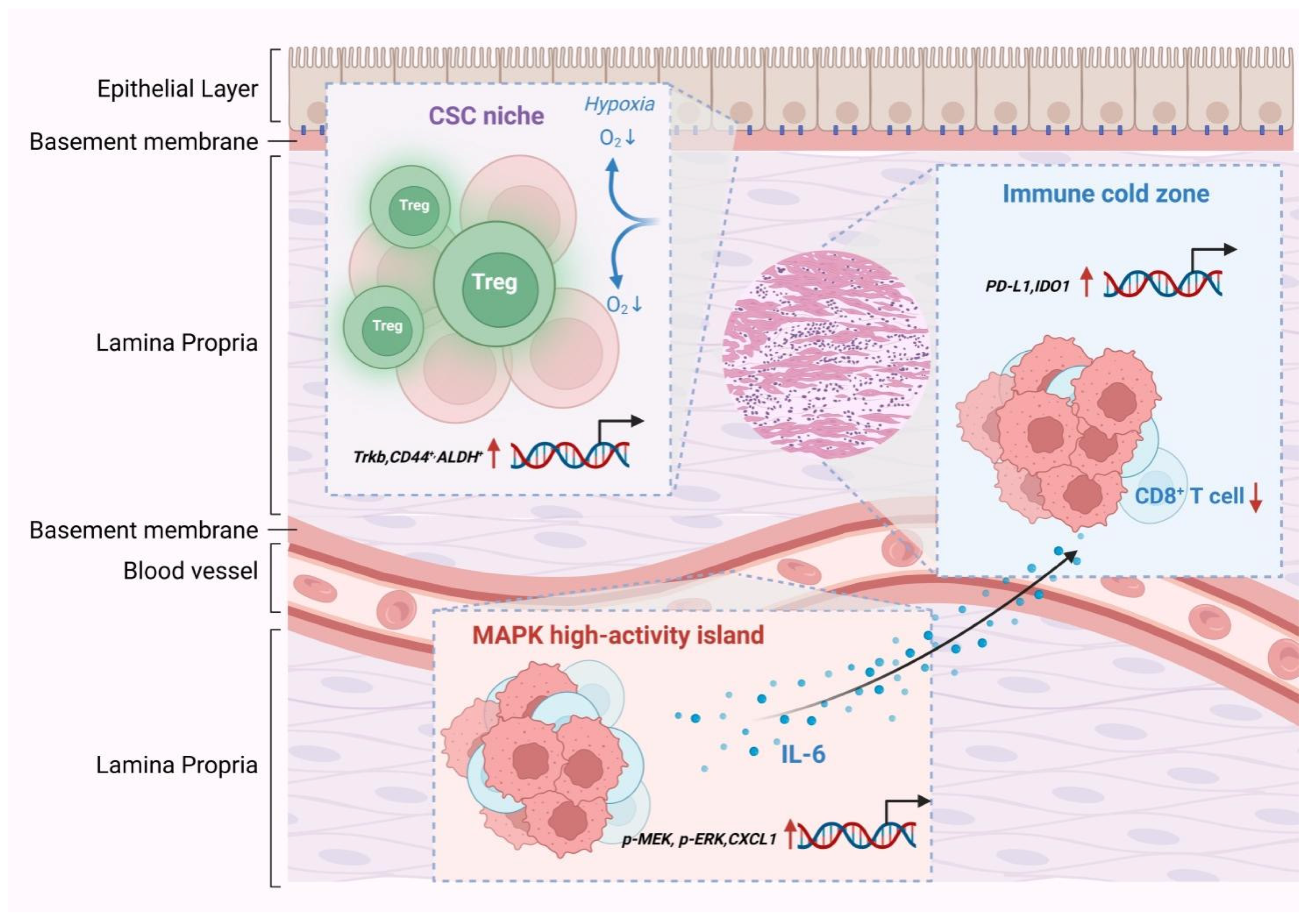


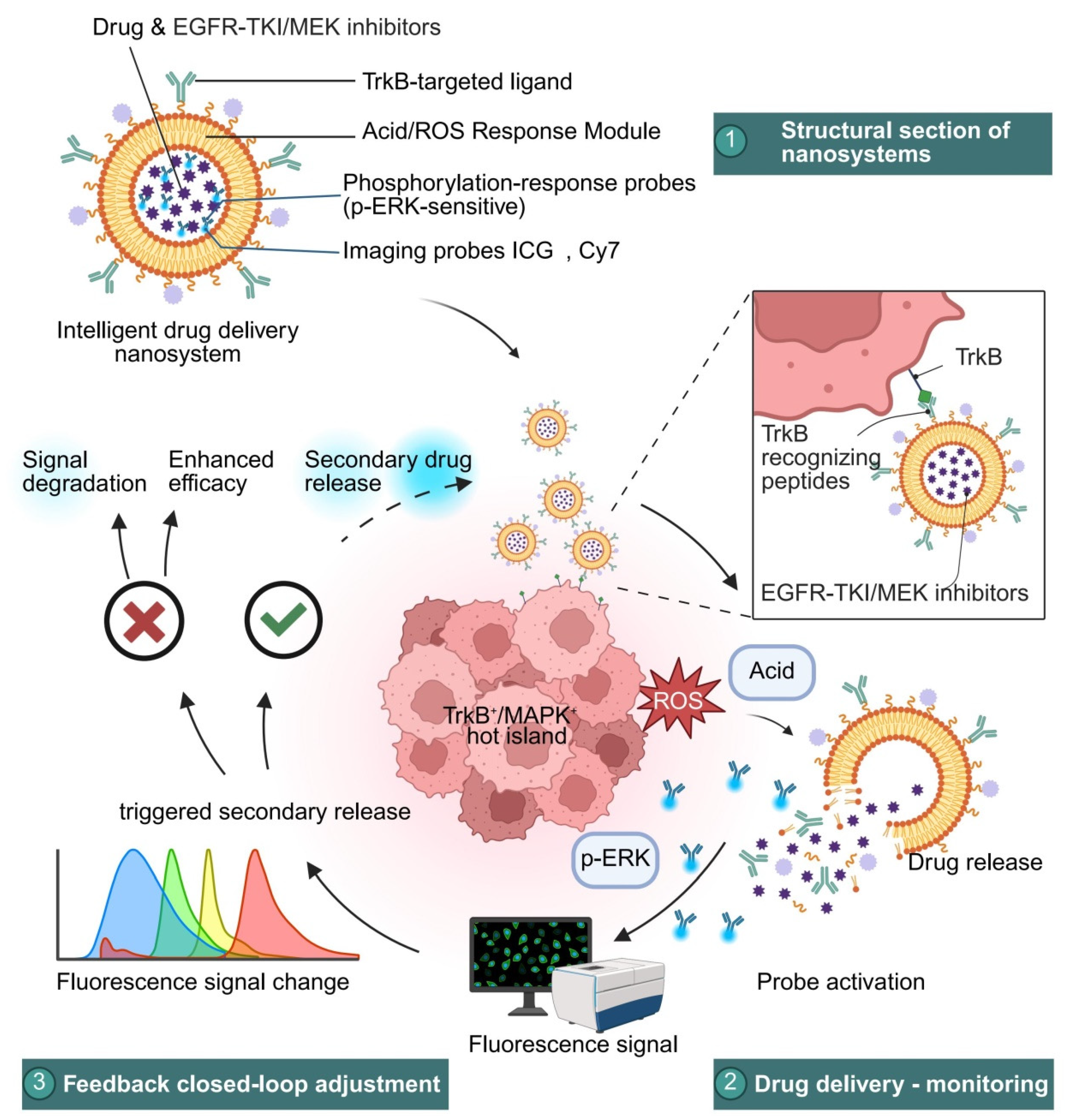

| Resistance Mechanism | Representative Axis/Factor | Spatial Niche Characteristics | Compensatory/Activated Pathway | Combination Intervention Strategy |
|---|---|---|---|---|
| EGFR-dependent mutation [78] | T790M → C797S | Diffusely distributed throughout the tumor; clonal expansion | Osimertinib failure | Osimertinib + ALK inhibitor or anti-EGFR antibody |
| EGFR-dependent mutation [79] | EGFR G724S, L718Q | Same as above | Structural alteration of ATP-binding site | First-generation + third-generation EGFR-TKI combination |
| Bypass activation/amplification [80] | MET amplification activating HER3–PI3K/Akt | Perivascular-enriched zones | PI3K/Akt compensatory pathway | EGFR-TKI + anti-MET/anti-HER3 antibody |
| Bypass activation/amplification [81] | HER2, ALK, RET activation or amplification | Hotspots of bypass RTK signaling | HER2/ALK/RET compensatory axes | EGFR-TKI + corresponding targeted inhibitors |
| Fusion-driven mechanisms [82] | BRAF fusion, NTRK2 fusion | Tumor-specific subclonal regions | BRAF–MAPK axis or NTRK–MAPK pathway | EGFR-TKI + inhibitors targeting fusion-driven signaling |
| MAPK compensatory activation [11] | Upregulation of TrkB (NTRK2), p-ERK | CSC-enriched zones; hypoxic regions | BDNF–TrkB–MAPK reactivation loop | EGFR-TKI + TrkB/MAPK pathway inhibitors |
| Immuno-microenvironment remodeling [83] | TAMs, IDO1, SPP1, PD-L1 | Immune-cold regions (core) | TAM recruitment → CCL2/CSF1R → Treg-mediated immunosuppression | EGFR-TKI + TAM reprogramming/IDO1 inhibitors |
| Tool | Methodological Principle | Input Data Type | Application Scenario | Application in EGFR-TKI Resistance |
|---|---|---|---|---|
| Hotspot [111] | Spatial autocorrelation analysis based on Moran’s I | Spatial expression matrix | Detection of spatial gene clusters; co-enrichment module identification | Co-localization of TrkB+ and MAPK axis hotspots; identification of “signal islands” |
| Giotto [112] | Construction of spatial adjacency graphs with multi-scale clustering annotation | ST data + image annotations | Analysis and visualization of spatial interaction networks | Construction of MET/VEGF bypass–TME interaction atlas |
| SpaGCN [45] | Graph convolutional network integrating spatial coordinates, gene expression, and tissue morphology | Spatial expression matrix + histological images | Spatial domain identification; localization of variable genes | Detection of CSC-enriched regions and TrkB–MAPK co-expression hotspots |
| STAGATE [113] | Graph attention network (GAT) with spatial prior embedding learning | Expression matrix + spatial coordinates | Nonlinear spatial domain detection; enhanced recognition of tissue boundaries | Modeling of regions with high spatial heterogeneity (e.g., immune-cold regions and compensation pathway boundaries) |
| SemanticST [114] | Multi-semantic graph embedding integrating spatial relationships and expression commonalities | Stereo-seq/Xenium data + tissue structure graphs | Detection of rare subdomains; modeling of complex signaling topology | Modeling of rare TrkB/NTRK2-overexpressing microdomains and identification of heterogeneous spatial axes |
| MOSAIK [115] | Multi-platform spatial data integration and unified analytical framework | Raw ST data from CosMx/Xenium/Visium | Cross-sample integration; multi-platform joint analysis | Construction of unified spatial atlases across EGFR-resistant patient models |
| Spatial Niche Type | Spatial Localization | Key Molecular/Cellular Markers | Functional or Behavioral Features | Driving Signals or Pathways | Proposed Intervention Strategy |
|---|---|---|---|---|---|
| CSC-Enriched Regions [15] | Basement membrane, hypoxic zones | TrkB (NTRK2), SOX2+ cancer stem cells | Stemness maintenance, therapy tolerance | BDNF–TrkB → MAPK/ERK activation | TrkB inhibitors in combination with EGFR-TKI |
| MAPK Compensation Islands [193] | – | p-ERK, IL-6 | Pathway compensation, alternative proliferative signaling | Upregulation of the MAPK axis | EGFR-TKI + MEK inhibitors |
| Immunosuppressive Cold Regions [194] | Tumor core, immune-deficient zones | IDO1, SPP1, M2-TAMs, Tregs | Immune evasion, ICI resistance | – | EGFR-TKI + IDO1 inhibitors or TAM reprogramming agents |
| Phenotypic Transition Zones (EMT/SCLC) [195] | – | ↑ Vimentin, RB1/p53 loss | Epithelial-to-mesenchymal transition, SCLC transformation | EMT signaling; inactivation of PIK3CA and RB1/p53 | EGFR-TKI + EMT inhibitors or neuroendocrine differentiation blockers |
| Nanocarrier Type | Responsive Mechanism | Structural Features | Targeting Ligand/Localization Strategy | Applicable Spatial Niche | Validation Model |
|---|---|---|---|---|---|
| cRGD-Targeted Gold Core–Shell System [231] | Photothermal + Sonodynamic (PTT + SDT) | Gold shell encapsulating Gefitinib and IR780 | cRGD targeting αvβ3 integrin | Perivascular MAPK hotspots | EGFR-TKI-resistant NSCLC mouse model |
| Anti-EGFR Aptamer-Modified Co-Delivery System [236] | Autophagy activation-mediated co-drug release | Chitosan nanoparticles co-encapsulating Gefitinib and Rapamycin | Anti-EGFR aptamer | EGFR-dependent mutation zones (e.g., T790M) | H1975 cell line + in vivo xenograft model |
| Protein-Based Nanoparticles (TRAIL + EGFR Ligand) [237] | Enhanced apoptosis induction | Lumazine-synthesized carrier co-presenting TRAIL and EGFR ligand | EGFR affibody or nanobody | EGFR-TKI-resistant NSCLC cells | PC9/HCC827 in vitro models |
| pH/Redox Dual-Sensitive Polymeric Nanoparticles [238] | Acidic pH + GSH-triggered drug release | Lecithin–polymer composite particles | pH/redox-responsive delivery | Low-pH, lactate-enriched metabolic zones | In vitro breast cancer model (TME-mimicking) |
| Ultrasound-Sensitive siRNA Nanobubble System [239] | UTMD-assisted siRNA release | siRNA encapsulated in nanobubbles, released upon ultrasound rupture | Ultrasound-guided localization | Cancer stemness-enriched regions | PC9GR-resistant cell in vitro model |
Disclaimer/Publisher’s Note: The statements, opinions and data contained in all publications are solely those of the individual author(s) and contributor(s) and not of MDPI and/or the editor(s). MDPI and/or the editor(s) disclaim responsibility for any injury to people or property resulting from any ideas, methods, instructions or products referred to in the content. |
© 2026 by the authors. Licensee MDPI, Basel, Switzerland. This article is an open access article distributed under the terms and conditions of the Creative Commons Attribution (CC BY) license.
Share and Cite
Zhang, X.; Zhang, X.; Jin, X.; Zhang, S.; Zhao, X.; Wang, H.; Wang, H.; Deng, L.; Tang, W.; Fu, Q.; et al. Atlas-Guided Nanocarrier Strategies Targeting Spatial NTRK2/MAPK Signaling in EGFR-TKI-Resistant Niches of Esophageal Squamous Cell Carcinoma. Pharmaceutics 2026, 18, 181. https://doi.org/10.3390/pharmaceutics18020181
Zhang X, Zhang X, Jin X, Zhang S, Zhao X, Wang H, Wang H, Deng L, Tang W, Fu Q, et al. Atlas-Guided Nanocarrier Strategies Targeting Spatial NTRK2/MAPK Signaling in EGFR-TKI-Resistant Niches of Esophageal Squamous Cell Carcinoma. Pharmaceutics. 2026; 18(2):181. https://doi.org/10.3390/pharmaceutics18020181
Chicago/Turabian StyleZhang, Xiusen, Xudong Zhang, Xing Jin, Shilei Zhang, Xin Zhao, Hairui Wang, Hui Wang, Lijun Deng, Wenchao Tang, Qizhi Fu, and et al. 2026. "Atlas-Guided Nanocarrier Strategies Targeting Spatial NTRK2/MAPK Signaling in EGFR-TKI-Resistant Niches of Esophageal Squamous Cell Carcinoma" Pharmaceutics 18, no. 2: 181. https://doi.org/10.3390/pharmaceutics18020181
APA StyleZhang, X., Zhang, X., Jin, X., Zhang, S., Zhao, X., Wang, H., Wang, H., Deng, L., Tang, W., Fu, Q., & Gao, S. (2026). Atlas-Guided Nanocarrier Strategies Targeting Spatial NTRK2/MAPK Signaling in EGFR-TKI-Resistant Niches of Esophageal Squamous Cell Carcinoma. Pharmaceutics, 18(2), 181. https://doi.org/10.3390/pharmaceutics18020181