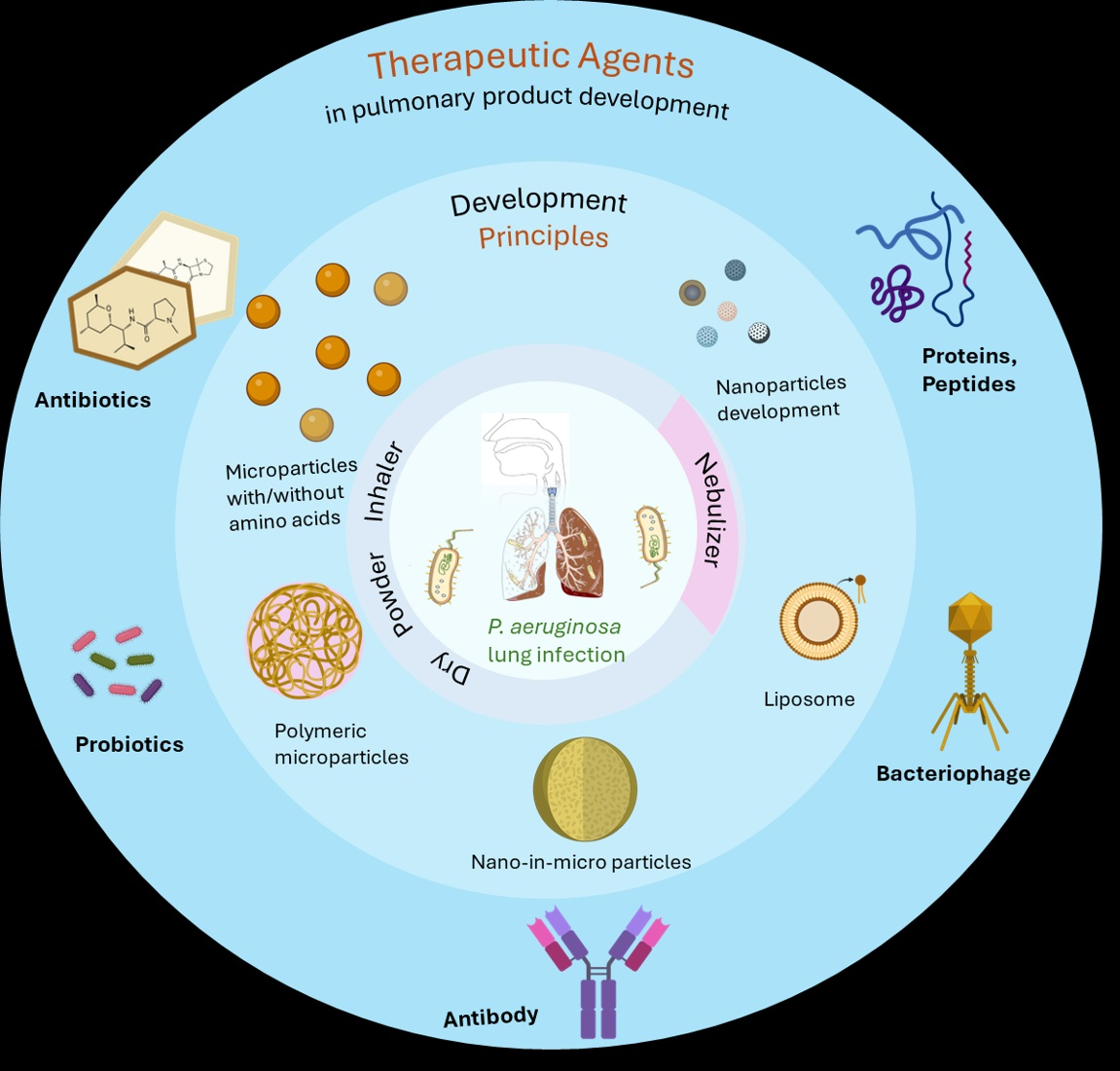
Inhaled Antibiotic and Biologic Formulations Targeting Pseudomonas aeruginosa



Abstract
1. Introduction
2. P. aeruginosa Lung Diseases
2.1. Hospital-Acquired Pneumonia
2.2. Infection in Cystic Fibrosis (CF)
2.3. Infection in Non-CF Bronchiectasis
2.4. Infection in Chronic Obstructive Pulmonary Disease (COPD)
3. Characteristics of P. aeruginosa Associated with Pulmonary Infections
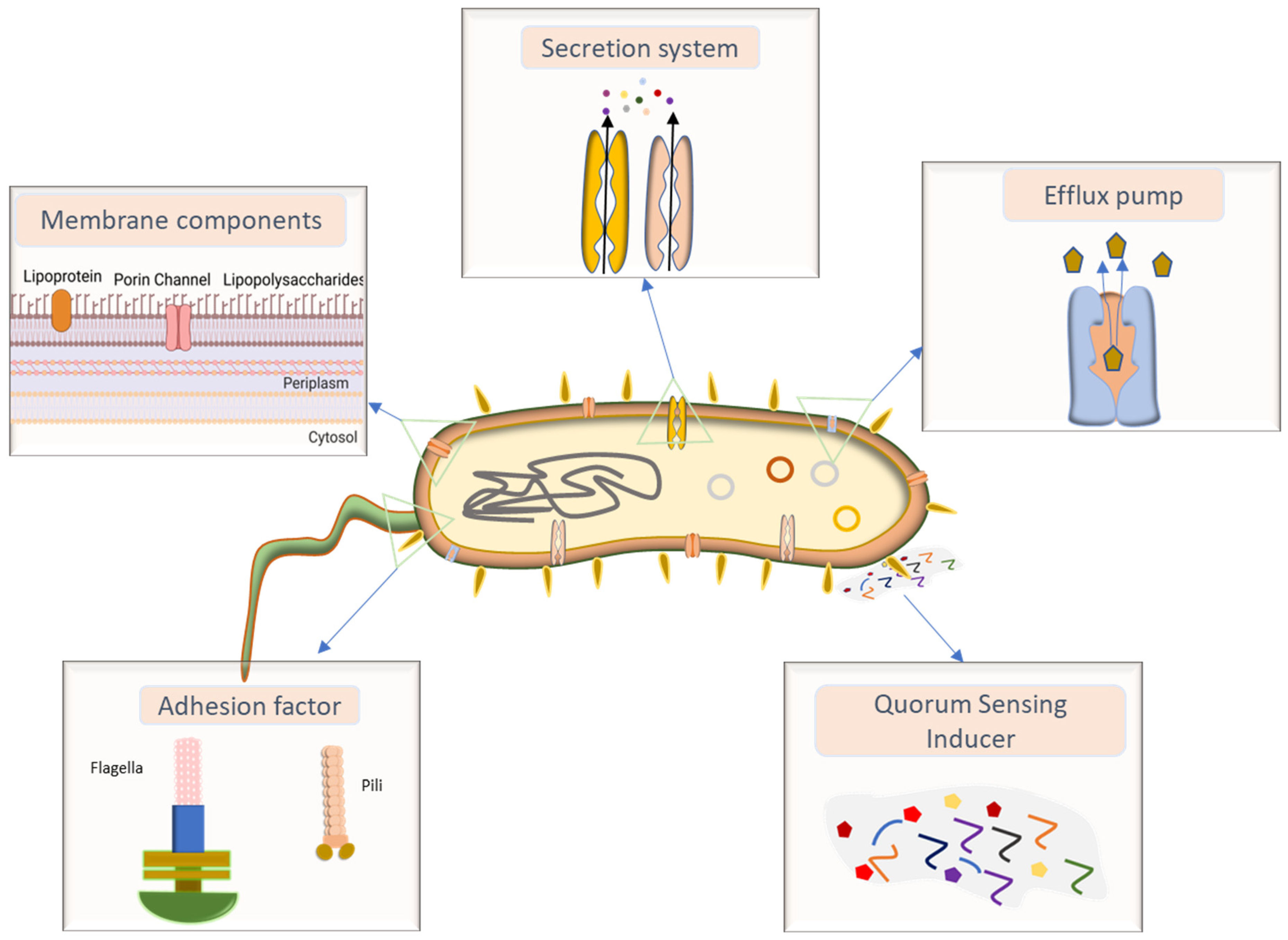
3.1. Adhesion Factors
3.2. Membrane Components
3.3. Secretion Systems
3.4. Efflux Pump
3.5. Quorum Sensing (QS) and Biofilm Formation
4. Formulations of Pulmonary Antibiotics
4.1. Nebulized Antibiotics
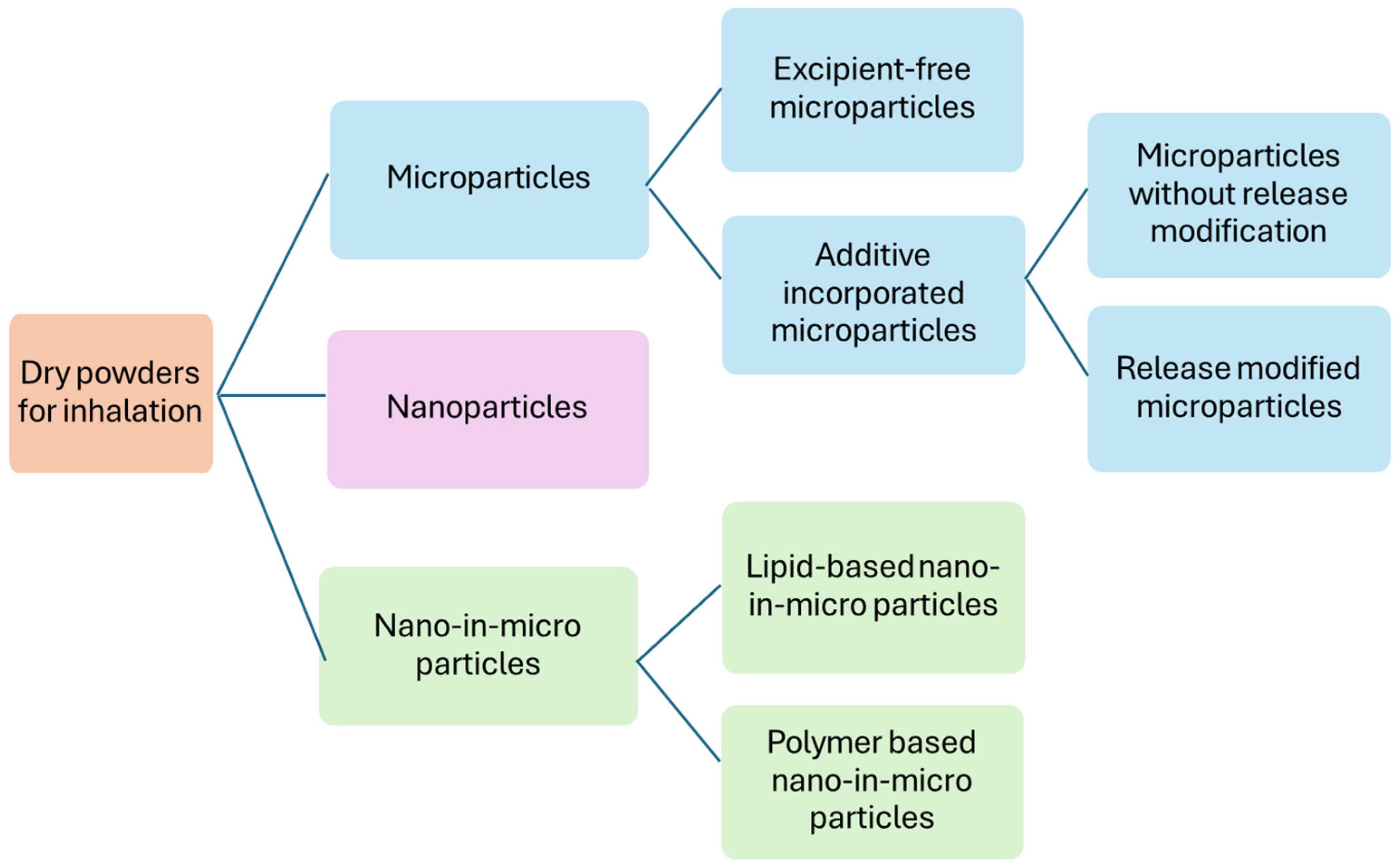
4.2. Dry Powder Inhalers (DPIs)
4.2.1. Microparticles
Excipient-Free Microparticles

| Drug Name | Preparation Methods | Highlights of Findings | Ref. |
|---|---|---|---|
| Aztreonam | SD | Excellent flowability and aerodynamic property; particle size < 4.46 μm; FPF 45% | [81] |
| Amikacin | SD | PDI was not considerably improved; ethanol improved the morphology of the particles | [82] |
| Azithromycin | Electrospray | High yield value; particle size around 2.5 µm; retained bactericidal effect and biocompatible | [80] |
| Ciprofloxacin | SD | Spherical, crystalline, dimpled particles; good yield with free flowability | [74] |
| Tobramycin | SFD | MMAD of optimized formulation was 1.30; FPF 83.31%; safety in vivo study; enhanced efficacy in the infected mouse compared to IV route | [79] |
| Meropenem-colistin | SD | Meropenem-colistin had synergistic antibacterial effects against clinical strains of P. aeruginosa; the co-formulation improved the aerosolization properties | [75] |
| Tobramycin—colistin | SD | Improved aerosolization performance; enhanced stability; prevented moisture-induced particle agglomeration | [77] |
| Clarithromycin—N-acetylcysteine | SD | Suitable MMAD of particles; solubility of the drug was improved | [78] |
| Ciprofloxacin—quercetin | SD | Enhanced aerodynamic deposition (72–94%) and FPF (48–65%); improved stability | [76] |
Additive Incorporated Microparticles
- a.
- Microparticles without release modification
| Drug Name | Preparation Method | Additives | Highlights of Findings | Ref. |
|---|---|---|---|---|
| Ceftazidime | SD | Valine, leucine, methionine, phenylalanine, and tryptophan | Monophasic amorphous systems developed; nontoxic; leucine improved FPF; and tryptophan enhanced stability | [83] |
| Ceftazidime-roflumilast | SD | Leucine, tryptophan | Roflumilast increased solid-state dynamics but retained bioactivities; leucine significantly improved FPF | [84] |
| Ciprofloxacin | SD | Methionine, phenylalanine, and tryptophan | Improved antibiofilm activity and moisture protection due to D-amino acids | [90] |
| Ciprofloxacin–copper | Jet milling | Calcium carbonate | Significantly reduced CFU of P. aeruginosa | [91] |
| Ciprofloxacin–N-acetylcysteine-curcumin | SD | Leucine | Spherical particle (<6 μm) with wrinkled and depressed surface; excellent aerosolization; FPF (68.93% to 77.75%); and satisfactory antibacterial effects at low doses | [87] |
| Levofloxacin | SD | Leucine | Optimum leucine (21.79%); optimized pH 5.98; and produced 54.38% FPF | [88] |
| Levofloxacin | SD | Arginine | 30% ethanol produced better powder; FPF above 50%; and emitted dose > 95% | [92] |
| Polymyxin B | SD, followed by airflow milling | Lactose, mannitol | Spray-dried particle size 3 µm; FPF, 53%, and milling increased FPF by 20%; and bioavailability peak 77.46% within 10 min | [86] |
- b.
- Release modified microparticles
| Drug Name | Preparation Method | Characterization/Tests | Highlights of Findings | Ref. |
|---|---|---|---|---|
| Doripenem | The drug-loaded chitosan microparticles by SD Additives: lactose, trehalose, and leucine | PCM: XRD, SEM, and drug release; APCM: NGI; in vitro antibacterial activity test; and cell viability assay | EE approximately 80%, leucine had the most impact on powder aerosolization; chitosan microparticles | [85] |
| Gentamicin | Freeze-dried PLGA large-porous particles were dispersed in gentamicin sulfate, and it was lyophilized again. | PCM: SEM, flowability, DSC, and in vitro drug release; APCM: NGI; and stability test | Spherical and highly porous particles; drug released up to 30 min; and approximately 40% FPF | [101] |
| Ciprofloxacin | The drug and chitosan mix embedded silver that was subjected to a coating by silica using SD | PCM: TEM, particle size, DSC, and XRD; APCM: TSI; microbial activity (MIC, MBC); and biofilm erosion assay | Excellent aerodynamic deposition, 3–4 times more effective against the growth of the bacteria and their biofilm | [93] |
| Ciprofloxacin | The drug encapsulated into alginate–carrageenan microspheres and undertaken for FD | PCM: SEM, EE, drug loading, swelling index, and in vitro release; in vivo deposition study | Particles were spherical, smooth, and size < 2 µm; EE (52.86% to 76.29%); and maximum release amount (72.64%) for a formulation in 10 min | [99] |
| Ciprofloxacin | Drug microparticles are prepared by SD Additives: silk fibrin, mannitol | PCM: SEM, AFM, and DVS; antimicrobial activity; cytotoxicity; inflammatory cytokine measurement; lung function evaluation; and histology | FPF (45.04%); antimicrobial activity and lung function unaffected; and excellent biocompatibility and biosafety | [100] |
| Clarithromycin | SD powder formulation Additives: leucine, chitosan | PCM: yield and drug content, SEM, DSC, dissolution, and particle size distribution; APCM: NGI; in vitro deposition study; and antibacterial test | 73.3% FPF; MMAD 1.8 μm; deposition 8.7 μg/cm2 in 24 h; no toxicity; and wide spectrum of antimicrobial property was not interfered | [96] |
| Levofloxacin | Drug–PLGA (DP) microsphere preparation by FD Additive: lauric acid | PCM: SEM, TEM, XRD, TGA, FTIR, and drug release; EE; APCM: MMAD determination; and cytotoxicity study | Particle size close to 5 µm exhibited good drug loading and controlled release; no cytotoxicity | [97] |
| Levofloxacin | Drug-loaded crosslinked chitosan microspheres formed by SD | PCM: SEM, XRD, TGA, FTIR, swelling property, drug loading and entrapment efficiency, water content, and particle size; APCM: NGI; in vitro release; and antibacterial assay | Particle size 5 µm; excellent aerosolization; antibacterial activity was similar to free drugs; and suitable swelling property | [94] |
| Levofloxacin | Drug–chitosan (DC) and drug–PLGA (DP) microspheres development and FD | Pharmacokinetic studies | DC released the drug immediately and 71% bioavailable in ELF; DP released the drug slowly and ELF concentration maintained up to 72 h | [98] |
| Levofloxacin | Corrugated surface microparticles with drug, chitosan, and an organic acid by SD Additive: leucine | PCM: EE, SEM; AFM, FIB, DSC, size distribution, XRD, and FTIR; APCM: ACI; dissolution study; PIV; pharmacokinetic study; and BALF | Formic acid’s powder had the most FPF (41.3% ± 3.9%), better aerosolization; reduced x-axial velocity and variable angle; fast dissolution; and high bioavailability in EFL | [95] |
4.2.2. Nanoparticles
4.2.3. Nano-in-Microparticles
Lipid-Based Nano-in-Microparticles
| Drug Name | Preparation Method | Characterization/Tests | Highlights of Findings | Ref. |
|---|---|---|---|---|
| Azithromycin | The drug was loaded into liposomes, and dry powder was prepared by SD Additives: trehalose, leucine | Liposomal characterization: EE and in vitro release; PCM: LD, SEM; APCM: NGI; MIC and MBC determination; biofilm studies; bacterial uptake; cellular uptake; and cytotoxicity studies | 75% EE, excellent stability; improved bactericidal effect; antibiofilm activity > 75% of liposome uptake by bacterial cells in 1 h; and no cytotoxicity | [110] |
| Clarithromycin | Liposomal clarithromycin preparation by ultrasonic SFD Additives: mannitol, sucrose | PCM: SEM, moisture absorption, EE, uniformity study, and DSC; stability study | EE up to 80%; narrow size distribution; high drug emission, FPF up to 50%; and maintained stability at 60% RH and 25 °C for 3 months | [112] |
| Polymyxin B | Liposome was prepared by film hydration method and subjected to SD Additives: isoleucine, valine, and mannitol | PCM: drug content, SEM, FTIR, DSC, drug release assay, MIC, and MBC; APCM: NGI | Spherical, particle size 250–550 nm; FPF was 25–26%; 90% release within 2 h; and total P aeruginosa killing time of 12 h | [111] |
| Ciprofloxacin | Liposomal drug nanocrystals are subjected to SD powder preparation Additives: sucrose, magnesium stearate, and leucine | PCM: cryo-TEM, DLS, EE measurement, particle size and distribution, MC, XRD, DVS, and in vitro drug release; APCM: NGI | Spherical particle with low water content; FPF (66–70%), EE (71–79%); and sucrose and lipids ratio 2:1 exhibited prolonged drug release | [117] |
| Ciprofloxacin | Nanostructured lipid carriers–drug undertaken for SD Additive: chitosan | PCM: SEM; particle size, drug release; APCM: NGI; and antimicrobial assay | EE (98.75% ± 0.048%); loading capacity (13.34 ± 1.92%); 80% release in 10 min; excellent particle size and texture; and better antibacterial activity than free drug | [113] |
| Ciprofloxacin, Colistin | Liposome preparation followed DPI preparation by SFD Additives: leucine, trehalose, and sucrose | Liposome characterization; PCM: XRD; APCM: MSLI; cytotoxicity, time kill antibacterial assay; and MIC measurement | ED > 95% and FPF ~50%; EE around 50%; no effect on lung epithelial growth; and synergistic antibacterial effect | [115] |
| Ciprofloxacin, Colistin | Muco-inert Cipro-Col-Liposome preparation followed DPI powder preparation by SFD Additives: sucrose, mannitol, trehalose, and leucine | Liposome characterization: MIC, biofilm eradication concentration measurement, protective effect on blood cell, and biofilm leakage capacity; PCM: SEM, density; APCM: NGI; mucus penetration and biofilm accumulation; and antibiofilm effect analysis | FPF around 45%; ED nearly 100%; effectively penetrated the airway mucus and accumulated at the biofilm site; synergistically reduced the biofilm; 99.7% reduction in bacterial colonization; and mitigated inflammation and pulmonary fibrosis | [116] |
Polymer-Based Nano-in-Microparticles
4.3. Future Directions in Formulations of Pulmonary Antibiotics
5. Development of Pulmonary Biologics
5.1. Antibacterial Proteins/Peptides
5.2. Vaccines and Antibodies
5.3. Bacteriophages
5.4. Probiotics
6. Prospects for Synergistic Combinations of Antibiotics and Biologics
7. Conclusions and Future Perspectives
Author Contributions
Funding
Institutional Review Board Statement
Informed Consent Statement
Data Availability Statement
Acknowledgments
Conflicts of Interest
References
- Yang, F.-F.; Yu, S.-J.; Du, W.-N.; Wang, H.-M.; Yao, X.-X.; Xue, D.-D.; Yu, Y. Global Morbidity and Mortality of Lower Respiratory Infections: A Population-Based Study. Respir. Med. 2022, 205, 107042. [Google Scholar] [CrossRef]
- Reynolds, D.; Kollef, M. The Epidemiology and Pathogenesis and Treatment of Pseudomonas aeruginosa Infections: An Update. Drugs 2021, 81, 2117–2131. [Google Scholar] [CrossRef] [PubMed]
- Hernández-Jiménez, P.; López-Medrano, F.; Fernández-Ruiz, M.; Silva, J.T.; Corbella, L.; San-Juan, R.; Lizasoain, M.; Díaz-Regañón, J.; Viedma, E.; Aguado, J.M. Risk Factors and Outcomes for Multidrug Resistant Pseudomonas aeruginosa Infection in Immunocompromised Patients. Antibiotics 2022, 11, 1459. [Google Scholar] [CrossRef] [PubMed]
- World Health Organization (WHO). WHO Updates List of Drug-Resistant Bacteria Most Threatening to Human Health. Available online: https://www.who.int/news/item/17-05-2024-who-updates-list-of-drug-resistant-bacteria-most-threatening-to-human-health (accessed on 21 January 2026).
- Kaialy, W.; Nokhodchi, A. Particle Engineering for Improved Pulmonary Drug Delivery through Dry Powder Inhalers. In Pulmonary Drug Delivery: Advances and Challenges; Wiley: Hoboken, NJ, USA, 2015; pp. 171–198. [Google Scholar]
- Du, T.; Lei, A.; Zhang, N.; Zhu, C. The Beneficial Role of Probiotic Lactobacillus in Respiratory Diseases. Front. Immunol. 2022, 13, 908010. [Google Scholar] [CrossRef] [PubMed]
- Breijyeh, Z.; Jubeh, B.; Karaman, R. Resistance of Gram-Negative Bacteria to Current Antibacterial Agents and Approaches to Resolve It. Molecules 2020, 25, 1340. [Google Scholar] [CrossRef]
- Rossmann, F.S.; Laverde, D.; Kropec, A.; Romero-Saavedra, F.; Meyer-Buehn, M.; Huebner, J. Isolation of Highly Active Monoclonal Antibodies against Multiresistant Gram-Positive Bacteria. PLoS ONE 2015, 10, e0118405. [Google Scholar] [CrossRef]
- Rohde, C.; Wittmann, J.; Kutter, E. Bacteriophages: A Therapy Concept against Multi-Drug–Resistant Bacteria. Surg. Infect. 2018, 19, 737–744. [Google Scholar] [CrossRef]
- Silva, A.S.; Tavares, M.T.; Aguiar-Ricardo, A. Sustainable Strategies for Nano-in-Micro Particle Engineering for Pulmonary Delivery. J. Nanopart. Res. 2014, 16, 2602. [Google Scholar] [CrossRef]
- Kim, E.Y.; Rajasekaran, G.; Shin, S.Y. LL-37-Derived Short Antimicrobial Peptide KR-12-A5 and Its d-Amino Acid Substituted Analogs with Cell Selectivity, Anti-Biofilm Activity, Synergistic Effect with Conventional Antibiotics, and Anti-Inflammatory Activity. Eur. J. Med. Chem. 2017, 136, 428–441. [Google Scholar] [CrossRef]
- Wardell, S.J.T.; Yung, D.B.Y.; Nielsen, J.E.; Lamichhane, R.; Sørensen, K.; Molchanova, N.; Herlan, C.; Lin, J.S.; Bräse, S.; Wise, L.M.; et al. A Biofilm-Targeting Lipo-Peptoid to Treat Pseudomonas aeruginosa and Staphylococcus Aureus Co-Infections. Biofilm 2025, 9, 100272. [Google Scholar] [CrossRef]
- Wardell, S.J.T.; Yung, D.B.Y.; Gupta, A.; Bostina, M.; Overhage, J.; Hancock, R.E.W.; Pletzer, D. DJK-5, an Anti-Biofilm Peptide, Increases Staphylococcus Aureus Sensitivity to Colistin Killing in Co-Biofilms with Pseudomonas aeruginosa. NPJ Biofilms Microbiomes 2025, 11, 8. [Google Scholar] [CrossRef]
- Pletzer, D.; Mansour, S.C.; Hancock, R.E.W. Synergy between Conventional Antibiotics and Anti-Biofilm Peptides in a Murine, Sub-Cutaneous Abscess Model Caused by Recalcitrant ESKAPE Pathogens. PLoS Pathog. 2018, 14, e1007084. [Google Scholar] [CrossRef]
- Corona, A.; de Santis, V.; Agarossi, A.; Prete, A.; Cattaneo, D.; Tomasini, G.; Bonetti, G.; Patroni, A.; Latronico, N.; Corona, A.; et al. Antibiotic Therapy Strategies for Treating Gram-Negative Severe Infections in the Critically Ill: A Narrative Review. Antibiotics 2023, 12, 1262. [Google Scholar] [CrossRef] [PubMed]
- Karakonstantis, S.; Kritsotakis, E.I.; Gikas, A. Treatment Options for K. Pneumoniae, P. aeruginosa and A. Baumannii Co-Resistant to Carbapenems, Aminoglycosides, Polymyxins and Tigecycline: An Approach Based on the Mechanisms of Resistance to Carbapenems. Infection 2020, 48, 835–851. [Google Scholar] [CrossRef] [PubMed]
- Islam, N.; Reid, D. Inhaled Antibiotics: A Promising Drug Delivery Strategies for Efficient Treatment of Lower Respiratory Tract Infections (LRTIs) Associated with Antibiotic Resistant Biofilm-Dwelling and Intracellular Bacterial Pathogens. Respir. Med. 2024, 227, 107661. [Google Scholar] [CrossRef]
- Teirlinck, E.; Samal, S.K.; Coenye, T.; Braeckmans, K. Penetrating the Bacterial Biofilm: Challenges for Antimicrobial Treatment. In Functionalized Nanomaterials for the Management of Microbial Infection: A Strategy to Address Microbial Drug Resistance; Elsevier: Amsterdam, The Netherlands, 2017; pp. 49–76. [Google Scholar] [CrossRef]
- Elfadadny, A.; Ragab, R.F.; AlHarbi, M.; Badshah, F.; Ibáñez-Arancibia, E.; Farag, A.; Hendawy, A.O.; De los Ríos-Escalante, P.R.; Aboubakr, M.; Zakai, S.A. Antimicrobial Resistance of Pseudomonas aeruginosa: Navigating Clinical Impacts, Current Resistance Trends, and Innovations in Breaking Therapies. Front. Microbiol. 2024, 15, 1374466. [Google Scholar] [CrossRef] [PubMed]
- Labovská, S. Pseudomonas aeruginosa as a Cause of Nosocomial Infections. In Pseudomonas aeruginosa-Biofilm Formation, Infections and Treatments; IntechOpen: London, UK, 2021; ISBN 1839686480. [Google Scholar]
- Fernández-Barat, L.; Ferrer, M.; De Rosa, F.; Gabarrús, A.; Esperatti, M.; Terraneo, S.; Rinaudo, M.; Bassi, G.L.; Torres, A. Intensive Care Unit-Acquired Pneumonia Due to Pseudomonas aeruginosa with and without Multidrug Resistance. J. Infect. 2017, 74, 142–152. [Google Scholar] [CrossRef]
- Koulenti, D.; Tsigou, E.; Rello, J. Nosocomial Pneumonia in 27 ICUs in Europe: Perspectives from the EU-VAP/CAP Study. Eur. J. Clin. Microbiol. Infect. Dis. 2017, 36, 1999–2006. [Google Scholar] [CrossRef]
- Qin, S.; Xiao, W.; Zhou, C.; Pu, Q.; Deng, X.; Lan, L.; Liang, H.; Song, X.; Wu, M. Pseudomonas aeruginosa: Pathogenesis, Virulence Factors, Antibiotic Resistance, Interaction with Host, Technology Advances and Emerging Therapeutics. Signal Transduct. Target. Ther. 2022, 7, 199. [Google Scholar] [CrossRef]
- Thornton, C.S.; Parkins, M.D. Microbial Epidemiology of the Cystic Fibrosis Airways: Past, Present, and Future. Semin. Respir. Crit. Care Med. 2023, 44, 269–286. [Google Scholar] [CrossRef]
- Jackson, L.; Waters, V. Factors Influencing the Acquisition and Eradication of Early Pseudomonas aeruginosa Infection in Cystic Fibrosis. J. Cyst. Fibros. 2021, 20, 8–16. [Google Scholar] [CrossRef] [PubMed]
- Li, J.; Zheng, H.; Leung, S.S.Y. Pulmonary Delivery of Emerging Antibacterials for Bacterial Lung Infections Treatment. Pharm. Res. 2023, 40, 1057–1072. [Google Scholar] [CrossRef] [PubMed]
- Song, J.; Sin, S.; Kang, H.-R.; Oh, Y.-M.; Jeong, I.; Song, J.; Sin, S.; Kang, H.-R.; Oh, Y.-M.; Jeong, I. Clinical Impacts of Pseudomonas aeruginosa Isolation in Patients with Bronchiectasis: Findings from KMBARC Registry. J. Clin. Med. 2024, 13, 5011. [Google Scholar] [CrossRef] [PubMed]
- Hill, A.T.; Sullivan, A.L.; Chalmers, J.D.; De Soyza, A.; Stuart Elborn, J.; Andres Floto, R.; Grillo, L.; Gruffydd-Jones, K.; Harvey, A.; Haworth, C.S.; et al. British Thoracic Society Guideline for Bronchiectasis in Adults. Thorax 2019, 74, 1–69. [Google Scholar] [CrossRef]
- Safiri, S.; Carson-Chahhoud, K.; Noori, M.; Nejadghaderi, S.A.; Sullman, M.J.M.; Heris, J.A.; Ansarin, K.; Mansournia, M.A.; Collins, G.S.; Kolahi, A.-A. Burden of Chronic Obstructive Pulmonary Disease and Its Attributable Risk Factors in 204 Countries and Territories, 1990-2019: Results from the Global Burden of Disease Study 2019. BMJ 2022, 378, e069679. [Google Scholar] [CrossRef]
- Rabe, K.F.; Watz, H. Chronic Obstructive Pulmonary Disease. Lancet 2017, 389, 1931–1940. [Google Scholar] [CrossRef]
- Ritchie, A.I.; Wedzicha, J.A. Definition, Causes, Pathogenesis, and Consequences of Chronic Obstructive Pulmonary Disease Exacerbations. Clin. Chest Med. 2020, 41, 421–438. [Google Scholar] [CrossRef]
- Kunadharaju, R.; Rudraraju, A.; Sethi, S. Pseudomonas aeruginosa Colonization and COPD: The Chicken or the Egg? Arch. Bronconeumol. (Ed. Impr.) 2022, 58, 539–541. [Google Scholar] [CrossRef]
- Murphy, T.F. Pseudomonas aeruginosa in Adults with Chronic Obstructive Pulmonary Disease. Curr. Opin. Pulm. Med. 2009, 15, 138–142. [Google Scholar] [CrossRef]
- Gallego, M.; Pomares, X.; Espasa, M.; Castañer, E.; Solé, M.; Suárez, D.; Monsó, E.; Montón, C. Pseudomonas aeruginosa Isolates in Severe Chronic Obstructive Pulmonary Disease: Characterization and Risk Factors. BMC Pulm. Med. 2014, 14, 103. [Google Scholar] [CrossRef]
- Bucior, I.; Pielage, J.F.; Engel, J.N. Pseudomonas aeruginosa Pili and Flagella Mediate Distinct Binding and Signaling Events at the Apical and Basolateral Surface of Airway Epithelium. PLoS Pathog. 2012, 8, e1002616. [Google Scholar] [CrossRef] [PubMed]
- Jayaraman, A.; Wood, T.K. Bacterial Quorum Sensing: Signals, Circuits, and Implications for Biofilms and Disease. Annu. Rev. Biomed. Eng. 2008, 10, 145–167. [Google Scholar] [CrossRef] [PubMed]
- Vaara, M. Lipopolysaccharide and the Permeability of the Bacterial Outer Membrane. In Endotoxin in Health and Disease; Taylor & Francis Group: Abingdon, UK, 2020; pp. 31–38. [Google Scholar] [CrossRef]
- Blanco, P.; Hernando-Amado, S.; Reales-Calderon, J.A.; Corona, F.; Lira, F.; Alcalde-Rico, M.; Bernardini, A.; Sanchez, M.B.; Martinez, J.L.; Blanco, P.; et al. Bacterial Multidrug Efflux Pumps: Much More Than Antibiotic Resistance Determinants. Microorganisms 2016, 4, 14. [Google Scholar] [CrossRef] [PubMed]
- Toutain, C.M.; Zegans, M.E.; O’Toole, G.A. Evidence for Two Flagellar Stators and Their Role in the Motility of Pseudomonas aeruginosa. J. Bacteriol. 2005, 187, 771–777. [Google Scholar] [CrossRef]
- Verma, A.; Arora, S.K.; Kuravi, S.K.; Ramphal, R. Roles of Specific Amino Acids in the N Terminus of Pseudomonas aeruginosa Flagellin and of Flagellin Glycosylation in the Innate Immune Response. Infect. Immun. 2005, 73, 8237–8246. [Google Scholar] [CrossRef]
- Murray, T.S.; Kazmierczak, B.I. Pseudomonas aeruginosa Exhibits Sliding Motility in the Absence of Type IV Pili and Flagella. J. Bacteriol. 2008, 190, 2700–2708. [Google Scholar] [CrossRef]
- Adamo, R.; Sokol, S.; Soong, G.; Gomez, M.I.; Prince, A. Pseudomonas aeruginosa Flagella Activate Airway Epithelial Cells through AsialoGM1 and Toll-like Receptor 2 as Well as Toll-like Receptor 5. Am. J. Respir. Cell Mol. Biol. 2004, 30, 627–634. [Google Scholar] [CrossRef]
- Roncero, C.; Darzins, A.; Casadaban, M. Pseudomonas aeruginosa Transposable Bacteriophages D3112 and B3 Require Pili and Surface Growth for Adsorption. J. Bacteriol. 1990, 172, 1899–1904. [Google Scholar] [CrossRef]
- Harvey, H.; Bondy-Denomy, J.; Marquis, H.; Sztanko, K.M.; Davidson, A.R.; Burrows, L.L. Pseudomonas aeruginosa Defends against Phages through Type IV Pilus Glycosylation. Nat. Microbiol. 2018, 3, 47–52. [Google Scholar] [CrossRef]
- Chevalier, S.; Bouffartigues, E.; Bodilis, J.; Maillot, O.; Lesouhaitier, O.; Feuilloley, M.G.J.; Orange, N.; Dufour, A.; Cornelis, P. Structure, Function and Regulation of Pseudomonas aeruginosa Porins. FEMS Microbiol. Rev. 2017, 41, 698–722. [Google Scholar] [CrossRef]
- Sugawara, E.; Nagano, K.; Nikaido, H. Alternative Folding Pathways of the Major Porin OprF of Pseudomonas aeruginosa. FEBS J. 2012, 279, 910–918. [Google Scholar] [CrossRef] [PubMed]
- Kucharska, I.; Liang, B.; Ursini, N.; Tamm, L.K. Molecular Interactions of Lipopolysaccharide with an Outer Membrane Protein from Pseudomonas aeruginosa Probed by Solution NMR. Biochemistry 2016, 55, 5061–5072. [Google Scholar] [CrossRef] [PubMed]
- Aeschlimann, J.R. The Role of Multidrug Efflux Pumps in the Antibiotic Resistance of Pseudomonas aeruginosa and Other Gram-negative Bacteria: Insights from the Society of Infectious Diseases Pharmacists. Pharmacother. J. Hum. Pharmacol. Drug Ther. 2003, 23, 916–924. [Google Scholar] [CrossRef] [PubMed]
- Lin, Y.-M.; Wu, S.-J.; Chang, T.-W.; Wang, C.-F.; Suen, C.-S.; Hwang, M.-J.; Chang, M.D.-T.; Chen, Y.-T.; Liao, Y.-D. Outer Membrane Protein I of Pseudomonas aeruginosa Is a Target of Cationic Antimicrobial Peptide/Protein. J. Biol. Chem. 2010, 285, 8985–8994. [Google Scholar] [CrossRef]
- Ernst, R.K.; Hajjar, A.M.; Tsai, J.H.; Moskowitz, S.M.; Wilson, C.B.; Miller, S.I. Pseudomonas aeruginosa Lipid A Diversity and Its Recognition by Toll-like Receptor 4. J. Endotoxin Res. 2003, 9, 395–400. [Google Scholar] [CrossRef]
- Sciuto, A.L.; Cervoni, M.; Stefanelli, R.; Mancone, C.; Imperi, F. Effect of Lipid A Aminoarabinosylation on Pseudomonas aeruginosa Colistin Resistance and Fitness. Int. J. Antimicrob. Agents 2020, 55, 105957. [Google Scholar] [CrossRef]
- Cigana, C.; Curcuru, L.; Leone, M.R.; Ierano, T.; Lore, N.I.; Bianconi, I.; Silipo, A.; Cozzolino, F.; Lanzetta, R.; Molinaro, A.; et al. Pseudomonas aeruginosa Exploits Lipid A and Muropeptides Modification as a Strategy to Lower Innate Immunity during Cystic Fibrosis Lung Infection. PLoS ONE 2009, 4, e8439. [Google Scholar] [CrossRef]
- Trindade, B.C.; Chen, G.Y. NOD1 and NOD2 in Inflammatory and Infectious Diseases. Immunol. Rev. 2020, 297, 139–161. [Google Scholar] [CrossRef]
- Jyot, J.; Balloy, V.; Jouvion, G.; Verma, A.; Touqui, L.; Huerre, M.; Chignard, M.; Ramphal, R. Type II Secretion System of Pseudomonas aeruginosa: In Vivo Evidence of a Significant Role in Death Due to Lung Infection. J. Infect. Dis. 2011, 203, 1369–1377. [Google Scholar] [CrossRef]
- Hauser, A.R. The Type III Secretion System of Pseudomonas aeruginosa: Infection by Injection. Nat. Rev. Microbiol. 2009, 7, 654–665. [Google Scholar] [CrossRef]
- Lorusso, A.B.; Carrara, J.A.; Barroso, C.D.N.; Tuon, F.F.; Faoro, H. Role of Efflux Pumps on Antimicrobial Resistance in Pseudomonas aeruginosa. Int. J. Mol. Sci. 2022, 23, 15779. [Google Scholar] [CrossRef]
- Gaurav, A.; Bakht, P.; Saini, M.; Pandey, S.; Pathania, R. Role of Bacterial Efflux Pumps in Antibiotic Resistance, Virulence, and Strategies to Discover Novel Efflux Pump Inhibitors. Microbiology 2023, 169, 001333. [Google Scholar] [CrossRef] [PubMed]
- Brindhadevi, K.; LewisOscar, F.; Mylonakis, E.; Shanmugam, S.; Verma, T.N.; Pugazhendhi, A. Biofilm and Quorum Sensing Mediated Pathogenicity in Pseudomonas aeruginosa. Process Biochem. 2020, 96, 49–57. [Google Scholar] [CrossRef]
- Høiby, N.; Moser, C.; Ciofu, O. Pseudomonas aeruginosa in the Frontline of the Greatest Challenge of Biofilm Infection—Its Tolerance to Antibiotics. Microorganisms 2024, 12, 2115. [Google Scholar] [CrossRef] [PubMed]
- Rampioni, G.; Falcone, M.; Heeb, S.; Frangipani, E.; Fletcher, M.P.; Dubern, J.-F.; Visca, P.; Leoni, L.; Cámara, M.; Williams, P. Unravelling the Genome-Wide Contributions of Specific 2-Alkyl-4-Quinolones and PqsE to Quorum Sensing in Pseudomonas aeruginosa. PLoS Pathog. 2016, 12, e1006029. [Google Scholar] [CrossRef]
- Koley, S.; Bose, A.; Mukherjee, M. Quorum Sensing in Gram-Negative Bacteria. In Natural Products; CRC Press: Boca Raton, FL, USA, 2023; pp. 25–61. [Google Scholar]
- Curran, C.S.; Bolig, T.; Torabi-Parizi, P. Mechanisms and Targeted Therapies for Pseudomonas aeruginosa Lung Infection. Am. J. Respir. Crit. Care Med. 2018, 197, 708–727. [Google Scholar] [CrossRef]
- O’Riordan, T.G. Formulations and Nebulizer Performance. Respir. Care 2002, 47, 1305–1312; discussion 1312–1313. [Google Scholar]
- Movellan, J.; Murgia, X.; Gracia, R.; Marradi, M.; Miranda, J.I.; Aizpurua, J.M.; Grande, H.J.; Dupin, D.; Loinaz, I. Tobramycin Nanoformulation for Chronic Pulmonary Infections: From Drug Product Definition to Scale-up for Preclinical Evaluation. Int. J. Pharm. 2025, 671, 125241. [Google Scholar] [CrossRef]
- Türeli, N.G.; Türeli, A.E.; Schneider, M. Optimization of Ciprofloxacin Complex Loaded PLGA Nanoparticles for Pulmonary Treatment of Cystic Fibrosis Infections: Design of Experiments Approach. Int. J. Pharm. 2016, 515, 343–351. [Google Scholar] [CrossRef]
- Altube, M.J.; Martínez, M.M.B.; Malheiros, B.; Maffía, P.C.; Barbosa, L.R.S.; Morilla, M.J.; Romero, E.L. Fast Biofilm Penetration and Anti-PAO1 Activity of Nebulized Azithromycin in Nanoarchaeosomes. Mol. Pharm. 2019, 17, 70–83. [Google Scholar] [CrossRef]
- Zhang, Y.; Wong, C.Y.J.; Gholizadeh, H.; Aluigi, A.; Tiboni, M.; Casettari, L.; Young, P.; Traini, D.; Li, M.; Cheng, S. Microfluidics Assembly of Inhalable Liposomal Ciprofloxacin Characterised by an Innovative in Vitro Pulmonary Model. Int. J. Pharm. 2023, 635, 122667. [Google Scholar] [CrossRef] [PubMed]
- Islan, G.A.; Tornello, P.C.; Abraham, G.A.; Duran, N.; Castro, G.R. Smart Lipid Nanoparticles Containing Levofloxacin and DNase for Lung Delivery. Design and Characterization. Colloids Surf. B Biointerfaces 2016, 143, 168–176. [Google Scholar] [CrossRef] [PubMed]
- Davison, J.; Robinson-Barella, A.; Davies, G.; Campos-Hinojosa, M.; Collins, C.; Husband, A.; Okeowo, D.; Hester, K.L.M.; Lee, R.; Rapley, T.; et al. Patient Attitudes to Nebulised Antibiotics in the Treatment of Bronchiectasis: A Mixed-Methods Study. ERJ Open Res. 2023, 9, 00735-2022. [Google Scholar] [CrossRef] [PubMed]
- De la Rosa-Carrillo, D.; Suárez-Cuartín, G.; Sibila, O.; Golpe, R.; Girón, R.-M.; Martínez-García, M.-Á.; de la Rosa-Carrillo, D.; Suárez-Cuartín, G.; Sibila, O.; Golpe, R.; et al. Efficacy and Safety of Dry Powder Antibiotics: A Narrative Review. J. Clin. Med. 2023, 12, 3577. [Google Scholar] [CrossRef]
- Swanson, C.S.; Dhand, R.; Cao, L.; Ferris, J.; Elder, C.S.; He, Q. Microbiome Profiles of Nebulizers in Hospital Use. J. Aerosol Med. Pulm. Drug Deliv. 2022, 35, 212–222. [Google Scholar] [CrossRef]
- Chaurasiya, B.; Zhao, Y.Y. Dry Powder for Pulmonary Delivery: A Comprehensive Review. Pharmaceutics 2020, 13, 31. [Google Scholar] [CrossRef]
- Belotti, S.; Rossi, A.; Colombo, P.; Bettini, R.; Rekkas, D.; Politis, S.; Colombo, G.; Balducci, A.G.; Buttini, F. Spray Dried Amikacin Powder for Inhalation in Cystic Fibrosis Patients: A Quality by Design Approach for Product Construction. Int. J. Pharm. 2014, 471, 507–515. [Google Scholar] [CrossRef]
- Razuc, M.; Piña, J.; Ramírez-Rigo, M. V Optimization of Ciprofloxacin Hydrochloride Spray-Dried Microparticles for Pulmonary Delivery Using Design of Experiments. AAPS PharmSciTech 2018, 19, 3085–3096. [Google Scholar] [CrossRef]
- Mangal, S.; Park, H.; Zeng, L.; Heidi, H.Y.; Lin, Y.; Velkov, T.; Denman, J.A.; Zemlyanov, D.; Li, J.; Zhou, Q.T. Composite Particle Formulations of Colistin and Meropenem with Improved In-Vitro Bacterial Killing and Aerosolization for Inhalation. Int. J. Pharm. 2018, 548, 443–453. [Google Scholar] [CrossRef]
- Alhajj, N.; O’Reilly, N.J.; Cathcart, H. Development and Characterization of a Spray-Dried Inhalable Ciprofloxacin-Quercetin Co-Amorphous System. Int. J. Pharm. 2022, 618, 121657. [Google Scholar] [CrossRef]
- Pathak, V.; Park, H.; Zemlyanov, D.; Bhujbal, S.V.; Ahmed, M.U.; Azad, M.A.K.; Li, J.; Zhou, Q.T. Improved Aerosolization Stability of Inhalable Tobramycin Powder Formulation by Co-Spray Drying with Colistin. Pharm. Res. 2022, 39, 2781–2799. [Google Scholar] [CrossRef]
- Manniello, M.D.; Del Gaudio, P.; Aquino, R.P.; Russo, P. Clarithromycin and N-Acetylcysteine Co-Spray-Dried Powders for Pulmonary Drug Delivery: A Focus on Drug Solubility. Int. J. Pharm. 2017, 533, 463–469. [Google Scholar] [CrossRef] [PubMed]
- Cheng, S.; Huang, H.; Zhang, Z.; Chen, M.; Zhang, Y.; Lin, M.; Yang, G.; Kanye, L.T.; Zhang, Q.; Xue, N.; et al. Pulmonary Delivery of Excipient-Free Tobramycin DPIs for the Treatment of Pseudomonas aeruginosa Lung Infection with CF. Front. Pharmacol. 2025, 16, 1528905. [Google Scholar] [CrossRef] [PubMed]
- Arauzo, B.; Lopez-Mendez, T.B.; Lobera, M.P.; Calzada-Funes, J.; Pedraz, J.L.; Santamaria, J. Excipient-Free Inhalable Microparticles of Azithromycin Produced by Electrospray: A Novel Approach to Direct Pulmonary Delivery of Antibiotics. Pharmaceutics 2021, 13, 1988. [Google Scholar] [CrossRef] [PubMed]
- Yang, X.-F.; Xu, Y.; Qu, D.-S.; Zhu, J.; Li, H.-Y. Excipient-Free, Spray-Dried Powders for Pulmonary Aztreonam Delivery. J. Drug Deliv. Sci. Technol. 2015, 28, 7–10. [Google Scholar] [CrossRef]
- Belotti, S.; Rossi, A.; Colombo, P.; Bettini, R.; Rekkas, D.; Politis, S.; Colombo, G.; Balducci, A.G.; Buttini, F. Spray-Dried Amikacin Sulphate Powder for Inhalation in Cystic Fibrosis Patients: The Role of Ethanol in Particle Formation. Eur. J. Pharm. Biopharm. 2015, 93, 165–172. [Google Scholar] [CrossRef]
- Adhikari, B.; Sinha, S.; Gordon, K.; Das, S. Amino Acids Improve Aerosolization and Chemical Stability of Potential Inhalable Amorphous Spray-Dried Ceftazidime for Pseudomonas aeruginosa Lung Infection. Int. J. Pharm. 2022, 621, 121799. [Google Scholar] [CrossRef]
- Adhikari, B.; Sinha, S.; Lyons, N.; Pletzer, D.; Lamont, I.; Gordon, K.C.; Das, S.C. Inhalable Ceftazidime-Roflumilast Powder Targeting Infection and Inflammation: Influence of Incorporating Roflumilast into Ceftazidime-Leucine Co-Amorphous Formulation. Eur. J. Pharm. Biopharm. 2022, 180, 260–268. [Google Scholar] [CrossRef]
- Yildiz-Peköz, A.; Akbal, O.; Tekarslan, S.H.; Sagirli, A.O.; Mulazimoglu, L.; Morina, D.; Cevher, E. Preparation and Characterization of Doripenem-Loaded Microparticles for Pulmonary Delivery. J. Aerosol Med. Pulm. Drug Deliv. 2018, 31, 347–357. [Google Scholar] [CrossRef]
- Yang, Y.; Cheng, Y.; Zhou, J.; Quan, J.; Liu, N.; Wang, Z.; Zhang, H.; Wu, X.; Zheng, A. Preparation, Characterisation and Pharmacokinetics Evaluation of Dry Power Inhalation Formulations of Polymyxin B. Pharm. Dev. Technol. 2025, 30, 177–185. [Google Scholar] [CrossRef]
- Liu, Y.; Ma, Y.; Xue, L.; Guan, W.; Wang, Y. Pulmonary Multidrug Codelivery of Curcumin Nanosuspensions and Ciprofloxacin with N-Acetylcysteine for Lung Infection Therapy. J. Drug Deliv. Sci. Technol. 2023, 84, 104474. [Google Scholar] [CrossRef]
- Barazesh, A.; Gilani, K.; Rouini, M.; Barghi, M.A. Effect of PH and Leucine Concentration on Aerosolization Properties of Carrier-Free Formulations of Levofloxacin. Eur. J. Pharm. Sci. 2018, 118, 13–23. [Google Scholar] [CrossRef] [PubMed]
- Maheshwari, R.; Dhathathreyan, A. Investigation of Surface Properties of Amino Acids: Polarity Scale for Amino Acids as a Means to Predict Surface Exposed Residues in Films of Proteins. J. Colloid Interface Sci. 2004, 277, 79–83. [Google Scholar] [CrossRef] [PubMed]
- Chang, R.Y.K.; Li, M.; Chow, M.Y.T.; Ke, W.-R.; Tai, W.; Chan, H.-K. A Dual Action of D-Amino Acids on Anti-Biofilm Activity and Moisture-Protection of Inhalable Ciprofloxacin Powders. Eur. J. Pharm. Biopharm. 2022, 173, 132–140. [Google Scholar] [CrossRef]
- Tewes, F.; Bahamondez-Canas, T.F.; Moraga-Espinoza, D.; Smyth, H.D.C.; Watts, A.B. In Vivo Efficacy of a Dry Powder Formulation of Ciprofloxacin-Copper Complex in a Chronic Lung Infection Model of Bioluminescent Pseudomonas aeruginosa. Eur. J. Pharm. Biopharm. 2020, 152, 210–217. [Google Scholar] [CrossRef]
- Gabelmann, A.; Lehr, C.-M.; Grohganz, H. Preparation of Co-Amorphous Levofloxacin Systems for Pulmonary Application. Pharmaceutics 2023, 15, 1574. [Google Scholar] [CrossRef]
- Al-Obaidi, H.; Kalgudi, R.; Zariwala, M.G. Fabrication of Inhaled Hybrid Silver/Ciprofloxacin Nanoparticles with Synergetic Effect against Pseudomonas aeruginosa. Eur. J. Pharm. Biopharm. 2018, 128, 27–35. [Google Scholar] [CrossRef]
- Gaspar, M.C.; Sousa, J.J.S.; Pais, A.A.C.C.; Cardoso, O.; Murtinho, D.; Serra, M.E.S.; Tewes, F.; Olivier, J.-C. Optimization of Levofloxacin-Loaded Crosslinked Chitosan Microspheres for Inhaled Aerosol Therapy. Eur. J. Pharm. Biopharm. 2015, 96, 65–75. [Google Scholar] [CrossRef]
- Han, C.-S.; Kang, J.-H.; Park, E.h.; Lee, H.-J.; Jeong, S.-J.; Kim, D.-W.; Park, C.-W. Corrugated Surface Microparticles with Chitosan and Levofloxacin for Improved Aerodynamic Performance. Asian J. Pharm. Sci. 2023, 18, 100815. [Google Scholar] [CrossRef]
- Dimer, F.; de Souza Carvalho-Wodarz, C.; Haupenthal, J.; Hartmann, R.; Lehr, C.-M. Inhalable Clarithromycin Microparticles for Treatment of Respiratory Infections. Pharm. Res. 2015, 32, 3850–3861. [Google Scholar] [CrossRef]
- Gaspar, M.C.; Pais, A.A.C.C.; Sousa, J.J.S.; Brillaut, J.; Olivier, J.-C. Development of Levofloxacin-Loaded PLGA Microspheres of Suitable Properties for Sustained Pulmonary Release. Int. J. Pharm. 2019, 556, 117–124. [Google Scholar] [CrossRef]
- Gaspar, M.C.; Grégoire, N.; Sousa, J.J.S.; Pais, A.A.C.C.; Lamarche, I.; Gobin, P.; Olivier, J.-C.; Marchand, S.; Couet, W. Pulmonary Pharmacokinetics of Levofloxacin in Rats after Aerosolization of Immediate-Release Chitosan or Sustained-Release PLGA Microspheres. Eur. J. Pharm. Sci. 2016, 93, 184–191. [Google Scholar] [CrossRef]
- Hariyadi, D.M.; Erawati, T.; Rosita, N.; Desanto, G.; Firman, A.T.; Azizah, N.; Hendradi, E.; Rahmadi, M. Influence of Polymer Combination Concentration on the Characteristics, In Vitro Release, and In Vivo Lung Deposition of Alginate-Carrageenan Microspheres Encapsulating Ciprofloxacin HCl. Indones. J. Pharm. (Maj. Farm. Indones.) 2023, 34, 162–173. [Google Scholar] [CrossRef]
- Lin, L.; Zhou, Y.; Quan, G.; Pan, X.; Wu, C. The Rough Inhalable Ciprofloxacin Hydrochloride Microparticles Based on Silk Fibroin for Non-Cystic Fibrosis Bronchiectasis Therapy with Good Biocompatibility. Int. J. Pharm. 2021, 607, 120974. [Google Scholar] [CrossRef] [PubMed]
- Shiehzadeh, F.; Tafaghodi, M.; Dehghani, M.-L.; Mashhoori, F.; Bazzaz, B.S.F.; Imenshahidi, M. Preparation and Characterization of a Dry Powder Inhaler Composed of PLGA Large Porous Particles Encapsulating Gentamicin Sulfate. Adv. Pharm. Bull. 2019, 9, 255. [Google Scholar] [CrossRef] [PubMed]
- Sung, J.C.; Pulliam, B.L.; Edwards, D.A. Nanoparticles for Drug Delivery to the Lungs. Trends Biotechnol. 2007, 25, 563–570. [Google Scholar] [CrossRef] [PubMed]
- Afzal, O.; Altamimi, A.S.A.; Nadeem, M.S.; Alzarea, S.I.; Almalki, W.H.; Tariq, A.; Mubeen, B.; Murtaza, B.N.; Iftikhar, S.; Riaz, N. Nanoparticles in Drug Delivery: From History to Therapeutic Applications. Nanomaterials 2022, 12, 4494. [Google Scholar] [CrossRef]
- Cojocaru, E.; Petriș, O.R.; Cojocaru, C. Nanoparticle-Based Drug Delivery Systems in Inhaled Therapy: Improving Respiratory Medicine. Pharmaceuticals 2024, 17, 1059. [Google Scholar] [CrossRef]
- Bhattacharyya, S.; Sudheer, P.; Das, K.; Ray, S. Experimental Design Supported Liposomal Aztreonam Delivery: In Vitro Studies. Adv. Pharm. Bull. 2021, 11, 651. [Google Scholar] [CrossRef]
- Topal, G.R.; Devrim, B.; Eryilmaz, M.; Bozkir, A. Design of Ciprofloxacin-Loaded Nano-and Microcomposite Particles for Dry Powder Inhaler Formulations: Preparation, in Vitro Characterisation, and Antimicrobial Efficacy. J. Microencapsul. 2018, 35, 533–547. [Google Scholar] [CrossRef]
- Sham, J.O.H.; Zhang, Y.; Finlay, W.H.; Roa, W.H.; Löbenberg, R. Formulation and Characterization of Spray-Dried Powders Containing Nanoparticles for Aerosol Delivery to the Lung. Int. J. Pharm. 2004, 269, 457–467. [Google Scholar] [CrossRef]
- Mangal, S.; Gao, W.; Li, T.; Zhou, Q.T. Pulmonary Delivery of Nanoparticle Chemotherapy for the Treatment of Lung Cancers: Challenges and Opportunities. Acta Pharmacol. Sin. 2017, 38, 782–797. [Google Scholar] [CrossRef] [PubMed]
- Gbian, D.L.; Omri, A. Lipid-Based Drug Delivery Systems for Diseases Managements. Biomedicines 2022, 10, 2137. [Google Scholar] [CrossRef] [PubMed]
- Bashi, Y.H.D.; Ali, A.; Al Ayoub, Y.; Assi, K.H.; Mairs, R.; McCarthy, H.O.; Tunney, M.M.; Kett, V.L. Inhaled Dry Powder Liposomal Azithromycin for Treatment of Chronic Lower Respiratory Tract Infection. Int. J. Pharm. 2024, 653, 123841. [Google Scholar] [CrossRef] [PubMed]
- Gugu, T.H.; Uronnachi, E.M.; Thawithong, E.; Srichana, T. Spray Dried Polymyxin B Liposome for Inhalation against Gram-Negative Bacteria. Pharm. Dev. Technol. 2024, 29, 1133–1147. [Google Scholar] [CrossRef]
- Ye, T.; Yu, J.; Luo, Q.; Wang, S.; Chan, H.-K. Inhalable Clarithromycin Liposomal Dry Powders Using Ultrasonic Spray Freeze Drying. Powder Technol. 2017, 305, 63–70. [Google Scholar] [CrossRef]
- Almurshedi, A.S.; Aljunaidel, H.A.; Alquadeib, B.; Aldosari, B.N.; Alfagih, I.M.; Almarshidy, S.S.; Eltahir, E.K.D.; Mohamoud, A.Z. Development of Inhalable Nanostructured Lipid Carriers for Ciprofloxacin for Noncystic Fibrosis Bronchiectasis Treatment. Int. J. Nanomed. 2021, 16, 2405–2417. [Google Scholar] [CrossRef]
- Khatib, I.; Tang, P.; Ruan, J.; Cipolla, D.; Dayton, F.; Blanchard, J.D.; Chan, H.-K. Formation of Ciprofloxacin Nanocrystals within Liposomes by Spray Drying for Controlled Release via Inhalation. Int. J. Pharm. 2020, 578, 119045. [Google Scholar] [CrossRef]
- Yu, S.; Wang, S.; Zou, P.; Chai, G.; Lin, Y.-W.; Velkov, T.; Li, J.; Pan, W.; Zhou, Q.T. Inhalable Liposomal Powder Formulations for Co-Delivery of Synergistic Ciprofloxacin and Colistin against Multi-Drug Resistant Gram-Negative Lung Infections. Int. J. Pharm. 2020, 575, 118915. [Google Scholar] [CrossRef]
- Wang, J.; Guo, Y.; Lu, W.; Liu, X.; Zhang, J.; Sun, J.; Chai, G. Dry Powder Inhalation Containing Muco-Inert Ciprofloxacin and Colistin Co-Loaded Liposomes for Pulmonary P. aeruginosa Biofilm Eradication. Int. J. Pharm. 2024, 658, 124208. [Google Scholar] [CrossRef]
- Khatib, I.; Khanal, D.; Ruan, J.; Cipolla, D.; Dayton, F.; Blanchard, J.D.; Chan, H.-K. Ciprofloxacin Nanocrystals Liposomal Powders for Controlled Drug Release via Inhalation. Int. J. Pharm. 2019, 566, 641–651. [Google Scholar] [CrossRef] [PubMed]
- Leo, E.; Scatturin, A.; Vighi, E.; Dalpiaz, A. Polymeric Nanoparticles as Drug Controlled Release Systems: A New Formulation Strategy for Drugs with Small or Large Molecular Weight. J. Nanosci. Nanotechnol. 2006, 6, 3070–3079. [Google Scholar] [CrossRef] [PubMed]
- Maghsoudi, S.; Shahraki, B.T.; Rabiee, N.; Fatahi, Y.; Dinarvand, R.; Tavakolizadeh, M.; Ahmadi, S.; Rabiee, M.; Bagherzadeh, M.; Pourjavadi, A.; et al. Burgeoning Polymer Nano Blends for Improved Controlled Drug Release: A Review. Int. J. Nanomed. 2020, 15, 4363–4392. [Google Scholar] [CrossRef] [PubMed]
- Porsio, B.; Cusimano, M.G.; Schillaci, D.; Craparo, E.F.; Giammona, G.; Cavallaro, G. Nano into Micro Formulations of Tobramycin for the Treatment of Pseudomonas aeruginosa Infections in Cystic Fibrosis. Biomacromolecules 2017, 18, 3924–3935. [Google Scholar] [CrossRef]
- Landa, G.; Alejo, T.; Sauzet, T.; Laroche, J.; Sebastian, V.; Tewes, F.; Arruebo, M. Colistin-Loaded Aerosolizable Particles for the Treatment of Bacterial Respiratory Infections. Int. J. Pharm. 2023, 635, 122732. [Google Scholar] [CrossRef]
- Sabuj, M.Z.R.; Dargaville, T.R.; Nissen, L.; Islam, N. Inhaled Ciprofloxacin-Loaded Poly (2-Ethyl-2-Oxazoline) Nanoparticles from Dry Powder Inhaler Formulation for the Potential Treatment of Lower Respiratory Tract Infections. PLoS ONE 2021, 16, e0261720. [Google Scholar] [CrossRef]
- Yuan, Z.; Kang, J.; Wu, S.; Dong, A.; Wu, R. Advances in Antimicrobial Peptide-Based Biomaterials for Combating Multidrug-Resistant Bacterial Infections. Macromol. Rapid Commun. 2025, 46, 2401046. [Google Scholar] [CrossRef]
- Huan, Y.; Kong, Q.; Mou, H.; Yi, H. Antimicrobial Peptides: Classification, Design, Application and Research Progress in Multiple Fields. Front. Microbiol. 2020, 11, 582779. [Google Scholar] [CrossRef]
- León-Buitimea, A.; Garza-Cárdenas, C.R.; Garza-Cervantes, J.A.; Lerma-Escalera, J.A.; Morones-Ramírez, J.R. The Demand for New Antibiotics: Antimicrobial Peptides, Nanoparticles, and Combinatorial Therapies as Future Strategies in Antibacterial Agent Design. Front. Microbiol. 2020, 11, 1669. [Google Scholar] [CrossRef]
- Xuan, J.; Feng, W.; Wang, J.; Wang, R.; Zhang, B.; Bo, L.; Chen, Z.S.; Yang, H.; Sun, L. Antimicrobial Peptides for Combating Drug-Resistant Bacterial Infections. Drug Resist. Updates 2023, 68, 100954. [Google Scholar] [CrossRef]
- Wang, Y.; Song, M.; Chang, W. Antimicrobial Peptides and Proteins against Drug-Resistant Pathogens. Cell Surf. 2024, 12, 100135. [Google Scholar] [CrossRef]
- Ye, Z.; Fu, L.; Li, S.; Chen, Z.; Ouyang, J.; Shang, X.; Liu, Y.; Gao, L.; Wang, Y. Synergistic Collaboration between AMPs and Non-Direct Antimicrobial Cationic Peptides. Nat. Commun. 2024, 15, 7319. [Google Scholar] [CrossRef] [PubMed]
- Wu, X.; Li, Z.; Li, X.; Tian, Y.; Fan, Y.; Yu, C.; Zhou, B.; Liu, Y.; Xiang, R.; Yang, L. Synergistic Effects of Antimicrobial Peptide DP7 Combined with Antibiotics against Multidrug-Resistant Bacteria. Drug Des. Dev. Ther. 2017, 11, 939–946. [Google Scholar] [CrossRef] [PubMed]
- Roque-Borda, C.A.; Zhang, Q.; Nguyen, T.P.T.; Nguyen, T.T.H.; Medhi, H.; de Souza Rodrigues, H.L.; Canales Carnero, C.S.; Sutherland, D.; Helmy, N.M.; Araveti, P.B.; et al. Synergistic Combinations of Antimicrobial Peptides and Conventional Antibiotics: A Strategy to Delay Resistance Emergence in WHO Priority Bacteria. Pharmacol. Rev. 2025, 78, 100104. [Google Scholar] [CrossRef] [PubMed]
- Sharma, A.; Vaghasiya, K.; Gupta, P.; Singh, A.K.; Gupta, U.D.; Verma, R.K. Dynamic Mucus Penetrating Microspheres for Efficient Pulmonary Delivery and Enhanced Efficacy of Host Defence Peptide (HDP) in Experimental Tuberculosis. J. Control. Release 2020, 324, 17–33. [Google Scholar] [CrossRef]
- Cresti, L.; Conte, G.; Cappello, G.; Brunetti, J.; Falciani, C.; Bracci, L.; Quaglia, F.; Ungaro, F.; d’Angelo, I.; Pini, A. Inhalable Polymeric Nanoparticles for Pulmonary Delivery of Antimicrobial Peptide SET-M33: Antibacterial Activity and Toxicity in Vitro and in Vivo. Pharmaceutics 2023, 15, 3. [Google Scholar] [CrossRef]
- Devrim Gökberk, B.; Erdinç, N. Design, Optimization, and Characterization of Lysozyme-Loaded Poly (ɛ-Caprolactone) Microparticles for Pulmonary Delivery. J. Pharm. Innov. 2023, 18, 325–338. [Google Scholar] [CrossRef]
- Gupta, P.V.; Nirwane, A.M.; Belubbi, T.; Nagarsenker, M.S. Pulmonary Delivery of Synergistic Combination of Fluoroquinolone Antibiotic Complemented with Proteolytic Enzyme: A Novel Antimicrobial and Antibiofilm Strategy. Nanomedicine 2017, 13, 2371–2384. [Google Scholar] [CrossRef]
- Casciaro, B.; d’Angelo, I.; Zhang, X.; Loffredo, M.R.; Conte, G.; Cappiello, F.; Quaglia, F.; Di, Y.-P.P.; Ungaro, F.; Mangoni, M.L. Poly (Lactide-Co-Glycolide) Nanoparticles for Prolonged Therapeutic Efficacy of Esculentin-1a-Derived Antimicrobial Peptides against Pseudomonas aeruginosa Lung Infection: In Vitro and in Vivo Studies. Biomacromolecules 2019, 20, 1876–1888. [Google Scholar] [CrossRef]
- Nakatsuka, Y.; Vandenbon, A.; Mino, T.; Yoshinaga, M.; Uehata, T.; Cui, X.; Sato, A.; Tsujimura, T.; Suzuki, Y.; Sato, A. Pulmonary Regnase-1 Orchestrates the Interplay of Epithelium and Adaptive Immune Systems to Protect against Pneumonia. Mucosal Immunol. 2018, 11, 1203–1218. [Google Scholar] [CrossRef]
- Gonzaga, Z.J.C.; Zhang, J.; Rehm, B.H.A. Intranasal Delivery of Antigen-Coated Polymer Particles Protects against Pseudomonas aeruginosa Infection. ACS Infect. Dis. 2022, 8, 744–756. [Google Scholar] [CrossRef] [PubMed]
- Pitiot, A.; Ferreira, M.; Parent, C.; Boisseau, C.; Cortes, M.; Bouvart, L.; Paget, C.; Heuzé-Vourc’h, N.; Sécher, T. Mucosal Administration of Anti-Bacterial Antibodies Provide Long-Term Cross-Protection against Pseudomonas aeruginosa Respiratory Infection. Mucosal Immunol. 2023, 16, 312–325. [Google Scholar] [CrossRef] [PubMed]
- Secher, T.; Dalonneau, E.; Ferreira, M.; Parent, C.; Azzopardi, N.; Paintaud, G.; Si-Tahar, M.; Heuzé-Vourc’h, N. In a Murine Model of Acute Lung Infection, Airway Administration of a Therapeutic Antibody Confers Greater Protection than Parenteral Administration. J. Control. Release 2019, 303, 24–33. [Google Scholar] [CrossRef] [PubMed]
- Wannigama, D.L.; Shao, J.; Sun, H.; Wang, Y.; Hurst, C.; Monk, P.N.; Amarasiri, M.; Phattharapornjaroen, P.; Ditcham, W.G.F.; Htun, T.S.; et al. Intranasal Phage Therapy Overcomes Antibody Neutralization Challenges in Pulmonary Pseudomonas aeruginosa Infections. Arch. Microbiol. 2025, 207, 310. [Google Scholar] [CrossRef]
- Zaldastanishvili, E.; Leshkasheli, L.; Dadiani, M.; Nadareishvili, L.; Askilashvili, L.; Kvatadze, N.; Goderdzishvili, M.; Kutateladze, M.; Balarjishvili, N. Phage Therapy Experience at the Eliava Phage Therapy Center: Three Cases of Bacterial Persistence. Viruses 2021, 13, 1901. [Google Scholar] [CrossRef]
- Kvachadze, L.; Balarjishvili, N.; Meskhi, T.; Tevdoradze, E.; Skhirtladze, N.; Pataridze, T.; Adamia, R.; Topuria, T.; Kutter, E.; Rohde, C. Evaluation of Lytic Activity of Staphylococcal Bacteriophage Sb-1 against Freshly Isolated Clinical Pathogens. Microb. Biotechnol. 2011, 4, 643–650. [Google Scholar] [CrossRef]
- Koff, J.L.; Chan, B.K.; Stanley, G.L.; Geer, J.H.; Grun, C.; Kazmerciak, B.; Turner, P.E. Clinical Use of Inhaled Bacteriophages to Treat Multi-Drug Resistant Pseudomonas aeruginosa. Am. J. Respir. Crit. Care Med. 2019, 199, A7381. [Google Scholar]
- Leung, S.S.Y.; Parumasivam, T.; Gao, F.G.; Carter, E.A.; Carrigy, N.B.; Vehring, R.; Finlay, W.H.; Morales, S.; Britton, W.J.; Kutter, E. Effects of Storage Conditions on the Stability of Spray Dried, Inhalable Bacteriophage Powders. Int. J. Pharm. 2017, 521, 141–149. [Google Scholar] [CrossRef]
- Li, M.; Ke, W.R.; Chang, R.Y.K.; Chan, H.K. Long-Term Storage Stability of Inhalable Phage Powder Formulations: A Four-Year Study. AAPS J. 2025, 27, 128. [Google Scholar] [CrossRef]
- Pathak, V.; Qu, L.L.; Zhou, Q.T. Powder Aerosol Formulation of Pseudomonas aeruginosa Bacteriophage for Pulmonary Delivery. Int. J. Pharm. 2025, 676, 125602. [Google Scholar] [CrossRef]
- Li, M.; Cao, Y.; Chan, H.K. Optimizing Performance of Inhalable Bacteriophage Powders Using Human Serum Albumin (HSA). Int. J. Pharm. 2025, 678, 125709. [Google Scholar] [CrossRef] [PubMed]
- Sawant, S.S.; Ahmed, M.U.; Gantala, N.-G.; Chiu, C.; Qu, L.; Zhou, Q.; Sawant, S.S.; Ahmed, M.U.; Gantala, N.-G.; Chiu, C.; et al. Development of Inhalable Bacteriophage Liposomes Against Pseudomonas aeruginosa. Pharmaceutics 2025, 17, 405. [Google Scholar] [CrossRef] [PubMed]
- Chang, R.Y.K.; Chen, K.; Wang, J.; Wallin, M.; Britton, W.; Morales, S.; Kutter, E.; Li, J.; Chan, H.-K. Proof-of-Principle Study in a Murine Lung Infection Model of Antipseudomonal Activity of Phage PEV20 in a Dry-Powder Formulation. Antimicrob. Agents Chemother. 2018, 62, 10–1128. [Google Scholar] [CrossRef] [PubMed]
- Hong, Q.; Chang, R.Y.K.; Assafiri, O.; Morales, S.; Chan, H.-K. Optimizing in Vitro Phage-Ciprofloxacin Combination Formulation for Respiratory Therapy of Multi-Drug Resistant Pseudomonas aeruginosa Infections. Int. J. Pharm. 2024, 652, 123853. [Google Scholar] [CrossRef]
- Leis, R.; Amores, M.C.C. Factors Influencing Microbiota. Approach. Aging Control. 2020, 24, 17–35. [Google Scholar]
- Li, Z.; Li, Y.; Sun, Q.; Wei, J.; Li, B.; Qiu, Y.; Liu, K.; Shao, D.; Ma, Z. Targeting the Pulmonary Microbiota to Fight against Respiratory Diseases. Cells 2022, 11, 916. [Google Scholar] [CrossRef]
- Huang, F.-C.; Lu, Y.-T.; Liao, Y.-H. Beneficial Effect of Probiotics on Pseudomonas aeruginosa–Infected Intestinal Epithelial Cells through Inflammatory IL-8 and Antimicrobial Peptide Human Beta-Defensin-2 Modulation. Innate Immun. 2020, 26, 592–600. [Google Scholar] [CrossRef]
- Forestier, C.; Guelon, D.; Cluytens, V.; Gillart, T.; Sirot, J.; De Champs, C. Oral Probiotic and Prevention of Pseudomonas aeruginosa Infections: A Randomized, Double-Blind, Placebo-Controlled Pilot Study in Intensive Care Unit Patients. Crit. Care 2008, 12, R69. [Google Scholar] [CrossRef]
- Medina, M.; Villena, J.; Salva, S.; Vintini, E.; Langella, P.; Alvarez, S. Nasal Administration of Lactococcus Lactis Improves Local and Systemic Immune Responses against Streptococcus Pneumoniae. Microbiol. Immunol. 2008, 52, 399–409. [Google Scholar] [CrossRef]
- Glieca, S.; Quarta, E.; Bottari, B.; Bancalari, E.; Monica, S.; Scaltriti, E.; Tambassi, M.; Flammini, L.; Bertoni, S.; Bianchera, A. Development of Inhalation Powders Containing Lactic Acid Bacteria with Antimicrobial Activity against Pseudomonas aeruginosa. Int. J. Antimicrob. Agents 2024, 63, 107001. [Google Scholar] [CrossRef]
- Tran, T.T.; Cheow, W.S.; Pu, S.; Park, J.W.; Hadinoto, K. Dry Powder Inhaler Formulation of Lactobacillus Rhamnosus GG Targeting Pseudomonas aeruginosa Infection in Bronchiectasis Maintenance Therapy. Pharmaceutics 2024, 16, 980. [Google Scholar] [CrossRef]
- Lekshmipriya, P.; Vineethkumar, T.V.; Joseph, J.; Asha, R.; Thomas, S.; George, S. Synergistic Effect of Frog Skin Antimicrobial Peptides in Combination with Antibiotics against Multi Host Gram-Negative Pathogens. Int. J. Pept. Res. Ther. 2021, 27, 1529–1540. [Google Scholar] [CrossRef]
- Simonetti, O.; Cirioni, O.; Ghiselli, R.; Orlando, F.; Silvestri, C.; Mazzocato, S.; Kamysz, W.; Kamysz, E.; Provinciali, M.; Giacometti, A. In Vitro Activity and in Vivo Animal Model Efficacy of IB-367 Alone and in Combination with Imipenem and Colistin against Gram-Negative Bacteria. Peptides 2014, 55, 17–22. [Google Scholar] [CrossRef]
- Santamaría-Corral, G.; Senhaji-Kacha, A.; Broncano-Lavado, A.; Esteban, J.; García-Quintanilla, M. Bacteriophage–Antibiotic Combination Therapy against Pseudomonas aeruginosa. Antibiotics 2023, 12, 1089. [Google Scholar] [CrossRef]
- Lin, Y.; Quan, D.; Chang, R.Y.K.; Chow, M.Y.T.; Wang, Y.; Li, M.; Morales, S.; Britton, W.J.; Kutter, E.; Li, J.; et al. Synergistic Activity of Phage PEV20-Ciprofloxacin Combination Powder Formulation—A Proof-of-Principle Study in a P. aeruginosa Lung Infection Model. Eur. J. Pharm. Biopharm. 2021, 158, 166–171. [Google Scholar] [CrossRef]
- Aminnezhad, S.; Kermanshahi, R.K.; Ranjbar, R. Evaluation of Synergistic Interactions between Cell-Free Supernatant of Lactobacillus Strains and Amikacin and Genetamicin against Pseudomonas aeruginosa. Jundishapur J. Microbiol. 2015, 8, e16592. [Google Scholar] [CrossRef]

| Drug Name | Preparation Method | Characterization/Tests | Highlights of Findings | Ref. |
|---|---|---|---|---|
| Tobramycin | Drug and polyanion (PHEA-EDA-GlucA) nano complex subjected to microparticle formulation by SD Additives: mannitol N-acetylcysteine, and arginine | PCM: SEM, drug content, mucus penetration assay, cell viability, MIC, MBC, and biofilm inhibition assay | Spherical, size approximately 2.5 µm, high cytocompatibility to lung epithelial cells, and pronounced antimicrobial and antibiofilm activity | [120] |
| Colistin | PLGA-PEG-col nanoparticles subjected to microparticle preparation by electrospray | PCM: TEM; APCM: NGI; and antibacterial assay | Antisolvent precipitation exhibited the highest drug loading capacity (55%); excellent MMAD; and complete bacteria eradication | [121] |
| Ciprofloxacin | Drug-loaded poly (2-ethyl-2-oxazoline) nanoparticles subjected to SD powder preparation | PCM: particle size, density, flow property, loading dose, DSC, TGA, and release FTIR; APCM: TSI | 21–67% of drug loading; maximum 78% released in 168 h with a burst release of 50% in the first 12 h; and FPF (34.4% and 40.8%) | [122] |
| Name | Objective | Research Design | Findings | Limitations | Ref. |
|---|---|---|---|---|---|
| Innate Defence Regulator-1018 (IDR1018) | Evaluating anti-TB activity of N-acetyl cysteine (NAC) with IDR1018 embedded into porous PLGA microspheres. Endeavour to find the synergistic effects with the mucus-penetrating and biofilm-disrupting properties. | Incorporation of the protein into porous PLGA microspheres and subjected to NAC-coated particle preparation and freeze drying; PCM: size distribution, shape, surface area, porosity, EE, and release profile; APCM: NGI; particle permeation analysis; in vitro phagocytosis, antibiofilm, and mycobactericidal cell viability assay. In vivo inhaled dose, particle retention estimation; cytokine level, histopathology, and bacterial load in the lungs and spleen. | MMAD 3.79 ± 1.04 μm; FPF 52.9 ± 5.11%; particles transit through mucosal barrier was increased by 4.1-fold; disrupted the bacterial biofilm; reduced bacterial load by approximately 3.02 log CFU/mL; reduced the inflammatory response in the lung; and significantly decreased necrotizing lesions in dose–response manner. | The study does not exactly represent the P. aeruginosa biofilm-disrupting capacity. | [131] |
| Peptide SET-M33 | Developing a slow-release drug delivery to the lung to reduce the toxicity of peptide SET-M33. | The protein-loaded PEGylated PLGA nanoparticles (4 mg of SET-M33 per 100 mg of NPs); PCM: PDI, DLS, ELS, TEM, EE, and release study; APCM: NGI; in vitro interaction with mucin and alginate, transport to mucus and biofilm; antibacterial activity against PA; and antifilm, cytotoxicity, and in vivo toxicity studies. | Particle size was around 200 nm; prolonged antibacterial properties; lower toxicity; dose–response bactericidal effects on P. aeruginosa to 72 h, no cytotoxicity on bronchial epithelial cells, and unlike the free peptide; and no appreciable side effects. | No study on in vivo antibiofilm assay. | [132] |
| Lysozyme | Optimization of the lysozyme delivery in the lung against cystic fibrosis. | Lysozyme-loaded polycaprolactone (PCL) microparticles were prepared using solvent evaporation method and lyophilization; PCM: particle size, EE, zeta potential, FTIR, SEM, in vitro release, SDS-PAGE analysis, and stability study; and APCM: ACI | Spherical and smooth particles, size 8.75 µm, and EE 65.15%; sustained release up to 35 days with initial burst release; MMAD 5.44 ± 0.19 μm; and FPF 50.99 ± 2.89%. | No in vitro or in vivo studies on antibacterial, antibiofilm, and toxicity studies. | [133] |
| Serratiopeptidase | Analyzing the effect of the protein with levofloxacin liposomes on biofilm eradication. | Levofloxacin liposome preparation and SD powder preparation with the protein; PCM: SEM, XRD, MC, and PCS; APCM: ACI; pharmacodynamic studies; microbial burden and immunological markers calculation, pharmacokinetic studies; and histopathological assay on rat infection model of S. aureus. | The combination eradicated 90% biofilm at sub-MIC of levofloxacin. EE of LFX 80%; MMAD < 5 μm. Lower mRNA expression responsible for inflammation; mild hyperplasia in lymphoid tissue of bronchi. | The study does not exactly represent the P. aeruginosa biofilm-disrupting capacity. | [134] |
| Esculentin-1a Derivatives [Esc(1-21) and Esc(1-21)-1c (Esc peptides)] | Evaluation of the bactericidal effects of Esc peptides loaded PLGA nanoparticles. | Nanoparticles production and FD; PCM: PDI, DLS, ELS, TEM, zeta potential, in vitro release kinetics, and interaction with mucin and alginates transport through mucus and biofilm; APCM: NGI; and antimicrobial activity against P. aeruginosa; in vivo efficacy and toxicity assay. | Sizes were 261 nm and 282 nm, respectively; zeta potentials were suitable for dispersibility; easily diffusible to mucus layer; and lung bacterial load was reduced by 3 log within 36 h after a single dose administration intratracheally. | No information on the lung retention and clearance times. | [135] |
Disclaimer/Publisher’s Note: The statements, opinions and data contained in all publications are solely those of the individual author(s) and contributor(s) and not of MDPI and/or the editor(s). MDPI and/or the editor(s) disclaim responsibility for any injury to people or property resulting from any ideas, methods, instructions or products referred to in the content. |
© 2026 by the authors. Licensee MDPI, Basel, Switzerland. This article is an open access article distributed under the terms and conditions of the Creative Commons Attribution (CC BY) license.
Share and Cite
Baral, P.K.; Dummer, J.; Pletzer, D.; Das, S.C. Inhaled Antibiotic and Biologic Formulations Targeting Pseudomonas aeruginosa. Pharmaceutics 2026, 18, 162. https://doi.org/10.3390/pharmaceutics18020162
Baral PK, Dummer J, Pletzer D, Das SC. Inhaled Antibiotic and Biologic Formulations Targeting Pseudomonas aeruginosa. Pharmaceutics. 2026; 18(2):162. https://doi.org/10.3390/pharmaceutics18020162
Chicago/Turabian StyleBaral, Prodip Kumar, Jack Dummer, Daniel Pletzer, and Shyamal C. Das. 2026. "Inhaled Antibiotic and Biologic Formulations Targeting Pseudomonas aeruginosa" Pharmaceutics 18, no. 2: 162. https://doi.org/10.3390/pharmaceutics18020162
APA StyleBaral, P. K., Dummer, J., Pletzer, D., & Das, S. C. (2026). Inhaled Antibiotic and Biologic Formulations Targeting Pseudomonas aeruginosa. Pharmaceutics, 18(2), 162. https://doi.org/10.3390/pharmaceutics18020162