CRISPR–Cas-Mediated Reprogramming Strategies to Overcome Antimicrobial Resistance


Abstract
1. Introduction
2. CRISPR–Cas Systems: Mechanism of Action and Diversity
3. DNA Repair Pathways Influencing CRISPR–Cas-Mediated Genome Editing in Bacteria
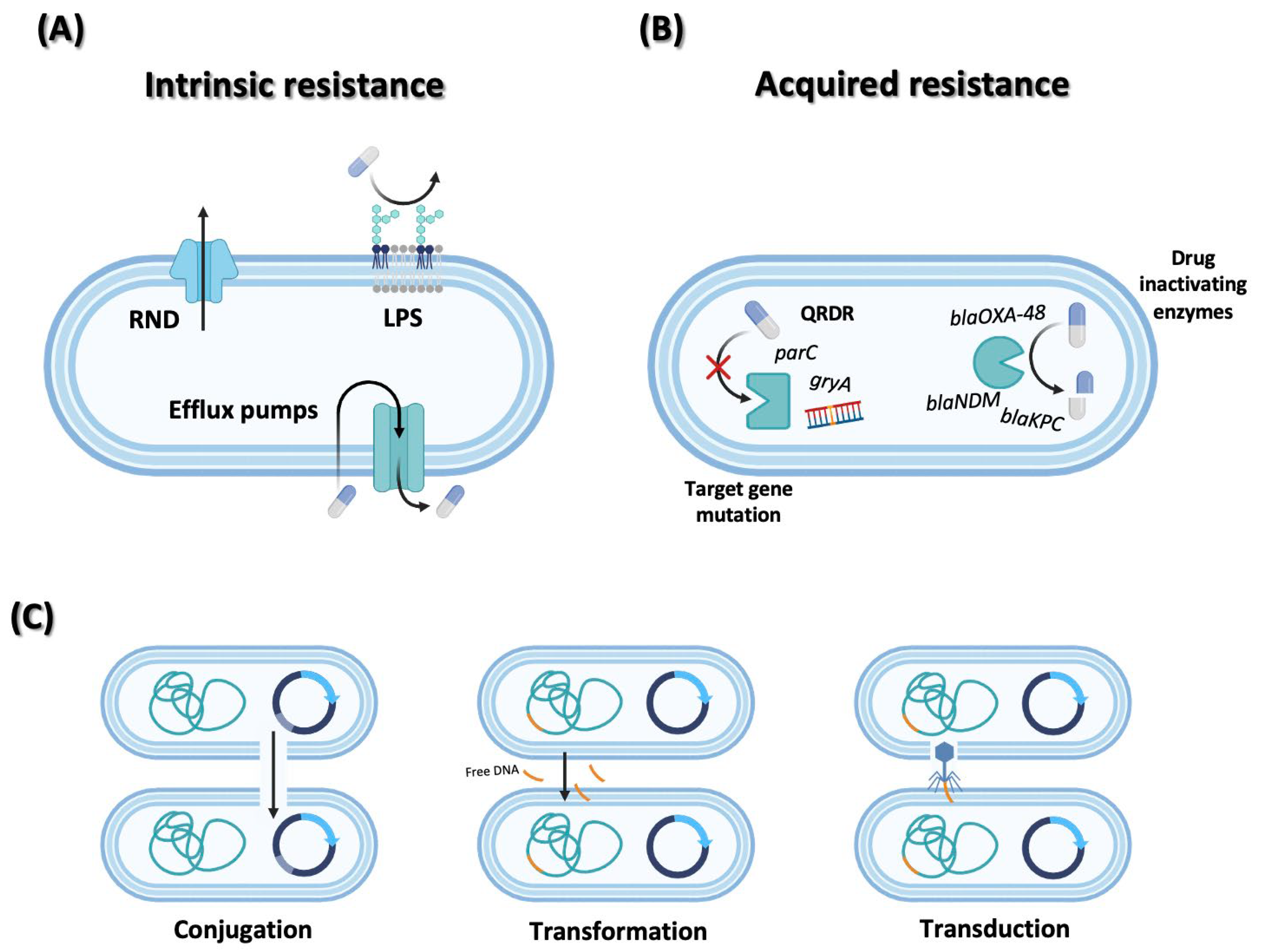
4. Antibiotic Resistance Mechanisms and Horizontal Gene Transfer
5. Application of the CRISPR-Cas System to Overcome Antimicrobial Resistance
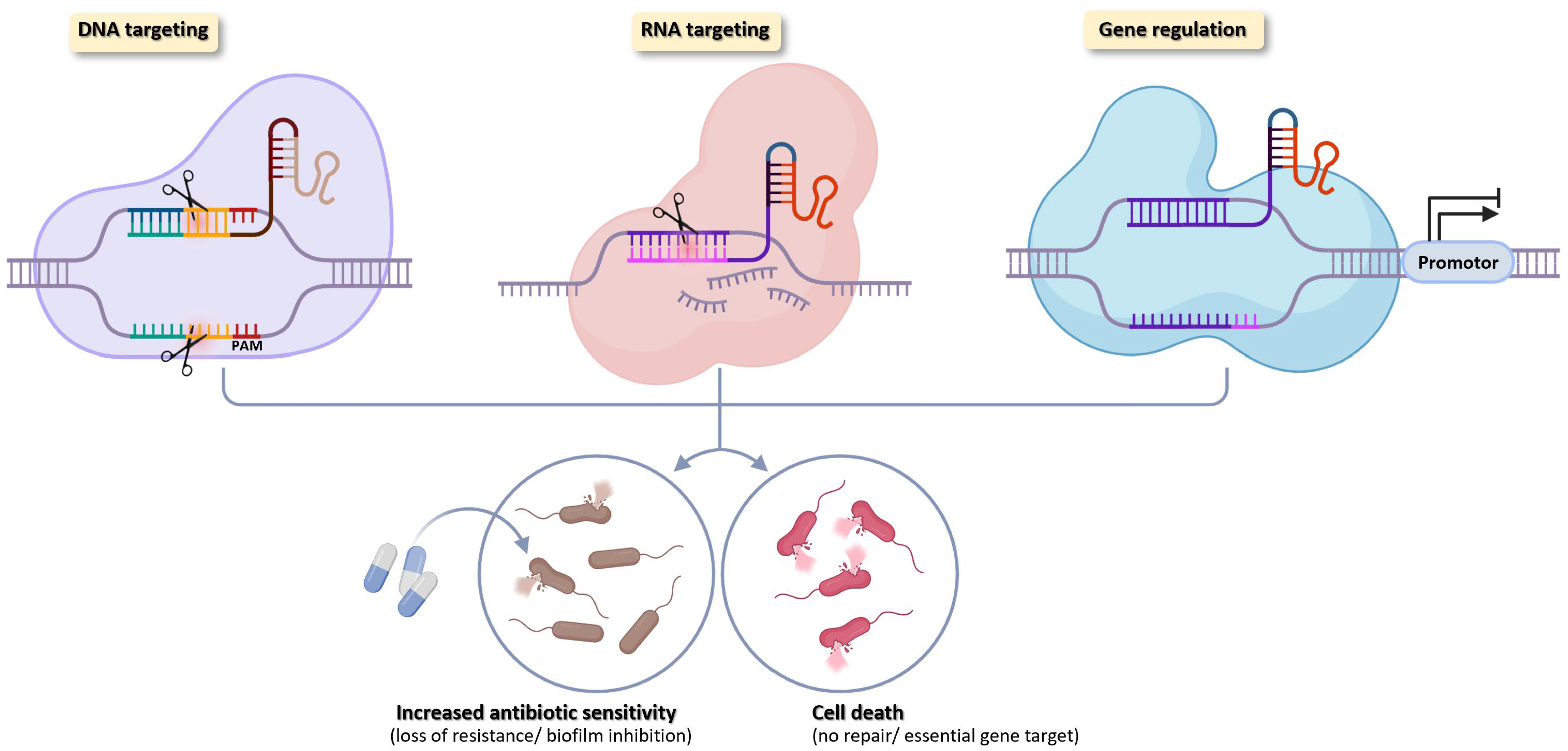
5.1. DNA Targeting
5.2. RNA Targeting
5.3. Transcriptional Regulation
6. Delivery Platforms
6.1. Plasmid
6.2. Conjugative Plasmid
6.3. Phagemid
6.4. Nanoparticle
7. CRISPR-Based Regulation of Antibiotic Susceptibility: Therapeutic Potential and Limitations
8. Conclusions
Author Contributions
Funding
Institutional Review Board Statement
Informed Consent Statement
Data Availability Statement
Conflicts of Interest
Abbreviations
| AMR | Antimicrobial resistance |
| AAV | Adeno-associated virus |
| A-EJ | Alternative end joining |
| AI | Artificial intelligence |
| AGR | Accessory gene regulator |
| BCV | Biosimilar hybrid vesicle |
| Cas | CRISPR-associated protein |
| CQD | Carbon quantum dot |
| CRISPR | Clustered regularly interspaced short palindromic repeats |
| CRISPRa | CRISPR activation |
| CRISPRi | CRISPR interference (transcriptional repression) |
| CRE | Carbapenem-resistant Enterobacteriaceae |
| crRNA | CRISPR RNA |
| DSB | Double-strand break |
| HGT | Horizontal gene transfer |
| HDR | Homology-directed repair |
| HR | Homologous recombination |
| ICE | Integrative conjugative element |
| LNP | Lipid nanoparticle |
| LPS | Lipopolysaccharide |
| MMEJ | Microhomology-mediated end joining |
| MRSA | Methicillin-resistant Staphylococcus aureus |
| NHEJ | Non-homologous end joining |
| OMV | Outer membrane vesicle |
| PAM | Protospacer adjacent motif |
| PACE | Phage-assisted continuous evolution |
| PIA | Polysaccharide intercellular adhesin |
| PMB | Polymyxin B |
| QRDR | Quinolone resistance–determining region |
| RNP | Ribonucleoprotein |
| SHV | Sulfhydryl variable β-lactamase |
| TTTV | Thymine-rich PAM motif (T/T/T/V, where V = A/C/G) |
| UPEC | Uropathogenic Escherichia coli |
| VRE | Vancomycin-resistant Enterococcus |
References
- Murray, C.J.L.; Ikuta, K.S.; Sharara, F.; Swetschinski, L.; Robles Aguilar, G.; Gray, A.; Han, C.; Bisignano, C.; Rao, P.; Wool, E.; et al. Global burden of bacterial antimicrobial resistance in 2019: A systematic analysis. Lancet 2022, 399, 629–655, Erratum in Lancet 2022, 400, 1102. [Google Scholar] [CrossRef]
- Naghavi, M.; Vollset, S.E.; Ikuta, K.S.; Swetschinski, L.R.; Gray, A.P.; Wool, E.E.; Robles Aguilar, G.; Mestrovic, T.; Smith, G.; Han, C.; et al. Global burden of bacterial antimicrobial resistance 1990–2021: A systematic analysis with forecasts to 2050. Lancet 2024, 404, 1199–1226. [Google Scholar] [CrossRef] [PubMed]
- O’Neill, J. The Review on Antimicrobial Resistance. In Tackling Drug-Resistant Infections Globally: Final Report and Recommendations; Government of the United Kingdom: London, UK, 2016. [Google Scholar]
- Mann, A.; Nehra, K.; Rana, J.S.; Dahiya, T. Antibiotic resistance in agriculture: Perspectives on upcoming strategies to overcome upsurge in resistance. Curr. Res. Microbiol. Sci. 2021, 2, 100030. [Google Scholar] [CrossRef]
- Payne, D.J.; Gwynn, M.N.; Holmes, D.J.; Pompliano, D.L. Drugs for bad bugs: Confronting the challenges of antibacterial discovery. Nat. Rev. Drug Discov. 2007, 6, 29–40. [Google Scholar] [CrossRef]
- Singha, B.; Singh, V.; Soni, V. Alternative therapeutics to control antimicrobial resistance: A general perspective. Front. Drug Discov. 2024, 4, 1385460. [Google Scholar] [CrossRef]
- Thapa, R.K.; Kim, J.O.; Kim, J. Antimicrobial strategies for topical biofilm-based wound infections: Past, present, and future. J. Pharm. Investig. 2023, 53, 627–641. [Google Scholar] [CrossRef]
- Hasso-Agopsowicz, M.; Sparrow, E.; Cameron, A.M.; Sati, H.; Srikantiah, P.; Gottlieb, S.; Bentsi-Enchill, A.; Le Doare, K.; Hamel, M.; Giersing, B.K.; et al. The role of vaccines in reducing antimicrobial resistance: A review of potential impact of vaccines on AMR and insights across 16 vaccines and pathogens. Vaccine 2024, 42, S1–S8. [Google Scholar] [CrossRef]
- Jinek, M.; Chylinski, K.; Fonfara, I.; Hauer, M.; Doudna, J.A.; Charpentier, E. A programmable dual-RNA–guided DNA endonuclease in adaptive bacterial immunity. Science 2012, 337, 816–821. [Google Scholar] [CrossRef]
- Barrangou, R.; Fremaux, C.; Deveau, H.; Richards, M.; Boyaval, P.; Moineau, S.; Romero, D.A.; Horvath, P. CRISPR provides acquired resistance against viruses in prokaryotes. Science 2007, 315, 1709–1712. [Google Scholar] [CrossRef]
- Doudna, J.A.; Charpentier, E. Genome editing: The new frontier of genome engineering with CRISPR–Cas9. Science 2014, 346, 1258096. [Google Scholar] [CrossRef] [PubMed]
- Marraffini, L.A. CRISPR–Cas immunity in prokaryotes. Nat. Rev. Genet. 2015, 16, 13–25. [Google Scholar] [CrossRef] [PubMed]
- Wright, A.V.; Nunez, J.K.; Doudna, J.A. Biology and applications of CRISPR systems: Harnessing nature’s toolbox for genome engineering. Cell 2016, 164, 29–44. [Google Scholar] [CrossRef] [PubMed]
- Bikard, D.; Euler, C.W.; Jiang, W.; Nussenzweig, P.M.; Goldberg, G.W.; Duportet, X.; Fischetti, V.A.; Marraffini, L.A. Exploiting CRISPR–Cas nucleases to produce sequence-specific antimicrobials. Nat. Biotechnol. 2014, 32, 1146–1150. [Google Scholar] [CrossRef]
- Citorik, R.J.; Mimee, M.; Lu, T.K. Sequence-specific antimicrobials using efficiently delivered RNA-guided nucleases. Nat. Biotechnol. 2014, 32, 1141–1145. [Google Scholar] [CrossRef]
- Koonin, E.V.; Makarova, K.S.; Zhang, F. Diversity, classification and evolution of CRISPR–Cas systems. Curr. Opin. Microbiol. 2017, 37, 67–78. [Google Scholar] [CrossRef] [PubMed]
- Pickar-Oliver, A.; Gersbach, C.A. The next generation of CRISPR–Cas technologies and applications. Nat. Rev. Mol. Cell Biol. 2019, 20, 490–507. [Google Scholar] [CrossRef]
- De la Fuente Tagarro, C.; Martín-González, D.; De Lucas, A.; Bordel, S.; Santos-Beneit, F. Current Knowledge on CRISPR Strategies Against Antimicrobial-Resistant Bacteria. Antibiotics 2024, 13, 1141. [Google Scholar] [CrossRef]
- Kim, J.S.; Cho, D.H.; Park, M.; Chung, W.J.; Shin, D.; Ko, K.S.; Kweon, D.H. CRISPR–Cas9-mediated re-sensitization of antibiotic-resistant Escherichia coli harboring extended-spectrum β-lactamases. J. Microbiol. Biotechnol. 2016, 26, 394–401. [Google Scholar] [CrossRef]
- Pursey, E.; Sünderhauf, D.; Gaze, W.H.; Westra, E.R.; van Houte, S. CRISPR–Cas antimicrobials: Challenges and future prospects. PLoS Pathog. 2018, 14, e1006990. [Google Scholar] [CrossRef]
- Dominguez, A.A.; Lim, W.A.; Qi, L.S. Beyond editing: Repurposing CRISPR-Cas9 for precision genome regulation and interrogation. Nat. Rev. Mol. Cell Biol. 2016, 17, 5–15. [Google Scholar] [CrossRef]
- Liu, W.; Li, L.; Jiang, J.; Wu, M.; Lin, P. Applications and Challenges of CRISPR-Cas Gene-Editing to Disease Treatment in Clinics. Precis. Clin. Med. 2021, 4, 179–191. [Google Scholar] [CrossRef]
- Ran, F.A.; Cong, L.; Yan, W.X.; Scott, D.A.; Gootenberg, J.S.; Kriz, A.J.; Zetsche, B.; Shalem, O.; Wu, X.; Makarova, K.S.; et al. In vivo genome editing using Staphylococcus aureus Cas9. Nature 2015, 520, 186–191. [Google Scholar] [CrossRef]
- Gao, S.; Wang, Y.; Qi, T.; Wei, J.; Hu, Z.; Liu, J.; Sun, S.; Liu, H.; Wang, Y. Genome editing with natural and engineered CjCas9 orthologs. Mol. Ther. 2023, 31, 1177–1187. [Google Scholar] [CrossRef]
- Pausch, P.; Al-Shayeb, B.; Bisom-Rapp, E.; Tsuchida, C.A.; Li, Z.; Cress, B.F.; Knott, G.J.; Jacobsen, S.E.; Banfield, J.F.; Doudna, J.A. CRISPR-CasΦ from huge phages is a hypercompact genome editor. Science 2020, 369, 333–337. [Google Scholar] [CrossRef] [PubMed]
- Bigelyte, G.; Young, J.K.; Karvelis, T.; Budre, K.; Zedaveinyte, R.; Djukanovic, V.; Van Ginkel, E.; Paulraj, S.; Gasior, S.; Jones, S.; et al. Miniature type V-F CRISPR-Cas nucleases enable targeted DNA modification in cells. Nat. Commun. 2021, 12, 6191. [Google Scholar] [CrossRef] [PubMed]
- Harrington, L.B.; Burstein, D.; Chen, J.S.; Paez-Espino, D.; Ma, E.; Witte, I.P.; Cofsky, J.C.; Kyrpides, N.C.; Banfield, J.F.; Doudna, J.A. Programmed DNA destruction by miniature CRISPR-Cas14 enzymes. Science 2018, 362, 839–842. [Google Scholar] [CrossRef] [PubMed]
- Xin, C.; Yin, J.; Yuan, S.; Ou, L.; Liu, M.; Zhang, W.; Hu, J. Comprehensive assessment of miniature CRISPR-Cas12f nucleases for gene disruption. Nat. Commun. 2022, 13, 5623. [Google Scholar] [CrossRef]
- Park, S.-J.; Ju, S.; Jung, W.J.; Jeong, T.Y.; Yoon, D.E.; Lee, J.H.; Yang, J.; Lee, H.; Choi, J.; Kim, H.S.; et al. Robust genome editing activity and the applications of enhanced miniature CRISPR-Cas12f1. Nat. Commun. 2025, 16, 677. [Google Scholar] [CrossRef]
- Nishimasu, H.; Shi, X.; Ishiguro, S.; Gao, L.; Hirano, S.; Okazaki, S.; Noda, T.; Abudayyeh, O.O.; Gootenberg, J.S.; Nureki, O.; et al. Engineered CRISPR-Cas9 nuclease with expanded targeting space. Science 2018, 361, 1259–1262. [Google Scholar] [CrossRef]
- Walton, R.T.; Christie, K.A.; Whittaker, M.N.; Kleinstiver, B.P. Unconstrained genome targeting with near-PAMless CRISPR-Cas9 variants. Science 2020, 368, 290–296. [Google Scholar] [CrossRef]
- Slaymaker, I.M.; Gao, L.; Zetsche, B.; Scott, D.A.; Yan, W.X.; Zhang, F. Rationally engineered Cas9 nucleases with improved specificity. Science 2016, 351, 84–88. [Google Scholar] [CrossRef]
- Kleinstiver, B.P.; Pattanayak, V.; Prew, M.S.; Tsai, S.Q.; Nguyen, N.T.; Zheng, Z.; Joung, J.K. High-fidelity CRISPR-Cas9 nucleases with no detectable off-target effects. Nature 2016, 529, 490–495. [Google Scholar] [CrossRef]
- Chen, J.S.; Dagdas, Y.S.; Kleinstiver, B.P.; Welch, M.M.; Sousa, A.A.; Harrington, L.B.; Sternberg, S.H.; Joung, J.K.; Yildiz, A.; Doudna, J.A.; et al. Enhanced proofreading governs CRISPR-Cas9 targeting accuracy. Nature 2017, 550, 407–410. [Google Scholar] [CrossRef]
- Hu, J.H.; Miller, S.M.; Geurts, M.H.; Tang, W.; Chen, L.; Sun, N.; Zeina, C.M.; Gao, X.; Rees, H.A.; Lin, Z.; et al. Evolved Cas9 variants with broad PAM compatibility and high DNA specificity. Nature 2018, 556, 57–63. [Google Scholar] [CrossRef]
- Miller, S.M.; Wang, T.; Randolph, P.B.; Arbab, M.; Shen, M.W.; Huang, T.P.; Matuszek, Z.; Newby, G.A.; Rees, H.A.; Liu, D.R. Continuous evolution of SpCas9 variants compatible with non-G PAMs. Nat. Biotechnol. 2020, 38, 471–481. [Google Scholar] [CrossRef]
- Doman, J.L.; Pandey, S.; Neugebauer, M.E.; Tolar, J.; Osborn, M.J.; Liu, D.R. Phage-assisted evolution and protein engineering yield compact, efficient prime editors. Cell 2023, 186, 3983–4002.e26. [Google Scholar] [CrossRef] [PubMed]
- Qi, L.S.; Larson, M.H.; Gilbert, L.A.; Doudna, J.A.; Weissman, J.S.; Arkin, A.P.; Lim, W.A. Repurposing CRISPR as an RNA-guided platform for sequence-specific control of gene expression. Cell 2013, 152, 1173–1183. [Google Scholar] [CrossRef]
- Ran, F.A.; Hsu, P.D.; Lin, C.Y.; Gootenberg, J.S.; Konermann, S.; Trevino, A.E.; Scott, D.A.; Inoue, A.; Matoba, S.; Zhang, Y.; et al. Double nicking by RNA-guided CRISPR Cas9 for enhanced genome editing specificity. Cell 2013, 154, 1380–1389, Erratum in Cell 2013, 155, 479–480. [Google Scholar] [CrossRef] [PubMed]
- Komor, A.C.; Kim, Y.B.; Packer, M.S.; Zuris, J.A.; Liu, D.R. Programmable editing of a target base in genomic DNA without double-stranded DNA cleavage. Nature 2016, 533, 420–424. [Google Scholar] [CrossRef]
- Anzalone, A.V.; Randolph, P.B.; Davis, J.R.; Sousa, A.A.; Koblan, L.W.; Levy, J.M.; Chen, P.J.; Wilson, C.; Newby, G.A.; Raguram, A.; et al. Search-and-replace genome editing without double-strand breaks or donor DNA. Nature 2019, 576, 149–157. [Google Scholar] [CrossRef] [PubMed]
- Moroz-Omori, E.V.; Satyapertiwi, D.; Ramel, M.C.; Høgset, H.; Sunyovszki, I.K.; Liu, Z.; Wojciechowski, J.P.; Zhang, Y.; Grigsby, C.L.; Brito, L.; et al. Photoswitchable gRNAs for Spatiotemporally Controlled CRISPR-Cas-Based Genomic Regulation. ACS Cent. Sci. 2020, 6, 695–703. [Google Scholar] [CrossRef] [PubMed]
- Wright, A.V.; Sternberg, S.H.; Taylor, D.W.; Staahl, B.T.; Bardales, J.A.; Kornfeld, J.E.; Doudna, J.A. Rational design of a split-Cas9 enzyme complex. Proc. Natl. Acad. Sci. USA 2015, 112, 2984–2989. [Google Scholar] [CrossRef]
- Zhuo, C.; Zhang, J.; Lee, J.-H.; Jiao, J.; Cheng, D.; Liu, L.; Kim, H.-W.; Tao, Y.; Li, M. Spatiotemporal control of CRISPR/Cas9 gene editing. Signal Transduct. Target Ther. 2021, 6, 258. [Google Scholar] [CrossRef] [PubMed]
- Selle, K.; Barrangou, R. Harnessing CRISPR–Cas Systems for Bacterial Genome Editing. Trends Microbiol. 2015, 23, 225–232. [Google Scholar] [CrossRef]
- Li, Y.; Peng, N. Endogenous CRISPR–Cas System-Based Genome Editing and Antimicrobials: Review and Prospects. Front. Microbiol. 2019, 10, 2471. [Google Scholar] [CrossRef]
- Shuman, S.; Glickman, M.S. Bacterial DNA Repair by Non-Homologous End Joining. Nat. Rev. Microbiol. 2007, 5, 852–861. [Google Scholar] [CrossRef]
- Wang, H.; Xu, X. Microhomology-mediated end joining: New players join the team. Cell Biosci. 2017, 7, 6. [Google Scholar] [CrossRef]
- Su, B.; Song, D.; Zhu, H. Homology-Dependent Recombination of Large Synthetic Pathways into E. coli Genome via λ-Red and CRISPR/Cas9 Dependent Selection Methodology. Microb. Cell Fact. 2020, 19, 108. [Google Scholar] [CrossRef] [PubMed]
- Amundsen, S.K.; Fero, J.; Hansen, L.M.; Cromie, G.A.; Solnick, J.V.; Smith, G.R.; Salama, N.R. Helicobacter pylori AddAB Helicase–Nuclease and RecA Promote Recombination-Related DNA Repair and Survival during Stomach Colonization. Mol. Microbiol. 2008, 69, 994–1007. [Google Scholar] [CrossRef]
- Mell, J.C.; Shumilina, S.; Hall, I.M.; Redfield, R.J. Transformation of Natural Genetic Variation into Haemophilus influenzae Genomes. PLoS Pathog. 2011, 7, e1002151. [Google Scholar] [CrossRef]
- Guo, T.; Xin, Y.; Zhang, Y.; Gu, X.; Kong, J. A Rapid and Versatile Tool for Genomic Engineering in Lactococcus lactis: ssDNA Recombineering Coupled with CRISPR/Cas9 Counterselection. Microb. Cell Fact. 2019, 18, 187. [Google Scholar] [CrossRef]
- Rajpurohit, Y.S.; Sharma, D.K.; Misra, H.S. PprA Protein Inhibits DNA Strand Exchange and ATP Hydrolysis of Deinococcus RecA and Regulates Recombination in Gamma-Irradiated Cells. Front. Cell Dev. Biol. 2021, 9, 636178. [Google Scholar] [CrossRef]
- Zhu, H.; Shuman, S. Gap filling activities of Pseudomonas DNA ligase D (LigD) polymerase and functional interactions of LigD with the DNA end-binding Ku protein. J. Biol. Chem. 2010, 285, 4815–4825. [Google Scholar] [CrossRef] [PubMed]
- Zhu, H.; Shuman, S. Characterization of Agrobacterium tumefaciens DNA Ligases C and D and Stimulation by Ku. Nucleic Acids Res. 2007, 35, 3631–3645. [Google Scholar] [CrossRef][Green Version]
- Gupta, R.; Barkan, D.; Redelman-Sidi, G.; Shuman, S.; Glickman, M.S. Mycobacteria Exploit Three Genetically Distinct DNA Double-Strand Break Repair Pathways. Mol. Microbiol. 2011, 79, 316–330. [Google Scholar] [CrossRef] [PubMed]
- Kobayashi, H.; Simmons, L.A.; Yuan, D.S.; Broughton, W.J.; Walker, G.C. Multiple Ku Orthologues Mediate DNA Non-Homologous End-Joining in the Free-Living Form and during Chronic Infection of Sinorhizobium meliloti. Mol. Microbiol. 2007, 67, 350–363. [Google Scholar] [CrossRef] [PubMed]
- Jiang, W.; Bikard, D.; Cox, D.; Zhang, F.; Marraffini, L.A. CRISPR-Assisted Editing of Bacterial Genomes. Nat. Biotechnol. 2013, 31, 233–239. [Google Scholar] [CrossRef]
- Oh, J.H.; van Pijkeren, J.P. CRISPR–Cas9-Assisted Recombineering in Lactobacillus reuteri. Nucleic Acids Res. 2014, 42, e131. [Google Scholar] [CrossRef]
- Zhang, H.; Cheng, Q.-X.; Liu, A.-M.; Zhao, G.-P.; Wang, J. A novel and efficient method for bacteria genome editing employing both CRISPR/Cas9 and an antibiotic resistance cassette. Front. Microbiol. 2017, 8, 812. [Google Scholar] [CrossRef]
- Krumbach, K.; Sonntag, C.K.; Eggeling, L.; Marienhagen, J. CRISPR/Cas12a Mediated Genome Editing to Introduce Amino Acid Substitutions into the Mechanosensitive Channel MscCG of Corynebacterium glutamicum. ACS Synth. Biol. 2019, 8, 2726–2734. [Google Scholar] [CrossRef]
- Meliawati, M.; Schilling, C.; Schmid, J. Recent Advances of Cas12a Applications in Bacteria. Appl. Microbiol. Biotechnol. 2021, 105, 2981–2990. [Google Scholar] [CrossRef]
- Vercoe, R.B.; Chang, J.T.; Dy, R.L.; Taylor, C.; Gristwood, T.; Clulow, J.S.; Richter, C.; Przybilski, R.; Pitman, A.R.; Fineran, P.C. Cytotoxic Chromosomal Targeting by CRISPR/Cas Systems Can Reshape Bacterial Genomes and Expel or Remodel Pathogenicity Islands. PLoS Genet. 2013, 9, e1003454. [Google Scholar] [CrossRef]
- Cox, G.; Wright, G.D. Intrinsic Antibiotic Resistance: Mechanisms, Origins, Challenges and Solutions. Int. J. Med. Microbiol. 2013, 303, 287–292. [Google Scholar] [CrossRef]
- Zgurskaya, H.I.; Rybenkov, V.V. Permeability barriers of Gram-negative pathogens. Ann. N. Y. Acad. Sci. 2019, 1459, 5–18. [Google Scholar] [CrossRef]
- Gaurav, A.; Bakht, P.; Saini, M.; Pandey, S.; Pathania, R. Role of bacterial efflux pumps in antibiotic resistance, virulence, and strategies to discover novel efflux pump inhibitors. Microbiology 2023, 169, 001333. [Google Scholar] [CrossRef] [PubMed]
- Hernando-Amado, S.; Blanco, P.; Alcalde-Rico, M.; Corona, F.; Reales-Calderón, J.A.; Sánchez, M.B.; Martínez, J.L. Multidrug efflux pumps as main players in intrinsic and acquired resistance to antimicrobials. Drug Resist. Updates 2016, 28, 13–27. [Google Scholar] [CrossRef] [PubMed]
- Nouri, R.; Ahangarzadeh Rezaee, M.; Hasani, A.; Aghazadeh, M.; Asgharzadeh, M. The role of gyrA and parC mutations in fluoroquinolones-resistant Pseudomonas aeruginosa isolates from Iran. Braz. J. Microbiol. 2016, 47, 925–930. [Google Scholar] [CrossRef]
- Han, R.; Shi, Q.; Wu, S.; Yin, D.; Peng, M.; Dong, D.; Zheng, Y.; Guo, Y.; Zhang, R.; Hu, F.; et al. Dissemination of Carbapenemases (KPC, NDM, OXA-48, IMP, and VIM) Among Carbapenem-Resistant Enterobacteriaceae Isolated From Adult and Children Patients in China. Front. Cell. Infect. Microbiol. 2020, 10, 314. [Google Scholar] [CrossRef] [PubMed]
- Straume, D.; Stamsås, G.A.; Håvarstein, L.S. Natural transformation and genome evolution in Streptococcus pneumoniae. Infect. Genet. Evol. 2015, 33, 371–380. [Google Scholar] [CrossRef]
- Hu, Y.; Zheng, J.; Zhang, J. Natural Transformation in Acinetobacter baumannii W068: A Genetic Analysis Reveals the Involvements of the CRP, XcpV, XcpW, TsaP, and TonB2. Front. Microbiol. 2022, 12, 738034. [Google Scholar] [CrossRef]
- Muniesa, M.; Colomer-Lluch, M.; Jofre, J. Potential impact of environmental bacteriophages in spreading antibiotic resistance genes. Future Microbiol. 2013, 8, 739–751. [Google Scholar] [CrossRef] [PubMed]
- Ross, J.; Topp, E. Abundance of antibiotic resistance genes in bacteriophage following soil fertilization with dairy manure or municipal biosolids, and evidence for potential transduction. Appl. Environ. Microbiol. 2015, 81, 7905–7913. [Google Scholar] [CrossRef] [PubMed]
- Colavecchio, A.; Cadieux, B.; Lo, A.; Goodridge, L.D. Bacteriophages contribute to the spread of antibiotic resistance genes among foodborne pathogens of the Enterobacteriaceae family—A review. Front. Microbiol. 2017, 8, 1108. [Google Scholar] [CrossRef] [PubMed]
- Liu, L.; Zhao, M.; Tang, Y.; Shen, A.; Yang, X.; Yao, L.; Tian, D. Dissemination of clinical Escherichia coli strains harboring mcr-1, blaNDM−7 and siderophore-producing plasmids in a Chinese hospital. Antimicrob. Resist. Infect. Control 2024, 13, 66. [Google Scholar] [CrossRef]
- Le, L.; Tran, L.K.; Le-Ha, T.-D.; Tran, B.-P.; Le-Vo, H.-N.; Nguyen, Y.-N.; Nguyen, H.-L.; Hoang-Ngoc, K.-Q.; Matsumoto, Y.; Motooka, D.; et al. Coexistence of plasmid-mediated mcr-1 and blaNDM-4 genes in a Klebsiella pneumoniae clinical strain in Vietnam. Infect. Drug Resist. 2019, 12, 3703–3707. [Google Scholar] [CrossRef]
- Sun, H.; Zhang, J.; Miao, Q.; Zhai, Y.; Pan, Y.; Yuan, L.; Yan, F.; Wu, H.; Hu, G. Genomic insight into the integrative conjugative elements from ICEHpa1 family. Front. Vet. Sci. 2022, 9, 986824. [Google Scholar] [CrossRef]
- Mobaraki, S.; Aghazadeh, M.; Soroush Barhaghi, M.H.; Memar, M.Y.; Goli, H.R.; Gholizadeh, P.; Samadi Kafil, H. Prevalence of integrons 1, 2, 3 associated with antibiotic resistance in Pseudomonas aeruginosa isolates from Northwest of Iran. Biomedicine 2018, 8, 2. [Google Scholar] [CrossRef]
- Souque, C.; Escudero, J.A.; MacLean, R.C. Integron activity accelerates the evolution of antibiotic resistance. eLife 2021, 10, e62474. [Google Scholar] [CrossRef]
- Velazquez-Meza, M.E.; Galarde-López, M.; Carrillo-Quiróz, B.; Alpuche-Aranda, C.M. Antimicrobial Resistance: One Health Approach. Vet. World 2022, 15, 743–749. [Google Scholar] [CrossRef]
- Despotovic, M.; de Nies, L.; Busi, S.B.; Wilmes, P. Reservoirs of Antimicrobial Resistance in the Context of One Health. Curr. Opin. Microbiol. 2023, 73, 102291. [Google Scholar] [CrossRef]
- Hsu, P.D.; Lander, E.S.; Zhang, F. Development and applications of CRISPR-Cas9 for genome engineering. Cell 2014, 157, 1262–1278. [Google Scholar] [CrossRef] [PubMed]
- Li, P.; Wan, P.; Zhao, R.; Chen, J.; Li, X.; Li, J.; Xu, Y.; Zhou, H.; Wang, Z.; Xu, Z.; et al. Targeted Elimination of blaNDM-5 Gene in Escherichia coli by Conjugative CRISPR-Cas9 System. Infect. Drug Resist. 2022, 15, 1707–1716. [Google Scholar] [CrossRef]
- Tagliaferri, T.L.; Krüttgen, A.; Mendes, T.A.; Gonçalves dos Santos, S.; Horz, H.P. CRISPR-Cas9 Targeting the blaKPC Gene in a Clinical Isolate of Klebsiella michiganensis: Reduction of Imipenem Resistance and Changes in Genomic Carbapenem Resistance Determinants. PLoS ONE 2025, 20, e0328521. [Google Scholar] [CrossRef]
- Mayorga-Ramos, A.; Zúñiga-Miranda, J.; Carrera-Pacheco, S.E.; Barba-Ostria, C.; Guamán, L.P. CRISPR-Cas-Based Antimicrobials: Design, Challenges, and Bacterial Mechanisms of Resistance. ACS Infect. Dis. 2023, 9, 1283–1302. [Google Scholar] [CrossRef]
- Afrasiabi, S.; Partoazar, A. Targeting Bacterial Biofilm-Related Genes with Nanoparticle-Based Strategies. Front. Microbiol. 2024, 15, 1387114. [Google Scholar] [CrossRef]
- McCallum, M.; Tammam, S.; Khan, A.; Burrows, L.L.; Howell, P.L. The Molecular Mechanism of the Type IVa Pilus Motors. Nat. Commun. 2017, 8, 15091. [Google Scholar] [CrossRef]
- Olsen, J.E.; Hoegh-Andersen, K.H.; Casadesús, J.; Rosenkranzt, J.; Chadfield, M.S.; Thomsen, L.E. The Role of Flagella and Chemotaxis Genes in Host Pathogen Interaction of the Host Adapted Salmonella enterica Serovar Dublin Compared to the Broad Host Range Serovar S. Typhimurium. BMC Microbiol. 2013, 13, 67. [Google Scholar] [CrossRef] [PubMed]
- Garza, A.G.; Harris-Haller, L.W.; Stoebner, R.A.; Manson, M.D. Motility protein interactions in the bacterial flagellar motor. Proc. Natl. Acad. Sci. USA 1995, 92, 1970–1974. [Google Scholar] [CrossRef]
- Zuberi, A.; Misba, L.; Khan, A.U. CRISPR Interference (CRISPRi) Inhibition of luxS Gene Expression in E. coli: An Approach to Inhibit Biofilm. Front. Cell. Infect. Microbiol. 2017, 7, 214. [Google Scholar] [CrossRef]
- Maron, B.; Zanchi, C.; Johnston, P.; Rolff, J.; Friedman, J.; Hayouka, Z. Uncovering the genetic basis of Staphylococcus aureus resistance to single antimicrobial peptides and their combinations. iScience 2025, 28, 112671. [Google Scholar] [CrossRef] [PubMed]
- Kang, Y.K.; Kwon, K.; Ryu, J.S.; Lee, H.N.; Park, C.; Chung, H.J. Nonviral genome editing based on a polymer-derivatized CRISPR nanocomplex for targeting bacterial pathogens and antibiotic resistance. Bioconjug. Chem. 2017, 28, 957–967. [Google Scholar] [CrossRef]
- Hao, M.; He, Y.; Zhang, H.; Liao, X.-P.; Liu, Y.-H.; Sun, J.; Du, H.; Kreiswirth, B.N.; Chen, L. CRISPR-Cas9-Mediated Carbapenemase Gene and Plasmid Curing in Carbapenem-Resistant Enterobacteriaceae. Antimicrob. Agents Chemother. 2020, 64, e00843-20. [Google Scholar] [CrossRef] [PubMed]
- Javed, M.U.; Hayat, M.T.; Mukhtar, H.; Imre, K. CRISPR-Cas9 System: A Prospective Pathway toward Eliminating Antibiotic Resistance. Antibiotics 2023, 12, 1075. [Google Scholar] [CrossRef]
- Kiga, K.; Tan, X.-E.; Ibarra-Chávez, R.; Watanabe, S.; Aiba, Y.; Sato’o, Y.; Li, F.-Y.; Sasahara, T.; Cui, B.; Kawauchi, M.; et al. Development of CRISPR-Cas13a-based antimicrobials capable of sequence-specific killing of antimicrobial-resistant bacteria. Nat. Commun. 2020, 11, 6286. [Google Scholar] [CrossRef]
- Li, F.-Y.; Tan, X.-E.; Shimamori, Y.; Kiga, K.; Veeranarayanan, S.; Watanabe, S.; Nishikawa, Y.; Aiba, Y.; Sato’o, Y.; Miyanaga, K.; et al. Phagemid-based capsid system for CRISPR-Cas13a antibacterial therapy against multidrug-resistant Staphylococcus aureus. Commun. Biol. 2024, 7, 1234. [Google Scholar] [CrossRef]
- Chen, S.; Cao, H.; Xu, Z.; Huang, J.; Liu, Z.; Li, T.; Duan, C.; Wu, W.; Wen, Y.; Zhang, L.-H.; et al. A Type I-F CRISPRi System Unveils the Novel Role of CzcR in Modulating Multidrug Resistance of Pseudomonas aeruginosa. Microbiol. Spectr. 2023, 11, e01123-23. [Google Scholar] [CrossRef]
- Frusteri Chiacchiera, A.; Casanova, M.; Bellato, M.; Piazza, A.; Migliavacca, R.; Batt, G.; Magni, P.; Pasotti, L. Harnessing CRISPR interference to resensitize laboratory and clinical strains of antibiotic-resistant E. coli. Sci. Rep. 2025, 12, 12. [Google Scholar] [CrossRef]
- Yao, S.; Wei, D.; Tang, N.; Song, Y.; Wang, C.; Feng, J.; Zhang, G. Efficient Suppression of Natural Plasmid-Borne Gene Expression in Carbapenem-Resistant Klebsiella pneumoniae Using a Compact CRISPR Interference System. Antimicrob. Agents Chemother. 2022, 66, e00890-22. [Google Scholar] [CrossRef]
- Wan, X.; Li, Q.; Olsen, R.H.; Meng, H.; Zhang, Z.; Wang, J.; Zheng, H.; Li, L.; Shi, L. Engineering a CRISPR interference system targeting AcrAB–TolC efflux pump to prevent multidrug resistance development in Escherichia coli. J. Antimicrob. Chemother. 2022, 77, 2158–2166. [Google Scholar] [CrossRef]
- Dong, C.; Fontana, J.; Patel, A.; Carothers, J.M.; Zalatan, J.G. Synthetic CRISPR-Cas Gene Activators for Transcriptional Reprogramming in Bacteria. Nat. Commun. 2018, 9, 2489, Erratum in Nat. Commun. 2018, 9, 4318. [Google Scholar] [CrossRef] [PubMed]
- Kang, H.; Gao, A.; Zhu, Y. Bacterial restriction-modification systems: Mechanisms of defense against phage infection. Biophys. Rep. 2025, 11, 330. [Google Scholar] [CrossRef] [PubMed]
- Ren, J.; Wang, M.; Zhou, W.; Liu, Z. Efflux pumps as potential targets for biofilm inhibition. Front. Microbiol. 2024, 15, 1315238. [Google Scholar] [CrossRef]
- Gomaa, A.A.; Klumpe, H.E.; Luo, M.L.; Selle, K.; Barrangou, R.; Beisel, C.L. Programmable Removal of Bacterial Strains by Use of Genome-Targeting CRISPR-Cas Systems. mBio 2014, 5, e00928-13. [Google Scholar] [CrossRef]
- Lee, D.; Muir, P.; Lundberg, S.; Lundholm, A.; Sandegren, L.; Koskiniemi, S. A CRISPR-Cas9 System Protecting E. coli Against Acquisition of Antibiotic Resistance Genes. Sci. Rep. 2025, 15, 1545. [Google Scholar] [CrossRef]
- Rodrigues, M.; McBride, S.W.; Hullahalli, K.; Palmer, K.L.; Duerkop, B.A. Conjugative Delivery of CRISPR-Cas9 for the Selective Depletion of Antibiotic-Resistant Enterococci. Antimicrob. Agents Chemother. 2019, 63, e01454-19. [Google Scholar] [CrossRef] [PubMed]
- Dong, H.; Xiang, H.; Mu, D.; Wang, D.; Wang, T. Exploiting a Conjugative CRISPR/Cas9 System to Eliminate Plasmid Harbouring the mcr-1 Gene from Escherichia coli. Int. J. Antimicrob. Agents 2019, 53, 1–8. [Google Scholar] [CrossRef] [PubMed]
- Song, Z.; Yu, Y.; Bai, X.; Jia, Y.; Tian, J.; Gu, K.; Zhao, M.; Zhou, C.; Zhang, X.; Wang, H.; et al. Pathogen-Specific Bactericidal Method Mediated by Conjugative Delivery of CRISPR-Cas13a Targeting Bacterial Endogenous Transcripts. Microbiol. Spectr. 2022, 10, e01300-22. [Google Scholar] [CrossRef]
- Yosef, I.; Manor, M.; Kiro, R.; Qimron, U. Temperate and lytic bacteriophages programmed to sensitize and kill antibiotic-resistant bacteria. Proc. Natl. Acad. Sci. USA 2015, 112, 7267–7272. [Google Scholar] [CrossRef]
- Nittayasut, N.; Yata, T.; Chirakul, S.; Techakriengkrai, N.; Chanchaithong, P. Non-replicative phage particles delivering CRISPR-Cas9 to target major blaCTX-M variants. PLoS ONE 2024, 19, e0303555. [Google Scholar] [CrossRef]
- Roberts, A.; Adler, B.A.; Cress, B.F.; Doudna, J.A.; Barrangou, R. Phage-Based Delivery of CRISPR-Associated Transposases for Targeted Bacterial Editing. Proc. Natl. Acad. Sci. USA 2025, 122, e2504853122. [Google Scholar] [CrossRef]
- Kim, B.; Seo, H.W.; Lee, K.; Yong, D.; Park, Y.K.; Lee, Y.; Lee, S.; Kim, D.-W.; Kim, D.; Ryu, C.-M. Lipid Nanoparticle-Mediated CRISPR-Cas13a Delivery for the Control of Bacterial Infection. Adv. Healthc. Mater. 2024, 13, 2403281. [Google Scholar] [CrossRef]
- Jia, X.; Yuan, B.; Wang, W.; Wang, K.; Ling, D.; Wei, M.; Hu, Y.; Guo, W.; Chen, Z.; Du, L.; et al. Gene Editing Tool-Loaded Biomimetic Cationic Vesicles with Highly Efficient Bacterial Internalization for In Vivo Eradication of Pathogens. J. Nanobiotechnol. 2024, 22, 787. [Google Scholar] [CrossRef]
- Gupta, S.; Kumar, P.; Rathi, B.; Verma, V.; Dhanda, R.S.; Devi, P.; Yadav, M. Targeting of Uropathogenic Escherichia coli papG Gene Using CRISPR-Dot Nanocomplex Reduced Virulence of UPEC. Sci. Rep. 2021, 11, 17801, Erratum in Sci. Rep. 2021, 11, 19131. [Google Scholar] [CrossRef]
- Saffari Natanzi, A.; Poudineh, M.; Karimi, E.; Khaledi, A.; Kashani, H.H. Innovative Approaches to Combat Antibiotic Resistance: Integrating CRISPR/Cas9 and Nanoparticles against Biofilm-Driven Infections. BMC Med. 2025, 23, 486. [Google Scholar] [CrossRef]
- Thapa, R.K.; Diep, D.B.; Tønnesen, H.H. Nanomedicine-based antimicrobial peptide delivery for bacterial infections: Recent advances and future prospects. J. Pharm. Investig. 2021, 51, 377–398. [Google Scholar] [CrossRef]
- Getahun, Y.A.; Ali, D.A.; Taye, B.W.; Alemayehu, Y.A. Multidrug-Resistant Microbial Therapy Using Antimicrobial Peptides and the CRISPR/Cas9 System. Vet. Med. 2022, 13, 173–190. [Google Scholar] [CrossRef]
- Uribe, R.V.; Rathmer, C.; Jahn, L.J.; Ellabaan, M.M.H.; Li, S.S.; Sommer, M.O.A. Bacterial Resistance to CRISPR-Cas Antimicrobials. Sci. Rep. 2021, 11, 17267. [Google Scholar] [CrossRef] [PubMed]
- Rostain, W.; Grebert, T.; Vyhovskyi, D.; Thiel Pizarro, P.; Tshinsele-Van Bellingen, G.; Cui, L.; Bikard, D. Cas9 Off-Target Binding to the Promoter of Bacterial Genes Leads to Silencing and Toxicity. Nucleic Acids Res. 2023, 51, 3485–3496. [Google Scholar] [CrossRef] [PubMed]
- Kordyś, M.; Sen, R.; Warkocki, Z. Applications of the Versatile CRISPR-Cas13 RNA Targeting System. WIREs RNA 2021, 12, e1694. [Google Scholar] [CrossRef]
- Sharma, P.; Dahiya, S.; Kumari, R.; Chhillar, A.K. Harnessing the CRISPR-Cas Systems to Combat Antimicrobial Resistance. Front. Microbiol. 2021, 12, 716064. [Google Scholar] [CrossRef] [PubMed]
- Anzalone, A.V.; Koblan, L.W.; Liu, D.R. Genome Editing with CRISPR–Cas Nucleases, Base Editors, Transposases and Prime Editors. Nat. Biotechnol. 2020, 38, 824–844. [Google Scholar] [CrossRef]
- Zhao, N.; Song, Y.; Xie, X.; Zhu, Z.; Duan, C.; Nong, C.; Wang, H.; Bao, R. Synthetic Biology-Inspired Cell Engineering in Diagnosis, Treatment and Drug Development. Signal Transduct. Target. Ther. 2023, 8, 112. [Google Scholar] [CrossRef]
- Fang, M.; Zhang, R.; Wang, C.; Liu, Z.; Fei, M.; Tang, B.; Yang, H.; Sun, D. Engineering Probiotic Escherichia coli Nissle 1917 to Block Transfer of Multiple Antibiotic Resistance Genes by Exploiting a Type I CRISPR-Cas System. Appl. Environ. Microbiol. 2024, 90, e00811-24. [Google Scholar] [CrossRef] [PubMed]
- Kim, M.-G.; Go, M.-J.; Kang, S.-H.; Jeong, S.-H.; Lim, K. Revolutionizing CRISPR technology with artificial intelligence. Exp. Mol. Med. 2025, 57, 1419–1431. [Google Scholar] [CrossRef] [PubMed]
- Qu, Y.; Huang, K.; Yin, M.; Zhan, K.; Liu, D.; Yin, D.; Cousins, H.C.; Johnson, W.A.; Wang, X.; Shah, M.; et al. CRISPR-GPT for agentic automation of gene-editing experiments. Nat. Biomed. Eng. 2025; ahead of print. [Google Scholar] [CrossRef] [PubMed]


| Type | Enzyme | Target | Key Features | Main Applications | Reference |
|---|---|---|---|---|---|
| Cas9 Family | SpCas9 | DNA DSB | Widely used; high efficiency; potential off-targets; large size unsuitable for AAV delivery | In vivo gene editing | [31] |
| SaCas9 | DNA DSB | Compact; AAV-compatible; high specificity and efficiency | In vivo gene editing | [23] | |
| CjCas9, NmCas9 | DNA DSB | Very small; restricted PAMs; lower activity in mammalian cells | Compact genome editing | [24] | |
| eSpCas9, HF-Cas9, HypaCas9 | DNA DSB | Engineered for high fidelity; minimized off-target cleavage | High-precision genome editing | [32,33,34] | |
| xCas9, SpCas9-NG, SpRY | DNA DSB | Expanded PAM compatibility (NG, NRN, NYN); variable efficiency | Broad-range genome targeting | [30,31] | |
| dCas9 | Binding only | Catalytically inactive; DNA binding without cleavage | CRISPRi/a, gene visualization, regulation | [38] | |
| Cas12 Family | nCas9 (D10A, H840A) | Single-strand nicking | Generates single-strand nicks; enhances HDR precision; reduces indels | Precision repair and hybrid editing | [39] |
| Cas12a (Cpf1) | DNA DSB (5′ overhang) | Recognizes 5′ TTTV PAM; single crRNA; comparatively low off-targets; multiplex editing possible | Genome editing, diagnostics | [16,17] | |
| Cas12j (CasΦ) | DNA | Ultra-small Cas nuclease; potential activity in mammalian systems | Compact in vivo editing | [25] | |
| Cas12f1 (CasX) | DNA | Small, programmable, minimal off-targets | Compact delivery, in vivo editing potential | [26] | |
| Cas12f2 (Cas14) | ssDNA | ssDNA-specific; strong collateral cleavage; highly specific | Molecular diagnostics, multiplex detection | [27] | |
| Functionally Expanded Cas Enzymes | Cas13a/b/d | RNA | RNA-targeting CRISPR; no PAM required; collateral RNase activity | RNA editing, SHERLOCK diagnostics | [16,17] |
| Base editor | Base substitution | DSB-free nucleotide conversion (A→G, C→T); Cas–deaminase fusion | Precise base editing | [40] | |
| Prime editor | Base substitution/small indel correction | Cas9 nickase + reverse transcriptase; DSB-free editing | Precision genome correction | [41] | |
| CRISPRa | Activation control | dCas9-VP64 fusion; transcriptional upregulation | Gene activation | [38] | |
| CRISPRi | Repression control | dCas9-KRAB fusion; transcriptional repression | Gene silencing | [38] | |
| paCas9/split-Cas9/ligand-inducible variants | Conditional activation | Spatial/temporal control; ligand- or light-induced activation; enhanced safety | Controlled in vivo regulation | [42,43] |
| Repair Pathway | Core Components | Mechanism | Representative Species | Impact on CRISPR Editing | References |
|---|---|---|---|---|---|
| Homologous Recombination (HR) | RecA, RecBCD (or AddAB/AdnAB), RecFOR | Template-dependent repair using homologous DNA; precise DSB correction; supports donor DNA integration. | E. coli, H. pylori, H. influenzae, L. lactis, D. radiodurans | Facilitates precise substitutions or insertions via HDR; enables high-fidelity CRISPR editing. | [45,47,49,50,51,52,53] |
| Non-Homologous End Joining (NHEJ) | Ku, LigD | Template-independent ligation of DSB ends; error-prone with frequent indels. | P. aeruginosa, A. tumefaciens, M. tuberculosis, M. smegmatis, S. meliloti | Generates indels; lowers precision; may dominate under stress or stationary-phase conditions. | [54,55,56,57] |
| Alternative End Joining (A-EJ/MMEJ) | RecA-independent; PolA or LigC; short microhomologies (2–25 bp) | Aligns short microhomologous sequences near break sites; error-prone; backup when HR/NHEJ are inactive. | B. subtilis, Deinococcus spp., Mycobacterium spp. | Produces small deletions/rearrangements; aids survival in repair-deficient strains. | [45,48] |
| No/Deficient Repair Capacity | Lacking key HR/NHEJ components | DSBs remain unrepaired, causing lethality or genome instability. | Repair-deficient mutants, certain E. coli strains | Causes hypersensitivity to Cas-induced DSBs; exploitable for antimicrobial targeting. | [14,63] |
| Category | Representative Genes | Function/Role | Representative Species |
|---|---|---|---|
| Antibiotic resistance–related genes | blaNDM, blaKPC | Encode carbapenemase enzymes; hydrolyze β-lactam antibiotics including carbapenems | Carbapenem-resistant Enterobacteriaceae (CRE) |
| mecA | Produces penicillin-binding protein 2a (PBP2a) protein; prevents β-lactam binding, leading to methicillin resistance | Methicillin-resistant Staphylococcus aureus (MRSA) | |
| vanA | Modifies D-Ala–D-Lac terminus of peptidoglycan, reducing vancomycin binding | Vancomycin-resistant Enterococcus (VRE) | |
| tetM | Encodes ribosomal protection protein conferring resistance to tetracyclines binding to the 30S subunit | Enterococcus faecalis, E. coli | |
| Biofilm- and virulence-associated genes | icaA | Synthesizes polysaccharide intercellular adhesin (PIA); promotes intercellular adhesion and biofilm initiation | Staphylococcus epidermidis, S. aureus |
| gelE | Encodes gelatinase contributing to biofilm maturation and virulence | Enterococcus faecalis | |
| csgD | Transcriptional regulator controlling curli fiber and cellulose biosynthesis; promotes cell adhesion and biofilm development | E. coli, Salmonella spp. | |
| mrkA | Encodes the major pilin subunit of type 3 fimbriae; mediates adhesion to abiotic surfaces and biofilm formation | Klebsiella pneumoniae | |
| gtfB | Synthesizes glucosyltransferase enzymes for extracellular polysaccharide matrix formation | Streptococcus mutans | |
| Motility- and adhesion-related genes | fliC | Encodes flagellin and associated proteins for swimming/swarming motility | Salmonella enterica, Pseudomonas aeruginosa |
| motA, motB | Forms flagellar stator complex; essential for bacterial motility and energy coupling | E. coli, Salmonella spp. | |
| pilA, pilB, pilT | Type IV pili biogenesis; mediates twitching motility and surface attachment | P. aeruginosa, Neisseria spp. | |
| Quorum-sensing regulators | luxS | Regulates AI-2-mediated quorum sensing; coordinates biofilm formation and virulence gene expression | E. coli, Streptococcus mutans, Vibrio harveyi |
| agrA, agrB, agrC, agrD | Accessory gene regulator (Agr) quorum-sensing system controlling toxin expression and biofilm dispersal | Staphylococcus aureus, Enterococcus faecalis |
Disclaimer/Publisher’s Note: The statements, opinions and data contained in all publications are solely those of the individual author(s) and contributor(s) and not of MDPI and/or the editor(s). MDPI and/or the editor(s) disclaim responsibility for any injury to people or property resulting from any ideas, methods, instructions or products referred to in the content. |
© 2026 by the authors. Licensee MDPI, Basel, Switzerland. This article is an open access article distributed under the terms and conditions of the Creative Commons Attribution (CC BY) license.
Share and Cite
Yoon, B.; Kim, J.A.; Kang, Y.K. CRISPR–Cas-Mediated Reprogramming Strategies to Overcome Antimicrobial Resistance. Pharmaceutics 2026, 18, 95. https://doi.org/10.3390/pharmaceutics18010095
Yoon B, Kim JA, Kang YK. CRISPR–Cas-Mediated Reprogramming Strategies to Overcome Antimicrobial Resistance. Pharmaceutics. 2026; 18(1):95. https://doi.org/10.3390/pharmaceutics18010095
Chicago/Turabian StyleYoon, Byeol, Jang Ah Kim, and Yoo Kyung Kang. 2026. "CRISPR–Cas-Mediated Reprogramming Strategies to Overcome Antimicrobial Resistance" Pharmaceutics 18, no. 1: 95. https://doi.org/10.3390/pharmaceutics18010095
APA StyleYoon, B., Kim, J. A., & Kang, Y. K. (2026). CRISPR–Cas-Mediated Reprogramming Strategies to Overcome Antimicrobial Resistance. Pharmaceutics, 18(1), 95. https://doi.org/10.3390/pharmaceutics18010095