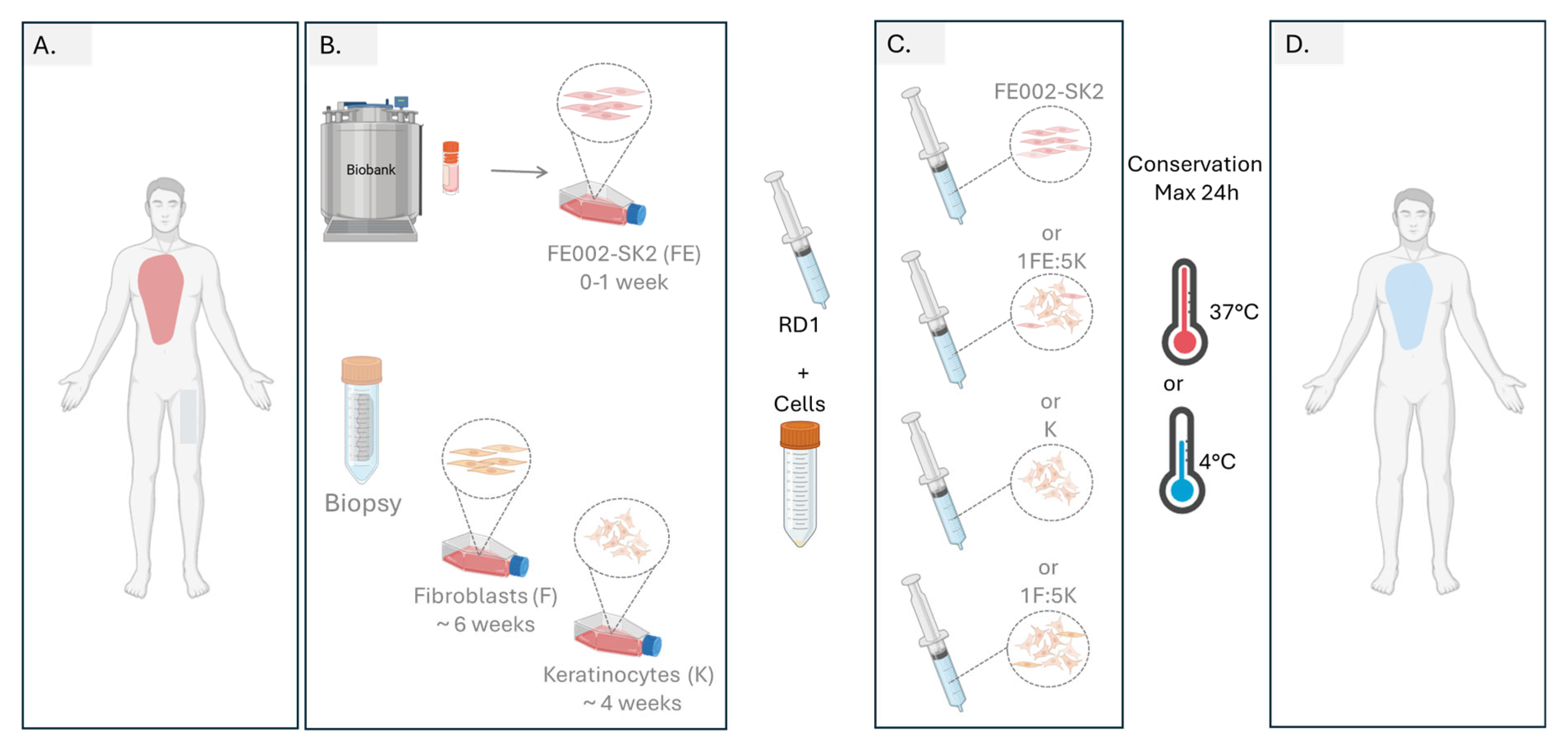
Non-Crosslinked Hyaluronic Acid Redensity 1® Supports Cell Viability, Proliferation, and Collagen Deposition in Early Burn Management

 , , , and
Abstract
1. Introduction
2. Materials and Methods
2.1. Ethical Compliance of the Study
2.2. Cell Sources
2.3. RD1 Cytotoxicity Assay on FE002-SK2 and Polydactyly Fibroblasts and ASC Cells
2.4. Cellular Growth Evaluation of Various Cell Types Exposed to Hydrogels
2.5. Collagen Production of Various Cell Types
2.6. Adipogenesis Induction Assays with Polydactyly Adipocyte Stem Cells (ASC)
2.7. Analysis of Adipogenic Gene Induction (PPARγ, LPL): RNA Extraction and Quantitative Real-Time PCR
2.8. Cellular Behavior in Gels
2.9. Cell Delivery Assessment in a (De-Epidermialized Dermis) DED Model
2.10. DED Processing to Evaluate Cellular Attachment and Viability
2.11. Statistical Analysis and Data Presentation
3. Results
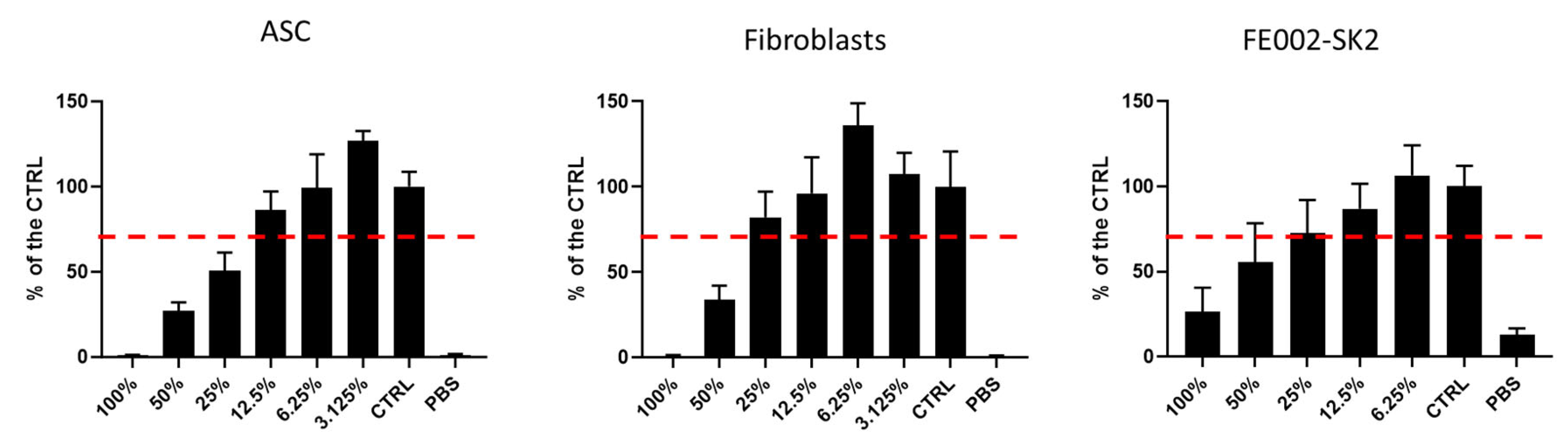
3.1. Cytotoxicity Assay for RD1 Gel
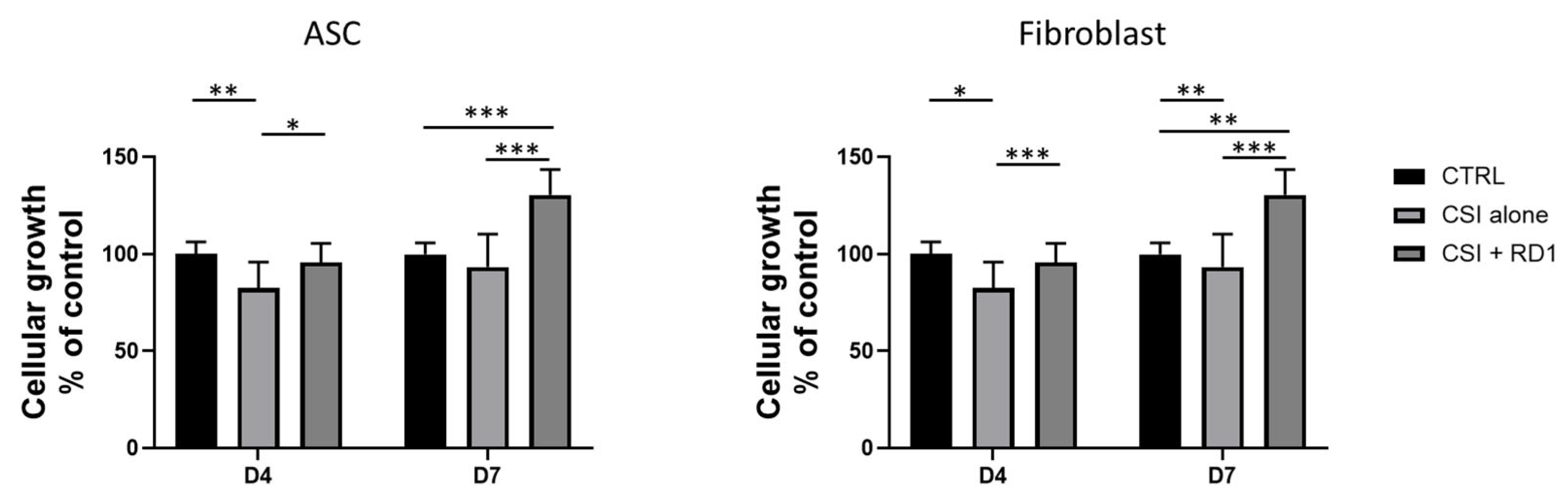
3.2. Clinical Doses of RD1 (100 µL) Induce Polydactyly Fibroblasts and ASC Proliferation
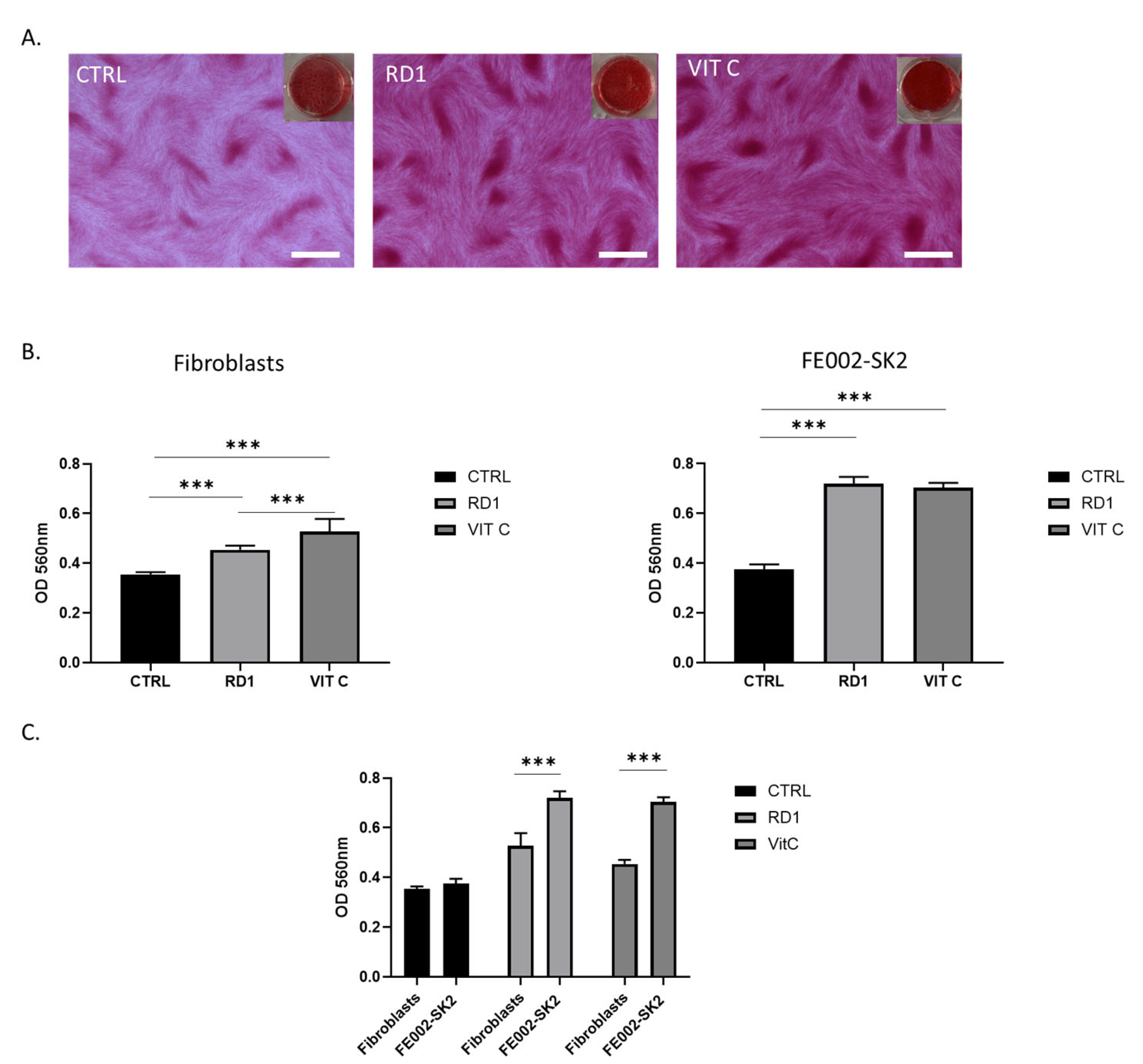
3.3. RD1 (100 µL) Induces Collagen Production by Polydactyly Fibroblasts and FE002-SK2 Primary Progenitor Fibroblasts
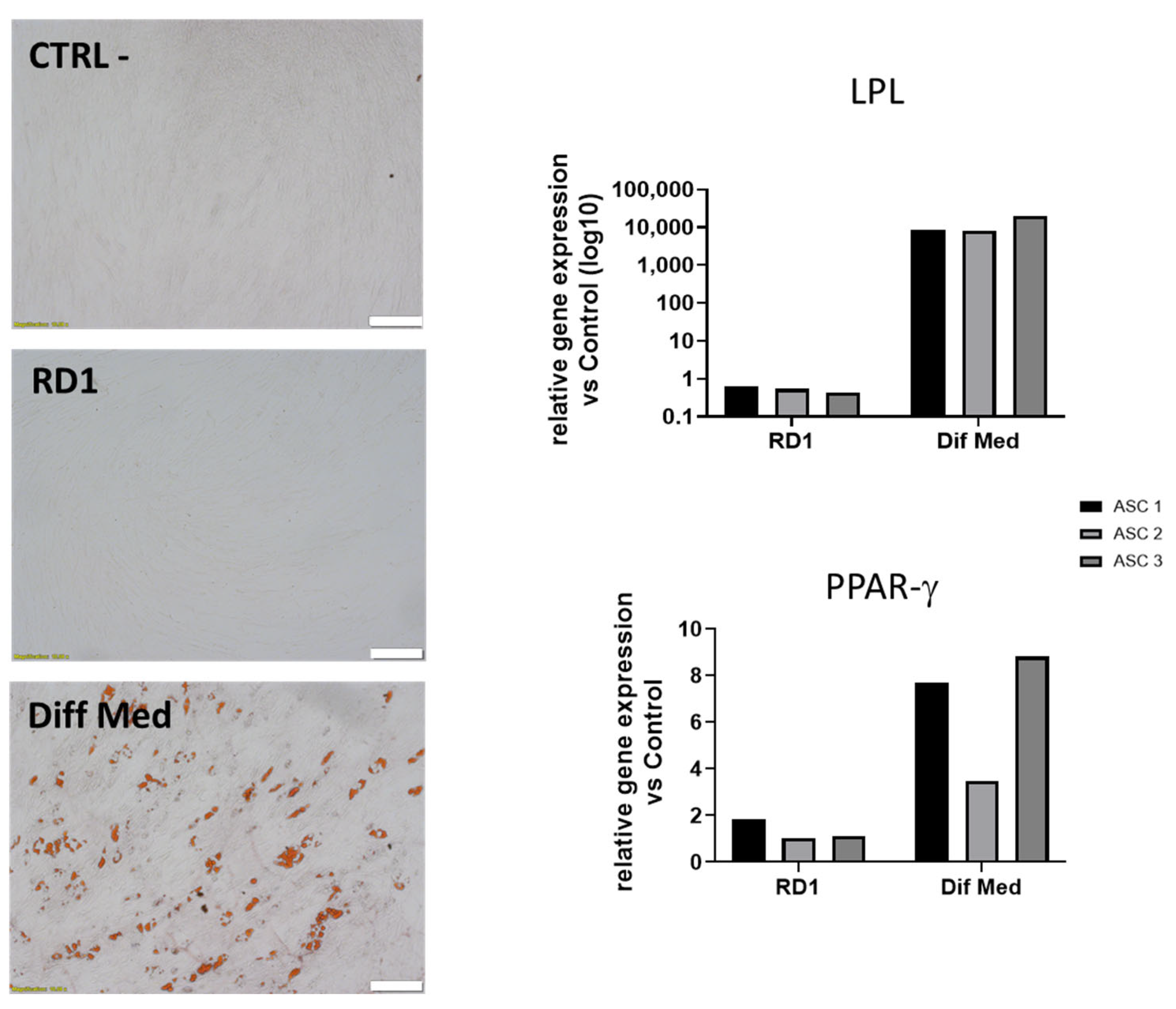
3.4. RD1 (100 µL) Does Not Induce ASC Differentiation into Adipocytes
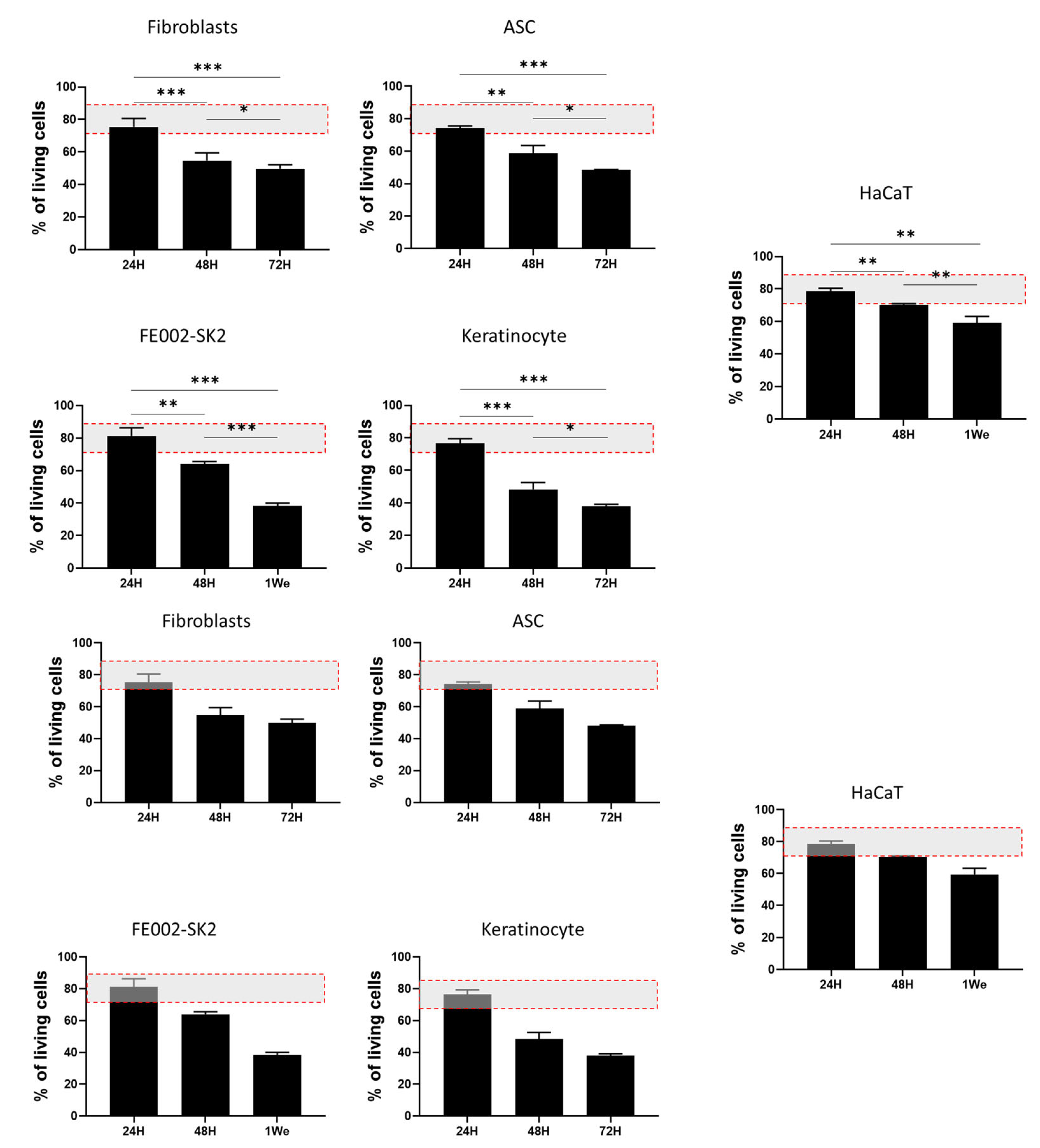
3.5. RD1 Maintains Cell Viability in Starving Conditions
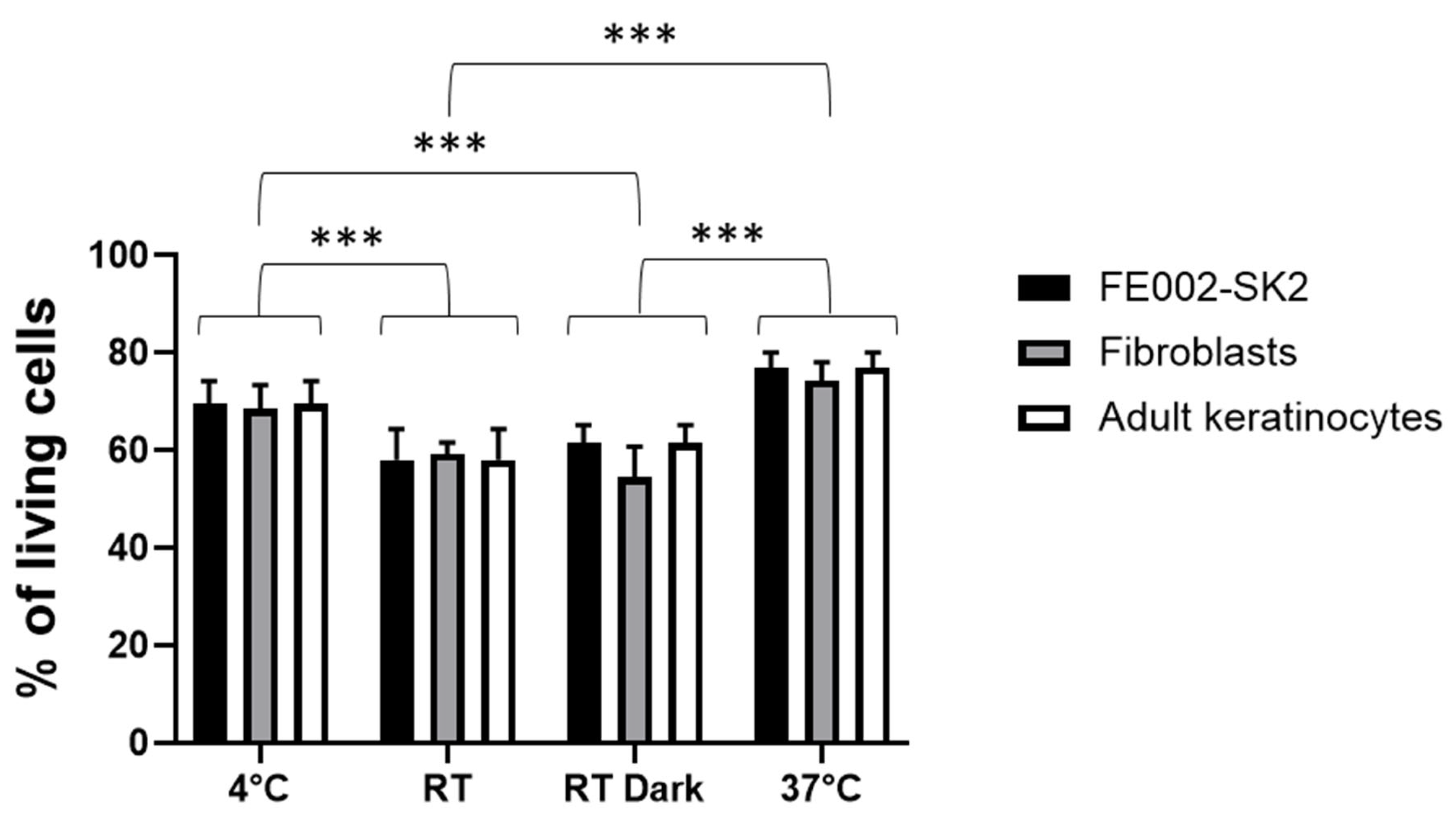
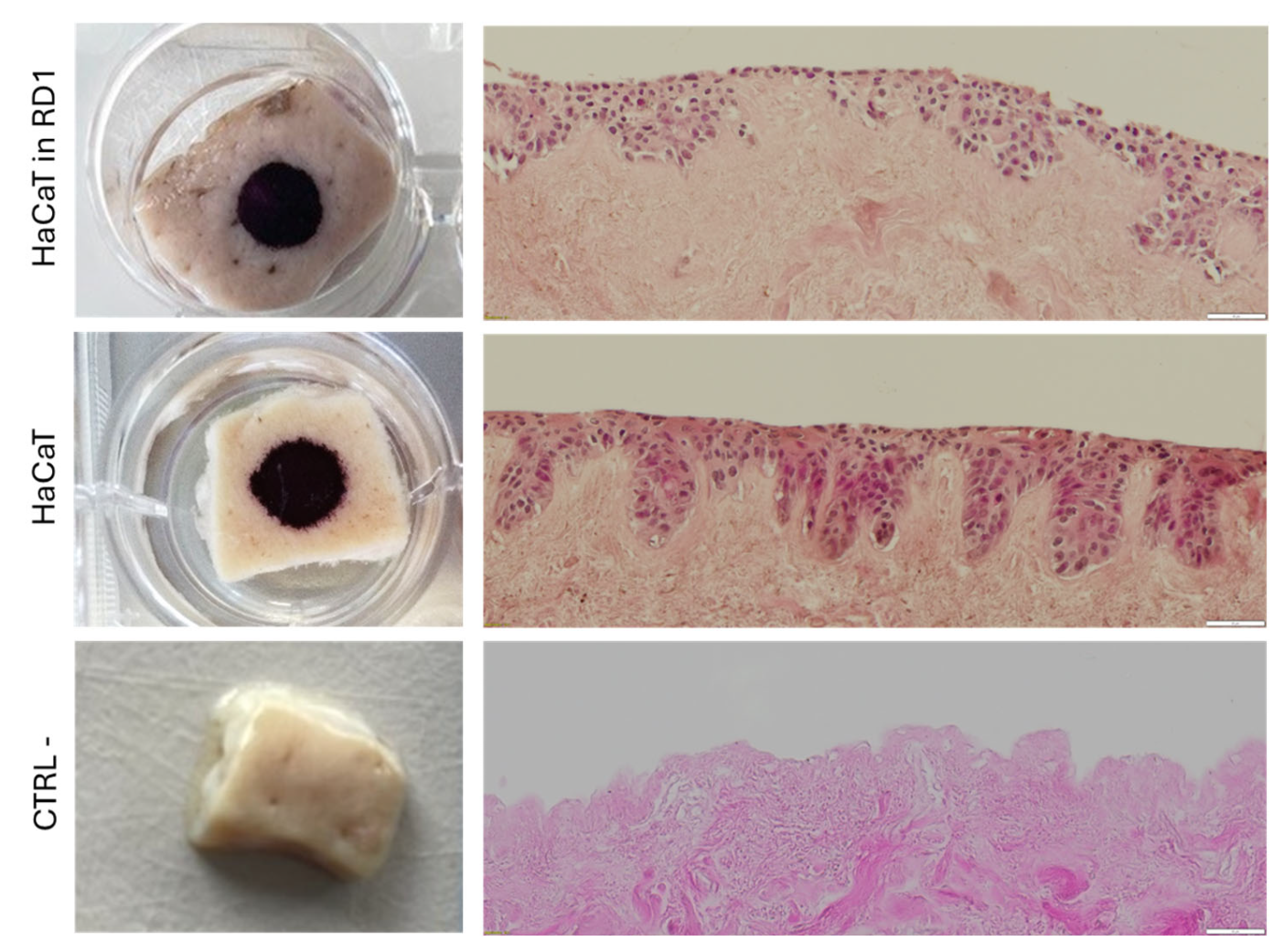
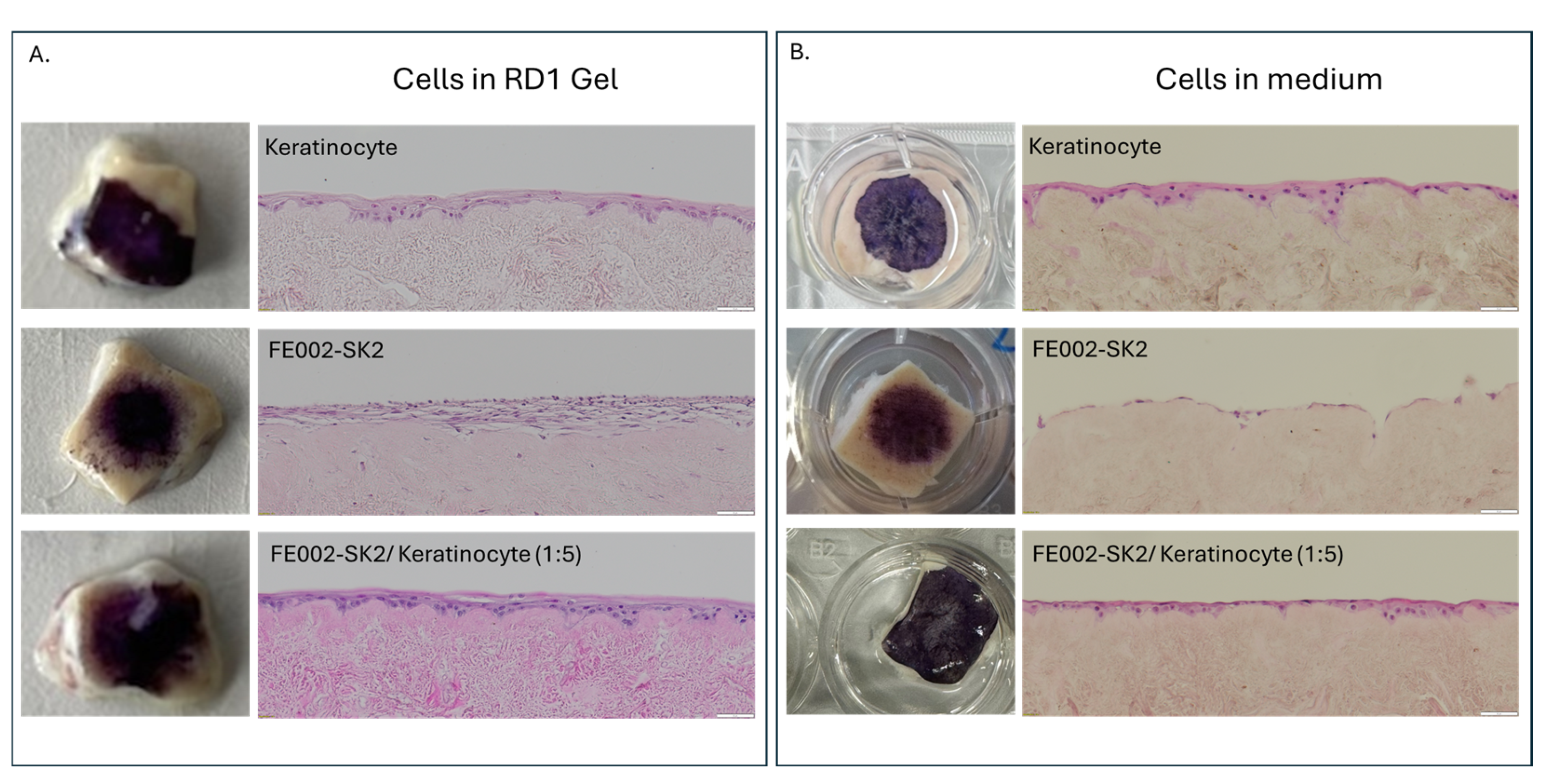
3.6. Evaluation of Cell Delivery on a De-Epidermialized Dermis (DED) for Cutaneous Cell Therapies
4. Discussion
5. Conclusions
Supplementary Materials
Author Contributions
Funding
Institutional Review Board Statement
Informed Consent Statement
Data Availability Statement
Acknowledgments
Conflicts of Interest
Abbreviations
| DED | de- epidermialized dermis |
| DMEM | Dulbecco’s modified Eagle medium |
| DMSO | dimethyl sulfoxide |
| CSI | cell strainer inserts |
| HA | hyaluronic acid |
| ASC | adipose stem cells |
| RD1 | redensity 1 hydrogel |
| ECM | extracellular matrix |
| FDA | food and drug administration |
References
- Wood, F.M.; Kolybaba, M.L.; Allen, P. The Use of Cultured Epithelial Autograft in the Treatment of Major Burn Wounds: Eleven Years of Clinical Experience. Burns 2006, 32, 538–544. [Google Scholar] [CrossRef]
- Cirodde, A.; Leclerc, T.; Jault, P.; Duhamel, P.; Lataillade, J.J.; Bargues, L. Cultured epithelial autografts in massive burns: A single-center retrospective study with 63 patients. Burns 2011, 37, 964–972. [Google Scholar] [CrossRef]
- Chemali, M.; Laurent, A.; Scaletta, C.; Waselle, L.; Simon, J.P.; Michetti, M.; Brunet, J.F.; Flahaut, M.; Hirt-Burri, N.; Raffoul, W.; et al. Burn Center Organization and Cellular Therapy Integration: Managing Risks and Costs. J. Burn Care Res. 2021, 42, 911–924. [Google Scholar] [CrossRef] [PubMed]
- Auxenfans, C.; Menet, V.; Catherine, Z.; Shipkov, H.; Lacroix, P.; Bertin-Maghit, M.; Damour, O.; Braye, F. Cultured Autologous Keratinocytes in the Treatment of Large and Deep Burns: A Retrospective Study over 15 Years. Burns 2015, 41, 71–79. [Google Scholar] [CrossRef]
- (WHO), World Health Organization. Burn Injuries. Available online: https://www.who.int/news-room/fact-sheets/detail/burns (accessed on 15 September 2025).
- Sabeh, G.; Sabe, M.; Ishak, S.; Sweid, R. New process: Do sequential skin cell transplants cure third degree burns? Comparative study on 517 patients. Ann. Burn. Fire Disasters 2018, 31, 213–222. [Google Scholar]
- Rangatchew, F.; Vester-Glowinski, P.; Rasmussen, B.S.; Haastrup, E.; Munthe-Fog, L.; Talman, M.L.; Bonde, C.; Drzewiecki, K.T.; Fischer-Nielsen, A.; Holmgaard, R. Mesenchymal Stem Cell Therapy of Acute Thermal Burns: A Systematic Review of the Effect on Inflammation and Wound Healing. Burns 2021, 47, 270–294. [Google Scholar] [CrossRef]
- Chen, X.; Laurent, A.; Liao, Z.; Jaccoud, S.; Abdel-Sayed, P.; Flahaut, M.; Scaletta, C.; Raffoul, W.; Applegate, L.A.; Hirt-Burri, N. Cutaneous Cell Therapy Manufacturing Timeframe Rationalization: Allogeneic Off-the-Freezer Fibroblasts for Dermo-Epidermal Combined Preparations (De-Fe002-Sk2) in Burn Care. Pharmaceutics 2023, 15, 2334. [Google Scholar] [CrossRef]
- Ter Horst, B.; Chouhan, G.; Moiemen, N.S.; Grover, L.M. Advances in Keratinocyte Delivery in Burn Wound Care. Adv. Drug Deliv. Rev. 2018, 123, 18–32. [Google Scholar] [CrossRef]
- Hartmann, B.; Ekkernkamp, A.; Johnen, C.; Gerlach, J.C.; Belfekroun, C.; Kuntscher, M.V. Sprayed Cultured Epithelial Autografts for Deep Dermal Burns of the Face and Neck. Ann. Plast. Surg. 2007, 58, 70–73. [Google Scholar] [CrossRef] [PubMed]
- Esteban-Vives, R.; Corcos, A.; Choi, M.S.; Young, M.T.; Over, P.; Ziembicki, J.; Gerlach, J.C. Cell-Spray Auto-Grafting Technology for Deep Partial-Thickness Burns: Problems and Solutions During Clinical Implementation. Burns 2018, 44, 549–559. [Google Scholar] [CrossRef] [PubMed]
- Ozhathil, D.K.; Tay, M.W.; Wolf, S.E.; Branski, L.K. A Narrative Review of the History of Skin Grafting in Burn Care. Medicina 2021, 57, 380. [Google Scholar] [CrossRef]
- Obeng, M.K.; McCauley, R.L.; Barnett, J.R.; Heggers, J.P.; Sheridan, K.; Schutzler, S.S. Cadaveric Allograft Discards as a Result of Positive Skin Cultures. Burns 2001, 27, 267–271. [Google Scholar] [CrossRef]
- Bolivar-Flores, Y.J.; Kuri-Harcuch, W. Frozen Allogeneic Human Epidermal Cultured Sheets for the Cure of Complicated Leg Ulcers. Dermatol. Surg. 1999, 25, 610–617. [Google Scholar] [CrossRef]
- Surowiecka, A.; Chrapusta, A.; Klimeczek-Chrapusta, M.; Korzeniowski, T.; Drukala, J.; Struzyna, J. Mesenchymal Stem Cells in Burn Wound Management. Int. J. Mol. Sci. 2022, 23, 15339. [Google Scholar] [CrossRef]
- Qiao, Y.; Zhang, Q.; Peng, Y.; Qiao, X.; Yan, J.; Wang, B.; Zhu, Z.; Li, Z.; Zhang, Y. Effect of Stem Cell Treatment on Burn Wounds: A Systemic Review and a Meta-Analysis. Int. Wound J. 2023, 20, 8–17. [Google Scholar] [CrossRef]
- Lukomskyj, A.O.; Rao, N.; Yan, L.; Pye, J.S.; Li, H.; Wang, B.; Li, J.J. Stem Cell-Based Tissue Engineering for the Treatment of Burn Wounds: A Systematic Review of Preclinical Studies. Stem Cell Rev. Rep. 2022, 18, 1926–1955. [Google Scholar] [CrossRef]
- Li, Y.; Xia, W.D.; Van der Merwe, L.; Dai, W.T.; Lin, C. Efficacy of Stem Cell Therapy for Burn Wounds: A Systematic Review and Meta-Analysis of Preclinical Studies. Stem Cell Res. Ther. 2020, 11, 322. [Google Scholar] [CrossRef] [PubMed]
- Arno, A.; Smith, A.H.; Blit, P.H.; Shehab, M.A.; Gauglitz, G.G.; Jeschke, M.G. Stem Cell Therapy: A New Treatment for Burns? Pharmaceuticals 2011, 4, 1355–1380. [Google Scholar] [CrossRef] [PubMed]
- Abdul Kareem, N.; Aijaz, A.; Jeschke, M.G. Stem Cell Therapy for Burns: Story So Far. Biologics 2021, 15, 379–397. [Google Scholar] [CrossRef]
- Weissman, I. Stem Cell Research: Paths to Cancer Therapies and Regenerative Medicine. Jama 2005, 294, 1359–1366. [Google Scholar] [CrossRef] [PubMed]
- Foubert, P.; Gonzalez, A.D.; Teodosescu, S.; Berard, F.; Doyle-Eisele, M.; Yekkala, K.; Tenenhaus, M.; Fraser, J.K. Adipose-Derived Regenerative Cell Therapy for Burn Wound Healing: A Comparison of Two Delivery Methods. Adv. Wound Care 2016, 5, 288–298. [Google Scholar] [CrossRef]
- Igura, K.; Zhang, X.; Takahashi, K.; Mitsuru, A.; Yamaguchi, S.; Takashi, T.A. Isolation and Characterization of Mesenchymal Progenitor Cells from Chorionic Villi of Human Placenta. Cytotherapy 2004, 6, 543–553. [Google Scholar] [CrossRef]
- Soncini, M.; Vertua, E.; Gibelli, L.; Zorzi, F.; Denegri, M.; Albertini, A.; Wengler, G.S.; Parolini, O. Isolation and Characterization of Mesenchymal Cells from Human Fetal Membranes. J. Tissue Eng. Regen. Med. 2007, 1, 296–305. [Google Scholar] [CrossRef] [PubMed]
- Ullah, S.; Mansoor, S.; Ayub, A.; Ejaz, M.; Zafar, H.; Feroz, F.; Khan, A.; Ali, M. An Update on Stem Cells Applications in Burn Wound Healing. Tissue Cell 2021, 72, 101527. [Google Scholar] [CrossRef] [PubMed]
- Vidal, M.A.; Walker, N.J.; Napoli, E.; Borjesson, D.L. Evaluation of Senescence in Mesenchymal Stem Cells Isolated from Equine Bone Marrow, Adipose Tissue, and Umbilical Cord Tissue. Stem Cells Dev. 2012, 21, 273–283. [Google Scholar] [CrossRef]
- Wang, M.; Xu, X.; Lei, X.; Tan, J.; Xie, H. Mesenchymal Stem Cell-Based Therapy for Burn Wound Healing. Burn. Trauma 2021, 9, tkab002. [Google Scholar] [CrossRef]
- Shpichka, A.; Butnaru, D.; Bezrukov, E.A.; Sukhanov, R.B.; Atala, A.; Burdukovskii, V.; Zhang, Y.; Timashev, P. Skin Tissue Regeneration for Burn Injury. Stem Cell Res. Ther. 2019, 10, 94. [Google Scholar] [CrossRef]
- Laurent, A.; Lin, P.; Scaletta, C.; Hirt-Burri, N.; Michetti, M.; de Buys Roessingh, A.S.; Raffoul, W.; She, B.R.; Applegate, L.A. Bringing Safe and Standardized Cell Therapies to Industrialized Processing for Burns and Wounds. Front. Bioeng. Biotechnol. 2020, 8, 581. [Google Scholar] [CrossRef] [PubMed]
- Wang, H.J.; Pieper, J.; Schotel, R.; van Blitterswijk, C.A.; Lamme, E.N. Stimulation of Skin Repair Is Dependent on Fibroblast Source and Presence of Extracellular Matrix. Tissue Eng. 2004, 10, 1054–1064. [Google Scholar] [CrossRef]
- Liao, Z.; Chen, X.; Hirt-Burri, N.; Porcello, A.; Marques, C.; Lourenço, K.; Alexis, L.; Applegate, L.A. Pharmacological and Biological Strategies as Regulators of Scarless Wound Healing and Regeneration of Skin. In Wound Healing—Mechanisms and Pharmacological Interventions; González-Mateo, G.T., Kopytina, V., Eds.; IntechOpen: London, UK, 2025. [Google Scholar]
- Cerceo, J.R.; Malkoc, A.; Nguyen, A.; Daoud, A.; Wong, D.T.; Woodward, B. Management of Large Full-Thickness Burns Using Kerecis Acellular Fish Skin Graft and Recell Autologous Skin Cell Suspension: A Case Report of Two Patients with Large Surface Area Burns. Cureus 2024, 16, e71101. [Google Scholar] [CrossRef]
- Sun, B.K.; Siprashvili, Z.; Khavari, P.A. Advances in Skin Grafting and Treatment of Cutaneous Wounds. Science 2014, 346, 941–945. [Google Scholar] [CrossRef]
- Porcello, A.; Laurent, A.; Hirt-Burri, N.; Abdel-Sayed, P.; de Buys Roessingh, A.; Raffoul, W.; Jordan, O.; Allémann, E.; Applegate, L.A. Hyaluronan-Based Hydrogels as Functional Vectors for Standardised Therapeutics in Tissue Engineering and Regenerative Medicine; CRC Press: Boca Raton, FL, USA, 2022. [Google Scholar]
- Sun, G.; Shen, Y.; Harmon, J.W. Engineering Pro-Regenerative Hydrogels for Scarless Wound Healing. Adv. Healthc. Mater. 2018, 7, 1800016. [Google Scholar] [CrossRef]
- Longinotti, C. The Use of Hyaluronic Acid Based Dressings to Treat Burns: A Review. Burn. Trauma 2014, 2, 162–168. [Google Scholar] [CrossRef] [PubMed]
- De Francesco, F.; Saparov, A.; Riccio, M. Hyaluronic Acid Accelerates Re-Epithelialization and Healing of Acute Cutaneous Wounds. Eur. Rev. Med. Pharmacol. Sci. 2023, 27, 37–45. [Google Scholar] [PubMed]
- Bezpalko, L.; Filipskiy, A. Clinical and Ultrasound Evaluation of Skin Quality after Subdermal Injection of Two Non-Crosslinked Hyaluronic Acid-Based Fillers. Clin. Cosmet. Investig. Dermatol. 2003, 16, 2175–2183. [Google Scholar] [CrossRef] [PubMed]
- Fanian, F. In-Vivo Injection of Oligonutrients and High Molecular Weight Hyaluronic Acid—Results of a Randomized Controlled Trial. Aesthetic Med. 2017, 3, 23–33. [Google Scholar]
- Liao, Z.; Laurent, N.; Hirt-Burri, N.; Scaletta, C.; Abdel-Sayed, P.; Raffoul, W.; Luo, S.; Krysan, D.J.; Laurent, A.; Applegate, L.A. Sustainable Primary Cell Banking for Topical Compound Cytotoxicity Assays: Protocol Validation on Novel Biocides and Antifungals for Optimized Burn Wound Care. Eur. Burn J. 2024, 5, 249–270. [Google Scholar] [CrossRef]
- Zadnikova, P.; Sinova, R.; Pavlik, V.; Simek, M.; Safrankova, B.; Hermannova, M.; Nesporova, K.; Velebny, V. The Degradation of Hyaluronan in the Skin. Biomolecules 2022, 12, 251. [Google Scholar] [CrossRef]
- ISO 10993-5:2009; Biological Evaluation of Medical Devices—Part 5: Tests for In Vitro Cytotoxicity. 3rd ed. International Organization for Standardization: Geneva, Switzerland, 2009; p. 34p.
- Livak, K.J.; Schmittgen, T.D. Analysis of Relative Gene Expression Data Using Real-Time Quantitative Pcr and the 2(-Delta Delta C(T)) Method. Methods 2001, 25, 402–408. [Google Scholar] [CrossRef] [PubMed]
- Schneider, C.A.; Rasband, W.S.; Eliceiri, K.W. Nih Image to Imagej: 25 Years of Image Analysis. Nat. Methods 2012, 9, 671–675. [Google Scholar] [CrossRef] [PubMed]
- Chen, X.; Scaletta, C.; Liao, Z.; Laurent, A.; Applegate, L.A.; Hirt-Burri, N. Optimization and Standardization of Stable De-Epidermized Dermis (Ded) Models for Functional Evaluation of Cutaneous Cell Therapies. Bioengineering 2024, 11, 1297. [Google Scholar] [CrossRef]
- Abdel-Sayed, P.; Hirt-Burri, N.; de Buys Roessingh, A.; Raffoul, W.; Applegate, L.A. Evolution of Biological Bandages as First Cover for Burn Patients. Adv. Wound Care 2019, 8, 555–564. [Google Scholar] [CrossRef]
- Al-Dourobi, K.; Laurent, A.; Deghayli, L.; Flahaut, M.; Abdel-Sayed, P.; Scaletta, C.; Michetti, M.; Waselle, L.; Simon, J.P.; Ezzi, O.E.; et al. Retrospective Evaluation of Progenitor Biological Bandage Use: A Complementary and Safe Therapeutic Management Option for Prevention of Hypertrophic Scarring in Pediatric Burn Care. Pharmaceuticals 2021, 14, 201. [Google Scholar] [CrossRef] [PubMed]
- Laurent, A.; Rey, M.; Scaletta, C.; Abdel-Sayed, P.; Michetti, M.; Flahaut, M.; Raffoul, W.; de Buys Roessingh, A.; Hirt-Burri, N.; Applegate, L.A. Retrospectives on Three Decades of Safe Clinical Experience with Allogeneic Dermal Progenitor Fibroblasts: High Versatility in Topical Cytotherapeutic Care. Pharmaceutics 2023, 15, 184. [Google Scholar] [CrossRef]
- Laurent, A.; Scaletta, C.; Michetti, M.; Hirt-Burri, N.; de Buys Roessingh, A.S.; Raffoul, W.; Applegate, L.A. Gmp Tiered Cell Banking of Non-Enzymatically Isolated Dermal Progenitor Fibroblasts for Allogenic Regenerative Medicine. Methods Mol. Biol. 2021, 2286, 25–48. [Google Scholar] [PubMed]
- Laurent, A.; Scaletta, C.; Michetti, M.; Hirt-Burri, N.; Flahaut, M.; Raffoul, W.; de Buys Roessingh, A.S.; Applegate, L.A. Progenitor Biological Bandages: An Authentic Swiss Tool for Safe Therapeutic Management of Burns, Ulcers, and Donor Site Grafts. Methods Mol. Biol. 2021, 2286, 49–65. [Google Scholar]
- Chen, X.; Hirt-Burri, N.; Scaletta, C.; Laurent, A.E.; Applegate, L.A. Bicomponent Cutaneous Cell Therapy for Early Burn Care: Manufacturing Homogeneity and Epidermis-Structuring Functions of Clinical Grade Fe002-Sk2 Allogeneic Dermal Progenitor Fibroblasts. Pharmaceutics 2025, 17, 692. [Google Scholar] [CrossRef]
- Wang, F.; Garza, L.A.; Kang, S.; Varani, J.; Orringer, J.S.; Fisher, G.J.; Voorhees, J.J. In Vivo Stimulation of De Novo Collagen Production Caused by Cross-Linked Hyaluronic Acid Dermal Filler Injections in Photodamaged Human Skin. Arch. Dermatol. 2007, 143, 155–163. [Google Scholar] [CrossRef]
- Iannitti, T.; Morales-Medina, J.C.; Coacci, A.; Palmieri, B. Experimental and Clinical Efficacy of Two Hyaluronic Acid-Based Compounds of Different Cross-Linkage and Composition in the Rejuvenation of the Skin. Pharm. Res. 2016, 33, 2879–2890. [Google Scholar] [CrossRef] [PubMed]
- Quan, T.; Wang, F.; Shao, Y.; Rittie, L.; Xia, W.; Orringer, J.S.; Voorhees, J.J.; Fisher, G.J. Enhancing Structural Support of the Dermal Microenvironment Activates Fibroblasts, Endothelial Cells, and Keratinocytes in Aged Human Skin in Vivo. J. Invest Dermatol. 2013, 133, 658–667. [Google Scholar] [CrossRef]
- Nadra, K.; Andre, M.; Marchaud, E.; Kestemont, P.; Braccini, F.; Cartier, H.; Keophiphath, M.; Fanian, F. A Hyaluronic Acid-Based Filler Reduces Lipolysis in Human Mature Adipocytes and Maintains Adherence and Lipid Accumulation of Long-Term Differentiated Human Preadipocytes. J. Cosmet. Dermatol. 2021, 20, 1474–1482. [Google Scholar] [CrossRef]
- Grognuz, A.; Scaletta, C.; Farron, A.; Pioletti, D.P.; Raffoul, W.; Applegate, L.A. Stability Enhancement Using Hyaluronic Acid Gels for Delivery of Human Fetal Progenitor Tenocytes. Cell Med. 2016, 8, 87–97. [Google Scholar] [CrossRef][Green Version]
- Hohlfeld, J.; de Buys Roessingh, A.; Hirt-Burri, N.; Chaubert, P.; Gerber, S.; Scaletta, C.; Hohlfeld, P.; Applegate, L.A. Tissue Engineered Fetal Skin Constructs for Paediatric Burns. Lancet 2005, 366, 840–842. [Google Scholar] [CrossRef] [PubMed]
- Dalmedico, M.M.; Meier, M.J.; Felix, J.V.; Pott, F.S.; Fde, F.P.; Santos, M.C. Hyaluronic Acid Covers in Burn Treatment: A Systematic Review. Rev. Esc. Enferm. USP 2016, 50, 522–528. [Google Scholar] [CrossRef] [PubMed]
- Shevchenko, R.V.; James, S.L.; James, S.E. A Review of Tissue-Engineered Skin Bioconstructs Available for Skin Reconstruction. J. R. Soc. Interface 2010, 7, 229–258. [Google Scholar] [CrossRef]
- Tezel, A.; Fredrickson, G.H. The Science of Hyaluronic Acid Dermal Fillers. J. Cosmet. Laser Ther. 2008, 10, 35–42. [Google Scholar] [CrossRef]
- Turner, N.J.; Kielty, C.M.; Walker, M.G.; Canfield, A.E. A Novel Hyaluronan-Based Biomaterial (Hyaff-11) as a Scaffold for Endothelial Cells in Tissue Engineered Vascular Grafts. Biomaterials 2004, 25, 5955–5964. [Google Scholar] [CrossRef]
- Fino, P.; Spagnoli, A.M.; Ruggieri, M.; Onesti, M.G. Caustic Burn Caused by Intradermal Self Administration of Muriatic Acid for Suicidal Attempt: Optimal Wound Healing and Functional Recovery with a Non Surgical Treatment. Il G. Di Chir. J. Ital. Surg. Assoc. 2015, 36, 214–218. [Google Scholar] [CrossRef]
- Gravante, G.; Sorge, R.; Merone, A.; Tamisani, A.M.; Di Lonardo, A.; Scalise, A.; Doneddu, G.; Melandri, D.; Stracuzzi, G.; Onesti, M.G.; et al. Hyalomatrix Pa in Burn Care Practice: Results from a National Retrospective Survey, 2005 to 2006. Ann. Plast. Surg. 2010, 64, 69–79. [Google Scholar] [CrossRef] [PubMed]
- Harris, P.A.; di Francesco, F.; Barisoni, D.; Leigh, I.M.; Navsaria, H.A. Use of Hyaluronic Acid and Cultured Autologous Keratinocytes and Fibroblasts in Extensive Burns. Lancet 1999, 353, 35–36. [Google Scholar] [CrossRef]
- Price, R.D.; Berry, M.G.; Navsaria, H.A. Hyaluronic Acid: The Scientific and Clinical Evidence. J. Plast. Reconstr. Aesthet. Surg. 2007, 60, 1110–1119. [Google Scholar] [CrossRef]
- Voigt, J.; Driver, V.R. Hyaluronic Acid Derivatives and Their Healing Effect on Burns, Epithelial Surgical Wounds, and Chronic Wounds: A Systematic Review and Meta-Analysis of Randomized Controlled Trials. Wound Repair Regen. 2012, 20, 317–331. [Google Scholar] [CrossRef]
- Jones, A.; Vaughan, D. Hydrogel Dressings in the Management of a Variety of Wound Types: A Review. J. Orthop. Nurs. 2005, 9, S1–S11. [Google Scholar] [CrossRef]
- Mesa, F.L.; Aneiros, J.; Cabrera, A.; Bravo, M.; Caballero, T.; Revelles, F.; del Moral, R.G.; O’Valle, F. Antiproliferative Effect of Topic Hyaluronic Acid Gel. Study in Gingival Biopsies of Patients with Periodontal Disease. Histol. Histopathol. 2002, 17, 747–753. [Google Scholar]
- Witting, M.; Boreham, A.; Brodwolf, R.; Vavrova, K.; Alexiev, U.; Friess, W.; Hedtrich, S. Interactions of Hyaluronic Acid with the Skin and Implications for the Dermal Delivery of Biomacromolecules. Mol. Pharm. 2015, 12, 1391–1401. [Google Scholar] [CrossRef] [PubMed]
- Dicker, K.T.; Gurski, L.A.; Pradhan-Bhatt, S.; Witt, R.L.; Farach-Carson, M.C.; Jia, X. Hyaluronan: A Simple Polysaccharide with Diverse Biological Functions. Acta. Biomater. 2014, 10, 1558–1570. [Google Scholar] [CrossRef] [PubMed]
- Khademhosseini, A.; Eng, G.; Yeh, J.; Fukuda, J.; Blumling, J., 3rd; Langer, R.; Burdick, J.A. Micromolding of Photocrosslinkable Hyaluronic Acid for Cell Encapsulation and Entrapment. J. Biomed. Mater. Res. A 2006, 79, 522–532. [Google Scholar] [CrossRef] [PubMed]
- Thones, S.; Kutz, L.M.; Oehmichen, S.; Becher, J.; Heymann, K.; Saalbach, A.; Knolle, W.; Schnabelrauch, M.; Reichelt, S.; Anderegg, U. New E-Beam-Initiated Hyaluronan Acrylate Cryogels Support Growth and Matrix Deposition by Dermal Fibroblasts. Int. J. Biol. Macromol. 2017, 94, 611–620. [Google Scholar] [CrossRef]
- Schmidt, J.; Rowley, J.; Kong, H.J. Hydrogels Used for Cell-Based Drug Delivery. J. Biomed. Mater. Res. A 2008, 87, 1113–1122. [Google Scholar] [CrossRef]


Disclaimer/Publisher’s Note: The statements, opinions and data contained in all publications are solely those of the individual author(s) and contributor(s) and not of MDPI and/or the editor(s). MDPI and/or the editor(s) disclaim responsibility for any injury to people or property resulting from any ideas, methods, instructions or products referred to in the content. |
© 2025 by the authors. Licensee MDPI, Basel, Switzerland. This article is an open access article distributed under the terms and conditions of the Creative Commons Attribution (CC BY) license.
Share and Cite
Liao, Z.; Chen, X.; Brusini, R.; Faivre, J.; Applegate, L.A.; Flegeau, K.; Hirt-Burri, N. Non-Crosslinked Hyaluronic Acid Redensity 1® Supports Cell Viability, Proliferation, and Collagen Deposition in Early Burn Management. Pharmaceutics 2026, 18, 21. https://doi.org/10.3390/pharmaceutics18010021
Liao Z, Chen X, Brusini R, Faivre J, Applegate LA, Flegeau K, Hirt-Burri N. Non-Crosslinked Hyaluronic Acid Redensity 1® Supports Cell Viability, Proliferation, and Collagen Deposition in Early Burn Management. Pharmaceutics. 2026; 18(1):21. https://doi.org/10.3390/pharmaceutics18010021
Chicago/Turabian StyleLiao, Zhifeng, Xi Chen, Romain Brusini, Jimmy Faivre, Lee Ann Applegate, Killian Flegeau, and Nathalie Hirt-Burri. 2026. "Non-Crosslinked Hyaluronic Acid Redensity 1® Supports Cell Viability, Proliferation, and Collagen Deposition in Early Burn Management" Pharmaceutics 18, no. 1: 21. https://doi.org/10.3390/pharmaceutics18010021
APA StyleLiao, Z., Chen, X., Brusini, R., Faivre, J., Applegate, L. A., Flegeau, K., & Hirt-Burri, N. (2026). Non-Crosslinked Hyaluronic Acid Redensity 1® Supports Cell Viability, Proliferation, and Collagen Deposition in Early Burn Management. Pharmaceutics, 18(1), 21. https://doi.org/10.3390/pharmaceutics18010021