Plasma Cell Myeloma: Biochemical Insights into Diagnosis, Treatment, and Smart Nanocarrier-Based Therapeutic Development


Abstract
1. Introduction
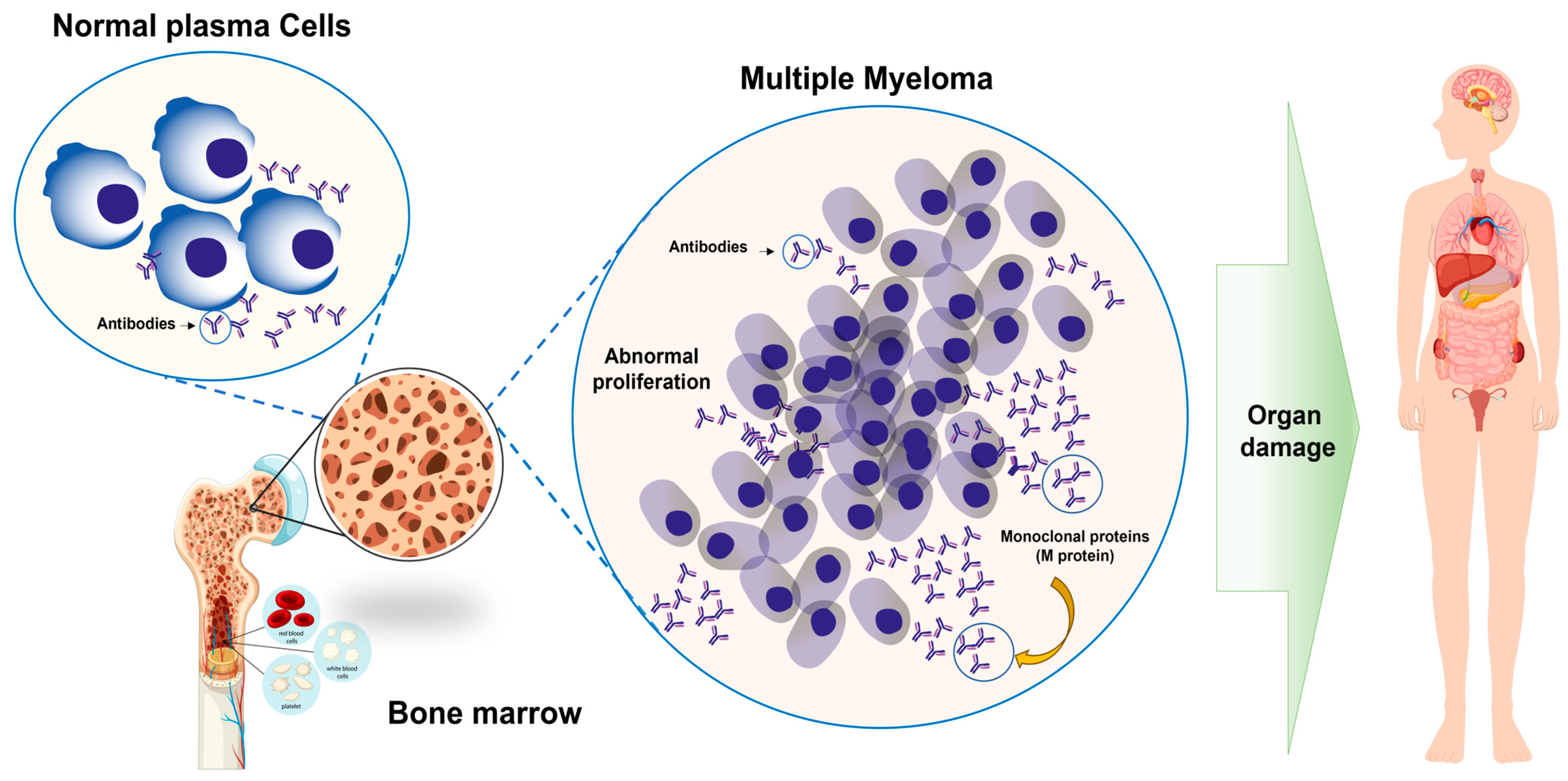
2. Pathophysiology and Molecular Basis of PCM
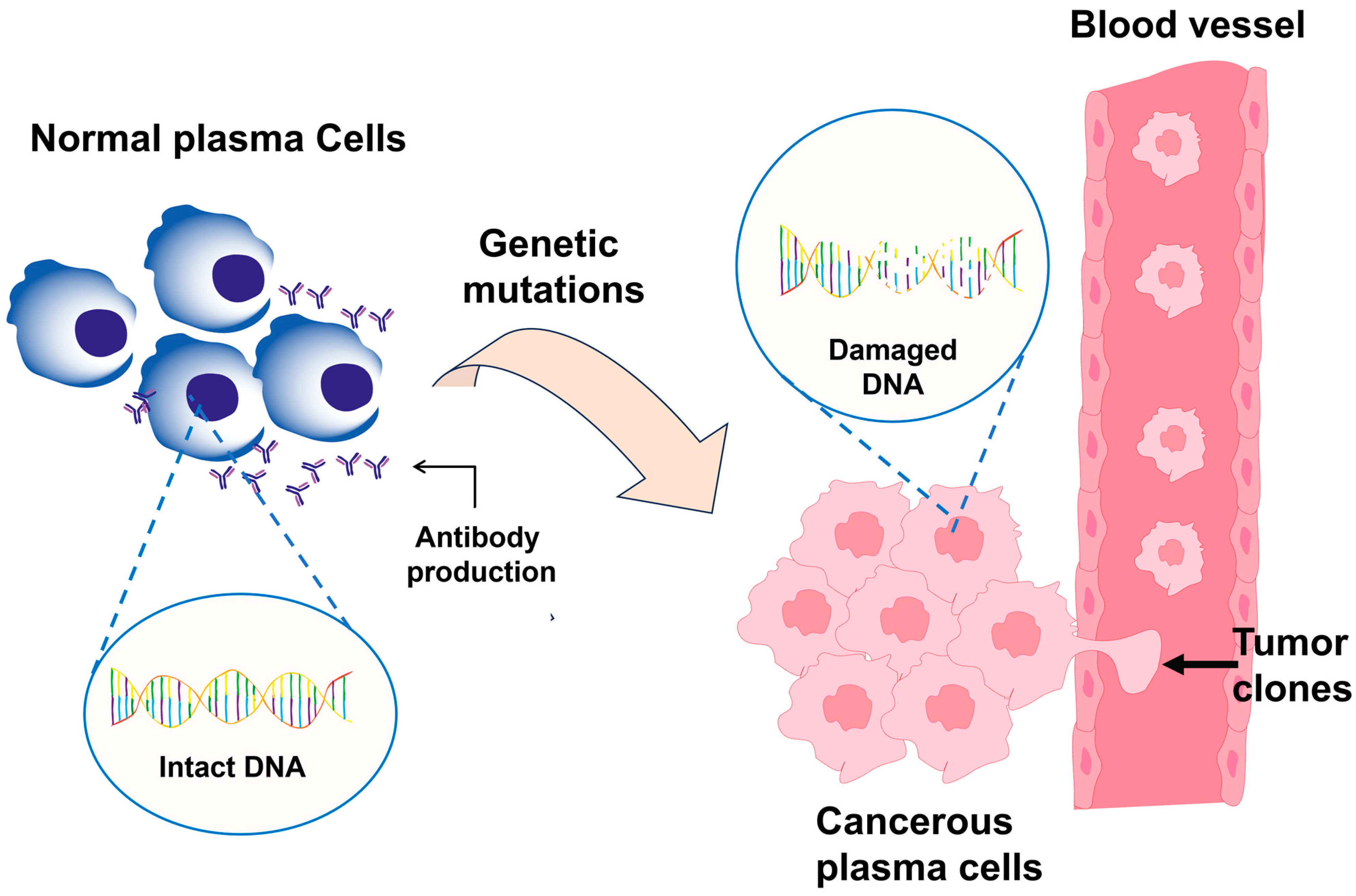
2.1. Malignant Transformation and Genetic Alterations in PCM
2.2. Proteins and Serum Biomarkers Involved in the Pathophysiology of PCM
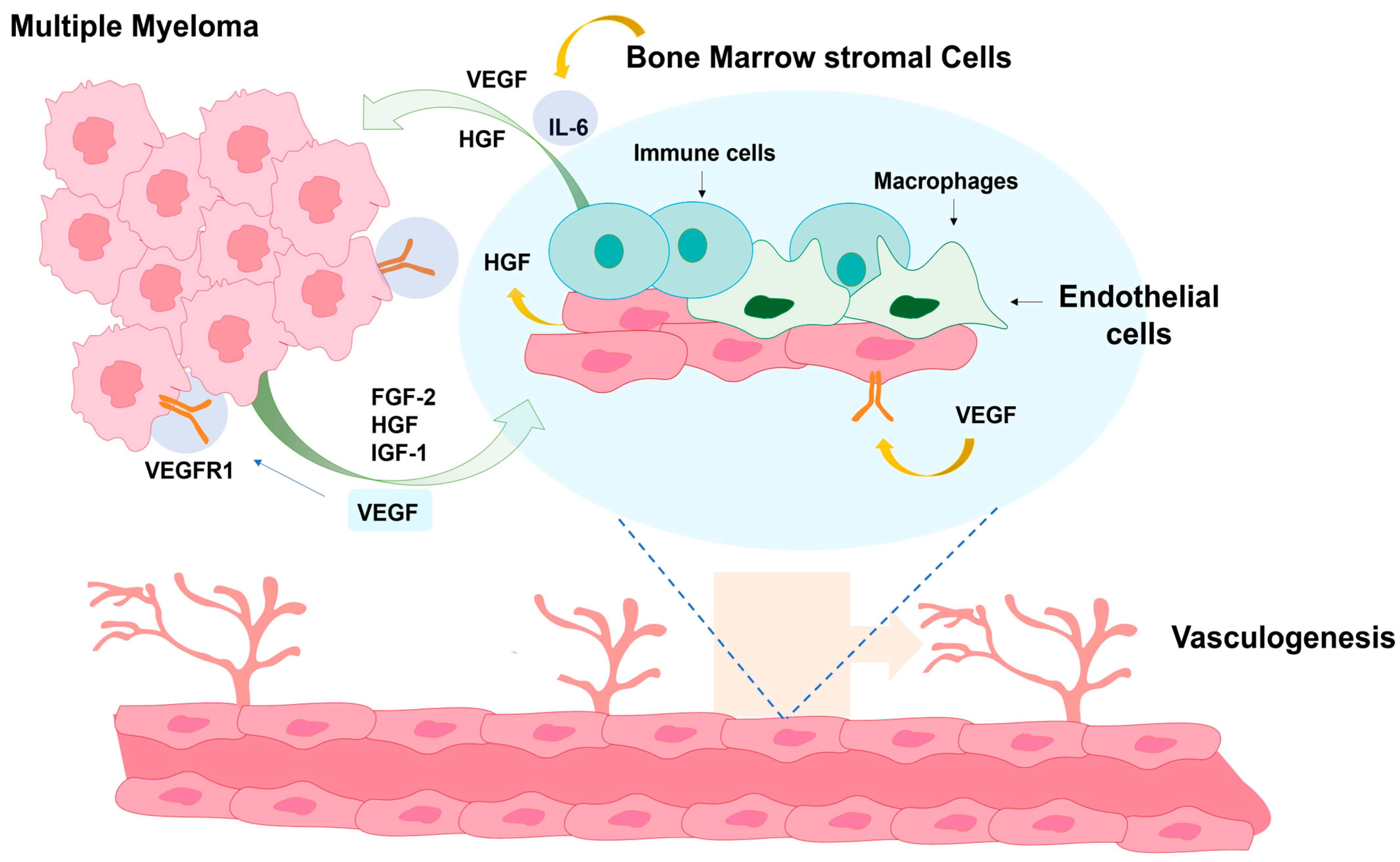
2.3. Bone Marrow Microenvironment and Factors Associated with Tumor Progression
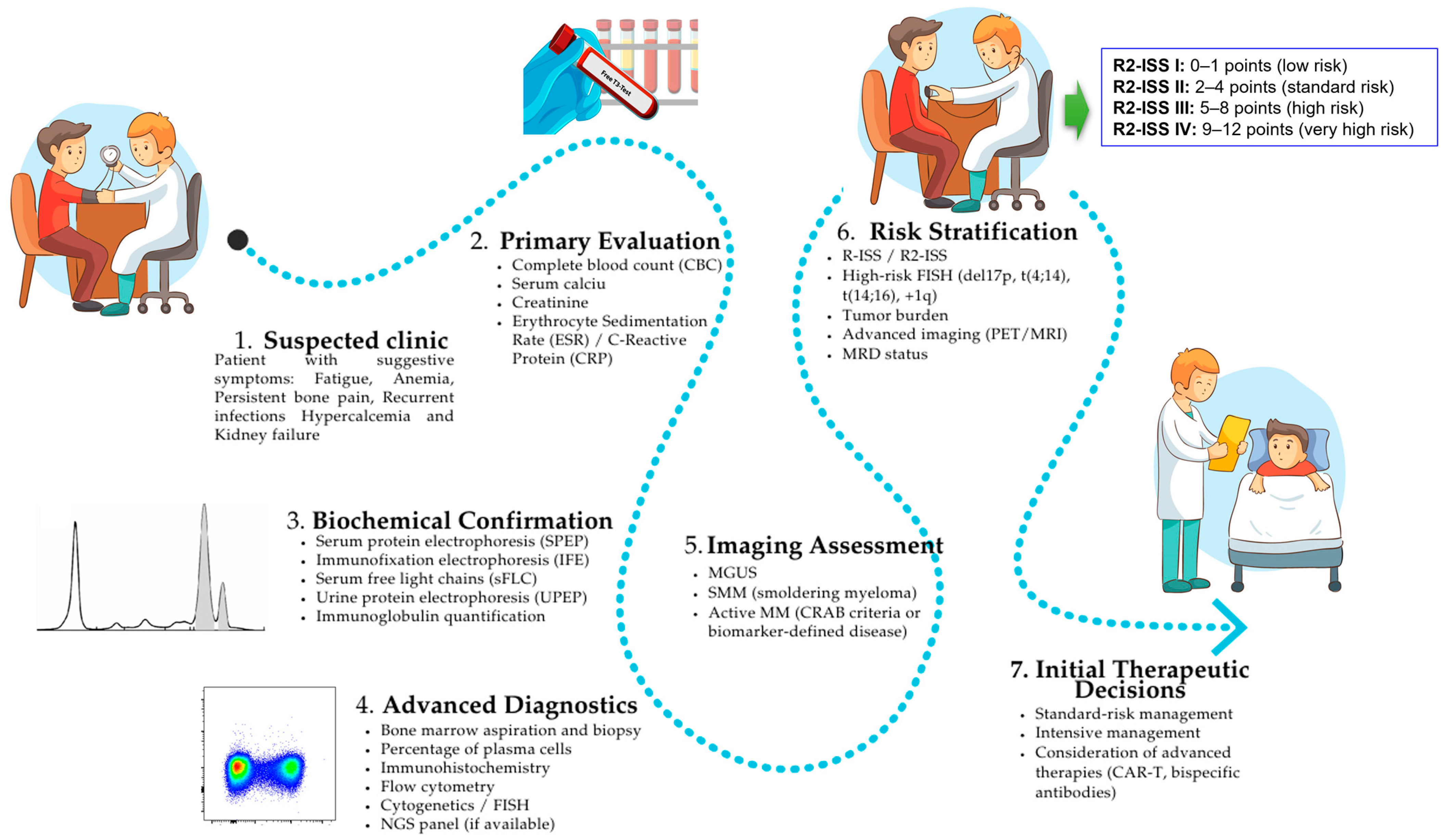
3. Diagnostic Methods in PCM
- (i)
- Conventional biochemical methods, including SPEP and IFE, which are traditionally employed owing to their low cost and wide availability, as well as their ability to identify monoclonal proteins or paraproteins in serum and urine;
- (ii)
- (iii)
- Advanced spectrometric and analytical chemistry techniques, such as MS and NGS, which provide sensitivities up to a thousand times higher than conventional methods, enabling accurate quantification of M protein or clonotypic peptides, unique peptides derived from the variable (clonal) regions of immunoglobulins produced by malignant plasma cells in PCM, as well as the detection of MRD [35,48];
- (iv)
- Molecular imaging techniques, including MRI and positron emission tomography/computed tomography (PET/CT), which offer a biochemical complement by providing both anatomical and functional evaluation of bone and extramedullary disease, allowing for therapy monitoring and detection of progression foci;
- (v)
- Comparative assessment of diagnostic systems, aimed at evaluating the sensitivity, specificity, and clinical feasibility of each method in order to establish optimized protocols and improve early-stage detection [49].
3.1. SPEP, IFE, and sFLC Determination
3.2. Biochemical Biomarker Tests in Blood and Urine
3.3. MS and Advanced Analytical Chemistry Methods
3.4. Molecular Imaging Methods Applied to Diagnosis
3.5. Comparison of Diagnostic Methods and Future Perspectives
4. Therapeutic Strategies in PCM
4.1. Chemotherapy and Conventional Pharmacologic Treatment
4.2. RT Treatments
4.3. Immunotherapy
5. Nanotechnology and Emerging Therapies
5.1. Costs and Future Projections of Oncological Nanomedicines
5.2. Advantages, Limitations, and Future Perspectives of Nanotherapies in PCM
6. Conclusions and Prospects
Author Contributions
Funding
Institutional Review Board Statement
Informed Consent Statement
Data Availability Statement
Conflicts of Interest
References
- Hussain, M.; Yellapragada, S.; Al Hadidi, S. Differential diagnosis and therapeutic advances in multiple myeloma: A review article. Blood Lymphat. Cancer Targets Ther. 2023, 13, 33–57. [Google Scholar] [CrossRef]
- Elbahoty, M.H.; Papineni, B.; Samant, R.S. Multiple myeloma: Clinical characteristics, current therapies and emerging innovative treatments targeting ribosome biogenesis dynamics. Clin. Exp. Metastasis 2024, 41, 829–842. [Google Scholar] [CrossRef]
- Rajkumar, S.V. Multiple myeloma: 2024 update on diagnosis, risk-stratification, and management. Am. J. Hematol. 2024, 99, 1802–1824. [Google Scholar] [CrossRef]
- American Cancer Society. Key Statistics for Multiple Myeloma. Available online: https://www.cancer.org/cancer/multiple-myeloma/about/key-statistics.html (accessed on 1 June 2025).
- Bębnowska, D.; Hrynkiewicz, R.; Grywalska, E.; Pasiarski, M.; Sosnowska-Pasiarska, B.; Smarz-Widelska, I.; Niedźwiedzka-Rystwej, P. Immunological prognostic factors in multiple myeloma. Int. J. Mol. Sci. 2021, 22, 3587. [Google Scholar] [CrossRef] [PubMed]
- Cowan, A.J.; Green, D.J.; Kwok, M.; Lee, S.; Coffey, D.G.; Holmberg, L.A.; Libby, E.N. Diagnosis and management of multiple myeloma: A review. JAMA 2022, 327, 464–477. [Google Scholar] [CrossRef]
- Xu, L.; Wu, S. New diagnostic strategy for multiple myeloma: A review. Medicine 2023, 102, e36660. [Google Scholar] [CrossRef] [PubMed]
- Rajkumar, S.V. Multiple myeloma: 2022 update on diagnosis, risk stratification, and management. Am. J. Hematol. 2022, 97, 1086–1107. [Google Scholar] [CrossRef] [PubMed]
- Rosner, M.H.; Jhaveri, K.D.; McMahon, B.A.; Perazella, M.A. Onconephrology: The intersections between the kidney and cancer. CA Cancer J. Clin. 2021, 71, 47–77. [Google Scholar] [CrossRef]
- Al-Rudayni, A.H.M.; Gopinath, D.; Maharajan, M.K.; Menon, R.K. Impact of oral mucositis on quality of life in patients undergoing oncological treatment: A systematic review. Transl. Cancer Res. 2020, 9, 3126. [Google Scholar] [CrossRef]
- Rehan, F.; Zhang, M.; Fang, J.; Greish, K. Therapeutic applications of nanomedicine: Recent developments and future perspectives. Molecules 2024, 29, 2073. [Google Scholar] [CrossRef]
- Hu, J.; Hu, W.X. Targeting signaling pathways in multiple myeloma: Pathogenesis and implication for treatments. Cancer Lett. 2018, 414, 214–221. [Google Scholar] [CrossRef] [PubMed]
- Radhakrishnan, V.; Golla, U.; Kudva, A.K. Role of immune cells and immunotherapy in multiple myeloma. Life 2024, 14, 461. [Google Scholar] [CrossRef] [PubMed]
- Shah, U.A.; Mailankody, S. Emerging immunotherapies in multiple myeloma. BMJ 2020, 370, m3176. [Google Scholar] [CrossRef]
- Cardona, Y.V.; Muñoz, L.G.; Cardozo, D.G.; Chamorro, A.F. Recent applications of amphiphilic copolymers in drug release systems for skin treatment. Pharmaceutics 2024, 16, 1203. [Google Scholar] [CrossRef]
- Rees, M.J.; Kumar, S. High-risk multiple myeloma: Redefining genetic, clinical, and functional high-risk disease in the era of molecular medicine and immunotherapy. Am. J. Hematol. 2024, 99, 1560–1575. [Google Scholar] [CrossRef] [PubMed]
- Rajkumar, S.V. Multiple myeloma: 2020 update on diagnosis, risk-stratification and management. Am. J. Hematol. 2020, 95, 548–567. [Google Scholar] [CrossRef]
- Mateos, M.V.; Kumar, S.; Dimopoulos, M.A.; González-Calle, V.; Kastritis, E.; Hajek, R.; San-Miguel, J. International Myeloma Working Group risk stratification model for smoldering multiple myeloma (SMM). Blood Cancer J. 2020, 10, 102. [Google Scholar] [CrossRef]
- Morgan, G.J.; Rasche, L. Maintaining therapeutic progress in multiple myeloma by integrating genetic and biological advances into the clinic. Expert Rev. Hematol. 2018, 11, 513–523. [Google Scholar] [CrossRef]
- Bain, B.J.; Leach, M. Immunophenotyping for Haematologists: Principles and Practice; John Wiley & Sons: Hoboken, NJ, USA, 2021; Available online: https://books.google.com.co/books?id=UWj-DwAAQBAJ (accessed on 4 November 2025).
- García-Calderón, C.B.; Sierro-Martínez, B.; García-Guerrero, E.; Sanoja-Flores, L.; Muñoz-García, R.; Ruiz-Maldonado, V.; Caballero-Velázquez, T. Monitoring of kinetics and exhaustion markers of circulating CAR-T cells as early predictive factors in patients with B-cell malignancies. Front. Immunol. 2023, 14, 1152498. [Google Scholar] [CrossRef]
- Giacomini, A.; Taranto, S.; Gazzaroli, G.; Faletti, J.; Capoferri, D.; Marcheselli, R.; Roccaro, A.M. The FGF/FGFR/c-Myc axis as a promising therapeutic target in multiple myeloma. J. Exp. Clin. Cancer Res. 2024, 43, 294. [Google Scholar] [CrossRef]
- Radford, E.J. An introduction to epigenetic mechanisms. Prog. Mol. Biol. Transl. Sci. 2018, 158, 29–48. [Google Scholar] [CrossRef]
- Caprio, C.; Sacco, A.; Giustini, V.; Roccaro, A.M. Epigenetic aberrations in multiple myeloma. Cancers 2020, 12, 2996. [Google Scholar] [CrossRef]
- Handa, H.; Murakami, Y.; Ishihara, R.; Kimura-Masuda, K.; Masuda, Y. The role and function of microRNA in the pathogenesis of multiple myeloma. Cancers 2019, 11, 1738. [Google Scholar] [CrossRef]
- De Smedt, E.; Lui, H.; Maes, K.; De Veirman, K.; Menu, E.; Vanderkerken, K.; De Bruyne, E. The epigenome in multiple myeloma: Impact on tumor cell plasticity and drug response. Front. Oncol. 2018, 8, 566. [Google Scholar] [CrossRef] [PubMed]
- Mbemi, A.; Khanna, S.; Njiki, S.; Yedjou, C.G.; Tchounwou, P.B. Impact of gene–environment interactions on cancer development. Int. J. Environ. Res. Public Health 2020, 17, 8089. [Google Scholar] [CrossRef] [PubMed]
- Pu, J.; Liu, T.; Wang, X.; Sharma, A.; Schmidt-Wolf, I.G.; Jiang, L.; Hou, J. Exploring the role of histone deacetylase and histone deacetylase inhibitors in the context of multiple myeloma: Mechanisms, therapeutic implications, and future perspectives. Exp. Hematol. Oncol. 2024, 13, 45. [Google Scholar] [CrossRef] [PubMed]
- Trisal, M.; Rawat, A.; Mishra, J.; Sengar, K.; Mishra, S.K. Non-secretory myeloma: Clinical profile and diagnostic utility of immunohistochemistry and free light chain assay in a rare variant of plasma cell myeloma. MGM J. Med. Sci. 2025, 12, 306–312. [Google Scholar] [CrossRef]
- Lee, W.S.; Singh, G. Serum free light chains in neoplastic monoclonal gammopathies: Relative under-detection of lambda dominant kappa/lambda ratio, and underproduction of free lambda light chains, as compared to kappa light chains, in patients with neoplastic monoclonal gammopathies. J. Clin. Med. Res. 2018, 10, 562. [Google Scholar] [CrossRef]
- Galieni, P.; Travaglini, F.; Vagnoni, D.; Ruggieri, M.; Caraffa, P.; Bigazzi, C.; Pezzoni, V. The detection of circulating plasma cells may improve the revised international staging system (R-ISS) risk stratification of patients with newly diagnosed multiple myeloma. Br. J. Haematol. 2021, 193, 542–550. [Google Scholar] [CrossRef]
- Wang, Y.; Wang, M.; Chu, B.; Lu, M.; Shi, L.; Gao, S.; Bao, L. Gene mutations in newly diagnosed multiple myeloma patients detected by next-generation sequencing technology. Cancer Pathog. Ther. 2024, 2, 205–211. [Google Scholar] [CrossRef]
- Misiewicz-Krzeminska, I.; Krzeminski, P.; Corchete, L.A.; Quwaider, D.; Rojas, E.A.; Herrero, A.B.; Gutiérrez, N.C. Factors regulating microRNA expression and function in multiple myeloma. Non-Coding RNA 2019, 5, 9. [Google Scholar] [CrossRef]
- Zhao, H.; Ma, S.; Li, W. IPD regimen effect on the levels of VEGF and IL-6 in elderly patients with recurrent multiple myeloma. Indian J. Cancer 2025, 62, 203–208. [Google Scholar] [CrossRef]
- Liyasova, M.; McDonald, Z.; Taylor, P.; Gorospe, K.; Xu, X.; Yao, C.; Trudel, S. A personalized mass spectrometry–based assay to monitor M-protein in patients with multiple myeloma (EasyM). Clin. Cancer Res. 2021, 27, 5028–5037. [Google Scholar] [CrossRef]
- Hughes, A.M.; Kuek, V.; Kotecha, R.S.; Cheung, L.C. The bone marrow microenvironment in B-cell development and malignancy. Cancers 2022, 14, 2089. [Google Scholar] [CrossRef] [PubMed]
- Chen, J.H.; Hsu, S.N.; Huang, T.C.; Wu, Y.Y.; Lin, C.; Chang, P.Y.; Ho, C.L. Prognostic significance of initial serum albumin and 24-hour daily protein excretion before treatment in multiple myeloma. PLoS ONE 2015, 10, e0128905. [Google Scholar] [CrossRef]
- Martínez-Hernández, M.D.; Periago, A.; Vasco-Mogorrón, M.A.; Campillo, J.A.; Cabañas, V.; Berenguer, M.; Minguela, A. Proliferation to apoptosis tumor cell ratio as a biomarker to improve clinical management of pre-malignant and symptomatic plasma cell neoplasms. Int. J. Mol. Sci. 2021, 22, 3895. [Google Scholar] [CrossRef] [PubMed]
- Fernández, J.E. Estudio de la Función de Rnd3 en el Mieloma Múltiple. Doctoral Dissertation, Universidad CEU-Cardenal Herrera, Alfara del Patriarca, Spain, 2022. Available online: https://hdl.handle.net/10637/13982 (accessed on 9 June 2025).
- Harmer, D.; Falank, C.; Reagan, M.R. Interleukin-6 interweaves the bone marrow microenvironment, bone loss, and multiple myeloma. Front. Endocrinol. 2019, 9, 788. [Google Scholar] [CrossRef] [PubMed]
- Gu, J.; Huang, X.; Zhang, Y.; Bao, C.; Zhou, Z.; Jin, J. Cytokine profiles in patients with newly diagnosed multiple myeloma: Survival is associated with IL-6 and IL-17A levels. Cytokine 2021, 138, 155358. [Google Scholar] [CrossRef]
- Jasrotia, S.; Gupta, R.; Sharma, A.; Halder, A.; Kumar, L. Cytokine profile in multiple myeloma. Cytokine 2020, 136, 155271. [Google Scholar] [CrossRef]
- Evers, M.; Schreder, M.; Stühmer, T.; Jundt, F.; Ebert, R.; Hartmann, T.N.; Leich, E. Prognostic value of extracellular matrix gene mutations and expression in multiple myeloma. Blood Cancer J. 2023, 13, 43. [Google Scholar] [CrossRef]
- Ria, R.; Melaccio, A.; Racanelli, V.; Vacca, A. Anti-VEGF drugs in the treatment of multiple myeloma patients. J. Clin. Med. 2020, 9, 1765. [Google Scholar] [CrossRef]
- Rajkumar, S.V. Multiple myeloma: 2018 update on diagnosis, risk-stratification, and management. Am. J. Hematol. 2018, 93, 1091–1110. [Google Scholar] [CrossRef]
- Zhu, S.; Li, W.; Lin, M.; Li, T. Serum protein electrophoresis and immunofixation electrophoresis detection in multiple myeloma. J. Coll. Physicians Surg. Pak. 2021, 30, 864–867. [Google Scholar] [CrossRef] [PubMed]
- Ying, L.; Zhang, X.; Lu, N.; Zhao, L.; Nie, Y.; Wang, G.; Xu, L. Evaluating the screening value of serum light chain ratio, β2 microglobulin, lactic dehydrogenase and immunoglobulin in patients with multiple myeloma using ROC curves. PLoS ONE 2023, 18, e0281743. [Google Scholar] [CrossRef] [PubMed]
- Langerhorst, P.; Noori, S.; Zajec, M.; De Rijke, Y.B.; Gloerich, J.; van Gool, A.J.; Jacobs, J.F. Multiple myeloma minimal residual disease detection: Targeted mass spectrometry in blood vs next-generation sequencing in bone marrow. Clin. Chem. 2021, 67, 1689–1698. [Google Scholar] [CrossRef]
- Zhong, W.; Zhang, X.; Zhao, M.; Wu, J.; Lin, D. Advancements in nanotechnology for the diagnosis and treatment of multiple myeloma. Biomater. Sci. 2020, 8, 4692–4711. [Google Scholar] [CrossRef]
- Willrich, M.A.; Murray, D.L.; Kyle, R.A. Laboratory testing for monoclonal gammopathies: Focus on monoclonal gammopathy of undetermined significance and smoldering multiple myeloma. Clin. Biochem. 2018, 51, 38–47. [Google Scholar] [CrossRef] [PubMed]
- Ramakrishnan, N.; Jialal, I. Bence-Jones Protein. In StatPearls; StatPearls Publishing: Treasure Island, FL, USA, 2019; Available online: https://europepmc.org/article/nbk/nbk541035 (accessed on 4 November 2025).
- Lawler, K.; Kijanka, G. Clinical applications of immunoassays. In Immunoassays; Jenny Stanford Publishing: Singapore, 2017; pp. 161–190. [Google Scholar] [CrossRef]
- Misra, A.; Mishra, J.; Chandramohan, J.; Sharma, A.; Raina, V.; Kumar, R.; Chopra, A. Old but still relevant: High resolution electrophoresis and immunofixation in multiple myeloma. Indian J. Hematol. Blood Transfus. 2016, 32, 10–17. [Google Scholar] [CrossRef]
- Lyubimova, N.V.; Timofeev, Y.S.; Abaev, V.M.; Votyakova, O.M.; Osmanov, E.A.; Kushlinskii, N.E. Biochemical profile of Bence-Jones type multiple myeloma. Klin. Lab. Diagn. 2022, 67, 570–574. [Google Scholar] [CrossRef]
- Fan, H.; Wang, B.; Shi, L.; Pan, N.; Yan, W.; Xu, J.; An, G. Monitoring minimal residual disease in patients with multiple myeloma by targeted tracking serum M-protein using mass spectrometry (EasyM). Clin. Cancer Res. 2024, 30, 1131–1142. [Google Scholar] [CrossRef]
- Chapman, J.R.; Thoren, K.L. Tracking of low disease burden in multiple myeloma: Using mass spectrometry assays in peripheral blood. Best Pract. Res. Clin. Haematol. 2020, 33, 101142. [Google Scholar] [CrossRef] [PubMed]
- Fernandez de Larrea, C.; Isola, I.; Pereira, A.; Cibeira, M.T.; Magnano, L.; Tovar, N.; Rosiñol, L. Evolving M-protein pattern in patients with smoldering multiple myeloma: Impact on early progression. Leukemia 2018, 32, 1427–1434. [Google Scholar] [CrossRef]
- Zhao, R.; Xie, Y.; Yang, B.; Wang, C.; Huang, Q.; Han, Y.; Wu, X. Identification of metabolic biomarkers to predict treatment outcome and disease progression in multiple myeloma. Am. J. Cancer Res. 2020, 10, 3935. Available online: https://www.ajcr.us/files/ajcr0119022.pdf (accessed on 9 June 2025).
- Walk, J.C.; Ayati, B.P.; Holstein, S.A. Modeling the effects of multiple myeloma on renal function. Sci. Rep. 2019, 9, 1726. [Google Scholar] [CrossRef]
- Lees, J.S.; Ho, F.; Parra-Soto, S.; Celis-Morales, C.; Welsh, P.; Sullivan, M.K.; Mark, P.B. Kidney function and cancer risk: An analysis using creatinine and cystatin C in a cohort study. EClinicalMedicine 2021, 38, 100996. [Google Scholar] [CrossRef] [PubMed]
- Carlisi, M.; Lo Presti, R.; Mancuso, S.; Siragusa, S.; Caimi, G. Calculated whole blood viscosity and albumin/fibrinogen ratio in patients with a new diagnosis of multiple myeloma: Relationships with some prognostic predictors. Biomedicines 2023, 11, 964. [Google Scholar] [CrossRef] [PubMed]
- Nie, L.-R.; Li, Q.-H.; Liang, L. The effect of bortezomib-combined chemotherapy on multiple myeloma and VEGF, IL-6 and IL-17. J. Clin. Transfus. Lab. Med. 2020, 22, 211. Available online: http://www.lcsxyjy.com/ES/10.3969/j.issn.1671-2587.2020.02.024 (accessed on 9 June 2025).
- Dankbar, B.; Padró, T.; Leo, R.; Feldmann, B.; Kropff, M.; Mesters, R.M.; Kienast, J. Vascular endothelial growth factor and interleukin-6 in paracrine tumor-stromal cell interactions in multiple myeloma. Blood 2000, 95, 2630–2636. [Google Scholar] [CrossRef]
- Bolli, N.; Biancon, G.; Moarii, M.; Gimondi, S.; Li, Y.; de Philippis, C.; Munshi, N.C. Analysis of the genomic landscape of multiple myeloma highlights novel prognostic markers and disease subgroups. Leukemia 2018, 32, 2604–2616. [Google Scholar] [CrossRef]
- Rosa-Rosa, J.M.; Cuenca, I.; Medina, A.; Vázquez, I.; Sánchez-delaCruz, A.; Buenache, N.; Martínez-López, J. NGS-based molecular karyotyping of multiple myeloma: Results from the GEM12 clinical trial. Cancers 2022, 14, 5169. [Google Scholar] [CrossRef]
- Hu, Y.; Chen, W.; Wang, J. Progress in the identification of gene mutations involved in multiple myeloma. OncoTargets Ther. 2019, 12, 4075–4080. [Google Scholar] [CrossRef]
- Murray, D.L.; Puig, N.; Kristinsson, S.; Usmani, S.Z.; Dispenzieri, A.; Bianchi, G.; Durie, B. Mass spectrometry for the evaluation of monoclonal proteins in multiple myeloma and related disorders: An International Myeloma Working Group Mass Spectrometry Committee Report. Blood Cancer J. 2021, 11, 24. [Google Scholar] [CrossRef]
- Zhang, Z.; Westhrin, M.; Bondt, A.; Wuhrer, M.; Standal, T.; Holst, S. Serum protein N-glycosylation changes in multiple myeloma. Biochim. Biophys. Acta Gen. Subj. 2019, 1863, 960–970. [Google Scholar] [CrossRef] [PubMed]
- Giles, H.V.; Cook, M.A.; Drayson, M.T.; Cook, G.; Wright, N.J.; North, S.J.; Pratt, G. Redefining nonmeasurable multiple myeloma using mass spectrometry. Blood 2022, 139, 946–950. [Google Scholar] [CrossRef]
- Noori, S.; Zajec, M.; Russcher, H.; Tintu, A.N.; Broijl, A.; Jacobs, J.F.; de Rijke, Y.B. Retrospective longitudinal monitoring of multiple myeloma patients by mass spectrometry using archived serum protein electrophoresis gels and de novo sequence analysis. Hemasphere 2022, 6, e758. [Google Scholar] [CrossRef]
- Dunphy, K.; Dowling, P.; Bazou, D.; O’Gorman, P. Current methods of post-translational modification analysis and their applications in blood cancers. Cancers 2021, 13, 1930. [Google Scholar] [CrossRef]
- Walker, B.A.; Mavrommatis, K.; Wardell, C.P.; Ashby, T.C.; Bauer, M.; Davies, F.; Morgan, G. A high-risk, double-hit, group of newly diagnosed myeloma identified by genomic analysis. Leukemia 2019, 33, 159–170. [Google Scholar] [CrossRef]
- Wang, H.; Liu, H.; Sun, C.; Liu, C.; Jiang, T.; Yin, Y.; Hu, Y. Nanoparticles dual targeting both myeloma cells and cancer-associated fibroblasts simultaneously to improve multiple myeloma treatment. Pharmaceutics 2021, 13, 274. [Google Scholar] [CrossRef] [PubMed]
- Mankotia, P.; Verma, K.; Sharma, K.; Sharma, V.; Kumar, V.; Sehgal, R. Mass spectroscopy in biomedical nanotechnology. In Analytical Techniques for Biomedical Nanotechnology; IOP Publishing: Bristol, UK, 2023; pp. 8–24. Available online: https://iopscience.iop.org/book/edit/978-0-7503-3379-5/chapter/bk978-0-7503-3379-5ch8 (accessed on 27 June 2025).
- Hou, J.; Wei, R.; Qian, J.; Wang, R.; Fan, Z.; Gu, C.; Yang, Y. The impact of the bone marrow microenvironment on multiple myeloma. Oncol. Rep. 2019, 42, 1272–1282. [Google Scholar] [CrossRef]
- Mosci, C.; Pericole, F.V.; Oliveira, G.B.; Delamain, M.T.; Takahashi, M.E.; Carvalheira, J.B.C.; Ramos, C.D. 99mTc-sestamibi SPECT/CT and 18F-FDG-PET/CT have similar performance but different imaging patterns in newly diagnosed multiple myeloma. Nucl. Med. Commun. 2020, 41, 1081–1088. [Google Scholar] [CrossRef] [PubMed]
- Zamagni, E.; Tacchetti, P.; Cavo, M. Imaging in multiple myeloma: How? When? Blood 2019, 133, 644–651. [Google Scholar] [CrossRef]
- Huang, X.; Zhang, F.; Lee, S.; Swierczewska, M.; Kiesewetter, D.O.; Lang, L.; Chen, X. Long-term multimodal imaging of tumor draining sentinel lymph nodes using mesoporous silica-based nanoprobes. Biomaterials 2012, 33, 4370–4378. [Google Scholar] [CrossRef]
- Omstead, D.T.; Mejia, F.; Sjoerdsma, J.; Kim, B.; Shin, J.; Khan, S.; Bilgicer, B. In vivo evaluation of CD38 and CD138 as targets for nanoparticle-based drug delivery in multiple myeloma. J. Hematol. Oncol. 2020, 13, 145. [Google Scholar] [CrossRef]
- Liang, H.; Li, Y.; Liu, C.; Wang, H.; Ren, Y.; Sun, F.; Zhou, Y. Raman spectroscopy of dried serum for the detection of rapid noninvasive multiple myeloma. Spectrochim. Acta A Mol. Biomol. Spectrosc. 2025, 328, 125448. [Google Scholar] [CrossRef]
- Cho, N.; Ko, S.; Shokeen, M. Preclinical development of near-infrared-labeled CD38-targeted daratumumab for optical imaging of CD38 in multiple myeloma. Mol. Imaging Biol. 2021, 23, 186–195. [Google Scholar] [CrossRef]
- Mosci, C. SPECT/CT com Sestamibi-99mTc e PET/CT com FDG-18F na Detecção de Lesões no Mieloma Múltiplo. Doctoral Dissertation, Universidade Estadual de Campinas (UNICAMP), Campinas, Brazil, 2020. [Google Scholar] [CrossRef]
- Tschautscher, M.; Rajkumar, V.; Dispenzieri, A.; Lacy, M.; Gertz, M.; Buadi, F.; Kumar, S. Serum free light chain measurements to reduce 24-h urine monitoring in patients with multiple myeloma with measurable urine monoclonal protein. Am. J. Hematol. 2018, 93, 1207–1210. [Google Scholar] [CrossRef] [PubMed]
- Paiva, B.; Puig, N.; Cedena, M.T.; Rosiñol, L.; Cordón, L.; Vidriales, M.B.; GEM/PETHEMA Cooperative Study Group. Measurable residual disease by next-generation flow cytometry in multiple myeloma. J. Clin. Oncol. 2020, 38, 784–792. [Google Scholar] [CrossRef] [PubMed]
- Bolli, N.; Avet-Loiseau, H.; Wedge, D.C.; Van Loo, P.; Alexandrov, L.B.; Martincorena, I.; Munshi, N.C. Heterogeneity of genomic evolution and mutational profiles in multiple myeloma. Nat. Commun. 2014, 5, 2997. [Google Scholar] [CrossRef] [PubMed]
- Dispenzieri, A.; Kyle, R.A.; Katzmann, J.A.; Therneau, T.M.; Larson, D.; Benson, J.; Rajkumar, S.V. Immunoglobulin free light chain ratio is an independent risk factor for progression of smoldering (asymptomatic) multiple myeloma. Blood 2008, 111, 785–789. [Google Scholar] [CrossRef]
- Lahuerta, J.J.; Jiménez-Ubieto, A.; Paiva, B.; Martínez-López, J.; González-Medina, J.; López-Anglada, L.; Bladé, J. Role of urine immunofixation in the complete response assessment of MM patients other than light-chain-only disease. Blood 2019, 133, 2664–2668. [Google Scholar] [CrossRef]
- Hillengass, J.; Usmani, S.; Rajkumar, S.V.; Durie, B.G.; Mateos, M.V.; Lonial, S.; Lentzsch, S. International Myeloma Working Group consensus recommendations on imaging in monoclonal plasma cell disorders. Lancet Oncol. 2019, 20, e302–e312. [Google Scholar] [CrossRef] [PubMed]
- Rawstron, A.C.; Child, J.A.; de Tute, R.M.; Davies, F.E.; Gregory, W.M.; Bell, S.E.; Owen, R.G. Minimal residual disease assessed by multiparameter flow cytometry in multiple myeloma: Impact on outcome in the Medical Research Council Myeloma IX Study. J. Clin. Oncol. 2013, 31, 2540–2547. [Google Scholar] [CrossRef]
- Martínez-López, J.; Lahuerta, J.J.; Pepin, F.; González, M.; Barrio, S.; Ayala, R.; García-Sanz, R. Prognostic value of deep sequencing method for minimal residual disease detection in multiple myeloma. Blood 2014, 123, 3073–3079. [Google Scholar] [CrossRef] [PubMed]
- Landgren, O.; Hultcrantz, M.; Diamond, B.; Lesokhin, A.M.; Mailankody, S.; Hassoun, H.; Korde, N. Safety and effectiveness of weekly carfilzomib, lenalidomide, dexamethasone, and daratumumab combination therapy for patients with newly diagnosed multiple myeloma: The MANHATTAN nonrandomized clinical trial. JAMA Oncol. 2021, 7, 862–868. [Google Scholar] [CrossRef]
- Singh, V.K.; Chandra, R. Técnicas moleculares para el diagnóstico del cáncer. Acad. Med. 2024, 1–18. [Google Scholar] [CrossRef]
- Rajkumar, S.V.; Kumar, S. Multiple myeloma current treatment algorithms. Blood Cancer J. 2020, 10, 94. [Google Scholar] [CrossRef]
- Kapoor, N.; Metray, A.; Bandichhor, R.; Choudhury, S.D. Melphalan: Uses, side effects, current research, and precautions. In Hazardous Chemicals; Elsevier: Amsterdam, The Netherlands, 2025; pp. 571–580. [Google Scholar] [CrossRef]
- Xiang, E.; Ni, J.; Glotzbecker, B.; Laubach, J.; Soiffer, R.; McDonnell, A.M. Evaluating the adverse effects of melphalan formulations. J. Oncol. Pharm. Pract. 2019, 25, 1631–1637. [Google Scholar] [CrossRef]
- Ogino, M.H.; Tadi, P. Cyclophosphamide; StatPearls Publishing: Treasure Island, FL, USA, 2020; Available online: https://europepmc.org/article/NBK/nbk553087 (accessed on 27 June 2025).
- Asatsuma-Okumura, T.; Ito, T.; Handa, H. Molecular mechanisms of the teratogenic effects of thalidomide. Pharmaceuticals 2020, 13, 95. [Google Scholar] [CrossRef]
- Zhang, C.W.; Wang, Y.N.; Ge, X.L. Lenalidomide use in multiple myeloma. Mol. Clin. Oncol. 2023, 20, 7. [Google Scholar] [CrossRef]
- Engelhardt, M.; Ajayi, S.; Reinhardt, H.; Müller, S.J.; Dold, S.M.; Wäsch, R. Pomalidomide. In Small Molecules in Hematology; Springer: Cham, Switzerland, 2018; pp. 169–185. [Google Scholar] [CrossRef]
- Tan, C.R.C.; Abdul-Majeed, S.; Cael, B.; Barta, S.K. Clinical pharmacokinetics and pharmacodynamics of bortezomib. Clin. Pharmacokinet. 2019, 58, 157–168. [Google Scholar] [CrossRef] [PubMed]
- Groen, K.; van de Donk, N.W.C.J.; Stege, C.A.M.; Zweegman, S.; Nijhof, I.S. Carfilzomib for relapsed and refractory multiple myeloma. Cancer Manag. Res. 2019, 11, 2663–2675. [Google Scholar] [CrossRef]
- Richardson, P.G.; Zweegman, S.; O’Donnell, E.K.; Laubach, J.P.; Raje, N.; Voorhees, P.; Lonial, S. Ixazomib for the treatment of multiple myeloma. Expert Opin. Pharmacother. 2018, 19, 1949–1968. [Google Scholar] [CrossRef]
- Burwick, N.; Sharma, S. Glucocorticoids in multiple myeloma: Past, present, and future. Ann. Hematol. 2019, 98, 19–28. [Google Scholar] [CrossRef]
- Tsang, R.W.; Campbell, B.A.; Goda, J.S.; Kelsey, C.R.; Kirova, Y.M.; Parikh, R.R.; Yahalom, J. Radiation therapy for solitary plasmacytoma and multiple myeloma: Guidelines from the International Lymphoma Radiation Oncology Group. Int. J. Radiat. Oncol. Biol. Phys. 2018, 101, 794–808. [Google Scholar] [CrossRef]
- Elsayad, K.; Oertel, M.; König, L.; Hüske, S.; Le Ray, E.; Meheissen, M.A.; Eich, H.T. Maximizing the clinical benefit of radiotherapy in solitary plasmacytoma: An international multicenter analysis. Cancers 2020, 12, 676. [Google Scholar] [CrossRef]
- Curry, J.; O’Steen, L.; Morris, C.G.; Kirwan, J.M.; Mendenhall, W.M. Long-term outcomes after definitive radiation therapy for solitary plasmacytoma. Am. J. Clin. Oncol. 2020, 43, 709–713. [Google Scholar] [CrossRef]
- Ong, W.L.; MacManus, M.; Milne, R.L.; Foroudi, F.; Millar, J.L. Large variation in radiation therapy fractionation for multiple myeloma in Australia. Asia-Pac. J. Clin. Oncol. 2023, 19, 149–157. [Google Scholar] [CrossRef] [PubMed]
- Guerini, A.E.; Tucci, A.; Alongi, F.; Mataj, E.; Belotti, A.; Borghetti, P.; Buglione, M. RR Myelo POINT: A retrospective single-center study assessing the role of radiotherapy in the management of multiple myeloma and possible interactions with concurrent systemic treatment. Cancers 2022, 14, 2273. [Google Scholar] [CrossRef] [PubMed]
- Momm, F.; Greil, C.; Schäfer, H. Towards individualized radiation therapy in multiple myeloma. Haematologica 2020, 105, 1763. [Google Scholar] [CrossRef]
- Caers, J.; Garderet, L.; Leleu, X.; Wesemeijer, C.; Vekemans, M.C.; Driessen, C.; Ludwig, H. The changing landscape of multiple myeloma treatment: A European perspective. Cancers 2018, 10, 147. [Google Scholar] [CrossRef]
- Bruzzese, A.; Martino, E.A.; Vigna, E.; Iaccino, E.; Mendicino, F.; Lucia, E.; Gentile, M. Elotuzumab in multiple myeloma. Expert Opin. Biol. Ther. 2023, 23, 7–10. [Google Scholar] [CrossRef]
- Nooka, A.K.; Kaufman, J.L.; Hofmeister, C.C.; Joseph, N.S.; Heffner, T.L.; Gupta, V.A.; Sullivan, H.C.; Neish, A.S.; Dhodapkar, M.V.; Lonial, S. Daratumumab in multiple myeloma. Cancer 2019, 125, 2364–2382. [Google Scholar] [CrossRef]
- Martino, E.A.; Bruzzese, A.; Iaccino, E.; Mendicino, F.; Mimmi, S.; Lucia, E.; Olivito, V.; Neri, A.; Morabito, F.; Vigna, E.; et al. Isatuximab in multiple myeloma. Expert Opin. Biol. Ther. 2023, 23, 315–318. [Google Scholar] [CrossRef]
- Mikkilineni, L.; Kochenderfer, J.N. CAR T cell therapies for patients with multiple myeloma. Nat. Rev. Clin. Oncol. 2021, 18, 71–84. [Google Scholar] [CrossRef] [PubMed]
- Zhang, C.; Kuo, J.C.T.; Huang, Y.; Hu, Y.; Deng, L.; Yung, B.C.; Lee, R.J. Optimized liposomal delivery of bortezomib for advancing treatment of multiple myeloma. Pharmaceutics 2023, 15, 2674. [Google Scholar] [CrossRef] [PubMed]
- D’Agostino, M.; Raje, N. Anti-BCMA CAR T-cell therapy in multiple myeloma: Can we do better? Leukemia 2020, 34, 21–34. [Google Scholar] [CrossRef]
- Podar, K.; Shah, J.; Chari, A.; Richardson, P.G.; Jagannath, S. Selinexor for the treatment of multiple myeloma. Expert Opin. Pharmacother. 2020, 21, 399–408. [Google Scholar] [CrossRef]
- Moore, G.L.; Lee, S.H.; Schubbert, S.; Miranda, Y.; Rashid, R.; Pong, E.; Phung, S.; Chan, E.W.; Chen, H.; Endo, N.; et al. Tuning T cell affinity improves efficacy and safety of anti-CD38×anti-CD3 bispecific antibodies in monkeys—A potential therapy for multiple myeloma. Blood 2015, 126, 1798. [Google Scholar] [CrossRef]
- Lin, Z.; Chu, B.; Qu, Y.; Wei, X.; Huang, J.; Wang, F.; Zheng, Y. Liposome-encapsulated melphalan exhibits potent antimyeloma activity and reduced toxicity. ACS Omega 2022, 8, 1693–1701. [Google Scholar] [CrossRef] [PubMed]
- Shen, R.; Peng, L.; Zhou, W.; Wang, D.; Jiang, Q.; Ji, J.; Hu, F.; Yuan, H. Anti-angiogenic nano-delivery system promotes tumor vascular normalizing and micro-environment reprogramming in solid tumor. J. Control. Release 2022, 349, 550–564. [Google Scholar] [CrossRef]
- Federico, C.; Alhallak, K.; Sun, J.; Duncan, K.; Azab, F.; Sudlow, G.P.; Azab, A.K. Tumor microenvironment-targeted nanoparticles loaded with bortezomib and ROCK inhibitor improve efficacy in multiple myeloma. Nat. Commun. 2020, 11, 6037. [Google Scholar] [CrossRef]
- Nigro, A.; Frattaruolo, L.; Fava, M.; De Napoli, I.; Greco, M.; Comandè, A.; De Santo, M.; Pellegrino, M.; Ricci, E.; Giordano, F.; et al. Bortezomib-loaded mesoporous silica nanoparticles selectively alter metabolism and induce death in multiple myeloma cells. Cancers 2020, 12, 2709. [Google Scholar] [CrossRef]
- Guimarães, P.P.; Figueroa-Espada, C.G.; Riley, R.S.; Gong, N.; Xue, L.; Sewastianik, T.; Mitchell, M.J. In vivo bone marrow microenvironment siRNA delivery using lipid–polymer nanoparticles for multiple myeloma therapy. Proc. Natl. Acad. Sci. USA 2023, 120, e2215711120. [Google Scholar] [CrossRef]
- Dutta, D.; Liu, J.; Wen, K.; Kurata, K.; Fulciniti, M.; Gulla, A.; Anderson, K.C. BCMA-targeted bortezomib nanotherapy improves therapeutic efficacy, overcomes resistance, and modulates the immune microenvironment in multiple myeloma. Blood Cancer J. 2023, 13, 184. [Google Scholar] [CrossRef] [PubMed]
- Hose, D.; Ray, S.; Rößler, S.; Thormann, U.; Schnettler, R.; de Veirman, K.; Alt, V. Bortezomib-releasing silica-collagen xerogels for local treatment of osteolytic bone and minimal residual disease in multiple myeloma. J. Hematol. Oncol. 2024, 17, 128. [Google Scholar] [CrossRef]
- Bolger, G.T.; Licollari, A.; Bagshaw, R.; Tan, A.; Greil, R.; Vcelar, B.; Sordillo, P. Intense uptake of liposomal curcumin by multiple myeloma cell lines: Comparison to normal lymphocytes, red blood cells, and chronic lymphocytic leukemia cells. Anticancer Res. 2019, 39, 1161–1168. [Google Scholar] [CrossRef] [PubMed]
- Gao, G.; Xu, Y.; Gan, J.; Cao, X.; Dong, X.; Fang, M.; Chen, B. Biomimetic platelet nanoparticles encapsulated with proteasome inhibitor bortezomib for multiple myeloma treatment. APL Mater. 2023, 11, 12601. [Google Scholar] [CrossRef]
- Metselaar, J.; Lammers, T.; Boquoi, A.; Fenk, R.; Testaquadra, F.; Schemionek, M.; Crysandt, M. A phase I first-in-man study to investigate the pharmacokinetics and safety of liposomal dexamethasone in patients with progressive multiple myeloma. Drug Deliv. Transl. Res. 2023, 13, 915–923. [Google Scholar] [CrossRef]
- Sambamoorthy, U.; Manjappa, A.S.; Eswara, B.R.M.; Sanapala, A.K.; Nagadeepthi, N. Vitamin E oil incorporated liposomal melphalan and simvastatin: Approach to obtain improved physicochemical characteristics of hydrolysable melphalan and anticancer activity in combination with simvastatin against multiple myeloma. AAPS PharmSciTech 2022, 23, 23. [Google Scholar] [CrossRef]
- Liu, H.; Zhang, B.; Chen, H.; Wang, H.; Qin, X.; Sun, C.; Hu, Y. Targeted delivery of c(RGDfk)–modified liposomes to bone marrow through in vivo hitchhiking neutrophils for multiple myeloma therapy. Adv. Sci. 2025, 12, 2409895. [Google Scholar] [CrossRef]
- Ashley, J.D.; Quinlan, C.J.; Schroeder, V.A.; Suckow, M.A.; Pizzuti, V.J.; Kiziltepe, T.; Bilgicer, B. Dual carfilzomib and doxorubicin–loaded liposomal nanoparticles for synergistic efficacy in multiple myeloma. Mol. Cancer Ther. 2016, 15, 1452–1459. [Google Scholar] [CrossRef]
- Mordor Intelligence. Nanotechnology Drug Delivery Market—Size, Share, Trends & Industry Report (2030). Available online: https://www.mordorintelligence.com/industry-reports/nanotechnology-drug-delivery-market (accessed on 20 November 2025).
- PharmiWeb.com. Nanomedicine Market Set for Robust Growth, Poised to Reach USD 1,022.5 Billion by 2035. 10 April 2025. Available online: https://www.pharmiweb.com/press-release/2025-04-10/nanomedicine-market-set-for-robust-growth-poised-to-reach-usd-10225-billion-by-2035 (accessed on 20 November 2025).
- Precedence Research. Nanotechnology Drug Delivery Market Revenue, Top Companies, Report 2033. 28 May 2024. Available online: https://www.precedenceresearch.com/press-release/nanotechnology-drug-delivery-market (accessed on 20 November 2025).
- Dobrovolskaia, M.A.; McNeil, S.E.; Stern, S.T.; Weaver, J.L. Q&A: Translational cancer nanomedicine. Nat. Commun. 2025, 16, 1183. Available online: https://www.nature.com/articles/s41467-025-63488-x (accessed on 25 November 2025).
- Bosetti, R.; Jones, S.L. Cost-effectiveness of nanomedicine: Estimating the real size of nano-costs. Nanomedicine 2019, 14, 1367–1370. [Google Scholar] [CrossRef]
- Datta, N.R.; Ordonez, S.G.; Gaipl, U.S.; Paulides, M.M.; Crezee, J.; Gellermann, J.; Bodis, S. Local hyperthermia combined with radiotherapy and/or chemotherapy: Recent advances and promises for the future. Cancer Treat. Rev. 2016, 41, 742–753. [Google Scholar] [CrossRef] [PubMed]
- National Cancer Institute. CAR T-Cell Therapy Approved Treatments. 2022. Available online: https://www.cancer.gov/about-cancer/treatment/research (accessed on 20 November 2025).
- Raje, N.; Berdeja, J.; Lin, Y.; Siegel, D.; Jagannath, S.; Madduri, D.; Munshi, N. Anti-BCMA CAR T-cell therapy in relapsed or refractory multiple myeloma. N. Engl. J. Med. 2022, 386, 630–643. [Google Scholar] [CrossRef] [PubMed]
- Ghanem, B.; Shi, L. The Economic Burden of CAR T Cell Therapies Ciltacabtagene Autoleucel and Idecabtagene Vicleucel for the Treatment of Adult Patients with Relapsed or Refractory Multiple Myeloma in the US. BioDrugs 2022, 36, 773–780. [Google Scholar] [CrossRef] [PubMed]
- La Vanguardia. The Hospital Uses a Publicly Funded CAR-T Therapy for Multiple Myeloma for the First Time in Europe. 22 February 2024. Available online: https://www.lavanguardia.com/vida (accessed on 21 November 2025).
- Cheng, X.; Lee, R.J.; Wang, X. Delivery of small interfering RNA and microRNA using lipid nanoparticles for cancer therapy. Mol. Pharm. 2020, 17, 3726–3738. [Google Scholar] [CrossRef]



| Biomarker/Subtype | Sample Type | Normal/Pathological Values | Method | Clinical Application | Prognosis | Clinical Manifestation | Ref. |
|---|---|---|---|---|---|---|---|
| M Protein (IgG/IgA) | Serum/Urine | Detectable: >0 g/L; MRD: 0.58 mg/L | SPEP, IFE, MS, MS/MS | Diagnosis, monitoring, MRD | Predicts relapse; correlates with tumor burden | Hyperviscosity, fatigue, renal damage | [1,6,35] |
| Serum LDH | Serum | Normal: 125–243 U/L; pathological ≥ 271 U/L | Enzymatic assay | Monitoring and prognosis | Elevated levels reflect high tumor proliferation | High tumor burden, aggressive disease | [1,36] |
| Osteocalcin | Serum | Normal: 11–43 ng/mL | Biochemical assay | Evaluation of bone metabolism | Decrease indicates osteoblastic inhibition | Bone pain, pathological fractures | [8] |
| Bone Alkaline Phosphatase/Tartrate-Resistant Acid Phosphatase | Serum | Normal: 40–129 U/L | Biochemical assay | Evaluation of bone resorption | Elevation reflects increased osteoclastic activity | Lytic lesions, bone pain | [8] |
| β2M | Serum | Normal: 1.0–2.5 mg/L; pathological > 5.5 mg/L | Biochemical assay | Risk stratification | High values associated with lower survival | Poor prognosis, renal failure | [22,31] |
| TP53/KRAS/MYC Mutations | Bone marrow/Serum | Presence of mutations | NGS | Risk stratification, prognosis | Associated with therapeutic resistance and high aggressiveness | High tumor burden, rapid progression | [23] |
| MicroRNA (miR-21, miR-15a/16) | Serum/Plasma | Normal vs. altered expression | qPCR | Prognosis and therapy resistance | Alterations associated with relapse and reduced apoptosis | Apoptosis resistance, recurrence | [25] |
| sFLC (κ/λ) | Serum/Urine | Normal ratio κ:λ 0.26–1.65; pathological <0.01 or >100 | Freelite, N Latex, Sebia ELISA | Diagnosis, monitoring, risk stratification | Elevation indicates active myeloma; progression risk | Nephropathy, proteinuria | [29,30] |
| IL-6/VEGF | Serum/Plasma | Baseline levels variable; pathological ↑ | qPCR, NGS | Indicators of tumor progression and angiogenesis | Elevation associated with early relapse | Osteoclastic activation, bone lesions | [34,36] |
| Serum Albumin | Serum | Normal: 3.5–5.0 g/dL; pathological < 2.8 g/dL | Biochemical assay | Prognostic stratification | Low values → lower survival | Fatigue, edema | [37] |
| 24-h Proteinuria | Urine | Normal: <150 mg/day; pathological ≥ 500 mg/day | Proteinuria quantification | Prognosis | Elevated levels associated with lower survival | Nephropathy, proteinuria | [37] |
| Type of Method | Sensitivity/Specificity | Detection Limit | Main Advantages | Disadvantages | a Turnaround Time (h) | Clinical Application | Ref. |
|---|---|---|---|---|---|---|---|
| sFLC | 95%/85–90% | 1–5 mg/L | Detects occult disease and early relapse | Interlaboratory variability; renal impairment may alter values | 24 | Therapeutic monitoring, early relapse detection | [58] |
| MS | >99%/>99% | 0.001 g/L | Detects multiple isotypes; precise quantification; high reproducibility | Expensive; requires specialized personnel | 72–96 | MRD detection and post-treatment monitoring | [67] |
| PET/CT | 85–90%/90–95% | Lesions ≥ 4 mm | Evaluates disease extent and metabolic activity | Radiation exposure; limited availability | 24–48 | Assessment of bone lesions and metabolic response | [77] |
| SPEP | 70–80%/>95% | 0.2–0.5 g/L of M-protein | Cost-effective, widely available, useful for initial diagnosis | Does not detect low-level proteins or free light chains | 24–48 | Initial detection of monoclonal protein | [86] |
| IFE | 90–95%/>98% | 0.1 g/L | High sensitivity to confirm M-protein; identifies isotype | Limited for quantification; not useful for MRD | 48–72 | Confirmation of monoclonal immunoglobulin isotype | [86] |
| MRI | 90–95%/90% | Lesions ≥ 3 mm | No radiation; detects diffuse infiltration and early lesions | Expensive; longer examination time | 24–72 | Evaluation of marrow infiltration and focal lesions | [88] |
| NGF | up to 10−6/>99% | 1 abnormal cell per 106 | High sensitivity; rapid detection of residual clones | Requires fresh sample and standardization | 24–48 | MRD evaluation in bone marrow | [89] |
| NGS | 10−6/>99% | 1 abnormal cell per 106 | Detects somatic mutations and MRD; high prognostic value | High cost; limited infrastructure | 120–168 | Molecular risk stratification; MRD | [90] |
| Drug | Class | Mechanism of Action | Main Uses | Pharmacokinetics | Major Toxicity | Common Adverse Effects | Common Combinations | Ref. |
|---|---|---|---|---|---|---|---|---|
| Melphalan | Alkylating Agents | DNA alkylation, cross-linking that blocks replication and transcription | Conditioning for autologous transplant; first-line therapy | Variable oral bioavailability (25–89%); renal excretion | Cumulative myelosuppression | Mucositis (30%), neutropenia (60%), thrombocytopenia (45%) | Melphalan + Thalidomide/Lenalidomide/Prednisone | [95] |
| Cyclophosphamide | Alkylating Agents | DNA alkylation after hepatic activation | Salvage therapy or in transplant-ineligible patients | Good oral absorption; hepatic activation (CYP450); half-life 3–12 h | Hemorrhagic cystitis (10–15%) | Nausea, alopecia, neutropenia, bladder toxicity | Cyclophosphamide + Bortezomib + Dexamethasone | [96] |
| Thalidomide | IMiDs | Immunomodulation, angiogenesis inhibition, apoptosis | Elderly or non-transplantable patients | Slow absorption; t1/2 6–7 h; hepatic and renal metabolism | Irreversible peripheral neuropathy (>60%), severe teratogenicity | Sedation, constipation, fatigue | Thalidomide + Dexamethasone/Melphalan | [97] |
| Lenalidomide | IMiDs | Stimulates T and NK cells, inhibits angiogenesis and tumor support | First-line, post-transplant maintenance | Good oral bioavailability; renal excretion; t1/2 3–5 h | Deep vein thrombosis (8–12%), myelotoxicity | Neutropenia (35%), thrombocytopenia (25%), diarrhea | Lenalidomide + Bortezomib + Dexamethasone | [98] |
| Pomalidomide | IMiDs | Potent immunomodulator and cytotoxic | Lenalidomide- and bortezomib-refractory myeloma | Good oral absorption; t1/2 7.5 h; renal and fecal elimination | Moderate myelotoxicity | Anemia (40%), neutropenia (30%), fatigue | Pomalidomide + Dexamethasone | [99] |
| Bortezomib | PIs | Inhibits 26S proteasome → accumulation of misfolded proteins → apoptosis | Refractory or newly diagnosed | IV or SC; hepatic metabolism; t1/2 ≈ 40 h | Peripheral neuropathy (40%) | Fatigue, diarrhea, thrombocytopenia | Bortezomib + Lenalidomide + Dexamethasone | [100] |
| Carfilzomib | PIs | Selective and irreversible proteasome inhibition | Refractory or relapsed | IV; hepatic metabolism (non-CYP); t1/2 ≈ 1 h | Cardiotoxicity (8–10%) | Dyspnea, fever, hypertension | Carfilzomib + Lenalidomide + Dexamethasone | [101] |
| Ixazomib | PIs | Oral proteasome inhibitor | Combination therapies in PCM | Oral; good bioavailability; t1/2 ≈ 9.5 days | Thrombocytopenia (25%) | Fatigue, mild neuropathy, diarrhea | Ixazomib + Lenalidomide + Dexamethasone | [102] |
| Dexamethasone | Corticosteroids | Induces apoptosis in malignant plasma cells; anti-inflammatory | Adjuvant in most regimens | High oral bioavailability; t1/2 36–54 h | Hyperglycemia, prolonged immunosuppression | Fluid retention, insomnia, proximal myopathy | Present in almost all standard regimens | [103] |
| Prednisone | Corticosteroids | Similar to dexamethasone, lower potency | Combined with alkylating agents or IMiDs | Oral; hepatic metabolism; t1/2 2–4 h | Hyperglycemia, immunosuppression | Fluid retention, hypertension | Prednisone + Melphalan/Thalidomide | [103] |
| Type of NPs | Nanomaterial Used | Active Compound | Experimental Model | Main Outcomes (Quantitative Results) | Ref. |
|---|---|---|---|---|---|
| Liposomal (Optimized) | DSPC/cholesterol/mPEG-DSPE liposomes | Bortezomib | In vivo: NCI-H929 and OPM-2 xenografts | Plasma exposure 30× higher than free BTZ. Tumor inhibition: 37% (NCI-H929) and 57% (OPM-2) vs. 17% and 11% for free BTZ. | [115] |
| Liposomal (pH-responsive) | EPC/cholesterol/mPEG-DSPE liposomes (2:5:2) | Melphalan | In vitro: ARD, PBMC; In vivo: BALB/c mice (ARD-luc xenografts) | hepatic toxicity reduced by 50%, plasma half-life increased 2.5×, survival improved by 30%. | [119] |
| Liposomal (Targeted) | PSGL-1-targeted liposomes (DPPC, DSPE-mPEG2000, DSPE-PEG-succinyl, cholesterol) | Bortezomib + ROCK inhibitor (Y27632) | In vitro: MM.1S, H929, OPM-2, HUVEC; In vivo: NCG mice (MM.1S xenografts) | Tumor proliferation reduced by 60%. In vivo tumor mass decreased by 55% and survival increased by 40%. Lower bone marrow toxicity vs. free BTZ. | [121] |
| Silica-based (Functionalized) | Folate-functionalized mesoporous silica NPs (~100 nm) | Bortezomib | In vitro: RPMI-8226, U266B1 (FR+), HeLa | Over 80% uptake in FR+ cells. Viability reduced by 70%, ROS increased by 65% vs. control. Free BTZ less selective and more toxic to normal cells. | [122] |
| Polymer–lipid hybrid | Polymer–lipid NPs (low MW PEI + C15 epoxides + PEG-lipids) | siRNA targeting Cyclophilin A and Tie2 | In vitro: BMEC-60, MM.1S; In vivo: C57BL/6 mice (MM.1S xenografts) | siRNA encapsulation >90%. Gene silencing of 75%. Tumor burden decreased by 50%, survival prolonged by 35%. | [123] |
| Polymeric (Antibody-functionalized) | PLGA–PEG NPs functionalized with anti-BCMA antibodies (~168 nm, −13 mV) | Bortezomib | In vitro: MM.1S, CD138+; In vivo: NSG mice (MM xenografts) | Sustained release for 72 h. 85% internalization in BCMA+ cells. Apoptosis increased by 70%, survival extended by 45%. | [124] |
| Silica–collagen hybrid | Silica–collagen xerogels (sicXer) and bortezomib-loaded xerogels (boXer) | Bortezomib | In vitro: 10 MM lines, 8 patient samples; In vivo: 5T33 mouse model | Apoptosis induced in 70% of PCM. Local tumor growth reduced by 60%, bone regeneration increased by 45%. | [125] |
| Liposomal (Natural compound) | Lipocur™ liposomes | Curcumin | In vitro: RPMI-8226, NCI-H929, B lymphocytes | 90% uptake in PCM vs. 10% in lymphocytes. Inhibited proliferation without toxicity to healthy cells. | [126] |
| Biomimetic (Platelet membrane-coated) | PLGA NPs coated with platelet membranes (PM/BTZNP) | Bortezomib | In vitro: LP-1, RAW264.7; In vivo: NOD/SCID mice (LP-1 xenografts) | Tumor reduction by 65%, apoptosis +70%, survival +50%. Enhanced targeting and low systemic toxicity. | [127] |
| Liposomal (Clinical trial) | Long-circulating PEGylated liposomes (Dex-PL) | Dexamethasone | Phase I clinical trial, 7 MM patients | Plasma levels maintained >7 days, no severe adverse effects. Clinical improvement in 5 of 7 patients. | [128] |
| Liposomal | Vitamin E oil liposomes modified with Pluronic F108 | Melphalan + Simvastatin | In vitro and in vivo (acute toxicity) | Improved drug loading and sustained release. Systemic toxicity reduced by 40%. Enabled repeated simvastatin dosing. | [129] |
| Liposomal (Bone-targeted) | c(RGDfk)- and PEG-modified liposomes | Carfilzomib + BMS-202 | In vitro: macrophages; In vivo: C57BL/6J and C57BL/KaLwRij mice | Bone marrow targeting. Tumor reduction 55%, T-cell infiltration +40%, survival +60%. | [130] |
| Liposomal (Dual-drug) | Dual-drug liposomes (DSPC, mPEG2000-DSPE, DPPE-GA) | Carfilzomib + Doxorubicin | In vitro: MM.1S, NCI-H929; In vivo: SCID CB-17 mice | Synergistic 1:1 ratio. Tumor inhibition 70%, systemic toxicity 50% lower vs. free drugs. | [131] |
| Nanotechnology Strategy | Type of Nanosystem | Main Mechanism of Action | Quantitative Results | Model/Application | Ref. |
|---|---|---|---|---|---|
| Efflux Pump Inhibition | PAMAM dendrimers conjugated with P-gp inhibitors | Blockade of active drug transport, increasing intracellular concentration of bortezomib | 3.2-fold increase in intracellular concentration and restoration of sensitivity in 70% of resistant cell lines | Resistant cell models | [79] |
| Targeted Photothermal Therapy | Gold Nps (AuNPs) functionalized with anti-CD38 antibodies | Controlled release and localized destruction induced by laser irradiation | 75% reduction in tumor mass and no recurrence for 30 days | Animal models of myeloma | [118] |
| pH-controlled Release | pH-sensitive liposomes loaded with melphalan | Controlled release in acidic tumor microenvironments (approx. pH 6.5), enhancing tumor selectivity | 60% reduction in acquired resistance and 45% decrease in systemic toxicity | Animal models of PCM | [119] |
| Synergistic Co-encapsulation | PLGA–PEG Nps loaded with bortezomib and lenalidomide | Sequential and synergistic dual release of both agents, increasing bioavailability and intratumoral retention | 80–85% reduction in cell proliferation and 2.6-fold increase in efficacy compared to free drugs | In vitro and in vivo studies in murine models | [127] |
| Combined Hybrid Nanocapsules | Polymer–lipid nanocapsules loaded with dexamethasone and carfilzomib | Immunomodulatory and cytotoxic synergy, with prolonged and controlled release | 78% tumor inhibition and 2.1-fold increase in median survival | Refractory murine models | [128] |
Disclaimer/Publisher’s Note: The statements, opinions and data contained in all publications are solely those of the individual author(s) and contributor(s) and not of MDPI and/or the editor(s). MDPI and/or the editor(s) disclaim responsibility for any injury to people or property resulting from any ideas, methods, instructions or products referred to in the content. |
© 2025 by the authors. Licensee MDPI, Basel, Switzerland. This article is an open access article distributed under the terms and conditions of the Creative Commons Attribution (CC BY) license (https://creativecommons.org/licenses/by/4.0/).
Share and Cite
Muñoz, L.G.; Luna, S.P.; Chamorro, A.F. Plasma Cell Myeloma: Biochemical Insights into Diagnosis, Treatment, and Smart Nanocarrier-Based Therapeutic Development. Pharmaceutics 2025, 17, 1570. https://doi.org/10.3390/pharmaceutics17121570
Muñoz LG, Luna SP, Chamorro AF. Plasma Cell Myeloma: Biochemical Insights into Diagnosis, Treatment, and Smart Nanocarrier-Based Therapeutic Development. Pharmaceutics. 2025; 17(12):1570. https://doi.org/10.3390/pharmaceutics17121570
Chicago/Turabian StyleMuñoz, Lizeth Geraldine, Sixta Palencia Luna, and Andrés Felipe Chamorro. 2025. "Plasma Cell Myeloma: Biochemical Insights into Diagnosis, Treatment, and Smart Nanocarrier-Based Therapeutic Development" Pharmaceutics 17, no. 12: 1570. https://doi.org/10.3390/pharmaceutics17121570
APA StyleMuñoz, L. G., Luna, S. P., & Chamorro, A. F. (2025). Plasma Cell Myeloma: Biochemical Insights into Diagnosis, Treatment, and Smart Nanocarrier-Based Therapeutic Development. Pharmaceutics, 17(12), 1570. https://doi.org/10.3390/pharmaceutics17121570