You are currently viewing a new version of our website. To view the old version click .
Pharmaceutics
  • Review
  • Open Access

19 September 2022

3D Bioprinted Chitosan-Based Hydrogel Scaffolds in Tissue Engineering and Localised Drug Delivery


,
and
1
Laboratory of Chemistry and Technology of Polymers and Dyes, Department of Chemistry, Aristotle University of Thessaloniki, 54124 Thessaloniki, Greece
2
School of Pharmacy, Queen’s University of Belfast, 97 Lisburn Road, Belfast BT9 7BL, UK
*
Author to whom correspondence should be addressed.
This article belongs to the Special Issue New Pharmaceutical Applications through 3D Printing Processes

Abstract

Bioprinting is an emerging technology with various applications in developing functional tissue constructs for the replacement of harmed or damaged tissues and simultaneously controlled drug delivery systems (DDSs) for the administration of several active substances, such as growth factors, proteins, and drug molecules. It is a novel approach that provides high reproducibility and precise control over the fabricated constructs in an automated way. An ideal bioink should possess proper mechanical, rheological, and biological properties essential to ensure proper function. Chitosan is a promising natural-derived polysaccharide to be used as ink because of its attractive properties, such as biodegradability, biocompatibility, low cost, and non-immunogenicity. This review focuses on 3D bioprinting technology for the preparation of chitosan-based hydrogel scaffolds for the regeneration of tissues delivering either cells or active substances to promote restoration.

1. Introduction

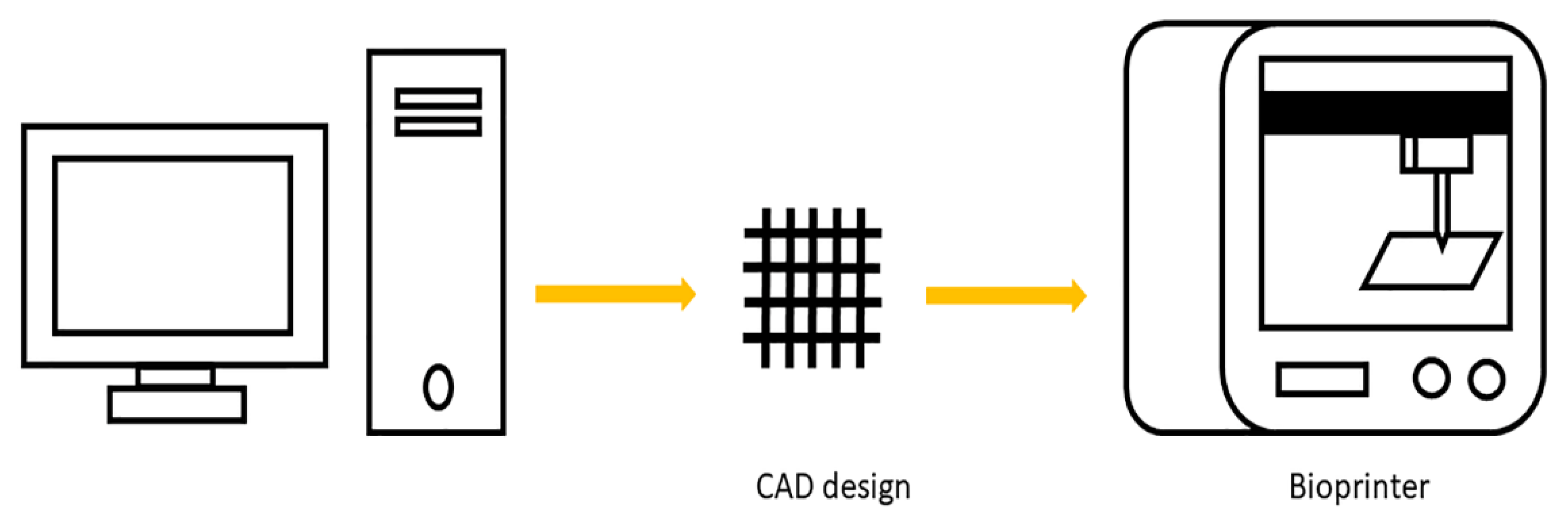
Additive manufacturing (AM), widely known as 3D printing (3DP), is attributed to the layer-by-layer addition or deposition of a material or different materials in order to build a three-dimensional (3D) construct. Three-dimensional printing, also known as rapid prototyping (RP), uses computer data such as computer-assisted design (CAD), which can be produced using computer tomography (CT), or magnetic resonance imaging (MRI), and translates them into constructed 3D objects (Figure 1). Because of its capacity for structures with complex features in the interior part, 3DP technology has been used in several fields, such as engineering, manufacturing, aerospace, automotive, jewelry, arts, and architecture, among many other fields.
Figure 1. Three-dimensional printing process.
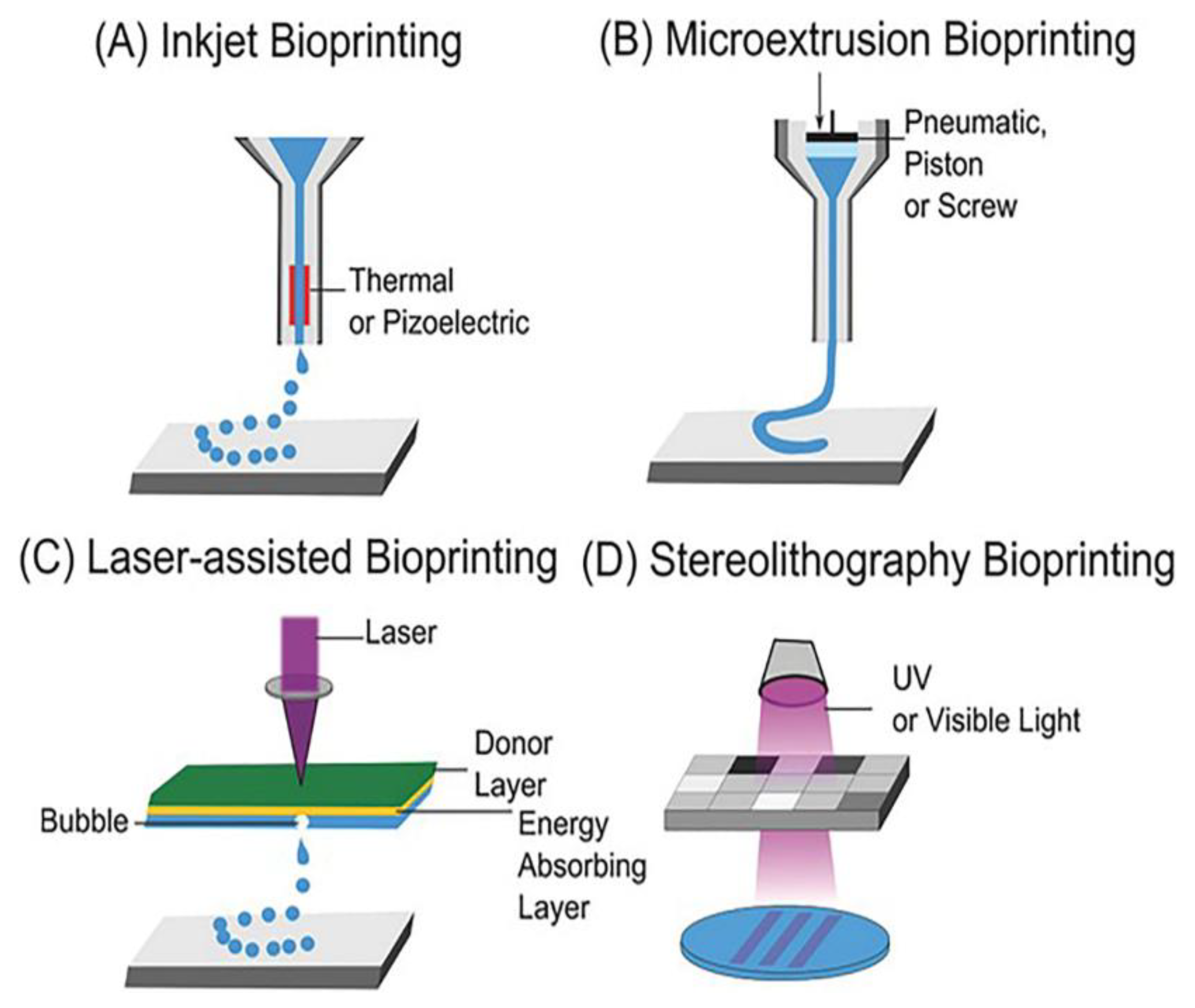
In the early 2000s, there was the appearance of fabrication of scaffolds including cells within the structure of their 3DP matrices, which would enable different cells to be printed at certain sites, with the arrangement needing increased significance, and this process was called bioprinting. According to predictions, by 2024, the market of the 3D printing industry will have reached the size of USD 35 billion [1]. A number of different 3DP techniques have been developed until now (Figure 2), such as inkjet bioprinting, extrusion-based bioprinting, laser-assisting bioprinting, and stereolithography (SLA)-based bioprinting [2].
Figure 2. Representation of the main 3D Bioprinting technologies. (A) Inkjet Bioprinting, (B) Micro extrusion Bioprinting, (C) Laser-assisted Bioprinting, and (D) Stereolithography Bioprinting. Reproduced from [2], Copyright 2018, Wiley.
The reliable definition of the term bioink became an issue of debate between members of the scientific community. The term ‘bioink’ was first used to refer to organ printing in 2003 and was introduced together with the term hydrogel membrane. In the beginning, the concept was to afford or even print a biopaper (hydrogel) and then introduce viable cells or tissue spheroids [3]. Cells and cell aggregates were used as the bioink [4,5]. In order to make clear the distinction, (bio-) materials that can be printed and subsequently seeded with cells after printing, but which are not directly developed with cells, do not qualify as bioink. It is suggested that these should be defined as biomaterial inks [3]. Such biomaterial inks may be used as scaffolds for cell seeding, bioreactors, or implants, or they may be used at the same time for bioink fabrication in hybrid approaches for mechanical maintenance [6,7]. On the other hand, some of the existing articles suggest an extension of the definition of additively manufactured materials.
For bioprinting technology, the key requirement is developing a suitable ink material. Based on the cell insertion methodology, ink material can be classified as bioink and biomaterial-ink (Figure 3). In bioink, cells are loaded in the ink material, and cell printing is carried out. However, in biomaterial-ink, hydrogels are printed, and post-printing cells are seeded externally on the printed materials. This method provides flexibility in selecting raw materials and eliminates the printing-process-induced impact on the viability of cells. Paxton et al. highlighted that inks intended to be used for extrusion-based bioprinting must congregate the rheological demands. Apart from biocompatibility and shear thinning abilities, hydrogels also require a fast crosslinking strategy to maintain their structural fidelity [8].
Figure 3. Distinction between a bioink (left), where cells are a mandatory component of the printing formulation as single cells, coated cells and cell aggregates (of one or several cell types), or in combination with materials (for example seeded or formulated in a physical hydrogel) and a biomaterial ink (right), where a biomaterial is used for printing and cell-contact takes place post-fabrication.
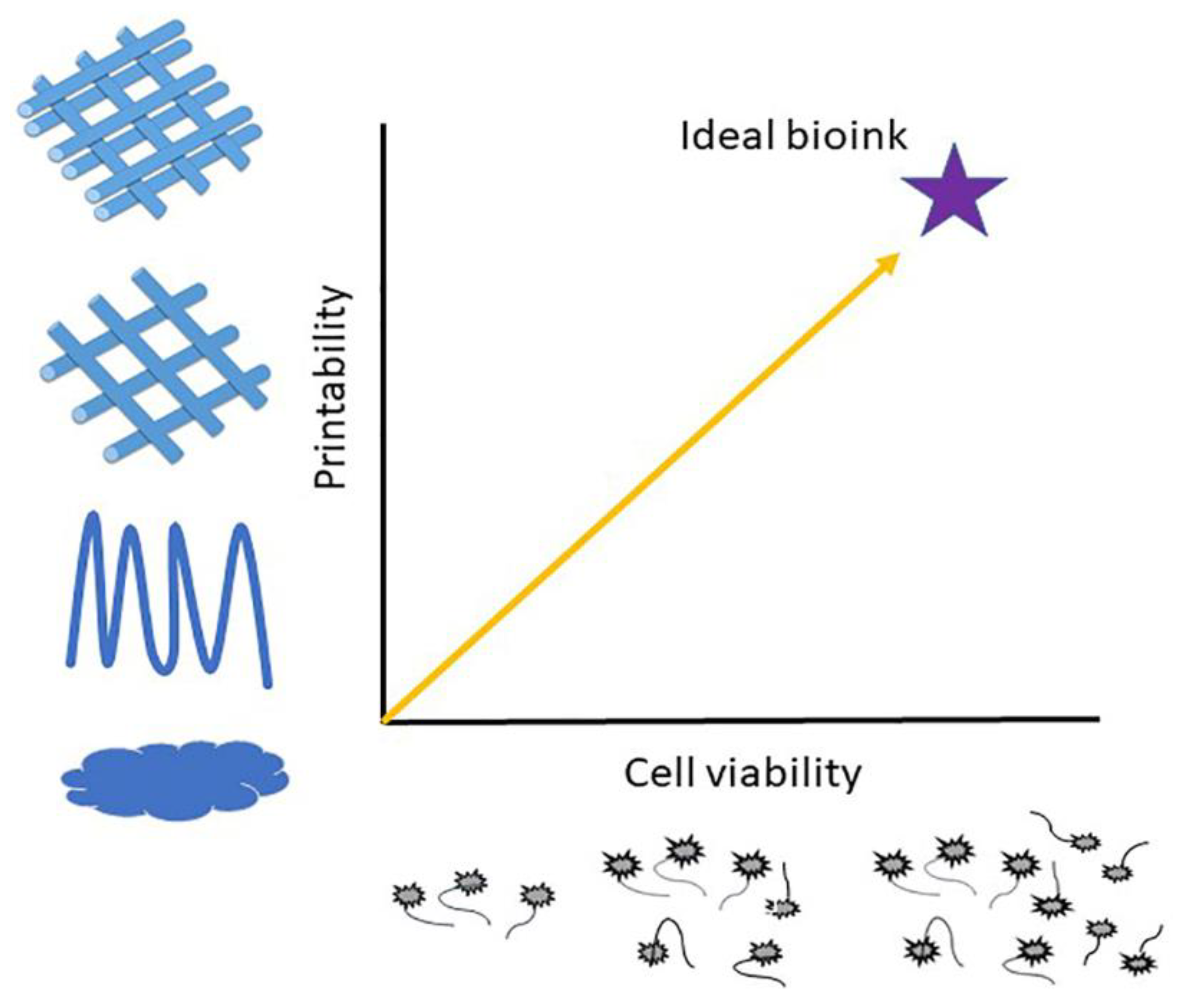
An ideal bioink, in order to be suitable for the printing process, should have some fundamental properties. The most essential properties of hydrogels used as bioinks are biocompatibility, printability, mechanical property, hydrophilicity, geometric structure, and biodegradability. Additionally, bioinks are required to cause a sol-gel behavior, eliminating the processing time, and many chemical and physical crosslinking mechanisms are used to achieve high accuracy of the structure and stability. The ‘biofabrication window’ present this compromise between suitability for fabrication and capacity of cell accommodation (Figure 4).
Figure 4. The biofabrication window for biomaterials.
Natural polymers such as chitosan, especially in its hydrogel form, play a key role as bioink for 3D bioprinting of tissues and drug delivery systems. Chitosan as biopolymer material is abundant in nature and is acquired from chitin, the second most abundant natural polymer after cellulose, which is an N-acetyl glucosamine polymer existing on exoskeletons and shells of crustaceans, especially from crabs and shrimps. Chitin deacetylation takes place via acidic and basic treatments of chitin. Chitosan is a material that has more than 50% acetyl groups of chitin, removed and replaced by amine groups. Although chitin is not soluble in aqueous media, chitosan is soluble in acidic solutions. Among others, its non-toxicity and its Food and Drug Administration (FDA) approval for pharmaceutical applications have attracted interest [9,10]. The presence of the amino group along D-glucosamine residues, protonated in acidic media, can clarify most of the chitosan properties. Mucoadhesion, for example, can be explained by the interaction between the protonated amino groups and the negatively charged moieties in the mucin, coming from sialic acid, the main protein that constitutes the mucus. Furthermore, the hemostatic activity of chitosan comes from the interaction of protonated amino group with the negative charge existing on the membrane of red blood cells, unlike chitin. The positive charges of chitosan can also lead to a restructuring of the proteins on the cell membrane and thus enhance permeation ability. Except for that, this could avoid the entrance of fundamental nutrients for cell survival to enter the cell resulting in antimicrobial activity of chitosan. Another mechanism responsible for the antimicrobial activity of chitosan could be the capability of binding with the DNA of the cell so as to prevent RNA synthesis and cell proliferation. Concerning biodegradability, chitosan also affords breakable glycosidic bonds by several proteases, such as lysozyme, which can come to non-toxic residues and subsequently be excreted. In the meantime, eight chitinases have been identified in the human body. However, the degradation rate is mainly related to the DD, where crystallinity is maximum for 100% deacetylated chitosan. It is indicated that the increase in crystallinity is combined with the decrease in degradation rate [11].
Many efforts have been reported in the literature for the fabrication of chitosan-based scaffolds by utilizing traditional methods. However, low mechanical properties of the electrospinning method, solvent residuals in the final formulation and limited control on the pore size in case of solvent casting, and finally, energy and time consumption with the presence of harmful solvents with irregular pore structures in freeze drying have led to the need for the investigation of alternatives. On the contrary, the 3D printing technique helped to overcome this limitation, improving the spatial control of micro-architecture and spatial content. Moreover, 3D bioprinting can be used to deposit living cells, extracellular matrices, and other biomaterials with user-defined fined patterns to build complex constructs ‘from the bottom up’. The perspective of creating vascular structures is also enhanced by bioprinting as internal channels with vascular cells can be printed into constructs promoting the development of blood vessels in vivo.
Most applications and research studies on chitosan focus on its hydrogel form [12]. Hydrogels are commonly used as a bioink material in scaffold-based bioprinting as a result of their numerous attractive characteristics that make the 3DP process more fulfilled. The main reasons are their biodegradability, biocompatibility, and the existence of cell-binding sites for cell attachment, proliferation, or differentiation. In general, chitosan is soluble in aqueous acid media at pH 5–6 at 24 °C, and gelation can occur through several techniques such as ionotropic, cross-linker-assisted, polyelectrolyte complexed, or self-assembled.
Chitosan is often combined with other natural (e.g., cellulose, gelatin, silk, alginate, hyaluronic acid, and collagen) or synthetic (e.g., PCL, poly(ethylene glycol)) polymers to add extra properties. Moreover, chitosan has functional groups that can be modified to enhance its properties, notably its low mechanical properties, or utilized for the synthesis of polymer/active substance conjugates [13].
In this review, a brief discussion of different chitosan-based formulations currently employed for printing and bioprinting will be provided. The discussion will not be limited to the 3DP cell-laden formulations but also to the 3DP formulations where the cells are inserted after printing. Additionally, the review concludes scaffolds that have been loaded with active substances with the purpose of contributing to the restoration process. After all, a section concerning the regulations applied, until now, for this kind of construct is included.

2. Chitosan-Based Bioinks for Tissue Engineering

Although many efforts have been made to further improve bioprinting techniques, the production of suitable bioinks for bioprinting is restricted by rheological, mechanical, and biological points of view. By preference, the rheological and mechanical characterization of bioinks should be carried out in the presence of cells as they can significantly affect the viscosity of polymer solutions and, consequently, the printability. The main point is that the printing procedure needs to be evolved at physiological conditions (pH and temperature) and also that no stress is caused on the hydrogel material itself and, thus, on the cells encapsulated in the bioink. Furthermore, cells enclosed by bioinks can reduce the shear thinning behavior during printing, often leading to phase separation and precipitation of the bioinks. For that reason, the development of new bio-ink formulations remains a challenge for researchers [14].
Due to their natural character, chitosan-based bioinks reveal high biocompatibility and low cytotoxicity. In the meanwhile, poor mechanical properties, difficulty in sterilization, and reproducibility are some restrictions of chitosan-based hydrogels used as bioinks. Modifications such as crosslinking with chemical agents or by irradiation, incorporation of thickener molecules or nanoparticles, or even functionalization of the chitosan molecule could be some solutions to enhance integrity and functionality [11]. The following research on chitosan-based bioinks that have recently been published is presented. Apart from this, Table 1 highlights the limited existing translations of these 3D CS scaffolds that limit their application to clinical care.
Table 1. Translations of 3D CS scaffold presented in this review.

2.1. Bioinks of Composites of Chitosan Hydrogels

Current studies, in order to overcome the limitations of chitosan, combine chitosan with other materials such as PCL, D-(+) raffinose, poly(gamma glutamic acid), β-glycerophosphate, hydroxyethyl cellulose, gelatin, FRESH bath and several salts (TPP, K2HPO4, NaHCO3) as crosslinking molecules.
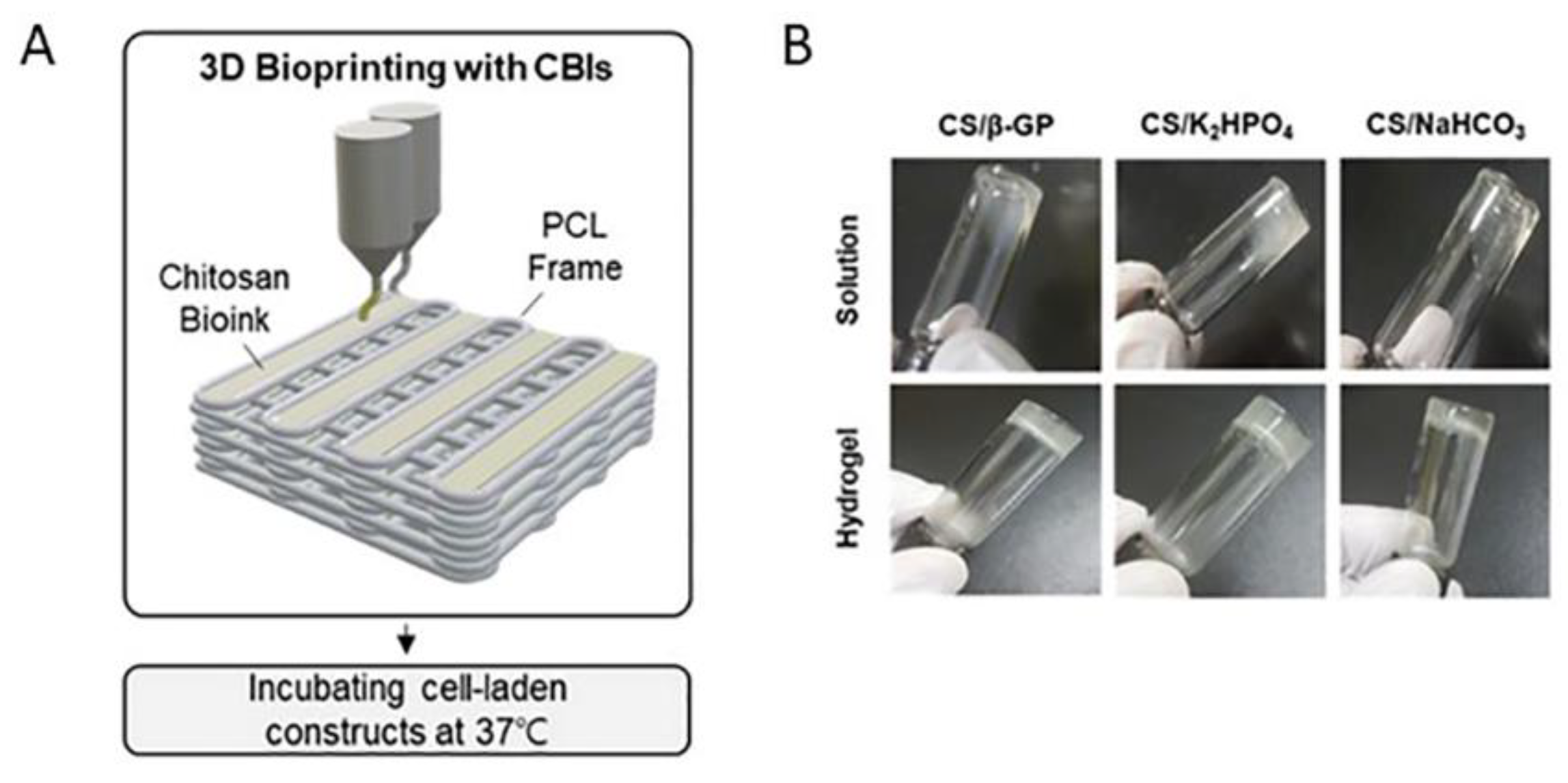
Poly(e-caprolatone) (PCL), a biocompatible thermoplastic polymer, is often used with chitosan to enhance the mechanical properties of the final 3D structures. Li et al. investigated the capability of tetrahedral framework nucleic acid (TFNA), a DNA form that reinforces the regeneration process, in the promotion of the differentiation of synovial mesenchymal stem cells (SMSCs) and its behavior inside the network of CS hydrogel/3DP (PCL) in terms of the healing of articular cartilage (AC) damage and regeneration of cartilage defects in rabbits [15]. Firstly, CS suspension was inserted into 3DP PCL scaffolds, and then the blend formed a gel at 37 °C. Afterward, the hydrogel was enhanced, concerning the regeneration activity, with synovial mesenchymal stem cells (SMSCs). Genipin was added to the mixture for chemical crosslinking. The complex formed provided improved water absorption and appropriate pore size for cell attachment. However, more in vivo experiments should be evaluated in order to investigate the degradation rate of TFNA during time and infection issues. Altogether, this method combines the bioactive environment of chitosan material with the enhanced mechanical properties of PCL scaffolds. As previously mentioned, chitosan hydrogels printed on PCL frame were studied after using three gelling agents (β-glycerophosphate (β-GP), potassium phosphate (K2HPO4), and sodium bicarbonate (NaHCO3) [16]. Among the three, NaHCO3 showed the highest energy storage capability, and a more uneven porous morphology NaHCO3 agent also proves more efficient for cell attachment from day one according to cell viability assays. The use of the three gelling agents shows similar results to the human periodontal ligament stem cells (PDLSCs)-laden constructs, while for both, cell-laden or not, constructs the sol-gel transition induced at 37 °C (Figure 5). This research also noted that solvent type did not affect the gel shape and gelation time, although acetic acid seemed more biocompatible than other acids. In general, this work compares several kinds of gelling agents and solvents for the bioink of CS/NaHCO3 for tissue engineering.
Figure 5. (A) Schematic representation of the 3D bioprinter for 3D printing and gelation using chitosan bioinks (CBIs). (B) Representative images of chitosan sol-gel transitions induced by temperature. Reprinted from [16].
Intini et al. prepared a 6% chitosan solution carrying D-(+) raffinose pentahydrate at 290 mM. After the printing, the scaffold cooled at −14 °C with a series of Peltier cells. Post printing, gelation occurred by incubating in a KOH (8% w/v) solution, and the construct was stored in phosphate-buffered saline (PBS) in order to keep the shape integrity of the design. Moreover, an extra sample such as the previous one but with the insertion of a full dense layer of chitosan as the bottom layer was prepared in order to facilitate the cell growth restraining the cells inside. The most optimized proliferation rate of cells was attained after 35 days on 3D scaffolds when the normal dermal human fibroblast (Nhdf) cells and aneuploid immortal keratinocyte (HaCaT) cells were combined while the elimination of the gaps in the scaffolds was observed. The research team commented that the specific scaffold provides cost benefit, owing to the starting material and also reproducible characteristics [17]. This work highlights the importance of in vivo tests for chronic dermal wounds and the cost-effectiveness of chitosan-based scaffolds as an important factor for scale-up production.
Pisani et al. reported preliminary studies on coaxial extrusion at 37 °C of chitosan (CS) and poly(gamma-glutamic acid) (Gamma-PGA). Furthermore, Fourier-transform infrared spectroscopy (FT-IR) revealed the formation of inter polyelectrolyte complex (IPEC) due to interaction between the amino groups of chitosan and carboxyl groups of gamma-PGA. Reduced time of gelation, less than 10 s, and stability for more than one month in cell culture were proved. Interestingly, bioprinted hydrogel with 6% CS was capable of maintaining the majority of the cells viable for 2 weeks. Nevertheless, further optimization by studying the effect of geometry could result in a better exchange of oxygen and nutrients inside the hydrogel [18]. This work concludes that the parameters useful to accomplish one-step 3D bioprinted IPEC by CS/Gamma-PGA were set at 37 °C temperature and 37 Pa pressure to samples with concentrations of CS 4.5% or 6% wt/vol and Gamma-PGA 2%.
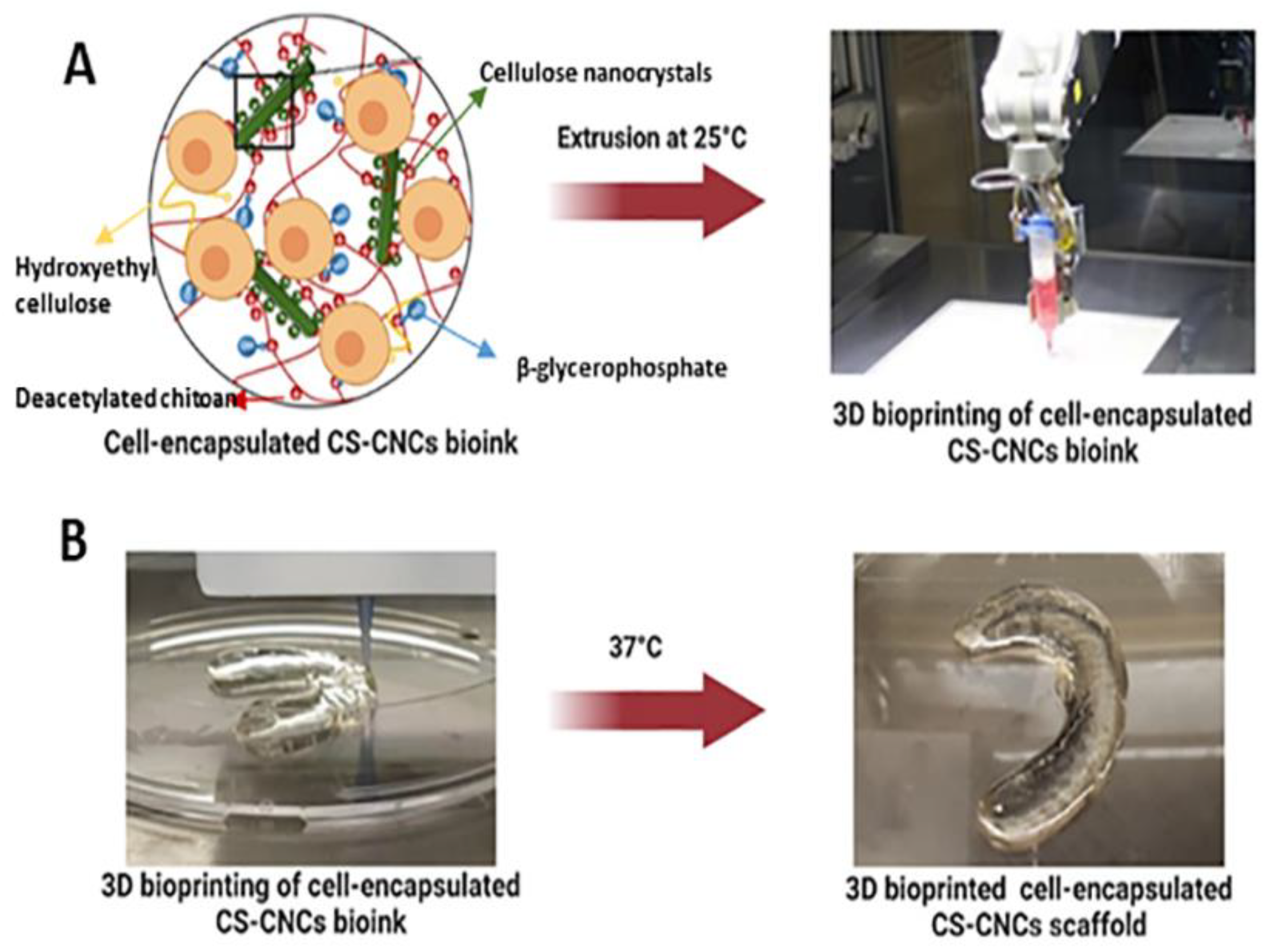
Maturavongsadit et al. investigated a bioink from thermogelling chitosan, glycerophosphate, hydroxyethyl cellulose, and cellulose nanocrystals (CNCs). Optimum concentrations of components were selected based on fast gelation at 37 °C (less than 7 s) (Figure 6). The research demonstrated that CNCs and pre-osteoblast cells (MC3T3-E1) ameliorated viscosity and mechanical properties. The low printing pressure (15–20 kPa) did not endanger the cell viability. Apparently, the coexistence of CNCs in the chitosan scaffolds positively affected the osteogenesis of MC3T3-E1 cells [19]. This study highlights the advantage of using CNC to thermo-/pH-responsive chitosan hydrogel for 3D bioprinted constructs for the repair of the large bone defect. Roehm et al. proposed a modification to a compact, low-priced 3D printer apparatus in order to facilitate the incorporation of the cells during printing, avoiding any toxicity from post-printing processes. Particularly, this research team explored the bioprinting of thermogelling chitosan- gelatin (CG) hydrogel with β-glycerophosphate (βGP). The importance of the preparation of the sample, including centrifugation, mixing, and degassing, was underlined as an important factor for printability and fiber formation. The shear thinning behavior was demanding for the protection of the cells during printing. Moreover, they noticed that increase in the concentration of chitosan in the mixture causes a decrease in gelation temperature, with the danger of premature gelation near 25 °C, while the increase in the time of the gelation process favors the bioprinting as it decreases the size of the fiber. It was also noted that precooling the syringe could further control temperature-dependent gelation. Cell-laden hydrogels were prepared, but further studies about their functionality must be evaluated [20]. Overall, this study presents a low-cost alternative to conventional 3D bioprinter apparatus for 3D bioprinting of thermosensitive CG hydrogels with high cell vitality.
Figure 6. Schematic illustration of the 3D bioprinting process. (A) Cell-encapsulated bioink was loaded into 3D-bioprinter cartridges and bioprinted onto a cell-culture glass coverslip with cartridge temperature controlled at 25 °C. (B) 3D bioprinted scaffold of a patient-derived knee meniscus using the CS–CNC placebo bioink. The bioprinted scaffold was spontaneously gelled on a glass printing plate by temperature stimulation at 37 °C. Reproduced from [20]. Copyright 2021, American Chemical Society.
Rahimnejad et al. introduced the use of a warm supporting bath, Pluronic based, called FRESH to help the bioprinting process of chitosan hydrogels with the use of a mix of sodium bicarbonate and β-glycerophosphate as gelling agents. Actually, the FRESH method aided the mechanical support of the structures as well as the thermal crosslinking avoiding the evaporation of the sample and facilitating its collection. Furthermore, the use of the bath improved as well, and the printing accuracy of all samples with better results at the concentration of 2% chitosan hydrogel, preventing swelling after immersion in PBS. The latter also exhibited satisfying rheological behavior and MSC survival. The FRESH method paves the way for the use of thermosensitive chitosan-based hydrogels for tissue engineering uses [21].
The research team of Hafezi attempted to optimize a previous study of their group based on a system of chitosan crosslinked with genipin. Specifically, they inserted a first layer consisted of sodium alginate as first layer with a view to make the construct more rigid. The low-pressure printing of cell-laden hydrogels enabled the viability of keratinocytes (KC) and human dermal fibroblasts (HDF) at a level greater than 88% [22].
An overview of the recent studies on chitosan-based bioinks and their application as scaffolds are also presented in Table 2.
Table 2. Summary of the recent studies on chitosan-based bioinks.

2.2. Bioinks of Chitosan-Modified Hydrogels

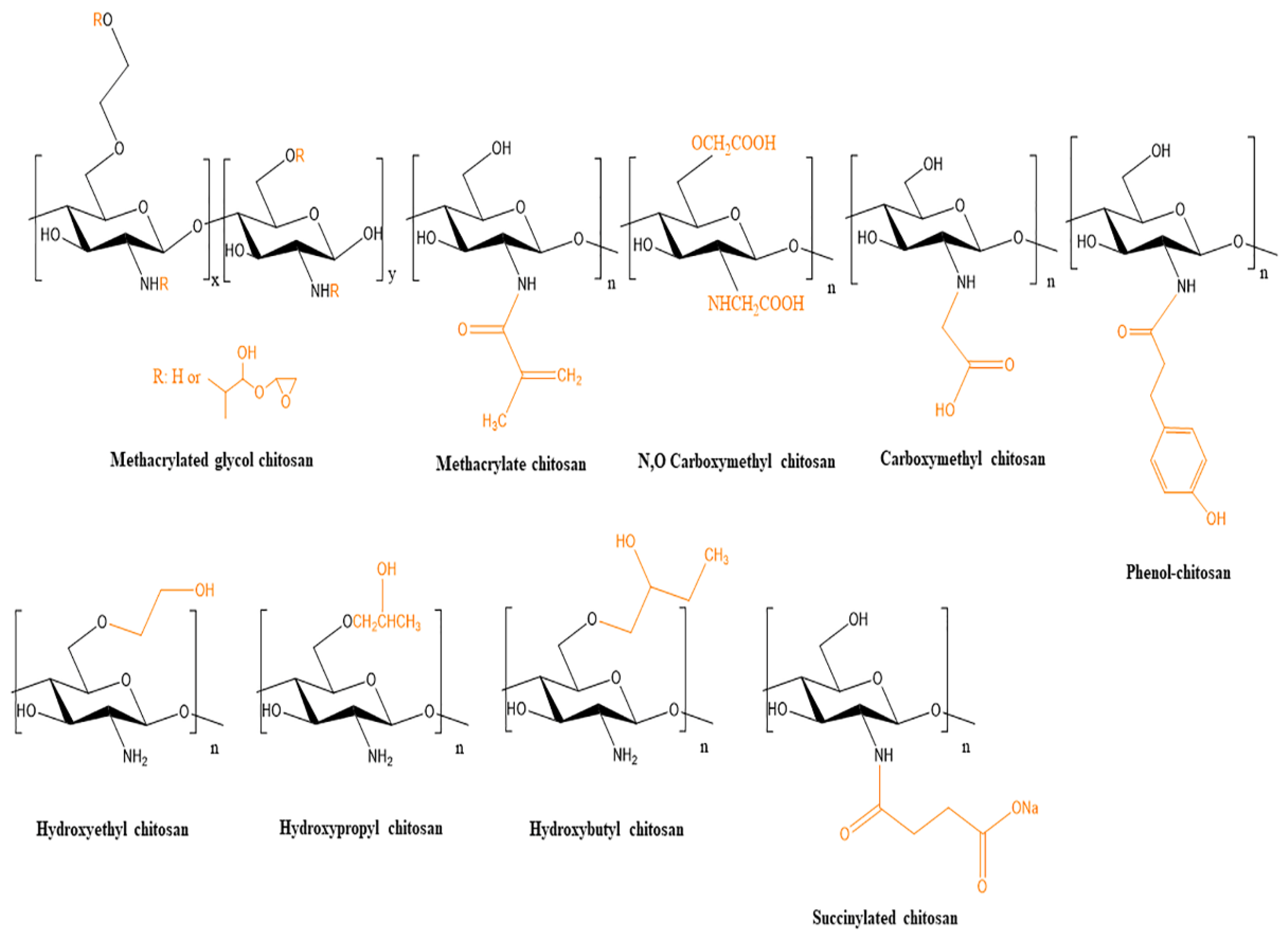
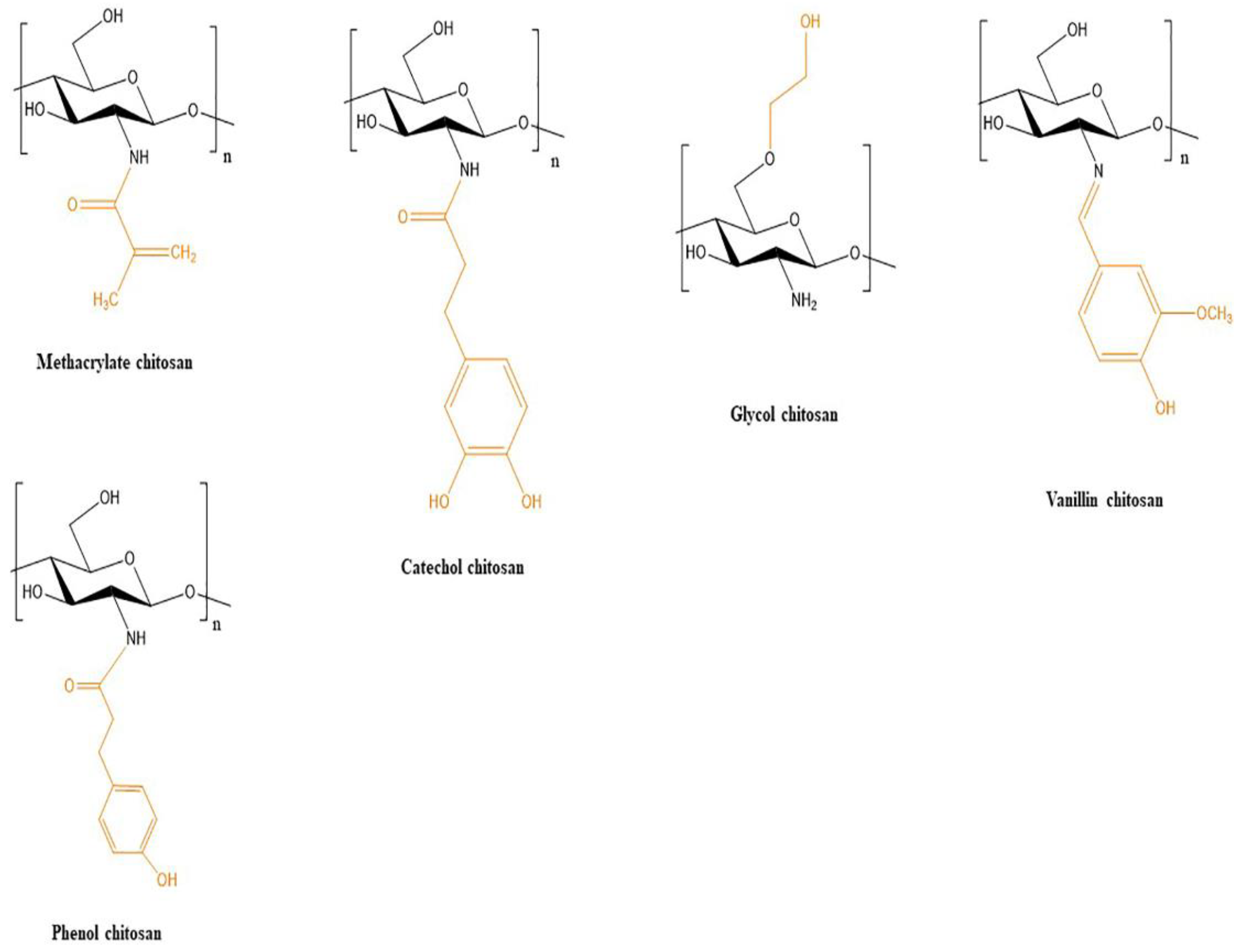
Functionalization of the chitosan molecule could be some solution to enhance integrity and functionality. Several chitosan derivatives (methacrylated glycol chitosan, methacrylate chitosan, N,O carboxymethyl chitosan, N-Carboxylmethyl chitosan, phenol chitosan, hydroxyethyl chitosan, hydroxypropyl chitosan, hydroxybutyl chitosan, succinylated chitosan) have been recently used as bioinks and are illustrated in Figure 7.
Figure 7. Chitosan derivatives that have been used for bioinks in 3D bioprinting.
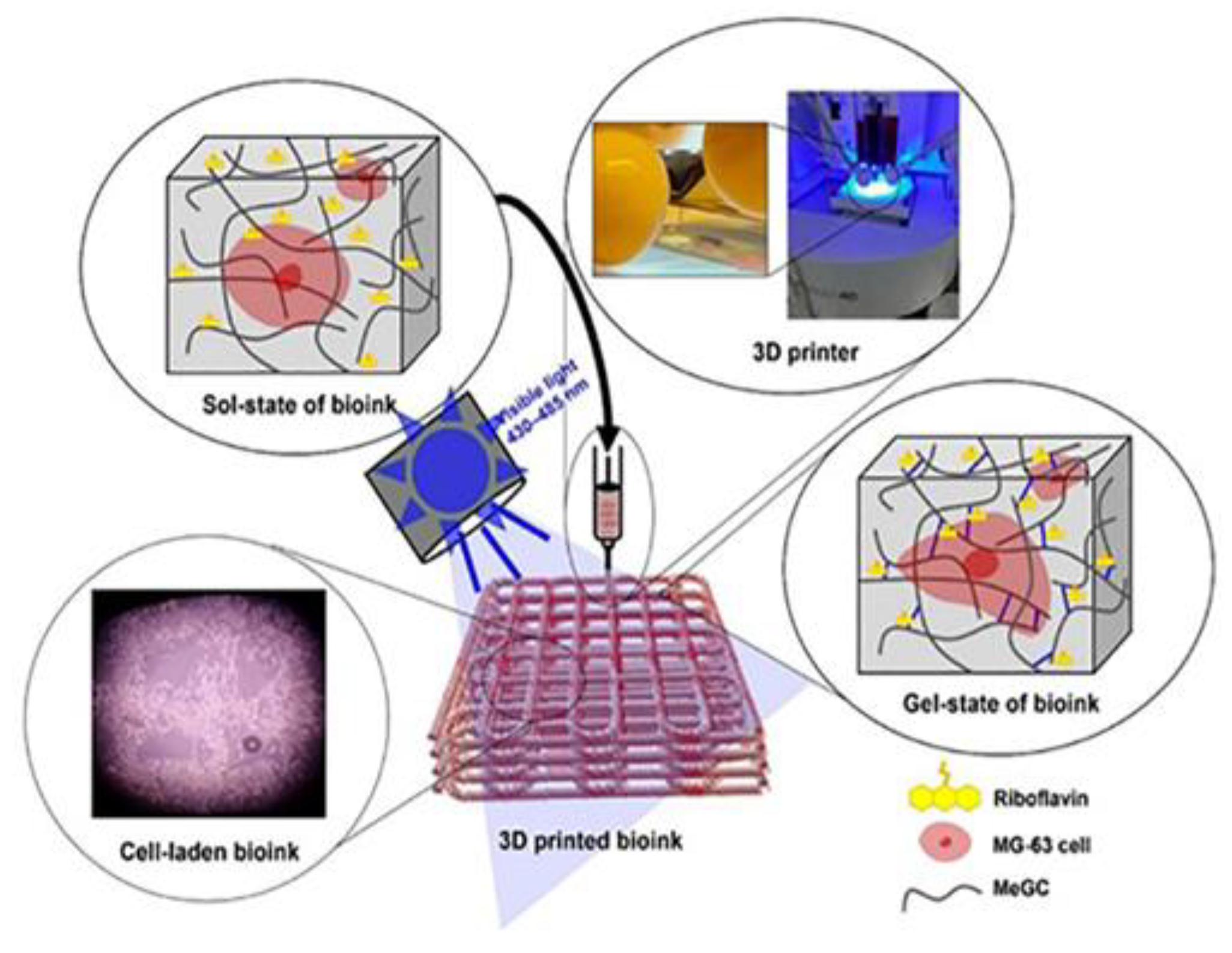
Chang et al. trying to encounter the harmful gelation procedures of neat chitosan, prepared a bioink of the water-soluble and photo-curable methacrylate glycol chitosan (MeGC) with 1:1 ratio of amino groups of glycol chitosan (GC) to amino groups of glycidyl methacrylate (GM). Riboflavin was used as photoinitiator at visible light at 430–485 nm. The optimum shape fidelity was observed for the sample with 3% MeGC and photo-curing for 70 s (Me-GC-70) and was selected for loading with MG-63 cells (Figure 8). The results showed cell growth and remarkable bone differentiation but further in vivo tests are needed in order to make it a potentially appropriate alternative for bone tissue engineering applications [23]. The authors reported for the first time the use of visible light instead of UV irradiation for crosslinking of MeGC hydrogels, specifically MeGC-70, appropriate as bioink.
Figure 8. Schematic illustration for preparation for 3D bioprinting of MeGC bioink. Reprinted from [20], Copyright 2022, Elsevier.
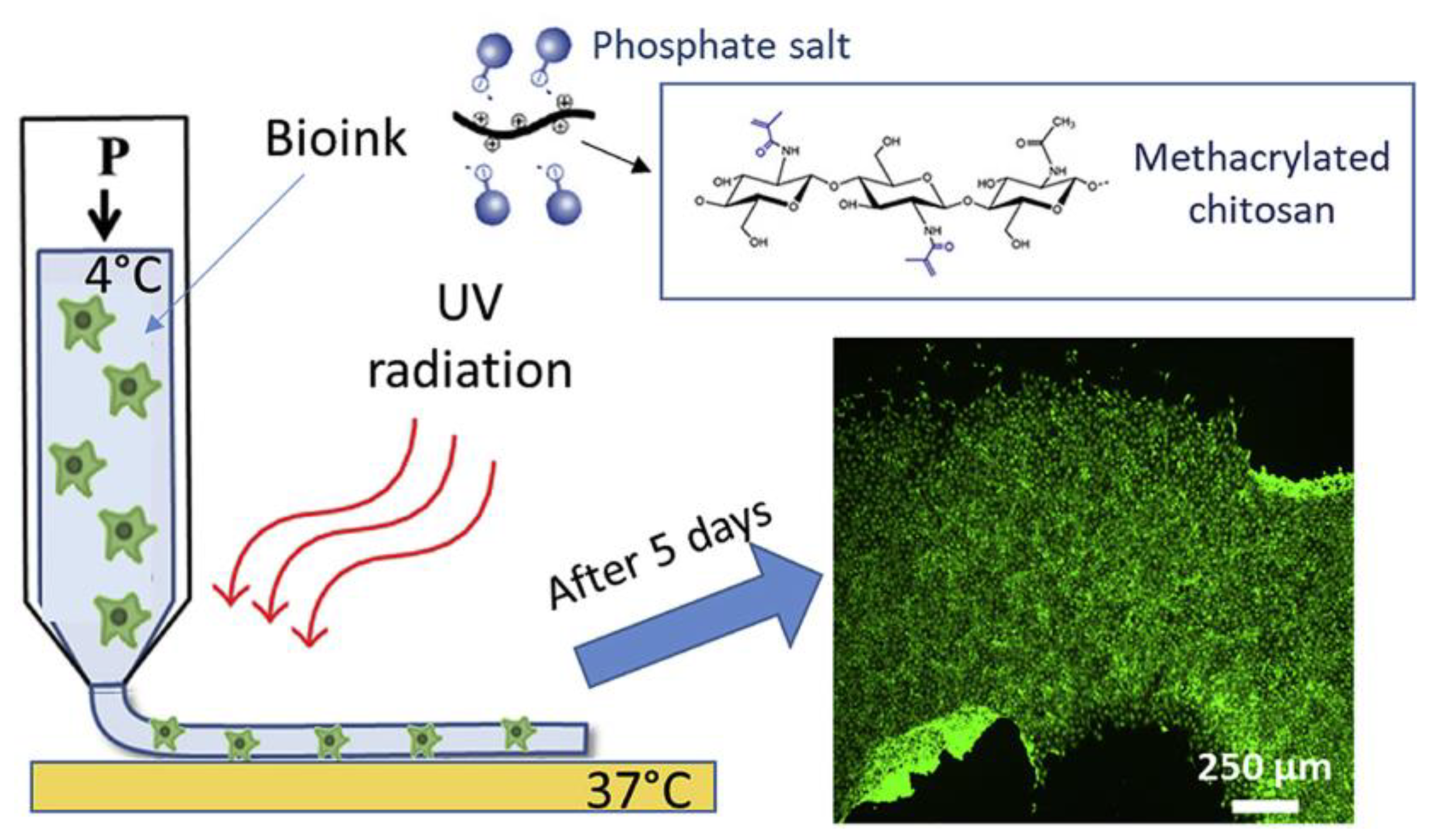
Methacrylated chitosan was also explored by Tonda-Turo et al. with the further introduction of β-glycerophosphate salt (β-GP) to add thermosensitive properties. The ink showed no cytotoxicity during in vitro tests with fibroblasts (NIH/3T3), osteoblast-like cells (Saos-2), and neuronal-like cells (SH-SY5Y). Furthermore, NIH/3T3-laden scaffolds were composed and gelled under increased temperature (37 °C) and radiation of 365 nm (Figure 9). Proper biocompatible 3D structures were fabricated, highlighting it as a prominent combination for the reconstruction of complex tissues [24]. Results indicated that dual crosslinking lead to stable 3D bioprinted constructs without affecting the cell viability. Another attempt with this chitosan derivative has been made by Gaihre et al., who used methacrylated chitosan with gelatin as the medium for deposition of MC3T3-E1 pre-osteoblasts in phosphorylated-oligo [poly(ethylene glycol) fumarate] included acrylated montmorillonite (Ac-MMT) and also to facilitate the cells-Ac-MMT interaction. Results of the cell-laden constructs regarding the live/dead cell assay showed viable cells and cell growth and differentiation for 3 days. Concluding this research shed light on the combination of 3D printing and bioprinting to develop artificial cell-laden tissues for bone tissue engineering [25].
Figure 9. Dual-crosslinked hydrogel bioink using chitosan methacrylate together with β-glycerol phosphate with NIH 3T3 cells. Reprinted from [24], Copyright 2020, Elsevier.
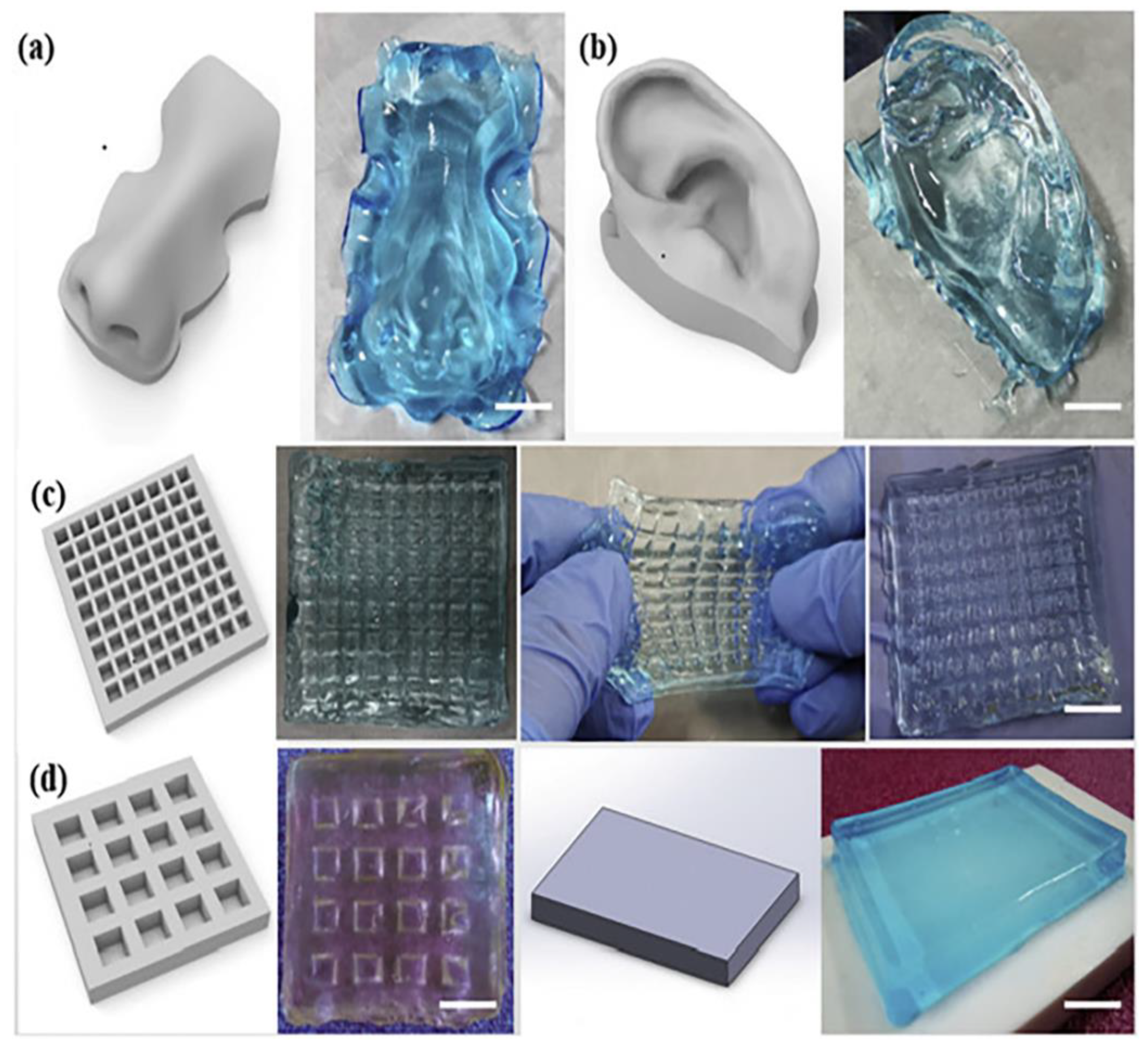
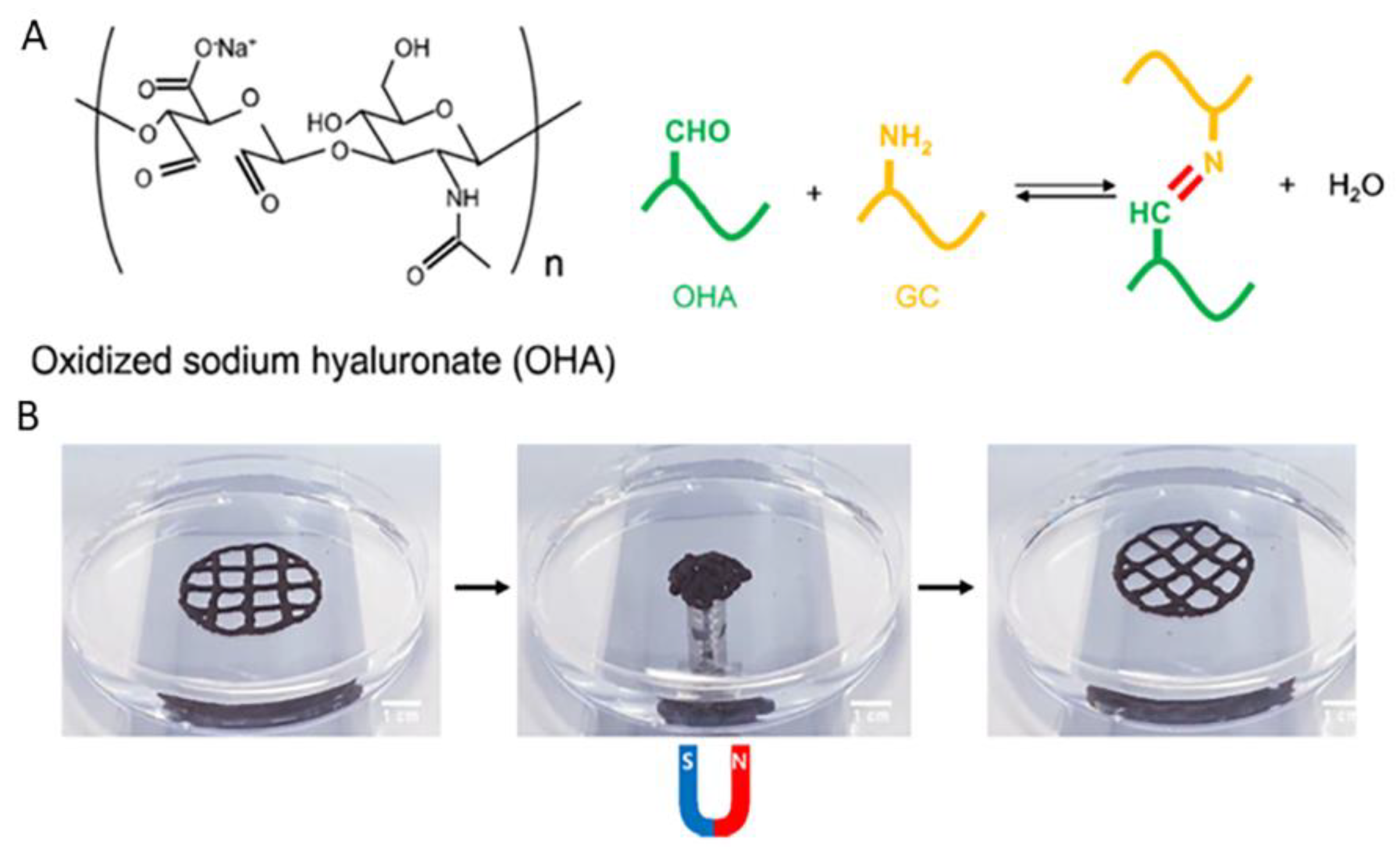
The water solubility and flexibility of GC have attracted the interest of many researchers to use it as a drug carrier or imaging agent in an effort to treat cancers and microbial infections [26]. Roh et al. studied GC with OHA with the introduction of adipic acid dihydrazide (ADH), whose existence caused competition between the imine bond of OHA/GC and the acylhydrazone bond of OHA/ADH inducing chemical crosslinking. Extra crosslinking was achieved with the addition of alginate and calcium ions with the purpose of enhancing the mechanical properties. From printability studies, it was determined that printed fibers deposited were finally stacked to form a single structure owing to its self-healing ability (Figure 10). Apart from that, it was demonstrated that OHA/GC/ADH/ALG hydrogels could provide a microenvironment suitable for the chondrogenic differentiation of ATDC5 cells in vitro. This self-healing bioink system may have great potential in many biomedical applications, including tissue and organ regeneration, using a 3D printer [27]. Crosslinking with alginate and calcium ions was proved that offer further mechanical stability to this self-healing bioink system.
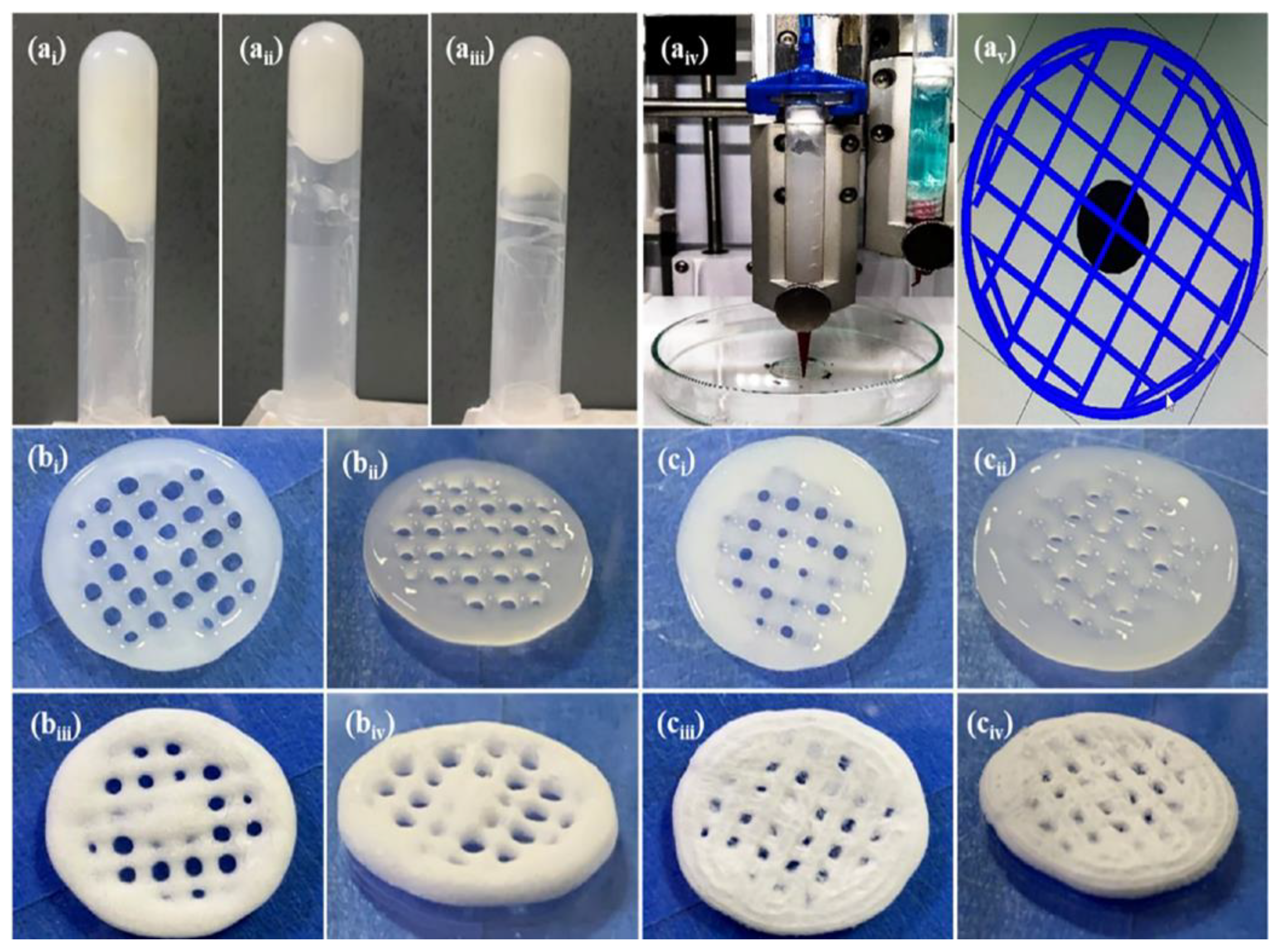
Figure 10. (a) Three-dimensional printing of self-healing OHA/GC/ADH/ALG hydrogel encapsulating ATDC5 cells. (b) Microscopic images of 3D-printed filaments of OHA/GC/ADH/ALG self-healing hydrogel and (c) 3D-printed constructs of various shapes. Reprinted from [27], Copyright 2021, Biomedicines.
Carboxymethyl chitosan is an attractive chitosan derivative due to its solubility at pH range 7–9, which is favorable for cell encapsulation. Specifically, N, O Carboxymethyl chitosan (NOCC), another chitosan derivative, was used by Butler et al. as bioink due to its immediate degradation profile. Several blends of NOCC and agarose were fabricated and subsequently loaded with neuro 2A cells compared to pure NOCC cell loaded or pure agarose cell loaded. It was observed that the increase in the concentration of NOCC led to proper rheology properties and, thus, good printability. On the contrary, the increase in the content of agarose reduced the rheological properties but increased cell viability. The bioprinting at 37 °C seemed not to favor printability as the cell viability. Moreover, increased concentration of NOCC leads to less than 24 h degradation, satisfying printability but zero cell viability, while the reduced concentration of NOCC caused the opposite. Nevertheless, a balance between the two properties was achieved for the samples of 40% agarose and 60% NOCC (AG40NC60), having a prospective in tissue engineering applications [28]. Generally, the results pointed out that NOCC does not benefit the printability as the cell vitality, but an optimum combination of the two properties appeared in the AC40NC60 sample. The same chitosan derivative was also examined by another research attempted to emphasize the significance of the addition of polyphosphate (polyP) to the bioink of a NOCC-based scaffold as a forceful activator for proliferation, differentiation and mineralization of MSC in 3D printed tissue parts. The bioink was formed also with the contribution of alginate as the hydrogel part of the scaffold, which forms with ions Ca2+, a crosslinked hydrophilic polymer, and also gelatin served as the matrix to facilitate cell attachment and the moving of the cells. Apart from the essential metabolic energy that polyP offers for intracellular and extracellular activities, alongside, it also induces bone formation. Overall, they note that polyP enriched bioink lead to spheroidal aggregates cell forms coming out of the printed tissue parts confirming their novel composition suitable for printing implants [29]. This research attempt to emphasize the beneficial use of polyP in the bioink in the effort to resemble the properties of the extracellular matrix.
Trying to achieve printing at room temperature, structure maintenance, and reduce the time of preparation of the bioink, Chen and his team proposed an alternative way of preparation called time-sharing structure supporting (TSHSP) preparation. The system selected was aldehyde hyaluronic acid (AHA)/N-carboxymethyl chitosan (CMC) with fast gelation, so ready to use, and gelatin (GEL)/4-arm poly(ethylene glycol) succinimidyl glutarate (PEG-SG) with slow gelation, important for stability after printing. Crosslinking assisted the formation of proper integrated cell-laden constructs enduring for 21 days where the diffused cells (NE-4C, C2C12, and chondrocytes) were viable for an extended period. The proposed bioink seemed to be promising for tissue engineering and targeted cell therapy but also for a new generation of hydrogel preparation [30]. Generally, this work suggests that the TSHSP strategy is a more convenient solution to maintain not only the shape of the 3DP hydrogel but also the microstructure. CMC was further reported by Wang et al. in an effort to prepare a hybrid hydrogel from GelMA and CMC intended to regenerate blood vessels. GelMA/CMC hydrogel was further enhanced with BMSCs, which showed better mechanical behavior and configured an environment similar to ECM [31]. The formation of catechol-modified polymeric nanoparticles was proposed by Puertas Bartholome et al. for their antioxidant, anti-inflammatory, and neovascularization properties and also the capability to entrap hydrophobic drugs such as coumarin-6, which is effective for wound healing applications. The NPs were afterward homogeneously dispersed into a hydrogel of CMC and hyaluronic acid (HA), where fibroblasts were incorporated. Hence, the complex system prevails in the ability to load hydrophobic molecules, the local controlled release of the loaded nanoparticles, and the custom-made geometry formulation. Cell studies supported cell proliferation of the fibroblasts over 14 days [32]. After all, the research team of Bartholome points out the important role of catechol-modified NPs in controlling local drug administration and increasing the bioactivity of the system of the bioink. In another research, CMC was combined with amorphous calcium phosphate (ACP), labeled as CMC-ACP, leading to a composite of nanoparticles with hydrogel for bone regeneration. The novel composite display excellent biocompatibility, MSC proliferation, and cell attachment and promote osteoinductivity. In vivo tests proposed the bioprintability and the further utilization of the composite for osteoprogenitor-cell-based bone tissue regeneration [33]. This work showed, for the first time, the stabilization of ACP nanoparticles with osteoinductive properties in a CMC hydrogel in order to prepare a cell-friendly environment.
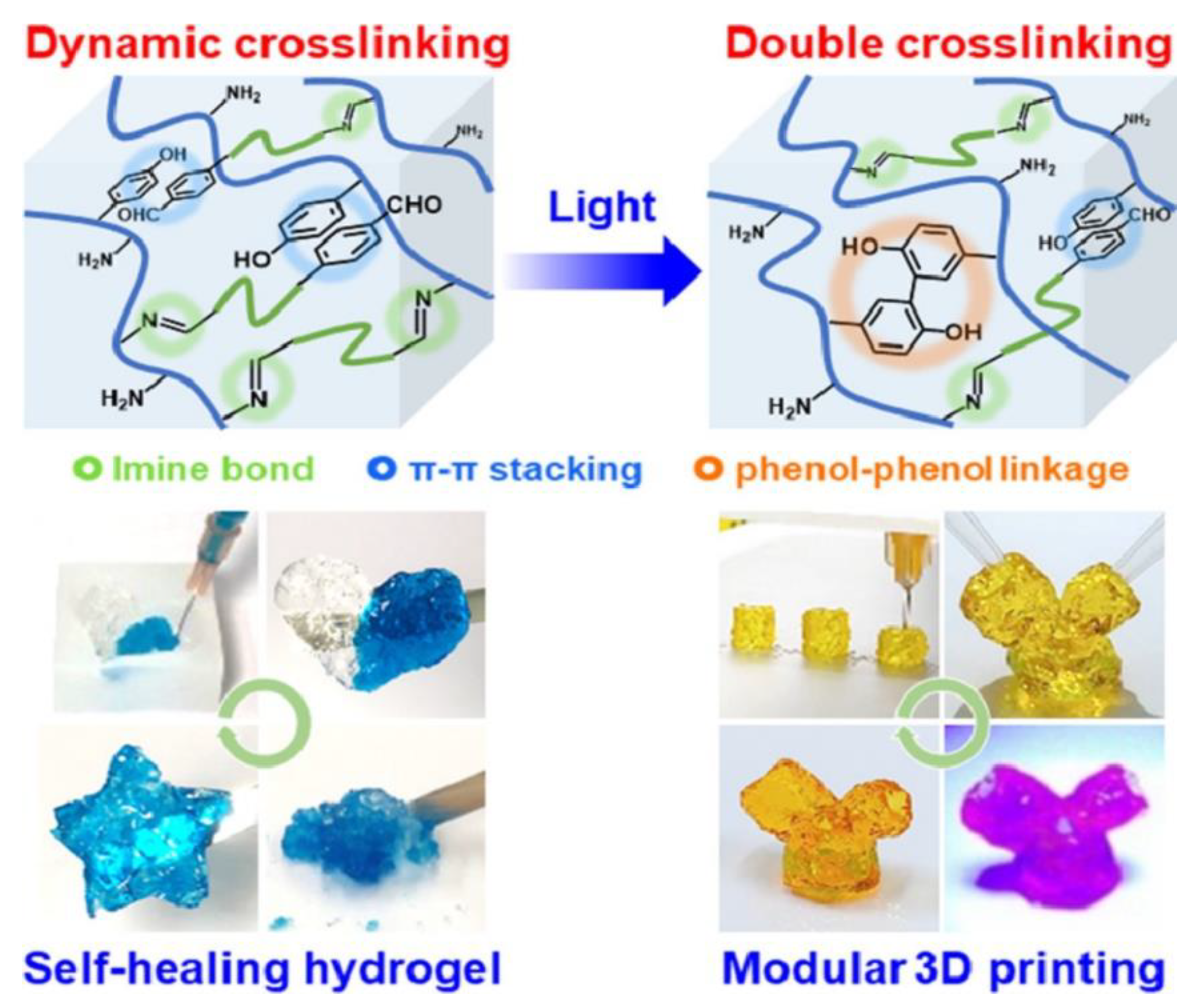
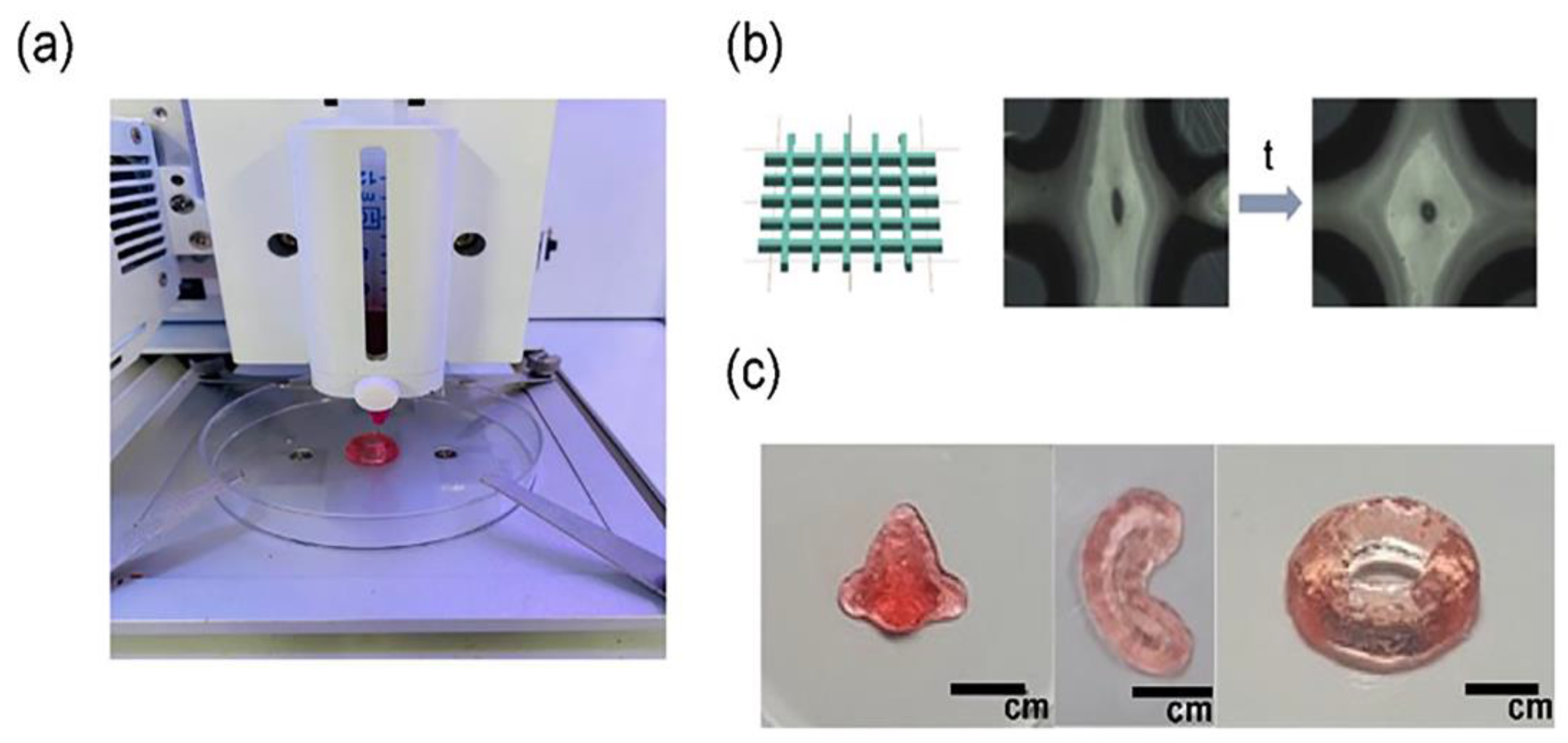
Liu et al. developed a self-healing hydrogel by phenol modification of chitosan (CS-Ph, which was crosslinked with dibenzaldehyde terminated telechelic poly (ethylene glycol) (DF-PEG), labeled as CPDP. This modification of chitosan enables fast and durable gelation as well as light-visible crosslinking ability. During the preparation of the hydrogel, imine bonds are formed between the amine groups of both components (Figure 11). The sequent visible light crosslinking can additionally support the hydrogel due to the forming of phenol-phenol binding. As a result, this hydrogel is well utilized for the 3D printing process. Moreover, independently printed parts can be combined into an entire construct because of the adherence and self-healing character of the hydrogel. Human mesenchymal stem cells (hMSCs)-laden hydrogels were printed and resulted in some dead cells after 4 and 24 h of culture. The researchers propose that changes in the parameters of printing and reduction of the force applied to the material could avoid the phenomenon [34]. The phenol functionalization of chitosan seems to change the physicochemical properties of CPDP hydrogel and could extend its biomedical applications.
Figure 11. Schematic illustration for preparation of CPDP hydrogel by dynamic benzoic imine crosslinking between Chi-P and DF-PEG and after light crosslinking. Filament formation after each method of crosslinking. Reprinted from [34], Copyright 2021, Elsevier.
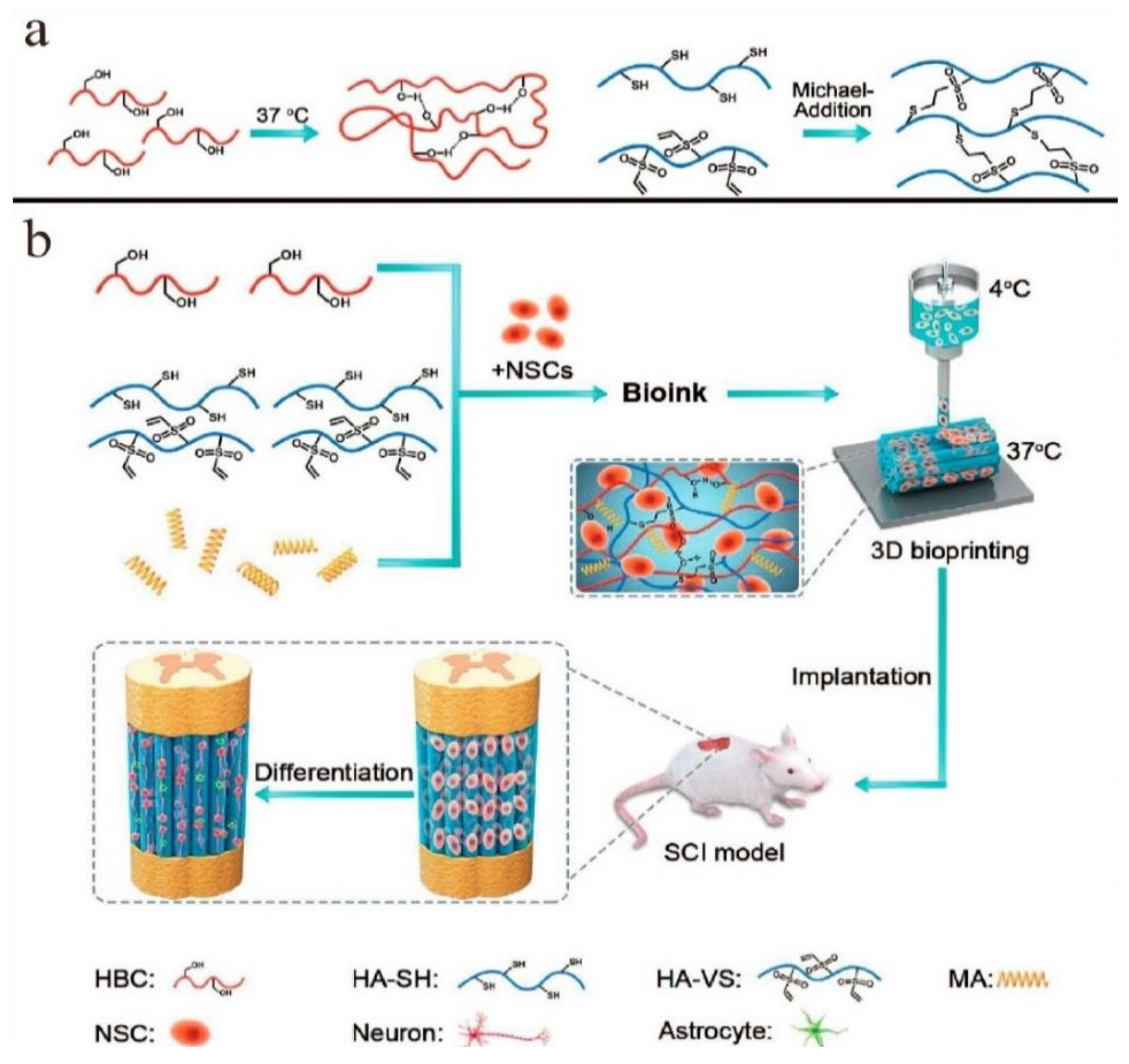
Nie et al. tried to overcome the limitations of thermo-responsive hydrogels concerning the cell aggregates and the rigidity, which results in limited cell viability developing a new thermosensitive hydrogel consisting of poly(N-isopropyl acrylamide) (pNiPAM) and hydroxyethyl-chitosan (HECS) loaded with dithiol-modified graphene oxide nanosheets (t-GO) (pNHG) [35]. The regulation of low critical solution temperature (LCST) could perform with varying the weight ratio of pNiPAM/HECS/t-GO while the incorporation of the human bone mesenchymal stem cells (hBMSCs) could be enacted at 20 °C. The highlight of this research is the enhancement of cell viability combined with the insert of t-GO nanosheets, which gives a potential for its use in 3D bioprinting. Neural stem cells (NSC)-laden constructs were fabricated for the first time by Liu et al. for in vivo spinal cord injury (SCI) repair in rats overcoming the difficulties of this operation. The polymeric matrix used for the incorporation of the cells was hydroxypropyl chitosan (HPC), with thiolated hyaluronic acid (HA-SG), vinyl sulfonated hyaluronic acid (HA-VS), and matrigel (MA). The whole system demonstrated a fast gel phase (20 s) at 37 °C and inherent crosslinking capacity leading to direct bioprinting of spinal cord-like constructs (Figure 11). The viability of the cells in the matrix remained extremely high, approximately 95%, and alongside the interaction of cells, polymers and neuronal differentiation were achieved [36]. This study present for the first-time in vivo results of NSC-laden bioink that also stimulates the parallel linear structure of white matter of the spinal cord. Wang et al. also used HPC in the form of microspheres together with poly(γ- glutamic acid) (PG) embedded in GelMA solution with the aim to create a multi-network hydrogel suitable as a bioink [37]. The multi-network hydrogel retained shear thinning behavior, presenting favorable extrudability and injectability even in water, remaining stable. Apart from that, this hydrogel could achieve good printability in several shapes and mechanical integrity after further UV crosslinking. On the report of SEM images, dense distribution of the microspheres in the hydrogel was observed, while the formation of them in presence of GelMA and after UV radiation was not as clear as in presence of GelMA (Figure 12). Adipose-derived stem cells (ASCs)- loaded bioinks revealed satisfying cell vitality after printing and UV application. Another water-soluble CS derivative, hyroxybutyl chitosan (HBC), was explored as a bioprinted hydrogel in combination with oxidized chondroitin sulfate (OCS). The specific hydrogel was intended for the fabrication of a cartilage repair implant, trying to overcome the harmful environment formed around the MSC-based implants and the absence of their in vivo stability. HBC/OCS hydrogels exhibited pleasant biocompatibility and an appropriate environment for human adipose-derived MSCs (HAMSCs) encapsulation and proliferation. Various inner structures and external shapes were formed with the aid of sacrificial molds. However, further optimizations to control the shape are required [38].
Figure 12. Schematic representation of the NSC-laden bioprinted neural tissue constructs for in vivo SCI repair. (a) The crosslinking reactions during and after the 3D printing of the HBC/HA/MA bioink and (b) 3D bioprinting of the NSC-laden white matter of spinal cord-like scaffold and its application for in vivo SCI repair. Reprinted from [36], Copyright 2021, Elsevier.
Another chitosan derivative, succinylated chitosan (C), was explored by Turner and his collaborators in the interest of core-shell (c/s) networks for tissue-engineered constructs (TECs) intended for wound care management. The bioink noticed consisted of gelatin methacryloyl (GelMA) as shell and peptide-functionalized, succinylated chitosan (C)/dextran aldehyde (D) cell-laden as the core. The constructs were loaded with bone mesenchymal stem cells (BMSCs) in the shell bioink and human umbilical vein endothelial cells (HUVECs) in the core bioink. After printing, microdesigns were created, presenting high cell viability followed by vessel formation. The prepared constructs favorably encapsulated and delivered mesenchymal and endothelial cells preserving an appropriate environment for cell growth, the possibility for differentiation, and the creation of tube-like structures [39]. Overall, this research promoted the development of a single-step process for the fabrication of bioink used for wound healing management.
An overview of the recent studies on chitosan-derivatives-based bioinks and their application as scaffolds are presented in Table 3.
Table 3. Summary of the recent studies on chitosan derivatives-based bioinks.

4. Regulatory Aspects

The technology of bioprinting is still in a very early stage but rapidly developing with a wide range of research from printing engineering to tissue engineering and cell sciences. However, before the widespread use of 3D technologies in clinical practices, some regulations should be addressed in terms of safety and quality [75]. In December 2017, the FDA announced a guidance document entitled “Technical Considerations for Additive Manufactured Medical Devices”, which give initial regulatory insight into the requirements of 3D pharmaceutical materials and biomedical devices. Consequently, many medical devices found their way into the market, but the only pharmaceutical product approved by the regulatory authorities was Spritam, a 3D printed tablet by Aprecia Pharmaceuticals, approved by the Food and Drug Administration (FDA) for the treatment of epilepsy. However, there is uncertainty about whether the directions adjust to all processes and parameters or only to the final product. In addition, according to the European Commission (EC) and European Medicines Agency, gene therapies, somatic cell therapies, and tissue-engineered products are labeled as advanced therapy medicinal products (ATMPs). Regulations of the EC for the particles of ATMPs might be applied to different phases of the 3D bioprinting process and concern assessment of product quality, efficacy, and safety [76].
Given the existing circumstances, opportunities are created at the early stage of drug development, as current legislation can be more flexible regarding 3D printing incorporation. For instance, many contract research organizations have authorized manufacturing licenses and quality release protocols and have conditions for preparation on site. In that manner, the product under testing could be manufactured in-house or in an external manufacturing facility and then delivered to the clinical test site for spreading. However, 3D printers still have some restrictions regarding the passage from laboratory to scale-up production, which could affect the translation of the formulation to later stages of development (clinical phases II and III) [76]. For example, the existing regulatory frameworks do not adequately consider the view that computer-aided 3D bioprinting can be counted as an industrial manufacturing process with the scope to fabricate personalized tissue-engineered combination products using an automated way rather than an extemporaneous, facilitating the validation. As known, the existing regulation in the EU and the USA emphasizes that combining synthetic scaffolds with cultured human cells creates a combination medicinal product that will command a high level of a regulatory investigation, particularly for the manufacturer that makes both integral parts [77]. In the EU, the regulation appears more restricted than in the USA and requires the device component to receive a separate license (CE mark) in addition to the review of the market authorization application (MAA) for the cell-based component.
Concerning the drug delivery devices, commonly, the printed DDD must be made in accordance with the current chemistry, manufacturing, and control (CMC) standards as published in FDAs 21 CFR 200 and 300 series and other relevant guidance; in the same way, the conventional medical devices/products require. In personalized drug therapy, the complication of drug delivery devices (DDD) and dosage forms lead to concerns such as liability, intellectual rights, and data protection that must be addressed for the protection of manufacturers and patients [78].
Clinically, the implementation process is assumed to be much more complex and time-consuming. One of the main regulatory discussions in this category is also based on the fact that 3D printing must be considered an extemporaneous preparation or a manufacturing process. Extemporaneous preparation means the preparation of the drug by a pharmacist, in community and hospital pharmacies, in case the requested drug is not promptly available. This easily describes the concept of the production of personalized medicines at the point of care. The co-contribution of pharmacies with the pharmaceutical industry seems to be an effective way to bring 3D printing appears to be the best path to transfer this technology into practice. Moreover, adjustments to the commercially available 3D printers should occur adaptations in commercially available 3D printers in order to be in accordance with the safety and quality demand for drug preparation. Even if there are limitations referring to the speed of 3D printers compared to traditional industrial machines, 3D printers are here to fill the therapeutic gap relating to the request for personalized therapies. In that regard, this technology can be used as a supplementary or alternative way to the production of conventional therapies. Nevertheless, in limited production, at compounding pharmacies, the difference in speed between manual preparation and the use of a 3D printer is negligible. Overcoming the limitation of speed, multiple printing heads could be used at the same time until the point that the resolution is not influenced [79]. Other challenges refer to the selection of technology cells and appropriate material used during the process [80].
New guidelines are supposed to make an appearance in the next period of time in order to set up pre-determined targets and continuous flow to the process that combine both the needs of the patient and the manufacturers. In addition, researchers should also play a key role in researching new applications with 3D technology in terms of hospital and pharmaceutical fields. In general, for incorporating 3D technology into pharmaceutical technology, an interdisciplinary project with the cooperation of regulators, scientists, manufacturers, and engineers should be constructed [81]. In total, bioprinting could play a significant role in the pharmaceutical and medicinal field, reducing the high cost and long lead times that the development process takes. Therefore, it deserves special attention and a legal framework.

5. Expert Opinion and Future Perspectives

Bioinks are an essential component of bioprinting and typically consist of biomaterials, mainly hydrogels, cells, or cell aggregates or their combinations. Several natural polymers, such as chitosan, have been used as bioinks. Despite the fact that several attempts have been performed for the progress of bioprinting technology, the development of new materials for bioinks combining the mechanical, rheological, and biological requirements has been restricted until now. Specifically, for chitosan, efforts are being made to the development of new gelation techniques to improve not only the chitosan handling and functionality but, at the same time, the cell-encapsulation ability. Additionally, more work is needed concerning the models and standards of bioinks materials for comparison of the developed systems. Furthermore, important is the standardization of the bioinks during the printing process to conform to their use after. With regard to the cells, the sources used for the extraction of them for the bioprinting also need to be defined for purity and functionality reasons.
The next step for this technology is in situ printing [82], where the construction of the functional biological system will be developed directly to the injured site via a machine or device, a process particularly useful for skin regeneration or bone repair. These in situ printing techniques try to print biological systems in an easy and accurate way; however, the clinical studies of in vivo bioprinting are yet to be determined. Furthermore, another evaluation of the technology is the possibility of studying the 3D printed construct during 4D printing. The shape, functions, features, and mechanisms involved in 3DBP are also evaluated in 4DBP with different stimuli for the development of controlled or sustained delivery systems. Conformational changes are observed in the structures when different stimuli are applied. Four-dimensional printing may contribute and extend the applications of in situ 3DBP resulting biological structures and scaffolds in vivo [83].

6. Conclusions

3D printing and bioprinting is a promising strategy for the artificial synthesis of biological structures or therapeutic delivery systems in reduced time compared to conventional methods. Specifically, the application of chitosan hydrogels in 3D printed pharmaceutical formulations provides important advantages related to biocompatibility and biodegradability of the prepared formulations. Concerning their application as implants and scaffolds for tissue engineering, these benefits are indispensable. Chitosan-based systems have a wide variety of properties that makes it possible to use them in a large number of 3D printing technologies. Nevertheless, this field is an emerging technology, and the research study in the bibliography is still limited. Furthermore, the use of natural products is restricted to the role of the excipient. Moreover, several modifications based on the functional groups of chitosan and its combination with other substances (formation of composites, complexes, etc.) could ameliorate its features. The incorporation of active substances as drugs or cell cultures into the bioinks predicts a very promising future for these products in 3D printed systems.

Author Contributions

Conceptualization, D.A.L., M.L. and D.N.B.; investigation, D.A.L. and M.L.; writing—original draft preparation, M.L.; writing—review and editing, D.A.L., M.L. and D.N.B.; supervision, D.A.L. and D.N.B. All authors have read and agreed to the published version of the manuscript.

Funding

This research received no external funding.

Institutional Review Board Statement

Not applicable.

Data Availability Statement

Not applicable.

Conflicts of Interest

The authors declare no conflict of interest.

Abbreviations

ACArticular cartilage
AcMMTAcrylated montmorillonite
ACPAmorphous calcium phosphate
ADHAdipic acid dihydrazide
AGAgarose
AHAAldehyde hyaluronic acid
ALPAlkaline phosphatase
AMAcrylamide
ATMPsAdvanced therapy medicinal products
BCPBiphasic calcium phosphate
BGBioglass
BMPBone morphogenic protein
BMSCsBone mesenchymal stem cells
CSuccinylated chitosan
CADComputer aided design
CCPChitosan cyclodextrin with propolis extract
CGChitosan crosslinked with genipin
Chi-CCatechol-conjugated chitosan
Chi-PhPhenol chitosan
ChMAChitosan methacrylate
CMCCarboxymethyl chitosan
CNCCellulose nanocrystals
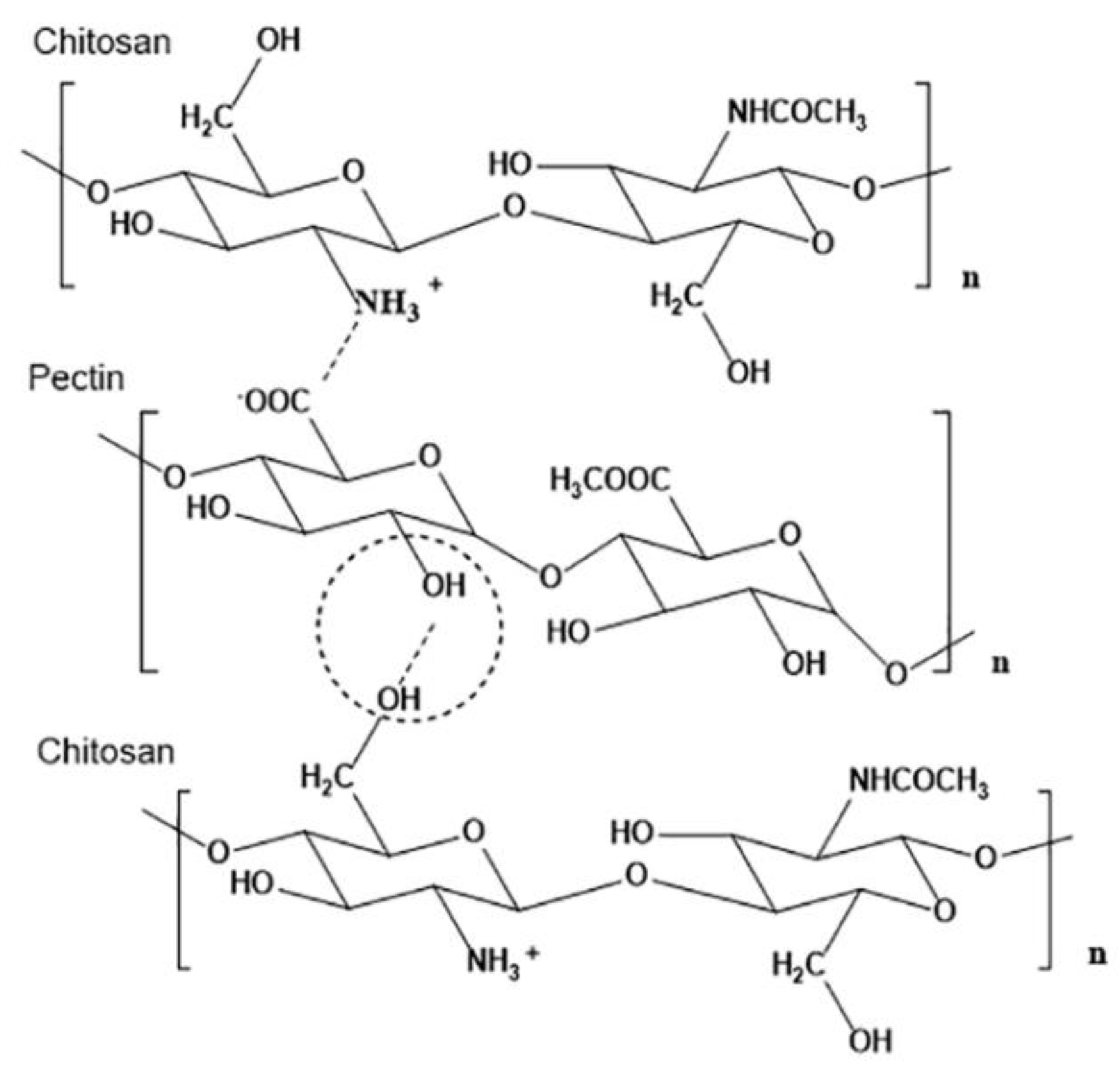
CPChitosan crosslinked with pectin
CSChitosan
DDextran aldehyde
DDDDrug delivery devices
DDSDrug delivery system
DLPDigital light processing
ECEuropean Commission
EDCN-(3-dimethylaminopropyl)-N’-ethyl carbodiimide hydrochloride
EDTAEthylenediaminetetraacetic acid
ECMExtracellular matrix
FBSFetal bovine serum
FDAFood and Drug Administration
FRESHFreeform reversible embedding of suspended hydrogels
FSFluorescein sodium
FTIRFourier
G1Phyglycerylphytate
Gamma-PGAPoly(gamma-glutamic acid)
GCGlycol chitosan
GelGelatin
GelMAMethacrylate gelatin
GlyGlycerol
GMGlycidyl methacrylate
GOGraphene oxide
HAHyaluronic acid
HaCaTAneploid immortal keratinocyte cells
HAMSCsHuman derived mesenchymal cells
HApHydroxyapatite
HA-SGThiolated hyaluronic acid
HBCHydroxybutyl chitosan
hBMSCsHuman bone mesenchymal stem cells
HDFHuman dermal fibroblasts
HECSHydroxyethyl chitosan
HMSCsHuman adipose-derived mesenchymal stem cells
HUVECsHuman umbilical vein endothelial cells
IONIron oxide nanoparticle
IPECInter polyelectrolyte complex
KCKeratinocytes
K2HPO4Potassium phosphate
LCSTLow critical solution temperature
LEVLevofloxacin
MAMatrigel
MAAMarket authorization application
MeGCMethacrylate glycol chitosan
MFSilk microfibres
MG-63Osteosarcoma cell line
MSCsMensechymal stem cells
NaHCO3Sodium bicarbonate
nanoHApNanohydroxyapatite
NFSilk nanofibres
NhdfNormal dermal human fibroblast cells
NIH/3T3Fibroblasts
NHSN-hydroxysuccinimide
NOCCN,O Carboxylmethyl chitosan
NPsNanoparticles
NSCsNeural stem cells
OCSOxidized chondroitin sulfate
OHAOxidized hyaluronate
PAMPoly(acrylamide)
PBSPhosphate-buffered saline
PCLPoly(e-caprolactone)
PDLSCsPeriodontal ligament stem cells
PecPectin
PECsPolyelectrolyte complexes
PEGPolyethylene glycol
PEG-SGPoly(ethylene glycol) succinimidyl glutarate
PgGAPoly(gamma-glutamic acid)
PLAPoly(lactic acid)
PLGAPolylactic-co glycolic acid
pNiPAMPoly(N-isopropyl acrylamide)
polyPPolyphosphate
RBCRed blood cells
rhBMPRecombinant human bone morphogenic protein
Saos-2Osteoblast-like cells
SCISpinal cord injury
SH-SY5YNeuronal-like cells
SMSCsSynovial mesenchymal stem cells
SPSilk powder
SPECsSurfactants and polyelectrolytes complexes
SPSSodium persulfate
TCNFTEMPO-mediated oxidized cellulose nanofibrils
TECsTissue engineering constructs
TEMPO2,2,6,6-tetramethylpiperidinyl-1-oxyl
TFNATetrahedral framework nucleic acid
TPPTripolyphosphate
VACSVanillin chitosan
VitEα-tocopherol
βGPβ-glycerophosphate

References

  1. 3D Hubs Manufacturing LLC 3D Printing Trends 2020. Available online: https://downloads.hubs.com/3D_printing_trends_report_2020.pdf (accessed on 19 August 2022).
  2. Foyt, D.A.; Norman, M.D.A.; Yu, T.T.L.; Gentleman, E. Exploiting Advanced Hydrogel Technologies to Address Key Challenges in Regenerative Medicine. Adv. Healthc. Mater. 2018, 7, e1700939. [Google Scholar] [CrossRef] [PubMed]
  3. Groll, J.; Burdick, J.A.; Cho, D.W.; Derby, B.; Gelinsky, M.; Heilshorn, S.C.; Jüngst, T.; Malda, J.; Mironov, V.A.; Nakayama, K.; et al. A definition of bioinks and their distinction from biomaterial inks. Biofabrication 2019, 11, 013001. [Google Scholar] [CrossRef] [PubMed]
  4. Mironov, V. Printing technology to produce living tissue. Expert Opin. Biol. Ther. 2003, 3, 701–704. [Google Scholar] [CrossRef] [PubMed]
  5. Boland, T.; Mironov, V.; Gutowska, A.; Roth, E.A.; Markwald, R.R. Cell and organ printing 2: Fusion of cell aggregates in three-dimensional gels. Anat. Rec. Part A Discov. Mol. Cell. Evol. Biol. 2003, 272, 497–502. [Google Scholar] [CrossRef] [PubMed]
  6. Schuurman, W.; Khristov, V.; Pot, M.W.; van Weeren, P.R.; Dhert, W.J.A.; Malda, J. Bioprinting of hybrid tissue constructs with tailorable mechanical properties. Biofabrication 2011, 3, 021001. [Google Scholar] [CrossRef] [PubMed]
  7. Shim, J.H.; Kim, J.Y.; Park, M.; Park, J.; Cho, D.W. Development of a hybrid scaffold with synthetic biomaterials and hydrogel using solid freeform fabrication technology. Biofabrication 2011, 3, 034102. [Google Scholar] [CrossRef] [PubMed]
  8. Paxton, N.; Smolan, W.; Böck, T.; Melchels, F.; Groll, J.; Jungst, T. Proposal to assess printability of bioinks for extrusion-based bioprinting and evaluation of rheological properties governing bioprintability. Biofabrication 2017, 9, 044107. [Google Scholar] [CrossRef] [PubMed]
  9. Zamboulis, A.; Nanaki, S.; Michailidou, G.; Koumentakou, I.; Lazaridou, M.; Ainali, N.M.; Xanthopoulou, E.; Bikiaris, D.N. Chitosan and its derivatives for ocular delivery formulations: Recent advances and developments. Polymers 2020, 12, 1519. [Google Scholar] [CrossRef]
  10. Koumentakou, I.; Terzopoulou, Z.; Michopoulou, A.; Kalafatakis, I.; Theodorakis, K.; Tzetzis, D.; Bikiaris, D. Chitosan dressings containing inorganic additives and levofloxacin as potential wound care products with enhanced hemostatic properties. Int. J. Biol. Macromol. 2020, 162, 693–703. [Google Scholar] [CrossRef]
  11. Croisier, F.; Jérôme, C. Chitosan-based biomaterials for tissue engineering. Eur. Polym. J. 2013, 49, 780–792. [Google Scholar] [CrossRef]
  12. Lazaridou, M.; Nanaki, S.; Zamboulis, A.; Papoulia, C.; Chrissafis, K.; Klonos, P.A.; Kyritsis, A.; Vergkizi-Nikolakaki, S.; Kostoglou, M.; Bikiaris, D.N. Super absorbent chitosan-based hydrogel sponges as carriers for caspofungin antifungal drug. Int. J. Pharm. 2021, 606, 120925. [Google Scholar] [CrossRef]
  13. Karava, A.; Lazaridou, M.; Nanaki, S.; Michailidou, G.; Christodoulou, E.; Kostoglou, M.; Iatrou, H.; Bikiaris, D.N. Chitosan Derivatives with Mucoadhesive and Antimicrobial Properties for Simultaneous Nanoencapsulation and Extended Ocular Release Formulations of Dexamethasone and Chloramphenicol Drugs. Pharmaceutics 2020, 12, 594. [Google Scholar] [CrossRef]
  14. Khoeini, R.; Nosrati, H.; Akbarzadeh, A.; Eftekhari, A.; Kavetskyy, T.; Khalilov, R.; Ahmadian, E.; Nasibova, A.; Datta, P.; Roshangar, L.; et al. Natural and Synthetic Bioinks for 3D Bioprinting. Adv. NanoBiomed Res. 2021, 1, 2000097. [Google Scholar] [CrossRef]
  15. Li, P.; Fu, L.; Liao, Z.; Peng, Y.; Ning, C.; Gao, C.; Zhang, D.; Sui, X.; Lin, Y.; Liu, S.; et al. Chitosan hydrogel/3D-printed poly(ε-caprolactone) hybrid scaffold containing synovial mesenchymal stem cells for cartilage regeneration based on tetrahedral framework nucleic acid recruitment. Biomaterials 2021, 278, 121131. [Google Scholar] [CrossRef]
  16. Ku, J.; Seonwoo, H.; Park, S.; Jang, K.J.; Lee, J.; Lee, M.; Lim, J.W.; Kim, J.; Chung, J.H. Cell-laden thermosensitive chitosan hydrogel bioinks for 3d bioprinting applications. Appl. Sci. 2020, 10, 2455. [Google Scholar] [CrossRef]
  17. Intini, C.; Elviri, L.; Cabral, J.; Mros, S.; Bergonzi, C.; Bianchera, A.; Flammini, L.; Govoni, P.; Barocelli, E.; Bettini, R.; et al. 3D-printed chitosan-based scaffolds: An in vitro study of human skin cell growth and an in-vivo wound healing evaluation in experimental diabetes in rats. Carbohydr. Polym. 2018, 199, 593–602. [Google Scholar] [CrossRef]
  18. Pisani, S.; Dorati, R.; Scocozza, F.; Mariotti, C.; Chiesa, E.; Bruni, G.; Genta, I.; Auricchio, F.; Conti, M.; Conti, B. Preliminary investigation on a new natural based poly(gamma-glutamic acid)/Chitosan bioink. J. Biomed. Mater. Res. Part B Appl. Biomater. 2020, 108, 2718–2732. [Google Scholar] [CrossRef]
  19. Maturavongsadit, P.; Narayanan, L.K.; Chansoria, P.; Shirwaiker, R.; Benhabbour, S.R. Cell-Laden Nanocellulose/Chitosan-Based Bioinks for 3D Bioprinting and Enhanced Osteogenic Cell Differentiation. ACS Appl. Bio Mater. 2021, 4, 2342–2353. [Google Scholar] [CrossRef]
  20. Roehm, K.D.; Madihally, S.V. Bioprinted chitosan-gelatin thermosensitive hydrogels using an inexpensive 3D printer. Biofabrication 2018, 10, 015002. [Google Scholar] [CrossRef]
  21. Rahimnejad, M.; Adoungotchodo, A.; Demarquette, N.R.; Lerouge, S. FRESH bioprinting of biodegradable chitosan thermosensitive hydrogels. Bioprinting 2022, 27, e00209. [Google Scholar] [CrossRef]
  22. Hafezi, F.; Shorter, S.; Tabriz, A.G.; Hurt, A.; Elmes, V.; Boateng, J.; Douroumis, D. Bioprinting and preliminary testing of highly reproducible novel bioink for potential skin regeneration. Pharmaceutics 2020, 12, 550. [Google Scholar] [CrossRef]
  23. Chang, H.K.; Yang, D.H.; Ha, M.Y.; Kim, H.J.; Kim, C.H.; Kim, S.H.; Choi, J.W.; Chun, H.J. 3D printing of cell-laden visible light curable glycol chitosan bioink for bone tissue engineering. Carbohydr. Polym. 2022, 287, 119328. [Google Scholar] [CrossRef]
  24. Tonda-Turo, C.; Carmagnola, I.; Chiappone, A.; Feng, Z.; Ciardelli, G.; Hakkarainen, M.; Sangermano, M. Photocurable chitosan as bioink for cellularized therapies towards personalized scaffold architecture. Bioprinting 2020, 18, e00082. [Google Scholar] [CrossRef]
  25. Gaihre, B.; Liu, X.; Tilton, M.; Li, L.; Li, Y.; Lu, L. Spatial and uniform deposition of cell-laden constructs on 3D printed composite phosphorylated hydrogels for improved osteoblast responses. J. Mater. Sci. 2021, 56, 17768–17784. [Google Scholar] [CrossRef]
  26. Lin, F.; Jia, H.R.; Wu, F.G. Glycol chitosan: A water-soluble polymer for cell imaging and drug delivery. Molecules 2019, 24, 4371. [Google Scholar] [CrossRef]
  27. Roh, H.H.; Kim, H.S.; Kim, C.; Lee, K.Y. 3D Printing of Polysaccharide-Based Self-Healing Hydrogel Reinforced With Alginate for Secondary Cross-Linking. Biomedicines 2021, 9, 1224. [Google Scholar] [CrossRef]
  28. Butler, H.M.; Naseri, E.; MacDonald, D.S.; Tasker, R.A.; Ahmadi, A. Investigation of rheology, printability, and biocompatibility of N,O-carboxymethyl chitosan and agarose bioinks for 3D bioprinting of neuron cells. Materialia 2021, 18, 101169. [Google Scholar] [CrossRef]
  29. Neufurth, M.; Wang, S.; Schröder, H.C.; Al-Nawas, B.; Wang, X.; Müller, W.E.G. 3D bioprinting of tissue units with mesenchymal stem cells, retaining their proliferative and differentiating potential, in polyphosphate-containing bio-ink. Biofabrication 2022, 14, 015016. [Google Scholar] [CrossRef] [PubMed]
  30. Chen, H.; Fei, F.; Li, X.; Nie, Z.; Zhou, D.; Liu, L.; Zhang, J.; Zhang, H.; Fei, Z.; Xu, T. A structure-supporting, self-healing, and high permeating hydrogel bioink for establishment of diverse homogeneous tissue-like constructs. Bioact. Mater. 2021, 6, 3580–3595. [Google Scholar] [CrossRef] [PubMed]
  31. Wang, L.; Cao, Y.; Shen, Z.; Li, M.; Zhang, W.; Liu, Y.; Zhang, Y.; Duan, J.; Ma, Z.; Sang, S. 3D printed GelMA/carboxymethyl chitosan composite scaffolds for vasculogenesis. Int. J. Polym. Mater. Polym. Biomater. 2022, 1–13. [Google Scholar] [CrossRef]
  32. Puertas-Bartolomé, M.; Włodarczyk-Biegun, M.K.; del Campo, A.; Vázquez-Lasa, B.; San Román, J. Development of bioactive catechol functionalized nanoparticles applicable for 3D bioprinting. Mater. Sci. Eng. C 2021, 131, 112515. [Google Scholar] [CrossRef]
  33. Zhao, C.; Qazvini, N.T.; Sadati, M.; Zeng, Z.; Huang, S.; De La Lastra, A.L.; Zhang, L.; Feng, Y.; Liu, W.; Huang, B.; et al. A pH-Triggered, Self-Assembled, and Bioprintable Hybrid Hydrogel Scaffold for Mesenchymal Stem Cell Based Bone Tissue Engineering. ACS Appl. Mater. Interfaces 2019, 11, 8749–8762. [Google Scholar] [CrossRef]
  34. Liu, Y.; Wong, C.W.; Chang, S.W.; Hsu, S. Hui An injectable, self-healing phenol-functionalized chitosan hydrogel with fast gelling property and visible light-crosslinking capability for 3D printing. Acta Biomater. 2021, 122, 211–219. [Google Scholar] [CrossRef]
  35. Nie, L.; Li, J.; Lu, G.; Wei, X.; Deng, Y.; Liu, S.; Zhong, S.; Shi, Q.; Hou, R.; Sun, Y.; et al. Temperature responsive hydrogel for cells encapsulation based on graphene oxide reinforced poly(N- isopropylacrylamide)/hydroxyethyl-chitosan. Mater. Today Commun. 2022, 31, 103697. [Google Scholar] [CrossRef]
  36. Liu, X.; Hao, M.; Chen, Z.; Zhang, T.; Huang, J.; Dai, J.; Zhang, Z. 3D bioprinted neural tissue constructs for spinal cord injury repair. Biomaterials 2021, 272, 120771. [Google Scholar] [CrossRef]
  37. Wang, W.; Chen, X.; Meng, T.; Liu, L. Multi-network granular hydrogel with enhanced strength for 3D bioprinting. J. Biomater. Appl. 2022, 36, 1852–1862. [Google Scholar] [CrossRef]
  38. Li, C.; Wang, K.; Zhou, X.; Li, T.; Xu, Y.; Qiang, L.; Peng, M.; Xu, Y.; Xie, L.; He, C.; et al. Controllable fabrication of hydroxybutyl chitosan/oxidized chondroitin sulfate hydrogels by 3D bioprinting technique for cartilage tissue engineering. Biomed. Mater. 2019, 14, 025006. [Google Scholar] [CrossRef]
  39. Turner, P.R.; Murray, E.; McAdam, C.J.; McConnell, M.A.; Cabral, J.D. Peptide Chitosan/Dextran Core/Shell Vascularized 3D Constructs for Wound Healing. ACS Appl. Mater. Interfaces 2020, 12, 32328–32339. [Google Scholar] [CrossRef]
  40. Groll, J.; Boland, T.; Blunk, T.; Burdick, J.A.; Cho, D.W.; Dalton, P.D.; Derby, B.; Forgacs, G.; Li, Q.; Mironov, V.A.; et al. Biofabrication: Reappraising the definition of an evolving field. Biofabrication 2016, 8, 013001. [Google Scholar] [CrossRef]
  41. Sadeghianmaryan, A.; Naghieh, S.; Alizadeh Sardroud, H.; Yazdanpanah, Z.; Afzal Soltani, Y.; Sernaglia, J.; Chen, X. Extrusion-based printing of chitosan scaffolds and their in vitro characterization for cartilage tissue engineering. Int. J. Biol. Macromol. 2020, 164, 3179–3192. [Google Scholar] [CrossRef]
  42. Bergonzi, C.; Bianchera, A.; Remaggi, G.; Ossiprandi, M.C.; Zimetti, F.; Marchi, C.; Bernini, F.; Bettini, R.; Elviri, L. Biocompatible 3d printed chitosan-based scaffolds containing α-tocopherol showing antioxidant and antimicrobial activity. Appl. Sci. 2021, 11, 7253. [Google Scholar] [CrossRef]
  43. Fischetti, T.; Celikkin, N.; Contessi Negrini, N.; Farè, S.; Swieszkowski, W. Tripolyphosphate-Crosslinked Chitosan/Gelatin Biocomposite Ink for 3D Printing of Uniaxial Scaffolds. Front. Bioeng. Biotechnol. 2020, 8, 400. [Google Scholar] [CrossRef]
  44. Wu, X.; Liu, S.; Chen, K.; Wang, F.; Feng, C.; Xu, L.; Zhang, D. 3D printed chitosan-gelatine hydrogel coating on titanium alloy surface as biological fixation interface of artificial joint prosthesis. Int. J. Biol. Macromol. 2021, 182, 669–679. [Google Scholar] [CrossRef]
  45. Zhang, J.; Allardyce, B.J.; Rajkhowa, R.; Kalita, S.; Dilley, R.J.; Wang, X.; Liu, X. Silk particles, microfibres and nanofibres: A comparative study of their functions in 3D printing hydrogel scaffolds. Mater. Sci. Eng. C 2019, 103, 109784. [Google Scholar] [CrossRef]
  46. Wu, C.; Yu, Z.; Li, Y.; Zhou, K.; Cao, C.; Zhang, P.; Li, W. Cryogenically printed flexible chitosan/bioglass scaffolds with stable and hierarchical porous structures for wound healing. Biomed. Mater. 2020, 16, 015004. [Google Scholar] [CrossRef]
  47. Mora-Boza, A.; Włodarczyk-Biegun, M.K.; Del Campo, A.; Vázquez-Lasa, B.; Román, J.S. Glycerylphytate as an ionic crosslinker for 3D printing of multi-layered scaffolds with improved shape fidelity and biological features. Biomater. Sci. 2020, 8, 506–516. [Google Scholar] [CrossRef]
  48. Suo, H.; Zhang, J.; Xu, M.; Wang, L. Low-temperature 3D printing of collagen and chitosan composite for tissue engineering. Mater. Sci. Eng. C 2021, 123, 111963. [Google Scholar] [CrossRef]
  49. Heidenreich, A.C.; Pérez-Recalde, M.; González Wusener, A.; Hermida, É.B. Collagen and chitosan blends for 3D bioprinting: A rheological and printability approach. Polym. Test. 2020, 82, 106297. [Google Scholar] [CrossRef]
  50. Vieira de Souza, T.; Malmonge, S.M.; Santos, A.R. Development of a chitosan and hyaluronic acid hydrogel with potential for bioprinting utilization: A preliminary study. J. Biomater. Appl. 2021, 36, 358–371. [Google Scholar] [CrossRef] [PubMed]
  51. Maiz-Fernández, S.; Barroso, N.; Pérez-Álvarez, L.; Silván, U.; Vilas-Vilela, J.L.; Lanceros-Mendez, S. 3D printable self-healing hyaluronic acid/chitosan polycomplex hydrogels with drug release capability. Int. J. Biol. Macromol. 2021, 188, 820–832. [Google Scholar] [CrossRef] [PubMed]
  52. Liu, Q.; Li, Q.; Xu, S.; Zheng, Q.; Cao, X. Preparation and properties of 3D printed alginate-chitosan polyion complex hydrogels for tissue engineering. Polymers 2018, 10, 664. [Google Scholar] [CrossRef]
  53. Osi, A.R.; Zhang, H.; Chen, J.; Zhou, Y.; Wang, R.; Fu, J.; Müller-Buschbaum, P.; Zhong, Q. Three-Dimensional-Printable Thermo/Photo-Cross-Linked Methacrylated Chitosan-Gelatin Hydrogel Composites for Tissue Engineering. ACS Appl. Mater. Interfaces 2021, 13, 22902–22913. [Google Scholar] [CrossRef]
  54. He, Y.; Wang, F.; Wang, X.; Zhang, J.; Wang, D.; Huang, X. A photocurable hybrid chitosan/acrylamide bioink for DLP based 3D bioprinting. Mater. Des. 2021, 202, 109588. [Google Scholar] [CrossRef]
  55. Lee, D.; Park, J.P.; Koh, M.-Y.; Kim, P.; Lee, J.; Shin, M.; Lee, H. Chitosan-catechol: A writable bioink under serum culture media. Biomater. Sci. 2018, 6, 1040–1047. [Google Scholar] [CrossRef]
  56. Ko, E.S.; Kim, C.; Choi, Y.; Lee, K.Y. 3D printing of self-healing ferrogel prepared from glycol chitosan, oxidized hyaluronate, and iron oxide nanoparticles. Carbohydr. Polym. 2020, 245, 116496. [Google Scholar] [CrossRef]
  57. Michailidou, G.; Koukaras, E.N.; Bikiaris, D.N. Vanillin chitosan miscible hydrogel blends and their prospects for 3D printing biomedical applications. Int. J. Biol. Macromol. 2021, 192, 1266–1275. [Google Scholar] [CrossRef]
  58. Hidaka, M.; Kojima, M.; Nakahata, M.; Sakai, S. Visible light-curable chitosan ink for extrusion-based and vat polymerization-based 3d bioprintings. Polymers 2021, 13, 1382. [Google Scholar] [CrossRef]
  59. Xu, H.; Zhang, L.; Bao, Y.; Yan, X.; Yin, Y.; Li, Y.; Wang, X.; Huang, Z.; Xu, P. Preparation and characterization of injectable chitosan-hyaluronic acid hydrogels for nerve growth factor sustained release. J. Bioact. Compat. Polym. 2017, 32, 146–162. [Google Scholar] [CrossRef]
  60. Biranje, S.S.; Sun, J.; Cheng, L.; Cheng, Y.; Shi, Y.; Yu, S.; Jiao, H.; Zhang, M.; Lu, X.; Han, W.; et al. Development of Cellulose Nanofibril/Casein-Based 3D Composite Hemostasis Scaffold for Potential Wound-Healing Application. ACS Appl. Mater. Interfaces 2022, 14, 3792–3808. [Google Scholar] [CrossRef]
  61. Lin, H.Y.; Huang, H.Y.; Shiue, S.J.; Cheng, J.K. Osteogenic effects of inductive coupling magnetism from magnetic 3D printed hydrogel scaffold. J. Magn. Magn. Mater. 2020, 504, 166680. [Google Scholar] [CrossRef]
  62. Hafezi, F.; Scoutaris, N.; Douroumis, D.; Boateng, J. 3D printed chitosan dressing crosslinked with genipin for potential healing of chronic wounds. Int. J. Pharm. 2019, 560, 406–415. [Google Scholar] [CrossRef]
  63. Ergul, N.M.; Unal, S.; Kartal, I.; Kalkandelen, C.; Ekren, N.; Kilic, O.; Chi-Chang, L.; Gunduz, O. 3D printing of chitosan/poly(vinyl alcohol) hydrogel containing synthesized hydroxyapatite scaffolds for hard-tissue engineering. Polym. Test. 2019, 79, 106006. [Google Scholar] [CrossRef]
  64. Deng, N.; Sun, J.; Li, Y.; Chen, L.; Chen, C.; Wu, Y.; Wang, Z.; Li, L. Experimental study of rhBMP-2 chitosan nano-sustained release carrier-loaded PLGA/nHA scaffolds to construct mandibular tissue-engineered bone. Arch. Oral Biol. 2019, 102, 16–25. [Google Scholar] [CrossRef]
  65. Chen, S.; Shi, Y.; Zhang, X.; Ma, J. Evaluation of BMP-2 and VEGF loaded 3D printed hydroxyapatite composite scaffolds with enhanced osteogenic capacity in vitro and in vivo. Mater. Sci. Eng. C 2020, 112, 110893. [Google Scholar] [CrossRef]
  66. Marques, C.F.; Olhero, S.M.; Torres, P.M.C.; Abrantes, J.C.C.; Fateixa, S.; Nogueira, H.I.S.; Ribeiro, I.A.C.; Bettencourt, A.; Sousa, A.; Granja, P.L.; et al. Novel sintering-free scaffolds obtained by additive manufacturing for concurrent bone regeneration and drug delivery: Proof of concept. Mater. Sci. Eng. C 2019, 94, 426–436. [Google Scholar] [CrossRef]
  67. Naseri, E.; Cartmell, C.; Saab, M.; Kerr, R.G.; Ahmadi, A. Development of N,O-Carboxymethyl Chitosan-Starch Biomaterial Inks for 3D Printed Wound Dressing Applications. Macromol. Biosci. 2021, 21, 1–9. [Google Scholar] [CrossRef]
  68. He, Y.; Derakhshanfar, S.; Zhong, W.; Li, B.; Lu, F.; Xing, M.; Li, X. Characterization and Application of Carboxymethyl Chitosan-Based Bioink in Cartilage Tissue Engineering. J. Nanomater. 2020, 2020, 2057097. [Google Scholar] [CrossRef]
  69. Liu, I.H.; Chang, S.H.; Lin, H.Y. Chitosan-based hydrogel tissue scaffolds made by 3D plotting promotes osteoblast proliferation and mineralization. Biomed. Mater. 2015, 10, 035004. [Google Scholar] [CrossRef]
  70. Long, J.; Etxeberria, A.E.; Nand, A.V.; Bunt, C.R.; Ray, S.; Seyfoddin, A. A 3D printed chitosan-pectin hydrogel wound dressing for lidocaine hydrochloride delivery. Mater. Sci. Eng. C 2019, 104, 109873. [Google Scholar] [CrossRef]
  71. Andriotis, E.G.; Eleftheriadis, G.K.; Karavasili, C.; Fatouros, D.G. Development of bio-active patches based on Pectin for the treatment of Ulcers and wounds using 3D-bioprinting technology. Pharmaceutics 2020, 12, 56. [Google Scholar] [CrossRef]
  72. Martinotti, S.; Ranzato, E. Propolis: A new frontier for wound healing? Burn. Trauma 2015, 3, 1–7. [Google Scholar] [CrossRef] [PubMed]
  73. Mamidi, N.; Velasco Delgadillo, R.M.; Barrera, E.V.; Ramakrishna, S.; Annabi, N. Carbonaceous nanomaterials incorporated biomaterials: The present and future of the flourishing field. Compos. Part B Eng. 2022, 243, 110150. [Google Scholar] [CrossRef]
  74. Cheng, Z.; Landish, B.; Chi, Z.; Nannan, C.; Jingyu, D.; Sen, L.; Xiangjin, L. 3D printing hydrogel with graphene oxide is functional in cartilage protection by influencing the signal pathway of Rank/Rankl/OPG. Mater. Sci. Eng. C 2018, 82, 244–252. [Google Scholar] [CrossRef] [PubMed]
  75. Diment, L.E.; Thompson, M.S.; Bergmann, J.H.M. Clinical efficacy and effectiveness of 3D printing: A systematic review. BMJ Open 2017, 7, e016891. [Google Scholar] [CrossRef]
  76. Trenfield, S.J.; Awad, A.; Goyanes, A.; Gaisford, S.; Basit, A.W. 3D Printing Pharmaceuticals: Drug Development to Frontline Care. Trends Pharmacol. Sci. 2018, 39, 440–451. [Google Scholar] [CrossRef]
  77. Hourd, P.; Medcalf, N.; Segal, J.; Williams, D.J. A 3D bioprinting exemplar of the consequences of the regulatory requirements on customized processes. Regen. Med. 2015, 10, 863–883. [Google Scholar] [CrossRef]
  78. Palo, M.; Holländer, J.; Suominen, J.; Yliruusi, J.; Sandler, N. 3D printed drug delivery devices: Perspectives and technical challenges. Expert Rev. Med. Devices 2017, 14, 685–696. [Google Scholar] [CrossRef]
  79. Mohiuddin, A.K. Extemporaneous compounding: Cautions, controversies and convenience. IP Int. J. Compr. Adv. Pharmacol. 2020, 3, 124–137. [Google Scholar] [CrossRef]
  80. Pavan Kalyan, B.; Kumar, L. 3D Printing: Applications in Tissue Engineering, Medical Devices, and Drug Delivery. AAPS PharmSciTech 2022, 23, 1–20. [Google Scholar] [CrossRef]
  81. Bom, S.; Martins, A.M.; Ribeiro, H.M.; Marto, J. Diving into 3D (bio)printing: A revolutionary tool to customize the production of drug and cell-based systems for skin delivery. Int. J. Pharm. 2021, 605, 120794. [Google Scholar] [CrossRef]
  82. Singh, S.; Choudhury, D.; Yu, F.; Mironov, V.; Naing, M.W. In situ bioprinting–Bioprinting from benchside to bedside? Acta Biomater. 2020, 101, 14–25. [Google Scholar] [CrossRef]
  83. Ashammakhi, N.; Ahadian, S.; Zengjie, F.; Suthiwanich, K.; Lorestani, F.; Orive, G.; Ostrovidov, S.; Khademhosseini, A. Advances and Future Perspectives in 4D Bioprinting. Biotechnol. J. 2018, 13, 1800148. [Google Scholar] [CrossRef]
Publisher’s Note: MDPI stays neutral with regard to jurisdictional claims in published maps and institutional affiliations.

Article Metrics

Citations

Article Access Statistics

Multiple requests from the same IP address are counted as one view.