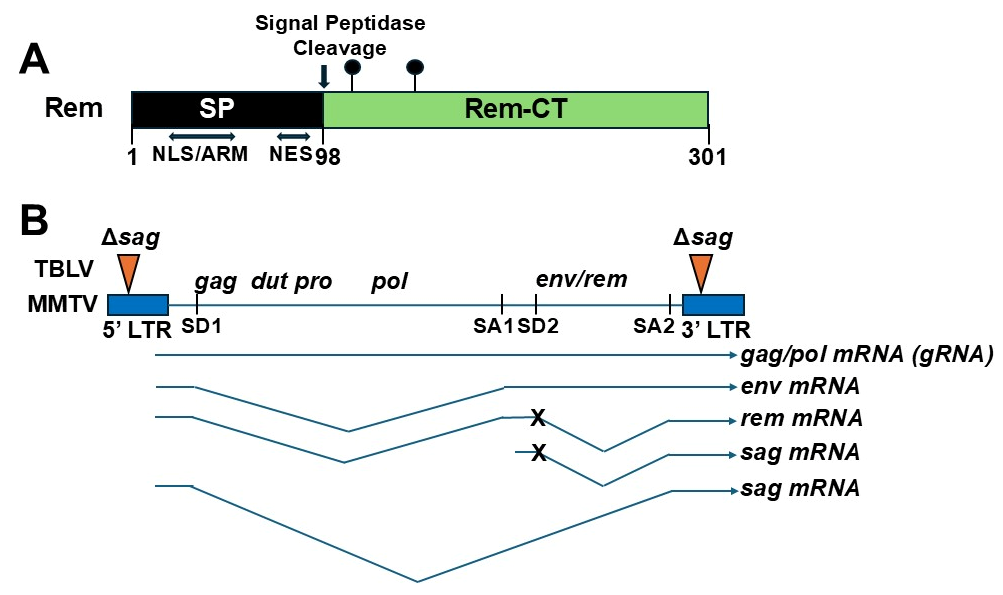
A Viral Protein Antagonist for Both AID and APOBEC3


Abstract
1. APOBEC Enzymes as Viral Antagonists
2. Conceptual Overview
3. MMTV-Encoded Rem as an APOBEC Inhibitor

4. Type B Leukemogenic Virus and Rem Antagonism of APOBECs
5. Genetic Evidence for Rem-Mediated AID Antagonism
6. Rem and Endogenous Mtvs
7. Mechanism of Rem-Mediated APOBEC Antagonism
8. Mouse Strain-Specific Differences in APOBEC-Mediated Proviral Mutagenesis
9. Apobec and Rem Expression in Mice
10. Model for Rem Antagonism of APOBECs
Funding
Data Availability Statement
Acknowledgments
Conflicts of Interest
Abbreviations
| A3 | APOBEC3 |
| ADAR | Adenosine deaminase acting on RNA |
| Aicda | Gene encoding AID |
| AID | Activation-induced cytidine deaminase |
| APOBEC | Apolipoprotein B mRNA-editing catalytic polypeptide-like |
| CA | Capsid |
| CRM-1 | Chromosome maintenance 1, also known as Exportin 1 |
| eEF1A | Eukaryotic elongation factor 1A |
| Env | Envelope |
| ER | Endoplasmic reticulum |
| HIV-1 | Human immunodeficiency virus type 1 |
| HTLV-1 | Human T-cell leukemia virus type 1 |
| IL-4 | Interleukin-4 |
| LPS | Lipopolysaccharide |
| LTR | Long terminal repeat |
| MLV | Mouse leukemia virus |
| MMTV | Mouse mammary tumor virus |
| Mtv | Endogenous mouse mammary tumor virus |
| NC | Nucleocapsid |
| NLS | Nuclear localization sequence |
| PABPC1 | PolyA-binding protein C1 |
| PKR | Protein kinase RNA-activated |
| RmRE | Rem-responsive element |
| SARS-CoV-2 | Severe acute respiratory syndrome coronavirus 2 |
| SD | Splice donor |
| SP | MMTV-encoded signal peptide |
| TBLV | Type B leukemogenic virus |
References
- Beirag, N.; Varghese, P.M.; Kishore, U. Innate Immune Response to Viral Infection. Adv. Exp. Med. Biol. 2025, 1476, 199–224. [Google Scholar] [CrossRef] [PubMed]
- Lam, N.; Lee, Y.; Farber, D.L. A Guide to Adaptive Immune Memory. Nat. Rev. Immunol. 2024, 24, 810–829. [Google Scholar] [CrossRef] [PubMed]
- Harris, R.S.; Dudley, J.P. APOBECs and Virus Restriction. Virology 2015, 479–480, 131–145. [Google Scholar] [CrossRef] [PubMed]
- Knisbacher, B.A.; Gerber, D.; Levanon, E.Y. DNA Editing by APOBECs: A Genomic Preserver and Transformer. Trends Genet. 2016, 32, 16–28. [Google Scholar] [CrossRef]
- Xu, W.K.; Byun, H.; Dudley, J.P. The Role of APOBECs in Viral Replication. Microorganisms 2020, 8, 1899. [Google Scholar] [CrossRef]
- Harari, A.; Ooms, M.; Mulder, L.C.F.; Simon, V. Polymorphisms and Splice Variants Influence the Antiretroviral Activity of Human APOBEC3H. J. Virol. 2009, 83, 295–303. [Google Scholar] [CrossRef]
- Anant, S.; MacGinnitie, A.J.; Davidson, N.O. Apobec-1, the Catalytic Subunit of the Mammalian Apolipoprotein B mRNA Editing Enzyme, Is a Novel RNA-Binding Protein. J. Biol. Chem. 1995, 270, 14762–14767. [Google Scholar] [CrossRef]
- Jern, P.; Stoye, J.P.; Coffin, J.M. Role of APOBEC3 in Genetic Diversity among Endogenous Murine Leukemia Viruses. PLoS Genet. 2007, 3, 2014–2022. [Google Scholar] [CrossRef]
- Shaffer, E.; Boso, G.; Sadjadpour, R.; Yedavalli, V.V.S.R.K.; Lam, O.; Kozak, C.A. Apobec3 Shows Rapid Evolution in House Mouse Subspecies and Unusual Hypermutation Patterns of Endogenous Mouse Mammary Tumor Viruses. J. Virol. 2025, 99, e0125125. [Google Scholar] [CrossRef]
- Lecossier, D.; Bouchonnet, F.; Clavel, F.; Hance, A.J. Hypermutation of HIV-1 DNA in the Absence of the Vif Protein. Science 2003, 300, 1112. [Google Scholar] [CrossRef]
- Sheehy, A.M.; Gaddis, N.C.; Choi, J.D.; Malim, M.H. Isolation of a Human Gene That Inhibits HIV-1 Infection and Is Suppressed by the Viral Vif Protein. Nature 2002, 418, 646–650. [Google Scholar] [CrossRef] [PubMed]
- Guo, F.; Cen, S.; Niu, M.; Saadatmand, J.; Kleiman, L. Inhibition of tRNA3(Lys)-Primed Reverse Transcription by Human APOBEC3G during Human Immunodeficiency Virus Type 1 Replication. J. Virol. 2006, 80, 11710–11722. [Google Scholar] [CrossRef] [PubMed]
- Schröfelbauer, B.; Yu, Q.; Zeitlin, S.G.; Landau, N.R. Human Immunodeficiency Virus Type 1 Vpr Induces the Degradation of the UNG and SMUG Uracil-DNA Glycosylases. J. Virol. 2005, 79, 10978–10987. [Google Scholar] [CrossRef] [PubMed]
- Dudley, J.P. APOBECs: Our Fickle Friends? PLoS Pathog 2023, 19, e1011364. [Google Scholar] [CrossRef]
- Sova, P.; Volsky, D.J. Efficiency of Viral DNA Synthesis during Infection of Permissive and Nonpermissive Cells with Vif-Negative Human Immunodeficiency Virus Type 1. J. Virol. 1993, 67, 6322–6326. [Google Scholar] [CrossRef]
- Liddament, M.T.; Brown, W.L.; Schumacher, A.J.; Harris, R.S. APOBEC3F Properties and Hypermutation Preferences Indicate Activity against HIV-1 in Vivo. Curr. Biol. 2004, 14, 1385–1391. [Google Scholar] [CrossRef]
- Wiegand, H.L.; Doehle, B.P.; Bogerd, H.P.; Cullen, B.R. A Second Human Antiretroviral Factor, APOBEC3F, Is Suppressed by the HIV-1 and HIV-2 Vif Proteins. EMBO J. 2004, 23, 2451–2458. [Google Scholar] [CrossRef]
- Miyagi, E.; Kao, S.; Fumitaka, M.; Buckler-White, A.; Plishka, R.; Strebel, K. Long-Term Passage of Vif-Null HIV-1 in CD4+ T Cells Expressing Sub-Lethal Levels of APOBEC Proteins Fails to Develop APOBEC Resistance. Virology 2017, 504, 1–11. [Google Scholar] [CrossRef]
- Jaguva Vasudevan, A.A.; Perkovic, M.; Bulliard, Y.; Cichutek, K.; Trono, D.; Häussinger, D.; Münk, C. Prototype Foamy Virus Bet Impairs the Dimerization and Cytosolic Solubility of Human APOBEC3G. J. Virol. 2013, 87, 9030–9040. [Google Scholar] [CrossRef]
- Yoshikawa, R.; Takeuchi, J.S.; Yamada, E.; Nakano, Y.; Misawa, N.; Kimura, Y.; Ren, F.; Miyazawa, T.; Koyanagi, Y.; Sato, K. Feline Immunodeficiency Virus Evolutionarily Acquires Two Proteins, Vif and Protease, Capable of Antagonizing Feline APOBEC3. J. Virol. 2017, 91, e00250-17. [Google Scholar] [CrossRef]
- Stavrou, S.; Nitta, T.; Kotla, S.; Ha, D.; Nagashima, K.; Rein, A.R.; Fan, H.; Ross, S.R. Murine Leukemia Virus Glycosylated Gag Blocks Apolipoprotein B Editing Complex 3 and Cytosolic Sensor Access to the Reverse Transcription Complex. Proc. Natl. Acad. Sci. USA 2013, 110, 9078–9083. [Google Scholar] [CrossRef]
- Golovkina, T.V.; Dudley, J.P.; Ross, S.R. B and T Cells Are Required for Mouse Mammary Tumor Virus Spread within the Mammary Gland. J. Immunol. 1998, 161, 2375–2382. [Google Scholar] [CrossRef]
- Golovkina, T.V.; Chervonsky, A.; Dudley, J.P.; Ross, S.R. Transgenic Mouse Mammary Tumor Virus Superantigen Expression Prevents Viral Infection. Cell 1992, 69, 637–645. [Google Scholar] [CrossRef] [PubMed]
- Held, W.; Shakhov, A.N.; Izui, S.; Waanders, G.A.; Scarpellino, L.; MacDonald, H.R.; Acha-Orbea, H. Superantigen-Reactive CD4+ T Cells Are Required to Stimulate B Cells after Infection with Mouse Mammary Tumor Virus. J. Exp. Med. 1993, 177, 359–366. [Google Scholar] [CrossRef]
- Mertz, J.A.; Simper, M.S.; Lozano, M.M.; Payne, S.M.; Dudley, J.P. Mouse Mammary Tumor Virus Encodes a Self-Regulatory RNA Export Protein and Is a Complex Retrovirus. J. Virol. 2005, 79, 14737–14747. [Google Scholar] [CrossRef] [PubMed]
- Indik, S.; Günzburg, W.H.; Salmons, B.; Rouault, F. A Novel, Mouse Mammary Tumor Virus Encoded Protein with Rev-like Properties. Virology 2005, 337, 1–6. [Google Scholar] [CrossRef] [PubMed]
- Byun, H.; Halani, N.; Mertz, J.A.; Ali, A.F.; Lozano, M.M.; Dudley, J.P. Retroviral Rem Protein Requires Processing by Signal Peptidase and Retrotranslocation for Nuclear Function. Proc. Natl. Acad. Sci. USA 2010, 107, 12287–12292. [Google Scholar] [CrossRef]
- Xu, W.K.; Gou, Y.; Lozano, M.M.; Dudley, J.P. Unconventional P97/VCP-Mediated Endoplasmic Reticulum-to-Endosome Trafficking of a Retroviral Protein. J. Virol. 2021, 95, e0053121. [Google Scholar] [CrossRef]
- Mertz, J.A.; Chadee, A.B.; Byun, H.; Russell, R.; Dudley, J.P. Mapping of the Functional Boundaries and Secondary Structure of the Mouse Mammary Tumor Virus Rem-Responsive Element. J. Biol. Chem. 2009, 284, 25642–25652. [Google Scholar] [CrossRef]
- Mertz, J.A.; Lozano, M.M.; Dudley, J.P. Rev and Rex Proteins of Human Complex Retroviruses Function with the MMTV Rem-Responsive Element. Retrovirology 2009, 6, 10. [Google Scholar] [CrossRef]
- Singh, G.B.; Byun, H.; Ali, A.F.; Medina, F.; Wylie, D.; Shivram, H.; Nash, A.K.; Lozano, M.M.; Dudley, J.P. A Protein Antagonist of Activation-Induced Cytidine Deaminase Encoded by a Complex Mouse Retrovirus. mBio 2019, 10, 10–1128. [Google Scholar] [CrossRef] [PubMed]
- Mustafa, F.; Lozano, M.; Dudley, J.P. C3H Mouse Mammary Tumor Virus Superantigen Function Requires a Splice Donor Site in the Envelope Gene. J. Virol. 2000, 74, 9431–9440. [Google Scholar] [CrossRef] [PubMed][Green Version]
- Dultz, E.; Hildenbeutel, M.; Martoglio, B.; Hochman, J.; Dobberstein, B.; Kapp, K. The Signal Peptide of the Mouse Mammary Tumor Virus Rem Protein Is Released from the Endoplasmic Reticulum Membrane and Accumulates in Nucleoli. J. Biol. Chem. 2008, 283, 9966–9976. [Google Scholar] [CrossRef] [PubMed]
- Das, P.; Xu, W.K.; Gautam, A.K.S.; Lozano, M.M.; Dudley, J.P. A Retrotranslocation Assay That Predicts Defective VCP/P97-Mediated Trafficking of a Retroviral Signal Peptide. mBio 2022, 13, e0295321. [Google Scholar] [CrossRef]
- Ball, J.K.; Diggelmann, H.; Dekaban, G.A.; Grossi, G.F.; Semmler, R.; Waight, P.A.; Fletcher, R.F. Alterations in the U3 Region of the Long Terminal Repeat of an Infectious Thymotropic Type B Retrovirus. J. Virol. 1988, 62, 2985–2993. [Google Scholar] [CrossRef]
- Mertz, J.A.; Mustafa, F.; Meyers, S.; Dudley, J.P. Type B Leukemogenic Virus Has a T-Cell-Specific Enhancer That Binds AML-1. J. Virol. 2001, 75, 2174–2184. [Google Scholar] [CrossRef]
- Dudley, J.P.; Golovkina, T.V.; Ross, S.R. Lessons Learned from Mouse Mammary Tumor Virus in Animal Models. ILAR J. 2016, 57, 12–23. [Google Scholar] [CrossRef]
- Miller, C.L.; Garner, R.; Paetkau, V. An Activation-Dependent, T-Lymphocyte-Specific Transcriptional Activator in the Mouse Mammary Tumor Virus Env Gene. Mol. Cell. Biol. 1992, 12, 3262–3272. [Google Scholar]
- Mustafa, F.; Bhadra, S.; Johnston, D.; Lozano, M.; Dudley, J.P. The Type B Leukemogenic Virus Truncated Superantigen Is Dispensable for T-Cell Lymphomagenesis. J. Virol. 2003, 77, 3866–3870. [Google Scholar] [CrossRef][Green Version]
- Henrard, D.; Ross, S.R. Endogenous Mouse Mammary Tumor Virus Is Expressed in Several Organs in Addition to the Lactating Mammary Gland. J. Virol. 1988, 62, 3046–3049. [Google Scholar] [CrossRef]
- Barnett, A.; Mustafa, F.; Wrona, T.J.; Lozano, M.; Dudley, J.P. Expression of Mouse Mammary Tumor Virus Superantigen mRNA in the Thymus Correlates with Kinetics of Self-Reactive T-Cell Loss. J. Virol. 1999, 73, 6634–6645. [Google Scholar] [CrossRef] [PubMed]
- Ito, S.; Nagaoka, H.; Shinkura, R.; Begum, N.; Muramatsu, M.; Nakata, M.; Honjo, T. Activation-Induced Cytidine Deaminase Shuttles between Nucleus and Cytoplasm like Apolipoprotein B mRNA Editing Catalytic Polypeptide 1. Proc. Natl. Acad. Sci. USA 2004, 101, 1975–1980. [Google Scholar] [CrossRef]
- Muramatsu, M.; Kinoshita, K.; Fagarasan, S.; Yamada, S.; Shinkai, Y.; Honjo, T. Class Switch Recombination and Hypermutation Require Activation-Induced Cytidine Deaminase (AID), a Potential RNA Editing Enzyme. Cell 2000, 102, 553–563. [Google Scholar] [CrossRef]
- Tsukimoto, S.; Hakata, Y.; Tsuji-Kawahara, S.; Enya, T.; Tsukamoto, T.; Mizuno, S.; Takahashi, S.; Nakao, S.; Miyazawa, M. Distinctive High Expression of Antiretroviral APOBEC3 Protein in Mouse Germinal Center B Cells. Viruses 2022, 14, 832. [Google Scholar] [CrossRef] [PubMed]
- Beutner, U.; Kraus, E.; Kitamura, D.; Rajewsky, K.; Huber, B.T. B Cells Are Essential for Murine Mammary Tumor Virus Transmission, but Not for Presentation of Endogenous Superantigens. J. Exp. Med. 1994, 179, 1457–1466. [Google Scholar] [CrossRef] [PubMed]
- Byun, H.; Singh, G.B.; Xu, W.K.; Das, P.; Reyes, A.; Battenhouse, A.; Wylie, D.C.; Santiago, M.L.; Lozano, M.M.; Dudley, J.P. Apobec-Mediated Retroviral Hypermutation in Vivo Is Dependent on Mouse Strain. PLoS Pathog. 2024, 20, e1012505. [Google Scholar] [CrossRef] [PubMed]
- Okeoma, C.M.; Lovsin, N.; Peterlin, B.M.; Ross, S.R. APOBEC3 Inhibits Mouse Mammary Tumour Virus Replication in Vivo. Nature 2007, 445, 927–930. [Google Scholar] [CrossRef]
- Okeoma, C.M.; Huegel, A.L.; Lingappa, J.; Feldman, M.D.; Ross, S.R. APOBEC3 Proteins Expressed in Mammary Epithelial Cells Are Packaged into Retroviruses and Can Restrict Transmission of Milk-Borne Virions. Cell Host Microbe 2010, 8, 534–543. [Google Scholar] [CrossRef]
- Bhadra, S.; Lozano, M.M.; Payne, S.M.; Dudley, J.P. Endogenous MMTV Proviruses Induce Susceptibility to Both Viral and Bacterial Pathogens. PLoS Pathog. 2006, 2, e128. [Google Scholar] [CrossRef]
- Nusse, R.; van Ooyen, A.; Cox, D.; Fung, Y.K.; Varmus, H. Mode of Proviral Activation of a Putative Mammary Oncogene (Int-1) on Mouse Chromosome 15. Nature 1984, 307, 131–136. [Google Scholar] [CrossRef]
- Peters, G.; Brookes, S.; Smith, R.; Dickson, C. Tumorigenesis by Mouse Mammary Tumor Virus: Evidence for a Common Region for Provirus Integration in Mammary Tumors. Cell 1983, 33, 369–377. [Google Scholar] [CrossRef] [PubMed]
- Michalides, R.; Wagenaar, E.; Weijers, P. Rearrangements in the Long Terminal Repeat of Extra Mouse Mammary Tumor Proviruses in T-Cell Leukemias of Mouse Strain GR Result in a Novel Enhancer-like Structure. Mol. Cell. Biol. 1985, 5, 823–830. [Google Scholar] [PubMed]
- Hsu, C.L.; Fabritius, C.; Dudley, J. Mouse Mammary Tumor Virus Proviruses in T-Cell Lymphomas Lack a Negative Regulatory Element in the Long Terminal Repeat. J. Virol. 1988, 62, 4644–4652. [Google Scholar] [CrossRef] [PubMed]
- Bhadra, S.; Lozano, M.M.; Dudley, J.P. Conversion of Mouse Mammary Tumor Virus to a Lymphomagenic Virus. J. Virol. 2005, 79, 12592–12596. [Google Scholar] [CrossRef]
- Nusse, R.; Varmus, H.E. Many Tumors Induced by the Mouse Mammary Tumor Virus Contain a Provirus Integrated in the Same Region of the Host Genome. Cell 1982, 31, 99–109. [Google Scholar] [CrossRef]
- Rajan, L.; Broussard, D.; Lozano, M.; Lee, C.G.; Kozak, C.A.; Dudley, J.P. The C-Myc Locus Is a Common Integration Site in Type B Retrovirus-Induced T-Cell Lymphomas. J. Virol. 2000, 74, 2466–2471. [Google Scholar] [CrossRef]
- Wei, L.; Chahwan, R.; Wang, S.; Wang, X.; Pham, P.T.; Goodman, M.F.; Bergman, A.; Scharff, M.D.; MacCarthy, T. Overlapping Hotspots in CDRs Are Critical Sites for V Region Diversification. Proc. Natl. Acad. Sci. USA 2015, 112, E728–E737. [Google Scholar] [CrossRef]
- MacCarthy, T.; Kalis, S.L.; Roa, S.; Pham, P.; Goodman, M.F.; Scharff, M.D.; Bergman, A. V-Region Mutation in Vitro, in Vivo, and in Silico Reveal the Importance of the Enzymatic Properties of AID and the Sequence Environment. Proc. Natl. Acad. Sci. USA 2009, 106, 8629–8634. [Google Scholar] [CrossRef]
- Dopkins, N.; Nixon, D.F. Activation of Human Endogenous Retroviruses and Its Physiological Consequences. Nat. Rev. Mol. Cell Biol. 2024, 25, 212–222. [Google Scholar] [CrossRef]
- Kozak, C.; Peters, G.; Pauley, R.; Morris, V.; Michalides, R.; Dudley, J.; Green, M.; Davisson, M.; Prakash, O.; Vaidya, A. A Standardized Nomenclature for Endogenous Mouse Mammary Tumor Viruses. J. Virol. 1987, 61, 1651–1654. [Google Scholar] [CrossRef]
- Lam, O.; Shaffer, E.; Boso, G.; Kozak, C.A. Intact, Recombinant, and Spliced Forms of Endogenous Mouse Mammary Tumor Viruses in Inbred and Wild Mice. J. Virol. 2025, 99, e0007925. [Google Scholar] [CrossRef] [PubMed]
- Salmons, B.; Knedlitschek, G.; Kennedy, N.; Groner, B.; Ponta, H. The Endogenous Mouse Mammary Tumour Virus Locus Mtv-8 Contains a Defective Envelope Gene. Virus Res. 1986, 4, 377–389. [Google Scholar] [CrossRef] [PubMed]
- Held, W.; Waanders, G.A.; MacDonald, H.R.; Acha-Orbea, H. MHC Class II Hierarchy of Superantigen Presentation Predicts Efficiency of Infection with Mouse Mammary Tumor Virus. Int. Immunol. 1994, 6, 1403–1407. [Google Scholar] [CrossRef] [PubMed]
- Kobayashi, M.; Takaori-Kondo, A.; Miyauchi, Y.; Iwai, K.; Uchiyama, T. Ubiquitination of APOBEC3G by an HIV-1 Vif-Cullin5-Elongin B-Elongin C Complex Is Essential for Vif Function. J. Biol. Chem. 2005, 280, 18573–18578. [Google Scholar] [CrossRef]
- Liu, B.; Sarkis, P.T.N.; Luo, K.; Yu, Y.; Yu, X.-F. Regulation of Apobec3F and Human Immunodeficiency Virus Type 1 Vif by Vif-Cul5-ElonB/C E3 Ubiquitin Ligase. J. Virol. 2005, 79, 9579–9587. [Google Scholar] [CrossRef]
- Abudu, A.; Takaori-Kondo, A.; Izumi, T.; Shirakawa, K.; Kobayashi, M.; Sasada, A.; Fukunaga, K.; Uchiyama, T. Murine Retrovirus Escapes from Murine APOBEC3 via Two Distinct Novel Mechanisms. Curr. Biol. 2006, 16, 1565–1570. [Google Scholar] [CrossRef]
- Santiago, M.L.; Montano, M.; Benitez, R.; Messer, R.J.; Yonemoto, W.; Chesebro, B.; Hasenkrug, K.J.; Greene, W.C. Apobec3 Encodes Rfv3, a Gene Influencing Neutralizing Antibody Control of Retrovirus Infection. Science 2008, 321, 1343–1346. [Google Scholar] [CrossRef]
- Browne, E.P.; Littman, D.R. Species-Specific Restriction of Apobec3-Mediated Hypermutation. J. Virol. 2008, 82, 1305–1313. [Google Scholar] [CrossRef]
- Gourzi, P.; Leonova, T.; Papavasiliou, F.N. A Role for Activation-Induced Cytidine Deaminase in the Host Response against a Transforming Retrovirus. Immunity 2006, 24, 779–786. [Google Scholar] [CrossRef]
- Ferreira, B.L.; Ferreira, É.R.; de Brito, M.V.; Salu, B.R.; Oliva, M.L.V.; Mortara, R.A.; Orikaza, C.M. BALB/c and C57BL/6 Mice Cytokine Responses to Trypanosoma Cruzi Infection Are Independent of Parasite Strain Infectivity. Front. Microbiol. 2018, 9, 553. [Google Scholar] [CrossRef]
- Watanabe, H.; Numata, K.; Ito, T.; Takagi, K.; Matsukawa, A. INNATE IMMUNE RESPONSE IN TH1- AND TH2-DOMINANT MOUSE STRAINS. Shock 2004, 22, 460. [Google Scholar] [CrossRef] [PubMed]
- Takeda, E.; Tsuji-Kawahara, S.; Sakamoto, M.; Langlois, M.-A.; Neuberger, M.S.; Rada, C.; Miyazawa, M. Mouse APOBEC3 Restricts Friend Leukemia Virus Infection and Pathogenesis In Vivo. J. Virol. 2008, 82, 10998–11008. [Google Scholar] [CrossRef]
- Sanville, B.; Dolan, M.A.; Wollenberg, K.; Yan, Y.; Martin, C.; Yeung, M.L.; Strebel, K.; Buckler-White, A.; Kozak, C.A. Adaptive Evolution of Mus Apobec3 Includes Retroviral Insertion and Positive Selection at Two Clusters of Residues Flanking the Substrate Groove. PLoS Pathog. 2010, 6, e1000974. [Google Scholar] [CrossRef] [PubMed]
- Vogt, M.; Haggblom, C.; Swift, S.; Haas, M. Envelope Gene and Long Terminal Repeat Determine the Different Biological Properties of Rauscher, Friend, and Moloney Mink Cell Focus-Inducing Viruses. J. Virol. 1985, 55, 184–192. [Google Scholar] [CrossRef] [PubMed]
- Clark, S.P.; Kaufhold, R.; Chan, A.; Mak, T.W. Comparison of the Transcriptional Properties of the Friend and Moloney Retrovirus Long Terminal Repeats: Importance of Tandem Duplications and of the Core Enhancer Sequence. Virology 1985, 144, 481–494. [Google Scholar] [CrossRef]
- Rosen, C.A.; Haseltine, W.A.; Lenz, J.; Ruprecht, R.; Cloyd, M.W. Tissue Selectivity of Murine Leukemia Virus Infection Is Determined by Long Terminal Repeat Sequences. J. Virol. 1985, 55, 862–866. [Google Scholar] [CrossRef]
- Yoshimura, F.K.; Davison, B.; Chaffin, K. Murine Leukemia Virus Long Terminal Repeat Sequences Can Enhance Gene Activity in a Cell-Type-Specific Manner. Mol. Cell Biol. 1985, 5, 2832–2835. [Google Scholar] [CrossRef]
- Hakata, Y.; Landau, N.R. Reversed Functional Organization of Mouse and Human APOBEC3 Cytidine Deaminase Domains. J. Biol. Chem. 2006, 281, 36624–36631. [Google Scholar] [CrossRef]
- Boi, S.; Kolokithas, A.; Shepard, J.; Linwood, R.; Rosenke, K.; Van Dis, E.; Malik, F.; Evans, L.H. Incorporation of Mouse APOBEC3 into Murine Leukemia Virus Virions Decreases the Activity and Fidelity of Reverse Transcriptase. J. Virol. 2014, 88, 7659–7662. [Google Scholar] [CrossRef][Green Version]
- Rulli, S.J.; Mirro, J.; Hill, S.A.; Lloyd, P.; Gorelick, R.J.; Coffin, J.M.; Derse, D.; Rein, A. Interactions of Murine APOBEC3 and Human APOBEC3G with Murine Leukemia Viruses. J. Virol. 2008, 82, 6566–6575. [Google Scholar] [CrossRef]
- MacMillan, A.L.; Kohli, R.M.; Ross, S.R. APOBEC3 Inhibition of Mouse Mammary Tumor Virus Infection: The Role of Cytidine Deamination versus Inhibition of Reverse Transcription. J. Virol. 2013, 87, 4808–4817. [Google Scholar] [CrossRef] [PubMed]
- Hagen, B.; Kraase, M.; Indikova, I.; Indik, S. A High Rate of Polymerization during Synthesis of Mouse Mammary Tumor Virus DNA Alleviates Hypermutation by APOBEC3 Proteins. PLoS Pathog. 2019, 15, e1007533. [Google Scholar] [CrossRef] [PubMed]
- Manjunath, L.; Oh, S.; Ortega, P.; Bouin, A.; Bournique, E.; Sanchez, A.; Martensen, P.M.; Auerbach, A.A.; Becker, J.T.; Seldin, M.; et al. APOBEC3B Drives PKR-Mediated Translation Shutdown and Protects Stress Granules in Response to Viral Infection. Nat. Commun. 2023, 14, 820. [Google Scholar] [CrossRef] [PubMed]
- Gallois-Montbrun, S.; Kramer, B.; Swanson, C.M.; Byers, H.; Lynham, S.; Ward, M.; Malim, M.H. Antiviral Protein APOBEC3G Localizes to Ribonucleoprotein Complexes Found in P Bodies and Stress Granules. J. Virol. 2007, 81, 2165–2178. [Google Scholar] [CrossRef]
- Kozak, S.L.; Marin, M.; Rose, K.M.; Bystrom, C.; Kabat, D. The Anti-HIV-1 Editing Enzyme APOBEC3G Binds HIV-1 RNA and Messenger RNAs That Shuttle between Polysomes and Stress Granules. J. Biol. Chem. 2006, 281, 29105–29119. [Google Scholar] [CrossRef]
- Tauber, D.; Tauber, G.; Khong, A.; Van Treeck, B.; Pelletier, J.; Parker, R. Modulation of RNA Condensation by the DEAD-Box Protein eIF4A. Cell 2020, 180, 411–426.e16. [Google Scholar] [CrossRef]
- Cui, Q.; Liu, Z.; Bai, G. Friend or Foe: The Role of Stress Granule in Neurodegenerative Disease. Neuron 2024, 112, 2464–2485. [Google Scholar] [CrossRef]
- Pecori, R.; Di Giorgio, S.; Paulo Lorenzo, J.; Nina Papavasiliou, F. Functions and Consequences of AID/APOBEC-Mediated DNA and RNA Deamination. Nat. Rev. Genet. 2022, 23, 505–518. [Google Scholar] [CrossRef]
- Walter, P.; Ron, D. The Unfolded Protein Response: From Stress Pathway to Homeostatic Regulation. Science 2011, 334, 1081–1086. [Google Scholar] [CrossRef]
- Wang, M.; Kaufman, R.J. Protein Misfolding in the Endoplasmic Reticulum as a Conduit to Human Disease. Nature 2016, 529, 326–335. [Google Scholar] [CrossRef]
- Foo, J.; Bellot, G.; Pervaiz, S.; Alonso, S. Mitochondria-Mediated Oxidative Stress during Viral Infection. Trends Microbiol. 2022, 30, 679–692. [Google Scholar] [CrossRef] [PubMed]
- Gomes, M.T.R.; Guimarães, E.S.; Oliveira, S.C. ZBP1 Senses Brucella Abortus DNA Triggering Type I Interferon Signaling Pathway and Unfolded Protein Response Activation. Front. Immunol. 2024, 15, 1511949. [Google Scholar] [CrossRef]
- Häsler, J.; Rada, C.; Neuberger, M.S. Cytoplasmic Activation-Induced Cytidine Deaminase (AID) Exists in Stoichiometric Complex with Translation Elongation Factor 1α (eEF1A). Proc. Natl. Acad. Sci. USA 2011, 108, 18366–18371. [Google Scholar] [CrossRef]
- Methot, S.P.; Litzler, L.C.; Trajtenberg, F.; Zahn, A.; Robert, F.; Pelletier, J.; Buschiazzo, A.; Magor, B.G.; Di Noia, J.M. Consecutive Interactions with HSP90 and eEF1A Underlie a Functional Maturation and Storage Pathway of AID in the Cytoplasm. J. Exp. Med. 2015, 212, 581–596. [Google Scholar] [CrossRef] [PubMed]
- Orthwein, A.; Patenaude, A.-M.; Affar, E.B.; Lamarre, A.; Young, J.C.; Di Noia, J.M. Regulation of Activation-Induced Deaminase Stability and Antibody Gene Diversification by Hsp90. J. Exp. Med. 2010, 207, 2751–2765. [Google Scholar] [CrossRef]
- Mediani, L.; Antoniani, F.; Galli, V.; Vinet, J.; Carrà, A.D.; Bigi, I.; Tripathy, V.; Tiago, T.; Cimino, M.; Leo, G.; et al. Hsp90-Mediated Regulation of DYRK3 Couples Stress Granule Disassembly and Growth via mTORC1 Signaling. EMBO Rep. 2021, 22, e51740. [Google Scholar] [CrossRef]
- Briggs, S.; Blomqvist, E.K.; Cuellar, A.; Correa, D.; Burke, J.M. Condensation of Human OAS Proteins Initiates Diverse Antiviral Activities in Response to West Nile Virus. Genes. Dev. 2025, 39, 1162–1181. [Google Scholar] [CrossRef]
- Langereis, M.A.; Feng, Q.; van Kuppeveld, F.J. MDA5 Localizes to Stress Granules, but This Localization Is Not Required for the Induction of Type I Interferon. J. Virol. 2013, 87, 6314–6325. [Google Scholar] [CrossRef]
- Loucas, G.; Locker, N.; Parker, R. Nucleic Acid-Protein Condensates in Innate Immunity. Mol. Cell 2025, 85, 3823–3839. [Google Scholar] [CrossRef]
- Reineke, L.C.; Lloyd, R.E. Diversion of Stress Granules and P-Bodies during Viral Infection. Virology 2013, 436, 255–267. [Google Scholar] [CrossRef]
- Kim, K.; Calabrese, P.; Wang, S.; Qin, C.; Rao, Y.; Feng, P.; Chen, X.S. The Roles of APOBEC-Mediated RNA Editing in SARS-CoV-2 Mutations, Replication and Fitness. Sci. Rep. 2022, 12, 14972. [Google Scholar] [CrossRef] [PubMed]
- Di Giorgio, S.; Martignano, F.; Torcia, M.G.; Mattiuz, G.; Conticello, S.G. Evidence for Host-Dependent RNA Editing in the Transcriptome of SARS-CoV-2. Sci. Adv. 2020, 6, eabb5813. [Google Scholar] [CrossRef] [PubMed]
- De Maio, N.; Walker, C.R.; Turakhia, Y.; Lanfear, R.; Corbett-Detig, R.; Goldman, N. Mutation Rates and Selection on Synonymous Mutations in SARS-CoV-2. Genome Biol. Evol. 2021, 13, evab087. [Google Scholar] [CrossRef] [PubMed]
- Ratcliff, J.; Simmonds, P. Potential APOBEC-Mediated RNA Editing of the Genomes of SARS-CoV-2 and Other Coronaviruses and Its Impact on Their Longer Term Evolution. Virology 2021, 556, 62–72. [Google Scholar] [CrossRef]
- Li, Z.; Luo, L.; Ju, X.; Huang, S.; Lei, L.; Yu, Y.; Liu, J.; Zhang, P.; Chi, T.; Ma, P.; et al. Viral N Protein Hijacks Deaminase-Containing RNA Granules to Enhance SARS-CoV-2 Mutagenesis. EMBO J. 2024, 43, 6444–6468. [Google Scholar] [CrossRef]
- Derse, D.; Hill, S.A.; Princler, G.; Lloyd, P.; Heidecker, G. Resistance of Human T Cell Leukemia Virus Type 1 to APOBEC3G Restriction Is Mediated by Elements in Nucleocapsid. Proc. Natl. Acad. Sci. USA 2007, 104, 2915–2920. [Google Scholar] [CrossRef]
- Shichijo, T.; Yasunaga, J.I.; Sato, K.; Nosaka, K.; Toyoda, K.; Watanabe, M.; Zhang, W.; Koyanagi, Y.; Murphy, E.L.; Bruhn, R.L.; et al. Vulnerability to APOBEC3G Linked to the Pathogenicity of Deltaretroviruses. Proc. Natl. Acad. Sci. USA 2024, 121, e2309925121. [Google Scholar] [CrossRef]
- Van Norden, M.; Falls, Z.; Mandloi, S.; Segal, B.H.; Baysal, B.E.; Samudrala, R.; Elkin, P.L. The Implications of APOBEC3-Mediated C-to-U RNA Editing for Human Disease. Commun. Biol. 2024, 7, 529. [Google Scholar] [CrossRef]
- Bishop, K.N.; Holmes, R.K.; Sheehy, A.M.; Malim, M.H. APOBEC-Mediated Editing of Viral RNA. Science 2004, 305, 645. [Google Scholar] [CrossRef]
- Teng, B.; Burant, C.F.; Davidson, N.O. Molecular Cloning of an Apolipoprotein B Messenger RNA Editing Protein. Science 1993, 260, 1816–1819. [Google Scholar] [CrossRef]
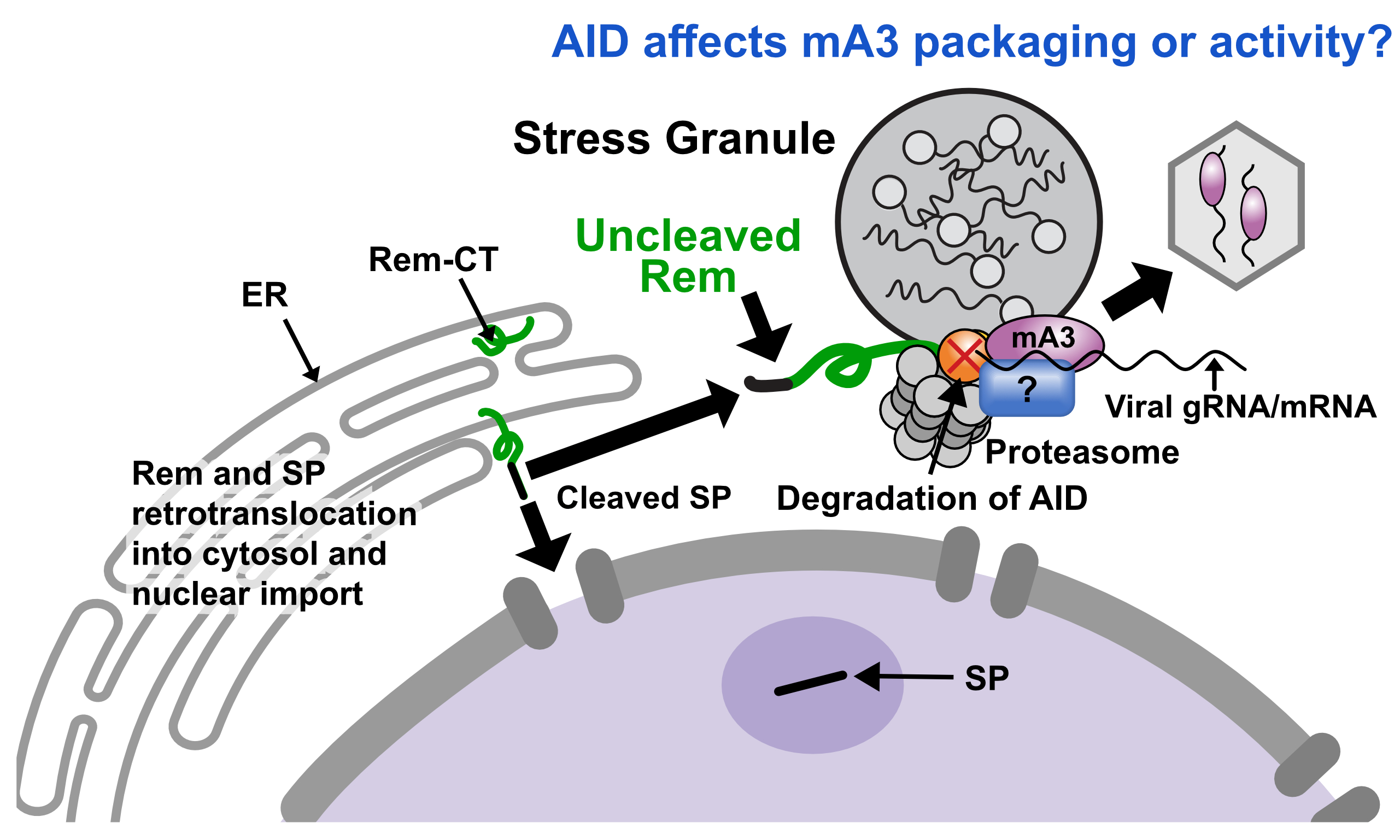

| Mouse Strain | Relative AID Splenocyte Levels | Relative mA3 Splenocyte Levels | Dominant TBLV APOBEC Mutations | Effect of Rem Expression on APOBEC Mutations |
|---|---|---|---|---|
| BALB/c | High | Low | TYC | Reduced |
| B6 | Low | High | TYC | No effect |
Disclaimer/Publisher’s Note: The statements, opinions and data contained in all publications are solely those of the individual author(s) and contributor(s) and not of MDPI and/or the editor(s). MDPI and/or the editor(s) disclaim responsibility for any injury to people or property resulting from any ideas, methods, instructions or products referred to in the content. |
© 2026 by the author. Licensee MDPI, Basel, Switzerland. This article is an open access article distributed under the terms and conditions of the Creative Commons Attribution (CC BY) license.
Share and Cite
Dudley, J.P. A Viral Protein Antagonist for Both AID and APOBEC3. Viruses 2026, 18, 399. https://doi.org/10.3390/v18040399
Dudley JP. A Viral Protein Antagonist for Both AID and APOBEC3. Viruses. 2026; 18(4):399. https://doi.org/10.3390/v18040399
Chicago/Turabian StyleDudley, Jaquelin P. 2026. "A Viral Protein Antagonist for Both AID and APOBEC3" Viruses 18, no. 4: 399. https://doi.org/10.3390/v18040399
APA StyleDudley, J. P. (2026). A Viral Protein Antagonist for Both AID and APOBEC3. Viruses, 18(4), 399. https://doi.org/10.3390/v18040399