Molecular Epidemiological Surveillance of HIV-1 Genotypes and Drug Resistance Profiles in Wuhan, Central China

Abstract
1. Introduction
2. Materials and Methods
2.1. Specimens
2.2. HIV-1 RNA Extraction, Nested PCR Amplification, and Sequencing
2.3. HIV-1 Sequence Genotype Analysis
2.4. HIV-1 Genotypic Drug Resistance Analysis
2.5. Statistical Analysis
3. Results
3.1. Basic Information of HIV-1-Infected Individuals
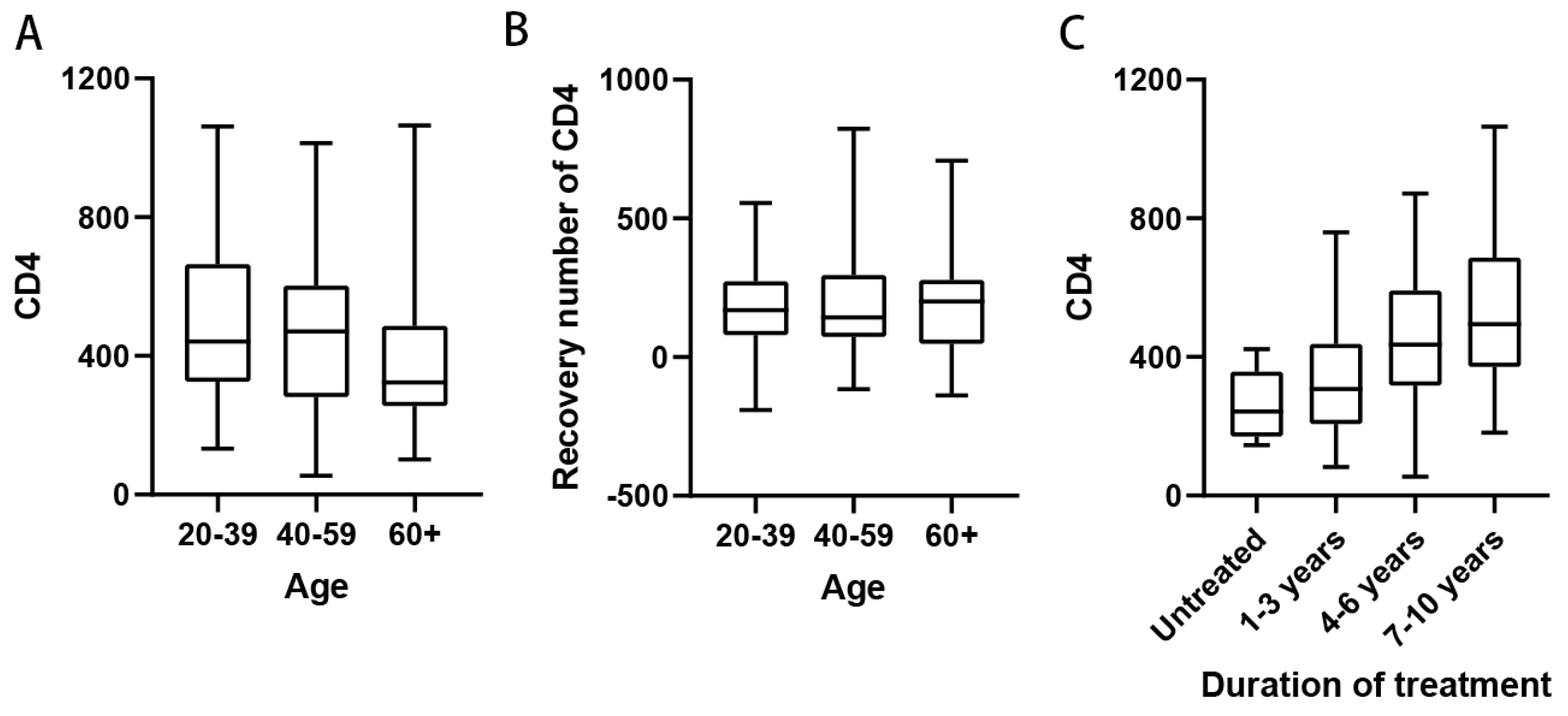
3.2. Clinical Characterization of HIV-1-Infected Individuals
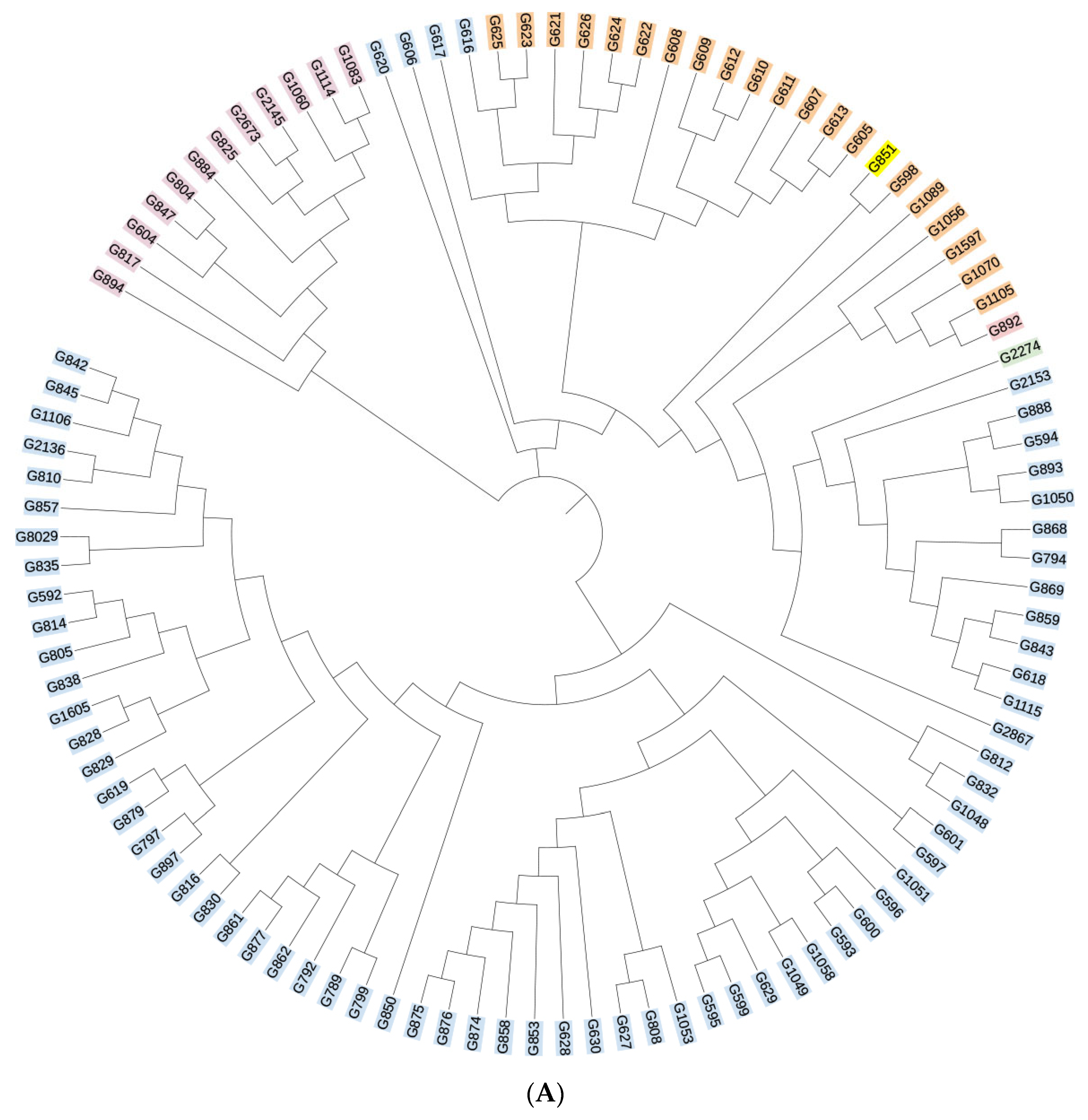
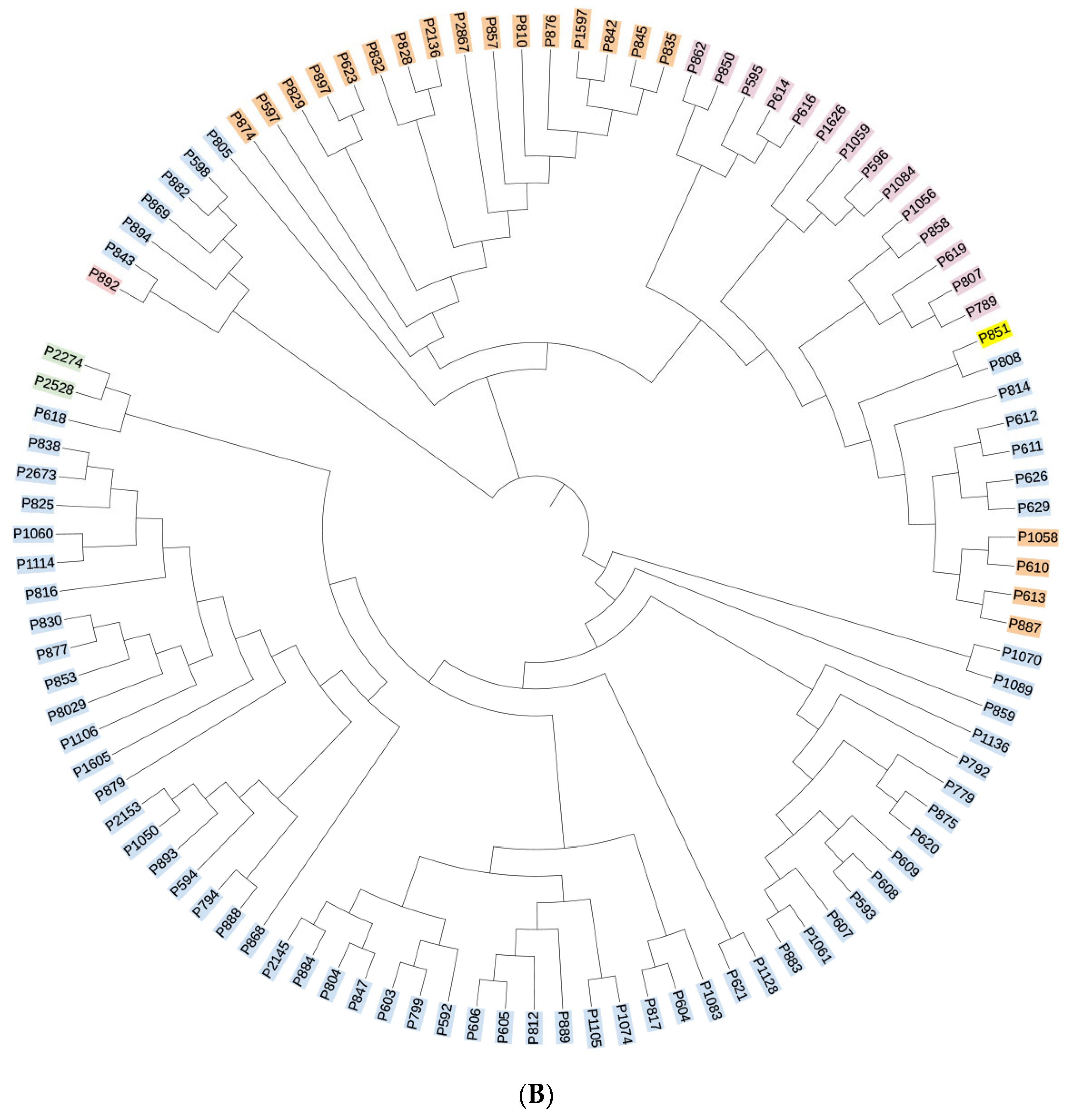
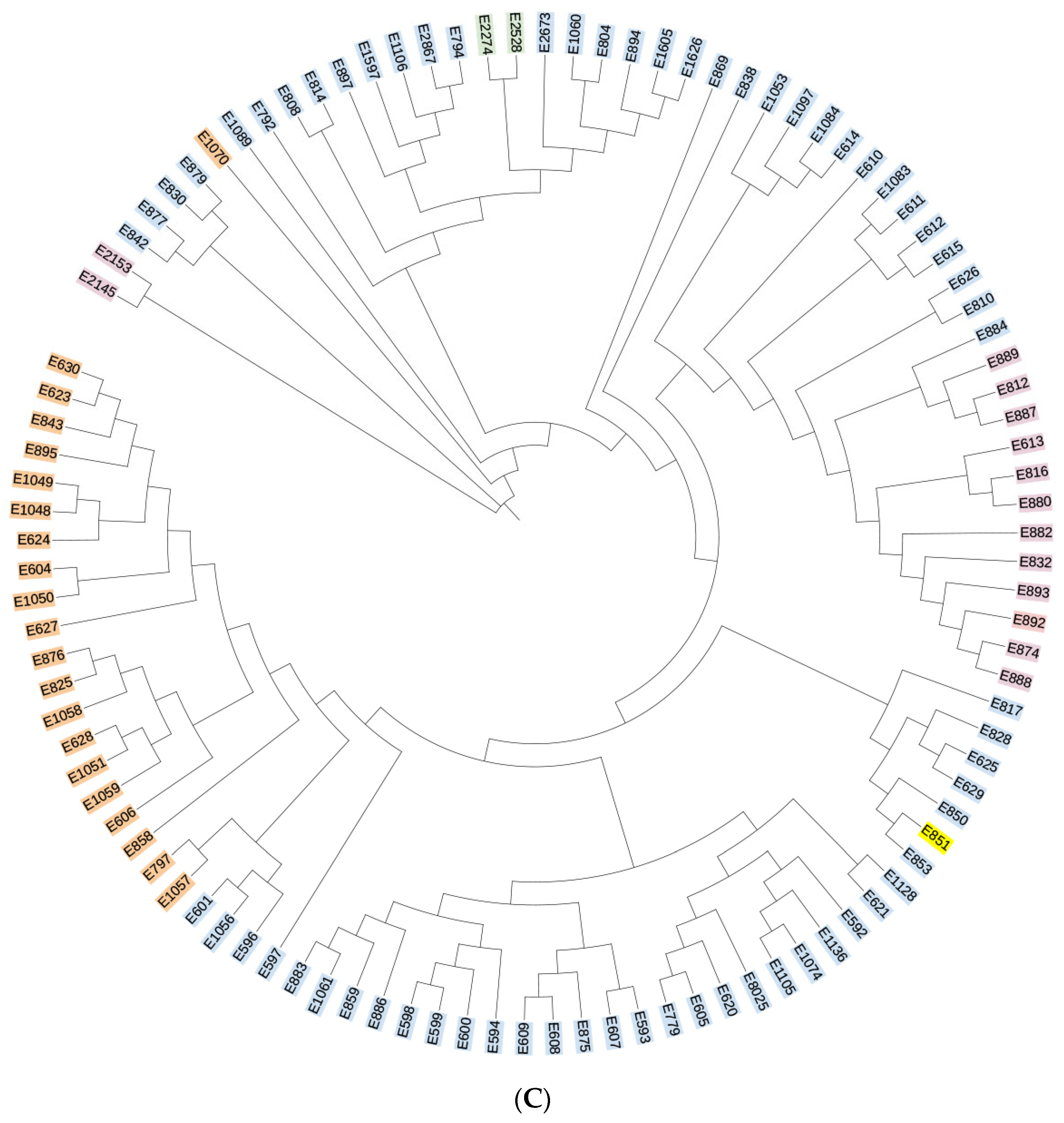
3.3. Distribution of HIV-1 Genotypes
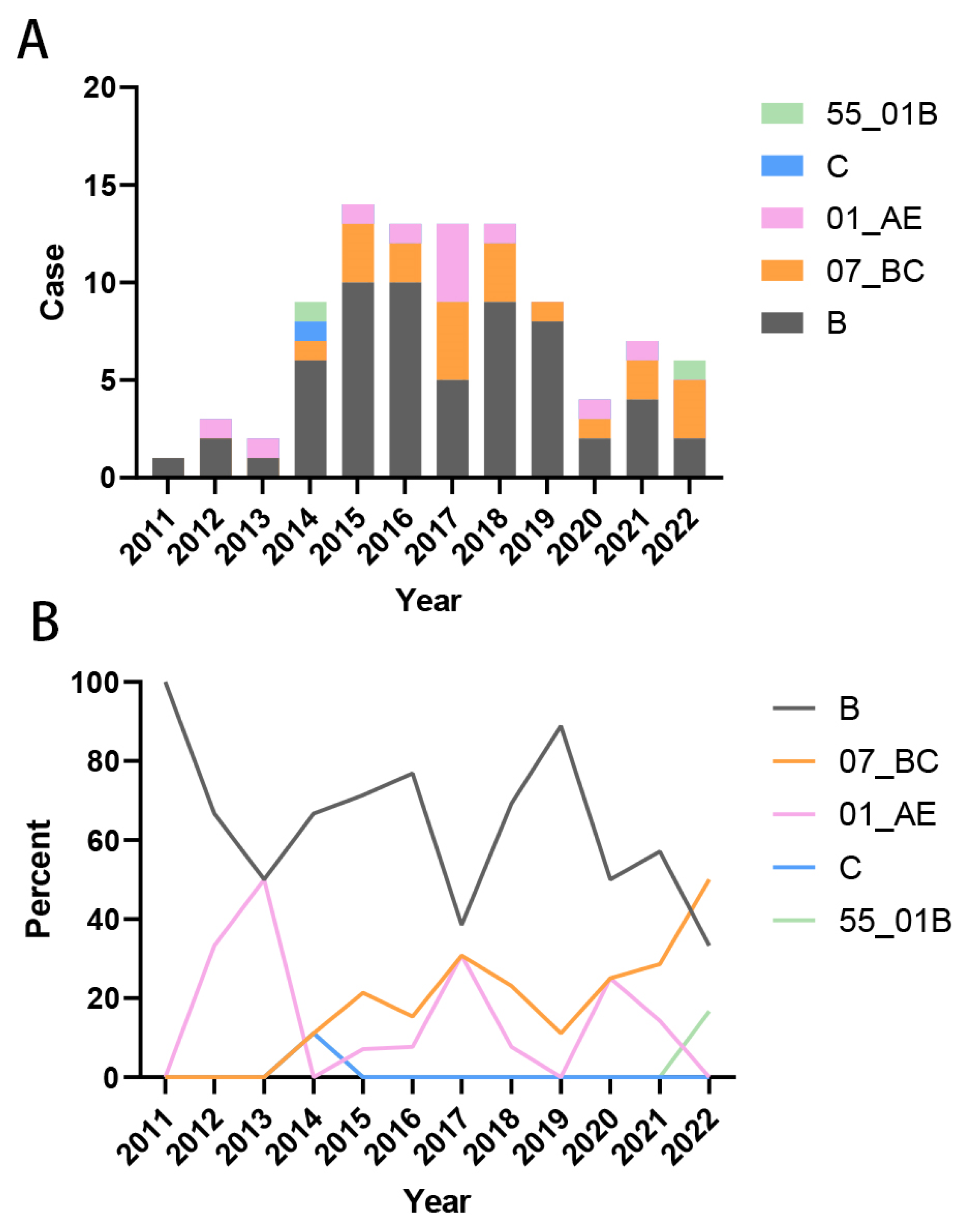
3.4. Trends in HIV-1 Subtype Distribution over Time of Infection
3.5. Analysis of the Amino Acid Composition of HIV-1 Gene Fragments
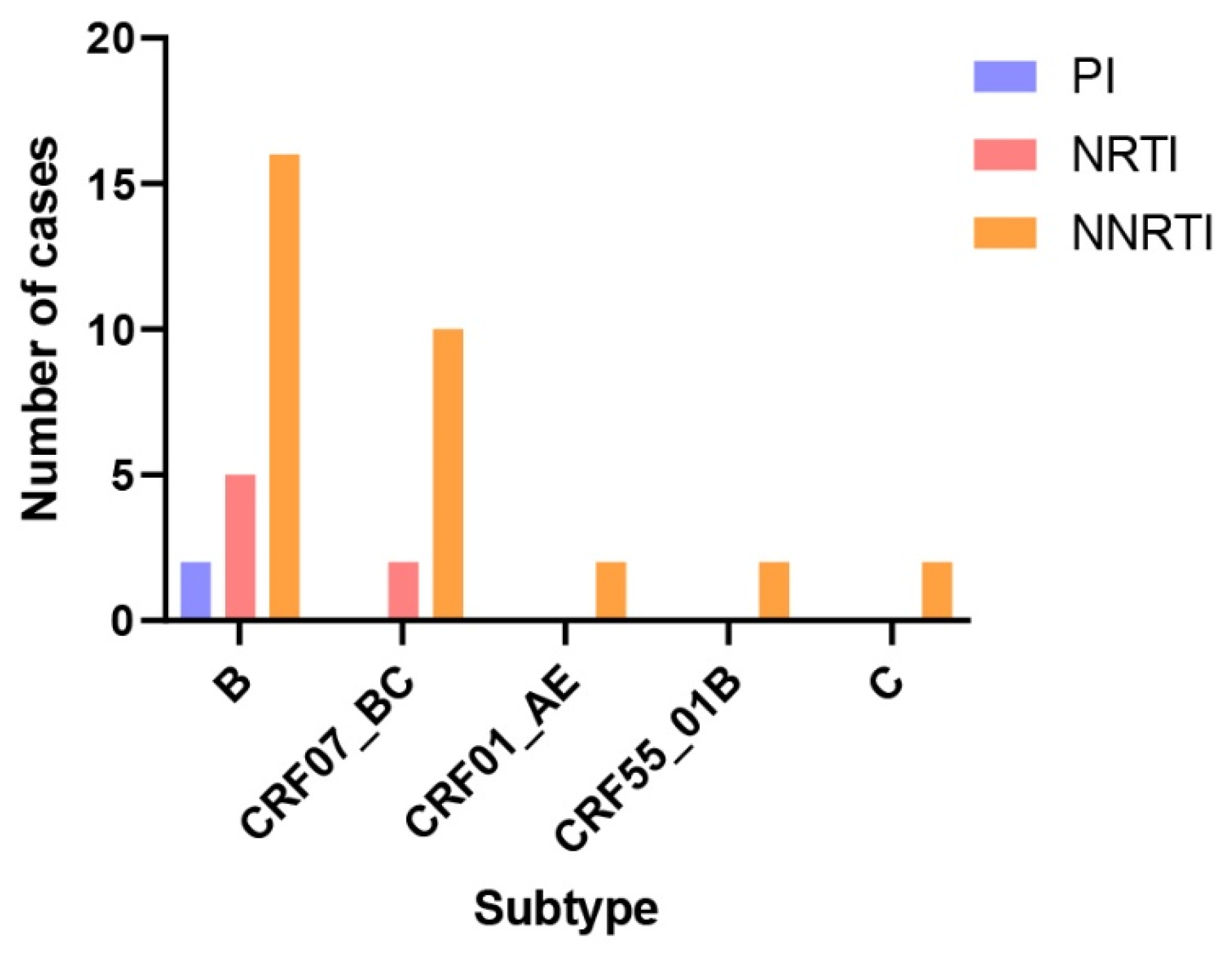
3.6. Analysis of HIV-1 Drug Resistance Sites
4. Discussion
5. Conclusions
Supplementary Materials
Author Contributions
Funding
Institutional Review Board Statement
Informed Consent Statement
Data Availability Statement
Conflicts of Interest
References
- World Health Organization. Global HIV & AIDS Statistics. Available online: https://www.unaids.org/en/resources/fact-sheet (accessed on 22 January 2024).
- He, N. Research Progress in the Epidemiology of HIV/AIDS in China. China CDC Wkly. 2021, 3, 1022–1030. [Google Scholar] [CrossRef]
- Lin, M.W.; Pei, Y.X.; Chen, Q.F.; Liu, R.; Sun, C.; Dou, Z.H. A retrospective cohort study of case fatality rate of HIV/AIDS cases and influencing factors in Jingzhou, Hubei Province, 1996–2021. Zhonghua Liu Xing Bing Xue Za Zhi 2023, 44, 1369–1375. [Google Scholar] [CrossRef]
- Hemelaar, J. The origin and diversity of the HIV-1 pandemic. Trends Mol. Med. 2012, 18, 182–192. [Google Scholar] [CrossRef] [PubMed]
- Hemelaar, J.; Elangovan, R.; Yun, J.; Dickson-Tetteh, L.; Kirtley, S.; Gouws-Williams, E.; Ghys, P.D. Global and regional epidemiology of HIV-1 recombinants in 1990-2015: A systematic review and global survey. Lancet HIV 2020, 7, e772–e781. [Google Scholar] [CrossRef] [PubMed]
- Williams, A.; Menon, S.; Crowe, M.; Agarwal, N.; Biccler, J.; Bbosa, N.; Ssemwanga, D.; Adungo, F.; Moecklinghoff, C.; Macartney, M.; et al. Geographic and Population Distributions of Human Immunodeficiency Virus (HIV)-1 and HIV-2 Circulating Subtypes: A Systematic Literature Review and Meta-analysis (2010–2021). J. Infect. Dis. 2023, 228, 1583–1591. [Google Scholar] [CrossRef]
- Cheng, Z.; Yan, H.; Li, Q.; Ablan, S.D.; Kleinpeter, A.; Freed, E.O.; Wu, H.; Dzakah, E.E.; Zhao, J.; Han, Z.; et al. Enhanced Transmissibility and Decreased Virulence of HIV-1 CRF07_BC May Explain Its Rapid Expansion in China. Microbiol. Spectr. 2022, 10, e0014622. [Google Scholar] [CrossRef]
- Hemelaar, J.; Elangovan, R.; Yun, J.; Dickson-Tetteh, L.; Fleminger, I.; Kirtley, S.; Williams, B.; Gouws-Williams, E.; Ghys, P.D. WHO–UNAIDS Network for HIV Isolation Characterisation. Global and regional molecular epidemiology of HIV-1, 1990-2015: A systematic review, global survey, and trend analysis. Lancet Infect Dis. 2019, 19, 143–155, Erratum in Lancet Infect Dis. 2020, 20, e27. https://doi.org/10.1016/S1473-3099(19)30747-9.. [Google Scholar] [CrossRef]
- Li, X.; Li, W.; Zhong, P.; Fang, K.; Zhu, K.; Musa, T.H.; Song, Y.; Du, G.; Gao, R.; Guo, Y.; et al. Nationwide Trends in Molecular Epidemiology of HIV-1 in China. AIDS Res. Hum. Retroviruses 2016, 32, 851–859. [Google Scholar] [CrossRef]
- Han, X.; Takebe, Y.; Zhang, W.; An, M.; Zhao, B.; Hu, Q.; Xu, J.; Wu, H.; Wu, J.; Lu, L.; et al. A Large-scale Survey of CRF55_01B from Men-Who-Have-Sex-with-Men in China: Implying the Evolutionary History and Public Health Impact. Sci. Rep. 2015, 5, 18147. [Google Scholar] [CrossRef] [PubMed]
- Luo, T.; Zhang, F.; Liang, H.; Yu, D.; Cen, P.; Zhong, S.; Qin, C.; Yang, Y.; Jiang, J.; Liao, Y.; et al. Men with a history of commercial heterosexual contact play essential roles in the transmission of HIV-1 CRF55_01B from men who have sex with men to the general population in Guangxi, China. Front. Cell Infect. Microbiol. 2024, 14, 1391215. [Google Scholar] [CrossRef]
- Liu, X.; Wang, D.; Hu, J.; Song, C.; Liao, L.; Feng, Y.; Li, D.; Xing, H.; Ruan, Y. Changes in HIV-1 Subtypes/Sub-Subtypes, and Transmitted Drug Resistance Among ART-Naïve HIV-Infected Individuals-China, 2004–2022. China CDC Wkly. 2023, 5, 664–671. [Google Scholar] [CrossRef]
- Perelson, A.S.; Neumann, A.U.; Markowitz, M.; Leonard, J.M.; Ho, D.D. HIV-1 dynamics in vivo: Virion clearance rate, infected cell life-span, and viral generation time. Science 1996, 271, 1582–1586. [Google Scholar] [CrossRef]
- Blackard, J.T.; Cohen, D.E.; Mayer, K.H. Human immunodeficiency virus superinfection and recombination: Current state of knowledge and potential clinical consequences. Clin. Infect. Dis. 2002, 34, 1108–1114. [Google Scholar] [CrossRef]
- Charpentier, C.; Nora, T.; Tenaillon, O.; Clavel, F.; Hance, A.J. Extensive recombination among human immunodeficiency virus type 1 quasispecies makes an important contribution to viral diversity in individual patients. J. Virol. 2006, 80, 2472–2482. [Google Scholar] [CrossRef]
- Frost, S.D.; Dumaurier, M.J.; Wain-Hobson, S.; Brown, A.J. Genetic drift and within-host metapopulation dynamics of HIV-1 infection. Proc. Natl. Acad. Sci. USA 2001, 98, 6975–6980. [Google Scholar] [CrossRef]
- Lau, K.A.; Wang, B.; Saksena, N.K. Emerging trends of HIV epidemiology in Asia. AIDS Rev. 2007, 9, 218–229. [Google Scholar] [PubMed]
- Hemelaar, J. Implications of HIV diversity for the HIV-1 pandemic. J. Infect. 2013, 66, 391–400. [Google Scholar] [CrossRef] [PubMed]
- Powell, R.L.; Zhao, J.; Konings, F.A.; Tang, S.; Ewane, L.; Burda, S.; Urbanski, M.M.; Saa, D.R.; Hewlett, I.; Nyambi, P.N. Circulating recombinant form (CRF) 37_cpx: An old strain in Cameroon composed of diverse, genetically distant lineages of subtypes A and G. AIDS Res. Hum. Retroviruses 2007, 23, 923–933. [Google Scholar] [CrossRef]
- Powell, R.L.; Zhao, J.; Konings, F.A.; Tang, S.; Nanfack, A.; Burda, S.; Urbanski, M.M.; Saa, D.R.; Hewlett, I.; Nyambi, P.N. Identification of a novel circulating recombinant form (CRF) 36_cpx in Cameroon that combines two CRFs (01_AE and 02_AG) with ancestral lineages of subtypes A and G. AIDS Res. Hum. Retroviruses 2007, 23, 1008–1019. [Google Scholar] [CrossRef] [PubMed]
- He, X.; Xing, H.; Ruan, Y.; Hong, K.; Cheng, C.; Hu, Y.; Xin, R.; Wei, J.; Feng, Y.; Hsi, J.H.; et al. A comprehensive mapping of HIV-1 genotypes in various risk groups and regions across China based on a nationwide molecular epidemiologic survey. PLoS ONE 2012, 7, e47289. [Google Scholar] [CrossRef] [PubMed]
- Zhao, J.; Cai, W.; Zheng, C.; Yang, Z.; Xin, R.; Li, G.; Wang, X.; Chen, L.; Zhong, P.; Zhang, C. Origin and outbreak of HIV-1 CRF55_01B among MSM in Shenzhen, China. J. Acquir. Immune Defic. Syndr. 2014, 66, e65–e67. [Google Scholar] [CrossRef]
- An, M.; Zheng, C.; Chen, L.; Li, H.; Zhang, Y.; Gan, Y.; Zhao, B.; Zhang, H.; Han, X.; Zhao, J.; et al. Sustained Spread of HIV-1 CRF55_01B in its Place of Origin: Dynamics and Hotspots. J. Infect. Dis. 2025, 231, 137–146. [Google Scholar] [CrossRef]
- Vrancken, B.; Zhao, B.; Li, X.; Han, X.; Liu, H.; Zhao, J.; Zhong, P.; Lin, Y.; Zai, J.; Liu, M.; et al. Comparative Circulation Dynamics of the Five Main HIV Types in China. J. Virol. 2020, 94, e00683-20. [Google Scholar] [CrossRef]
- DeLeon, O.; Hodis, H.; O’Malley, Y.; Johnson, J.; Salimi, H.; Zhai, Y.; Winter, E.; Remec, C.; Eichelberger, N.; Van Cleave, B.; et al. Accurate predictions of population-level changes in sequence and structural properties of HIV-1 Env using a vola-tility-controlled diffusion model. PLoS Biol. 2017, 15, e2001549. [Google Scholar] [CrossRef][Green Version]
- Niu, J.; Wang, Q.; Zhao, W.; Meng, B.; Xu, Y.; Zhang, X.; Feng, Y.; Qi, Q.; Hao, Y.; Zhang, X.; et al. Structures and immune recognition of Env trimers from two Asia prevalent HIV-1 CRFs. Nat. Commun. 2023, 14, 4676. [Google Scholar] [CrossRef]
- Stam, A.J.; Nijhuis, M.; van den Bergh, W.M.; Wensing, A.M. Differential genotypic evolution of HIV-1 quasispecies in cerebrospinal fluid and plasma: A systematic review. AIDS Rev. 2013, 15, 152–161. [Google Scholar] [PubMed]
- Epstein, L.G.; Kuiken, C.; Blumberg, B.M.; Hartman, S.; Sharer, L.R.; Clement, M.; Goudsmit, J. HIV-1 V3 domain variation in brain and spleen of children with AIDS: Tissue-specific evolution within host-determined quasispecies. Virology 1991, 180, 583–590. [Google Scholar] [CrossRef] [PubMed]
- Chang, J.; Jozwiak, R.; Wang, B.; Ng, T.; Ge, Y.C.; Bolton, W.; Dwyer, D.E.; Randle, C.; Osborn, R.; Cunningham, A.L.; et al. Unique HIV type 1 V3 region sequences derived from six different regions of brain: Region-specific evolution within host-determined quasispecies. AIDS Res. Hum. Retroviruses 1998, 14, 25–30. [Google Scholar] [CrossRef] [PubMed]
- Salimi, H.; Johnson, J.; Flores, M.G.; Zhang, M.S.; O’Malley, Y.; Houtman, J.C.; Schlievert, P.M.; Haim, H. The lipid membrane of HIV-1 stabilizes the viral envelope glycoproteins and modulates their sensitivity to antibody neutralization. J. Biol. Chem. 2020, 295, 348–362. [Google Scholar] [CrossRef]
- Parthasarathy, D.; Pothula, K.R.; Ratnapriya, S.; Cervera Benet, H.; Parsons, R.; Huang, X.; Sammour, S.; Janowska, K.; Harris, M.; Sodroski, J.; et al. Conformational flexibility of HIV-1 envelope glycoproteins modulates transmitted/founder sensitivity to broadly neutralizing antibodies. Nat. Commun. 2024, 15, 7334. [Google Scholar] [CrossRef]
- Flemming, J.; Wiesen, L.; Herschhorn, A. Conformation-Dependent Interactions Between HIV-1 Envelope Glycoproteins and Broadly Neutralizing Antibodies. AIDS Res. Hum. Retroviruses 2018, 34, 794–803. [Google Scholar] [CrossRef]
- Alencar, C.S.; Sabino, E.C.; Diaz, R.S.; Mendrone-Junior, A.; Nishiya, A.S. Genetic diversity in the partial sequence of the HIV-1 gag gene among people living with multidrug-resistant HIV-1 infection. Rev. Inst. Med. Trop. Sao Paulo 2024, 66, e35. [Google Scholar] [CrossRef]
- Karacostas, V.; Wolffe, E.J.; Nagashima, K.; Gonda, M.A.; Moss, B. Overexpression of the HIV-1 gag-pol polyprotein results in intracellular activation of HIV-1 protease and inhibition of assembly and budding of virus-like particles. Virology 1993, 193, 661–671. [Google Scholar] [CrossRef]
- Larrouy, L.; Vivot, A.; Charpentier, C.; Bénard, A.; Visseaux, B.; Damond, F.; Matheron, S.; Chene, G.; Brun-Vezinet, F.; Descamps, D. Impact of gag genetic determinants on virological outcome to boosted lopinavir-containing regimen in HIV-2-infected patients. Aids 2013, 27, 69–80. [Google Scholar] [CrossRef]
- Malet, I.; Roquebert, B.; Dalban, C.; Wirden, M.; Amellal, B.; Agher, R.; Simon, A.; Katlama, C.; Costagliola, D.; Calvez, V.; et al. Association of Gag cleavage sites to protease mutations and to virological response in HIV-1 treated patients. J. Infect. 2007, 54, 367–374. [Google Scholar] [CrossRef] [PubMed]
- Kolli, M.; Lastere, S.; Schiffer, C.A. Co-evolution of nelfinavir-resistant HIV-1 protease and the p1-p6 substrate. Virology 2006, 347, 405–409. [Google Scholar] [CrossRef] [PubMed]
- Maguire, M.F.; Guinea, R.; Griffin, P.; Macmanus, S.; Elston, R.C.; Wolfram, J.; Richards, N.; Hanlon, M.H.; Porter, D.J.; Wrin, T.; et al. Changes in human immunodeficiency virus type 1 Gag at positions L449 and P453 are linked to I50V pro-tease mutants in vivo and cause reduction of sensitivity to amprenavir and improved viral fitness in vitro. J. Virol. 2002, 76, 7398–7406. [Google Scholar] [CrossRef]
- Shriner, D.; Liu, Y.; Nickle, D.C.; Mullins, J.I. Evolution of intrahost HIV-1 genetic diversity during chronic infection. Evolution 2006, 60, 1165–1176. [Google Scholar] [CrossRef]
- Farinre, O.; Gounder, K.; Reddy, T.; Tongo, M.; Hare, J.; Chaplin, B.; Gilmour, J.; Kanki, P.; Mann, J.K.; Ndung’u, T. Sub-type-specific differences in Gag-protease replication capacity of HIV-1 isolates from East and West Africa. Retrovirology 2021, 18, 11. [Google Scholar] [CrossRef] [PubMed]
- Naidoo, V.L.; Mann, J.K.; Noble, C.; Adland, E.; Carlson, J.M.; Thomas, J.; Brumme, C.J.; Thobakgale-Tshabalala, C.F.; Brumme, Z.L.; Brockman, M.A.; et al. Mother-to-Child HIV Transmission Bottleneck Selects for Consensus Virus with Lower Gag-Protease-Driven Replication Capacity. J. Virol. 2017, 91, e00518-17. [Google Scholar] [CrossRef]
- Chen, X.Q.; Liu, C.; Kong, X.H. The role of HIV replicative fitness in perinatal transmission of HIV. Virol. Sin. 2011, 26, 147–155. [Google Scholar] [CrossRef]
- van Westen, G.J.; Hendriks, A.; Wegner, J.K.; Ijzerman, A.P.; van Vlijmen, H.W.; Bender, A. Significantly improved HIV inhibitor efficacy prediction employing proteochemometric models generated from antivirogram data. PLoS Comput. Biol. 2013, 9, e1002899. [Google Scholar] [CrossRef]
- Tambuyzer, L.; Azijn, H.; Rimsky, L.T.; Vingerhoets, J.; Lecocq, P.; Kraus, G.; Picchio, G.; de Béthune, M.P. Compilation and prevalence of mutations associated with resistance to non-nucleoside reverse transcriptase inhibitors. Antivir. Ther. 2009, 14, 103–109. [Google Scholar] [CrossRef]
- Qin, D.; Hong, Z.; Wang, Y.; Meng, N.; Yang, X.; Shen, D.; Hu, Y.; Yang, X. Analysis of genotype resistance and HIV-1 transmission risk in HIV-1-infected men who have sex with men in Guiyang, China. Immun. Inflamm. Dis. 2024, 12, e70029. [Google Scholar] [CrossRef] [PubMed]
- Leal, S.D.V.; Pimentel, V.; Gonçalves, P.; Monteiro de Pina, A., II; Parreira, R.; Taveira, N.; Pingarilho, M.; Abecasis, A.B. Genetic Diversity and Antiretroviral Resistance in HIV-1-Infected Patients Newly Diagnosed in Cabo Verde. Viruses 2024, 16, 1953. [Google Scholar] [CrossRef]
- Sun, Y.; Wang, L. Development of Anti-HIV Therapeutics: From Conventional Drug Discovery to Cutting-Edge Tech-nology. Pharmaceuticals 2024, 17, 887. [Google Scholar] [CrossRef] [PubMed]
- Maeda, K.; Das, D.; Kobayakawa, T.; Tamamura, H.; Takeuchi, H. Discovery and Development of Anti-HIV Therapeutic Agents: Progress Towards Improved HIV Medication. Curr. Top. Med. Chem. 2019, 19, 1621–1649. [Google Scholar] [CrossRef]
- Kalinichenko, S.V.; Ramadan, L.; Kruglova, N.A.; Balagurov, K.I.; Lukashina, M.I.; Mazurov, D.V.; Shepelev, M.V. A New Chimeric Antibody against the HIV-1 Fusion Inhibitory Peptide MT-C34 with a High Affinity and Fc-Mediated Cellular Cytotoxicity. Biology 2024, 13, 675. [Google Scholar] [CrossRef] [PubMed]
- Leslie, G.J.; Wang, J.; Richardson, M.W.; Haggarty, B.S.; Hua, K.L.; Duong, J.; Secreto, A.J.; Jordon, A.P.; Romano, J.; Ku-mar, K.E.; et al. Potent and Broad Inhibition of HIV-1 by a Peptide from the gp41 Heptad Repeat-2 Domain Conjugated to the CXCR4 Amino Terminus. PLoS Pathog. 2016, 12, e1005983. [Google Scholar] [CrossRef]
- Wang, C.; Wang, H.; Wang, X.; Sun, L.; Wang, Q.; Li, Q.; Liang, R.; Dou, D.; Yu, F.; Lu, L.; et al. Multitargeted drug design strategy for discovery of short-peptide-based HIV-1 entry inhibitors with high potency. Eur. J. Med. Chem. 2023, 252, 115294. [Google Scholar] [CrossRef]



| Procedure | Name | Sequences (5′–3′) | Position |
|---|---|---|---|
| gag | GexF | GCTGAAGCGCGCACGGCAAGAG | 705–726 |
| GexR | AAGGGTACTAGTAGTTCCTGCTATG | 1518–1494 | |
| GinF | TTTGACTAGCGGAGGCTAGA | 761–780 | |
| GinR | GCCTGATGTACCATTTGCCC | 1226–1207 | |
| pol | PexF | GTAAAAAATTGGATGACAGAAACCTTG | 1726–1752 |
| PexR | CTGTATTTCTGCTATTAAGTCTTTTGATGGG | 3509–3539 | |
| PinF | CATAGCCAAAAATTGCAGGGCCCCTAGRAAAAAG | 1989–2022 | |
| PinR | AATACACTCCATGTACCGGTGTTTTTAAAATCTCYC | 3469–3504 | |
| env | EexF | TCTTAGGAGCAGCAGGAAGCACTATGGG | 7789–7816 |
| EexR | AACGACAAAGGTGAGTATCCCTGCCTAA | 8347–8371 | |
| EinF | ACAATTATTGTCTGGTATAGTGCAACAGCA | 7850–7879 | |
| EinR | TTAAACCTATCAAGCCTCCTACTATCATTA | 8281–8310 |
| Variable | Number of Cases | Constituent Ratio (%) |
|---|---|---|
| Total | 149 | 100 |
| Gender | ||
| Male | 124 | 83.2 |
| Female | 25 | 16.8 |
| Age | ||
| 20–<40 | 54 | 36.2 |
| 40–<60 | 58 | 39.0 |
| ≥60 | 37 | 24.8 |
| Infection Routes | ||
| Sexual contact | 124 | 83.2 |
| homosexual | 72 | 48.3 |
| heterosexual | 52 | 34.9 |
| drug injection | 1 | 0.7 |
| Unknown | 24 | 16.1 |
| Viral load | ||
| TND/<100 | 120 | 80.5 |
| 100–<10,000 | 19 | 12.8 |
| ≥10,000 | 10 | 6.7 |
| CD4 | ||
| <350 | 56 | 37.6 |
| ≥350 | 92 | 61.7 |
| Null | 1 | 0.7 |
| Subtype | Drug-Resistant Mutation | ||
|---|---|---|---|
| PIs | NRTIs | NNRTIs | |
| B | T74P; L33F | F116Y; Y115F; K219Q; T215Y | V179E; M230I; P236L; V108I; F227I; E138G; M230L; K238T |
| CRF07_BC | - | D67E; T215I | V106L; V179E; M230I; L100V; K238N; K238T |
| CRF01_AE | - | - | K103T; F227I |
| CRF55_01B | - | - | V179E |
| C | - | - | M230I; P236L |
Disclaimer/Publisher’s Note: The statements, opinions and data contained in all publications are solely those of the individual author(s) and contributor(s) and not of MDPI and/or the editor(s). MDPI and/or the editor(s) disclaim responsibility for any injury to people or property resulting from any ideas, methods, instructions or products referred to in the content. |
© 2025 by the authors. Licensee MDPI, Basel, Switzerland. This article is an open access article distributed under the terms and conditions of the Creative Commons Attribution (CC BY) license.
Share and Cite
Zhang, Q.; Yan, M.; Huang, J.; Liu, Y.; Wang, H.; Feng, S.; Dong, Z.; Abulimiti, D.; Wang, Y.; Liang, K.; et al. Molecular Epidemiological Surveillance of HIV-1 Genotypes and Drug Resistance Profiles in Wuhan, Central China. Viruses 2026, 18, 55. https://doi.org/10.3390/v18010055
Zhang Q, Yan M, Huang J, Liu Y, Wang H, Feng S, Dong Z, Abulimiti D, Wang Y, Liang K, et al. Molecular Epidemiological Surveillance of HIV-1 Genotypes and Drug Resistance Profiles in Wuhan, Central China. Viruses. 2026; 18(1):55. https://doi.org/10.3390/v18010055
Chicago/Turabian StyleZhang, Qiqi, Mingzhe Yan, Jingxin Huang, Yujie Liu, Hanji Wang, Sheng Feng, Zheng Dong, Dilihumaer Abulimiti, Youping Wang, Ke Liang, and et al. 2026. "Molecular Epidemiological Surveillance of HIV-1 Genotypes and Drug Resistance Profiles in Wuhan, Central China" Viruses 18, no. 1: 55. https://doi.org/10.3390/v18010055
APA StyleZhang, Q., Yan, M., Huang, J., Liu, Y., Wang, H., Feng, S., Dong, Z., Abulimiti, D., Wang, Y., Liang, K., & Feng, Y. (2026). Molecular Epidemiological Surveillance of HIV-1 Genotypes and Drug Resistance Profiles in Wuhan, Central China. Viruses, 18(1), 55. https://doi.org/10.3390/v18010055