Article

Screening of the Pandemic Response Box Library Identified CRM1/XPO1 as an Anti-Mammarenavirus Druggable Target


by
Chukwudi A. Ofodile
1,2,†,
Beatrice Cubitt
2,†,
Ngozi Onyemelukwe
3,
Chetachi B. Okwuanaso
1,
Haydar Witwit
2 and
Juan C. de la Torre
2,*
1
Department of Medical Microbiology and Public Health, Faculty of Medical Laboratory Science, Nnamdi Azikiwe University, Awka 435102, Nigeria
2
Department of Immunology and Microbiology, Scripps Research Institute, San Diego, CA 92037, USA
3
Department of Medical Laboratory Sciences, Faculty of Health Sciences and Technology, University of Nigeria, Nsukka 400001, Nigeria
*
Author to whom correspondence should be addressed.
These authors contributed equally to this work.
Viruses 2026, 18(1), 103; https://doi.org/10.3390/v18010103
Submission received: 22 November 2025 / Revised: 3 January 2026 / Accepted: 7 January 2026 / Published: 12 January 2026
(This article belongs to the Section Human Virology and Viral Diseases)

Abstract

Mammarenaviruses (MaAv) cause persistent infection in their natural rodent hosts across the world and, via zoonotic events, can cause severe disease in humans. Thus, the MaAv Lassa virus (LASV) in Western Africa and the Junin virus (JUNV) in the Argentinean Pampas cause hemorrhagic fever diseases with significant case fatality rates in their endemic regions. In addition, the globally distributed MaAv lymphocytic choriomeningitis virus (LCMV) is an underrecognized human pathogen of clinical significance capable of causing devastating infections in neonates and immunocompromised individuals. Despite their impact on human health, there are currently no FDA-approved vaccines or specific antiviral treatments for MaAv infections. Existing anti-MaAv therapies are limited to the off-label use of ribavirin, whose efficacy remains controversial; hence, the development of novel therapeutics to combat human pathogenic MaAv is vital. We employed a high-throughput cell-based infection assay to screen the Pandemic Response Box, a collection of 400 diverse compounds with established antimicrobial activity, for MaAv inhibitors. We identified Ro-24-7429, an antagonist of the HIV-1 Tat protein and RUNX family transcription factor 1 inhibitor; WO 2006118607 A2, a dihydroorotate dehydrogenase inhibitor; and verdinexor, a novel selective inhibitor of nuclear export (SINE) targeting the XPO1/CRM1, as potent anti-MaAv compounds. Consistent with their distinct validated targets, verdinexor and WO 2006118607 A2 exhibited very strong synergistic antiviral activity when used in combination therapy. Our findings pave the way for the development of verdinexor as a potent host-directed antiviral against MaAv, which could be integrated into the development of combination therapy with direct- or host-acting antivirals to combat human pathogenic MaAv.

1. Introduction

Mammarenaviruses (MaAvs) cause persistent infections in their natural rodent reservoirs worldwide [1]. Human infections occur through mucosal exposure to aerosols or by direct contact of abraded skin with infectious materials [1]. Several MaAvs cause hemorrhagic fever (HF) in humans and represent important public health concerns in their endemic regions [1]. Lassa virus (LASV), endemic to Western Africa, is the etiologic agent of Lassa fever (LF), a HF disease associated with high morbidity and a case fatality rate as high as 69% among hospitalized confirmed LF cases [2,3,4,5]. LASV is estimated to infect >500,000 people annually [6], but limited diagnostic capabilities complicate an accurate assessment of LASV prevalence [7,8]. Recent studies indicate that LASV endemic regions are expanding [9,10,11], and increased traveling has led to the importation of LF cases into non-endemic metropolitan areas around the globe [12,13]. Notably, LASV ranks very high among zoonotic viruses with potential for spillover and spread in humans [14], and models based on projections of climate, land use, and population changes indicate that regions in Central and East Africa will become suitable for LASV over the next decades, resulting in a dramatic increase in the population at risk of LASV exposure [15]. Because of its impact on human health, pandemic potential, and lack of effective countermeasures, LF has been included in the World Health Organization (WHO) list of priority diseases for which there is an urgent need to develop therapeutics and vaccines [16]. Likewise, the MaAv Junin virus (JUNV) causes Argentine hemorrhagic fever with case fatality rates exceeding 15%, and several other New World MaAv cause VHFD throughout South America [17]. In addition, mounting evidence indicates that the worldwide-distributed MaAv lymphocytic choriomeningitis virus (LCMV) is a neglected human pathogen of clinical significance in congenital infections [18]. Notably, LCMV poses a serious threat to immunocompromised individuals [19], and although most LCMV infections in immunocompetent individuals are asymptomatic or result in mild symptoms [20], in some cases, LCMV-infected immunocompetent individuals can develop severe disease [21].
There are no US FDA-approved MaAv vaccines, and current anti-MaAv therapy is limited to an off-label use of ribavirin (RBV), whose efficacy remains controversial [22,23]. The broad-spectrum polymerase inhibitor favipiravir [24,25] and the cell entry inhibitors LHF-535 [26] and ARN-75039 [27,28] have shown promising results in preclinical models of LF, and LHF-535 is in phase I clinical trials. However, favipiravir has limited potency against LASV, and its short human half-life [29,30] are likely to compromise its efficacy. Likewise, the high degree of LASV genetic diversity [31,32] can compromise the use of cell entry inhibitors, as single mutations in the virus glycoprotein gene can confer cross-resistance to these cell entry inhibitors [33,34]. Accordingly, the development of broad-spectrum antivirals to combat human pathogenic MaAv represents a significant unmet biomedical need.
MaAv are enveloped viruses with a bisegmented, negative-strand RNA genome [1,35,36]. Each genome segment uses an ambisense coding strategy to express two viral proteins. The large (L) segment (ca. 7.3 kb) encodes the RING-finger matrix protein (Z) and the RNA-dependent RNA polymerase (RdRP) L protein. The small (S) segment (ca 3.4 kb) encodes the glycoprotein precursor (GPC) and nucleoprotein (NP). NP encapsulates the viral genome RNA to create the viral nucleocapsid (NC) that, together with the L protein, forms the viral ribonucleoprotein complex (vRNP) that directs replication and transcription of the viral genome [1,37]. GPC is co-translationally processed by the signal peptidase to form a stable signal peptide (SSP) and a GPC precursor, which is post-translationally processed by the S1P protease into GP1 and GP2. The mature tripartite GP complex, consisting of SSP, GP1, and GP2, incorporates into the viral envelope, and its ectodomain forms the spikes present at the virion surface and mediates virus cell entry via receptor-mediated endocytosis [37]. GP1 binds to cellular receptors, whereas GP2 mediates a pH-dependent fusion event between viral and cell membranes in the acidic environment of the late endosome [38]. Upon fusion, the vRNP is released into the cytosol, where it initiates viral transcription and replication [1]. MaAv assembly and budding is driven by the matrix protein Z [1].
Drug repurposing strategies can substantially decrease the time and resources necessary to advance a candidate antiviral drug into the clinic [39]. Furthermore, drug repurposing can yield valuable insights into viral biology by identifying novel pathways and host cell factors involved in various stages of the viral replication cycle, thereby revealing new antiviral targets [40,41,42,43].
Here, we document the results of the screening of the Pandemic Response Box (PRB) [44] for inhibitors of MaAv infection. The PRB was assembled by the Medicines for Malaria Venture, Geneva (MMV), and the Drugs for Neglected Diseases initiative (DNDi) and contains a collection of 400 compounds comprising 201 antibacterial, 153 antiviral, and 46 antifungal compounds, with several of these compounds demonstrating activity across multiple disease domains [44]. We identified three compounds listed in the PRB—Ro-24-7429 (RO), WO 2006118607 A2 (WO), and verdinexor (VE)—potent inhibitors of the activity of LCMV and LASV vRNP in cell-based minigenome assays and multiplication of LCMV in cultured cells.
RO is an antagonist of the HIV-1 transcriptional transactivator (Tat) protein that inhibits HIV-1 replication via interference with Tat-dependent initiation and elongation of transcription, resulting in reduced levels of viral RNA synthesis and protein production [45,46] but with no detectable antiviral effect [47]. RO inhibits RUNX family transcription factor 1, which has been associated with its antifibrotic and anti-inflammatory properties [48]. WO has been shown to have antiviral activity against the hepatitis C virus (HCV) via inhibition of dihydroorotate dehydrogenase (DHODH), a key enzyme in pyrimidine biosynthesis [49,50]. VE is a novel oral selective inhibitor of nuclear export (SINE) compound that targets exportin 1 (XPO1), the primary nuclear export regulator that shuttles proteins and RNAs from the nucleus to the cytoplasm [51]. VE has been shown to inhibit the multiplication of the influenza A virus (IAV) [52] and respiratory syncytial virus (RSV) [53] in cultured cells and has shown efficacy in animal models of IAV infection [52,54]. RO, WO, and VE target different, distinct host factors, rather than viral factors. Consistent with their distinct validated targets, VE and WO exhibit very strong synergistic activity when used in combination therapy. Host-directed antivirals (HDAs) represent a promising yet underexplored approach in contemporary antiviral research [55]. Unlike conventional direct-acting antivirals (DAAs) that target viral proteins and functions, HDAs disrupt host factors and cellular processes that viruses hijack for their replication and pathogenesis. Since members of a virus family share host dependencies, HDAs have the potential to act as broad-spectrum antivirals. In addition, HDAs pose a higher genetic barrier to the emergence of drug-resistant viral variants, which often compromise antiviral therapy [56]. Likewise, combination therapy of antivirals with synergistic effects can pose a high genetic barrier to the emergence of drug-resistant viral variants that often jeopardize monotherapy approaches and facilitate the use of reduced drug doses within the therapeutic range to alleviate side effects associated with high drug doses used in monotherapy.

2. Materials and Methods

2.1. Compound Source

Medicines for Malaria Venture, Geneva (MMV), and the Drugs for Neglected Diseases initiative, Geneva, Switzerland (DNDi), assembled the Pandemic Response Box (PRB), a collection of 400 compounds [44].

2.2. Cells and Viruses

HEK 293T (ATCC CRL-3216, Manassas, VA, USA), Vero E6 (ATCC CRL-1586, Manassas, VA, USA), and A549 (ATCC CCL-185, Manassas, VA, USA) cells were cultured in Dulbecco’s modified Eagle’s medium (DMEM; Thermo Fisher Scientific, Vacaville, CA, USA). The medium was supplemented with 10% heat-inactivated fetal bovine serum (FBS), 2 mM L-glutamine, and antibiotics (100 µg/mL streptomycin and 100 U/mL penicillin). Recombinant viruses rLCMV/GFP-P2A-NP [57] and the single-cycle infectious rARMΔGPC/ZsG-P2A-NP expressing the ZsGreen fluorescent protein [58] have been described. Using the same strategy described for the generation of rLCMV/GFP-P2A-NP, we generated rJUNV/GFP-P2A-NP based on the live-attenuated vaccine strain Candid 1 of JUNV.

2.3. Generation of rJUNV/GFP-P2A-NP

For the rescue of rJUNV/GFP-P2A-NP, based on the live-attenuated vaccine strain Candid 1 of JUNV, we used the same procedures and strategy described for the generation of rLCMV/GFP-P2A-NP [57]. Briefly, BHK-21 cells were seeded into 6-well plates at 7.0 × 10⁵/well 1 day prior to transfection to achieve an 80–90% confluence. Cells were transfected with 1.2 μg of pC-NP and 1.5 μg of pC-L (both NP and L corresponding to the Romero strain of JUNV), 1.2 μg of mouse pol-I S JUN GFP-P2A-NP, and 2.1 μg of the mouse pol-I L JUNV (total 6 μg/well) using Lipofectamine 3000 (LF3000) (Invitrogen, Carlsbad, CA, USA) (1.25 μL LF3000/μg of plasmid DNA) and P3000™ reagent (Invitrogen, Carlsbad, CA, USA) (1.75 μL P3000/μg of plasmid DNA) for more efficient transfection. At 72 h post-transfection, cell culture supernatants (CCSs) were collected, and virus titration was performed.

2.4. Virus Titration

Virus titers were determined by a focus-forming assay (FFA) [59] using Vero E6 cells. Briefly, cells were seeded in a 96-well (2.0 × 10⁴ cells/well) and 24 h later infected with 10-fold serial dilutions of the virus. At 20 h post-infection (hpi), the cells were fixed with 4% paraformaldehyde (PFA) in PBS, and infected cells were detected by epifluorescence based on their expression of GFP.

2.5. Cell Viability Assay

Cell viability was evaluated by measuring formazan produced from MTS [3-(4,5-dimethylthiazol-2-yl)-5-(3-carboxymethoxyphenyl)-2-(4-sulfophenyl)-2H-tetrazolium] through the activity of NADPH or NADH produced by living cells. Cells were seeded in a 96-well optical plate (3.0 × 10⁴ cells/well), and 20 h later, compounds (at designated concentrations, four replicates) or vehicle control (0.3% DMSO) were added, bringing the final volume to 100 µL. After 72 h treatment, the CellTiter 96 AQueous One Solution reagent (Promega, CAT#: G3580, Madison, WI, USA) was added to each well, and the plate was incubated for 15 min at 37 °C with 5% CO2. Absorbance was measured at 490 nm using a Biotek Cytation 5 plate reader (Agilent Technologies, Santa Clara, CA, USA). The results were normalized to the vehicle control, which was assigned a value of 100%. One Solution and media were then aspirated, and the cells were fixed with 4% paraformaldehyde and stained with DAPI.

2.6. Determination of Compounds’ EC50 and CC50 Values

Cells were seeded onto a 96-well optical plate (3.0 × 10⁴ cells/well), and 20 h later, cells were infected with rLCMV/GFP-P2A-NP at an MOI of 0.03 or rJUNV/GFP-P2A-NP at an MOI of 0.03. Infected cells were treated with three-fold serial dilutions of the indicated compound, starting at a concentration of 30 µM and using four replicates for each dilution. After 72 h treatment, cell viability was determined using the CellTiter 96 AQueous One Solution Cell Proliferation Assay to determine compound CC50 values. Compound EC50 values were determined by measuring GFP expression levels. After measuring GFP, cells were subjected to DAPI staining. GFP and DAPI were quantified by fluorescence using a Biotek Cytation 5 plate reader (Agilent Technologies, Santa Clara, CA, USA). This approach of determining compound CC50 values in infected cells was feasible because LCMV has a non-cytolytic multiplication. Mean values were normalized to an infected and vehicle (DMSO)-treated control, also set to 100%. The EC50 and CC50 values were calculated using GraphPad Prism v10 (GraphPad Software, San Diego, CA, USA). CC50 and EC50 values were used to determine compound selectivity index (SI) values (SI = CC50/EC50).

2.7. Virus Multi-Step Growth Kinetics

A549 cells were seeded (2.0 × 10⁵ cells/well, a 12-well plate) and the following day infected with rLCMV/GFP-P2A-NP at an MOI of 0.03. After a 90 min adsorption period, the inoculum was removed, and the cells were treated with VC (0.3% DMSO), specified compounds (1 µM and 5 µM), or RBV (100 µM) as a positive control. CCS were collected at 24, 48, and 72 hpi. At 72 hpi, cells were stained with Hoechst 33342 dye solution (Invitrogen, Thermo Fisher Scientific, Eugene, OR, USA). Live cell images were taken using a Keyence BZ-X710 all-in-one fluorescence microscope (Keyence corporation of America, Itasca, IL, USA)series. Cells were washed, and RNA was extracted using TRI Reagent (TR 118, Molecular Research Centre, Cincinnati, OH, USA). Virus titers in CCS were measured by FFA using Vero E6 cells (4 replicates), and the results were expressed as mean ± SD. Data were plotted using GraphPad Prism (GraphPad Software, San Diego, CA, USA).

2.8. RT-qPCR

RT-qPCR was conducted as described in [60]. RNA isolation was performed using TRI Reagent following the manufacturer’s guidelines. RNA was dissolved in RNA storage solution (Life Technologies, Carlsbad, CA, USA. AM 7000), and its concentration was measured with a NanoDrop™ 2000 spectrophotometer (ND-2000 Thermo Fisher Scientific™, Waltham, MA, USA). RNA (1 µg) was converted into cDNA using the SuperScript IV first-strand synthesis system (18091050, Life Technologies). For amplification of LCMV NP and the housekeeping gene GAPDH, Powerup SYBR (A25742, Life Technologies) was employed, utilizing the following primers: NP forward (F): 5′ CAGAAATGTTGATGCTGGACTGC-3′ and NP reverse (R): 5′-CAGACCTTGGCTTGCTTTACACAG-3′; GAPDH F: 5′-CATGAGAAGTATGACAACAGCC-3′ and GAPDH R: 5′-TGAGTCCTTCCACGATACC-3′; ISG15 F: 5′-CAGGACGACCTGTTCTGGC-3′ and ISG15 R: 5′-GATTCATGAACACGGTGCTCAGG-3′; and MX1 F: 5′-GCAGCTTCAGAAGGCCATGC-3′ and MX1 R: 5′-CCTTCAGGAACTTCCGCTTGTC-3′.

2.9. Time-of-Addition Assay

A549 cells were seeded (3.0 × 10⁴ cells/well) in a 96-well black-walled optical plate (353219, Falcon) and, after 16 h of culture, treated with VC (0.3% DMSO), indicated compounds at concentrations of 1 µM and 5 µM, and F3406 at 5 µM, with four replicates for each treatment condition. Treatments were administered either 2 h prior (−2 h) or 2 h after (+2 h) infection with the single-cycle infectious rARMΔGPC/ZsG-P2A-NP (MOI of 1.0), thereby obviating the need for NH4Cl treatment to avoid confounding effects from multiple rounds of infection. At 24 hpi, cells were fixed with 4% PFA, and ZsGreen expression levels were quantified using a Cytation 5 imaging reader.

2.10. Budding Assay

Budding assays were performed as described [61]. Briefly, HEK293T cells (1.75 × 10⁵ cells/well in a 12-well plate) were transfected with 0.5 μg of pC.LASV-Z-Gluc or pC.LASV-Z-G2A-GLuc (mutant control) or pCAGGS-Empty (pC-E) using Lipofectamine 3000 and P3000™. After 5 h of transfection, cells were washed three times and treated with VE, RO, WO (1 µM and 5 µM), RBV (100 µM), or vehicle control (VC). After 48 h of treatment, CCS containing virus-like particles (VLPs) was collected, and cell lysates were prepared. CCS samples were clarified from cell debris by centrifugation (13,000 rpm/4 °C/10 min), and aliquots (20 µL each) from CCS samples were added to 96-well black plates (VWR, West Chester, PA, USA), and 50 µL of Steady-Glo luciferase reagent (Promega) was added to each well. Cell lysates were prepared using 250 µL of lysis buffer (1% NP-40, 50 mM Tris-HCl (pH 8.0), 62.5 mM EDTA, 0.4% sodium deoxycholate). Lysates were clarified from cell debris by centrifugation (13,000 rpm/4 °C/10 min). GLuc activity in Z-containing VLP and whole-cell lysates (WCLs) was determined using the Steady-Glo luciferase assay system (Promega, Madison, WI, USA) according to the manufacturer’s protocol using a Berthold Centro LB 960 luminometer (Berthold Technologies, Oak Ridge, TN, USA). The GLuc activity in CCS and WCL served as a surrogate for Z protein levels. Z budding efficiency (in %) was determined by the ratio of VLP-associated GLuc levels (ZVLP) and total GLuc levels (ZVLP + ZWCL) times 100.

2.11. LCMV and LASV Cell-Based Minigenome (MG) Assays

The LCMV and LASV MG systems have previously been described [62,63]. HEK293T cells were seeded (0.75 × 10⁶ cells/well) onto a poly-L-lysine-treated 6-well plate 20 h prior to transfection with pCAGGS-T7 Cyt (0.625 μg) and the components (pT7MG-ZsGreen, pCAGGS-NP, and pCAGGS-L). Cells were transfected using Lipofectamine 3000™ (2.5 μL/2.4 μg DNA) and P3000™ (4 μL/2.4 μg DNA). After 2.5 h, the transfection medium was removed, and the cells were washed with DPBS. Cells were detached using 0.5 mL of Accutase, collected with 1 mL of fresh medium, and centrifuged at 1300 rpm at 6 °C for 5 min. The transfected cells were resuspended in an appropriate volume of fresh medium to achieve a cell density of 3.0 × 10⁴ cells per well in a 96-well plate. Subsequently, 10 μL (10×) of three-fold serial dilutions of the indicated compounds, starting at 20 µM (VE and RO) and 1 µM (WO), were prepared in four replicates and plated onto a 96-well plate. Then, 90 μL of the cell suspension (3.0 × 10⁴ cells/well) was added, bringing the final volume to 100 μL, and incubated for 72 h at 37 °C with 5% CO2. The cells were then fixed with 4% paraformaldehyde and stained with DAPI. EC50 values were determined by measuring GFP expression levels, while CC50 was evaluated by measuring DAPI. Both GFP and DAPI were quantified by fluorescence using a Biotek Cytation 5 plate reader (Agilent Technologies, Santa Clara, CA, USA). The mean values were normalized to the vehicle (DMSO)-treated control, which was set to 100%. The LASV L and NP sequences used in the MG assay were derived from the Josiah strain.

2.12. Epifluorescence

Images were collected using the Keyence BZ-X710 microscope. Images were transferred to a laptop for data processing purposes. Microsoft PowerPoint Version 16.103 (25110922) was used to assemble and arrange the images, with each one being imported separately and arranged in a cohesive manner within its respective composite. The canvas size was adjusted to ensure a harmonious layout.

2.13. siRNA-Mediated XPO1 Knockdown (KD)

ON-TARGETplus Human XPO1 (7514) siRNA—SMARTpool (Dharmacon Inc., Lafayette, CO, USA) with four target sequences—“AAGAAUGGCUCAAGAAGUA”, “GGACAAGAGUCGACACAAU”, “UAGAUAAUGUGGUGAAUUG”, and “CGAAAUGUCUCUC”—was used to KD XPO1 in A549 cells using non-targeting siRNA as a control. Briefly, A549 cells were seeded overnight in a 12-well plate at 2.0 × 10⁵/well and transfected with siRNA targeting XPO1 and a non-targeting siRNA control using DharmaFECT-1 reagent (Dharmacon). Then, 10 μL of 5 μM siRNA was diluted with 190 μL of Opti-MEM to give a concentration of 250 nM of siRNA. Next, 2 μL of DharmaFECT was diluted with 198 μL of Opti-MEM. Both were incubated for 5 min at room temperature (RT), mixed, and incubated for 20 min at RT. Media in each well was removed, 500 μL of the transfection media was added to each well plate with 2000 μL of antibiotic-free DMEM, giving a final concentration of 25 nM of siRNA, and incubated at 37 °C in 5% CO2 for 48 h.

2.14. Determining Virus Production in XPO1 Knockdown Cells

A549 cells were seeded at a density of 3.0 × 10⁴ cells per well in a 6-well black-walled optical plate and incubated at 37 °C in 5% CO2 for 20 h. Cells were transfected with 25 nM of siRNA targeting XPO1 or a non-targeting siRNA control and incubated at 37 °C in 5% CO2 for 48 h. Cells were then infected with rLCMV/GFP-P2A-NP at an MOI of 0.03. After a 90 min adsorption period, the inoculum was removed, and cells were treated with VC (0.5% DMSO), VE (1 µM and 5 µM), or RBV (100 µM). CCS were collected at 48 hpi, cells were washed, fixed with 4% PFA, and stained with DAPI. Production of infectious particles was determined by measuring virus titers in CCS by FFA using Vero E6 cells (4 replicates), and the results were expressed as mean ± SD. Data were plotted using GraphPad Prism (GraphPad Software, San Diego, CA, USA). Virus infectivity was determined based on GFP expression levels quantified by fluorescence using a Biotek Cytation 5 plate reader (Agilent Technologies, Santa Clara, CA, USA). Mean values were normalized to an infected and vehicle (DMSO)-treated control, also set to 100%, and plotted using GraphPad Prism v10 (GraphPad Software, San Diego, CA, USA).

2.15. Determining Synergistic Activities

A549 cells were seeded onto a 96-well optical plate at a density of 3.0 × 10⁴ cells per well. After 20 h, the cells were infected with rLCMV/GFP-P2A-NP MOI of 0.03. At 90 min post-infection, a concentration matrix of compounds, prepared in three-fold serial dilutions at 2×, was added in various combinations 1:1, bringing the total concentration to 1× according to a predetermined synergy matrix (an 8-by-8 matrix for all possible 64 combinations of two drug combinations). After 72 h post-treatment, GFP expression levels were determined. After measuring GFP, cells were subjected to DAPI staining. GFP and DAPI were quantified by fluorescence using a Biotek Cytation 5 plate reader (Agilent Technologies, Santa Clara, CA, USA). Mean values were normalized to an infected and vehicle (DMSO)-treated control, also set to 100%. Normalized values derived from matrix data were subjected to analysis utilizing the SynergyFinder+ software version 07.09.2024-R-3.10.3 (https://synergyfinder.org/ accessed 21 October 2025) [64]. Our dose–response assay yields sigmoidal (logistic) curves, and because the combined drugs act through distinct mechanisms of action, synergy is most appropriately assessed using the zero interaction potency (ZIP) model rather than HSA, Bliss, or Loewe [65].
In SynergyFinder+, average ZIP scores >10 are generally considered biologically meaningful synergy, scores between −10 and +10 indicate additive or non-interacting effects, and scores < −10 indicate antagonism, consistent with prior implementations and published usage of the ZIP model.

3. Results

3.1. Screening of the Pandemic Response Box (PRB) for Inhibitors of LCMV Multiplication

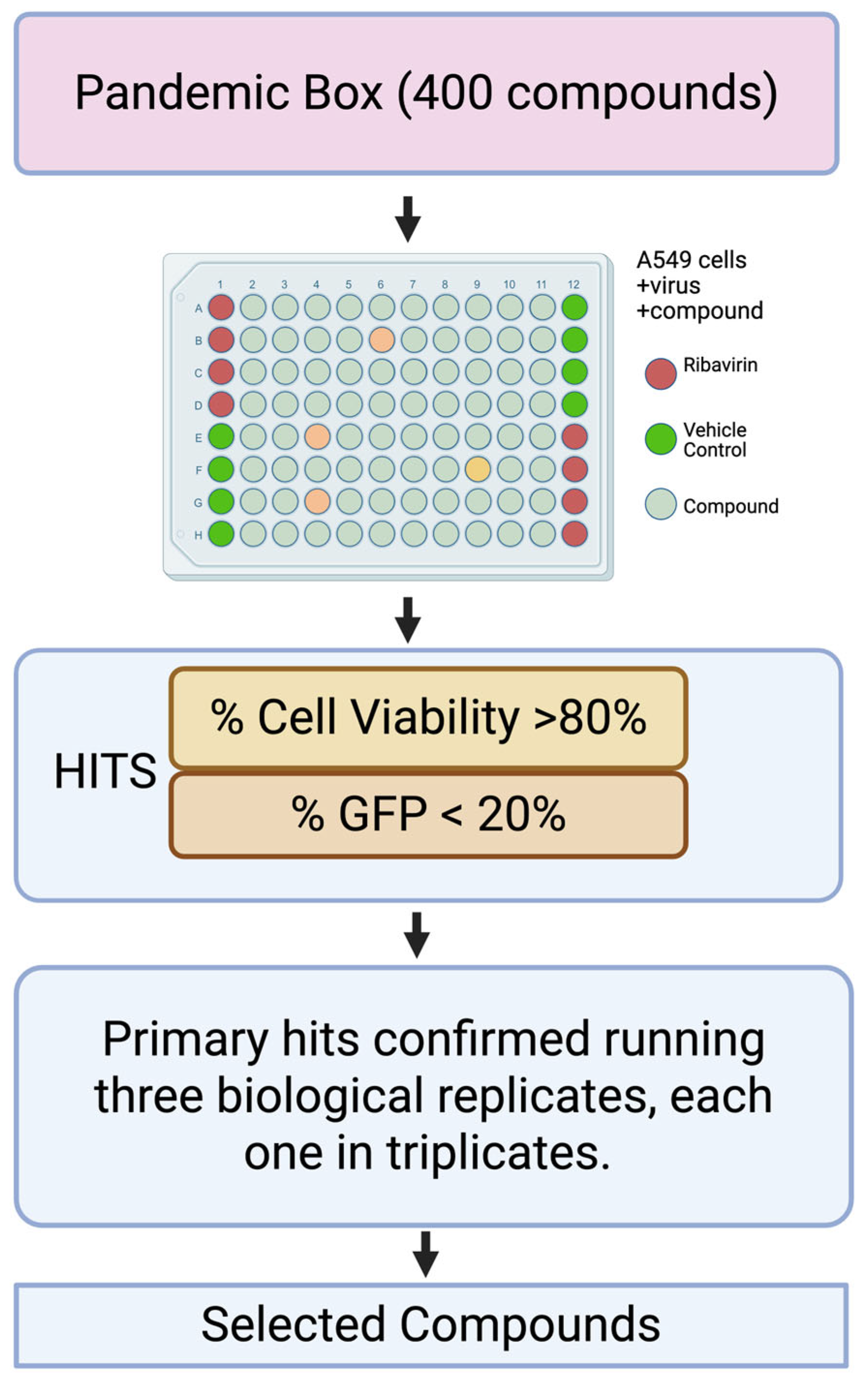
To identify potential anti-MaAv compounds within the PRB, we implemented a high-throughput screening (HTS) based on a cell-based infection assay using the rLCMV/GFP-P2A-NP, hereafter called rLCMV/GFP, that allowed us to use the GFP signal as an accurate surrogate of virus multiplication [65]. To identify primary hits, we infected (MOI = 0.03) A549 cells with rLCMV/GFP and treated them with each compound at a single dose (5 µM). At 72 hpi, we determined cell viability using the CellTiter 96 AQueous One Solution Cell Proliferation Assay. After absorbance values were recorded, we fixed cells using 4% PFA, and GFP expression levels were quantified. Both formazan absorbance and GFP signal were determined using a Synergy H4 Hybrid Multi-Mode microplate reader (BioTek Instruments, Winooski, VT, USA). As controls, we used treatment with the validated MaAv inhibitor RBV (100 µM) and vehicle control (VC). Cell viability and GFP expression levels were normalized to those of vehicle-treated (VC) controls. Primary hits (n = 22) were selected based on causing ≥50% reduction in infectivity (GFP signal) and ≤20% cytotoxicity (DAPI signal). Selected primary hits were confirmed in biological replicates, using each compound at a single concentration (5 µM) in triplicate (Figure 1). We identified Ro-24-7429 (RO), WO 2006118607 A2 (WO), and verdinexor (VE) as the top three hits with a potent inhibitory effect on LCMV multiplication (≥80% reduction in infectivity and ≤20% reduction in cell viability) (Supplementary Table S1).

3.2. Dose-Dependent Effect of VE, RO, and WO on LCMV Multiplication in Cultured Cells

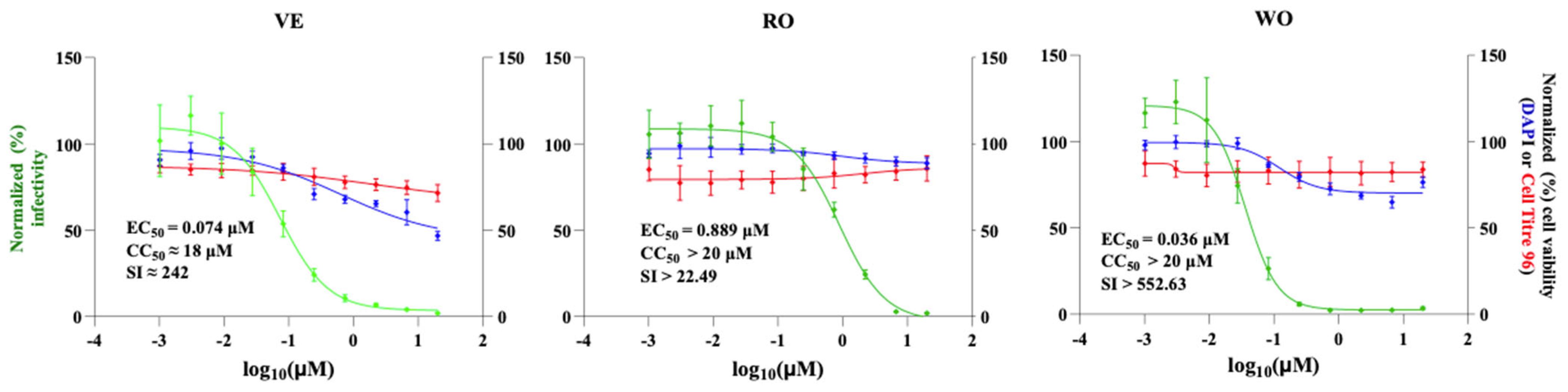
To evaluate the magnitude of the antiviral activity of the selected hits, we determined their dose-dependent effect on rLCMV/GFP multiplication in A549 cells (Figure 2). Cells were infected with rLCMV/GFP (MOI = 0.03) and treated with three-fold serial dilutions of each compound. At 72 hpi, we determined cell viability using the CellTiter 96 AQueous One Solution Cell Proliferation Assay. After absorbance values were recorded, we fixed cells using 4% PFA and stained them with DAPI. GFP and DAPI staining signals, as well as formazan absorbance, were measured using the Cytation 5 Cell Imaging Multi-Mode Reader. Normalized cell viability values and GFP expression levels were used to determine compounds’ CC50 and EC50 values using GraphPad Prism software v10. The three selected hits, VE, RO, and WO, exhibited potent anti-LCMV activity with EC50 values (µM) of 0.074, 0.889, and 0.036, respectively, and selectivity index (SI) values of >242 (VE), >22.49 (RO), and >552.6 (WO) (Figure 2).

3.3. Efficacy of VE, RO, and WO on JUNV Multiplication in Cultured Cells

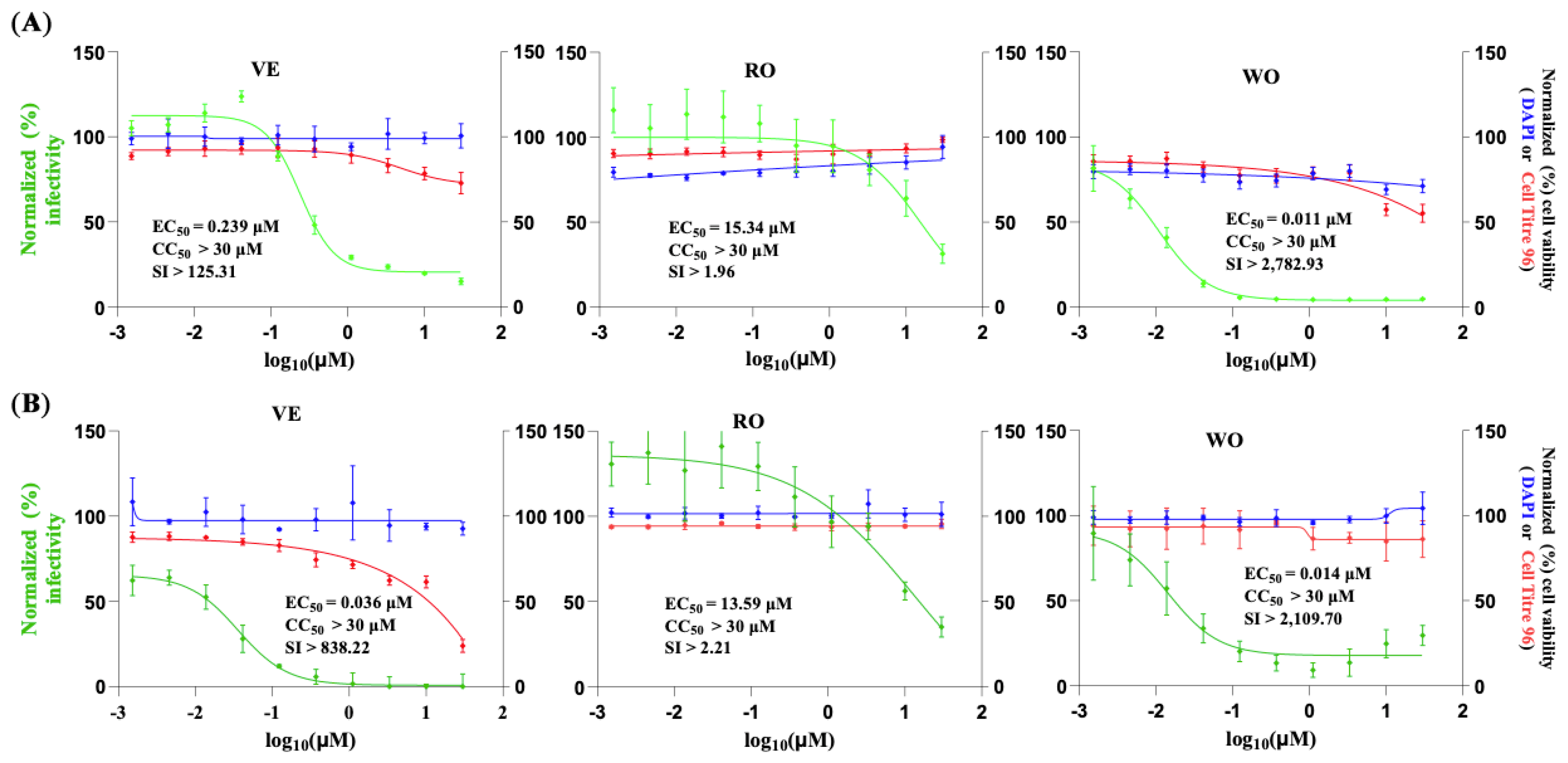
To assess the broad-spectrum anti-MaAv of VE, RO, and WO, we assessed their efficacy against the LCMV genetically distantly related New World MaAv JUNV. To overcome the need for BSL4 containment required for the use of live forms of pathogenic strains of JUNV, we used rJUN GFP-P2A-NP, hereafter called rJUNV/GFP, based on the live-attenuated vaccine strain Candid#1 of JUNV, which can be safely used in BSL2. We infected (MOI = 0.5) Vero E6 (Figure 3A) and A549 (Figure 3B) cells with rJUNV/GFP and treated them with a three-fold serial dilution of each compound. At 72 hpi, we determined cell viability using the CellTiter 96 AQueous One Solution Cell Proliferation Assay. After absorbance values were recorded, we fixed cells using 4% PFA and stained them with DAPI. GFP and DAPI staining signals, as well as formazan absorbance, were measured using the Cytation 5 Cell Imaging Multi-Mode Reader. Normalized cell viability values and GFP expression levels were used to determine compounds’ CC50 and EC50 values using GraphPad Prism software v10. VE and WO exhibited potent antiviral activity against JUNV in both Vero E6 (Figure 3A) and A549 (Figure 3B) cells, whereas RO was less efficient in inhibiting the multiplication of JUNV in both Vero E6 and A549 cells (Figure 3).

3.4. Effects of VE, RO, and WO on LCMV Multi-Step Growth Kinetics

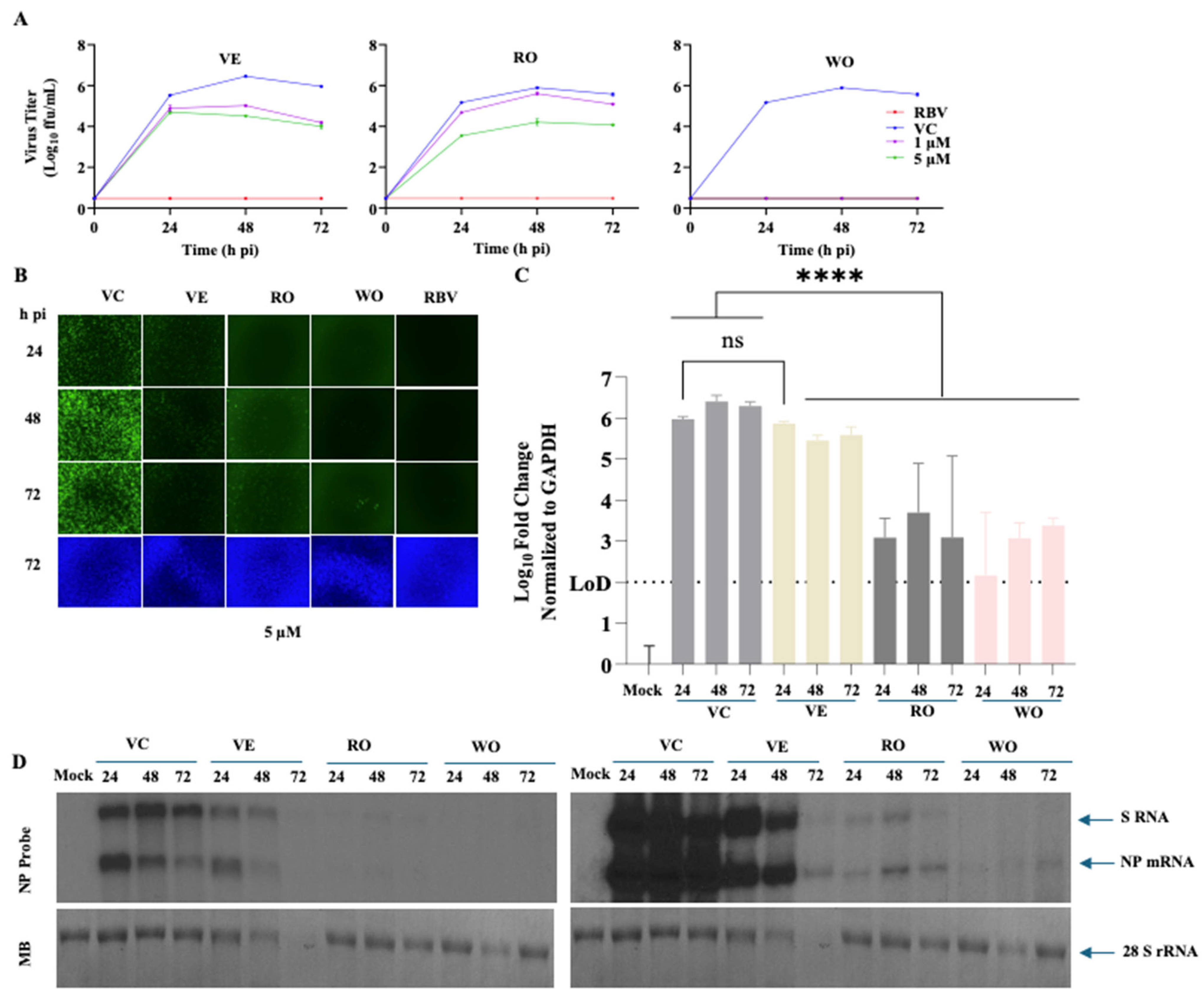
To examine the effects of VE, RO, and WO on the production of infectious viral progeny over time and virus cell propagation, we determined their effects on LCMV multi-step growth kinetics in A549 cells. We infected (MOI = 0.03) A549 cells with rLCMV/GFP and treated them with the indicated concentrations of each compound, VC, or RBV (100 µM). At the indicated hpi, CCSs were collected and titers of infectious virus determined by FFA (Figure 4A). Cells were stained with Hoechst in FluoroBrite DMEM, and epifluorescence images of live cells were taken from each sample (Figure 4B) using a Keyence BZ-X710 microscope. After collection of the images, total cellular RNA was isolated from each sample, and levels of viral RNA synthesis were determined by Northern blotting (NB) (Figure 4D) and RT-qPCR (Figure 4C). Treatment with VE at 1 µM or 5 µM caused about a 2-log reduction in virus peak titers (Figure 4A). RO exhibited reduced efficacy at 1 µM compared to 5 µM (Figure 4A). Treatment with WO at either 5 or 1 µM resulted in the absence of detectable levels of infectious virus in CCS at all hpi tested (Figure 4A). The observed reduction in production of LCMV infectious progeny in CCS of infected cells treated with each of the compounds correlated with restricted viral cell propagation (Figure 4B) and viral RNA synthesis, as quantified by RT-qPCR (Figure 4C) or NB (Figure 4D). VE, RO, and WO inhibited to a similar degree both virus replication and transcription as determined by NB results (Figure 4D).

3.5. Effects of VE, RO, and WO on Different Steps of LCMV Life Cycle

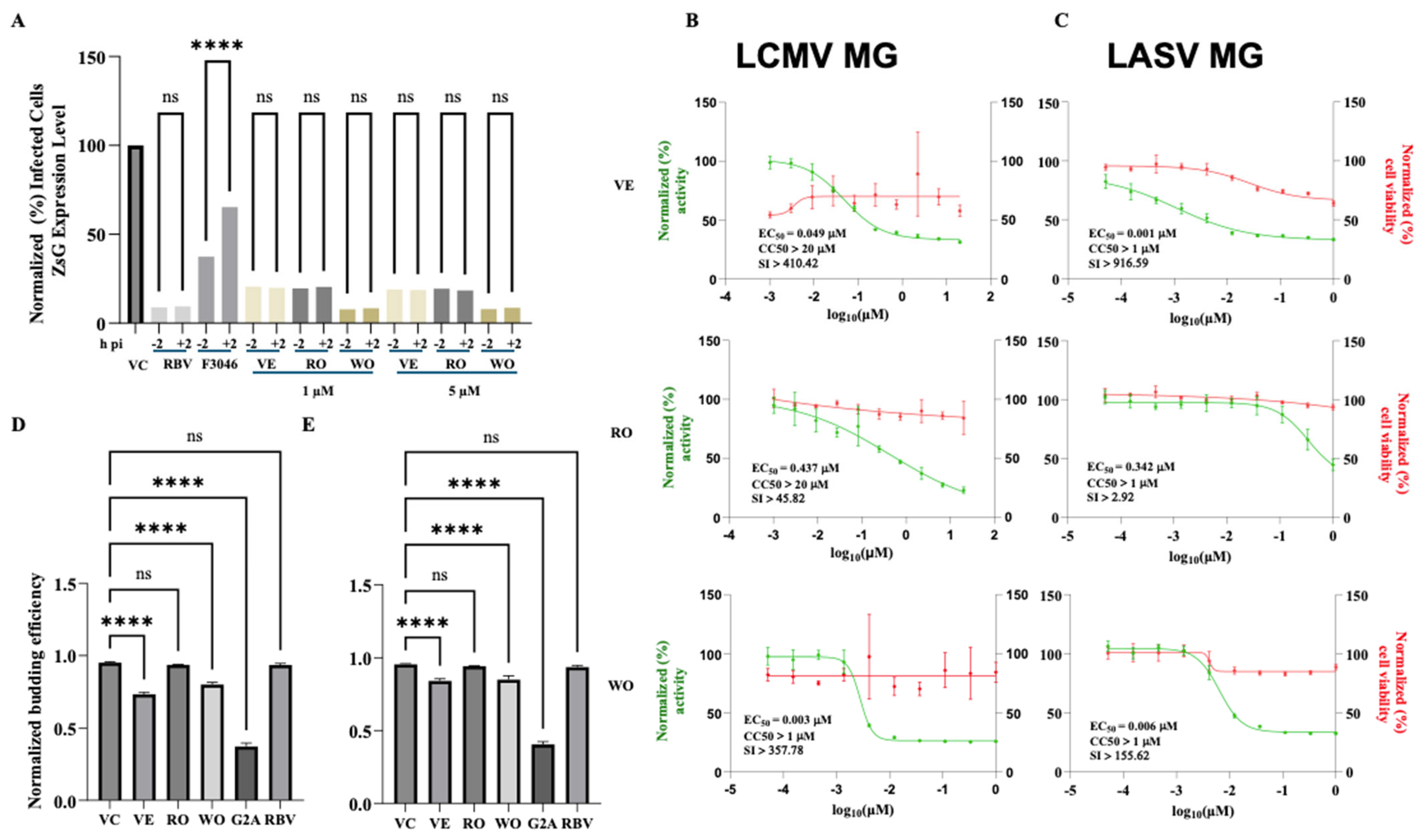
To gain insights about the mechanisms whereby VE, RO, and WO exert their anti-MaAv activity, we investigated their effects on various stages of the LCMV life cycle. We first assessed whether the compounds affected virus cell entry. For this, we performed a time-of-addition experiment using the single-cycle infectious rLCMV∆GPC/ZsG to prevent the confounding effects associated with multiple rounds of infection cycles in the absence of NH4Cl treatment. We treated A549 cells (3.0 × 10⁴ cells/well, 96-well plate) with each compound (1 µM or 5 µM), the LCMV cell entry inhibitor F3406 (5 µM), or the LCMV multiplication inhibitor RBV (100 µM) starting 2 h prior to (−2) or 2 h post (+2) infection with rARMΔGPC/ZsG-P2A-NP at an MOI of 1. At 48 hpi, we determined ZsG expression levels and normalized them to those of VC-treated cells, which were assigned a value of 100%. The results from the time-of-addition experiment showed that VE, RO, and WO exerted a similar inhibitory effect on ZsG expression when administered 2 h prior to or 2 h following infection (Figure 5A), indicating that all three targeted a post-cell entry step of the LCMV life cycle.
We next examined the effect of the compounds on the activity of the vRNP using both LCMV and LASV cell-based MG systems that accurately recapitulate all the steps of viral RNA synthesis, where the MG-directed reporter gene expression serves as an accurate surrogate of vRNP activity. We transfected HEK293T cells with the components of the LCMV (Figure 5B) or LASV (Figure 5C) MG system. At 2.5 h post-transfection, single-cell suspensions were prepared and seeded onto poly-L-lysine-coated 96-well plates (3.0 × 10⁴ cells/well) with media containing different concentrations (four replicates per concentration) of each compound. At 72 h post-transfection, cells were fixed with 4% PFA and stained with DAPI. ZsG expression levels and DAPI staining were quantified using the Cytation 5 plate reader and used to determine levels of MG activity and cell viability (total nuclei), respectively. VE and WO potently inhibited the activity of both LCMV and LASV MGs, whereas RO was significantly less efficient in inhibiting either LCMV or LASV MG activities (Figure 5B,C).
To assess the effect of VE and RO on the budding process directed by the matrix Z protein [66], we used a previously established cell-based budding assay wherein the activity of the Gaussia luciferase (GLuc) reporter gene serves as an indicator of Z budding activity [61]. We transfected HEK293T cells with a plasmid encoding LCMV Z-GLuc and subsequently treated them with VE, RO, WO (5 µM and 1 µM), or VC. As controls, we used the budding-deficient mutant G2A of the Z [67] and treatment with RBV (100 µM). At 48 h post-transfection, we measured levels of GLuc activity associated with virus-like particles (VLPs) present in CCSs and intracellular Z protein in whole-cell lysates (WCLs). Z budding efficiency was determined by the ratio of VLP-associated GLuc levels (CCSGLuc) and total GLuc levels (CCSGLuc + WCLGLuc) × 100. VE and WO, but not RO, had a significant inhibitory effect on LCMV Z budding activity at 5 µM (Figure 5D) and 1 µM (Figure 5E).

3.6. Effect of XPO1 siRNA-Mediated Knockdown (KD) on Production of LCMV Infectious Progeny

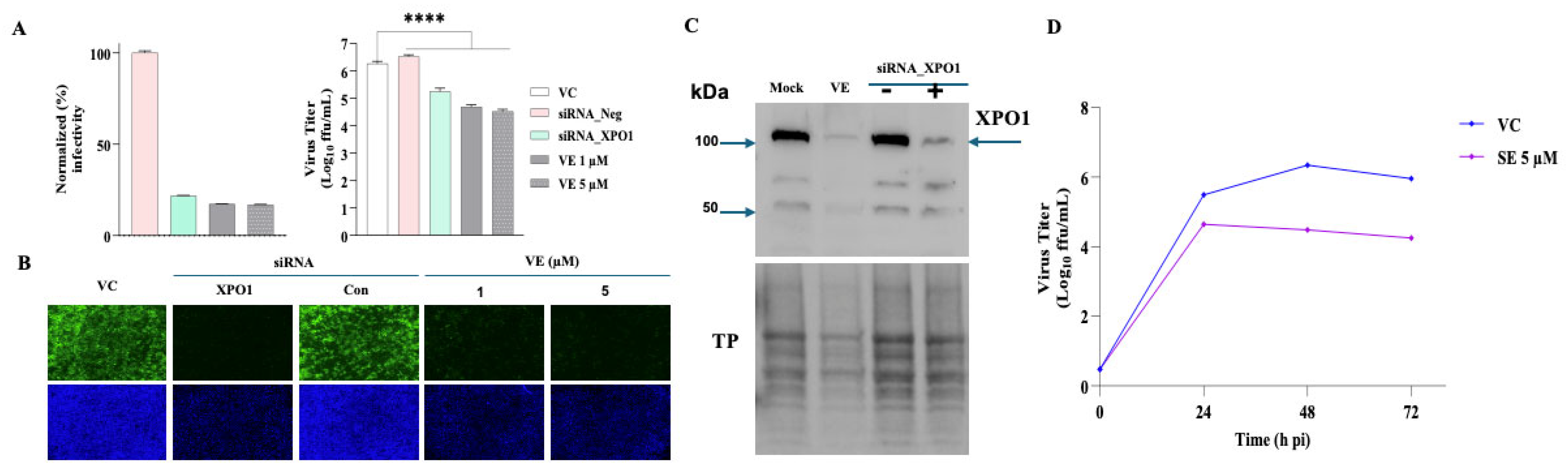
VE is a selective inhibitor of the nuclear export protein XPO1 and has been shown to exhibit antiviral activity against IAV [54,68], whose replication and gene transcription take place in the nucleus, and RSV [52,53], whose M protein appears to have a nuclear function required for RSV replication. In contrast, there is no evidence that the MaAv life cycle involves a nuclear phase [69], raising the intriguing question of why VE targeting of XPO1 results in MaAv inhibition. To further investigate the role of XPO1 on LCMV infection, we assessed the effect of siRNA-mediated knockdown (KD) of XPO1 on LCMV multiplication. For this, we transfected A549 cells with the ON-TARGETplus Human XPO1 (7514) siRNA—SMARTpool (Dharmacon) and a non-targeting siRNA as a control. At 48 h post-transfection, we infected cells with rLCMV/GFP (MOI of 0.03). Non-transfected cells were treated with VE (1 µM or 5 µM) or VC. At 48 hpi, CCSs were collected and titers of infectious virus determined by FFA (Figure 6A). Cells were fixed with 4% PFA and stained with DAPI, and representative images of each sample were collected using a Keyence BZ-X710 microscope (Figure 6B). Compared to the non-targeting siRNA-transfected cells, XPO1 KD in A549 cells significantly reduced the production of infectious virus (Figure 6A), which correlated with a reduction in virus cell propagation (Figure 6B). To confirm the KD of XPO1 in A549 cells by VE and TARGETplus Human XPO1 siRNA, we treated A549 cells with VE (5 µM), mock-treated them, or transfected them with siRNA targeting XPO1 and a non-targeting siRNA control. At 48 h post-treatment or transfection, we prepared cell lysates, and levels of XPO1 protein were determined by Western blot (Figure 6C). To further validate that the anti-LCMV activity of VE was via targeting XPO1, we examined the effect of the VE analog Selinexor (SE) on LCMV multi-step growth kinetics in A549 cells. SE exhibited a potent inhibitory effect on LCMV multiplication (Figure 6D).

3.7. Assessment of the Contribution of the Interferon (IFN) Response to VE Anti-MaAv Activity

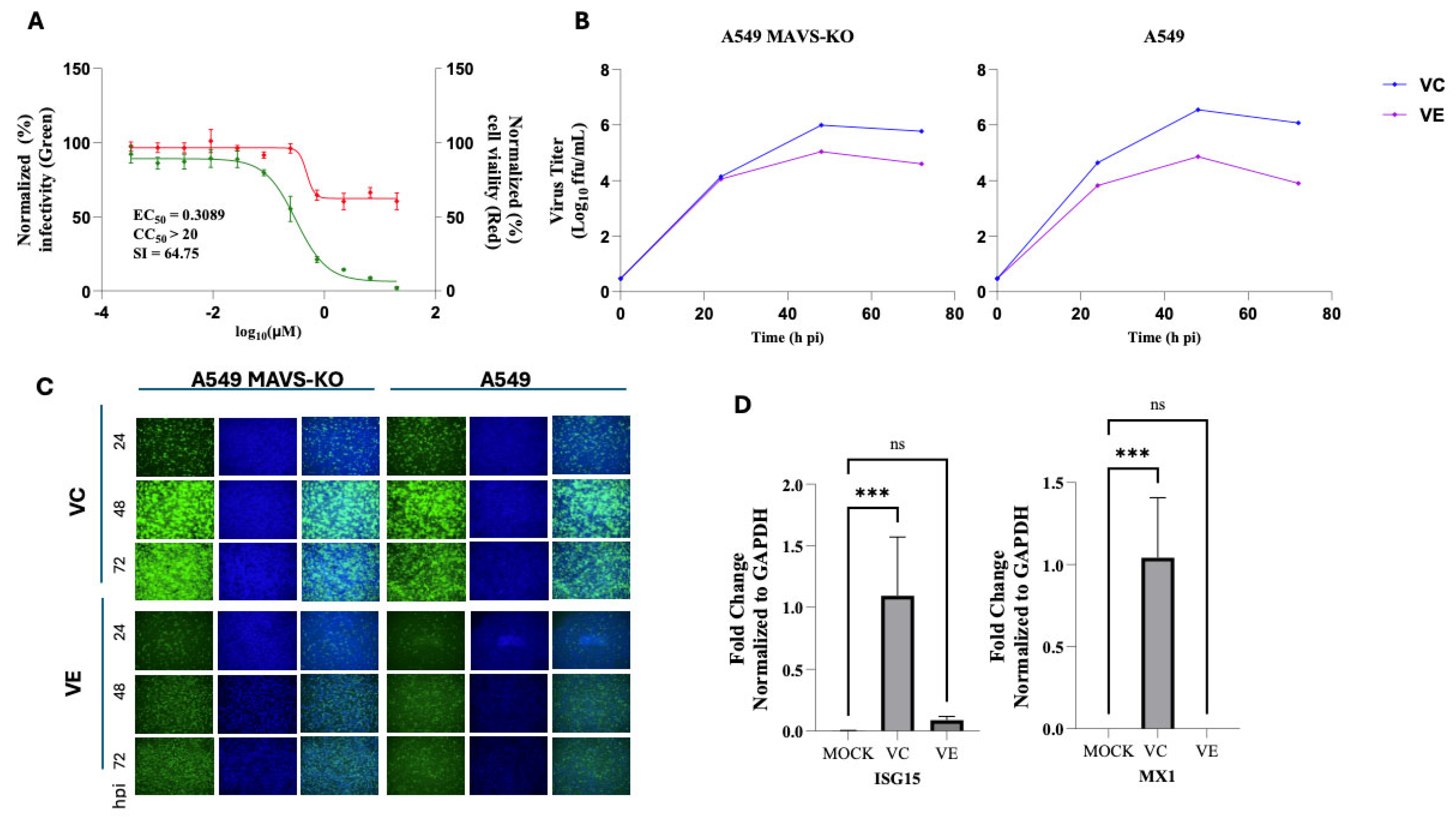
Treatment with VE and the related second generation of SINE Eltanexor has been shown to increase expression of type I interferon (T1IFN) and other innate immune-related genes in Kaposi’s sarcoma-associated herpesvirus (KSHV) and human cytomegalovirus (HCMV) infections [70,71], whereas treatment with VE and SE has been shown to decrease levels of type II IFN and other proinflammatory cytokines in IAV and SARS-CoV-2 infections [68,72]. To assess the contribution of the T1IFN response to the anti-MaAv of VE, we evaluated the dose–response effect of VE on LCMV multiplication in A549 cells deficient in mitochondrial antiviral-signaling protein (MAVS) required for induction of IFNb in LCMV-infected cells [73]. VE exerted a strong dose-dependent inhibitory effect on LCMV multiplication in MAVS-KO A549 cells (Figure 7A), which correlated with reduced production of infectious progeny (Figure 7B) and restricted virus propagation in the infected cell monolayer (Figure 7C). These findings indicated that the T1IFN response did not significantly contribute to the anti-LCMV activity of VE. Unexpectedly, we found that in contrast to the findings cited above with KSHV- and HCMV-infected cells, under our experimental conditions, treatment with VE resulted in reduced expression levels of the interferon-stimulated genes ISG15 and MX1 (Figure 7D).

3.8. Assessment of the Synergistic MaAv Antiviral Activity of VE in Combination with WO and RO

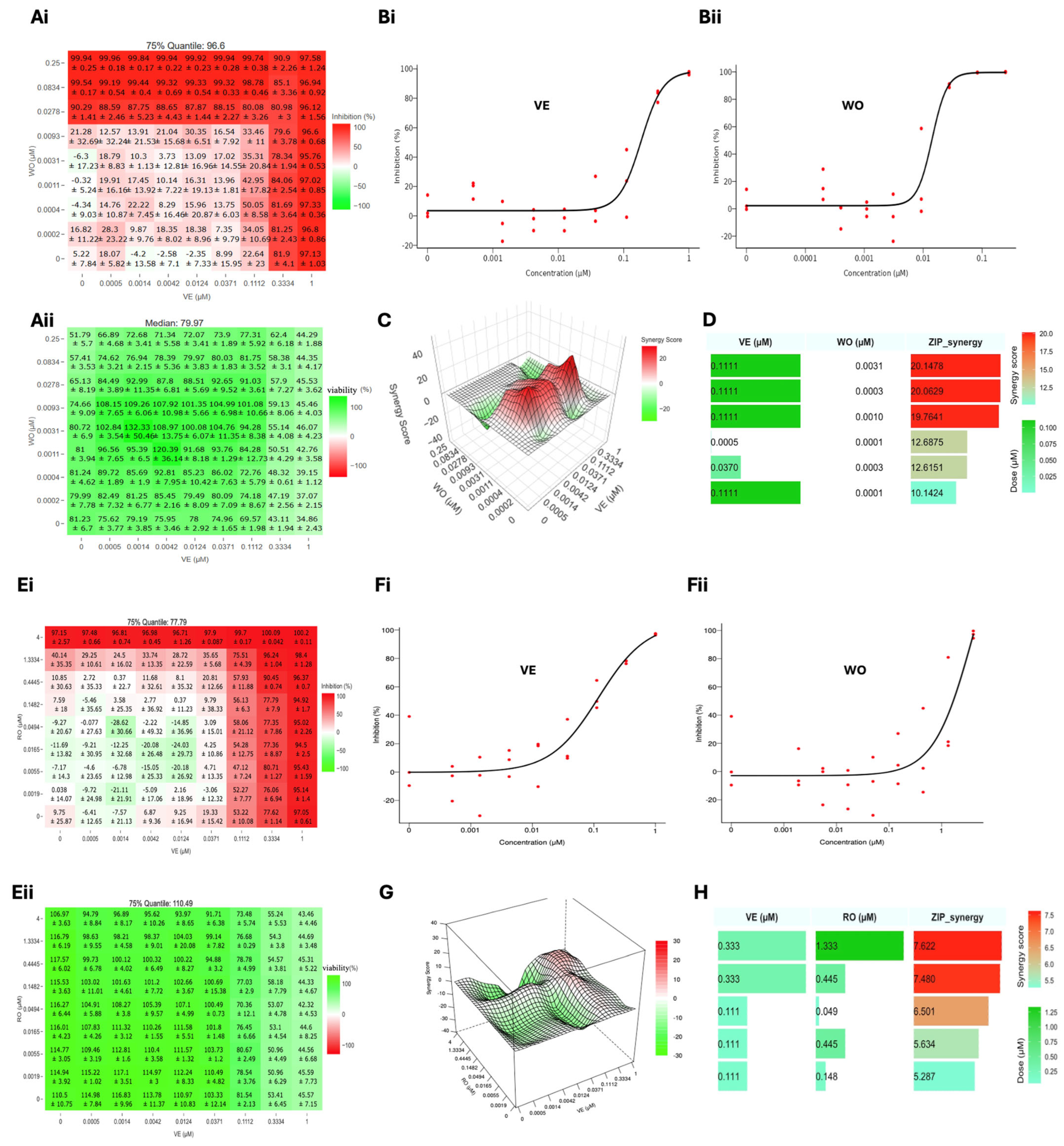
To investigate the synergistic antiviral activity of VE with WO and RO against MaAv, we designed an 8 × 8 matrix to test 8 serial dilutions of two compounds in their 64 possible combinations for their ability to inhibit the multiplication of LCMV. To assess synergy, we selected the zero interaction potency (ZIP) synergy model [74]. VE showed strong synergistic antiviral activity in combination with WO (Figure 8A), with the highest ZIP synergy score of 20 observed at concentrations of 0.11 μM (VE) and 0.0003 μM (WO). Monotherapy treatment with VE and WO at these concentrations resulted in a moderate antiviral effect of VE (22.64% inhibition) and non-detectable activity for WO. However, when combined, VE + WO exhibited 50.05% inhibition. Cell viability with individual compound treatment at these concentrations was 69.57% (VE) and 81.24% (WO), whereas combination therapy resulted in 72.72% cell viability. The combination treatment of VE and WO also showed five other combinations with ZIP score values > 10. The combination therapy of VE and RO only exhibited very modest synergistic antiviral activity, with the highest ZIP synergy score of 7.6 (Figure 8B) observed at concentrations of 0.333 μM (VE) and 1.333 μM (RO). The individual treatments of VE and RO at these concentrations displayed moderate antiviral effects with percent inhibition values of 77.62% and 40.14%, respectively. However, when combined, 96.24% inhibition was exhibited. Cell viability with individual treatment at the same concentration was 53.41% and 100%, respectively, while cell viability when in combination was 54.3%. The combination treatment of VE and RO also showed four other combinations with ZIP score values > 5.

4. Discussion

The lack of US FDA-approved vaccines or antivirals to prevent and treat diseases caused by human pathogenic MaAv represents an important unmet medical need. Current treatment of infections by LASV and other human pathogenic MaAv is limited to an off-label use of RBV, whose efficacy remains controversial [22,23,76]. Significant efforts are being directed towards the discovery and development of antiviral drugs against LASV and other hemorrhagic fever-causing MaAv, which has resulted in the identification of several promising candidates [40]. However, expanding the landscape of MaAv candidate antivirals will facilitate overcoming some current challenges, including limited potency and the development of resistance. Drug repurposing strategies can accelerate the progression of a candidate antiviral drug into clinical trials, thereby reducing the labor- and resource-intensive efforts associated with the preclinical optimization of newly discovered hits in traditional drug-discovery approaches [39,77]. The open-source PRB is a collection of 400 compounds assembled based on publicly available information regarding chemotypes currently in the discovery and early development stages, which have demonstrated beneficial activities [44].
Compounds from the PRB have been identified as potential antivirals against different viruses, including enterovirus A71 [78], KSHV [79], SARS-CoV-2 [80,81], Ebola virus [82], Chikungunya virus [83], and the Zika virus [84]. Here, we have presented our results from the screening of the PRB for compounds with anti-MaAv activity. We used a cell-based infection assay with features amenable to HTS [62] to screen the PBR for inhibitors of LCMV multiplication. We identified 22 primary hits. Validation and reassessment assays identified RO, WO, and VE as the top candidate inhibitors of LCMV multiplication in cultured cells. RO (Ro-24-7429) was originally developed as an inhibitor of the HIV-1 Tat protein [45,46] but with no detectable antiviral effect in patients with HIV [47,85]. Subsequently, RO was found to inhibit runt-related transcription factor 1 (RUNX1) protein [48] and to ameliorate lung fibrosis and inflammation in a mouse model of bleomycin-induced pulmonary fibrosis [48]. Additionally, RO was shown to reduce the expression of angiotensin-converting enzyme 2 (ACE-2) and furin, which are host proteins essential for SARS-CoV-2 infection, supporting the repurposing of RO for the treatment of SARS-CoV-2 infection [48]. We found that RO exhibited strong antiviral activity against LCMV (EC50 = 0.89 µM and SI > 22). RO did not affect viral cell entry or Z-mediated budding processes but rather inhibited RNA synthesis mediated by vRNP (Figure 4D and Figure 5). However, unexpectedly, RO showed significantly lower activity against JUNV (EC50 = 15.34 µM and SI = 1.96). At the present time, we do not have an explanation for this finding, which may question the use of RO as a broad-spectrum MaAv antiviral. WO, a tetrahydrocarbazole amide, has been shown to exhibit broad-spectrum antiviral activity [86], which has been linked to its inhibitory effect on dihydroorotate dehydrogenase (DHODH) [87], a key enzyme in the biosynthesis of pyrimidines [49,50]. WO showed potent antiviral activities against LCMV (EC50 = 0.04 µM and SI > 552.63) and JUNV (EC50 = 0.01 µM and SI > 2.8) via targeting the activity of the vRNP, a result consistent with our published findings showing that DHODH inhibitors, including brequinar [66], vidofludimos calcium, and related analogs [88], have potent anti-MaAv activity.
VE, an oral selective inhibitor of nuclear export (SINE) compound that targets the XPO1/CRM1 exportin [51], has been shown to inhibit the replication of IAV [52] and RSV [53] in cultured cells. Notably, VE has demonstrated efficacy in animal models of IAV infection [52,54]. VE inhibits IAV multiplication by blocking XPO1-mediated nuclear export of vRNP [52], whereas inhibition of RSV by VE has been linked to the nuclear accumulation of RSV M protein due to VE targeting of XPO1 [53]. VE has also been shown to have antiviral activity against several DNA viruses via nuclear retention of viral proteins and also promoting the production of type I interferon [71,89]. MaAv’s life cycle is restricted to the cytoplasm of infected cells [69]. Hence, it was unexpected to find that VE exhibited a potent antiviral effect against MaAv, with EC50 values of 0.07 µM and 0.24 µM against LCMV and JUNV, respectively, and corresponding SI values of 242 and 124.31. We found that siRNA-mediated KD of XPO1 phenocopied the effect of VE in LCVM-infected cells, characterized by XPO1 reduced expression levels that correlated with inhibition of production of LCMV infectious progeny (Figure 6), supporting that VE exerted its anti-MaAv activity via targeting XPO1. Increased expression of T1IFN has been implicated in the inhibition of KSHV and HCMV infection by treatment with SINE compounds [71]. However, we found that VE exhibited an anti-LCMV activity of similar magnitude in WT and MAVS-KO A549 cells, indicating that the host cell T1IFN response did not contribute significantly to the antiviral effect of VE on LCMV. Moreover, contrary to the reported VE-induced expression of ISGs in KSHV- and HCMV-infected cells [70,71], we observed a decreased expression of ISG15 and MX1 ISGs upon VE treatment (Figure 7). Nevertheless, we cannot rule out the possibility that MAVS-independent signaling pathways might have contributed to VE anti-MaAv activity. Recent evidence suggests that XPO1 has activities beyond its role in nuclear export, including epigenomic regulation [90], which could influence the host cell response to infection. Examining the effect of VE and other SINE compounds on the global cellular gene expression profile may provide insights into the molecular bases of VE anti-mammarenavirus activity. However, we consider these studies to be beyond the scope of the present work.
HDAs represent a promising yet underexplored approach in contemporary antiviral research [91,92]. Unlike conventional direct-acting antivirals (DAAs) that target viral proteins and functions, HDAs disrupt host factors and cellular processes that viruses hijack for their replication and pathogenesis. Since members of a virus family share host dependencies, HDAs have the potential to act as broad-spectrum antivirals. In addition, HDAs pose a higher genetic barrier to the emergence of drug-resistant viral variants, which often compromise antiviral therapy [55,56]. The current fast pace of identification and characterization of virus–host interactions has accelerated the discovery of many novel potential host druggable targets for the development of HDAs and has facilitated drug repurposing strategies for drugs with established safety profiles, thus reducing longer development timelines and regulatory barriers associated with the development of novel drugs [39]. HDA-based antiviral strategies face the challenge of risks associated with toxicity and unintended consequences of disruption of cell physiological processes. However, therapies against acute viral infections, such as HF diseases caused by MaAv, require short-term treatment, which increases the likelihood of identifying effective therapeutic regimens with acceptable safety profiles.
The success of combination therapy is illustrated by the current therapeutic approaches to treat HIV and HCV infections involving combinations of two to four antivirals targeting different steps of the virus life cycle [93,94,95,96]. This has the advantage of fostering a synergistic antiviral effect [97,98], which facilitates reducing drug doses within the therapeutic range and alleviating side effects associated with high drug doses used in monotherapy, as well as posing a higher genetic barrier to the emergence of drug-resistant viral variants that often jeopardize monotherapy [99,100]. To investigate the synergistic efficacy of VE with RO and WO, we used the ZIP synergy model because it is well-suited for drug combination therapy studies in which each compound dose–response follows a sigmoidal behavior, and the combined compounds act through distinct mechanisms of action. ZIP defines non-interaction as the absence of changes in both potency (EC50) and efficacy upon combination and evaluates deviations across the entire dose–response surface, rather than at individual dose pairs. This makes ZIP particularly appropriate for antiviral combination matrices, where interactions frequently manifest as shifts in dose–response potency rather than simple additive or maximal effects. We considered alternative synergy models, but they were less suitable for this experimental design. The Highest Single Agent (HSA) model evaluates each dose pair independently by comparing the combination effect to the most active single agent at the same concentrations; however, it does not account for dose–response behavior or potency shifts and therefore provides limited interpretability for matrix-based antiviral assays. The Bliss independence model assumes probabilistic independence of drug effects but similarly operates on observed effect levels without explicitly incorporating fitted dose–response relationships, making it less sensitive to interaction effects driven by changes in drug potency. Conversely, the Loewe additivity model requires the assumption of similar or interchangeable mechanisms of action, which is not applicable to the mechanistically distinct antiviral compounds tested here. The ZIP synergy model integrates Bliss-type independence with Loewe-style dose–response modeling, allowing assessment of non-interaction under the assumption of unchanged potency while accommodating mechanistically distinct drugs. ZIP synergy scores are centered around zero, with positive values indicating synergy and negative values indicating antagonism. In SynergyFinder+, average ZIP scores > 10 are generally considered biologically meaningful synergy, scores between −10 and +10 indicate additive or non-interacting effects, and scores < −10 indicate antagonism. We found that VE exhibited strong synergistic antiviral activity in combination with WO (Figure 8A), with a ZIP synergy score of 20. In contrast, the combination therapy of VE and RO only exhibited very modest synergistic antiviral activity with a ZIP synergy score of 7.6 (Figure 8B). Future studies should examine whether VE exhibits synergistic antiviral activity in combination with inhibitors of LASV cell entry that have been advanced to clinical trials [26], which could facilitate the development of combination therapies of HDAs and DAAs. It should be noted that research aimed at developing VE and related XPO1-targeting SINE compounds as a host-directed antiviral against MaAv could be facilitated by insights gathered from cancer research, including preclinical and clinical data from the oncology pipeline for XPO1 inhibitors [101].

Supplementary Materials

The following supporting information can be downloaded at https://www.mdpi.com/article/10.3390/v18010103/s1, Table S1: List of selected primary hits [68,102].

Author Contributions

Conceptualization, C.A.O., B.C. and J.C.d.l.T.; methodology, C.A.O., B.C., H.W. and J.C.d.l.T.; software, C.A.O. and H.W.; validation, C.A.O., B.C., H.W. and J.C.d.l.T.; formal analysis, C.A.O. and H.W.; investigation, C.A.O. and B.C.; resources, N.O. and J.C.d.l.T.; data curation, C.A.O., B.C. and C.B.O.; writing—original draft preparation, C.A.O.; writing—review and editing, C.A.O., B.C., H.W. and J.C.d.l.T.; visualization, C.A.O. and B.C.; supervision, H.W. and J.C.d.l.T.; project administration, C.A.O. and B.C.; funding acquisition, J.C.d.l.T. All authors have read and agreed to the published version of the manuscript.

Funding

This research was funded by NIH/NIAID grants AI125626 and AI128556 (JCT). The paper is being submitted by an Associate Editor (JCT) of Viruses. Each year, Associate Editors can submit to Viruses three papers that are not subject to APC fees.

Institutional Review Board Statement

Not applicable.

Informed Consent Statement

Not applicable.

Data Availability Statement

The raw data supporting the conclusions of this article will be made available by the authors on request.

Conflicts of Interest

All the authors declare no conflicts related to the content of this manuscript. The funders had no role in the design of the study; in the collection, analyses, or interpretation of data; in the writing of the manuscript; or in the decision to publish the results.

References

  1. Howley, P.M.; Knipe, D.M.; Whelan, S. Arenaviridae: The Viruses and Their Replication. In Fields Virology: Emerging Viruses, 7th ed.; Knipe, D.M., Whelan, S.P.J., Eds.; Lippincott Williams & Wilkins: Philadelphia, PA, USA, 2021; Volume 1, ISBN 978-1-9751-1254-7. [Google Scholar]
  2. Smith, D.R.M.; Turner, J.; Fahr, P.; Attfield, L.A.; Bessell, P.R.; Donnelly, C.A.; Gibb, R.; Jones, K.E.; Redding, D.W.; Asogun, D.; et al. Health and Economic Impacts of Lassa Vaccination Campaigns in West Africa. Nat. Med. 2024, 30, 3568–3577. [Google Scholar] [CrossRef] [PubMed]
  3. Garry, R.F. Lassa Fever—The Road Ahead. Nat. Rev. Microbiol. 2023, 21, 87–96. [Google Scholar] [CrossRef]
  4. Fichet-Calvet, E.; Rogers, D.J. Risk Maps of Lassa Fever in West Africa. PLoS Neglected Trop. Dis. 2009, 3, e388. [Google Scholar] [CrossRef]
  5. Grant, D.S.; Samuels, R.J.; Garry, R.F.; Schieffelin, J.S. Lassa Fever Natural History and Clinical Management. In Lassa Fever: Epidemiology, Immunology, Diagnostics, and Therapeutics; Springer: Cham, Switzerland, 2023; Volume 440, pp. 165–192. [Google Scholar] [CrossRef]
  6. Basinski, A.J.; Fichet-Calvet, E.; Sjodin, A.R.; Varrelman, T.J.; Remien, C.H.; Layman, N.C.; Bird, B.H.; Wolking, D.J.; Monagin, C.; Ghersi, B.M.; et al. Bridging the Gap: Using Reservoir Ecology and Human Serosurveys to Estimate Lassa Virus Spillover in West Africa. PLoS Comput. Biol. 2021, 17, e1008811. [Google Scholar] [CrossRef]
  7. Hastie, K.M.; Melnik, L.I.; Cross, R.W.; Klitting, R.M.; Andersen, K.G.; Saphire, E.O.; Garry, R.F. The Arenaviridae Family: Knowledge Gaps, Animal Models, Countermeasures, and Prototype Pathogens. J. Infect. Dis. 2023, 228, S359–S375. [Google Scholar] [CrossRef]
  8. Moore, K.A.; Ostrowsky, J.T.; Mehr, A.J.; Johnson, R.A.; Ulrich, A.K.; Moua, N.M.; Fay, P.C.; Hart, P.J.; Golding, J.P.; Benassi, V.; et al. Lassa Fever Research Priorities: Towards Effective Medical Countermeasures by the End of the Decade. Lancet Infect. Dis. 2024, 24, e696–e706. [Google Scholar] [CrossRef] [PubMed]
  9. Mariën, J.; Nuismer, S.L.; Magassouba, N.; Soropogui, B.; Günther, S.; Becker-Ziaja, B.; Gabriel, M.; Müller-Kräuter, H.; Strecker, T.; Saez, A.M.; et al. Serosurveillance Identifies an Endemic Hotspot of Lassa Fever in Faranah, Upper Guinea. J. Infect. Dis. 2025, 232, e830–e838. [Google Scholar] [CrossRef]
  10. Njuguna, C.; Vandi, M.; Liyosi, E.; Githuku, J.; Wurie, A.; Njeru, I.; Raftery, P.; Amuzu, C.; Maruta, A.; Musoke, R.; et al. A Challenging Response to a Lassa Fever Outbreak in a Non Endemic Area of Sierra Leone in 2019 with Export of Cases to The Netherlands. Int. J. Infect. Dis. 2022, 117, 295–301. [Google Scholar] [CrossRef] [PubMed]
  11. Sogoba, N.; Feldmann, H.; Safronetz, D. Lassa Fever in West Africa: Evidence for an Expanded Region of Endemicity. Zoonoses Public Health 2012, 59, 43–47. [Google Scholar] [CrossRef]
  12. Freedman, D.O.; Woodall, J. Emerging Infectious Diseases and Risk to the Traveler. Med. Clin. N. Am. 1999, 83, 865–883. [Google Scholar]
  13. Isaäcson, M.; Steffen, R.; Isaäcson, M. Viral Hemorrhagic Fever Hazards for Travelers in Africa. Clin. Infect. Dis. 2001, 33, 1707–1712. [Google Scholar] [CrossRef] [PubMed]
  14. Grange, Z.L.; Goldstein, T.; Johnson, C.K.; Anthony, S.; Gilardi, K.; Daszak, P.; Olival, K.J.; O’Rourke, T.; Murray, S.; Olson, S.H.; et al. Ranking the Risk of Animal-to-Human Spillover for Newly Discovered Viruses. Proc. Natl. Acad. Sci. USA 2021, 118, e2002324118. [Google Scholar] [CrossRef]
  15. Klitting, R.; Kafetzopoulou, L.E.; Thiery, W.; Dudas, G.; Gryseels, S.; Kotamarthi, A.; Vrancken, B.; Gangavarapu, K.; Momoh, M.; Sandi, J.D.; et al. Predicting the Evolution of the Lassa Virus Endemic Area and Population at Risk over the next Decades. Nat. Commun. 2022, 13, 5596. [Google Scholar] [CrossRef] [PubMed]
  16. Prioritizing Diseases for Research and Development in Emergency Contexts. Available online: https://www.who.int/activities/prioritizing-diseases-for-research-and-development-in-emergency-contexts (accessed on 10 March 2025).
  17. Wilson, D.R.; Barry, D.A. A One Health Approach for South American Hemorrhagic Fevers. CABI One Health 2025, 4, 0008. [Google Scholar] [CrossRef]
  18. Congenital Lymphocytic Choriomeningitis Virus: Prenatal Diagnosis. Available online: https://www.ovid.com/journals/pred/fulltext/10.1002/pd.6192~congenital-lymphocytic-choriomeningitis-virus-a-review (accessed on 25 December 2025).
  19. Palacios, G.; Druce, J.; Du, L.; Tran, T.; Birch, C.; Briese, T.; Conlan, S.; Quan, P.-L.; Hui, J.; Marshall, J.; et al. A New Arenavirus in a Cluster of Fatal Transplant-Associated Diseases. N. Engl. J. Med. 2008, 358, 991–998. [Google Scholar] [CrossRef]
  20. Lapošová, K.; Pastoreková, S.; Tomášková, J. Lymphocytic Choriomeningitis Virus: Invisible but Not Innocent. Acta Virol. 2013, 57, 160–170. [Google Scholar] [CrossRef] [PubMed]
  21. Gass, J.T.; Nofchissey, R.A.; Twohig, F.M.; Ye, C.; Goodfellow, S.M.; Mentore, K.; Burgos, M.; Negrete, O.; Whitmer, S.; Klena, J.D.; et al. Discovery of a Novel Lymphocytic Choriomeningitis Virus Strain Associated with Severe Human Disease in Immunocompetent Patient, New Mexico. Emerg. Microbes Infect. 2025, 14, 2542250. [Google Scholar] [CrossRef]
  22. Schieffelin, J. Treatment of Arenavirus Infections. Curr. Treat. Options Infect. Dis. 2015, 7, 261–270. [Google Scholar] [CrossRef]
  23. Salam, A.P.; Cheng, V.; Edwards, T.; Olliaro, P.; Sterne, J.; Horby, P. Time to Reconsider the Role of Ribavirin in Lassa Fever. PLoS Neglected Trop. Dis. 2021, 15, e0009522. [Google Scholar] [CrossRef]
  24. Safronetz, D.; Rosenke, K.; Westover, J.B.; Martellaro, C.; Okumura, A.; Furuta, Y.; Geisbert, J.; Saturday, G.; Komeno, T.; Geisbert, T.W.; et al. The Broad-Spectrum Antiviral Favipiravir Protects Guinea Pigs from Lethal Lassa Virus Infection Post-Disease Onset. Sci. Rep. 2015, 5, 14775. [Google Scholar] [CrossRef]
  25. Furuta, Y.; Komeno, T.; Nakamura, T. Favipiravir (T-705), a Broad Spectrum Inhibitor of Viral RNA Polymerase. Proc. Jpn. Acad. Ser. B 2017, 93, 449–463. [Google Scholar] [CrossRef] [PubMed]
  26. Amberg, S.M.; Snyder, B.; Vliet-Gregg, P.A.; Tarcha, E.J.; Posakony, J.; Bedard, K.M.; Heald, A.E. Safety and Pharmacokinetics of LHF-535, a Potential Treatment for Lassa Fever, in Healthy Adults. Antimicrob. Agents Chemother. 2022, 66, e00951-22. [Google Scholar] [CrossRef] [PubMed]
  27. Gowen, B.B.; Naik, S.; Westover, J.B.; Brown, E.R.; Gantla, V.R.; Fetsko, A.; Dagley, A.L.; Blotter, D.J.; Anderson, N.; McCormack, K.; et al. Potent Inhibition of Arenavirus Infection by a Novel Fusion Inhibitor. Antivir. Res. 2021, 193, 105125. [Google Scholar] [CrossRef]
  28. Probechem Biochemicals. ARN-75039|Arenavirus Inhibitor. Available online: https://www.probechem.com/products_ARN-75039.html (accessed on 25 September 2025).
  29. Rosenke, K.; Feldmann, H.; Westover, J.B.; Hanley, P.W.; Martellaro, C.; Feldmann, F.; Saturday, G.; Lovaglio, J.; Scott, D.P.; Furuta, Y.; et al. Use of Favipiravir to Treat Lassa Virus Infection in Macaques. Emerg. Infect. Dis. 2018, 24, 1696–1699. [Google Scholar] [CrossRef]
  30. Łagocka, R.; Dziedziejko, V.; Kłos, P.; Pawlik, A. Favipiravir in Therapy of Viral Infections. J. Clin. Med. 2021, 10, 273. [Google Scholar] [CrossRef]
  31. Lukashevich, I.S.; Paessler, S.; de la Torre, J.C. Lassa Virus Diversity and Feasibility for Universal Prophylactic Vaccine. F1000Research 2019, 8, 134. [Google Scholar] [CrossRef]
  32. Andersen, K.G.; Shapiro, B.J.; Matranga, C.B.; Sealfon, R.; Lin, A.E.; Moses, L.M.; Folarin, O.A.; Goba, A.; Odia, I.; Ehiane, P.E.; et al. Clinical Sequencing Uncovers Origins and Evolution of Lassa Virus. Cell 2015, 162, 738–750. [Google Scholar] [CrossRef]
  33. Guo, J.; Du, Y.; Zhang, G.; Liu, Y.; Cao, J.; Zhang, M.; Lan, X.; Zhang, Y.; Liu, C.; Xiao, G.; et al. Functional Characterization of a Lassa Virus Fusion Inhibitor Adaptive Mutant. Zoonoses 2025, 5, 993. [Google Scholar] [CrossRef]
  34. Zhang, G.; Cao, J.; Cai, Y.; Liu, Y.; Li, Y.; Wang, P.; Guo, J.; Jia, X.; Zhang, M.; Xiao, G.; et al. Structure-Activity Relationship Optimization for Lassa Virus Fusion Inhibitors Targeting the Transmembrane Domain of GP2. Protein Cell 2019, 10, 137–142. [Google Scholar] [CrossRef]
  35. Garry, R.F. Lassa Virus Structural Biology and Replication. In Lassa Fever: Epidemiology, Immunology, Diagnostics, and Therapeutics; Garry, R., Ed.; Springer International Publishing: Cham, Switzerland, 2023; pp. 147–164. ISBN 978-3-031-35807-4. [Google Scholar]
  36. Klitting, R.; Mehta, S.B.; Oguzie, J.U.; Oluniyi, P.E.; Pauthner, M.G.; Siddle, K.J.; Andersen, K.G.; Happi, C.T.; Sabeti, P.C. Lassa Virus Genetics. In Lassa Fever: Epidemiology, Immunology, Diagnostics, and Therapeutics; Springer: Cham, Switzerland, 2023; Volume 440, pp. 23–65. [Google Scholar] [CrossRef]
  37. Radoshitzky, S.R.; de la Torre, J.C. Human Pathogenic Arenaviruses (Arenaviridae). In Encyclopedia of Virology; Elsevier: Amsterdam, The Netherlands, 2019; pp. 507–517. ISBN 978-0-12-814516-6. [Google Scholar]
  38. Shao, J.; Liu, X.; Liang, Y.; Ly, H. Assays to Assess Arenaviral Glycoprotein Function. In Hemorrhagic Fever Viruses: Methods and Protocols; Salvato, M.S., Ed.; Springer: New York, NY, USA, 2018; pp. 169–178. ISBN 978-1-4939-6981-4. [Google Scholar]
  39. Pushpakom, S.; Iorio, F.; Eyers, P.A.; Escott, K.J.; Hopper, S.; Wells, A.; Doig, A.; Guilliams, T.; Latimer, J.; McNamee, C.; et al. Drug Repurposing: Progress, Challenges and Recommendations. Nat. Rev. Drug Discov. 2019, 18, 41–58. [Google Scholar] [CrossRef] [PubMed]
  40. Ofodile, C.A.; Uzochukwu, I.C.; Ezebuo, F.C.; Ejiofor, I.; Adebola, M.; Okpoli, I.; Cubitt, B.; Witwit, H.; Okwuanaso, C.B.; Onyemelukwe, N.; et al. Flunarizine as a Candidate for Drug Repurposing Against Human Pathogenic Mammarenaviruses. Viruses 2025, 17, 117. [Google Scholar] [CrossRef]
  41. Felciano, R.M.; Bavari, S.; Richards, D.R.; Billaud, J.-N.; Warren, T.; Panchal, R.; Krämer, A. Predictive systems biology APPROACH to broad-spectrum, host-directed drug target discovery in infectious diseases. In Proceedings of the Biocomputing 2013, Kohala Coast, HI, USA, 3–7 January 2013; World Scientific: Singapore, 2013; pp. 17–28. [Google Scholar]
  42. Pan, Y.; Cheng, T.; Wang, Y.; Bryant, S.H. Pathway Analysis for Drug Repositioning Based on Public Database Mining. J. Chem. Inf. Model. 2014, 54, 407–418. [Google Scholar] [CrossRef] [PubMed]
  43. Jamir, E.; Sarma, H.; Priyadarsinee, L.; Kiewhuo, K.; Nagamani, S.; Sastry, G.N. Polypharmacology Guided Drug Repositioning Approach for SARS-CoV2. PLoS ONE 2023, 18, e0289890. [Google Scholar] [CrossRef]
  44. Samby, K.; Besson, D.; Dutta, A.; Patra, B.; Doy, A.; Glossop, P.; Mills, J.; Whitlock, G.; Hooft van Huijsduijnen, R.; Monaco, A.; et al. The Pandemic Response Box—Accelerating Drug Discovery Efforts after Disease Outbreaks. ACS Infect. Dis. 2022, 8, 713–720. [Google Scholar] [CrossRef]
  45. Braddock, M.; Cannon, P.; Muckenthaler, M.; Kingsman, A.J.; Kingsman, S.M. Inhibition of Human Immunodeficiency Virus Type 1 Tat-Dependent Activation of Translation in Xenopus Oocytes by the Benzodiazepine Ro24-7429 Requires Trans-Activation Response Element Loop Sequences. J. Virol. 1994, 68, 25–33. [Google Scholar] [CrossRef]
  46. Cupelli, L.A.; Hsu, M.C. The Human Immunodeficiency Virus Type 1 Tat Antagonist, Ro 5-3335, Predominantly Inhibits Transcription Initiation from the Viral Promoter. J. Virol. 1995, 69, 2640–2643. [Google Scholar] [CrossRef]
  47. Haubrich, R.H.; Flexner, C.; Lederman, M.M.; Hirsch, M.; Pettinelli, C.P.; Ginsberg, R.; Lietman, P.; Hamzeh, F.M.; Spector, S.A.; Richman, D.D. A Randomized Trial of the Activity and Safety of Ro 24-7429 (Tat Antagonist) versus Nucleoside for Human Immunodeficiency Virus Infection. J. Infect. Dis. 1995, 172, 1246–1252. [Google Scholar] [CrossRef]
  48. O’Hare, M.; Amarnani, D.; Whitmore, H.A.B.; An, M.; Marino, C.; Ramos, L.; Delgado-Tirado, S.; Hu, X.; Chmielewska, N.; Chandrahas, A.; et al. Targeting Runt-Related Transcription Factor 1 Prevents Pulmonary Fibrosis and Reduces Expression of Severe Acute Respiratory Syndrome Coronavirus 2 Host Mediators. Am. J. Pathol. 2021, 191, 1193–1208. [Google Scholar] [CrossRef]
  49. Bennett, C.E.; Byrd, J.C.; Elgamal, O.A.; Goodwin, T.E.; Hertlein, E.; Johnson, M.L.; Tridandapani, S.; Vibhute, S.M. Methods and Compositions for Inhibition of Dihydroorotate Dehydrogenase in Combination with an Anti-CD38 Therapeutic Agent. AU2020412805A1. 14 July 2022. Available online: https://patents.google.com/patent/AU2020412805A1/en (accessed on 2 November 2025).
  50. Gudmundsson, K.; Samano, V. Hcv Inhibitors with Carbazole Structure. WO2006118607A3. 9 November 2006. Available online: https://patents.google.com/patent/WO2006118607A3/en (accessed on 2 November 2025).
  51. Breitbach, J.T.; Louke, D.S.; Tobin, S.J.; Watts, M.R.; Davies, A.E.; Fenger, J.M. The Selective Inhibitor of Nuclear Export (SINE) Verdinexor Exhibits Biologic Activity against Canine Osteosarcoma Cell Lines. Vet. Comp. Oncol. 2021, 19, 362–373. [Google Scholar] [CrossRef]
  52. Perwitasari, O.; Johnson, S.; Yan, X.; Howerth, E.; Shacham, S.; Landesman, Y.; Baloglu, E.; McCauley, D.; Tamir, S.; Tompkins, S.M.; et al. Verdinexor, a Novel Selective Inhibitor of Nuclear Export, Reduces Influenza A Virus Replication In Vitro and In Vivo. J. Virol. 2014, 88, 10228–10243. [Google Scholar] [CrossRef] [PubMed]
  53. Mathew, C.; Tamir, S.; Tripp, R.A.; Ghildyal, R. Reversible Disruption of XPO1-Mediated Nuclear Export Inhibits Respiratory Syncytial Virus (RSV) Replication. Sci. Rep. 2021, 11, 19223. [Google Scholar] [CrossRef] [PubMed]
  54. Perwitasari, O.; Johnson, S.; Yan, X.; Register, E.; Crabtree, J.; Gabbard, J.; Howerth, E.; Shacham, S.; Carlson, R.; Tamir, S.; et al. Antiviral Efficacy of Verdinexor In Vivo in Two Animal Models of Influenza A Virus Infection. PLoS ONE 2016, 11, e0167221. [Google Scholar] [CrossRef]
  55. Domingo, E.; Martin, V.; Perales, C.; Grande-Pérez, A.; García-Arriaza, J.; Arias, A. Viruses as Quasispecies: Biological Implications. In Quasispecies: Concept and Implications for Virology; Springer: Berlin/Heidelberg, Germany, 2006; Volume 299, pp. 51–82. [Google Scholar] [CrossRef]
  56. Kai, Y.; Hikita, H.; Morishita, N.; Murai, K.; Nakabori, T.; Iio, S.; Hagiwara, H.; Imai, Y.; Tamura, S.; Tsutsui, S.; et al. Baseline Quasispecies Selection and Novel Mutations Contribute to Emerging Resistance-Associated Substitutions in Hepatitis C Virus after Direct-Acting Antiviral Treatment. Sci. Rep. 2017, 7, 41660. [Google Scholar] [CrossRef] [PubMed]
  57. Miranda, P.O.; Cubitt, B.; Jacob, N.T.; Janda, K.D.; de la Torre, J.C. Mining a Kröhnke Pyridine Library for Anti-Arenavirus Activity. ACS Infect. Dis. 2018, 4, 815–824. [Google Scholar] [CrossRef] [PubMed]
  58. Rodrigo, W.W.S.I.; de la Torre, J.C.; Martínez-Sobrido, L. Use of Single-Cycle Infectious Lymphocytic Choriomeningitis Virus to Study Hemorrhagic Fever Arenaviruses. J. Virol. 2011, 85, 1684–1695. [Google Scholar] [CrossRef]
  59. Battegay, M. Quantification of Lymphocytic Choriomeningitis Virus with an Immunological Focus Assay in 24 Well Plates. ALTEX—Altern. Anim. Exp. 1993, 10, 6–14. (In German) [Google Scholar]
  60. Witwit, H.; Khafaji, R.; Salaniwal, A.; Kim, A.S.; Cubitt, B.; Jackson, N.; Ye, C.; Weiss, S.R.; Martinez-Sobrido, L.; de la Torre, J.C. Activation of Protein Kinase Receptor (PKR) Plays a pro-Viral Role in Mammarenavirus-Infected Cells. J. Virol. 2024, 98, e01883-23. [Google Scholar] [CrossRef]
  61. Capul, A.A.; de la Torre, J.C. A Cell-Based Luciferase Assay Amenable to High-Throughput Screening of Inhibitors of Arenavirus Budding. Virology 2008, 382, 107–114. [Google Scholar] [CrossRef]
  62. Cubitt, B.; Ortiz-Riano, E.; Cheng, B.Y.H.; Kim, Y.-J.; Yeh, C.D.; Chen, C.Z.; Southall, N.O.E.; Zheng, W.; Martinez-Sobrido, L.; de la Torre, J.C. A Cell-Based, Infectious-Free, Platform to Identify Inhibitors of Lassa Virus Ribonucleoprotein (vRNP) Activity. Antivir. Res. 2020, 173, 104667. [Google Scholar] [CrossRef]
  63. Iwasaki, M.; de la Torre, J.C. A Highly Conserved Leucine in Mammarenavirus Matrix Z Protein Is Required for Z Interaction with the Virus L Polymerase and Z Stability in Cells Harboring an Active Viral Ribonucleoprotein. J. Virol. 2018, 92, e02256-17. [Google Scholar] [CrossRef]
  64. Zheng, S.; Wang, W.; Aldahdooh, J.; Malyutina, A.; Shadbahr, T.; Tanoli, Z.; Pessia, A.; Tang, J. SynergyFinder Plus: Toward Better Interpretation and Annotation of Drug Combination Screening Datasets. Genom. Proteom. Bioinform. 2022, 20, 587–596. [Google Scholar] [CrossRef]
  65. Yadav, B.; Wennerberg, K.; Aittokallio, T.; Tang, J. Searching for Drug Synergy in Complex Dose–Response Landscapes Using an Interaction Potency Model. Comput. Struct. Biotechnol. J. 2015, 13, 504–513. [Google Scholar] [CrossRef] [PubMed]
  66. Kim, Y.-J.; Cubitt, B.; Chen, E.; Hull, M.V.; Chatterjee, A.K.; Cai, Y.; Kuhn, J.H.; de la Torre, J.C. The ReFRAME Library as a Comprehensive Drug Repurposing Library to Identify Mammarenavirus Inhibitors. Antivir. Res. 2019, 169, 104558. [Google Scholar] [CrossRef]
  67. Perez, M.; Craven, R.C.; de la Torre, J.C. The Small RING Finger Protein Z Drives Arenavirus Budding: Implications for Antiviral Strategies. Proc. Natl. Acad. Sci. USA 2003, 100, 12978–12983. [Google Scholar] [CrossRef]
  68. Urata, S.; Yasuda, J.; de la Torre, J.C. The Z Protein of the New World Arenavirus Tacaribe Virus Has Bona Fide Budding Activity That Does Not Depend on Known Late Domain Motifs. J. Virol. 2009, 83, 12651–12655. [Google Scholar] [CrossRef]
  69. Jorquera, P.A.; Mathew, C.; Pickens, J.; Williams, C.; Luczo, J.M.; Tamir, S.; Ghildyal, R.; Tripp, R.A. Verdinexor (KPT-335), a Selective Inhibitor of Nuclear Export, Reduces Respiratory Syncytial Virus Replication In Vitro. J. Virol. 2019, 93, e01684-18. [Google Scholar] [CrossRef]
  70. Radoshitzky, S.R.; Buchmeier, M.J.; Charrel, R.N.; Gonzalez, J.-P.J.; Günther, S.; Hepojoki, J.; Kuhn, J.H.; Lukashevich, I.S.; Romanowski, V.; Salvato, M.S.; et al. ICTV Virus Taxonomy Profile: Arenaviridae 2023. J. Gen. Virol. 2023, 104, 001891. [Google Scholar] [CrossRef]
  71. Liao, Y.; Ke, X.; Deng, T.; Qin, Q. The Second-Generation XPO1 Inhibitor Eltanexor Inhibits Human Cytomegalovirus (HCMV) Replication and Promotes Type I Interferon Response. Front. Microbiol. 2021, 12, 675112. [Google Scholar] [CrossRef] [PubMed]
  72. Meng, W.; Gao, S.-J. Targeting XPO1 Enhances Innate Immune Response and Inhibits KSHV Lytic Replication during Primary Infection by Nuclear Stabilization of the P62 Autophagy Adaptor Protein. Cell Death Dis. 2021, 12, 29. [Google Scholar] [CrossRef] [PubMed]
  73. Kashyap, T.; Murray, J.; Walker, C.J.; Chang, H.; Tamir, S.; Hou, B.; Shacham, S.; Kauffman, M.G.; Tripp, R.A.; Landesman, Y. Selinexor, a Novel Selective Inhibitor of Nuclear Export, Reduces SARS-CoV-2 Infection and Protects the Respiratory System in Vivo. Antivir. Res. 2021, 192, 105115. [Google Scholar] [CrossRef]
  74. Zhou, S.; Cerny, A.M.; Zacharia, A.; Fitzgerald, K.A.; Kurt-Jones, E.A.; Finberg, R.W. Induction and Inhibition of Type I Interferon Responses by Distinct Components of Lymphocytic Choriomeningitis Virus. J. Virol. 2010, 84, 9452–9462. [Google Scholar] [CrossRef]
  75. Witwit, H.; Cubitt, B.; Khafaji, R.; Castro, E.M.; Goicoechea, M.; Lorenzo, M.M.; Blasco, R.; Martinez-Sobrido, L.; de la Torre, J.C. Repurposing Drugs for Synergistic Combination Therapies to Counteract Monkeypox Virus Tecovirimat Resistance. Viruses 2025, 17, 92. [Google Scholar] [CrossRef] [PubMed]
  76. Bausch, D.G.; Hadi, C.M.; Khan, S.H.; Lertora, J.J.L. Review of the Literature and Proposed Guidelines for the Use of Oral Ribavirin as Postexposure Prophylaxis for Lassa Fever. Clin. Infect. Dis. 2010, 51, 1435–1441. [Google Scholar] [CrossRef]
  77. Ashburn, T.T.; Thor, K.B. Drug Repositioning: Identifying and Developing New Uses for Existing Drugs. Nat. Rev. Drug Discov. 2004, 3, 673–683. [Google Scholar] [CrossRef]
  78. Lochaiyakun, N.; Srimanote, P.; Khantisitthiporn, O.; Thanongsaksrikul, J. Novel Anti-Enterovirus A71 Compounds Discovered by Repositioning Antivirals from the Open-Source MMV Pandemic Response Box. Pharmaceuticals 2024, 17, 785. [Google Scholar] [CrossRef]
  79. Okpara, M.O.; Weaver, F.; Whitehouse, A.; Veale, C.G.L.; Edkins, A.L. Discovery of a Small-Molecule Inhibitor of KSHV Lytic Replication from the MMV Pandemic Response Box. Antivir. Res. 2024, 230, 105990. [Google Scholar] [CrossRef]
  80. Holwerda, M.; V’kovski, P.; Wider, M.; Thiel, V.; Dijkman, R. Identification of an Antiviral Compound from the Pandemic Response Box That Efficiently Inhibits SARS-CoV-2 Infection In Vitro. Microorganisms 2020, 8, 1872. [Google Scholar] [CrossRef]
  81. Gawriljuk, V.O.; Noske, G.D.; Fernandes, R.S.; Nakamura, A.M.; Freire, M.C.L.C.; Godoy, M.O.; Bonatto, V.; Chelucci, R.; Andricopulo, A.; Bakowski, M.A.; et al. Screening of Medicines for Malaria Venture Open Boxes Identifies Potent SARS-CoV-2 Papain-like Protease (PLpro) Inhibitors. ACS Omega 2025, 10, 42711–42724. [Google Scholar] [CrossRef]
  82. Vanmechelen, B.; Stroobants, J.; Chiu, W.; Schepers, J.; Marchand, A.; Chaltin, P.; Vermeire, K.; Maes, P. Identification of Novel Ebola Virus Inhibitors Using Biologically Contained Virus. Antivir. Res. 2022, 200, 105294. [Google Scholar] [CrossRef] [PubMed]
  83. Castro, E.F.; Álvarez, D.E. New Highly Selective Antivirals for Chikungunya Virus Identified from the Screening of a Drug-Like Compound Library. Curr. Microbiol. 2024, 81, 343. [Google Scholar] [CrossRef] [PubMed]
  84. Fernandes, R.S.; de Godoy, A.S.; Santos, I.A.; Noske, G.D.; de Oliveira, K.I.Z.; Gawriljuk, V.O.; Jardim, A.C.G.; Oliva, G. Discovery of an Imidazonaphthyridine and a Riminophenazine as Potent Anti-Zika Virus Agents through a Replicon-Based High-Throughput Screening. Virus Res. 2021, 299, 198388. [Google Scholar] [CrossRef]
  85. Ro 24-7429. Available online: https://go.drugbank.com/drugs/DB16062 (accessed on 3 November 2025).
  86. Harvey, R.; Brown, K.; Zhang, Q.; Gartland, M.; Walton, L.; Talarico, C.; Lawrence, W.; Selleseth, D.; Coffield, N.; Leary, J.; et al. GSK983: A Novel Compound with Broad-Spectrum Antiviral Activity. Antivir. Res. 2009, 82, 1–11. [Google Scholar] [CrossRef]
  87. Liu, Q.; Gupta, A.; Okesli-Armlovich, A.; Qiao, W.; Fischer, C.R.; Smith, M.; Carette, J.E.; Bassik, M.C.; Khosla, C. Enhancing the Antiviral Efficacy of RNA-Dependent RNA Polymerase Inhibition by Combination with Modulators of Pyrimidine Metabolism. Cell Chem. Biol. 2020, 27, 668–677.e9. [Google Scholar] [CrossRef] [PubMed]
  88. Kim, Y.-J.; Cubitt, B.; Cai, Y.; Kuhn, J.H.; Vitt, D.; Kohlhof, H.; de la Torre, J.C. Novel Dihydroorotate Dehydrogenase Inhibitors with Potent Interferon-Independent Antiviral Activity against Mammarenaviruses In Vitro. Viruses 2020, 12, 821. [Google Scholar] [CrossRef] [PubMed]
  89. Widman, D.G.; Gornisiewicz, S.; Shacham, S.; Tamir, S. In Vitro Toxicity and Efficacy of Verdinexor, an Exportin 1 Inhibitor, on Opportunistic Viruses Affecting Immunocompromised Individuals. PLoS ONE 2018, 13, e0200043. [Google Scholar] [CrossRef]
  90. Chen, Y.F.; Adams, D.J. Therapeutic Targeting of Exportin-1 beyond Nuclear Export. Trends Pharmacol. Sci. 2025, 46, 20–31. [Google Scholar] [CrossRef] [PubMed]
  91. Zumla, A.; Rao, M.; Wallis, R.S.; Kaufmann, S.H.E.; Rustomjee, R.; Mwaba, P.; Vilaplana, C.; Yeboah-Manu, D.; Chakaya, J.; Ippolito, G.; et al. Host-Directed Therapies for Infectious Diseases: Current Status, Recent Progress, and Future Prospects. Lancet Infect. Dis. 2016, 16, e47–e63. [Google Scholar] [CrossRef]
  92. Kumar, N.; Sharma, S.; Kumar, R.; Tripathi, B.N.; Barua, S.; Ly, H.; Rouse, B.T. Host-Directed Antiviral Therapy. Clin. Microbiol. Rev. 2020, 33, e00168-19. [Google Scholar] [CrossRef]
  93. Gulick, R.M.; Mellors, J.W.; Havlir, D.; Eron, J.J.; Gonzalez, C.; McMahon, D.; Richman, D.D.; Valentine, F.T.; Jonas, L.; Meibohm, A.; et al. Treatment with Indinavir, Zidovudine, and Lamivudine in Adults with Human Immunodeficiency Virus Infection and Prior Antiretroviral Therapy. N. Engl. J. Med. 1997, 337, 734–739. [Google Scholar] [CrossRef]
  94. NIH. FDA-Approved HIV Medicines. Available online: https://hivinfo.nih.gov/understanding-hiv/fact-sheets/fda-approved-hiv-medicines (accessed on 5 November 2025).
  95. Sever, B.; Otsuka, M.; Fujita, M.; Ciftci, H. A Review of FDA-Approved Anti-HIV-1 Drugs, Anti-Gag Compounds, and Potential Strategies for HIV-1 Eradication. Int. J. Mol. Sci. 2024, 25, 3659. [Google Scholar] [CrossRef]
  96. Treatment of Chronic Hepatitis C Virus Infection in Adults—Clinical Guidelines Program. Available online: https://www.hivguidelines.org/guideline/hcv-treatment/ (accessed on 13 July 2025).
  97. Shen, L.; Rabi, S.A.; Sedaghat, A.R.; Shan, L.; Lai, J.; Xing, S.; Siliciano, R.F. A Critical Subset Model Provides a Conceptual Basis for the High Antiviral Activity of Major HIV Drugs. Sci. Transl. Med. 2011, 3, 91ra63. [Google Scholar] [CrossRef] [PubMed][Green Version]
  98. Shen, L.; Peterson, S.; Sedaghat, A.R.; McMahon, M.A.; Callender, M.; Zhang, H.; Zhou, Y.; Pitt, E.; Anderson, K.S.; Acosta, E.P.; et al. Dose-Response Curve Slope Sets Class-Specific Limits on Inhibitory Potential of Anti-HIV Drugs. Nat. Med. 2008, 14, 762–766. [Google Scholar] [CrossRef]
  99. Cheng, Y.-S.; Williamson, P.R.; Zheng, W. Improving Therapy of Severe Infections through Drug Repurposing of Synergistic Combinations. Curr. Opin. Pharmacol. 2019, 48, 92–98. [Google Scholar] [CrossRef]
  100. Lehàr, J.; Krueger, A.S.; Avery, W.; Heilbut, A.M.; Johansen, L.M.; Price, E.R.; Rickles, R.J.; Short, G.F., III; Staunton, J.E.; Jin, X.; et al. Synergistic Drug Combinations Tend to Improve Therapeutically Relevant Selectivity. Nat. Biotechnol. 2009, 27, 659–666. [Google Scholar] [CrossRef]
  101. Lai, C.; Xu, L.; Dai, S. The Nuclear Export Protein Exportin-1 in Solid Malignant Tumours: From Biology to Clinical Trials. Clin. Transl. Med. 2024, 14, e1684. [Google Scholar] [CrossRef] [PubMed]
  102. London, C.A.; Bernabe, L.F.; Barnard, S.; Kisseberth, W.C.; Borgatti, A.; Henson, M.; Wilson, H.; Jensen, K.; Ito, D.; Modiano, J.F.; et al. Preclinical Evaluation of the Novel, Orally Bioavailable Selective Inhibitor of Nuclear Export (SINE) KPT-335 in Spontaneous Canine Cancer: Results of a Phase I Study. PLoS ONE 2014, 9, e87585. [Google Scholar] [CrossRef]
Figure 1. Screen flowchart. A549 cells were seeded (3.0 × 10⁴ cells/well) in a 96-well plate and, 20 h later, infected with rLCMV/GFP-P2A-NP at an MOI of 0.03. After 90 min of adsorption, the virus inoculum was removed, and infected cells were treated with each compound (5 µM). At 72 hpi, cells were fixed with 4% PFA and stained with DAPI. GFP and DAPI staining signals were normalized to those of VC-treated and infected controls that were assigned a value of 100%. Normalized values of GFP expression and DAPI staining were used to determine infectivity and cell viability, respectively. Compounds were identified as hits based on maintaining cell viability ≥ 80% and infectivity ≤ 20%. Primary hits were confirmed in three biological replicates.
Viruses 18 00103 g001
Figure 2. Dose-dependent effect of selected hits on LCMV multiplication. A549 cells were seeded into 96-well plates (3.0 × 10⁴ cells/well) and, 20 h later, infected with rLCMV/GFP-P2A-NP at an MOI of 0.03. The virus inoculum was removed after 90 min of adsorption, and infected cells were treated with three-fold serial dilutions of the indicated compound, starting at a concentration of 30 µM and using four replicates for each dilution (VE, verdinexor; RO, Ro-24-7429; WO, WO2006118607). At 72 hpi, CellTiter 96 AQueous One Solution reagent (Promega) was used to determine cell viability; the cells were washed, fixed with 4% PFA, and stained with DAPI. GFP expression levels and DAPI staining signals were quantified using a Cytation 5 plate reader (BioTek, Agilent) and used to determine virus infectivity and cell viability, respectively. GFP and DAPI staining values were normalized to those of VC-treated and infected cells. Mean ± SD values (n = 4 replicates) of GFP and DAPI signals were used to determine the EC50 and CC50, respectively, of each compound. Green, blue, and red colors correspond to GFP, DAPI, and CellTiter values, respectively.
Viruses 18 00103 g002
Figure 3. Effect of selected compounds on JUNV multiplication in Vero E6 and A549 cells. Vero E6 (A) and A549 (B) cells were seeded into 96-well plates (3.0 × 10⁴ cells/well) and, 20 h later, infected with rJUNV/GFP-P2A-NP at an MOI of 0.5. The virus inoculum was removed after 90 min of adsorption, and infected cells were treated with different concentrations (four replicates per concentration) of the indicated compounds. At 72 hpi, CellTiter 96 AQueous One Solution reagent (Promega) was used to evaluate cell viability. The cells were washed, fixed with 4% PFA, and stained with DAPI. GFP expression levels and DAPI staining were quantified using a Cytation 5 plate reader (BioTek, Agilent) and used to determine virus infectivity and cell viability, respectively. GFP expression and DAPI staining values were normalized to those of VC-treated and infected cells. Mean ± SD values (n = 4 replicates) were used to determine the EC50 and CC50, respectively, of the compounds. Green, blue, and red correspond to GFP, DAPI, and CellTiter values, respectively.
Viruses 18 00103 g003
Figure 4. Effect of selected compounds on LCMV multi-step growth kinetics in A549 cells. (A) Effect of compounds on the production of infectious virus. A549 cells were seeded (2.0 × 10⁵ cells/well) in a 12-well plate and, 20 h later, infected with rLCMV/GFP-P2A-NP (MOI = 0.03). The virus inoculum was removed after 90 min of adsorption, and infected cells were treated with VC or compounds (1 µM or 5 µM) or RBV (100 µM). At the indicated time points, cell culture supernatants (CCSs) were collected, and titers of infectious virus were determined by a focus-forming assay (FFA) using Vero E6 cells. (B) Effect of compounds on LCMV cell propagation. At the indicated hpi, CCSs were collected and used for virus titration, shown in A. Cells were washed with PBS, stained with Hoechst dye (10 µg/mL) in FluoroBrite DMEM, and images (4× magnification) were taken using a Keyence BZ-X710 microscope. (C) Effect of compounds (5 µM) on viral RNA synthesis. Total cellular RNA was isolated from samples in B, and an equal amount of RNA (0.5 µg) from each sample was reverse transcribed (RT), and the corresponding cDNAs were used for qPCR analysis using specific primers to quantify the NP fold increase over the housekeeping gene GAPDH. A one-way analysis of variance with Šidák correction for multiple comparisons was employed for statistical analysis. Statistical significance was denoted as **** p < 0.0001; ns indicates statistically not significant. (D) Effect of compounds (5 µM) on virus RNA replication and transcription. After taking images of samples from B, total cellular RNA was isolated using TRI Reagent and analyzed by Northern blot using a dsDNA 32P probe that targets LCMV NP. Methylene blue (MB) staining was used to verify consistent transfer efficiencies across all RNA samples. The left panel shows 24 h exposure of X-ray film at 25 °C, whereas the right panel shows exposure at −80 °C for 24 h.
Viruses 18 00103 g004
Figure 5. Effect of selected compounds on different steps of the LCMV life cycle. (A). Time-of-addition assay. A549 cells were seeded (3.0 × 10⁴ cells/well) in a 96-well plate and, 20 h later, treated with the indicated compounds at 1 µM or 5 µM, vehicle control (VC), or the LCMV cell entry inhibitor F3406 (5 µM) at either 2 h prior to (−2) or 2 h post (+2) infection with the single-cycle infectious rARMΔGPC/ZsG-P2A-NP at an MOI of 1.0. At 48 hpi, ZsG expression levels were determined using a Cytation 5 plate reader (BioTek, Agilent). ZsG values were normalized to those of VC-treated and infected samples, which were set to 100%. ZsG expression values from the −2 and +2 samples of each treatment were analyzed using one-way ANOVA via GraphPad Prism. **** p < 0.0001; “ns” indicates not statistically significant. Effect on LCMV and LASV vRNP activity using cell-based MG assay. (B,C). Cell-based MG assay. HEK293T cells were seeded (0.75 × 10⁶ cells/well) onto a poly-L-lysine-coated 6-well plate and, 20 h later, transfected with plasmids expressing the component of the LCMV (B) or LASV (C) MG system. After transfection, a single-cell suspension from each sample was prepared using Accutase, and cells were seeded onto a poly-L-lysine-coated 96-well plate (3.0 × 10⁴ cells/well) with media containing different concentrations (four replicates per concentration) of the indicated compound. At 72 h post-transfection, cells were washed, fixed with 4% PFA, and stained with DAPI. MG-directed ZsG expression levels and DAPI staining were quantified using the Cytation 5 plate reader and used to determine MG activity and cell viability, respectively. Mean values ± SD (n = 4 replicates) of each compound treatment normalized to VC-treated and transfected cells were used to determine the EC50 (green lines) and CC50 (red lines) values of the compounds. (D,E). Budding assay. HEK293T cells were seeded (1.75 × 10⁵ cells/well) onto poly-L-lysine-coated wells in a 12-well plate and, 20 h later, transfected with either pC.LASV-Z-GLuc, pC.LASV-Z-G2A-GLuc (mutant control), or pCAGGS-Empty (pC-E). At 5 h post-transfection, cells were washed three times and treated with the indicated compounds at 5 µM (D) or 1 µM (E), VC and RBV (100 µM). At 48 h post-transfection, CCSs were collected, and whole-cell lysates (WCLs) were prepared. GLuc activity was measured in the CCS (ZVLP) and WCL (ZWCL). GLuc activity in CCS and WCL samples was determined using the Steady-Glo Luciferase Pierce: Gaussia Luciferase Glow assay kit and a Cytation 5 plate reader. Budding efficiency values, defined as ZVLP/(ZVLP + ZWCL), were normalized (5) to those of CV-treated cells transfected with Z-WT and analyzed (one-way ANOVA) using GraphPad Prism software (v.10). Statistical significance was denoted as **** p < 0.0001; “ns” indicates a lack of statistical significance.
Viruses 18 00103 g005
Figure 6. Effect of XPO1 KD on LCMV infection. (A) Effect on the production of LCMV infectious progeny. A549 cells were seeded (2.0 × 10⁵ cells/well) in a 12-well plate and, 20 h later, transfected with siRNA targeting XPO1 or with a non-targeting siRNA control (Con) using DharmaFECT-1 reagent (Dharmacon) or left untransfected. At 48 h post-transfection, both transfected and non-transfected cells were washed and infected with rLCMV/GFP-P2A-NP (MOI of 0.03). After 90 min of adsorption, the virus inoculum was removed, and the cells were washed. Non-transfected cells were treated with VE (1 µM or 5 µM) or VC. At 48 hpi, CCSs were collected, and cells were fixed with 4% PFA and stained with DAPI. Titers of infectious virus were determined by FFA using Vero E6 cells (left panel). GFP expression levels were quantified using a fluorescent plate reader and used to determine virus infectivity (right panel). Statistical significance was denoted as **** p < 0.0001 (B) Effect of XPO1 KD on LCMV cell propagation. Epifluorescence images (4× magnification) from A were taken using a Keyence BZ-X710 microscope. (C) Confirmation of XPO KD. A549 cells were seeded (2.0 × 10⁵ cells/well) in a 12-well plate and, 20 h later, treated with VE (5 µM), mock-treated, or transfected with siRNA targeting XPO1 or a non-targeting siRNA control using DharmaFECT-1 reagent (Dharmacon). At 48 h post-treatment, cell lysates were prepared and XPO1 protein expression examined by Western blotting. (D) Dose-dependent effect of SE on the production of infectious virus. A549 cells were seeded (2.0 × 10⁵ cells/well) in a 12-well plate and, 20 h later, infected with rLCMV/GFP-P2A-NP (MOI = 0.03). The virus inoculum was removed after 90 min of adsorption, and infected cells were treated with SE (1 µM or 5 µM) or VC. At the indicated time points, cell culture supernatants (CCS) were collected, and titers of infectious virus were determined by a focus-forming assay (FFA) using Vero E6 cells.
Viruses 18 00103 g006
Figure 7. Type 1 interferon does not contribute to VE anti-MaAv activity. (A) Dose-dependent inhibitory effect of VE on LCMV multiplication in A549 MAVS-KO cells. Cells were seeded into 96-well plates (3.0 × 10⁴ cells/well) and, 20 h later, infected with rLCMV/GFP-P2A-NP at an MOI of 0.03. The virus inoculum was removed after 90 min of adsorption, and infected cells were treated with different concentrations (four replicates per concentration) of VE. At 72 hpi, cells were fixed with 4% PFA and stained with DAPI. GFP expression levels and DAPI staining were quantified using a Cytation 5 plate reader (BioTek, Agilent). GFP expression (green line) and DAPI (red line) staining values were normalized to those of VC-treated and infected cells. Mean ± SD values (n = 4 replicates) were used to determine the EC50 and CC50 of the compounds. (B) Effect of VE on LCMV multi-step growth kinetics in A549 MAVS-KO cells. A549 WT and MAVS-KO cells were seeded (1.5 × 10⁵ cells/well) in 24-well plates and, 20 h later, infected with rLCMV/GFP-P2A-NP (MOI = 0.03). The virus inoculum was removed after 90 min of adsorption, and infected cells were treated with VC, VE (5 µM), or RBV (100 µM). At the indicated time points, CCSs were collected and virus titers determined by FFA using Vero E6 cells. (C) Effect of VE on LCMV cell propagation. At the indicated hpi, cell samples from (B) were fixed with 4% PFA and stained with DAPI. Representative images (4×) were taken using a Keyence BZ-X710 microscope. (D) Effect of VE on the expression of ISGs ISG15 and MX1 in LCMV-infected A549 cells. A549 cells were seeded (2.0 × 10⁵ cells/well) in a 12-well plate and, 20 h later, infected with rLCMV/GFP-P2A-NP (MOI = 0.03). The virus inoculum was removed after 90 min of adsorption, and infected cells were treated with VE (5 µM) or VC. At 48 hpi, CCS was removed, cells were washed with PBS, and total cellular RNA was isolated from each sample using TRI Reagent. RNA (0.5 µg) from each sample was reverse transcribed (RT), and the corresponding cDNAs were used for qPCR analysis to quantify expression levels of the ISG15 and MX1 genes with normalization to the housekeeping gene GAPDH. A one-way analysis of variance with Dunnett correction for multiple comparisons was employed for statistical analysis. Statistical significance was denoted as *** p < 0.001; “ns” indicates not statistically significant.
Viruses 18 00103 g007
Figure 8. Synergistic antiviral activity of VE in combination with WO (A) and RO (B). A549 cells were seeded at 3 × 10⁴ cells/well into 96-well plates and, 20 h later, infected with rLCMV/GFP-P2A-NP at an MOI of 0.03. After 90 min of adsorption, the virus inoculum was removed, and medium containing the indicated drug combinations and concentrations was added to the cells. At 72 hpi, the cells were washed, fixed with 4% PFA, and stained with DAPI. GFP expression levels and DAPI staining were quantified using a Cytation 5 plate reader (BioTek, Agilent). GFP and DAPI values were normalized to those of VC-treated and infected cells. The data was uploaded into the software using the table template. The % inhibition option for GFP signal and the % viability option for DAPI were used for the response specification step of the software. The synergy matrices’ heat maps for GFP (Ai,Ei) and DAPI (Aii,Eii), dose–response curves for VE (Bi,Fi), WO (Bii), and RO (Fii), and three-dimensional synergy plots (C,G) and scores were generated using the SynergyFinder+ software. Bar plots (D,H) of the synergistic dose–response were obtained [75] using RStudio software (version 2025.09.1+401).
Viruses 18 00103 g008
Disclaimer/Publisher’s Note: The statements, opinions and data contained in all publications are solely those of the individual author(s) and contributor(s) and not of MDPI and/or the editor(s). MDPI and/or the editor(s) disclaim responsibility for any injury to people or property resulting from any ideas, methods, instructions or products referred to in the content.