


Abstract
Rainfall is an essential component of boreal forest ecosystems. Aerotechnogenic pollution significantly affects the composition of rainfall. To predict the dynamics of biogeochemical cycles and develop strategies to enhance forest resilience in the Arctic zone, it is necessary to study the composition and characteristics of rainfall. The objective of this study is to evaluate the variation in the chemical composition of stemflow in the most typical pine and spruce forests of Fennoscandia under conditions of aerotechnogenic pollution based on long-term monitoring data from 1999 to 2022. The research was carried out in forests exposed to atmospheric industrial pollution from the largest copper–nickel smelter in northern Europe (Murmansk Region, Russia). The study of rainwater composition was conducted in four microsites: open areas (OA), between crowns (BWC), below crowns (BC) and stemflow (SF). A significant influence of the tree canopy on the rainfall composition was noted. Stemflow was found to have the highest concentration of pollutants, indicating a significant biochemical role of this type of precipitation. The results showed an increase in the concentrations of heavy metals and sulfates in rainwater as we moved closer to the pollution source. Below crowns and in the stemflow of spruce forests, element concentrations are higher compared to pine forests. The highest concentrations of major pollutants in stemflow (Ni, Cu and SO42−) are observed in June—at the beginning of the growing season. Long-term dynamics reveal a decrease in the concentrations of Cu, Cd and Cr in defoliated forests and technogenic sparse forests. Stemflow volume rises from background to technogenic sparse forests due to deteriorating tree-crown conditions. This is associated with the deteriorating condition of tree stands, as manifested by reductions in tree height, diameter and needle cover. It has been established that under pollution conditions, trees’ assimilating organs actively accumulate heavy metals, thereby altering the composition of precipitation passing through the canopy.
1. Introduction
The functioning of forest ecosystems is ensured by the continuous biogeochemical nutrient cycle, which forms the entire forest ecosystem, distinguished by high complexity, as well as its ability to self-develop and ensure its resilience. Individual links in the nutrient cycle remain poorly understood and require study. These include the incoming flux of nutrients with atmospheric precipitation. In forest ecosystems, the composition and acidity of atmospheric precipitation are characterized by variability in space and time. Spatial variability is associated with the mosaic of the parcel structure of the ecosystem, as well as with the impact of the individuals of the main forest-forming tree species and the variability of their influence within the boundaries of the phytogenic field (inside the tree parcel) [1]. At the same time, together with natural factors, the composition of atmospheric precipitation can be affected by industrial air pollution. The intensive development of industrial sectors has led to widespread environmental pollution, thereby sharpening the urgency of researching and preserving forest ecosystems. Forest ecosystems are exposed to prolonged impacts from mining and metallurgical enterprises. Studies of atmospheric precipitation composition provide more accurate data on biogeochemical element cycles within forest ecosystems. The results of studies devoted to the investigation of the chemical composition of atmospheric precipitation have demonstrated its significant alteration following contact with the forest canopy, which depends on the species composition of tree vegetation and the influence of aerotechnogenic pollution (airborne pollution caused by industrial or technological processes involving the release of harmful substances into the atmosphere) [2,3,4,5,6,7,8,9,10,11,12,13].
The Kola Peninsula is the most industrially developed region in the north of Russia. In Murmansk Region, a copper–nickel smelter in Monchegorsk is operated by Kola Mining and Metals Company (Kola MMC), which is one of the main sources of industrial air pollution in northern Europe. For more than eighty years, the region’s forest ecosystems have been exposed to heavy industrial air pollution, which spreads over significant distances. Pollutants that affect the functioning of forest ecosystems are acid-forming compounds of sulfur, chlorine and nitrogen, as well as heavy metals (nickel, copper, cobalt, lead, cadmium and chromium). Previous studies confirm an increase in the concentrations of these elements in the area, influenced by the industrial plant compared to background territories [2,6,14]. Pollution has both direct (fumigation and leaching of nutrients) and indirect (changes in soil composition and properties, reduced resistance to diseases, etc.) effects on forests [15,16].
From the moment precipitation hits the forest canopy, water becomes an integral part of the ecosystem, transformed and redistributed by woody plants [2,17,18,19,20]. Due to such interactions of rainwater and the forest canopy, with a significantly smaller volume of precipitation, higher concentrations of elements enter below the crown, as shown in articles [14,21,22]. The percolation of rainwater through the forest canopy (including stemflow along the trunk) facilitates the transport of acid-forming compounds and biogenic elements to the organogenic soil horizons. Thus, stemflow, through the integration of atmospheric moisture, plays a key role in modulating the biological cycling of matter [18,23,24,25].
The influence of stemflow on hydrological and biogeochemical cycles has been studied and is supported by an established methodological framework and identified general patterns [18,26,27,28]. Atmospheric precipitation, being the primary source of moisture entering forest ecosystems, determines the input component of the water balance. The amount of precipitation intercepted by the forest canopy depends on tree-stand characteristics (leaf structure, bark roughness, etc.), as well as on external factors (wind, temperature and precipitation intensity) [11,18,29].
The biological role of stemflow has been investigated by numerous researchers [9,13,23,30,31,32,33,34,35,36]. However, the effects of air pollution on stemflow composition remain poorly understood [37,38]. It has also been noted [25] that stemflow in boreal forests (including those in Russia) has been insufficiently studied. To predict the dynamics of biogeochemical cycles and develop systems aimed at enhancing forest resilience under the combined influence of natural and anthropogenic factors, research on the composition and properties of rainfall, accounting for canopy effects, is essential. The objective of this study is to evaluate the variation in the chemical composition of stemflow in the most typical pine and spruce forests of Fennoscandia under conditions of aerotechnogenic pollution based on long-term monitoring data (exceeding 20 years). During the course of the study, the following tasks were addressed: (1) a comparative assessment of the chemical composition of stemflow versus below crown and between crown precipitation within a forest ecosystem, as well as open (treeless) areas, (2) investigation of the variation in stemflow composition in pine and spruce forests at the northern limit of their distribution under different levels of aerotechnogenic pollution and (3) identification of the influence of tree stands on both the quantity and chemical composition of stemflow under varying levels of aerotechnogenic pollution.
2. Materials and Methods
2.1. Characterization of the Study Areas
The study area is located beyond the Arctic Circle and belongs to the Atlantic–Arctic temperate climate zone, with a predominance of warm air currents from the North Atlantic and cold air currents from the Atlantic sector of the Arctic [39,40]. According to the Köppen–Geiger classification, the climate is Dfc—subarctic, characterized by cold summers and the absence of dry seasons [41].
The average annual temperature in the Monchegorsk area (N 67.9667, E 32.8833) for the period from 1991 to 2020 was +0.63 °C; the warmest month is July (+14.5 °C), and the coldest month is January (−11.4 °C). On average, annual precipitation is 507 mm, with a maximum in July (69.5 mm) and minimum in March and April (25.7 mm). Over the same period in the city of Kovdor (the closest to a background weather station with long-term data, N 67.5666, E 30.4833), the average annual temperature was +0.49 °C, with July as the warmest month, at +14.3 °C, and January as the coldest, at −11.3 °C. The average annual precipitation is 611.4 mm, with the most precipitation in July (85.8 mm) and the least in February (33 mm). Snow cover in the study area persists from November to April. Winter precipitation is confined to the period of biological dormancy. In boreal forests, the duration of snow cover ranges from 100 to 200 days annually, and the growing season is 107–130 days, with an average daily temperature above +5 °C.
The objects of the study were atmospheric depositions in shrub–green moss spruce forests and lichen–shrub pine forests. Field studies were conducted in 1999–2022 on 6 permanent monitoring plots (PMPs) maintained by the Institute of North Industrial Ecology Problems, Kola Science Center of the Russian Academy of Sciences (Murmansk Region, Russia). The plots represent different stages of pollution-induced degradation (pollution-induced sparse forests, defoliating forests and background area) and are located along the pollution gradient starting on the site of the Kola MMC copper–nickel smelter (Table 1).
Table 1.
Stand characterization at permanent monitoring plots, featuring atmospheric deposition and tree needle sampling, to evaluate industrial air pollution impacts on forest ecosystems in the Murmansk Region, Russia.
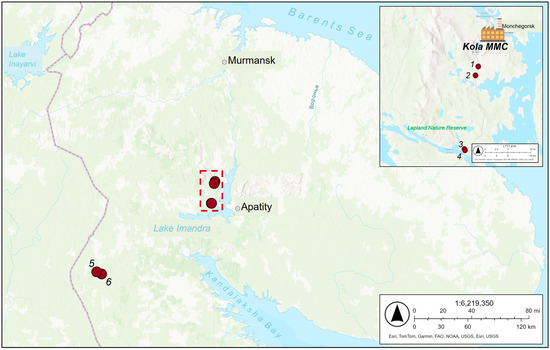
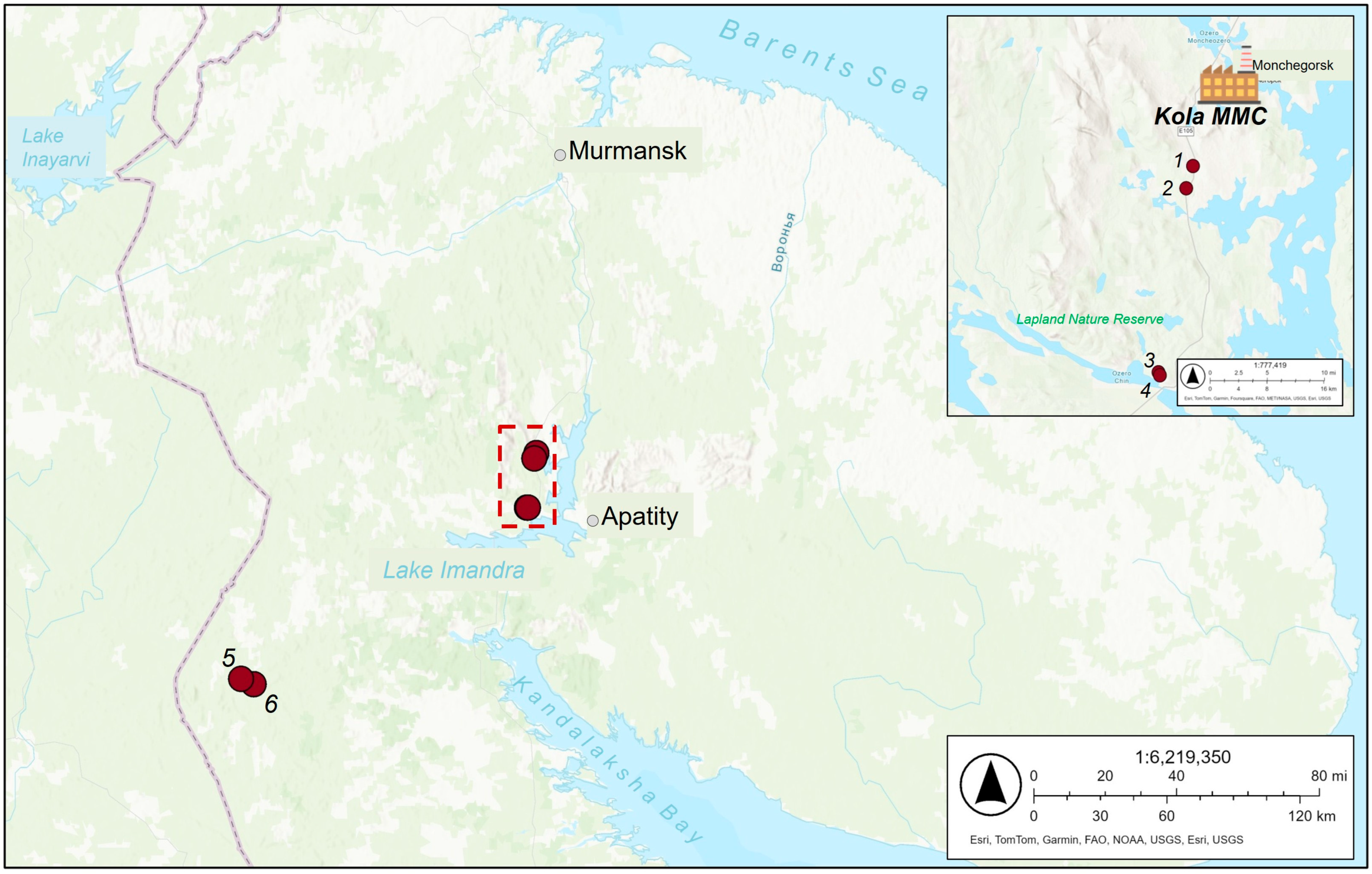
The plots are located at different distances from the pollution source: in pollution-induced sparse forests, at 7–10 km; in defoliating forests, at 28–31 km; and in the background area, at more than 150 km (Figure 1). The background area represents the study area’s regional background conditions and meets all the criteria for control plots recommended by international monitoring programs [42,43]. The dispersion of pollutants from the industrial plant is determined by the height of the emission stacks (110–160 m), the local topography, and the strength and direction of prevailing winds [44]. The predominance of southerly and southwesterly winds in the region during winter and northerly and northwesterly winds during summer [17] contributes to the formation of a pollution plume resulting from the plant’s emissions.
Figure 1.
Study area (Murmansk Region, Russia), permanent monitoring plots (red circles): 1, 2—pollution-induced sparse forests, 3, 4—defoliating forests, 5, 6—background forests. Factory icon—Kola MMC—copper-nickel smelter.
2.2. Research Methods
The tree-stand characteristics are based on the results of the 2019 (for stands of background pine forests and pollution-induced sparse pine forest), 2024 (for spruce forests at the defoliation stage and pollution-induced sparse spruce forest) and 2025 (in background spruce and defoliating pine forests) surveys. Trees with a diameter of 6 cm or more were counted. In 2019, tree stands were surveyed over an area of 400 m2, and in 2024 and 2025, tree stands were surveyed over an area of 2500 m2.
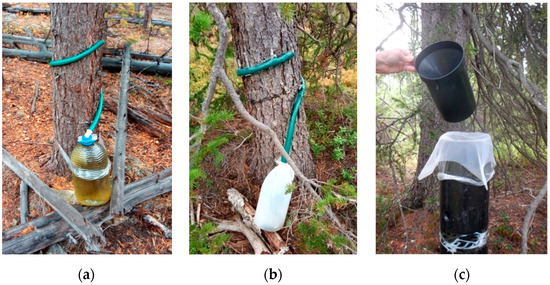
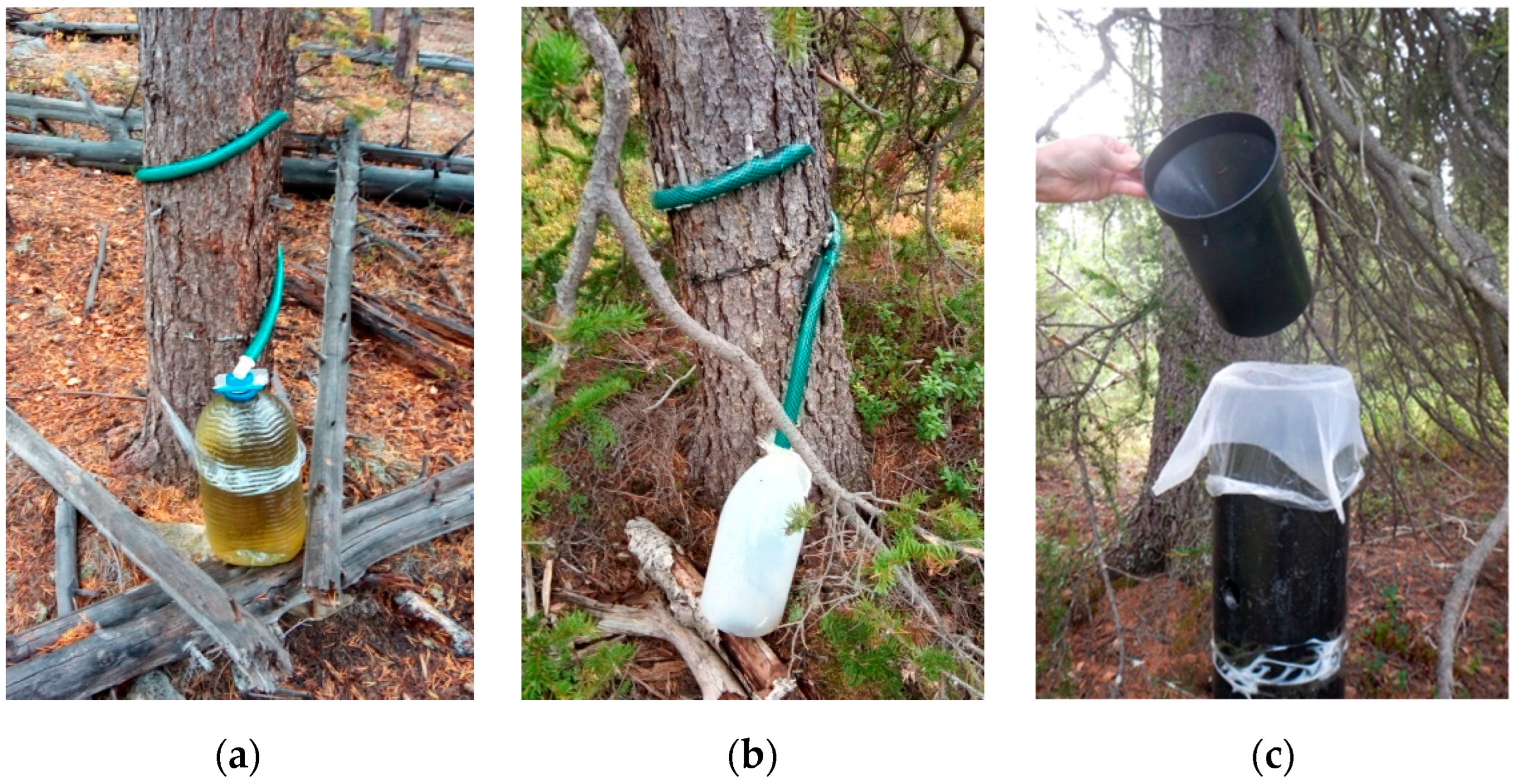
Stemflow samples were collected monthly from June to October from 1999 to 2022. The precipitation collector used for stemflow was a reinforced three-layer PVC irrigation hose with a gutter around the entire circumference of the tree trunk, attached to the tree trunk [45,46]. The free end of the hose was placed in a bottle with a filter of fine-mesh net to prevent plant litter and insects from entering (Table 2). Three precipitation collectors for stemflow were installed per plot (Figure 2). On each permanent monitoring plot (PMP), viable and large trees of the dominant tree species were chosen to identify the highest potential for accumulating pollutants.
Table 2.
Characterization of stemflow collectors at permanent monitoring plots, Murmansk Region, Russia.
Figure 2.
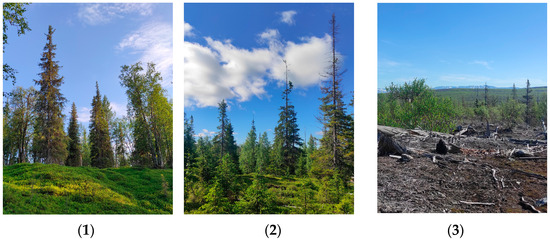
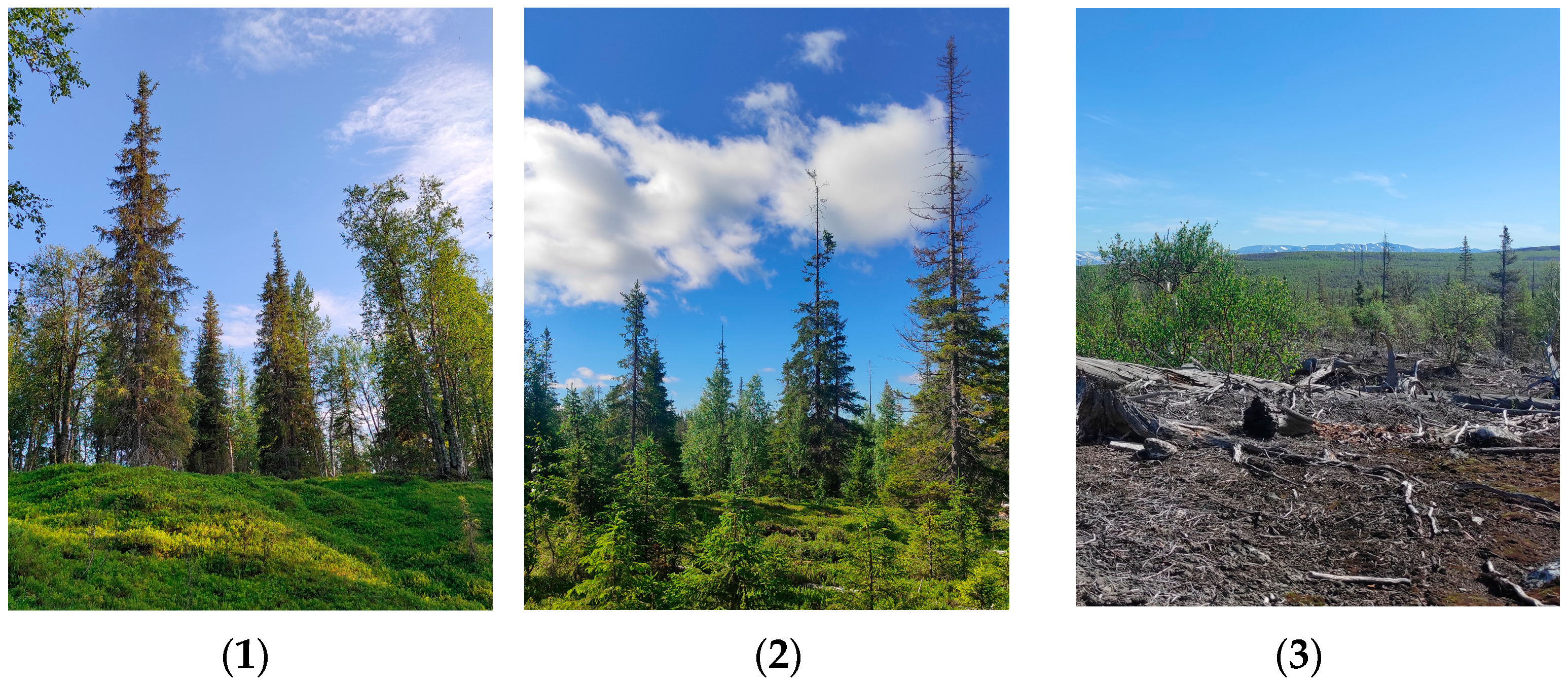
General view of forests at different stages of digression (1–3) and precipitation collectors (a–c) in Murmansk Region, Russia. (1)—background area; (2)—defoliating forest; (3)—pollution-induced sparse forest. Precipitation collectors: (a,b)—stemflow collectors for pine and spruce forests; (c)—below-crown precipitation collector.
Rainwater samples were collected monthly from June to October: below-crown and between-crown samples were collected in 1999–2022, and open-area samples were collected in 2013–2022. Rainwater was collected using precipitation collectors (5 below the crowns, 5 between the crowns and 4 in open areas), which are plastic pipes with a funnel. A plastic bag was placed inside the pipe, and a removable fine-mesh synthetic filter was attached to the top (to prevent plant litter, insects and other particles from entering), then secured with a cap with a funnel with a diameter of 16 cm [21,22].
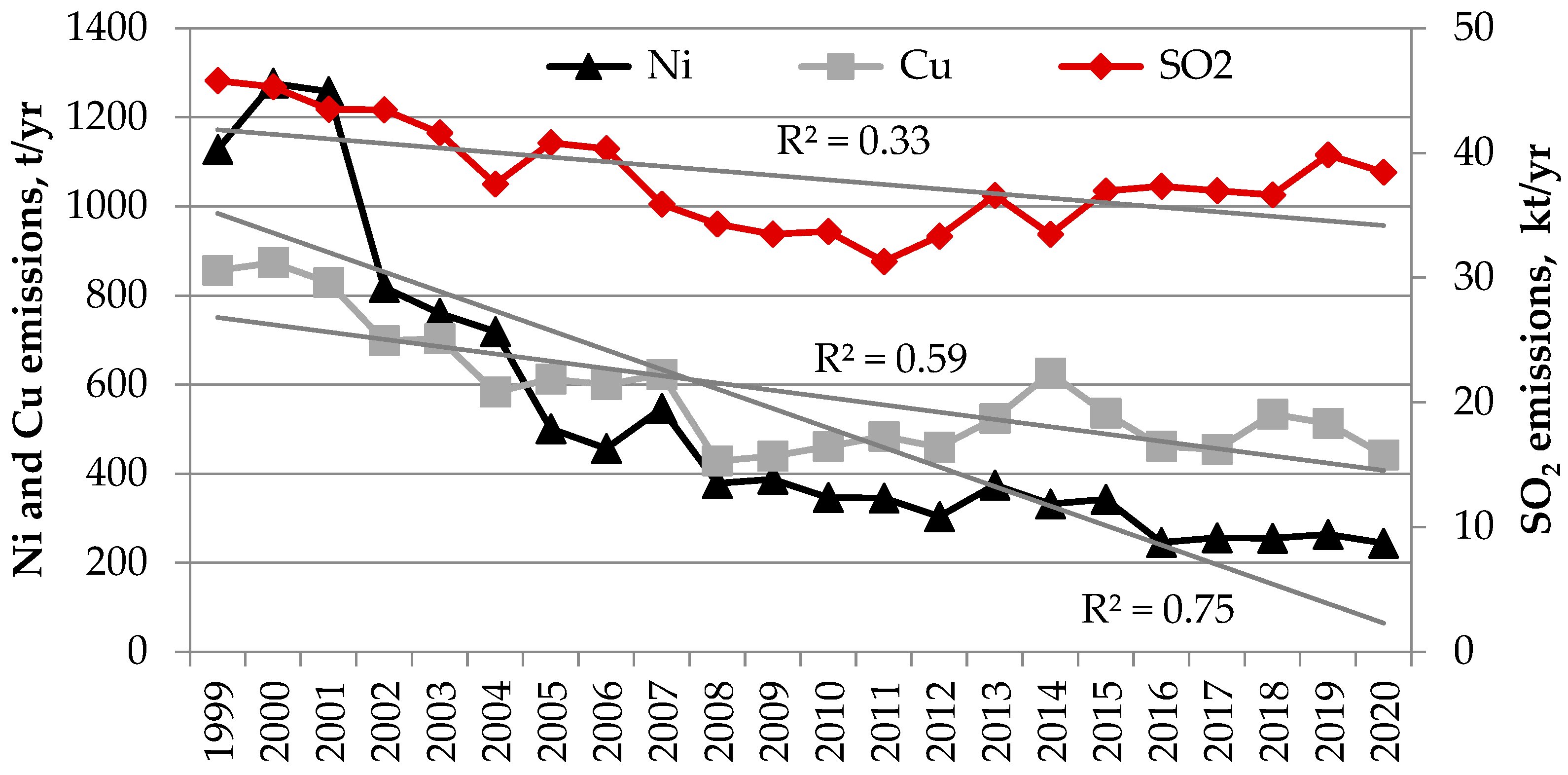
According to JSC «Kola MMC», during the study period, the plant’s annual SO2 emissions decreased from 46 thousand tons in 1999 to 13 thousand tons per year in 2021 (Figure 3). In 1999, the annual emissions of Ni and Cu amounted to 1127 tons and 856 tons per year, respectively, with emissions gradually decreasing to 72 tons and 70 tons per year, respectively, by 2021 [47].
Figure 3.
Ni, Cu and SO2 emissions according to JSC «Kola MMC» data (Monchegorsk, Russia).
Picea obovata Ledeb. and Pinus sylvestris L. needles were collected in 2018–2019 at the end of the growing season (August), during which a branch from the upper third of the crown was cut with pruning shears from 5 trees per plot [48,49,50].
2.3. Chemical Analysis
Chemical analysis was carried out at the Shared Research Facility of Physicochemical Methods of Analysis at the Institute of North Industrial Ecology Problems KSC RAS. Water samples were filtered through blue ribbon filter paper. The pH was determined potentiometrically; metals (Ni, Cu, Co, Cd, Pb and Cr) were determined by atomic absorption spectrophotometry; and SO42−, NO3− and Cl− were determined by ion-exchange chromatography.
In the laboratory, the needles were separated by age, and the absolute dry mass for each collected branch was determined (current-year needles, 1-year-old needles, 2-year-old needles, etc.). Samples for chemical analysis were dried at room temperature and ground. The contents of heavy metals in needles of the current year, one-year needles and needles of the last year of life were determined after decomposition with concentrated nitric acid (wet ashing). Cu, Ni, Co, Cd and Pb were determined by atomic absorption spectrometry, and S was determined by the turbidimetric method. This paper presents the average contents of elements in needles.
2.4. Statistical Analysis
Descriptive statistics and trend analysis were carried out in Microsoft Excel 2019 for assessment of the long-term dynamics of the composition of atmospheric precipitation. Mann–Whitney U tests were performed with Statistica 13.3 software to compare the composition of atmospheric precipitation and tree needles at different stages of pollution-induced degradation in northern taiga forests and to compare the composition of stemflow, below-crown, between-crown and open-area precipitation. To assess the strength of the relationship between SO42− concentrations and pH, Pearson’s correlation coefficient was used. To identify the significance of differences in pH and SO42− concentration levels across different positions, Student’s t-test was applied. To determine the strength of the linear trend in the long-term dynamics, the coefficient of determination (R2) was used; regression analysis was employed to confirm the statistical significance.
3. Results
3.1. Stemflow in the Background Area
Our analysis of the stemflow composition showed that in the background area in pine forests, Ni and Cu predominated among heavy metals and SO42− predominated among mineral acid anions. In spruce forests in the background area, the volume of collected stemflow was insufficient to enable reliable chemical analysis, owing to the limited sample size (≤80 mL based on data from 1999–2000). This limitation is attributed to the dense and intact structure of the spruce crowns (Table 3).
Table 3.
Average monthly volume, pH value and concentration of elements (mg/L) in rainwater in different positions in background coniferous forests for the period from 1999 to 2022 (Murmansk Region, Russia).
In pine forests, compared to BC, BWC and OA in the background areas, the highest concentrations of mineral acid anions (with the exception of NO3−) and heavy metals (with the exception of Co below crowns) were found in the stemflow. In the stemflow, the differences in the concentrations of all elements were 1.2 to 4.8 times compared to below the crown (p = 0.00001 … 0.015; n = 90). When comparing the stemflow with between crowns and open areas, the differences in the concentrations of pollutants, especially Cd and Pb, increased by 1.6 to 32 times (for BWC: p = 0.00001…0.042; n = 91; for OA: p = 0.00001 … 0.041; n = 49), which was most pronounced in open areas.
3.2. Stemflow in Defoliating Forest
Stemflow in defoliating pine forests contains significantly higher concentrations of elements compared to other positions, the only exception being NO3−. For instance, below the crown, the differences are 1.5 to 2.4 times (p < 0.001; n = 98), while between crowns and in open areas, the differences are 3.7 to 70 times (for BWC: p < 0.001; n = 98; for OA: p = 0.00001 … 0.0032; n = 48) (Table 4).
Table 4.
Average monthly volume, pH value and concentrations of elements (mg/L) in rainwater in different positions in defoliating coniferous forests for the period from 1999 to 2022 (Murmansk Region, Russia).
Industrial air pollution has a significant effect on the concentrations of elements in stemflow. Compared to the background, in defoliating pine forests, there were significant (p < 0.001; n = 243) increases in the concentrations of Cu and Ni of 17 and 30 times, respectively, while the difference in SO42− was 5 times; that in Co was 13 times; and those in Cd, Pb and Cr were 2 times. Stemflow in defoliating spruce forests contains significantly higher concentrations of elements in comparison with other positions, the only exception being NO3− (lower at all water sampling positions), as well as Cd and Cr below tree crowns. Below the crown, the differences are 1.1 to 3 times (p = 0.00001 … 0.025; n = 96), with Ni being an exception due to the low significance (p = 0.331; n = 96). Between crowns and in open areas, differences are 1.2 to 114 times (for BWC: p = 0.00001 … 0.0117; n = 98; for OA: p < 0.001; n = 48). Due to the lack of data, it was not possible to compare the composition of stemflow in the background area and in defoliating spruce forests.
3.3. Stemflow in Pollution-Induced Sparse Forest
Concentrations of elements in the stemflow in pollution-induced sparse pine forests are higher than below the crown, between crowns and in open areas (except for NO3−). The difference with below crown precipitation is 1.3 to 3 times (p < 0.001; n = 97), and with between crown and open area precipitation are 3.7 to 84 times (for BWC: p = 0.00001 … 0.007, n = 98; for OA: p < 0.001, n = 48) (Table 5).
Table 5.
Average monthly volume, pH value and concentration of elements (mg/L) in rainwater in different positions in pollution-induced sparse forests for the period from 1999 to 2022 (Murmansk Region, Russia).
When approaching the source of pollution in pollution-induced sparse pine forests, significant (p < 0.001; n = 251) differences were observed in Cu and Ni compared to the background—116 and 183 times, respectively—while differences in SO42− were 8 times, those in Cl− were 2 times, those in Co were 57 times; and those in Cd, Pb and Cr were 4 to 7 times. Compared to defoliating pine forests, a significant (p < 0.001; n = 251) increase was found in pollution-induced sparse pine forests in Cu and Ni (up to 7 times); SO42−, NO3− and Cl− (up to 1.6 times); and Co, Cd, Pb and Cr (up to 4 times). Since it is not possible to compare the concentrations of major pollutants in stemflow between the background area and pollution-induced sparse forests in spruce forests, we will demonstrate the differences in concentrations of key pollutants below crowns. Thus, in below crowns, as one approaches the pollution source in a pollution-induced sparse spruce forest, the concentrations of pollutants significantly increase (p < 0.001; n = 98) compared to the background area: Cu by 73 times, Ni by 188 times, sulfate SO42− by 3 times, Cl by 1.5 times, Co by 2 times and Pb by 4 times.
In pollution-induced sparse spruce forests, concentrations of elements in the stemflow were higher than in other positions (the exception being NO3−, where the differences in concentrations were not found to be significant (p = 0.07 … 0.59)). The difference in below-crown precipitation was 1.4 to 3.2 times (p < 0.001; n = 98), and those in between-crown and open-area precipitation were 2.3 to 76 times (for BWC: p < 0.001; n = 98; for OA: p < 0.001; n = 51). In pollution-induced sparse spruce forests, compared to defoliating forests, element concentrations increased significantly (p = 0.00001 … 0.03; n = 237)—Cu and Ni by up to 7 times; NO3− and Cl− by up to 1.6 times; and Co, Cd, Pb and Cr by up to 3.5 times.
It should be further noted that in rainwater samples collected in open areas within pollution-induced sparse forests, the concentrations of major pollutants also exceed background levels. However, the difference in concentrations is less pronounced compared to rainwater samples collected from tree trunks (stemflow) and below crowns. In open areas, the concentrations of Cu, Ni (14 times) and SO42− (4 times) in rainwater collected from pollution-induced sparse forests exceeded those in rainwater collected from the background area. This clearly demonstrates the significant role of tree stands in shaping the chemical composition of atmospheric deposition. Significant differences in the concentrations of major pollutants (Cu, Ni and SO42−) in rainwater samples collected at various locations in the background area, compared to the pollution-induced sparse forest, were reported both in our previous studies [14,21,49] and in the research of other authors [2,6,51]. In pine and spruce forests, a similar pattern was observed in the distribution of element concentrations in stemflow when approaching the source of pollution. Comparing defoliating spruce and pine forests, as well as pollution-induced sparse spruce and pine forests, significant differences in the element concentrations in stemflow were found. Concentrations of heavy metals and anions of mineral acids in stemflow were up to two times higher in spruce forests compared to pine forests, which can be explained by a thicker spruce canopy.
The pH value at all stages of degradation in spruce and pine forests follows a similar pattern. The highest pH was found in open areas, and the lowest was found in stemflow. In stemflow, a strong negative correlation is observed between pH values and SO42− concentrations in both spruce and pine forests across all stages of degradation. Notably, in background pine forests, this relationship is less pronounced (r = −0.51; p < 0.001) compared to defoliating pine and spruce forests, as well as pollution-induced sparse forests, where the correlation is stronger (r = −0.71 … −0.78; p < 0.001). In rainwater collected from below the crown, a negative correlation is observed only in the defoliating spruce forest (r = −0.53; p < 0.001) and in spruce (r = −0.74; p < 0.001) and pine pollution-induced sparse forests (r = −0.57; p < 0.001). In contrast, pH values showed no significant association with SO42− concentrations in rainwater from between crowns and open areas.
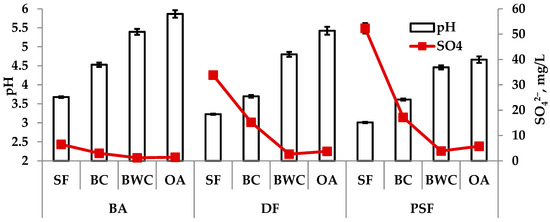
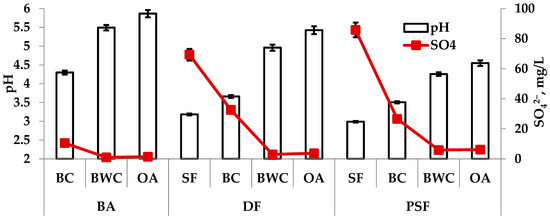
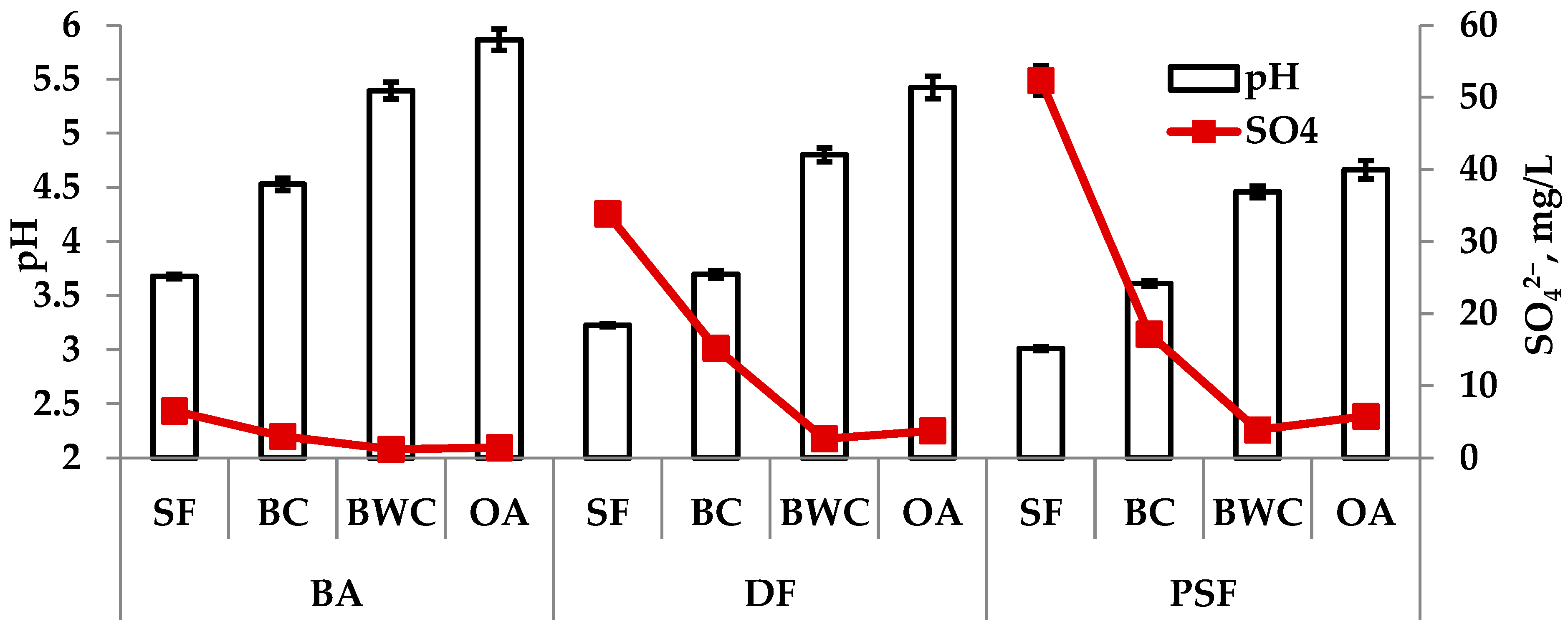
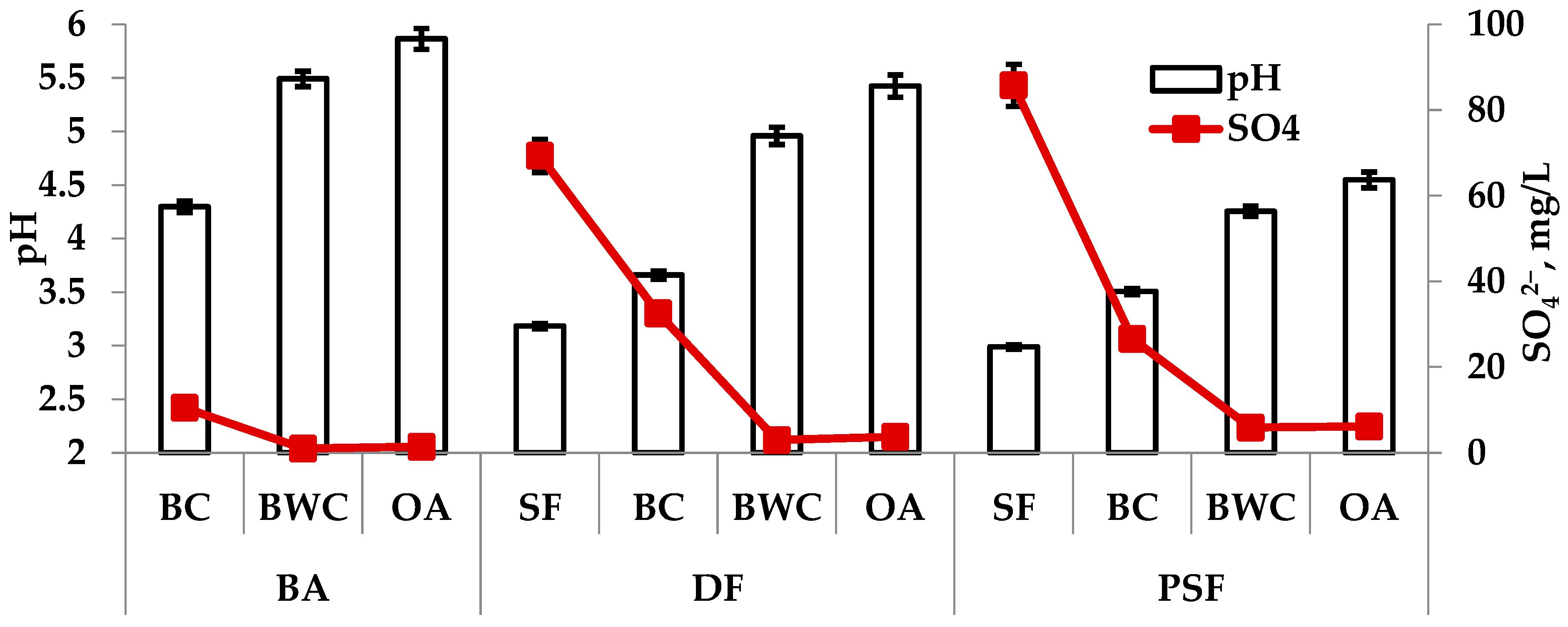
It should be noted that in rainwater from pine and spruce forests across all stages of degradation, the pH value increases in the following sequence: stemflow > below crown > between crown > open areas. Application of Student’s t-test confirmed the statistical significance of this increase (t-values ranging from 2.1 to 26.6, p < 0.05; n = 50 … 250). The concentrations of sulfates in rainwater from pine and spruce forests across all stages of degradation decrease in the following sequence: stemflow < below crown < between crown and open areas (t-values ranging from 2.5 to 23.6, p < 0.05; n = 40 … 250). No statistically significant differences in SO42− concentrations were observed when comparing open areas with samples collected between crowns. In rainwater from pine and spruce forests, pH values decrease, while SO42− concentrations increase across all sampling positions—from background areas to pollution-induced sparse forests (Figure 4).
Figure 4.
pH and SO42− in rainwater at different degradation stages in pine (top) and spruce (bottom) forests (1999–2022 average, Murmansk Region, Russia). BA—background area; DF—defoliating forest; PSF—pollution-induced sparse forest; SF—stemflow; BC—below crown; BWC—between crowns; OA—open area.
3.4. Seasonal and Long-Term Dynamics in Stemflow
3.4.1. Seasonal Dynamics
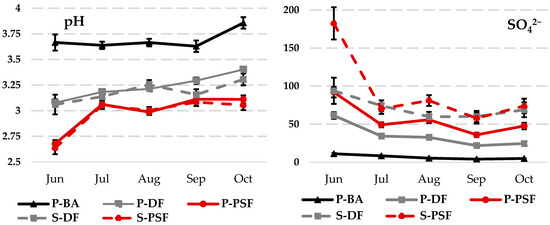
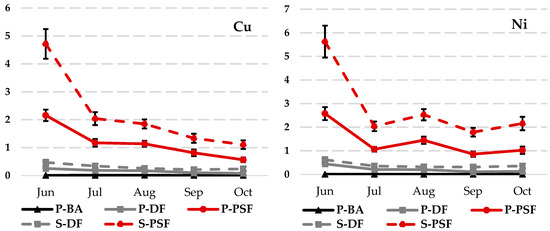
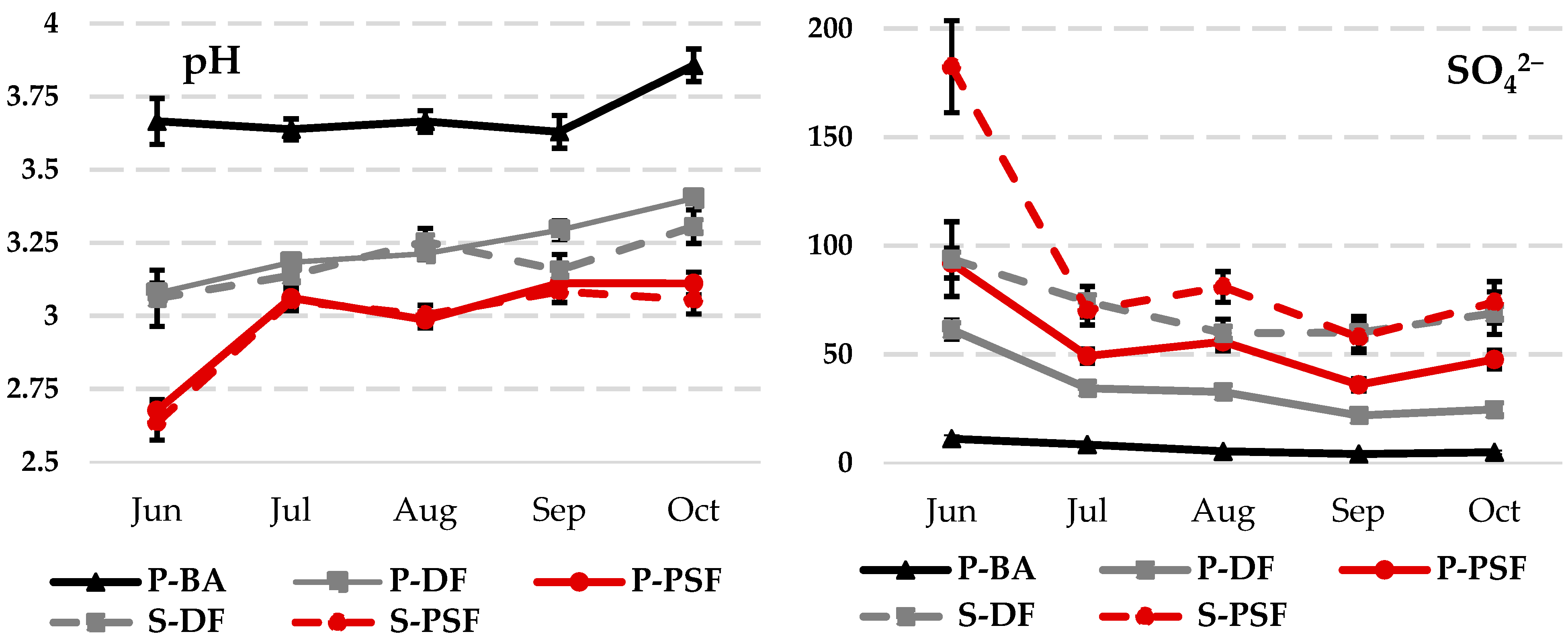
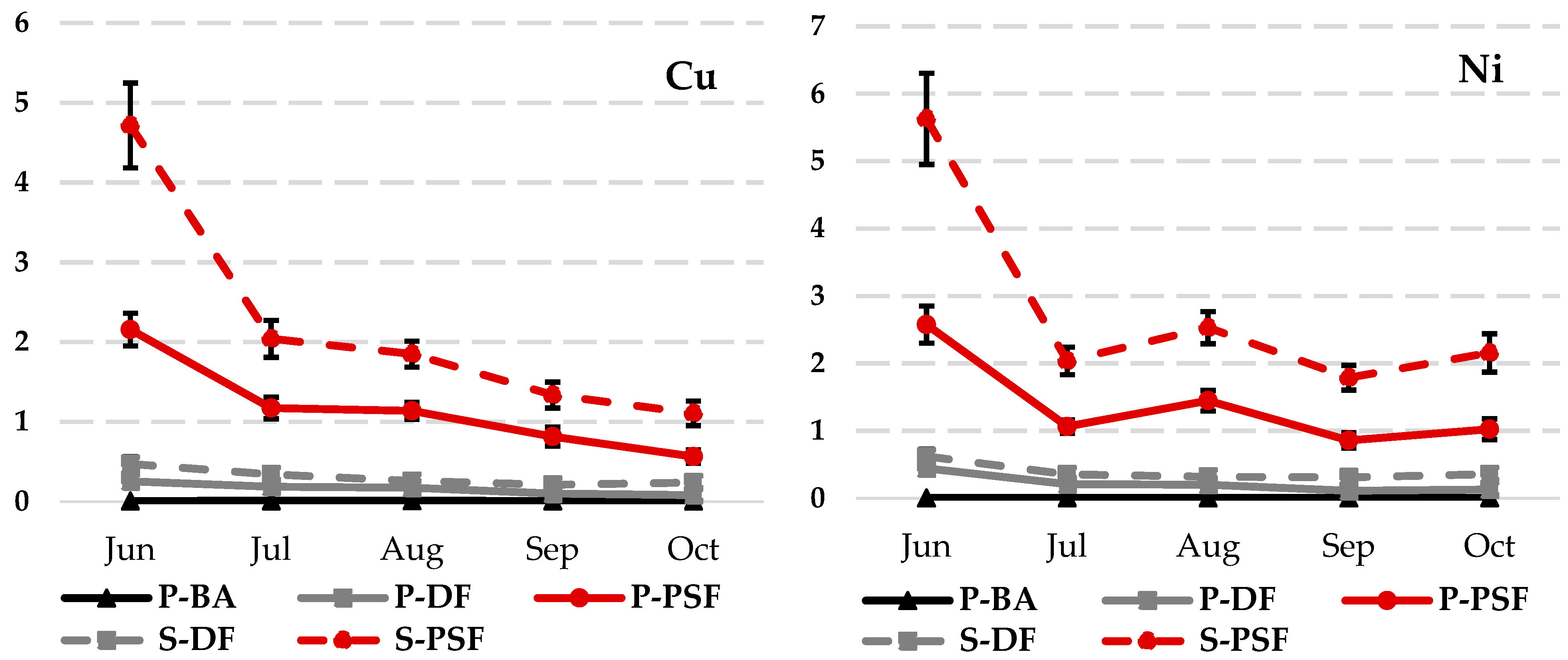
Stemflow in spruce and pine defoliating forests and pollution-induced sparse forests has similar patterns in the distribution of concentrations of most of the studied elements from June to October. Maximum concentrations of Ni, Cu, Co, Pb, SO42− and Cl− occur in June (with the exceptions of NO3−, Cr and Cd). The pH value, on the contrary, increases from June to October. From the beginning (June) to the end of the vegetation period (September–October), in the stemflow of spruce and pine forests exposed to industrial air pollution, the concentrations of Ni and Cu decrease by 2 to 4 times, while that of SO42− decreases by 1.6 to 3 times (Figure 5). Under background conditions, this trend is maintained only for Cl− and SO42−, while in heavy metals and NO3−, the dynamics are not well expressed, which is explained by the low concentrations of these elements.
Figure 5.
pH, Cu, Ni and SO42− (mg/L) in rainwater at different degradation stages in pine (top) and spruce (bottom) forests in June–October (1999–2022 average, Murmansk Region, Russia). P—pine forest; S—spruce forest; BA—background area; DF—defoliating forest; PSF—pollution-induced sparse forest.
3.4.2. Long-Term Dynamics
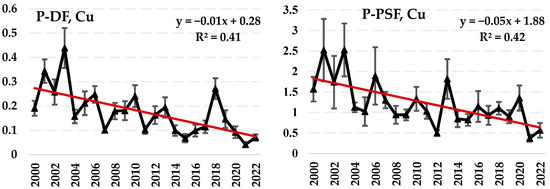
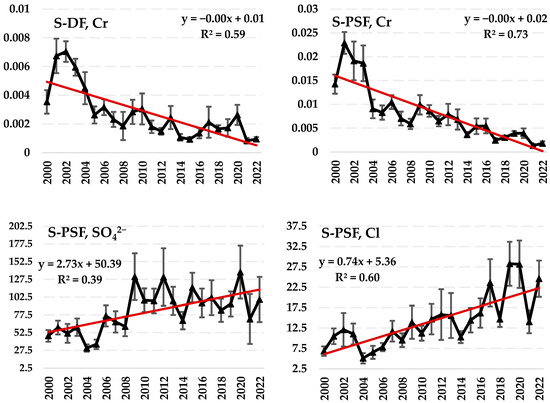
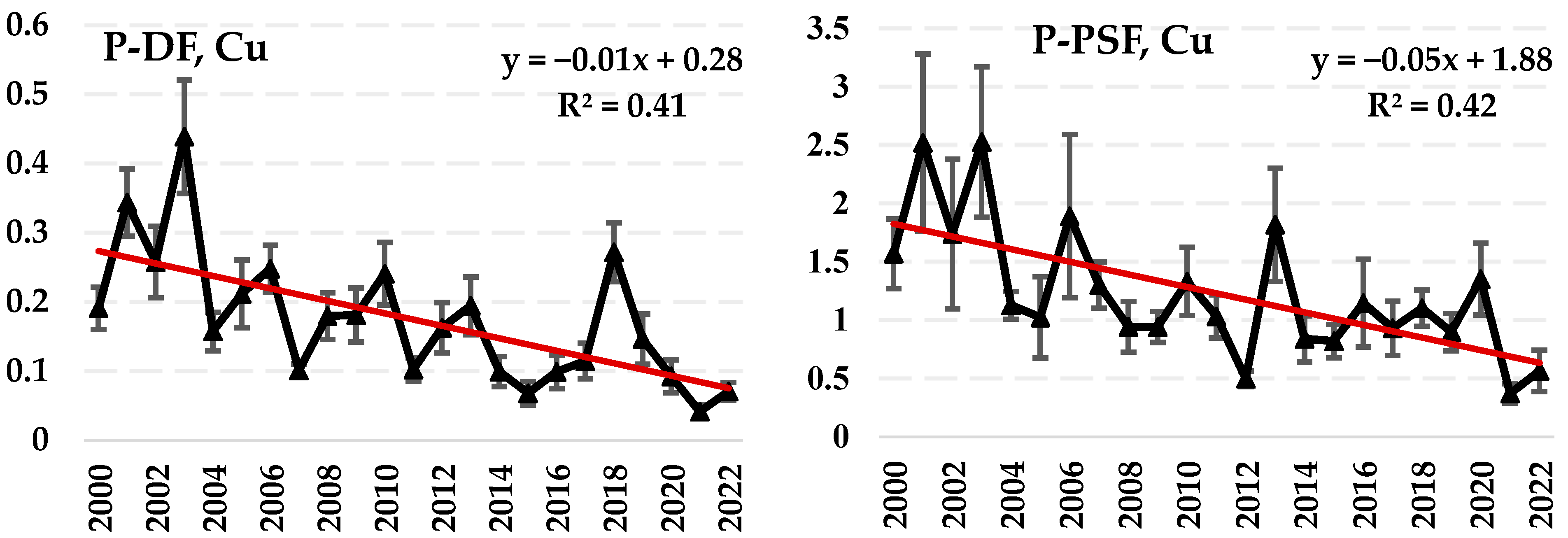
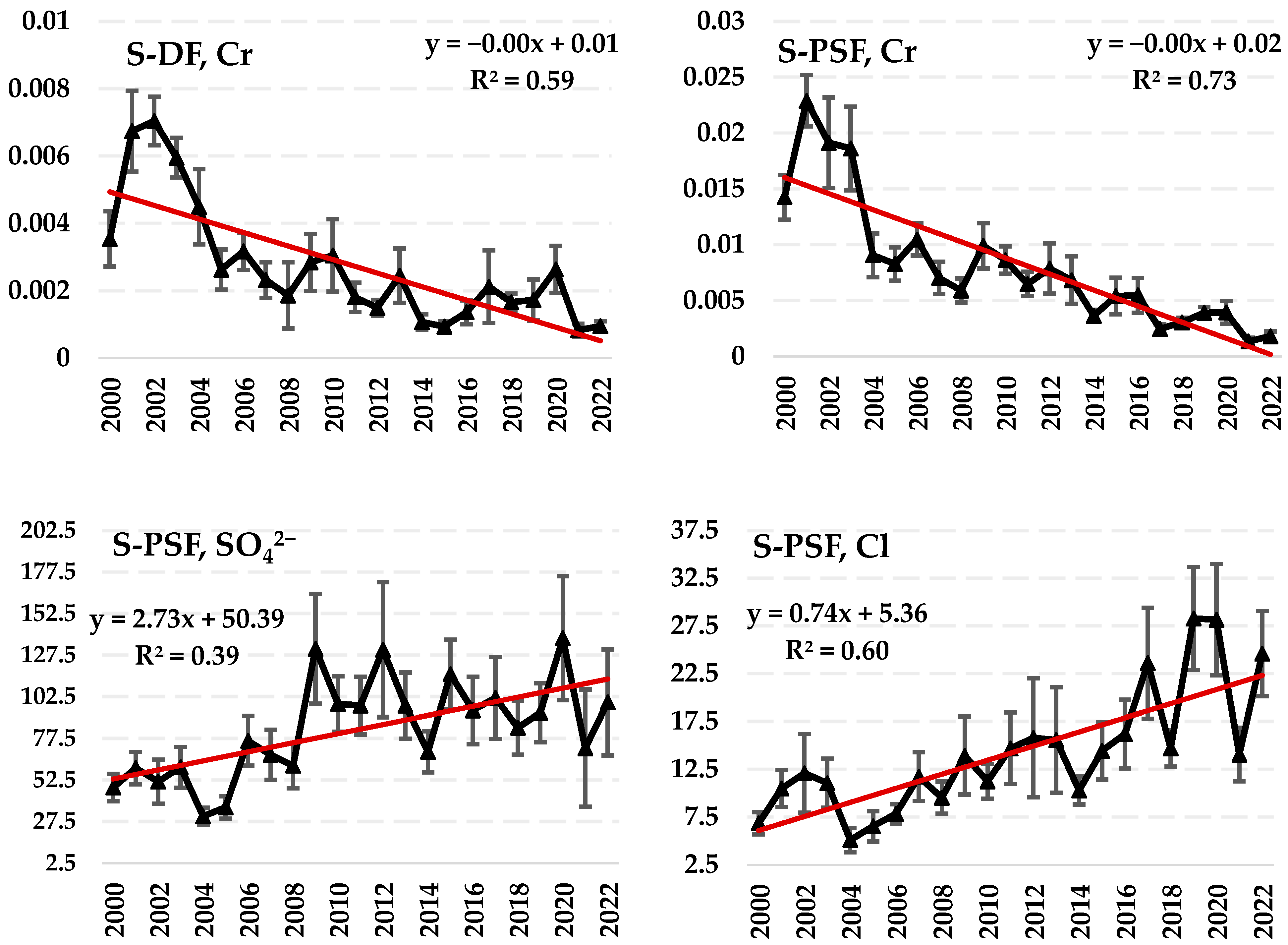
In the pine forests in the background area, the long-term dynamics demonstrate a trend towards decreasing concentrations of Cu, Cd, Pb and Cr (R2 = 0.32 … 0.54; p = 0.0001 … 0.004), while an increase in the pH value is also observed (R2 = 0.58; p < 0.001). In defoliating pine forests, decreases in the concentrations of Cu (R2 = 0.41; p < 0.001) and Cd (R2 = 0.37; p = 0.002) were found. In pollution-induced sparse pine forests, decreases in the concentrations of Cu (R2 = 0.42; p < 0.001), Cd (R2 = 0.52; p < 0.001) and Cr (R2 = 0.48; p < 0.001) were observed. In defoliating spruce forests and pollution-induced sparse forests, decreases in the concentrations of Cd (R2 = 0.52 and R2 = 0.58; p < 0.001) and Cr (R2 = 0.52 and R2 = 0.58; p < 0.001) were also found. However, increases in the concentrations of SO42− (R2 = 0.39; p = 0.002) and Cl− (R2 = 0.60; p < 0.001) in pollution-induced sparse spruce forests should be noted (Figure 6).
Figure 6.
Average monthly concentrations of elements (mg/L) in pine and spruce forest stemflow at different stages of degradation from 1999 to 2022 (Murmansk Region, Russia). P—pine forest; S—spruce forest; DF—defoliating forest; PSF—pollution-induced sparse forest.
3.5. Stand Characteristics in Spruce and Pine Forests
In the background area, stemflow volume in spruce forests was below 100 mL due to dense canopy cover. In spruce sparse forests, the amount of stemflow is consistently up to 2.3 times higher than in defoliating forests. According to our observations in pollution-induced sparse spruce forests, there are only 128 living stems per hectare, which is almost 4 times less than in defoliating spruce forests (528 trees per hectare) and 10 times less than in undisturbed spruce forests (1368 trees per hectare). These properties of spruce ecosystems are in good agreement with the average height and diameter of spruce trees, which change as they approach the source of pollution. The average height of spruce decreases from 11.1 ± 0.3 m in undisturbed spruce forests to 9.3 ± 0.5 m at the defoliation stage and 6.3 ± 0.6 m in pollution-induced sparse forests. The average tree diameter of spruce decreases significantly from 16.6 ± 0.7 cm to 14.6 ± 0.7 cm and 9.9 ± 1.2 cm, respectively, when approaching the source of pollution.
Stemflow volume in the pollution-induced sparse pine forest is consistently up to 1.5 times higher than in the background area and in defoliating pine forests. In pine forests, no significant reduction in the number of live trees was detected as the distance to the pollution source decreased. This pattern may be attributed to the fact that forest stands at these permanent monitoring plots are characterized by uneven age structure and occupy different successional stages. Decreases in the average tree height and diameter were found. Tree height decreases from 15.4 ± 0.3 m to 11.5 ± 0.2 m and 7.4 ± 0.2 m when approaching the smelter, and tree diameter decreases from 18.9 ± 0.7 cm in the undisturbed pine forest to 12.3 ± 0.4 and 11.7 ± 0.5 cm in the defoliating pine forest and pollution-induced sparse forest, respectively.
3.6. Needle Composition in Spruce and Pine Forests
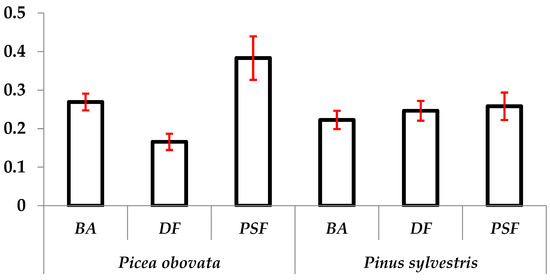
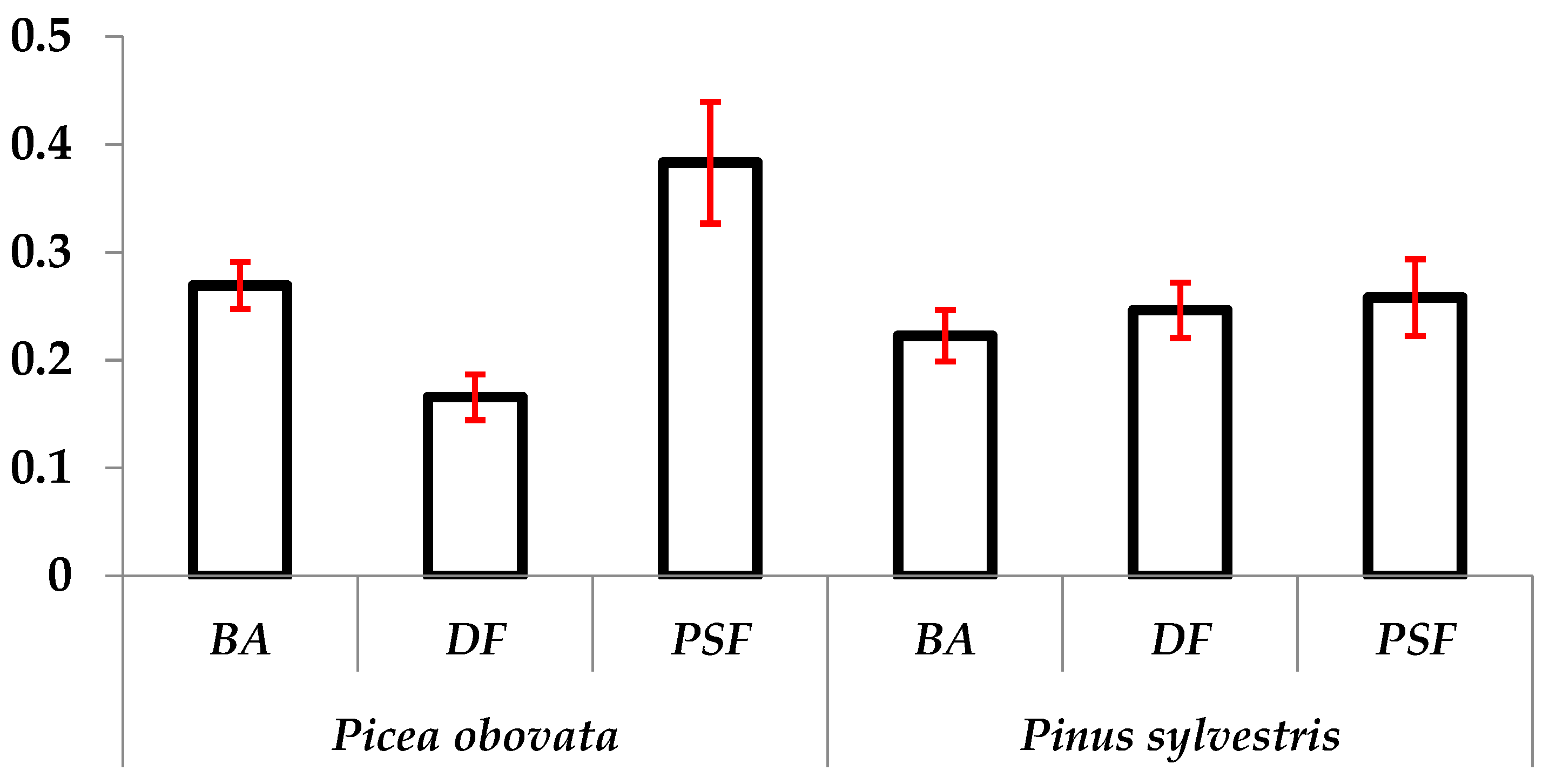
Under conditions of industrial air pollution, the defoliation coefficient is used as an indicator of the state of spruce ecosystems, representing the ratio of the annual production of needles to the total mass of needles [2], changes in which are due to the differences in the preservation of needles of different ages in the tree crown. The defoliation coefficient in Picea obovata Ledeb. increases significantly in pollution-induced sparse forests, which indicates an intensive fall of spruce needles and, as a result, an increase in rain throughfall through the tree canopy (Figure 7).
Figure 7.
Defoliation coefficients in Picea obovata Ledeb. and Pinus sylvestris L. at different stages of pollution-induced degradation in northern taiga forests (Murmansk Region, Russia). BA—background area; DF—defoliating forest; PSF—pollution-induced sparse forest.
In defoliating forests and pollution-induced sparse forests, the concentrations of Ni, Cu, Co and Pb in spruce and pine needles significantly increase (p < 0.05) and exceed regional background values by many times (Table 6). In defoliating forests, compared to undisturbed forests, significant increases are seen in the concentrations of Ni (up to 30 times), Cu (up to 3.5 times), Co (up to 11 times) and Pb (up to 13 times). In pollution-induced sparse forests, needles accumulate even more pollutants: Ni concentrations increase by up to 85 times, Cu by up to 8 times, Co by up to 67 times and Pb by up to 18 times. An increase in S (p < 0.05) was found only in Picea obovata needles in pollution-induced sparse spruce forests when compared to the background. In defoliating forests and in sparse pine forests, sulfur concentrations in needles are comparable to the values observed under natural conditions (400 to 900 mg/kg).
Table 6.
Picea obovata and Pinus sylvestris needle chemistry at different stages of pollution-induced degradation in pine and spruce forests in mg/kg (Murmansk Region, Russia).
4. Discussion
4.1. Inter- and Intra-Ecosystem Variation in Stemflow Composition
High concentrations of elements in the stemflow and below crowns in spruce and pine forests compared to between crowns and in open areas are explained by washout and leaching from tree crowns. Between crowns and in open areas, the concentrations of sulfates and heavy metals increase from the background areas to pollution-induced sparse forests. However, the differences in element concentrations are not as pronounced as in below crowns and especially in stemflow. The highest concentrations of elements are seen in stemflow compared to other positions, which indicates an important biochemical role of this type of precipitation. Higher concentrations of elements in rainwater (SF and BC) in spruce forests at the defoliation stage and pollution-induced sparse forests compared to pine forests are due to a larger surface area and the more pronounced barrier function of spruce crowns.
Concentrations of nitrates in spruce and pine forests at all stages of degradation do not have pronounced intra-ecosystem differences, which can be explained by a pronounced nitrogen deficiency in coniferous tree species in boreal forests [2,52,53]. A level of 12–15 g/kg is considered deficient in Picea obovata Ledeb. and Pinus sylvestris L., and at a nitrogen content of <12.0 g/kg, the tree experiences severe nitrogen deficiency [54]. Our results support the observation that in boreal forests, plants experience nitrogen deficiency [16,48,55].
The pH of rainwater in spruce and pine forests in the background area and in defoliating forests and pollution-induced sparse forests shows similar patterns. The pH is the highest in open areas (from 4.55 to 5.87) and the lowest in stemflow (from 2.99 to 3.68). The significant influence of coniferous stands on the acidity of rainwater has been documented in numerous studies [2,21,23,49,56]. An increase in the acidity of rainwater in different positions is noted in defoliating forests and reaches its maximum in pollution-induced sparse pine and spruce forests due to increases in the concentrations of anions of mineral acids (Figure 4). In the stemflow in defoliating pine and spruce forests and pollution-induced sparse forests, a significant negative correlation is observed between the pH value and the concentration of SO42− (r = −0.71 … −0.78), which indicates a negative impact of industrial air pollution on forest ecosystems.
In defoliating pine and spruce forests and pollution-induced sparse forests, the highest concentrations of heavy metals and mineral acid anions are observed in June and decrease by October. This seasonal distribution is due to the fact that the crowns of coniferous trees act as a natural barrier in winter, trapping various element compounds that are washed away by rain at the beginning of the growing season.
The decreasing airborne pollution load on forest ecosystems since the early 1990s, associated with the modernization of heavy industry, is reflected in the data of long-term studies, particularly as decreases in copper concentrations in the stemflow of pine forests at all stages of degradation. However, no clear trends towards decreases in Ni and SO42− concentrations are observed. Thus, increasing SO42− and Cl− concentrations in pollution-induced sparse spruce forests indicate a continuing industrial pollution load on forest ecosystems. It should be additionally noted that increases in SO42− and Cl− concentrations in stemflow were observed exclusively in the pollution-induced sparse spruce forest situated closest to the pollution source (7 km). Presumably, the combination of two factors—minimal distance to the source and specific features of the spruce crown—enabled more efficient capture of emissions of these gaseous compounds.
4.2. Forest Stand as a Driver of Stemflow Distribution and Chemistry
The distribution of stemflow volume in forests at different stages of degradation is controlled by a set of factors. For example, the stem number per unit area and tree diameter and height, which can be aggregated as average values, together with tree crown properties, directly affect the interception of rainwater by trees and, ultimately, the volume of water passing along the tree trunks. These properties also reflect the state of the forest ecosystem at different stages of degradation.
In background areas, the density of the spruce canopy and crowns of individual trees almost completely levels out the rainwater stemflow, which makes it difficult to collect stemflow in natural spruce forests. The differences in stemflow volume in forests with different species compositions are also associated with the fact that in pollution-induced sparse forests, due to long-term atmospheric pollution, the degradation of the crowns of spruce and pine trees is more expressed. Tree growth suppression is manifested in suppressed tree crown growth (including complete cessation of growth); weak needles due to a shorter needle life span; and, as a consequence, openness and sparseness of the crowns [57,58].
The above forest-stand properties are supported by a decrease in the living phytomass and an increase in dead organic matter in forests near the source of pollution compared to undisturbed ecosystems [2,59], which, in turn indicates that the sparseness of the forest stands is pollution-induced—which should also contribute to the interception of rainfall, as well as under developed tree crowns. It should be noted that at the studied sites, a reduction in the lifespan of Picea obovata needles was recorded along the gradient of atmospheric pollution. The maximum age of spruce needles under background conditions is 12 years, while that in defoliating forests is 9 years and in that in pollution-induced sparse forests is 8 years. Pinus sylvestris needles survive up to 5–6 years of age at all stages of pollution-induced degradation.
The chemical composition of atmospheric precipitation changes significantly after contact with the forest canopy and leads to changes in the acidity of water and the concentrations of elements in it, as confirmed by earlier studies [1,14]. Biogenic factors have a decisive influence on the composition of stemflow, among which the chemical composition of trees is of great importance. Under conditions of atmospheric pollution, significant changes in the absorption of pollutants by woody plants occur, which reflect the composition of assimilating organs [49,55,60,61].
Our study shows that the distribution and composition of atmospheric precipitation transform forest stands. We note the importance and necessity of thorough studies of the composition and distribution of rainwater—both in natural forest ecosystems and those exposed to negative industrial impact—using data on various forest-stand properties. Such long-term studies on permanent monitoring plots allow for the collection of unique data on the processes occurring in natural and disturbed ecosystems. A comprehensive understanding of these processes necessitates the inclusion of additional forest ecosystem components, including snow, soils, soil water, vegetation and litter, while accounting for inter- and intra-ecosystem variability. It is important to note that regular long-term research is a very lengthy and costly process that requires a vast amount of resources and human effort. Therefore, it is not always possible to obtain a sufficient number of samples or establish more permanent monitoring plots for even more accurate results.
5. Conclusions
Stemflow, compared to rainfall collected below the crowns, between the crowns and in open areas at all degradation stages in the coniferous forests of the Kola Peninsula, is characterized by the highest concentrations of elements, which indicates an important biochemical role of this type of precipitation. High concentrations of stemflow elements in spruce forests compared to pine forests are due to the larger surface area and more pronounced barrier functions of spruce crowns.
Industrial air pollution has a significant impact on the composition of rainwater. This effect is expressed in increases in the concentrations of heavy metals and acid-forming substances. The increase in the acidity of rainwater in defoliating forests and pollution-induced sparse forests compared to the background area is most pronounced in stemflow and below tree crowns. Seasonal dynamics are characterized by the highest concentrations of elements in June due to the fact that, in winter, the crowns of coniferous trees act as a natural barrier, trapping various compounds of elements that are washed away by rain at the beginning of the growing season.
Long-term dynamics demonstrate decreases in the concentrations of heavy metals, especially in defoliating pine and spruce forests and pollution-induced sparse forests, which may indicate a decrease in the level of industrial air pollution but increases in sulfates and chlorides in pollution-induced sparse spruce forests with continuing impact.
The volume of stemflow increases significantly along the gradient from background areas to defoliating forests and pollution-induced sparse forests, which is associated with the general suppression of trees and the sparseness of tree stands, which affect the total flow of water along tree trunks. It was established that when exposed to pollution, the assimilating organs of Picea obovata Ledeb. and Pinus sylvestris L. actively accumulate heavy metals, thereby transforming the composition of atmospheric precipitation passing through the tree canopy.
Author Contributions
Conceptualization, V.E. and T.S.; methodology, V.E. and T.S.; validation, V.E., N.R. and T.S.; formal analysis, V.E. and T.S.; investigation, V.E., N.R. and T.S.; resources, T.S.; data curation, V.E., N.R. and T.S.; writing—original draft preparation, V.E.; writing—review and editing, V.E., N.R. and T.S.; visualization, V.E., N.R. and T.S.; supervision, T.S.; project administration, T.S.; funding acquisition, T.S. All authors have read and agreed to the published version of the manuscript.
Funding
The work was carried out within the framework of the State Research Program of INEP KSC RAS «Structural and functional organization and dynamics of terrestrial ecosystems of the Euro-Arctic region» (No 125021402277-1).
Data Availability Statement
Data are contained within the article.
Acknowledgments
The authors thank the staff of the Shared Research Facility of Physicochemical Methods of Analysis at the Institute of North Industrial Ecology Problems KSC RAS for carrying out a large volume of analytical research; Irina Shtabrovskaya, engineer of the Laboratory of Terrestrial Ecosystems of the Institute of North Industrial Ecology Problems KSC RAS for preparing the cartographic material for this paper; and Ivanova Ekaterina, researcher of the Laboratory for many years of assistance in field work and sampling.
Conflicts of Interest
The authors declare no conflicts of interest.
Abbreviations
The following abbreviations are used in this manuscript:
| INEP | Institute of North Industrial Ecology Problems |
| KSC | Kola Science Center |
| RAS | Russian Academy of Sciences |
| Kola MMC | Kola Mining and Metals Company |
| P | Pine |
| S | Spruce |
| BA | Background area |
| DF | Defoliating forest |
| PSF | Pollution-induced sparse forest |
| SF | Stemflow |
| BC | Below crown |
| BWC | Between crowns |
| OA | Open area |
References
- Nikonov, V.V.; Lukina, N.V.; Bezel, V.S.; Bel’sky, E.A.; Bespalov, A.Y.; Golovchenko, A.; Dobrovol’skaya, T.G.; Dobrovol’sky, V.V.; Zukert, N.V.; Isaeva, L.G.; et al. Dispersed Elements in Boreal Forests; Nauka: Moscow, Russia, 2004; ISBN 5-02-033044-2. (In Russian) [Google Scholar]
- Lukina, N.V.; Nikonov, V.V. Biogeochemical Cycles in the Northern Forests Subjected to Air Pollution; Izd-vo KSC RAS: Apatity, Russia, 1996; Volume 1. (In Russian) [Google Scholar]
- Koptsik, G.N.; Makarov, M.I.; Paramonova, T.A.; Lukina, N.V.; Nikonov, V.V.; Nedbaev, N.P.; Okuneva, R.M.; Koptsik, S.V.; Moiseev, B.N.; Sokolova, T.A.; et al. Acid Precipitation and Forest Soils; Nikonov, V.V., Koptsik, G.N., Eds.; Kola Science Centre RAS Publishing House: Apatity, Russia, 1999. (In Russian) [Google Scholar]
- Ratkin, N.E. Quantitative assessment of the aerotechnogenic flow of matter to the underlying surface by the calculation method. Vestnik MGTU 2000, 3, 145–164. [Google Scholar]
- Fischer, R.; Mues, V.; Ulrich, E.; Becher, G.; Lorenz, M. Monitoring of atmospheric deposition in European forests and an overview on its implication on forest condition. Appl. Geochem. 2007, 22, 1129–1139. [Google Scholar] [CrossRef] [Scilit]
- Dauvalter, V.A.; Dauvalter, M.V.; Saltan, N.V.; Semenov, E.N. The impact of mining and metallurgical plant emissions on the chemical composition of atmospheric deposition (Monchegorsk site). Geoekologiya Inzheneraya Geol. Gidrogeol. Geokriol. 2009, 3, 228–240. (In Russian) [Google Scholar]
- Derome, J.; Lukina, N. Interaction between environmental pollution and land-cover/land-use change in Arctic areas. In Eurasian Arctic Land Cover and Land Use in a Changing Climate; Gutman, G., Reissell, A., Eds.; Springer: Dordrecht, The Netherlands, 2010; pp. 269–290. [Google Scholar] [CrossRef] [Scilit]
- Kowalska, A.; Astel, A.; Boczoń, A.; Polkowska, Ż. Atmospheric deposition in coniferous and deciduous tree stands in Poland. Atmos. Environ. 2016, 133, 145–155. [Google Scholar] [CrossRef] [Scilit]
- Corti, G.; Agnelli, A.; Cocco, S.; Cardelli, V.; Masse, J.; Courchesne, F. Data on soil physicochemical properties and chemical composition of rainfall and of throughfall and stemflow generated by Turkey oak trees (Quercus cerris L.) in acid and sub-alkaline soils. Data Brief. 2018, 20, 954–956. [Google Scholar] [CrossRef] [Scilit]
- Merilä, P.; Lindroos, A.-J.; Helmisaari, H.-S.; Hilli, S.; Nieminen, T.; Nöjd, P.; Rautio, P.; Salemaa, M.; Tupek, B.; Ukonmaanaho, L. Carbon Stocks and Transfers in Coniferous Boreal Forests Along a Latitudinal Gradient. Ecosystems 2023, 27, 151–167. [Google Scholar] [CrossRef] [Scilit]
- Grundmann, M.; Molnar, P.; Floriancic, M. Quantification of enrichment processes in throughfall and stemflow in a mixed temperate forest. Hydrol. Process. 2024, 38, e15224. [Google Scholar] [CrossRef] [Scilit]
- Lusk, M.G. Throughfall as an understudied biogeochemical subsidy of nutrients and carbon in the urban water cycle: Perspective and a research agenda. Discov. Water 2024, 4, 124. [Google Scholar] [CrossRef] [Scilit]
- Arcos, A.; Tundis, A.; Carvalho, C.; Rebelo, A.; Emanuelle, L.; Monteiro, M.; Cunha, H.; José, S.; Luiz da Silva, M. Seasonal variation and chemical composition of total precipitation and throughfall in an urban forest fragment in the Central Brazilian Amazon. RBRH 2025, 30, e40. [Google Scholar] [CrossRef] [Scilit]
- Ershov, V.V.; Isaeva, L.G.; Sukhareva, T.A.; Lukina, N.V.; Danilova, M.A.; Smirnov, V.E. Assessment of the Composition of Rain Deposition in Coniferous Forests at the Northern Tree Line Subject to Air Pollution. Russ. J. Ecol. 2020, 51, 319–328. [Google Scholar] [CrossRef] [Scilit]
- Smith, U.K. Forest and Atmosphere; Progress: Moscow, Russia, 1985. (In Russian) [Google Scholar]
- Lukina, N.V.; Polyanskaya, L.M.; Orlova, M.A. Nutrient Regime of Soils of Northern Taiga Forests; Nauka: Moscow, Russia, 2008. (In Russian) [Google Scholar]
- Lukina, N.V.; Nikonov, V.V. Nutrient Status of North Taiga Forests (Natural Regularities and Pollution-Induced Changes); Izd-vo KSC RAS: Apatity, Russia, 1998. (In Russian) [Google Scholar]
- Van Stan, J.T., II; Gutmann, E.; Friesen, J. Precipitation Partitioning by Vegetation; Springer Nature: Cham, Switzerland, 2020. [Google Scholar] [CrossRef] [Scilit]
- Demakov, Y.P.; Isaev, A.V. Influence of aerial income of elements on their circulation in forest ecosystems. Vestn. Volga State Univ. Technol. Ser. For. Ecol. Nat. Manag. 2015, 1, 66–86. (In Russian) [Google Scholar]
- Dylis, N.V. Structure of Forest Biogeocenosis; Nauka: Moscow, Russia, 1969. (In Russian) [Google Scholar]
- Ershov, V.V.; Sukhareva, T.A.; Isaeva, L.G.; Ivanova, E.; Urbanavichus, G. Pollution-Induced Changes in the Composition of Atmospheric Deposition and Soil Waters in Coniferous Forests at the Northern Tree Line. Sustainability 2022, 14, 15580. [Google Scholar] [CrossRef] [Scilit]
- Ershov, V.; Sukhareva, T.; Ryabov, N.; Ivanova, E.; Shtabrovskaya, I. Estimation of Carbon and Nitrogen Contents in Forest Ecosystems in the Background Areas of the Russian Arctic (Murmansk Region). Forests 2024, 15, 29. [Google Scholar] [CrossRef] [Scilit]
- Nakanishi, A.; Shibata, H.; Inokura, Y.; Nakao, T.; Toda, H.; Satoh, F.; Sasa, K. Chemical characteristics in stemflow of Japanese Cedar in Japan. Water Air Soil Pollut. 2001, 130, 709–714. [Google Scholar] [CrossRef] [Scilit]
- Bobkova, K.S.; Galenko, E.P. (Eds.) Virgin Spruce Forest of North: Biodiversity, Structure, Functions; Nauka: St. Petersburg, Russia, 2006; ISBN 5-02-026250-1. (In Russian) [Google Scholar]
- Van Stan, J.T., II; Gordon, D.A. Mini-Review: Stemflow as a Resource Limitation to Near-Stem Soils. Front. Plant Sci. 2018, 9, 248. [Google Scholar] [CrossRef] [Scilit]
- Voronkov, N.A. The Role of Forests in Water Conservation; Hydrometizdat: Leningrad, Russia, 1988. (In Russian) [Google Scholar]
- Barbier, S.; Balandier, P.; Gosselin, F. Influence of several tree traits on rainfall partitioning in temperate and boreal forests: A review. Ann. For. Sci. 2009, 66, 602. [Google Scholar] [CrossRef] [Scilit]
- Levia, D.F., Jr. Differential winter stemflow generation under contrasting storm conditions in a southern New England broad-leaved deciduous forest. Hydrol. Process. 2004, 18, 1105–1112. [Google Scholar] [CrossRef] [Scilit]
- Snytko, V.A. Hydrological Role of Forest Geosystems; Nauka: Novosibirsk, Russia, 1989. (In Russian) [Google Scholar]
- Mina, V.N. Influence of precipitation running down tree trunks on soil. Eurasian Soil Sci. 1967, 10, 44–48. (In Russian) [Google Scholar]
- Turkey, H.B. The leaching of substances from plants. Annu. Rev. Plant Physiol. 1970, 21, 305–324. [Google Scholar] [CrossRef] [Scilit]
- Rodrigo, A.; Avila, A.; Roda, F. The chemistry of precipitation, throughfall and stemflow in two holm oak (Quercus ilex L.) forests under a contrasted pollution environment in NE Spain. Sci. Total Environ. 2003, 305, 195–205. [Google Scholar] [CrossRef] [Scilit]
- Avila, A.; Rodrigo, A. Trace metal fluxes in bulk deposition, throughfall and stemflow at two evergreen oak stands in NE Spain subject to different exposure to the industrial environment. Atmos. Environ. 2004, 38, 171–180. [Google Scholar] [CrossRef] [Scilit]
- Yuan, C.; Yue, X.; Zhang, Y.; Zhang, Y.; Hu, Y.; Tang, Q.; Guo, L.; Wang, S.; Duan, X.; Xiang, W.; et al. Nutrient enrichment driven by canopy rainfall redistribution: Mechanism, quantification, and pattern. Sci. China Earth Sci. 2024, 67, 1529–1544. [Google Scholar] [CrossRef] [Scilit]
- O’Halloran, R.C.; Guerard, J.J.; Levia, D.F. Stemflow dissolved organic matter in mixed temperate forests: Temporal and interspecific variation of optical indices and development of a stemflow-specific PARAFAC model. Biogeochemistry 2024, 167, 1025–1040. [Google Scholar] [CrossRef] [Scilit]
- Jiang, W.; He, J.; Peng, Y.; Wu, Q.; Yang, Q.; Heděnec, P.; Huang, Y.; Wu, F.; Yue, K. Fluxes of Cadmium, Chromium, and Lead Along with Throughfall and Stemflow Vary Among Different Types of Subtropical Forests. Forests 2025, 16, 152. [Google Scholar] [CrossRef] [Scilit]
- Ukonmaanaho, L.; Starr, M.; Hirvi, J.-P.; Kokko, A.; Lahermo, P.; Mannio, J.; Paukola, T.; Ruoho-Airola, T.; Tanskanen, H. Heavy metal concentrations in various aqueous and biotic media in Finnish Integrated Monitoring catchments. Boreal Environ. Res. 1998, 3, 235–249. [Google Scholar]
- Kozłowski, R.; Jóźwiak, M. The transformation of precipitation in the tree canopy in selected forest ecosystems of Poland’s Świętokrzyskie Mountains. Pol. Geograph. Rev. 2017, 89, 133–153. [Google Scholar] [CrossRef] [Scilit]
- Alisov, B.P. Climate of the USSR; Moscow State University: Moscow, Russia, 1956. (In Russian) [Google Scholar]
- Atlas of the Murmansk Region; Central Directorate of Geodesy and Cartography under the Council of Ministers of the USSR: Moscow, Russia, 1971. (In Russian)
- Beck, H.E.; McVicar, T.R.; Vergopolan, N.; Berg, A.; Lutsko, N.J.; Dufour, A.; Zeng, Z.; Jiang, X.; van Dijk, A.I.J.M.; Mirallesm, D.J. High-resolution (1 km) Köppen-Geiger maps for 1901–2099 based on constrained CMIP6 projections. Sci. Data 2023, 10, 724. [Google Scholar] [CrossRef] [Scilit] [PubMed]
- Methodology for Forest Monitoring Under the International Program ICP Forests; Russian Ministry of Natural Resources: Moscow, Russia, 2008. (In Russian)
- UNECE ICP Forests Programme Coordinating Centre. Manual on Methods and Criteria for Harmonized Sampling, Assessment, Monitoring and Analysis of the Effects of Air Pollution on Forests; Thünen Institute for Forests Ecosystems: Eberswalde, Germany, 2020. [Google Scholar]
- Fedorkov, A.L. Adaptation of Conifers to the Stressful Conditions of the Far North; Izd-vo Uro RAN: Ekaterinburg, Russia, 1999; 98p. [Google Scholar]
- Bleekera, A.; Draaijersa, G.; Van der Veena, D.; Erismanb, J.W.; Mölsb, H.; Fonteijnb, P.; Geusebroekb, M. Field intercomparison of throughfall measurements performed within the framework of the Pan European intensive monitoring program of EU/ICP Forest. Environ. Pollut. 2003, 125, 123–138. [Google Scholar] [CrossRef] [Scilit]
- ICP IM Programme Centre. ICP Integrated Monitoring. In Manual for Integrated Monitoring; ICP IM Programme Centre, Finnish Environment Institute: Helsinki, Finland, 1998. [Google Scholar]
- Annual Report of PJSC “MMC “Norilsk Nickel” for 2021. 2022. Available online: https://nornickel.com/investors/reports-and-results/annual-reports/ (accessed on 16 January 2026). (In Russian)
- Sukhareva, T.A. Dynamics of nitrogen content in Siberian spruce needles under industrial air pollution. Vestn. Bashkir State Agrar. Univ. 2014, 3, 102–105. (In Russian) [Google Scholar]
- Sukhareva, T.A.; Ershov, V.V.; Isaeva, L.G.; Shkondin, M.A. Analyzing the status of northern taiga forests amid reduced Severonikel emissions. Tsvetnye Met. 2020, 8, 33–41. (In Russian) [Google Scholar] [CrossRef] [Scilit]
- ICP Forests. Forest Monitoring Methodology under the International Program ICP Forests; ICP Forests: Moscow, Russia, 2008; 46p. [Google Scholar]
- Kashulina, G.; Caritat, P.; Reimann, C. Snow and rain chemistry around the “Severonikel” industrial complex, NW Russia: Current status and retrospective analysis. Atmos. Environ. 2014, 89, 672–682. [Google Scholar] [CrossRef] [Scilit]
- Helmisaari, H.S.; Mälkönen, E. Acidity and nutrient content of throughfall and soil leachate in three Pinus sylvestris stands. Scand. J. For. Res. 1989, 4, 13–28. [Google Scholar] [CrossRef] [Scilit]
- Gundersen, P.; Sevel, L.; Christiansen, J.R.; Vesterdal, L.; Hansen, K.; Bastrup-Birk, A. Do indicators of nitrogen retention and leaching differ between coniferous and broadleaved forests in Denmark? For. Ecol. Manag. 2009, 258, 1137–1146. [Google Scholar] [CrossRef] [Scilit]
- Brække, F.H. Diagnostic concentrations of nutrient elements in Norway spruce and Scots pine needles. Aktuelt Skogforsk. 1994, 15, 1–11. (In Norwegian) [Google Scholar]
- Lukina, N.V.; Sukhareva, T.A.; Isaeva, L.G. Pollution-Induced Digressions and Rehabilitation Successions in Northern Taiga Forests; Nauka: Moscow, Russia, 2005; ISBN 5-02-033474-X. (In Russian) [Google Scholar]
- Silva, I.C.; Rodríguez, H.G. Interception loss, throughfall and stemflow chemistry in pine and oak forests in northeastern Mexico. Tree Physiol. 2001, 21, 1009–1013. [Google Scholar] [CrossRef] [Scilit] [PubMed]
- Evdokimov, A. Aerotechnogenic Pollution of Boreal Forests in Northern Europe. In Environmental Sustainability—Preparing for Tomorrow; Khan, A.R., Ed.; IntechOpen: London, UK, 2021. [Google Scholar] [CrossRef] [Scilit]
- Yarmishko, V.T. (Ed.) Problems of Plant Community Ecology; VVM: St. Petersburg, Russia, 2005; ISBN 5-9651-0182-1. (In Russian) [Google Scholar]
- Usoltsev, V.A.; Zukow, W.; Chasovskikh, V.P. Biomass structure of Pinus sylvestris and Betula pendula forest ecosystems in pollution gradient near copper plant on the Southern Ural. Ecol. Quest. 2019, 30, 49–59. [Google Scholar] [CrossRef] [Scilit]
- Koptsik, G.N.; Koptsik, S.V.; Smirnova, I.E.; Kudryavtseva, A.D.; Turbabina, K.A. The response of forest ecosystems to reduction in industrial atmospheric emission in the Kola Subarctic. Biol. Bull. Rev. 2016, 77, 145–163. (In Russian) [Google Scholar]
- Kalugina, O.V.; Afanasyeva, L.V.; Mikhailova, T.A. Anatomical and morphological changes in Pinus sylvestris and Larix sibirica needles under impact of emissions from a large aluminum enterprise. Ecotoxicology 2024, 33, 66–84. [Google Scholar] [CrossRef] [Scilit]

Disclaimer/Publisher’s Note: The statements, opinions and data contained in all publications are solely those of the individual author(s) and contributor(s) and not of MDPI and/or the editor(s). MDPI and/or the editor(s) disclaim responsibility for any injury to people or property resulting from any ideas, methods, instructions or products referred to in the content. |
© 2026 by the authors. Licensee MDPI, Basel, Switzerland. This article is an open access article distributed under the terms and conditions of the Creative Commons Attribution (CC BY) license.