Article

Mid-Term Effects of Forest Thinning on N Mineralization in a Semi-Arid Aleppo Pine Forest
Instituto de Ingeniería del Agua y Medio Ambiente, Universitat Politècnica de València, Camino de Vera S/N, 46022 Valencia, Spain
*
Author to whom correspondence should be addressed.
Forests 2021, 12(11), 1470; https://doi.org/10.3390/f12111470
Submission received: 7 September 2021 / Revised: 5 October 2021 / Accepted: 22 October 2021 / Published: 27 October 2021
(This article belongs to the Special Issue Adaptive Forest Management to Climatic Change)

Abstract

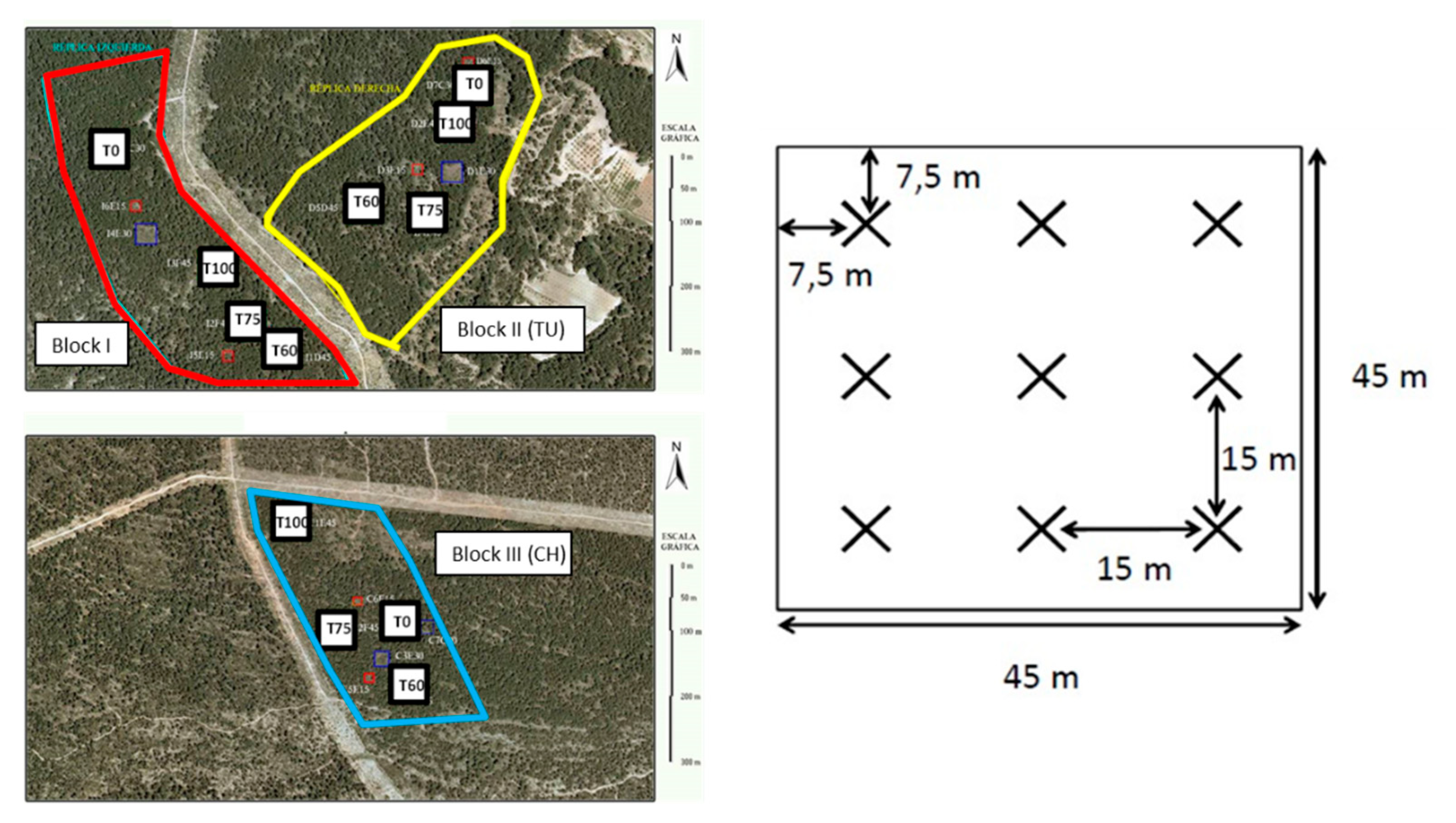
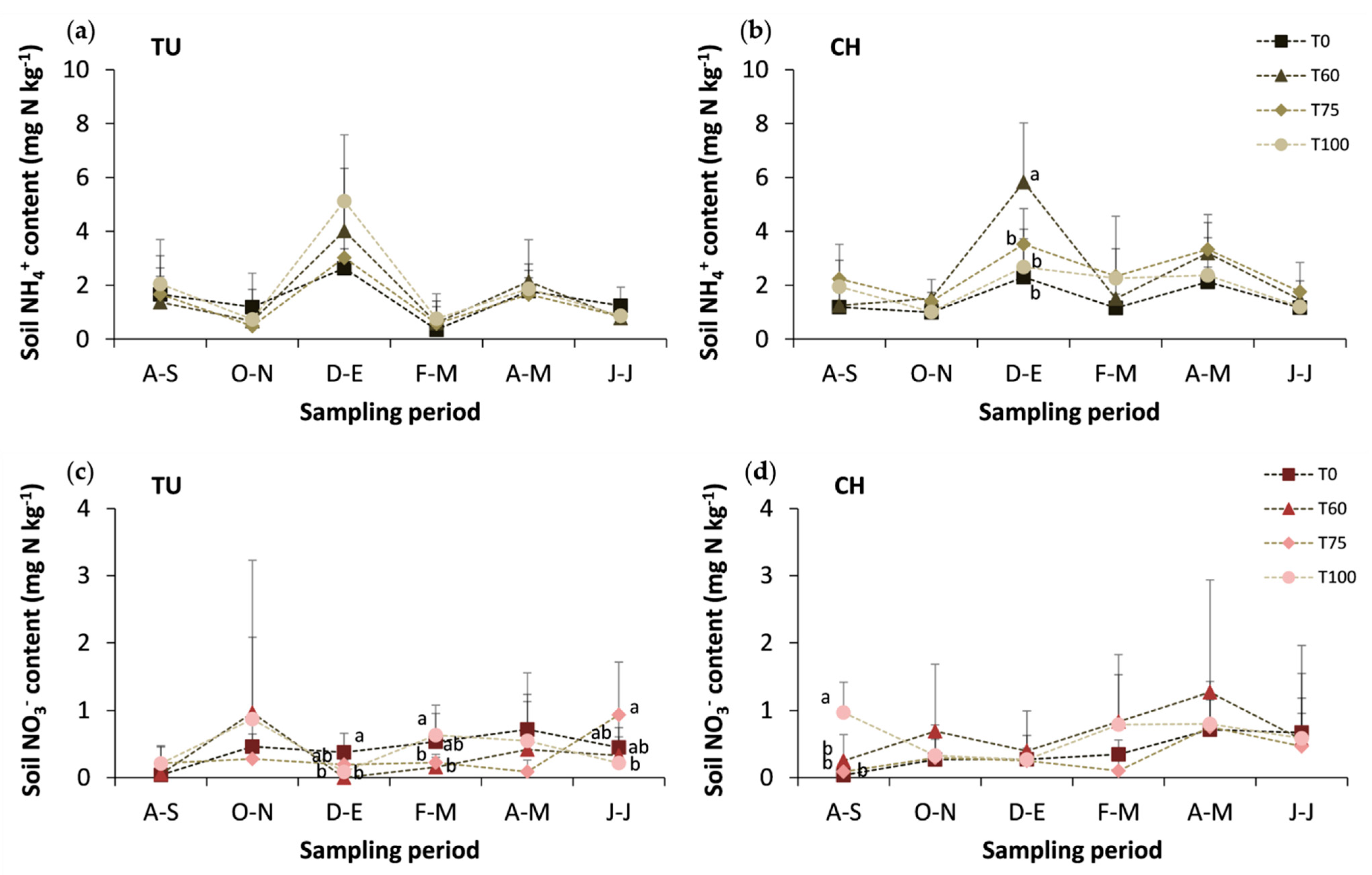
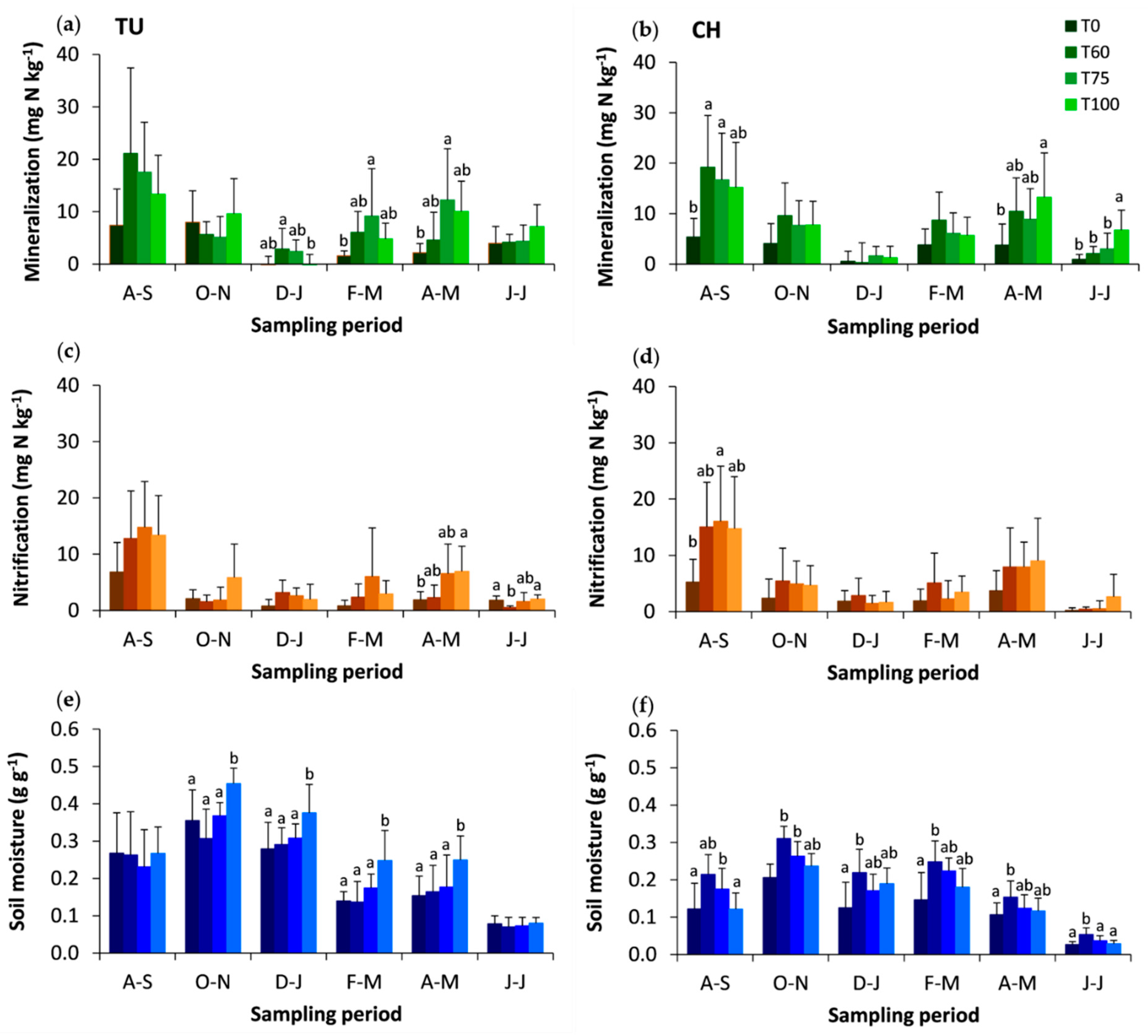
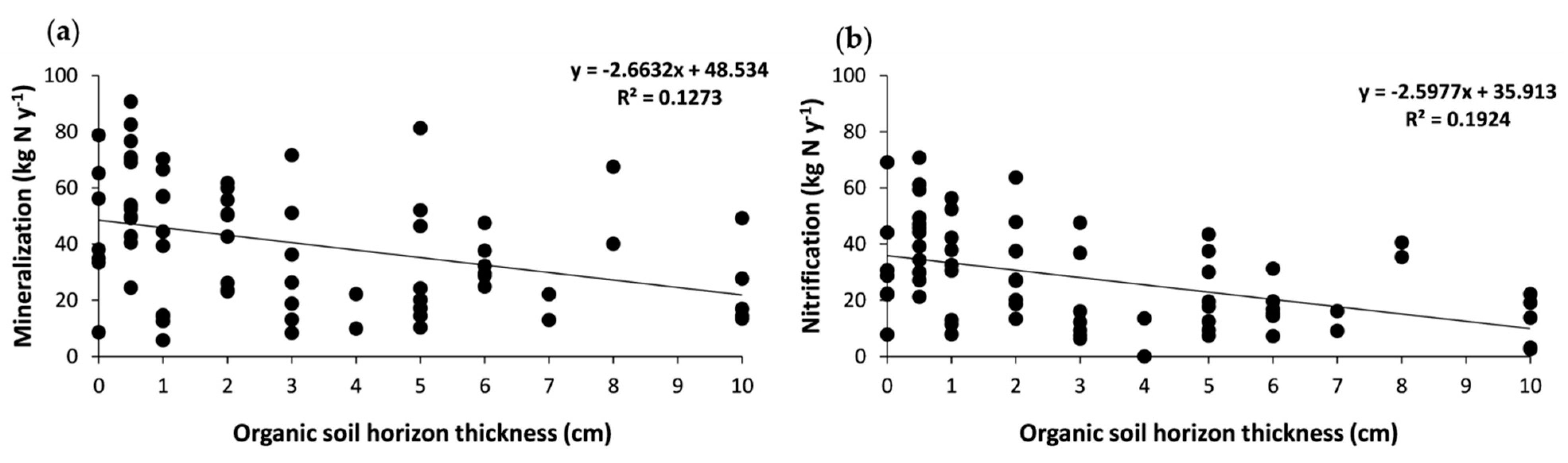
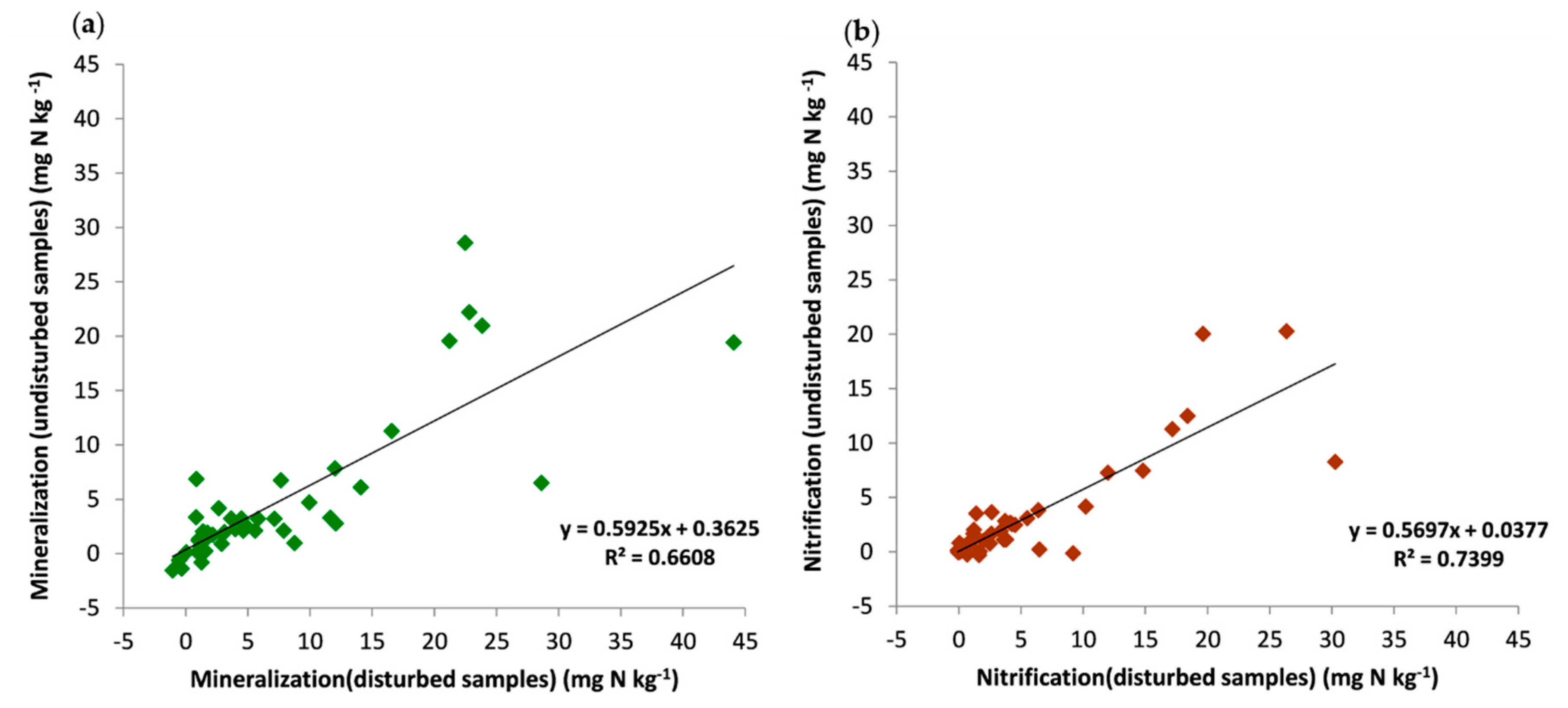
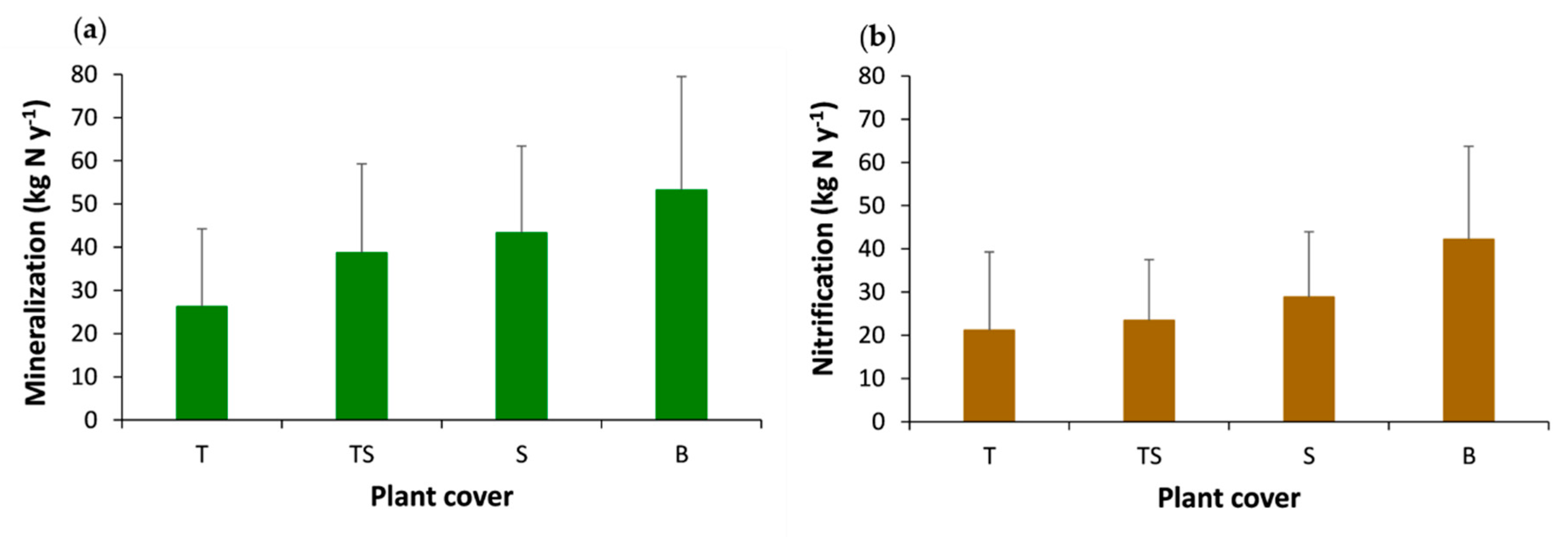
In order to assess the sustainability of silvicultural treatments in semiarid forests, it is necessary to know how they affect the nutrient dynamics in the forest. The objective of this paper is to study the effects of silvicultural treatments on the net N mineralization and the available mineral N content in the soil after 13 years following forest clearings. The treatments were carried out following a randomized block design, with four treatments and two blocks. The distance between the two blocks was less than 3 km; they were located in Chelva (CH) and Tuéjar (TU) in Valencia, Spain. Within each block, four experimental clearing treatments were carried out in 1998: T0 control; and T60, T75 and T100 where 60%, 75% and 100 of basal area was eliminated, respectively. Nitrogen dynamics were measured using the resin tube technique, with disturbed samples due to the high stoniness of the plots. Thirteen years after the experimental clearings, T100, T75 and T60 treatments showed a twofold increase in the net mineralization and nitrification rates with respect to T0 in both blocks (TU and CH). Within the plots, the highest mineralization was found in sites with no plant cover followed by those covered by undergrowth. These results can be explained in terms of the different litterfall qualities, which in turn are the result of the proportion of material originating from Pinus halepensis Mill. vs. more decomposable undergrowth residues.
Keywords: Mediterranean forest; forest management; P. halepensis; nitrogen cycling; soil nitrogen Mediterranean forest; forest management; P. halepensis; nitrogen cycling; soil nitrogen