Article

Monthly Radial Growth Model of Chinese Fir (Cunninghamia lanceolata (Lamb.) Hook.), and the Relationships between Radial Increment and Climate Factors


1
Faculty of Life Science and Technology, Central South University of Forestry and Technology, Changsha 410004, China
2
Huitong National Field Station for Scientific Observation and Research of Chinese Fir Plantation Ecosystem in Hunan Province, Huitong 438107, China
3
National Engineering Laboratory for Applied Technology of Forestry & Ecology in South China, Changsha 410004, China
*
Author to whom correspondence should be addressed.
Forests 2019, 10(9), 757; https://doi.org/10.3390/f10090757
Submission received: 20 July 2019 / Revised: 16 August 2019 / Accepted: 26 August 2019 / Published: 2 September 2019
(This article belongs to the Section Forest Ecophysiology and Biology)

Abstract

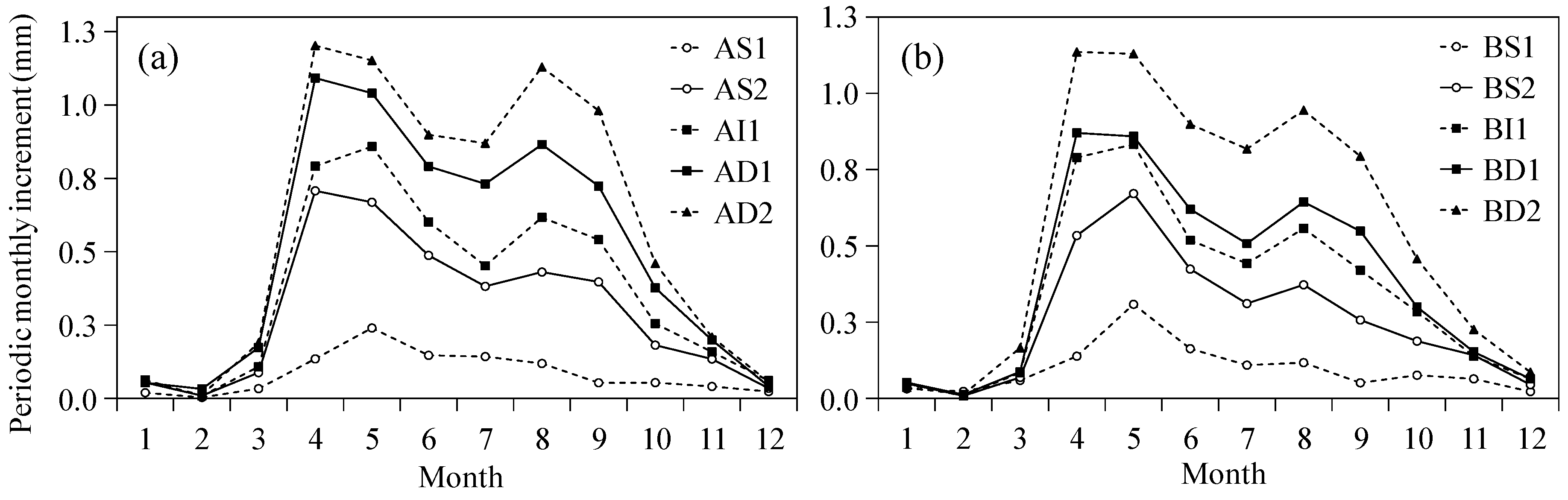
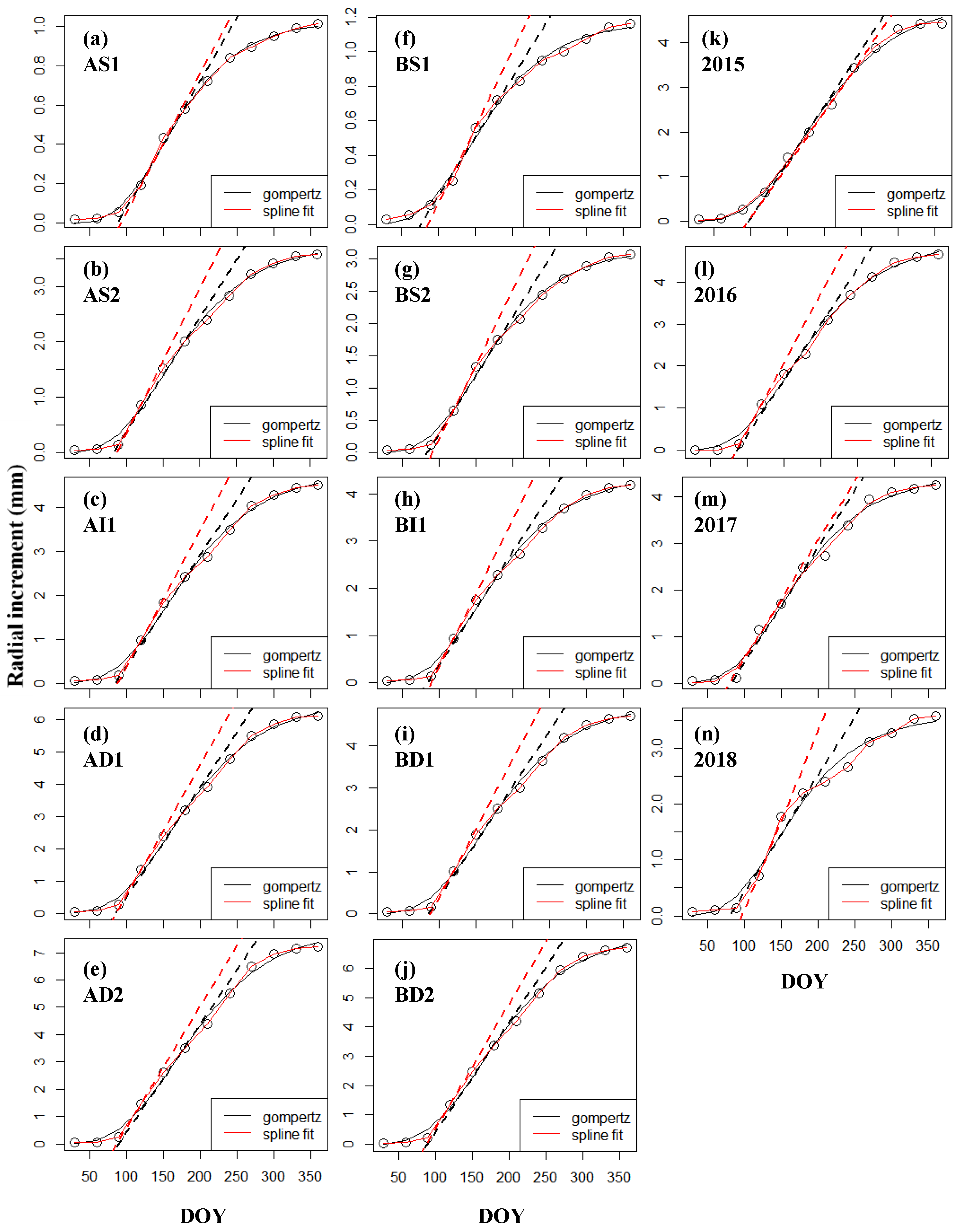
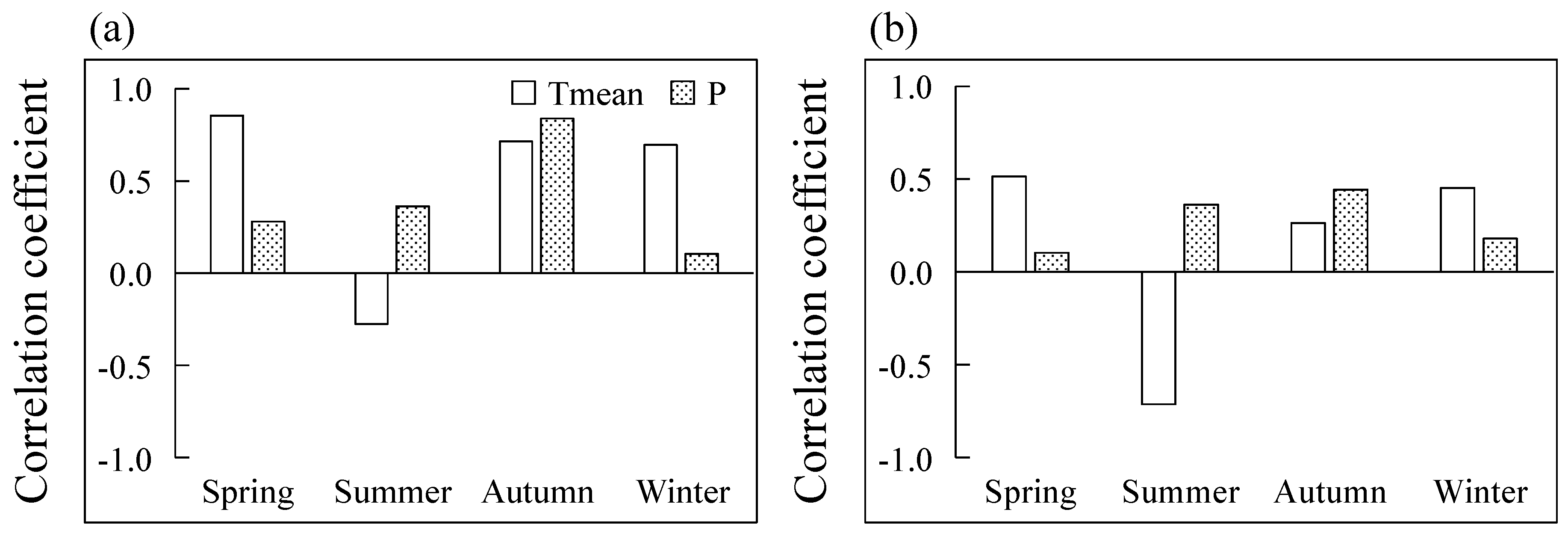
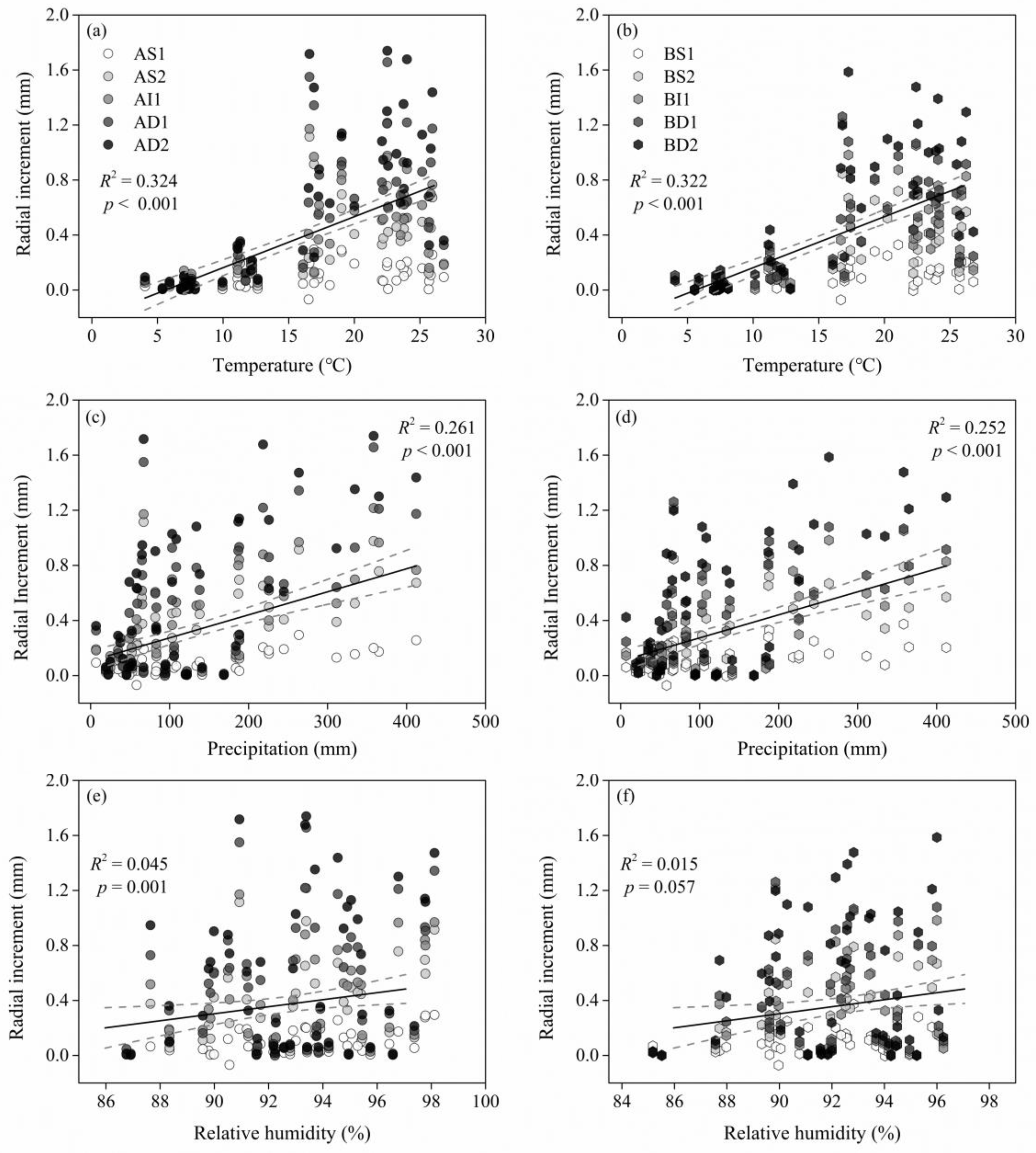
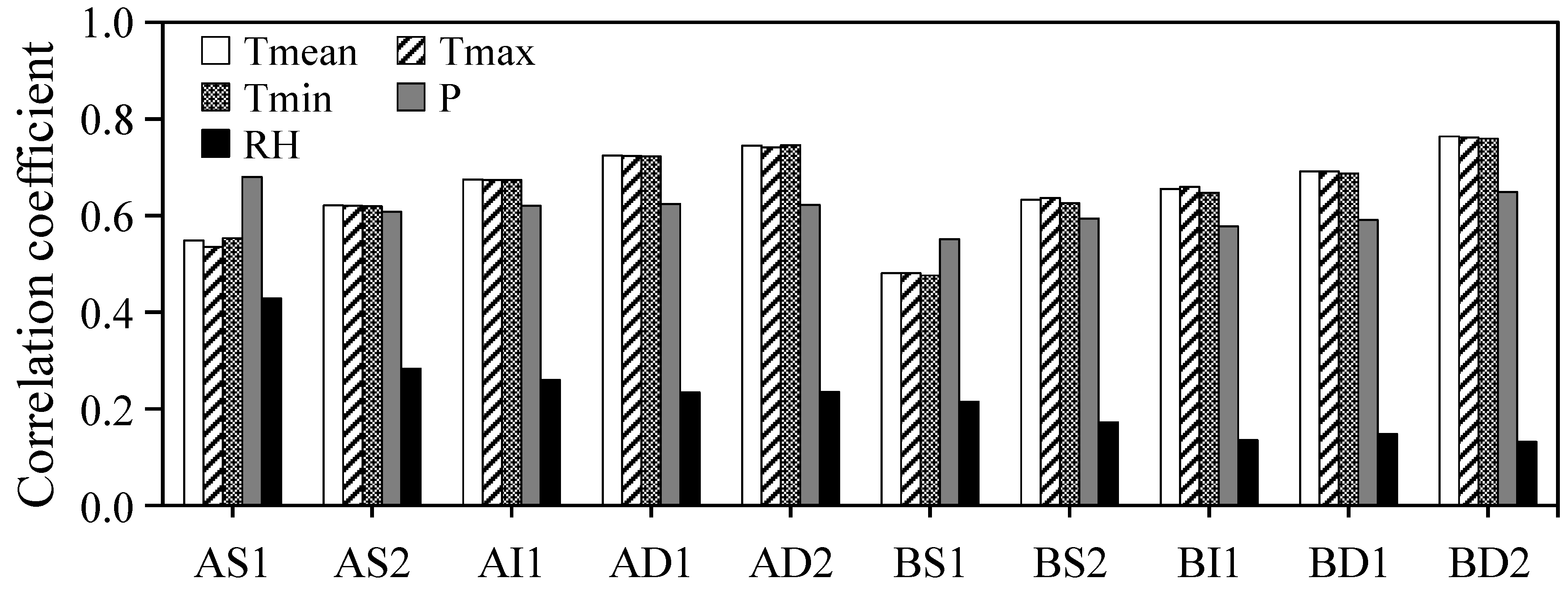
Chinese fir (Cunninghamia lanceolata (Lamb.) Hook) is the most commonly grown afforestation species in subtropical China. It is essential that we understand the response of radial tree growth to climate factors, yet most experiments have been conducted based on total annual growth and not on monthly dynamics, which alone can detail the influence of climatic factors. In this study, we aimed to: (i) construct a monthly growth model and compare the growth rate of different social statuses of trees, and (ii) determine the response of radial increments of different social statuses to climate factors. The radial growth was monitored monthly during four years using manual band dendrometers (MBD). The data were fitted using the Gompertz function. Within-stand differences in the social status of Chinese firs resulted in growing period and growth rate length variations. The radial growth began in March, and suppressed trees—especially groups of AS1 and BS1 (suppressed trees of classes I in sites A and B)—stopped in September, whereas dominant and intermediate trees were delayed and stopped in November. The periodic monthly increment curve showed double peaks, and the maximum growth rate occurred in April and August. The peak values were affected by social status, which showed that dominant trees had the greatest radial growth rates. S-shaped Gompertz meant that monthly increment models were successfully fitted to our data, which explained more than 98% of the variation in increment data and passed the uncertainty test. Temperature and precipitation had a significant influence on radial growth, and the correlation between radial growth and air temperature was the highest. Our results also revealed that temperatures explain the double-peak features of Chinese fir. The limiting factors of radial growth changed with the seasons and were mainly affected by temperature and precipitation, which should be considered in predicting the response of tree growth to climate change.
Keywords: climate change; double peaks; Gompertz model; manual band dendrometer; radial growth; subtropical area climate change; double peaks; Gompertz model; manual band dendrometer; radial growth; subtropical area