Article

Building a Social Discount Rate to be Applied in US Afforestation Project Appraisal


by
María José Muñoz Torrecillas
1,*,
Julian Roche
2 and
Salvador Cruz Rambaud
1
1
Department of Economics and Business, Universidad de Almería, 04120 Almería, Spain
2
School of Agricultural and Resource Economics, University of Western Australia, Perth 6009, Australia
*
Author to whom correspondence should be addressed.
Forests 2019, 10(5), 445; https://doi.org/10.3390/f10050445
Submission received: 15 April 2019 / Revised: 7 May 2019 / Accepted: 20 May 2019 / Published: 23 May 2019

Abstract

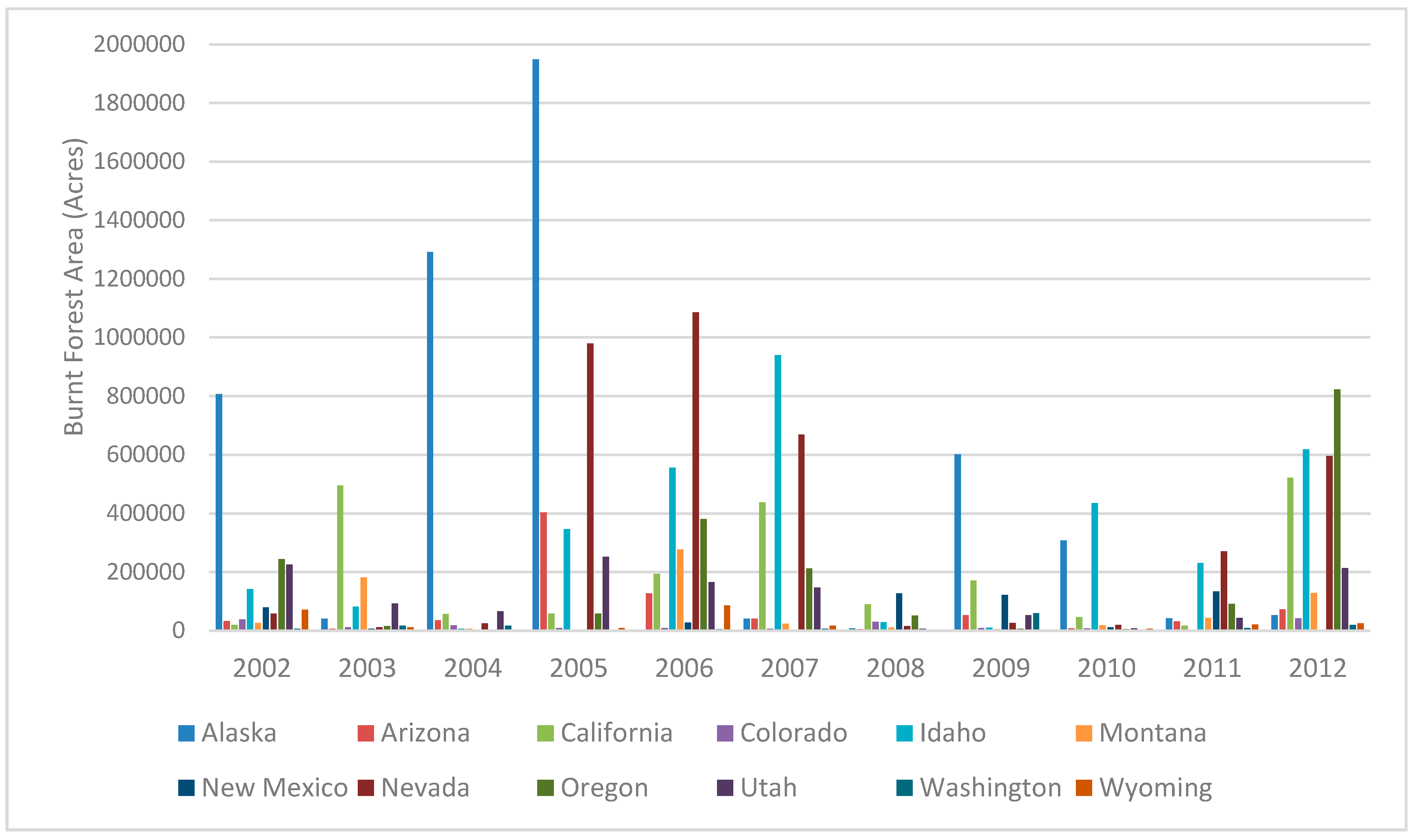
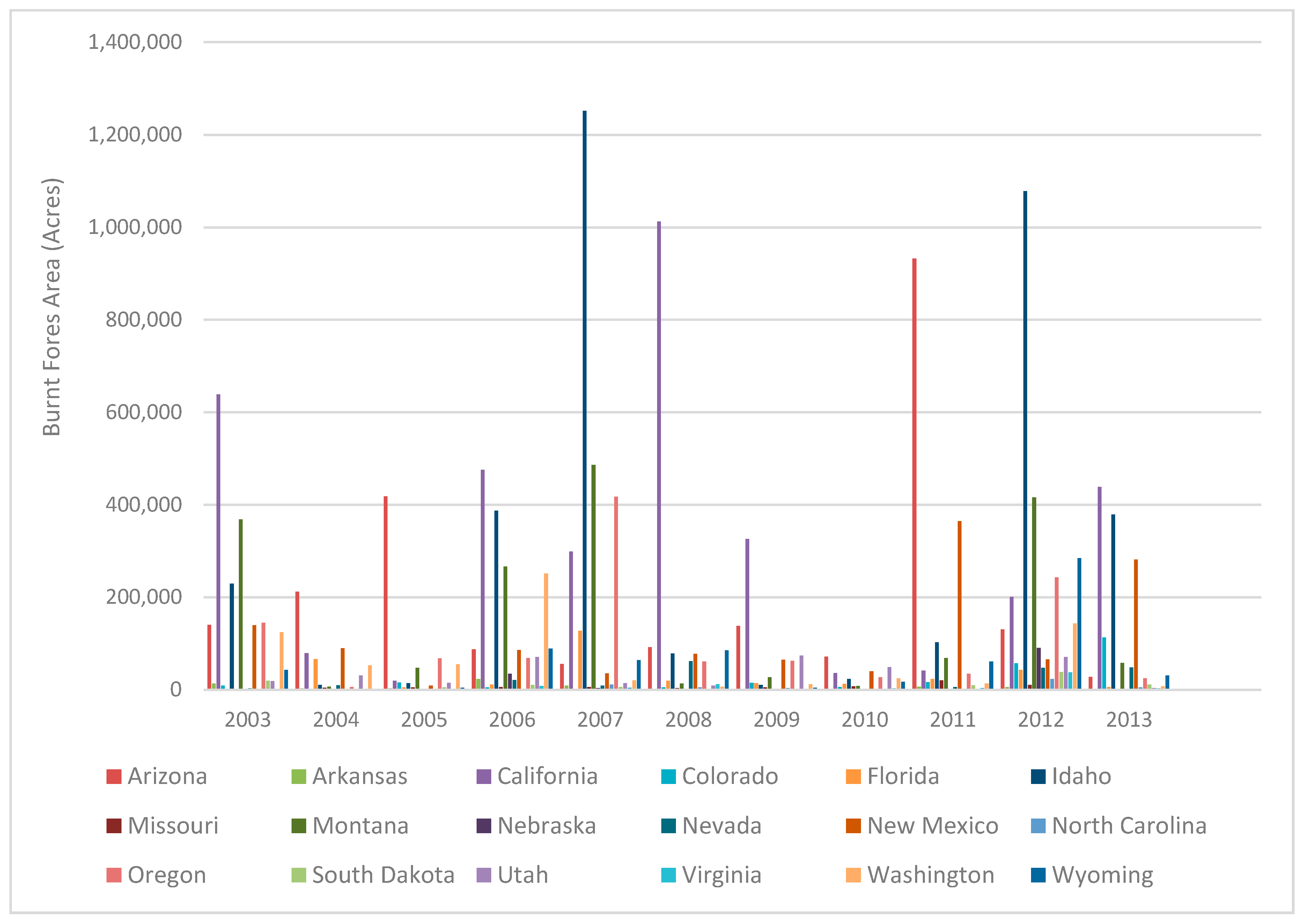
This paper is focused on searching for the suitable discount rate to be applied to the valuation of a project related to forests in the USA, e.g., a recreational area inside a national park. To do this, we propose a new model based on hazard rate concepts, i.e., based on the risk that waiting time implies. More specifically, we derive the discount function whose instantaneous discount rate is the hazard rate of the system supporting the investment. We determine the rate of failure corresponding to different partition criteria of the whole system; in our case, we can use the information on forest fires caused in different ways, in different states or in different types of forest surfaces. After showing independence between the forest fires by states and causes, we derive a specific discount function for each cause which can be applied to every state or set of states which agree to fight against a concrete cause of forest fire. Additionally, we obtain a unique discount function by weighting the partial discount functions by type of forest surfaces. Our results are in line with the recommendations from several authors about using decreasing discount rates for projects with very long-term impacts.
Keywords: social discount rate; hazard rate; forest fires; discount function social discount rate; hazard rate; forest fires; discount function