1. Introduction
Additive manufacturing (AM) has emerged as an innovative high-end manufacturing technology in the 21st century. It overcomes the limitations of conventional manufacturing (CM) in producing components with complex geometries by building structures layer by layer. This bottom-up fabrication approach significantly improves material utilization compared to CNC machining, demonstrating irreplaceable advantages in high-end sectors such as aerospace and biomedical engineering [
1,
2].
Titanium and its alloys are widely used across a broad range of industrial applications due to their exceptional properties, including high specific strength, excellent work-hardening capability, good ductility, toughness, and outstanding corrosion resistance [
3,
4,
5]. However, these advantageous properties are accompanied by significant challenges in processing. AM Ti-6Al-4V (Ti64), particularly produced via laser powder bed fusion (L-PBF), has been extensively studied in the literature for aerospace and biomedical applications, which is mainly due to the capability of this technique in fabricating complex geometries with acceptable dimensional accuracy [
6,
7,
8,
9,
10]. Among AM processes, L-PBF employs the thinnest layer thickness during fabrication, resulting in a superior as-built surface finish compared to other AM techniques [
11].
Fatigue represents one of the most prevalent failure modes in mechanical structures. With the increasing demand for high-speed, high-load, and lightweight equipment, structural safety margins have been reduced, leading to a higher incidence of fatigue-related failures. Consequently, fatigue fracture remains a critical challenge in engineering applications [
12]. The layer-wise nature of AM introduces pronounced microstructural anisotropy due to the building direction, which significantly influences the fatigue behavior of AM materials [
13]. Additionally, intrinsic defects were generated during the AM process such as lack of fusion (LOF), porosity, and residual stress, further deteriorating fatigue performance [
14,
15].
Several studies have investigated the effects of building direction and defects on the fatigue behavior of L-PBF Ti64. Nicoletto et al. [
16] reported that specimens fabricated in vertical and horizontal orientations exhibited shorter fatigue lives, particularly in the vertical direction, due to poor surface finish. Hartunian [
17] studied the fatigue properties and fracture mechanisms of L-PBF Ti64 specimens built in both horizontal and vertical orientations, finding that vertically built specimens exhibited more pronounced fatigue degradation due to LOF defects forming between adjacent layers. Similarly, Persenot [
18] demonstrated that surface morphology strongly depends on building direction, with specimens fabricated in vertical, horizontal, and diagonal directions exhibiting distinctly different surface features. Vertically built samples tended to have directional surface micro-notches, resulting in shorter fatigue lives. Chastand et al. [
19] tested the alloy fabricated by selective laser melting (SLM) and found that anisotropy is negligible after 6000 cycles, except when the loading is parallel to the beam. Agius et al. [
20] compared SLM and wrought alloys and reported that the second showed significantly higher plastic work than the SLM.
Although interest in the multiaxial fatigue behavior of AM materials has grown in recent years, there remain substantial research gaps, particularly concerning the influence of building direction under multiaxial loading. Fatemi [
8,
21] investigated the effect of surface texture on the torsional and multiaxial fatigue behavior of L-PBF Ti64 in the vertical build direction, finding that the maximum principal stress criterion effectively predicted crack orientation in brittle fracture scenarios. Carrion [
6] explored the effects of layer orientation and surface roughness on multiaxial fatigue performance, revealing that fatigue cracks initiate at surface defects and grow along planes of maximum tensile stress. Under torsional loading, the fatigue performance was primarily influenced by the orientation of the deposited layers. Vertically built specimens, in which surface micro-notches were not aligned with the critical fatigue plane, demonstrated enhanced fatigue resistance.
Most existing studies on the fatigue behavior of L-PBF Ti64 have focused on a limited number of fixed building directions. Given the successful application of critical plane theory in analyzing CM materials, investigating the multiaxial fatigue behavior of L-PBF Ti64 with building direction variations based on critical plane orientations holds great promise. To address this research gap, this paper systematically investigates the multiaxial low-cycle fatigue (MLCF) behavior of L-PBF Ti64 at four different building direction angles (0°, 12°, 16°, 27°), chosen based on critical plane orientations identified from prior studies on rolled titanium alloys [
22,
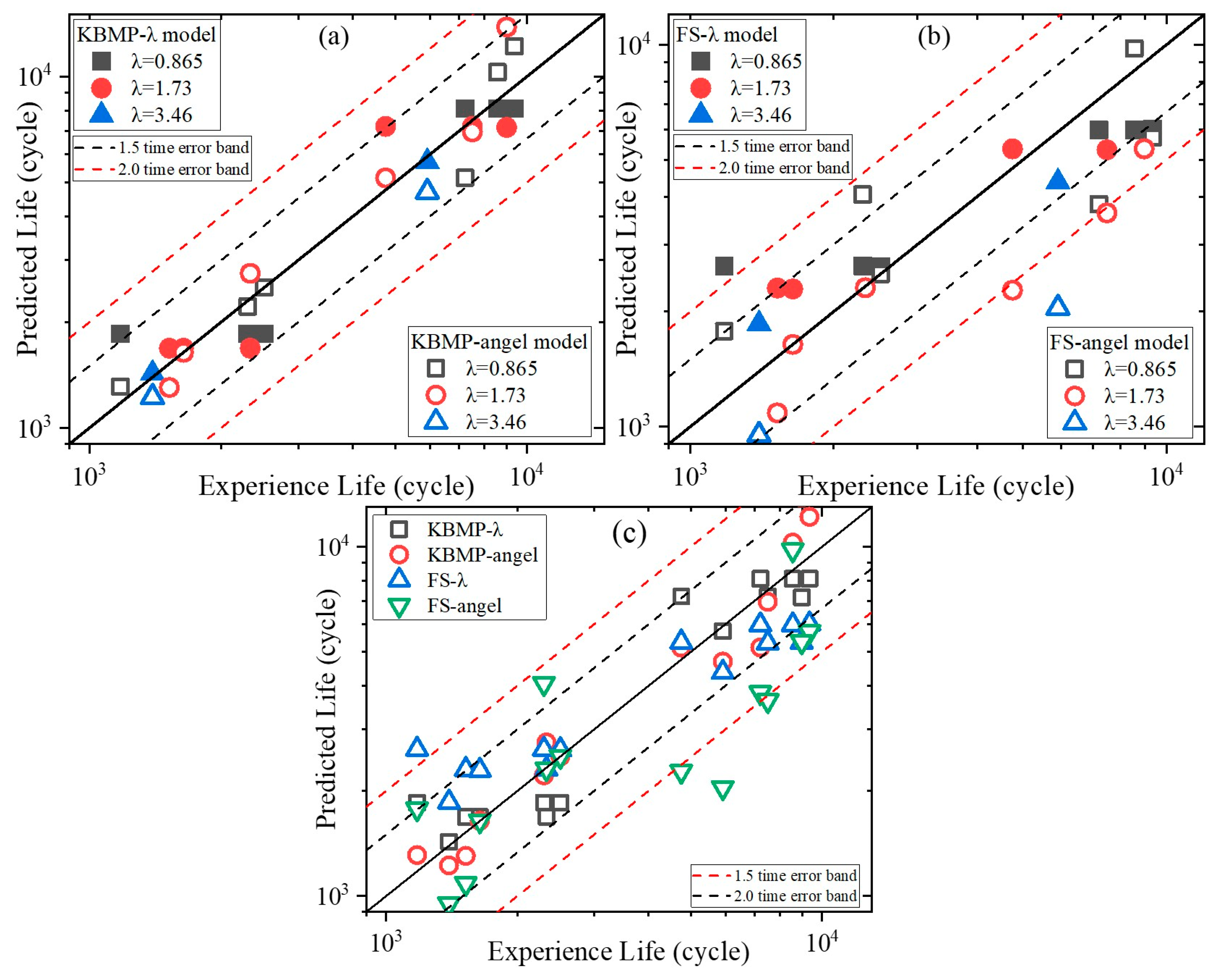
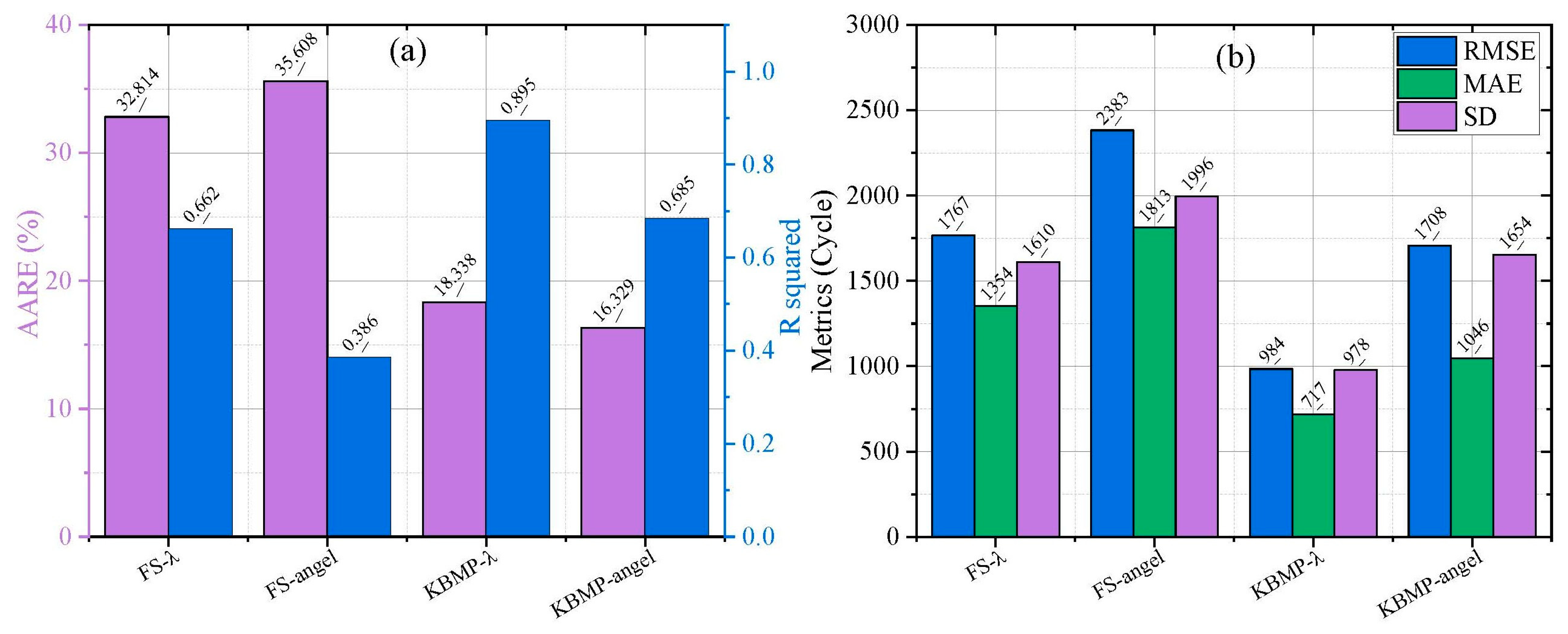
23]. Strain-controlled MLCF tests were performed to obtain cyclic stress–strain responses and to assess cyclic hardening/softening behavior and mean stress evolution. Post-failure analysis of macroscopic fatigue crack propagation was conducted using high-resolution digital camera and scanning electron microscopy (SEM) to investigate fracture surface characteristics and underlying damage mechanisms. Furthermore, proposed KBMP models with different parameters are developed and validated to offer a fatigue life predictive methodology for L-PBF Ti64 under complex multiaxial loading conditions.
2. Materials and Experimental Procedures
Ti64 powder with a chemical composition conforming to ASTM F1472 [
24] and ASTM F2924 [
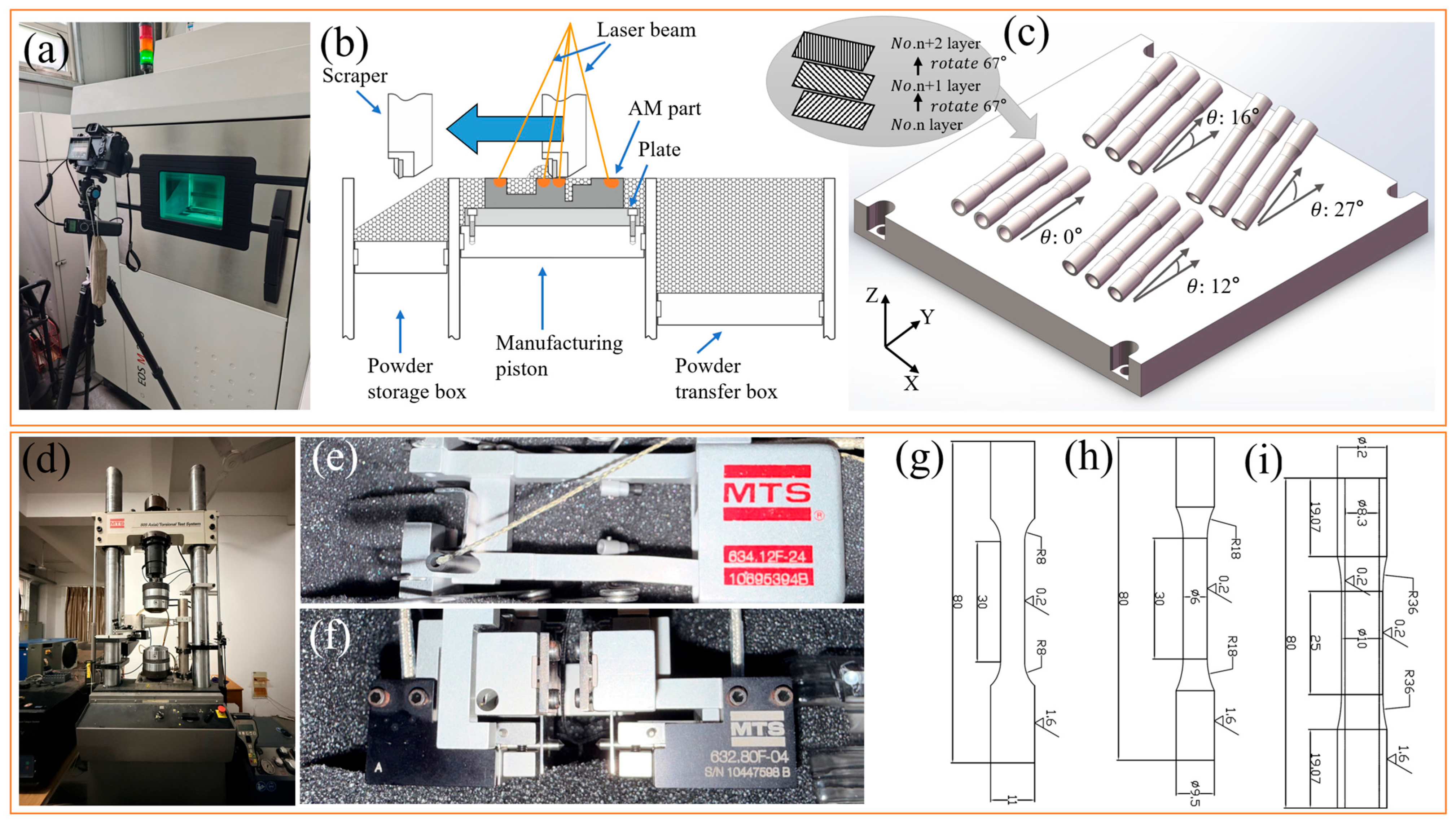
25] standards was utilized in this study. The Ti64 powder, supplied by EOS, had a nominal particle size distribution of approximately 63 μm. Specimens were fabricated in multiple batches using an EOS M290 L-PBF system (EOS GmbH, Krailling, Germany), with each batch oriented along a distinct building direction, as illustrated in
Figure 1a–c. All L-PBF processes were conducted employing the standard parameters recommended by EOS, which are summarized in
Table 1.
All tests were performed on an MTS 809 hydraulically driven material test system (MTS Systems Corporation, Eden Prairie, Minnesota, USA), depicted in
Figure 1d–f. The tests were conducted at room temperature (20 °C), maintained by the laboratory’s air conditioning system. The system was controlled using the MTS Flex Test 40 Station Manager (Version 5.7E 5045). Strain was measured with an axial extensometer (model 634.12F-24) for uniaxial tests and an axial-torsional extensometer (model 632.80F-04) for multiaxial tests. All test data were acquired at a sampling rate of 300 Hz through the system’s control computer.
The four building directions were selected based on our previous work [
26], which applied critical plane theory to the MLCF behavior of a CM (rolled) titanium alloy. In recent years, the critical plane approach has gained widespread application in multiaxial fatigue research due to its strong alignment with experimental observations [
22,
23,
27,
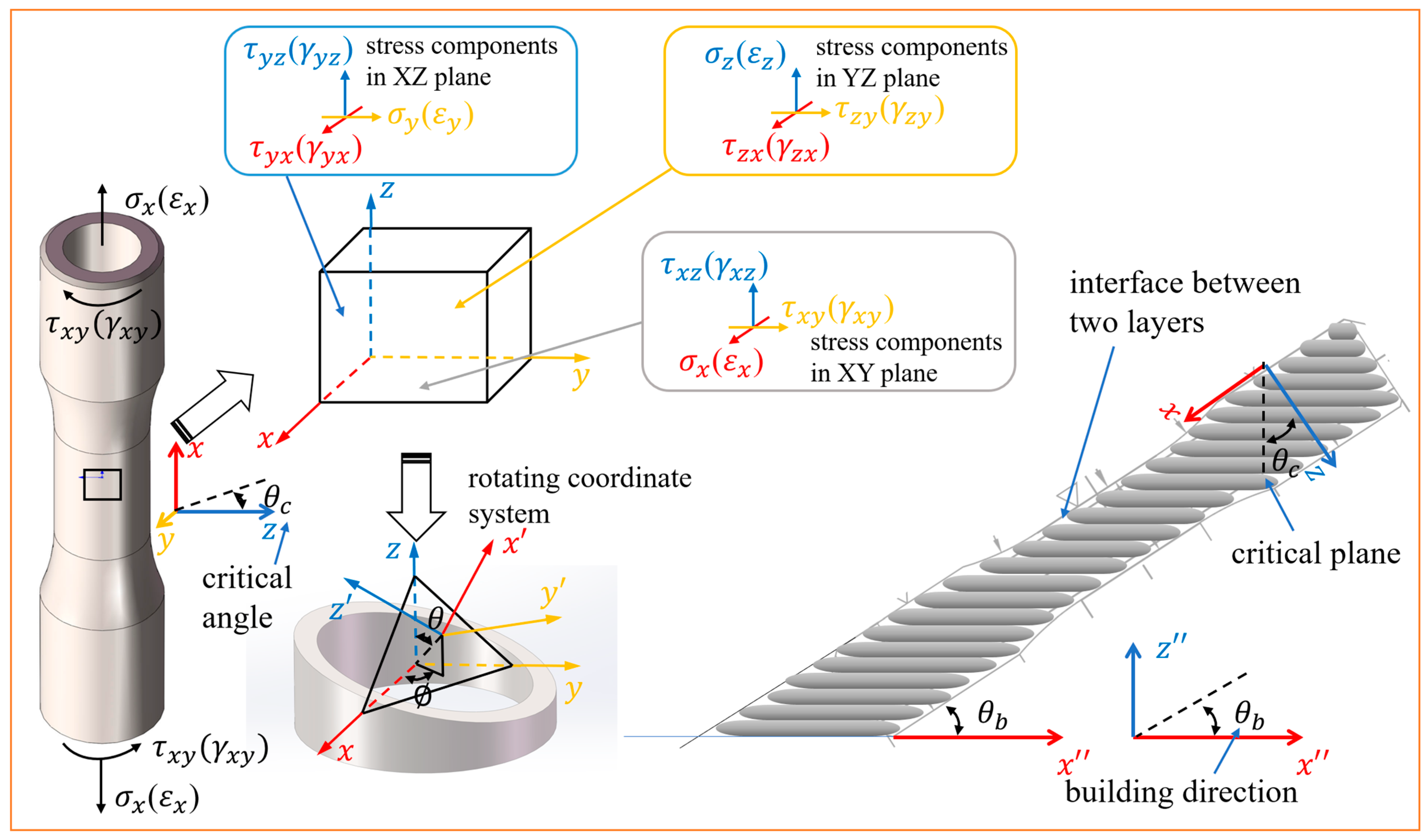
28]. Under multiaxial loading conditions, fatigue cracks typically initiate and propagate along a specific angular plane, commonly referred to as the critical plane. In strain-controlled loading modes, the critical plane is typically defined as the plane of either maximum principal strain or maximum shear strain. In this study, the selected building directions are oriented at approximately 90° to the respective critical planes, as shown in
Figure 2.
The mean fracture surface inclination and critical plane based on the maximum principal strain are 12.04°/16.88° with multiaxial strain ratio (λ) of 0.865 and 17.92°/26.58° with λ of 1.73, respectively. λ is the ratio of the torsional strain to the axial strain, as shown in Equation (1):
where
and
are the axial and torsional strain amplitudes, respectively.
Considering that the loading cases applied in this paper are almost based on λ of 0.865 and 1.73, the final selected building directions were 0°, 12°, 16° and 27°. The 0° direction was included as a baseline reference, commonly used in prior studies, to assess the effect of small-angle deviations aligned with critical planes on multiaxial fatigue behavior. After fabrication, the specimens were separated from the direct base via wire-cutting, with heat-treated (2 h at 800 °C in argon atmosphere) and then machined by lathe processing to remove 0.5 mm thick inner and outer surfaces, respectively. The purpose of heat-treated was for stress relief annealing. The final specimen dimensions shown in
Figure 1i represent the net dimensions after machining. The 3D models used in the L-PBF process were designed with positive dimensional allowances to compensate for the expected material removal during finishing.
Prior to the MLCF test, standard tensile and uniaxial low cycle fatigue (LCF) tests were conducted on specimens with different building directions to obtain the material’s static and dynamic mechanical properties. These tests were performed using the MTS 809 system under strain-controlled mode with axial extensometer. The specimen geometric dimensions for tensile and LCF tests are shown in
Figure 1g,h. The surface roughness of the gauge length for tensile, LCF, and MLCF specimens was Ra 0.2, while the surface roughness of the clamping section was Ra 1.6. Tensile tests were conducted at a strain rate of 0.0005 s
−1 with two replicate tests conducted per building direction. LCF tests were performed at axial strain amplitudes of 0.4%, 0.6% and 0.8% for each building direction. All tensile and LCF test results are summarized in
Section 3.1 (
Table 2 and
Table 3).
MLCF tests were conducted under proportional, fully reversed loading (R = −1 for both axial and shear strains) using the MTS 809 system with an axial-torsional extensometer. R is the ratio of the peak strain amplitude to the valley strain amplitude. The frequency of MLCF tests was 1 Hz and phase angle was 0°. The applied axial strain amplitudes were 0.4% and 0.6% combined with λ of 0.865, 1.73, and 3.46 [
26]. All strain amplitudes were directly controlled by the MTS MPE test suit via the dual-channel axial-torsional extensometer using a triangular waveform. Three additional specimens with different building directions were tested to assess fatigue life dispersion. MLCF test results are provided in
Section 3.1 (
Table 4).
3. Mechanical Behavior of L-PBF Ti64 with Different Building Directions
Mechanical behavior including static/dynamic mechanical properties, cyclic softening characteristics and mean axial and torsional stress response of L-PBF Ti64 with different building directions will be discussed in this section.
3.1. Static and Dynamic Mechanical Properties
A summary of the tensile, LCF, and MLCF tests and corresponding results is provided in
Table 2,
Table 3 and
Table 4.
The tensile properties of L-PBF Ti64 across the four building directions are summarized in
Table 2. Overall, the tensile strength and yield strength of L-PBF Ti64 are slightly higher than those of EMB Ti64, while the elastic modulus is slightly lower than that of EMB Ti64 [
29,
30]. The mean ratio for
of L-PBF Ti64 is 1.16, suggesting a tendency for cyclic softening [
29]. The effect of building direction on uniaxial fatigue life is presented in
Table 3. To obtain the dynamic mechanical properties of L-PBF Ti64, the Ramberg–Osgood model [
31] was developed to describe a material’s dynamic mechanical behavior for the elastic and plastic regions of the stress–strain curve, as shown in Equation (2):
Established empirical rules for the Ramberg–Osgood parameters suggest that a material is prone to cyclic softening when
< 1.2 and
< 0.2 [
32]. Furthermore, the value of E
/(E +
) should approximate
. The fitted parameters for Equation (2) with different building directions are as follows:
.188,
= 1003.91 in 0°,
= 0.176,
= 926.50 in 12° and
= 0.181,
= 963.84 in 27°. As a comparison, Benz et al. [
33] reported 0.012 and 1022, respectively, for EBM Ti64.
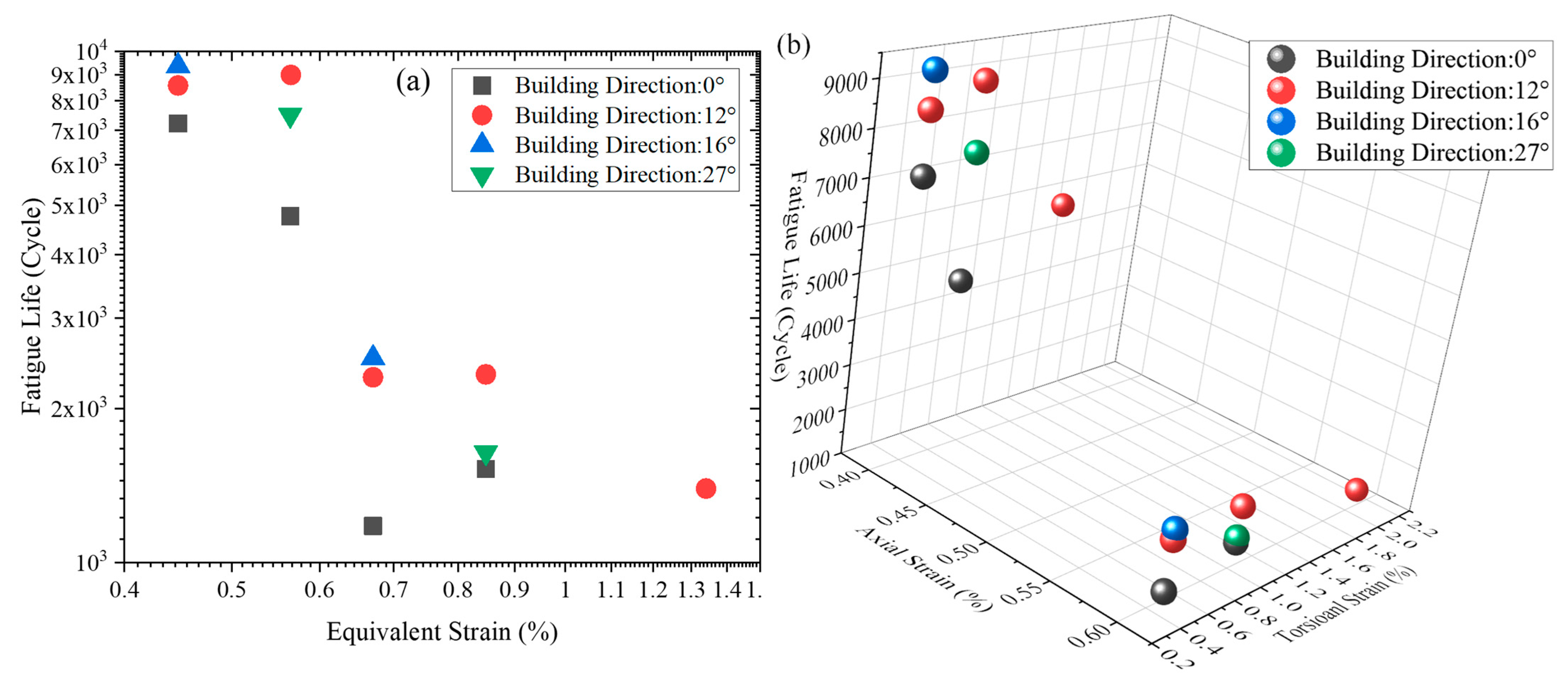
Table 4 details the applied axial and torsional strain amplitudes, half-life response stress amplitudes, and fatigue life distributions for each specimen in the MLCF test. The repeatability of the fatigue life (Nf) was validated using three sets of duplicate specimens. The observed Nf values for these pairs were as follows: AMPMF02 vs. AMPMF02-R: 4752 vs. 5003, AMPMF06 vs. AMPMF06-R: 8982 vs. 8164 and AMPMF10 vs. AMPMF10-R: 1394 vs. 1176. The deviation in fatigue life under identical loading conditions remains within 10%, confirming good experimental consistency.
3.2. Cyclic Softening/Hardening Characteristics
The cyclic softening/hardening behavior of materials under MLCF loading can be characterized by tracking the evolution of axial and torsional stress amplitudes with the number of cycles.
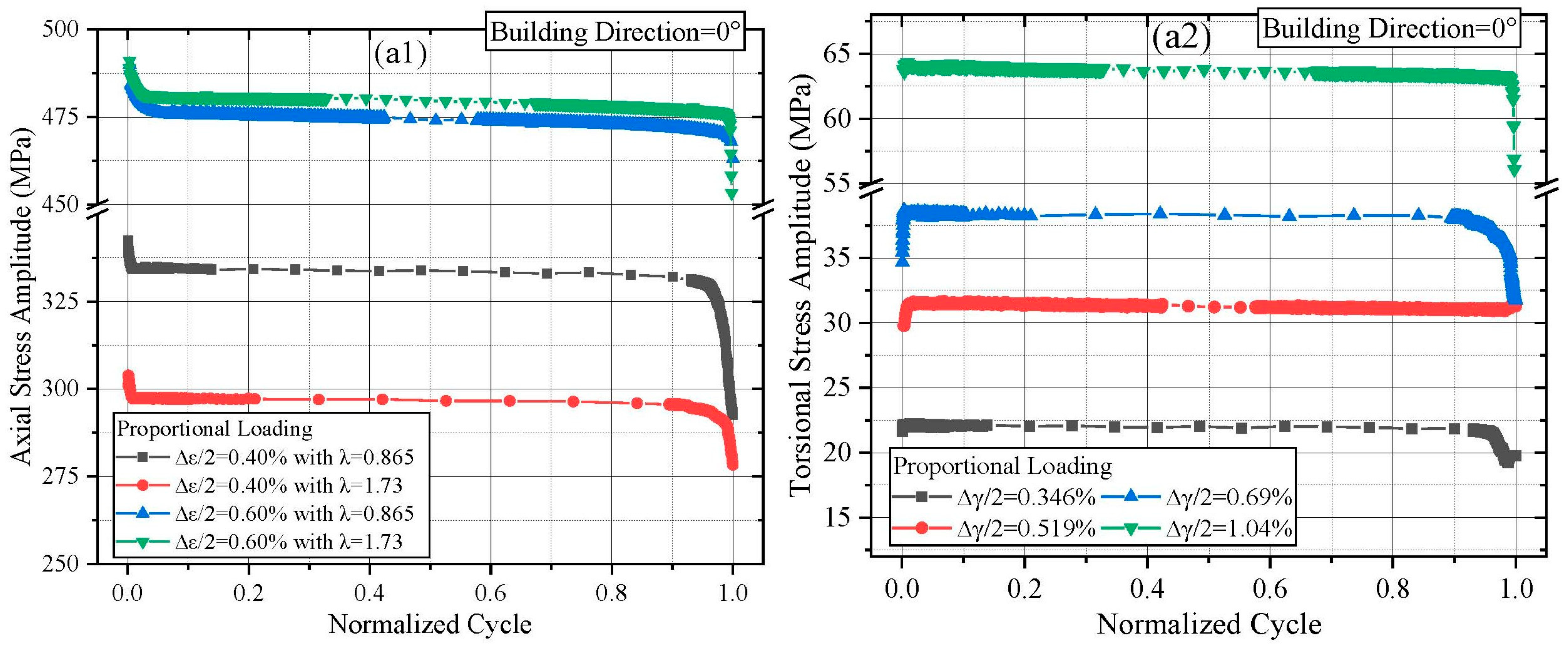
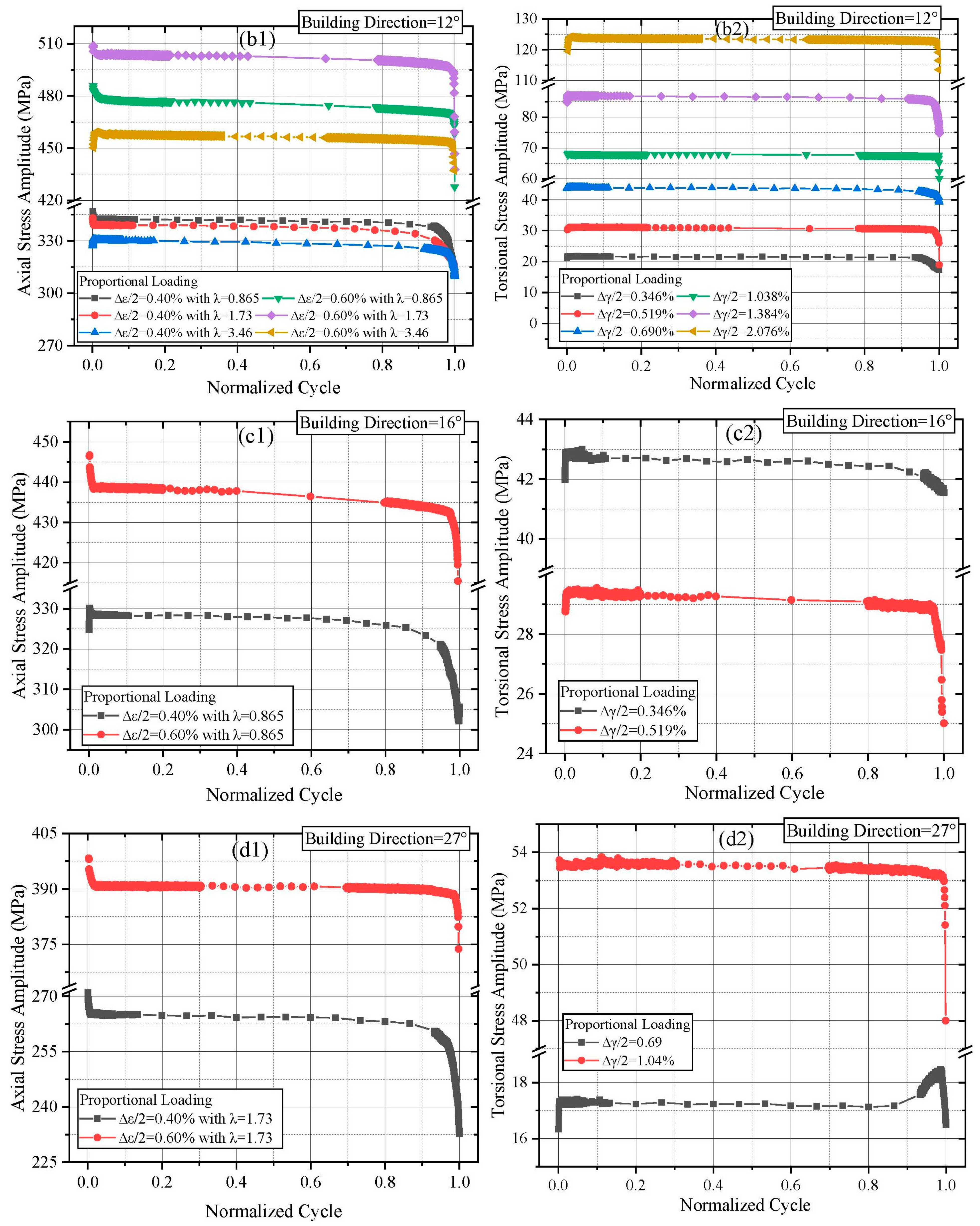
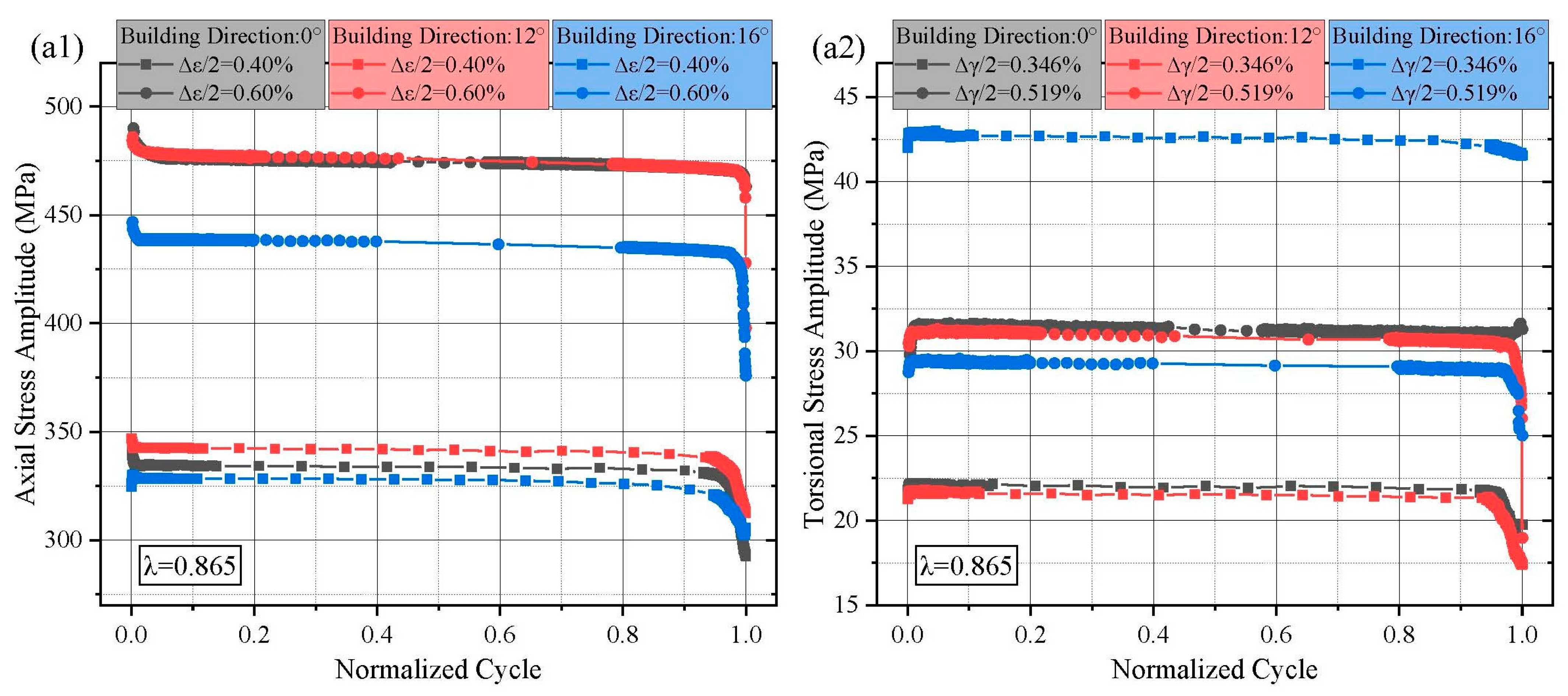
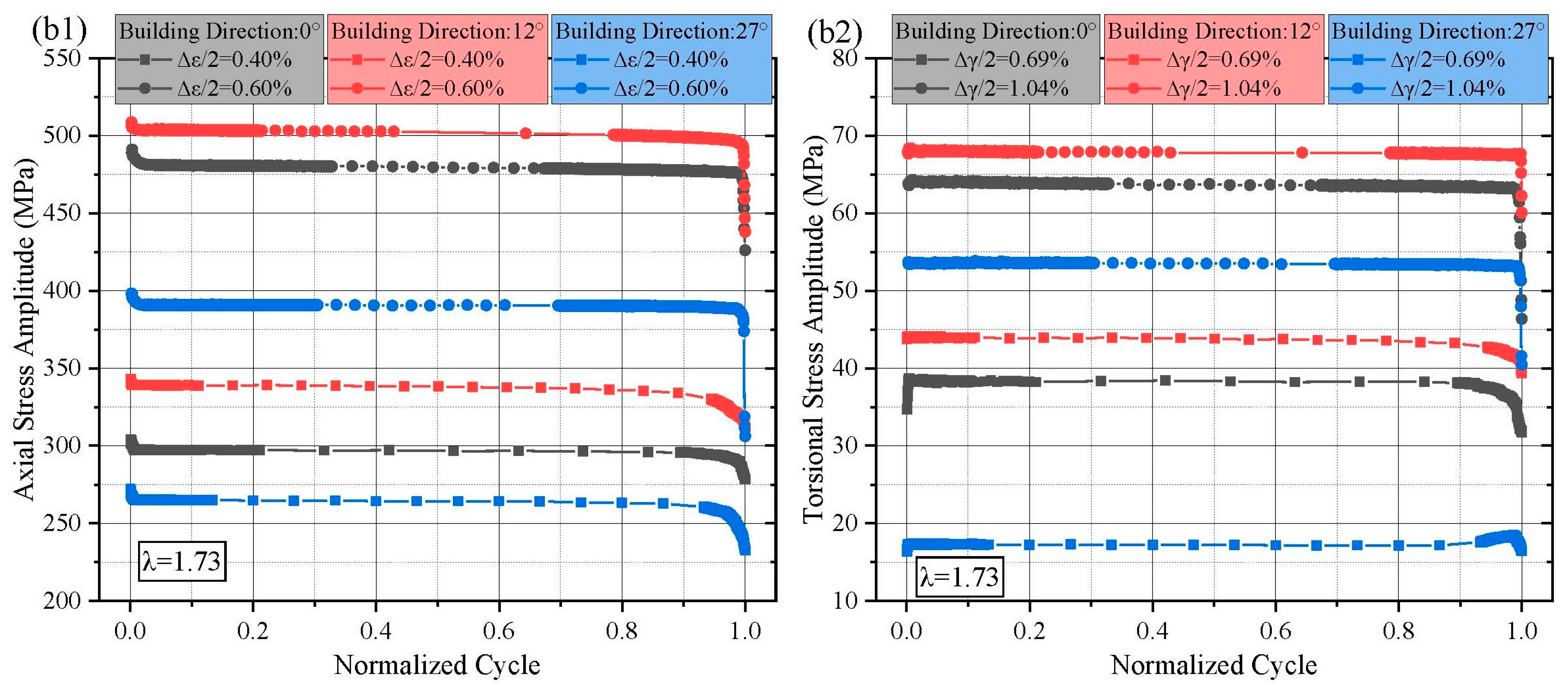
Figure 3 presents these variations for L-PBF Ti64 specimens fabricated at different building directions (all figures were prepared using OriginPro 2018). To facilitate a clearer comparison of cyclic behavior across different loading conditions, the fatigue cycle life data are normalized.
As shown in
Figure 3(a1), specimens built at 0° exhibit the classical three-stage (continuous softening, stable, and rapid softening) softening characteristic of titanium alloys. At this orientation, specimens subjected to higher multiaxial strain ratios exhibited more pronounced softening at the 0.4% axial strain level. However, for an axial strain loading level of 0.6%, varying the multiaxial strain ratios had a limited effect on the stress response. In
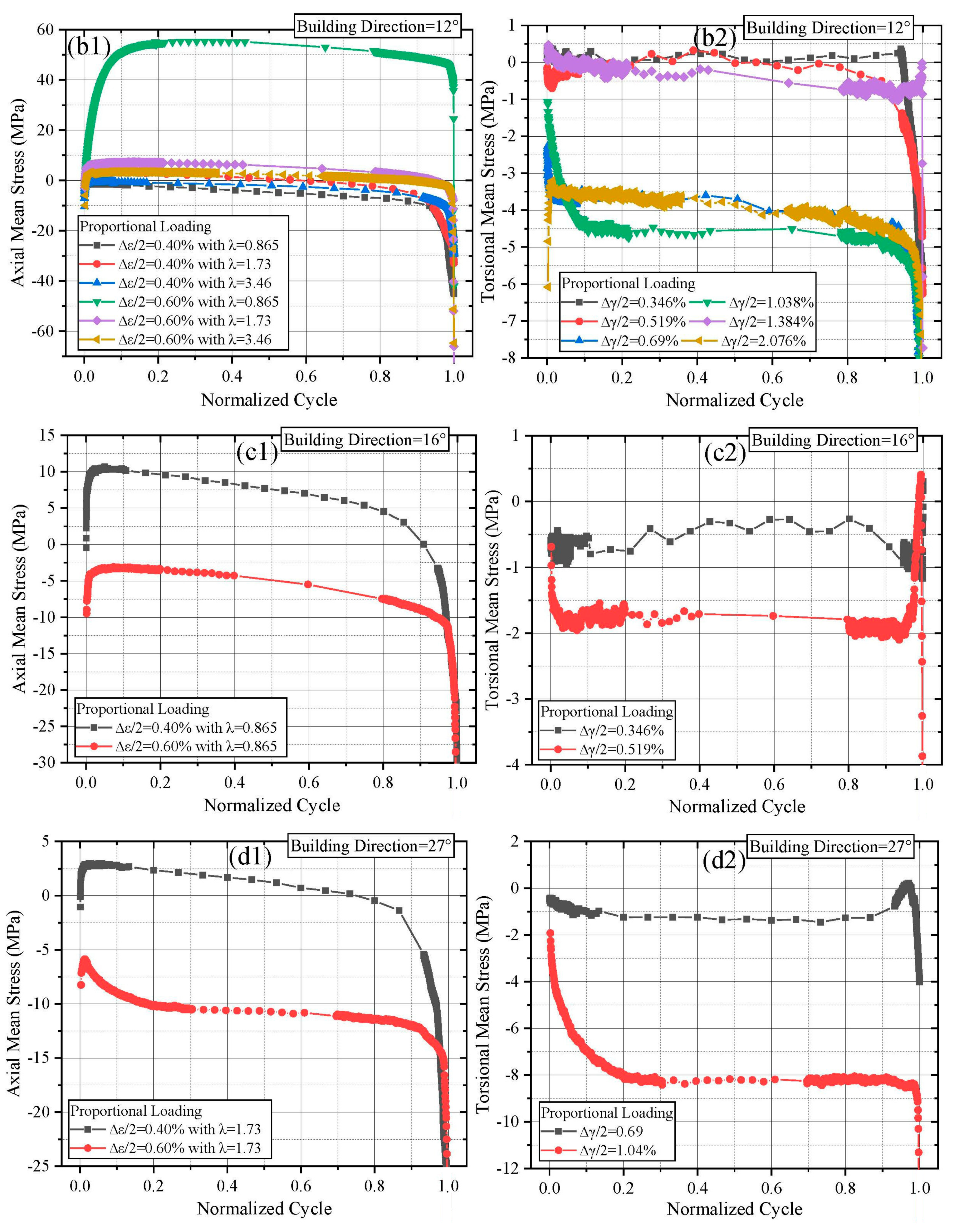
Figure 3(b1), specimens built at 12° and tested under λ = 0.865 and 1.73 similarly exhibited three-stage softening. An initial transient hardening was observed when the strain ratio increased to λ = 3.46. Compared to the 0° orientation, the 12° orientation showed slower stress amplitude decay under 0.4% axial strain with increasing λ. For 0.6% axial strain, the stress response showed a brief hardening phase before transitioning to softening as λ increased. It is worth mentioning that the unexpected peaks can be observed prior to failure occurred in the torsional stress responses, as shown in
Figure 3(d2) and
Figure 4(b2). Unlike axial stress responses, where positive and negative values clearly represent tensile and compressive stresses, in torsional stress responses, positive and negative values merely indicate clockwise and counterclockwise directions. Ideally, the positive and negative values of torsional stress responses have the same effect on material failure. Additionally, since the torsional stress amplitude is calculated as (torsional peak stress − torsional valley stress)/2, under ideal conditions, the likelihood of a specimen’s crack propagation path developing in either the clockwise or counterclockwise direction before failure is equal. Furthermore, under multiaxial loading, crack surfaces are typically inclined rather than planar. When significant obstacles hinder crack growth, torsional stress in either direction may transiently surge, leading to a brief peak in the amplitude response just before failure.
Owing to limited availability of Ti64 powder, specimens built at 16° and 27° were primarily used for fatigue life analysis rather than in-depth stress evolution studies. Overall, most of these specimens also exhibited the three-stage softening pattern, with one specimen showing an additional initial hardening phase. Regarding the torsional stress response, most specimens showed an initial transient hardening instead of continuous softening, while the subsequent stable and rapid softening stages remained consistent with the axial response. The torsional stress response was generally monotonic with respect to the applied torsional strain amplitude, as expected. To more clearly illustrate the effects of building direction on stress response at fixed strain ratios,
Figure 4 presents an alternate view of the stress amplitude distributions under λ = 0.865 and λ = 1.73.
At λ = 0.865 and 0.4% axial strain, the highest axial stress response at half-life (340 MPa) was observed in the 12° specimens, followed by the 0° (330 MPa) and 16° (325 MPa) specimens. At 0.6% axial strain, the axial stress responses of the 0° and 12° specimens were nearly identical and significantly higher than that of the 16° specimens (475 MPa vs. 435 MPa at half-life). In the torsional channel, the 16° specimens exhibited a uniquely high stress response (43 MPa at half-life) under 0.346% torsional strain. Other specimens demonstrated more consistent and comparable torsional stress responses. When λ increased to 1.73, both axial and torsional stress responses exhibited greater variability than those at λ = 0.865. Under this condition, the 12° specimens consistently showed the highest stress responses, followed by the 0° and 27° specimens in descending order.
For materials that exhibit cyclic softening, higher stress response is generally associated with longer fatigue lives, as more cycles are required before the final rapid softening stage initiates. Although the variations in building direction in this study were relatively small, the distinct differences in stress response under identical loading conditions indicate that even minor deviations in building direction, when aligned with critical planes, can significantly influence fatigue performance.
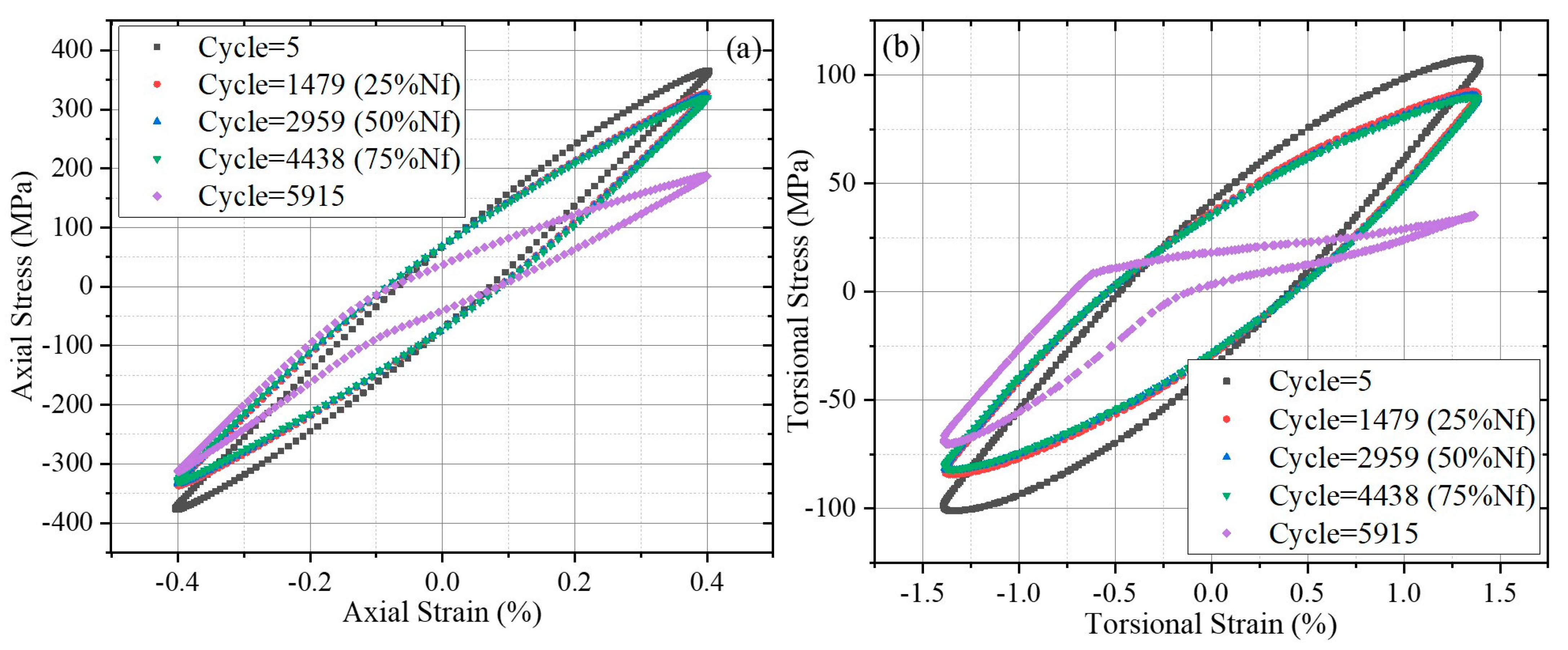
Figure 5 shows the axial and torsional hysteresis loops for AMPMF07 at different stages of the whole lifetime cycle. Axial and torsional hysteresis loops were selected from the 5th-cycle, 25%Nf-cycle, 50%Nf-cycle, 7%Nf-cycle, and 5915th-cycle. Significant softening occurred between the 5th-cycle and 1479th-cycle. The period from the 1479th-cycle to 4438th-cycle exhibited a stable cyclic stage. As for the 5915th-cycle, when final failure occurred, the hysteresis loop showed pronounced distortion. This distortion was primarily localized to the upper half of the loop, while the lower half remained relatively intact.
3.3. Mean Axial and Torsional Stress Response
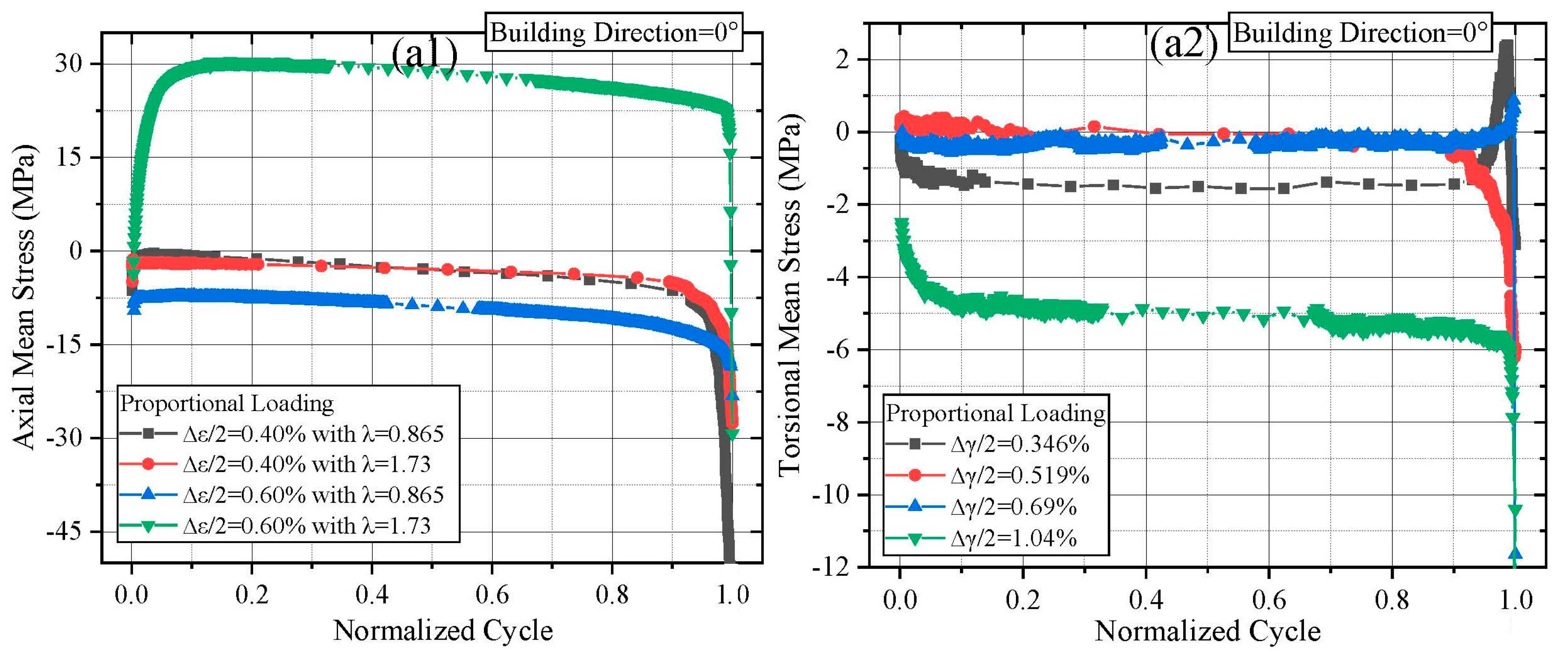
Figure 6 illustrates the axial and torsional mean stress response of L-PBF Ti64 with different building directions and different λ. As shown in
Figure 6(a1,a2), only specimen AMPMF04 (0° building direction) exhibited a pronounced increase in axial mean stress. The mean stress rose rapidly during the initial cycles, stabilized, and then remained relatively constant until final failure. A similar trend was observed in specimen AMPMF08 (12° building direction). Considering the magnitude of the mean stress relative to the magnitude of the stress amplitude, none of the specimens built at 16° and 27° exhibited a significant axial mean stress response. Regarding torsional mean stress, specimens with noticeable mean stress development followed similar patterns as those observed in the axial channel—rapid initial accumulation followed by stabilization until failure.
From the perspective of multiaxial strain ratio, an increase in λ generally suppressed the axial mean stress while amplifying the torsional mean stress. A higher torsional component appeared to mitigate axial tensile–compressive asymmetry more rapidly. This asymmetric behavior is evident from the early rapid increase in mean stress followed by stabilization. This behavior may be attributed to the anisotropic microstructure inherent to L-PBF fabrication, which induces tension–compression asymmetry. However, unlike CM rolled titanium, which often shows continuous mean stress growth, L-PBF Ti64 specimens rapidly reached a steady state in mean stress. This suggests that the tensile–compressive asymmetry in L-PBF Ti64 is, to some extent, self-limiting and more controllable.
4. Macro- and Micro-Characterization and Fracture Behavior of L-PBF Ti64
Following the analysis of the mechanical behavior, this section focuses on the macro- and micro-scale deformation mechanisms of L-PBF Ti64 based on post-failure examinations.
4.1. Crack Propagation Angles of L-PBF Ti64
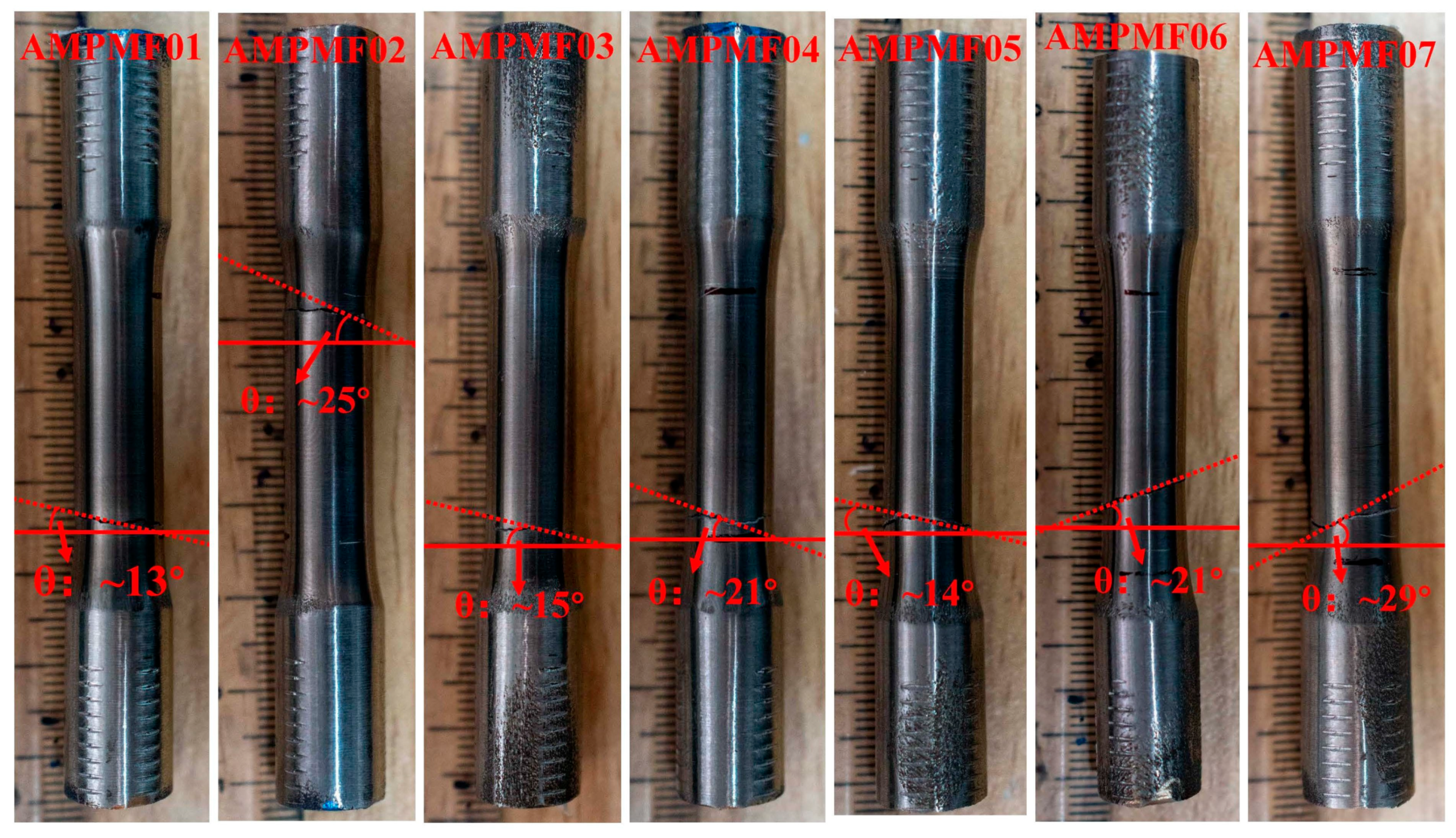
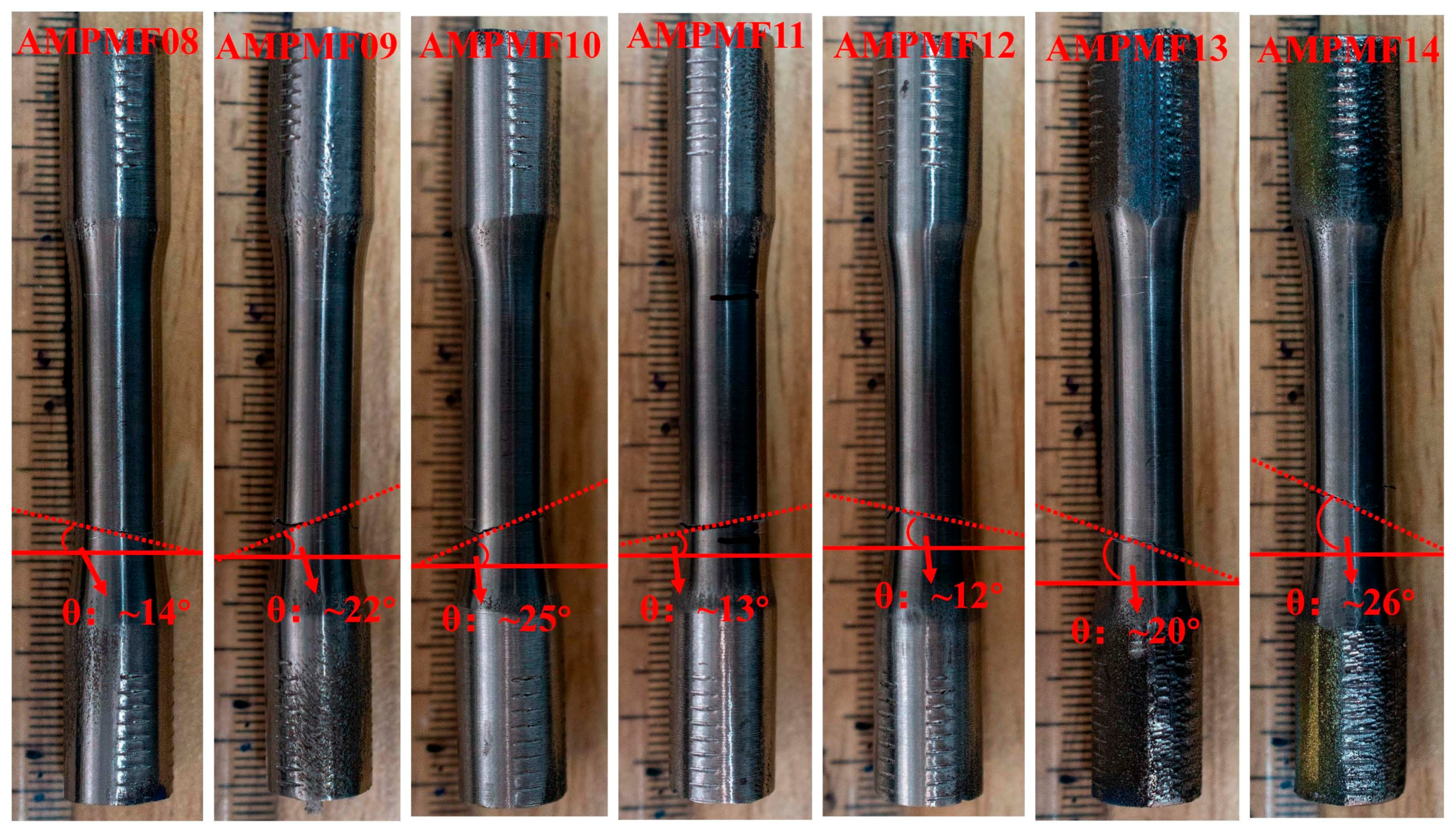
To determine the crack propagation angles after failure, high-resolution images of the crack projection surfaces were captured for each specimen using a 42.4-megapixel SONY Alpha 7RIII camera equipped with a 35 mm F1.8 lens, as presented in
Figure 7.
The angle measurements in
Figure 7 correspond to the identified crack propagation zone. The definition of these zones follows the same criteria used for the critical plane shown in the schematic in
Figure 2. The measured results for each specimen are summarized in
Table 5 and compared against both the experimentally observed fracture plane angles of rolled titanium and the theoretical critical plane angles calculated based on the maximum principal strain criterion.
These results demonstrate that the fracture plane angles in L-PBF Ti64, across all building directions, lie between the angles observed in rolled titanium and the theoretical critical plane angles predicted by the maximum principal strain criterion. This confirms the applicability of the critical plane theory to L-PBF Ti64 under multiaxial loading.
4.2. Fatigue Fracture Mechanism of L-PBF Ti64
To investigate the fatigue crack initiation and propagation behavior of L-PBF Ti64 under MLCF loading with varying multiaxial strain ratios and building directions, fracture surfaces of post-fatigue specimens were examined using a JEOL JSM-7800F field emission gun scanning electron microscope (SEM).
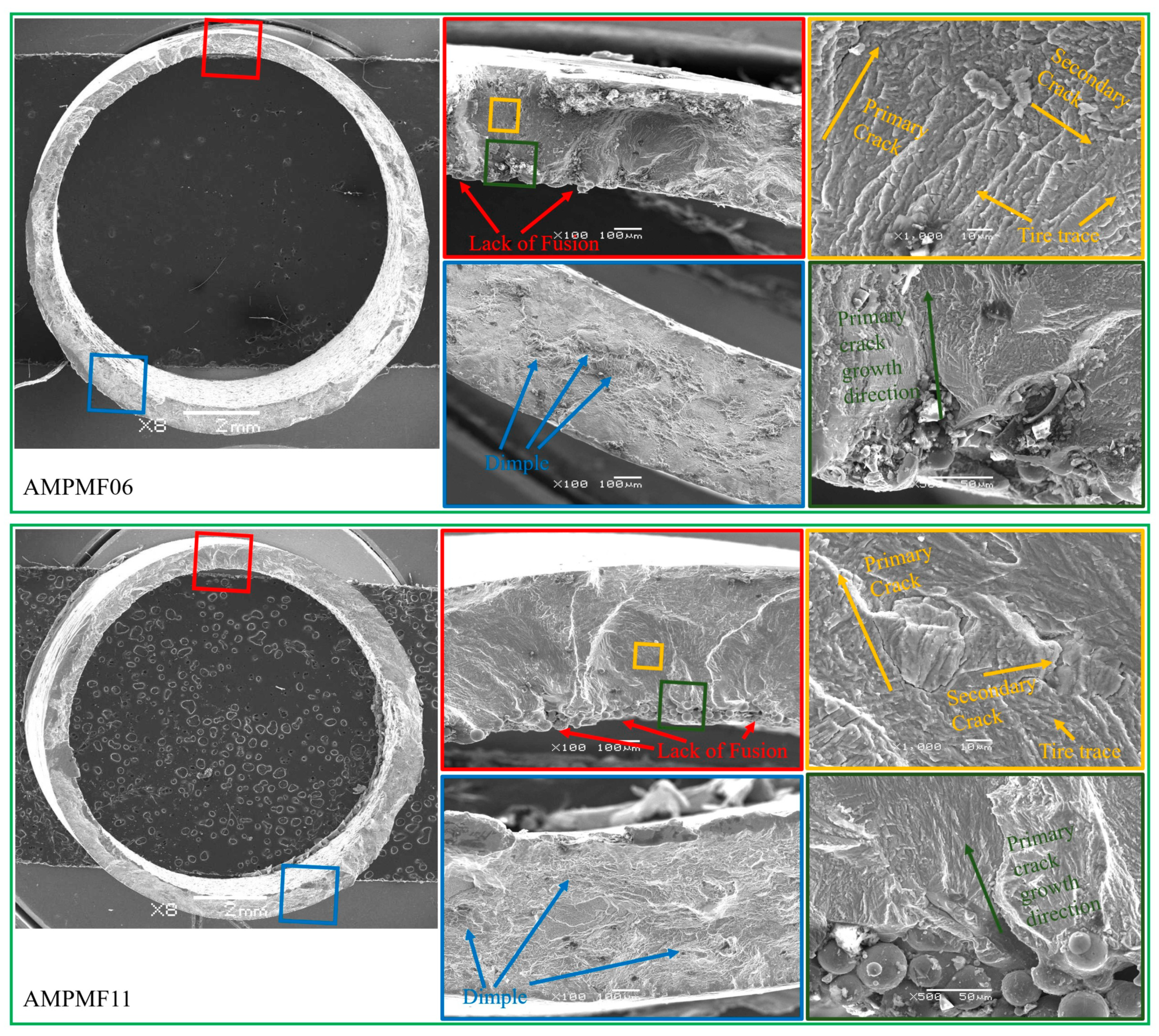
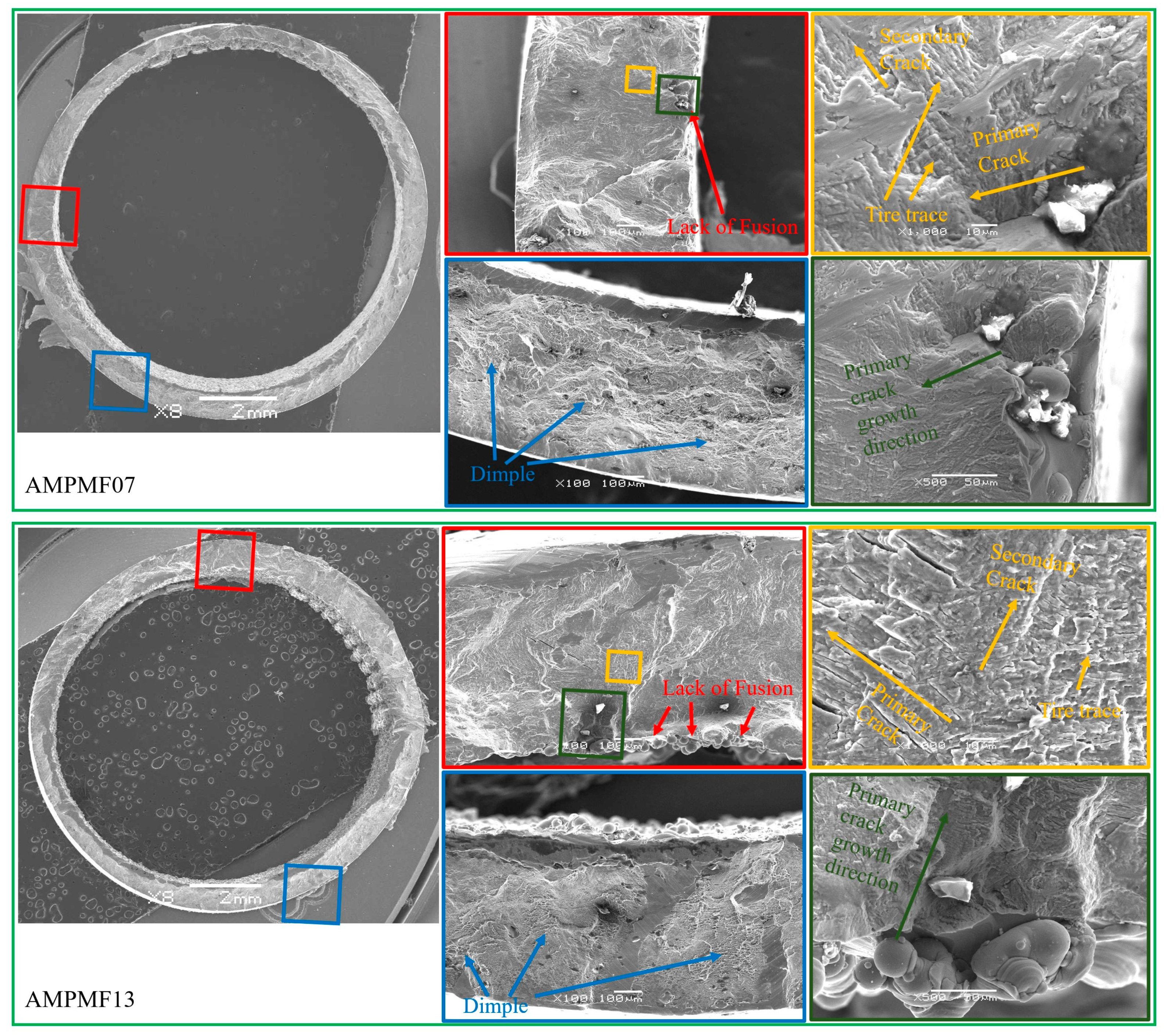
Figure 8 presents the SEM images of the fatigue crack initiation zone, crack propagation zone, and final rupture zone for specimens tested at an axial strain amplitude of 0.4%, covering different multiaxial strain ratios and building directions.
Specimens AMPMF01 and AMPMF02 (0° building direction) exhibit a number of under-fused powder particles along the inner wall surface in the crack propagation zone. Fatigue cracks primarily initiate at the interface between lack-of-fusion (LOF) defects and the surrounding material, which act as inherent crack initiation sites. At 100× magnification, these LOF features are significantly more prevalent on the inner surface than the outer surface. Despite equal machining tolerances on both surfaces, the final surface quality of the inner wall remains inferior, making it more susceptible to crack initiation. Unlike the surface-driven crack propagation observed in rolled titanium, crack initiation from inner surfaces in L-PBF Ti64 represents a more critical failure mode, emphasizing the importance of investigating its multiaxial fatigue failure. At higher magnifications, typical fatigue features such as tearing ridges and river patterns are evident in both the initiation and propagation regions. Compared to AMPMF01, AMPMF02 presents a smoother surface in the crack propagation zone due to a higher multiaxial strain ratio. Significant fatigue striations in multiple directions can be observed in the crack propagation zone after magnification, as shown in the orange box. The primary crack growth direction along the radial direction and the secondary growth direction along the circumferential direction can be observed too. Furthermore, the tire trace formed by the superposition of fatigue striations generated in the two directions can be observed in the fracture morphology of L-PBF Ti64.
Specimens AMPMF05, AMPMF06, and AMPMF07 (12° building direction) demonstrate slightly improved inner-surface quality compared to those with 0° building direction. The overall fracture morphology characterization trend remained consistent, with the crack expansion zone consisting of tearing ridges and river patterns. The same tire trace can be observed in crack propagation zone. However, in the final rupture zone, more dimples can be observed in specimens under the 12° building direction compared to the 0° building direction. As the main microscopic feature of plastic fracture in metals, more dimples represent, to some extent, better plasticity.
Specimen AMPMF11 (16° building direction) exhibits fracture morphology highly comparable to AMPMF05. The pronounced cleavage and quasi-cleavage characteristics are closer to the fracture mechanism of rolled titanium after failure under similar applied multiaxial loading. A large number of dimples in the final rupture zone confirms the ductile nature of the failure. In contrast, specimen AMPMF13 (27° building direction) shows fracture features more akin to those of AMPMF02. The fatigue striation and tire trace in the crack propagation zone became finer and less distinct, suggesting a change in crack growth dynamics. Furthermore, the final rupture zone contains fewer dimples and more featureless regions, suggesting a subtle transition toward brittle fracture behavior, although most plastic characteristics are retained.