1. Introduction
Towards the quest for sustainable energy, the development of polymer solar cells (PSCs) as promissory and potentially low-cost photovoltaic technology has been settled. However, their commercialization remains hindered by their relatively low power conversion efficiencies (PCEs). Such disadvantage is intrinsically linked to the nanoscale morphology of the bulk heterojunction (BHJ) active layer. In ideal BHJs, a bicontinuous, interpenetrating network formed between the donor (D) and acceptor (A) phases is essential for efficient exciton dissociation and transport to the electrodes [
1]. Spontaneous phase separation often occurs in solution-processed polymer blends yielding disordered and kinetically trapped morphologies with isolated domains, tortuous pathways, and charge-trapping sites in detriment of their performance [
2]. Understanding and directing these nonequilibrium processes remains a central challenge in the design of high-performance polymer-based electronic devices.
This challenge has motivated a morphological evolution in BHJ device architectures, particularly towards thicker active layers with enhanced light absorption and stability while demanding more controlled nanoscale organization [
3]. Consequently, the current frontier relies in achieving ordered BHJ morphologies—such as well-defined lamellar, gyroidal, or columnar structures—that provide continuous percolation pathways while maintaining a high D/A interfacial area. A promising route towards such control is the use of single-material organic solar cells (SMOSCs), where donor and acceptor oligomer blocks are covalently linked to form a single block copolymer. This approach inherently stabilizes the D/A interface and can direct self-assembly into thermodynamically favored, nanostructured morphologies, as demonstrated by systems like P3HT-PFTBT, which have shown significantly enhanced performance over their blend counterparts [
1].
Despite the promise of SMOSCs, the fundamental relationship between molecular-scale parameters (i.e., chemical affinity, chain flexibility, and processing conditions) and the emergence of optimal, percolating nanoscale networks remains poorly quantified. The final morphology results of a complex fluid dynamic process during solvent evaporation or thermal annealing, where phase separation, interfacial evolution, and network formation occur simultaneously. Here lies the critical knowledge gap: the lack of a predictive, mesoscale framework bridging molecular design (e.g., Flory–Huggins parameter χ and chain rigidity) and fluid-driven assembly of functionally critical percolating architectures.
To address this gap, our work presents a computational framework that integrates mesoscale fluid dynamics, percolation theory, and molecular design principles. We employ dissipative particle dynamics (DPD), a particle-based mesoscopic simulation method uniquely suited for this task [
4,
5]. Unlike purely Lagrangian hydrodynamic methods (e.g., Smoothed Particle Hydrodynamics (SPH)), DPD is based on statistical mechanics, incorporating thermal fluctuations and hydrodynamic interactions through the fluctuation-dissipation theorem. This framework is particularly suitable for simulating the thermodynamics and kinetics of complex polymeric fluids, where microphase separation and self-assembly are governed by effective interactions (
χ parameter) and chain dynamics.
In this work, we apply this integrated approach to investigate the fluid-like evolution and morphological pathways in model BHJ-OSC systems based on poly(-3-hexylthiophene-2,5-diyl) (P3HT), as the donor, paired with two distinct non-fullerene derivatives acceptors: poly(N′-1-heptyloctilamido-N-dodecilenylperylenedibcarboxydiimide ester acrylate) abbreviated as PPerAcr and poly((9,9-dioctylfluorene)-2,7-diyl-alt-[4,7-bis(thiophen-5-yl)-2,1,3-benzothiadiazole]-2′,2″-diyl) abbreviated as PFTBT. We analyzed systematically how key thermodynamic and hydrodynamic parameters —namely, the effective interaction parameter (χDA, modulated by temperature) and polymer chain flexibility— govern the dynamic self-assembly process, the resulting interfacial structure, and, crucially, the onset and universality class of percolation in the forming networks.
Our results reveal how these parameters dictate a transition between distinct percolation regimes [
6], capturing the fundamental fluidic behavior and universal scaling near the critical percolation threshold (
χc), where infinite D/A clusters emerge [
7,
8]. The critical exponent
β exposes distinct universality classes near the percolation threshold dictated by system structure and flexibility ranging from mean field to 1D systems. To the best of our knowledge, this is the first time that a rational design for engineering optimal charge-transport pathways based on parameter-morphology landscape mapping is proposed. This study provides a fundamental fluidic-dynamic perspective on the morphology control problem in organic photovoltaics, offering a predictive tool to accelerate the development of high-efficiency, single-material organic solar cells.
2. Materials and Methods
DPD simulations were carried out in self-made code. Snapshots were created from data using visual molecular dynamics VMD 2.0 software [
9]. Figure plots were created using Origin Version 2026 (Academic) software OriginLab Co., Northampton, MA, USA.
The numerical modeling of soft condensed matter systems and complex fluids at the mesoscopic level requires methods that preserve the fundamental physics of the systems while remaining cost-effective and computationally efficient. In this study, dissipative particle dynamics (DPD) [
4,
5] was chosen as the optimal method for investigating the equilibrium morphology and conformational properties of donor–acceptor (D/A) systems. As we mention in
Section 1, the choice of DPD over other particle dynamics techniques, because of its unique ability to simulate the thermodynamics and dynamics of complex fluids at time and length scales relevant for analyzing polymer self-assembly [
10,
11,
12]. In DPD, the system dynamics follow Newton’s second law, where the total force
Fi acting on each particle
i is the sum of three pairwise additive components:
These forces are short-range and act within a cutoff radius rc = 1, which defines the natural length scale in DPD.
Conservative Force
FijC: Represents the smooth repulsive interaction between the beads and encapsulates the chemical nature of the system. It is defined as:
where
aij represents the interaction between
i and
j beads. For a system density of
ρ = 3 beads per
rc3,
aii is calculated as [
4]:
where κ ≈ 16 is the water compressibility and α = 0.101 is a dimensionless parameter that arises from the equation of state of the DPD fluid. It represents the integrated contribution of the conservative force to the pressure and has been determined through rigorous statistical mechanical calculations and validated by numerous DPD studies in the literature [
4,
5].
Nm is the coarse-graining degree, and it was chosen as
Nm = 9 because this choice represents a balanced compromise: it provides sufficient coarse-graining to observe mesoscale self-assembly and percolation phenomena while preserving the essential volumetric and thermodynamic characteristics of the P3HT-based donor–acceptor systems.
R is the gas constant, and
T is the temperature. This parameter is fundamental, as it carries the thermodynamic information of the system (temperature, pressure and composition [
10] and, for interactions between different species (
ij), is directly related to the Flory–Huggins interaction parameter
aij:
The
χij parameter exhibits temperature dependence, and in most cases, there is linear correlation between
χ value and reciprocal temperature:
These
χ values can be used to predict whether the two polymers will mix in the blend by comparing it with the critical
χ value,
χc:
where
MD and
MA are the number of repeating units for the donor and acceptor polymers.
Dissipative
FijD and Random
FijR forces: These forces act together as a Galilean-invariant thermostat. They are coupled through the fluctuation-dissipation theorem, a distinctive and essential feature of DPD that guarantees that the system remains in a canonical ensemble (NVT) at a constant temperature [
5], differentiating it from simpler thermostat schemes used in other methods.
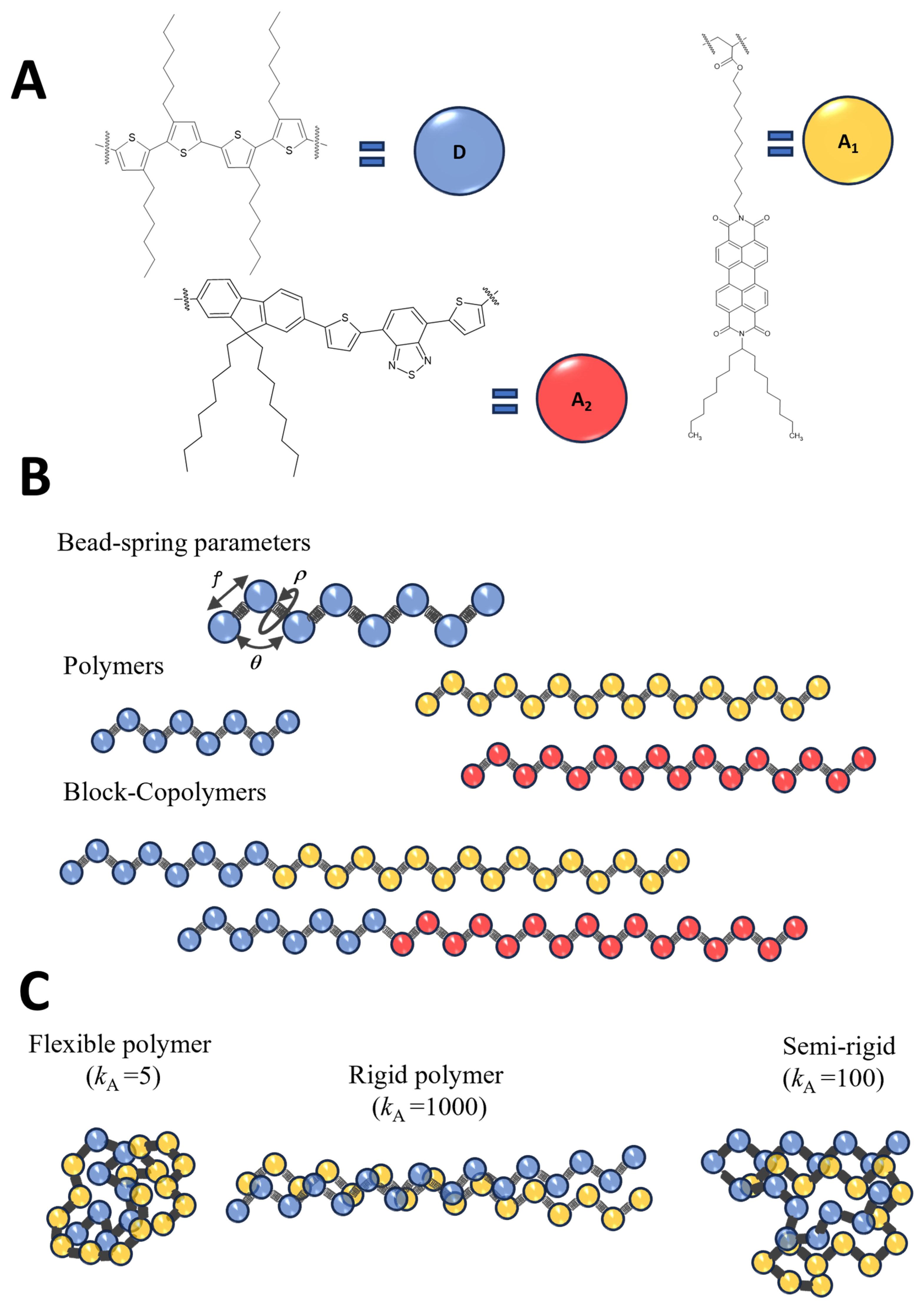
Monomers, linear D/A block homopolymers and copolymers were modeled as bead-spring chains, as shown in
Figure 1.
Connectivity and Flexibility: To maintain chain integrity and control its stiffness, two internal potentials were implemented:
A harmonic spring potential between consecutive beads (Kremer–Grest model [
13]) for connectivity:
- 2.
A three-body angular potential between triplets of consecutive beads to explicitly control flexibility via kA constant.
Monomers, linear homopolymers and copolymers of donor (D) and acceptor (A) molecules were constructed by mapping monomeric units of D = P3HT and A
1 = PPerAcr and A
2 = PFTBT to DPD beads as is shown in
Figure 1, using a coarse-graining
Nc = 9 considering the molecular volume of each component. Simulations with
N = 15,000 beads in total were performed using our own developed code within a cubic cell of dimensions
L = 17
rc,
V = 4913
rc3, with a density of
ρ = 3. For the case of the monomers system a 50:50 mixture was modeled and for the homopolymer blends a 50:50 mixture of the donor homopolymer (P3HT) with a polymerization degree
ND = 8 and the acceptor homopolymers (PPerAcr and PFTBT)
NA = 16 were constructed. For the copolymer only one macromolecule was modeled with
Mn = 15,000 DPD beads using alternate blocks of
ND = 8 and
NA = 16 (see
Figure 1). Periodical conditions were settled for every case. Systems were simulated without explicit solvent using a time step of Δ
t = 0.05 DPD units for 150,000 steps, ensuring adequate equilibration. Using Equations (3)–(5) the
aDA repulsive DPD parameters were calculated with
υ = 2086.2 and
ω = −2.7842 for P3HT-PPer and
υ = 5373.3 and
ω = −12 for P3HT-PFTBT according to references [
14], where P3HT molecule with 40 (3-hexylthiophene) and PPerAcr with 40 repeat units were used to obtain the linear dependence of
χ vs.
T via molecular dynamics (MD) simulations. For the pair D/A and P3HT/PFTBT according with Garcia et al. [
15] 20/10 repeat units respectively were used and all mixture cells contained 49 wt% P3HT and 51 wt% PFTBT to perform the MD simulations.
Table 1 presents the parameters used for each system.
To quantitatively characterize the connectivity of the donor and acceptor phases, we employed percolation theory. In this framework, as the system undergoes phase separation, a critical threshold
χc (or its corresponding temperature
Tc) marks the point where a spanning cluster of D or A first appears, connecting opposite sides of the simulation box. Near this percolation threshold, the probability P(
χ) that a randomly chosen bead belongs to the infinite percolating cluster scales as a power law: P(
χ)∼(
χ −
χc)
β for
χ >
χc. The critical exponent
β is a universal quantity whose value depends solely on the dimensionality and symmetry of the system, not on microscopic details. For instance, in mean field theory
β ≈ 1.0, while in three-dimensional (3D) systems
β ≈ 0.41, and in two-dimensional (2D) systems
β ≈ 0.14 [
6,
7,
8]. By calculating
β from our simulation data via finite-size scaling analysis, we can identify the universality class of the percolation transition, thereby gaining insight into the effective dimensionality of the charge transport pathways—whether they form bulk 3D networks, quasi-2D layers, or quasi-1D filaments. This analysis thus provides a direct link between molecular parameters (interaction strength and chain flexibility) and the emergent morphology relevant for device performance.
4. Discussion
The percolation behavior of donor–acceptor systems exhibits a strong dependence on molecular architecture, chain flexibility, and thermodynamic conditions. Here, we provide a systematic comparison across the three systems studied: monomeric mixtures, homopolymer blends, and block copolymers.
4.1. General Discussion for Monomers
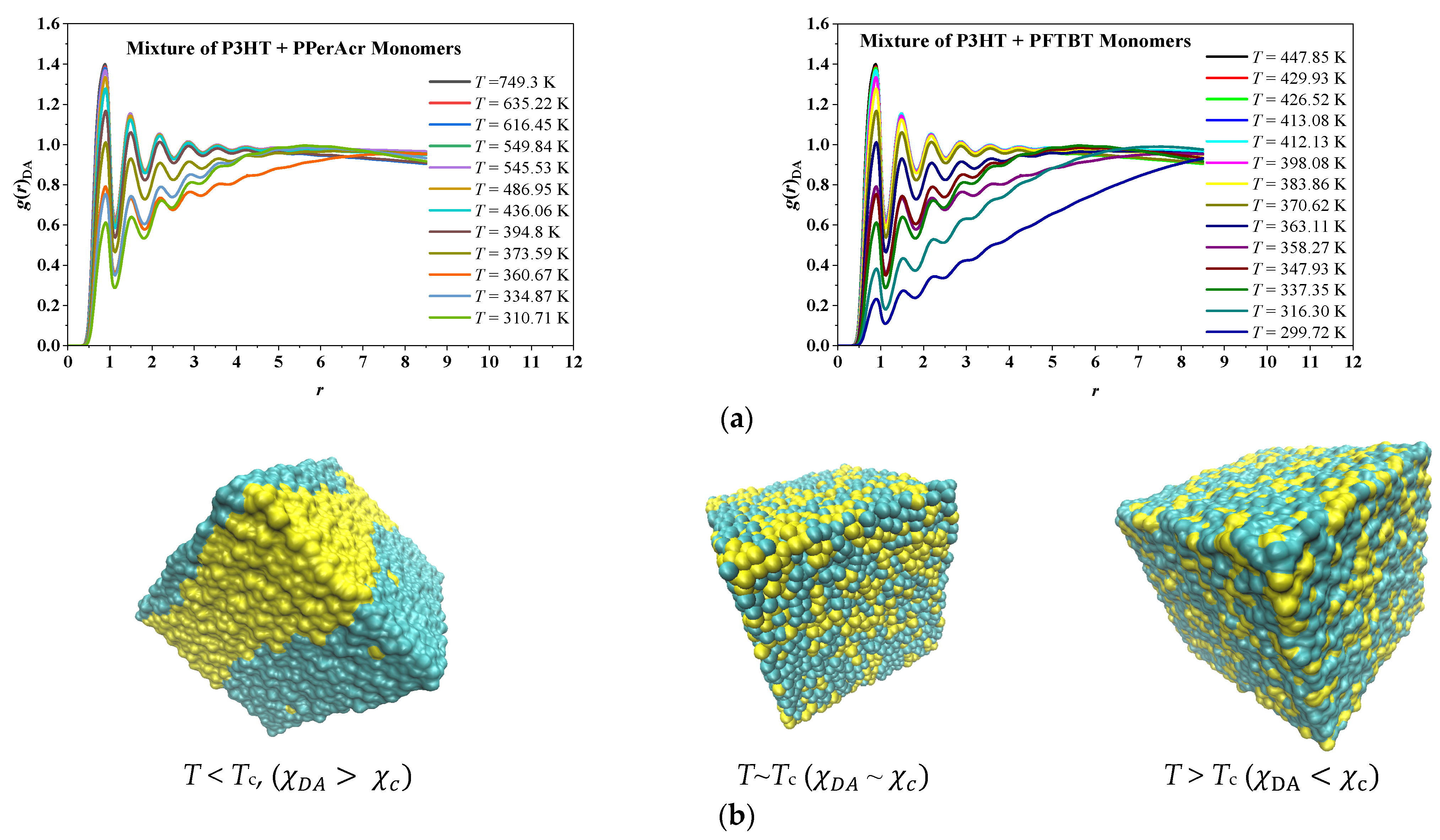
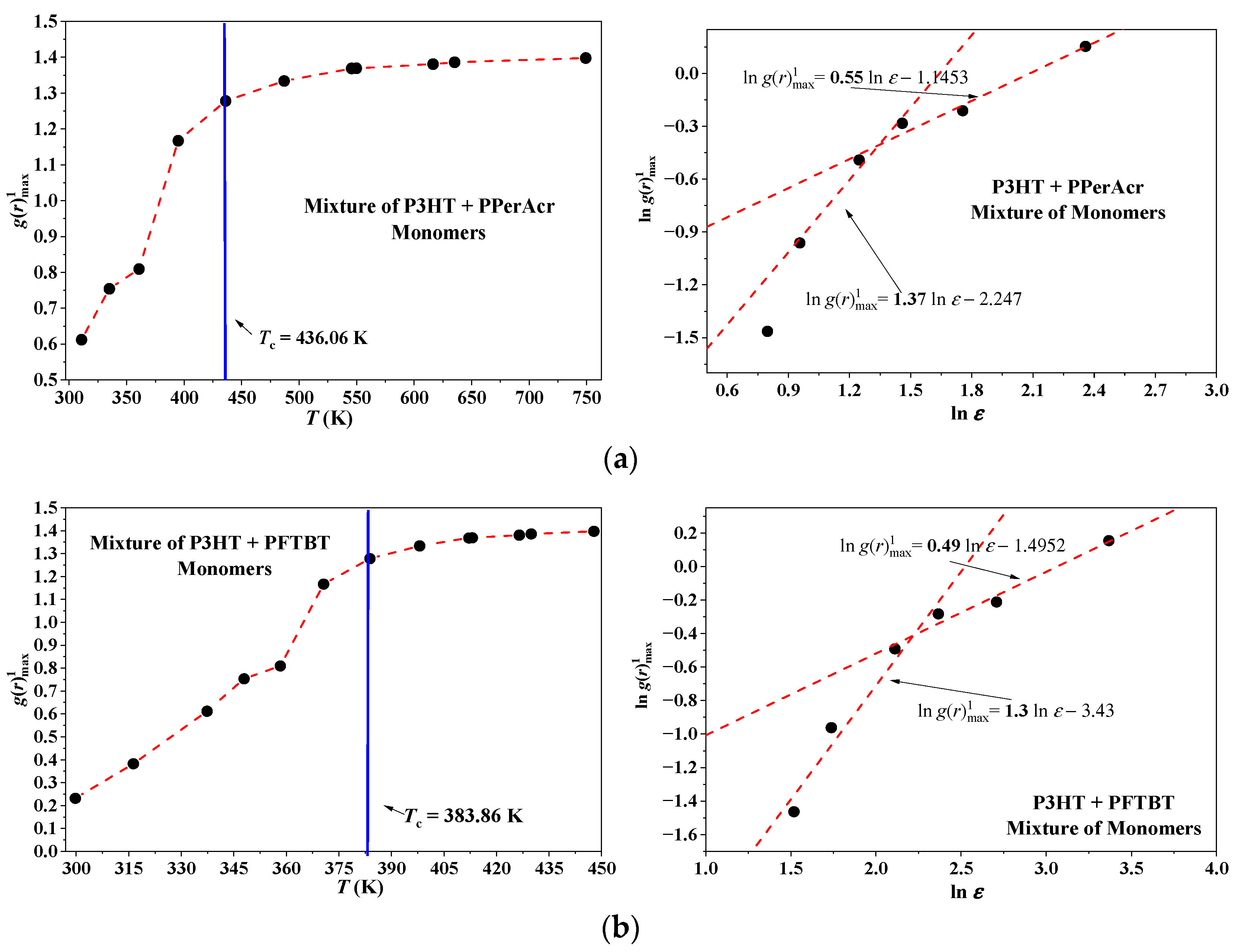
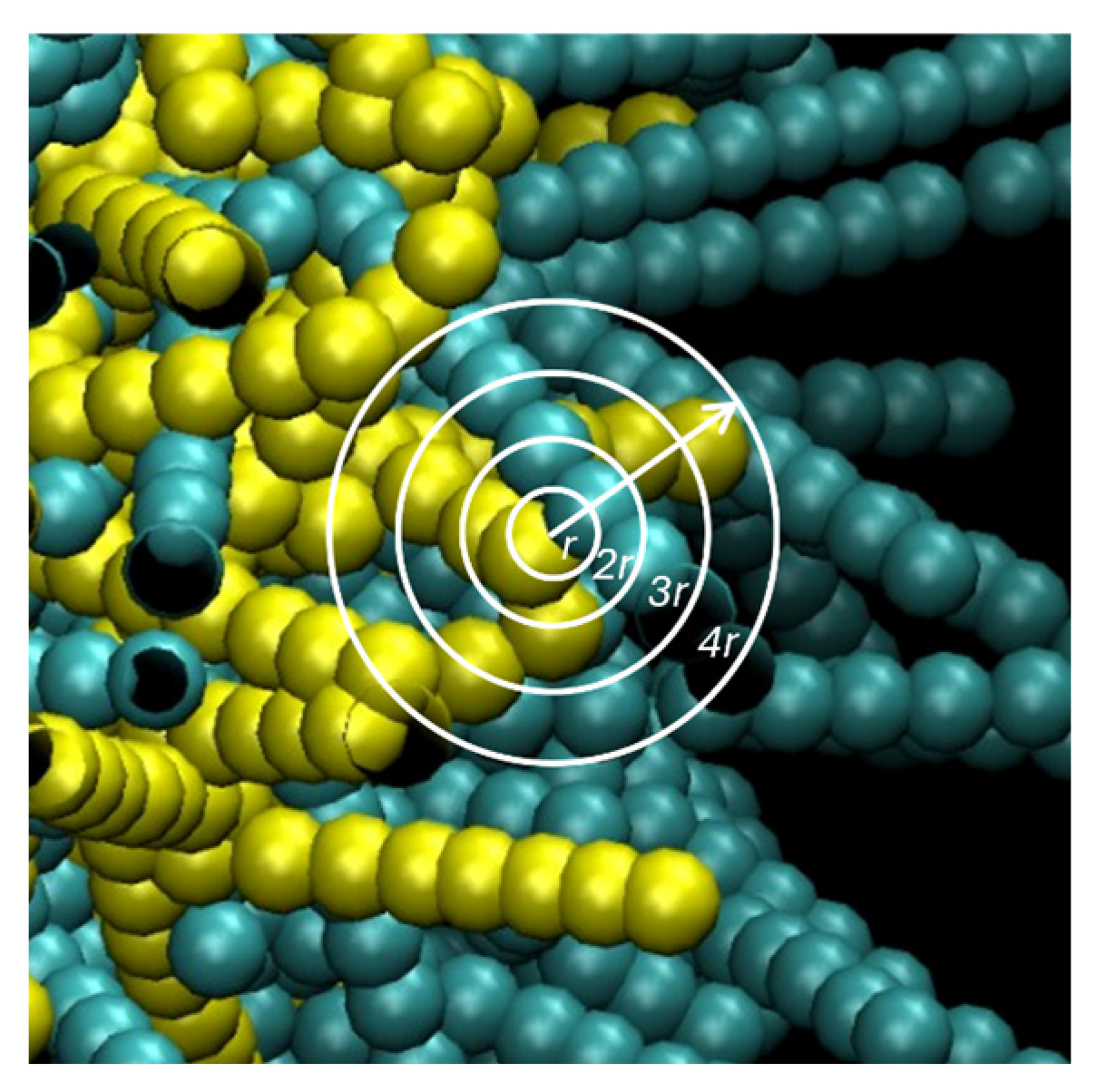
Monomeric mixtures represent the limiting case where translational degrees of freedom are fully available, unconstrained by covalent bonds. Near the critical temperature (), these systems exhibit a 3D percolation universality class with critical exponents for P3HT-PPerAcr and for P3HT-PFTBT, in good agreement with the theoretical value for 3D percolation (). This behavior arises from the ability of monomers to freely diffuse and reorganize, allowing the system to reach the thermodynamically favored bicontinuous network. Below (), the system enters a mean field regime ( and 1.30), characterized by diffuse interfaces and broad, fluctuating phase boundaries. The maximum D/A pair correlation, , is the highest among all systems studied, indicating optimal interfacial area when unconstrained by chain connectivity. Monomeric systems thus provide the ideal reference for maximum D/A mixing and 3D network formation.
4.2. General Discussion for Polymer Blends
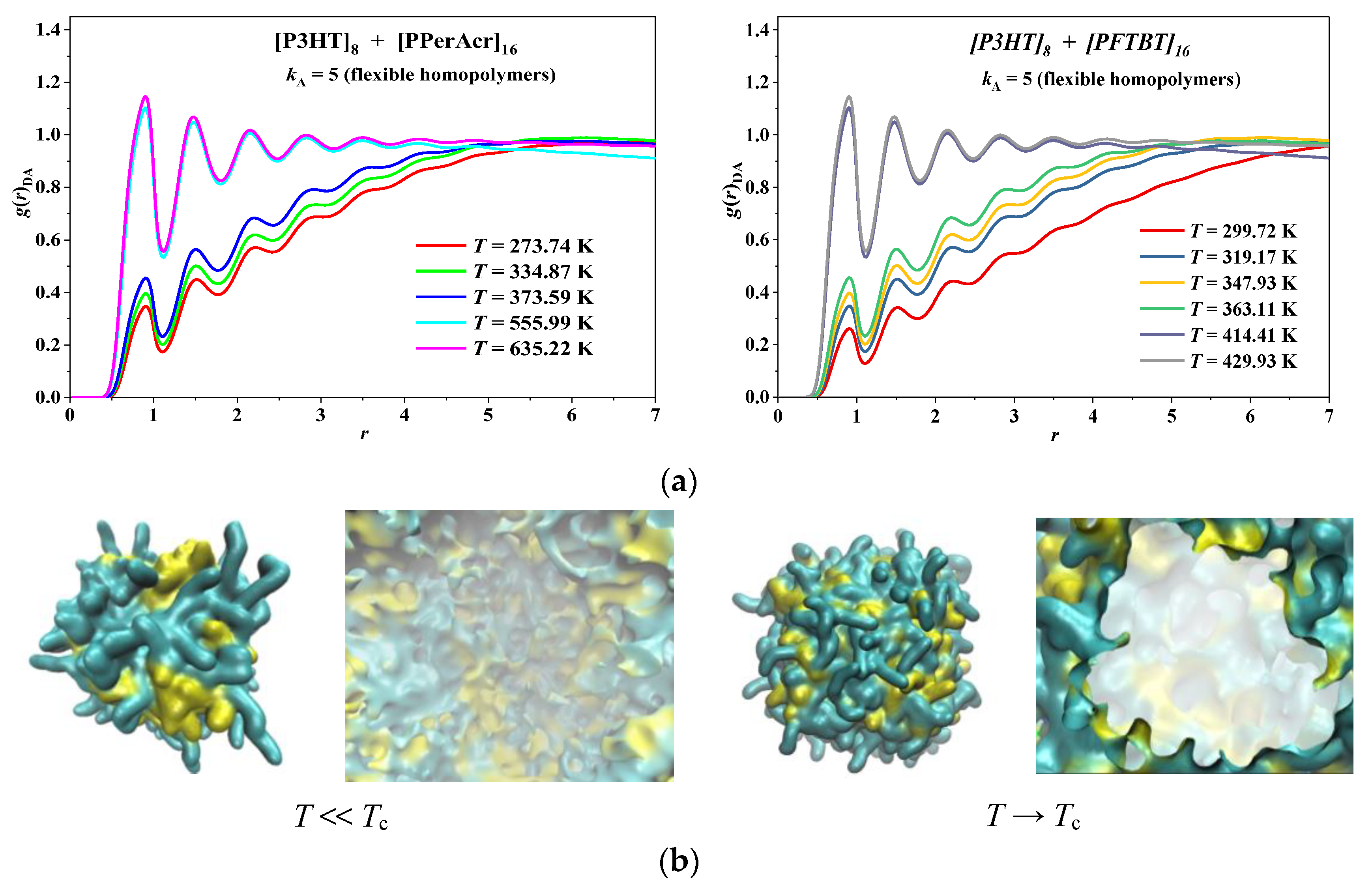
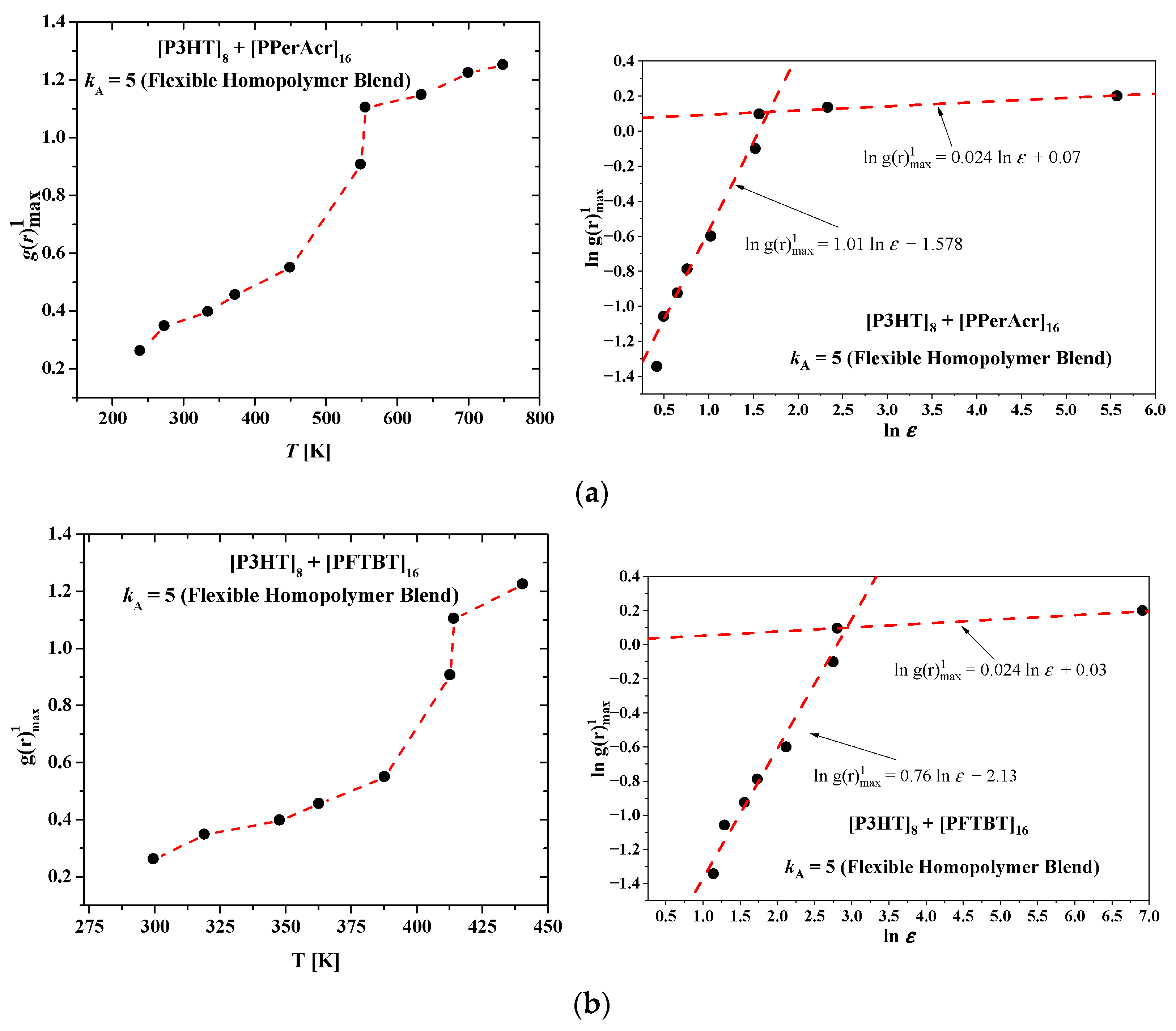
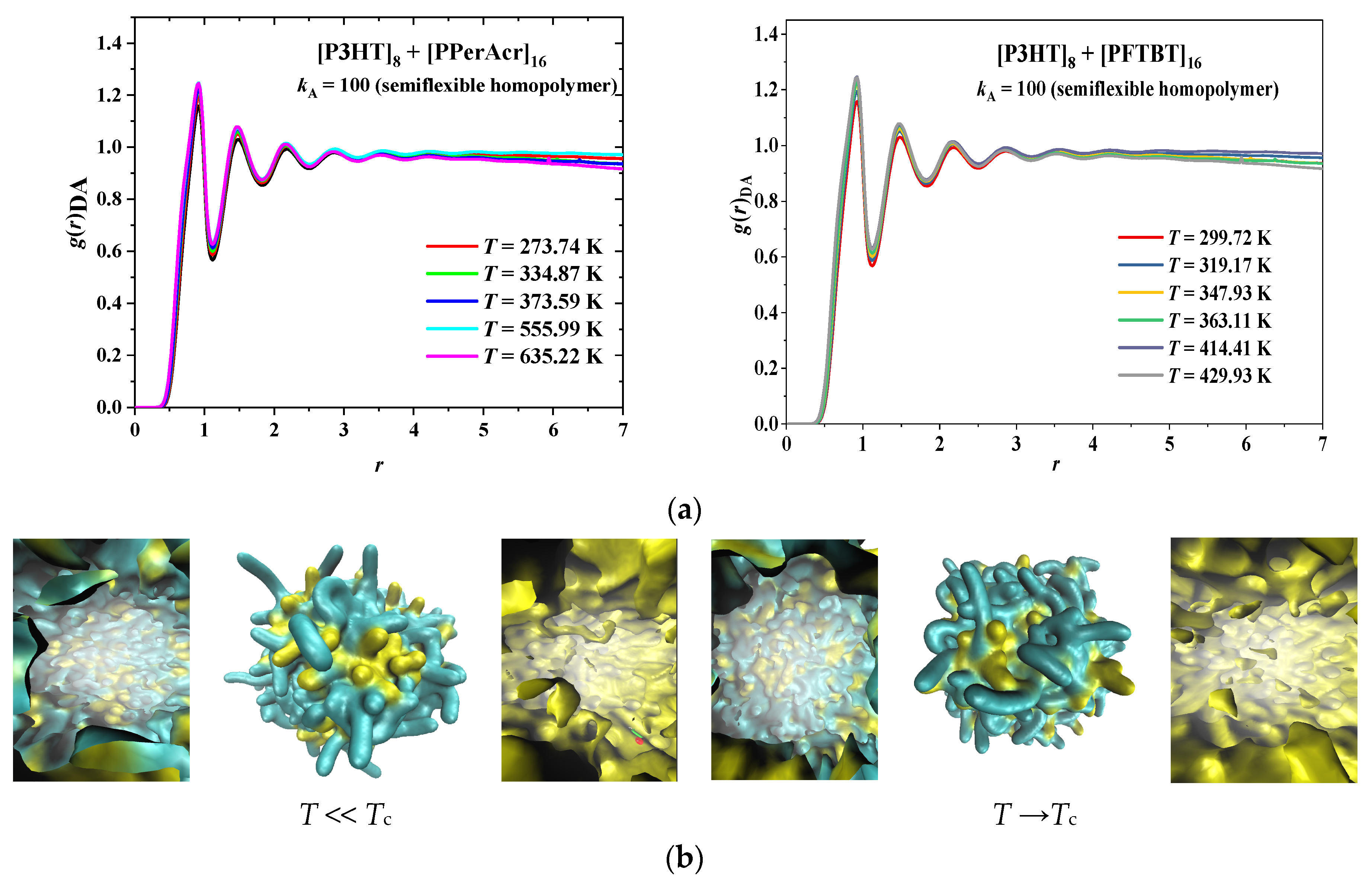
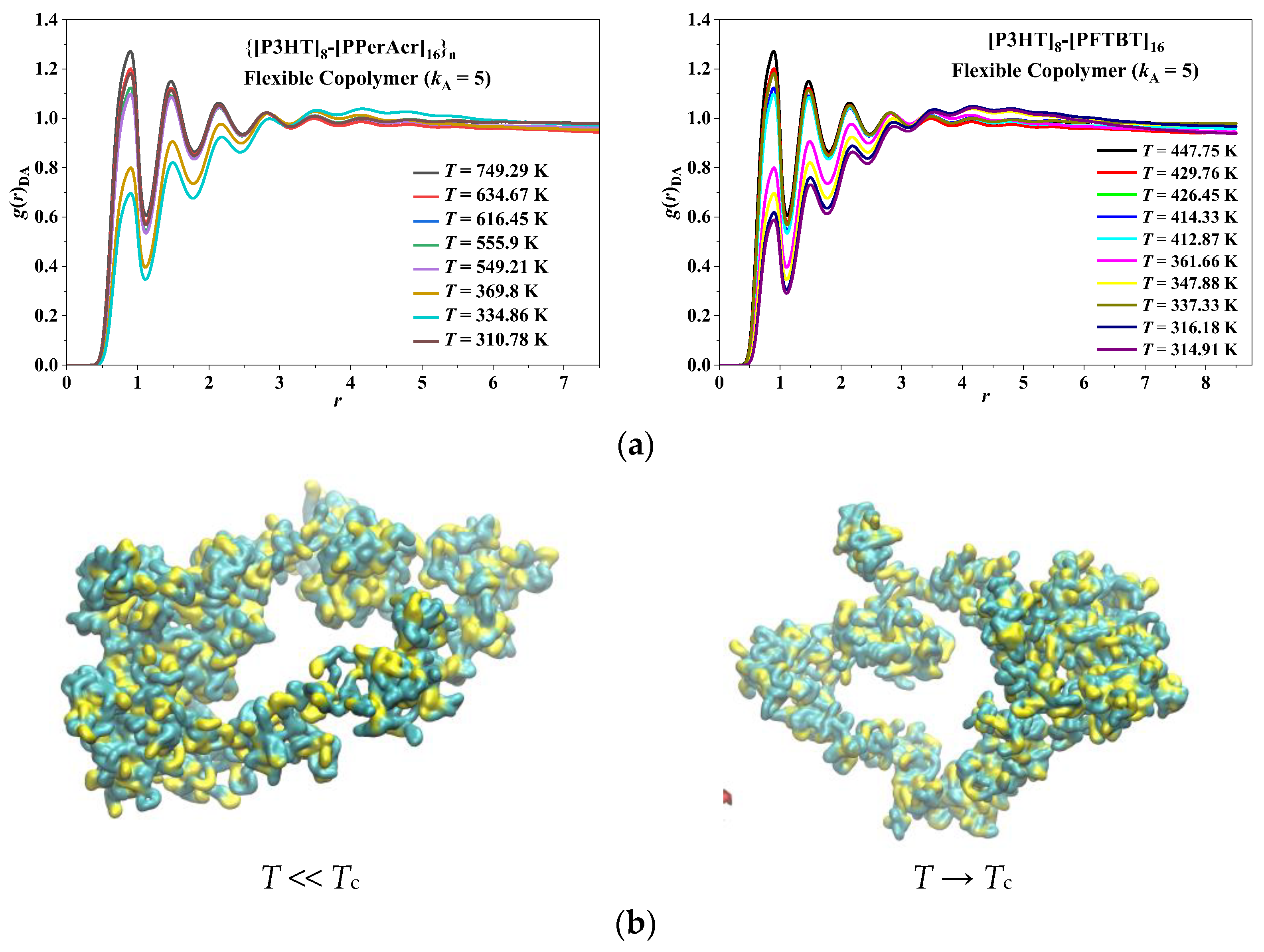
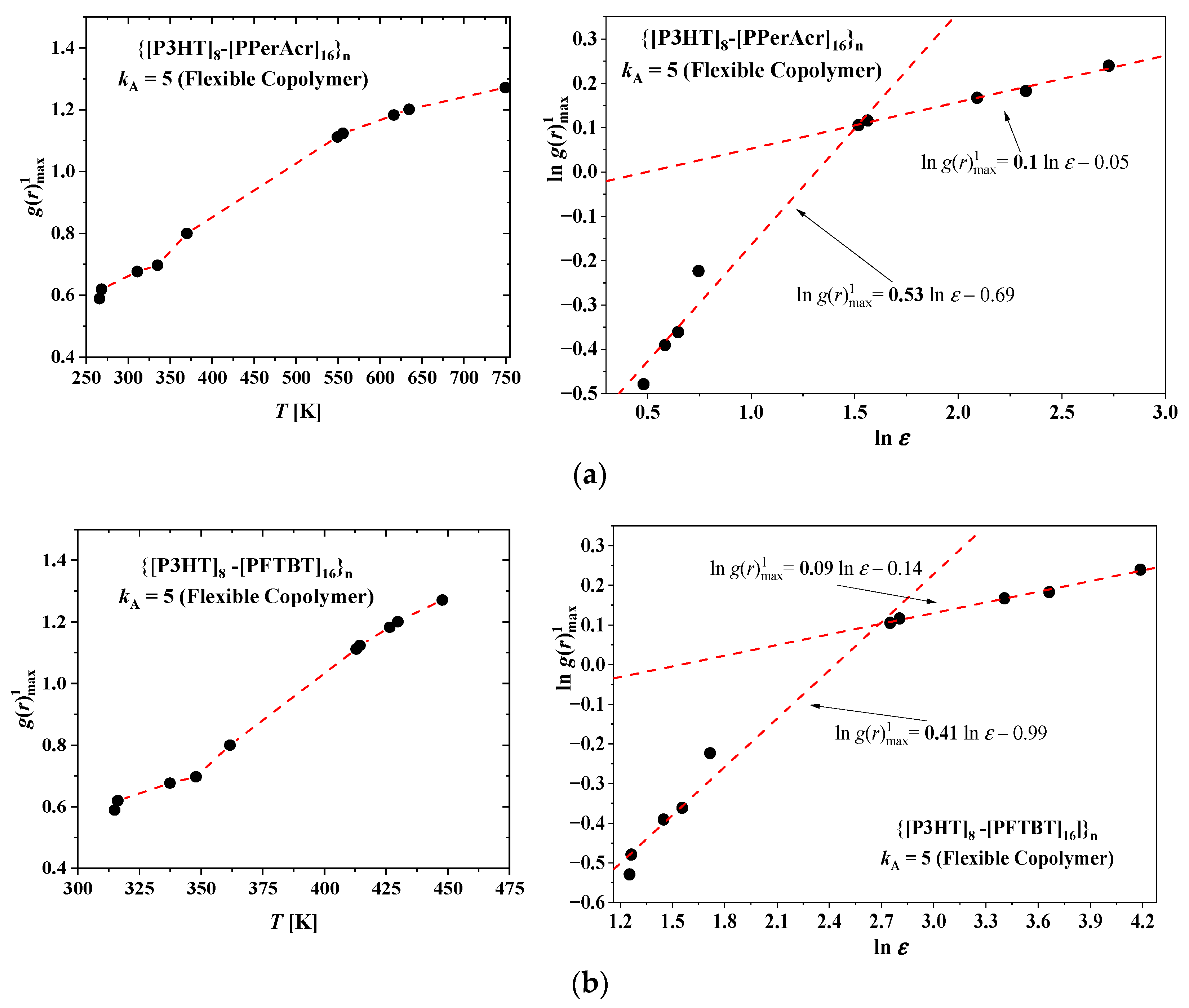
For these polymer mixtures, the final morphology arises from a cooperative effect between the enthalpic contribution, given by χDA, and the entropic contribution associated with the conformational flexibility. In flexible polymer systems, the high conformational freedom facilitates chain rearrangement, increasing the miscibility. At temperatures far below the critical point T << Tc, miscibility is low and microdomain formation occurs. The resulting interface interpreted as the immediate neighbor correlation (g(r)1max) is diffuse and the corresponding scaling exponent confirms a mean field percolation morphology. As temperature approaches to the critical temperature (T → Tc) both miscibility and the immediate neighbor correlations increase (evidenced by the increase in g(r)1max value), leading to a quasi-one-dimensional percolation morphology. Nevertheless, the g(r)1max values and the oscillatory behavior of g(r) remain significantly lower than the monomer system due to the covalent bond through the polymer chain restraining the free translational motion of individual monomers along the system.
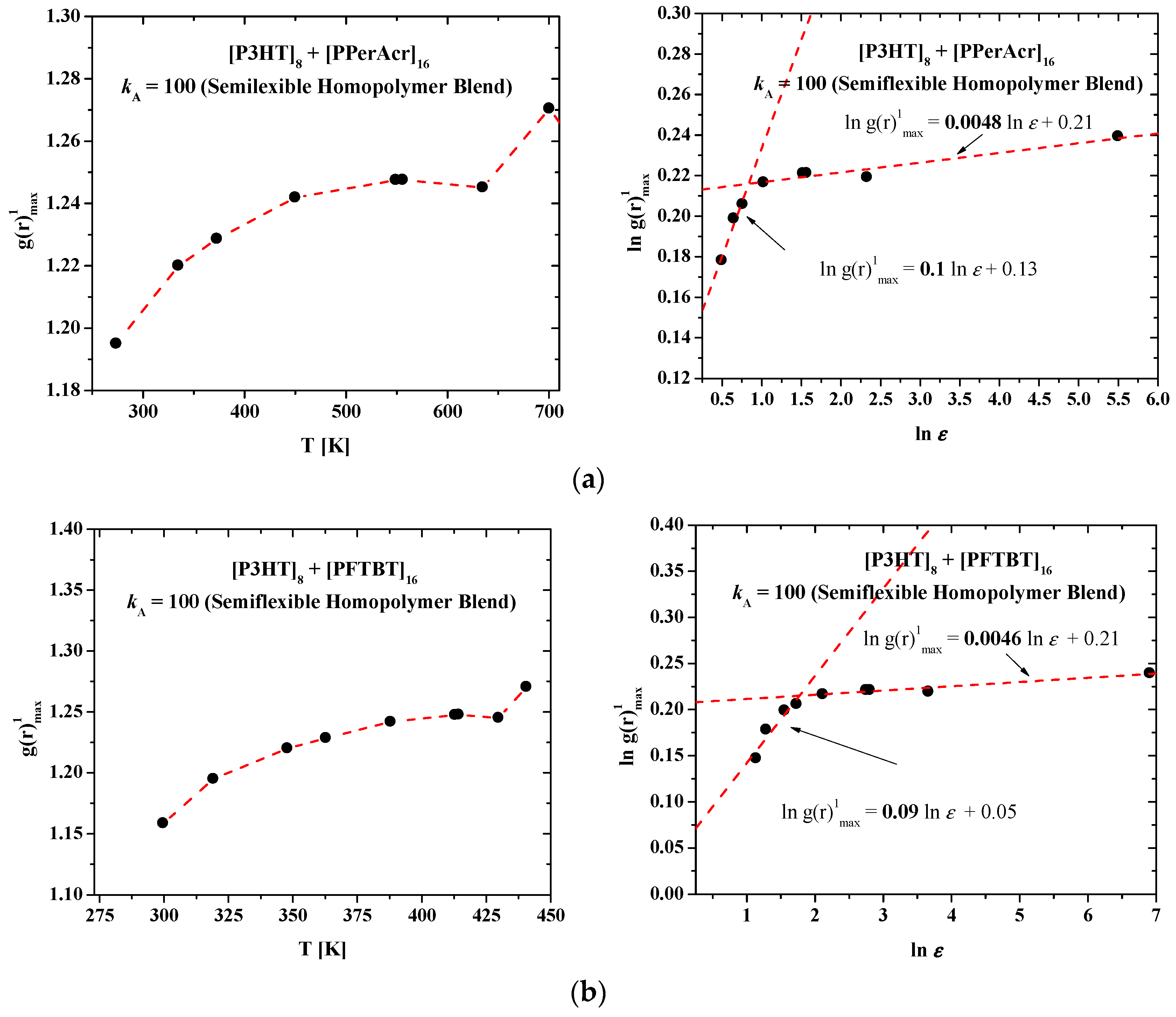
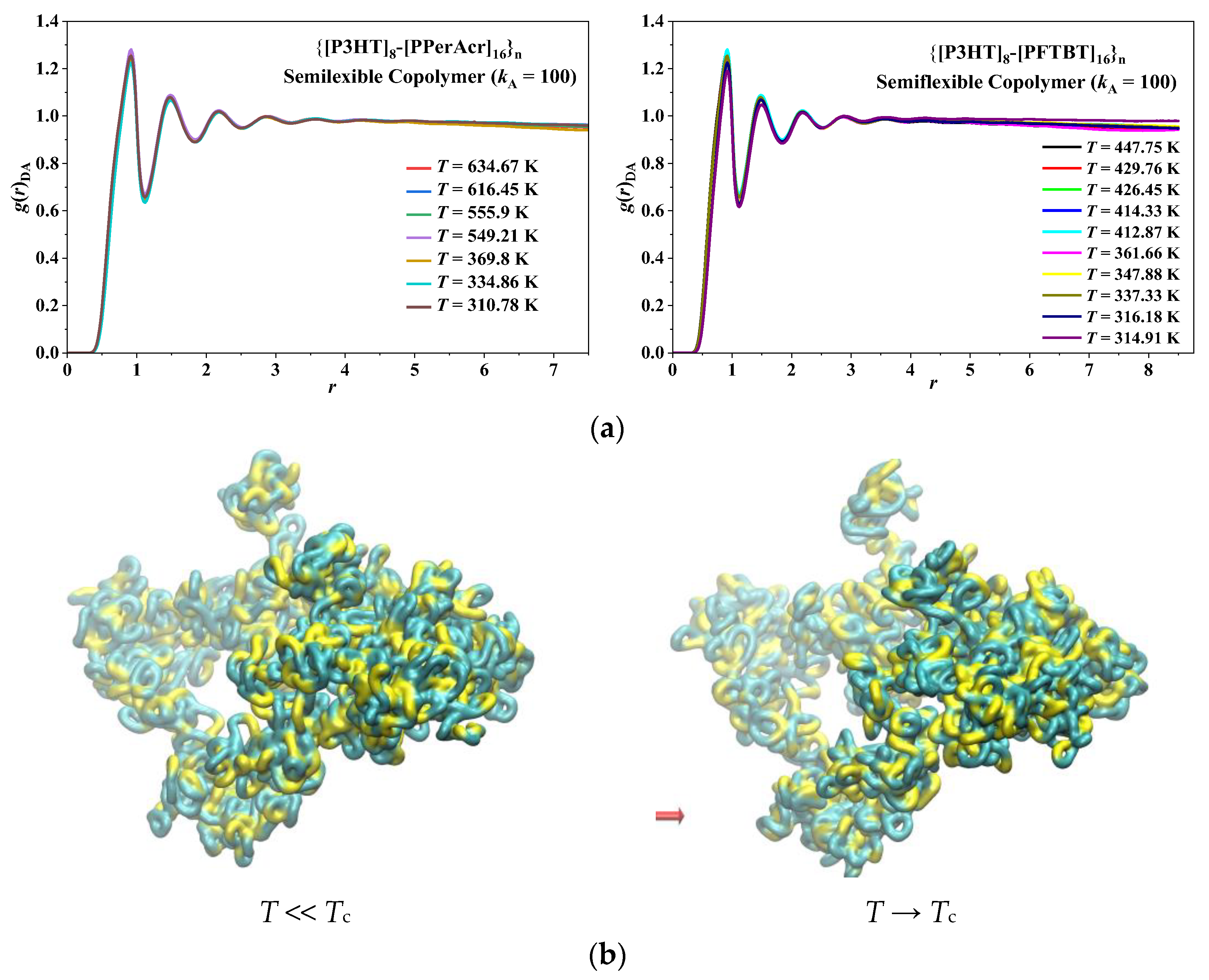
In semi-flexible polymers, the interplay between enthalpic and entropic contributions allows more intricate morphologies. At T << Tc the low miscibility that leads to trapped states where the immediate D/A correlation is high, giving rise to a predominantly bidimensional morphology. As T → Tc, the percolation system of the polymer mixture undergoes quasi-one-dimensional, observing the highest g(r)1max value of all the polymer systems driven by increased miscibility. Moreover, the presence of correlation peaks at larger radii indicates a well correlated system, while subtle variations in peak sharpness and width reveal that chain conformations remain nearly unchanged. This behavior is consistent with a locally ordered structure imposed by the conformational restriction of its semi-flexible chains.
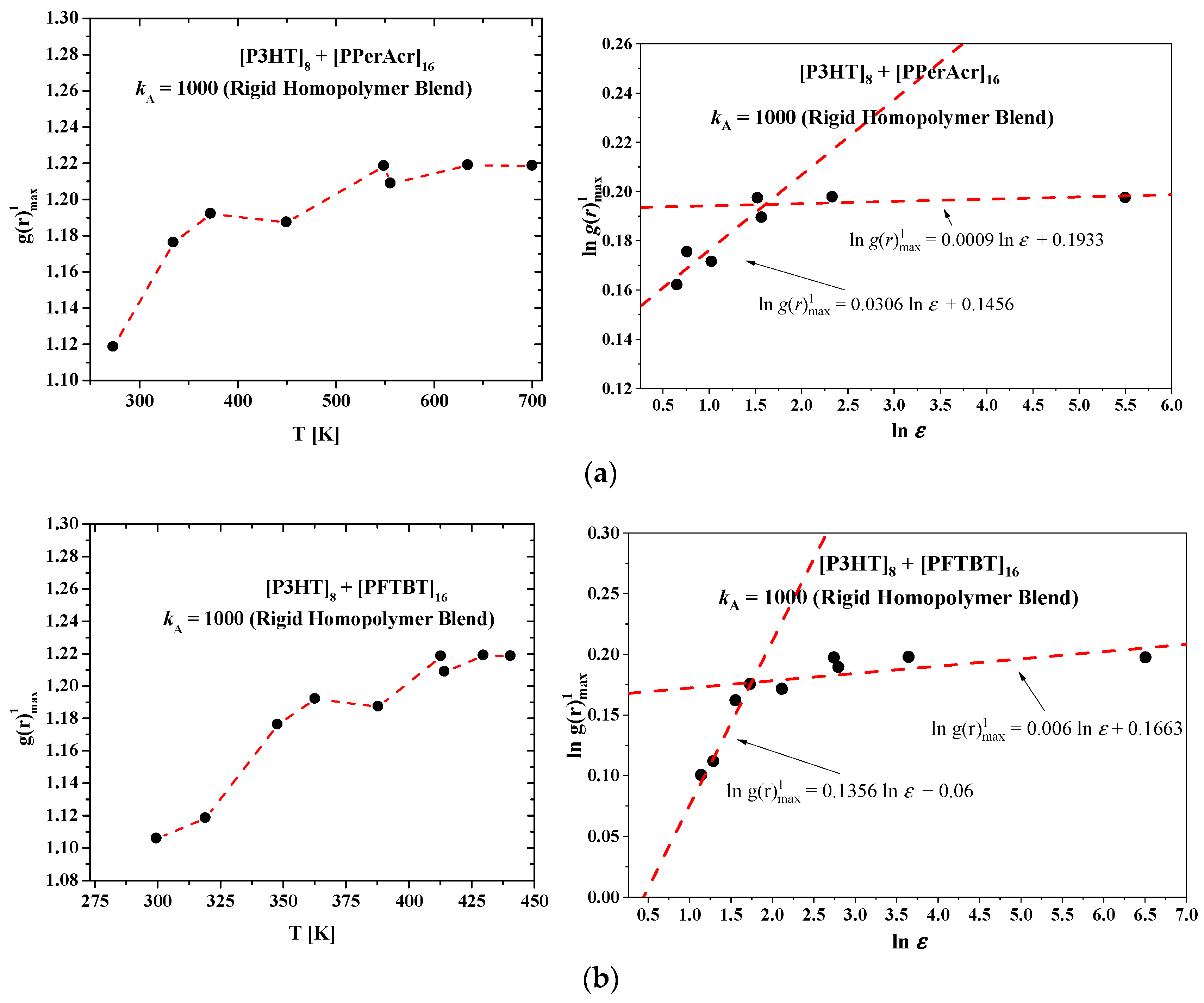
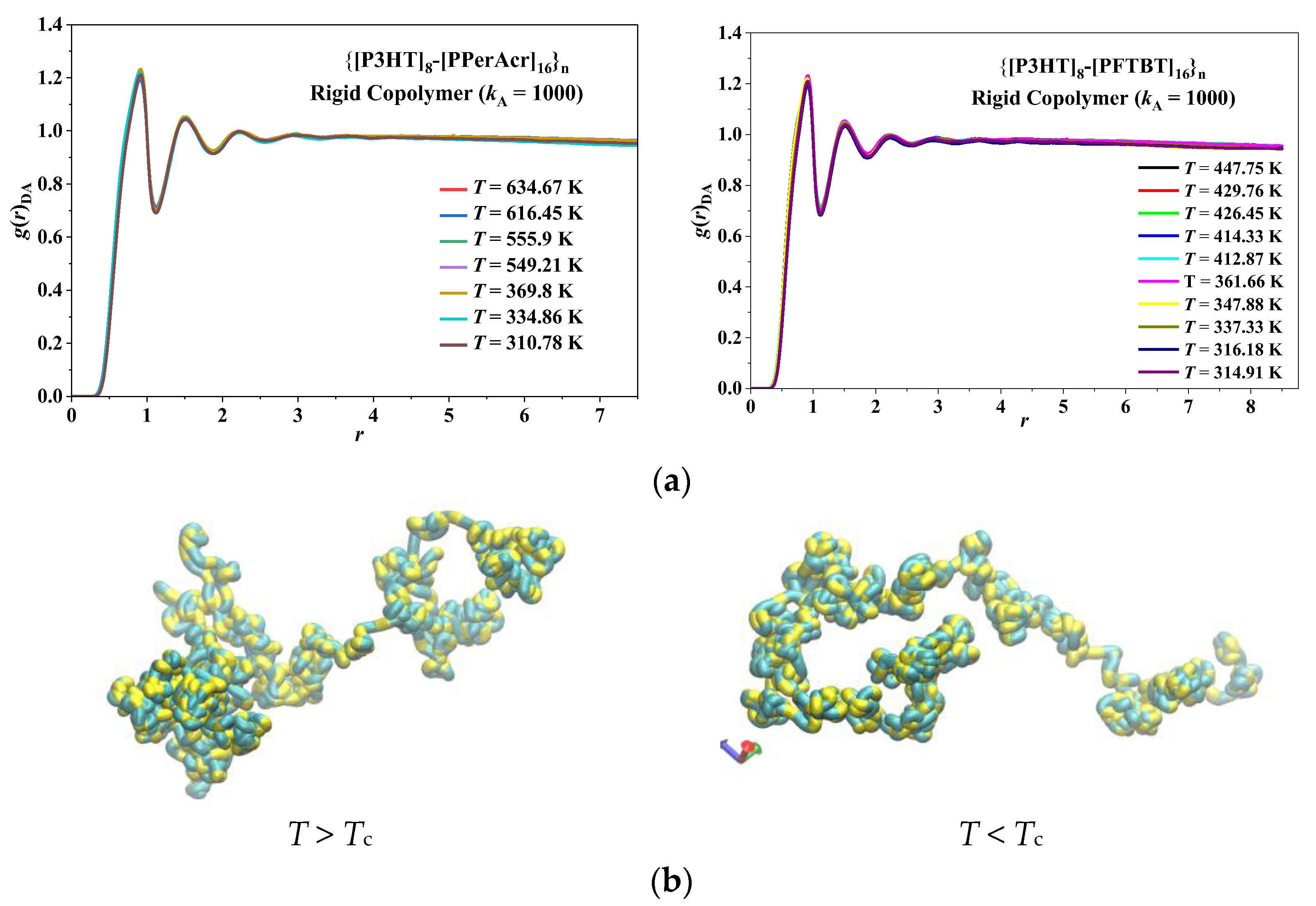
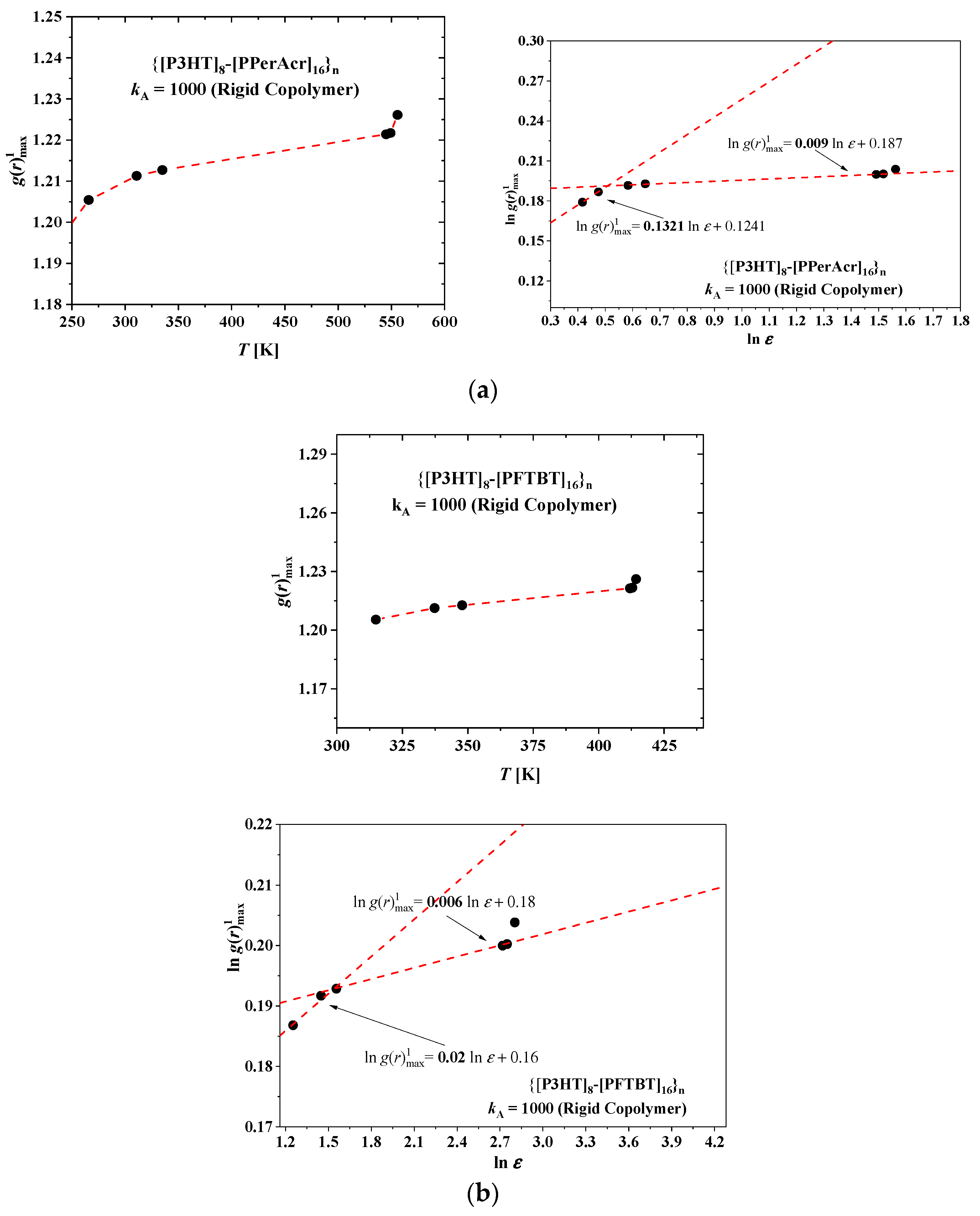
Finally, in the rigid polymer mixture, where the conformational freedom is nearly absent, the enthalpic contribution plays a minor role in determining the final morphology. At
T <<
Tc, [P3HT]
8 + [PPerAcr]
16 mixture exhibits a constrained quasi-one-dimensional percolation morphology, whereas [P3HT]
8 + [PFTBT]
16 system displays a quasi-bidimensional percolation morphology. As
T approaches
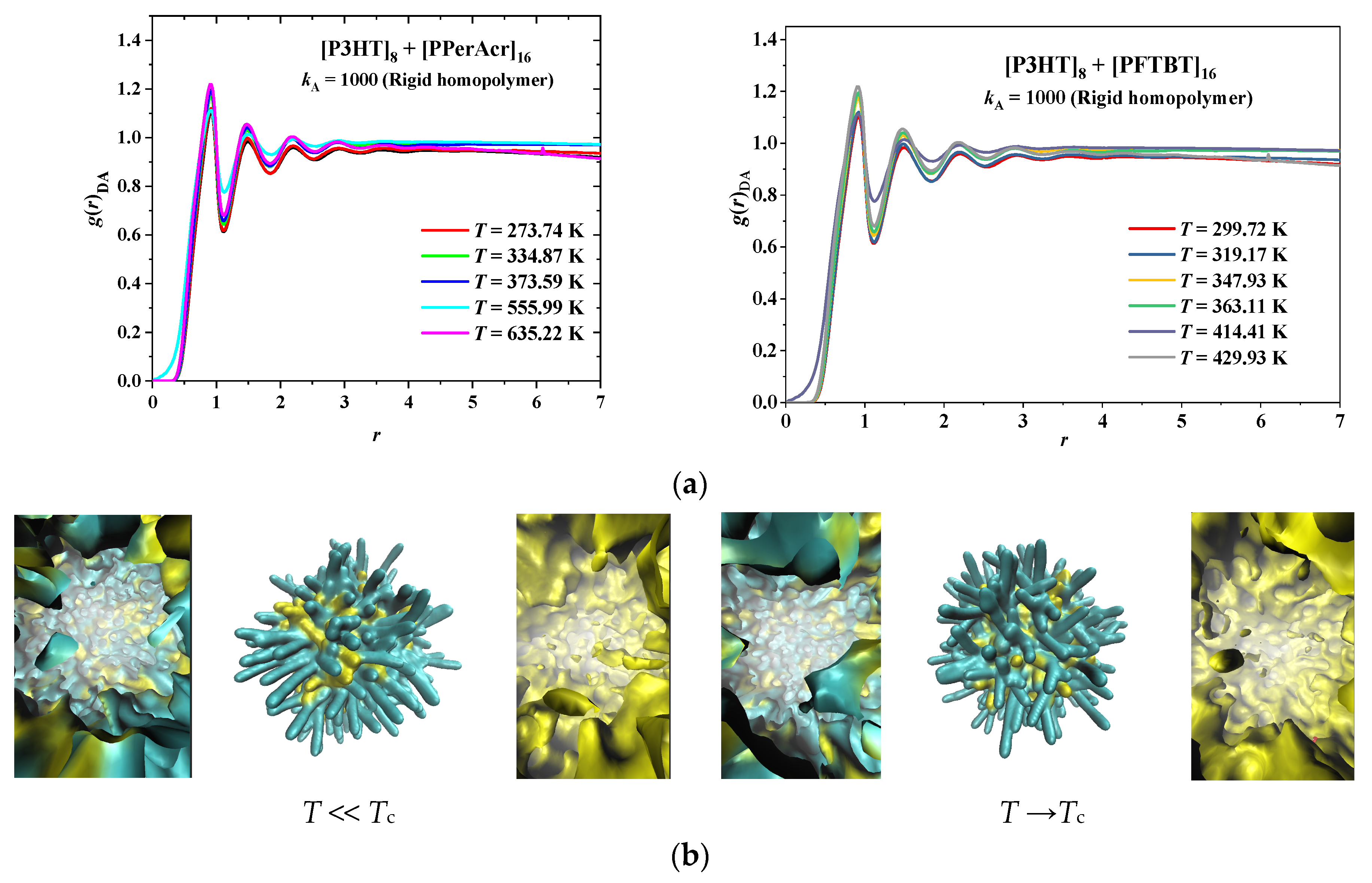
Tc, both polymer mixtures increasingly adopt quasi-one-dimensional morphology polyD/polyA miscibility increases. Compared to its semi-flexible analogs, three distinguishing features emerge: lower
g(
r)
1max values, broader correlation peaks, and reduced oscillation in the
g(
r) function. These differences stem from the absence of flexibility and the limited ability of rigid chains to entangle, which restricts monomer positioning and reduces the number of accessible D/A interfacial contacts. Consequently, at high temperatures, donor and acceptor do not necessarily interact at non-immediate neighbor distances, in contrast to strongly interacting ion-polymer systems [
22], as illustrated in
Figure 16.
4.3. General Discussion for Copolymers
As shown in the results, chain flexibility plays a crucial role in determining the percolation behavior of the system. At high flexibilities, the chains can readily rearrange, which enhances D/A contact formation as temperature increases. In contrast, when flexibility decreases, these rearrangements become progressively hindered, forcing the system to retain nearly the same conformation across temperatures. This behavior is reflected in the weak temperature dependence of both g(r) and the corresponding scaling coefficients.
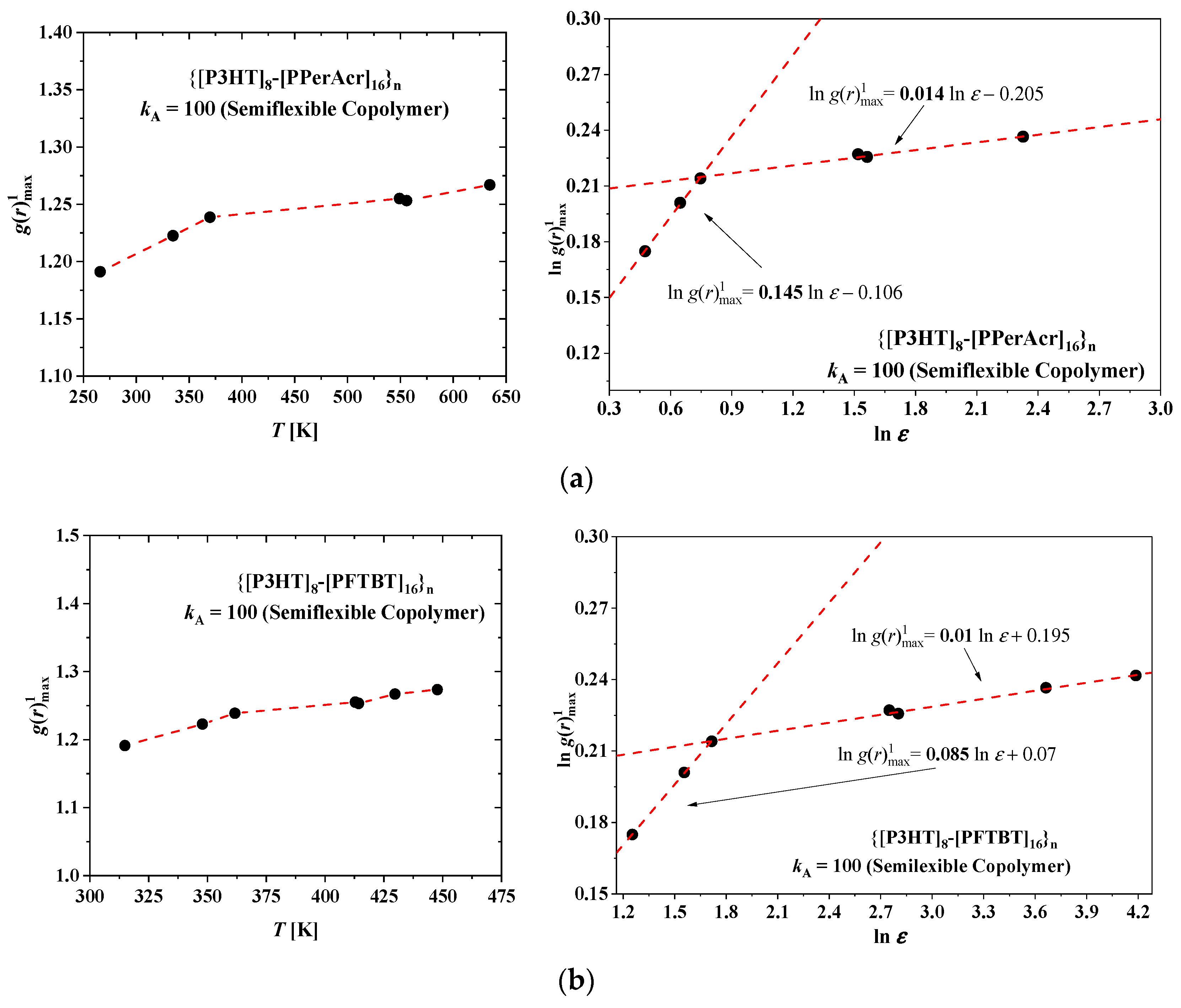
To identify the most suitable copolymer for OSC fabrication, it is useful to recall the parameter υ from Equation (5), which quantifies the sensitivity of D/A solubility to temperature and implicitly incorporates the chemical nature of the monomeric units. In our case, the υ value for {[P3HT]8-[PFTBT]16}n is 2.67 times higher than that of {[P3HT]8-[PPerAcr]16}n. Consequently, the operational temperature window for the latter is narrower, making it more challenging to achieve the desired morphology without strict thermal control.
Because of its high υ value, {[P3HT]
8-[PFTBT]
16}
n exhibits a strong tendency to transition into a 1D percolation regime under almost any flexibility (
kA) condition—an unfavorable scenario when maximizing interfacial contact is required. Within this family, the most promising candidate is the flexible system at high temperatures, where the morphology approaches a quasi-2D regime and displays a relatively high immediate-neighbor correlation
g(
r)
max1 = 1.27). In such cases, a rapid temperature quench after thermal annealing could effectively freeze the favorable morphology. The semi-flexible system is also a viable option, as it exhibits the highest
g(
r)
max1 value; however, maintaining it within a 2D regime would require thermal annealing followed by gradual cooling. These observations align with experimental reports on [P3HT]-[PFTBT] block copolymers, where the highest efficiencies are achieved after thermal annealing induces a lamellar (2D) phase [
1].
In contrast, {[P3HT]8-[PPerAcr]16}n copolymers naturally favor a 2D percolation regime and display a more gradual temperature dependence, despite their eventual crossover to a 1D morphology as T → Tc. For this system, the optimal conditions—based on both g(r)max1 and β—correspond to the semi-flexible case, where a marked 2D percolation network is observed at low temperatures.
Overall, the contrasting behavior of these two copolymer families highlights that achieving the desired percolation dimensionality requires not only balancing enthalpic and entropic contributions but also understanding the intrinsic chemical nature of the monomeric units, implicitly captured in the χ parameter. This interplay ultimately governs heterojunction formation and the suitability of each copolymer for high-performance OSCs for system percolation. At high flexibilities, the system’s ability to rearrange itself is elevated, maximizing the D/A pair formation as T increases. However, when flexibility decreases, such rearrangements become hindered, forcing the system to remain conformationally unchanged and almost independent of the temperature, as observed for g(r) at different temperatures and the subsequent scaling coefficient values.
4.4. Scaling Percolation Exponents and Universality in Morphology
The next table (
Table 2) presents the resume of the results obtained for the
β scaling exponent and its corresponding morphology. Also, we present the maximum value for the radial correlation function between the pair D/A
g(
r)
1max.
As a general overview, the percolation behavior evolves from 3D networks in unconstrained monomers, through mean field and 2D regimes in flexible and semi-flexible polymers, to quasi-1D pathways in rigid systems. We propose that for monomeric blends, the 3D percolation networks can be more suitable for bulk heterojunction solar cells due to the formation of a D/A bicontinuous percolating network at
T close to
Tc and its high value
g(
r)
1max (1.39). Polymer mixtures cannot be compared with the former case due to bond restrictions. Therefore, they are not suitable for bulk heterojunctions cells. According to our results, their low
g(
r)
1max values compared to both monomer and copolymer systems confirm the previous statement. Additionally, their observed dimensionality behavior (mean field to 1D for flexible and 2D-1D for both semi-flexible and rigid polymer mixtures) they are prone to form a lamellar D/A heterojunction as the most efficient percolation pathway. As reported experimentally [
1], polymer blends yield lower efficiencies than block copolymers. Our results justify such observation due to their lower D/A correlation compared to those for block copolymers and their inability to form 2D percolation regime unlike copolymers as shown by their scaling coefficients.
5. Conclusions
In this work, we have systematically mapped the fluid-dynamic pathways governing morphology formation in organic photovoltaics by integrating mesoscopic dissipative particle dynamics (DPD) simulations with percolation theory. Our central finding is that the critical percolation exponent (β) serves as a fluid-dynamic state descriptor, uniquely identifying the universality class of the emerging morphology and its underlying phase separation dynamics.
For monomeric mixtures and flexible homopolymers, we observe mean field behavior (β ≈ 1), corresponding to weak, diffuse phase separation with broad, fluctuating interfaces—akin to a poorly segregated binary fluid. Near the critical point (T → Tc), these systems transition to β ≈ 0.45, signaling the onset of three-dimensional (3D) percolation driven by giant concentration fluctuations. This regime dynamically yields fractal, bicontinuous networks that are morphologically ideal for charge transport.
Chain flexibility emerges as a key fluid-dynamic control parameter. Flexible copolymers at low temperatures also achieve β ≈ 0.45, forming well-defined bicontinuous networks. However, as flexibility decreases, fluid-like dynamics become progressively constrained. Semi-rigid and rigid architectures exhibit anisotropic, kinetically limited states with scaling exponents approaching β ≈ 0.1 (quasi-2D) and β ≈ 0.0 (quasi-1D), corresponding to lamellar strata and isolated fibrous domains, respectively. In these regimes, conformational restriction overcomes entropic mixing, trapping the system in suboptimal morphologies.
This fluid-dynamic interpretation is further supported by the radial correlation function g(r)DA, whose first D/A correlation g(r)1max increases systematically from ~1.14 in flexible homopolymer blends to ~1.28 in optimally assembled semi-flexible copolymers. This trend underscores that directed interfacial assembly—rather than passive phase separation—is key to enhancing donor–acceptor pairing and percolation network connectivity.
Taken together, these findings reframe the morphological optimization of organic photovoltaics as a problem of non-equilibrium hydrodynamic control. We establish a predictive map connecting molecular parameters (χ, chain stiffness) to fluid-dynamic regimes and percolation universality classes (mean field, 3D, 2D, 1D). This provides a physics-based design strategy: processing conditions should be tuned to drive the active layer into the most suitable percolation regime for its constituent materials.
Importantly, while the DPD method inherently incorporates critical fluidic parameters such as viscosity and dynamic timescales (via dissipative and random force coefficients), the present work kept these constant to isolate the effects of thermodynamic and conformational factors. Real-world film formation; however, is dominated by non-equilibrium phenomena—particularly thermal and concentration gradients [
23]. Incorporating such conditions represents a natural and necessary direction for future research, enabling a more complete description of the mechanisms at play during practical device fabrication. By bridging mesoscale fluid dynamics with device performance, this work offers a simulation-guided pathway to engineer fluidic organic semiconductors into optimally connected photovoltaic architecture.