Article

Reduced Thermal Mathematical Model Generation of a Li-ion Battery Block

1
Faculty of Engineering, Mechanical Engineering, Sakarya University, Sakarya 54050, Türkiye
2
TÜBİTAK UZAY, ODTÜ Yerleşkesi No:167, Ankara 06800, Türkiye
3
Faculty of Engineering, Mechanical Engineering, Düzce University, Düzce 81620, Türkiye
*
Author to whom correspondence should be addressed.
Energies 2025, 18(24), 6374; https://doi.org/10.3390/en18246374 (registering DOI)
Submission received: 10 November 2025 / Revised: 27 November 2025 / Accepted: 2 December 2025 / Published: 5 December 2025
(This article belongs to the Section J: Thermal Management)

Abstract

As a part of the power subsystem in spacecraft, batteries face a less severe environment, but they are sensitive to thermal changes under strict thermal requirements. In order to understand the thermal behavior, the best and cost-effective method is to use a structural thermal representative of the design, apply flight-like conditions, and create a simulation model. In order to fulfill this task, a thermal balance test was applied to a newly developed Li-ion battery’s structural thermal model in this study. The thermal control hardware was designed identical to the flight model, and the tests were conducted on eight scenarios simulating the thermal environment in space. A reduced thermal mathematical model was derived using the experimental data inversion. First, the battery parts that indicate similar temperatures were assumed as a unique node, and each part of the structural thermal model was represented by a single node; the heat exchange between each node was modeled by linear conductors. Due to high temperature differences in higher temperature simulations, the model was updated with radiation conductors, which was called hybrid modeling. It was seen that the final mathematical correlation was satisfied with test cases 4 to 8, which cover the operational and non-operational temperature limits of the Li-ion battery.

1. Introduction

Thermal design is a critical issue for artificial satellites, in order to meet the requirements and succeed in the spacecraft mission. Thermal management and design issues were discussed by [1,2], and brief examples on the thermal management of not only system-level but also equipment-level were investigated. Satellite-level thermal design considerations were studied comprehensively by [3] in terms of subsystem electronics; some detailed analyses were handled depending on the complexity of the equipment, which required thermal validation by tests [3,4,5,6].
Satellites are composed of many subsystems, and one of the most critical subsystems is the power subsystem, which is used to supply power for the whole system during its mission. Necessary power is transformed from the sun and converted to electrical energy via solar panels as the primary energy source. However, mission requirements direct the satellite to such an orbit that continuous solar energy is not always possible or is limited due to design requirements. In this case, as a secondary energy source, a power storage system is mandatory to feed the subsystems of the spacecraft to support the energy input and accomplish the mission. Although batteries are used in a variety of areas, such as aerospace, military, and automotive at present [7,8,9,10], the use of batteries in space missions is as old as the beginning of artificial satellite history in 1957. A comprehensive classification of batteries in space missions was summarized by [11,12]. First commercially developed by Sony in 1991, the first Li-ion battery pack was flown with the ESA’s experimental Proba 1 mission in 2001 [13]. Since then, Li-ion batteries have been used as a secondary power storage system because of their high specific energy, better cycle life, and high reliability with the aid of a wide temperature range [14,15].
Whatever the use areas, either for battery performance and cycle life, thermal effects are critical, as well as discharge rates and power profile [16]. While a temperature decrease causes an increase in the viscosity of the electrolyte-causing lithium plating during charge [17], a temperature increase results in capacity degradation due to increased internal resistance [17,18,19]. Therefore, keeping the battery cells within certain temperature limits plays an important role in preventing any permanent damage and failure of the mission. The other critical parameter in battery design is the cell balancing [20], in which isothermality plays an important role, which leads the designers to consider the thermal management of whole battery blocks. Since the battery cells and electronics dissipate heat, excess heat must be rejected, while the temperature of the battery interface should not exceed the lower operational temperature limit.
The thermal design and analysis of batteries are considered in the literature in detail. Li-ion battery thermal design and analysis were studied by [21] with composite structures. Different cooling methods were elaborated by [22] to cool the batteries using liquid cooling and phase-change materials. For communication satellites, refs. [14,23] worked on the thermal control of a battery supported with modeling and analysis. Testing activities were one of the verification methods for battery design, and [24] studied the effects of test parameters that influence battery capacity degradation for space applications. Thermal design and analysis of Li-ion batteries in space applications were investigated by [14,25,26,27] for different missions, including Geostationary Orbit (GEO), Low-Earth Orbit (LEO), and other missions.
In order to understand the thermal behavior of complex systems in space, a verified thermal mathematical model (TMM) is required. The most common way of generating such a model is to generate a TMM using CAD geometry with finite element modelers, such as Ansys [28], Patran [29], and Siemens NX [30]. Using the aforementioned software, studies were performed using dense-mesh finite element models [31,32]. However, finite element modelers were generating a huge number of elements and nodes and generating results over longer times, while analysts had to deal with modeling errors, some of which could not be detected easily. Therefore, in order to receive a rapid solution and perform sensitivity analysis with changing parameters, the detailed models must be simplified [33]. Starting with a single node, simplified models could be helpful in order to compare the temperatures with analytical calculations [34,35]. Moreover, the simplified models were also useful for preliminary simulations to be aware of the thermal design of spacecraft and critical subsystems [36]. However, simplified or reduced models are coarse and may not give information about hot spots, critical parts, or elements that dissipate heat. Therefore, the model must be customized to project not only the physical reality, such as heat flows, contacts, and boundary conditions, but also to enable the indication of critical elements or hot spots. Either reducing the FEM data or building simple models, the thermal network method is the conventional method, which is a lumped-parameter method, using the electrical network analogy and utilizes the finite-difference technique to solve the energy balance equation [37,38,39]. This method was applied not only to spacecraft but also to equipment [40,41] and even for component-level simulations [42].
Whatever the method is, any numerical simulation that cannot be verified by analytical calculations must be verified by a couple of testing activities. The most critical step is to be sure that the simulation model reflects the reality of the physical model, such as a structural thermal model (STM) or a flight model (FM), and perform the simulations with the correct simulation model. Therefore, in addition to thermal vacuum test activity, a thermal balance test (TBT) is essential under vacuum conditions. While TBT could be performed time-dependently and heat capacity could be corrected alongside conduction and radiation links, TBT could be performed at steady-state, just for the estimation of both conduction and radiation exchange only [43,44]. For model correlation, not only the test item, but also the thermal vacuum chamber and its thermal environment must be modeled properly. Temperatures from the simulation environment and the thermocouple readings were compared based on specific scenarios, including the worst-hot and worst-cold cases [44,45].
Consequently, this study focuses on a thermal balance test activity of a Li-ion battery STM and generates a rapid thermal model mature enough to represent each physical part using the test data. Test item, test conditions, and model derivation and correlations will be discussed in the subsequent sections of this study.

2. The Li-ion Battery

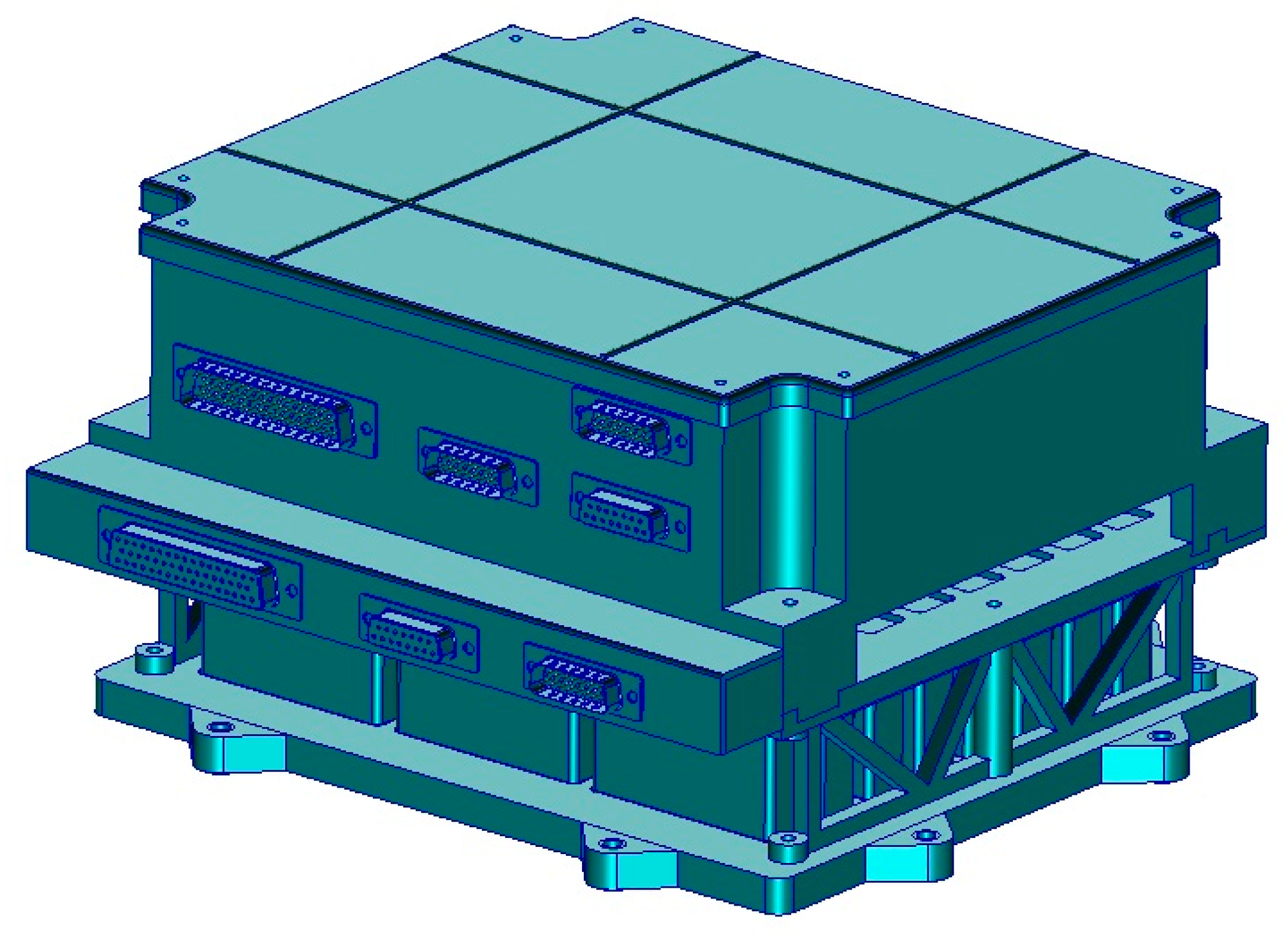
In this study, the Li-ion battery designed by TUBITAK Marmara Research Center was considered, as shown in Figure 1.
The battery was designed for an LEO mission, and the technical properties are given in Table 1.
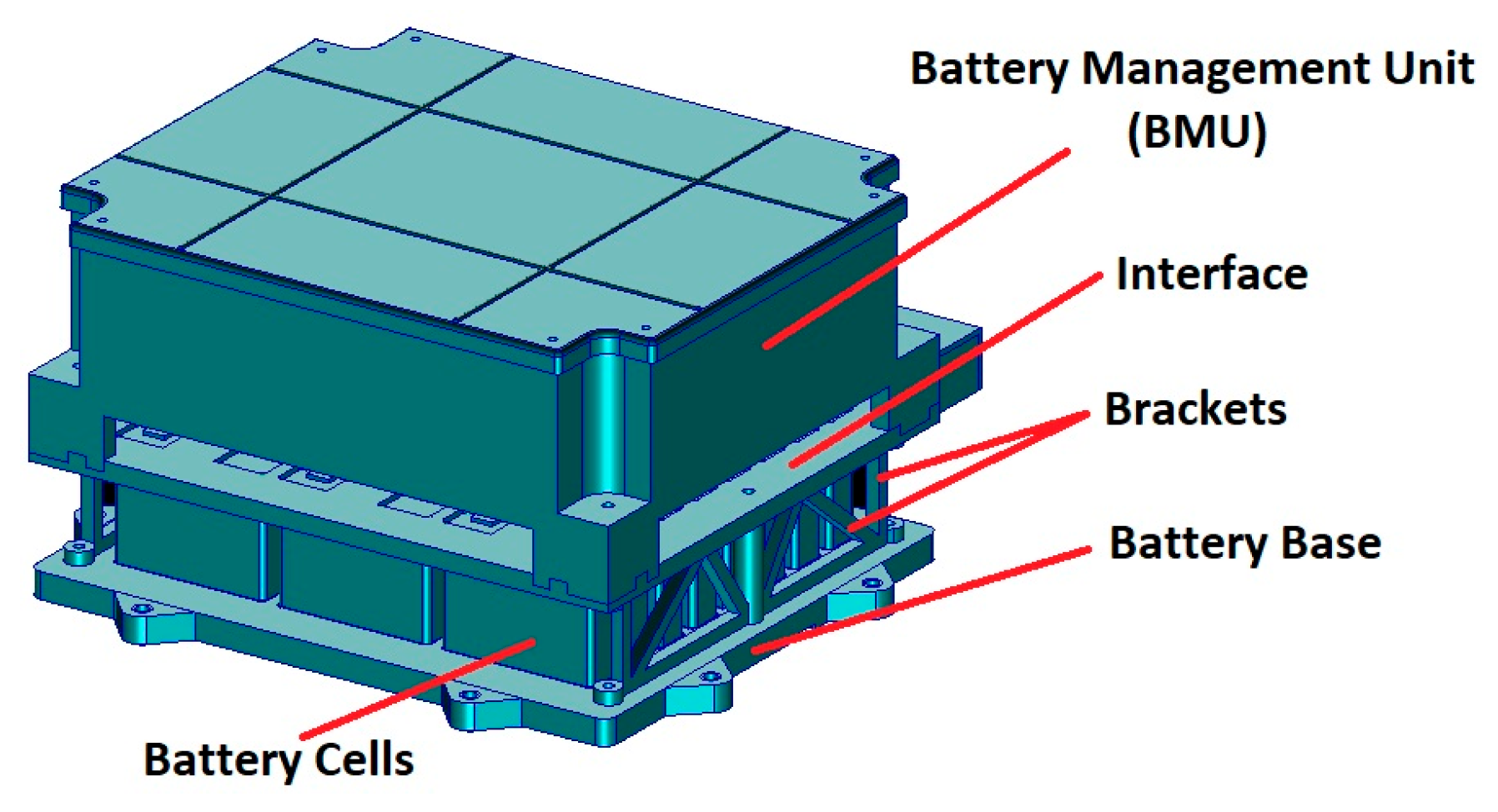
The battery is mainly composed of an electronic unit called the battery management unit (BMU), located at the top, and the battery unit, housing the battery cells at the bottom. The battery unit is separated from the electronics with an interface plate, which is made up of epoxy glass laminate, and the battery cells are also supported by the brackets, as shown in Figure 2.
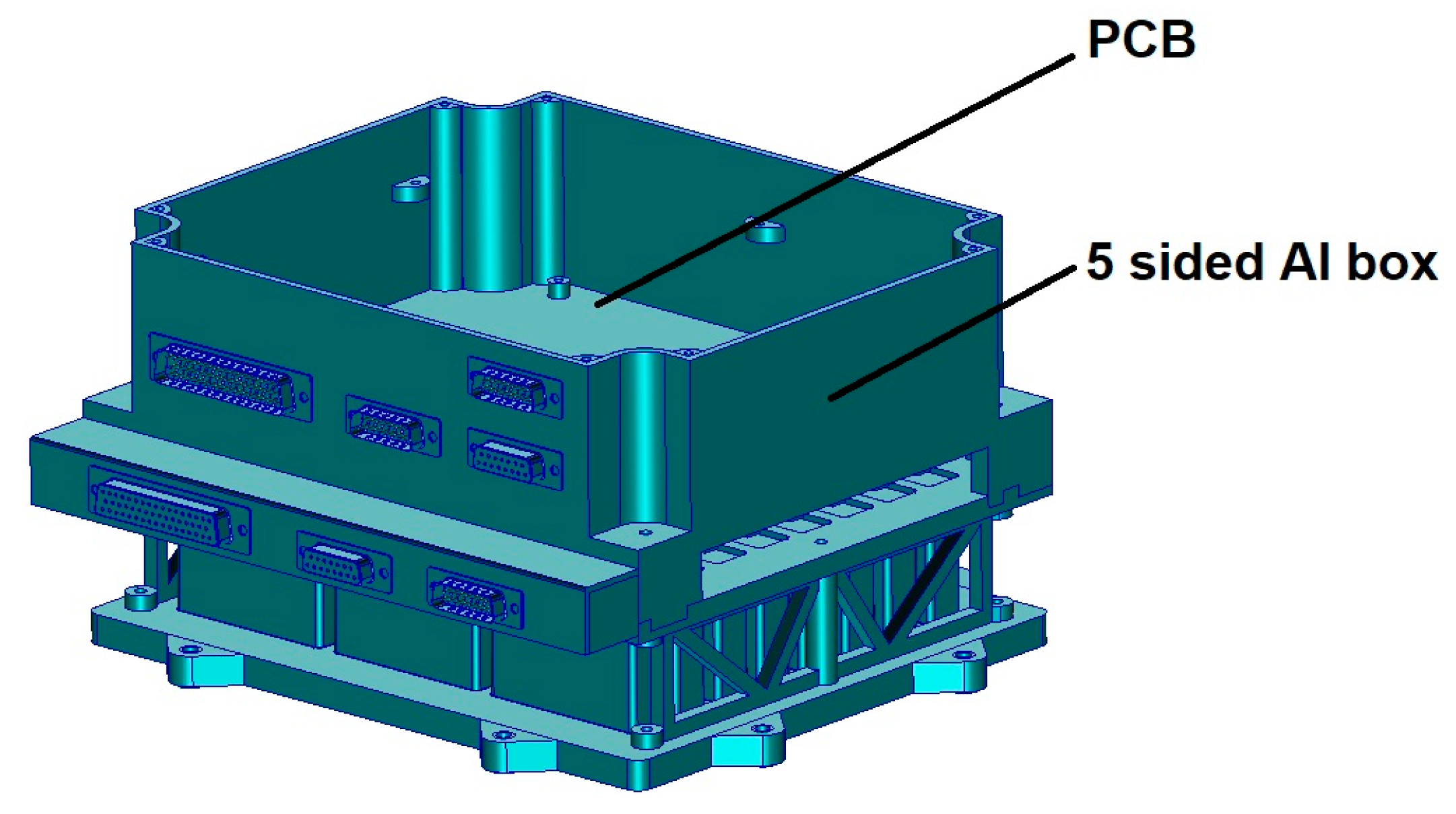
The BMU includes the five-sided Aluminum (Al) box, the PCB inside the box, and the Aluminum cover of the box at the top. In order to show the PCB, the unit without the Al cover is shown in Figure 3.
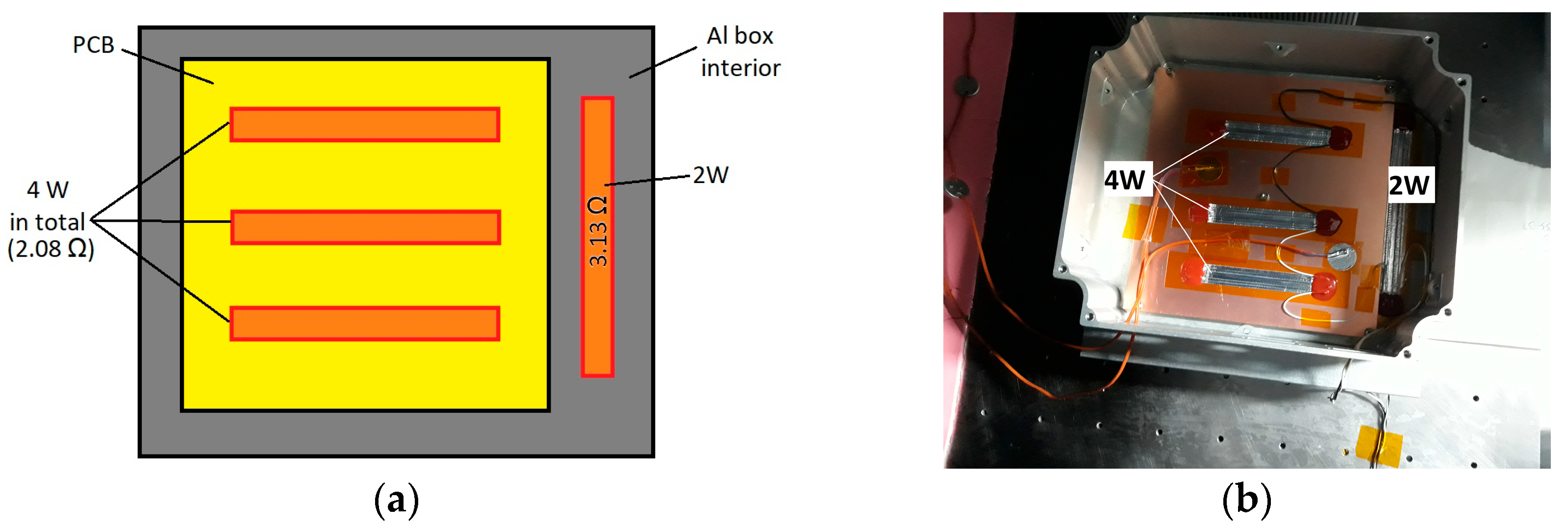
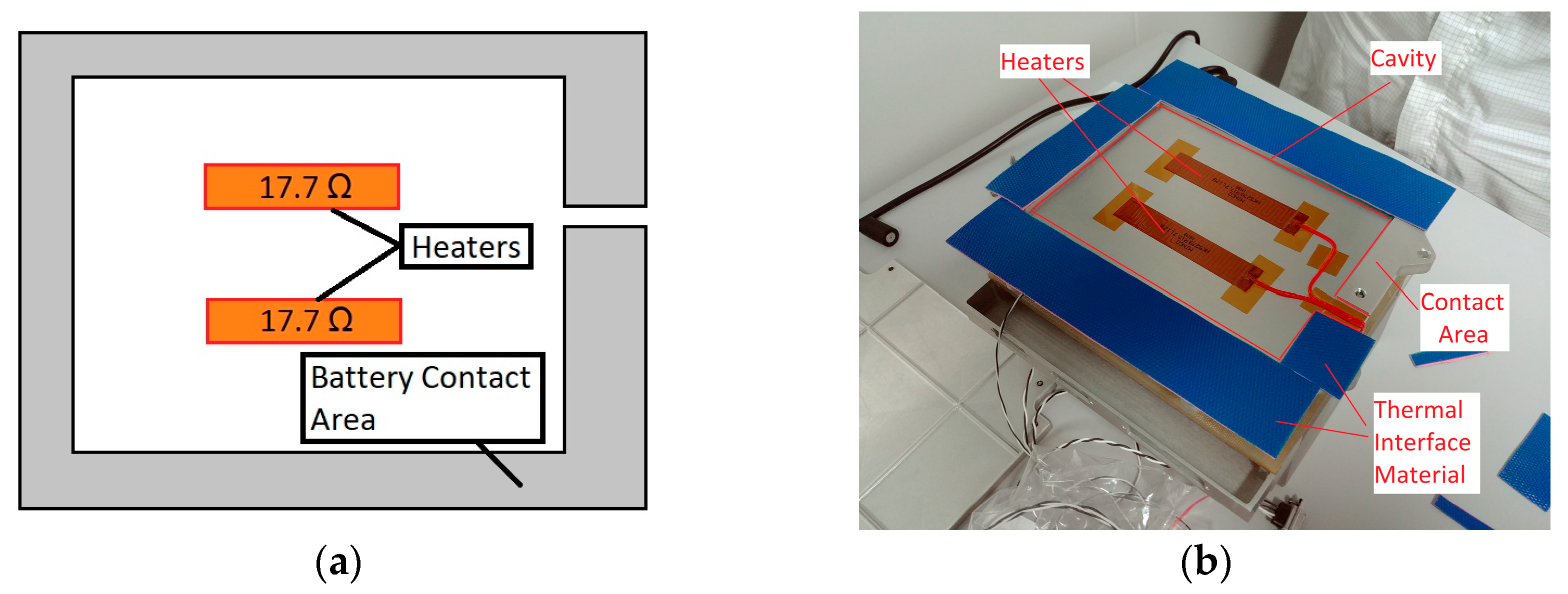
Since the BMU design was not finalized, the BMU on the structural thermal model (STM) was designed based on the maximum heat dissipation of the PCB and BMU chassis. Heat dissipation was simulated by test heaters made of Clayborn, applied on the PCB and chassis of the electronic box, as shown in Figure 4. Three-piece test heaters were connected in a series to exert 4 W homogeneously on the PCB, in order to prevent a hot spot on the low thermal conductivity FR4 material. The heater on the Al box interior, representing the components on the BMU chassis, was supplied by another power supply and designed to give 2 W of constant power. Note that the heat dissipation of battery cells was neglected since simulating the heat dissipation of each battery cell via heaters would not be feasible and could disturb the heat flow path. Therefore, the heaters were not applied to battery cells.
The whole equipment is based on an Aluminum base with a contact area of 1.88 × 10⁻² m2 with thermal interface material. Heaters, manufactured by Minco, are mounted inside the cavity of the base of the battery to prevent any thermal contact with the satellite interface and to heat the battery cells when necessary from a colder spacecraft interface. The placement of the heaters at the bottom side of the battery is shown in Figure 5.
Although the battery has a different mechanical composition with anisotropic materials, especially in the battery cells, the STM of the battery was made of mainly Aluminum material (Al6061-T6). The PCB and the interface material, below the BMU and isolating the battery cells, were made of FR4 and epoxy glass, respectively. The battery cells were glued to the base via 2216 adhesive. The thermal conductivity of the materials used in the battery STM is given in Table 2.

3. Test Preparation

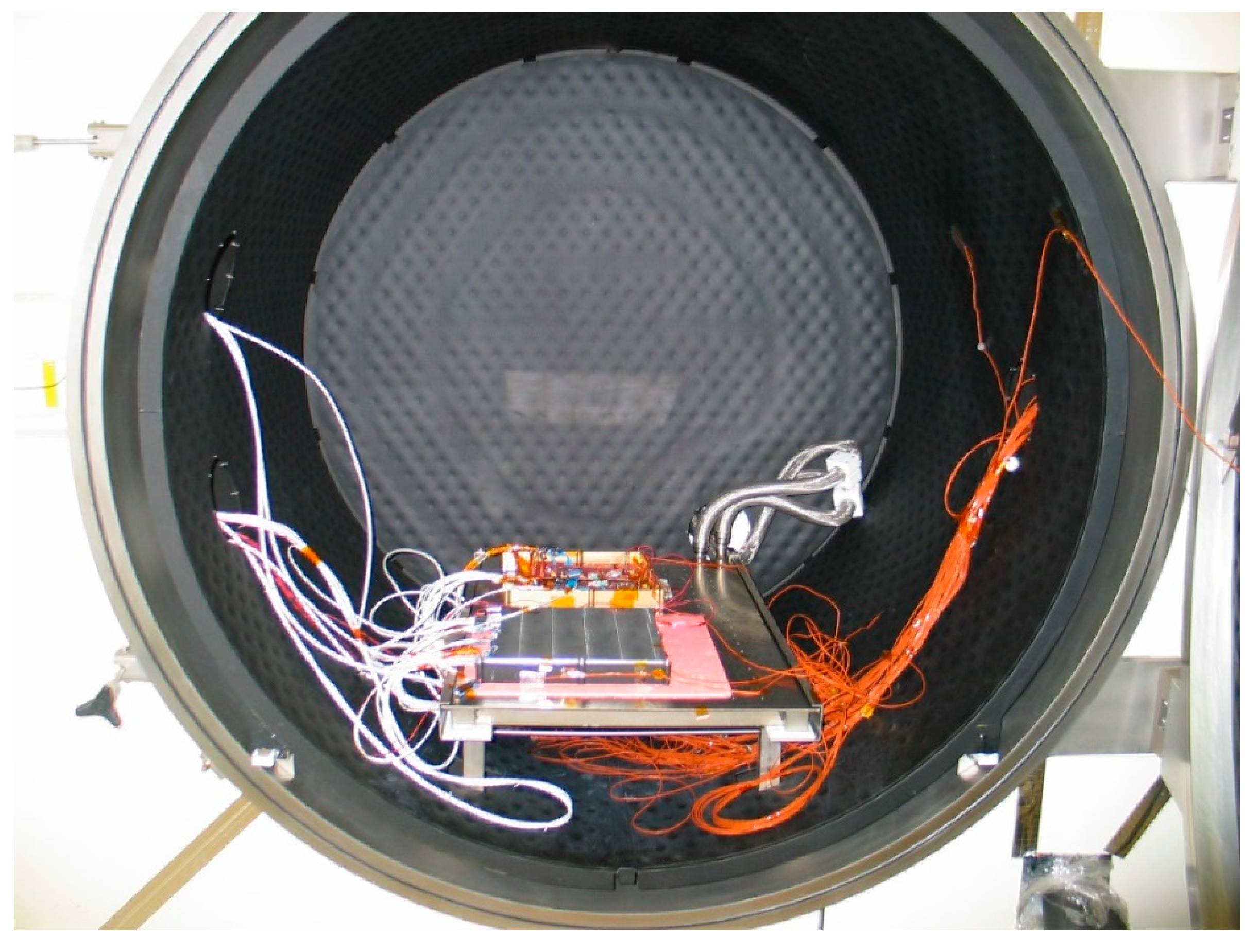
The Li-ion battery was tested in a medium-sized thermal vacuum chamber (TVAC) at the TUBITAK Space Technologies Research Institute (TUBITAK UZAY) as shown in Figure 6.
The TVAC, which has been operational since 2007, was designed for testing not only equipment and subsystems, but also microsatellites. The chamber was used for thermal vacuum cycling tests of the RASAT microsatellite [6]. The TVAC is a horizontal-type and has dimensions of 1200 mm in diameter and 800 mm in depth, resulting in 2100 lt of volume. The chamber has one dry pump for rough pumping up to 10−2 mbar and one cryogenic pump, which allows for a vacuum environment less than 10−5 mbar in 3 h at ambient temperature. TVAC also has a temperature-controlled plate and shroud (inner walls), which could be set at any temperature between −70 °C to +125 °C.
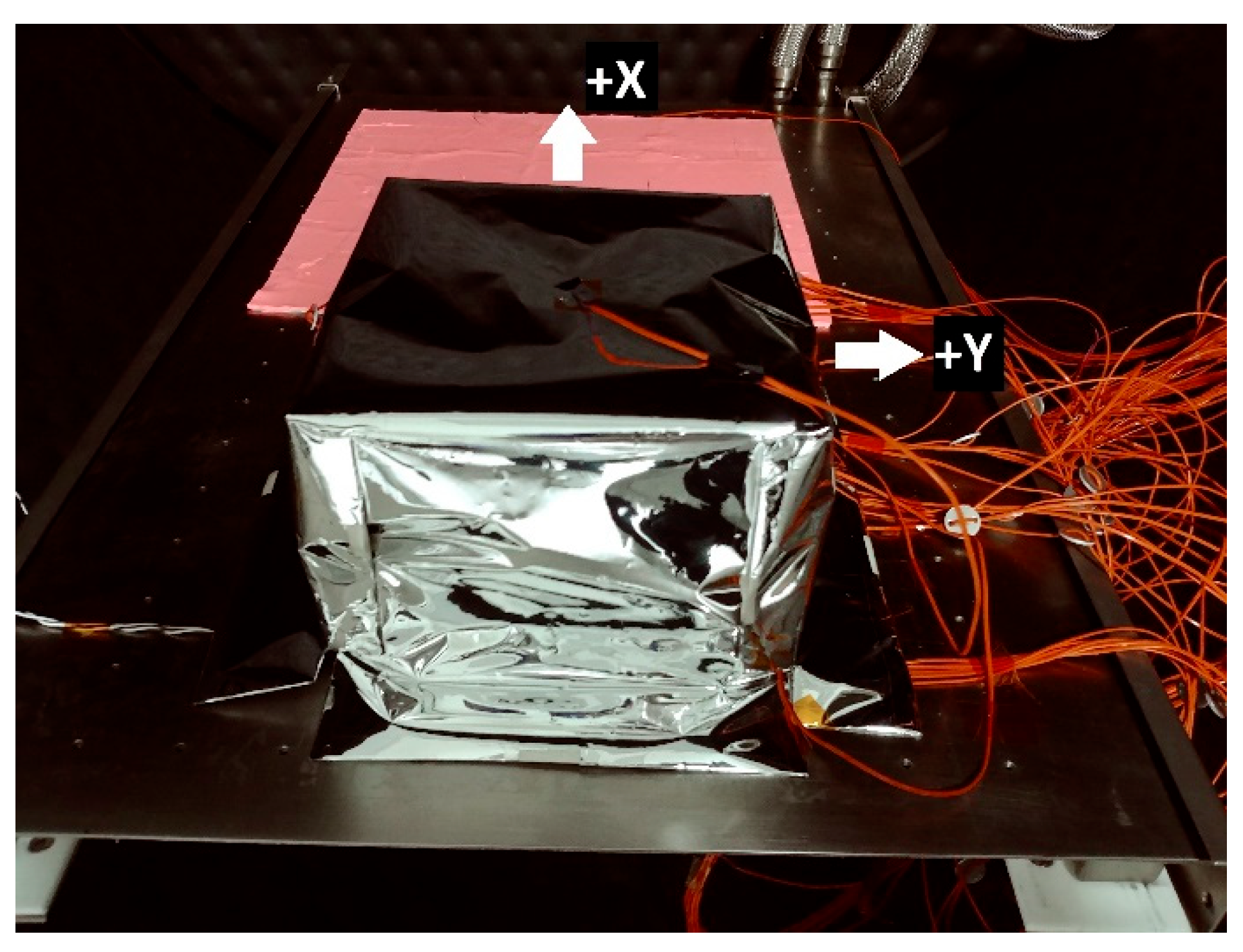
The Li-ion battery STM was covered with a 13-layer MLI blanket designed by TUBITAK UZAY as a requirement of both spacecraft missions and the battery itself to satisfy thermal radiation decoupling from the TVAC’s shroud, similar to the spacecraft interior as shown in Figure 7. The blanket layers were composed of Mylar® and Dacron® netting manufactured by Dunmore (Lackawanna County, PA, USA) and raw blankets sheets were prepared by Aerothreads, Inc. (Riverdale, MD, USA).
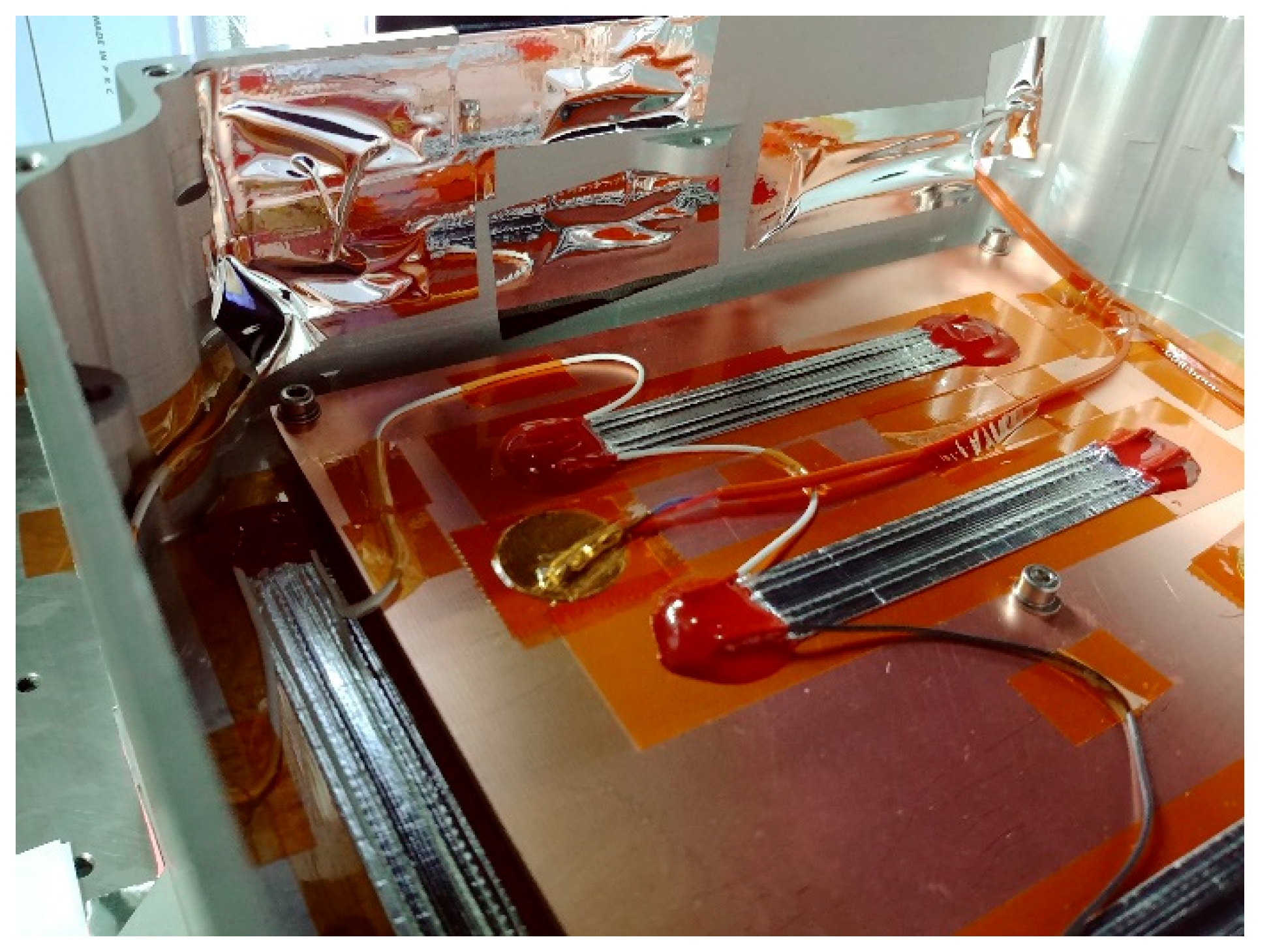
The missing connector locations at the side walls of the BMU were also covered by Al tape to keep the MBU in an enclosure. Since the emittance of Al tape is as low as the bare Al used in the STM, no significant effect was observed from it. The Al-tape application is shown in Figure 8.
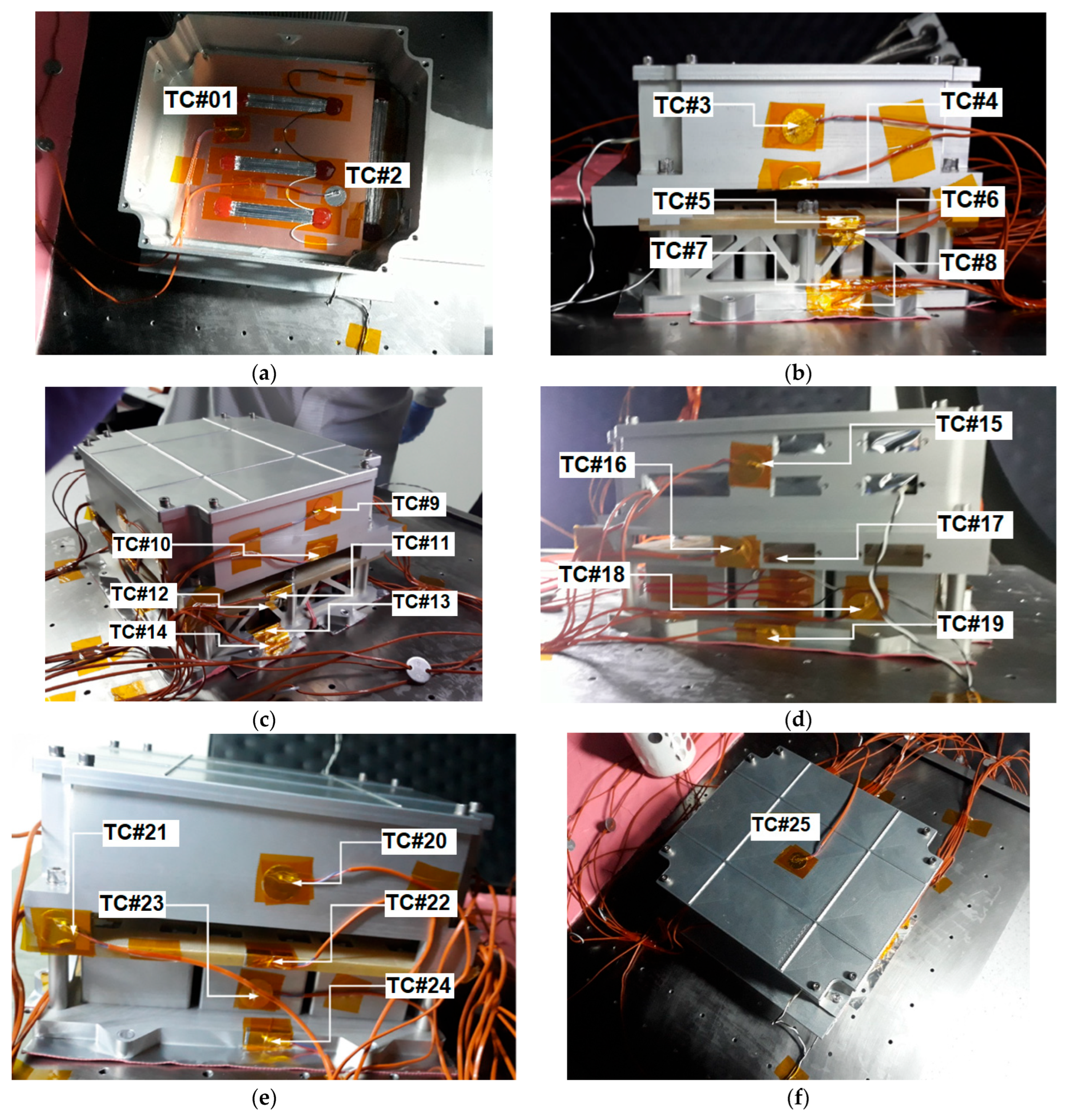
Regarding the test configuration, 27 T-type thermocouples were applied on the battery STM as shown in Figure 9. The thermocouples have an accuracy of ±1 °C.
The thermocouple locations associated with thermocouple numbers (nr.) are listed in Table 3.

4. Test Procedure

In order to perform the model correlation, eight test cases were planned according to the operating modes and thermal environment given in Table 4.
The thermal environment of the battery STM was planned to have differences in different thermal environments and in the heater power necessary to keep the battery cells within the temperature range. That is why, for the heater version, the TVAC was set to the lowest limit for the battery, which is given in Table 1. Regarding the uncertainty, the shroud and thermal plate were set to −10 °C to simulate the coldest environment and to see if the thermal control hardware is working and the heaters are sufficient to keep the battery above the temperature limits. The base heater was set to 15 W, 8 W, and 0 W (no power) to see the characteristics of the battery temperature distribution. In the test cases 4–6, the same heater power at the battery base was repeated for the thermal environment, which was set to 0 °C as a boundary condition. In the 7th and 8th cases, which were simulating the worst-hot environment, the base heater power was turned off, and a steady-state temperature distribution was observed.

5. Test Results

Regarding the test case configurations given in Table 4, the steady-state temperatures for the cases are given in average values in Table 5. Note that in this table, the temperature of the PCB was the average of thermocouples TC1 and 2, which are given in Table 3. Similarly, for the BMU, the thermocouple readings from eight locations were taken into account, and as the numerical simulations will be based on the thermal network method, the mean of the test data was used and tabulated in Table 5. Note that in this table TB#1 belongs to test case # which means the number of test case.

6. Model Correlation

For model correlation, the basic heat transfer is discretized with conduction and radiation terms per node to set up a reduced thermal mathematical model [37,46]:
q ˙ g e n + k 2 T = ρ C p T t
In this equation, q ˙ g e n is the heat generation, k is the thermal conductivity, ρ is the density, Cp is the specific heat, T is the temperature, and t refers to time.
When this equation is discretized for conduction and radiation terms, one could obtain the heat transfer equation:
Q ˙ i n + j N K i , j T j n T i n + j N R i , j T j n 4 T i n 4 = m i C p i T i n + 1 T i n t
where Ki,j and Ri,j are the conduction and radiation conductors between nodes i and j, respectively:
K i , j = A i , j c k i , j l i , j
R i , j = σ A i r ε i F i , j
Based on the TBT results per test scenarios, the steady-state temperatures of seven major parts of the battery block could be discretized by seven nodes. However, during TBT, both temperature variations and steady-state temperatures given in Table 5 indicated that some of the major parts’ temperatures were very close. Therefore, these nodes were investigated as below for an update before setting up the nodal network.
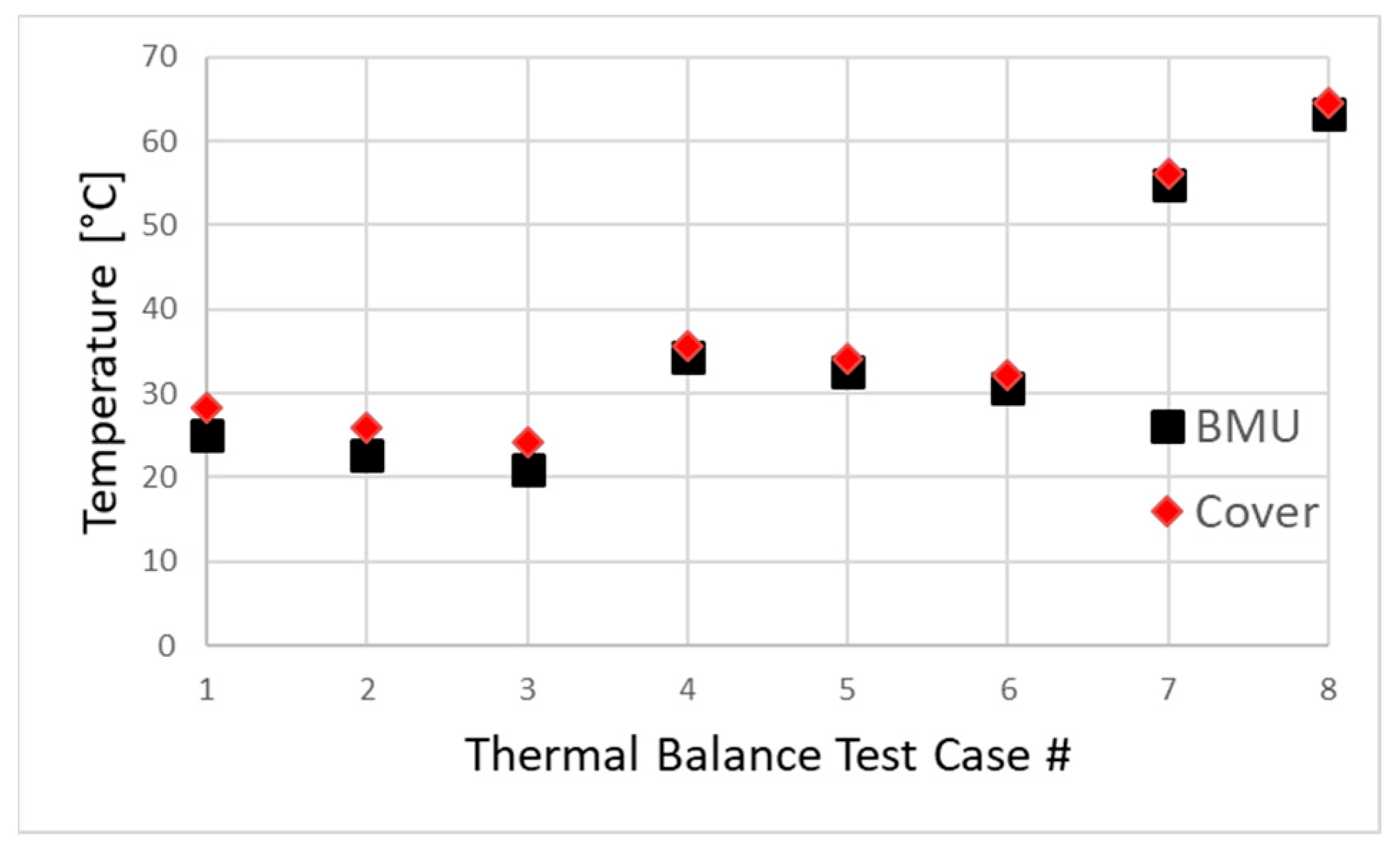
The first point is the temperature of the BMU and its cover. Although two parts were assembled to each other with dry contact, the distribution in the STM parts indicated that the temperature of some of the parts had a similar response. The temperature difference between the BMU and cover, per the test scenario, is shown in Figure 10. As could be seen from this figure, the maximum error occurs between test cases 1 and 3, since the TVAC is at minimum while the Li-ion battery was dissipating a constant power of 6 W. Taking operational and non-operating temperature extremes, such as 0 °C to +40 °C, of the interface into consideration, one could look to test cases 4 to 8, which had very small error < 0.5%. Thus, BMU and cover temperature are merged into a single node, behaving as a single part.
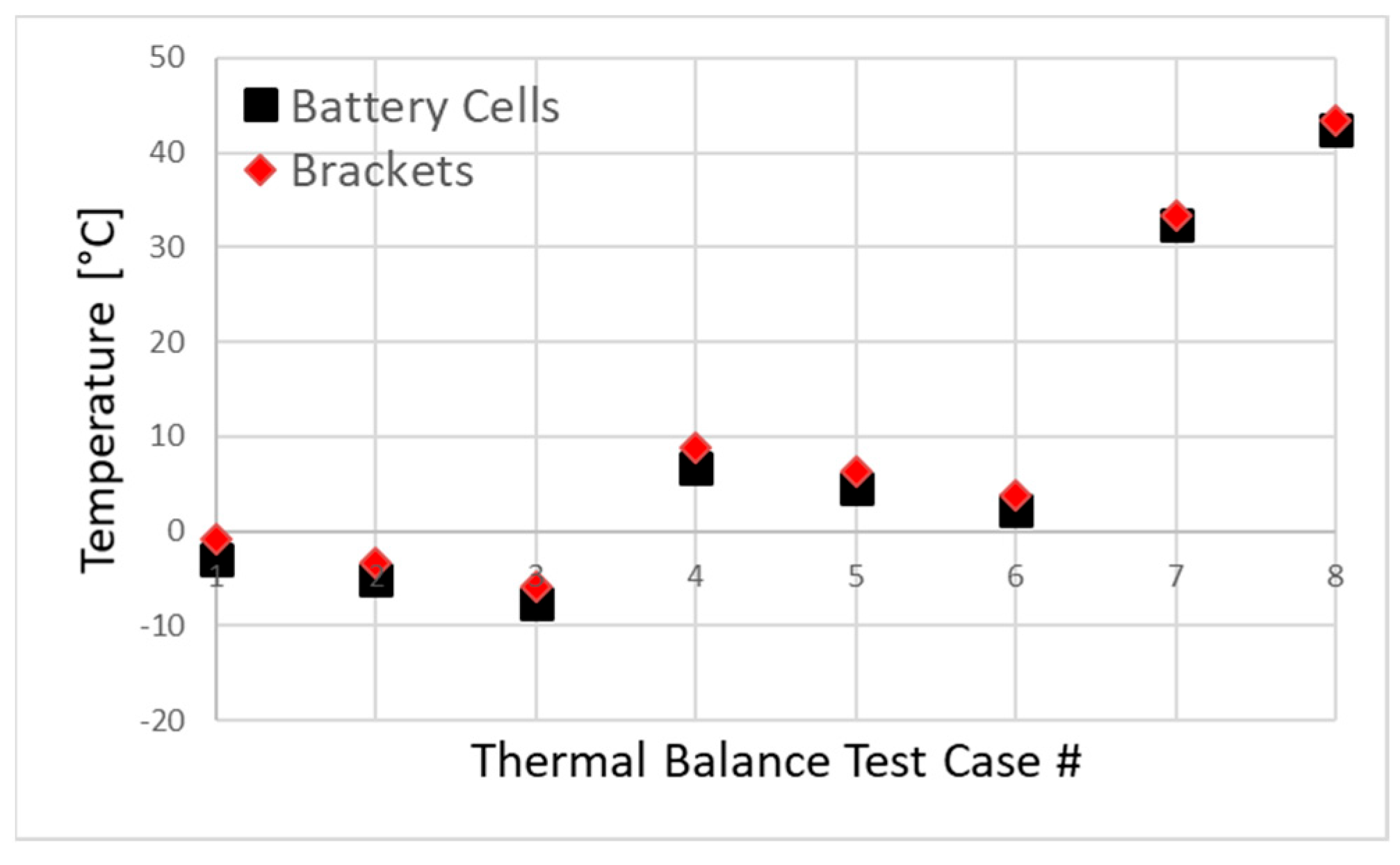
The second point was the cells and brackets. Although Li-ion battery cells are the most critical parts of the battery block, and the temperature ranges given in Table 1 were dedicated to the battery cells, all the scenarios indicated that the brackets between the epoxy glass interface plate and the battery base also have similar temperature variations when compared to the cells. The steady-state temperature difference between the Li-ion cells and the brackets is given in Figure 11. When comparing the eight test cases, the temperature difference between the brackets and the cells is also very small, with a maximum error of <1%.
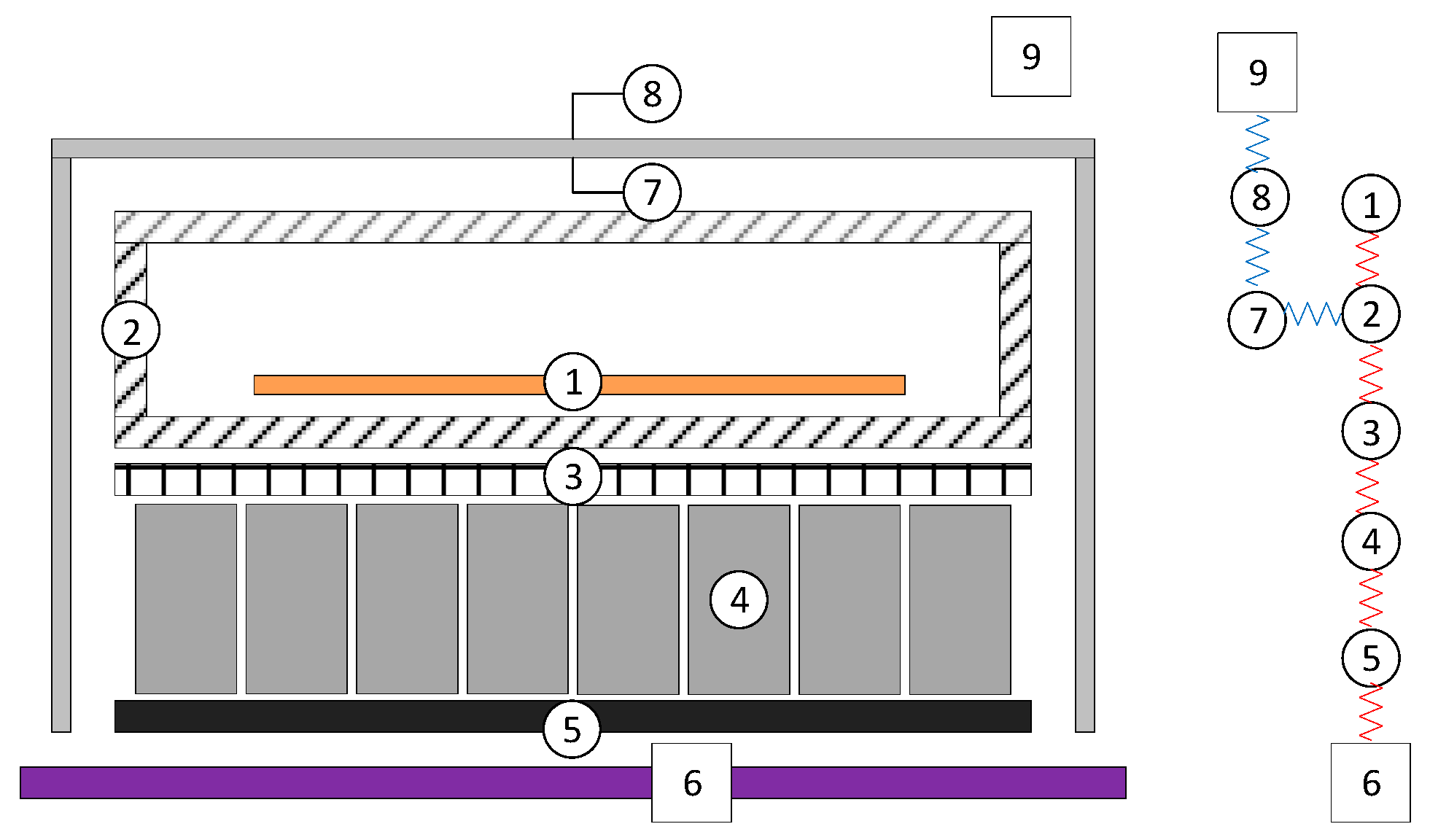
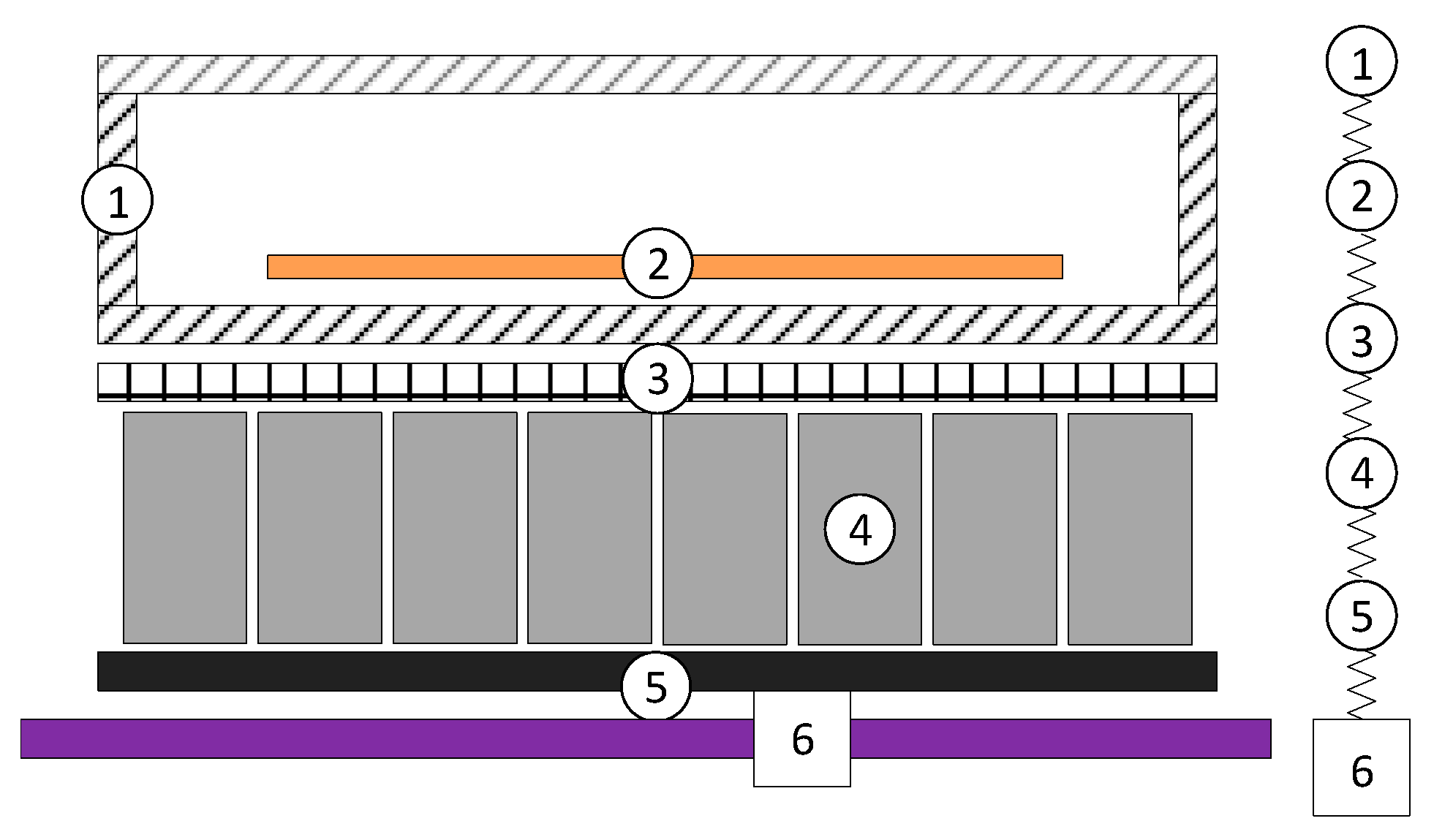
Based on similar responses for two coupled parts, a 5-node thermal mathematical model was constructed to simulate the thermal behavior of a Li-ion battery. The nodal description of the nodes is tabulated in Table 6, and an illustration of the nodal network is presented in Figure 12. Note that node 6 is a boundary node, representing the cold plate of the TVAC.
The MLI used in TBT was a 2 Mil Mylar VDA2 with an inner and outer layer and an interior of 11 layers of 0.25 Mil Mylar VDA2, making a 13-layered MLI blanket with a surface emittance of ε = 0.02. Since the temperature of the MLI interior was close to the BMU temperature and the exterior surface temperature was close to the shroud temperature, as tabulated in Table 5, the effective emissivity εeff of the MLI blanket was taken as calculated values in the literature [1], which was 0.03. As a consequence of effective insulation, the effect of the shroud on the battery was neglected, and the MLI radiatively decoupled the battery from the shroud for the first cycle of simulations.

7. Correlation Results and Discussion

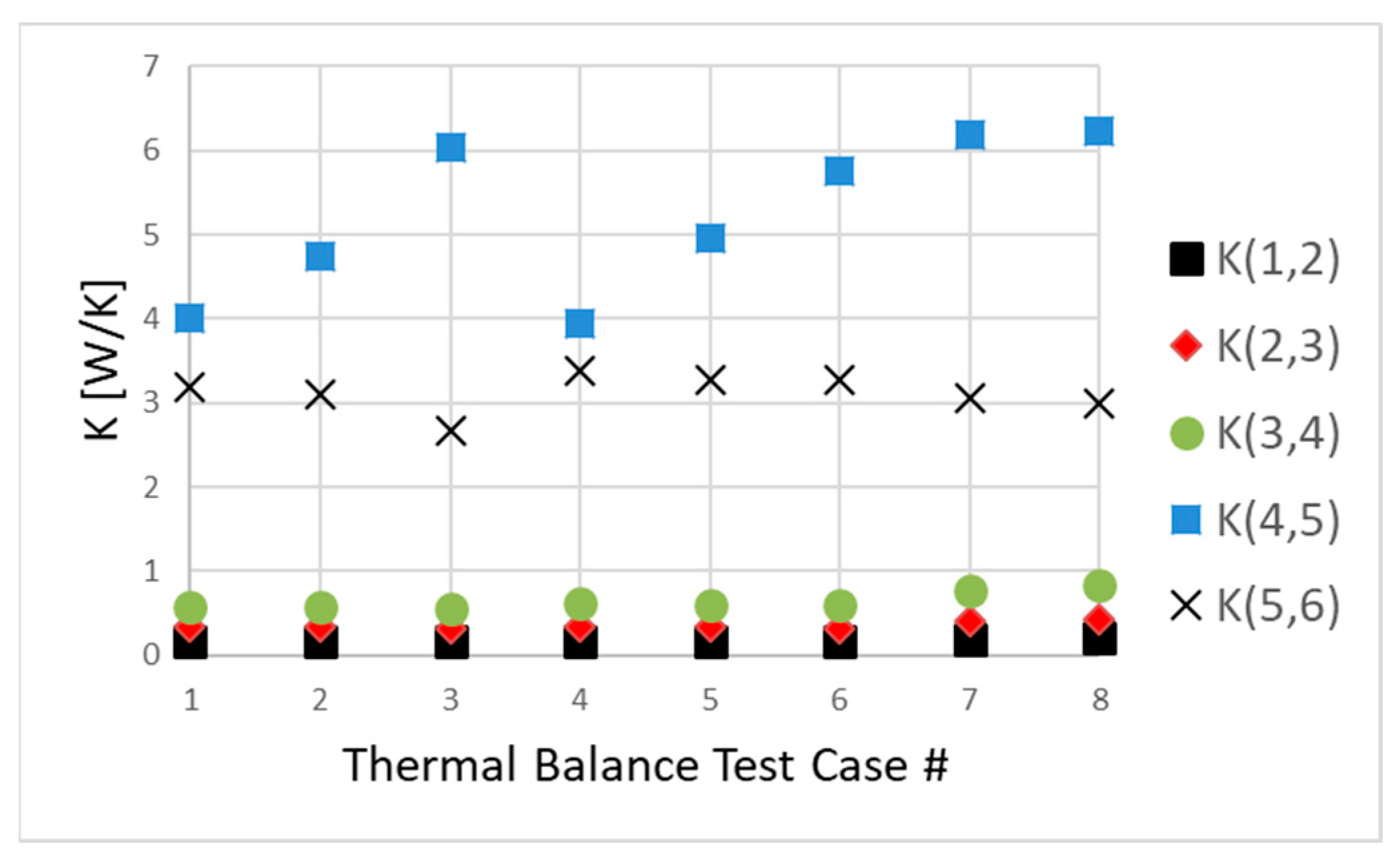
Based on the 5-node TMM outlined in Table 6, with updated nodes 2 and 4, conduction conductors were calculated via test results and based on the thermal link indicated in Figure 12. The conduction conductors calculated for each test case are given in Figure 13.
The conduction conductors were calculated per test case as shown in Figure 13, and the average values were used as the conduction conductor between each node. The temperatures of the 5-node models were calculated per test case, as shown in Table 7, Table 8, Table 9, Table 10, Table 11, Table 12, Table 13 and Table 14.
Based on the analysis results, three correlation success criteria were sought based on ECSS-E-ST-31C:
  • ΔT < 5 K for the interior part
  • Temperature mean deviation within ±2 K
  • Temperature standard deviation <3 K, 1σ
As shown in the tables, a correlation success criterion was met for cases 1–6; however, for cases 7 and 8, the temperature differences for node 1 exceed the limits, because radiative heat transfer is significantly dominant with the fourth power of temperature defined in Equation (2).
As shown in Table 13 and Table 14, for cases 7 and 8, the temperature of the PCB was calculated as 82.5 °C and 92.5 °C, respectively, with a temperature deviation of 6.6 °C and 9.2 °C, due to a lack of radiation conductors. Moreover, in test case 8, the BMU temperature was calculated as 69.4 °C, which violated the temperature deviation requirement with 5.5 °C > 5 °C.
Since the nodes in which the model correlation was not satisfied were the ones with high temperatures and a lack of radiation conductors, as a second iteration, the MLI was included, resulting in three radiation conductors added to TMM: between MLI interior and BMU, between MLI interior and exterior, and between MLI exterior and the shroud. The final 9-node TMM with a 7-node Li-ion battery TMM is presented in Figure 14.
The MLI was modeled at 0.02 for surface emittance, and radiation conductors were calculated using the ε and surface area, including a view factor of 1 for BMU–MLI and MLI–shroud radiation link calculations.
The results for the 7-node TMM are given in Table 15, Table 16, Table 17, Table 18, Table 19, Table 20, Table 21 and Table 22. Note that nodes 6 and 9 belong to the cold plate and shroud, as shown in Figure 14, which is set to a constant temperature during TBT and regarded as a boundary node in the simulations.
The final simulation proves model correlation for test cases 4 to 8, while still improving on the TMM, as was necessary for test cases 1–3. Fortunately, based on Table 1, the test cases do not project the operational or non-operating temperature of the Li-ion battery, and when test cases at 0 °C, 30 °C, and 40 °C are taken into account, the maximum deviation per node does not exceed 5 °C (4.88 °C for PCB) for test case 6.

8. Conclusions

In this study, a thermal mathematical model generation for a Li-ion battery STM was conducted, which was designed as a secondary energy source for a low-Earth orbit satellite. The STM, which was FM-representative, was designed and manufactured based on hardware almost identical to the flight model. The heat dissipation on each of the battery cells could not be implemented on the STM because of the limited accessibility to each cell and low heat dissipation. However, this difference had a negligible effect because of the heat dissipation of the BMU. TBT was applied to the model, which was identical to the flight model, in terms of structural and thermal design. Eight different test configurations were planned with different spacecraft interior environments. A reduced TMM was established based on the calculation of conduction conductors per thermal balance test data, and nodal temperatures were calculated by averaging the thermocouple data. Based on the conductor predictions, thermal simulations were performed using the thermal network method. The conduction-based thermal model was initially set up based on thermocouple data, since narrow temperature ranges within the battery block could suppress thermal radiation. However, it was seen that due to high temperature differences at 30 °C and 40 °C test environments, deviations were observed from the test results, resulting in an update with radiation conductors. The final results indicated that the final mathematical correlation was satisfied with test cases 4 to 8, which cover the operational and non-operational temperature limits of the Li-ion battery. The results also proved that the thermal requirements of both the PCB and the battery cells could well satisfy the requirements in a dedicated satellite thermal environment.


Author Contributions

Conceptualization, A.O. and N.S.; methodology, A.O.; validation, A.O., N.S. and M.B.; formal analysis, A.O.; investigation, M.B.; resources, A.O., N.S. and M.B.; writing—original draft preparation, A.O.; writing—review and editing, N.S. and M.B.; supervision, N.S. and M.B.; All authors have read and agreed to the published version of the manuscript.

Funding

This research received no external funding.

Data Availability Statement

The original contributions presented in this study are included in the article. Further inquiries can be directed to the corresponding author.

Acknowledgments

The authors have reviewed and edited the output and take full responsibility for the content of this publication.

Conflicts of Interest

The authors declare no conflicts of interest.

Abbreviations

The following abbreviations are used in this manuscript:
BMUBattery management unit
CADComputer-aided drawing
ESAEuropean Space Agency
ECSSEuropean Cooperation for Space Standardization
GEOGeostationary orbit
LEOLow-Earth orbit
Li-ionLithium ion
MLI(i)Multi-layered insulation (interior)
MLI(e)Multi-layered insulation (exterior)
αSolar absorptance
εIR emittance
CpSpecific heat [J/kgK]
Fi,jView factor between i and j
FMFlight model
Ki,jConduction conductor between i and j [W/K]
ki,jThermal conductivity between i and j [W/(mK)]
li,jDistance between i and j [m]
miMass of i [kg]
TTemperature [°C]
tTime [s]
PCBPrinted circuit board
ρDensity
Ri,jRadiation conductor between i and j [W/K4]
STMStructural Thermal Model
σStefan–Boltzmann constant
TCThermocouple
TMMThermal Mathematical Model
TVThermal vacuum
TVACThermal vacuum chamber
TBTThermal Balance Test
VDAVacuum-deposited aluminum

References

  1. Gilmore, D. Spacecraft Thermal Control Handbook, Volume I, Fundamental Technologies; AIAA: Las Vegas, NV, USA, 2002. [Google Scholar]
  2. Meseguer, J.; Pérez-Grande, I.; Sanz-Andrés, Á. Spacecraft Thermal Control; Elsevier: Amsterdam, The Netherlands, 2012. [Google Scholar]
  3. Kuta, K.; Nowak, G.; Nowak, I. Thermal Management of Cubesat Subsystem Electronics. Energies 2024, 17, 6462. [Google Scholar] [CrossRef]
  4. Lu, P.; Gao, T.; Chen, Q.; Ren, X. Energy Saving Thermal Management of Space Remote Sensor and Validation. Energies 2023, 16, 864. [Google Scholar] [CrossRef]
  5. Bulut, M. Thermal design, analysis and testing of the first Turkish 3U communication Cubesat in low earth orbit. J. Therm. Anal. Calorim. 2021, 143, 4341–4353. [Google Scholar] [CrossRef]
  6. Okan, A. Thermal Design and Analysis of RASAT Microsatellite; Spacecraft Thermal Control Workshop: El Segundo, CA, USA, 2011. [Google Scholar]
  7. Korthauer, R. Lithium-Ion Batteries: Basics and Applications; Springer: Berlin, Germany, 2018; pp. 1–413. Available online: https://link.springer.com/book/10.1007/978-3-662-53071-9 (accessed on 7 November 2025).
  8. Knap, V.; Vestergaard, L.K.; Stroe, D.I. A review of battery technology in cubesats and small satellite solutions. Energies 2020, 13, 4097. [Google Scholar] [CrossRef]
  9. Puglia, F.; Carmen, D.; DiCarlo, J.; Gitzendanner, R.; Santee, S. Advances and Field Testing Results for Military and Aerospace Lithium Ion Batteries. In Proceedings of the 4th International Energy Conversion Engineering Conference and Exhibit (IECEC), San Diego, CA, USA, 26–29 June 2006; p. 4019. [Google Scholar]
  10. International Energy Agency. Global EV Outlook 2020: Entering the Decade of Electric Drive; Technical Report; International Energy Agency: Paris, France, 2020. [Google Scholar] [CrossRef]
  11. Hyder, A.K.; Wiley, R.L.; Halpert, G.; Flood, D.J.; Sabripour, S. Spacecraft Power Technologies; Imperial College Press: London, UK, 2000. [Google Scholar]
  12. Patel, M.K. Spacecraft Power Systems; CRC Press: Boca Raton, FL, USA, 2004. [Google Scholar]
  13. Teston, F.C.; Vuilleumier, P.; Hardy, D.; Bernaerts, D. The PROBA-1 microsatellite. In Imaging Spectrometry X; SPIE Digital Library: Washington, DC, USA, 2004; Volume 5546, pp. 132–140. [Google Scholar]
  14. Bulut, M.; Sözbir, N. Modeling and Analysis of Battery Thermal Control in a Geostationary Satellite. Sak. Univ. J. Sci. 2022, 26, 666–676. [Google Scholar] [CrossRef]
  15. Krause, F.C.; Ruiz, J.P.; Jones, S.C.; Brandon, E.J.; Darcy, E.C.; Iannello, C.J.; Bugga, R.V. Performance of commercial Li-ion cells for future NASA missions and aerospace applications. J. Electrochem. Soc. 2021, 168, 040504. [Google Scholar] [CrossRef]
  16. Dubarry, M.; Devie, A.; McKenzie, K. Durability and reliability of electric vehicle batteries under electric utility grid operations: Bidirectional charging impact analysis. J. Power Sources 2017, 358, 39–49. [Google Scholar] [CrossRef]
  17. Ma, S.; Jiang, M.; Tao, P.; Song, C.; Wu, J.; Wang, J.; Deng, T.; Shang, W. Temperature effect and thermal impact in lithium-ion batteries: A review. Prog. Nat. Sci. Mater. Int. 2018, 28, 653–666. [Google Scholar] [CrossRef]
  18. Keil, P.; Schuster, S.F.; Travi, J.; Hauser, A.; Karl, R.C.; Jossen, A. Calendar Aging of Lithium-Ion Batteries I. Impact of the Graphite Anode on Capacity Fade. J. Electrochem. Soc. 2016, 163, A1872–A1880. [Google Scholar] [CrossRef]
  19. Xia, J.; Nie, M.; Ma, L.; Dahn, J. Variation of Coulombic Efficiency versus Upper Cutoff Potential of Li-ion Cells Tested with Aggressive Protocols. J. Power Sources 2015, 306, 233–240. [Google Scholar] [CrossRef]
  20. Zhu, L.; Liu, Z.; Lin, Y.; Li, Z.; Qin, J.; Jin, X.; Yan, S. Li-Ion Battery Active–Passive Hybrid Equalization Topology for Low-Earth Orbit Power Systems. Energies 2025, 18, 2463. [Google Scholar] [CrossRef]
  21. Capovilla, G.; Cestino, E.; Reyneri, L.; Valpiani, F. Modular Multifunctional Composite Structure for CubeSat Applications: Embedded Battery Prototype Thermal Analysis. Batteries 2025, 11, 172. [Google Scholar] [CrossRef]
  22. Yang Yang, T.; Su, S.; Xin, Q.; Zeng, J.; Zhang, H.; Zeng, X.; Xiao, J. Thermal Management of Lithium-Ion Batteries Based on Honeycomb-Structured Liquid Cooling and Phase Change Materials. Batteries 2023, 9, 287. [Google Scholar] [CrossRef]
  23. Bulut, M.; Demirel, S.; Gulgonul, S.; Sozbir, N. Battery thermal design conception of Turkish satellite. In Proceedings of the 6th International Energy Conversion Engineering Conference (IECEC), Cleveland, OH, USA, 28–30 July 2008; p. 5787. [Google Scholar]
  24. Cook, R.; Swan, L.; Plucknett, K. Impact of Test Conditions While Screening Lithium-Ion Batteries for Capacity Degradation in Low Earth Orbit CubeSat Space Applications. Batteries 2021, 7, 20. [Google Scholar] [CrossRef]
  25. Bugga, R.; Smart, M.; Whitacre, J.; West, W. Lithium ion batteries for space applications. In Proceedings of the 2007 IEEE Aerospace Conference, Big Sky, MT, USA, 3–10 March 2007; pp. 1–7. [Google Scholar]
  26. Gonai, T.; Kiyokawa, T.; Yamazaki, H.; Goto, M. Application of lithium-ion battery for satellite. In Proceedings of the 21st International Communications Satellite Systems Conference and Exhibit, Yokohama, Japan, 15–19 April 2003. [Google Scholar]
  27. Akbulut, M.; Ertas, A.H. Establishing reduced thermal mathematical model (RTMM) for a space equipment: An integrative review. Aircr. Eng. Aerosp. Technol. 2022, 94, 1009–1018. [Google Scholar] [CrossRef]
  28. Ansys Workbench. Simulation Integration Platform. Available online: https://www.ansys.com/products/ansys-workbench (accessed on 7 November 2025).
  29. Patran. Hexagon. Available online: https://hexagon.com/products/patran (accessed on 7 November 2025).
  30. NX Software Including CAD and CAM. Siemens Software. Available online: https://plm.sw.siemens.com/en-US/nx (accessed on 7 November 2025).
  31. Yang, L.; Li, Q.; Kong, L.; Gu, S.; Zhang, L. Quasi-All-Passive Thermal Control System Design and On-Orbit Validation of Luojia 1-01 Satellite. Sensors 2019, 19, 827. [Google Scholar] [CrossRef]
  32. Diaz-Aguado, M.F.; Greenbaum, J.; Fowler, W.T.; Lightsey, E.G. Small satellite thermal design, test, and analysis. In Modeling, Simulation, and Verification of Space-Based Systems III; SPIE: Bellingham, WA, USA, 2006; pp. 74–85. [Google Scholar] [CrossRef]
  33. Kim, J.H.; Kim, B. Study on the reduction method of the satellite thermal mathematical model. Adv. Eng. Softw. 2017, 108, 37–47. [Google Scholar] [CrossRef]
  34. Pérez-Grande, I.; Sanz-Andrés, A.; Guerra, C.; Alonso, G. Analytical study of the thermal behaviour and stability of a small satellite. Appl. Therm. Eng. 2009, 29, 2567–2573. [Google Scholar] [CrossRef]
  35. Tsai, J.R. Overview of satellite thermal analytical model. J. Spacecr. Rocket. 2004, 41, 120–125. [Google Scholar] [CrossRef]
  36. Versteeg, C.; Cotten, D.L. Preliminary Thermal Analysis of Small Satellites; Small Satellite Research Laboratory, The University of Georgia: Athens, GA, USA, 2018; p. 30602. [Google Scholar]
  37. Okan, A. Thermal Network Method Applications to Problems Related with the Thermal Analysis of Small Satellites. Master’s Thesis, Middle East Technical University, Ankara, Turkey, 2002. Available online: https://hdl.handle.net/11511/12848 (accessed on 7 November 2025).
  38. Oppenheim, A.K. Radiation analysis by the network method. Trans. Am. Soc. Mech. Eng. 1956, 78, 725–735. [Google Scholar] [CrossRef]
  39. Milman, M.; Petrick, W. A note on the solution to a common thermal network problem encountered in heat-transfer analysis of spacecraft. Appl. Math. Model. 2000, 24, 861–879. [Google Scholar] [CrossRef]
  40. Ömür, C.; Uygur, A.B. Development of a thermal mathematical model for the simulation of transient behavior of a spaceborne equipment in vacuum environment. J. Therm. Sci. Technol. 2015, 35, 37–44. [Google Scholar]
  41. Okan, A. Feasibility study on thermal survivability of X-band subsystem on RASAT microsatellite. In Proceedings of the 2nd International Conference on Recent Advances in Space Technologies RAST 2005, Istanbul, Turkey, 9–11 June 2005; IEEE: New York, NY, USA, 2005; pp. 223–227. [Google Scholar]
  42. Keser, Ö.F.; İdare, B.; Bulat, B.; Okan, A. The usability of PV-TEG hybrid systems on space platforms. In Proceedings of the 2019 9th International Conference on Recent Advances in Space Technologies (RAST), Istanbul, Turkey, 11–14 June 2019; IEEE: New York, NY, USA, 2019; pp. 109–115. [Google Scholar]
  43. Welch, J. Assessment of thermal balance test criteria requirements for test objectives and thermal design. In Proceedings of the 46th International Conference on Environmental Systems, Vienna, Austria, 10–14 July 2016; Available online: http://hdl.handle.net/2346/67472 (accessed on 7 November 2025).
  44. Beck, T.; Bieler, A.; Thomas, N. Numerical thermal mathematical model correlation to thermal balance test using adaptive particle swarm optimization (APSO). Appl. Therm. Eng. 2012, 38, 168–174. [Google Scholar] [CrossRef]
  45. Quirino, M.; Sciarrone, G.; Piazzolla, R.; Fuschino, F.; Evangelista, Y.; Morgante, G.; Guilizzoni, M.; Marocco, L.; Silvestrini, S.; Fiore, F.; et al. HERMES CubeSat Payload Thermal Balance Test and Comparison with Finite Volume Thermal Model. Appl. Sci. 2023, 13, 5452. [Google Scholar] [CrossRef]
  46. Moffitt, B.A. Predictive Thermal Analysis of the Combat Sentinel Satellite Test Article. Master’s Thesis, Utah State University, Logan, UT, USA, 2003. ISBN 978-0-496-18629-7. [Google Scholar]
Figure 1. Li-ion battery CAD model.
Energies 18 06374 g001
Figure 2. Battery parts in side view.
Energies 18 06374 g002
Figure 3. BMU as 5-sided Al box with PCB, without cover on top.
Energies 18 06374 g003
Figure 4. BMU: (a) sketch of heaters; (b) application on the battery STM.
Energies 18 06374 g004
Figure 5. Bottom view of the battery heaters: (a) sketch; (b) application on the battery STM.
Energies 18 06374 g005
Figure 6. TUBITAK UZAY—2100 lt TVAC.
Energies 18 06374 g006
Figure 7. MLI blanket applied to STM final configuration to decouple from the TVAC.
Energies 18 06374 g007
Figure 8. Aluminum tape application to keep the MBU in enclosure representing the FM configuration.
Energies 18 06374 g008
Figure 9. Thermocouple locations: (a) on PCB; (b) at −X direction; (c) at +X direction; (d) at −Y direction; (e) at +Y direction; (f) on the cover.
Energies 18 06374 g009
Figure 10. Temperature difference in BMU and its cover for each test case.
Energies 18 06374 g010
Figure 11. Temperature difference between Li-ion battery cells and brackets for each test case.
Energies 18 06374 g011
Figure 12. Thermal mathematical model of Li-ion battery.
Energies 18 06374 g012
Figure 13. Conduction conductor calculated for each test case.
Energies 18 06374 g013
Figure 14. Updated (7-node) TMM of Li-ion battery (conduction conductors in red, radiation conductors in blue).
Energies 18 06374 g014
Table 1. Li-ion battery technical specifications.
Technical SpecificationsValue
Topology8S3P
Nominal Voltage29 V
Capacity>9 Ah
Mass5.78 kg
Contact Area1.88 × 10−2 m2
Heat Dissipation6 W (min)21 W (max)
Non-op. Temperature0 °C+40 °C
Operating Temperature+10 °C+30 °C
Table 2. Thermal properties of Li-ion battery STM.
Materialk [W/mK]Application Area
Al6061167Cells, BMU
FR40.36PCB
Epoxy Glass0.29Interface between BMU and cells
2216 Adhesive0.39Mounting of cells to chassis
Table 3. Thermocouple locations on the Li-ion battery STM.
DescriptionTC nr.
PCB1, 2
BMU3, 4, 9, 10, 15, 16, 20, 21
Interface5, 11, 17, 22
Battery Cells18, 23
Base8, 14, 19, 24
Brackets6, 7, 12, 13
Cover25
MLI26 (interior), 27 (exterior)
Table 4. TVBT cases for the Li-ion Battery STM.
Test Case nr.TVAC Temp [°C]Base Heater [W]PCB Heater [W]
1−10154 W + 2 W
2−1084 W + 2 W
3−1004 W + 2 W
40154 W + 2 W
5084 W + 2 W
6004 W + 2 W
73004 W + 2 W
84004 W + 2 W
Table 5. Steady-state TVBT average temperatures [°C] of the Li-ion Battery STM.
TB#1TB#2TB#3TB#4TB#5TB#6TB#7TB#8
Shroud−10.00−10.00−10.000.000.000.0029.9040.00
Cold Plate−10.00−10.00−10.000.000.000.1030.0040.00
PCB51.9049.7748.2458.2056.8555.1575.9083.30
BMU25.1822.8021.0834.3432.7330.6954.9463.28
I/F8.586.254.0917.3815.3813.0040.7850.08
Cells−3.00−5.14−7.556.754.602.2532.4542.50
Cover28.3025.9424.2335.7034.1032.1056.2064.50
Brackets−0.85−3.27−5.968.756.353.7033.4343.43
Base−0.28−2.39−4.709.184.271.9331.9742.00
MLI(i)25.823.3521.6433.331.629.75462.4
MLI(e)−8.4−8.43−8.4911130.540.5
Table 6. Nodal information of the Li-ion Battery STM.
Node nr.Description
1PCB
2BMU including cover
3Interface
4Cells and brackets
5Base
Table 7. Comparison of 5-node TMM test and analysis results for Case 1.
Node nr.DescriptionTest (°C)Analysis (°C)ΔT (°C)Error %
1PCB51.9047.304.601.42
2BMU with cover 26.7424.232.510.84
3Interface8.587.231.350.48
4Cells with brackets−1.93−2.110.190.07
5Base−3.43−3.260.170.06
Table 8. Comparison of 5-node TMM test and analysis results for Case 2.
Node nr.DescriptionTest (°C)Analysis (°C)ΔT (°C)Error %
1PCB49.7745.054.721.46
2BMU with cover 24.3721.992.380.80
3Interface6.254.991.260.45
4Cells with brackets−4.21−4.360.150.06
5Base−5.47−5.510.040.01
Table 9. Comparison of 5-node TMM test and analysis results for Case 3.
Node nr.DescriptionTest (°C)Analysis (°C)ΔT (°C)Error %
1PCB48.2442.495.751.79
2BMU with cover 22.6519.423.231.09
3Interface4.092.421.670.60
4Cells with brackets−6.75−6.930.180.07
5Base−7.75−8.070.320.12
Table 10. Comparison of 5-node TMM test and analysis results for Case 4.
Node nr.DescriptionTest (°C)Analysis (°C)ΔT (°C)Error %
1PCB58.2057.300.900.27
2BMU with cover 35.0234.230.790.26
3Interface17.3817.230.150.05
4Cells with brackets7.757.890.140.05
5Base6.236.740.510.18
Table 11. Comparison of 5-node TMM test and analysis results for Case 5.
Node nr.DescriptionTest (°C)Analysis (°C)ΔT (°C)Error %
1PCB56.8555.051.800.55
2BMU with cover 33.4131.991.420.46
3Interface15.3814.990.390.13
4Cells with brackets5.485.640.170.06
5Base4.274.490.220.08
Table 12. Comparison of 5-node TMM test and analysis results for Case 6.
Node nr.DescriptionTest (°C)Analysis (°C)ΔT (°C)Error %
1PCB55.1552.492.660.81
2BMU with cover 31.3929.421.970.65
3Interface13.0012.420.580.20
4Cells with brackets2.983.070.090.03
5Base1.931.930.000.00
Table 13. Comparison of 5-node TMM test and analysis results for Case 7.
Node nr.DescriptionTest (°C)Analysis (°C)ΔT (°C)Error %
1PCB75.9082.496.591.89
2BMU with cover 55.5759.423.851.17
3Interface40.7842.421.650.52
4Cells with brackets32.9433.070.130.04
5Base31.9731.930.040.01
Table 14. Comparison of 5-node TMM test and analysis results for Case 8.
Node nr.DescriptionTest (°C)Analysis (°C)ΔT (°C)Error %
1PCB83.392.499.192.58
2BMU with cover 63.8969.425.531.64
3Interface50.0852.422.340.73
4Cells with brackets42.9643.070.110.03
5Base4241.930.070.02
Table 15. Comparison of 7-node TMM test and analysis results for Case 1.
Node nr.DescriptionTest (°C)Analysis (°C)ΔT (°C)Error %
1PCB51.9044.507.402.28
2BMU with cover 26.7421.435.311.77
3Interface8.583.894.691.66
4Cells with brackets−1.93−2.941.020.37
5Base−3.43−3.780.350.13
7MLI(i)25.8019.176.632.22
8MLI(e)−8.40−6.931.470.56
Table 16. Comparison of 7-node TMM test and analysis results for Case 2.
Node nr.DescriptionTest (°C)Analysis (°C)ΔT (°C)Error %
1PCB49.7742.856.922.14
2BMU with cover 24.3719.784.591.54
3Interface6.251.854.401.57
4Cells with brackets−4.21−5.140.930.35
5Base−5.47−5.990.520.19
7MLI(i)23.3517.635.721.93
8MLI(e)−8.40−6.931.470.56
Table 17. Comparison of 7-node TMM test and analysis results for Case 3.
Node nr.DescriptionTest (°C)Analysis (°C)ΔT (°C)Error %
1PCB48.2440.967.282.27
2BMU with cover 22.6517.894.761.61
3Interface4.09−0.494.581.65
4Cells with brackets−6.75−7.650.900.34
5Base−7.75−8.530.780.29
7MLI(i)21.6415.865.781.96
8MLI(e)−8.49−7.321.170.44
Table 18. Comparison of 7-node TMM test and analysis results for Case 4.
Node nr.DescriptionTest (°C)Analysis (°C)ΔT (°C)Error %
1PCB58.2053.724.481.35
2BMU with cover 35.0230.654.371.42
3Interface17.3813.623.761.29
4Cells with brackets7.756.990.760.27
5Base6.236.180.050.02
7MLI(i)33.3028.434.871.59
8MLI(e)1.002.971.970.72
Table 19. Comparison of 7-node TMM test and analysis results for Case 5.
Node nr.DescriptionTest (°C)Analysis (°C)ΔT (°C)Error %
1PCB56.8552.114.741.44
2BMU with cover 33.4129.054.361.42
3Interface15.3811.603.781.31
4Cells with brackets5.484.800.680.24
5Base4.273.970.300.11
7MLI(i)31.6026.934.671.53
8MLI(e)1.002.791.790.65
Table 20. Comparison of 7-node TMM test and analysis results for Case 6.
Node nr.DescriptionTest (°C)Analysis (°C)ΔT (°C)Error %
1PCB55.1550.274.881.49
2BMU with cover 31.3927.204.191.38
3Interface13.009.283.721.30
4Cells with brackets2.982.300.680.24
5Base1.931.440.490.18
7MLI(i)29.7025.204.501.49
8MLI(e)1.002.591.590.58
Table 21. Comparison of 7-node TMM test and analysis results for Case 7.
Node nr.DescriptionTest (°C)Analysis (°C)ΔT (°C)Error %
1PCB75.9078.152.250.64
2BMU with cover 55.5755.080.490.15
3Interface40.7838.552.230.71
4Cells with brackets32.9432.120.820.27
5Base31.9731.330.640.21
7MLI(i)54.0053.210.790.24
8MLI(e)30.5032.341.840.61
Table 22. Comparison of 7-node TMM test and analysis results for Case 8.
Node nr.DescriptionTest (°C)Analysis (°C)ΔT (°C)Error %
1PCB83.387.444.141.16
2BMU with cover 63.8964.370.480.14
3Interface50.0848.311.770.55
4Cells with brackets42.9642.060.900.29
5Base4241.290.710.23
7MLI(i)62.462.530.130.04
8MLI(e)40.542.261.760.56
Disclaimer/Publisher’s Note: The statements, opinions and data contained in all publications are solely those of the individual author(s) and contributor(s) and not of MDPI and/or the editor(s). MDPI and/or the editor(s) disclaim responsibility for any injury to people or property resulting from any ideas, methods, instructions or products referred to in the content.