
Advancements in PARCS/TRACE Coupling and Simulation of Rod Ejection Accident in VVER-1000 Nuclear Reactor


Abstract
1. Introduction
2. Materials and Methods
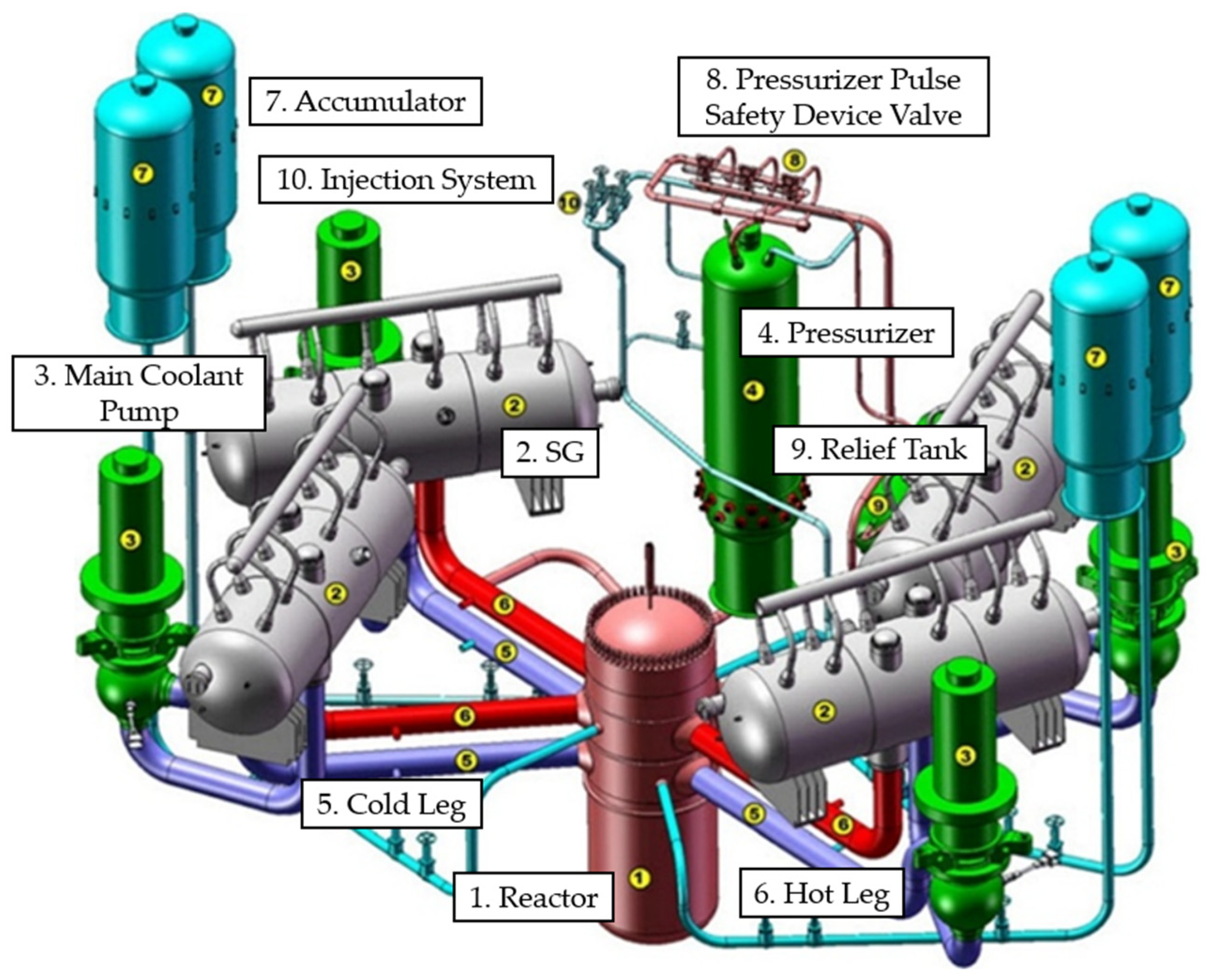
2.1. Overview of the VVER-1000 Reactor
2.2. TRACE
2.3. PARCS
2.4. Coupling PARCS/TRACE
- TRACE computes coolant and fuel properties (e.g., moderator temperature, liquid/vapor density, void fraction, boron concentration, centerline and surface temperature of heat structures). These calculations are based on the power distribution provided by PARCS, which serves as the heat source for heat conduction [4].
- PARCS updates macroscopic cross-section data using the local conditions of the coolant and fuel, as received from TRACE. PARCS then calculates the 3D neutron flux and sends the resulting node-wise power distribution back to TRACE.
3. Models and Methodology
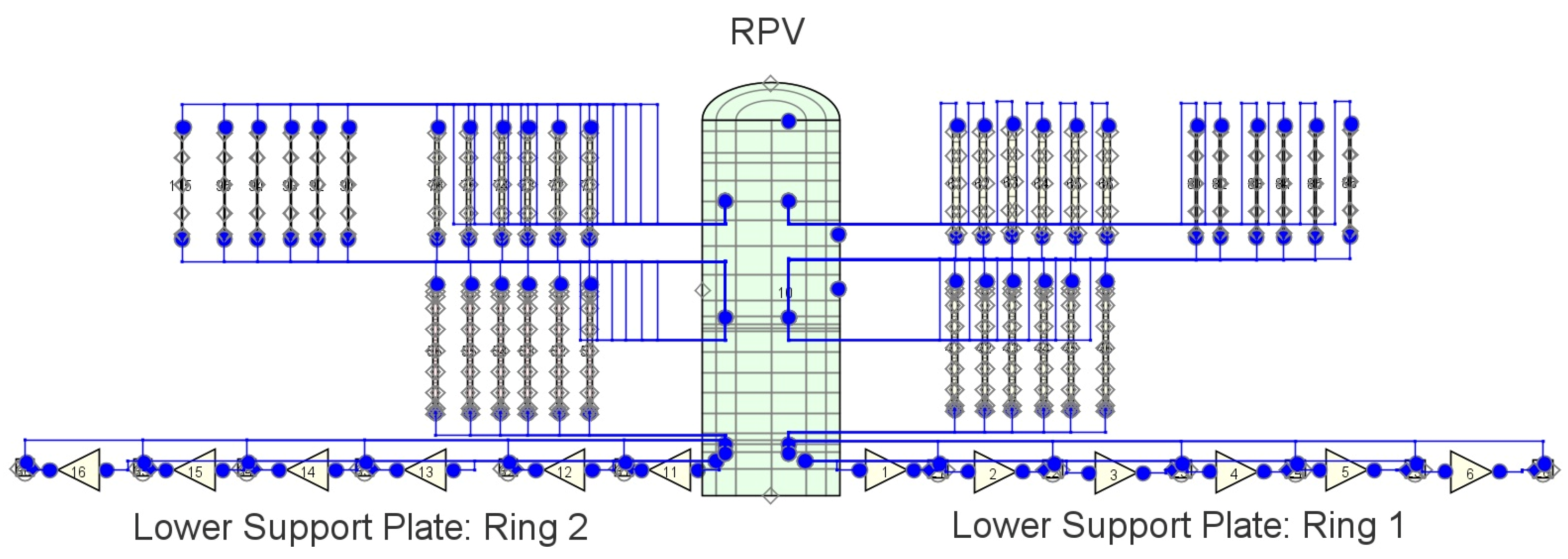
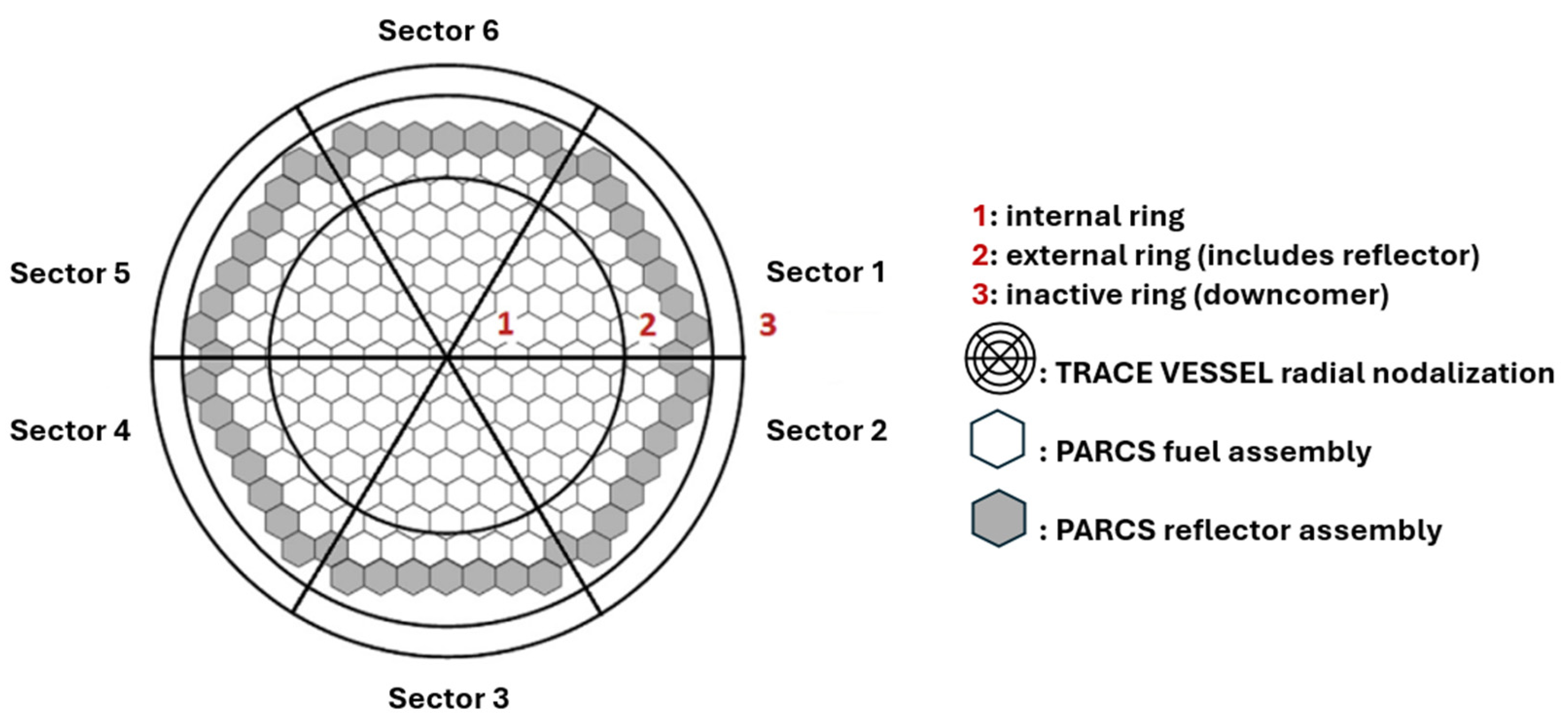
3.1. TRACE Model
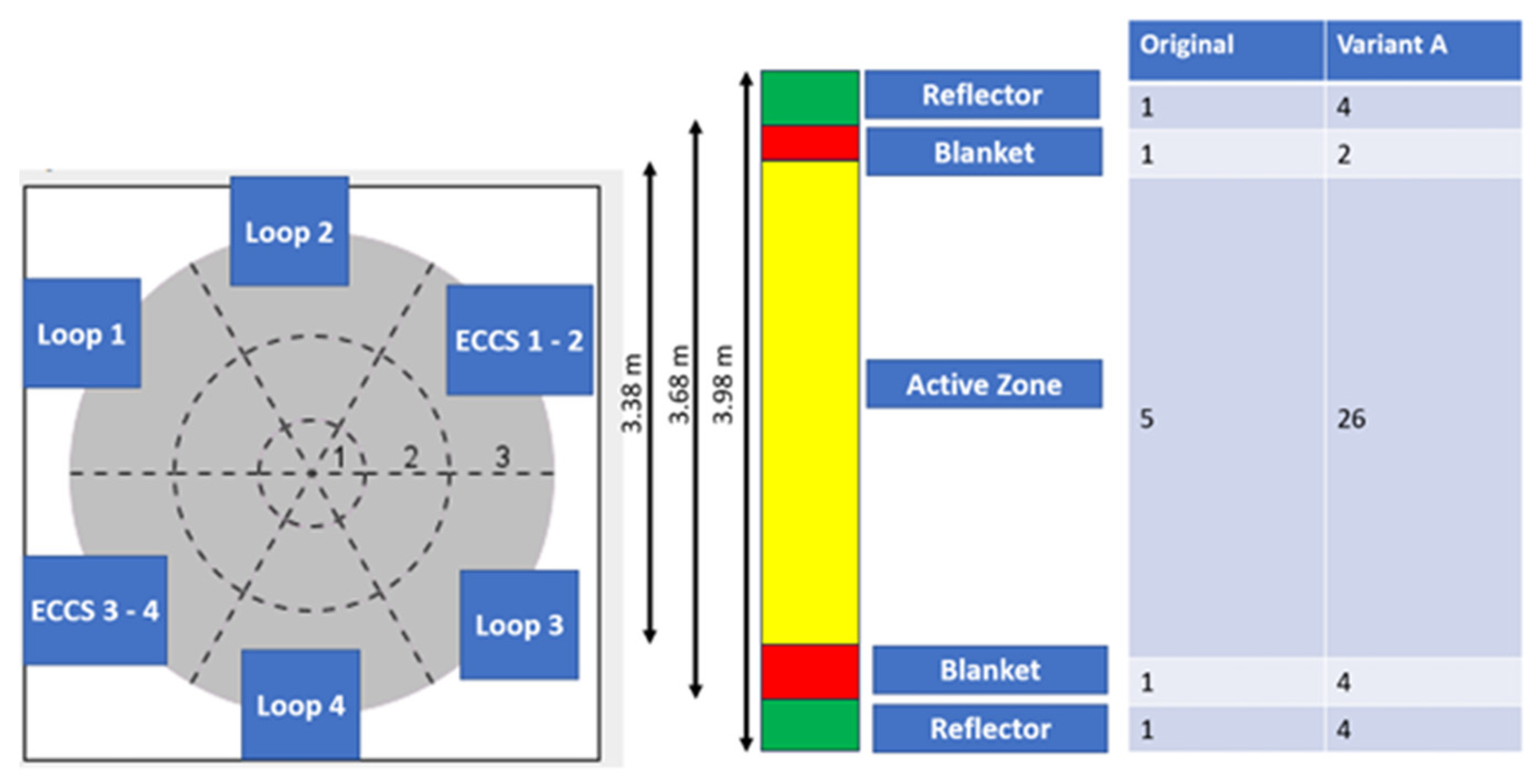
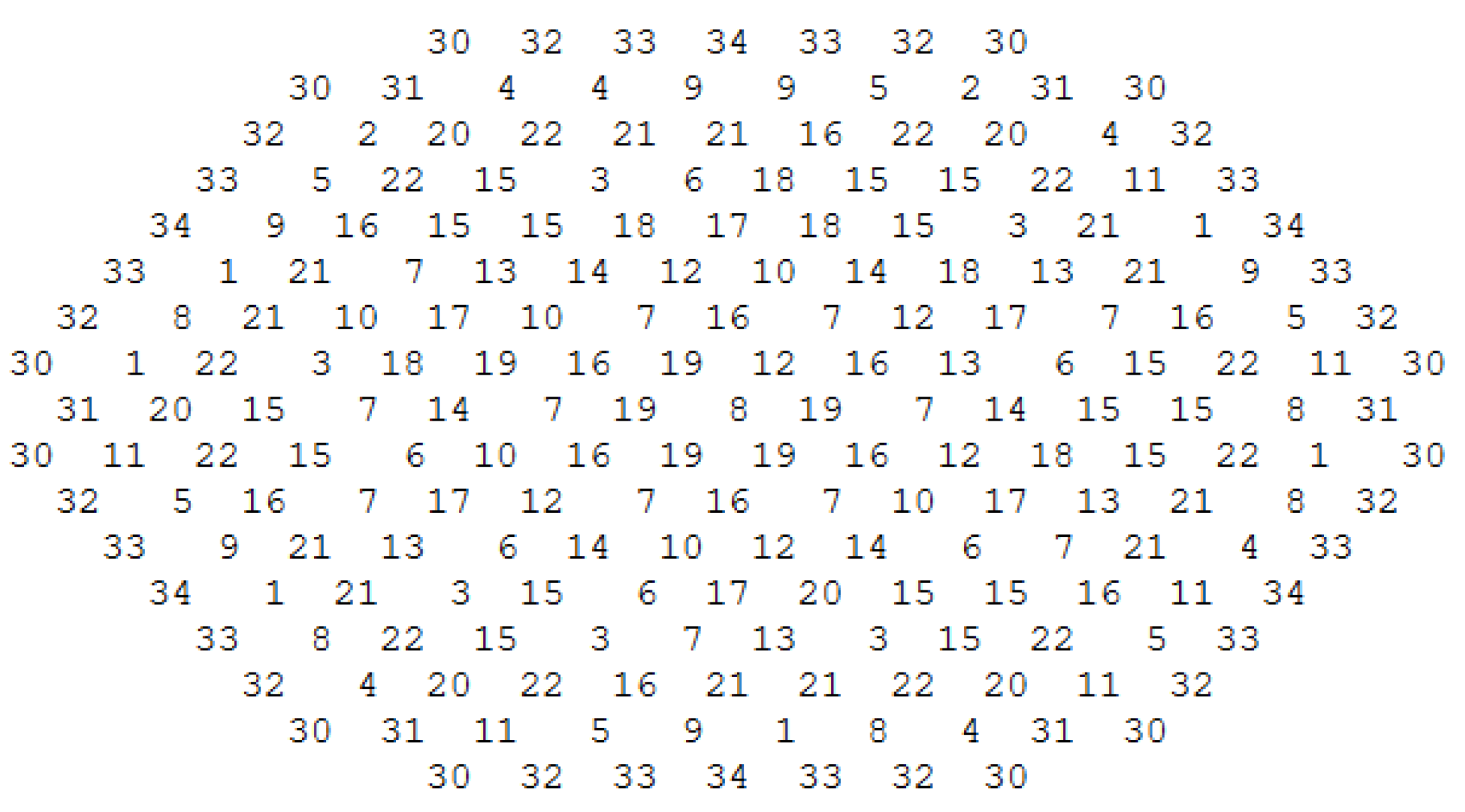
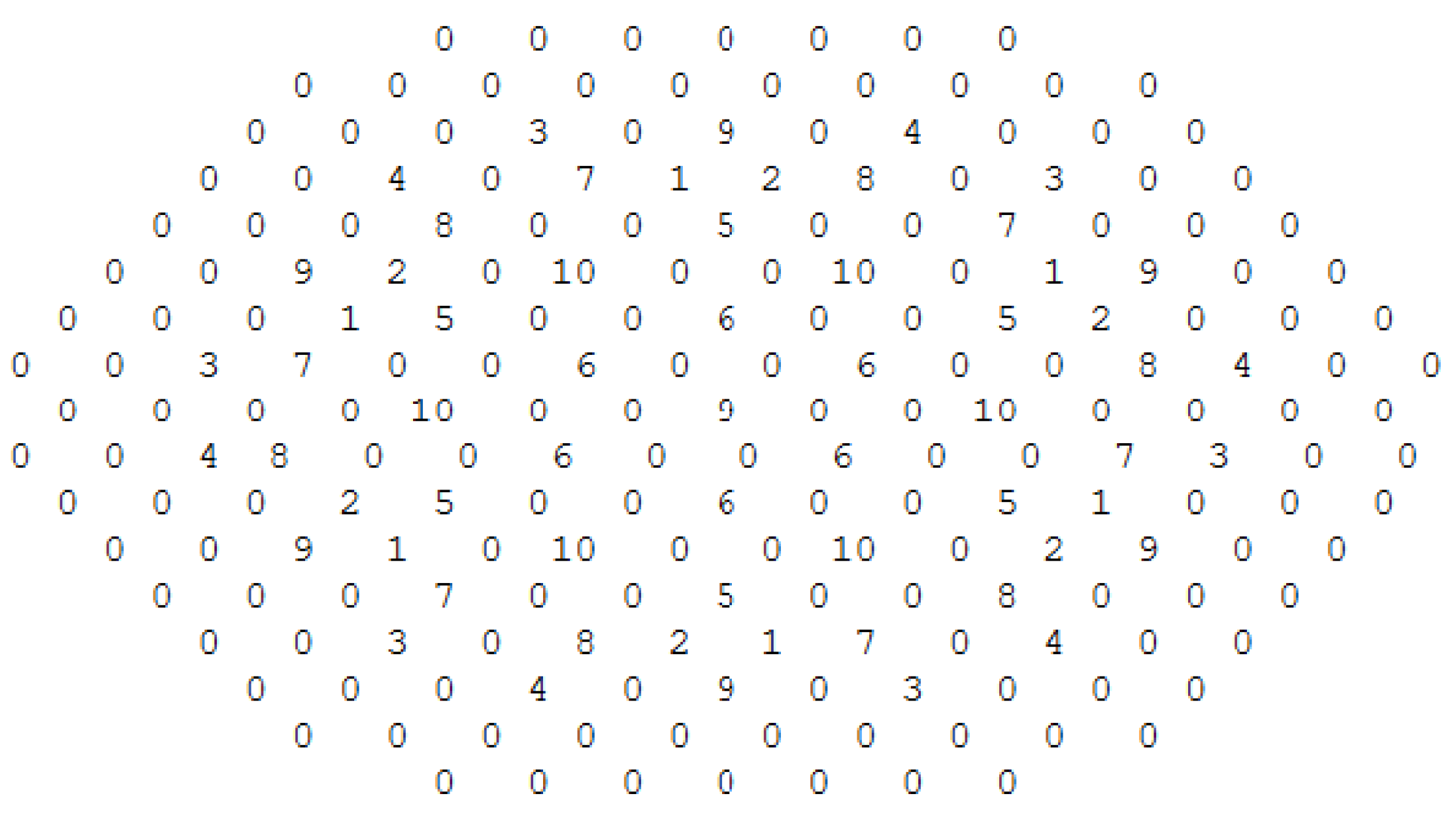
3.2. PARCS Model
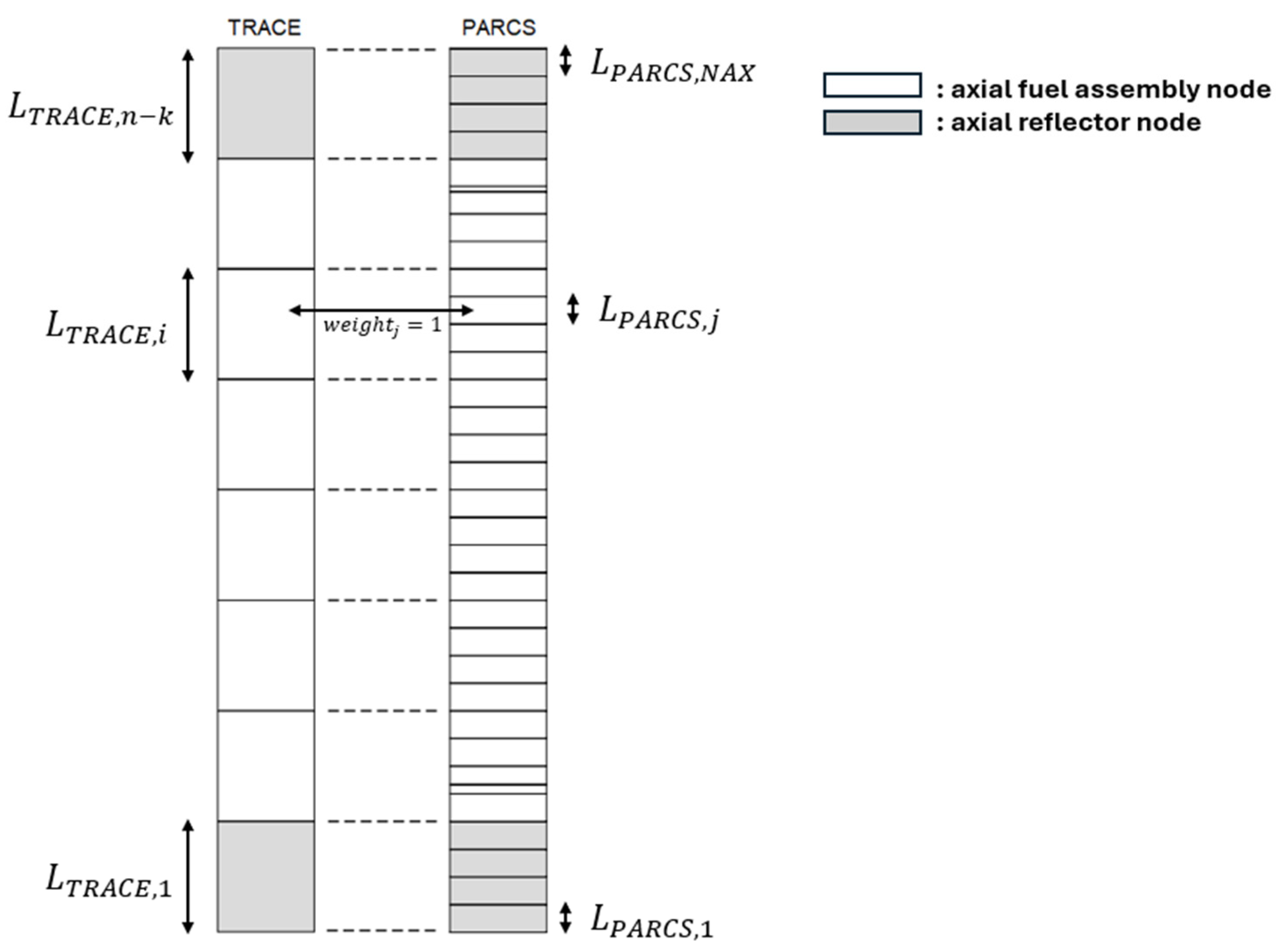
- 26 nodes of 13 cm for the fuel active length;
- 4 nodes of 5 cm for the bottom blanket pins;
- 2 nodes of 5 cm for the top blanket pins;
- 4 nodes of 3.75 cm for the bottom reflector region;
- 4 nodes of 3.75 cm for the top reflector region;
- 40 nodes (with the same dimensions) for the radial reflector.
3.3. Coupling Methodology
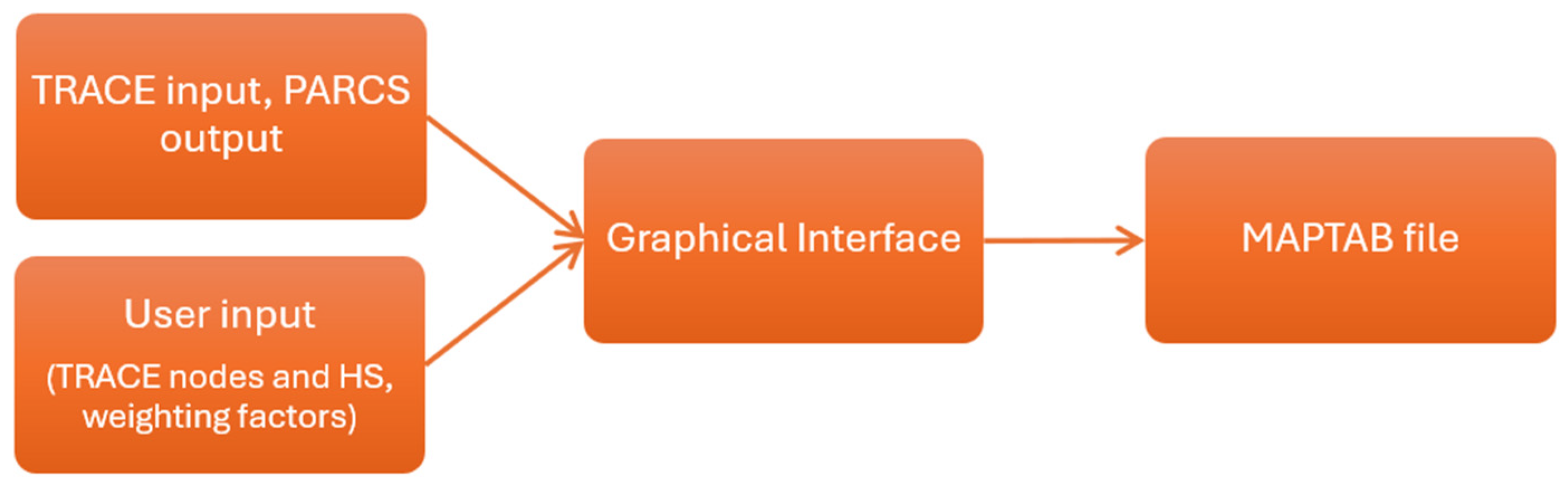
- Mapping between hydrodynamic volumes and neutronic nodes.
- Mapping between heat structures and neutronic nodes.
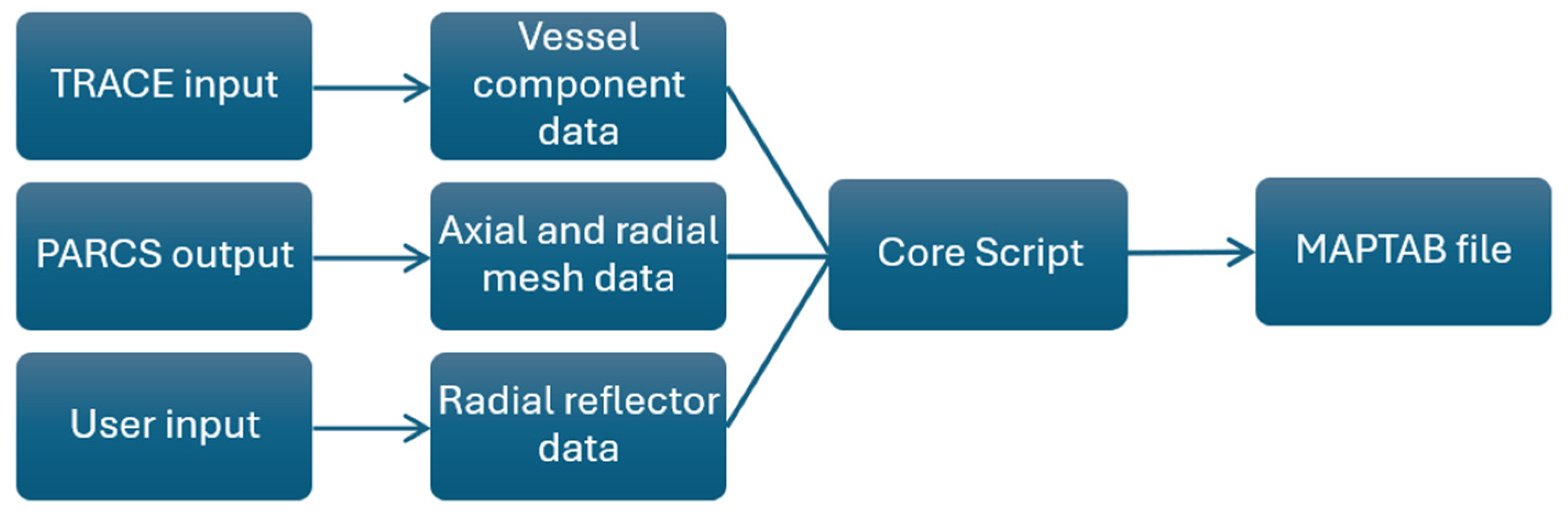
3.3.1. Core Script
3.3.2. Graphical Interface
4. Accident Description and Main Results
4.1. Rod Ejection Accident
4.2. Coupled Steady States
4.3. Coupled Transients
5. Conclusions
Author Contributions
Funding
Data Availability Statement
Acknowledgments
Conflicts of Interest
Abbreviations
| -C | Coupled |
| ECCS | Emergency Core Cooling System |
| FA | Fuel Assembly |
| HS | Heat Structure |
| NPP | Nuclear Power Plant |
| PARCS | Purdue Advanced Reactor Core Simulator |
| PWR | Pressurized Water Reactor |
| REA | Rod Ejection Accident |
| RPV | Reactor Pressure Vessel |
| SA | Stand Alone |
| SBLOCA | Small Break Loss Of Coolant Accident |
| SG | Steam Generator |
| SNAP | Symbolic Nuclear Analysis Package |
| SS | Steady State |
| T/H | Thermal-Hydraulics |
| TRACE | TRAC/RELAP Advanced Computational Engine |
| Tr | Transient |
| U.S. NRC | U.S. Nuclear Regulatory Commission |
| VVER | Water–Water Power Reactor |
References
- International Energy Agency. Net Zero by 2050—A Roadmap for the Global Energy Sector; International Energy Agency: Paris, France, 2021. [Google Scholar]
- Demazière, C. Modelling of Nuclear Reactor Multi-Physics—From Local Balance to Macroscopic Models in Neutronics and Thermal-Hydraulics; Academic Press: Cambridge, MA, USA, 2019. [Google Scholar]
- Vojackova, J.; Novotny, F.; Katovsky, K. Safety Analyses of Reactor VVER 1000. Energy Procedia 2017, 127, 352–359. [Google Scholar] [CrossRef]
- U.S. NRC. TRACE V5.840 USER’S MANUAL Volume 1: Input Specification; U. S. Nuclear Regulatory Commission: Washington, DC, USA, 2014. [Google Scholar]
- U.S. NRC. PARCS v3.4.2 Volume 1: Input Manual; U. S. Nuclear Regulatory Commission: Washington, DC, USA, 2022. [Google Scholar]
- Information Systems Laboratories, Inc. Symbolic Nuclear Analysis Package (SNAP) User’s Manual; Version 4.2.1; Information Systems Laboratories: San Diego, CA, USA, 2024. [Google Scholar]
- Ruscak, M.; Mazzini, G. PARCS/TRACE Coupling Methodology for Rod Ejection on Vver 1000 Reactor. Acta Polytech. CTU Proc. 2016, 4, 80–88. [Google Scholar] [CrossRef]
- Miglierini, B.; Kozlowski, T. Investigation of VVER-1000 Rod Ejection Accident According to the Phenomenon Identification and Ranking Tables for PWR. Prog. Nucl. Energy 2018, 108, 438–444. [Google Scholar] [CrossRef]
- Nesti, G. PARCS/TRACE Coupling Methodology for Simulating Transient Scenarios in Hexagonal Lattice Reactors. Master’s Thesis, Sapienza University of Rome, Rome, Italy, 2024. [Google Scholar]
- AREVA Rod Ejection Accident. Available online: https://www.nrc.gov/docs/ML1207/ML12072A149.pdf (accessed on 15 July 2025).
- Ryzhov, S.B.; Mokhov, V.A.; Nikitenko, M.P.; Bessalov, G.G.; Podshibyakin, A.K.; Anufriev, D.A.; Gadó, J.; Rohde, U. VVER-Type Reactors of Russian Design; Springer: Berlin/Heidelberg, Germany, 2010. [Google Scholar]
- U.S. NRC the Code Application and Maintenance Program (CAMP). Available online: https://www.nrc.gov/about-nrc/regulatory/research/camp.html (accessed on 15 July 2025).
- Tabadar, Z.; Aghajanpour, S.; Jabbari, M.; Khaleghi, M.; Hashemi-Tilehnoee, M. Thermal-Hydraulic Analysis of VVER-1000 Residual Heat Removal System Using RELAP5 Code, an Evaluation at the Boundary of Reactor Repair Mode. Alex. Eng. J. 2017, 57, 1249–1259. [Google Scholar] [CrossRef]
- Kolev, N.P. VVER-1000 Coolant Transient Benchmark Phase 2 (V1000CT-2), Vol.II: Final Specifications of the MSLB Problem; Nuclear Energy Agency: Paris, France, 2006. [Google Scholar]
- Ivanov, B.; Ivanov, K.; Popov, E. TRACE/PARCS Calculations of Exercises 1 and 2 of the V1000CT-2 Benchmark. In Proceedings of the International Topical Meeting in Reactor Physics (PHYSOR 2006), Vancouver, BC, Canada, 10–14 September 2006. [Google Scholar]
- Jaeger, W.; Hugo, V.; Espinoza, S.; Karlsruhe, F. Safety Related Investigations of the VVER-1000 Reactor Type by the Coupled Code System TRACE/PARCS. J. Power Energy Syst. 2007, 2, 648–661. [Google Scholar] [CrossRef][Green Version]
- U.S. NRC. TRACE V5.840 USER’S MANUAL Volume 2: Modeling Guidelines; U. S. Nuclear Regulatory Commission: Washington, DC, USA, 2014. [Google Scholar][Green Version]
- Python.org, Re—Regular Expression Operations. Available online: https://docs.python.org/3/library/re.html (accessed on 15 July 2025).[Green Version]
- Python.org, Tkinter—Python Interface to Tcl/Tk. Available online: https://docs.python.org/3/library/tkinter.html (accessed on 15 July 2025).[Green Version]
- LWR Edition (NUREG-0800); Standard Review Plan for the Review of Safety Analysis Reports for Nuclear Power Plants. Formerly Issued as NUREG-75/087. U.S. NRC: Washington, DC, USA, 2023.[Green Version]
- Diamond, D.J.; Bromley, B.P.; Aronson, A.L. Studies of the Rod Ejection Accident in a PWR; Brookhaven National Laboratory: Suffolk County, NY, USA, 2002. [Google Scholar][Green Version]
- Iegan, S.; Mazur, A.; Vorobyov, Y.; Zhabin, O.; Yanovskiy, S.; Tien, K. NUREG/IA-0490 “International Agreement Report—TRACE VVER-1000/V-320 Model Validation”; U. S. Nuclear Regulatory Commission: Washington, DC, USA, 2018. [Google Scholar][Green Version]



| Parameter | Value |
|---|---|
| Reactor plant type | V-320 |
| Nominal thermal power (MW) | 3000 |
| Primary pressure (MPa) | 15.7 |
| Secondary pressure (MPa) | 6.27 |
| Coolant flowrate through reactor (m3/h) | 84,800 |
| Coolant temperature at reactor outlet (°C) | 320 |
| Number of fuel assemblies | 163 |
| Number of control rod drives | 61 |
| Uranium inventory (t) | 80 |
| U-235 enrichment of fuel (%) | 4.4 |
| Plant operational lifetime (years) | 30 |
| Parameter | Units | Reference | Original | Original–Coupled | Var. A | Var. A– Coupled |
|---|---|---|---|---|---|---|
| Reactor Power (Boundary condition) | [MW] | 3000 | 3000 | 3000 | 3000 | 3000 |
| Pressure in Pressurizer | [MPa] | 15.7 ± 0.3 | 15.67 | 15.67 | 15.67 | 15.67 |
| Water temperature at the active zone inlet | [°C] | 290.00 | 289.21 | 288.76 | 288.85 | 288.95 |
| Water temperature at the exit of active zone | [°C] | 320.00 | 319.25 | 319.85 | 318.67 | 319.31 |
| Water flow in the active zone | [kg/s] | 17,126.00 | 17,176.15 | 17,229.12 | 17,495.55 | 17,525.58 |
| Pressure in SG | [MPa] | 6.30 | 6.30 | 6.31 | 6.30 | 6.31 |
| Outlet temperature of steam from SG | [°C] | 278.50 | 278.95 | 278.98 | 278.95 | 278.99 |
| Core pressure drop | [MPa] | x | 0.16 | 0.16 | 0.16 | 0.16 |
| Feed Water inlet temperature | [°C] | x | 222.16 | 222.16 | 222.17 | 222.16 |
| Water flow rate in Pressurizer loop | [kg/s] | x | 4601.50 | 4601.50 | 4601.50 | 4601.50 |
| Feed water/steam flow rate | [kg/s] | x | 410.08 | 413.10 | 410.25 | 413.50 |
| Parameter | Units | Original–Coupled [%] | Var. A–Coupled [%] |
|---|---|---|---|
| Pressure in Pressurizer | [MPa] | 0.19 | 0.19 |
| Water temperature at the active zone inlet | [°C] | 0.43 | 0.36 |
| Water temperature at the exit of active zone | [°C] | 0.05 | 0.22 |
| Water flow in the active zone | [kg/s] | −0.60 | −2.28 |
| Pressure in SG | [MPa] | −0.16 | −0.16 |
| Outlet temperature of steam from SG | [°C] | −0.17 | −0.18 |
Disclaimer/Publisher’s Note: The statements, opinions and data contained in all publications are solely those of the individual author(s) and contributor(s) and not of MDPI and/or the editor(s). MDPI and/or the editor(s) disclaim responsibility for any injury to people or property resulting from any ideas, methods, instructions or products referred to in the content. |
© 2025 by the authors. Licensee MDPI, Basel, Switzerland. This article is an open access article distributed under the terms and conditions of the Creative Commons Attribution (CC BY) license (https://creativecommons.org/licenses/by/4.0/).
Share and Cite
Nesti, G.; Mazzini, G.; Dambrosio, A.; D’Onorio, M. Advancements in PARCS/TRACE Coupling and Simulation of Rod Ejection Accident in VVER-1000 Nuclear Reactor. Energies 2025, 18, 5500. https://doi.org/10.3390/en18205500
Nesti G, Mazzini G, Dambrosio A, D’Onorio M. Advancements in PARCS/TRACE Coupling and Simulation of Rod Ejection Accident in VVER-1000 Nuclear Reactor. Energies. 2025; 18(20):5500. https://doi.org/10.3390/en18205500
Chicago/Turabian StyleNesti, Gianluca, Guido Mazzini, Antonio Dambrosio, and Matteo D’Onorio. 2025. "Advancements in PARCS/TRACE Coupling and Simulation of Rod Ejection Accident in VVER-1000 Nuclear Reactor" Energies 18, no. 20: 5500. https://doi.org/10.3390/en18205500
APA StyleNesti, G., Mazzini, G., Dambrosio, A., & D’Onorio, M. (2025). Advancements in PARCS/TRACE Coupling and Simulation of Rod Ejection Accident in VVER-1000 Nuclear Reactor. Energies, 18(20), 5500. https://doi.org/10.3390/en18205500