1. Introduction
Interest in renewable and clean energy sources has increased considerably, driven by the scarcity of fossil fuels, an increase in environmental awareness, and the urgency to mitigate climate change. Within this context, distributed generation (DG), particularly through renewable sources such as solar and wind energy, has received substantial investments. These sustainable forms of electrical energy generation have experienced significant growth in recent years, increasingly contributing to the global energy matrix [
1,
2].
The main objective of this study is to provide benefits to rural communities, many of which are served by predominantly single-phase electrical energy distribution systems. Although single-phase topology with one or two conductors can meet most installation needs, certain particularities require more significant power loads for some rural consumers, resulting in the use of three-phase motors. Commonly, the solution to this problem has been to replace the rural consumer’s single-phase line with a new three-phase topology line. However, this replacement is costly and often unfeasible for both the consumer and distribution companies. Occasionally, single-phase input and three-phase output frequency inverters based on power electronics are also used. However, this solution is expensive, as commercially, the power provided is limited to motors of 20 hp. For power above this, orders must be placed directly with the supplier. Electricity plays a crucial role in improving the quality of life of rural inhabitants, being used both for domestic use and as an essential input to increase the productivity and quality of agricultural products. Currently, the development of new irrigated planting techniques (according to [
3]), and even the processing of agricultural products in the production sites themselves, impose on rural producers the need to increase electricity consumption, mainly in terms of maximum demand. With only the single-phase system available, rural producers are limited by the very characteristics inherent to this type of electrical system.
The studies performed on an asymmetric three-phase induction motor in [
4,
5] found that the motor has satisfactory efficiency only if the applied load is the nominal load of the motor. When values are outside this range, the motor loses its efficiency, thus making its use unfeasible. If one takes into consideration that these loads are normally used in rural areas, whether in irrigation or other applications, this means they do not have constant demand, and therefore the load varies in relation to the time used. It is important to emphasize that the load cannot always be calculated by the operator of the equipment to which the asymmetric three-phase induction motor is connected.
The purpose of this study as in [
6,
7] is to demonstrate the feasibility of using asymmetric induction motors in operations with variable loads through the implementation of a capacitor switching system that is adjustable in accordance with the applied load. Since asymmetric engines tend to operate effectively only under nominal loads, this study seeks to enable their use in rural environments, which are characterized by the presence of variable loads.
Within this context, this research aims to present a study of an eminently technical–scientific nature. An important point that has not yet been addressed is the performance of the asymmetric three-phase induction motor with single-phase supply under variable load conditions, that is, from the no-load condition to a 120% load condition. This work seeks to analyze various charging conditions, using capacitor switching to minimize torque fluctuations throughout the motor’s operation.
This article is organized into seven sections: In this first step, the contextualization of the topic covered in the research and its contributions are introduced. The
Section 2 presents definitions of the mathematical formulation of the asymmetric engine. The
Section 3 is used to describe the defined method for capacitor switching in asymmetric motor control. In the
Section 4, emphasis is placed on how the computer simulation used in the research demonstrates that capacitor switching is genuinely effective for controlling the asymmetric motor. In the
Section 5, experimental tests are presented that corroborate the approach regarding simulations. And finally, the
Section 6 addresses final considerations on the obtained results.
3. Dynamic Capacitance Switching
Previously, in [
15,
16], a switching method already in use in some applications was studied, which consisted of using two capacitors actuated by speed through a centrifugal switch. This is not sufficient, as the expected load change requires a faster response to maintain the machine’s efficiency. In [
17], the use of an electronic switch with H-bridge topology and a centrifugal switch to actuate the capacitor was chosen. In [
18], they used the topology of multiple winding inverters with a PWM signal for capacitance control. A new method called quick start was applied, where the motor can reach nominal speed in a short period of time. However, this type of topology becomes financially costly depending on the machine’s power, thus making it unfeasible for the consumer.
According to the results demonstrated in [
19,
20], a good asymmetric performance of the motor in nominal circumstances was obtained, with the use of a fixed capacitor in the steady state, but half-load conditions did not provide a good effect. The fixed capacity becomes, for half loads, the cause of torque oscillations greater than those under nominal conditions.
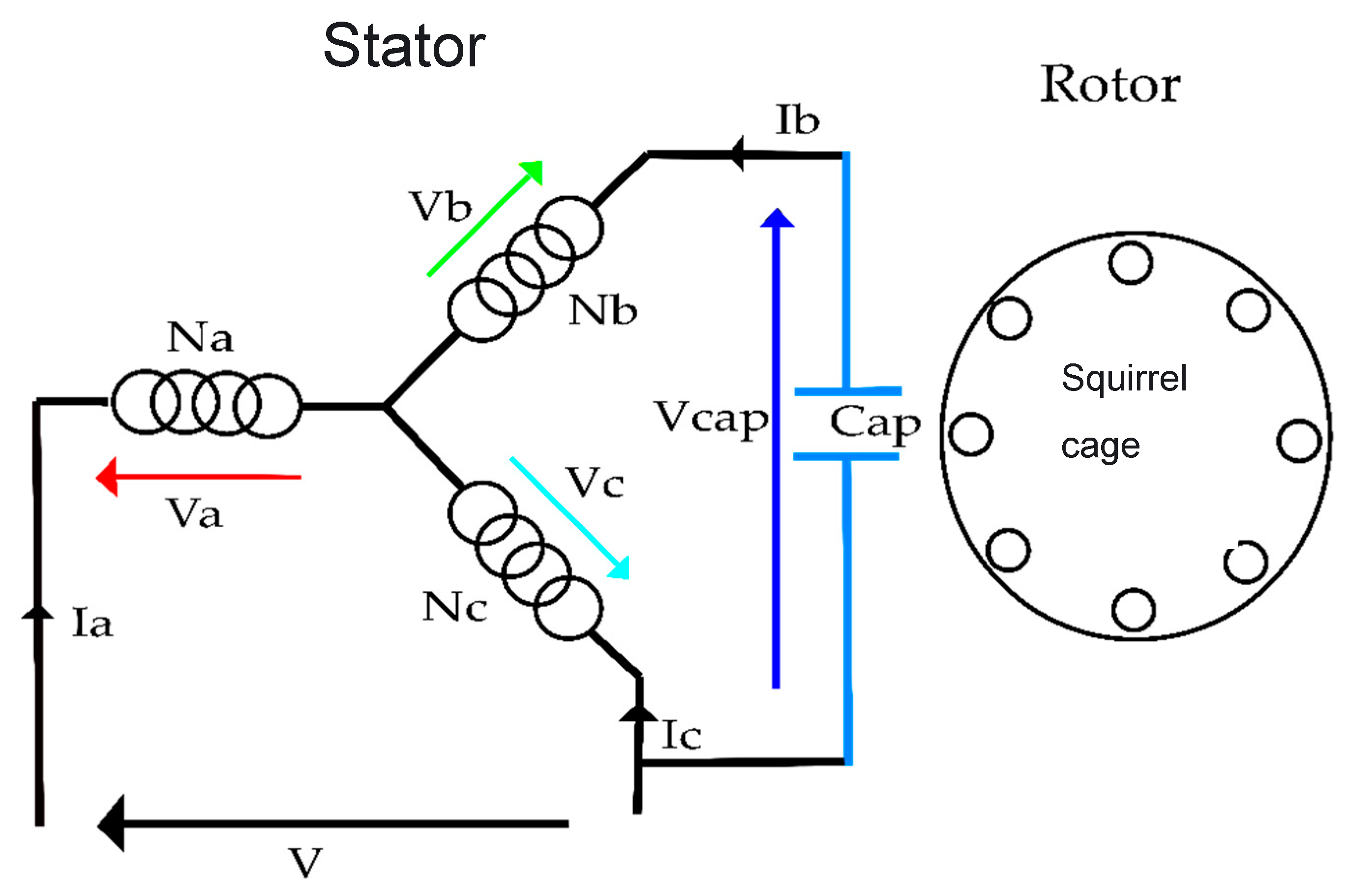
Electronic capacitance switching consists of connecting just one 40 nf capacitor, which, depending on its switching, inserts capacitance of different levels into the motor while the load changes. This means that for each change in load on the center line of the motor, the electronic circuit increases or decreases the capacitance. For each load regime, a different distribution of mmf in the air gap of the machine is established, and consequently the internal imbalance changes; this change creates a favorable environment for the pulsating electromagnetic torque. The objective behind this electronic switching is to promote a reduction in internal imbalance. Consequently, by following this philosophy, a different capacitance will be performed for each load condition.
4. Simulation with the Switching of a Single Capacitor for Every Load Level
As observed in [
21], which used Matlab Simulink to simulate the Dynamics of a Three-Phase Induction Motor, for this article the same strategy as the Matlab Simulink software, version R2021a was used.
This simulation consists of dynamic (automatic) switching, where the system takes phase “a” as a reference and, according to the load percentage and through use of control techniques, one finds the characteristic curve during starting.
One can check the motor speed with load steps at 0%, 20%, 50%, 80%, 100%, and 120%.
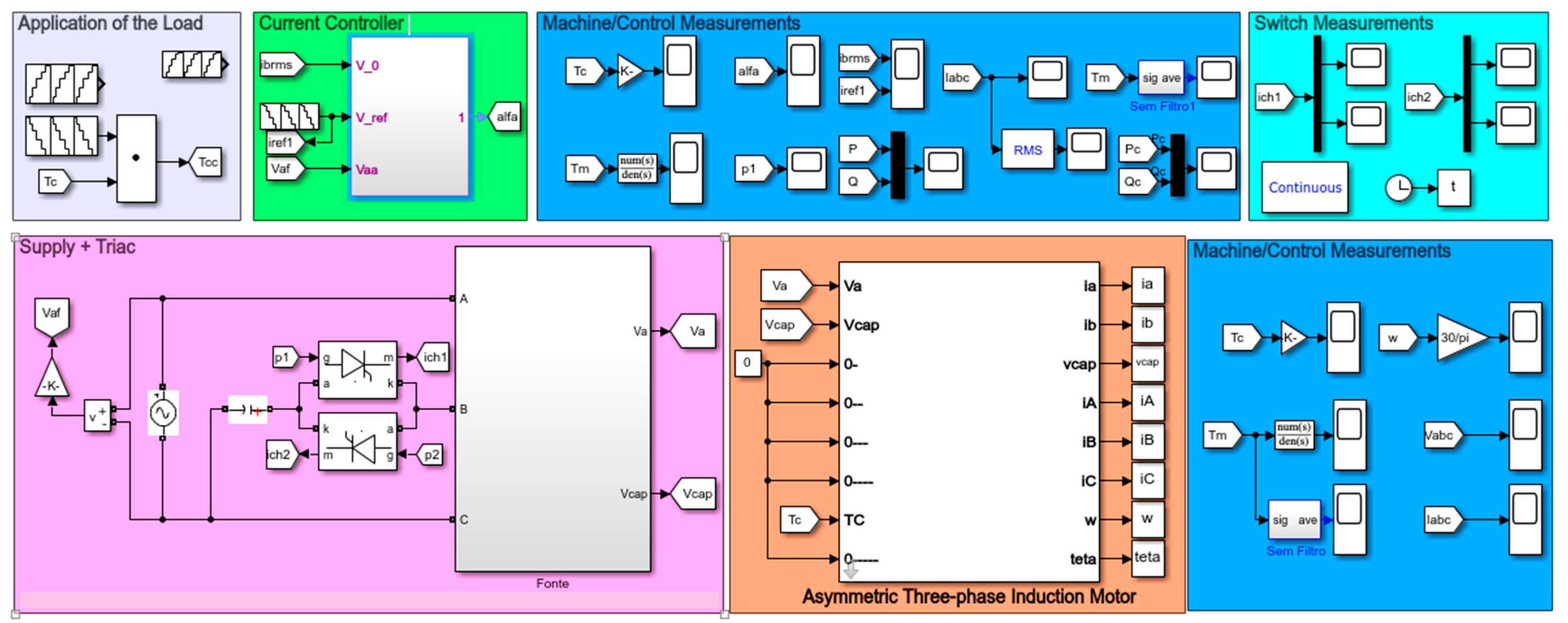
Figure 2 shows the strategy implemented to control the current circulating between phases a and c, which manages the loading of the asymmetric three-phase machine.
Basically, the platform employs a TRIAC in series with the capacitor, coupled between phases b and c. Since Simulink does not yet provide this semiconductor in its library, two (2) thyristors connected in an anti-parallel construction were used for each phase of the MIT, between the motor and the grid.
This semiconductor device will switch appropriately to maintain the current circulating between phases a and c at a predetermined value, inserting only the necessary capacitance value into the machine for its proper functioning, with smaller torque oscillations and lower currents.
The simulation screen shown in
Figure 2 is composed of several parts, as follows:
This article consists of dynamic (automatic) switching, where the system uses phase “a” as a reference and, according to the percentage of load and using control techniques, finds the characteristic triggering curve of the TRIAC according to the motor’s needs. Thus, the system becomes efficient and automatic under any machine loading, as the automatic system decides whether to insert or remove capacitance as needed.
The machine was subjected to load percentages of 0%, 20%, 50%, 80%, 100%, and 120%, as shown in
Table 1, where the application time for each load is demonstrated.
In this condition, automatic capacitor switching was implemented. In this strategy, unlike using fixed capacitor or manual capacitor switching, as undertaken in other works, a control was implemented that allowed the insertion of various capacitance values using only one capacitor.
There may be several reasons behind the choice of specific load values:
Range of Analysis: Using a wide range of loads (below and above nominal load) allows for a comprehensive analysis of the motor’s behavior under different operational conditions. This includes scenarios of underload (20%, 50%, and 80%), nominal load (100%), and overload (120%).
Compliance with Industrial Standards: In industrial practice, motors often operate under a variety of load conditions. Evaluating performance at multiple load levels ensures that the motor and power system are adequately sized for a wide range of operations.
Study of Safety and Reliability: Operating and testing the motor beyond its nominal capacity (such as at 120%) is important for understanding safety limits and motor reliability, as well as for identifying potential failures or the need for additional protection.
Therefore, choosing 0%, 20%, 50%, 80%, 100%, and 120% as load levels allows for a detailed and comprehensive analysis of the motor’s behavior under various operating conditions, ensuring that all aspects of performance, safety, and efficiency are considered.
For each load condition, the electronic board makes the decision to increase or decrease capacitance by switching the TRIAC at high frequency, thereby changing the capacitor’s operating capacitance. These values aim to reduce the current flowing through the windings and, at the same time, minimize torque oscillations.
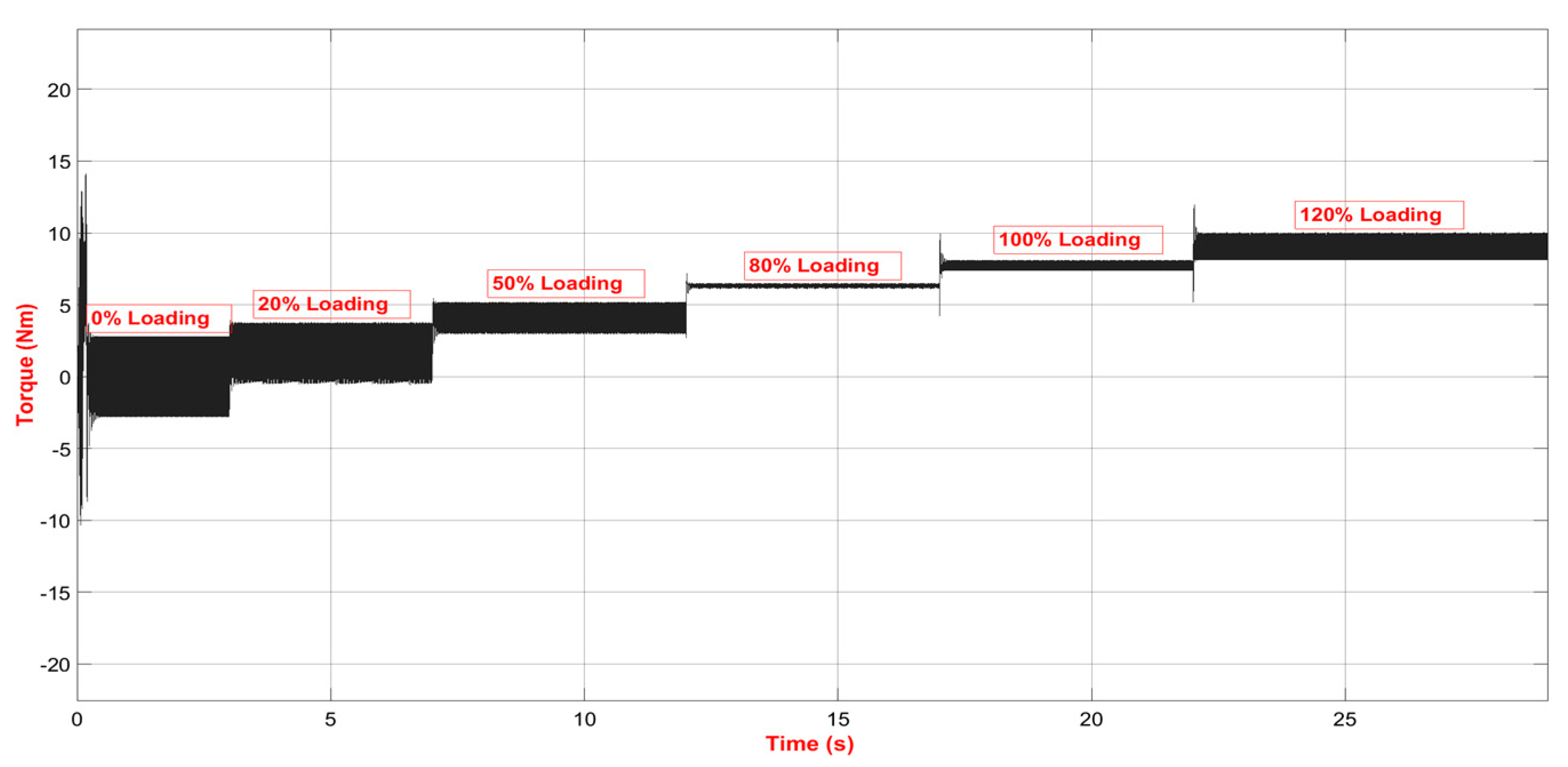
The electromagnetic torque after this simulation is shown in
Figure 3. Following the capacitor switching, a noticeable decrease in torque oscillations is observed.
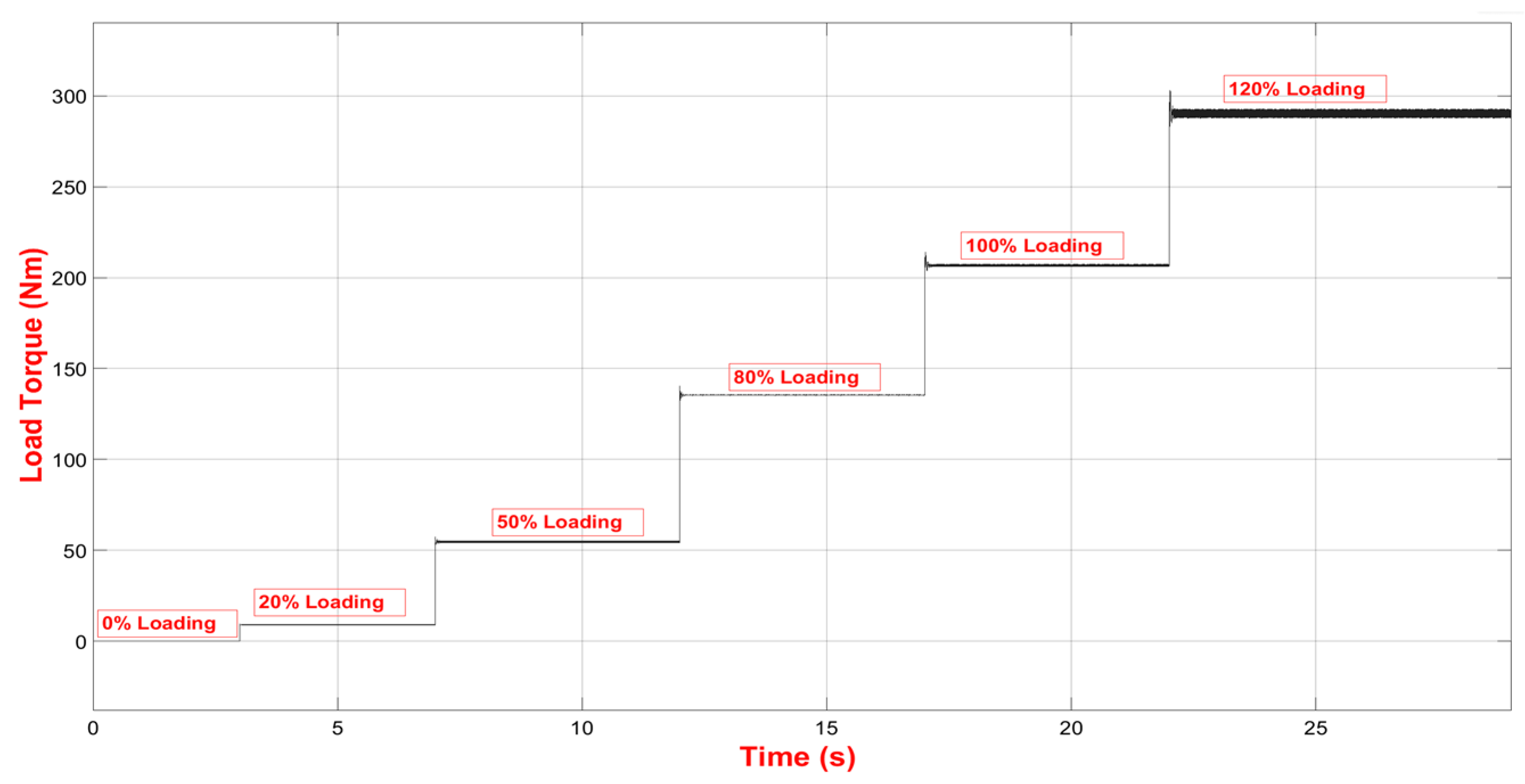
In
Figure 4, the variation in the load torque is shown. Step loads were applied to the machine shaft, with values ranging from 0% to 20%, 50%, 80%, 100%, and 120% of the nominal load.
During the simulations, other variables of the asymmetric motor were measured, such as motor speed and current.
In
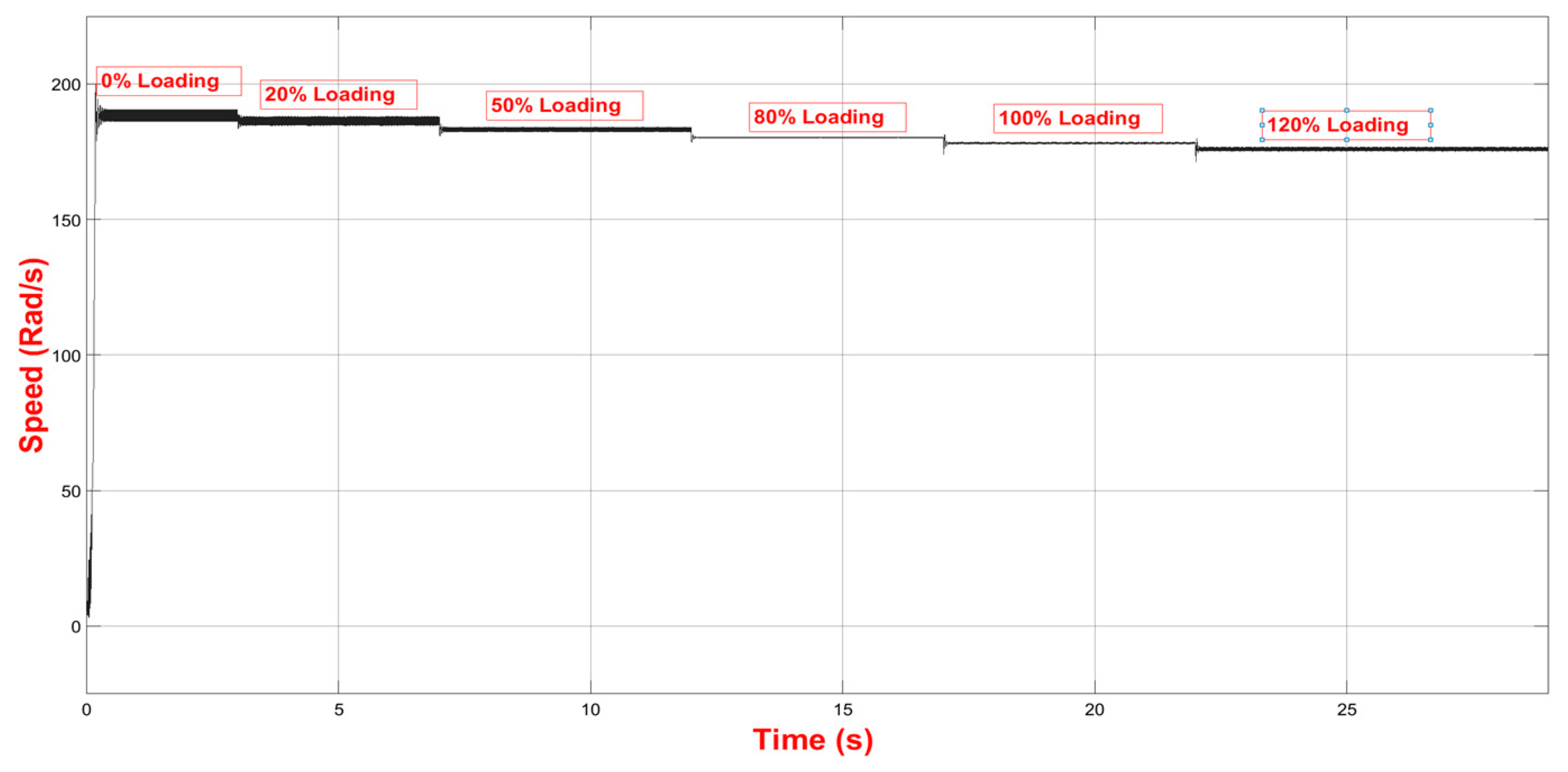
Figure 5, the motor speed can be observed with step loads of 0%, 20%, 50%, 80%, 100%, and 120%. The speed values are in radians per second (rad/s), and these values can be seen in
Table 2.
In
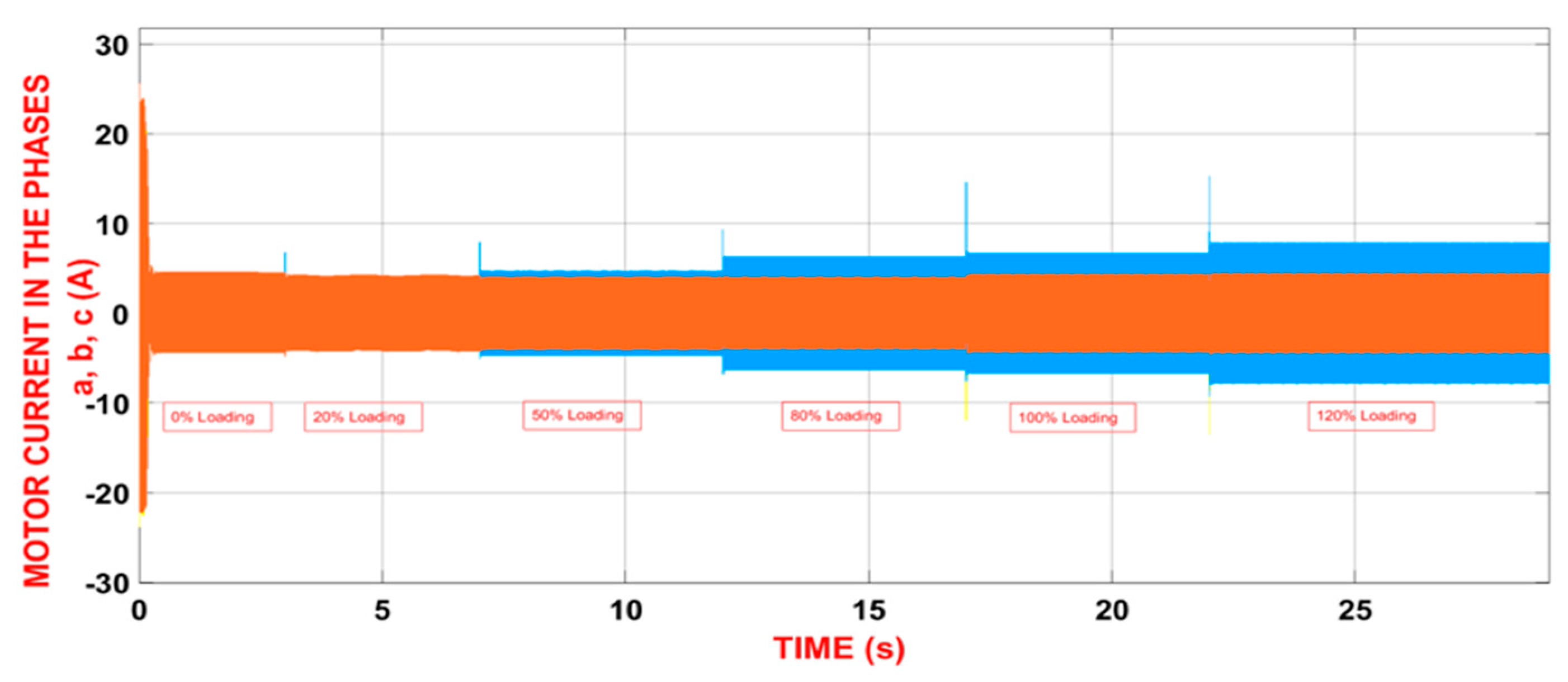
Figure 6, we can verify the current values during the activation of loads. It is observed that with the electronic switching of the capacitor in relation to the load step, the current values show a significant reduction. This indicates that the automatic operation of capacitors, adjusted according to the load levels (load steps), results in a significant decrease in current values.
In the simulations, the motor starts at no load, and the starting current reaches a peak value just below 26 A.
After imposing these load percentages, the currents in phases “a”, “b”, and “c” reach the steady-state values shown in
Table 3.
5. Experimental Tests
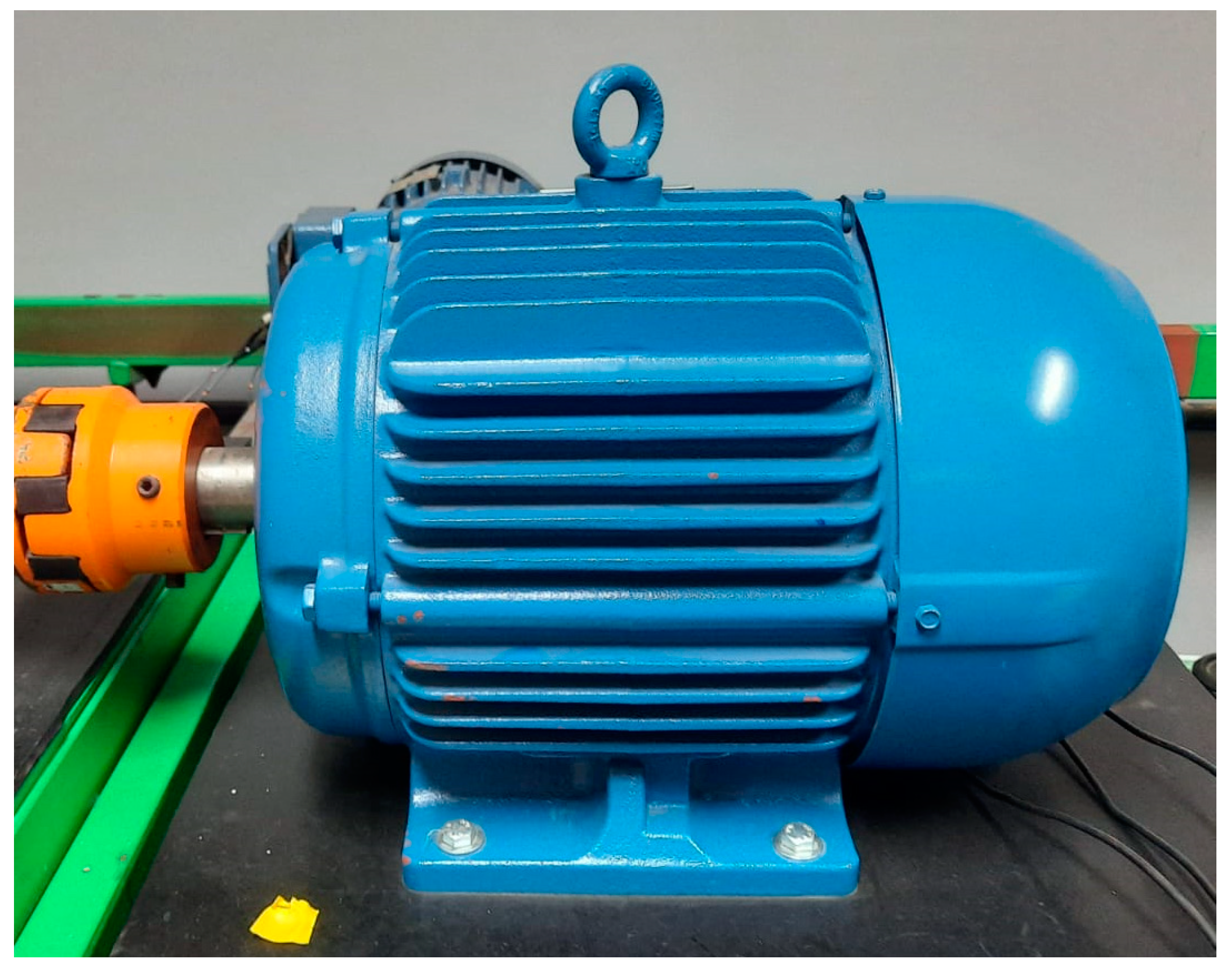
The metal bench was designed for testing engines with over 1 hp and various types of housings. It allows for adjusting the engine’s position during testing according to its size, and is secured by a mechanical assembly controlled by a vertical clamp. The entire structure of the metal base was assembled using carbon steel sheets to reduce system vibration during operation, as depicted in
Figure 7.
The bench enables the performance testing of asymmetric induction electric motors. It facilitates the measurement of applied voltage to the stator coils, stator currents, speed, and torque. The bench allows the determination of input active power, output power, power factor, and efficiency curves, as well as the direct and dynamic acquisition of torque curves under different operating conditions.
5.1. Methodology for Load Application
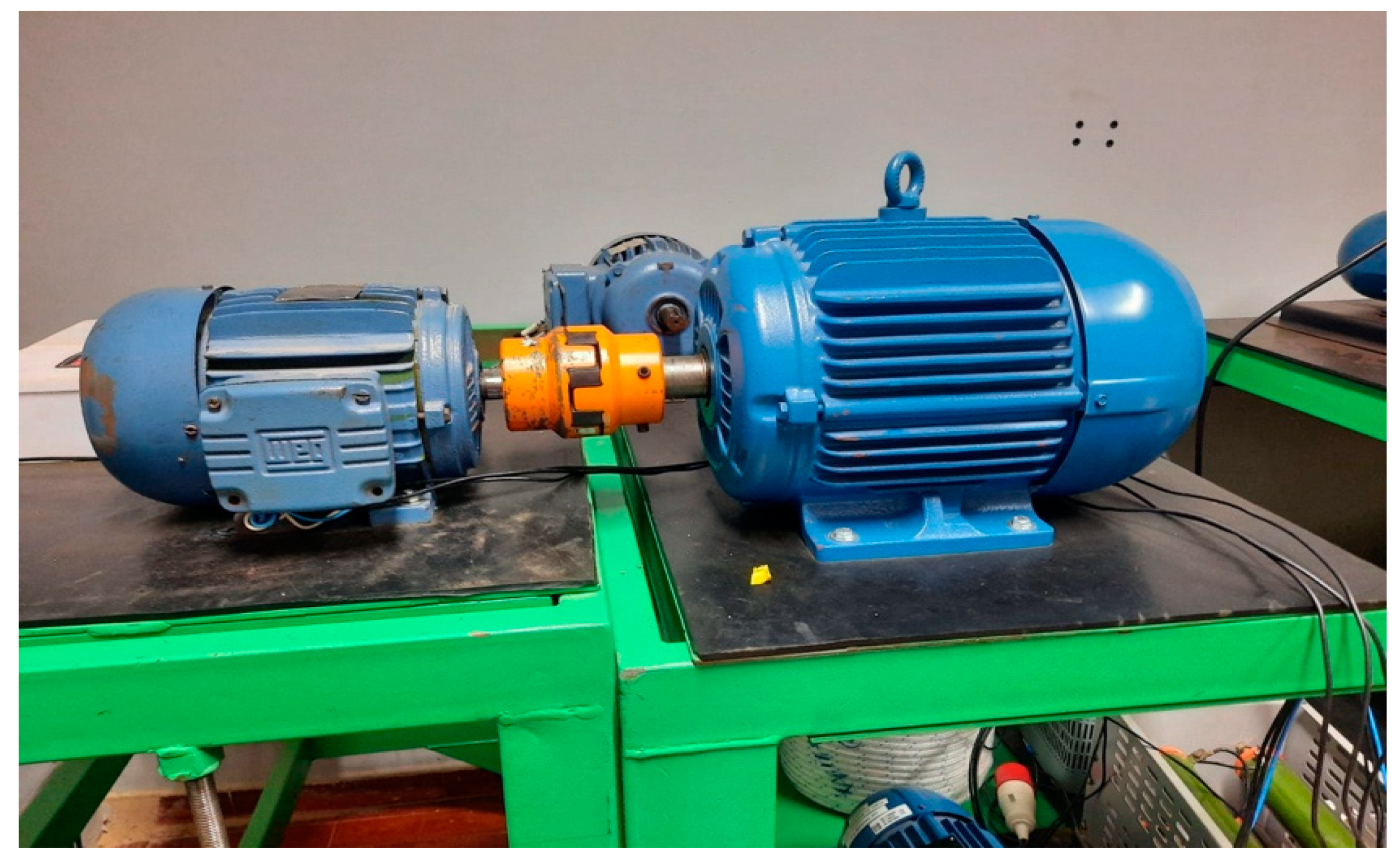
The methodology applied for conducting the tests uses a three-phase induction motor as the primary machine, as shown in
Figure 8. The speed is determined by the primary machine, while the load on the shaft is determined by the motor being tested.
The power of the primary machine was evaluated based on the highest torque value developed by 2 hp motors. It is evident that the primary machine used for torque control has significantly higher power compared to the tested 2 hp motors.
In this stage, the evaluation of the behavior of electrical currents was sought at each engine loading level, defined as 20%, 50%, 80%, 100%, and 120%. However, unlike other studies, the value of the capacitor is automatically defined.
The study of this magnitude is important, considering that it has a significant influence on the sizing of feeders, protection systems, and energy losses.
The noted imbalance in the currents is due to imbalances in the three-phase supply voltages. For the asymmetric motor, it is normal for its currents to be unbalanced.
In
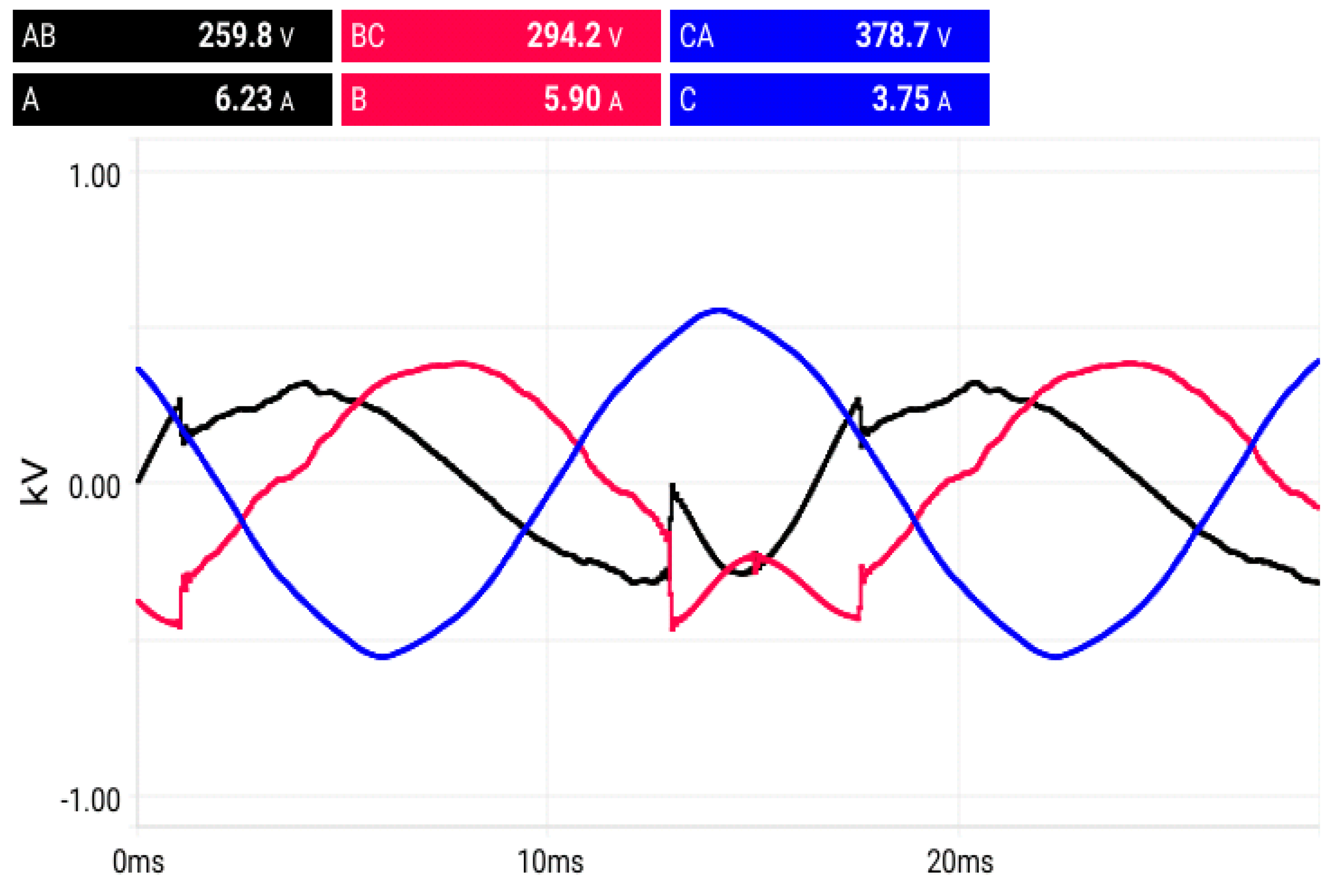
Figure 9, it is observed that with the motor operating at 20% of its load capacity, the analysis is focused on the situation where the motor is running at a fraction of its total capacity, specifically 20%. Steady-state current values were obtained, meaning that the stabilized and constant electrical current values during the continuous operation of the motor under this load condition were measured as 6.23 amperes, 5.90 amperes, and 3.97.
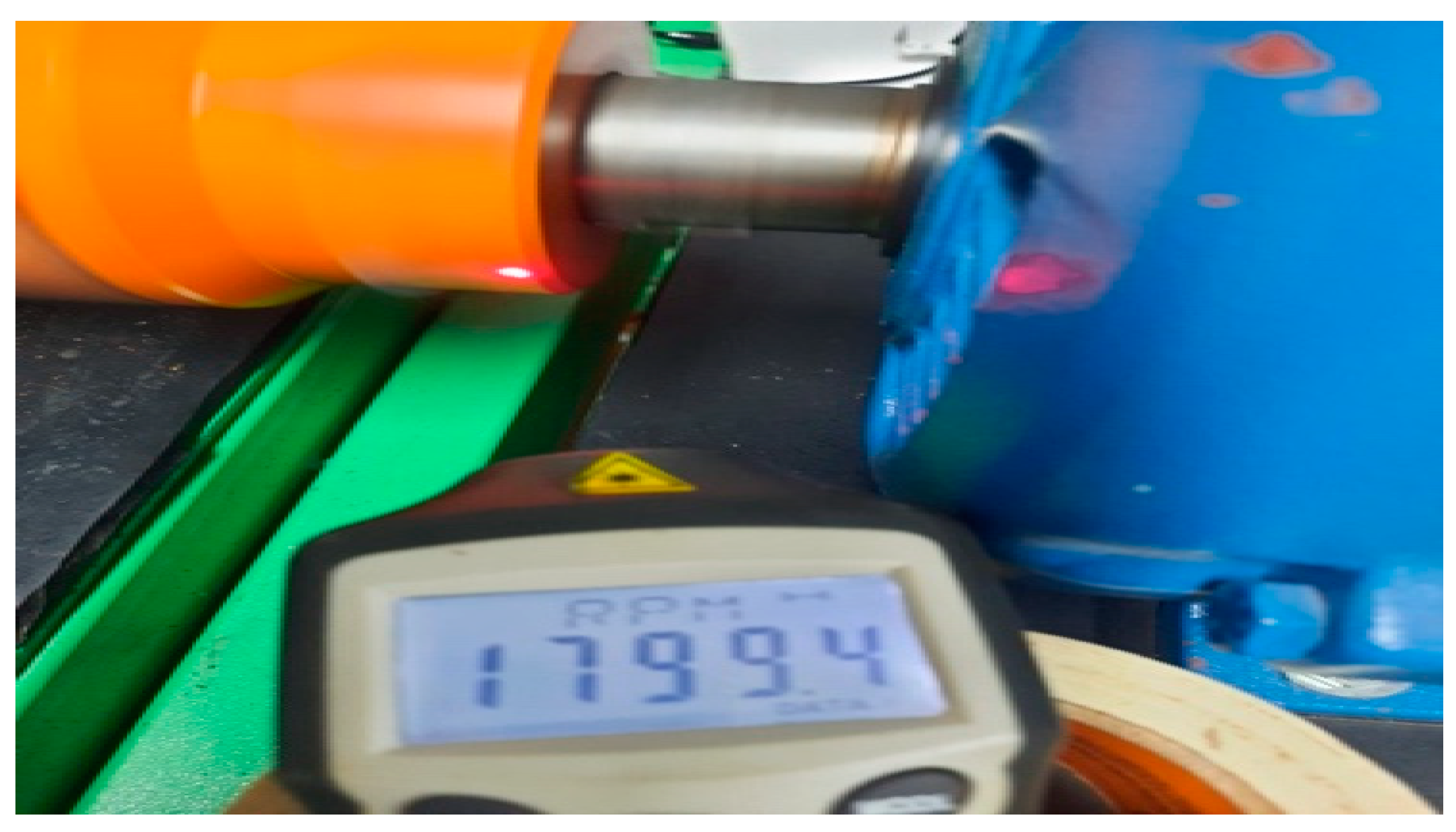
With the engine operating at 20% of its nominal power, it can be observed in
Figure 10 that the measured speed was 1799.4 RPM. Comparing this value with the simulated speed, as presented in
Table 2, which was 1804 RPM, a minimal discrepancy between the actual and simulated values is noted.
According to
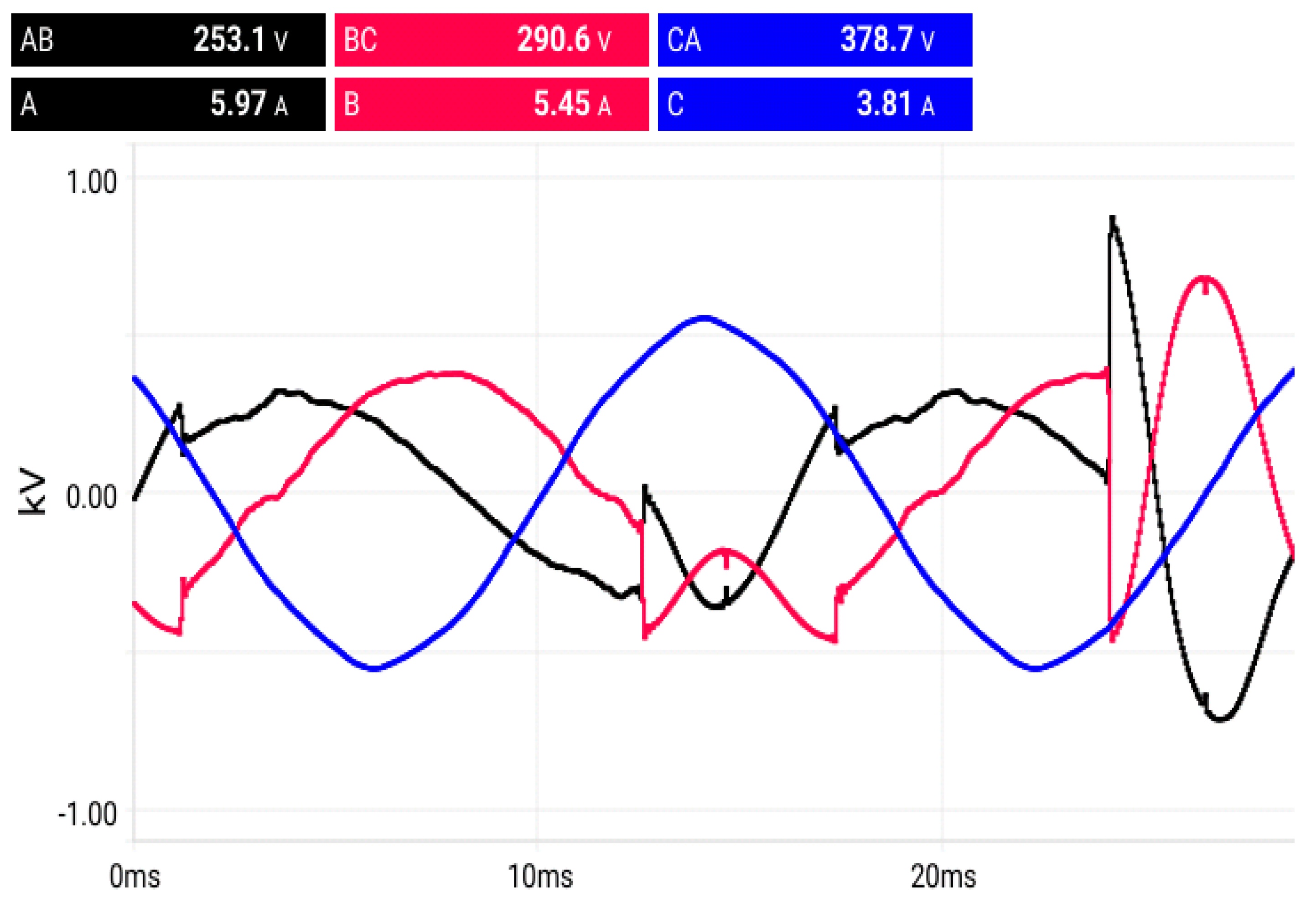
Figure 11, with 50% load, steady-state currents of 5.97 A, 5.45 A, and 3.81 A are observed. This indicates that the electrical current values stabilized and remained constant during the continuous operation of the system under this specific load condition.
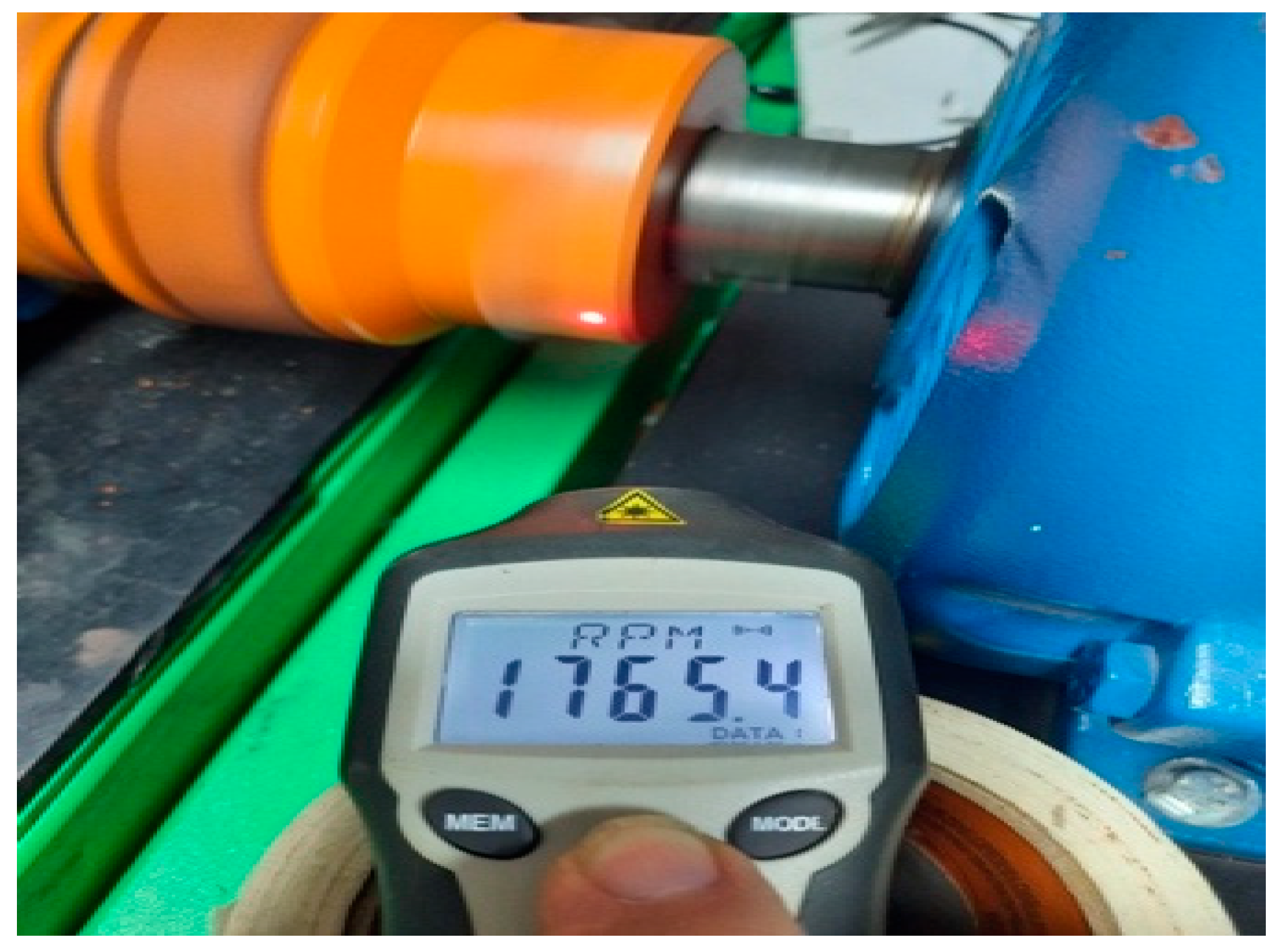
With the engine operating at 50% of its power, it is observed in
Figure 12 that the measured speed was 1765.4 RPM. According to the data in
Table 2, the simulated speed was 1766 RPM. This indicates a proximity between the experimentally obtained speed values and the simulated values, highlighting the accuracy of the simulation model used.
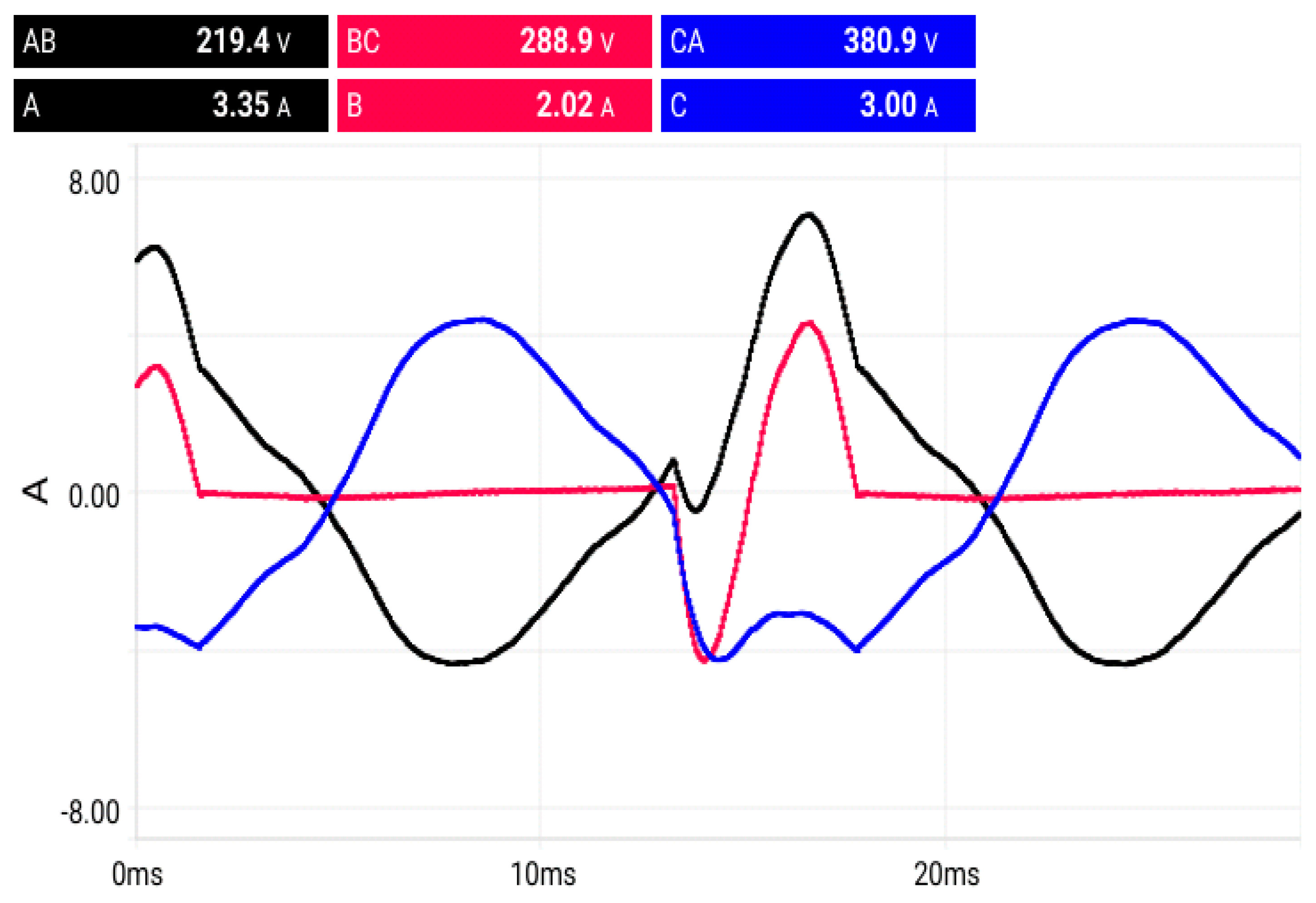
It was observed that, with 80% load, as shown in
Figure 13, there were steady-state currents of 3.35 A, 2.02 A, and 3.00 A. This indicates that the electrical current values stabilized and remained constant during the continuous operation of the system under this specific load condition.
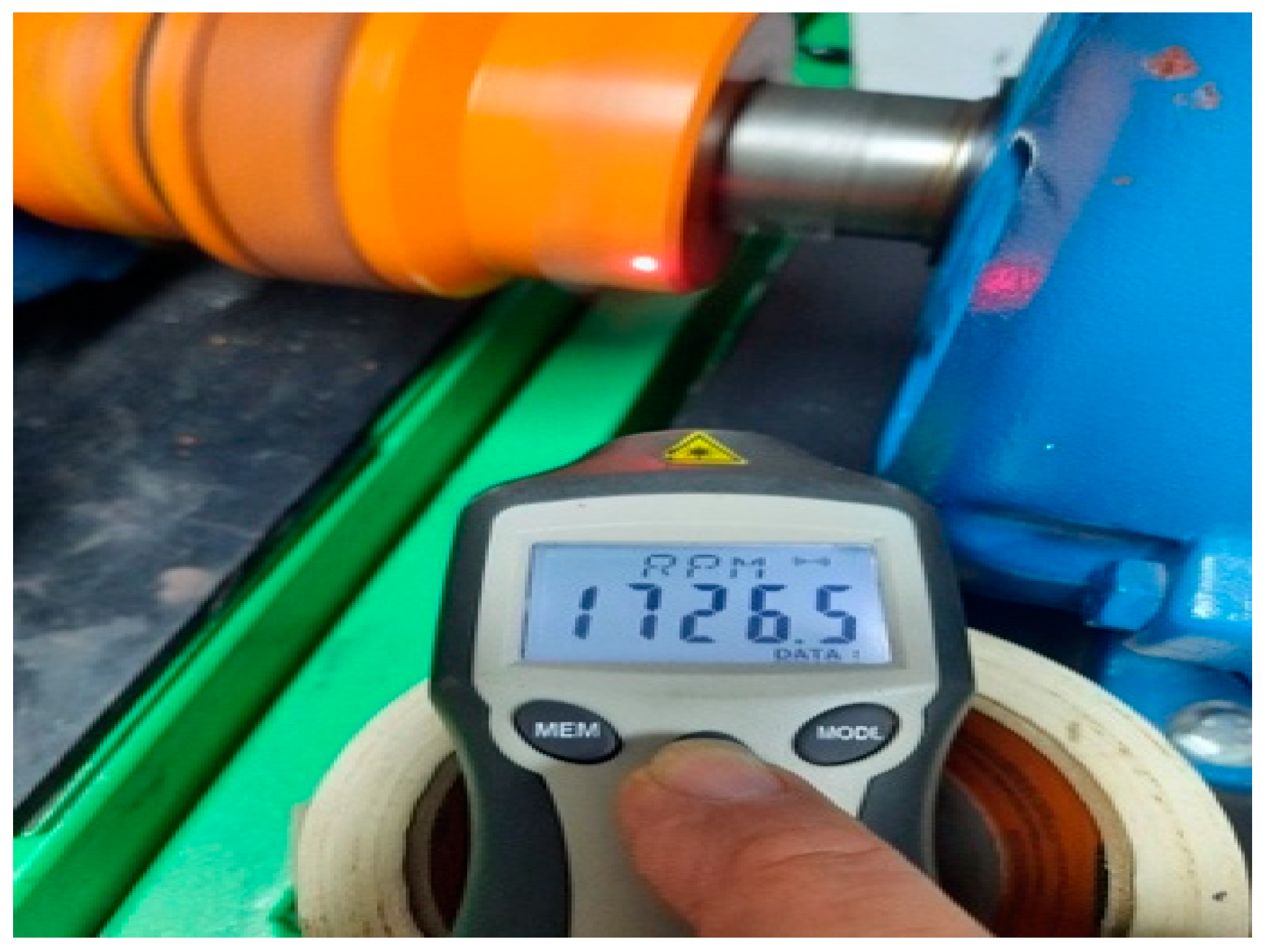
With the engine operating at 80% of its power, it is observed in
Figure 14 that the measured speed was 1726 RPM. According to the data in
Table 2, the simulated speed was 1728 RPM. This indicates a close comparison between the experimentally obtained speed values and the simulated values, highlighting the accuracy of the model used in the simulation.
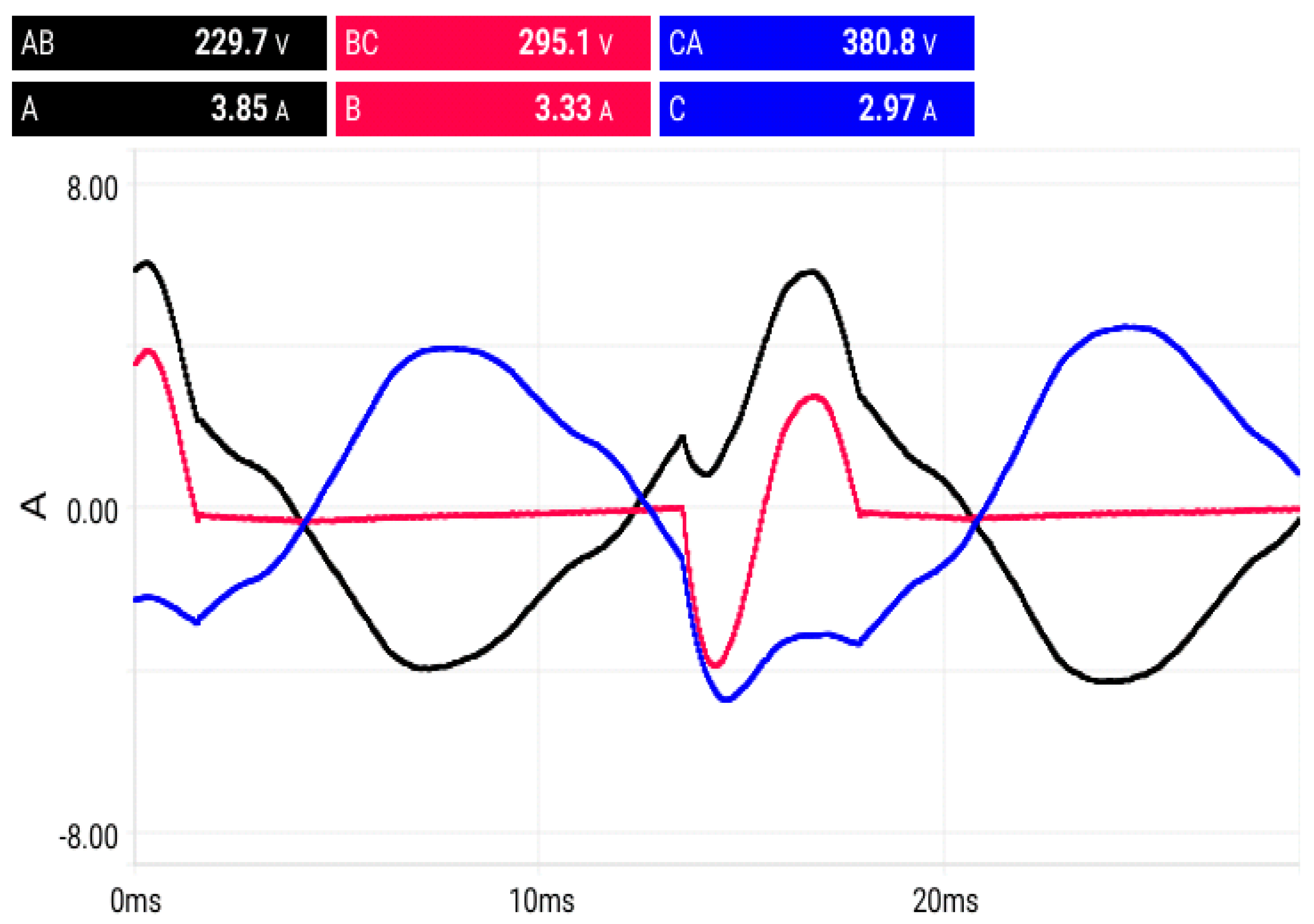
It was observed that, with a 100% load, as shown in
Figure 15, there were steady-state currents of 3.85 A, 3.33 A, and 2.97 A. This indicates that the electrical current values stabilized and remained constant during the continuous operation of the system under this specific load condition.
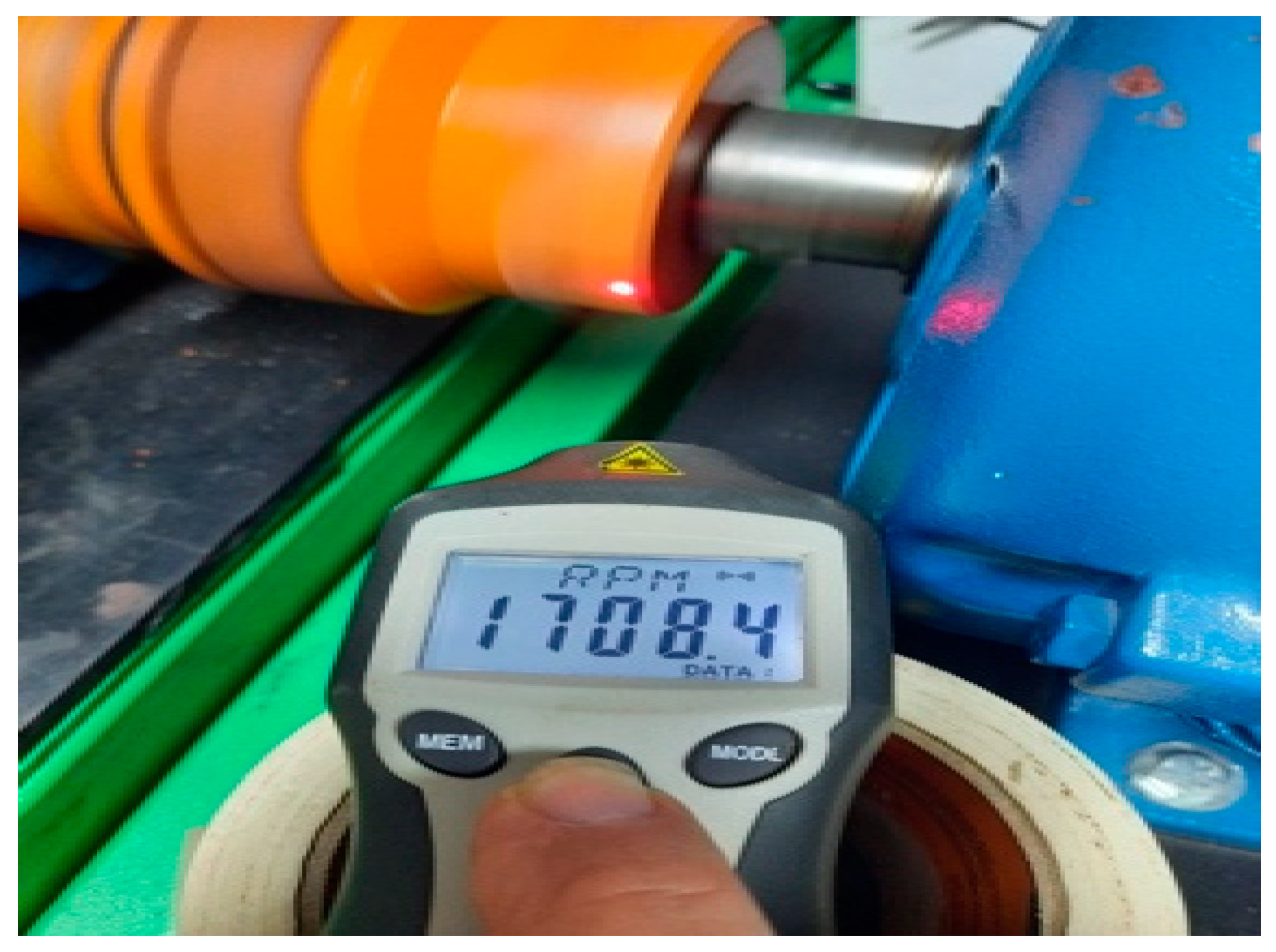
With the engine operating at 100% of its power, it is observed in
Figure 16 that the measured speed was 1708 RPM. According to the data in
Table 2, the simulated speed was 1709 RPM. This indicates a close comparison between the experimentally obtained speed values and the simulated values, highlighting the accuracy of the model used in the simulation.
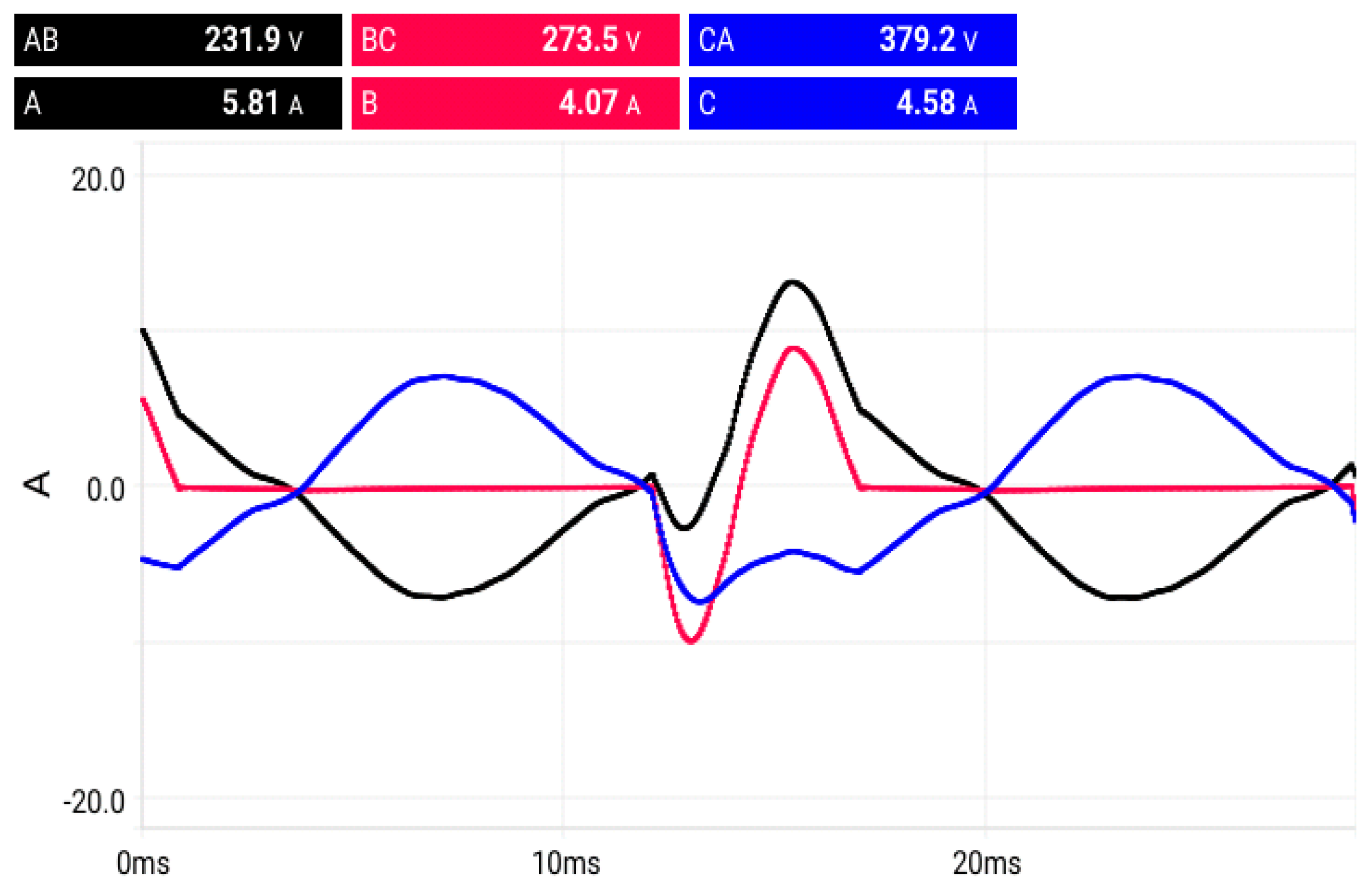
It was also observed that, with 120% load, as shown in
Figure 17, there were steady-state currents of 5.81 A, 4.07 A, and 4.58 A. This indicates that the electrical current values stabilized and remained constant during the continuous operation of the system under this specific load condition.
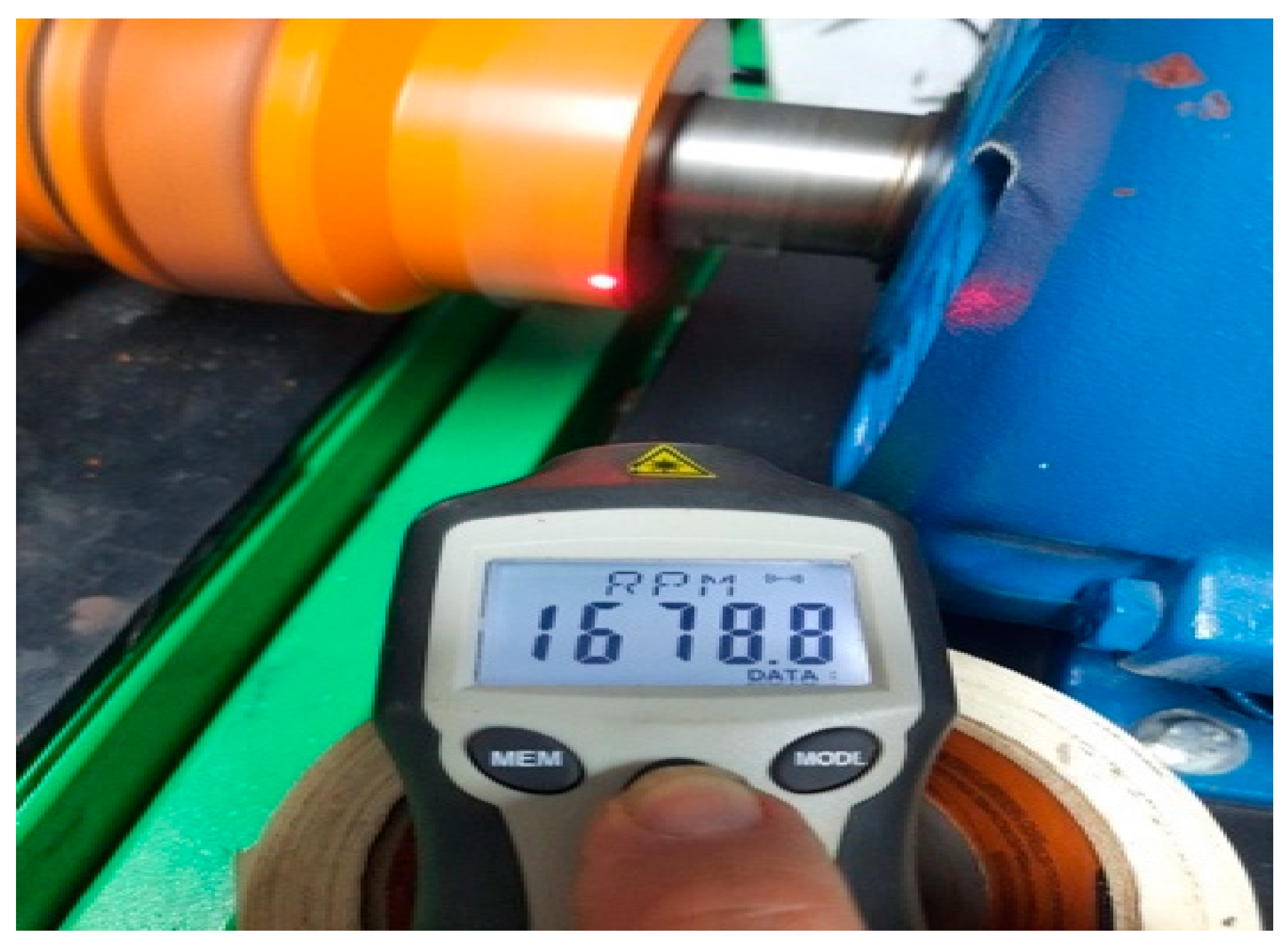
With the engine operating at 120% of its power, it is observed in
Figure 18 that the measured speed was 1678 RPM. According to the data in
Table 2, the simulated speed was 1680 RPM. This indicates a close comparison between the experimentally obtained speed values and the simulated values, highlighting the accuracy of the model used in the simulation.
5.2. Power Factor
The consequences of a low power factor are well known within the academic community, and any effort to reduce the circulation of this power through feeders and transformers, while increasing the energy efficiency of electrical installations, will always be a pursued objective. The power factor of an electrical installation is associated with the consumption of reactive power necessary for magnetizing magnetic cores.
Induction motors are the main consumers of reactive power and, consequently, are responsible for the low power factor in electrical grids and industrial installations. In this context, it is necessary to assess the reactive power consumption of the asymmetric three-phase motor to ensure better efficiency in the conversion of electrical energy into mechanical energy.
Table 4 presents the power factor values for each motor loading condition.
It is observed that, for any loading condition, the asymmetric motor exhibits a better power factor compared to what is typically found in other models of electric motors of the same power.
6. Conclusions
This study has developed an automated control system that dynamically adjusts the capacitance applied to asymmetric motors according to the operational load. This design was proven viable and represents a significant contribution to the field, establishing a robust design framework for the advanced control of this motor type. One of the main outcomes of this study is the possibility of applying this control system to asymmetric motors of any power and voltage class, thereby expanding their potential applications.
The motor’s performance was evaluated with the implementation of dynamic capacitor switching, demonstrating satisfactory results not only under nominal speed and torque conditions, but also during startup. Under nominal load, the motor was able to provide a useful power of 2 HP, maintaining a power factor close to 1 and achieving efficiency in the range of 86% to 87%. Although the motor’s startup time is prolonged compared to conventional three-phase motors, this characteristic is not seen as problematic in practical applications but rather as an advantage. The longer startup time is designed to reduce initial voltage drop and can be adjusted through controlled capacitor switching.
A significant aspect is the system’s flexibility, which allows for adjusting the acceleration ramp during startup or modifying the startup time by adding or removing capacitors, depending on the specific requirements of the asymmetric motor application. These innovations not only enhance the motor’s operational performance, but also contribute to energy efficiency and system reliability in various industrial settings.