


Spatial Graphene Structures with Potential for Hydrogen Storage

 ,
, 

 , , , and
Abstract
1. Introduction
2. Materials and Methods
2.1. Manufacturing of a Spatial Graphene Bed
- Cross-linking GO below 55 °C with hydrazine and pillared graphene oxide (pGO);
- Material shredding;
- Drying pGO at 60 °C;
- Reducing and purifying pGO with hydrogen overpressure to obtain reduced pillared graphene oxide (r:pGO);
- Decorating r:pGO with palladium;
- Finally drying the spatial graphene-based bed at 60 °C.
2.1.1. Crosslinking GO and Its Further Purification
2.1.2. Decorating the Graphene-Based Bed with Palladium
2.2. Assessment of the Physicochemical Properties
2.2.1. Fourier-Transform Infrared Spectroscopy (FTIR)
2.2.2. Evaluation of Specific Surface Area
- P/P0—relative pressure,
- W—adsorbate mass,
- C—constant depending on the difference between the heat of the adsorption for the first layer and the heat of the condensation of the adsorbate,
- Wm—mass of the monolayer of the adsorbate.
- SBET—specific surface area,
- N—Avogadro’s number,
- AGS—the surface area occupied by one adsorbate molecule in a monolayer, i.e., the sitting area (for nitrogen, AGS = 0.162 nm was assumed).
2.2.3. Raman Spectroscopy
2.2.4. Electrical Measurements
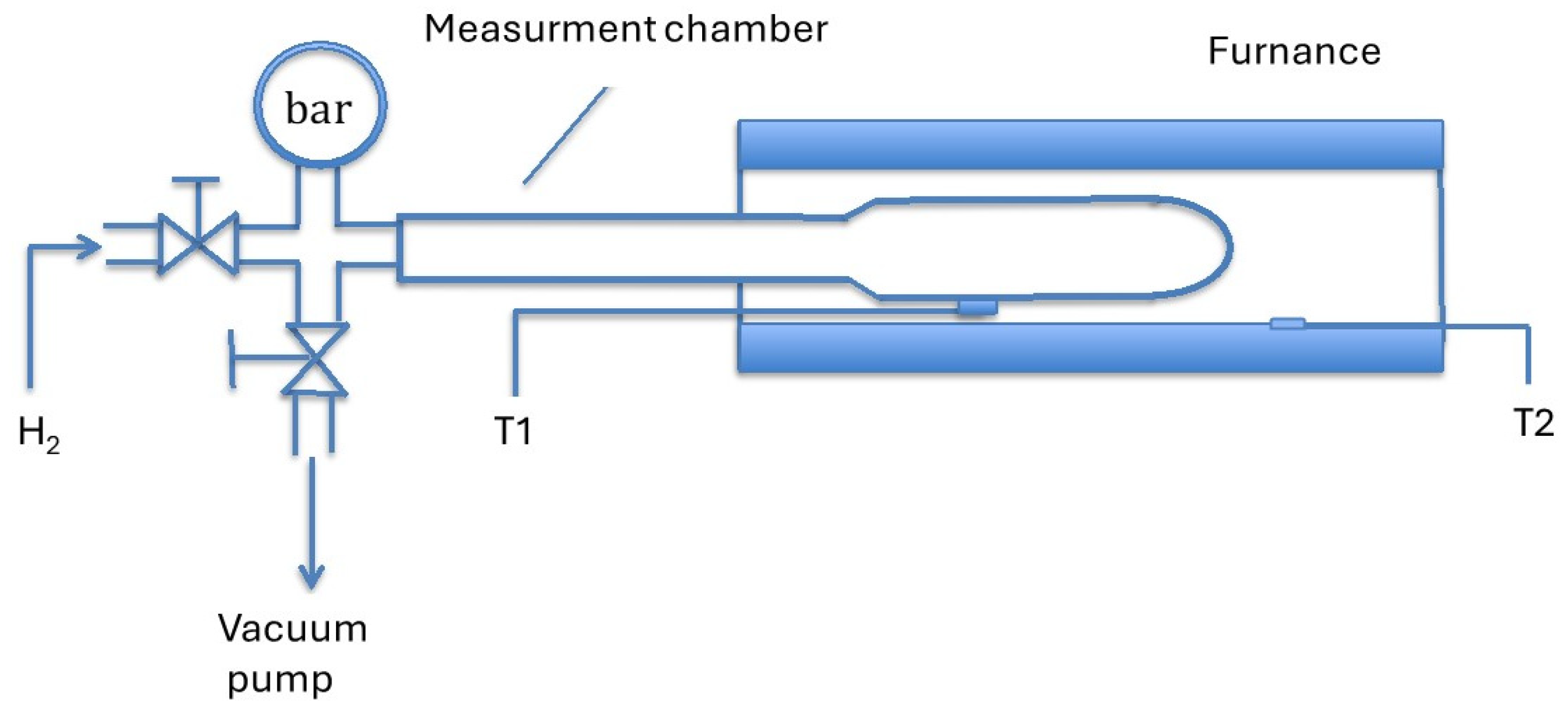
2.3. Assessment of the Potential for Hydrogen Storage
- n—the number of moles of the gas absorbed,
- pA—absorption pressure,
- pB—desorption pressure,
- TA—absorption temperature,
- TB—desorption temperature,
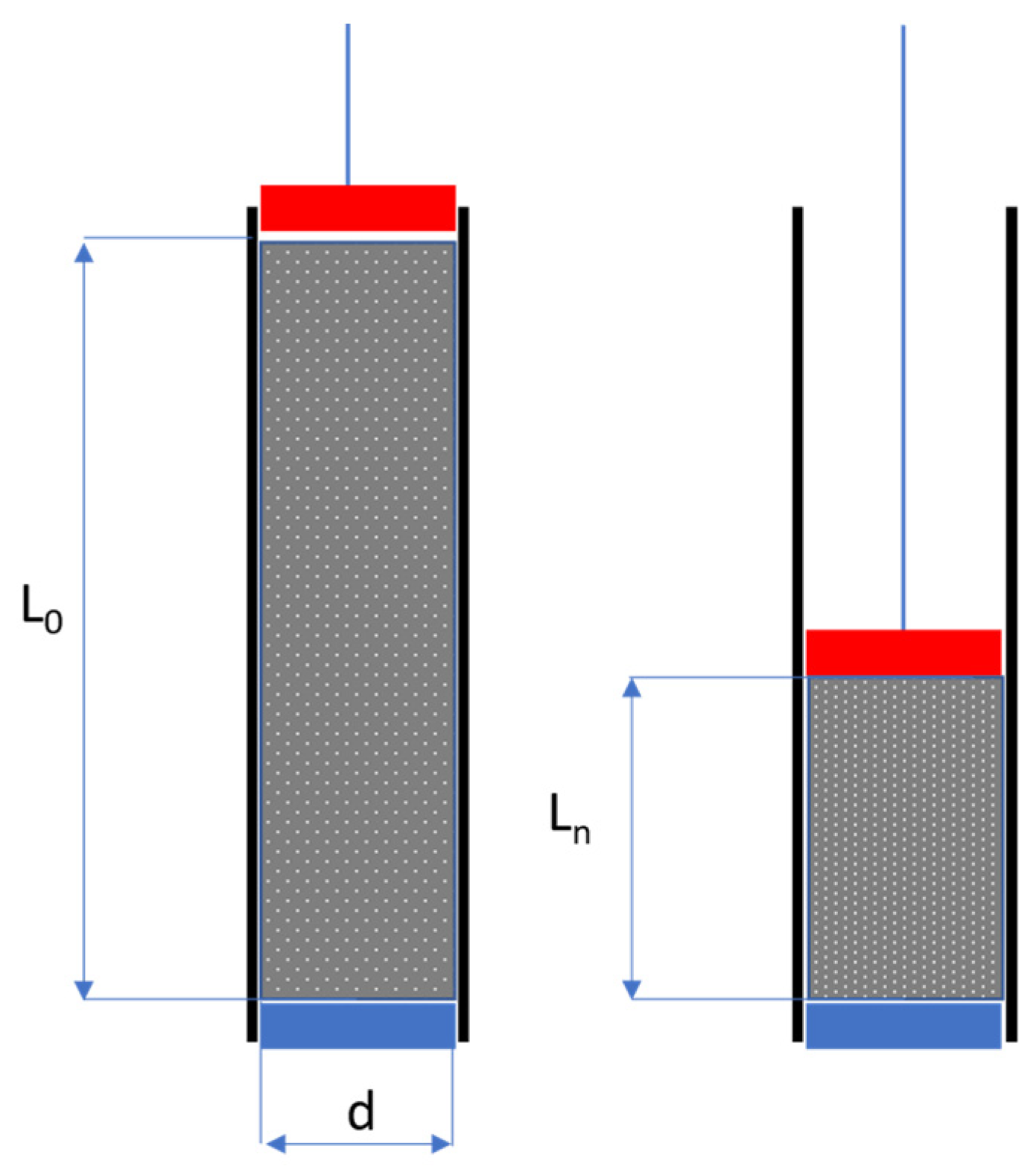
- xV—the volume of the quartz chamber “cold zone”,
- (1 − x)V—the volume of the quartz chamber “hot zone”,
- R—the universal gas constant.
3. Results and Discussion
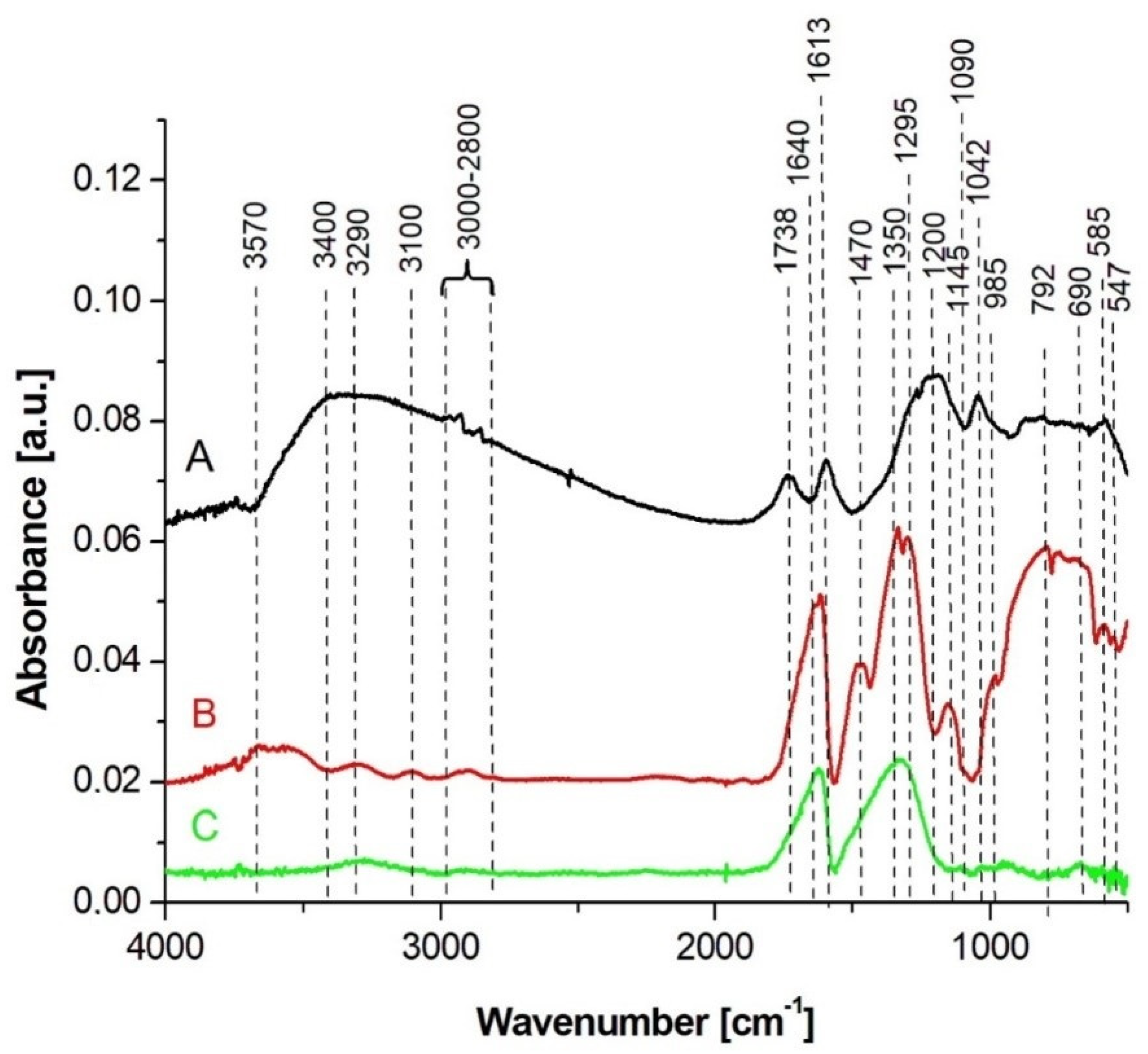
3.1. FTIR
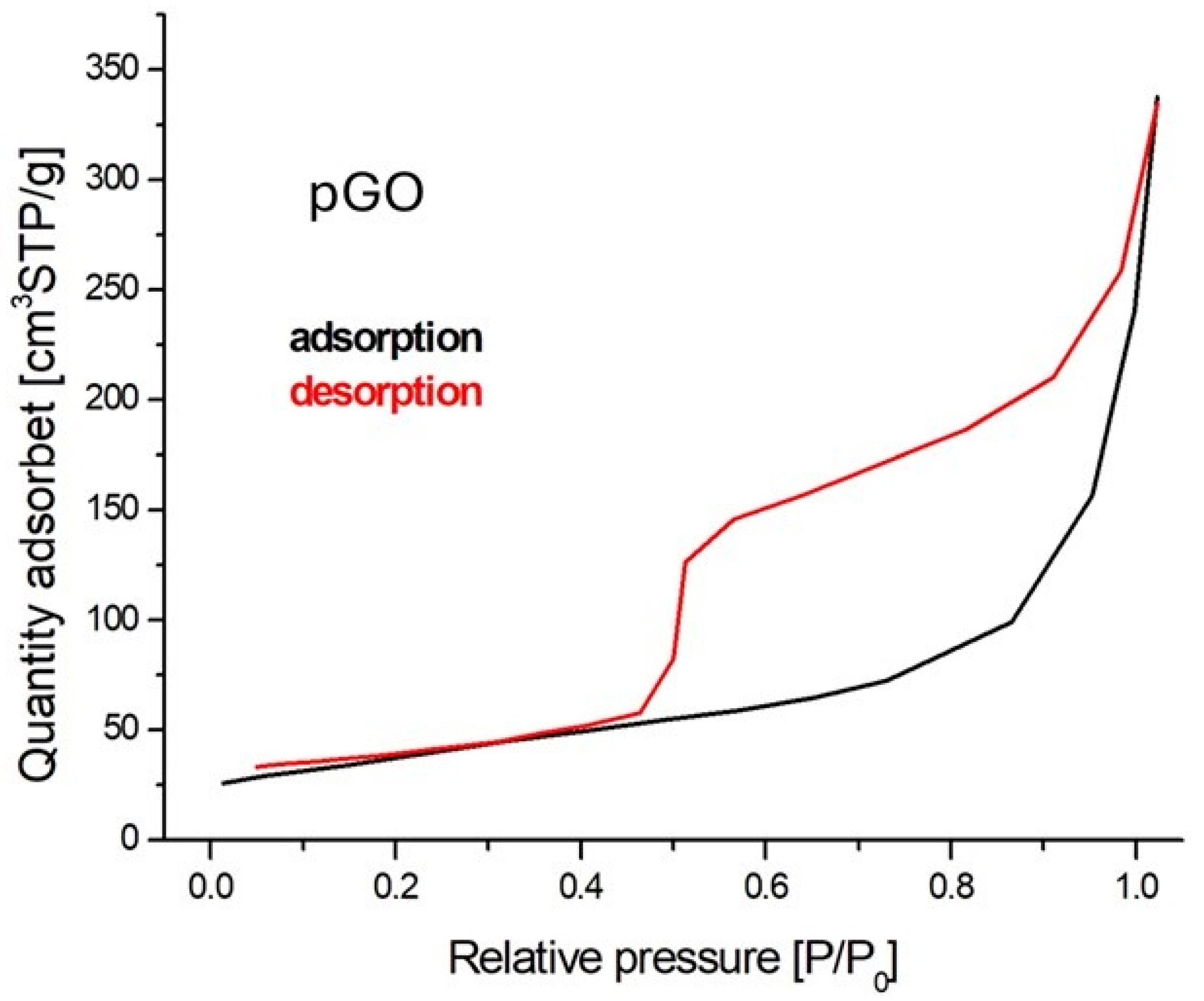
3.2. BET
3.3. Raman Spectroscopy
3.4. Electrical Measurements
3.5. Sorption/Desorption of Hydrogen
4. Summary
5. Conclusions
6. Patents
Author Contributions
Funding
Data Availability Statement
Conflicts of Interest
References
- International Energy Agency. Global Hydrogen Review. 2023. Available online: www.iea.org (accessed on 12 March 2014).
- Onorati, A.; Payri, R.; Vaglieco, B.M.; Agarwal, A.K.; Bae, C.; Bruneaux, G.; Canakci, M.; Gavaises, M.; Günthner, M.; Hasse, C.; et al. The role of hydrogen for future internal combustion engines. Int. J. Engine Res. 2022, 23, 529–540. [Google Scholar] [CrossRef]
- Boretti, A. Hydrogen internal combustion engines to 2030. Int. J. Hydrogen Energy 2020, 45, 23692–23703. [Google Scholar] [CrossRef]
- Algayyim, S.J.M.; Saleh, K.; Wandel, A.P.; Fattah, I.R.; Yusaf, T.; Alrazen, H.A. Influence of natural gas and hydrogen properties on internal combustion engine performance, combustion, and emissions: A review. Fuel 2024, 362, 130844. [Google Scholar] [CrossRef]
- Falfari, S.; Cazzoli, G.; Mariani, V.; Bianchi, G.M. Hydrogen application as a fuel in internal combustion engines. Energies 2023, 16, 2545. [Google Scholar] [CrossRef]
- Teoh, Y.H.; How, H.G.; Le, T.D.; Nguyen, H.T.; Loo, D.L.; Rashid, T.; Sher, F. A review on production and implementation of hydrogen as a green fuel in internal combustion engines. Fuel 2023, 333 Pt 2, 126525. [Google Scholar] [CrossRef]
- Dillon, A.; Jones, K.; Bekkedahl, T.; Kiang, C.H.; Bethune, D.S.; Heben, M.J. Storage of hydrogen in single-walled carbon nanotubes. Nature 1977, 386, 377–379. [Google Scholar] [CrossRef]
- Luzan, S.M.; Tsybin, Y.O.; Talyzin, A.V. Reaction of C60 with Hydrogen Gas: In Situ Monitoring and Pathways. J. Phys. Chem. C 2011, 115, 11484–11492. [Google Scholar] [CrossRef]
- Talyzin, A.V.; Shulga, Y.M.; Jacob, A. Comparative study of hydrofullerides C60Hx synthesized by direct and catalytic hydrogenation. Appl. Phys. A 2004, 78, 1005–1010. [Google Scholar] [CrossRef]
- Zhou, H.; Zhang, J.; Zhang, J.; Yan, X.; Shen, X.; Yuan, A. High-capacity room-temperature hydrogen storage of zeolitic imidazolate framework/graphene oxide promoted by platinum metal catalyst. Int. J. Hydrogen Energy 2015, 40, 12275–12285. [Google Scholar] [CrossRef]
- Chen, Y.; Habibullah; Xia, G.; Jin, C.; Wang, Y.; Yan, Y.; Chen, Y.; Gong, X.; Lai, Y.; Wu, C. Palladium-Phosphide-Modified Three-Dimensional Phospho-Doped Graphene Materials for Hydrogen Storage. Materials 2023, 16, 4219. [Google Scholar] [CrossRef] [PubMed]
- Lee, B.; Cho, S.; Jeong, B.J.; Lee, S.H.; Kim, D.; Kim, S.H.; Park, J.-H.; Yu, H.K.; Choi, J.-Y. Highly responsive hydrogen sensor based on Pd nanoparticle-decorated transfer-free 3D graphene. Sens. Actuators B 2024, 401, 134913. [Google Scholar] [CrossRef]
- Liua, Y.; Zhang, Z.; Wang, T. Enhanced hydrogen storage performance of three-dimensional hierarchical porous graphene with nickel nanoparticles. Int. J. Hydrogen Energy 2018, 43, 11120–11131. [Google Scholar] [CrossRef]
- Kula, P.; Szymanski, W.; Kolodziejczyk, L.; Atraszkiewicz, R.; Grabarczyk, J.; Clapa, M.; Kaczmarek, L.; Jedrzejczak, A.; Niedzielski, P. High strength metallurgical graphene for hydrogen storage nanocomposites. Vacuum 2016, 129, 79–85. [Google Scholar] [CrossRef]
- Hussain, S.; Maktedar, S.S. Structural, functional and mechanical performance of advanced Graphene-based composite hydrogels. Results Chem. 2023, 6, 101029. [Google Scholar] [CrossRef]
- Yuan, Y.; Rong, J.; Zheng, L.; Hu, Z.; Hu, S.; Wu, C.; Zhuang, Z. Control of the metal-support interactions in Ru on N-doped graphene-encapsulated Ni nanoparticles to promote their hydrogen evolution reaction catalytic performance. Int. J. Hydrogen Energy 2024, 52, 687–695. [Google Scholar] [CrossRef]
- Rouquerol, J.; Avnir, D.; Fairbridge, C.W.; Everett, D.H.; Haynes, J.M.; Pernicone, N.; Ramsay, J.D.F.; Sing, K.S.W.; Unger, K.K. Recommendations for the characterization of porous solids. Pure Appl. Chem. 1994, 66, 1739–1758. [Google Scholar] [CrossRef]
- Xu, L.; Hao, J.; Wang, J.; Yang, Y.; Zhao, R.; Zhang, R.; Yang, X. N doping porous carbon embedded in self-assembled three-dimensional reduced graphene oxide networks for electrochemical hydrogen storage. Int. J. Hydrogen Energy 2024, 50, 910–919. [Google Scholar] [CrossRef]
- Han, D.C.; Zhang, C.M.; Guan, J.; Gai, L.H.; Yue, R.Y.; Liu, L.N.; Afzal, M.Z.; Song, C.; Wang, S.G.; Sun, X.F. High-performance capacitive deionization using nitrogen and phosphorus-doped three-dimensional graphene with tunable pore size. Electrochim. Acta 2020, 336, 135639. [Google Scholar] [CrossRef]
- Wang, B.; Qin, Y.; Tan, W.; Tao, Y.; Kong, Y. Smartly designed 3D N-doped mesoporous graphene for high-performance supercapacitor electrodes. Electrochim. Acta 2017, 241, 1–9. [Google Scholar] [CrossRef]
- Liu, H.; Wang, B.; Liu, H.; Zheng, Y.; Li, M.; Tang, K.; Pan, B.; Liu, C.; Luo, J.; Pang, X. Multi-crosslinked robust alginate/polyethyleneimine modified graphene aerogel for efficient organic dye removal. Colloids Surf. A 2024, 683, 133034. [Google Scholar] [CrossRef]
- Bai, H.; Li, C.; Wang, X.; Shi, G. A pH-sensitive graphene oxide composite hydrogel. Chem. Commun. 2010, 46, 2376–2378. [Google Scholar] [CrossRef]
- Kaczmarek, Ł.; Warga, T.; Makowicz, M.; Kyzioł, K.; Bucholc, B.; Majchrzycki, Ł. The Influence of the Size and Oxidation Degree of Graphene Flakes on the Process of Creating 3D Structures during Its Cross-Linking. Materials 2020, 13, 681. [Google Scholar] [CrossRef]
- Lin, Y.; Xu, K.; Cao, X.; Zhang, Z.; Wu, J. Role of nanotube chirality on the mechanical characteristics of pillared graphene. Mech. Mater. 2021, 162, 104035. [Google Scholar] [CrossRef]
- Amiri, H.; Mohandesi, J.A.; Marashi, P. Tensile properties of pillared graphene block. Mater. Sci. Eng. B 2020, 257, 11455. [Google Scholar] [CrossRef]
- Kaczmarek, Ł.; Warga, T.; Kołodziejczyk, Ł.; Louda, P.; Borůvková, K.; Niedzielski, P.; Szymański, W.; Voleský, L.; Pawłowski, W.; Zawadzki, P. Creation of a 3D structure based on the High Strength Metallurgical Graphene®. Surf. Rev. Lett. 2019, 26, 1850206. [Google Scholar] [CrossRef]
- Muzyka, R.; Drewniak, S.; Pustelny, T.; Chrubasik, M.; Gryglewicz, G. Characterization of graphite oxide and reduced graphene oxide obtained from different graphite precursors and oxidized by different methods using Raman spectroscopy. Materials 2018, 11, 1050. [Google Scholar] [CrossRef]
- Ma, B.; Rodrigez, R.D.; Ruban, A.; Pavlov, S.; Sheremet, E. The correlation between electrical conductivity and second-order Raman modes of laser-reduced graphene oxide. Phys. Chem. Chem. Phys. 2019, 21, 10125–10134. [Google Scholar] [CrossRef]
- Alkhouzaam, A.; Qiblawey, H.; Khraisheh, M.; Atieh, M.; Al-Ghouti, M. Synthesis of graphene oxides particle of high oxidation degree using a modified Hummers method. Ceram. Int. 2020, 46, 23997–24007. [Google Scholar] [CrossRef]
- Aliyev, E.; Filiz, V.; Khan, M.M.; Lee, Y.J.; Abetz, C.; Abetz, V. Structural characterization of graphene oxide: Surface functional groups and fractionated oxidative debris. Nanomaterials 2019, 9, 1180. [Google Scholar] [CrossRef]
- Sing, K.S.W.; Everett, D.H.; Haul, R.A.; Moscou, L.; Pierotti, R.A.; Rouquerol, J.; Siemieniewska, T. Reporting physisorption data for gas/solid system with special reference to the determination of surface area and porosity. Pure Appl. Chem. 1985, 57, 603–619. [Google Scholar] [CrossRef]
- Claramunt, S.; Varea, A.; Lopez-Diaz, D.; Velazquez, M.; Cornet, A.; Cierera, A. The importance of interbands on the interpretation of the raman spectrum of graphene oxide. J. Phys. Chem. C 2015, 119, 10123–10129. [Google Scholar] [CrossRef]
- Morales-Acosta, D.; Flores-Oyervides, J.D.; Rodriguez-Gonzalez, J.A.; Sanchez-Padilla, N.M.; Benavides, R.; Fernandez-Tavizon, S.; Mercado-Silva, J.A. Comparative methods for reduction and sulfonation of graphene oxide for fuel cell electrode applications. Int. J. Hydrogen Energy 2019, 44, 12356–12364. [Google Scholar] [CrossRef]
- Gupta, A.; Chen, G.; Joshi, P.; Tadigadapa, S.; Eklund, P.C. Raman Scattering from High-Frequency Phonons in Supported n-Graphene Layer Films. Nano Lett. 2006, 6, 2667–2673. [Google Scholar] [CrossRef]
- Ferrari, A.C. Raman spectroscopy of graphene and graphite: Disorder, electron–phonon coupling, doping and nonadiabatic effects. Solid State Commun. 2007, 143, 47–57. [Google Scholar] [CrossRef]
- Yang, J.; Pruvost, S.; Livi, S.; Duchet-Rumeau, J. The Role of Fluorinated IL as an Interfacial Agent in P(VDF-CTFE)/Graphene Composite Films. Nanomaterials 2019, 9, 1181. [Google Scholar] [CrossRef]
- Tiwari, A.; Panda, S.K. Stiffness enhancement of polymer nanocomposites via graphene nanoplatelet orientation. Polym. Eng. Sci. 2024, 64, 1482–1493. [Google Scholar] [CrossRef]
- Kamedulski, P.; Skorupska, M.; Binkowski, P.; Arendarska, W.; Ilnicka, A.; Lukaszewicz, J.P. High surface area micro-mesoporous graphene for electrochemical applications. Sci. Rep. 2021, 11, 22054. [Google Scholar] [CrossRef]
- Khodabakhshi, S.; Fulvio, P.F.; Walton, K.S.; Kiani, S.; Niu, Y.; Palmer, R.E.; Barron, A.R.; Andreoli, E. High surface area microporous carbon nanocubes from controlled processing of graphene oxide nanoribbons. Carbon 2024, 221, 118940. [Google Scholar] [CrossRef]
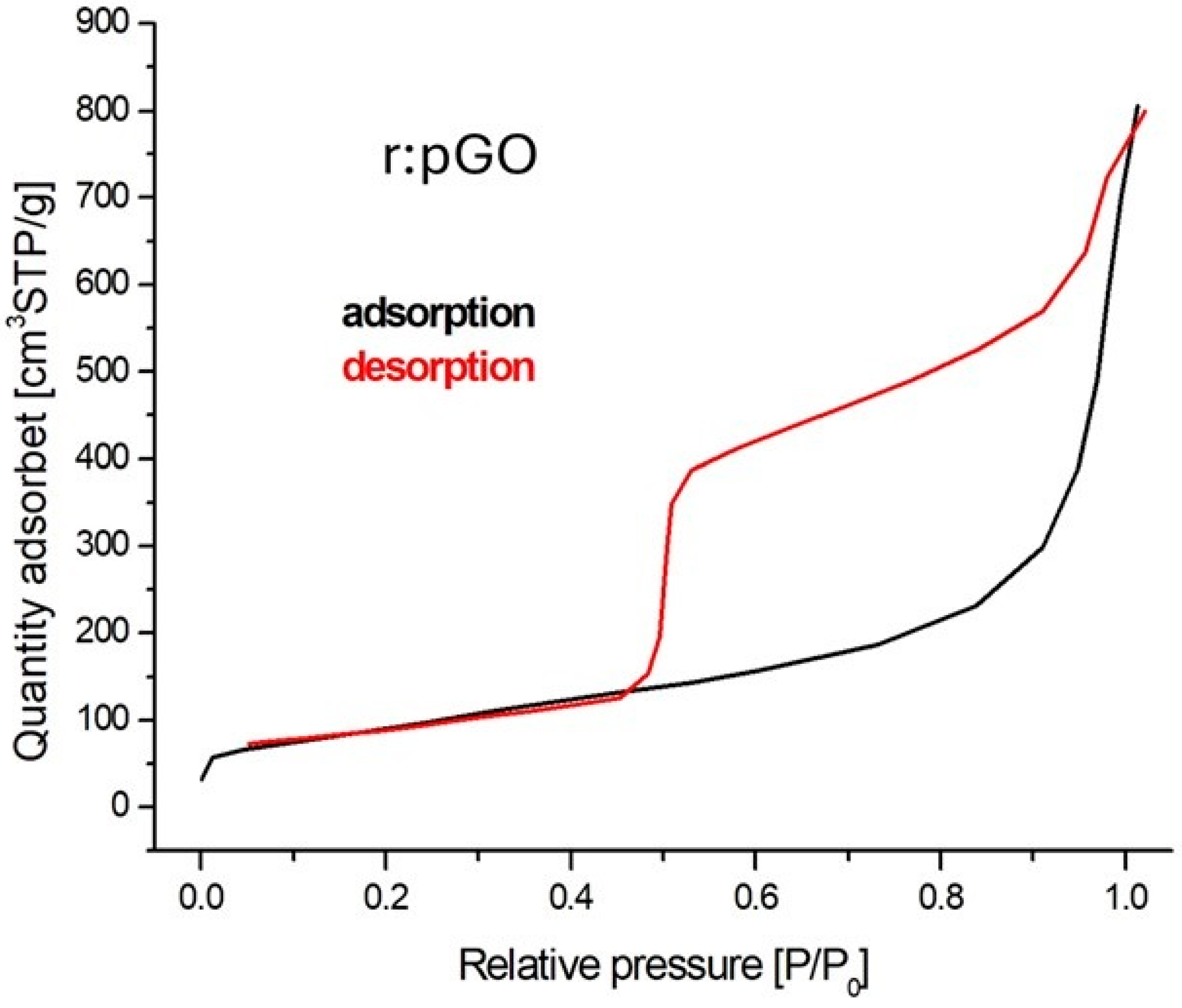
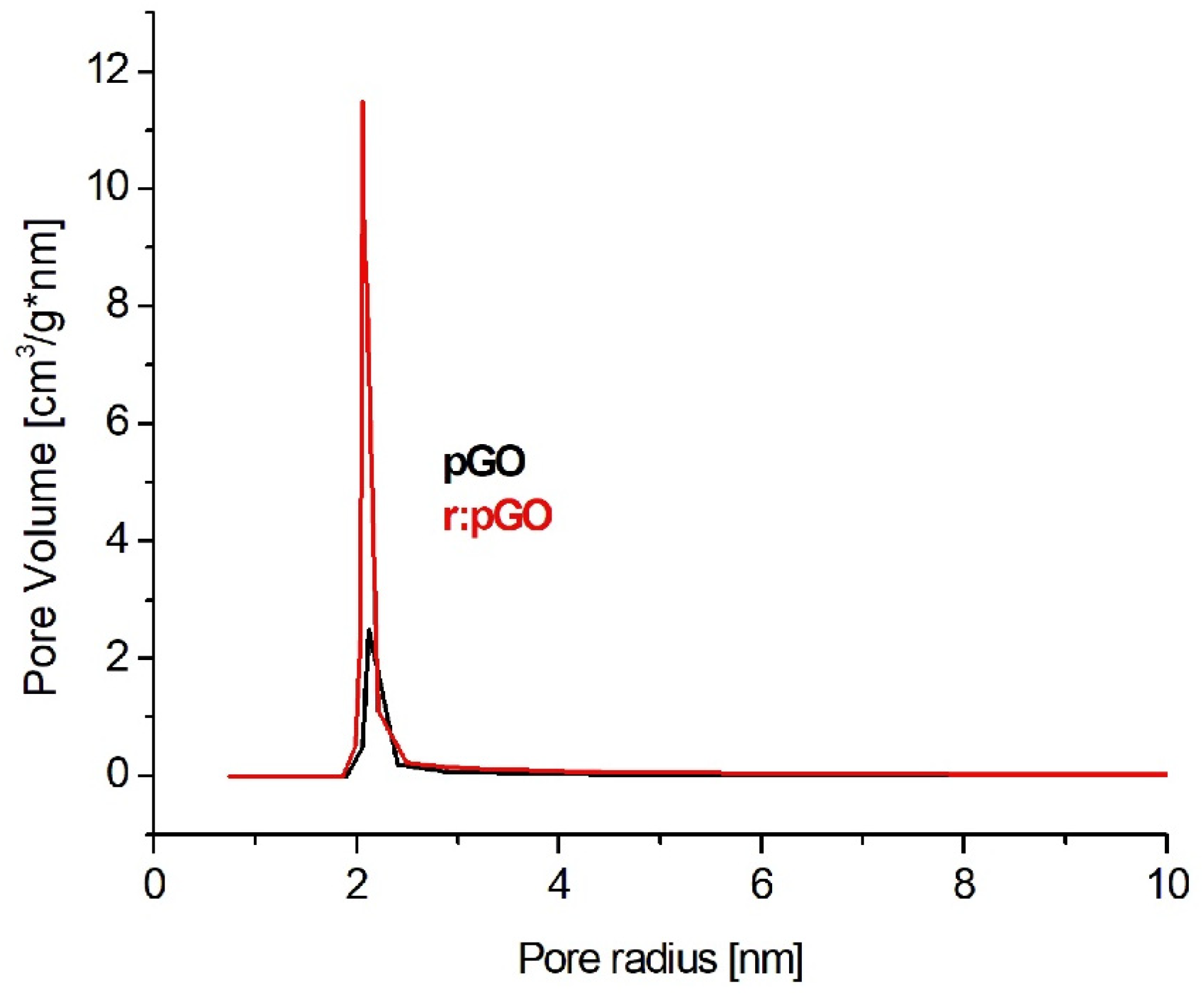
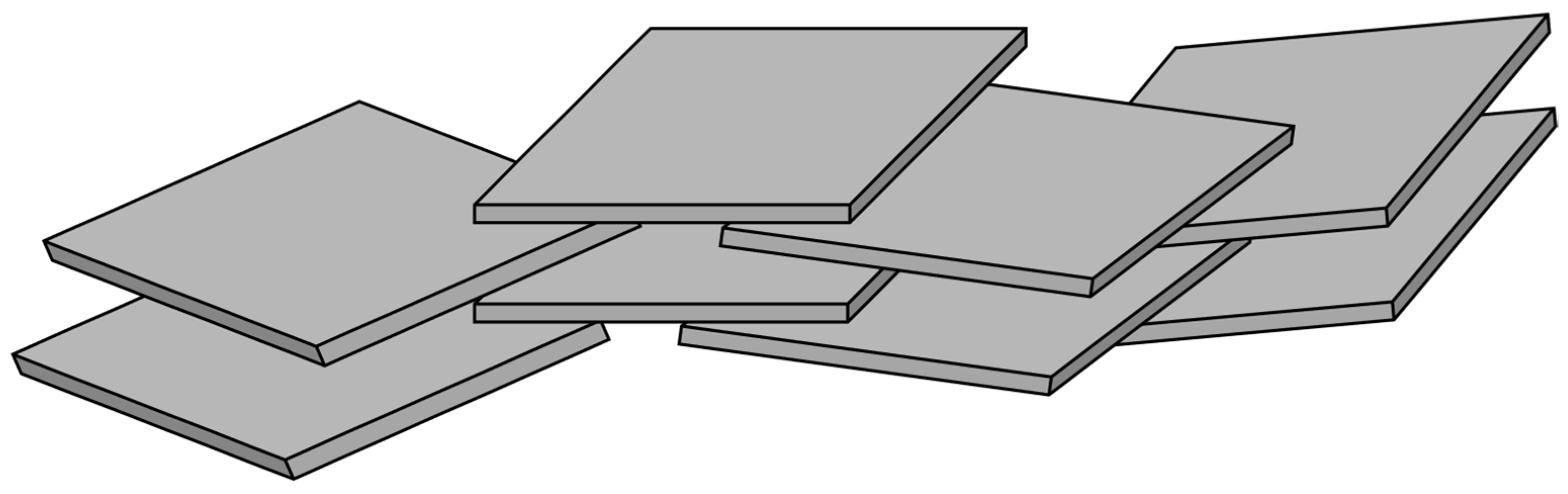
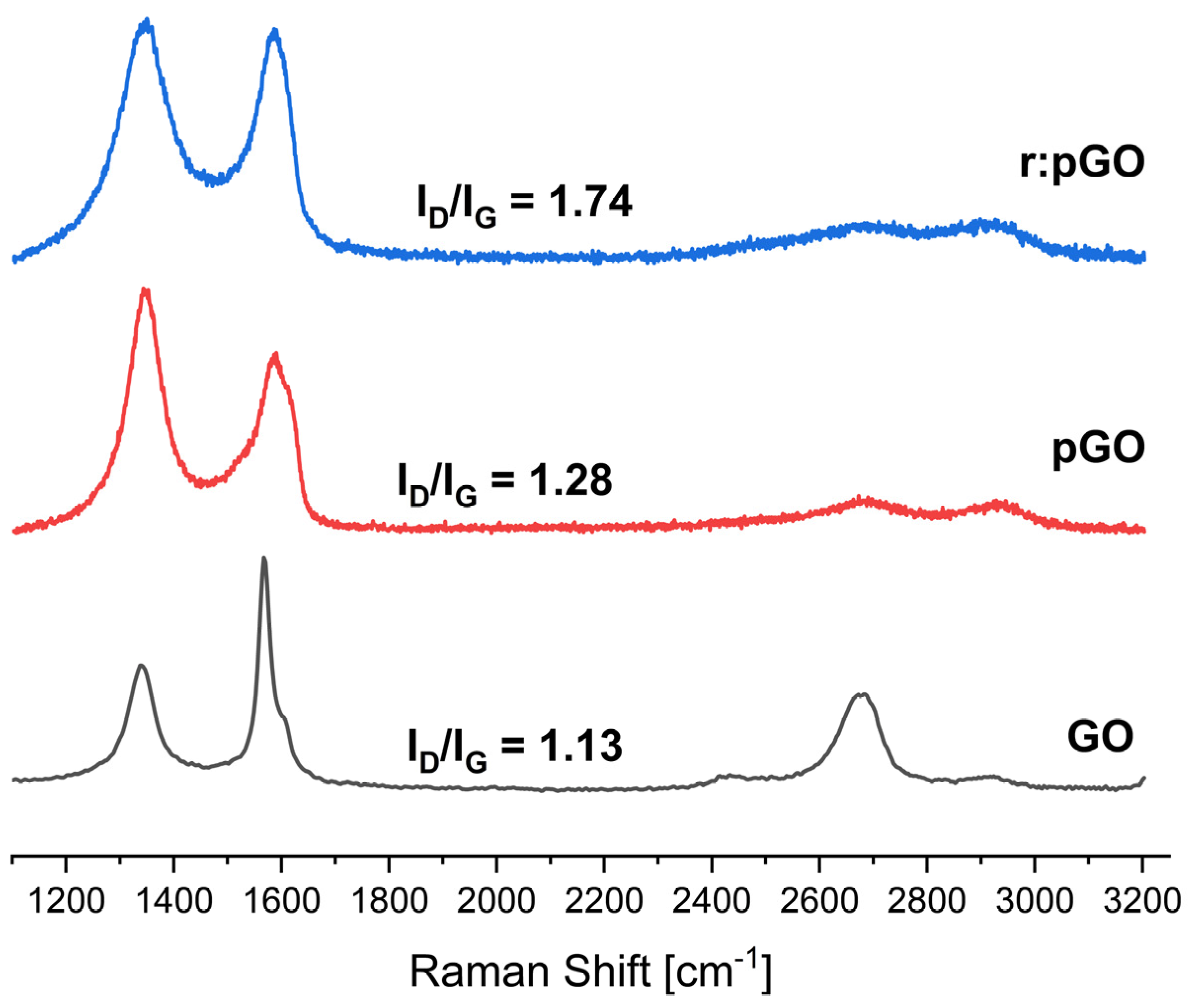
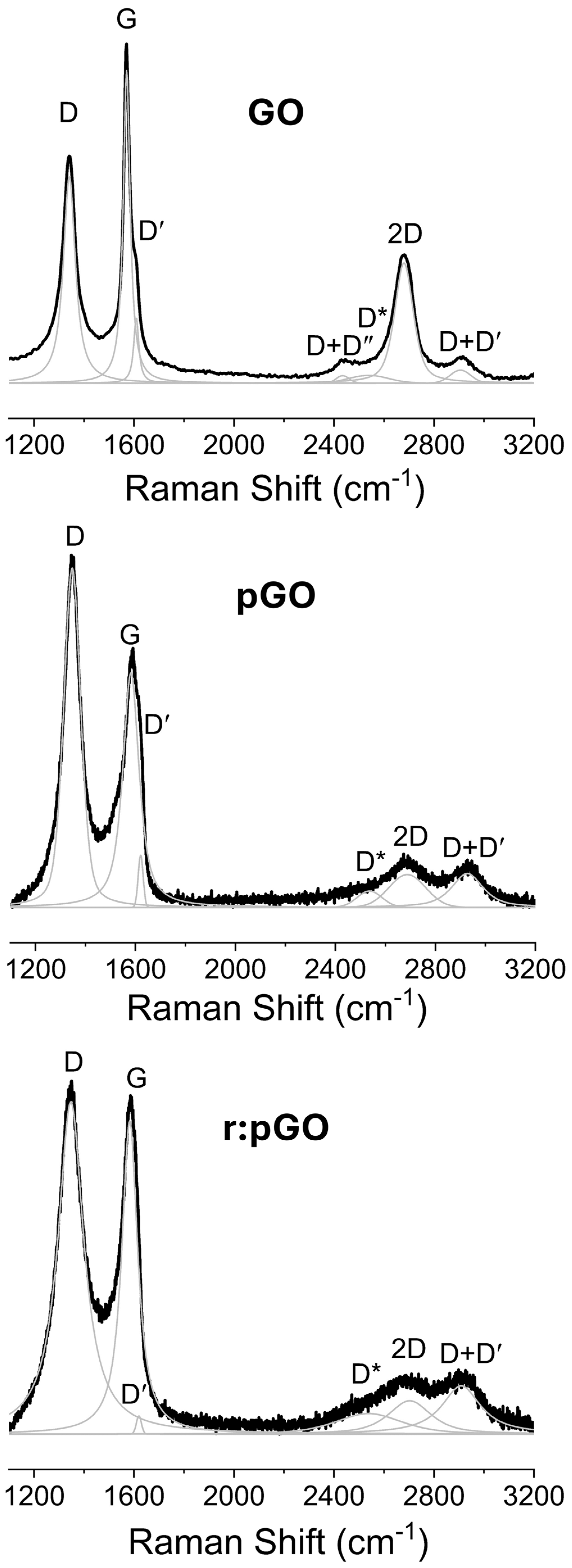
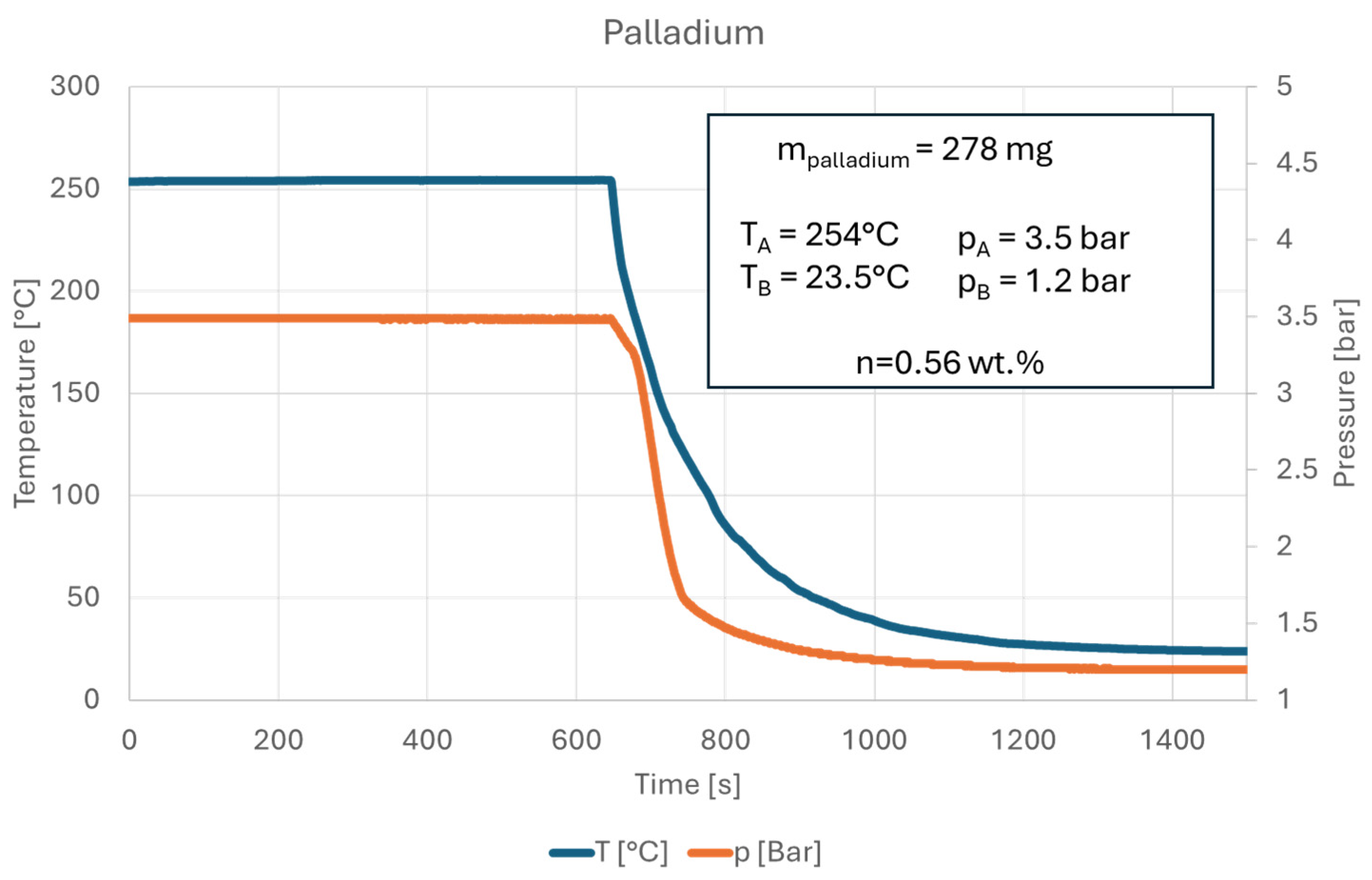
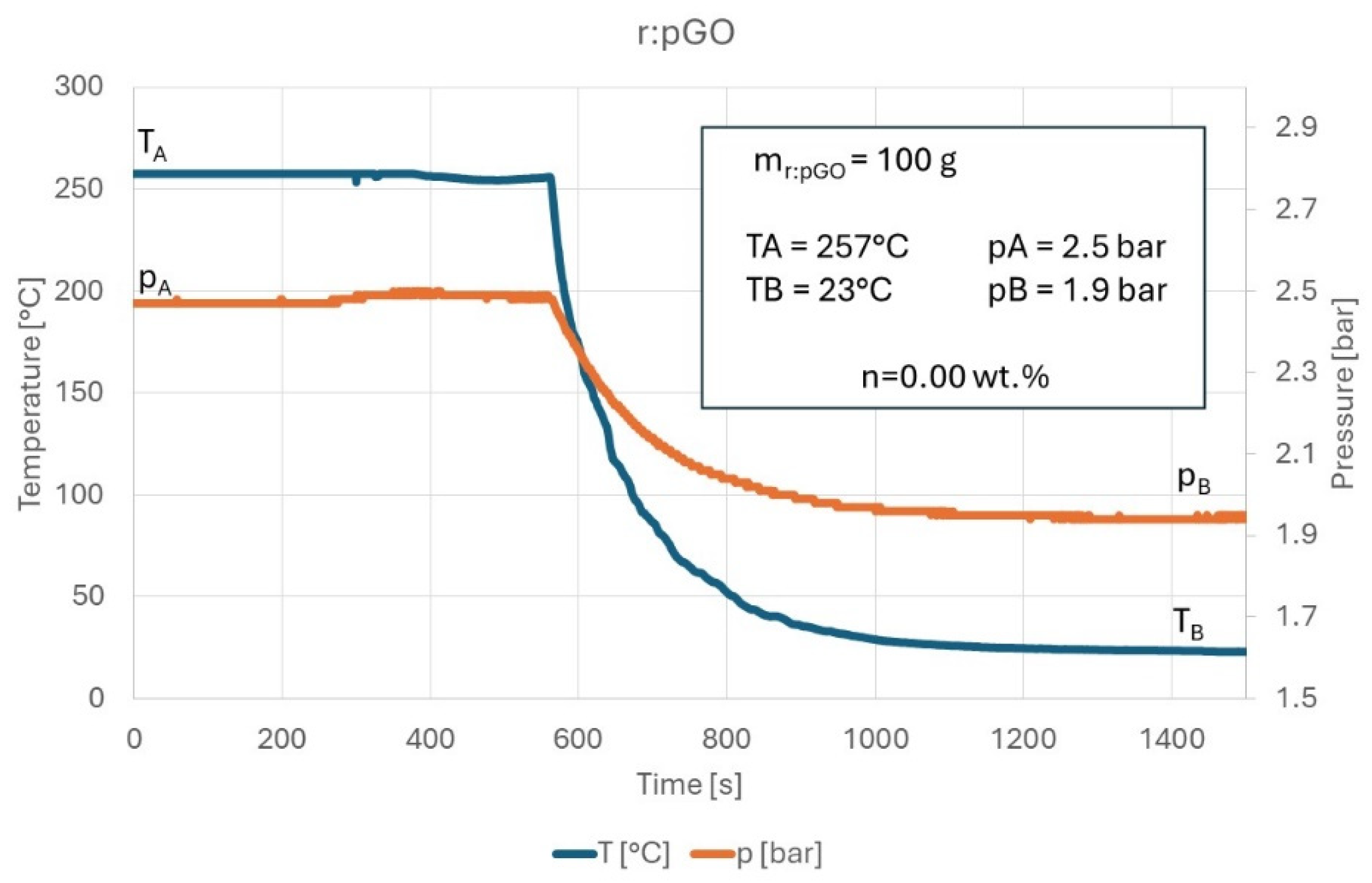
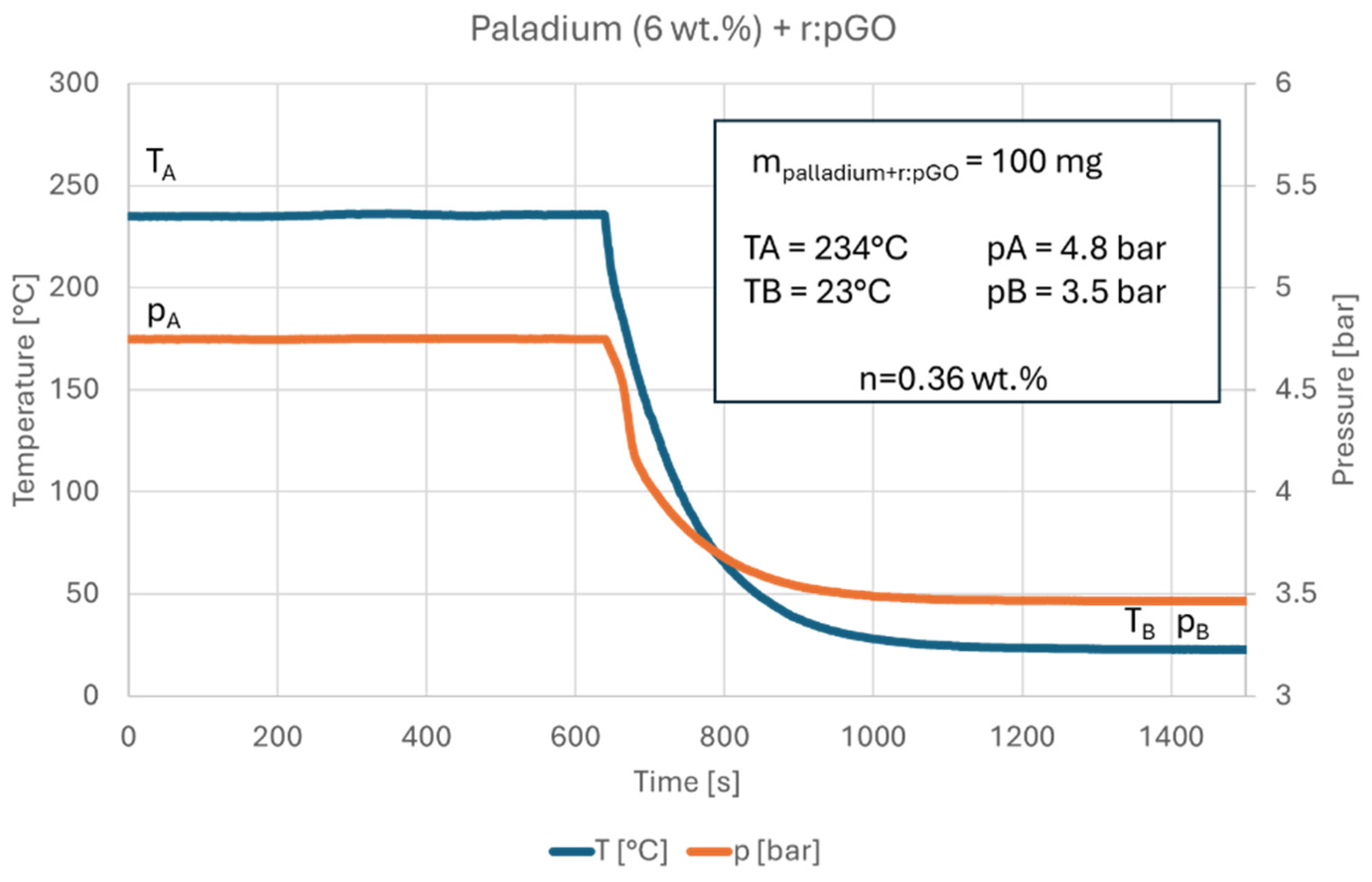

| D Band | G Band | D′ Band | D + D″ Band | D* Band | 2D Band | D + D′ Band | I2D/IG | |
|---|---|---|---|---|---|---|---|---|
| FWHM/Position of the Band [cm−1] | ||||||||
| GO | 57.69/1341.34 | 33.04/1570.75 | 24.24/1609.03 | 60.05/2434.64 | 93.69/2538.84 | 88.38/2679.90 | 96.96/2905.67 | 0.87 |
| pGO | 80.03/1347.22 | 77.86/1582.11 | 23.42/1620.99 | - | 117.54/2536.62 | 172.97/2687.51 | 149.64/2927.74 | 0.68 |
| r:pGO | 124.49/1347.52 | 76.8/1583.06 | 23.99/1619.67 | - | 315.71/2538.98 | 202.28/2703.05 | 187.79/2909.01 | 0.25 |
| After | Resistivity [Ωcm] | Density [g/cm3] | Compressibility | |
|---|---|---|---|---|
| pGO | hydrazine | 15 ± 2 | 0.15 ± 0.05 | approx. 50% |
| r:pGO | annealing | 1.2 ± 0.3 | 0.09 ± 0.05 | approx. 30% |
Disclaimer/Publisher’s Note: The statements, opinions and data contained in all publications are solely those of the individual author(s) and contributor(s) and not of MDPI and/or the editor(s). MDPI and/or the editor(s) disclaim responsibility for any injury to people or property resulting from any ideas, methods, instructions or products referred to in the content. |
© 2024 by the authors. Licensee MDPI, Basel, Switzerland. This article is an open access article distributed under the terms and conditions of the Creative Commons Attribution (CC BY) license (https://creativecommons.org/licenses/by/4.0/).
Share and Cite
Jastrzębski, K.; Cłapa, M.; Kaczmarek, Ł.; Kaczorowski, W.; Sobczyk-Guzenda, A.; Szymanowski, H.; Zawadzki, P.; Kula, P. Spatial Graphene Structures with Potential for Hydrogen Storage. Energies 2024, 17, 2240. https://doi.org/10.3390/en17102240
Jastrzębski K, Cłapa M, Kaczmarek Ł, Kaczorowski W, Sobczyk-Guzenda A, Szymanowski H, Zawadzki P, Kula P. Spatial Graphene Structures with Potential for Hydrogen Storage. Energies. 2024; 17(10):2240. https://doi.org/10.3390/en17102240
Chicago/Turabian StyleJastrzębski, Krzysztof, Marian Cłapa, Łukasz Kaczmarek, Witold Kaczorowski, Anna Sobczyk-Guzenda, Hieronim Szymanowski, Piotr Zawadzki, and Piotr Kula. 2024. "Spatial Graphene Structures with Potential for Hydrogen Storage" Energies 17, no. 10: 2240. https://doi.org/10.3390/en17102240
APA StyleJastrzębski, K., Cłapa, M., Kaczmarek, Ł., Kaczorowski, W., Sobczyk-Guzenda, A., Szymanowski, H., Zawadzki, P., & Kula, P. (2024). Spatial Graphene Structures with Potential for Hydrogen Storage. Energies, 17(10), 2240. https://doi.org/10.3390/en17102240



