2. Macroeconomic and Microeconomic Narratives About the Stock Market
Shiller (
2017) advanced narrative economics as a study for how certain narratives influence economic decisions. A narrative is a plain story or an easily expressed explanation of events that people examine to promote a better understanding. Narratives need not convey exact truth. Narratives are centered on varying degrees of truth and may evolve dynamically over time as stories are enhanced and reworked. In other words, a narrative is a story we tell ourselves, a simplified version of events, which helps us make decisions in complex situations.
Shiller (
2017, p. 972) writes the following: “Some have suggested that it is stories that most distinguish us from animals, and even that our species be called
Homo narrans (
Fisher, 1984) or
Homo narrator (
Gould, 1994) or
Homo narrativus (
Ferrand & Weil, 2001) depending on whose Latin we use”. This idea is also the thesis of
Breithaupt’s (
2025) new book that redefines humans as narrative beings.
Shiller (
2019) investigates in detail the function of narratives in economics. First, narratives help reflect complex economic relationships and certain outcomes. In this paper we focus on the behavior of the S&P 500 Index returns. This index moves continuously, and stories or explanations are needed to put such movements in plain words.
The explanation needs to be instructive. We cannot say that stock market prices are fluctuating because of an incalculable number of reasons. Such a narrative does not moderate complexity, nor does it offer useful information. Second, stock market participants need to make decisions about buying, selling, or waiting. They need a narrative to help them decide. A narrative associated with fewer guiding inputs is better than one with many that may discourage someone from reaching a decision. Third, if narratives reduce complexity and guide decision making, is the driving force of such narratives sustainable over time? Do narratives endure over time?
The core emphasis of a narrative is to demonstrate a systematic co-movement among the variables highlighted in the story. When
Shiller (
2019) says that equity prices or housing prices are analogous to an epidemiological contagion, he describes co-movements of certain variables. Epidemiological events are not uniquely identified, and causal factors may not always be known. This also applies to a narrative.
Studying the S&P 500 Index returns, the narratives described in this paper do not propose causal claims. These narratives are primarily correlational, and investors do not employ them to predict future returns but to record relationships about stock returns, from among the variables chosen, for the narrative. Shiller’s narrative economics stresses systematic correlations between the variables employed in the stories and economic outcomes.
The two narratives we employ to characterize monthly returns for the S&P 500 Index are a macroeconomic and a microeconomic narrative. The economics profession has itself dichotomized the study of an evolving economy into the two methodological approaches of macroeconomic and microeconomic analysis. In this paper the macroeconomic narrative tells the story that equities co-move with macroeconomic cycles that characterize the US economy. Proxies for such cycles are the monthly industrial production and the monthly Shiller Housing Index.
We also know that, in the US, there is a dual mandate for the Fed to pursue price stability and maximum employment. Cycles are asymmetrical because the expansion phase is usually longer than the contraction phase. This asymmetry is emphasized in
A. G. Malliaris et al. (
2025). Also, output increases are usually smaller than declines, which are often larger. The tools used by the Fed to achieve its dual mandate are the Fed Funds Rate and, added by the Fed since the Global Financial Crisis, quantitative easing or quantitative tightening to influence the economy’s financial liquidity and longer-term interest rates. We use M2 as a proxy for quantitative easing or tightening. The 10-Year T-Note minus the 2-Year T-Note, that is, the “10–2 spread”, is influenced by monetary policy and inflation expectations and offers guidance about the yield curve. A positively sloped yield curve signals continued economic growth while a negatively sloped yield curve suggests that current monetary policy is tight and a probable future recession may occur. Information about inflation expectations may be obtained from the 1-Year Expected Inflation.
Investors who follow the macroeconomic narrative of business cycles and monetary policies designed to maintain price stability and growth in the long run would be guided to invest in the stock market at various times. One such time could be during the transition from a recession to an expansion period, particularly if the economy has had a mild recession. If inflation has declined during a recession, then it is reasonable to expect interest rates to have also declined. Numerous variations in the state of the economy can occur and the benefit of the macroeconomic narrative is that at any time during the business cycle, the story is rich enough to allow for an evaluation of the dynamics of the narrative to guide investors to buy or sell. The narrative does not guarantee investment success because it does not account for all potential risks. However, it offers repeated opportunities over time to judge what works and what does not.
Over 160 million Americans own stocks, held directly or through mutual funds or retirement accounts. The range of financial sophistication for these investors is very wide. The macroeconomic narrative we discuss does not require a remarkably elevated level of sophistication. Even an investor with limited financial expertise, as in
S. Malliaris and Malliaris (
2021), understands that if the economy does well, the stock market will also do well, provided there are no unforeseen risks. However, for the top 1% of investors who own about 50% of equities, the degree of financial expertise is high and furthermore, they also receive expert advice. Such investors and their advisors can articulate the interplay among specific macroeconomic variables and stock returns in numerous scenarios.
We have selected a sample of six variables proposed by economic and financial research. There is an enormous list of academic research papers on the behavior of the stock market. A brief representative bibliographical sample that has guided our selection of the variables expressing the macroeconomic narrative follows.
Fama (
1981,
1990) places emphasis on real economic activity.
Schwert (
1990) reviews a century of evidence on stock returns and real activity.
Chen et al. (
1986) list and study economic forces driving stock prices.
Hamilton and Lin (
1996) focus on the role of industrial production and market volatility.
Leamer (
2015) elevates housing as being representative of business cycles.
Tobin (
1969,
1978),
Bernanke and Blinder (
1992),
Rigobon and Sack (
2003),
Mann et al. (
2004),
Hayford and Malliaris (
2004),
Bernanke and Kuttner (
2005),
Kuttner (
2018),
Evgenidis and Malliaris (
2022), and
Benchimol et al. (
2023), among numerous other authors, study monetary policy and its impact on the stock market. These authors study the role of Fed Funds as the primary monetary policy tool but also introduce quantitative easing and tightening as an additional tool employed by the Fed after the Global Financial Crisis. Monetary policy with an emphasis on the yield curve is presented in
Estrella and Hardouvelis (
1991), and
Stulz (
1986) investigates the role of expected inflation.
The second narrative we study is a
microeconomic narrative associated with market fundamentals and the behavioral valuation of stocks. This narrative tells a story about the firms in the S&P 500 Index and their valuations. It places an emphasis on the earnings of a firm as an element of financial success. When earnings are used for comparisons, the stock price/earnings ratio is a useful yardstick, both for individual stocks and the Index. This P/E indicator has been further refined by
Campbell and Shiller (
1988). These authors have introduced the Cyclically Adjusted Price/Earnings Ratio (CAPE) that uses real earnings per share averaged over 10 years to adjust for both inflation and cyclical variations in earning across cycles.
Siegel (
2016) offers a detailed analysis of CAPE, and
Fama and French (
1988,
1989),
Fama and Schwert (
1977),
Fama and Bliss (
1987), and
Asness et al. (
2013) address stock market returns and business conditions. In this paper we use earnings but do not use the CAPE to reflect returns because it is computed as the S&P 500 Index divided by the 10-year average of real earnings. Using CAPE may produce a simultaneity bias or endogeneity, which can lead to a spurious correlation.
The microeconomic narrative employs earnings for the S&P 500 Index as a measure of under- or overvaluation. Furthermore, additional variables play a key role in the microeconomic story. Longer-term interest rates determine the level of firm investments, which in turn affect production capacity and aggregate supply. This has been elaborated in
Blanchard (
1981),
Barro (
1990), and
Cochrane (
1991). Stock market volatility, estimated by the CBOE VIX, measures market risk and has received extensive focus in
Bekaert and Wu (
2000). We also use the global price of copper as a proxy for the performance of the global economy. Lastly, because a sizable portion of earnings are generated abroad and transferred to the US, we also consider the Dollar Index. Exchange rate shocks and stock returns are reported in
Griffin and Stulz (
2001). Fear, greed, consumer sentiment, and behavioral issues are developed in
Mehra and Martin (
2003),
Nguyen and Claus (
2013), and
Day and Ni (
2023).
Namahoro et al. (
2022) evaluate the role of copper.
The narratives use two scopes, with one placing an emphasis on the macroeconomy and the other on stock market fundamentals. These narratives attempt to characterize what factors correlate with returns. Investors need not view them as mutually exclusive. During certain periods when the US economic cycle registers strong economic growth, firms may also experience strong earnings. Thus, it is possible that the two narratives at times tell the same story from both macro and micro perspectives. If both narratives describe bullish conditions, then investors may decide to remain invested. However, there may exist periods when the narratives reach different conclusions. For example, lagging earnings may remain strong while the macroeconomy is past its peak and may be weakening. We state clearly that the two narratives we consider attempt to describe what factors co-move with returns. We do not propose that these narratives have the power to predict future returns.
Merton (
1980) has unambiguously reminded us that predictability of returns remains a difficult problem, and we do not address such predictability here with our two proposed narratives.
Table 1 presents the two narratives proposed in the form of variables driving asset returns. All the data are monthly from January 1990 through December 2023, for a total of 408 monthly observations for our 13 variables: 12 independent variables included in the two narratives and the dependent variable of market returns. All data are publicly available from the St. Louis Federal Reserve database (FRED, accessed on 7 June 2024) and Shiller Online data
https://shillerdata.com/ (accessed on 7 June 2024).
3. Methodology of Rolling Regressions
Next, we use the methodology of rolling regressions to evaluate econometrically the empirical performance of these two narratives and compare them statistically. In addition to evaluating the overall performance of the macro and micro narratives, we also check the statistical significance of the independent variables of each case, so we offer empirical evidence for both the overall performance of the two narratives and the significance of the independent variables employed in each case.
After transforming the original data of the 13 variables by taking logs and/or differences, we obtain stationarity. This is reported as rejecting the null hypothesis that the series has a unit root if
p-value < 0.05, shown in
Table 2. Also, computing Variance Inflation Factors as a multicollinearity diagnostic for assessing linear dependence among the regressors, we obtain VIF < 2, showing very weak multicollinearity.
The macroeconomic and microeconomic narratives can now be expressed in the following 2 equations:
The methodology of overlapping regressions has certain advantages and also raises certain questions. The major advantage and the reason we employ this methodology is to obtain estimates for the 12 parameters we use in our regressions and also to calculate R-squared. Performing only one regression across all of our sample does not offer any information about the evolution and importance of estimates over time. Our goal is to describe the importance of the variables used in the story. The macro story may suggest buying stocks when the Fed is following an easy monetary policy by lowering its Fed Funds; this hypothesis needs evidence. We use overlapping regressions to evaluate the roles of these variables in the formulation of the narrative.
We follow the rolling regression methodology because it is most appropriate for narrative economics.
Shiller (
2019) is explicit that narratives co-evolve with economic conditions. Instead of running one regression across the entire sample, the sequence of rolling regressions reports correlations that evolve over many regressions. Suppose a model is proposed that describes returns in equilibrium correlated with certain financial variables. Such an equilibrium does not assert causal direction. The sequence of overlapping regressions produces correlations that vary across time and describe the mechanism between the narrative and its financial variables. Shiller underlines that good narratives are recurring, and the methodology of rolling regressions documents using such correlations.
However, there are potential statistical issues using rolling regressions that need to be addressed. The first is the size of the window. We chose a 5-year window of monthly data and give reasons for this choice below. The second issue is moving from one window to the next. We chose to drop the oldest observation and add a new row vs. making bigger jumps. In view of this very large overlap between neighboring regressions, we obtain a measure of robustness and relative stability of the coefficients. Our graphs illustrate relative smoothness without trends. The third issue that arises is endogeneity and how to interpret the role of coefficients. We acknowledge in our analysis that our independent variables are not an exclusive list of variables that co-move with market returns. Major shocks that took place during the internet crash, the Global Financial Crisis, and COVID-19 have impacted stock market returns.
For each narrative, we regress the independent variables, all at time t, to DLn S&P 500 at t. We stated above that we are working with a sample size of 60 observations per variable that represent 5-year periods of 12 monthly data points. This size approximates a representative business cycle. During our sample period of 1990–2023, the US economy had four recessions. Also, if we examine the behavior of the stock market during this sample period, we see that the market had a euphoric period prior to the internet crash of 2000 and then the housing boom and the crash of the Global Financial Crisis followed. From 2010 to 2018 the market performed well but then the COVID-19 pandemic caused a market correction and when easy monetary policy and eventually a fiscal stimulus brought back a market recovery, inflationary challenges and fear of a recession produced another correction. So, the market has also had about 5 regimes.
During the same period, monetary policy was easy prior to the internet bubble, remained easy after the internet crash, and fueled the housing bubble; then the Great Financial Crisis developed, with the Fed using three rounds of quantitative easing, followed by the COVID-19 pandemic and the slow response to the post-COVID-19 inflation. Taking into account business cycles, stock market cycles, and also monetary policy cycles, an average of about 5 years offers sufficient representation for such major phases of significant economic developments. Using small, e.g., 2-year, or large, e.g., 10-year, regression samples may not offer sufficiently representative information for an average investor who usually has an investment horizon of only several years.
One way to test for the representation of a 5-year window is to introduce only one row of new data and delete the oldest row. Repeating the analysis with a one-step rolling process produces some stability for the coefficients. We have a total of 348 such regressions. Also, this one-step process appears logical for investors who evaluate narratives over months and adjust gradually, instead of skipping long periods by remaining inactive.
Thus, we ran 348 regression models for each of the narratives. After differencing the original data, the first model of 60 monthly data points began on 1 February 1990 and ended on 1 January 1995. The next model dropped the oldest month and added one new month at the end of the dataset, beginning on 1 March 1990 and ending on 1 February 1995. This process of dropping the oldest month and adding a new month continued until the last model, #348, which began on 1 January 2019 and ended on 1 December 2023.
4. Results and Analysis
The results from running 348 regressions each for the macro and micro narratives are discussed in three steps. First, we address the goodness of fit by comparing the evidence of R-squared. Second, we review the statistical significance of the six independent variables for the macro narrative and the six independent variables for the micro narrative, across 348 overlapping regressions, as evidence of robustness. Third, we enrich our analysis by making comparisons between the two narratives and offering economic interpretations.
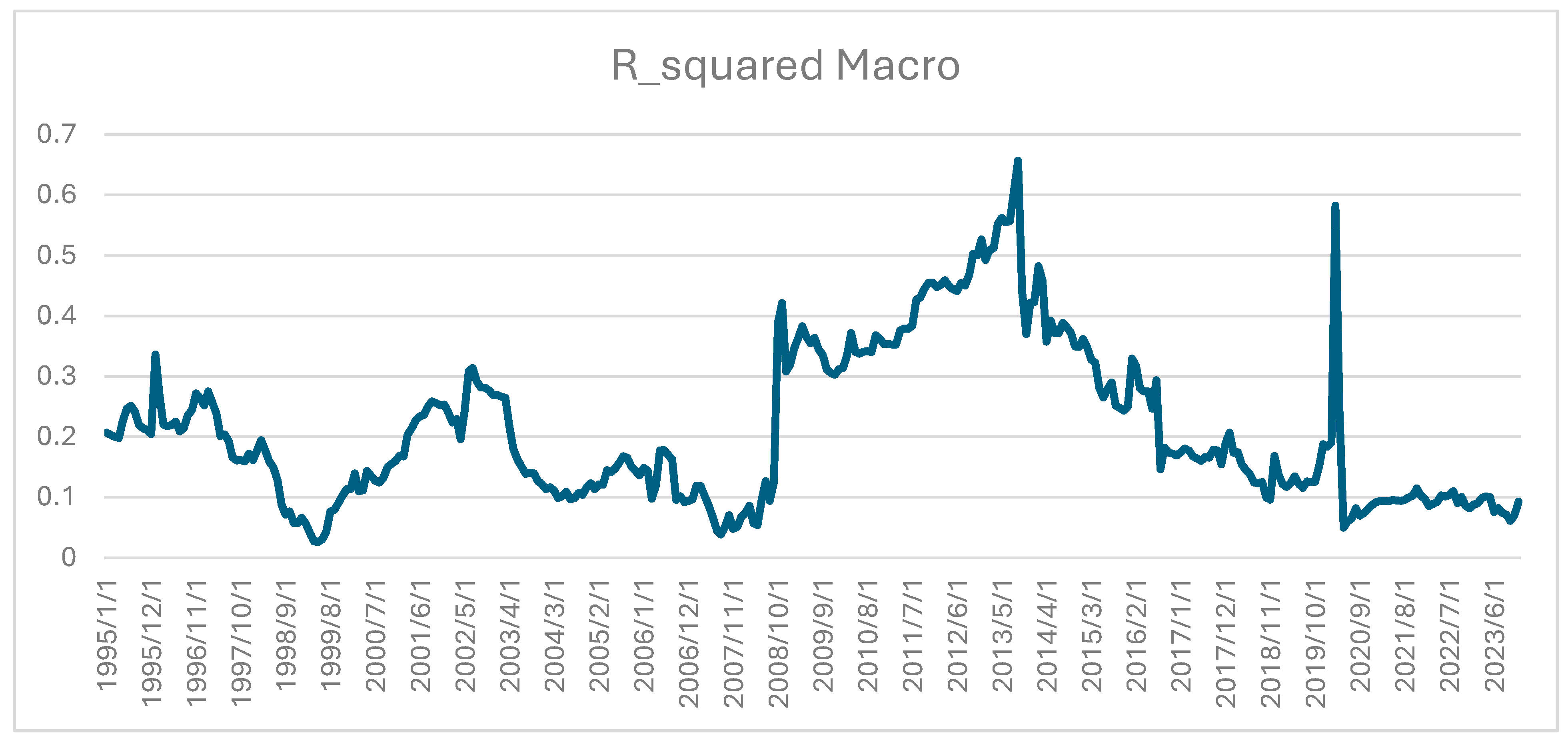
Figure 1 illustrates the statistical performance of the macro narrative from the point of view of R-squared. Numerically, R-squared fluctuates around 0.2 from 1995 to the Global Financial Crisis of 2007–2008. During this interval, the market experienced an exuberance, followed by the internet crash and a short recession. In particular, between 1999 and 2003, the S&P 500 Index suffered a significant downturn, known as the internet dot-com bubble burst. The S&P 500 Index declined from a high of 1527.46 in March 2000 to a low of 768.83 in October 2002. This is a 50% decline. In particular, the NASDAQ underwent a dramatic 80% loss from its peak during the same period.
In addition to the bursting of the equity bubble, the US economy entered a brief recession that lasted 8 months. This recession occurred from the First Quarter of 2001 to the 4th Quarter of 2001. The Greenspan Fed followed an aggressive monetary policy, easing to moderate both the recession and the stock market crash. Fed Funds stood around 6.5% in September 2000, and as the stock market indices entered their bearish phase, followed by a recession, Fed Funds declined dramatically and consistently until they reached the 1% level in June 2004.
The Greenspan Fed received much criticism for maintaining quite an easy monetary policy past the 8-month recession and the bottoming of the S&P 500 Index in October of 2002.
Taylor (
2009),
Bhar and Malliaris (
2021), and
Evgenidis and Malliaris (
2020,
2022) review economic and financial conditions during the 2001–2004 period and show how the easy monetary policy, particularly during 2002–2004, may have triggered the housing bubble that burst during the Global Financial Crisis three years later. Interestingly, the Global Financial Crisis that occurred about 4 years later was, both in terms of the macroeconomy and the stock market, much more challenging and is tracked by a higher R-squared of about 0.4 in
Figure 1. From 2008 to 2013,
Figure 1 shows the dramatic role of quantitative easing that evolved in three rounds. After 2014, the role of macro variables diminished until the pandemic and the dramatic increase in quantitative easing under Jerome Powell. On 15 March 2020, the Fed announced a large-scale program to cut interest rates to near zero (0 to 0.25%) and purchase at least USD 700 billion in assets, a quantity that the Bernanke Fed took 4 years to implement. A few months after this dramatic action,
Figure 1 records very low R-squared values.
The statistical data associated with the R-squared macro are presented in
Table 3. In the set of regressions for the macro model, 145 out of 348 (41.7%) had significant R-squared values.
Next, we evaluate the influence of the six independent macro variables. The analysis of these 348 regressions yields the following interesting facts: No macro variable among the six proposed remains significant across all these regressions. For each variable, the number of times, out of 348 total regressions, that the variable is significant is computed in
Table 4. The last column in this table has this value expressed as a percentage.
The variables are sorted in
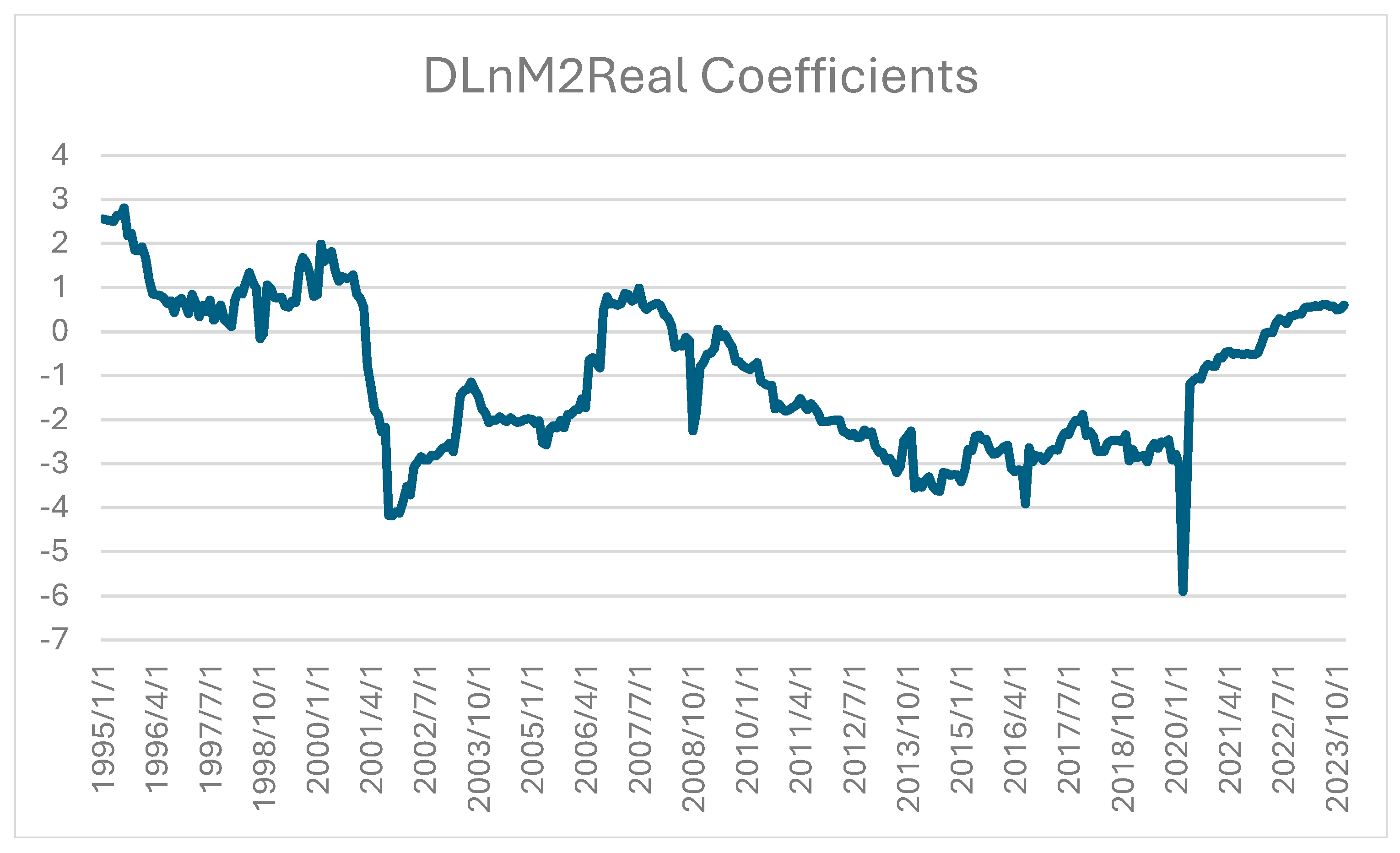
Table 4 from highest to lowest based on the number of times they were significant. Their statistical importance moves in and out of significance, with DLnM2Real being significant in 124 regressions, or 35.5% of the time. This variable demonstrates that quantitative easing has played a leading role as a monetary policy tool in Bernanke, Yellen, and Powell Feds. The next three significant variables are DExpInflation, DLnHomePrice, and DLnIndusProd with declining times of significance. The remaining two variables that are also monetary tools are Fed Funds and T10Y2Y with a low number of times they are significant. The T10Y2Y as a yield curve predicting potential recessions and market corrections does not play a significant role in our calculations.
Table 4 shows that quantitative easing is more significant than Fed Funds. It also shows that cyclical factors representing expected inflation, home prices, and industrial production correlate with stock market returns in the macroeconomic narrative.
There was a popular narrative in Wall Street, labeling Fed policies implemented by former Fed Chair Alan Greenspan as the “Greenspan put.” During the Greenspan and the Bernanke Fed Chairmanship, Wall Street witnessed a willingness from the Fed to respond to stock market crashes, high volatilities, and financial crises by lowering Fed Funds and increasing liquidity. Beyond the Fed’s dual mandate of price stability and maximum employment, a readiness to prevent systemic risks and promote financial stability was manifested, highlighting the evolving role of central banks.
Table 4 provides statistical evidence for the high significance of the role of the Fed in providing liquidity via M2Real.
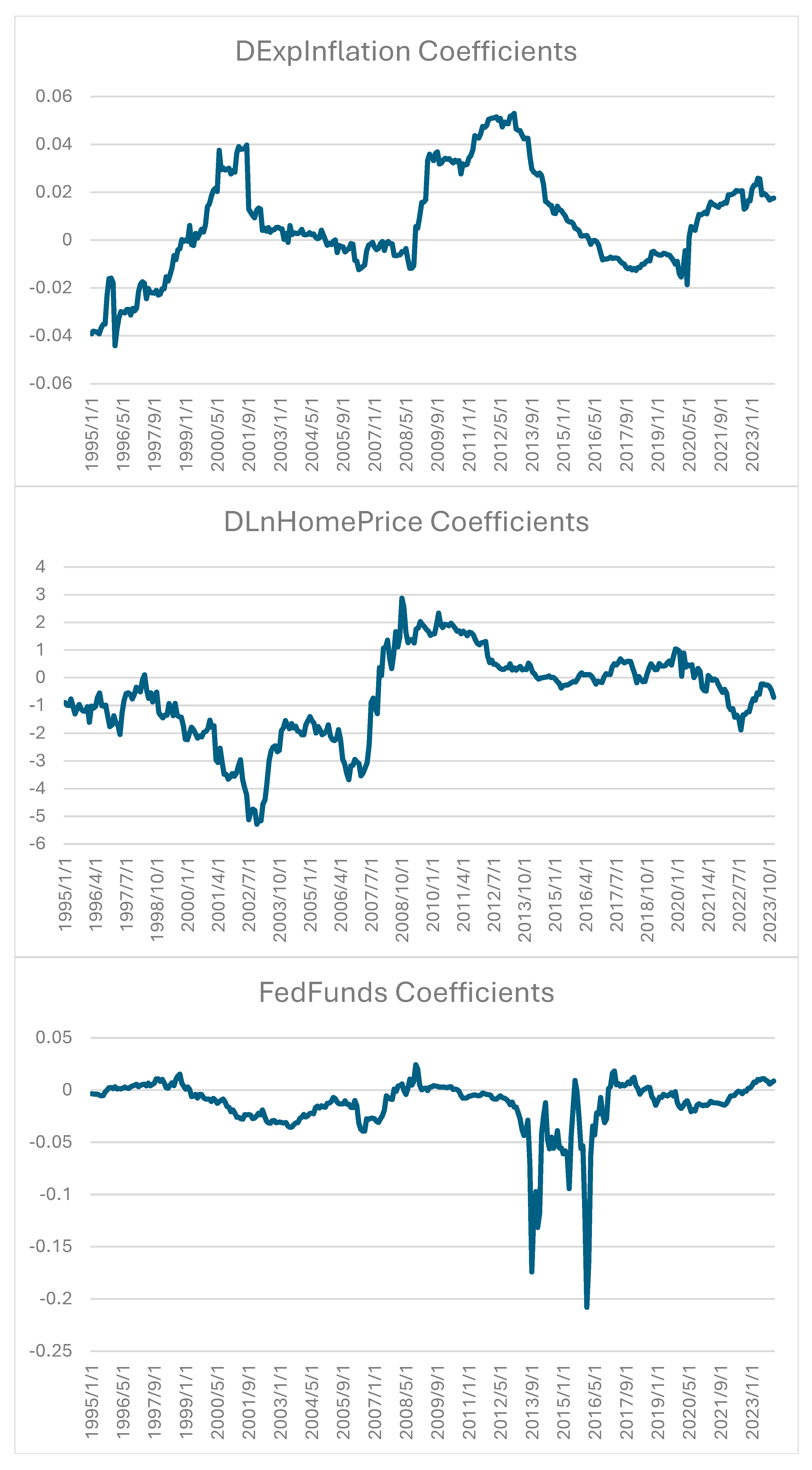
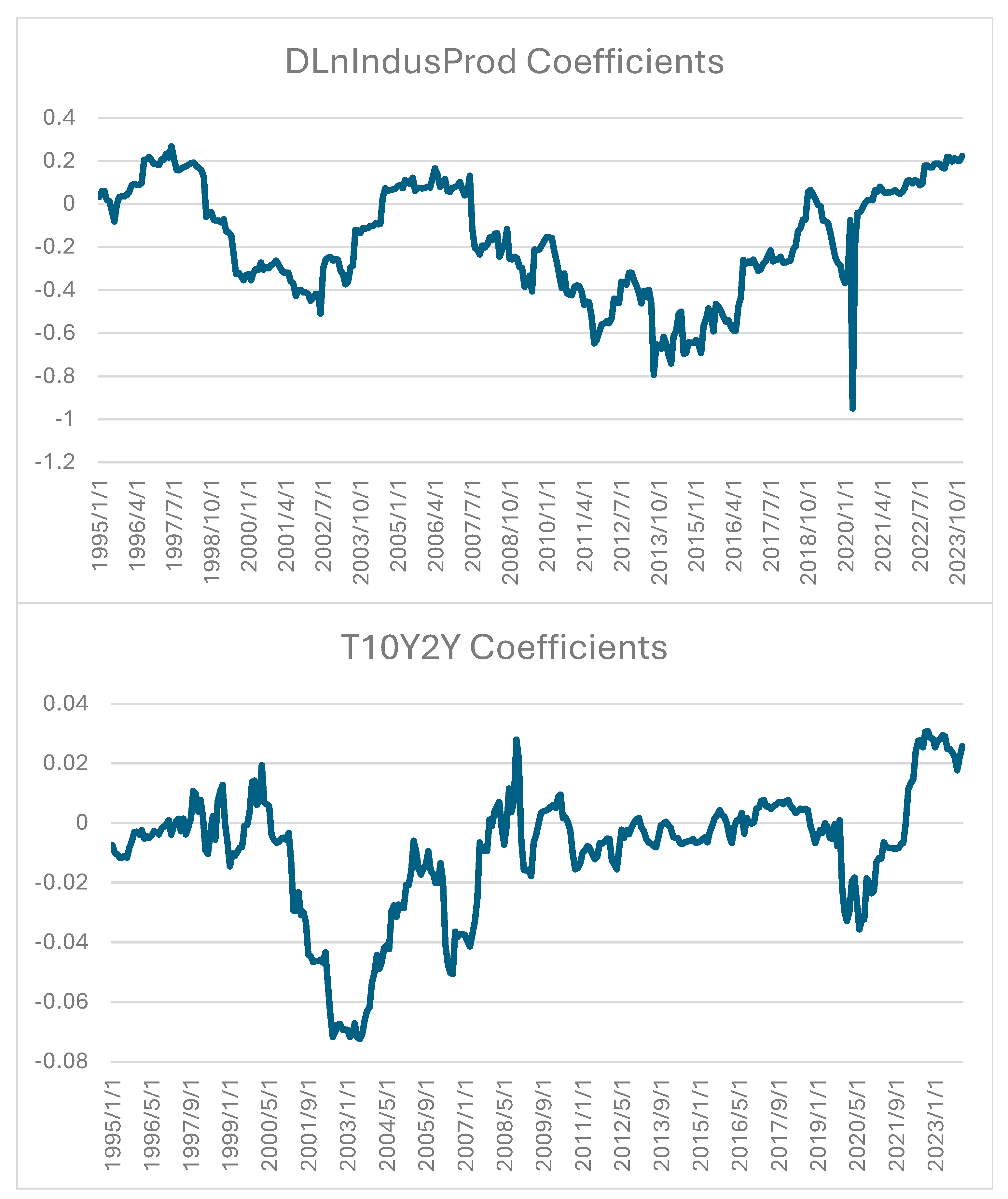
The set of six diagrams illustrating the behavior of the six macro narrative individual coefficients is in
Figure 2. Notice that the coefficients of DLnM2Real have three major responses around the early 2000s period after the internet crash, then around the Global Financial Crisis of 2007–2008 and during the early pandemic period of 2020. Two monetary variables play a complementary role. The coefficients of M2Real fluctuate before 1999 and remain stable and positive after 2001. Fed Funds coefficients contribute stable stimulus to the stock market, but their dramatic drop could not stabilize markets during the Great Financial Crisis. On the other hand, the cyclical variables of industrial production and home prices have cyclical coefficients, primarily before the Global Financial Crisis. The coefficients of expected inflation and the T10Y2Y have no discernable patterns.
The regression coefficients representing business cycles such as inflation, home prices, and industrial production highlight cyclical highs pre-2000 bubble crash and pre-2007 housing top and the 2018 high prior to the 2000 pandemic. Their behavior approximate cyclicality. The two least significant variables, Fed Funds and the yield curve, have coefficients close to zero when the nominal values of Fed Funds were close to zero during the long period of post Global Financial crisis at the end of December 2015.
In
Table 5, we see that DLnM2Real and DLnHomePrice have coefficients that range from largely (relatively) negative to largely positive. T10Y2Y and Fed Funds are typically negative but occasionally flip sign, suggesting regime dependence. Industrial production growth is modest and centered slightly negative. Expected inflation has a small mean effect with limited dispersion relative to other inputs.
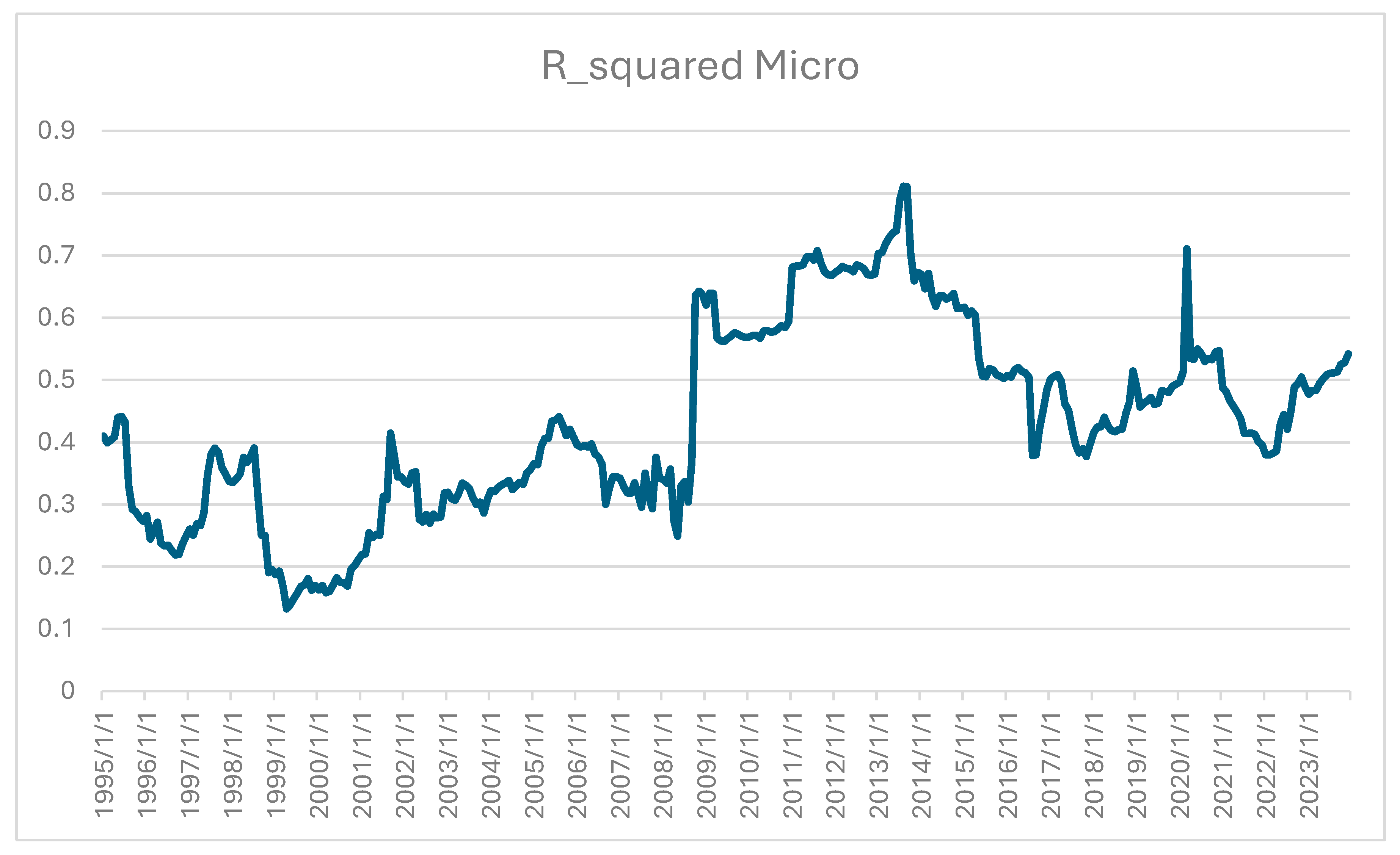
Next, we assess the microeconomic model, with R-squared results presented in
Figure 3. A new set of rolling regressions was run on the data expressed in Equation (2).
The statistical data associated with the R-squared micro are presented in
Table 6. In the set of regressions for the micro model, 323 out of 348 (92.8%) had significant R-squared values.
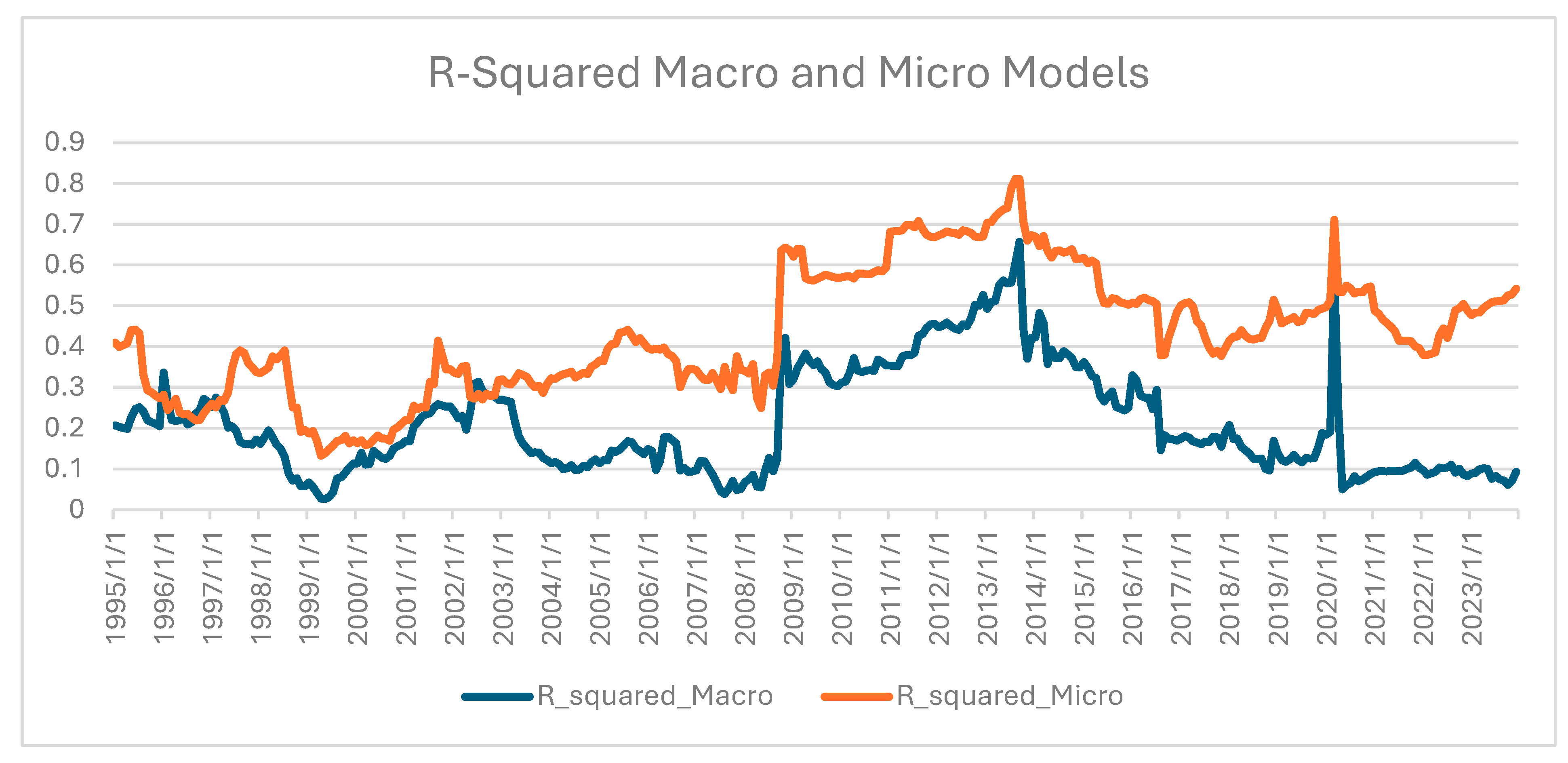
One can clearly observe that the microeconomic narrative exhibits higher R-squared values. From 1990 to the Global Financial Crisis, the average R value is about 0.3 and relatively stable. It increases dramatically to about 0.6 and remains high until 2020, when COVID-19 occurs. The period from 2008 to 2020 is a period of uncertainty and high volatility. The microeconomic narrative does better during times of volatility. The R-squared for the micro narrative experiences insignificance only during the period 1999–2021 when the internet bubble burst and the US economy experienced a short recession. During this period, the microeconomic narrative could not offer sufficient explanations of the stock market crash.
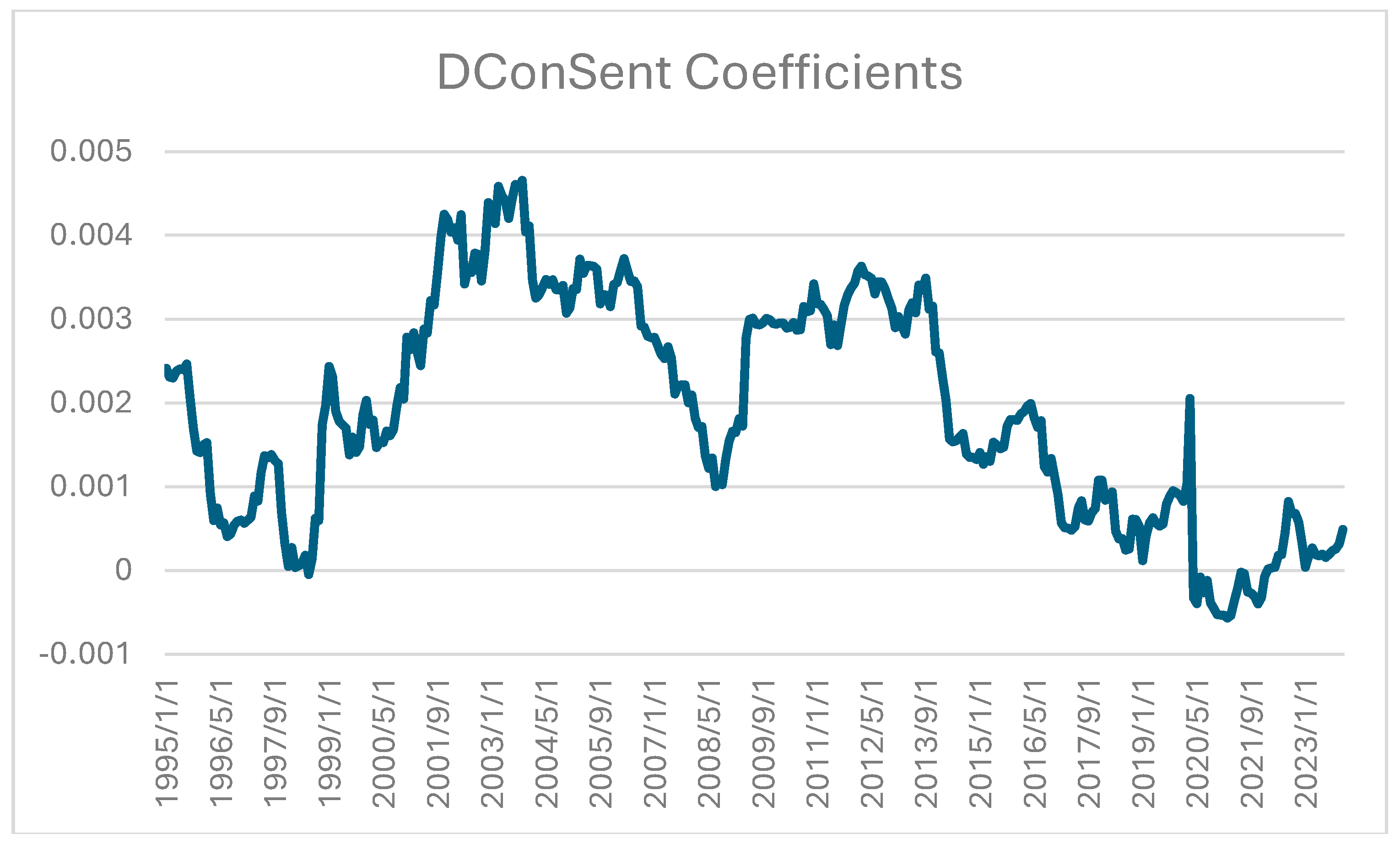
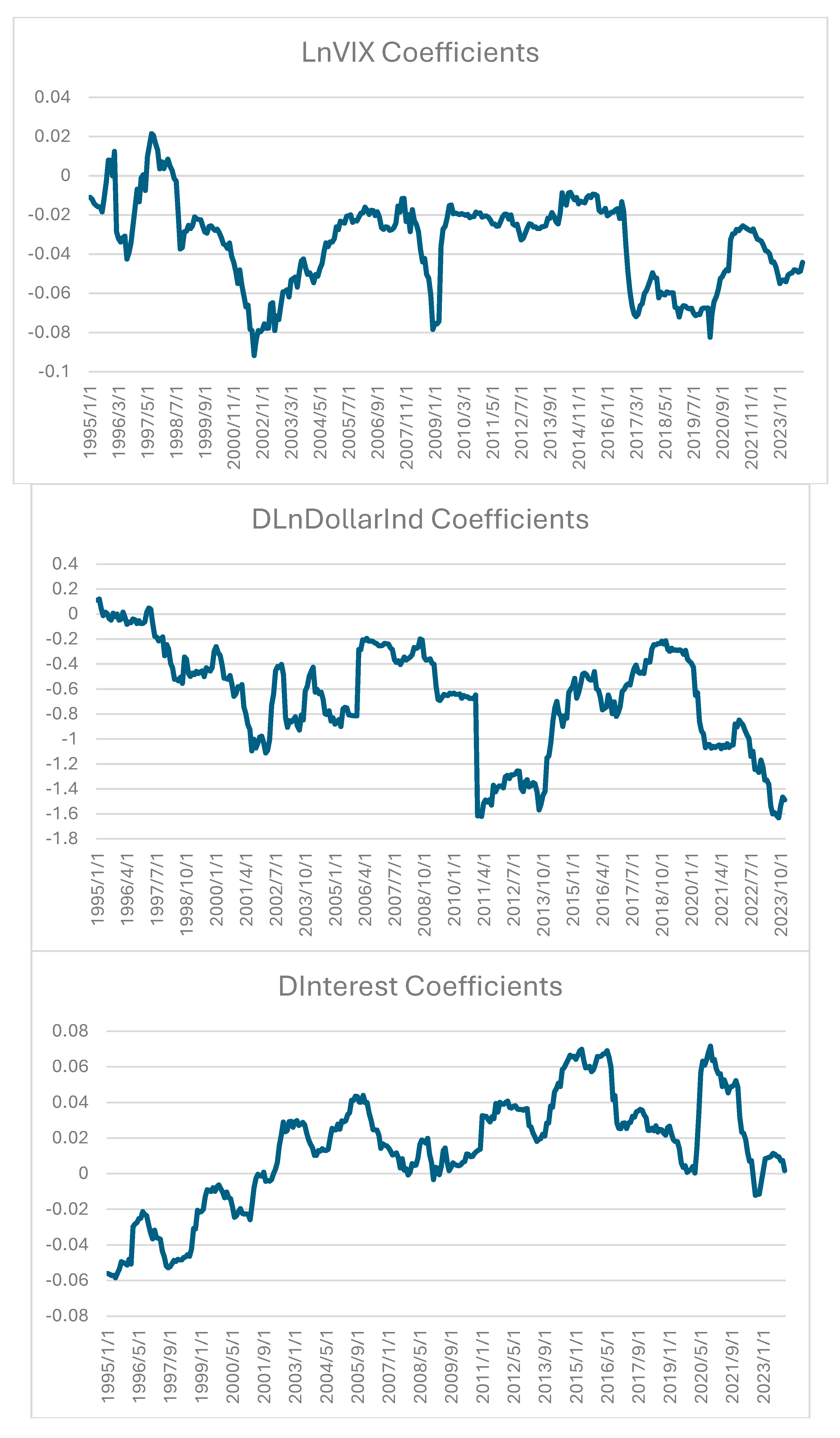
We next evaluate the influence of the six independent micro variables. The analysis of these 348 regressions yields the following interesting facts: The micro model performs well during volatile periods because it co-moves with independent variables representing consumer behavior and stock market uncertainty measured by VIX. The third and equally volatile input is the Dollar Index.
Table 7 shows the number of times each variable was a significant contributor to a regression equation and what percentage of equations this was. We see that the variable DConSent is significant at 52.9%, LnVIX is 48.6%, and DLnDollarInd is 44.3%.
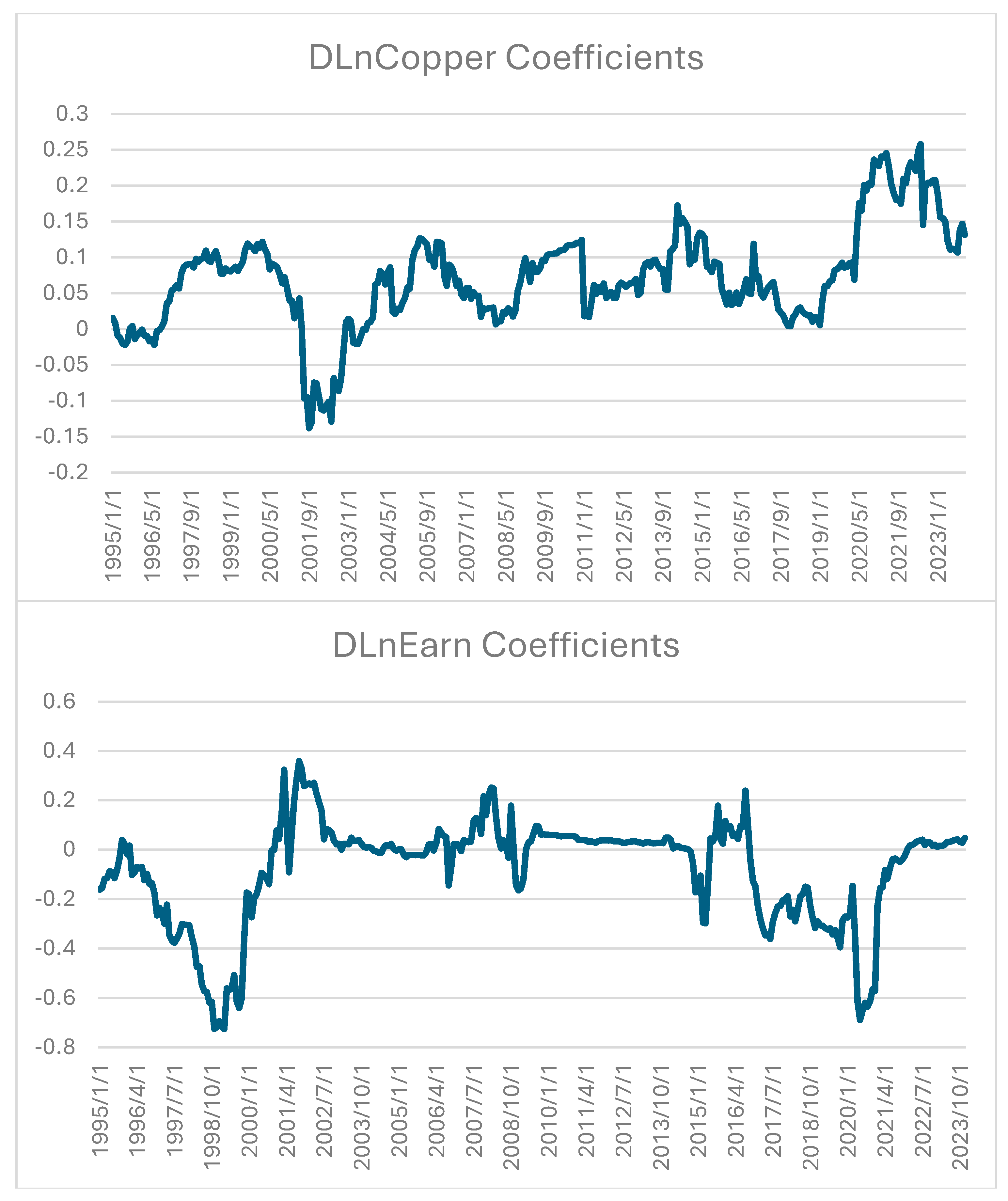
The variables representing the bond interest rate, copper, and earnings appear more stable and play a lesser role than the first three variables. The bond interest rate is significant 31.65% of the time as it offers a risk-free return hedge to stock market returns. DLnCopper is significant only 10.6% of the time.
Campbell and Shiller (
1988) have argued that “a long-moving average of real earnings helps to forecast future real dividends” which in turn are correlated with returns on stocks. In
Table 7, DLnEarning makes only a small contribution of 7.5%.
Figure 4 is a set of six diagrams illustrating the behavior of the six micro narrative individual coefficients. Observe that the first three exhibit a cyclical and similar behavior to the stock market. The fourth and fifth diagrams are also cyclical with more frequency and less amplitude. DLnCopper has a lengthy period of stable coefficients except during the internet crash and the COVID-19 periods. DLnEarning has a similar behavior to DLnCopper with a bigger drop in the values of coefficients during the internet crash and the COVID-19 period.
In
Table 8, we see that DLnDollarInd coefficients show a consistently negative effect on equity returns but with substantial time variation, occasionally flipping signs. LnVIX coefficients are robustly negative on average, consistent with volatility acting as an uncertainty indicator. DLnCopper coefficients are positive, suggesting cyclical growth sensitivity. DLnEarn coefficients display the largest dispersion, indicating strong regime dependence on how earnings growth maps to equity returns. DConSent coefficients are small in magnitude but very stable in sign.
We conclude this analysis by illustrating, in
Figure 5, a comparison of the R-squared values corresponding to the two narratives proposed and evaluated in this paper. Clearly the microeconomic narrative is supported best by the statisitcal data. The macro regressions produce R-squared values that are significant at 41.7% compared to the micro regressions that has R-squared values that are significant at 92.8%. They both show jumps around the Global Financial Crisis and COVID-19. Also, for both narratives, the period from 1990 to the Global Financial crisis is more stable than the period between the Global Financial Crisis and COVID-19.
We compared the R-squared distributions across the two rolling-window models. The results are summarized below in
Table 9.
The distribution of micro R-squared values is shifted upward relative to the macro model (see
Figure 5). Even the worst-performing micro window is comparable to or better than the typical macro window. The micro variables do better than the macro variables in characterizing monthly equity return variation in our rolling framework. We can characterize the macro model as episodically informative (strong in certain regimes and weak in others).
We constructed MicroR2–MacroR2 and tested the hypothesis that this difference equals zero. We ran a parametric and a non-parametric test and obtained the following:
t-statistic: 36.57
p-value: 4.46 × 10−121
Conclusion: Reject H0 at any conventional significance level. The micro model’s R-squared is statistically higher than the macro model’s in the mean sense.
B. Wilcoxon signed-rank test (median difference)
Test: Wilcoxon signed-rank (distribution-free)
Test statistic: 192.0.
p-value: 4.50 × 10−58
Conclusion: Reject H0 decisively. The micro model does better than the macro model, even without relying on normality assumptions. Also, the micro is better than the macro in nearly every rolling window. The result is not influenced by a few outliers or regimes.
5. Conclusions
Shiller (
2019) investigates in detail the task of narratives in economics and finance. Narratives help characterize complex economic relationships and how these relationships are associated with certain outcomes. In this paper we focus on narratives about the behavior of the S&P 500 Index returns. These returns essentially move continuously, and a story is needed to reflect such movements. Put simply: what co-moves with such incessant returns? The explanation needs to offer some degree of clarity. We cannot say that stock market prices move because of a colossal number of reasons. Such a narrative does not reduce complexity. Also, stock market participants need to make decisions about buying or selling or waiting. They need a narrative to help them decide. If narratives reduce complexity and guide decision making, do they remain relevant over time?
We proposed two narratives to analyze monthly returns for the S&P 500 Index. The first narrative emphasized variables that represent the macroeconomy: Fed Funds Effective Rate, Real M2, 10-Year T-Note minus 2-Year T-Note, Shiller Housing Index, industrial production, and 1-Year Expected Inflation. The second narrative focused on microeconomic fundamentals that include earnings, CBOE Volatility, consumer sentiment, global price of copper, and the Dollar Index.
We performed a set of rolling regressions, each for a sample of 60 monthly observations, and estimated the significance of the variables considered. After the first regression, we removed the oldest monthly data and added the next newest monthly data to obtain another set of significance estimates. We repeated this process for 348 overlapping, rolling regressions for each narrative. The first regression covered the period 1 February 1990 to 1 December 1995 and the 348th (last) regression covered the period from 1 January 2019 to 1 December 2023. From these overlapping rolling regressions, we discussed goodness of fit, statistical significance, robustness, and economic interpretability.
First, we conclude that the inputs of the microeconomic narrative are tied to stock market activities and correlate with returns more closely than the macro inputs that describe fundamentals of monetary policy and business cycles.
Second, the macroeconomic narrative experiences two challenges: first, during the period from mid-1998 to mid-2002 that includes the bursting of the internet bubble, and second, during the Global Financial Crisis. Put differently, the macroeconomic narrative with its emphasis on liquidity and expected inflation occasionally does not perform as well as the microeconomic narrative represented by consumer sentiment and VIX. The micro variables are more volatile than the macro ones and have higher correlations with stock returns.
Third, the macroeconomic narrative with its emphasis on cycles generated by fluctuations in industrial production and housing, and monetary policies moderating such cycles tells a story for longer-run returns. In contrast, the microeconomic narrative focuses on the shorter-run dynamics with inputs such as consumer sentiment and the volatile VIX.
Finally, both narratives may be considered as complementary rather than competitive since they highlight how shared stories documented by correlated dynamics across time influence investors’ behavior. This recalls Charlie Munger’s favorite quote: “Micro is what we do, macro is what we put up with.”