

Systematic Review

Green Bond Pricing: A Comprehensive Review of the Empirical Literature

Finance Department, Business School, University of Queensland, Brisbane 4072, Australia
*
Author to whom correspondence should be addressed.
J. Risk Financial Manag. 2025, 18(12), 689; https://doi.org/10.3390/jrfm18120689 (registering DOI)
Submission received: 11 November 2025 / Revised: 28 November 2025 / Accepted: 28 November 2025 / Published: 3 December 2025
(This article belongs to the Special Issue Green Finance and Corporate Strategy: Challenges and Opportunities)

Abstract

As green finance grows, green bonds have become an essential tool for funding sustainable projects. While many studies explore whether green bonds exhibit a “green premium,” existing literature reviews often lack depth, timeliness, and consistent methodology. This paper addresses these gaps by systematically reviewing 70 empirical studies on green premiums published up to 2025, making it the most comprehensive review to date. We organize the literature by region (Global, U.S., Europe, Asia Pacific), market segment, premium dimension, data source, and estimation method, offering a structured framework to analyze diverse findings. Our analysis reveals a consistent negative green premium of −12.44 bps on average across most markets, with European and Asian markets showing higher yield spreads than the U.S. Studies using more recent data report smaller premiums, and larger bond issues tend to have lower premiums. Despite variations in methods and data sources, the overall results are consistent. This paper provides an updated overview of green premium research and offers key insights for investors, issuers, and policymakers on green finance pricing and investment strategies.
JEL Classification:
G12; G30; G32; Q56

1. Introduction

Green finance is increasingly becoming a key tool connecting environmental policy with capital markets, driven by global climate change and the sustainable development agenda. As a representative product of green finance, green bonds channel capital towards environmentally friendly projects, achieving synergistic environmental and economic benefits in the market. In recent years, international organizations and national governments have successively introduced relevant standards and policies, establishing green bonds as a core asset in the current ESG investment ecosystem. According to Climate Bonds Initiative (2019) data, annual green bond issuance grew fivefold between 2015 and 20191. This explosive growth indicates that bond issuers and investors are demonstrating stronger environmental orientation, giving rise to a market phenomenon known as the ‘green premium’ (MacAskill et al., 2021). This term typically refers to the yield differential between green bonds and conventional bonds with similar underlying characteristics (Agliardi & Agliardi, 2019). When green bond yields are systematically lower than their conventional counterparts, this reflects investors’ willingness to “pay a premium for green”, supporting long-term sustainable development at lower yields.
Despite the widespread recognition of the green premium phenomenon in market practice, academic consensus remains elusive. Research findings are often inconsistent, with significant gaps and heterogeneity across studies. While the volume of research on green premiums has increased in recent years, many systematic literature reviews still fall short in terms of comprehensive coverage, timeliness, and depth. A large-scale synthesis grounded in a broad body of empirical literature is still lacking, leaving researchers to grapple with fragmented information when trying to understand the overarching trends and characteristics of the green premium.
While substantial progress has been made in green bond research, challenges persist in reconciling the divergent findings across different markets and methodologies. This review not only synthesizes the existing empirical evidence but also identifies key patterns and trends in green premium pricing that have emerged in recent years. By systematically categorizing studies across various dimensions such as market segment, regional context, and estimation methods, we aim to provide a more coherent framework for understanding the green premium and its implications for both future research and green finance policy. This approach allows us to offer a clearer and more integrated view of the green premium phenomenon, addressing gaps in existing reviews.
To identify available literature, this paper first searched databases such as Google Scholar, Web of Science, and Scopus with keyword combinations such as ‘green bond premium’, ‘greenium’, and ‘yield spread’. After initially sourcing many papers, we excluded policy studies and conceptual papers that did not include quantitative premium estimates. Articles containing quantitative premium estimation results are retained, ultimately incorporating 70 representative empirical studies on green premiums. Then we systematically categorize these papers by study region2 (e.g., Europe, the United States, Asia Pacific, and globally), market segment (primary market, secondary market), data source (e.g., Bloomberg, CBI), and estimation method (e.g., OLS, matching methods, panel data models). This structured literature database provides foundational support for subsequent analysis.
Through deep analysis, we find that most studies indicate the existence of a negative green premium for green bonds, meaning their yields are lower than those of conventional bonds, with an average of approximately −12.44 bps. Specifically, in European markets, research shows the green premium being approximately −14.13 bps on average (such as Hinsche, 2021). In the U.S. market, large-sample studies (Baker et al., 2022) measure a premium average of approximately −5.14 bps. In Asian markets (China, Japan, India), most studies show a negative greenium average of approximately −21.4 bps. Globally, most studies (e.g., Zerbib, 2019) indicate a mean green premium of approximately −8.03 bps, though isolated studies identify positive premiums (e.g., Dorfleitner et al., 2022, reporting 0.95 bps). We further observe that the design of research methodologies, choice of control variables, sample periods, and data sources significantly influence the robustness of differing research conclusions.
This systematic literature reviews contribute to literature by synthesizing, classifying, and interpreting existing empirical findings rather than generating new datasets or econometric estimates. In this study, we provide the first comprehensive synthesis of 70 empirical analyses of green premiums published up to 2025, offering the most extensive and up-to-date overview available. Our review also introduces a multidimensional classification framework, covering regional contexts, market segments, premium types, data sources, and estimation methods that enables a structured comparison of prior evidence and yields integrative insights not previously articulated in the literature.
Therefore, by bringing together and analyzing existing studies, this paper maps the current landscape of green premium research and highlights key patterns and trends in green bond pricing. It clarifies how different market contexts, bond types, and methodological approaches influence findings, providing a structured view of a complex and rapidly evolving field. In addition to contributing to academic understanding, this review offers insights into the broader implications of the green premium, framing it as a reflection of how markets recognize environmental value and supporting informed decisions by investors, issuers, and policymakers.
The remainder of the paper is organized as follows. Section 2 presents the theoretical background and develops the key hypotheses. Section 3 examines geographical trends in green bond pricing research, while Section 4 reviews the data sources and matching methods utilized in major green bond pricing studies. Section 5 provides a discussion of the findings, and Section 6 concludes with key insights, practical implications, and directions for future research.

2. Research Method3

2.1. Literature Review Methodology

In this study, we use a systematic literature review to examine research on green bond premiums, focusing on green bond pricing. This approach involves identifying and evaluating relevant studies based on clear criteria, ensuring an unbiased and comprehensive review. Compared to traditional narrative reviews, systematic reviews offer a more structured and transparent process (Bhutta et al., 2022). By categorizing studies across key factors like market region, data source, and methodology, we aim to provide a clearer understanding of the green premium and its influencing factors.
First, this literature review was conducted following the Preferred Reporting Items for Systematic Reviews and Meta-Analyses (PRISMA) guidelines. A systematic search of relevant databases was performed to identify studies related to Green Bond Pricing. Inclusion and exclusion criteria were predefined to ensure the selection of relevant and high-quality studies. The study selection process, including identification, screening, eligibility assessment, and inclusion, is documented in a PRISMA flow diagram (Page et al., 2021). Data extraction and synthesis were performed systematically to summarize findings and identify gaps in the literature. Second, the PRISMA checklist is included in the Supplementary Materials. Third, this systematic review was not registered in any database. The main contribution lies in systematic cross-study patterns.
Although this study does not produce new econometric estimates, this form of conceptual and empirical synthesis is recognized in the literature as a valid and important scholarly contribution of systematic reviews. Importantly, this paper better highlights the novelty and added value of our review relative to prior surveys and narrative summaries, which were limited in coverage, outdated, or methodologically unsystematic. Likewise, paper systematically synthesizes patterns across studies and highlights differences in a structured, qualitative manner. To ensure the comprehensiveness, transparency, and accuracy of this systematic review of the green bond premium literature, this paper draws on the methodological framework of a systematic literature review (SLR). Table 1 indicates the steps of the literature review and the corresponding method. Through a multi-stage literature search and screening process, we construct a multidimensional sample of green bond premium research, based on which we conduct a structured summary and analysis.
Firstly, we select databases with broad coverage and strong academic authority as our primary search channels, such as Web of Science and Google Scholar. We also conduct cross-search with databases such as Scopus, ScienceDirect, and SpringerLink. Considering the cyclical nature of the green bond market and the rapid growth of research in recent years, we set the search period from 2015 to June 2025 to ensure coverage of the most representative and methodologically mature phases of green premium research. The detailed search process has been illustrated in Figure 1.
Secondly, we conduct a literature search with the appropriate keywords. We comprehensively reference existing review literature and commonly used green finance terminology and conduct an expanded search using the following keyword combinations: “green bond premium”, “green element”, “green bond yield spread”, “green bond pricing”, “green bonds vs. traditional bonds”, and “green bond performance”. This keyword combination not only covers the core terms in green premium research but also accounts for the differences in definitions and expressions of green premiums across the literature, ensuring the breadth and depth of our funding.
The initial keyword search returns approximately 300 relevant articles. We then establish clear inclusion and exclusion criteria and conduct two rounds of literature screening:
(1)
The inclusion criteria included:
  • Studies focusing on the yield or price difference between green bonds and conventional bonds.
  • Providing specific quantitative estimates of the green premium (e.g., spreads expressed in basis points).
  • Using data on bonds issued in the actual market, covering the primary market, secondary market, or both.
  • Clearly stating the data source and empirical methodology.
  • Article types included: published journal articles, high-quality working papers, and policy research reports published by authoritative institutions.
(2)
The exclusion criteria included:
  • Literature that did not involve price or yield analysis but instead focused on theoretical analysis (e.g., policy impact, status of green bond development, market structure, etc.).
  • Literature only provides information such as green bond definitions, ratings, and certification mechanisms, but does not provide premium estimates.
  • Literature with incomplete or untraceable data or methods, or purely theoretical in nature.
  • Literature that focused on other green financial products (e.g., green funds, ESG indices, etc.) rather than green bonds.
  • Non-official publications or articles of lower academic quality (e.g., master’s theses) are excluded.
After the initial screening and a full-text review, 70 empirical research articles that meet the inclusion criteria are retained as the primary literature sample for this review(see Table 2). This process not only ensures the systematic nature of the research but also avoids selection bias, providing a solid foundation for subsequent classification, analysis, and conclusion.

2.2. Data Sources of Previous Literature

The 70 sample articles on empirical research on green premiums in this study are sourced from authoritative academic databases, research platforms, and institutions. To ensure representativeness, scientific integrity, and research quality, we prioritize sources with high academic impact and robust peer-review mechanisms during the initial search and screening phase. Specifically, the articles included primarily came from the following three categories:
  • Mainstream academic databases (e.g., Web of Science).
  • Open-access academic search engines (e.g., Google Scholar).
  • Professional publishing platforms and journal websites (including Elsevier, Springer, Taylor & Francis Online, and journals with high coverage of green bond research, such as Energy Economics, Journal of Sustainable Finance & Investment, and Finance Research Letters).
In addition, some articles are sourced from high-quality working paper platforms (e.g., SSRN). Although these articles have not been formally published, they have high citation rates and research value in the field of green finance and are therefore included in this paper.
Overall, the 70 sample articles cover a wide range of document types, including academic papers, working papers, and institutional reports. The research primarily focuses on empirical studies published in English-language journals after 2018, particularly in mainstream journals related to finance, sustainable development, and environmental economics.

2.3. Review Questions and Hypotheses

This paper does not undertake new quantitative empirical analysis, but in reviewing and analyzing existing green premium research, we observe that most studies focus on the core question: whether systematic pricing differences exist for green bonds, which is the phenomenon of ‘green premium’. To systematically summarize and compare existing research results around three dimensions, region, data sources, and analytical methodologies for structured analysis, we propose four hypotheses. First, a large amount of empirical research outcomes provides evidence of significant negative premiums for green bonds globally, with this green preference being prevalent across markets, including the US, Europe, and Asia (Baker et al., 2022; Febi et al., 2018; Q. Wang et al., 2019). The negative premium of green bonds reflects a degree of international consensus. Investors are generally willing to accept slightly lower yields to support sustainable development objectives. Thus, we propose the following hypothesis:
H1. 
Ceteris paribus, green bonds exhibit significant negative premiums across different regions in the world.
Next, we find that most research uses data sources including Bloomberg, Refinitiv, and CBI (Climate Bonds Initiative). Although there are differences in sample construction, label definitions, and timeframes across these databases, most of the literature consistently reports similar green premium trends, indicating that the green premium represents a widespread market trend across different data systems. Therefore, we propose:
H2. 
Ceteris paribus, green bonds consistently show a negative green premium regardless of the data source used for analysis.
Further, we observe that research on green premiums uses several important methodologies, including OLS regression, fixed-effects panel data, and matching methods. As a market phenomenon, the existence of green premiums should not depend on specific statistical models or quantitative analysis methods. If green premiums represent a similar trend across different research methodologies, this suggests that the conclusion is highly robust. The research samples employ multiple methodologies to match green bonds with conventional bonds, control for variables, or conduct group comparisons. Most research observes that green bonds have significant pricing advantages over traditional bonds, although by different methods. Hence, we propose the following hypothesis:
H3. 
Ceteris paribus, green bonds exhibit a significant negative green premium regardless of the estimation method employed in the analysis.
In addition, green bond pricing can occur in either the primary or secondary market. While the pricing mechanisms differ, the green premium phenomenon is evident in both markets. Existing literature suggests that, for example, in the primary market, green bonds issued by governments and multilateral institutions are typically priced at a slightly lower yield (Bachelet et al., 2019). In the secondary market, investors also observe a price premium due to the repricing of green labels (Zerbib, 2019; J. Wang et al., 2020).
H4. 
Ceteris paribus, green bonds exhibit a significant negative green premium in both the primary and secondary markets.

3. Geographical Trends in Green Bond Pricing Research

In this section, the study discusses the green premium results by different regions. Table 3, Panel A, displays the pooled results, while Panel B reports the bond spread by region. A negative spread indicates the existence of a green premium, reflecting the yield difference between green bonds and comparable conventional bonds. In this study, the reported spreads represent the average values extracted from the reviewed literature, calculated to provide a descriptive summary of central tendencies across studies. Given the wide variation in sample periods, markets, and methodologies, a simple mean is appropriate for capturing overall trends and providing readers with an integrated, easily interpretable measure of the green premium.

3.1. Global

In the final sample of research included, nearly half of the studies cover global markets, indicating that the green premium is one of the most popular research projects in the global green bond market. Most of the literature consistently finds a significant negative green premium relative to conventional bonds, although there are a few studies that hold the opposite conclusion (See Appendix A Table A1). In the global research aspect, the research by Zerbib (2019) is widely considered as one of the foundational and core studies in the field of green premiums. Based on a global dataset comprising 110 green bond samples, Zerbib suggests an average green bond premium of −2 basis points. This finding establishes a key benchmark for subsequent research and has been widely cited.
Subsequently, multiple studies verify this finding across larger samples. Löffler et al. (2021) analyze an extremely large sample of 2000 green bonds, reporting a green premium of −15 to −20 bps. Benincasa et al. (2022) estimated a green premium ranging from −4.9 to −8.7 bps with a sample of 1795 green bonds. Given their substantial sample sizes, both findings align with mainstream results while they are greater robust. In recent studies, both Caramichael and Rapp (2024) and Eskildsen et al. (2024) chose samples of approximately 4000 green bonds, showing a green premium of −3 to −6 basis points, which further confirms prior premium research, reflecting that negative green premiums still exist even as the green bond market matures.
Moreover, Hyun et al. (2021) focus on an in-depth analysis of pricing differences within green bonds based on a large sample of multiple countries, claiming that labeled green bonds yield are approximately 24–36 basis points lower than unlabeled green bond, so unlabeled green bonds are likely to have higher yields. This research provides strong evidence of the impact of internal green bond structures on pricing, adding a significant perspective beyond the “green vs. non-green” comparison in the mainstream literature.
On the contrary, a few studies have inconsistent results. For instance, Flammer (2021) argues no significant green bond premium; Dorfleitner et al. (2022) reports a green premium of +0.95 bps, and Agliardi and Agliardi (2019) observe a premium of +6.89 bps, indicating that the phenomenon of “overcompensation” for green bonds may also exist. From the global perspective, most studies report a negative green premium at −8.03 bps, which is a widely recognized mainstream trend in global green bond pricing.

3.2. U.S.

As one of the most mature bond markets in the world, the U.S. green bond market is developing rapidly and is now a key region for green bonds (Chiang, 2017). Although the volume of relevant research literature is far less than that of global studies, the U.S. remains a crucial sample region in green premium studies, with the green bond premium phenomenon attracting widespread attention. Most literature consistently indicates a significant negative green premium in the U.S. market, at −5.14 bps (See Appendix A Table A2).
The most representative study by Baker et al. (2022) provides evidence that the average green bond premium is between −5 and −9 bps based on a sample of almost 4000 green bonds in the U.S. market. With its large sample size and robustness, this research stands as a landmark achievement in the field of U.S. green bond premium studies and is cited as a representative conclusion in multiple review papers. Another research by Singh et al. (2024) analyzes the largest U.S. green bond sample size (13,220 bonds), finding a green premium range of −2.7 to −6.9 basis points, further reinforcing the trend of green bonds forming significant pricing preferences in the U.S. market. However, earlier studies have contrary conclusions regarding the green premium in the U.S. market. Karpf and Mandel (2018) represent one of the earliest quantitative studies in the U.S. green bond sector. Their analysis finds that during the early years (2010–2014), the green premium is −7.8 bps, but it reverses to +38 bps in 2015–2016, suggesting that the green premium may shift over time and with changes in market cognition.
Larcker and Watts (2020) further question the market recognition of the green label effect. Based on the findings of Baker et al. (2018), they discovered that although some studies indicate investor preference for green assets, in real market conditions, investors are completely unwilling to ignore returns for sustainable projects. The study claims that investors view green and non-green securities by the same issuer as almost exact substitutes, reflecting that the green labels have no significant influence on bond market pricing. The mainstream research results on green premiums in the U.S. market are negative, with the average of −5.14 bps. Although earlier literature even reports positive premiums, the U.S. market is progressively aligning with the global green pricing trend.

3.3. EU

Europe is at the forefront of green finance development, with a mature green bond market. It is also one of the most frequently studied regional markets. According to the European sample literature, the results are generally consistent: there is a negative green premium in European markets, typically at −14.13 bps (See Appendix A Table A3). One significant study analyzes 121 European green bonds, reporting green premiums ranging from −5 to −13 bps (Gianfrate & Peri, 2019). Another earlier European market research by Febi et al. (2018) focuses on 64 green bonds listed on the London Stock Exchange, estimating a green premium of −69.2 bps (2016), which is an extreme negative premium phenomenon example in EU literature. This study summarizes that pricing advantages for green assets may be significantly obvious under specific secondary market and high-transparency green labels.
A larger-scale study by Jankovic et al. (2022), based on a sample of over 10,000 EU green bonds, observes that the green bond premium is approximately −6 bps. This research further highlights that the higher the green bond transparency, the more significant the premium. Contrary to the above research, Wongaree et al. (2025) present a different opinion. The analysis of 488 European market samples shows no significant pricing differential between green bonds and conventional bonds, with a green premium of approximately 0 bps. This research suggests that under specific market conditions, green labelling may not significantly impact bond yields. Consistent with the trend in global and U.S. markets, most of the European market literature reports a negative green premium, although there are minor variations in research conclusions.

3.4. Asia Pacific

As an emerging but rapidly growing region, the Asian green bond market attracts increasing academic attention. Although green bonds developed relatively later in Asia than in Europe and the U.S., major economies (particularly China) have rapidly established representative green bond markets. Most studies consistently identify a significant negative green premium in Asian markets (−21.4 bps), but there are also a few studies that report positive premium outcomes (See Appendix A Table A4).
The Chinese green bond market is undoubtedly a core research focus within Asian studies. Li et al. (2022), based on a sample of approximately 3500 green bonds issued in the Chinese market, suggest a green premium of −8.4 bps. Q. Sheng et al. (2021) further focus on the green preference within the Chinese market, indicating an average green bond premium of −7.8 bps. Moreover, D. Sheng and Montgomery (2025) provide stronger pricing evidence with a sample of 72 banks issuing green-supported bonds, finding that the green premium ranged from −12 to −31 bps within the context of China’s green finance support policies and indicating a significant price advantage for bonds driven by green innovation compared to traditional bank-issued bonds.
However, some studies observe findings in China that contradict the above conclusions. For example, Q. Wang et al. (2019) report that green bonds yielded 172 bps higher than conventional bonds, representing the largest deviation in premium valuation observed in the current Asian literature. This result suggests that during the early stages of China’s green bond market, due to information asymmetry, inconsistent standards, or an immature pricing mechanism, a phenomenon of ‘green bond anti-premium’ may exist.
Except for China, studies on green premiums in other Asian countries are rare, but they have similar findings. Berdiev (2025) indicates a green premium ranging from −7 to −17 bps in the Japanese market, showing a stable pricing preference for green labels among Japanese investors. Abhilash et al. (2023) observe a significant negative green bond premium of approximately −32 bps in the Indian market. Research on green premiums in Asia justifies a development pattern centered on China, gradually extending to other regional markets. And studies of China indicate that green bonds generally show a negative green premium relative to conventional bonds. While studies in Japan and India are still in their early stages, their overall trend aligns with China, suggesting that green asset pricing in Asia is stabilizing and converging towards the European and American markets.
In summary, these markets are relatively less mature and less, leading to greater investor uncertainty and risk perception. In addition, regulatory frameworks, reporting standards, and green bond certification processes are less standardized, which increase perceived risk and thus premiums. Cultural and market-specific investor behavior, such as cautious adoption of new financial products, may also play a role.

3.5. AU

In stark contrast to Europe, the US, and Asia, research on green premiums in the Australian market is still in its infancy, with only a limited number of studies currently available. Alexander and Jayawardhana (2025) analyze the Australian green bond market and find a green premium of +2 bps, suggesting that a clear green pricing preference emerges in the market. I. Tang et al. (2025) further claim that green bonds may underperform conventional assets, even exhibiting a ‘reverse green premium’, after adjusting for industry bias and green rating distortions in their study of ESG portfolios in the Australian stock market.
Current findings on green premiums in the Australian market remain inconsistent, reflecting that the pricing mechanism for green bonds may still be in its early stages in this region, significantly influenced by sectoral structure and market preferences.

4. Data Sources and Matching Method Utilized in Existing Literature

4.1. Green Bond Database

To ensure the reliability of green premium estimates, most research uses authoritative financial databases to obtain green bond samples and related market information. Based on the sample literature, data sources are primarily concentrated in the following four categories: Bloomberg, the Climate Bonds Initiative (CBI), Wind/CSMAR (for the Chinese market), and other international financial data platforms (e.g., Thomson Reuters/Refinitiv). Table 4 Panel A summarizes the databases and the corresponding green premiums identified using each database. The results are consistent across different databases.
Bloomberg is one of the most widely used green bond databases globally, covering primary and secondary markets in multiple countries. It provides comprehensive information on bond issuance, trading data, credit ratings, and maturity structures, which is the preferred data source for most green premium studies. For example, Caramichael and Rapp (2024) construct a sample of approximately 4000 global green bonds from Bloomberg and report a green premium of −3 bps. Baker et al. (2022) estimate a green premium of −5 to −9 bps with a sample of nearly 4000 U.S. green bonds from Bloomberg. Similarly, Singh et al. (2024) find a green premium of −2.7 to −6.9 bps based on a very large sample of 13,220 U.S. bonds. Numerous high-quality studies create large-scale samples from Bloomberg and consistently suggest a negative green premium (−9.57 bps).
The CBI is an international nonprofit organization specializing in the certification and tracking of green bonds. Its database primarily focuses on “certified green bonds”. Although its sample size is slightly smaller than Bloomberg’s, it is more authoritative in identifying green attributes. Jankovic et al. (2022) obtain a green premium of −6 bps for over 10,000 EU bonds using the CBI. Also, Abhilash et al. (2023) indicate a green premium of −32 bps for 180 observations of green bonds in the Indian market, which is based on a combined CBI and Bloomberg database. The CBI’s sample of green bonds also exhibits a significant negative green premium at −8.46 bps.
In the Chinese market, Wind and CSMAR compose the core database combination for green bond research. Wind covers the issuance and trading of various credit bonds, corporate bonds, and local government bonds in China, while CSMAR provides a wealth of issuer-level financial and governance data. Most studies on China’s green bond market choose samples based on these two databases. For example, Li et al. (2022) combined Wind and CSMAR to get a sample of approximately 3500 green bonds, reporting that there is a green premium of −8.4 bps. Moreover, Q. Sheng et al. (2021) and D. Sheng and Montgomery (2025) both use Wind data to analyze Chinese samples and find premium ranges of −7.8 bps and −12 to −31 bps, respectively, reflecting a systemic green pricing bias in the Chinese market.
Beyond the core databases mentioned above, some studies also use other databases such as Refinitiv, Thomson Reuters Eikon, Mergent, MSRB, and EMMA. For example, Intonti et al. (2022) analyze a smaller sample of 32 European green bonds from Thomson Reuters Eikon to obtain a green premium of −10 bps. Furthermore, many studies often combine these data platforms with Bloomberg to enhance the integrity and coverage of their samples.
Different databases vary in sample coverage, green definition standards, and data structure. However, most of the research generally shows that green bonds exhibit a significant negative green premium regardless of the data source used. The green premium phenomenon is not a coincidence of a specific database (See Appendix A).

4.2. Green Bond Study Matching Method

Table 4, Panel B, reports the matching methods used and the corresponding green premiums. It can be observed that the spreads remain consistent across different methods. In empirical research on green premiums, various methods are employed to measure the yield differential between green bonds and conventional bonds. Based on sample research, green premium estimation methods primarily include four categories: matching methods (coarsened exact matching (CEM), propensity score matching (PSM)) and the OLS regression method. Most literature consistently reports a significant negative green premium by different methods, demonstrating the methodological robustness of this phenomenon.
Matching methods and OLS regression are both the most important methods in green premium research. Many studies employ this dual approach, combining matching and regression. The matching method constructs paired samples of green bonds and non-green bonds with similar key characteristics, ensuring comparability between the two groups. Subsequently, OLS regression is used to further estimate the marginal impact of the green label on yields. This two-step design not only improves the accuracy of causal inference but also significantly enhances the model’s ability to handle sample heterogeneity. For example, Zerbib (2019) analyzes 110 global green bonds based on a combination of matching and fixed-effects regression, finding a green premium of approximately −2 bps. Hinsche (2021), who uses a matching combined with fixed-effects regression approach, provides evidence for a green premium of approximately −0.7 bps. Similarly, Hyun et al. (2020) and Baker et al. (2018) also focus on constructing matched samples and then regressing the green label effect with the OLS method, suggesting that the green premiums are concentrated in the range of −5 to −9 bps. Both matching and regression analysis methods repeatedly confirm the existence of a negative premium for green bonds.
Propensity Score Matching (PSM) is a popular quantitative methodology widely used in green bond research in recent years. It primarily uses logistic regression or probit models to predict the probability of a bond being labeled ‘green’. In the Chinese market, Q. Sheng et al. (2021) use OLS estimation based on PSM matching, showing an average green bond premium of −7.8 bps. Fu et al. (2024) combine PSM matching with a bootstrap mediation test to estimate a green premium of −23 bps. In the EU market, Gianfrate and Peri (2019) focus on PSM plus OLS regression of control variables to analyze 121 green bonds in the EU market, indicating that the green premium is between −5 and −13 bps. PSM is a highly recognized analytical method in green bond pricing research, which produces consistent green premium trend results.
Further, Coarsened Exact Matching (CEM) is a high-level matching method recently introduced into green premium research. It emphasizes grouping covariates during the matching phase to improve the internal validity of causal estimates. Löffler et al. (2021) use CEM to create a high-quality control group within a global sample of green bonds, observing a green premium range of −15 to −20 bps, significantly stronger than conventional matching or regression results. Their study presents the advantages of CEM in controlling heterogeneity, making it particularly suitable for research designs with complex sample structures.
Some studies also introduce other methods in addition to the four main methods mentioned above, such as yield curve analysis (Partridge & Medda, 2018: −4 bps) and difference-in-differences (DID) (D. Sheng & Montgomery, 2025: −12 to −31 bps), to further examine the robustness of the green label. Green premium research employs diverse methodologies, but the results are highly consistent. Regardless of the analytical approach, most literature consistently reports a significant negative premium for green bonds relative to conventional bonds, reflecting the robustness and cross-methodological consistency of the green premium phenomenon. In Appendix B, this study presents a summary of the matching and regression methods for estimating green bond premiums

5. Discussion

This paper systematically reviews and analyzes 70 empirical research studies related to green premiums, finding a high degree of consistency of the green premium effect. Approximately 65 studies show a significant negative green premium in pricing, with an average estimation of −12.44 bps. Only 4 studies did not find a significant premium, and another 4 reported a positive premium. In the green bond market, investors are generally willing to exchange the social responsibility recognition and investment reputation benefits brought by the green label, reflecting the non-financial utility of ESG investment preferences. This structural pricing characteristic is supported by many empirical studies across regions, market segments, periods, sample sizes, data sources, and methodologies (See Appendix A).

5.1. Region

From a regional perspective, approximately half of the existing studies examine the global market, reporting an average green premium of −8.03 bps, which reflects a general investor willingness to pay for green bonds across diverse markets. In the U.S., the observed green premium is the smallest (−5.14 bps), likely due to the market’s high maturity, liquidity, and pricing transparency. The large and diversified supply of green bonds, combined with intense competition among issuers, appears to drive rational pricing and reduce the additional yield investors demand for green-labeled instruments.
By contrast, the European green bond market, while also mature, exhibits a larger and more persistent green premium (−14.13 bps). This suggests that structural demand factors—such as consistent regulatory frameworks, strong institutional support for sustainability, and long-term investor engagement play a key role in sustaining the greenium. These findings indicate that even mature markets can exhibit variation in green premium depending on regulatory rigor and investor expectations.
Emerging markets, particularly in Asia, display higher green premiums, with China reporting the highest average (−21.88 bps). In these contexts, green bond issuance remains relatively nascent, and the “green” label carries significant signaling value for investors and regulators seeking to demonstrate environmental commitment. Policy-driven demand, limited supply, and the early stage of market development combine to create stronger pricing incentives for green bonds. Overall, these patterns suggest that green premiums are highly context-dependent, reflecting the interplay of market depth, regulatory credibility, investor preferences, and the signaling function of green finance. Such regional differences highlight that the economic and institutional environment fundamentally shapes the valuation of green bonds.

5.2. Primary vs. Secondary Market

Table 5, Panel A, reports on the green premium by market segment, comparing the primary and secondary markets. Consistent with the literature, the primary market exhibits a higher green premium due to stronger investor demand, limited issuance supply, certification effects, and differences in liquidity and information asymmetry.
Green bonds exhibit significant negative premiums in both the primary market (−21.37 bps) and the secondary market (−10.36 bps), with the green premium generally larger at issuance. Multiple empirical studies (e.g., Zerbib, 2019; Baker et al., 2018; MacAskill et al., 2021) consistently show that greenium is more pronounced in the primary market and tends to decline in secondary trading. This pattern can be explained by several factors. During issuance, limited supply and concentrated investor ESG demand create pricing pressure. Additionally, primary market bonds often carry official certifications, media coverage, and policy support, enhancing their signaling effect and lowering yields. In the secondary market, as information becomes more symmetrical and liquidity normalizes, the incremental impact of the green label diminishes, compressing the green premium. Nevertheless, the green premium remains negative and stable, indicating that the label continues to provide signaling value and influence price formation.

5.3. Time Period

Table 5 Panel B reports the bond spreads across different sample periods. Recent studies have found a lower green premium in the years after 2018 compared to earlier periods. This decline may be attributed to the growing maturity of the green bond market, improved transparency, and reduced information asymmetry as investors become more familiar with green financial instruments. The temporal evolution of greenium is also necessary. Literature evidence suggests that the green premium has generally declined in recent years compared to the early green bond market.
Prior to 2018, green bonds were relatively scarce and novel, and investors willing to pay for ESG exposure were concentrated, resulting in an average premium of −14.1 bps. Over the past five years, the average premium has fallen to −8.79 bps. Factors such as reduced scarcity, market maturation, broader investor diversification, diminished signaling novelty, and policy and regulatory harmonization have compressed the yield difference between green and conventional bonds, particularly in the U.S. and Europe. In Asia, however, greenium remains more variable due to differences in market development and certification standards.
In aggregate, early green bond issuance faced higher information asymmetry and limited market familiarity. Investors required a larger compensation for perceived risks, including concerns about greenwashing and project verification. Over time, improvements in green bond standards, market depth, and investor awareness have contributed to declining premiums. Therefore, the green premium reflects the dynamic interplay of market depth, regulatory credibility, investor preferences, and temporal evolution, rather than a fixed or universal value.

5.4. Size of Green Bond Issuance

Table 5 Panel C shows that larger green bond issues tend to have lower premiums, likely to reflect higher liquidity and stronger issuer credit quality. Small-sample studies (<100 bonds) often report larger and less consistent greeniums, as early markets had fewer bonds and concentrated ESG-oriented assets amplified the signaling effect. In contrast, studies with over 500 bonds show smaller, more stable premiums (−8.58 bps), highlighting the value of broader coverage in averaging out extreme values and enhancing representativeness. Therefore, smaller samples are more sensitive to idiosyncratic observations, leading to higher variability in estimated premiums. Similarly, methodological choices such as estimation techniques, choice of control variables, or dataset coverage can systematically influence results.

5.5. Green Bond Database and Matching Method

Database choice has some influence on the exact magnitude of green premiums, but overall results are consistent across sources. Most research relies on Bloomberg, CBI, Thomson Reuters, or CSMAR/Wind, with reported average premiums ranging from −8.46 to −21.88 bps. Bloomberg provides broad coverage but may underestimate smaller or uncertified bonds, while Wind/CSMAR, focused on China, shows the largest premiums, reflecting strong local demand and policy support. Researchers should disclose database scope and limitations, and combining sources can improve robustness.
Methodologically, despite variations (OLS, PSM, CEM), results consistently show that green bonds carry a negative yield premium. Matching methods help control for non-random issuance by balancing key covariates, while OLS assesses the green label’s independent effect. Cross-method consistency reinforces greenium as a systemic market phenomenon, though magnitude and significance vary. See Appendix B “Comparison of Matching and Regression Methods for Estimating Green Bond Premiums”. Future research should combine approaches, considering sample characteristics and estimation goals, to strengthen reliability and applicability.

6. Conclusions

This paper offers a thorough review of empirical studies on green bond premiums up to 2025, bringing together 70 key articles to create a more structured and up-to-date overview of literature. Our analysis shows that, on average, green bonds trade at a negative premium of around −12.44 basis points. This finding holds true across multiple factors, such as market type, region, data sources, sample sizes, and methodologies. In essence, green bonds tend to offer lower yields than their conventional counterparts, which reflects investors’ willingness to accept smaller returns in exchange for supporting environmental sustainability or aligning with ESG principles. This pattern is consistent across major markets, including Europe, the U.S., and Asia Pacific, and holds in both primary and secondary bond markets, across different periods and methodologies, demonstrating the resilience and widespread nature of the green premium.
Beyond its academic contribution, this paper provides practical insights for green finance stakeholders. Investors can better assess risk–return trade-offs and optimize ESG strategies, while issuers may reduce financing costs and enhance their sustainability profile. Policymakers can design more effective incentives to support green finance. Future research should focus on data transparency, sample diversity, emerging markets, non-financial factors, and the evolving nature of green premiums. The green premium thus signals the market’s growing recognition of environmental value.

Supplementary Materials

The following supporting information can be downloaded at: https://www.mdpi.com/article/10.3390/jrfm18120689/s1.

Author Contributions

L.L.: conceptualization, data collection, table generation, analysis of results, manuscript structuring, writing the final version, and revisions. Y.H.: collection of literature and preparation of the preliminary draft. All authors have read and agreed to the published version of the manuscript.

Funding

This research received no external funding.

Institutional Review Board Statement

Not applicable.

Informed Consent Statement

Not applicable.

Data Availability Statement

No new data were created or analyzed in this study.

Conflicts of Interest

The authors declare no conflicts of interest.

Appendix A. Green Bond Pricing Literature by Region

Table A1. Literature Investigating Green Bond Pricing by Region—Global.
Author(s) (Year)Market SegmentTime SpanStudy RegionPremium DimensionDataMethods
Zerbib (2019)Secondary market2013–2017Global−2 bpsBloombergMatching method, Fixed effect panel regression
MacAskill et al. (2021)Primary & Secondary marketn.a.Global−1 to −9 bpsn.a.Systematic literature review
Nanayakkara and Colombage (2019)Secondary market2016–2017Global−63 bpsBloomberg, FRED, OECDPanel data regression with a hybrid model
Dorfleitner et al. (2022)Secondary market2011–2020Global0.95 bpsBloomberg, CBIPanel data regression with a hybrid model
Hachenberg and Schiereck (2018)Secondary market2015–2016Global−3.38 bps for A-rated bondsBloombergOLS regression method
Löffler et al. (2021)Primary & Secondary market2007–2019Global−15 to −20 bpsBloomberg, Refinitiv Eikon, Thomson Reuters, issuer websitesMatching Method, a probit model, the coarsened exact matching (CEM)
Ehlers and Packer (2017)Primary & Secondary market2014–2017Global−18 bpsBloomberg, Climate Bonds InitiativeMatched-pair analysis, spread comparison at issuance
Agliardi and Agliardi (2019)Primary market2017–2024Global6.89 bpsEnelStructural credit risk model + numerical computation + case study
Ben Slimane et al. (2020).Secondary market2016–2020Global−2 to −4.7 bpsBloombergTop-down synthetic portfolio OAS comparison + Bottom-up intra-curve spread matching + Panel regression with controls
Benincasa et al. (2022)Primary market2012–2021Global−4.9 to −8.7 bpsBloombergOLS regressions with fixed effects, robustness checks
Hyun et al. (2021)Secondary market2014–2017GlobalLabeled green bonds yield ≈ 24–36 bps lower than unlabeled green bondsBloombergPropensity Score Matching, Coarsened Exact Matching (CEM), OLS regression method
Caramichael and Rapp (2024)Primary & Secondary market2013–2021Global−3 bpsBloomberg Matching + Fixed-effects panel regressions
van Keppel (2019)Secondary market2018–2019Global−1.5 bpsBloomberg and Thomson Reuters Matching Methodios regressions method
Flammer (2021)Primary market2013–2018Global0 bpsBloombergEvent study + Matching method
Lau et al. (2022)Secondary market2014–2019Global−1.2 bpsInternational Securities Identification Numbers (ISIN)Synthetic conventional bond construction (triplets, interpolation), panel regressions with two-way fixed effects (entity and time FE), decomposition into market greenium (time-varying) and idiosyncratic greenium (bond-specific)
Flottmann et al. (2025)Primary & Secondary market2007–2025Global−1 to −6 bpsn.a.Systematic literature review
Eskildsen et al. (2024)Primary & Secondary market2014–2021Global−6 bpsBloomberg, Climate Bonds Initiative (CBI)propensity Score Matching (PSM) + Mahalanobis matching + panel regressions with bond & time FE, liquidity and macro controls
D. Y. Tang and Zhang (2020)Primary & Secondary market2007–2017Global−6.9 bpsThe Climate Bond Initiative (CBI), Bloomberg matched bond yield spread regressions, diff-in-diff for institutional ownership, panel regressions for stock liquidity
Caramichael and Rapp (2024)Primary & Secondary market2013–2021Global−3 bpsBloombergMatching + Fixed-effects panel regressions + event study
Okafor et al. (2024)Primary market2007–2022Global+1 to +5 bpsBloomberg MSCI green bond index, Sustainable Finance, Climate mitigation, Innovative Clean Technologies, and Energy EfficiencyOLS regression and fixed-effects panel regressions, using the matched pairs approach
Bachelet et al. (2019)Secondary market2013–2017Global2.1 to 5.9 bpsBloombergOne-to-one matching, OLS and FE regressions on daily yield differentials; robustness with bootstrapping & Tobit models
Immel et al. (2021)Secondary market2007–2019Global−8 to −14 bpsBloomberg OLS regressions on bond spreads with controls
Wu (2022)Secondary marketChina: 2016–2019/Global: 2010–2019China & GlobalChina: 3.4 bps/Global: 12.5 bpsXinhua Green Bond Database, Bloomberg, Thomson Reuters, and CBIEvent study, Matching method, Two-layer regression, Panel regressions with fixed effects
Østerud and Rasmussen (2019)Secondary market2017–2019Global−1.74 bpsEikon, CBIConstructed synthetic conventional bonds, Yield spread regression with liquidity proxy, Fixed effects panel regression
Schmitt (2017)Secondary market2015–2017Global−3.2 bpsBloombergConstruct synthetic conventional bond yield curves using Nelson–Siegel and Nelson–Siegel–Svensson (NSS) parametric models, Fixed-effects regressions with liquidity proxies, and Determinant analysis.
Hyun et al. (2020) Global
Caramichael and Rapp (2022)Primary market2014–2021Global−8 bpsBloomberg, Refinitiv WorkspaceLarge-scale panel regressions with issuer × year fixed effects, controls for bond characteristics, yield curves, volatility, and credit spreads; robustness checks with oversubscription and bond index inclusion
Fatica et al. (2021)Primary market2007–2018Globala negative greenium for supranational (~−80 bps) and corporates (~−22 bps). Supranational ≈ −80 bps; Corporates ≈ −22 bps; Financials ≈ 0Dealogic DCMOLS regressions on issuance yield spreads with controls, subsample by issuer type, robustness with alternative spread measures
Liaw (2020)Primary & Secondary market2007–2019Global n.a.Systematic literature review
Cortellini and Panetta (2021)Primary & Secondary market2007–2020Global n.a.Systematic literature review
Kapraun et al. (2021)Primary & Secondary market2009–2021Globalnot significantBloomberg, Climate Bonds Initiative (CBI)Panel regressions of yields at issuance (primary) and yields to maturity (secondary), Matched bond pairs analysis
Bhutta et al. (2022)Primary & Secondary market Global n.a.Systematic literature review
Liu (2024)Secondary market2011–2019Global−11 bpsBloombergPanel regressions with bond fixed effects, PS Matched sample regression
Table A2. Literature Investigating Green Bond Pricing by Region—U.S.
Author(s) (Year)Market SegmentTime SpanStudy RegionPremium DimensionDataMethods
Baker et al. (2022)Primary & Secondary market2013–2018US−5 to −9 bpsRefinitiv, Mergent, MSRB, EMMAOLS regressions with bond fixed effects
Hyun et al. (2020)Secondary market2010–2017US−6 bpsMergent FISD, MSRB, CBIMatching Method, OLS regression method
Partridge and Medda (2018)Primary & Secondary market2013–2018US−4 bpsEMMA MSRBYield curve analysis
Baker et al. (2018)Primary market2010–2016US−6 bpsRefinitiv, Mergent, MSRB, EMMAMatching Method, OLS regression method
Singh et al. (2024)Primary market2014–2023US−2.7 to −6.9 bpsBloombergPropensity Score Matching + OLS regression
Partridge and Medda (2020)Primary & Secondary market2013–2018USPrimary: 0–1 bps/Secondary: −4–5 bpsIssuer disclosuresMatched-pair analysis
Karpf and Mandel (2018)Secondary market2010–2016US−7.8 bpsBloombergYield curve, Mixed regression model
Kanamura (2025)Secondary market2014–2022US & EU−2 to −4 bps on average/−0.96 bps (US) and −0.73 bps (EU)S&P Green Bond IndexStochastic differential equation (SDE) model, Parameters estimated via Maximum Likelihood Estimation (MLE); GARCH (1,1) model
Karpf and Mandel (2018)Secondary market2010–2016USEarly years (2010–2014): −7.8 bps/Recent years (2015–2016): 38 bpsBloomberg Green Bond DatabaseYield curve comparison, Oaxaca–Blinder decomposition
Larcker and Watts (2020)Primary market2013–2018USzero? Table 5 has identified the green premiumBloombergExact matched-pairs analysis
Table A3. Literature Investigating Green Bond Pricing by Region—EU.
Author(s) (Year)Market SegmentTime SpanStudy RegionPremium DimensionDataMethods
Hinsche (2021)Primary & Secondary market2014–2021EU−0.7 bpsBloomberg, Bundesbank, EADB Overview (25 May 2021)Matching Method, OLS regressions with fixed effects
Jankovic et al. (2022)Secondary market2016–2021EU−6 bps (Transparency significantly lowers yields)Climate Bonds Initiative (2022)Panel data regression
Febi et al. (2018)Secondary market2013–2016EU−69.2 bps in 2016Thomson Reuters DataStream, AmadeusFixed effects panel regression model
Gianfrate and Peri (2019)Primary & Secondary market2013–2017EU−5 to −13 bps“Bond Radar” of BloombergPropensity Score Matching + OLS regressions with controls for maturity, volume
Wongaree et al. (2025)Primary & Secondary market2016–2021Asia and the EUAsia-Pacific: −9 to −10 bps (primary), −38 to −39 bps (secondary)/Europe: no significant greenium (0)BloombergCoarsened Exact Matching (CEM), Synthetic Minority Oversampling Technique (SMOTE), cross-sectional regressions with controls
Kanamura (2025)Secondary market2014–2022US & EU−2 to −4 bps on average/−0.96 bps (US) and −0.73 bps (EU)S&P Green Bond IndexStochastic differential equation (SDE) model, Parameters estimated via Maximum Likelihood Estimation (MLE); GARCH (1,1) model
Claasen (2023)Secondary market2007–2022EUIssuer-specific: 0/Issuer-unspecific: −23 to −26 bpsRefinitiv WorkspaceExact matching, Fixed-effects panel regressions
Berland and Aass (2020)Secondary market2017–2020EU0, no significant greenium? It shows (−0.7 bps)?Reuters EikonSynthetic twin matching, Panel regressions with Fixed Effects, and Driscoll–Kraay robust SEs
Intonti et al. (2022)Secondary market2017–2022EU−10 bpsThomson Reuters EikonMatching method, Panel regressions with FE, Cross-sectional OLS on determinants
Mendonça (2022)Primary & Secondary market2013–2022FrancePrimary: −19.3 bps/Secondary: −21.7 bpsBloombergMatching Method
Table A4. Literature Investigating Green Bond Pricing by Region—Asia Pacific.
Author(s) (Year)Market SegmentTime SpanStudy RegionPremium DimensionDataMethods
Li et al. (2022)primary market2016–2020China−8.4 bpsWind, CSMAR, ChinabondA multivariate regression model
Cao et al. (2021)Primary market2016–2018Chinan.a.iFinD databaseGLS (General Least Square) methods
Berdiev (2025)Primary market2016–2023Japan−7 to 17 bpsJapan Exchange GroupMultivariate regressions (bond & firm–year FE) + robustness via fixed-effects models, same-day issuance tests, and Mahalanobis nearest-neighbor matching
Wongaree et al. (2025)Primary & Secondary market2016–2021Asia and the EUAsia-Pacific: −9 to −10 bps (primary), −38 to −39 bps (secondary)/Europe: no significant greenium (0)BloombergCoarsened Exact Matching (CEM), Synthetic Minority Oversampling Technique (SMOTE), cross-sectional regressions with controls
Q. Wang et al. (2019)Primary market2016–2018China173 bpsthe China Financial Information Network green bond database, CSMAR; Wind Multiple Regression Analysis
Q. Sheng et al. (2021)Primary market2016–2018China−7.8 bpsCSMAR Database, Xinhua Green Finance DatabasePropensity Score Matching, OLS regressions with controls
Fu et al. (2024)Primary market2016–2021China−23 bpsWindPropensity Score Matching, Panel regressions model, mediating effect tested via Bootstrap
Hao and Zhou (2025)Primary & Secondary market2017–2023China−8.7 bpsWindOLS
Wu (2022)Secondary marketChina: 2016–2019/
Global: 2010–2019
China & GlobalChina: 3.4 bps/Global: 12.5 bpsXinhua Green Bond Database, Bloomberg, Thomson Reuters, and CBIEvent study, Matching method, Two-layer regression, Panel regressions with fixed effects
Janda et al. (2022)Secondary market2016–2020China−1.8 bpsThomson Reuters Refinitiv Eikon database and the Chinese iFind databaseMatching method, Panel fixed-effects regressions of yield spread with liquidity proxy, Step-2 OLS regressions on determinants
Su and Lin (2022)Secondary market2016–2021China28.14 bpsChina Stock Market & Accounting Research Database (CSMAR)Portfolio-based liquidity-sorted analysis, Pooled regressions on 9 proxies, Robustness checks
D. Sheng and Montgomery (2025)Primary market2011–2022China−12 to −31 bpsthe China Stock Market and Accounting Research Database (CSMAR) and the Choice databasesOLS regressions on bond coupon rates with bond/issuer controls, Difference-in-differences (DID) around 2019 policy revision, Robustness with propensity score matching (PSM) and pooled samples
Lian and Hou (2024)Primary market2018–2021China−10 to −12 bpsThe Wind Economic Database and corporate financial reports Two-stage panel estimation, Matching method
Alexander and Jayawardhana (2025)Primary & Secondary market2016–2024AU2 bpsBloomberg, RBAMatching Method
Verma and Agarwal (2020)Primary market2015–2018India CBISWOC Analysis
Abhilash et al. (2023)Primary market2015–2022India−32 bpsBloomberg, Climate Bonds Initiative a panel regression technique with a random effect model
I. Tang et al. (2025)equity market2010–2023AU118%LSEG ESG databaseOLS regressions

Appendix B. Comparison of Matching and Regression Methods for Estimating Green Bond Premiums

MethodHow it Works for Green Bond PricingAdvantagesDrawbacksUse Conditions/Situations
PSM (Propensity Score Matching)Matches each green bond with a conventional bond with similar characteristics (issuer, maturity, rating) to estimate the green bond premium via spread differencesReduces selection bias; easy to implement; widely used in green bond studiesOnly controls for observed variables; sensitive to propensity model specification; may lose sample sizeSuitable when green bond issuance is non-random and sufficient covariates are available
CEM (Coarsened Exact Matching)Coarsens covariates (e.g., rating, sector, maturity) and matches green and conventional bonds exactly within bins to calculate spread differencesEnsures better balance across key covariates; reduces dependence on model assumptionsRequires coarsening decisions; may discard large portions of dataUseful when precise control over matching covariates is critical for premium estimation
OLS & DID (Difference-in-Differences)Regresses bond yields on green bond indicator, controlling for bond and issuer characteristics; DID uses pre- and post-issuance yields to isolate treatment effect (green premium)Controls for time-invariant unobserved factors; interpretable coefficient as premiumRequires parallel trends assumption; sensitive to omitted variables and functional formAppropriate for panel or repeated cross-section data where yields for matched green and conventional bonds are observed over time

Notes

1
According to the Climate Bonds Initiative (CBI), green bond issuance volumes continue to expand, with issuers including sovereign entities, local governments, corporations, and financial institutions, and issuance locations covering Europe, the Americas, Asia Pacific, and global markets.
2
In this study, “region” refers to the geographical market in which the green bonds were issued and analyzed, rather than the location of the authors or their institutions.
3
In this paper, the term “method” is used in two contexts: in Section 2, it refers to the literature review methodology for selecting and analyzing studies, while in Section 4.2, it refers to bond-level pricing methods, such as matching green bonds with comparable conventional bonds to estimate the green premium.

References

  1. Abhilash, A., Shenoy, S. S., Shetty, D. K., & Kamath, A. N. (2023). Do bond attributes affect green bond yield? Evidence from Indian green bonds. Environmental Economics, 14(2), 60. [Google Scholar] [CrossRef]
  2. Agliardi, E., & Agliardi, R. (2019). Financing environmentally-sustainable projects with green bonds. Environment and Development Economics, 24(6), 608–623. [Google Scholar] [CrossRef]
  3. Alexander, K., & Jayawardhana, S. (2025, January). Australia’s sovereign ‘green’ labelled debt. RBA Bulletin. Available online: https://www.rba.gov.au/publications/bulletin/2025/jan/australias-sovereign-green-labelled-debt.html (accessed on 27 November 2025).
  4. Bachelet, M. J., Becchetti, L., & Manfredonia, S. (2019). The green bonds premium puzzle: The role of issuer characteristics and third-party verification. Sustainability, 11(4), 1098. [Google Scholar] [CrossRef]
  5. Baker, M., Bergstresser, D., Serafeim, G., & Wurgler, J. (2018). Financing the response to climate change: The pricing and ownership of US green bonds. No. w25194. National Bureau of Economic Research. [Google Scholar]
  6. Baker, M., Bergstresser, D., Serafeim, G., & Wurgler, J. (2022). The pricing and ownership of US green bonds. Annual Review of Financial Economics, 14(1), 415–437. [Google Scholar] [CrossRef]
  7. Benincasa, E., Fu, J., Mishra, M., & Paranjape, A. (2022). Different shades of green: Estimating the green bond premium using natural language processing. Swiss Finance Institute Research Paper Series 22–64. Swiss Finance Institute. [Google Scholar]
  8. Ben Slimane, M., Mahtani, V., & da Fonseca, D. (2020). Facts and fantasies about the green bond premium. Amundi Working Paper No. 102-2020. Amundi. [Google Scholar]
  9. Berdiev, U. (2025). What shapes greenium in bond markets? Evidence from Japan. Economic Modelling, 151, 107159. [Google Scholar] [CrossRef]
  10. Berland, A. R., & Aass, B. (2020). The Green Bond Premium—Does it appear in the European bond market? Handelshøyskolen BI. [Google Scholar]
  11. Bhutta, U. S., Tariq, A., Farrukh, M., Raza, A., & Iqbal, M. K. (2022). Green bonds for sustainable development: Review of literature on development and impact of green bonds. Technological Forecasting and Social Change, 175, 121378. [Google Scholar] [CrossRef]
  12. Cao, X., Jin, C., & Ma, W. (2021). Motivation of Chinese commercial banks to issue green bonds: Financing costs or regulatory arbitrage? China Economic Review, 66, 101582. [Google Scholar] [CrossRef]
  13. Caramichael, J., & Rapp, A. C. (2022). The green corporate bond issuance premium. International Finance Discussion Paper No. 1346. Board of Governors of the Federal Reserve System. [Google Scholar] [CrossRef]
  14. Caramichael, J., & Rapp, A. C. (2024). The green corporate bond issuance premium. Journal of Banking & Finance, 162, 107126. [Google Scholar] [CrossRef]
  15. Chiang, J. (2017). Growing the US green bond market. California State Treasurer. [Google Scholar]
  16. Claasen, M. (2023). Vanishing anomaly or persisting force? Exploring the temporal variability of the green bond premium [Master’s thesis, Maastricht University]. Available online: https://core.ac.uk/outputs/621578854 (accessed on 27 November 2025).
  17. Climate Bonds Initiative. (2019). Green bonds: Global state of the market 2019. Climate Bonds Initiative. Available online: https://www.climatebonds.net/data-insights/publications/green-bonds-global-state-market-2019 (accessed on 27 November 2025).
  18. Climate Bonds Initiative. (2022). Sustainable debt: Global state of the market 2022. Climate Bonds Initiative. Available online: https://www.climatebonds.net/data-insights/publications/global-state-market-report-2022 (accessed on 27 November 2025).
  19. Cortellini, G., & Panetta, I. C. (2021). Green bond: A systematic literature review for future research agendas. Journal of Risk and Financial Management, 14(12), 589. [Google Scholar] [CrossRef]
  20. Dorfleitner, G., Utz, S., & Zhang, R. (2022). The pricing of green bonds: External reviews and the shades of green. Review of Managerial Science, 16(3), 797–834. [Google Scholar] [CrossRef]
  21. Ehlers, T., & Packer, F. (2017). Green bond finance and certification. BIS Quarterly Review, 89–104. [Google Scholar]
  22. Eskildsen, M., Ibert, M., Jensen, T. I., & Pedersen, L. H. (2024). In search of the true greenium. SSRN Electronic Journal. [Google Scholar] [CrossRef]
  23. Fatica, S., Panzica, R., & Rancan, M. (2021). The pricing of green bonds: Are financial institutions special? Journal of Financial Stability, 54, 100873. [Google Scholar] [CrossRef]
  24. Febi, W., Schäfer, D., Stephan, A., & Sun, C. (2018). The impact of liquidity risk on the yield spread of green bonds. Finance Research Letters, 27, 53–59. [Google Scholar] [CrossRef]
  25. Flammer, C. (2021). Corporate green bonds. Journal of Financial Economics, 142(2), 499–516. [Google Scholar] [CrossRef]
  26. Flottmann, C., Köchling, G., Neukirchen, D., & Posch, P. (2025). Green debt: A systematic literature review and future research agenda. Management Review Quarterly, 1–55. [Google Scholar] [CrossRef]
  27. Fu, Y., He, L., Liu, R., Liu, X., & Chen, L. (2024). Does heterogeneous media sentiment matter the ‘green premium’? An empirical evidence from the Chinese bond market. International Review of Economics & Finance, 92, 1016–1027. [Google Scholar] [CrossRef]
  28. Gianfrate, G., & Peri, M. (2019). The green advantage: Exploring the convenience of issuing green bonds. Journal of Cleaner Production, 219, 127–135. [Google Scholar] [CrossRef]
  29. Hachenberg, B., & Schiereck, D. (2018). Are green bonds priced differently from conventional bonds? Journal of Asset Management, 19(6), 371–383. [Google Scholar] [CrossRef]
  30. Hao, Y., & Zhou, Y. (2025). Green bond issuance premium effect and investor incentive effect. Finance Research Letters, 85, 108042. [Google Scholar] [CrossRef]
  31. Hinsche, I. C. (2021). A greenium for the next generation EU green bonds analysis of a potential green bond premium and its drivers. Center for Financial Studies Working Paper, 663, 20201. [Google Scholar] [CrossRef]
  32. Hyun, S., Park, D., & Tian, S. (2020). The price of going green: The role of greenness in green bond markets. Accounting & Finance, 60(1), 73–95. [Google Scholar]
  33. Hyun, S., Park, D., & Tian, S. (2021). Pricing of green labeling: A comparison of labeled and unlabeled green bonds. Finance Research Letters, 41, 101816. [Google Scholar] [CrossRef]
  34. Immel, M., Hachenberg, B., Kiesel, F., & Schiereck, D. (2021). Green bonds: Shades of green and brown. Journal of Asset Management, 22(2), 96–109. [Google Scholar] [CrossRef]
  35. Intonti, M., Serlenga, L., Ferri, G., & De Leonardis, M. (2022). The green bond premium: A comparative analysis. CERBE Working Paper No. 40. CERBE Center for Relationship Banking and Economics. Available online: https://repec.lumsa.it/wp/wpC40.pdf (accessed on 27 November 2025).
  36. Janda, K., Kortusova, A., & Zhang, B. (2022). Green bond premiums in the Chinese secondary market. IES Working Paper No. 20/2022. Institute of Economic Studies, Charles University. [Google Scholar]
  37. Jankovic, I., Vasic, V., & Kovacevic, V. (2022). Does transparency matter? Evidence from panel analysis of the EU government green bonds. Energy Economics, 114, 106325. [Google Scholar] [CrossRef]
  38. Kanamura, T. (2025). Stochastic behavior of green bond premiums. International Review of Financial Analysis, 97, 103836. [Google Scholar] [CrossRef]
  39. Kapraun, J., Latino, C., Scheins, C., & Schlag, C. (2021). (In)-credibly green: Which bonds trade at a green bond premium? Proceedings of Paris December 2019 Finance Meeting EUROFIDAI—ESSEC. Available online: https://papers.ssrn.com/sol3/papers.cfm?abstract_id=3347337 (accessed on 27 November 2025). [CrossRef]
  40. Karpf, A., & Mandel, A. (2018). The changing value of the ‘green’ label on the US municipal bond market. Nature Climate Change, 8(2), 161–165. [Google Scholar] [CrossRef]
  41. Larcker, D. F., & Watts, E. M. (2020). Where’s the greenium? Journal of Accounting and Economics, 69(2–3), 101312. [Google Scholar] [CrossRef]
  42. Lau, P., Sze, A., Wan, W., & Wong, A. (2022). The economics of the Greenium: How much is the world willing to pay to save the earth? Environmental and Resource Economics, 81(2), 379–408. [Google Scholar] [CrossRef]
  43. Li, Q., Zhang, K., & Wang, L. (2022). Where’s the green bond premium? Evidence from China. Finance Research Letters, 48, 102950. [Google Scholar] [CrossRef]
  44. Lian, J., & Hou, X. (2024). Navigating geopolitical risks: Deciphering the greenium and market dynamics of green bonds in China. Sustainability, 16(15), 6354. [Google Scholar] [CrossRef]
  45. Liaw, K. T. (2020). Survey of green bond pricing and investment performance. Journal of Risk and Financial Management, 13(9), 193. [Google Scholar] [CrossRef]
  46. Liu, L. (2024). Exploring the relationship between green bond pricing and ESG performance: A global analysis. Environment, Development and Sustainability, 1–40. [Google Scholar] [CrossRef]
  47. Löffler, K. U., Petreski, A., & Stephan, A. (2021). Drivers of green bond issuance and new evidence on the “greenium”. Eurasian Economic Review, 11(1), 1–24. [Google Scholar] [CrossRef]
  48. MacAskill, S., Roca, E., Liu, B., Stewart, R. A., & Sahin, O. (2021). Is there a green premium in the green bond market? Systematic literature review revealing premium determinants. Journal of Cleaner Production, 280, 124491. [Google Scholar] [CrossRef]
  49. Mendonça, C. M. T. (2022). Are corporate green bonds issued and traded at a premium? Evidence from France [Master’s thesis, Universidade NOVA de Lisboa]. [Google Scholar]
  50. Nanayakkara, M., & Colombage, S. (2019). Do investors in green bond market pay a premium? Global evidence. Applied Economics, 51(40), 4425–4437. [Google Scholar] [CrossRef]
  51. Okafor, A., Adusei, M., & Edo, O. C. (2024). Effects of the utilization of green bonds proceeds on green bond premium. Journal of Cleaner Production, 469, 143131. [Google Scholar] [CrossRef]
  52. Østerud, E., & Rasmussen, A. S. (2019). The green bond premium: An extension with use of proceeds. HANDELSHØYSKOLEN BI. [Google Scholar]
  53. Page, M. J., McKenzie, J. E., Bossuyt, P. M., Boutron, I., Hoffmann, T. C., Mulrow, C. D., Shamseer, L., Tetzlaff, J. M., Akl, E. A., Brennan, S. E., & Chou, R. (2021). The PRISMA 2020 statement: An updated guideline for reporting systematic reviews. BMJ, 372, n71. [Google Scholar] [CrossRef] [PubMed]
  54. Partridge, C., & Medda, F. (2018). Green premium in the primary and secondary US municipal bond markets. Available online: https://ssrn.com/abstract=3237032 (accessed on 27 November 2025). [CrossRef]
  55. Partridge, C., & Medda, F. R. (2020). Green bond pricing: The search for greenium. Journal of Alternative Investments, 23(1), 49–56. [Google Scholar] [CrossRef]
  56. Schmitt, S. J. (2017). A parametric approach to estimate the green bond premium [Master’s thesis, NOVA—School of Business and Economics & INSPER]. [Google Scholar]
  57. Sheng, D., & Montgomery, H. A. (2025). The financial benefits of going green: An analysis of bank performance and policy impact in China. Studies in Economics and Finance, 42(3), 553–571. [Google Scholar] [CrossRef]
  58. Sheng, Q., Zheng, X., & Zhong, N. (2021). Financing for sustainability: Empirical analysis of green bond premium and issuer heterogeneity. Natural Hazards (Dordrecht), 107(3), 2641–2651. [Google Scholar] [CrossRef]
  59. Singh, V., Singh, S., & Jain, S. (2024). Green bond premium diagnosis: An interplay of repayment obligation structure. International Review of Economics & Finance, 96, 103689. [Google Scholar] [CrossRef]
  60. Su, T., & Lin, B. (2022). The liquidity impact of Chinese green bonds spreads. International Review of Economics & Finance, 82, 318–334. [Google Scholar] [CrossRef]
  61. Tang, D. Y., & Zhang, Y. (2020). Do shareholders benefit from green bonds? Journal of Corporate Finance, 61, 101427. [Google Scholar] [CrossRef]
  62. Tang, I., Dias, R., Mo, D., & Tian, X. (2025). When green turns brown: Green premium revisited. Finance Research Letters, 86, 108298. [Google Scholar] [CrossRef]
  63. van Keppel, T. (2019). Exploring the green premium in corporate green bonds [Master’s thesis, Erasmus School of Economics, Erasmus University Rotterdam]. [Google Scholar]
  64. Verma, A., & Agarwal, R. (2020, April). A study of green bond market in India: A critical review. In IOP conference series: Materials science and engineering (Vol. 804, No. 1, p. 012052). IOP Publishing. [Google Scholar]
  65. Wang, J., Chen, X., Li, X., Yu, J., & Zhong, R. (2020). The market reaction to green bond issuance: Evidence from China. Pacific-Basin Finance Journal, 60, 101294. [Google Scholar] [CrossRef]
  66. Wang, Q., Zhou, Y., Luo, L., & Ji, J. (2019). Research on the factors affecting the risk premium of China’s green bond issuance. Sustainability, 11(22), 6394. [Google Scholar] [CrossRef]
  67. Wongaree, P., Chiyachantana, C. N., Ding, D. K., Prasarnphanich, P., & Siwasarit, W. (2025). The pricing of green bonds and the determinants of the green bond premium in the Asia-Pacific and European markets. Journal of Open Innovation, 11(2), 100546. [Google Scholar] [CrossRef]
  68. Wu, Y. (2022). Are green bonds priced lower than their conventional peers? Emerging Markets Review, 52, 100909. [Google Scholar] [CrossRef]
  69. Zerbib, O. D. (2019). The effect of pro-environmental preferences on bond prices: Evidence from green bonds. Journal of Banking & Finance, 98, 39–60. [Google Scholar] [CrossRef]
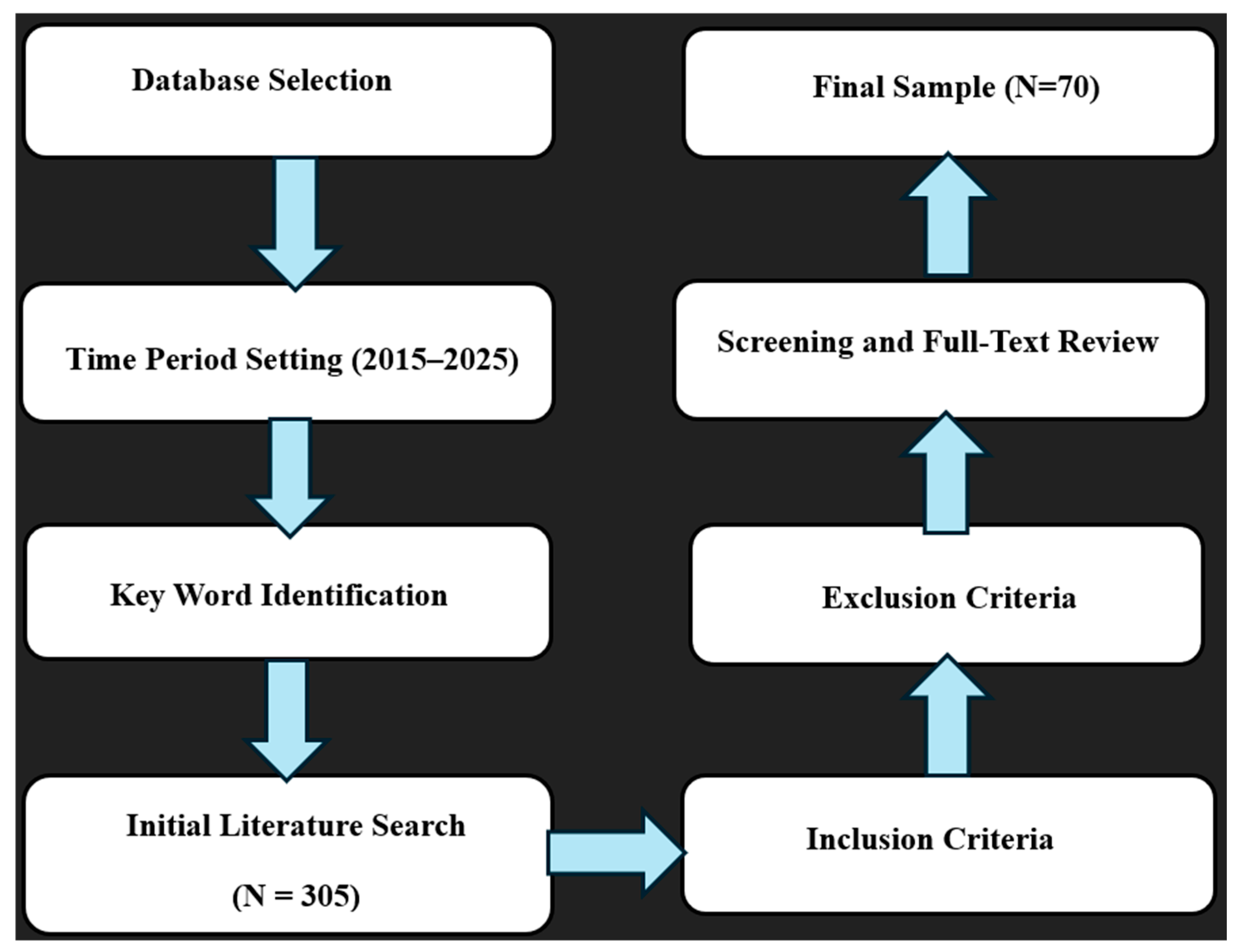
Figure 1. Flow of the search process.
Jrfm 18 00689 g001
Table 1. Process of literature review. This table shows the steps of the literature review process. Column 1 lists each step, column 2 describes the corresponding method, and column 3 provides details of the review process applied at each stage.
StepMethodProcess of Review
1Database SelectionMainstream academic databases (e.g., Web of Science).
Open-access academic search engines (e.g., Google Scholar).
Professional publishing platforms and journal websites (including Elsevier, Springer, Taylor & Francis Online, and journals with high coverage of green bond research, such as Energy Economics, Journal of Sustainable Finance & Investment, and Finance Research Letters). High-quality working paper platforms (e.g., SSRN).
2Time Period Setting2015–2025
3Keyword IdentificationThe search protocol, 1. “Green Bonds,” 2. “Green Finance,” 3. “Climate Finance,” 4. “Sustainable Development Goals,” and 5. “Greenium”.
4Initial Literature SearchN = 300+
5Inclusion Criteria1. Studies focusing on the yield or price difference between green bonds and conventional bonds.
2. Providing specific quantitative estimates of the green premium (e.g., spreads expressed in basis points).
3. Using data on bonds issued in the actual market, covering the primary market, secondary market, or both.
4. Clearly stating the data source and empirical methodology.
5. Article types included: published journal articles, high-quality working papers, and policy research reports published by authoritative institutions.
6Exclusion Criteria1. Literature that did not involve price or yield analysis but instead focused on theoretical analysis (e.g., policy impact, status of green bond development, market structure, etc.).
2. Literature that only provides information such as green bond definitions, ratings, and certification mechanisms, but does not provide premium estimates.
3. Literature with incomplete or untraceable data or methods, or purely theoretical in nature.
4. Literature that focused on other green financial products (e.g., green funds, ESG indices, etc.) rather than green bonds.
5. Non-official publications or articles of lower academic quality (e.g., master’s theses) are excluded.
6. Studies on carbon emission, ESG corporate governance, green finance policy, and case studies, non-Scopus indexed journal.
7Screening and Full-Text ReviewN = 70
8Final Sample DeterminationN = 70
Table 2. Summary statistics of the number of papers by region. This table presents the summary statistics of the number of papers by region, with the first column showing the region and the second column showing the number of papers.
RegionNo. Paper
Global33
U.S.10
EU/UK10
China12
AU/JP/ID5
Asia Pacific all17
Total70
Table 3. Green premium by region.
Panel A: Pooled sample
Spread sign +/−No. paperSpread (Green premium)
Negative65−12.44
No premium30
Positive spread23.71
Total no. of paper70−10.87
Panel B: By region
RegionNo. paperSpread (Green premium)
Global33−8.03
U.S.10−5.14
EU/UK10−14.13
China12−21.88
AU/JP/ID5−14.83
Asia Pacific all17−21.41
Total70
This table shows the green premium results. Panel A presents the pooled results, while Panel B reports the bond spread by region. A negative spread indicates the presence of a green premium, representing the yield difference between green bonds and comparable conventional bonds.
Table 4. Database and matching methods.
Panel A: summary of the database and premium
DatabaseNo. paperSpread (Green premium)
Bloomberg31−9.57
Climate Bonds Initiative10−8.46
Thomson Reuters12−13.45
CSMAR/WIND13−21.88
Panel B: Summary of method
MethodNo. paperSpread (Green premium)
PSM60−10.34
CEM3−16.21
OLS&DID3−10.07
Other4−9.46
This table reports the green premium results. Panel A presents the spreads estimated using different databases, while Panel B reports the bond spreads based on different matching methods. A negative spread indicates the presence of a green premium, reflecting a yield difference between green bonds and comparable conventional bonds.
Table 5. Market segment, sample period, and size. This table indicates the green premium results. Panel A presents the spreads estimated by market segment, Panel B reports the bond spread across different sample periods, and Panel C provides results based on issuance size. A negative spread indicates the presence of a green premium, reflecting the yield difference between green bonds and comparable conventional bonds.
Panel A: Market
MarketNo. paperSpread (Green premium)
Primary17−21.37
Secondary25−10.36
Combined18−9.82
Panel B: Sample period
PeriodNo. paperSpread (Green premium)
Recent years57−8.79
5 years ago (<=2018)13−14.12
Panel C: Size
Issue sizeNo. paperSpread (Green premium)
>500 bonds31−8.58
<100 bonds12−20.72
Disclaimer/Publisher’s Note: The statements, opinions and data contained in all publications are solely those of the individual author(s) and contributor(s) and not of MDPI and/or the editor(s). MDPI and/or the editor(s) disclaim responsibility for any injury to people or property resulting from any ideas, methods, instructions or products referred to in the content.


