

In Silico Analyses Suggest That Exercise-Induced Irisin-Mediated Neuroprotection Supports Non-Pharmacological Preventive Strategies for Alzheimer’s Disease in Public Health


Highlights
- Alzheimer’s disease (AD) is the leading cause of dementia worldwide and imposes a significant economic and social burden on healthcare systems. In Brazil, expenditures on AD-related hospitalizations in the Unified Health System (SUS) exceeded R$ 12 million between 2020 and 2024, highlighting the urgent need for strategies to alleviate this financial and social burden.
- This study highlights how excess weight (overweight and obesity) in the Brazilian population is strongly correlated with increased hospitalizations for Alzheimer’s disease decades later. This directly connects the research to efforts in combating chronic non-communicable diseases and addressing the social and behavioral determinants of health.
- The study presents physical exercise as a strategic public health tool, providing an epidemiological and molecular basis for the prevention of AD. As a low-cost and widely applicable intervention, exercise can be a viable alternative for promoting healthy aging on a large scale.
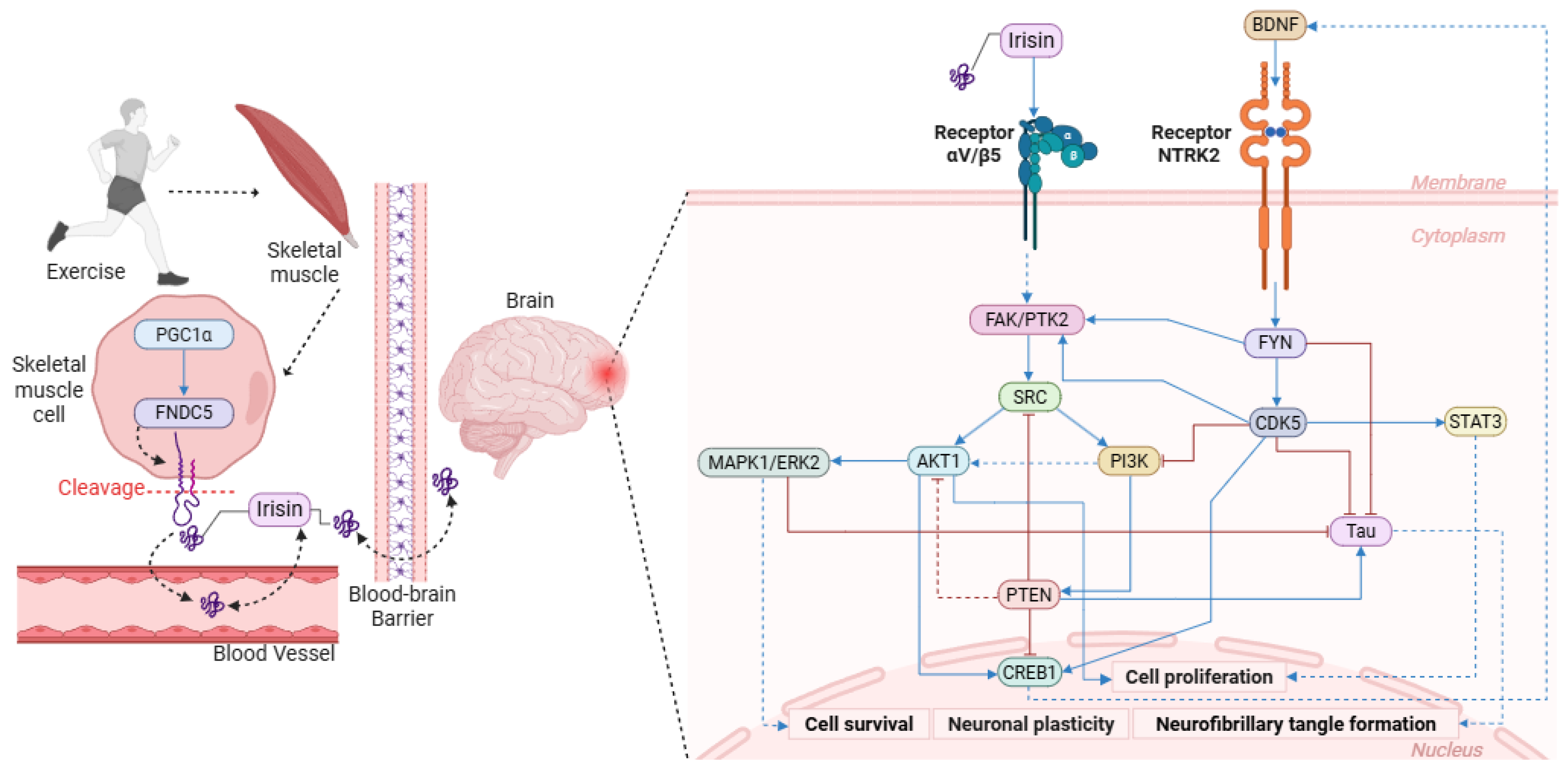
- By investigating irisin (an exercise-induced myokine) and its interaction with the αV/β5 receptor, the research provides evidence on how physical activity activates neuroprotective pathways and promotes neuronal plasticity. This offers scientific support for health policies to focus on prevention rather than solely on the treatment of established diseases.
- Promoting regular and supervised exercise should be a priority in public health policies to reduce the future incidence of dementia. Early investment in healthy habits can mitigate the impact of rapid population aging.
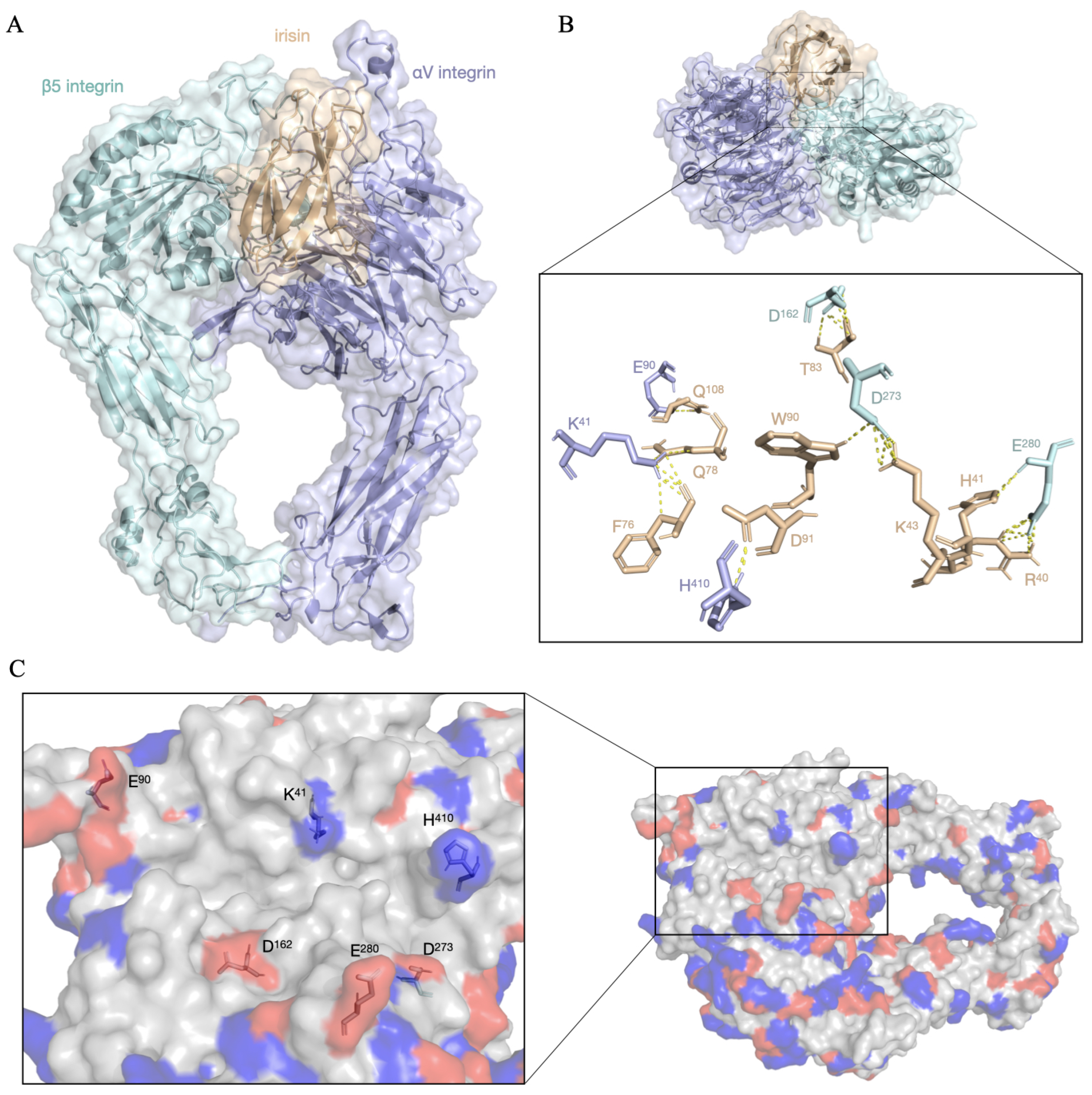
- The study also details the interaction interface between irisin and its receptor, paving the way for the development of novel molecules that mimic the effects of exercise. Furthermore, it underscores the importance of integrating epidemiological data from public systems (such as DATASUS) with bioinformatics tools to guide health interventions.
Abstract
1. Introduction
2. Materials and Methods
2.1. Epidemiological Analysis with Time Lag
2.2. Network Analysis
2.3. Structural and Molecular Dynamics (MD) Analyses
3. Results
3.1. Epidemiological and Network-Based Analysis of the Association Between Overweight and Alzheimer’s Disease
3.2. Structural Analysis of the Irisin-αV/β5 Receptor Interaction and Conformational Stability of the Complex
4. Discussion
4.1. The Neuroprotective Mechanisms of Irisin in Brain Health and Alzheimer’s Disease
4.2. Structural Mechanisms Associated with the Irisin–αV/β5 Interaction
5. Conclusions
Author Contributions
Funding
Institutional Review Board Statement
Informed Consent Statement
Data Availability Statement
Acknowledgments
Conflicts of Interest
References
- Chen, K.; Wang, K.; Wang, T. Protective Effect of Irisin against Alzheimer’s Disease. Front. Psychiatry 2022, 13, 967683. [Google Scholar] [CrossRef]
- Wimo, A.; Seeher, K.; Cataldi, R.; Cyhlarova, E.; Dielemann, J.L.; Frisell, O.; Guerchet, M.; Jönsson, L.; Malaha, A.K.; Nichols, E.; et al. The Worldwide Costs of Dementia in 2019. Alzheimer’s Dement. 2023, 19, 2865–2873. [Google Scholar] [CrossRef]
- Lima, S.M.; Moreira, G.C.; Lins, A.C.A.; Peixoto, A.L.A.; Silva, J.C. Prevalência da Doença de Alzheimer e estimativa de uso crônico de Zolpidem em idosos no Brasil, entre 2020 e 2024. Res. Soc. Dev. 2025, 14, e5914849395. [Google Scholar] [CrossRef]
- Piovesan, E.C.; Freitas, B.Z.; Lemanski, F.C.B.; Carazzo, C.A. Alzheimer’s Disease: An Epidemiological Analysis over the Number of Hospitalizations and Deaths in Brazil. Arq. Neuropsiquiatr. 2023, 81, 577–584. [Google Scholar] [CrossRef] [PubMed]
- Kim, O.Y.; Song, J. The Role of Irisin in Alzheimer’s Disease. J. Clin. Med. 2018, 7, 407. [Google Scholar] [CrossRef] [PubMed]
- Arosio, B.; Picca, A. Irisin and the Muscle–Brain Axis: Mechanisms and Translational Potential. Exp. Gerontol. 2026, 214, 113028. [Google Scholar] [CrossRef]
- Kim, E.; Tanzi, R.E.; Choi, S.H. Therapeutic Potential of Exercise-Hormone Irisin in Alzheimer’s Disease. Neural Regen. Res. 2025, 20, 1555–1564. [Google Scholar] [CrossRef]
- Lourenco, M.V.; De Freitas, G.B.; Raony, I.; Ferreira, S.T.; De Felice, F.G. Irisin Stimulates Protective Signaling Pathways in Rat Hippocampal Neurons. Front. Cell. Neurosci. 2022, 16, 953991. [Google Scholar] [CrossRef]
- Waseem, R.; Shamsi, A.; Mohammad, T.; Hassan, M.I.; Kazim, S.N.; Chaudhary, A.A.; Rudayni, H.A.; Al-Zharani, M.; Ahmad, F.; Islam, A. FNDC5/Irisin: Physiology and Pathophysiology. Molecules 2022, 27, 1118. [Google Scholar] [CrossRef]
- Kim, E.; Kim, H.; Jedrychowski, M.P.; Bakiasi, G.; Park, J.; Kruskop, J.; Choi, Y.; Kwak, S.S.; Quinti, L.; Kim, D.Y.; et al. Irisin Reduces Amyloid-β by Inducing the Release of Neprilysin from Astrocytes Following Downregulation of ERK-STAT3 Signaling. Neuron 2023, 111, 3619–3633. [Google Scholar] [CrossRef]
- Posit Team. RStudio: Integrated Development Environment for R, Posit Software; PBC: Boston, MA, USA, 2025. Available online: http://www.posit.co/ (accessed on 20 February 2026).
- Brasil. Conselho Brasil. Conselho Nacional de Saúde. Resolução nº 510, de 7 de abril de 2016. Diário Oficial da União. 2016 Maio 24; Seção 1:44–46. Available online: https://www.gov.br/conselho-nacional-de-saude/pt-br (accessed on 20 February 2026).
- Stelzer, G.; Rosen, N.; Plaschkes, I.; Zimmerman, S.; Twik, M.; Fishilevich, S.; Stein, T.I.; Nudel, R.; Lieder, I.; Mazor, Y.; et al. The GeneCards Suite: From Gene Data Mining to Disease Genome Sequence Analyses. Curr. Protoc. Bioinform. 2016, 54, 1.30.1–1.30.33. [Google Scholar] [CrossRef]
- Szklarczyk, D.; Kirsch, R.; Koutrouli, M.; Nastou, K.; Mehryary, F.; Hachilif1, R.; Gable, A.L.; Fang, T.; Doncheva, N.T.; Pyysalo, S.; et al. The STRING Database in 2023: Protein–Protein Association Networks and Functional Enrichment Analyses for Any Sequenced Genome of Interest. Nucleic Acids Res. 2023, 51, D638–D646. [Google Scholar] [CrossRef]
- Shannon, P.; Markiel, A.; Ozier, O.; Baliga, N.S.; Wang, J.T.; Ramage, D.; Amin, N.; Schwikowski, B.; Ideker, T. Cytoscape: A Software Environment for Integrated Models of Biomolecular Interaction Networks. Genome Res. 2023, 13, 2498–2504. [Google Scholar] [CrossRef] [PubMed]
- Bader, G.D.; Hogue, C.W. An Automated Method for Finding Molecular Complexes in Large Protein Interaction Networks. BMC Bioinform. 2003, 4, 2. [Google Scholar] [CrossRef]
- Casotti, M.C.; Meira, D.D.; Alves, L.N.R.; Bessa, B.G.d.O.; Campanharo, C.V.; Vicente, C.R.; Aguiar, C.C.; Duque, D.d.A.; Barbosa, D.G.; Santos, E.d.V.W.d.; et al. Translational Bioinformatics Applied to the Study of Complex Diseases. Genes 2023, 14, 419. [Google Scholar] [CrossRef]
- Huang, D.W.; Sherman, B.T.; Tan, Q.; Kir, J.; Liu, D.; Bryant, D.; Guo, Y.; Stephens, R.; Baseler, M.W.; Lane, H.C.; et al. DAVID Bioinformatics Resources: Expanded Annotation Database and Novel Algorithms to Better Extract Biology from Large Gene Lists. Nucleic Acids Res. 2007, 35, W169–W175. [Google Scholar] [CrossRef] [PubMed]
- Kanehisa, M.; Furumichi, M.; Sato, Y.; Ishiguro-Watanabe, M.; Tanabe, M. KEGG: Integrating Viruses and Cellular Organisms. Nucleic Acids Res. 2021, 49, D545–D551. [Google Scholar] [CrossRef] [PubMed]
- Surdo, P.L.; Iannuccelli, M.; Contino, S.; Castagnoli, L.; Licata, L.; Cesareni, G.; Perfetto, L. SIGNOR 3.0, the SIGnaling Network Open Resource 3.0: 2022 Update. Nucleic Acids Res. 2023, 51, D631–D637. [Google Scholar] [CrossRef]
- Hallgren, J.; Tsirigos, K.D.; Pedersen, M.D.; Armenteros, J.J.A.; Marcatili, P.; Nielsen, H.; Krogh, A.; Winther, O. DeepTMHMM Predicts Alpha and Beta Transmembrane Proteins Using Deep Neural Networks. bioRxiv 2022. [Google Scholar] [CrossRef]
- Mirdita, M.; Schütze, K.; Moriwaki, Y.; Heo, L.; Ovchinnikov, S.; Steinegger, M. ColabFold: Making Protein Folding Accessible to All. Nat. Methods 2022, 19, 679–682. [Google Scholar] [CrossRef]
- Jumper, J.; Evans, R.; Pritzel, A.; Green, T.; Figurnov, M.; Ronneberger, O.; Tunyasuvunakool, K.; Bates, R.; Žídek, A.; Potapenko, A.; et al. Highly Accurate Protein Structure Prediction with AlphaFold. Nature 2021, 596, 583–589. [Google Scholar] [CrossRef] [PubMed]
- Heo, L.; Park, H.; Seok, C. GalaxyRefine: Protein Structure Refinement Driven by Side-Chain Repacking. Nucleic Acids Res. 2013, 41, W384–W388. [Google Scholar] [CrossRef]
- Pettersen, E.F.; Goddard, T.D.; Huang, C.C.; Meng, E.C.; Couch, G.S.; Croll, T.I.; Morris, J.H.; Ferrin, T.E. UCSF ChimeraX: Structure Visualization for Researchers, Educators, and Developers. Protein Sci. 2021, 30, 70–82. [Google Scholar] [CrossRef]
- Dolinsky, T.J.; Czodrowski, P.; Li, H.; Nielsen, J.E.; Jensen, J.H.; Klebe, G.; Baker, N.A. PDB2PQR: Expanding and Upgrading Automated Preparation of Biomolecular Structures for Molecular Simulations. Nucleic Acids Res. 2007, 35, W522–W525. [Google Scholar] [CrossRef] [PubMed]
- Kozakov, D.; Hall, D.R.; Xia, B.; Porter, K.A.; Padhorny, D.; Yueh, C.; Beglov, D.; Vajda, S. The ClusPro Web Server for Protein–Protein Docking. Nat. Protoc. 2017, 12, 255–278. [Google Scholar] [CrossRef] [PubMed]
- Abraham, M.J.; Murtola, T.; Schulz, R.; Páll, S.; Smith, J.C.; Hess, B.; Lindahl, E. GROMACS: High Performance Molecular Simulations through Multi-Level Parallelism from Laptops to Supercomputers. SoftwareX 2015, 1–2, 19–25. [Google Scholar] [CrossRef]
- Vieira, I.H.P.; Botelho, E.B.; Gomes, T.J.D.S.; Kist, R.; Caceres, R.A.; Zanchi, F.B. Visual Dynamics: A WEB Application for Molecular Dynamics Simulation Using GROMACS. BMC Bioinform. 2023, 24, 107. [Google Scholar] [CrossRef]
- Paoletti, I.; Coccurello, R. Irisin: A Multifaceted Hormone Bridging Exercise and Disease Pathophysiology. Int. J. Mol. Sci. 2024, 25, 13480. [Google Scholar] [CrossRef]
- Flori, L.; Testai, L.; Calderone, V. The “Irisin System”: From Biological Roles to Pharmacological and Nutraceutical Perspectives. Life Sci. 2021, 267, 118954. [Google Scholar] [CrossRef]
- Li, D.-J.; Li, Y.-H.; Yuan, H.-B.; Qu, L.-F.; Wang, P. The Novel Exercise-Induced Hormone Irisin Protects against Neuronal Injury via Activation of the Akt and ERK1/2 Signaling Pathways and Contributes to the Neuroprotection of Physical Exercise in Cerebral Ischemia. Metabolism 2017, 68, 31–42. [Google Scholar] [CrossRef]
- Jin, Y.; Sumsuzzman, D.M.; Choi, J.; Kang, H.; Lee, S.-R.; Hong, Y. Molecular and Functional Interaction of the Myokine Irisin with Physical Exercise and Alzheimer’s Disease. Molecules 2018, 23, 3229. [Google Scholar] [CrossRef]
- Arachchige, C.N.P.G.; Prendergast, L.A. Confidence Intervals for Median Absolute Deviations. Commun. Stat.-Simul. Comput. 2024, 55, 13–22. [Google Scholar] [CrossRef]
- Banayan, N.E.; Hsu, A.; Hunt, J.F.; Palmer, A.G.; Friesner, R.A. Parsing Dynamics of Protein Backbone NH and Side-Chain Methyl Groups Using Molecular Dynamics Simulations. J. Chem. Theory Comput. 2024, 20, 6316–6327. [Google Scholar] [CrossRef]
- Livingston, G.; Huntley, J.; Sommerlad, A.; Ames, D.; Ballard, C.; Banerjee, S.; Brayne, C.; Burns, A.; Cohen-Mansfield, J.; Cooper, C.; et al. Dementia Prevention, Intervention, and Care: 2020 Report of the Lancet Commission. Lancet 2020, 396, 413–446. [Google Scholar] [CrossRef]
- Jack, C.R.; Bennett, D.A.; Blennow, K.; Carrillo, M.C.; Dunn, B.; Haeberlein, S.B.; Holtzman, D.M.; Jagust, W.; Jessen, F.; Karlawish, J.; et al. NIA-AA Research Framework: Toward a Biological Definition of Alzheimer’s Disease. Alzheimer’s Dement. 2018, 14, 535–562. [Google Scholar] [CrossRef]
- Brasil. Ministério da Saúde. Portaria GM/MS nº 4, de 28 de Setembro de 2017; Diário Oficial da União: Brasília, Brasil, 2017. [Google Scholar]
- Ferrari, G.; Giannichi, B.; Resende, B.; Paiva, L.; Rocha, R.; Falbel, F.; Rache, B.; Adami, F.; Rezende, L.F.M. The Economic Burden of Overweight and Obesity in Brazil: Perspectives for the Brazilian Unified Health System. Public Health 2022, 207, 82–87. [Google Scholar] [CrossRef]
- Santos, F.D.P.; Silva, E.A.F.; Baêta, C.L.V.; Campos, F.S.; Campos, H.O. Prevalence of Childhood Obesity in Brazil: A Systematic Review. J. Trop. Pediatr. 2023, 69, fmad017. [Google Scholar] [CrossRef]
- Pereira, T.D.S.; Araújo, W.C.D.S.; Veloso, A.B.N.; Ferreira, L.M.G.; Abdala, G.A. Estilo de Vida, Exercício Físico e Saúde Mental de Idosos. J. Interdiscip. Lifestyle Stud. 2025, 13, e1999. [Google Scholar]
- Lan, T.; Guo, Z.C.; Gu, H.R.; Qin, L.; He, E.P. Research Progress on the Regulatory Mechanisms of Irisin on Cognitive Dysfunction in Patients with Alzheimer’s Disease and the Interventional Role of Irisin in Associated Diseases. Acta Physiol. Sin. 2024, 76, 266–288. [Google Scholar] [CrossRef]
- Tsai, C.-L.; Pai, M.-C. Circulating Levels of Irisin in Obese Individuals at Genetic Risk for Alzheimer’s Disease: Correlations with Amyloid-β, Metabolic, and Neurocognitive Indices. Behav. Brain Res. 2021, 400, 113013. [Google Scholar] [CrossRef]
- Mu, A.; Wales, T.E.; Zhou, H.; Draga-Coletă, S.-V.; Gorgulla, C.; Blackmore, K.A.; Mittenbühler, M.J.; Kim, C.R.; Bogoslavski, D.; Zhang, Q.; et al. Irisin Acts through Its Integrin Receptor in a Two-Step Process Involving Extracellular Hsp90α. Mol. Cell 2023, 83, 1903–1920.e12. [Google Scholar] [CrossRef] [PubMed]
- Adair, B.D.; Xiong, J.P.; Yeager, M.; Arnaout, M.A. Cryo-EM Structures of Full-Length Integrin αIIbβ3 in Native Lipids. Nat. Commun. 2023, 14, 4168. [Google Scholar] [CrossRef] [PubMed]
- Shimaoka, M.; Takagi, J.; Springer, T.A. Conformational Regulation of Integrin Structure and Function. Annu. Rev. Biophys. Biomol. Struct. 2002, 31, 485–516. [Google Scholar] [CrossRef]
- Tvaroška, I.; Kozmon, S.; Kóňa, J. Molecular Modeling Insights into the Structure and Behavior of Integrins: A Review. Cells 2023, 12, 324. [Google Scholar] [CrossRef]
- Hollingsworth, S.A.; Dror, R.O. Molecular Dynamics Simulation for All. Neuron 2018, 99, 1129–1143. [Google Scholar] [CrossRef]



| Name | Function |
|---|---|
| Cellular Protection and Survival | |
| AKT1 | Regulate cell proliferation, survival, metabolism, and angiogenesis in both normal and malignant cells. |
| BDNF | Promotes neuronal survival and synaptic plasticity in the adult brain. |
| CTSB | Amyloid precursor protein secretase involved in APP proteolytic processing. |
| CRP | It recognizes pathogens and damaged host cells and initiates their elimination. |
| FN1 | Fibronectin is involved in cell adhesion and migration processes. |
| TGFBR2 | Receptor mediating TGF-β signaling and proliferations control. |
| TNF | Proinflammatory cytokine regulating proliferation, differentiation, immune and apoptotic pathways. |
| Metabolism and Hormones | |
| ADIPOQ | Produced in adipose tissue and is involved with metabolic and hormonal processes. |
| GHRL | It is a powerful appetite stimulant and plays an important role in energy homeostasis. |
| INS | It plays a vital role in the regulation of carbohydrate and lipid metabolism. |
| LEP | It regulates energy homeostasis by acting on the brain. |
| PPARG | Nuclear receptor regulating adipogenesis and lipid metabolism. |
| SHBG | Transports androgens and estrogens in the blood. |
| Inflammatory Processes | |
| IL6 | Proinflammatory cytokine involved in immune regulation. |
| IL1B | Key mediator of inflammatory response, cell proliferation, differentiation and apoptosis. |
| Mitochondrial Activity | |
| HSPA4 | Molecular chaperone assisting protein folding and stability. |
| PPARGC1A | Transcriptional coactivator regulating mitochondrial biogenesis. |
| TFAM | Mitochondrial transcription factor controlling mDNA replication and repair. |
| UCP2 | Mediates proton leak and thermogenesis, regulating metabolic efficiency. |
| Cellular Growth | |
| IGF1 | Growth factor promoting cell proliferation and survival. |
| PPARA | Nuclear receptor regulating fatty acid metabolism. |
| Interaction with DNA | |
| SIRT1 | It regulates epigenetic gene silencing and suppresses recombination of rDNA. |
| Integrin | GDT-HA | RMSD (Å) | MolProbity | Clash Score | Poor Rotamers (%) | Rama Favored (%) |
|---|---|---|---|---|---|---|
| αV | 0.9918 | 268 | 1.543 | 10.5 | 1.0 | 98.9 |
| β5 | 0.9884 | 283 | 1.624 | 13.0 | 0.7 | 98.5 |
Disclaimer/Publisher’s Note: The statements, opinions and data contained in all publications are solely those of the individual author(s) and contributor(s) and not of MDPI and/or the editor(s). MDPI and/or the editor(s) disclaim responsibility for any injury to people or property resulting from any ideas, methods, instructions or products referred to in the content. |
© 2026 by the authors. Licensee MDPI, Basel, Switzerland. This article is an open access article distributed under the terms and conditions of the Creative Commons Attribution (CC BY) license.
Share and Cite
Manias, M.; Vieira, J.V.R.; Cremonesi, A.S. In Silico Analyses Suggest That Exercise-Induced Irisin-Mediated Neuroprotection Supports Non-Pharmacological Preventive Strategies for Alzheimer’s Disease in Public Health. Int. J. Environ. Res. Public Health 2026, 23, 449. https://doi.org/10.3390/ijerph23040449
Manias M, Vieira JVR, Cremonesi AS. In Silico Analyses Suggest That Exercise-Induced Irisin-Mediated Neuroprotection Supports Non-Pharmacological Preventive Strategies for Alzheimer’s Disease in Public Health. International Journal of Environmental Research and Public Health. 2026; 23(4):449. https://doi.org/10.3390/ijerph23040449
Chicago/Turabian StyleManias, Moara, João Victor Rossetti Vieira, and Aline Sampaio Cremonesi. 2026. "In Silico Analyses Suggest That Exercise-Induced Irisin-Mediated Neuroprotection Supports Non-Pharmacological Preventive Strategies for Alzheimer’s Disease in Public Health" International Journal of Environmental Research and Public Health 23, no. 4: 449. https://doi.org/10.3390/ijerph23040449
APA StyleManias, M., Vieira, J. V. R., & Cremonesi, A. S. (2026). In Silico Analyses Suggest That Exercise-Induced Irisin-Mediated Neuroprotection Supports Non-Pharmacological Preventive Strategies for Alzheimer’s Disease in Public Health. International Journal of Environmental Research and Public Health, 23(4), 449. https://doi.org/10.3390/ijerph23040449