You are currently viewing a new version of our website. To view the old version click .
  • Article
  • Open Access

30 November 2024

Awareness and Knowledge of Developmental Coordination Disorder Among Healthcare Professionals in the Eastern Province of Saudi Arabia: A Cross-Sectional Study


,
,
,
,
,
,
,
,
and
1
Department of Paediatrics, King Fahd Hospital of the University, Imam Abdulrahman Bin Faisal University, Dammam 34224, Saudi Arabia
2
College of Medicine, Imam Abdulrahman Bin Faisal University, Dammam 34224, Saudi Arabia
*
Author to whom correspondence should be addressed.

Abstract

Developmental coordination disorder (DCD) is a lifelong neurological disorder impairing the coordination and planning of motor and sensory tasks. Its functional manifestation includes difficulties in various aspects of daily living, making early diagnosis and management essential. This cross-sectional, questionnaire-based study targeted healthcare providers in Saudi Arabia’s Eastern Province who work with children under the age of 18. The questionnaire was completed through field visit interviews and electronically via social platforms from October 2023 to March 2024, collecting data on demographics, professional experience, familiarity with related disorders, and awareness of dyspraxia symptoms. Of the participants, 21.2% had previously diagnosed at least one child with dyspraxia, with family physicians comprising 30% of those diagnoses. The overall mean knowledge score was 17%, ranging from 8.3% to 23.1%. The most recognized symptom was motor learning difficulties (22.7%), followed by gross and fine motor skill delays (22.3%). Notably, 65.15% of respondents were unsure about the gender distribution of dyspraxia. The findings align with international studies, showing significant knowledge gaps among healthcare providers in the Eastern Province. These findings also emphasize the need for targeted health promotion programs, promotional activities, and media involvement for enhancing public health outcomes, early identification, and better management of DCD.

1. Introduction

Developmental coordination disorder (DCD) is defined as a lifelong neurological disorder impairing motor and sensory tasks’ coordination and planning [1]. The disorder has been known since the early twentieth century, and Collier James Stanfield first described it as “congenital maladroitness” [2]. Multiple labels have been assigned to the disorder, including dyspraxia, disorder of sensory integration, and clumsy child syndrome [2]. The disorder has an incidence of 6–10% globally, with a male-to-female ratio of 4:1 [2,3,4]. Common risk factors are premature birth and extremely low birth weight [1,5].
Individuals with dyspraxia commonly exhibit a combination of ideational or planning dyspraxia, affecting coordination and planning, and ideomotor or executive dyspraxia, affecting motor activities’ fluency and speed. DCD’s functional manifestation includes difficulties in various daily living aspects. In preschool children, parents often report delays in developmental milestones like crawling, walking, and speaking, along with difficulties in dressing, ball skills, and social interactions. Approximately 25% of children with DCD are referred before starting school, while the remaining 75% are referred in the early primary school years [6]. During this time, issues from preschool persist, such as slow or immature handwriting and difficulty copying from the blackboard. As a result, significant delays often occur before these children receive specialist support. Some may have shown delays in gross motor and language skills, while others may have been perceived as irritable or challenging. When it comes to DCD’s effect, quality of life is a main concern. Children diagnosed with DCD may encounter heightened anxiety, potentially leading to disorders such as social phobia and obsessive-compulsive disorder [7]. Notably, the emotional challenges children with DCD experience can directly contribute to mood issues during adolescence and adulthood, further adversely affecting their quality of life [8].
Blank et al. published international practice recommendations on DCD’s definition, diagnosis, and management in 2012 and updated them in 2019 [2,9]. A DCD diagnosis should be reserved for children under five years of age with severe difficulties due to large differences in typical motor development [2]. Among the parents, teachers, and medical professionals surveyed by Wilson et al., only 20% were familiar with DCD, highlighting the need to increase awareness of the condition [10]. As a result of delayed developmental milestones (e.g., crawling, walking, and speech), Gibbs et al. estimated that 25% of children with this condition are identified before they start school. Many parents and teachers may not be aware of the condition. Children with DCD may be mislabeled or misdiagnosed as slow learners or dyslexic or as having attention-deficit disorder because of their symptoms’ similarity to those of other conditions. These children may also be perceived as not trying hard enough when they are actually putting in a great deal of effort [1]. The main management for DCD is carried out by occupational therapists who provide support for individuals with DCD by assessing and managing children of all ages to improve their social, emotional, behavioral, and motor skills [11]. To our knowledge, this study represents the first audit on the awareness toward DCD among healthcare providers in the Kingdom of Saudi Arabia.
In this study, the aim is to identify gaps in knowledge, measure awareness, and highlight the importance of health promotion and education on DCD among healthcare professionals in Saudi Arabia, specifically in the Eastern Province. Furthermore, the relevant demographic and professional factors that might influence healthcare professionals’ familiarity with the condition are assessed. Adequate basic knowledge about DCD’s signs and symptoms is pivotal in early diagnosis and management. DCD, when not diagnosed early, might lead to delayed milestones and difficulties in learning motor skills. Appropriate programs to educate the relevant practitioners could be implemented, preventing worse long-term outcomes.

2. Materials and Methods

This is a cross-sectional questionnaire-based study that was conducted from October 2023 to March 2024. Participants were healthcare providers of Saudi Arabia’s Eastern Province who dealt with children up to the age of 18. They indicated their willingness to participate by providing their informed consent. We excluded developmental-behavioral pediatricians and pediatric neurologists because the condition is part of their assessment scope. The initial calculated sample size was 384, as estimated by the Open-Source Epidemiologic Statistics Calculator [12], with a confidence interval of 95% and a 5% margin of error. The study received 339 responses and resulted in 264 subjects after excluding incomplete questionnaires.
The self-administered questionnaire in this study was created based on previously validated tools for assessing knowledge about DCD [10,13,14]. This revised version of the questionnaire has not been tested for reliability; however, face validity has been covered through the opinion of two experts from the relevant field. Applied amendments to the questionnaire were mainly concerning demographic data (marital status and city of residence). The questionnaire was written in the English language to suit all healthcare providers. Participants were recruited randomly through pre-notification randomized field visits to healthcare centers and hospitals and via electronic social platforms.
Twenty medical students collected data from healthcare providers in different healthcare centers in the province by conducting individual face-to-face interviews or sharing the link for the questionnaire online. The questionnaire was composed of three parts: (a) demographic data (six questions), (b) professional experience (eight questions), and (c) knowledge about DCD (six questions). The mean time for completing the questionnaire was 6.7 min. The demographic data section consisted of six items that were further divided into subcategories for better recall and analysis. Table 1 represents the questionnaire used in this study.
Table 1. The study questionnaire.
Data were analyzed using Statistical Package for Social Sciences version 21. Categorical variables were presented as percentages, and continuous data were presented as means and standard deviations. All negative statements were reversed before analysis. Simple descriptive analysis was used to measure the study’s variables. Bar charts and tables were used to summarize the study’s figures and results. Comparisons were made among the characteristics of participants. Variables included participant age, gender, marital status, number of children, nationality, place of residence, current practiced profession, location of practice, years of experience, treated age groups in practice, working full or part time, highest held degree, number of children seen per week, number of patients with motor developmental delays seen for the past six months, familiarity with different developmental disorders, including DCD, involvement in treating any of these disorders, previous assignment of DCD as a diagnosis, symptoms of DCD, and proposed actions related to awareness of DCD. Symptoms of DCD were defined based on the Diagnostic and Statistical Manual of Mental Disorders—5th edition (DSM-5).

3. Results

This study evaluated healthcare providers’ level of knowledge toward DCD and described its relation to different variables.

3.1. Participants Characteristics/Sociodemographic

A total of 264 subjects were included in the study: 57.1% were females, 55.3% were between 20 and 30 years of age, 48.8% were single, 60.6% had no children, and 92.8% were Saudi healthcare providers. Of the total subjects, 32.9% were general practitioners, and 47.7% had been practicing health care for one to five years. A total of 21.2% of providers had diagnosed at least one child with dyspraxia before; the majority of them were family physicians (30%) (Table 2).
Table 2. Healthcare providers’ characteristics/sociodemographic (n = 264).

3.2. Participants Familiarity with Neurodevelopmental Disorders

We decided to compile all medical-related professionals into one group, “medical professionals” (n = 240/264), which included general practitioners, pediatricians, family physicians, nurses, surgical subspecialities, and others. The second group was “allied health professionals” (n = 24/264), which included occupational therapists and physical therapists. Regarding participants’ background knowledge about common neurodevelopmental and childhood conditions between the two groups, the most known condition among healthcare providers was speech and language disorders (47.3%), followed by medical professionals’ familiarity (48%) and allied health professionals (41.6%). We also tested participants’ knowledge of DCD using its old names to consolidate and/or ensure familiarity, such as clumsy child syndrome, dyspraxia, and motor learning disability. The most recognized terminology for the condition by all participants was DCD (34.4%), followed by motor learning disability (34.4%), dyspraxia (30.6%), and clumsy child syndrome (22.3%). Medical professionals showed a relatively higher familiarity with common neurodevelopmental and childhood conditions as compared to allied health professionals (Table 3).
Table 3. Frequency and percentage of healthcare providers who stated they were “very familiar” or “somewhat familiar” with neurodevelopmental conditions.

3.3. Participants Familiarity with DCD Features

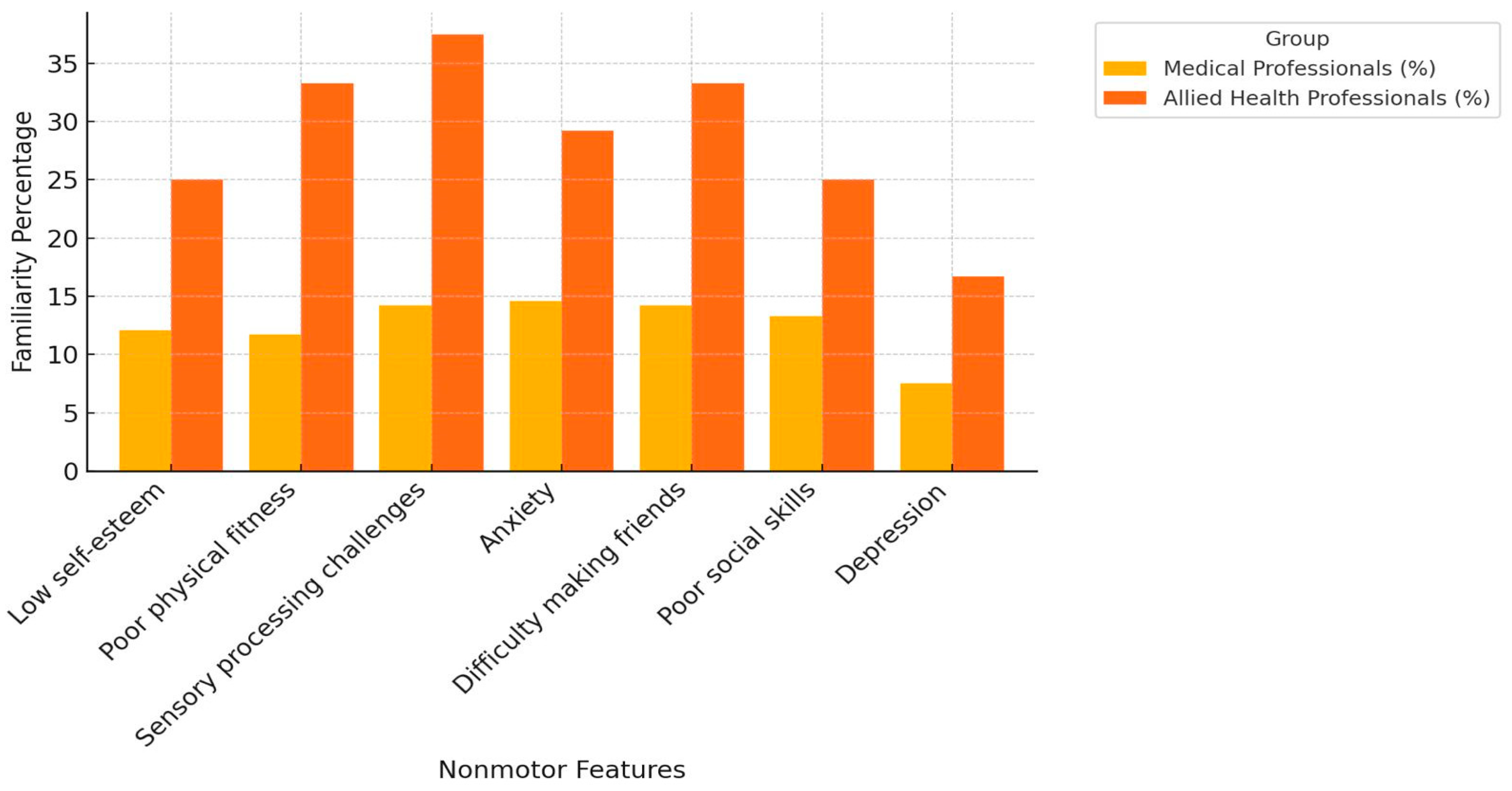
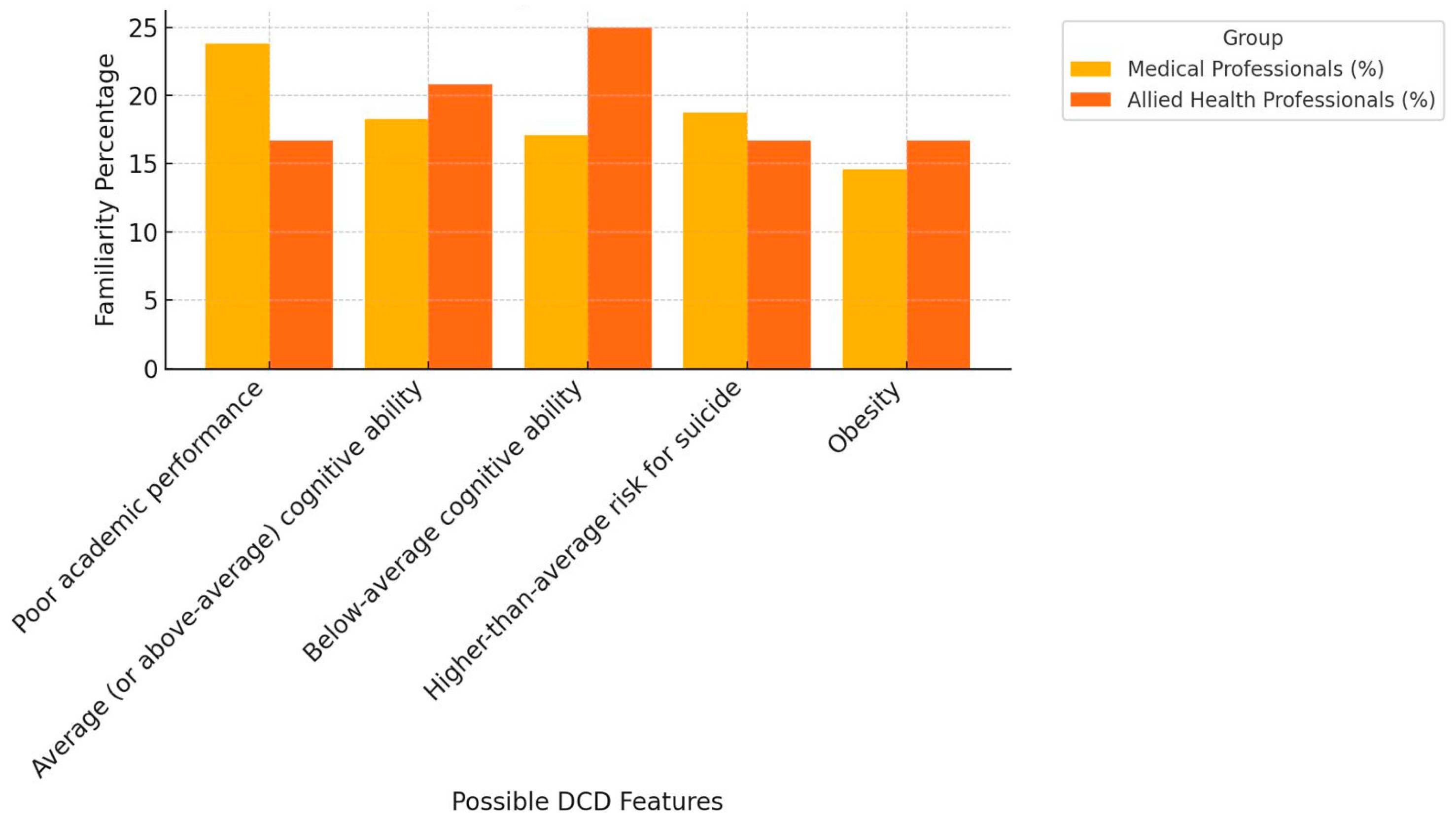
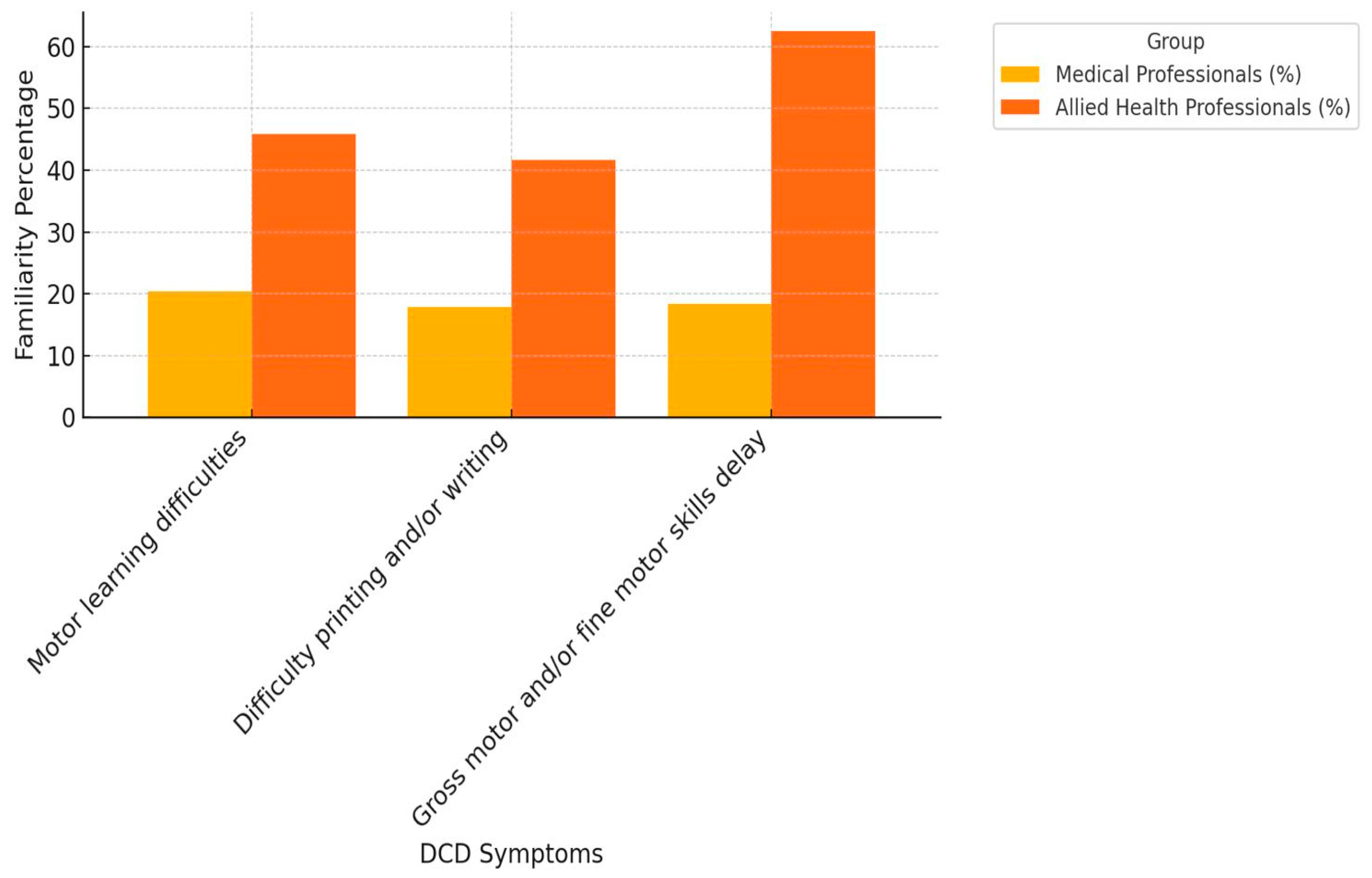
The mean knowledge score ranged between 8.3% and 23.1%; the overall score was 17%. The most recognized symptom of dyspraxia by study subjects was poor academic performance (23.1%), followed by motor learning difficulties (22.7%) and gross and/or fine motor skills delay (22.3%). Allied health professionals showed more familiarity with DCD symptoms compared to medical professionals, except in the case of poor academic performance (23.8% vs. 16.7%) and suicide risk (18.75% vs. 16.7%) (Figure 1, Figure 2 and Figure 3). The majority of the subjects were unsure about the gender distribution of dyspraxia (65.15%), with approximately 33% of allied health professionals answering correctly compared to 24% of medical professionals.
Figure 1. Healthcare providers’ knowledge in identifying common motor DCD features.
Figure 2. Healthcare providers’ knowledge in identifying common nonmotor DCD features.
Figure 3. Healthcare providers’ knowledge in identifying “may be” DCD features.

3.4. Participants Views on DCD Management Strategies

Regarding participants’ views of needed strategies for managing DCD, 45.45% of all healthcare providers stated that further research is needed on DCD. The majority agreed on the need for more education around the condition (42.4%). Among the participants, 18.9% stated that it is relatively easy to identify DCD. A total of 22.7% of healthcare providers stated that there are adequate support professionals for children with DCD in the school system (Table 4).
Table 4. Participants’ views on needed strategies around DCD management.

4. Discussion

This study assessed the level of knowledge about DCD among healthcare providers in the Eastern Province of Saudi Arabia. All data on the condition were based on previously published international reports. Our study targeted healthcare providers and did not include primary caregivers or teachers.

4.1. Comparison with International Findings

The findings revealed an overall knowledge deficit toward DCD among healthcare providers dealing with children in Saudi Arabia’s Eastern Province. One-third of our cohort of healthcare providers were familiar with DCD compared to almost 50% in other international studies [13,14]. Notably, 62.5% of the allied health professionals of our cohort identified gross motor and/or fine motor skills delay as the most common motor feature, while 85% of allied health professionals in Australia identified motor learning difficulties as the most common motor feature [13]. Depression was the least identified feature of DCD, which is in keeping with other international studies [13,14]. This could be due to the lack of adequate education about the condition during academic and professional learning. Our cohort was more familiar with other neurodevelopmental and childhood conditions compared to DCD and its related old terminologies. This observation was in keeping with the findings of Hunt et al. Australian study [13]. Different from other international reports, our cohort was more familiar with the new term “developmental coordination disorder” and the outdated term “motor learning disability” compared to “dyspraxia” [10,13]. Using the term “developmental coordination disorder” consistently is vital, and achieving uniformity in terminology among healthcare providers is the crucial first step toward promptly and accurately identifying DCD.

4.2. Medical Professionals vs. Allied Health Professionals

Our findings revealed an overall mean knowledge score of 17% for DCD symptoms among all healthcare providers. Less than one-third of medical professionals correctly identified common motor features of DCD, whereas half of the allied health professionals were successful in identifying these symptoms. This knowledge discrepancy between the two groups is in line with other international reports, with the exception of the poor overall knowledge trend in our cohort compared to that in other reports [13]. DCD is a motor skill acquisition deficit disorder according to the DSM-5 [1], and lacking basic knowledge about its motor symptoms can be problematic in early detection and management. The observation that allied health professionals are more knowledgeable about the motor features of DCD is of no clinical importance in regard to early identification because they occupy the last step along the management ladder. Table 5 compares physicians’ knowledge score differences between our cohort and cohorts from Canada, UK, USA, and Australia.
Table 5. Percentages of physicians who correctly identified features of DCD among three different cohort groups.

4.3. Knowledge of DCD’s Symptoms

Furthermore, our cohort showed little knowledge of DCD’s nonmotor features compared to its motor features. These include DCD’s psychosocial and emotional outcomes, like anxiety, depression, difficulty building relationships, and poor social skills [7,15]. This finding is similar to that of other international studies [10,13]. Early identification of DCD’s nonmotor features is crucial because they represent social and emotional challenges and may eventually affect the child’s quality of life [16,17]. The absence of both motor and nonmotor skills may result in social stigma, causing the child to feel different from their peers. Also, emotional and psychosocial effects on these children might warrant intervention, which should be considered in their management. The findings of this study sound that almost two-thirds of participants are not familiar with the genders, even though the reported male-to-female ratio is clinically significant at 4:1 [2,3,4]. This lack of awareness could contribute to overdiagnosis on the female side and underdiagnosis on the male side, resulting in ineffective management.

4.4. Knowledge Deficits

Our study’s findings showed a significant knowledge deficit among all healthcare providers, which will definitely affect the processes of proper surveillance, diagnosis, and management of cases of DCD. Despite the existence of clear diagnostic criteria and practice recommendations [1,2], augmenting familiarity toward DCD may help in identifying high-risk populations but may not necessarily ensure proper diagnosis. Furthermore, less than one-third of participants thought the DSM-5 contained enough information about DCD for an accurate diagnosis to be made. This may reflect the questionable familiarity of the cohort toward the DSM-5′s contents, lack of exposure to the DSM-5 in their educational programs, inadequate training on the condition, or even general unfamiliarity with the diagnostic approaches. A total of 21% of our cohort believed education is needed for a better understanding of the condition. Family physicians diagnosed most of the cases of DCD in our study, representing a relative relief in the initial identification process and means of surveillance. This could be due to their professional involvement as primary physicians in all primary healthcare centers in Saudi Arabia. This observation is different from those in other studies where allied health professionals identified the majority of DCD cases [10,13]. Despite their critical role in early detection, family physicians may not always have the specialized training to treat DCD effectively. Studies have shown that awareness and knowledge about DCD among general practitioners, including family physicians, can be insufficient, potentially limiting their ability in diagnosing and treating DCD patients. Given overlapping symptoms, family physicians often have difficulty distinguishing DCD from other neurodevelopmental disorders like ADHD. As a result, they may benefit from additional DCD-specific training to enhance diagnostic accuracy and management. For instance, in the United Kingdom, the National Institute for Health and Care Excellence (NICE) has published guidelines that have contributed to increasing physician familiarity with DCD. NICE’s recommendations include training general practitioners (GPs) to identify and refer cases early to specialist care, significantly improving awareness and referral rates [18].
Furthermore, in Canada, the “CanChild Centre for Childhood Disability Research” has carried out DCD awareness programs, offering online training modules and resources for primary care physicians. These resources include diagnostic guidelines, case studies, and management strategies to assist physicians dealing with DCD patients in primary care settings. By providing these resources, CanChild has raised awareness and improved early intervention rates, ensuring a more streamlined referral to occupational therapy and educational services [19].
To enhance DCD identification and management in Saudi Arabia, similar approach could be implemented to the local healthcare infrastructure. This study underscores the need for targeted educational programs, which, combined with regional awareness campaigns, could provide family physicians with the knowledge and confidence to manage DCD effectively and improve patient outcomes [10,13].

4.5. Recommendations to Raise Awareness

Medical professionals and allied health professionals, like occupational therapists and physical therapists, could work together to improve outcomes for children with DCD. Establishing clear referral pathways and multidisciplinary teams, family physicians can depend on allied health professionals’ expertise for in-depth assessments and targeted therapies. This teamwork would enable family physicians to monitor developmental progress while allied professionals address specific motor and functional challenges. This collaboration could enhance educational initiatives within the community.
It is clear that change measures must be put in place to provide proper education about DCD and to improve early diagnosis and prevent unwanted consequences. International recommendations on the suggested action for translating knowledge into practice include knowledge creation as a first step and then implementation of an action plan as the second step [20]. All healthcare providers in this study play a significant role in the process of detecting DCD, and each has their own degree of involvement. Proposed strategies for improvement include providing parental education about early motor delays and red flags and promoting early seeking of medical advice.
Implementing targeted educational programs to educate healthcare providers who deal with DCD could be a crucial rule on educating current and future healthcare providers, starting from educating medical students in their respective universities by implementing DCD lectures in their curriculum to educating healthcare professionals and allied health professionals by integrating training modules and workshops into the continuing medical education (CME) programs. Moreover, standardized screening protocols in primary healthcare centers could help healthcare providers in recognizing common DCD presentations and early signs. These screening protocols could be organized with a referral pathway to occupational therapists or developmental pediatricians to ensure effective care is provided through a multidisciplinary team approach.
Next, further research on DCD is needed in Saudi Arabia for proper allocation of resources and manpower. Because allied health professionals and family physicians are more knowledgeable about the condition, they can help in the education process of other medical professionals. Augmenting medical and allied health schools’ curriculums with DCD and other common developmental disorders can also help in acquiring early knowledge about these conditions. Last, medical professionals must advocate for the concept of overall child development and specifically toward DCD through their practices and media promotions.

4.6. Study Limitations

Although this study represents the first audit on DCD in Saudi Arabia, it carries its own limitations. Firstly, there is the relatively small number of healthcare providers, especially allied health professionals, who participated by completing the study questionnaire. The findings of our study represent a regional consensus rather than a national one, thus preventing generalizability. Secondly, the lack of local studies on the topic drove us to compare our findings with international reports. Thirdly, the questionnaire used for this study was created based on previously validated tools; however, it has not been tested for reliability. Finally, questionnaires are subjected to various degrees of bias based on social acceptance and individual desirability; however, we tried our best to minimize such bias by minimizing personal demographic data extraction.

5. Conclusions

Healthcare providers in the Eastern Province of Saudi Arabia have limited overall knowledge of DCD. Significant knowledge gaps have been found across all healthcare providers, including medical and allied health professionals. Further research on DCD is needed for proper allocation of resources, assessing further potential barriers, and evaluating educational and training strategies. Adequate professional and academic education by updating academic curriculums and educational-promoting activities and promotional advocacy by healthcare providers are needed to improve early identification, effective management strategies, and overall quality of life for those affected by DCD.

Author Contributions

M.A.A.-O. contributed to conceptualization, methodology, validation, supervision, data curation, formal analysis, investigation, writing, and visualization. A.A.A.-D. was responsible for conceptualization, supervision, data curation, formal analysis, investigation, writing, and visualization. A.A.A. (Abdullah A. Alshabaan) played a role in conceptualization, methodology, validation, writing, and visualization. F.O.A. was involved in conceptualization, methodology, supervision, data curation, formal analysis, writing, and editing. S.A.A. contributed to validation, supervision, formal analysis, investigation, and writing. A.K.A. assisted with conceptualization, methodology, validation, supervision, data curation, formal analysis, investigation, writing, and visualization. M.A.A.-I. participated in conceptualization, methodology, validation, supervision, data curation, formal analysis, investigation, writing and editing, and visualization. A.A.A. (Ali A. Almeer) helped with conceptualization, validation, data curation, writing, and editing. A.A.A.-A. was involved in conceptualization, methodology, validation, supervision, data curation, formal analysis, investigation, writing and editing, and visualization. M.N.A. was responsible for conceptualization, methodology, and data curation. H.H.A. was involved in conceptualization, methodology, validation, and formal analysis. Each author’s distinct role was crucial in ensuring the success of the research project. All authors have read and agreed to the published version of the manuscript.

Funding

This research received no external funding.

Institutional Review Board Statement

Ethical approval was obtained from the Institutional Review Board (IRB) of Imam Abdulrahman bin Faisal University (No. IRB-UGS-2023-01-381, 15 October 2023), and informed written consent was obtained from all participants. Participants’ personal data were deidentified to insure privacy. The authors of the study confirmed that all methods were conducted in accordance with relevant guidelines and regulations.

Data Availability Statement

The raw data supporting the conclusions of this article will be made available by the authors on request.

Acknowledgments

The authors of this study are thankful to its data collectors: Jalal Ibrahim AlQadhib, Zainab Adnan Alhajji, and Reema Yousef AlRastal.

Conflicts of Interest

The authors declare no conflicts of interest.

References

  1. American Psychiatric Association. Diagnostic and Statistical Manual of Mental Disorders, (DSM-5), 5th ed.; American Psychiatric Association: Washington, DC, USA, 2013. [Google Scholar]
  2. Blank, R.; Barnett, A.L.; Cairney, J.; Green, D.; Kirby, A.; Polatajko, H.; Rosenblum, S.; Smits-Engelsman, B.; Sugden, D.; Wilson, P.; et al. International clinical practice recommendations on the definition, diagnosis, assessment, intervention, and psychosocial aspects of developmental coordination disorder. Dev. Med. Child. Neurol. 2019, 61, 242–285. [Google Scholar] [CrossRef] [PubMed]
  3. British Association of Community Child Health (Child Development and Disability Group). Standards for Child Development Services: A Guide to Commissioners and Providers; Royal College of Paediatrics and Child Health: London, UK, 2000. [Google Scholar]
  4. Karkling, M.; Paul, A.; Zwicker, J.G. Occupational therapists’ awareness of guidelines for assessment and diagnosis of developmental coordination disorder: Mesure selon laquelle les ergothérapeutes connaissent les lignes directrices relatives à l’évaluation et au diagnostic du trouble du développement de la coordination. Can. J. Occup. Ther. 2017, 84, 148–157. [Google Scholar] [CrossRef] [PubMed]
  5. Gibbs, J.; Appleton, J.; Appleton, R. Dyspraxia or developmental coordination disorder? Unravelling the enigma. Arch. Dis. Child. 2007, 92, 534–539. [Google Scholar] [CrossRef]
  6. McGovern, R. Developmental dyspraxia: Or just plain clumsy? Early Years 1991, 12, 37–38. [Google Scholar] [CrossRef]
  7. Pratt, M.L.; Hill, E.L. Anxiety profiles in children with and without developmental coordination disorder. Res. Dev. Disabil. 2011, 32, 1253–1259. [Google Scholar] [CrossRef]
  8. Engel-Yeger, B.; Engel, A. Emotional distress and quality of life among adults with developmental coordination disorder during COVID-19. Br. J. Occup. Ther. 2023, 86, 130–138. [Google Scholar] [CrossRef]
  9. Blank, R.; Smits-Engelsman, B.; Polatajko, H.; Wilson, P. European Academy for Childhood Disability. European Academy for Childhood Disability (EACD): Recommendations on the definition, diagnosis and intervention of developmental coordination disorder (long version). Dev. Med. Child. Neurol. 2012, 54, 54–93. [Google Scholar] [CrossRef]
  10. Wilson, B.N.; Neil, K.; Kamps, P.H.; Babcock, S. Awareness and knowledge of developmental co-ordination disorder among physicians, teachers and parents. Child. Care. Health Dev. 2013, 39, 296–300. [Google Scholar] [CrossRef] [PubMed]
  11. Alghadier, M.; Alhusayni, A.I. Evaluating the Efficacy of Gross-Motor-Based Interventions for Children with Developmental Coordination Disorder: A Systematic Review. J. Clin. Med. 2024, 13, 4609. [Google Scholar] [CrossRef] [PubMed]
  12. Dean, A.G.; Sullivan, K.M.; Soe, M.M. OpenEpi: Open-Source Epidemiologic Statistics for Public Health. Available online: www.OpenEpi.com (accessed on 1 October 2023).
  13. Hunt, J.; Zwicker, J.G.; Godecke, E.; Raynor, A. Awareness and knowledge of developmental coordination disorder: A survey of caregivers, teachers, allied health professionals and medical professionals in Australia. Child Care Health Dev. 2021, 47, 174–183. [Google Scholar] [CrossRef]
  14. Meachon, E.J.; Melching, H.; Alpers, G.W. The overlooked disorder: (Un)awareness of developmental coordination disorder across clinical professions. Adv. Neurodev. Disord. 2024, 8, 253–261. [Google Scholar] [CrossRef]
  15. Missiuna, C.; Cairney, J.; Pollock, N.; Campbell, W.; Russell, D.J.; Macdonald, K.; Schmidt, L.; Heath, N.; Veldhuizen, S.; Cousins, M. Psychological distress in children with developmental coordination disorder and attention-deficit hyperactivity disorder. Res. Dev. Disabil. 2014, 35, 1198–1207. [Google Scholar] [CrossRef] [PubMed]
  16. Gagnon-Roy, M.; Jasmin, E.; Camden, C. Social participation of teenagers and young adults with developmental co-ordination disorder and strategies that could help them: Results from a scoping review. Child Care Health Dev. 2016, 42, 840–851. [Google Scholar] [CrossRef] [PubMed]
  17. Zwicker, J.G.; Suto, M.; Harris, S.R.; Vlasakova, N.; Missiuna, C. Developmental coordination disorder is more than a motor problem: Children describe the impact of daily struggles on their quality of life. Br. J. Occup. Ther. 2018, 81, 65–73. [Google Scholar] [CrossRef]
  18. NHS Choices. Treatment—Developmental Co-Ordination Disorder (Dyspraxia) in Children. 2019. Available online: www.nhs.uk/conditions/developmental-coordination-disorder-dyspraxia/treatment/ (accessed on 2 November 2024).
  19. Developmental Coordination Disorder|CanChild. 2000. Available online: www.canchild.ca/en/diagnoses/developmental-coordination-disorder (accessed on 2 November 2024).
  20. Graham, I.D.; Logan, J.; Harrison, M.B.; Straus, S.E.; Tetroe, J.; Caswell, W.; Robinson, N. Lost in knowledge translation: Time for a map? J. Contin. Educ. Health Prof. 2006, 26, 13–24. [Google Scholar] [CrossRef] [PubMed]
Disclaimer/Publisher’s Note: The statements, opinions and data contained in all publications are solely those of the individual author(s) and contributor(s) and not of MDPI and/or the editor(s). MDPI and/or the editor(s) disclaim responsibility for any injury to people or property resulting from any ideas, methods, instructions or products referred to in the content.

Article Metrics

Citations

Article Access Statistics

Multiple requests from the same IP address are counted as one view.